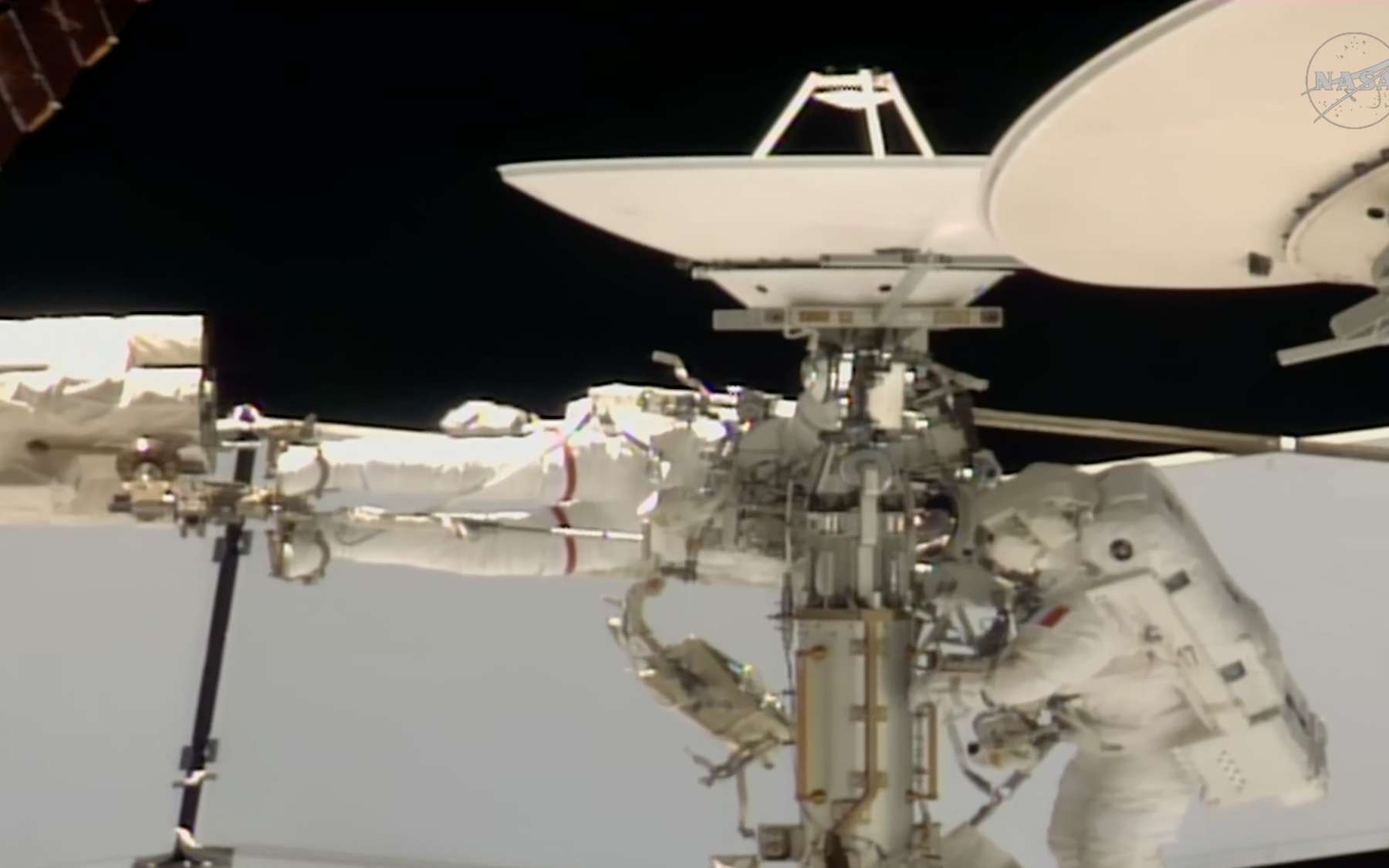
Sophie Adenot, première Française dans le vide spatial : les images d’une mission sous tension


Através de um novo contrato com a Força Aérea Portuguesa, os drones AR5 da Tekever vão apoiar missões de longo alcance, incluindo a vigilância da Zona Económica Exclusiva (ZEE) de Portugal, podendo ser também utilizados em áreas como segurança costeira e proteção ambiental.
The post Drones AR5 da Tekever vão reforçar as missões de vigilância marítima em Portugal appeared first on Tek Notícias.

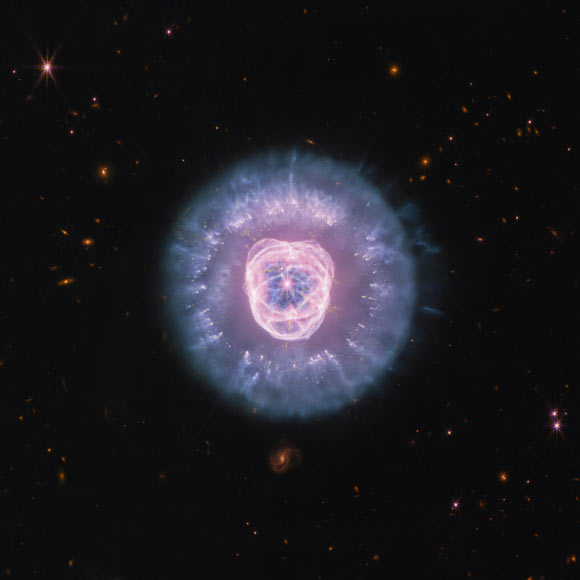
New infrared observations of the Eskimo Nebula, a bipolar double-shell planetary nebula in the constellation of Gemini, reveal clumps of dust, ionized gas and expanding shells surrounding a central star.
The post Webb Captures Stunning Infrared View of Eskimo Nebula appeared first on Sci.News: Breaking Science News.
As câmaras dos drones de vigilância K3 Scout, usados pelas forças especiais da Marinha britânica, tinham componentes de origem chinesa quem estavam a enviar dados para a China, obrigando o Ministério da Defesa a cortar a ligação à internet dos equipamentos.
The post Câmaras de drones da Marinha britânica enviavam secretamente dados para a China appeared first on Tek Notícias.

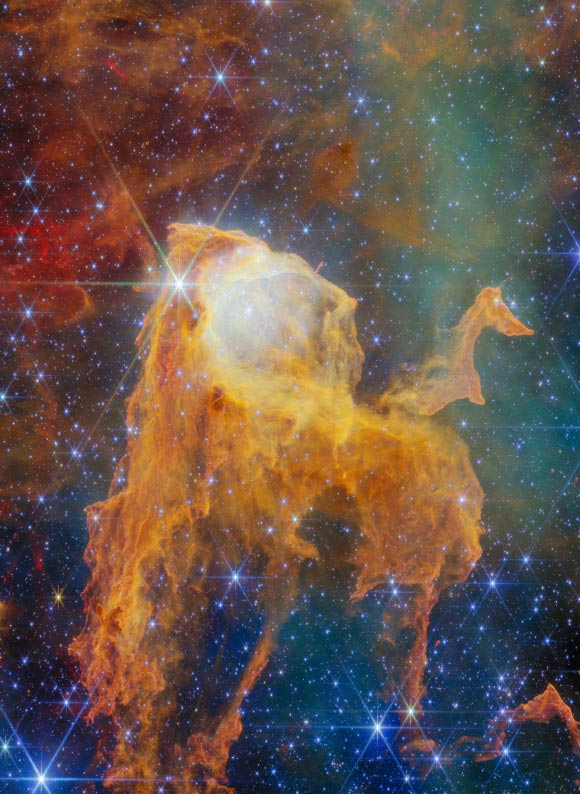
A stunning new image from the NASA/ESA/CSA James Webb Space Telescope reveals a comet-shaped cloud in the Carina Nebula hiding a cluster of about 70 young stars, including a rare giant of O-type nearly 19 times as massive as the Sun.
The post Webb Finds Stellar ‘Treasure Chest’ in Carina Nebula appeared first on Sci.News: Breaking Science News.
A missão CHEOPS vai continuar a funcionar como uma espécie de laboratório orbital, ajudando a responder a algumas das perguntas mais antigas da humanidade: como se formam os planetas e quantos deles podem ser semelhantes à Terra.
The post CHEOPS vai ter mais tempo para explorar outros mundos. Portugal mantém papel central na missão europeia appeared first on Tek Notícias.

The European Commission has reached an agreement with an industrial consortium to proceed with a secure connectivity constellation, increasing the number of satellites as well as its cost.
The post Europe increases size and cost of IRIS² constellation appeared first on SpaceNews.
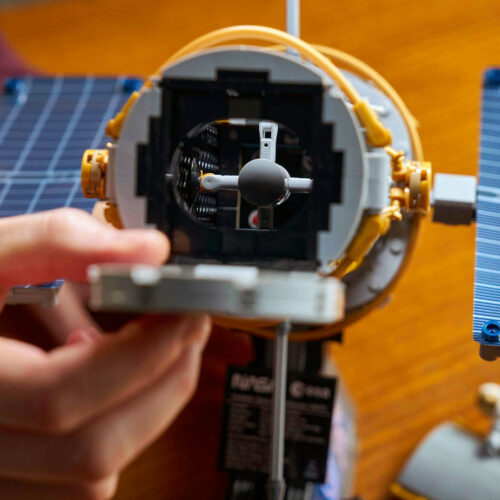
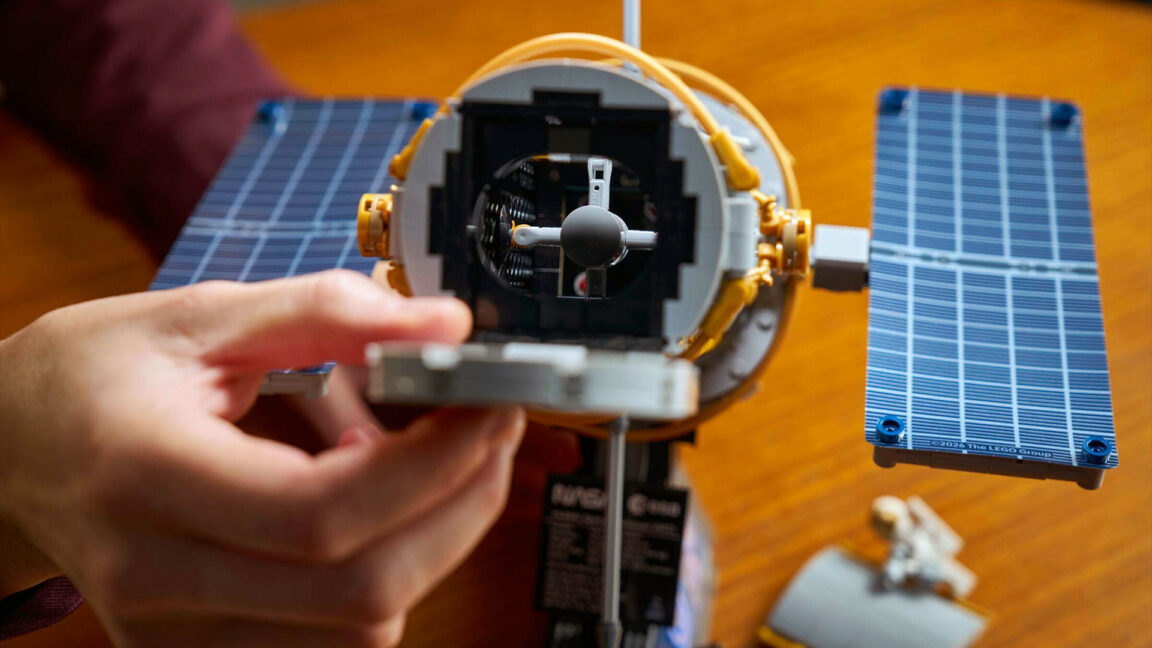
For 35 years, the Hubble Space Telescope has looked out into the Universe. Now, Lego is inviting builders to look inward with its latest model of the orbiting observatory.
The new Lego Icons Hubble Space Telescope (set no. 11382) was released on August 1 for $140 at the toy company's stores and its online shop. The 1,252-piece kit builds a 15-inch-long (38-cm) desktop model that is about twice as large as the previously released Lego Hubble models.
The Icons Hubble is the first to be sized in comparison to a Lego minifigure, such that the included astronaut provides a sense of scale for the telescope.


© LEGO

A stunning new image captured by the NASA/ESA Hubble Space Telescope shows the lopsided intermediate spiral galaxy NGC 4654, whose unusual shape was sculpted by both a close encounter with another galaxy and a headlong plunge through the hot gas of the Virgo Cluster.
The post Hubble Spots Spiral Galaxy Warped by Cosmic Forces appeared first on Sci.News: Breaking Science News.
New computer models of Venus’s surface features, including ridges likely caused by volcanic activity, have determined that the second rock from the Sun remains geologically active to this day.
The ETH Zurich research team behind the new Venusian models, which suggest that Venus may still have active volcanoes, said their findings could help planned NASA and ESA missions select the most promising targets. The new models could also help in the search for rocky planets outside of our Solar System, including those that may support life.
Venus has long fascinated planetary scientists due to its similarities. For example, the planet’s mass and circumference make it roughly 95% the same size as Earth overall. However, although Venus’ elliptical orbit brings it closer to Earth than any other planet in the Solar System, its extreme surface temperatures and toxic atmosphere make it inhospitable to life as we know it.
Ground and space observations have detected rift valleys on Venus’s surface, which the research team notes indicate tectonic activity. Some can measure up to 10,000 kilometers and resemble the longest ridges on Earth. Although the timing of Venus’ rift formations remains uncertain, the team said most scientists have typically considered the planet to be geologically dormant. Some estimates have put their formation more than 100 million years ago.
Curious if data captured by space and ground-based observatories could provide enough information to answer the timing question, a research team from ETH led by Taras Gerya, a Professor of Geodynamics at the Department of Earth and Planetary Sciences, decided to plug that data into computer models. According to their results, the reports of Venus’ demise may have been greatly exaggerated.
Working under Professor Gerya’s supervision, Master’s candidate and lead author of the paper detailing the team’s work, Xi Yang, and colleagues employed computer models to simulate the planet’s rifts in high-resolution and 3D. The team said these models allowed them to “accurately replicate these rift structures” in a level of detail never achieved. The data also allowed them to perform simulations to best determine how they originally formed.
Critically, the team notes that earlier attempts to model Venus’ tectonic history and potential ongoing activity had been mostly two-dimensional. Yang’s team also said those earlier models had relied on “simplified material assumptions” that his team was able to expand upon.
After completion, the models yielded several compelling results. First, they indicated that the broad ridges geologists call ‘rift flanks’ form along the edges of rift valleys at a time when the rifts are still “geologically young.” Specifically, the team’s models suggested that these flanks formed when Venus was still either actively moving or had only recently stopped moving.
A closer look at the simulations also suggested that these geological rifts open over a much shorter time scale than previously assumed, with an estimated rate between 3 and 10 centimeters per year. The models also indicated that rift flanks tend to flatten very quickly once the movement ends.
“The older the rift system, the less steep and narrow its flanks,” they explained.
A comparison to erosion patterns on Earth also supported a more recent time frame for the rift flank formations spotted on the Venusian surface from the Magellan probe during its 1990s mission. The team said that these formations and their models suggest that “Venus remains an active planet with a more dynamic interior than had been previously believed.”
“Venus remains geologically “alive” and even hosts active volcanoes,” they explained.
When discussing the implications of their work, Professor Gerya said the findings “help us to better assess the tectonic activity on Venus.” The team noted that their models could also guide future missions by pinpointing potentially active regions worthy of closer examination.
The ETH team said their study also has planetary formation implications, particularly for rocky planets like Venus and Earth. Such data could prove valuable in the search for rocky exoplanets, including the type that may host life.
Moving forward, the study authors noted that NASA and the European Space Agency (ESA) are actively preparing “multiple missions” to explore Venus in further detail. ETH geophysics professors Paul Tackley and Gerya, and their team of collaborators, are already participating in ESA’s EnVision mission.
The work includes developing instruments for the orbiter to analyze the surface in greater detail. Scheduled for launch in the early 2030s, the team said that EnVision will explore the planet more thoroughly than previous efforts “from its core to its upper atmosphere.”
The study “Recent active rifting on Venus revealed by wide rift flank uplifts” was published in Nature Geoscience.
Christopher Plain is a Science Fiction and Fantasy novelist and has spent the last six years as Associate News Editor and Head Science Writer at The Debrief. Follow and connect with him on X, learn about his books at plainfiction.com, or email him at christopher@thedebrief.org.

A mesma paisagem marciana pode parecer diferente consoante a câmara, a distância e o ângulo de observação. Uma rara experiência envolvendo duas sondas permitiu a comparação e pode ajudar a garantir que uma delas está pronta para a longa viagem que tem pela frente.
The post Uma foi de passagem, a outra já lá estava e duas sondas acabaram a fotografar o mesmo lugar de Marte appeared first on Tek Notícias.

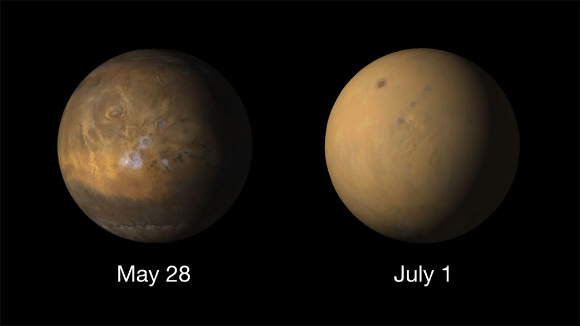
Planetary researchers have found the first evidence that bursts of energetic particles from the Sun could warm the lower atmosphere of Mars during massive dust storms, hinting at an unexpected link between space weather and Martian climate.
The post Space Weather May Warp Martian Weather during Dust Storms, Planetary Scientists Suggest appeared first on Sci.News: Breaking Science News.

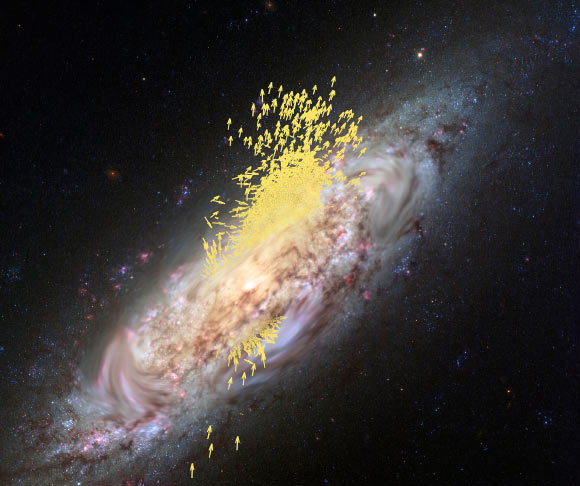
A head-on collision with another galaxy billions of years ago may have dramatically reoriented the Milky Way’s disk, according to new supercomputer simulations that reveal how violent mergers can leave spiral galaxies looking surprisingly normal today.
The post Our Milky Way Galaxy Likely Underwent Disk Flip after Ancient Galactic Collision: Study appeared first on Sci.News: Breaking Science News.

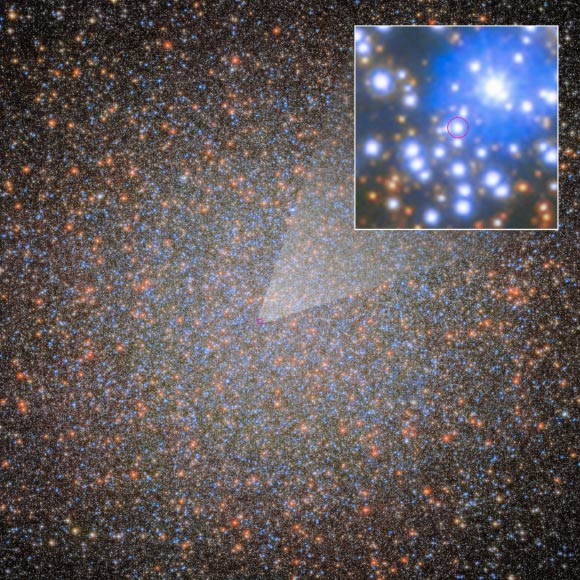
After decades of searching, astronomers have pinpointed the first of an estimated 10,000 stellar-mass black holes thought to lurk in Omega Centauri, the most massive stellar system in the Milky Way found so far, with a stellar mass of 3.6 million solar masses.
The post Astronomers Find Omega Centauri’s First Stellar-Mass Black Hole appeared first on Sci.News: Breaking Science News.
Ao longo da missão, o Sentinel-1A registou milhões de imagens usadas para monitorizar cheias, incêndios, gelo marinho, culturas agrícolas, infraestruturas, tráfego marítimo e operações de resposta a catástrofes.
The post Satélite Sentinel-1A diz adeus depois de mais de uma década a vigiar a Terra. Legado continua em órbita appeared first on Tek Notícias.
A reorganização da operação da Ingram Micro em Portugal já está em marcha e Jaime Soler descreve as mudanças como uma evolução que traz benefícios aos clientes no mercado português.
The post Ingram Micro avança para a versão 2.0 da empresa com aposta reforçada em Portugal appeared first on Tek Notícias.

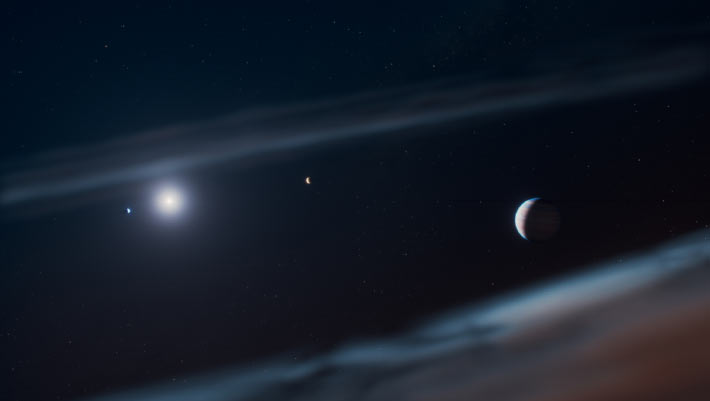
Named Beta Pictoris d, the newly-discovered world is 100 times fainter than Beta Pictoris b -- the first planet discovered around the A5-type star Beta Pictoris -- and is among the lightest exoplanets ever to be imaged from the ground.
The post Astronomers Discover and Directly Image Third Planet in Beta Pictoris System appeared first on Sci.News: Breaking Science News.
Entre os dias 22 e 25 de julho, a ilha de Santa Maria acolhe a conferência Atlantic Space Hub: Designing the Future of Space, com quatro dias de reflexão e debates sobre o papel dos Açores como centro atlântico para a exploração e investigação espacial.
The post Conferência internacional reúne astronautas e especialistas para debater o futuro espacial dos Açores appeared first on Tek Notícias.

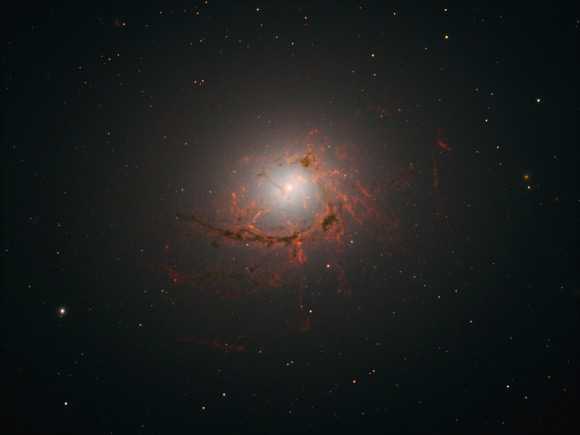
New images of the giant elliptical galaxy NGC 4696 from the NASA/ESA/CSA James Webb Space Telescope reveal gas filaments funneling material into a spinning disk around a supermassive black hole 800 light-years across.
The post Webb Catches Supermassive Black Hole Feeding from Cosmic Gas Streams appeared first on Sci.News: Breaking Science News.