❌

Reading view

Webb Captures Stunning Infrared View of Eskimo Nebula

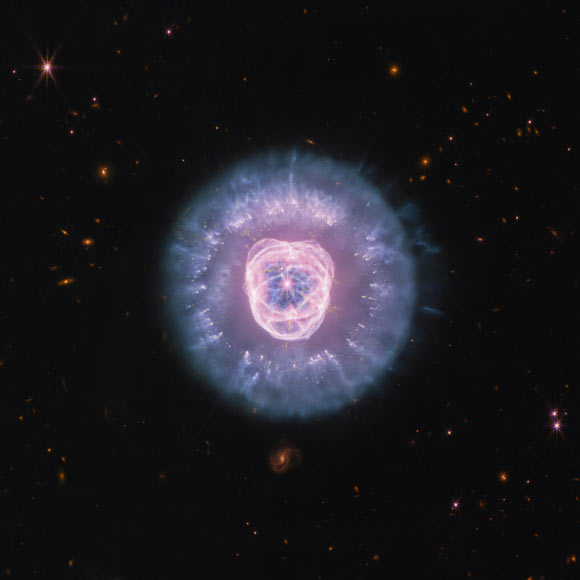
This Webb/NIRCam/MIRI image shows the Eskimo Nebula, a bipolar planetary nebula some 4,200 light-years away in the constellation of Gemini. Image credit: NASA / ESA / CSA / Webb / STScI / Alyssa Pagan, STScI.

New infrared observations of the Eskimo Nebula, a bipolar double-shell planetary nebula in the constellation of Gemini, reveal clumps of dust, ionized gas and expanding shells surrounding a central star.

The post Webb Captures Stunning Infrared View of Eskimo Nebula appeared first on Sci.News: Breaking Science News.

  •  

Look: NASA’s James Webb Space Telescope Captures Striking New Images That Bring the ‘Lion Nebula’ Roaring to Life

Stunning new imagery of the distant celestial object NGC 2392, better known as the “Lion Nebula,” has been obtained by NASA’s James Webb Space Telescope.

The cosmic vista captured by Webb reveals a colorful view of the ancient nebula, whose characteristic appearance resembles one of nature’s most respected apex predators, complete with a bushy-looking “mane” composed of hazy stellar gases and objects similar to comets.

The new high-resolution imagery offers one of the clearest and most detailed views of the Lion Nebula ever seen. Previous images captured by Webb’s predecessor, the Hubble Space Telescope, were obtained in 2000, featuring the same celestial feature in visible light.

With the added spectral ranges Webb’s Near Infrared Camera (NIRCam) and Mid-Infrared Instrument (MIRI) can capture, the Lion Nebula now appears in colorful pinks and indigo hues, surrounded by distant galaxies blazing in brilliant orange from across vast cosmic distances, whose light has traveled billions of years to reach our Solar System.

A Lion Roars Across the Cosmos

A particularly striking feature about the new imagery is the way cosmic dust and regions of ionized gas are showcased in the new Webb imagery.

“It’s taken several thousand years for this collection of gas and dust to reach its current shape, and the nebula’s components continue to be altered,” read a portion of a statement released by the European Space Agency (ESA) that accompanied the new images.

Lion Nebula
The Lion Nebula, as seen with the MIRI instrument on board the James Webb Space Telescope (Image Credit: NASA, ESA, CSA, STScI; Image Processing: Alyssa Pagan (STScI)).

One reason that helps account for the changing appearance of the Lion Nebula over time can be found at its center, where the remnants of a slowly dying white dwarf star (which effectively forms the nose in the lion’s face after which the nebula is named) continues to supercharge the surrounding cosmic structures made visible in the new Webb imagery.

The rest of the lion’s face is composed of an expanding bubble of ionized gas, the nature of which remains somewhat mysterious. Presently, astronomers are uncertain about what exact mechanisms give rise to the complex appearance of this gassy bubble and its internal structures, which are a recurring element in ancient nebulae such as this.

NGC 2392 isn’t the only celestial feature known as the “Lion Nebula.” An entirely separate diffuse nebula located in the Cepheus constellation, known as Sharpless 2-132, also shares this nickname due to its shape, which resembles a lion’s body seen from the side.

A Cosmic Visage Frozen in Time  

For now, the Lion Nebula is captured in the Webb imagery, which, despite its almost serene beauty, represents a highly active area of the cosmos, undergoing constant change as material is continually ripped away from the stellar central core.

Sometime in the next 10,000 years or so, this striking celestial feature will eventually be destroyed, once the white dwarf powering the nebula completely dies and the remnants of stellar material are completely dispersed into the surrounding space.

Until then, this remarkable cosmic feature will remain a target of study by astronomers, whose inquiries are helped significantly by the unprecedented clarity offered in the latest Webb images.

Additional information about the Lion Nebula (NGC 2392) can be found on NASA’s official page documenting the Webb MIRI imagery.

Micah Hanks is the Editor-in-Chief and Co-Founder of The Debrief. A longtime reporter on science, defense, and technology with a focus on space and astronomy, he can be reached at micah@thedebrief.org. Follow him on X @MicahHanks, and at micahhanks.com.

  •  

Webb Finds Stellar ‘Treasure Chest’ in Carina Nebula

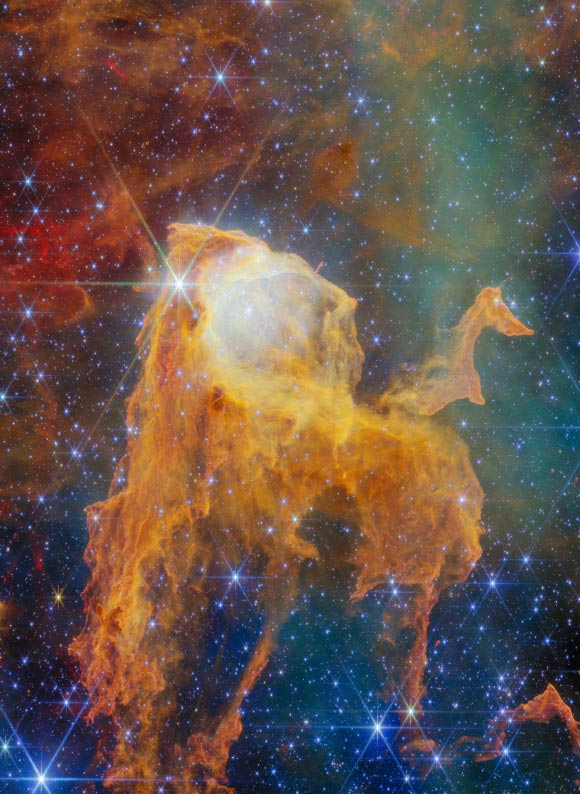
This Webb image shows the Treasure Chest, a cometary globule located within the famous Carina Nebula. Image credit: NASA / ESA / CSA / Webb / M. Reiter / M.H. Özsaraç.

A stunning new image from the NASA/ESA/CSA James Webb Space Telescope reveals a comet-shaped cloud in the Carina Nebula hiding a cluster of about 70 young stars, including a rare giant of O-type nearly 19 times as massive as the Sun.

The post Webb Finds Stellar ‘Treasure Chest’ in Carina Nebula appeared first on Sci.News: Breaking Science News.

  •  

Launch Into a New School Year With NASA

4 Min Read

Launch Into a New School Year With NASA

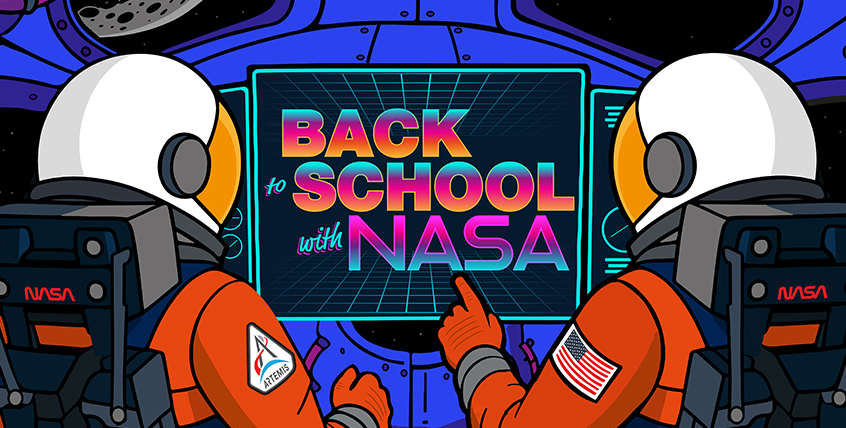
An illustration of two astronauts inside a spacecraft, looking at a screen that says "Back to School with NASA"

A new school year brings fresh opportunities to get involved with NASA. Whether you’re curious about space or eager to build real STEM skills, NASA offers a world of experiences putting you close to the action. As we enter a new golden age of exploration, there’s no better time to jump in, try something bold, and see where your curiosity takes you.

Gain Hands-On NASA Experience

NASA opens the door to authentic mission experiences through internships and student challenges. As members of the NASA team, interns work on genuine agency projects and gain industry-ready skills, all with the guidance of NASA mentors. Visit NASA’s internships website to learn more about current vacancies, deadlines, eligibility requirements, and more.

Through NASA’s student challenges and competitions, student teams tackle some of the critical technical hurdles facing mission planners. Flex your innovative muscles and sharpen your collaborative and problem-solving skills while developing, prototyping, and testing your team’s designs. Check out the full list of NASA STEM challenges and opportunities, choose one that fits your interests, and assemble your team.

More than 500 students with 75 teams from around the world participated in the 31st year of NASA’s Human Exploration Rover Challenge (HERC) on April 11 and April 12, 2025, near NASA’s Marshall Space Flight Center in Huntsville, Alabama. Participating teams represented 35 colleges and universities, 38 high schools, and two middle schools from 20 states, Puerto Rico, and 16 other nations. NASA expanded the 2025 challenge to include a remote-control division - named Remote-Operated Vehicular Research - and invited middle school students to participate. Teams were awarded points based on navigating a half-mile obstacle course, conducting mission-specific task challenges, and completing multiple safety and design reviews with NASA engineers.
Students cross the finish line in their human-powered rover during the 2025 Human Exploration Rover Challenge at NASA’s Marshall Space Flight Center in Huntsville, Alabama
USSRC/Emily Riddle

Discover Technical Careers at NASA

The future of aerospace depends on a steady pipeline of skilled technical experts ready to make missions and ideas a reality. NASA invites students in high school, community college, and career technical education programs to join in-person and virtual events to explore these important career paths.
 
NASA Career Technical Education Days bring students on-site to meet NASA skilled technical workers who share what their jobs are like, how they built their careers, and the skills, training, and certifications that have helped them succeed. During NASA’s Next Gen STEM Virtual Career Connections , students interact live with technical experts supporting the agency’s missions. Students and teachers can learn more on the Next Gen STEM for Careers website.

A technician performs welding on a spacecraft transporter at NASA’s Kennedy Space Center in Florida.
NASA/Ben Smegelsky

Contribute to NASA Science as a Citizen Scientist

NASA’s Science Mission Directorate invites you to help make real discoveries through science projects powered by volunteers. Join from anywhere, whenever it fits your schedule, and start working with authentic mission data. Help identify comets and asteroids, hunt for binary star systems, and more. Find the project that’s right for you on the list of current citizen science projects.

Keep Up With NASA Missions and Discoveries

Don’t miss out on NASA’s biggest mission milestones this school year! Up first is the Nancy Grace Roman Space Telescope, scheduled to launch no earlier than 7:20 a.m. EDT on Sunday, Aug. 30. This powerful new observatory has a field of view at least 100 times larger than the Hubble Space Telescope. Be a virtual guest for launch and learn more about the telescope with fun activities provided by NASA’s Science Mission Directorate. You can also sign up to be a virtual guest for NASA’s next crewed launch to the International Space Station, SpaceX Crew-13, set to launch in September.

And be sure to follow NASA’s continuing crew training and hardware preparations for Artemis III. Set to launch into Earth orbit in 2027, the flight will test rendezvous and docking capabilities with commercial human landing systems – landers that will carry astronauts to the lunar surface on Artemis IV and future missions to the Moon.

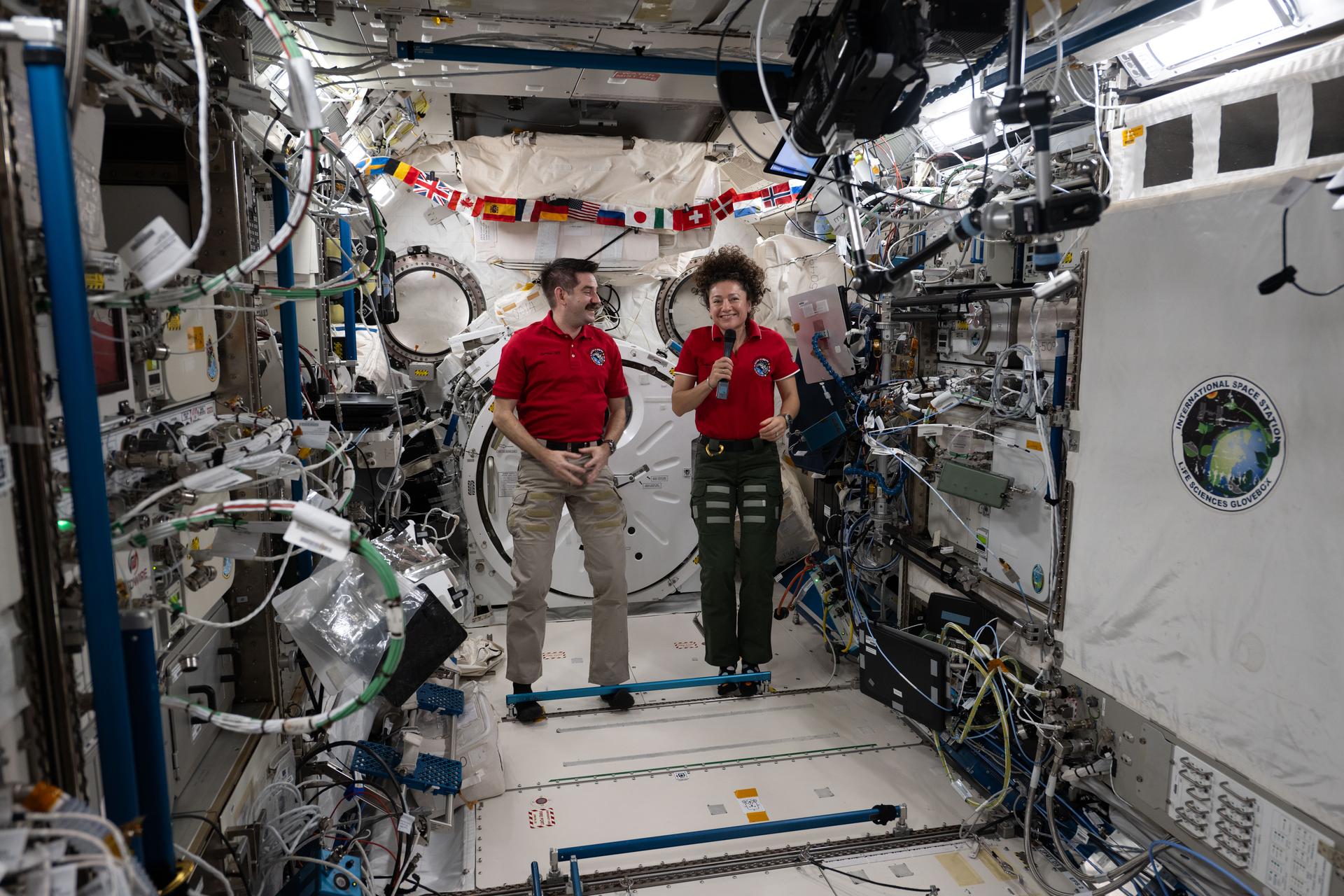
NASA astronauts Jack Hathaway and Jessica Meir, both Expedition 74 flight engineers, answer questions inside the International Space Station’s Kibo laboratory module during a live downlink event with Connecticut Public Radio. Hathaway is a native of South Windsor, Connecticut, while Meir is from Caribou, Maine.
NASA astronauts Jack Hathaway and Jessica Meir answer questions inside the International Space Station’s Kibo laboratory module during a live downlink event in May 2026.
NASA

Stay Engaged With NASA

Schools, classrooms, and community-based student groups have further options to engage with NASA and its people. Through In-Flight STEM Downlinks, students have their pre-recorded questions answered live by astronauts aboard the International Space Station, demonstrating how STEM careers reach far beyond Earth. Additionally, the NASA Engages public outreach program connects agency experts with student audiences to share mission and science updates, helping people discover how NASA’s work unfolds and how they can be part of the journey.

This school year, whether you’re interested in aerospace jobs or eager to dive into authentic STEM challenges, you’ll find an array of activities and career exploration tools on NASA’s Learning Resources website. Explore exciting NASA student opportunities and subscribe to the weekly NASA EXPRESS email newsletter for the latest NASA STEM opportunities and updates!

  •  

O futuro do Apple Watch 12: rumores sobre Series 12 e novos modelos

Apple Watch 12: Rumores apontam redesign radical, novos materiais, formatos e modelos premium — pode valer a pena esperar antes de comprar.

O post O futuro do Apple Watch 12: rumores sobre Series 12 e novos modelos apareceu primeiro em Blog do Edivaldo - Informações e Notícias sobre Linux.

  •  

Un nouveau danger des microplastiques : pourquoi les océans pourraient moins bien freiner le réchauffement

Les microplastiques ne menacent pas seulement la biodiversité marine : ils pourraient aussi réduire la capacité des océans à absorber le dioxyde de carbone atmosphérique. En analysant l'impact de ces particules sur le phytoplancton, des chercheurs montrent que la pollution plastique perturbe...

  •  

Samsung Galaxy Tab S12+ and Tab S12 Ultra Renders Leak Ahead of September Launch

Igeekphone News August 8, 2026 — Samsung’s next-generation flagship tablet lineup is reportedly getting closer to launch, with new renders of the Galaxy Tab S12+ and Galaxy Tab S12 Ultra now surfacing online. The leaked images suggest that Samsung will largely retain the design language introduced with the previous Galaxy Tab S11 series, while upgrading the internal hardware and software.

According to a report from Sammyguru, the renders provide a clear look at the front design of both upcoming tablets, as well as a new set of Samsung wallpapers. The Galaxy Tab S12 series is expected to make its official debut in September 2026 as part of Samsung’s annual flagship tablet refresh.

Familiar Galaxy Tab S11-Inspired Design

Based on the leaked renders, the Galaxy Tab S12+ and Galaxy Tab S12 Ultra will retain much of the visual identity of their predecessors.

The front panels appear largely unchanged, with Samsung continuing to use slim bezels and a minimalist tablet design. There are reportedly no major changes to the overall screen proportions or front-facing appearance.

For users familiar with the Galaxy Tab S11 family, the new tablets may therefore look immediately recognizable rather than representing a major redesign.

The Ultra Model Keeps Its Notch

One of the more interesting details concerns the Galaxy Tab S12 Ultra.

Earlier rumors suggested that Samsung could abandon the notch used by the previous Ultra model and move to a punch-hole camera design. However, the newly leaked renders indicate that Samsung may once again retain the notch for the front-facing camera system.

If accurate, Samsung will have chosen continuity over a cleaner full-screen appearance for another generation. That could also mean a more significant front-camera redesign may not arrive until a future Galaxy Tab Ultra model.
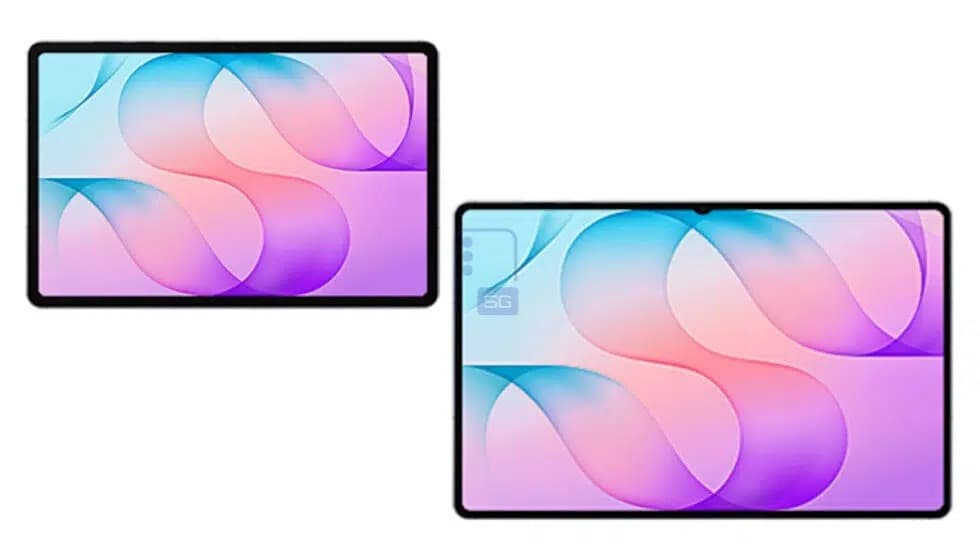
New Blue-Purple “S” Wallpaper

While the hardware design appears familiar, Samsung is expected to introduce a new collection of wallpapers with the Galaxy Tab S12 series.

The leaked wallpaper features a bright blue-to-purple gradient with a prominent letter “S” positioned in the center. Compared with the more restrained visual themes commonly associated with Samsung’s flagship tablets, the new design appears more colorful and dynamic.

Samsung typically introduces new wallpapers alongside its major flagship products, making the appearance of these images another indication that the Tab S12 series is moving toward its official launch.

MediaTek 9500 Expected to Power the Series

Under the hood, both the Galaxy Tab S12+ and Galaxy Tab S12 Ultra are expected to receive a significant performance upgrade.

Reports indicate that Samsung could equip both models with the MediaTek Dimensity 9500 processor. If confirmed, this would represent a notable change from previous Galaxy Tab flagship generations and could give the tablets strong performance for demanding applications, gaming, multitasking, and creative workloads.
The tablets are also expected to run One UI 9, Samsung’s latest Android-based software platform.

Samsung could further strengthen the long-term appeal of the devices by offering extensive software support. According to the current reports, the Galaxy Tab S12 series may receive up to seven generations of Android OS upgrades and seven years of security updates.

12.4-Inch and 14.6-Inch AMOLED Displays

The two tablets will continue to target different size preferences.

The Galaxy Tab S12+ is expected to feature a 12.4-inch Dynamic AMOLED 2X display with a 120Hz refresh rate. This configuration should provide smooth animations and scrolling while maintaining the high-contrast visuals associated with Samsung’s premium AMOLED panels.

Meanwhile, the flagship Galaxy Tab S12 Ultra is expected to retain the enormous 14.6-inch display used by its predecessor.

The Ultra’s large panel continues to make it one of the more laptop-like Android tablets on the market, particularly for users who want a large workspace for multitasking, digital drawing, video editing, or productivity applications.

Large Batteries for Long-Session Use

Battery capacity is another area where Samsung is expected to maintain its focus on endurance.

The Galaxy Tab S12+ is reportedly set to feature a 10,600mAh battery, while the Galaxy Tab S12 Ultra could pack an even larger 11,600mAh battery.

Combined with the efficiency improvements of a newer flagship processor, the large batteries should help the tablets handle extended periods of video playback, productivity, gaming, and web browsing.

Actual battery life will naturally depend on display brightness, refresh rate, connectivity, applications, and other usage conditions.

S Pen Expected to Remain Included

As flagship members of Samsung’s Galaxy Tab S family, both tablets are expected to support the company’s S Pen stylus, with the accessory reportedly included in the retail package.

The S Pen remains an important part of Samsung’s premium tablet ecosystem, particularly for note-taking, sketching, handwriting, document annotation, and creative work.

For international buyers comparing premium tablets with Apple’s iPad Pro and other high-end Android devices, the inclusion of a stylus could remain one of Samsung’s strongest differentiating features.

Expected Galaxy Tab S12+ vs. Tab S12 Ultra Specifications

Feature Galaxy Tab S12+ Galaxy Tab S12 Ultra
Display 12.4-inch Dynamic AMOLED 2X 14.6-inch display
Refresh rate 120Hz 120Hz expected
Processor MediaTek Dimensity 9500 MediaTek Dimensity 9500
Operating system One UI 9 One UI 9
Battery 10,600mAh 11,600mAh
Stylus S Pen expected S Pen expected
Colors Gray, Silver Gray, Silver
Android updates Up to 7 generations Up to 7 generations
Security updates Up to 7 years Up to 7 years
Expected launch September 2026 September 2026

Samsung Galaxy Tab S12 Series: What to Expect

If the current leaks prove accurate, Samsung’s Galaxy Tab S12 generation will focus more on internal upgrades than a major visual redesign.

The familiar Tab S11-inspired appearance could make the new tablets feel evolutionary, but the combination of the Dimensity 9500 chipset, One UI 9, large AMOLED displays, substantial batteries, long-term software support, and S Pen integration could still make them compelling flagship Android tablets.

The continued use of the Ultra model’s notch is perhaps the biggest disappointment for buyers hoping for a cleaner display design. However, Samsung may be saving a more substantial camera and display redesign for a future generation.

Expected Launch in September

Samsung is reportedly preparing to launch the Galaxy Tab S12 series in September 2026, meaning the official announcement could be only weeks away.

The company has not yet confirmed the launch date, pricing, complete specifications, or availability for individual markets. As a result, the details currently circulating should be considered unofficial until Samsung makes a formal announcement.

For international consumers, regional pricing and configurations will be particularly important. Samsung’s flagship tablets typically launch across multiple markets, but storage options, connectivity variants, and pricing can vary by region.

Final Thoughts

The leaked Galaxy Tab S12+ and Galaxy Tab S12 Ultra renders suggest that Samsung is taking an evolutionary approach to its next flagship tablet generation. Rather than introducing a dramatic redesign, the company appears set to refine the existing formula with a new processor, updated software, refreshed wallpapers, large batteries, and continued S Pen support.

With a 12.4-inch Galaxy Tab S12+ and a 14.6-inch Galaxy Tab S12 Ultra, Samsung could once again target both mainstream premium-tablet users and consumers looking for a large-screen productivity machine.

If the rumored September launch schedule holds, more information about pricing, configurations, performance, and global availability should emerge soon.

The post Samsung Galaxy Tab S12+ and Tab S12 Ultra Renders Leak Ahead of September Launch appeared first on IGeeKphone China Phone, Tablet PC, VR, RC Drone News, Reviews.

  •  

Le bois change de dimension : pourquoi l'Europe en fait un matériau stratégique

Constructions à faibles émissions, bioéconomie, stockage certifié du carbone... Longtemps perçue comme une industrie de tradition, la filière bois européenne va changer d’échelle pour prendre une place prépondérante dans la transition écologique.

  •  

EA Sports FC 27: what does the next instalment of the world’s biggest football game have in store?

The all-conquering franchise’s revamps are technically impressive, its transfers more true to life – and its new grassroots social hub is surprising fun

As if the world wasn’t sufficiently football-obsessed, it’s time to prepare for the arrival of its biggest football video game. EA Sports FC 27 (the franchise that used to be Fifa – what better time to no longer be Fifa-branded?) is due to be released on 25 September. I just spent two intense days in Vancouver, where the EA FC games are made, playing FC 27 and talking to its developers.

With an annual franchise such as EA FC, it helps to have something fresh to entice regular fans, and FC 27 has a whole new element, entitled the Grounds. It’s a physical hub-type area, similar to the City as seen in 2K’s recent NBA 2K basketball games, but much more pleasant to frequent, split as it is into areas inspired by British, French and Argentinian street-football culture.

Continue reading...

© Photograph: Electronic Arts

© Photograph: Electronic Arts

© Photograph: Electronic Arts

  •  

Europe increases size and cost of IRIS² constellation

IRIS2

The European Commission has reached an agreement with an industrial consortium to proceed with a secure connectivity constellation, increasing the number of satellites as well as its cost.

The post Europe increases size and cost of IRIS² constellation appeared first on SpaceNews.

  •  

This ‘Ancient’ Spacecraft Keeps Defying Death—But How Much Longer Will Its Extended Mission Last?

Voyager 2

Welcome to this edition of The Intelligence Brief… This week, NASA engineers successfully extended the operational life of the iconic Voyager 2 spacecraft through a carefully orchestrated power-saving procedure, raising new hopes that the legendary probe may continue exploring interstellar space well into the 2030s. In our analysis, we’ll examine 1) how engineers carried out the ambitious “Big Bang” operation to conserve the spacecraft’s dwindling power supply, 2) why Voyager’s aging radioisotope power system presents an ever-growing challenge, 3) how NASA hopes to keep both Voyager probes returning valuable scientific data decades after their original missions ended, and 4) what the remarkable longevity of the twin spacecraft reveals about one of the most successful engineering achievements in the history of space exploration.

Quote of the Week  

“Voyager revolutionized our conception of the solar system. After almost 400 years, it transformed the astronomical objects observed by Galileo into true ‘worlds’.”

– Dr. Michael Bland, USGS Research Space Scientist

If you enjoy the news and perspectives offered by The Debrief, make sure that you aren’t missing our stories by making us one of your “preferred sources” on Google News. You can simply follow this link to add The Debrief to your list of favorites, and you can read more about Google’s preferred sources in our article here.


RECENT NEWS from The Debrief


An Ancient Spacecraft Undergoes a Long-Distance Operation

This week, engineering teams at NASA’s Jet Propulsion Laboratory succeeded in once again extending the lifespan of one of the space agency’s most iconic spacecraft.

Power systems have reportedly now been freed up on Voyager 2, allowing the famous space probe, which is now making its way through interstellar space, to continue sending valuable scientific data back to Earth with help from NASA’s Deep Space Network.

The largest and most sensitive telecommunications network in the entire solar system, for several decades now, the Deep Space Network has enabled Voyager 2 and its twin, Voyager 1, to relay science data about our planetary neighborhood back to Earth.

Launched on August 20, 1977, from Cape Canaveral, Florida, Voyager 2 is truly ancient by the standards of modern space exploration. The probe blasted off on its cosmic mission 16 days before its twin, Voyager 1, to account for specific orbital path needs.

While both spacecraft completed their official planetary flyby missions decades ago, each has overcome seemingly impossible odds in recent years and has managed to continue dispatching science data from the furthest points in the cosmos any human-built spacecraft has ever reached.

But how much longer will Voyager’s ongoing extended mission really be able to last?

A Big Bang in Interstellar Space

Recently, to free up power on Voyager 2, JPL engineers engaged in an effort dubbed the “Big Bang,” which involved simultaneous shutdowns of some of the devices on board the spacecraft and reallocating lower-power alternatives.

One of the key hurdles with this operation involves making sure Voyager 2 remains warm enough to function properly, since current power systems combined with its tremendous distance from the Sun keep the aging spacecraft’s core and instrument bays at a frosty 38.5°F—temperatures that are already dangerously close to the freezing point.

Dwindling Power Systems

The primary source of power aboard both Voyagers is their radioisotope thermoelectric generators, which generate heat using decaying plutonium, which is thereby converted into electricity. Every year, an average of four watts of power is lost as the plutonium supplies of each spacecraft continue to deplete.

Still, while their power stores are perilously close to zero, both remain online nearly a half-century after their launches in the late 1970s.

Over the last several years, several science instruments on each of the spacecraft have been disabled to help preserve power. According to NASA, the recent “Big Bang” operation helped prevent the shutdown of another instrument on Voyager 2 before the end of the year.

“The savings should provide power to keep its three instruments operating for at least an extra year,” read a NASA statement issued this week. JPL engineers also plan to perform the same operation on Voyager 1, which is currently even farther away than Voyager 2.

Voyager’s Path to the 2030s

The Voyager team hopes these measures will extend the spacecraft’s operational lifetimes into the 2030s, allowing them to continue returning valuable scientific data for years to come, provided they remain in contact with NASA’s Deep Space Network.

The spacecraft have already “far surpassed their original mission of exploring the outer planets,” said Patrick Koehn, Voyager program scientist at NASA Headquarters in Washington, in a statement last year.

“Every bit of additional data we have gathered since then is not only valuable bonus science for heliophysics but also a testament to the exemplary engineering that has gone into the Voyagers — starting nearly 50 years ago and continuing to this day,” Koehn added.

Launched more than 46 years ago, the twin Voyager I and II probes represent the longest-running missions in NASA history, as well as the farthest spacecraft ever to have travelled from Earth.

During their missions, both Voyager spacecraft visited Jupiter and Saturn, and Voyager II also flew by Uranus and Neptune. Now, with the successful implementation of the “Big Bang” procedure on Voyager 2, which is soon to be undertaken with its farther distant twin spacecraft in the months ahead, the two iconic spacecraft will at very least be secured for continuous operations through the end of the year, and with a bit of luck, on into the 2030s.

That concludes this week’s installment of The Intelligence Brief. You can read past editions of our newsletter at our website, or if you found this installment online, don’t forget to subscribe and get future email editions from us here. Also, if you have a tip or other information you’d like to send along directly to me, you can email me at micah [@] thedebrief [dot] org, or reach me on X: @MicahHanks.

Here are the top stories we’re covering right now…

  •  

Nazis and Happy Feet collide in Penguin Colony, a psychological horror game set at the world’s end

Explore Antarctica as a flightless bird – and dodge some earthly monsters – in this surreal adaptation of HP Lovecraft

While watching the 2006 animated film Happy Feet with his daughter, Origame Digital founder Naphtali Faulkner noticed something interesting. “[In the movie], they see the digger fall into the ocean, and it has an almost eldritch quality,” he says. Over time, and with plenty of iteration, Faulkner’s inspirations coalesced, from HP Lovecraft to the 1982 version of The Thing and the works of David Lynch. “I’m a big fan of horror that sits in your head rather than in your stomach,” says Faulkner.

In Penguin Colony, players body-switch between species of flightless birds, piecing together cryptic cosmic clues as they tail a Nazi expedition to Antarctica. In the process, Origame Digital draws on Lovecraft’s novella At the Mountains of Madness. “I’d always wanted to do a creature that’s a manifestation of colonial thought, energy and power, and the idea of it resting and then regrowing,” says Faulkner. “I was looking through the history of Lovecraft and him being a gigantic racist, and this idea of the Nazis sort of came out,” he adds.

Continue reading...

© Photograph: Fellow Traveller

© Photograph: Fellow Traveller

© Photograph: Fellow Traveller

  •  

‘Mamma mia!’: Trump tariffs refund ignites 53% profit spike at Nintendo

Profit jump fuelled largely by unknown US refund amount as Japanese video game firm records quarterly sales drop

Nintendo has reported a jump in profits, as the Japanese game maker’s earnings were buoyed up by a long-awaited refund on Donald Trump’s tariffs.

The company said profits surged 53.5% to ¥147.4bn (£694m) over the three months to June, substantially beating expert forecasts for ¥77.8bn.

Continue reading...

© Photograph: Richard A Brooks/AFP/Getty Images

© Photograph: Richard A Brooks/AFP/Getty Images

© Photograph: Richard A Brooks/AFP/Getty Images

  •  

Apple seeds new beta firmware for AirPods Pro and AirPods Max

AirPods Pro (2nd generation)

Apple has released a new round of beta firmware for several AirPods models, including the AirPods Pro 2, AirPods Pro 3, and AirPods Max 2, as the company continues testing features tied to iOS 27, iPadOS 27, and macOS Golden Gate.The latest developer beta carries the build number 9A5336b. It is the fourth beta firmware version in the current cycle and follows the previous build (9A5314b) from early July. Supported models also include the AirPods 4 (with and without Active Noise Cancellation).

This firmware enables compatibility with upcoming iOS 27 AirPods enhancements announced at WWDC 2026. Key features include:

• Custom EQ controls (a native 3-band equalizer for Low, Mid, and High frequencies adjustable directly in AirPods settings)

• A redesigned AirPods interface with improved labels and groupings

• A slider for Adaptive Audio mode

• Deeper integration with the new Siri AI

• Additional management and performance improvements

These capabilities require both the updated AirPods firmware and a host device running a compatible beta of iOS 27, iPadOS 27, or macOS Golden Gate (or, for enabling the beta toggle itself, iOS 26 / iPadOS 26 / macOS 26 or later).

How to Install the Beta Firmware

Apple has simplified the process in recent years. Developers can enable it as follows:

  1. Ensure your iPhone, iPad, or Mac is running a supported software version (iOS 26/iPadOS 26/macOS 26 or later to access the toggle; the full iOS 27 beta experience for new features).
  2. Connect your AirPods.

  3. Open Settings (or System Settings on Mac) and tap/select your AirPods at the top (or via the Bluetooth info button).

  4. Scroll to AirPods Beta Updates and turn the option on.

  5. Place the AirPods in their case (or Smart Case for AirPods Max), connect them to power, and keep them near the paired device.

The firmware installs automatically in the background. There is no manual “Update Now” button, and the process can take several hours. A public beta version of this build is expected to follow in the coming days.

MacDailyNews Note: As with all betas, the software is intended for testing and may contain bugs or incomplete features. Apple has not published detailed release notes beyond the connection to the broader iOS 27 AirPods improvements.The update arrives as Apple prepares the fall software releases that will bring these enhancements to the wider public. Owners of eligible AirPods who are already enrolled in the developer program should see the new firmware become available shortly after enabling beta updates.


‎
Please help support MacDailyNews — and enjoy subscriber-only articles, comments, chat, and more — by subscribing to our Substack: macdailynews.substack.com. Thank you!

Support MacDailyNews at no extra cost to you by using this link to shop at Amazon.

The post Apple seeds new beta firmware for AirPods Pro and AirPods Max appeared first on MacDailyNews.

  •  

Apple opens lottery for retail staff to support first iPhone event under new CEO John Ternus

Apple Retail Store

Apple is preparing for its biggest product event of the year by opening a lottery that gives U.S. retail employees a chance to help staff the in-person unveiling, according to Bloomberg News’ Mark Gurman.

“With Apple Inc. gearing up for its biggest product launch of the year, the company is opening a lottery for U.S. retail employees who want to help staff the in-person unveiling,” Gurman reported.

The lottery allows retail employees to apply to work the event, where they’ll help organize lines, check in guests, greet attendees, offer directions and support the security teams, according to a memo that was seen by Bloomberg News.

In the memo, Apple said it was “excited to offer U.S. store team members the opportunity to participate in the Event Support Experience Program.” Apple has relied on retail employees to help staff major product launches for years.

The launch event will take place during the first half of September, the company told staff, without providing a more specific date. Historically, Apple’s iPhone presentations have taken place on the second Tuesday or Wednesday of that month. Since Labor Day in the U.S. falls on Monday, Sept. 7th, a Wednesday event appears slightly more likely, as it would preserve the workday travel window Apple has historically provided for attendees.

Workers who participated in either this year’s Worldwide Developers Conference or last year’s iPhone launch aren’t eligible for the upcoming program. Interested employees must apply by Aug. 8th, and Apple will notify those selected by Aug. 17th, according to the memo.
‎
MacDailyNews Take: This year’s September event carries added significance. It will be the first major product unveiling under Chief Executive Officer John Ternus, who is set to take over from Tim Cook on Sept. 1st. The company is expected to unveil its first foldable iPhone — rumored to be called “iPhone Ultra” – as well as the iPhone 18 Pro and Pro Max, new Apple Watch models (Series 12 and Ultra 4), and, perhaps, new AirPods and Apple Home products.


‎
Please help support MacDailyNews — and enjoy subscriber-only articles, comments, chat, and more — by subscribing to our Substack: macdailynews.substack.com. Thank you!

Support MacDailyNews at no extra cost to you by using this link to shop at Amazon.

The post Apple opens lottery for retail staff to support first iPhone event under new CEO John Ternus appeared first on MacDailyNews.

  •  

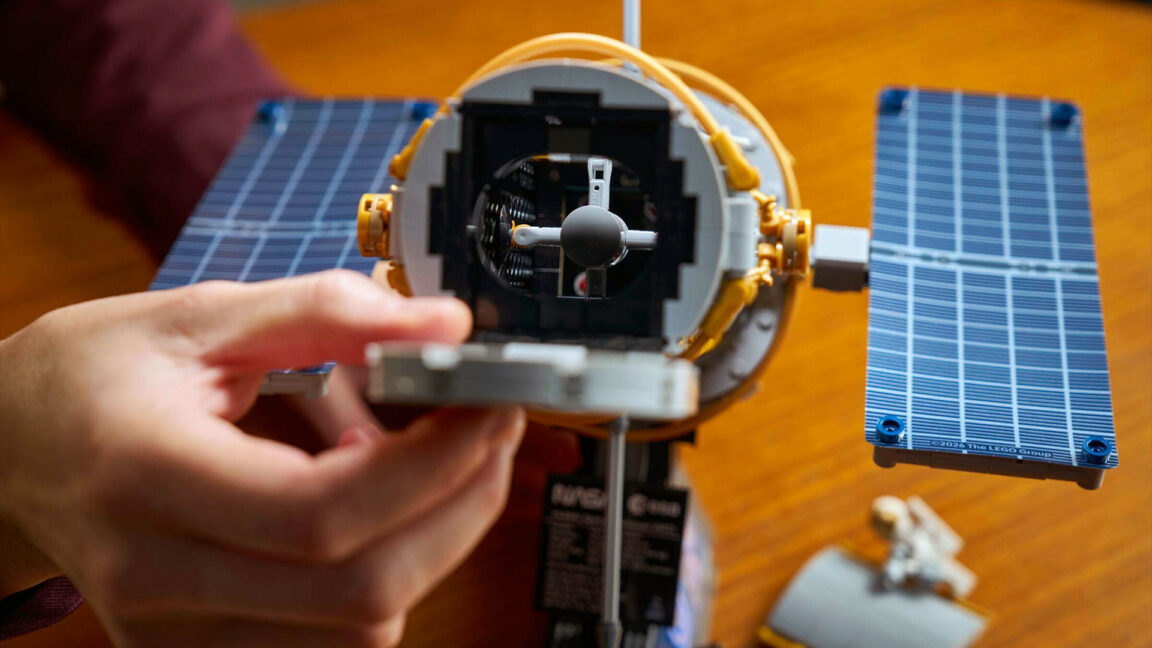
Lego deploys Hubble Space Telescope as detailed desktop model

For 35 years, the Hubble Space Telescope has looked out into the Universe. Now, Lego is inviting builders to look inward with its latest model of the orbiting observatory.

The new Lego Icons Hubble Space Telescope (set no. 11382) was released on August 1 for $140 at the toy company's stores and its online shop. The 1,252-piece kit builds a 15-inch-long (38-cm) desktop model that is about twice as large as the previously released Lego Hubble models.

The Icons Hubble is the first to be sized in comparison to a Lego minifigure, such that the included astronaut provides a sense of scale for the telescope.

Read full article

Comments

© LEGO

  •  

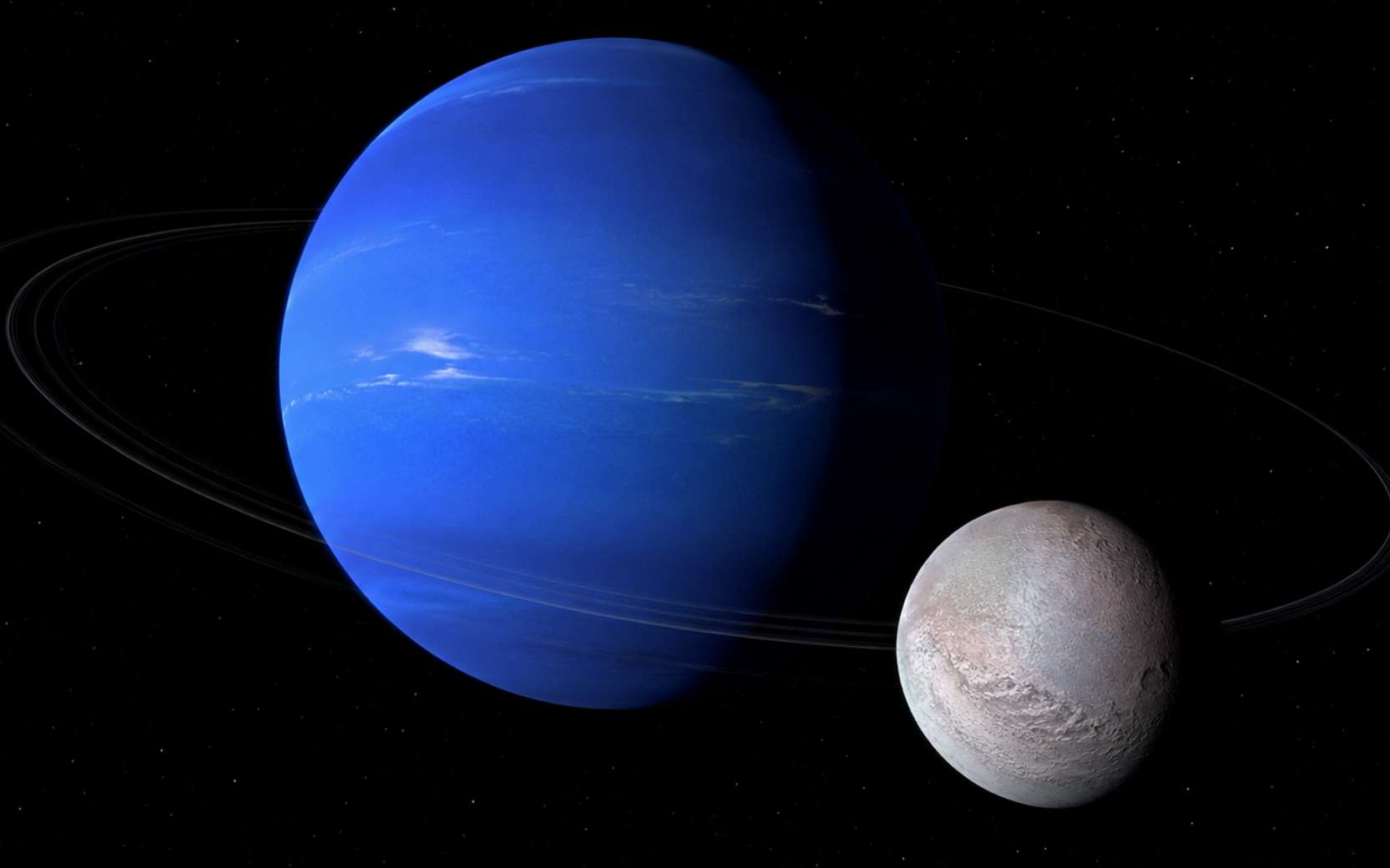
Des lunes de Neptune seraient nées de catastrophes cosmiques !

Certaines des caractéristiques du Système solaire, à commencer par l'origine de la Lune, s'expliquent par des événements et des scénarios violents. Que faut-il en penser dans le cas de certaines des lunes de Neptune depuis que le télescope James-Webb a pris le relais de Hubble ?

  •  

Spain commits up to $2.3 billion for national military communications for IRIS²

WARSAW, Poland — The Spanish government announced it will allocate between 1.6 billion and 2 billion euros ($1.8 to $2.3 billion) to develop a national military satellite communications constellation that […]

The post Spain commits up to $2.3 billion for national military communications for IRIS² appeared first on SpaceNews.

  •  
❌