Login

A Construction Crew Was Demolishing a House—And Uncovered a $10 Million Gold Hoard
Forty gold bars and 4,000 coins turned up mid-renovation—and the mystery only deepens from there.

© Jairo Mesa

Forty gold bars and 4,000 coins turned up mid-renovation—and the mystery only deepens from there.
© Jairo Mesa
For the fourth time in four years, Peacock has raised its prices.
The Select plan, which has ads and doesn’t include sports, movies, or Peacock originals, went from $8/month to $9/month. The monthly fee for the standard ad plan (Premium) went from $11/month to $13/month, and the ad-free plan (Premium Plus) went from $17/month to $20/month. Annual pricing, as previously, offers 12 months for the price of 10 months.
Peacock’s previous price hike was in July 2025, when the middle tier (with ads) went from $8/month to $11/month, and the ad-free plan increased from $14 to $17. Peacock also raised prices in July 2024 and August 2023. NBCUniversal launched the service in 2020.


© Jakub Porzycki/NurPhoto via Getty Images
As smartphone designs have become more refined, they've also become less repairable. Fairphone bucks that trend, offering devices that can be fully disassembled and serviced using a single screwdriver. But its devices were a pain to get in the US until now.
The Dutch company has launched the Fairphone Gen 6+ in the US, offering not only the phone but a full line of accessories and replacement parts so you can keep your phone running for years. And yes, the battery is removable.
Don't expect the Fairphone Gen 6+ to blow you away in the spec department—it focuses on being repairable and paying workers a fair wage. Half of the phone is made from recycled materials, and it has a microSD card slot. How retro.
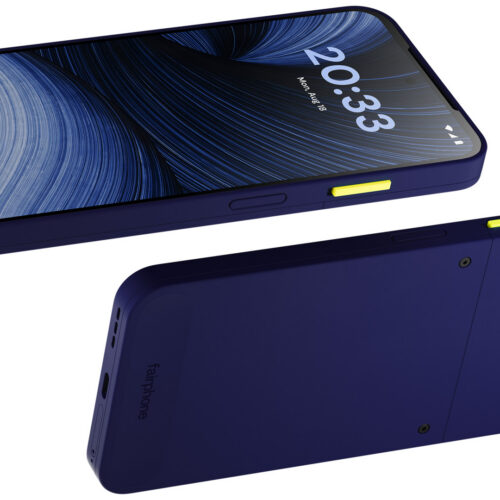
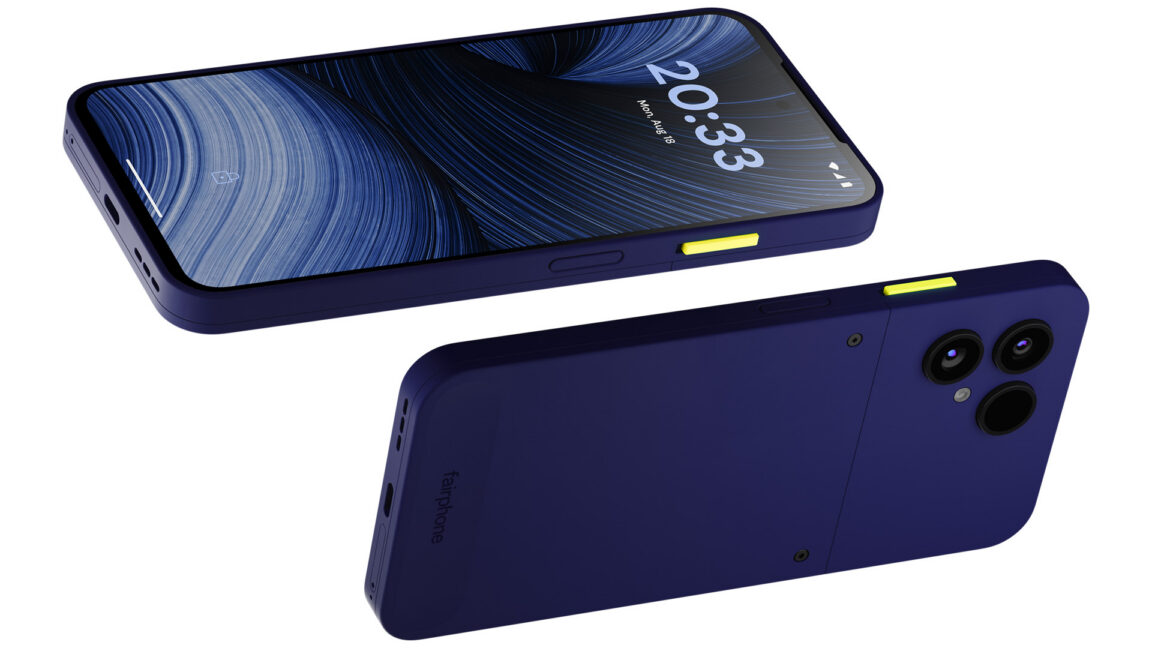
© Fairphone
The multiplier is currently at 48, and the baseline has moved to 47.69 before the new rate kicked in. Based on this:
| Date | Multiplier | Months elapsed | Doublings completed |
|---|---|---|---|
| Dec 31, 2026 | 122 | 4.47 | 1.35 |
| Dec 31, 2027 | 1,513 | 16.46 | 4.99 |
| Dec 31, 2028 | 18,914 | 28.48 | 8.63 |
⁃ Patrick Wood, Editor.
Over the past few years, the rapid advancement of AI technology has changed the world in a lot of ways. However, OpenAI CEO Sam Altman thinks some more drastic changes are coming within the next six months, but the media community is not necessarily happy about it.
During a recent interview, Altman said that a “descendant of ChatGPT” will be able to essentially watch your computer and phone screen constantly, learn your behavior, and make suggestions, which sparked widespread concerns from the sports media community.
During a recent interview with Cory Levy, founder of Z Fellows, Altman outlined what he sees as the incoming developments in AI technology.
“I think we are close to a world where you have, like, a descendant of ChatGPT watch your computer screen all of the time. Watch every meeting you’re in – record every call, everything like that – have perfect context of your whole life, everything you see. You choose what information you want it to have, but you can connect it to your texts or email or docs or Slack,” Altman said during the interview.
“Then you have this thing that is not making decisions for you, but if you’re like the CEO of a startup, there is always more stuff to do than you can do,” Altman continued. “You can have this thing that’s working alongside you.”
“I think that we’re only like, one model generation away from this actually being incredibly useful,” Altman said. “And I think, hopefully, for me, it will change the way I work.”
Altman was asked his best guess on the timing for something like this.
“Sometime in the next six months,” he speculated.
While Altman undoubtedly made these comments to drum up excitement, the sports media community had the opposite reaction, as they expressed outrage at the world that Altman described.
“There are only two AI update announcements at this point. It’s either: 1. We created a powerful new tool with obvious and immediate capacity to be abused by tyrannical authorities. or 2. We found a new way to separate you from any aspect of your own lived experience,” wrote Ben Fowlkes of Yahoo Sports.
“Counterpoint: s**k my d**k,” wrote prominent Barstool Sports personality PFT Commenter.
“Only the biggest losers alive actually want this,” wrote B.W. Carlin, founder of Bad Brain Digital Consulting, who previously worked for Barstool and Sports Illustrated.
“nah homie you can keep that [expletive],” prominent sports journalist Bomani Jones wrote in a post.
“I’m not sure I’ll ever be able to comprehend how anyone can hear this and think ‘oh hell yeah,’” wrote prominent San Antonio Spurs writer Matthew Tynan in a post.
“And what good comes from this exactly?” wrote prominent NBA podcaster Chris of Hoop Spaces in a post on X.
“Has he ever listened to anything he says? Cause this sounds alarming. Not helpful,” wrote longtime NFL and NBA writer Scott Kacsmar in a post.
Altman may be excited for these changes, but it’s clear that not everyone is happy to step into the world that he described.

This new organoid will provide valuable insight into how the brain—both mouse and human—develop in the body.

© Dragon Claws
Alessandro Carrozzi, taken near Palencia, Spain The Sun’s corona glows in all its glory in this high-dynamic range image taken during totality on Aug. 12. Bright prominences are visible at the Sun’s limb, as well as faint outer structures formed by the solar wind streaming out along magnetic field lines. Earthshine is also apparent, dimlyContinue reading "The corona from Spain"
The post The corona from Spain appeared first on Astronomy Magazine.
During the total solar eclipse of Aug. 18, 1868, two astronomers, Pierre Jules César Janssen of France and J. Norman Lockyer of England, each independently discovered a new line in the Sun’s spectrum. Lockyer thought it showed an undiscovered element, which he named helium. (In Greek mythology, Helios was the Sun god.) Although scientists wouldContinue reading "Aug. 18, 1868: Helium is discovered"
The post Aug. 18, 1868: Helium is discovered appeared first on Astronomy Magazine.
Decades of tagging data suggest lake sturgeon could live well past 400 years old.

© Dmytro Ostashuk
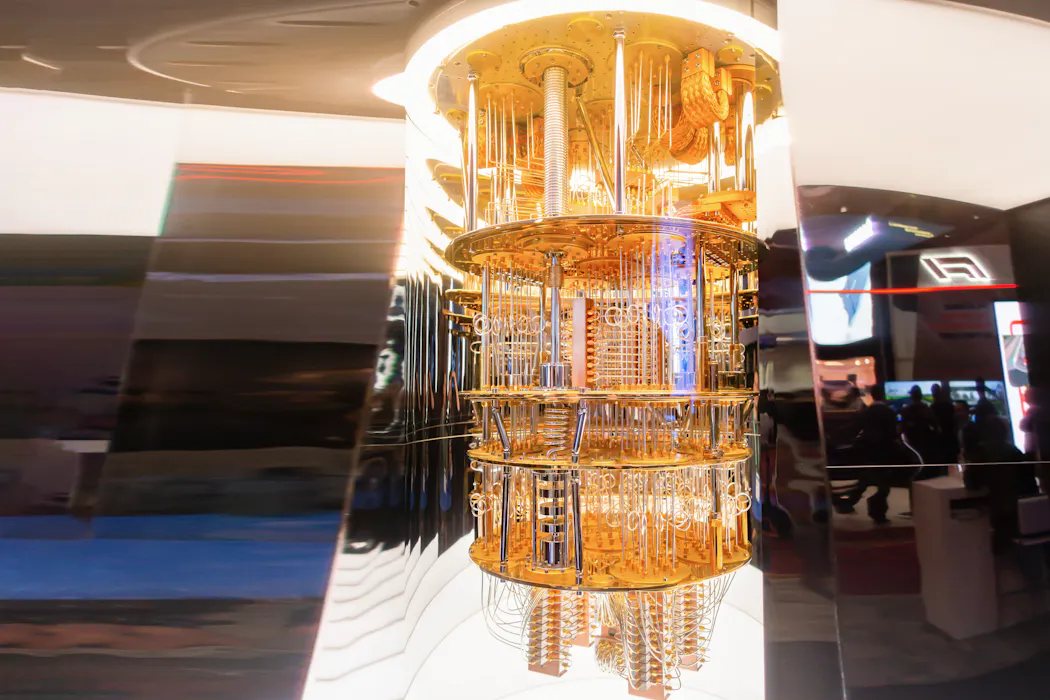
In the global race to build bigger and better quantum computers, researchers have taken a step forward. A new machine called Helios is a radically different system compared to other quantum computers.
Quantum computers harness the power of quantum mechanics, the laws that govern how physics operates at atomic and sub-atomic scales. Among various designs for such machines, Helios is a trapped-ion quantum computer, which means it uses charged atoms suspended in free space using electromagnetic fields.
It operates using 98 qubits – the units of information that a quantum computer uses to process data. This number of qubits makes it the largest trapped-ion quantum computer built so far. Quantinuum, the company behind the device, which is based in Cambridge, UK and Broomfield, Colorado, demonstrated earlier machines operating on 32 qubits in 2023 and 56 qubits in 2025.
Helios and its predecessors use an architecture (or operational structure) with separate regions for storing and processing quantum information. The architecture is called a QCCD (quantum charge-coupled device) and was invented in 2002. This is akin to the architecture of classical computers that have a memory for storage (hard disk drives, solid state drives) and a separate processor (CPU, GPU).
The specific geometry of Helios resembles a rosette, with the ring for storage and two streamers for processing. The crucial element is the four-way X junction where they meet. A QCCD physically transports the charged objects (the ions) from the storage to the processing regions electrically.
The processing is done using laser pulses. This requires a quantum algorithm to be broken up into ion transport and quantum processing. This differs substantially from other quantum computing architectures such as superconducting qubits, where the qubits are fixed in space, and processing is executed by electrical signals switched on and off in time.
Classical charge-coupled devices, the template for the types now used in Helios, were the central component in early digital cameras. There are three main advantages to now using these in quantum computation.
Gates are the fundamental building blocks of quantum circuits, which operate on qubits. One advantage of the QCCD approach is that gates operating on certain qubits do not affect their neighbours. This reduces a phenomenon known as “crosstalk”, leading to better quality performance.
The second advantage is the ability to measure and reset qubits during a computation. This enables inevitable errors in the computation to be detected and corrected at the earliest possible time, again improving performance.
Finally, as qubits can be accessed from and returned to very different parts of the memory after processing (within limitations), distant qubits can be connected, leading to more efficient operation.
The Helios device demonstrated all the above advantages. It relies on two major advances – one in hardware and one in software. First, the four-way X junction lets the system handle several tasks at once rather than one at a time, which is much faster. That was impossible in earlier QCCD machines, which could only move data back and forth in a single line or loop.
Secondly, judicious use of the freedom offered by the two dimensions of the X junction relies on a new classical control software called Helios runtime which plans the smartest, fastest route for moving and processing the data.
Together, these represent a substantial advance in the engineering of quantum computers. An important consequence is that Helios can perform computations that cannot be performed even on the largest supercomputers using known methods within reasonable amounts of time and power consumption.
It shows the ability of this device, and its successors, in surpassing the computational prowess of classical computers – albeit their algorithms and hardware are rapidly advancing too.
Having said that, Helios’ computations have just been random benchmark tests, so the practical importance of this leap forward is still limited. To perform quantum computations of practical importance from areas of science and commerce, even the most optimistic estimates suggest that quantum computers must be enormously bigger and better – of the order of a million qubits.
The UK National Quantum Strategy Mission 1 proposes to have a fault-tolerant quantum computer (FTQC) with a trillion operations. For reference, the longest computation Helios ran had about 4,000 operations operating on 98 qubits.
Building FTQCs out of the Helios device, or any other known architecture or system for that matter, remains a formidable challenge. As the numbers suggest, it would require connecting thousands of QCCD devices, each with thousands of qubits, via quantum links.
Visions exist for QCCD devices with a two-dimensional grid layout resembling city streets that can operate on thousands or more qubits. The inevitable challenge of engineering and operating such a system with an immense number of junctions and concomitant qubit-jams – akin to traffic jams – is yet to be encountered, let alone overcome. The physical transporting of qubits is also a very slow process because it uses very precise voltages, and this will only grow with larger devices and more qubits.
As of now, the Helios device is an exciting advance in the field of quantum computing. Whatever form the FTQCs of the future take, they will involve imaginatively engineered quantum hardware devices assisted by smart software.

Animesh Datta receives funding from the UKRI, Horizon Europe programme, UK Space Agency, and European Space Agency.
Forget diamonds—meteorites were an aristocrat’s best friend.

© ANDRZEJ WOJCICKI
A fortified Roman camp, complete with a bakery and blacksmith’s forge, is still emerging from the soil.

© Mariana-Rusanovschi


© Rest of World/iStock
Looking for a sky event this week? Check out our full Sky This Week column. August 17: Mars at Gemini’s feet Wait until after about 10 P.M. tonight to begin your deep-sky observing and the Moon won’t be a bother. An excellent target is NGC 6939, an open cluster in Cepheus the King. This cluster is quiteContinue reading "The Sky Today on Tuesday, August 18: Stars and sparklers"
The post The Sky Today on Tuesday, August 18: Stars and sparklers appeared first on Astronomy Magazine.