❌

Reading view

China-Linked Hackers Used AI To Run First-Ever 'Autonomous' Cyberattack On Taiwan

Researchers at Israeli cybersecurity firm Dream say suspected China-linked hackers used an open-source AI-agent system to conduct what may be the first observed end-to-end autonomous cyberattack against a government. According to the Financial Times (paywalled), the attack compromised at least 85 accounts and resulted in the theft of more than 2,500 personnel records from Taiwanese systems. Tom's Hardware reports: The campaign reportedly ran for four days at the beginning of July and at times deployed as many as eight autonomous agents in parallel. Dream said the system mapped 21 government systems before compromising user accounts and extracting personnel information. The attackers subsequently expanded their activity to Taiwan's nuclear safety agency, at least seven energy companies, government suppliers, and other government systems. Dream says it found the evidence inside a 160-megabyte (160MB) online archive that surfaced during its broader tracking of cyberthreat actors. The archive reportedly held 1,395 files showing that the tool was built on two open-source AI agent systems -- Hermes and OpenClaw -- both of which can be downloaded freely and are designed to let large language models carry out multi-step tasks on their own. Researchers could not determine which underlying model powered the agents, but the data reportedly showed the model's safeguards had been sidestepped by presenting the intrusion as an authorized penetration test rather than a real attack. Of particular concern is that the toolkit for the hack comprised such easily available systems, neither of which was purpose-built for offense. The operators appear to have assembled a capable autonomous tool out of components any developer can pull down and run. What the researchers describe as the tool's most striking feature was its ability to continuously devise attacks on its own, rather than follow a preprogrammed route. The platform continuously assessed available evidence, ranked possible attack paths, and reprioritized them as circumstances changed. When one technique failed, the tool tasked another agent with searching the internet for information and developing an alternative approach.

Read more of this story at Slashdot.

  •  

Driver Pulls Up Directly to Firehouse When His Tesla Inexplicably Bursts Into Flames

At this point, it’s a pretty well known fact that electric vehicles — and, at least in the popular imagination, Teslas especially — have a nagging habit of erupting into flames.

One Tesla owner in Maine evidently has that concern hovering in the back of their mind every time they leave the driveway.

While driving around the town of Tremont in a sleek red Model S, an unnamed driver hit an object on the road which punctured the vehicle’s lithium-ion battery, local station WABI5 reported. As most EV drivers are hopefully aware, any kind of damage to a car’s battery can easily spark a fire fueled by thermal runaway, resulting in a uniquely dangerous inferno that can be difficult to put out.

Luckily, this driver kept their head, driving straight to the Tremont fire station where the high-voltage battery immediately burst into flames, Bangor Daily News reported.

With help from the nearby Southwest Harbor Fire Department, the crew of the Tremont Volunteer Fire Department sprang into action, shutting down the road and dousing the Tesla using an arsenal of firehoses.

Based on photos of the incident, it seems the Tesla was totaled, but the driver is said to be doing alright.

The Tremont fire comes just days after an exploding Tesla in Seattle sent two firefighters to the hospital. That particular EV was parked inside an attached garage at the time, resulting in a two-alarm housefire that displaced an unfortunate family.

All told, if you drive an EV, it’s probably smart to have the address of the nearest fire department drilled into your head — especially if it’s a Tesla.

More on Tesla: It’s Looking Like the Cybertruck Is the Biggest Flop in Automotive History

The post Driver Pulls Up Directly to Firehouse When His Tesla Inexplicably Bursts Into Flames appeared first on Futurism.

  •  

Hallan en Bolivia un altar ritual con campanas piramidales de cobre que revelan el poder de los sonidos sagrados en el Imperio Inca

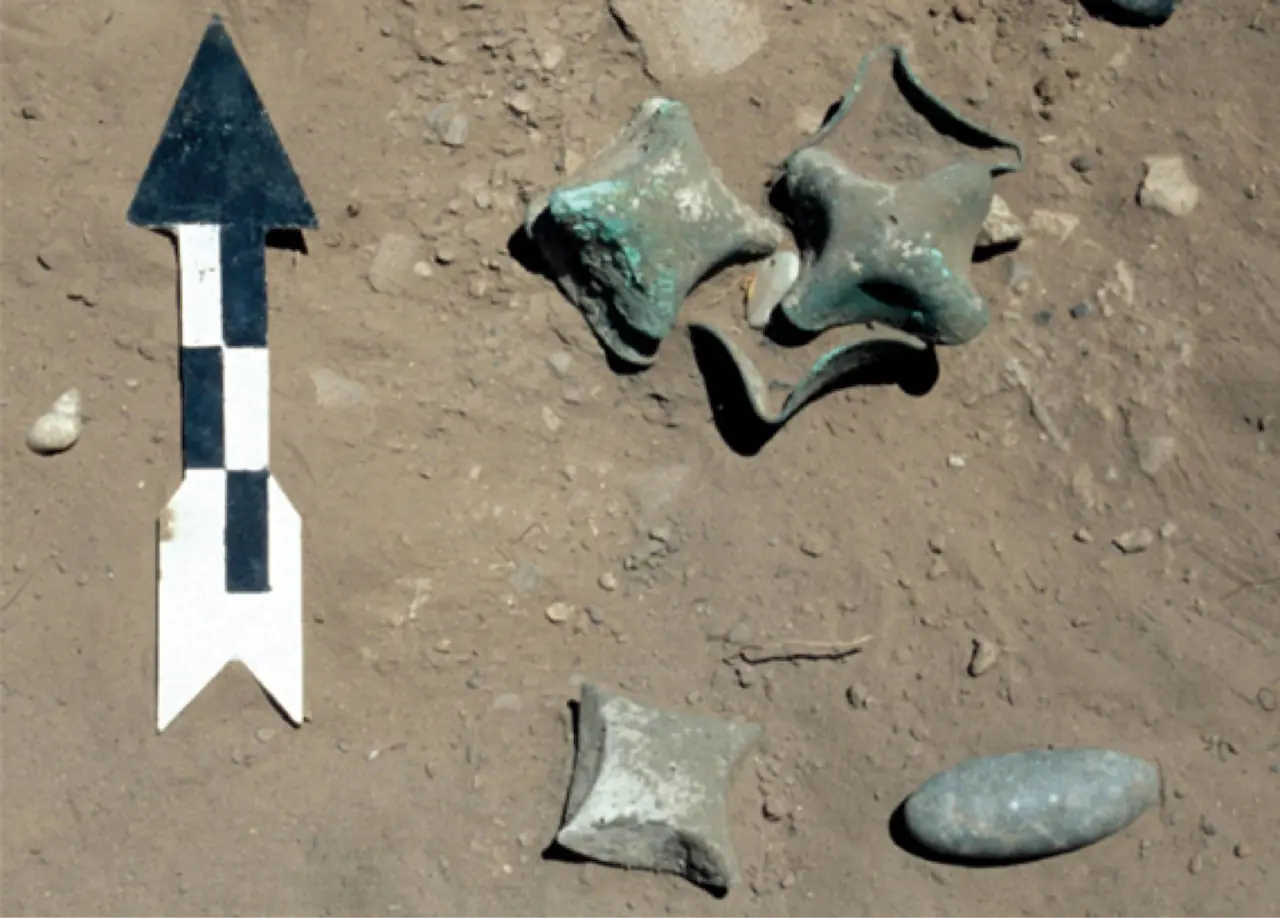
En lo alto de un antiguo almacén de granos, en un asentamiento de la élite local yampara, los arqueólogos Sonia Alconini y Walter Sánchez-Canedo han sacado a la luz un hallazgo excepcional: un conjunto de seis campanas de cobre dobladas en forma piramidal, depositadas como ofrenda ritual hace más de cinco siglos, durante la expansión […]

  •  

An altar with pyramidal copper bells found in Bolivia reveals the power of sacred sounds in the Inca Empire

Atop an ancient grain storage building, in a settlement of the local Yampara elite, archaeologists Sonia Alconini and Walter Sánchez-Canedo have uncovered an exceptional find: a set of six copper bells folded into a pyramidal shape, deposited as a ritual offering more than five centuries ago, during the expansion of the Inca Empire through the […]

  •  

Así vivían y se alimentaban los celtas hace 2000 años antes de que llegasen los romanos: cereales y frutos silvestres, pero nada de legumbres

Hace más de dos mil años, en plena Edad del Hierro, los celtas construyeron un gran asentamiento fortificado en dos penínsulas que se adentraban en el río Rin, cerca de lo que hoy es la ciudad suiza de Schaffhausen. Este lugar, conocido como el oppidum de Altenburg-Rheinau, está considerado por los arqueólogos como una auténtica […]

  •  

Trofonio, el oráculo griego que dejaba a sus visitantes incapaces de reír durante meses

En la Antigua Grecia había una expresión para describir a alguien que había vivido una experiencia aterradora: se decía de él que había bajado a la cueva de Trofonio. No era una metáfora vacía. En Lebadea, una ciudad de Beocia situada a unos 120 kilómetros al noroeste de Atenas, existió durante más de mil años […]

  •  

Arkansas researchers map genetic neighborhoods to identify disease-causing bacteria

Scientists in Arkansas have developed a machine-learning approach that can identify potentially disease-causing strains of a poultry bacterium by analyzing not only which genes are present, but also how those genes are arranged across the genome. The method focuses on the “genetic neighborhoods” surrounding genes, offering a new way to distinguish harmful strains of Enterococcus cecorum from closely related strains that do not cause disease.

E. cecorum is commonly found in poultry environments, and many of its strains are harmless. However, pathogenic strains can cause arthritis, bone infections and lameness, creating serious animal-welfare problems and economic losses for poultry producers. Because pathogenic and nonpathogenic strains can share many of the same genes, identifying the genetic features associated with disease has been challenging.

The research team, led by Aranyak Goswami of the Arkansas Agricultural Experiment Station’s Center for Agricultural Data Analytics, examined the organization of genes within genomic islands. These are segments of DNA that bacteria often acquire from other microorganisms through horizontal gene transfer. Genomic islands can carry genes involved in antibiotic resistance, bacterial survival, movement of DNA and virulence, making them important regions for understanding how pathogens emerge.

Rather than treating the bacterial genome as a simple list of genetic components, the researchers analyzed it as a structured map. They investigated which genes occurred near one another, the order in which they appeared and the way groups of neighboring genes formed recurring units known as genomic-island cassettes. This architecture provided information that could be missed when genes are examined individually.

“The machine-learning model recognizes patterns in gene order much like it recognizes patterns in language,” Goswami said. In the same way that a language model can learn that certain words frequently appear together, the computational system learned that particular combinations and arrangements of bacterial genes were associated with pathogenic strains. The approach therefore captures relationships among genes rather than relying only on the presence or absence of individual DNA sequences.

For the proof-of-concept study, the researchers analyzed the genomes of 145 E. cecorum strains isolated from poultry. The dataset included 95 nonpathogenic strains and 50 pathogenic strains capable of causing illness. The analysis found that disease-associated strains were more likely to contain genomic islands enriched in genes linked to antimicrobial resistance and the transfer of genetic material between bacteria.

Those findings do not mean that every bacterium carrying such genes will necessarily cause disease. Instead, the researchers describe the system as an exploratory classification and research tool. It identifies patterns that may help scientists investigate why some bacterial lineages become harmful, while also providing clues about how resistance and virulence traits move through bacterial populations.

Current monitoring methods for E. cecorum often depend on culturing the bacterium or screening for specific genes. Such techniques remain valuable, but they may overlook broader genomic relationships. The new pipeline could complement these approaches by evaluating the wider context in which genes occur. Additional testing with larger and more geographically diverse datasets will be necessary before the method can be used for routine flock surveillance or diagnostic decision-making.

The researchers believe the strategy could eventually be adapted to other bacterial species affecting animals, humans, wildlife and plants. Goswami’s team is beginning to examine Enterococcus faecalis, a close relative of E. cecorum and a frequent cause of hospital-acquired infections in humans. They also plan to apply the pipeline to Escherichia coli and other bacteria to study how nonpathogenic lineages acquire the genomic configurations associated with disease. The study, published in Frontiers in Microbiology, demonstrates how machine learning and comparative genomics can reveal hidden signals in bacterial DNA and may help researchers track the evolution of emerging pathogens.

Subject of Research: Animals

Article Title: Genomic-island cassette architecture provides interpretable signal for exploratory classification of poultry-associated Enterococcus cecorum lineages

News Publication Date: 7-Jul-2026

Web References: https://doi.org/10.3389/fmicb.2026.1882753

References: Frontiers in Microbiology, DOI: 10.3389/fmicb.2026.1882753

Image Credits: UA University Relations photo by Chieko Hara

Keywords: artificial intelligence, machine learning, deep learning, computational biology, bacterial pathogens, Enterococcus cecorum, genomic islands, genomic architecture, antibiotic resistance, poultry disease, pathogen surveillance, comparative genomics

  •  

New Evidence Reshapes Understanding of Cereal Domestication’s Earliest Stages

Around 11,000 years ago, communities in southwest Asia began one of the most consequential experiments in human history: growing their own food. Wild cereals, legumes and fruit-bearing plants were gradually brought under human management, setting in motion the transition from mobile hunter-gatherer lifeways to farming societies. For decades, archaeologists have assumed that one of the earliest signs of this transformation was an increase in cereal grain size. A new study, however, suggests that some of the biggest grains found at the dawn of agriculture may not have been genetically altered at all. They may simply have grown in wetter conditions.

The findings, published in the Proceedings of the National Academy of Sciences, challenge a central assumption about how cereal domestication began. Researchers studying charred barley and emmer wheat grains from the Early Neolithic sites of el-Hemmeh and Sharara in the southern Levant found that the plants still possessed fully wild characteristics during the earliest phases of the Pre-Pottery Neolithic. Their ears had brittle rachises, the structures that naturally break apart when mature, allowing seeds to disperse in the wild. There was no evidence of the tough, non-shattering rachis that later became one of the defining features of domesticated cereals.

The absence of non-shattering forms is significant because a tough rachis makes harvesting far more efficient. In wild cereals, the rachis fractures as the plant ripens, scattering seeds before people can collect them. A mutation that keeps the grains attached would have offered major advantages to human harvesters and could then have spread through repeated cultivation and replanting. Researchers have therefore often treated the appearance of non-shattering cereals as a key marker of domestication. Grain size, by contrast, has frequently been interpreted as an earlier signal that people were already selecting plants through cultivation.

At el-Hemmeh and Sharara, however, grain size told a more complicated story. Barley and emmer wheat remained morphologically wild, yet their grains varied dramatically. Some were as small as typical wild cereals, while others fell within the size range commonly associated with domesticated plants. If large grains were the product of genetic selection caused by systematic tillage, the researchers expected to find other evidence of intensive cultivation. Instead, the ecological evidence pointed toward relatively low-disturbance environments.

The team examined the weed species preserved alongside the cereal remains. Weeds are valuable archaeological indicators because different plants thrive under different environmental conditions. Species associated with heavily tilled or frequently disturbed soils were not dominant in the assemblages from these early sites. This weakened the argument that repeated ploughing or intensive soil preparation had already created strong selection for larger seeds. The researchers began looking for another explanation for the striking variation in grain size.

Their answer came from stable carbon isotope analysis. Carbon exists in several naturally occurring forms, or isotopes, and plants incorporate these isotopes in ways that are influenced by their growing conditions. In cereals, the stable carbon isotopic composition of a grain can reflect the balance between carbon uptake and water loss during photosynthesis. When plants experience water stress, changes in gas exchange through their leaves alter the carbon isotope signal recorded in their tissues. By measuring this signal in ancient grains, scientists can reconstruct aspects of the moisture conditions under which the plants grew.

The results showed a strong relationship between grain size and water availability. Barley grains that reached domestic-sized dimensions had carbon isotope values indicating that they developed under wetter conditions. Smaller, wild-sized grains carried signatures consistent with considerably drier growth environments. The difference suggests that environmental moisture, rather than inherited genetic change, was responsible for much of the early increase in cereal grain size. In other words, the same wild plant population could produce grains of very different sizes depending on the conditions it experienced during development.

This phenomenon is known as developmental plasticity: the ability of a single genotype to produce different physical traits in response to the environment. It is widespread in plants and can affect characteristics such as height, leaf area, flowering time and seed production. In the Early Holocene southern Levant, developmental plasticity may have created the visual impression that cereals were already becoming domesticated. People collecting and replanting the largest grains might eventually have generated genetic selection, but the initial size increase itself appears to have been ecological rather than evolutionary.

“Environmental conditions provided a much better explanation for the observed variation in grain size than genetic selection under tillage,” said Dr Jade Whitlam of the University of Oxford, who led the study. The researchers propose that genetic selection for larger grains may have occurred later than previously thought, perhaps after selection for non-shattering rachises had already begun. This reverses the sequence often assumed in models of domestication and places greater emphasis on the complex interaction between climate, plant biology and human harvesting practices.

The study also reframes the origins of agriculture as a gradual process of niche construction rather than a sudden decision to domesticate plants. Early communities altered their relationship with wild vegetation through harvesting, protection, transport and repeated use of particular landscapes. These practices may have changed plant populations long before crops displayed unmistakable domestication traits. By combining archaeobotany, weed ecology and stable isotope evidence, the researchers argue that the first steps toward agriculture were not necessarily driven by deliberate genetic engineering of crops, but by prolonged human management operating within a variable environment. The result is a more nuanced picture of farming’s origins—one in which climate could temporarily make wild cereals look domesticated before their genomes caught up.

Subject of Research: The environmental and biological processes that influenced cereal grain size and plant domestication in the Early Holocene southern Levant.

Article Title: Developmental plasticity under human management shaped cereal evolution prior to domestication in the Early Holocene southern Levant

News Publication Date: 4-Aug-2026

Web References: https://www.eurekalert.org/multimedia/1146086

References: Proceedings of the National Academy of Sciences. DOI: 10.1073/pnas.2535274123

Image Credits: Jerome Poulalier, www.jerome-poulalier-photography.com

Keywords: Archaeology, archaeobotany, cereal domestication, agriculture, Neolithic, Early Holocene, southern Levant, barley, emmer wheat, stable carbon isotopes, developmental plasticity, plant evolution, climate, hunter-gatherers

  •  

Your Motorola phone is getting Android 17 – here's who's first

What you need to know

  • Motorola has confirmed 50+ devices for the stable Android 17 update.
  • Newer Razr and Edge models are expected to receive Android 17 before older devices.
  • Several Moto G models, including the G Stylus 2026, G Power 2026, G87, G86, G77, G67, G57, G47, and G37, are eligible.

Motorola has just announced a massive list of more than 50 devices that will be getting the stable Android 17 update, and the rollout has already started. But before you start clicking the "Check for updates" button, you need to know who gets it first and who’s stuck waiting.

The stable rollout has already begun with the Motorola Edge 2025, with newer premium devices like the Razr 70 series and Edge 70 lineup likely to be given priority, as per the company's announcement on its Spanish website. Motorola says the update will roll out gradually to other eligible models in the coming weeks and months.

Interestingly, this rollout has been in the works for months. Motorola’s Android 17 beta program started just days after Google released Android 17 Beta 1 in February, putting it ahead of a few rival Android brands. This was notable as Motorola was still working on rolling out Android 16, with some eligible phones still waiting months for the last big update.

The confirmed Android 17 roster is a massive one. It includes the Motorola Signature and a long list of Razr models, as follows:

  • Motorola Razr 70 Ultra
  • Motorola Razr 70 Plus
  • Motorola Razr 70
  • Motorola Razr Ultra 2026
  • Motorola Razr+ 2026
  • Motorola Razr 2026
  • Motorola Razr Fold 2026
  • Motorola Razr Fold 2025
  • Motorola Razr 60 Ultra
  • Motorola Razr 60s
  • Motorola Razr 60d
  • Motorola Razr 60
  • Motorola Razr Ultra 2025
  • Motorola Razr+ 2025
  • Motorola Razr 2025
  • Motorola Razr 50 Ultra
  • Motorola Razr+ 2024

The Edge series also gets the same treatment, covering the Edge 70 family, Edge 2026, Edge 2025, Edge 60 series, and Edge 50 Ultra.

  • Motorola Edge 2026
  • Motorola Edge 70 Pro+
  • Motorola Edge 70 Pro
  • Motorola Edge 70 Max
  • Motorola Edge 70 Neo
  • Motorola Edge 70 Plus
  • Motorola Edge 70 Fusion+
  • Motorola Edge 70 Fusion
  • Motorola Edge 70
  • Motorola Edge 2025
  • Motorola Edge 60 Stylus
  • Motorola Edge 60 Pro
  • Motorola Edge 60 Fusion
  • Motorola Edge 60
  • Motorola Edge 50 Ultra
  • Motorola Edge 60

Even the cheaper Moto G phones from Motorola aren’t being left behind. The list also includes:

  • Moto G Stylus 2026
  • Moto G Power 2026
  • Moto G Play 2026
  • Moto G 2026
  • Moto G 2025
  • Moto G Power 2025
  • Moto G Stylus 2025
  • Moto G Max
  • Moto G87
  • Moto G86
  • Moto G86 Power
  • Moto G77
  • Moto G77 Power
  • Moto G67
  • Moto G57
  • Moto G57 Power
  • Moto G47
  • Moto G37
  • Moto G37 Power

Motorola’s Android 17-based HelloUI update introduces Live Updates in a Dynamic Island style, the Qira Moto AI assistant, lock-screen customization options, resizable Quick Settings tiles, refreshed haptics, tinted icons, and a redesigned volume panel.

Remember, rollouts will differ by region and carrier. If your Motorola is on the list, you should eventually see the update pop up under Settings > System > System updates.

  •  

Descubren que las rocas volcánicas de la Tierra primitiva contenían fósforo reactivo, y eso explica uno de los enigmas más antiguos sobre el origen de la vida

Durante más de siete décadas, el fósforo ha representado una de las grandes paradojas en el estudio del origen de la vida. Este elemento, indispensable para la existencia de los seres vivos tal como los conocemos, constituye el esqueleto estructural del ADN y del ARN, permite a las células almacenar y transferir energía mediante la […]

  •  

Una expedición británica abandonó un fósil en la cima de una isla ártica en 1948 por no poder cargarlo: 78 años después resultó ser el mayor depredador de su especie jamás hallado

Le sacaron algunas fotos, se llevaron un par de huesos sueltos y dejaron el resto expuesto al viento y la lluvia polar. Nadie volvió a pensar en ese fósil durante 37 años, hasta que un grupo de geólogos noruegos tropezó con él por pura casualidad. Ni ellos, ni nadie, imaginó en ese momento que estaban por reescribir el árbol genealógico de uno de los grupos de depredadores acuáticos más extraños del Triásico

  •  

El calendario maya escondía un mecanismo matemático que podía anticipar eclipses durante siglos: ahora sabemos cómo funcionaba

Durante más de un siglo, los investigadores supieron que el Códice de Dresde contenía una extraordinaria tabla de eclipses, pero no estaba claro cómo los astrónomos mayas conseguían mantenerla precisa durante generaciones. Un nuevo análisis encontró la clave: no reiniciaban sus cálculos desde cero, sino que superponían ciclos lunares estratégicamente.

  •  

Dos modelos premium aos mais “económicos”: 12 smartphones com as melhores câmaras que pode comprar em Portugal

Fomos procurar quais os smartphones com as melhores câmaras à venda em Portugal, dividindo-os em duas categorias, sem limite de preço e até 500 euros. Explicamos também quais os critérios que deve ter em contra na hora de escolher.

The post Dos modelos premium aos mais “económicos”: 12 smartphones com as melhores câmaras que pode comprar em Portugal appeared first on Tek Notícias.

  •  
❌