❌

Reading view

Water Found in Stellar Envelope Near the Milky Way’s Central Black Hole

Astronomers using NASA’s James Webb Space Telescope have discovered water molecules inside the enormous envelope of gas and dust surrounding IRS 3, an aging star located remarkably close to the supermassive black hole at the centre of the Milky Way. The finding challenges the long-held assumption that the intense radiation and gravitational turbulence around Sagittarius A, commonly known as Sgr A, would prevent molecules from surviving in such a hostile environment.

IRS 3 lies about 0.6 light-years from Sgr A*, a distance equivalent to roughly 42,000 times the separation between Earth and the Sun. In everyday terms, that is an immense distance. On the scale of the Galactic Centre, however, it places the star in the immediate neighbourhood of a black hole containing approximately four million times the mass of the Sun. The region is crowded with stars, powerful magnetic fields, energetic particles and rapidly changing radiation, making IRS 3 an exceptional natural laboratory for studying how stars evolve under extreme conditions.

The observations were conducted with the Mid-Infrared Instrument, or MIRI, aboard the James Webb Space Telescope. Mid-infrared light is particularly useful for investigating cool dust and molecules that absorb and re-emit radiation at characteristic wavelengths. By analysing the infrared spectrum of IRS 3, researchers led by PD Dr Florian Peißker of the University of Cologne identified the chemical and physical properties of the material surrounding the star with far greater detail than previous observations allowed.

What makes IRS 3 especially striking is the scale of its circumstellar envelope. The structure extends to a radius of approximately 10,000 astronomical units, where one astronomical unit is the average distance between Earth and the Sun. Such envelopes are common around mature, evolved stars, but IRS 3 appears to be unusually isolated in the immediate vicinity of Sgr A*. Its enormous shell of material therefore stands out against a dense background containing millions of other stars.

The new observations indicate that IRS 3 is undergoing a phase known as a superwind. This is a brief but dramatic stage in the late evolution of certain stars, particularly asymptotic giant branch stars. During this phase, powerful stellar winds carry gas and newly formed dust away from the star at extremely high rates. Over periods of only a few centuries, the star can lose a substantial fraction of its outer layers, transforming its surroundings into a thick, expanding envelope that will eventually disperse into interstellar space.

According to the research team, IRS 3 is losing material at a rate equivalent to the mass of Earth every 18 days. Although the comparison makes the scale easier to imagine, the total outflow is far more significant when considered over astronomical timescales. The steady loss of gas and dust explains why the envelope is both unusually large and dense. It also provides the raw material in which molecules can form, shielded within cooler regions of the expanding stellar outflow.

The detection of water is the most surprising aspect of the study. Near Sgr A*, ultraviolet radiation, X-rays and high-energy particles are expected to break apart fragile molecules. Water molecules can be destroyed when energetic photons dissociate them into their constituent atoms, particularly in exposed regions close to powerful sources of radiation. Yet the MIRI observations show that water exists within the envelope of IRS 3, suggesting that the dense outflow from the star creates protected pockets where molecular chemistry can proceed.

This discovery does not mean that the Galactic Centre is a calm or hospitable environment. Instead, it demonstrates that stellar mass loss can temporarily create its own chemical refuge. The material expelled by IRS 3 increases the density of gas and dust around the star, allowing some regions of the envelope to absorb damaging radiation. Within these shielded zones, atoms can combine on dust grains or in the gas phase, producing molecules that would otherwise be rapidly destroyed. The finding offers a new view of how evolved stars may enrich even the most violent regions of a galaxy.

The researchers say that IRS 3 may be actively supplying the area around Sgr A* with elements and molecules that later become part of the broader interstellar medium. Water itself is not evidence of life, but it is a crucial ingredient in planetary formation and a central component of the chemistry that precedes biology. As the envelope expands, some of its contents will eventually mix with surrounding gas, potentially influencing the composition of future stars, planets and smaller bodies formed in the Galactic Centre.

The study, published in Astronomy & Astrophysics, also highlights the scientific value of observing the Milky Way’s centre at infrared wavelengths. Visible light is heavily obscured by dust along the line of sight, while infrared radiation can pass through much of that material and reveal otherwise hidden structures. Future observations with METIS, a next-generation mid-infrared instrument being developed for the Extremely Large Telescope in Chile, could provide sharper views of IRS 3’s envelope, measure its winds in greater detail and determine how its molecular content changes over time. For now, the star’s unexpected water-rich cocoon is offering astronomers a rare glimpse of stellar chemistry unfolding beside one of the most extreme objects in the universe.

Subject of Research: Not applicable

Article Title: Dust production in the harsh environment of Sgr A* – MIRI/JWST observation of the O-rich asymptotic giant branch star IRS 3

News Publication Date: 11-Aug-2026

Web References: https://doi.org/10.1051/0004-6361/202660243

References: Astronomy & Astrophysics

Image Credits: ESO/F. Peissker

Keywords

James Webb Space Telescope, JWST, MIRI, IRS 3, Sagittarius A, Sgr A, Milky Way, Galactic Centre, water molecules, superwind, asymptotic giant branch star, stellar evolution, circumstellar envelope, dust production, black hole, infrared astronomy, Extremely Large Telescope

  •  

Google Just Updated Its Home Page to Replace the “Search” Button With a Bunch of AI

Since its earliest days, Google’s homepage has been iconic in its simplicity: a central text box and a big button labeled “Search.”

That’s now changing. As anticipated, many users are reporting that the “Search” button is no more, replaced by three buttons for various AI features: “Create images,” “Ask about files,” and “Brainstorm.” 

These are placed next to the lingering “I’m feeling lucky” button, which survived the chopping block. A separate “AI Mode” button that’s existed inside the search bar for some time now still features as well. Some of the options, like “Create images,” were already featured on the home page of the Google app.

Screenshot showing Google's new homepage, featuring several AI buttons and no classic "Search" button.

The change was first spotted on Monday by search engine experts. You can still perform a regular Google search — which are already pretty AI-laden — by hitting enter. But it’s clear that Google is further experimenting with its AI-centric vision for navigating the internet, though there’s a distinct sense of caution about how far the tech giant is willing to go.

Google Search’s vice president of product Robby Stein confirmed that this was a “small test.”

“This is a small test on desktop to help people find new things they can do with Search,” he wrote in a post on X. “No impact to how the core search box works.”

In May, Google teased an “intelligent” search box that expands into an chatbot-like experience as you type. It came loaded with AI features, including the ability to recruit AI agents to automate searches and an autocomplete feature to help finish your thoughts. 

The biggest change, however, was that the revamped search box showed conversational answers instead of Google’s classic “ten blue links” to other websites.

Experts viewed this as a threat to the open web. Instead of encouraging users to visit other websites, Google’s AI was pilfering and summarizing content into a single contained window. In the long run, this could starve websites of the much needed traffic they need to survive. This was already happening as more people turn to AI chatbots to get their answers instead of a search engine, causing some websites to start using ads that cater to robotic visitors.

Still, heavily AI-infused though it may be, the old-fashioned search hasn’t been completely replaced by Google — yet.

More on AI: AI Investors Are Suddenly Quaking in Their Boots

The post Google Just Updated Its Home Page to Replace the “Search” Button With a Bunch of AI appeared first on Futurism.

  •  

Dos modelos premium aos mais “económicos”: 12 smartphones com as melhores câmaras que pode comprar em Portugal

Fomos procurar quais os smartphones com as melhores câmaras à venda em Portugal, dividindo-os em duas categorias, sem limite de preço e até 500 euros. Explicamos também quais os critérios que deve ter em contra na hora de escolher.

The post Dos modelos premium aos mais “económicos”: 12 smartphones com as melhores câmaras que pode comprar em Portugal appeared first on Tek Notícias.

  •  

Why your Amazon order confirmation emails have become so unhelpful

Earlier this summer, Amazon customers began noticing that emails related to their online orders looked sparse: Order confirmation emails didn't name specific items anymore, and instead listed only item categories.

"Your Beauty item is confirmed!" an email about my retainer cleaning tablets read. Shoppers have posted other iterations of the redacted emails as well: "Ordered: 1 Hardware item," "Your Drugstore, Shoes, and other items are here!" and "1 Nutrition & Wellness, 1 Wireless Accessories," for example. The emails have clip art-style illustrations of general product categories, and a shopper has to exit their email and go to Amazon to …

Read the full story at The Verge.

  •  

Tests TDAH sur TikTok : le piège du faux diagnostic que dénoncent aujourd’hui les médecins

De plus en plus d’enfants et d’adultes reçoivent un diagnostic de TDAH. Faut-il y voir une dérive diagnostique ou, au contraire, le rattrapage d’années de sous-diagnostic ? Entre critères élargis, faux positifs et véritables troubles encore ignorés, les dernières études invitent à dépasser les...

  •  

Meta faces expensive child safety reckoning

Also: Google executives jump ship in race for AI dominance

Hello, TechScape readers! Danielle Abril, editor of the Guardian’s Reworked series on AI and the future of work, filling in for Blake Montgomery this week. Major legal battles against Meta over child safety are playing out in courts across the US – and the tech giant is losing. Recent rulings raise big questions about social media companies’ responsibility to their youngest users. Meanwhile, more key executives have jumped ship from Google as it battles OpenAI and Anthropic in the race for AI dominance, and Meta’s smart glasses face a fearsome backlash. Let’s dig in!

‘I’ve definitely lost followers’: influencers face backlash over Meta ‘pervert glasses’ content

This man was secretly snapped by someone with smartglasses. He’s not alone in calling that a violation of privacy

Tell us: do you believe you have been filmed by Meta’s smartglasses without your consent?

Restaurants, pubs and theatres ban Meta’s ‘spy glasses’ over privacy fears

‘I’m not spying’: how Meta’s smartglasses have divided opinion

Bernie Sanders calls on Silicon Valley to ‘pause AI development’ in interest of humanity

Rising number of UK children report seeing explicit deepfakes of themselves

The White House’s plan to vet potentially dangerous AI is cloaked in secrecy

‘This is very real redlining’: outrage in Little Rock as two datacenters loom

Safety fears as scientists make first viruses designed by AI

SpaceX beats revenue expectations in first earnings report after IPO crash

Continue reading...

© Photograph: Jill Connelly/Getty Images

© Photograph: Jill Connelly/Getty Images

© Photograph: Jill Connelly/Getty Images

  •  

Gemini ascolta di nascosto? Gli utenti segnalano attivazioni automatiche in auto

Gemini è di nuovo al centro dell'attenzione per un comportamento che diversi utenti Android, compresi alcuni proprietari di smartphone Pixel, ritengono tutt'altro che normale. In alcuni casi l'assistente AI di Google avrebbe iniziato a rispondere a conversazioni che avvenivano nelle vicinanze del telefono, senza che nessuno lo avesse chiamato in causa o avesse pronunciato una richiesta. La segnalazione più lampante che possiamo individuare su Reddit riguarda un Pixel 9a: il proprietario era in macchina con un amico e, mentre i due parlavano, Gemini è intervenuto con una risposta legata proprio a ciò che stavano dicendo.

PERCHÉ GEMINI HA INIZIATO AD ATTIVARSI DA SOLO

Non si sarebbe quindi trattato della classica attivazione accidentale provocata da una parola pronunciata per caso. La risposta ricevuta da Gemini era pertinente al discorso, circostanza che ha fatto pensare ad un'elaborazione del contenuto della conversazione e non alla semplice attesa del comando vocale.

Tutto sembra collegato alle modalità di guida di Google Maps e Waze. Stando alle segnalazioni raccolte dagli utenti, Google avrebbe modificato recentemente l'impostazione che consente di utilizzare Gemini in vivavoce durante la guida, arrivando ad attivarla anche su dispositivi nei quali era disabilitata. Alcune persone sostengono infatti di aver controllato l'opzione e di averla trovata nuovamente abilitata, senza il loro consenso.

(aggiornamento del 11 August 2026, ore 13:12)

CLICCA QUI PER CONTINUARE A LEGGERE

  •  

Gemini Notebook, in arrivo le app generate direttamente dai documenti

Google avrebbe in canna una novità piuttosto importante per Gemini Notebook (ex NotebookLM), ossia la possibilità cioè di prendere le fonti raccolte in un notebook e trasformarle in una piccola app interattiva. La funzione è stata individuata da TestingCatalog all'interno del pannello Studio, dove è comparsa una nuova voce chiamata semplicemente “App”, accanto ad altre funzioni ancora non distribuite come Canvas e Lit Review.

Il funzionamento sembra abbastanza immediato. L'utente parte dai documenti e dalle fonti presenti nel notebook, inserisce un prompt e lascia a Gemini il compito di costruire qualcosa di utilizzabile, per esempio una dashboard, uno strumento per studiare o persino un piccolo gioco basato sul contenuto di un libro. Sarebbe un passo non banale per Gemini Notebook, finora Google ha puntato soprattutto sulla trasformazione delle fonti in contenuti da consultare: Audio e Video Overview, infografiche, presentazioni, flashcard e tabelle. Con App il risultato diventerebbe invece qualcosa con cui interagire, non solo quindi da leggere o da guardare.

Un indizio tecnico è arrivato già nelle ultime settimane. Google ha esteso agli utenti AI Pro sul web l'accesso a un computer cloud isolato per ciascun notebook, ambiente in grado di eseguire codice sulle fonti caricate. Proprio questo tipo di infrastruttura potrebbe rappresentare la base necessaria per far funzionare le applicazioni generate. Ci sono altre novità in sviluppo. Google sta lavorando anche sulle AI Notes, con la possibilità sia di far creare al modello una nota che di aggiungerne una manualmente. È comparso inoltre un controllo relativo ai watermark, che potrebbe gestire il branding Google applicato ai contenuti esportati come video, slide o infografiche, ma il funzionamento non è ancora del tutto chiaro.


Lo Smartphone piccolo che va bene a tutti? Motorola Edge 50 Neo, compralo al miglior prezzo da Unieuro a 239 euro.

CLICCA QUI PER CONTINUARE A LEGGERE

  •  

His Start-Up’s Goal: A.I. That Is Trainable and Not Controlled by a Big Company

A co-founder of xAI is going all in on building open-source artificial intelligence so that “anyone can control and shape A.I. for their own needs.”
  •  

Meta dévoile une IA "open-weight" plus légère

Meta dévoile Muse Glimmer, un nouveau modèle d’IA "open-weight" suffisamment léger pour fonctionner sur un ordinateur équipé d’une seule carte graphique. Mark Zuckerberg appelle parallèlement les États-Unis à assouplir les restrictions qui, selon lui, pénalisent les modèles ouverts américains face à leurs concurrents chinois.

  •  

iPhone 17 è in offerta su Amazon: il momento giusto per prenderlo prima dei rincari

Da qualche tempo si parla di un possibile aumento di prezzi imminente per la linea iPhone 17 di Apple, soprattutto in vista del lancio della nuova generazione previsto per settembre, probabilmente per i modelli Pro. Quindi, prima che arrivino i rincari è molto interessante l'offerta su Amazon che ti permette di acquistarlo a 899 euro invece di 979: uno sconto valido per tutte le colorazioni e che è abbinabile al pagamento in 5 rate senza interessi.

Nota: Prezzo rilevato in data 11 agosto alle ore 12.32 direttamente sulla pagina prodotto ufficiale Amazon.it. I prezzi su Amazon sono soggetti a frequenti variazioni da parte del venditore.

iPhone 17 è dotato di un display da 6.3 pollici con tecnologia ProMotion fino a 120Hz e luminosità di picco di 3000 nit che lo rende adatto anche sotto la luce diretta estiva del sole. A proteggere tutto questo interviene la nuova formulazione del pannello in Ceramic Shield 2, che si dimostra ben tre volte più resistente ai graffi rispetto al passato.

CLICCA QUI PER CONTINUARE A LEGGERE

  •  

Non solo iPhone 18 Pro: Apple lancerà 8 prodotti a settembre per i rumor

Il tradizionale evento Apple di settembre quest'anno sarà diverso dal solito. La prima ragione è che a tenerne le redini non dovrebbe essere più Tim Cook, ma il suo erede John Ternus: il nuovo CEO infatti diverrà operativo proprio dal prossimo mese. Quello più caldo per Cupertino, e che in particolare a questo giro è di particolare importanza: oltre agli iPhone 18 Pro e Pro Max, infatti, Apple sta per svelare anche iPhone Ultra, ovvero il primo melafonino pieghevole.

LE 8 NOVITÀ IN ARRIVO

Ormai non manca molto, e il solito Mark Gurman di Bloomberg nella sua ultima rubrica Power On ha scelto di fare il punto della situazione, ricapitolando tutti gli annunci attesi. Che dovrebbero essere otto: e no, tra questi non c'è l'iPhone 18 base. Né compaiono iPhone Air 2 e iPhone 18e: tutti modelli che sono in arrivo, ma attesi per il primo trimestre del 2027, con Apple che avrebbe cambiato la propria storica strategia "spezzando" in due il lancio dei melafonini, con i modelli premium a fine anno e i restanti all'inizio.

Di otto novità, i nuovi iPhone quindi sono solo tre tenendo conto di iPhone 18 Pro, Pro Max e iPhone Ultra. Restano quindi cinque prodotti: secondo Gurman settembre sarà l'occasione anche per conoscere Apple Watch 12 e un Apple Watch Ultra 4. I restanti tre prodotti dovrebbero avere a che fare con l'ecosistema domestico di Apple: parliamo di una nuova Apple TV, di HomePod mini 2 e di un dispositivo inedito cui Gurman fa riferimento come "HomePad" o "HomePod Touch". 


Lo Smartphone piccolo che va bene a tutti? Motorola Edge 50 Neo, compralo al miglior prezzo da Unieuro a 239 euro.

CLICCA QUI PER CONTINUARE A LEGGERE

  •  

Il leak del brand luxury svela molto su iPhone 18 Pro: colori, display e data

Manca ancora un mese circa all'evento con cui Apple presenterà al mondo i nuovi iPhone 18 e la variante Fold/Ultra con display pieghevole. Eppure, c'è chi ha già pubblicato un mini-sito che svela parecchie informazioni chiave sui modelli iPhone 18 Pro e Pro Max. Si tratta di Caviar, brand che propone accessori e personalizzazioni di lusso per dispositivi come smartphone e occhiali smart.

DA CAVIAR, UN LEAK SU IPHONE 18 PRO E PRO MAX

Un esempio? L'immagine qui sotto è tratta proprio dal portale. La pagina fa riferimento al fatto che Apple manterrà la scocca in alluminio anodizzato, introducendo però colorazioni inedite, tra le quali troveremo finiture in rosso scuro intenso (Dark Cherry), argento, grigio e azzurro.

Ci sono conferme anche sulle dimensioni dei display: 6,3 pollici per iPhone 18 Pro e 6,9 pollici per il modello Pro Max. Stessa diagonale, ma un'area più piccola occupata dalla Dynamic Island, grazie all'integrazione di sensori riprogettati, a partire da quello per Face ID.


Lo Smartphone piccolo che va bene a tutti? Motorola Edge 50 Neo, compralo al miglior prezzo da Unieuro a 239 euro.

CLICCA QUI PER CONTINUARE A LEGGERE

  •  

Quais são os smartphones com a melhor relação entre preço e desempenho? Veja os modelos que se destacam

Serão realmente os smartphones topo de gama que oferecem o melhor valor-desempenho? Ou existem equipamentos a preços mais acessíveis que acabam por se destacar? O ranking da AnTuTu foca-se exatamente neste tema.

The post Quais são os smartphones com a melhor relação entre preço e desempenho? Veja os modelos que se destacam appeared first on Tek Notícias.

  •  

AST SpaceMobile revenue rockets

AST SpaceMobile booked a big year-on-year rise in revenue in Q2, driven by gateway deliveries and milestones tied to US government contracts as the direct-to-device (D2D) satellite operator continues to scale ahead of a planned beta service launch later this year.

The company stated it remains on track to meet its full-year 2026 revenue guidance of $150 million to $200 million on the back of additional contract awards from the US government.

Revenue backlog grew to approximately $1.3 billion in aggregate contracts with commercial partners and government.

Chair and CEO Abel Avellan said the company’s technology platform, spectrum strategy and manufacturing capabilities position it to deliver D2D connectivity for commercial and government customers globally, pointing to the growth of its constellation to 13 spacecraft in orbit

On its earnings call, president Scott Wisniewski highlighted growing momentum with US government customers who he said view the company’s technology as unique, strategic, innovative and flexible for communications and non-communications uses.

He said AST SpaceMobile previously flagged a trend of small development contracts evolving into larger awards, eventually maturing into full programmes of record.

“Today, you can see that trend as we are announcing three new contract awards with funded near-term value of over $100 million in total expected during 2026 and 2027.”

Further public details on the awards are expected soon, but Wisniewski described them as capabilities developed in partnership with the US Department of War over several years which employ the company’s technology to address a significant strategic need.

Trends
AST SpaceMobile booked revenue of $31.5 million compared with $1.2 million in Q2 2025.

Net loss attributable to common stockholders grew from $99.4 million to $230.9 million.

Trends in the opening half followed suit, with revenue of $46.3 million compared with $1.9 million, and attributable net loss up from $145.1 million to $421.9 million.

The post AST SpaceMobile revenue rockets appeared first on Mobile World Live.

  •  

How to buy a bike: expert tips for finding the right budget, frame and fit

Whether you’re commuting, training or riding for fun, we asked specialists to break down what to know before you buy – from specs and safety to price

• The best bike locks for every budget

For me, cycling is therapy. It’s calming, meditative and uncomplicated. But there’s a catch. To experience the simple joy of riding a bike, you first have to navigate the maddeningly complex process of buying one.

Make no mistake: this is not a straightforward case of marching into Halfords, saying, “One bike, please!” and leaving with a shiny new steed. But, while complicated, it needn’t be stressful.

Continue reading...

© Photograph: Paddy Maddison

© Photograph: Paddy Maddison

© Photograph: Paddy Maddison

  •  

Google Pixel 11 Pro XL Geekbench Scores Leak: Tensor G6 Shows Limited Performance Gains

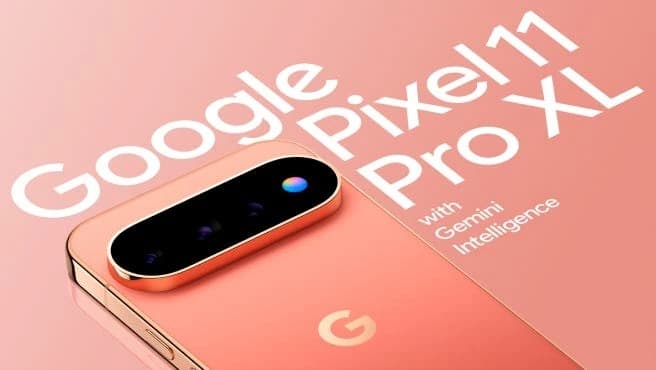
Google’s upcoming Pixel 11 Pro XL has reportedly appeared on Geekbench 7, revealing early performance details of the company’s next-generation Tensor G6 chipset. While the new processor is expected to bring improvements in efficiency and AI capabilities, the leaked benchmark results suggest that raw performance gains may be relatively modest compared with the previous-generation Tensor G5.

According to Igeekphone, the Pixel 11 Pro XL and other Pixel 11 series models are expected to be unveiled at Google’s annual Made by Google event on August 12. Ahead of the official announcement, benchmark information has provided the first look at the performance of Google’s upcoming flagship processor.

Tensor G6 Benchmark Results Revealed

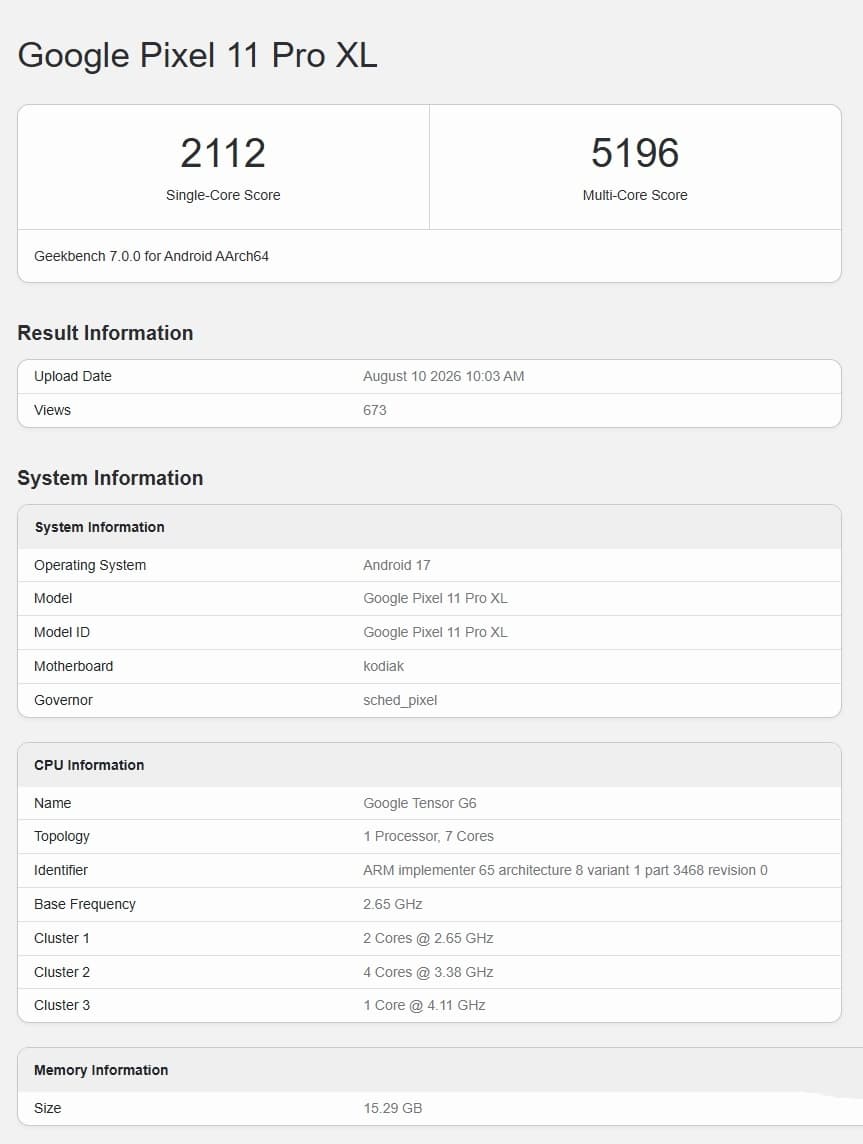
The Geekbench 7 listing reportedly shows that the Google Pixel 11 Pro XL achieved:

  • Single-core score: 2,112 points
  • Multi-core score: 5,196 points

These results represent the first known real-world benchmark scores for the Tensor G6 chipset, which has previously appeared only through leaks and industry reports.

The benchmark listing also confirms that the tested device is equipped with:

  • 16GB RAM
  • Android 17 operating system

While benchmark results do not reveal every aspect of real-world performance, they provide an early indication of the processing capabilities of Google’s next flagship smartphone platform.

Tensor G6 Reportedly Uses Seven-Core Architecture

According to the Geekbench database information, the Tensor G6 appears to use a seven-core CPU architecture consisting of three core clusters.

The reported configuration includes:

  • Two cores clocked at 2.65GHz
  • Four cores clocked at 3.38GHz
  • One high-performance core clocked at 4.11GHz

The listing does not confirm whether the Tensor G6 is manufactured using a 2nm process technology, despite previous reports suggesting that Google could become one of the first smartphone manufacturers to adopt a 2nm Tensor chip.

Limited Improvement Compared with Tensor G5

Although the Tensor G6 represents a new generation of Google’s custom smartphone chipset, the leaked benchmark results suggest that the performance improvement may not be dramatic.

For comparison, the previous-generation Pixel 10 Pro’s Tensor G5 reportedly achieved:

  • Single-core score: 1,977 points
  • Multi-core score: 5,805 points

Compared with those numbers, the Tensor G6 appears to offer a small increase in single-core performance but a lower multi-core score in this early Geekbench test.

If the leaked results are accurate, the Pixel 11 Pro XL may not deliver a major upgrade in traditional computing performance. Instead, Google may continue focusing on areas where Tensor chips have historically stood out, such as artificial intelligence processing, photography enhancements, and software optimization.

Pixel 11 Standard Model Also Appeared in Benchmarks

The Pixel 11 series has previously appeared in Geekbench databases as well.

Earlier testing of the standard Pixel 11 model reportedly showed:

  • Single-core score: 875 points
  • Multi-core score: 2,657 points

That listing also indicated a seven-core Tensor G6 architecture, although the performance results were significantly lower than the Pixel 11 Pro XL benchmark.

Differences between models could be related to software optimization, testing conditions, clock speeds, or hardware configurations.

Google May Focus More on AI Features

Google’s Tensor processors have traditionally prioritized artificial intelligence and machine learning capabilities rather than competing directly with flagship chips from Qualcomm and Apple in raw benchmark performance.

The Tensor G6 is expected to bring improvements in areas such as:

  • AI-powered features
  • Computational photography
  • Voice processing
  • On-device machine learning
  • System efficiency

For Pixel users, these software-driven improvements may be more noticeable in daily use than benchmark score increases.

Pixel 11 Series Expected to Launch Alongside Pixel Watch 5

Google is expected to officially introduce the Pixel 11 series along with the Pixel Watch 5 during the upcoming Made by Google event on August 12.

The Pixel 11 lineup is expected to include multiple models, including:

  • Google Pixel 11
  • Google Pixel 11 Pro
  • Google Pixel 11 Pro XL

The Pixel 11 Pro XL is expected to serve as the top-tier model, featuring the largest display, highest memory configuration, and the most advanced camera system in the lineup.

Final Thoughts

The leaked Geekbench results for the Google Pixel 11 Pro XL suggest that the upcoming Tensor G6 chipset may deliver only moderate improvements in traditional processing power. While the move to a newer architecture and potential 2nm manufacturing process could improve efficiency, the benchmark numbers indicate that Google is not necessarily chasing the highest raw performance scores in the smartphone market.

Instead, the Pixel 11 series is likely to continue Google’s strategy of combining custom hardware with advanced AI software experiences. For potential buyers, the most important upgrades may come from new AI features, camera improvements, and software innovations rather than a major leap in benchmark performance.

The post Google Pixel 11 Pro XL Geekbench Scores Leak: Tensor G6 Shows Limited Performance Gains appeared first on IGeeKphone China Phone, Tablet PC, VR, RC Drone News, Reviews.

  •  

Tribunal dos EUA obriga Meta, TikTok, Google e Snapchat a enfrentar mais de 3.000 processos judiciais por dependência das redes sociais

O 9.º Tribunal de Recurso dos EUA recusou ontem o recurso das empresas tecnológicas, concluindo que a Secção 230 oferece uma defesa de responsabilidade, e não imunidade total. O julgamento que envolve 29 procuradores-gerais estatais começa esta quarta-feira em Oakland.

The post Tribunal dos EUA obriga Meta, TikTok, Google e Snapchat a enfrentar mais de 3.000 processos judiciais por dependência das redes sociais appeared first on Tek Notícias.

  •  
❌