IGN reports:
[A] new report suggests that all three memory manufacturers — Samsung, SK Hynix, and Micron — have collectively sold through their 2027 memory manufacturing capacity to, you guessed it, AI companies.
According to a report from Digitimes and spotted by TweakTown, all DRAM and HBM capacity has been sold through for 2027, with no further supply planned. (The companies themselves have not yet confirmed this to be the case.) Of course, that only means that retail prices are going to go up even further in the near future.
Selling through all the capacity for next year would be bad enough for consumers, but the problem is that most of the companies buying up this capacity have done so through long-term purchasing agreements, essentially pre-ordering memory that hasn't even been manufactured yet over a five-year term. Unless more capacity opens up somewhere in the next few years, it's hard to imagine that RAM will become more affordable and less scarce any time soon.
It's not just memory that's affected. According to that Digitimes report, NAND storage is growing in demand too. Luckily, NAND capacity hasn't been completely absorbed, because there are more companies supplying the stuff. But it's not exactly hard to see that SSDs have been growing steadily more expensive over the last six months or so.
Lo streaming va a scatti nello studio in fondo al corridoio, il segnale sparisce proprio dove serve lavorare in smart e così via. Questi sono situazioni problematiche che possono essere risolte da un extender. Il Mercusys ME1500X è un ripetitore Wi-Fi 6 dotato di una porta che promette di eliminare le zone d'ombra senza costringere a stravolgere l'impianto esistente o sostituire il modem principale. Il costo è di 24,99, ed è merito dello sconto Amazon del 38%.
Nota prezzo: l'offerta è stata verificata su Amazon alle 09:00 del 9 agosto. Il prezzo potrebbe subire variazioni nelle ore successive.
I limiti delle vecchie reti wireless emergono quando più dispositivi richiedono banda contemporaneamente. La combinazione delle due frequenze gestisce fino a 1201 Mbps sulla banda a 5 GHz e 300 Mbps su quella a 2,4 GHz. Il Wi-Fi 6 non è l'ultimo standard reso disponibile, ma è comunque in grado di distribuire le risorse con efficienza, riducendo le attese e mantenendo la stabilità anche durante le sessioni di gaming online o la riproduzione di contenuti in 4K sulle piattaforme di streaming.
AI semiconductors are becoming more programmable. KAIST researchers have developed a device whose response characteristics can be programmed to process data that changes at different speeds. The technology reduced prediction errors for time-varying data by up to 40-fold and is expected to enhance real-time AI performance in autonomous vehicles, robots and wearable devices.
As large language models (LLMs) become increasingly embedded in chatbots, virtual assistants, translation services, coding tools and other AI-powered applications, delivering responses quickly and efficiently has become a growing challenge. Because these models generate text one token at a time, inference can be slow and computationally expensive, particularly for larger models. While speculative decoding has emerged as a promising approach to accelerate inference, many existing methods either require additional model training or struggle to perform consistently across different hardware platforms.
Apple lawsuit against OpenAI has reached its first major procedural challenge, with the ChatGPT developer asking a US federal judge to dismiss allegations that it acquired or used trade secrets taken by former Apple employees.
OpenAI submitted its 31-page dismissal motion on Wednesday in the US District Court for the Northern District of California. The filing argues that Apple has not adequately identified protectable trade secrets or alleged facts showing that OpenAI misappropriated confidential information.
Apple filed the case on July 10 against OpenAI, its io Products hardware operation, former Apple Vice President Tang Yew Tan, and former electrical engineer Chang Liu. The complaint accuses the defendants of obtaining information connected to Apple’s product development, manufacturing, components, testing, and supply chain operations.
The allegations have not been proven, and OpenAI denies possessing or seeking Apple’s trade secrets. US District Judge Edward Davila must now decide whether Apple’s complaint contains enough factual detail for the litigation to continue.
OpenAI Challenges the Apple Lawsuit
OpenAI’s motion focuses initially on how Apple described the information it claims was stolen. According to OpenAI, the complaint relies on generalized product-development categories without identifying the protected information with enough precision.
Trade secret plaintiffs face a difficult balance at the beginning of litigation. Apple must describe the protected material sufficiently to establish a plausible legal claim, but revealing the material publicly could expose the same information it is trying to protect.
Sensitive details can later be handled under seal or through a protective order. At the dismissal stage, however, Apple must still provide enough information for the court to distinguish genuine trade secrets from general engineering knowledge, employee experience, or skills acquired through years of work.
OpenAI argues that Apple has not crossed that threshold. Its motion says the complaint fails to establish ownership of a protectable trade secret and does not plausibly allege that OpenAI acquired, disclosed, or used such information.
The filing also disputes the commercial premise behind Apple’s accusations. OpenAI says it is developing products that are different from Apple’s hardware and has no need or desire to use the iPhone maker’s confidential material.
That position does not settle whether information was taken. A company can potentially misappropriate trade secrets even when its eventual product has a different design. The court’s immediate task is narrower: determining whether Apple has alleged facts that could support its claims if those facts are later proven.
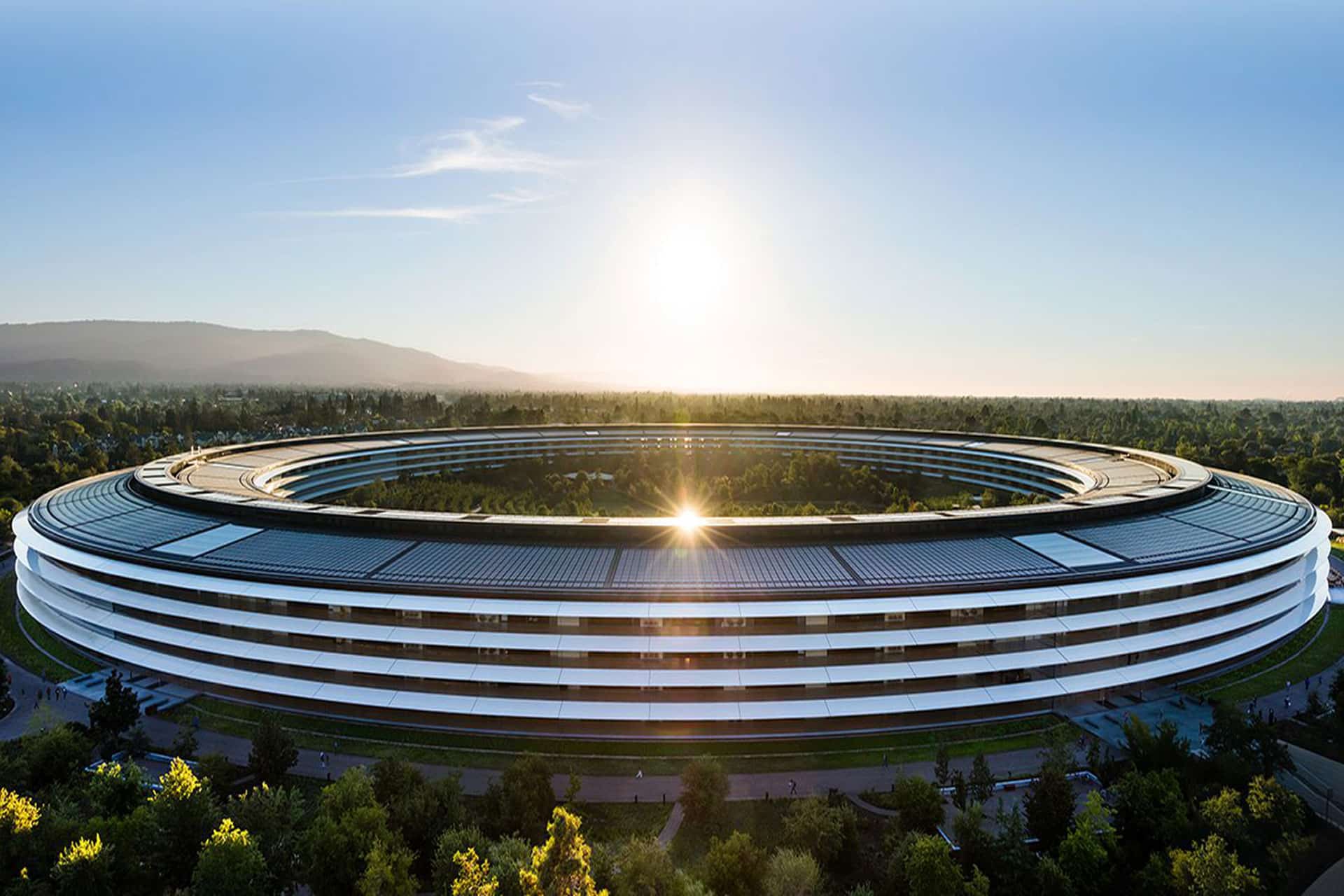
Apple Park | Image Source: Google
Disputed Access to Apple Information
Apple’s complaint centers partly on Chang Liu, who spent eight years working as a senior system electrical engineer at the company before joining OpenAI in January 2026.
Apple alleges that Liu retained an Apple-issued computer and accessed confidential technical information after leaving. It claims he exploited residual authentication access on multiple occasions to obtain internal documents while already working for OpenAI.
OpenAI presents a different explanation. It says Apple employees contacted Liu after his departure and asked him to help locate files needed for ongoing Apple work. The company published redacted messages that it says support this account.
OpenAI argues that Apple’s systems and policies allowed personal and corporate information to become intermingled through iCloud accounts. Former employees, it says, could retain access to Apple files without requesting it or realizing that access remained active.
The motion maintains that Apple cannot treat the foreseeable effects of its own access-management practices as proof that former employees intentionally stole data. Apple, in contrast, alleges that its records document repeated access to restricted information rather than an accidental discovery of lingering permissions.
These competing accounts are likely to become central if the case enters discovery. Authentication logs, downloaded files, device records, internal communications, and employment timelines could establish whether access was deliberate, what information was obtained, and whether it reached anyone working on OpenAI products.
A dismissal motion normally tests whether the complaint states a legally sufficient claim. It is not a trial, and the judge is not expected to resolve every factual disagreement using competing evidence at this point.
Tang Tan and OpenAI’s Hardware Team
Apple separately accuses Tang Tan, OpenAI’s chief hardware officer, of seeking confidential information from Apple employees during recruiting conversations.
Tan spent more than 24 years at Apple and worked on products including the iPhone, Apple Watch, AirPods, and iPod. He later helped establish io Products with former Apple design chief Jony Ive and other collaborators. OpenAI acquired the hardware company as part of its effort to create a family of devices built around artificial intelligence.
Apple alleges that Tan used confidential project names, retained internal materials, and encouraged job candidates to discuss unreleased components or bring physical parts to interviews. OpenAI rejects the claim that these interactions formed a coordinated effort to collect Apple secrets.
OpenAI says Tan repeatedly instructed employees that confidential information from previous employers could not be brought into its organization. It also offers an alternative explanation for an Apple offboarding document found in his possession, arguing that Tan retained it to help incoming employees comply with Apple’s departure procedures.
Apple’s position is that the document and recruiting communications must be examined alongside the other alleged conduct. It describes the events as part of a connected campaign rather than isolated employment or administrative issues.
The dispute comes during intense competition for engineers capable of developing consumer AI hardware. Apple alleges that more than 400 former employees have moved to OpenAI, although hiring people from a competitor does not by itself establish trade secret misappropriation.
A company must generally connect recruitment to the acquisition, disclosure, or use of protected information. OpenAI is relying heavily on that distinction, presenting Apple’s lawsuit as an attempt to respond to employee departures and its difficulties competing for AI talent.
Image Credit: Getty Images
Apple Seeks Immediate Restrictions
OpenAI’s dismissal request arrives shortly after Apple asked the court for a preliminary injunction. Apple wants restrictions imposed while the lawsuit proceeds, arguing that it could suffer harm if its confidential information is used during OpenAI’s hardware development.
The requested relief would prevent OpenAI and the individual defendants from acquiring, accessing, using, or disclosing the alleged trade secrets. Apple has also requested expedited discovery and forensic examination of relevant devices and accounts.
OpenAI says those restrictions are unnecessary because it does not possess or want Apple’s protected information. It has described Apple’s request as based on false information and has offered to cooperate in addressing specific concerns.
The two companies also disagree over their communications before the lawsuit. Apple initially said its concerns had been raised with OpenAI months earlier. OpenAI responded that Apple’s outside lawyers contacted the wrong person after confusing names and incorrectly described a conversation with OpenAI’s general counsel.
OpenAI says Apple did not present the specific accusations before filing the case and that the companies had previously discussed resolving any access issues. Apple has since provided additional information in support of its injunction request, including allegations involving other former employees.
These disputes have moved beyond ordinary court filings. OpenAI published messages and emails on its website to support its version of events, calling Apple’s lawsuit aggressive and poorly investigated. Apple has primarily presented its account through formal legal submissions.
Judge Davila could dismiss some or all of Apple’s claims, deny the motion, or allow Apple to amend its complaint with more specific allegations. Even a dismissal would not necessarily end the case if permission to revise the complaint is granted.
The next scheduled public test is an October 1 hearing covering Apple’s preliminary injunction and request for early discovery. That proceeding may determine whether OpenAI faces immediate limits on its hardware work before the underlying trade secret claims receive a full evidentiary review.
There hasn't been a lot of posting about the new MacBook Neo. Who's purchased one? What do you think of it? Have you found any limitations to what software it can run? Which accessories have you purchased to go with it, and have they worked well?
Have folks heard about the heat sink tape mod? Anyone done it?
Il Raspberry Pi è considerato da esperti e appassionati di tecnologia una delle soluzioni più semplici e alla portata per realizzare da sé un piccolo server domestico. Ciò grazie anche a dimensioni compatte, consumi ridotti e una community online particolarmente attiva e sempre pronta a fornire nuove soluzioni.
Tuttavia, quando le esigenze aumentano, il noto computer single-board potrebbe iniziare a mostrare i suoi limiti. In questo caso, un dispositivo meno recente, come un PC desktop o un vecchio notebook, potrebbe costituire una scelta più adatta offrendo una versatilità maggiore.
RASPBERRY PI VS NOTEBOOK DI QUALCHE ANNO FA
L’ultimo Raspberry Pi 5 monta un processore Broadcom BCM2712 quad-core, con architettura ARM Cortex-A76 a 2,4 GHz, a cui si aggiungono 16 GB di memoria RAM. Il dispositivo offre prestazioni nettamente superiori rispetto alle generazioni precedenti e riesce a gestire senza problemi servizi come Pi-hole, la domotica in casa, server web, sistemi di monitoraggio e applicazioni IoT.

 Login