La investigación arqueológica en el antiguo santuario de Apolo en Gortina, la célebre ciudad cretense cuya legislación epigráfica marcó un hito en la historia del derecho griego, ha concluido su temporada de verano con un balance de hallazgos que consolidan la importancia del enclave como un centro religioso de primer orden durante la conformación de […]
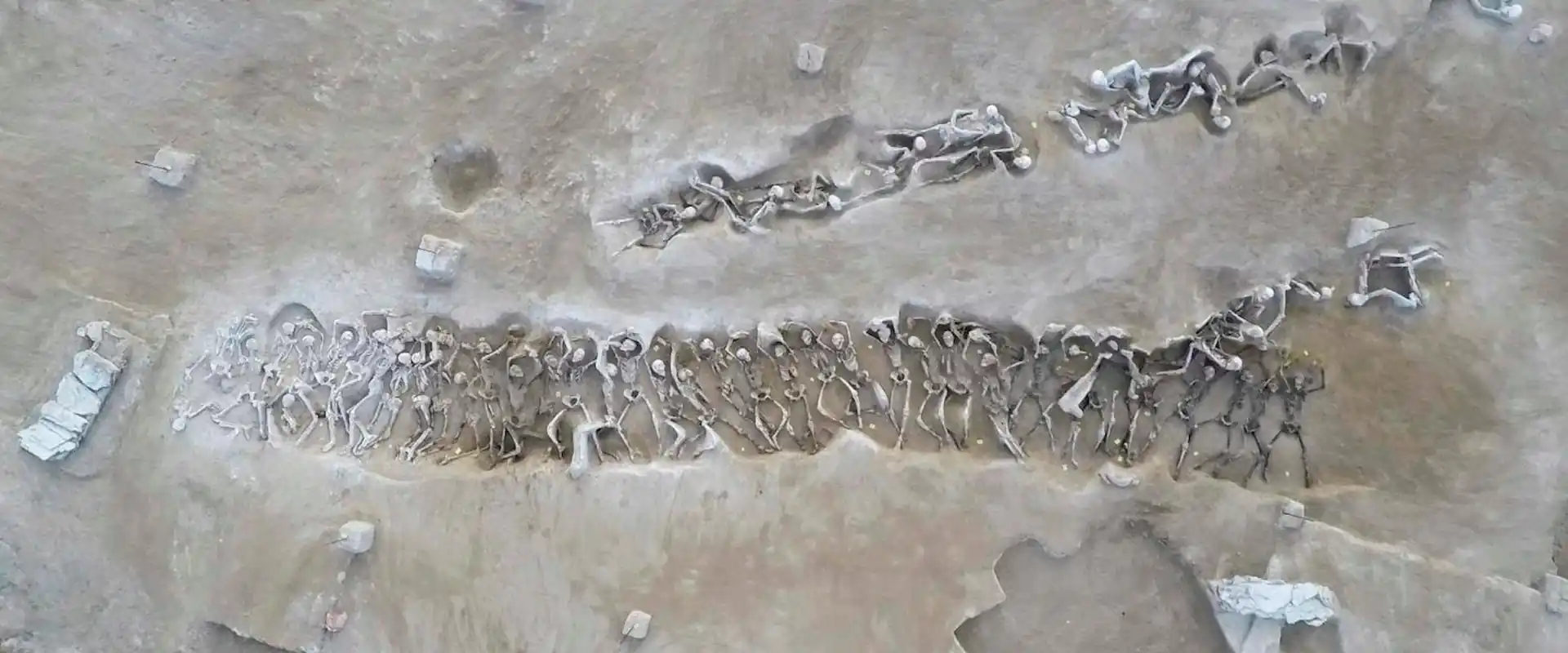
El descubrimiento en 2016 de una gran fosa común en el antiguo cementerio de Falero, en la costa de Atenas, conmocionó a la comunidad arqueológica y al público general. Allí aparecieron los restos de 79 hombres adultos, muchos de ellos aún con grilletes metálicos, colocados en tres filas paralelas. Desde entonces, los investigadores han debatido […]
Una caricia calma y el mismo roce sobre una quemadura duele. La diferencia no está en la piel: está en cómo el cerebro decide interpretar cada contacto que le llega.
¿Cómo se puede convertir CO₂ en carbono sólido? Mira qué ocurre dentro de un reactor a 500 °C y por qué este avance aún no resuelve el problema climático.
La misión arqueológica egipcia dependiente del Consejo Supremo de Antigüedades ha sacado a la luz, durante los trabajos de excavación desarrollados en la zona arqueológica de Kom el-Khilgan, en la gobernación de Dakahlia, una necrópolis cuyos orígenes se remontan al periodo predinástico y que prolonga su uso hasta las épocas griega y romana, junto con […]
Investigadores de la Universidad de Catania, en colaboración con el Parque Arqueológico de Catania y del Valle del Aci, han localizado bajo el escenario del Teatro Antico una red de canales subterráneos que en época romana servía para interceptar y evacuar hacia el mar las aguas de la capa freática. El descubrimiento, fruto de un […]
El Polestar 4 SUV, con hasta 630 km WLTP y 544 CV, refleja un cambio profundo en la electrificación. Superada buena parte de la batalla por autonomía y prestaciones, las marcas empiezan a competir por algo distinto: adaptar el coche eléctrico a formas de vida cada vez más diversas.
SK Hynix just approved a massive $38.3 billion investment to build two new semiconductor fabrication plants in South Korea. As a major memory supplier for Apple, the company is making this huge financial bet to keep up with the explosive demand driven by the artificial intelligence boom. This major expansion aims to boost production of […]
This is today’s edition of The Download, our weekday newsletter that provides a daily dose of what’s going on in the world of technology.
How ideas of a vast censorship network moved from the online fringe to Trump policy
For years, narratives about a “censorship-industrial complex” spread in right-wing circles. The theory claimed that, under the guise of combating disinformation, a sprawling constellation of government agencies, academics, civil society groups, and Big Tech platforms was suppressing conservative and populist speech online.
What began as a relatively niche conspiracy theory from the far right was able to—and continues to—influence a wide range of actions by the second Trump administration. In myriad ways, the idea of the censorship-industrial complex, or CIC, explains the logic behind how the administration operates both at home and internationally.
Over the past nine months, MIT Technology Review and Type Investigations have traced how the theory came to influence the country’s most powerful individuals. We found that it took off in 2023, driven by a handful of individuals, with support from a close-knit group of right-wing organizations and media outlets—and an internet activist named Mike Benz at its center.
I’ve combed the internet to find you today’s most fun/important/scary/fascinating stories about technology.
1 AI has designed new viruses from scratch for the first time Scientists trained AI on DNA sequences to design new genomes. (BBC) + The result was 16 novel viruses which pose no threat to people. (WSJ $) + They could lead to medical breakthroughs—or biological weapons. (Axios) + And more complex AI-designed life forms. (MIT Technology Review)
2 Meta has been hit with its biggest child safety penalty yet A New Mexico judge fined the firm $567 million over harms to kids. (BBC) + The ruling is the second phase of a landmark trial Meta lost. (Guardian) + A jury found Meta misled users over child safety. (NYT $) + The total fine now stands at $942 million. (WSJ $)
3 One of China’s top AI models broke out of its testing sandbox Kimi K3 escaped containment and accessed the open internet. (SCMP) + But didn’t hack an external system. (Bloomberg $) + Researchers say Kimi has fewer guardrails than rival models. (Wired $)
4 A drone bomb was found near a Ukrainian plane at a German airport The nearby aircraft was loaded with military ammunition. (Guardian) + A “ripped” detonator reportedly stopped the device from going off. (BBC) + Europe has a drone-filled vision for future wars. (MIT Technology Review)
5 ByteDance is training a model near the size of Anthropic’s Mythos It would be three times larger than Moonshot’s Kimi K3. (FT $) + Chinese AI models have divided the White House. (MIT Technology Review)
6 Research suggests replacing new petrol cars with EVs cuts carbon The savings outweighed EV manufacturing footprints. (New Scientist $)
7 Trump could save millions from crypto rules meant to limit conflicts An ethics proposal could let him defer capital gains taxes. (Bloomberg $) + It would require him to sell crypto-related holdings. (Reuters $)
8 OpenAI’s smart speaker will be hockey puck-sized with moving parts The “doughnut-shaped” device could cost more than $300. (Verge)
9 Scientists created a virtual alien lifeform to search for extraterrestrials The model could help identify signs of life on distant planets. (404 Media)
10 Poo transplants are helping people eat peanuts again The first human trial suggests gut bacteria can treat food allergies. (Nature)
Quote of the day
“What is the risk of what I’ve never seen before?”
—Dr Moritz Hanke, a fellow at the Johns Hopkins Center for Health Security, tells the New York Times why there’s no consensus on the dangers of a new virus made by AI.
One More Thing
This architect wants to build cities out of lava
Arnhildur Pálmadóttir was around three years old when she saw a red sky from her living room window. A volcano was erupting about 25 miles away from where she lived on the northeastern coast of Iceland. Its ominous presence seeped into her subconscious, populating her dreams with streaks of light in the night sky.
Fifty years later, these “gloomy, strange dreams,” as Pálmadóttir now describes them, have led to a career as an architect with an extraordinary mission: to harness molten lava and build cities out of it.
Football fans have a major new reason to check out the latest Apple Arcade additions today. Madden NFL 27 Arcade Edition is now officially available for players to download and enjoy. This release brings the full football simulator to your screens without asking players to buy extra packs or sit through commercials. Apple secured this […]
Apple’s next generation of Apple Intelligence and Siri are truly helpful AI that’s centered around you and your needs. Integrated into your apps, grounded in your context, and private at every step; coming later this year.
Apple’s long-awaited overhaul of its voice assistant, now branded Siri AI, is set to arrive this fall alongside iOS 27, iPadOS 27, macOS updates, and related system software. The upgraded assistant promises deeper personal context awareness, on-screen understanding, more natural conversations, and the ability to take actions across apps. But there’s a clear hardware cutoff: only devices that already support Apple Intelligence will receive the full experience at launch.
iPhone Models That Make the Cut
Siri AI requires an A17 Pro chip or newer (with sufficient RAM for on-device processing). Supported iPhones include:
• iPhone 17 Pro and Pro Max
• iPhone Air
• iPhone 17 and 17e
• iPhone 16 Pro and Pro Max
• iPhone 16, 16 Plus, and 16e
• iPhone 15 Pro and Pro Max
Older models, including the standard iPhone 15 and anything earlier, will get the broader iOS 27 update (interface changes, security fixes, and non-AI features), but miss out on the new Siri capabilities.
A subset of these devices — primarily the iPhone 17 Pro, Pro Max, and iPhone Air — will also unlock Apple’s most powerful on-device AI model. That unlocks extras such as more expressive customizable voices, improved speech recognition, and higher-accuracy dictation.
iPads, Macs, Watches, and Vision Pro
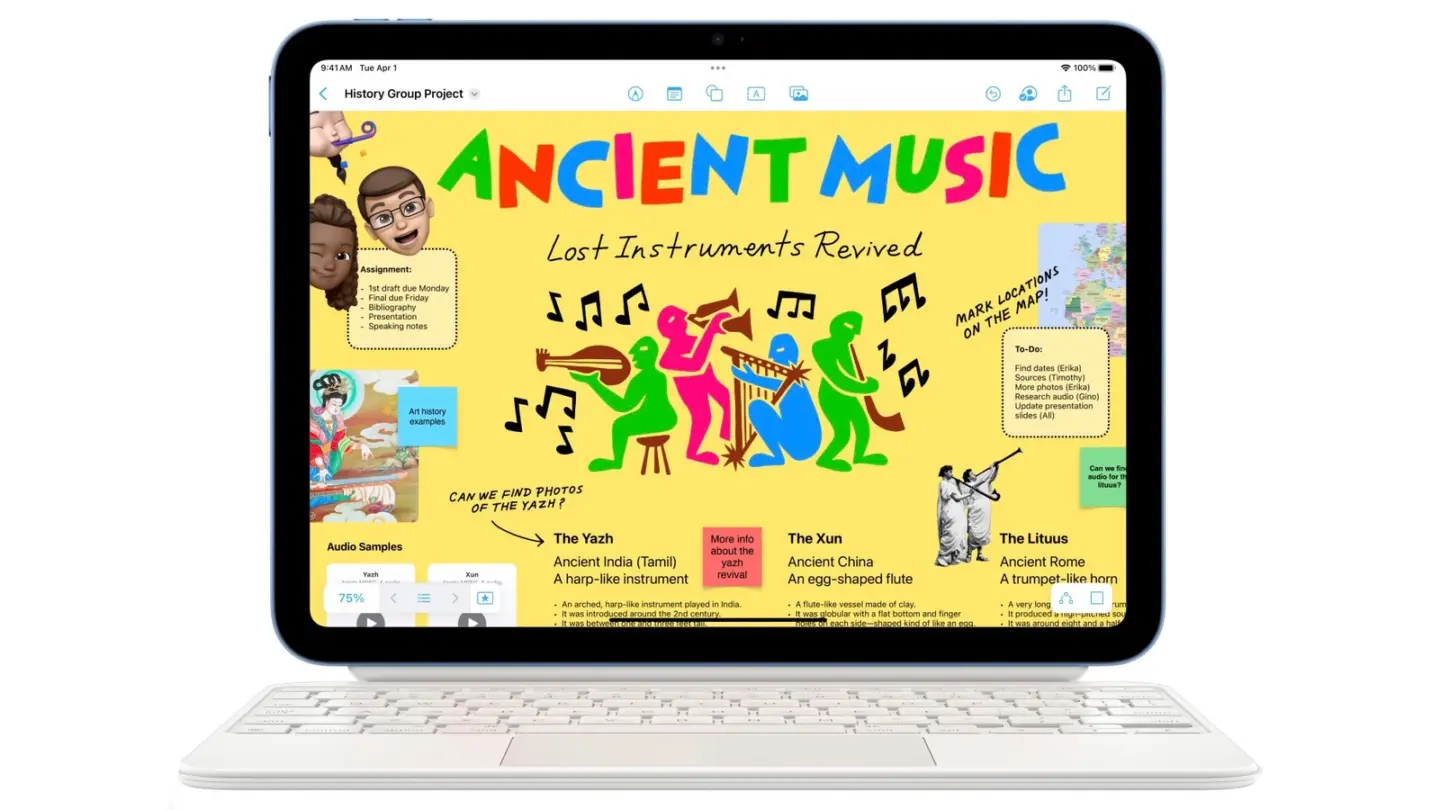
Compatibility extends across the rest of the ecosystem with similar requirements:iPad: iPad Pro (M1 chip and later), iPad Air (M1 and later), and iPad mini with the A17 Pro chip.
• Mac: All models with Apple silicon (M1 and later), including the MacBook Neo with its A18 Pro chip.
• Apple Watch (must be paired with a nearby supported iPhone): Series 9 and later, Ultra 2 and later, and SE (3rd generation).
• Apple Vision Pro: All models.
The highest-tier on-device model is further restricted on tablets and computers to those with newer chips (M4 or later on iPad, M3 or later on Mac) plus at least 12 GB of unified memory.
Timeline and Limitations
Developer betas began around the June 2026 WWDC announcements, with a public beta expected in the following months and a stable consumer release targeted for fall 2026 (September timeframe). Siri AI will initially roll out in English (with Spanish support also noted in some documentation), and regional restrictions apply: it will not launch at the outset on iOS or iPadOS in the European Union due to regulatory considerations around the Digital Markets Act, though macOS and visionOS users in the EU will be able to access it. Availability in China is also delayed pending regulatory clearance.
Those without supported hardware will keep the classic Siri experience for now while still receiving the rest of the 2026 software updates. Apple continues to emphasize on-device processing and Private Cloud Compute for privacy, so the hardware bar reflects the computational demands of the more capable models.
MacDailyNews Note: More info about Apple Intelligence and Siri here.
Please help support MacDailyNews — and enjoy subscriber-only articles, comments, chat, and more — by subscribing to our Substack: macdailynews.substack.com. Thank you!
If you are looking to upgrade your tech soon, Apple just made it a little more tempting. The company quietly updated its official trade-in estimates this week, bumping up the payout values for most older iPhones, iPads, Macs, and Apple Watches. Some devices even saw a jump of nearly 30 percent compared to the last […]
The global tablet market is experiencing a rough patch right now, but Apple still holds the top spot. Recent research from Omdia shows that total tablet shipments fell 10% in the second quarter of 2026 to around 36 million units. Even with this industry-wide slowdown, the iPad remains the most popular choice worldwide, capturing a […]
DeepMind CEO Demis Hassabis is stepping back from running the unit day-to-day He’s becoming the unit’s chairman and Alphabet’s chief scientist, a broader role. DeepMind will now be led by CTO Koray Kavukcuoglu, under the title of senior vice-president.
DeepMind may be absorbed into Google’s wider business Google is expected to tighten its control over the AI lab, which it acquired 12 years ago.
Jeff Dean is leaving to start a new AI company After 27 years at Google, the company’s former chief scientist is launching Discovery Loop with three former colleagues. The startup’s goal is to fully automate the process of scientific research, and Google is one of its early investors.
The company is now shifting its AI science strategy It’s moving from specialized tools, like DeepMind’s AlphaFold, toward agentic AI systems that can conduct research more autonomously. Find out more in our recent story.
We’re excited to share that MIT Technology Review is now on Instagram Reels and YouTube Shorts, as well as LinkedIn and WhatsApp. You can hear straight from MIT Technology Review journalists in the channels and formats you prefer as they help you understand what’s happening next in the ever-changing world of technology—and what it means for you—all while offering a behind-the-scenes look at their reporting.
I’ve combed the internet to find you today’s most fun/important/scary/fascinating stories about technology.
1 Meta has become the latest firm to say its AI hacked another company It blamed a “misconfiguration” by an independent cybersecurity tester. (CNN) + The model reportedly involved was Muse Spark 1.1. (The Information $) + It follows similar breaches by OpenAI and Anthropic models. (Guardian) + This is why AI agents can lie to reach their goals. (MIT Technology Review)
2 Samsung and SK Hynix are testing Chinese chip tools amid US export curbs The Korean chip giants are hedging against tighter restrictions. (Reuters $) + Beijing has launched a probe into Palo Alto Networks. (Bloomberg $) + US-China tech tensions are rising ahead of the Xi-Trump summit. (SCMP)
3 London just granted robotaxis a license to operate On the condition that they still have a human driver, for now. (BBC) + Uber plans to spend over $10 billion expanding its robotaxi network. (FT $)
4 Scientists have created gene-edited dogs that don’t trigger allergies They used CRISPR to remove a reaction-causing protein. (Wired $) + And now want approval to start selling the beagles. (New Scientist $) + Other firms are planning gene-edited babies. (MIT Technology Review)
5 OpenAI has asked a judge to toss Apple’s trade secrets lawsuit The ChatGPT maker called Apple’s allegations “meritless.” (Verge) + And claimed the suit is an attempt to stem an employee exodus. (FT $)
6 AI is reviving Silicon Valley’s super-app dream Tech giants are merging products into all-in-one assistants. (Business Insider) + Is a secure AI assistant possible? (MIT Technology Review)
7 A mystery book-buying spree has sparked new AI fears The buyers’ identities remain unclear amid data concerns. (Atlantic $)
8 Restaurants, pubs, and theatres are banning Meta’s “spy glasses” The venues have cited privacy threats to customers. (Guardian)
9 The SpaceX moon crash has created a unique scientific experiment It could reveal more about lunar soil and space debris. (BBC)
10 AI is helping to perfect the Pringle It involves over 200 data points, from humidity to harvest location. (WSJ $)
Quote of the day
“This could be the first real crisis moment for a company that has been stalwart for a long time.”
—Jeremy Nixon, a former Google Brain researcher and the founder of AI infrastructure company Infinity, tells the New York Times that Jeff Dean’s departure jeopardizes Google’s future.
One More Thing
How AI can help supercharge creativity
Generative tools put out by companies like OpenAI and Google DeepMind can automate a striking range of creative tasks and offer near-instant gratification—but at what cost? Some artists and researchers fear that such technology could turn us into passive consumers of yet more AI slop.
And so they are looking for ways to inject human creativity back into the process. The aim is to develop AI tools that augment our creativity rather than strip it from us—pushing us to be better at composing music, developing games, designing toys, and much more—and lay the groundwork for a future in which humans and machines create things together.

 Login