❌

Reading view

  •  
  •  
  •  

Microsoft’s Patch Tuesday updates: Keeping up with the latest fixes

Long before Taco Tuesday became part of the pop-culture vernacular, Tuesdays were synonymous with security — and for anyone in the tech world, they still are.  Patch Tuesday, as you most likely know, refers to the day each month when Microsoft releases security updates and patches for its software products — everything from Windows to Office to SQL Server, developer tools to browsers.

The practice, which happens on the second Tuesday of the month, was initiated to streamline the patch distribution process and make it easier for users and IT system administrators to manage updates.  Like tacos, Patch Tuesday is here to stay.

In a blog post celebrating the 20th anniversary of Patch Tuesday, the Microsoft Security Response Center wrote: “The concept of Patch Tuesday was conceived and implemented in 2003. Before this unified approach, our security updates were sporadic, posing significant challenges for IT professionals and organizations in deploying critical patches in a timely manner.”

Patch Tuesday will continue to be an “important part of our strategy to keep users secure,” Microsoft said, adding that it’s now an important part of the cybersecurity industry.  As a case in point, Adobe, among others, follows a similar patch cadence.

Patch Tuesday coverage has also long been a staple of Computerworld’s commitment to provide critical information to the IT industry. That’s why we’ve gathered together this collection of recent patches, a rolling list we’ll keep updated each month.

In case you missed a recent Patch Tuesday announcement, here are the latest six months of updates.

July’s Patch Tuesday sees an end-of-support collision amidst a massive, record-setting patch wave

Microsoft addressed 722 CVEs this month once the 427 Chromium upstream relays are set aside — roughly three times a normal cycle and one of the largest single months in recent memory. Two vulnerabilities arrive under active exploitation: an elevation of privilege in Active Directory Federation Services (CVE-2026-56155), and an elevation of privilege in SharePoint Server (CVE-2026-56164). A third, a BitLocker security feature bypass (CVE-2026-50661) is publicly disclosed but not yet exploited.

The July 2026 Patch Tuesday earns Patch Now recommendations for Windows, Office, Exchange, and SQL Server. SharePoint has two critical RCEs on top of its exploited zero-day, and Exchange Server returns with a critical on-premises spoofing flaw. Adding to our (dear) administrator’s efforts, SharePoint Server 2016/2019 and SQL Server 2016 all reach end of support today. The Readiness team has provided a handy infographic of the expected risk profile of this month’s Patch Tuesday updates.

More info is available here on Microsoft Security updates for July 2026.

For June, Patch Tuesday means an IT scramble

Microsoft this month released 206 updates affecting Windows, Office, Exchange Server, and its developer tools — including three Windows vulnerabilities already publicly disclosed. That trio includes an elevation of privilege in the Collaborative Translation Framework (CVE-2026-45586), a denial of service in HTTP.sys (CVE-2026-49160), and a BitLocker security feature bypass (CVE-2026-50507). At the moment, none appear to be under active exploitation, but all three are rated “Exploitation More Likely.” 

Even without an exploited zero-day, the June 2026 Patch Tuesday release requires Patch Now recommendations for Windows, Office, and Exchange. The latter is back in the patch picture with a consolidated security update that Microsoft recommends installing “as soon as possible.”

More info is available here on Microsoft Security updates for June 2026.

For May, Patch Tuesday means 139 updates — but no zero-days

Microsoft this month released 139 updates affecting Windows, Office, .NET, and SQL Server (though there were no updates for Microsoft Exchange Server). Despite the absence of zero-days, the May Patch Tuesday update still requires Patch Now recommendations for Windows and Office. 

The combination of three unauthenticated network RCEs (Netlogon, DNS Client, and SSO Plugin for Jira and Confluence), four Word Preview Pane RCEs, the large TCP/IP vulnerability cluster, and the carry-over BitLocker recovery condition (still active on Windows 10 and Windows Server) warrants an accelerated deployment release schedule. 

More info is available here on Microsoft Security updates for May 2026.

Microsoft’s Patch Tuesday release for April is a whopper

Windows admins are going to be busy this month, dealing with the largest Patch Tuesday cycle in memory. The April release involves 165 updates and roughly 340 unique CVEs from Microsoft — including two zero-days, one of which is already being actively exploited in the wild. 

The Readiness team recommends “Patch Now” schedules for nearly every major product family: Windows, Office (with a zero-day), Microsoft Edge (Chromium), SQL Server, and Microsoft Developer Tools (.NET). April also brings Phase 2 of Microsoft’s Kerberos RC4 hardening with full enforcement set for July. There is a lot to cover, so here’s a useful infographic mapping the deployment risk for each platform.

More info is available here on Microsoft Security updates for April 2026.

For March, Patch Tuesday delivers fixes for 83 vulnerabilities

Microsoft’s March Patch Tuesday release addresses 83 vulnerabilities across Windows, Office, SQL Server, Azure, and .NET — with two publicly disclosed zero-days affecting SQL Server and .NET (though neither is being actively exploited in the wild.) Six additional vulnerabilities spanning the Windows Kernel, Graphics Component, SMB Server, Accessibility Infrastructure, and Winlogon are flagged as “Exploitation More Likely.”

The most significant change this month is the introduction of Common Log File System (CLFS) hardening with signature verification, which will affect how Windows handles log files across the operating system. More info on Microsoft Security updates for March 2026.

February’s Patch Tuesday release fixes 59 flaws, including 6 being exploited

The company’s Patch Tuesday release for February addresses 59 CVEs across the company’s product family — roughly half the volume of January’s 159 patches. Six vulnerabilities, affecting Windows Shell, MSHTML, Desktop Window Manager, Remote Desktop, Remote Access, and Microsoft Word, are already being actively exploited. (All five Critical-rated CVEs target Azureservices rather than Windows, however.) 

Both Windows and Office get a “Patch Now” recommendation, with CISA setting a March 3 enforcement deadline for all six exploited vulnerabilities. Two new enforcement timelines also take effect in April: Kerberos RC4 deprecation (CVE-2026-20833) and Windows Deployment Services hardening (CVE-2026-0386). More info on Microsoft Security updates for February 2026.

  •  

OnlyFans performers become unlikely allies of CISOs in securing websites

CISOs at government organizations and universities have an unexpected ally coming to their aid: OnlyFans models.

For some time, hackers have exploited weaknesses in the websites of universities or government departments to host scams or malware, using content stolen from the OnlyFans website as bait to attract victims.

Now, according to security researchers at Upguard, the fightback has begun: creators of adult content on OnlyFans are leveraging Google search results and the protection offered by copyright law to break up the traffic distribution systems created by bad actors.

These distribution systems work in three stages: entry points using adult or other content to attract and capture web traffic, a routing system sends it to destination sites, and those sites monetize the traffic through scams and malware. It has proved to be a lucrative business for the scammers.

Google recognizes the approach and calls such actors SEO parasites as they benefit from the reputations of other organizations — in particular government or academic sites, which Google views as having high authority.

Since the creators of OnlyFans content are also the copyright holders, they are able to issue Digital Millennium Copyright Act (DMCA) take-down notices for the stolen content posted by the bad actors to other sites. Upguard was able to track this through Google’s DMCA Transparency Report, and through the Lumen Database, another tracker of takedown notices, to which it was granted research access.

“This allows us to identify likely compromised sites: government and university domains advertising unlicensed adult content,” Upguard said.

The OnlyFans creators’ action has two benefits for the operators of the affected websites: The adult content associated with their domain disappears from Google search results, no longer affecting their reputation — and if they receive takedown notices for such content they can check their webservers for the vulnerabilities that enabled the bad actors to post it there in the first place.

This article first appeared on CSO.

  •  

Zoom patches account takeover hole

Zoom has identified, and patched, a critical security hole that “may allow an unauthenticated user to conduct an account takeover via network access.”

The issue is especially significant given Zoom’s extensive reach; it reportedly has more than 300 million daily active users, including 470,000 paying business customers. Given that reach, Zoom has been impacted by many other security incidents and France recently tried banning its use by French government users. 

 Zoom security bulletins released Tuesday revealed the bug, and three other security issues, which Zoom patched on Wednesday. 

The company originally said that the takeover issue impacted Zoom Desktop Client for Windows before version 7.0.0, Zoom VDI Client for Windows before version 7.0.10 and 6.6.15 and 6.5.18 in their respective branches, and Zoom Meeting SDK for Windows, but on Wednesday, without explanation, it removed Meeting SDK for Windows as an affected product.

The other three holes were less severe, but still significant, and they all involved privilege escalation. They impacted Zoom Workplace for Windows before version 7.0.5, Zoom Workplace VDI Client for Windows before 6.5.17 and 6.6.14 in their respective branches, Zoom Workplace VDI plugin for Windows before 6.5.17 and 6.6.14 in their respective branches, Zoom Rooms for Windows before 7.0.5 and Remote Control for Zoom Contact Center for Windows before version 7.0.0.

A second privilege escalation issue impacted Zoom Rooms for Windows before version 7.1.0, and another impacted Zoom Workplace VDI Plugin for Windows before version 6.6.14.

Zoom did not immediately reply to a request for comment.

‘As bad as it gets’

Frank Dickson, group VP for security at IDC, said the nature of the reported hole is alarming.

This bug “is about as bad as it gets, short of a worm. It is exploitable over the network, low complexity, zero privileges required, no user interaction needed,” he said, pointing out that exploitation is easy once technical details leak or someone reverse-engineers the patch, which is not as challenging as it once was, thanks to AI. “Yesterday’s script kiddies have been empowered,” he said.

Dickson said the only good news is that Zoom discovered the hole itself, and that “no in-the-wild exploitation has been reported by any outlet as of Thursday.”

Consultant Brian Levine, executive director of FormerGov, agreed with Dickson’s characterization of the hole, but said a potentially bigger issue is the high level of sensitive data that Zoom accesses. 

“An attacker with unfettered access to a Zoom account may be able to listen to recordings of sensitive meetings, to eavesdrop on future meetings, and to impersonate the organization in an effort to social engineer its clients and partners. Thus, given that ubiquity of Zoom in large enterprises, this vulnerability is pretty concerning,” Levine said.

He’s encouraged, however, that Zoom found the flaw itself, which indicates its security team is “actually doing the hard, unglamorous work of auditing its code.”

Giuseppe Trotta, principal security researcher at Malwarebytes, has a theory about what was behind the Zoom disclosure. 

“Because the vulnerability requires zero privileges and absolutely no user interaction, the remote network attack vector is highly suspected to involve the mishandling of deep links, such as custom URL schemes like zoommtg:// or zoomworkplace://,” he said. This led him to think that if the Zoom Workplace client for Windows fails to properly sanitize and validate incoming arguments passed via these special browser-to-desktop links, an unauthenticated attacker could craft a malicious string that could trick the desktop application into exposing or redirecting the user’s active session tokens directly to an attacker-controlled server, achieving a seamless and completely silent account takeover.

“Watch out for Zoom links and invites if you are on Windows or VDI and haven’t updated yet,” he advised.

Mike Wilkes, enterprise CISO at Aikido Security, offered kudos to Zoom for discovering the critical flaw, but he wanted to know how such a severe bug got into its software initially.

“This vulnerability raises questions about why the defect was not caught by design review, fuzzing, or pre-release abuse-case testing,” Wilkes said. “A historical defect in Zoom’s product/security relationship has been prioritizing ease of use over security risk.”

All four bugs important

Justin Greis, CEO of consulting firm Acceligence, said that the two types of holes reported by Zoom, account takeover and escalation, are both important, but for different reasons. 

“The critical vulnerability is significant because it has the characteristics security teams worry about most,” Greis said, but the privilege escalation holes “are certainly important to patch as they primarily increase the impact of an attack that has already begun. The critical vulnerability has the potential to be an initial entry point, which is why it deserves the most attention.”

Greis also applauded Zoom’s response, saying that it “reflects a reasonably mature security program.”

He pointed out that no complex software platform will eliminate vulnerabilities entirely. “The differentiator is whether vendors are continuously investing in offensive testing, finding weaknesses before attackers do, and moving quickly to develop and distribute fixes,” he said.

  •  

Give your dev setup a boost with AI tools and cross-platform support with Visual Studio for a flat $33

Macworld

TL;DR: Visual Studio 2026 brings AI-assisted coding, team collaboration, and cross-platform development features together for $32.97 through July 19.

Today’s development workflows often span multiple platforms, frameworks, and environments. Even developers who primarily use Macs may need to work with cloud tools, backend systems, or Windows-based projects, making a flexible IDE more important than ever. Visual Studio Professional 2026 is designed to support those workflows, and lifetime access is available for just $32.97 (MSRP $499.99) through July 19.

It’s a full-featured IDE designed for building applications across .NET, C++, web frameworks, and cloud-connected services, with deeper AI-assisted coding built in. Instead of jumping between disconnected tools, developers get an integrated environment that supports faster iteration and cleaner collaboration.

For teams that include Mac users, Visual Studio often fits into a broader setup rather than replacing native tools — used alongside macOS environments for backend development, API work, or Azure-connected projects. Features like Live Share enable real-time collaboration across operating systems, while AI suggestions through IntelliCode help reduce repetitive coding and improve accuracy across larger codebases.

With cross-platform deployment and cloud integration becoming standard in modern engineering workflows, Visual Studio 2026 is positioned as a central hub for development teams.

Get a lifetime license to Visual Studio Professional 2026 for $32.97 until July 19.

Microsoft Visual Studio Professional 2026See Deal

StackSocial prices subject to change.

  •  

CISA urges immediate SharePoint hardening as exploits mount

The US Cybersecurity and Infrastructure Security Agency (CISA) has urged organizations to immediately secure Microsoft SharePoint deployments after warning that three vulnerabilities affecting the on-premises collaboration platform are being actively exploited.

A recent advisory from the federal cybersecurity watchdog asked administrators to patch vulnerable servers, review Microsoft’s mitigation guidance, and assume that internet-facing SharePoint instances remain attractive targets for attackers seeking an initial foothold into enterprise environments.

While applying patches remains the immediate priority, security experts caution that organizations should view the advisory as more than another Patch Tuesday exercise.

“This is what separates an IT incident from a business crisis,” said Chris Boehm, field CTO at Zero Networks. “One compromised SharePoint box is a ticket. That same box, with a clear path to your domain controllers, backups, and file shares, is how you end up with an encrypted infrastructure and a disclosure event. Segmentation stops the first from becoming the second.”

CISA’s advisory highlights CVE-2026-332201, CVE-2026-45659, and the newly added CVE-2026-56164, all of which have now been confirmed as exploited in the wild and added to the agency’s Known Exploited Vulnerabilities (KEV) catalog.

Exploitation tells a different severity story

The latest addition to CISA’s KEV catalog is CVE-2026-56164, an elevation-of-privilege vulnerability affecting Microsoft SharePoint Server. Although assigned a CVSS score of 5.3, the flaw can be exploited remotely without authentication, making it significantly more dangerous in practice than its severity rating alone suggests.

Microsoft has released security updates for supported SharePoint versions and recommended enabling the Antimalware Scan Interface (AMSI) integration to help detect malicious requests associated with exploitation attempts.

CISA also advised organizations to follow Microsoft’s incident response guidance, hunt for indicators of compromise, and rotate SharePoint machine keys where appropriate, acknowledging that patching alone may not fully remove attacker persistence from already compromised servers.

Older vulnerabilities remain active entry points

Alongside the newly disclosed flaw, CISA reiterated the urgency of addressing CVE-2026-45659, an insecure deserialization vulnerability allowing RCE that Microsoft had marked as “exploitation less likely” in its advisory in May. Another old bug CISA flagged is CVE-2026-32201, an improper input validation flaw that allows spoofing over a network.

Both of these flaws are being actively exploited in the wild.

CISA called out organizations failing to catch up with SharePoint updates, adding that attackers are increasingly targeting N-days rather than relying exclusively on newly discovered zero-days.

On concerns of patching speed, Boehm noted resilience is becoming an architectural challenge as much as an operational one.

“Stop measuring this in patch speed,” he said. “That’s a race you eventually lose. Some of these landed as zero-days with no fix on day one, and the window between disclosure and exploitation keeps shrinking. So the board-level question isn’t whether a server gets compromised. Assume one will. It’s how much of the business a single-owned system can take down with it.”

Boehm argued that limiting network reachability through segmentation should sit alongside patch management and threat hunting as a core defensive strategy. Reachability, he said, is a control that organizations own, not patch timing. CISA has given Federal Civilian Executive Branch (FCEB) agencies three days to remediate CVE-2026-56164 under Binding Operational Directive (BOD) 22-01.

The article originally appeared on CSO.

  •  

A better way to turn 2D designs into 3D models for rapid prototyping

Engineers often use vision-language models to produce new designs, such as airplane or automobile components. To simulate how those components will perform in realistic situations, they'll use tried-and-true computer-aided design (CAD) software to generate 3D models of those designs, which they can put through virtual crash or durability tests.

  •  

Moroccan intelligence insider reveals widespread use of Pegasus hacking software

Whistleblower suggests internal security services deployed spyware from 2017 against key domestic and foreign targets

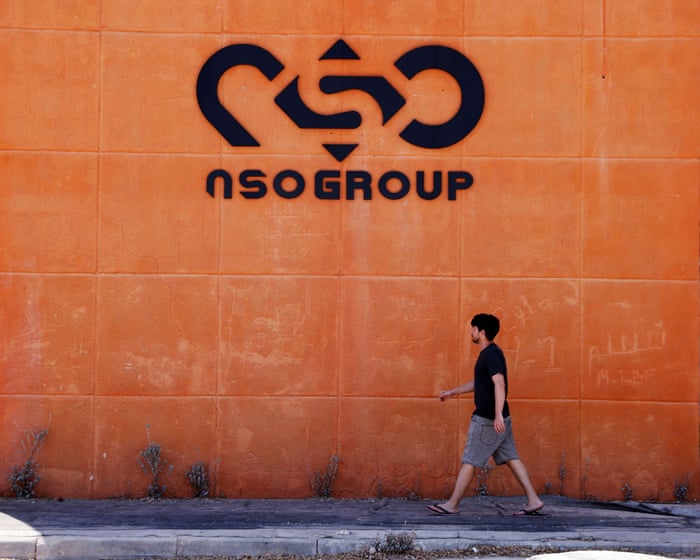
A former member of Morocco’s domestic intelligence service has helped to provide an unprecedented insight into how the north African state used hacking software – including Pegasus spyware – to target journalists, human rights defenders, French politicians and Spanish cabinet ministers and police officers.

Pegasus, which is manufactured by the Israel-based NSO Group, allows its operator to access everything on a target’s mobile phone, including emails, text messages and photographs. It can also activate the phone’s recorder and camera, turning it into a listening device.

Continue reading...

© Photograph: Amir Cohen/Reuters

© Photograph: Amir Cohen/Reuters

© Photograph: Amir Cohen/Reuters

  •  

Hundreds rally at Bethesda HQ to protest Xbox layoffs, and Ars was there

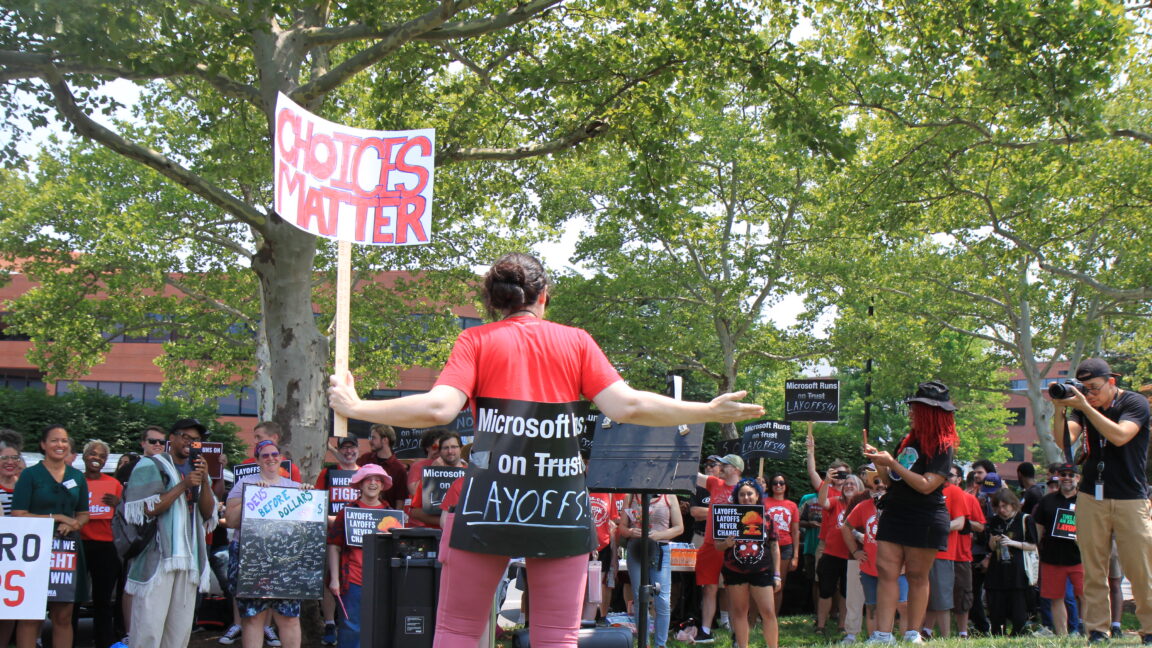
ROCKVILLE, Maryland—Hundreds of Bethesda Game Studios and Zenimax Online Studios employees and their supporters braved nearly 100°F temperatures to protest sweeping layoffs across Xbox during a lunchtime rally in front of parent company Zenimax's headquarters today. The rally was one of five organized today by Zenimax Workers United and its parent union, the Communication Workers of America, at offices across Texas, California, and Montreal.

Attendees held up signs with messages like "Layoffs... layoffs never change" and "Our players deserve better" as union organizers and employees rallied the crowd with speeches and songs. The overwhelming message was one of solidarity and a willingness to push back against job cuts they say have decimated their development and quality assurance teams.

"It's about us building our movement and making sure that we get seen and we're visible," Bethesda technical producer and union volunteer organizer Nathan Hahn told Ars. "Because we want to make sure that we're not okay with these layoffs and that Xbox knows."

Read full article

Comments

  •  
❌