❌

Reading view

ARK Augmented Reality Could Build Apple’s Knowledge Layer

ARK augmented reality describes a form of spatial interaction in which artificial intelligence does more than place digital objects in the physical world. It uses knowledge from foundation models to understand unfamiliar scenes, generate useful information and adapt its response to the person, task and environment.

The concept comes from a 2023 research paper titled β€œArK: Augmented Reality with Knowledge Interactive Emergent Ability.” Its authors proposed a system that transfers knowledge from large foundation models into new physical and virtual environments. Instead of training an AI agent separately for every room, object or activity, ArK uses existing knowledge memory to interpret what it sees and generate appropriate 2D or 3D content.

Traditional augmented reality places information over reality. ARK augmented reality tries to understand reality before deciding what should appear.

That distinction creates a compelling direction for Apple. Vision Pro already blends digital content with physical space. Apple Intelligence adds language, image understanding and personal context. Visual Intelligence lets users look at objects, text and scenes before asking for information. Siri AI adds a conversational layer. ARKit, RealityKit and visionOS provide the spatial foundation.

Apple now has many of the components required to build a knowledge layer over the physical world.

ARK Augmented Reality Goes Beyond Digital Overlays

Most familiar augmented reality experiences are relatively fixed. A furniture app places a digital sofa in a room. A navigation app displays arrows over a street. A museum app identifies an artwork. A repair app shows where a component belongs.

These experiences can be useful, but they usually depend on predefined content and rules. The system recognizes a known object or location, then presents prepared information.

ARK augmented reality proposes something more adaptive. A knowledge-enabled system could enter an unfamiliar environment, interpret what is present and generate assistance based on a broader understanding of objects, relationships and possible actions.

A user looking at a complicated electrical panel would not only see labels. The system could identify the panel type, explain the purpose of each section, compare the arrangement with standard configurations and warn the user not to touch dangerous components.

A student examining a machine could ask how it works and receive a spatial explanation attached to its real parts. A surgeon could review anatomical information positioned around a medical model. A technician could receive repair guidance even when the exact equipment had not been included in a previous training dataset.

The display becomes less like a floating screen and more like an informed interpretation of the environment.

A cozy living room with a digital interface on Apple Vision Pro displaying a 3D wireframe chair design, superimposed in front of a fireplace and surrounded by modern furniture and warm lighting.
Image Credit: Apple Inc.

Why Apple Is Positioned to Build It

Apple’s advantage would not come from inventing every part of ARK augmented reality. It would come from combining hardware, software, artificial intelligence and personal context into one controlled ecosystem.

Vision Pro already understands rooms, surfaces, hands, eyes and objects well enough to place digital content convincingly in physical space. Its cameras and sensors continuously map the environment while visionOS manages windows, volumes and immersive experiences.

Apple Intelligence provides another layer. Foundation models can interpret language, summarize information, generate content and connect requests with app actions. Visual Intelligence can identify text, images and real-world objects. Siri AI can act as the conversational interface.

The Apple ecosystem also provides personal context that a generic AR platform may not have. Calendar knows the user’s schedule. Maps understands location. Photos contains visual history. Notes and Mail hold project information. Health contains personal trends. Home understands rooms, accessories and automations.

An Apple-built knowledge layer could combine the environment in front of the user with the information already available across trusted devices and apps.

A person preparing for a meeting could look at a conference room and see the agenda, participant names and relevant documents arranged around the table. A traveler could look across a train station and receive directions connected to the correct platform, departure time and digital ticket. A homeowner could examine a room and see live information from temperature, air-quality and energy sensors.

The physical environment becomes the interface.

Vision Pro Is the Laboratory

Vision Pro is the obvious development platform for this idea because it already offers the cameras, displays, sensors and processing required for advanced spatial understanding. Its size and price limit broad adoption, but those same characteristics allow Apple and developers to test experiences that would be harder to build first on lightweight glasses.

ARK augmented reality on Vision Pro could become especially useful in enterprise environments. Apple already promotes the headset for employee training, product design, field service, collaboration and specialized visualization.

A worker could enter an unfamiliar facility and receive contextual instructions attached to real equipment. An engineer could inspect a physical prototype while design changes, performance data and maintenance history appear around it. A new employee could learn a workflow through spatial guidance generated from company manuals and operational knowledge.

The system would not need to display every available fact. It would need to understand which information fits the current task.

That is where AI knowledge becomes more valuable than a traditional AR overlay. Too much information can be as disruptive as too little. A strong system should filter, prioritize and explain rather than cover the room with floating labels.

ARK augmented reality - A modern living room with visionOS virtual reality overlays displays an online store page for a red stool, alongside a 3D modeling preview of the stool positioned on the floor near a fireplace and sleek, modern chair.

The iPhone Could Bring ARK to More People

Vision Pro may be the development environment, but iPhone could provide the scale. The iPhone already combines cameras, LiDAR on Pro models, location, motion sensing, Visual Intelligence and Apple Intelligence.

An iPhone-based ARK experience would be less continuous because users would need to hold up the device. It could still deliver useful knowledge interaction without requiring a headset.

A user could point the camera at a plant and receive care guidance based on its species, visible condition, local weather and placement in the room. Someone assembling furniture could receive generated guidance positioned over the actual parts. A shopper could compare products by looking at them rather than manually searching for each model.

The difference from ordinary visual search would be interaction. The user could ask follow-up questions, change the goal and let the system update the visual guidance.

Future glasses could eventually make the experience persistent. The iPhone would help Apple develop the intelligence, privacy controls and app ecosystem before lightweight eyewear becomes ready.

A World That Explains Itself

The most ambitious version of ARK augmented reality is a world in which information is attached to objects, places and situations only when requested or needed.

A city could become understandable without searching through maps, review sites and separate transit apps. Buildings could reveal history. Streets could explain temporary closures. Restaurants could surface reservations, dietary options and accessibility details. Public transport could show the correct entrance and platform.

Inside a home, Apple’s knowledge layer could explain energy use, identify maintenance problems and guide repairs. In a classroom, physical models could become interactive lessons. In healthcare, patients could receive visual instructions for approved home procedures or medication devices.

The experience would depend on context rather than menus. The user looks, asks and receives information positioned where it belongs.

This is the transition from augmented reality as decoration to augmented reality as understanding.

Privacy Will Decide Whether It Works

A knowledge layer capable of understanding the physical world also creates serious privacy questions. The system may see homes, workplaces, documents, faces, screens and private conversations. The more context it receives, the more useful it becomes. The same access can also make it invasive.

Apple’s privacy architecture could become one of its strongest advantages. On-device processing would allow some scene understanding without sending continuous camera feeds to external servers. Private Cloud Compute could handle more complex requests while preserving stricter controls than an ordinary cloud AI service.

Apple would also need visible controls over what is analyzed, remembered and shared. A user should know when the system is interpreting the environment and whether information is temporary or retained. Workplaces and public spaces would need rules for recording, identification and sensitive data.

ARK augmented reality cannot become socially acceptable if people feel that nearby devices are constantly cataloging them.

The successful version would behave less like surveillance and more like intentional assistance. The user asks for understanding. The system processes only what is needed. The knowledge disappears when the task ends unless the user chooses to save it.
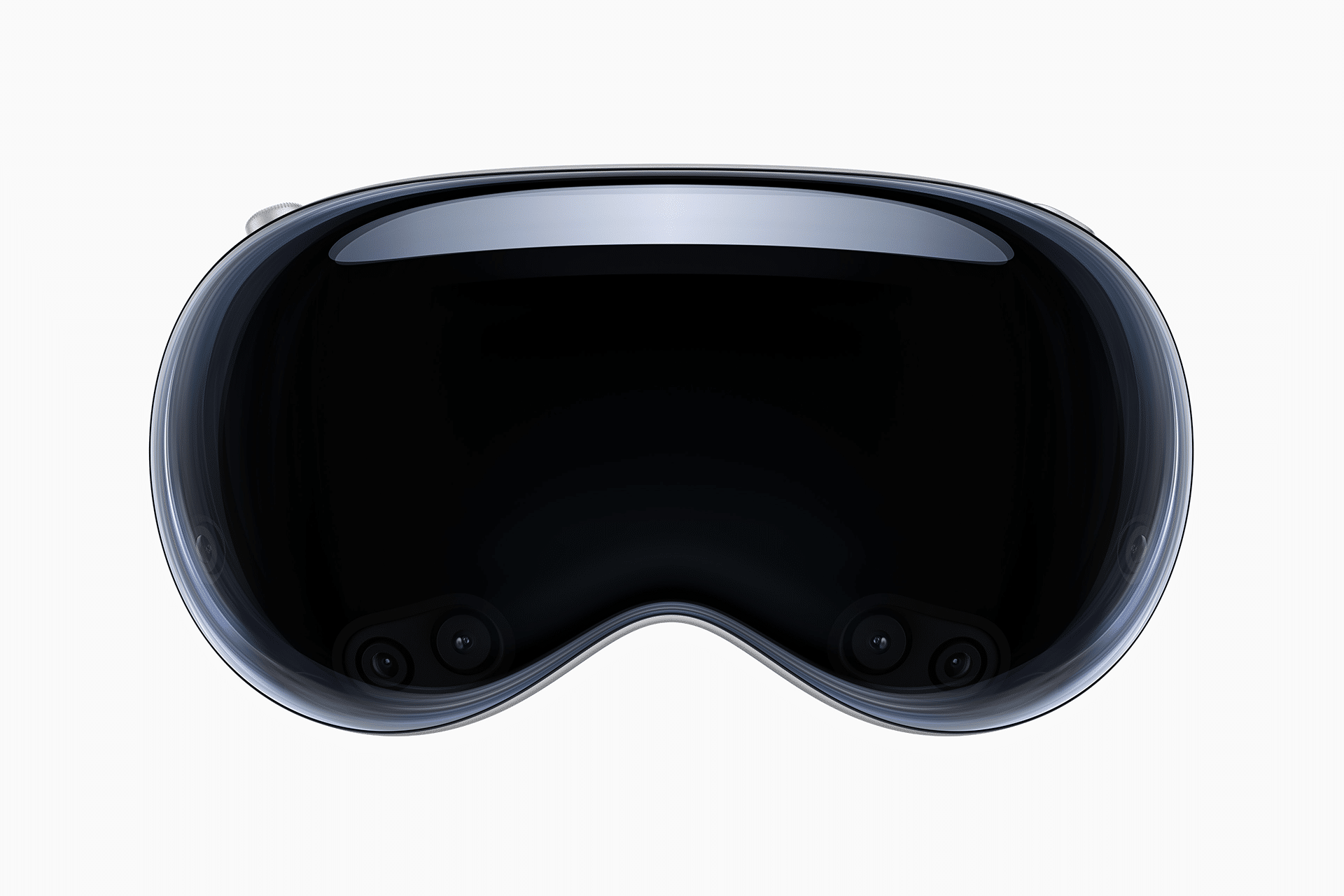
A sleek, black, futuristic virtual reality headset with a smooth, curved design and reflective surfaceβ€”perfect for exploring the latest Betasβ€”viewed from the front against a white background.
Image Credit: Apple Inc.

Developers Could Build Knowledge Worlds

Apple would not need to create every knowledge experience itself. visionOS, ARKit, RealityKit and App Intents could let developers connect specialized knowledge with physical environments.

A medical company could build guidance for approved equipment. A manufacturer could create spatial maintenance systems. A university could attach interactive explanations to laboratories and museums. A retailer could create product comparisons based on inventory and customer preferences.

Apple could provide the shared intelligence layer: scene understanding, object recognition, language interaction, privacy permissions and spatial presentation. Developers would provide the trusted domain knowledge.

This division would be essential. General AI can explain many things, but professional environments require verified information. A generated answer about a historical building has different consequences from an answer about industrial machinery or medical treatment.

Apple’s platform could distinguish between general knowledge and certified domain sources, allowing users to see where information comes from before acting.

From Spatial Computing to Contextual Computing

Apple describes Vision Pro as a spatial computer because digital content can occupy physical space. ARK augmented reality suggests the next progression: contextual computing.

A spatial computer knows where digital content is placed. A contextual computer understands why the content is useful in that location, what the user is trying to accomplish and which knowledge should appear.

That would connect several Apple strategies that currently look separate. Vision Pro supplies spatial awareness. Apple Intelligence supplies reasoning and generation. Siri AI supplies conversation. Visual Intelligence supplies real-world understanding. The ecosystem supplies personal context.

Together, they could create a system that does not wait for users to open the correct app and search through the correct menu. The environment itself becomes the starting point.

Apple’s opportunity is to make that interaction restrained rather than overwhelming. The company does not need to cover reality with digital noise. It can use design, privacy and contextual intelligence to make information appear only when it improves the moment.

ARK augmented reality offers a useful description of that future. Reality remains visible. Knowledge becomes interactive. The computer begins to understand the world in front of the user instead of asking the user to translate everything into a search box.

The post ARK Augmented Reality Could Build Apple’s Knowledge Layer appeared first on AppleMagazine.

  •  

PrismML AI 93% Compression Could Give Siri a Major Boost

PrismML AI compression could give Apple a way to place far more capable artificial intelligence directly inside the iPhone. The Caltech spinout says it reduced a 27-billion-parameter model from approximately 54GB to less than 4GB, small enough to run locally on an iPhone 17 Pro.

That represents a reduction of about 93%, but the more useful number may be memory efficiency. PrismML says its technology can use up to 15 times less memory than conventional versions of the same model. Apple has reportedly held early discussions with the startup about possible uses for the technology.

Neither company has announced a partnership, acquisition or product plan. PrismML’s claims also need to be judged through independent testing, sustained performance and the compromises introduced by heavy compression. Even so, the demonstration points directly at one of Apple’s largest AI challenges: fitting stronger models inside devices without destroying battery life, consuming too much memory or sending every complex request to the cloud.

PrismML AI Compression Changes the Size Problem

Large AI models are difficult to run on phones because their parameters require substantial storage and working memory. A standard model may perform well in a data center equipped with powerful accelerators, large memory pools and constant electricity, then become impractical inside a device designed to last all day on one battery.

PrismML approaches that problem by representing model weights with far fewer bits. The startup has developed what it calls Bonsai models, including 1-bit versions designed to preserve much of the original model’s capability while sharply reducing size and energy use.

The reported iPhone demonstration used a compressed version of Alibaba’s Qwen model with 27 billion parameters. That is far larger than the compact language models normally associated with smartphones. Running it locally suggests that model size may no longer be controlled only by the number of parameters. How efficiently those parameters are represented becomes just as relevant.

Compression is not new. Developers already use quantization, pruning and other methods to make models smaller. PrismML’s claim is that its approach pushes that process much further while retaining useful reasoning and language performance.

That claim is exactly why Apple would be interested.

Why Siri AI Needs Smaller Models

Apple’s AI strategy depends on dividing work between the device and the cloud. Simpler Apple Intelligence requests can run locally, while more demanding tasks may move to Private Cloud Compute. That hybrid structure allows Apple to offer stronger capabilities without forcing the iPhone to carry every model it may ever need.

The cloud layer, however, introduces cost, latency and availability requirements. A request must leave the device, reach a server, be processed and return. Apple has designed Private Cloud Compute around strong privacy protections, but local processing remains faster and easier to explain.

A larger on-device model could improve Siri AI’s language understanding, reasoning and ability to complete multi-step tasks without a network connection. It could also reduce the number of requests sent to Apple’s servers.

That does not mean cloud processing would disappear. Server models can remain larger and support especially demanding requests. PrismML AI compression could instead move the dividing line. Tasks that currently need Private Cloud Compute might become possible directly on a future iPhone.

The benefits could include quicker responses, stronger offline operation and less server demand as Apple Intelligence reaches more users.

Close-up of a smartphone screen displaying the time 0:41, with Siri AI showcased in the dynamic island at the top, rainbow-like light effect glowing, and battery, Wi-Fi, and signal icons visible in the corner.
Image Credit: Apple Inc.

Privacy Fits Apple’s Preferred Direction

On-device processing has always been central to Apple’s AI positioning. Personal information can remain on the iPhone rather than moving through a conventional cloud service. The device can interpret a request, use local context and produce an answer without exposing the underlying data beyond the hardware.

A model capable of handling more work locally would reinforce that approach. Siri AI could potentially understand messages, notes, schedules or onscreen content while reducing the need to transfer information elsewhere.

Apple already uses Private Cloud Compute when local processing is insufficient, and the company has built significant safeguards around that system. Yet every task completed on the iPhone removes one additional processing step.

Privacy is not the only advantage. Local models can continue operating when connectivity is poor or unavailable. That could help Siri AI during flights, rural travel, crowded events or other situations where cloud access becomes unreliable.

A capable offline assistant would also feel more like part of the operating system and less like a remote service accessed through an interface.

The iPhone Still Has Physical Limits

Shrinking a model to less than 4GB does not automatically make it ideal for everyday iPhone use. The model must also run quickly enough, avoid excessive heat and leave enough memory for iOS and active apps.

A technical demonstration may complete tasks successfully while consuming more energy or time than users would accept from Siri. Apple would need to optimize the model for its Neural Engine, memory architecture and software frameworks rather than simply loading PrismML’s existing build onto every supported device.

Storage is another consideration. A model occupying several gigabytes would compete with apps, photos, offline media and system files. Apple could reserve more storage for intelligence features, deliver models selectively or use several specialized models instead of one large general system.

Battery use may create the hardest constraint. An AI model can fit in memory and still require too much sustained computation for frequent mobile use. The ideal system needs to be small, fast and efficient enough to disappear into normal iPhone behavior.

Apple’s chip design gives it an advantage here. The company controls the processor, Neural Engine, operating system and AI software stack. PrismML could provide the compression technique while Apple handles the deeper hardware integration.

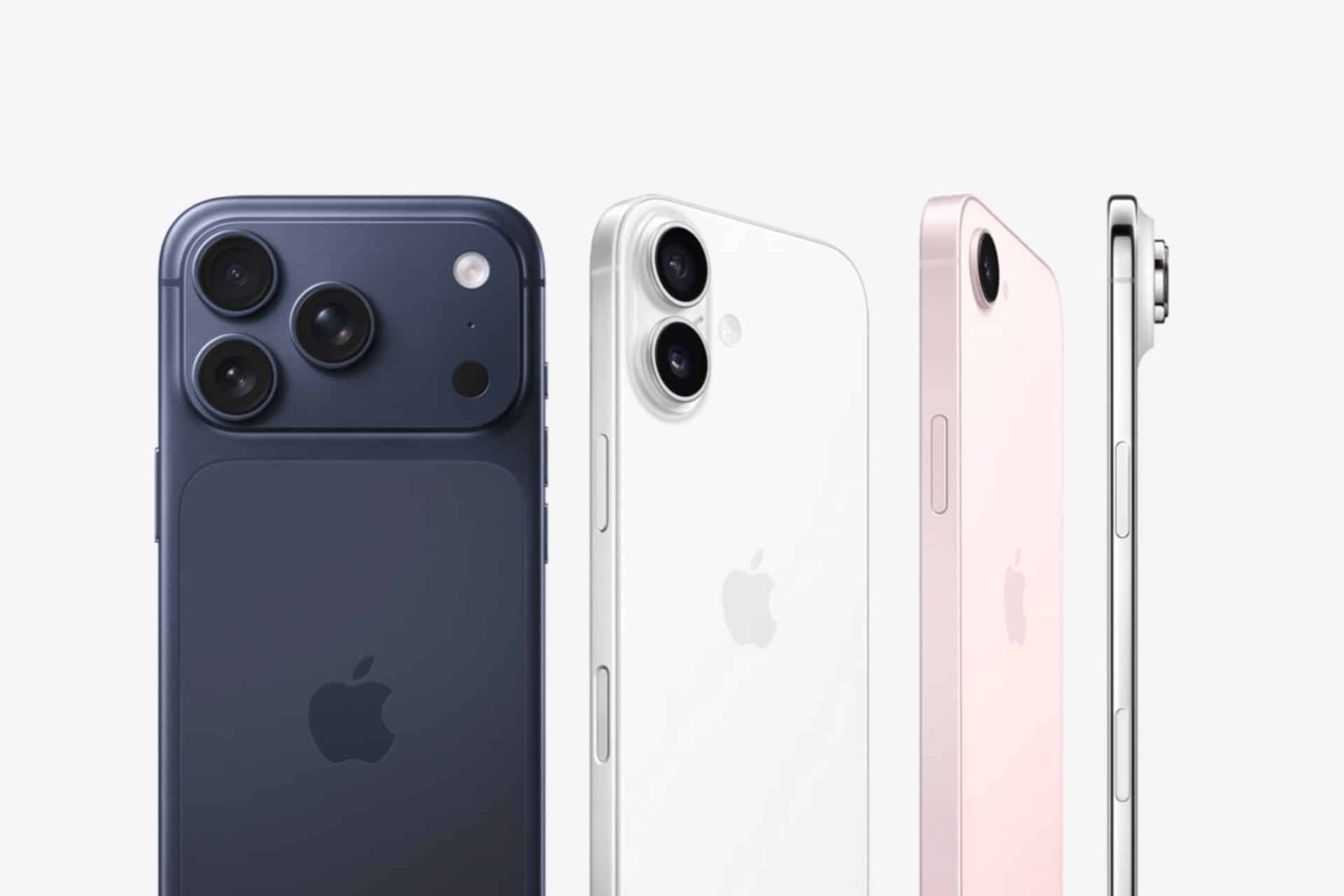
Four Apple iPhones in different colorsβ€”dark blue, white, pink, and silverβ€”are shown from the back and side, highlighting their camera designs and sleek edges against a light background, alongside the Apple Watch Find Devices feature.
Image Credit: Apple Inc.

Better AI Without Replacing the Cloud

The strongest use of PrismML’s technology may not be putting one enormous model on every iPhone. Apple could use compression across a family of models designed for different devices and tasks.

A smaller model could handle routine language requests. A more capable local model could be downloaded only to recent Pro devices with sufficient memory. Specialized models could support writing, image generation, app actions or Visual Intelligence. Private Cloud Compute could remain available when the request exceeds local capability.

That would give Apple more flexibility than an all-local or all-cloud design. Each device could carry the intelligence appropriate for its chip, memory and battery capacity.

The approach could also help Macs, iPads and future home products. A compressed model may run more comfortably on a MacBook Air, HomePod or smart home hub without requiring constant server access. Apple could scale the same intelligence foundation across products while adjusting model size to the hardware.

This is especially relevant as Siri AI moves beyond answering questions. App actions, personal context and ambient smart home control require intelligence that remains available throughout the day. Lower memory and energy requirements could make those experiences more practical.

Compression Always Includes Trade-Offs

A 93% reduction is a striking headline, but compression can affect output quality. A smaller representation may lose precision, weaken reasoning or struggle with uncommon information. The real test is not whether the model runs. It is whether it performs well enough across the tasks Apple expects Siri AI to handle.

PrismML says its technology preserves strong performance compared with full-precision models. Apple would still need extensive evaluation across languages, safety categories, tool use and personal-assistant scenarios.

Reliability is especially sensitive for an operating-system assistant. A model used for casual brainstorming can tolerate occasional weakness. A model handling messages, appointments, directions or app actions needs a higher level of consistency.

Apple may therefore use aggressive compression selectively. Some tasks can accept a smaller model, while others may remain on a higher-quality server model. The user would not need to know which model is active as long as the response remains fast and dependable.

A black background with a glowing sphere in the center, featuring colorful light wavesβ€”red, orange, blue, and greenβ€”swirling horizontally inside the sphere, evoking a futuristic Siri AI interface.
Image Credit: Apple Inc.

Apple Wants the Technology, Not Necessarily the Company

Reports indicate Apple has spoken with PrismML, but early conversations can lead in several directions. Apple could license the startup’s technology, work on a technical integration, hire members of the team or explore an acquisition.

The company has a long history of purchasing smaller firms for specialized technology and engineering talent. Model compression would fit that pattern because it supports Apple’s existing AI strategy rather than creating a separate consumer product.

PrismML could also remain independent and provide its tools to multiple hardware companies. Its technology has potential uses across phones, computers, robotics, vehicles and industrial equipment where cloud access is expensive or unreliable.

Apple’s interest alone gives the startup attention. The larger significance is that efficient models are becoming as valuable as larger ones. The AI industry spent years treating scale as the primary route to improvement. Mobile computing forces a different question: how much intelligence can fit inside the power and memory limits of one personal device?

A Smaller Model Could Make Siri Feel Larger

Apple does not need to place the biggest available model on an iPhone. It needs a model capable enough to improve the interactions users repeat every day.

PrismML AI compression could help Siri understand more context, complete more requests locally and respond without waiting for a server. It could strengthen Apple’s privacy argument while reducing the infrastructure load created by millions of AI-enabled devices.

The technology remains early, and a startup demonstration is not the same as a shipping Apple feature. The 93% figure will mean little if quality, battery life or speed suffer under daily use.

But the direction fits Apple unusually well. The company has spent years designing smaller, more efficient hardware systems that perform beyond their apparent limits. PrismML is proposing a similar strategy for AI models.

If the startup’s claims hold up, the next major Siri improvement may not come from sending a larger model into the cloud. It may come from fitting one into the iPhone without making the iPhone feel the weight.

The post PrismML AI 93% Compression Could Give Siri a Major Boost appeared first on AppleMagazine.

  •  

AppleCare+ Pricing Rises for Mac and iPad

AppleCare+ pricing has gone up for new Mac and iPad customers, adding another small cost increase to the Apple ownership equation. According to Bloomberg, Apple has raised monthly and annual AppleCare+ rates for new Mac and iPad plans, with the change applying to new coverage rather than existing plans already active on customer devices.

The increase is modest on paper. Reports indicate Apple has raised monthly AppleCare+ rates by 50 cents and annual plans by $5 for affected Mac and iPad products. For example, AppleCare+ for the 13-inch MacBook Air is now listed at $7.99 per month or $79.99 per year, up from $7.49 per month and $74.99 per year. The Mac mini now starts at $4.49 per month or $44.99 per year, while the 16-inch MacBook Pro costs $15.99 per month or $159.99 per year.

The numbers are not dramatic alone. The context is harder for buyers. Mac and iPad prices have already been under pressure from component costs, financing changes and longer upgrade cycles. AppleCare+ is optional, but for many customers buying expensive laptops and tablets, it is part of the real purchase price.

AppleCare+ Pricing Adds to the Ownership Cost

AppleCare+ pricing is one of those costs many buyers do not fully consider until checkout. The device price gets attention first. Then come storage upgrades, cellular connectivity, keyboard accessories, Apple Pencil, taxes, financing, software subscriptions and protection coverage.

For a MacBook Air, an extra 50 cents per month may not change the decision. For a MacBook Pro, iPad Pro or a family buying multiple devices, the increases add up over time. Annual plans rising by $5 also signal that Apple is comfortable nudging protection costs higher even when the change is small enough to avoid a major backlash.

AppleCare+ remains valuable for users who carry devices daily or depend on them for work. Macs and iPads are portable, expensive and often used in places where accidents happen: classrooms, coffee shops, airports, offices, studios, kitchens and family rooms. A cracked iPad screen or damaged MacBook display can be expensive without coverage.

Apple’s pitch is convenience as much as insurance. AppleCare+ includes priority support, battery service when capacity drops below Apple’s threshold, and reduced service fees for accidental damage. For iPad, AppleCare+ can also cover Apple-branded keyboard accessories and Apple Pencil damage under service-fee terms.

That makes the plan attractive. It also makes the higher price easier for Apple to defend.

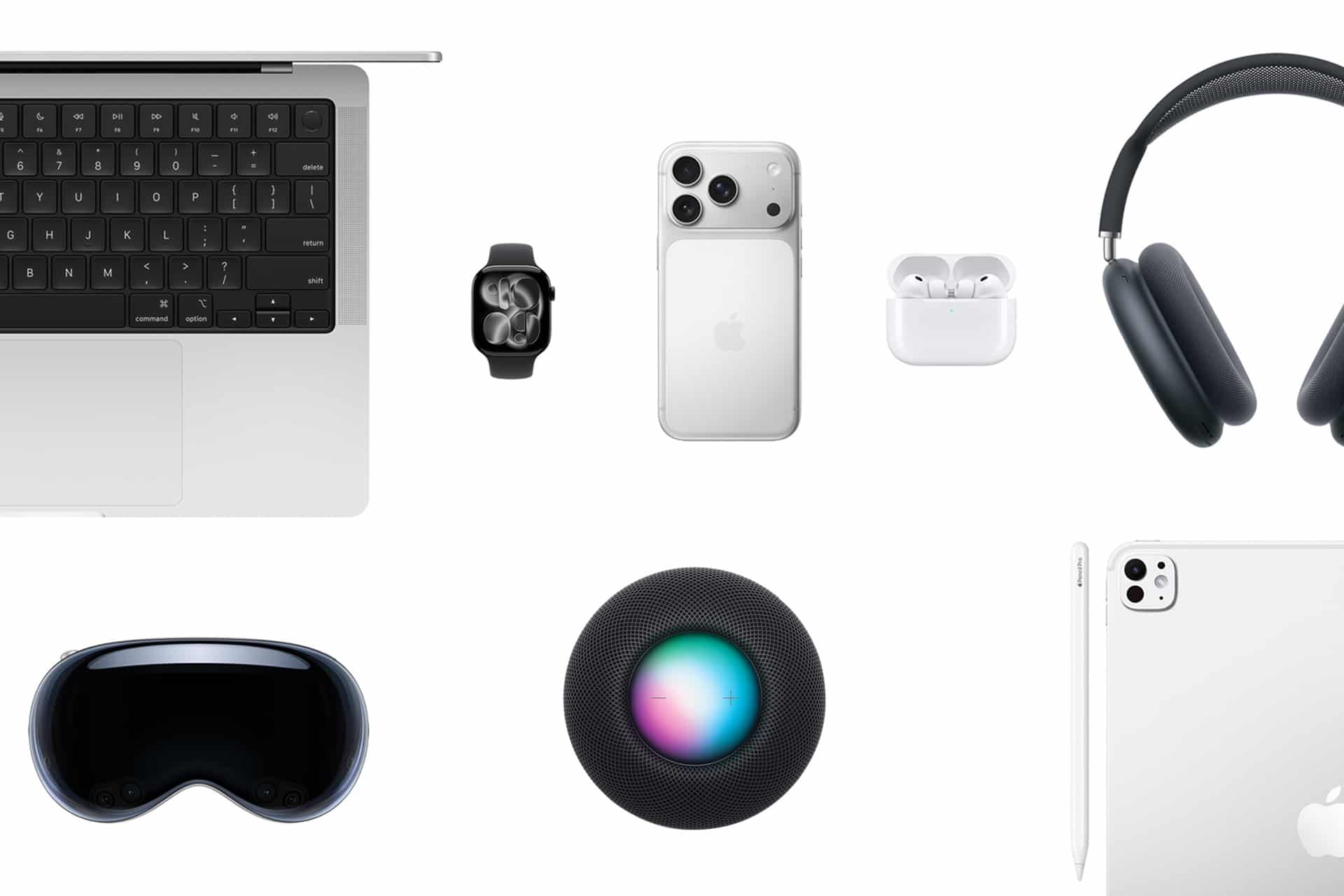
A flat lay of Apple active devices on a white background, including a MacBook, Apple Watch, iPhone, AirPods, AirPods Max headphones, HomePod, iPad, and Apple Vision Pro headset.
Image Credit: Apple Inc.

New Customers Feel the Change First

The latest increase applies to new Mac and iPad AppleCare+ customers. Existing customers with active plans are not the immediate target of the reported change. That distinction helps Apple avoid angering subscribers who already signed up at previous rates, while still lifting revenue from new device buyers.

This approach fits Apple’s broader shift toward recurring coverage. Apple has been moving AppleCare+ further into monthly and annual subscription-style plans, with AppleCare One offering a bundled option for multiple products. The protection plan is no longer only a one-time add-on at purchase. It is increasingly part of Apple’s services layer.

That matters because Apple’s services business depends on recurring payments. AppleCare+ may not get the same attention as iCloud, Apple Music or Apple TV, but it is another way Apple extends the customer relationship beyond the hardware sale. A Mac or iPad purchase becomes not only a device transaction, but also a support and repair subscription.

The price increase strengthens that pattern. A small rise across a large base of new buyers can support services revenue without changing the product lineup.

Mac Buyers Should Compare Plans

Mac buyers now have more reason to compare AppleCare+ options before adding coverage. Apple’s Mac plans vary by model because repair risk and device cost vary. A Mac mini plan starts lower because the device is stationary and less likely to face drops or screen damage. A 16-inch MacBook Pro costs more because it is a high-value portable machine with expensive components.

For a buyer choosing a MacBook Air, AppleCare+ may be easier to justify if the laptop travels daily. Students, journalists, consultants, photographers, editors and business travelers are more exposed to accidental damage than someone who leaves a Mac mini on a desk.

For MacBook Pro buyers, the decision often depends on work dependency. If the Mac is the primary income tool, AppleCare+ can be less about repair math and more about reducing downtime. Access to Apple support and lower repair costs can be worth the subscription if the device is central to daily work.

Still, users should compare the plan cost with their own risk. A careful desktop Mac user may not need the same coverage as a frequent traveler. AppleCare+ is useful, but it should not be automatic for every buyer.

iPad Buyers Face a Different Calculation

iPad AppleCare+ has its own logic because iPads are more physically exposed than Macs in many homes. They are passed between family members, used by children, carried around the house, taken to school, placed in bags and paired with accessories that raise the total cost of ownership.

For iPad Pro and iPad Air buyers, AppleCare+ can make sense because screen repairs and accessory damage can be costly. Apple’s current AppleCare+ terms for iPad include service fees for screen damage, other accidental damage and covered accessories. That can make the plan appealing for users who buy Magic Keyboard, Apple Pencil Pro or a high-end iPad Pro.

The decision becomes more complicated for entry-level iPad buyers. A lower-cost iPad may not justify years of coverage for every user, especially if it stays mostly at home. Families, however, may see the protection differently. An iPad used by children faces more risk than a laptop used carefully by one adult.

The new pricing does not change the core question. It makes the answer slightly more expensive.

AppleCare | Apple Warranty Check: The image features a logo with a red apple symbol and a leaf on top, associated with Apple Inc. Below the logo, the text reads "AppleCare+ Products" on a square white background. The backdrop is draped with soft white fabric.
AppleCare Products | Warranty Check

AppleCare One Becomes More Relevant

AppleCare One gives Apple another way to soften individual plan increases. The bundle starts at $19.99 per month for up to three eligible products, with additional devices available for $5.99 per month each. It includes AppleCare+ benefits and adds theft and loss coverage for eligible iPhone, iPad and Apple Watch products.

For users with only one Mac or one iPad, AppleCare One may not be the best fit. For users with multiple devices, it can become more attractive as individual plans rise. A person with an iPhone, iPad and Mac may compare three separate AppleCare+ plans against the bundle and find the monthly difference easier to justify.

That is likely part of the strategy. Apple can raise individual plan prices modestly while giving heavier ecosystem users a bundled option. The company has used similar logic across services with Apple One, where the value increases as users subscribe to more Apple products.

The same principle now applies to protection. The deeper a customer is inside Apple’s hardware ecosystem, the easier it becomes to turn support coverage into a monthly bundle.

Small Increase, Larger Signal

AppleCare+ pricing increases may be small, but they arrive during a period when Apple is asking customers to absorb more costs across the ecosystem. Device prices, component pressure, cellular financing, AI hardware demands and service subscriptions all affect the total ownership picture.

The AppleCare+ change fits that pattern. Apple is not dramatically changing the service. It is raising the price slightly while keeping the value proposition intact: lower repair costs, battery service, accidental damage coverage and Apple support.

For buyers, the best response is not panic. It is math. Compare the plan price with the device cost, repair risk, usage pattern and whether multiple Apple products would make AppleCare One more efficient. Someone buying a MacBook Pro for travel may want the protection. Someone buying a Mac mini for a desk may not. A family iPad may be a stronger candidate than a carefully handled personal tablet.

AppleCare+ remains a useful safety net. It is just a slightly more expensive one for new Mac and iPad buyers, and that makes the real cost of the device a little higher than the number on the product page.

The post AppleCare+ Pricing Rises for Mac and iPad appeared first on AppleMagazine.
  •  

Apple Raises iPhone Prices in Japan

After raising prices on all Macs and iPads worldwide last month, Apple has now increased the price of iPhone models in Japan.


As spotted by the Spanish blog iPhoneros, the iPhone 16, iPhone 17e, iPhone 17, iPhone Air, iPhone 17 Pro, and iPhone 17 Pro Max all received price increases on Apple's online store in Japan today. Prices increased by up to 11%.


Model Previous Price New Price Increase
iPhone 17 Pro Max Β₯194,800 Β₯214,800 10.3%
iPhone 17 Pro Β₯179,800 Β₯194,800 8.3%
iPhone Air Β₯159,800 Β₯177,800 11.3%
iPhone 17 Β₯129,800 Β₯142,800 10%
iPhone 17e Β₯99,800 Β₯107,800 8%
iPhone 16 Β₯114,800 Β₯124,800 8.7%


Apple attributed the Mac and iPad price increases last month to the ongoing memory chip shortage, which has driven up chip prices. In this case, however, the increases are likely due to the Japanese yen's depreciation against the U.S. dollar over the past year.

Apple did not raise iPhone prices today in the U.S. or any other countries that we checked.

Apple also raised the prices of iCloud+ and Apple Music plans in many countries today, including Japan, so price increases are a theme this Friday.
Tag: Japan
Related Forum: iPhone

This article, "Apple Raises iPhone Prices in Japan" first appeared on MacRumors.com

Discuss this article in our forums

  •  

iPhone 18 Pro Launching in Two Months With These 12 New Features

It is now mid-July, and that means the iPhone 18 Pro and iPhone 18 Pro Max are now just two months away. The devices are expected to look similar to the iPhone 17 Pro and iPhone 17 Pro Max, but there will still be many year-over-year changes, with rumored features including a smaller Dynamic Island, 5G via satellite, and more.


Apple is expected to unveil the iPhone 18 Pro, iPhone 18 Pro Max, and a foldable "iPhone Ultra" in the first half of September, and the devices should be released in the second half of the month. The regular iPhone 18, a lower-end iPhone 18e, and a second-generation iPhone Air will reportedly be announced around March 2027.

Below, we have recapped 12 features rumored for the iPhone 18 Pro models, as of July:
  • Smaller Dynamic Island: It has been rumored that Face ID's flood illuminator will be moved under the screen on the iPhone 18 Pro models, paving the way for a smaller Dynamic Island on the devices.

  • LTPO+ Displays: The next Pro models are expected to have the same overall design as the iPhone 17 Pro models, including 6.3-inch and 6.9-inch display sizes and a "plateau" housing three rear cameras. However, the displays will reportedly use so-called LTPO+ display technology, which should contribute to longer battery life.

  • Variable Aperture: The main 48-megapixel Fusion camera on both iPhone 18 Pro models is rumored to have a variable aperture, which would allow users to control the amount of light that passes through the camera's lens and reaches the sensor. This would provide greater control over depth of field. However, given that iPhones have smaller image sensors due to smartphone size constraints, it is unclear exactly how meaningful this improvement would be.

  • A20 Pro Chip: Apple's next-generation A20 Pro chip is expected to use TSMC's first-generation 2nm process, whereas the A19 Pro chip is 3nm. With a 2nm architecture and a new packaging design, the A20 Pro chip should deliver solid year-over-year performance and power efficiency gains.

  • C2 Modem: Apple's custom C1 cellular modem for 5G and LTE debuted in the iPhone 16e last year, and that was followed by a C1X chip in the iPhone Air. Apple says the C1X modem is up to twice as fast as the C1 modem, and the most power-efficient modem in an iPhone ever. The improvements should continue with Apple's third-generation C2 modem in the iPhone 18 Pro models.

  • 5G via Satellite: With the C2 modem, the iPhone 18 Pro models will reportedly support 5G via satellite for web browsing without Wi-Fi or cellular connectivity.

  • N2 Chip: Most of the iPhone 17 models and the iPhone Air are equipped with an Apple-designed N1 chip that enables Wi-Fi 7, Bluetooth 6, and Thread. Apple says the N1 chip also improves the overall performance and reliability of features like Personal Hotspot and AirDrop. iPhone 18 Pro models are expected to have Apple's next-generation N2 chip, but it is not yet known what improvements would come with this upgrade.

  • Dark Cherry: The special color for the iPhone 18 Pro models will reportedly be Dark Cherry, alongside Light Blue, Dark Gray, and Silver. The existing Cosmic Orange and Deep Blue colors are expected to be discontinued.

  • Simplified Camera Control: Apple is expected to simplify the Camera Control button on the iPhone 18 Pro models, by removing touch sensitivity and haptic feedback. The redesigned button will only have pressure sensitivity.

  • Redesigned Rear Ceramic Shield: The rear Ceramic Shield area for MagSafe is rumored to feature a more frosted and seamless appearance on the iPhone 18 Pro models compared to the current two-tone design.

  • Larger Battery (iPhone 18 Pro Max): According to alleged Chinese regulatory database filings, the iPhone 18 Pro Max will have nearly a 10% larger battery compared to the iPhone 17 Pro Max.

  • Thicker Design (iPhone 18 Pro Max): It has been rumored that the iPhone 18 Pro Max will be thicker than both the iPhone 17 Pro Max and the iPhone 18 Pro.
Bookmark our iPhone 18 and iPhone 18 Pro roundups to stay up to date with more rumors.
Related Roundup: iPhone 18 Pro

This article, "iPhone 18 Pro Launching in Two Months With These 12 New Features" first appeared on MacRumors.com

Discuss this article in our forums

  •  

'Everyone else is selling parts β€” we’re selling the full end-to-end system': Microsoft is allegedly telling its salespeople to take the fight to OpenAI and Anthropic

  • Microsoft sees itself as cheaper and more effective at bundling the full stack
  • The company is clearly pushing its own internal models
  • Claude also slated for being slower and less accurate

Microsoft is reportedly teaching sales workers how to compare the company's AI offerings to rival companies like OpenAI and Anthropic.

Per Bloomberg reporting, the company's sales staff are being told to emphasize benefits like efficiency and cost advantages when using Microsoft's offerings, which offer a much fuller picture than just the models and tools, extending to compute and other workflow tools.

"Everyone else is selling parts – we’re selling the full end-to-end system," EVP Jay Parikh reportedly told workers. "That’s the story that we all need to get out there and tell in FY27."

Microsoft sales teams up the ante against OpenAI, Anthropic

Clearly, the company wants customers to see the combination of its own models and third-party models, cloud infrastructure, applications and security as better value compared with having to piece these elements together separately.

Copilot EVP Jacob Andreou also reportedly compared Copilot to Claude, accusing Claude of being slower, less accurate and missing certain security integrations.

The sales push comes at a time of change for the company, which has started to push more of its own internal models across different apps and workflows to replace OpenAI and Anthropic models. It's also a marked shift from the company's earlier AI strategy, which leaned heavily on its multibillion-dollar partnership with OpenAI.

Company CEO Satya Nadella also pointed at a major customer, Unilever, which recently switched form an unnamed frontier model to one of Microsoft's own cheaper models to make significant savings.

In April, the company announced that its AI business is now worth around $37 billion annually, marking a 123% year-over-year increase.

Google logo on a black background next to text reading 'Click to follow TechRadar'

  •  

12 clever desk upgrades under $50 that instantly fix your home office

Whether you're spending increasingly long hours working from home, or splitting your time between the home and office, the right desk accessories can make a big difference to your life.

Small upgrades won't magically make work more enjoyable, but they can help you stay more comfortable, organized, and generally more productive.

The good news is that improving your workspace doesn't have to cost a fortune. A modern mouse can reduce strain during long sessions, an ergonomic laptop stand can improve your posture, and a quality LED desk lamp makes it easier to work into the evening without harsh overhead lighting.

Even simple additions, such as a larger mouse pad or a portable charger, can make a huge difference, and keeping your workspace tidy can also help you stay focused.

To help you upgrade your setup without blowing the budget, I've rounded up a dozen of affordable office accessories currently on sale at Amazon. This collection covers everything you might require, plus more besides.

Office gear under $50

Nulaxy Ergonomic Adjustable Laptop Stand for Desk, Dual Foldable Computer Riser With Advanced Heat-Vent, Heavy-Duty Portable Notebook Holder for Posture Correction, Compatible With Mac 10-17

Nulaxy
Ergonomic Adjustable Laptop Stand for Desk

Pzloz Led Desk Lamp for Office Home - Eye Caring Architect Lamp With Clamp,dual Screen Computer Monitor Work Smart Light: 24w 5 Color Flexible Adjustable Lighting Table Lamp for Study Drafting

Pzloz
Led Desk Lamp for Office Home

Wireless Charger Iphone Charging Station: 3 in 1 Charger Stand Multiple Devices for Apple - Iphone 17 16e 16 15 14 Pro Max 13 12 11 - Watch 11 10 9 8 7 6 5 4 3 2 Se and Ultra Series - Airpods 4 3 Pro

Getpals
Wireless iPhone Station: 3 in 1 Charger

Redragon M612 Predator Rgb Gaming Mouse, 8000 Dpi Wired Optical Mouse With 11 Programmable Buttons & 5 Backlit Modes, Software Supports Diy Keybinds Rapid Fire Button

Redragon
M612 Predator RGB Wired Optical Mouse With 11 Programmable Buttons

Black+decker Home Office Kit, 7 Pcs Set, Desk Pad, 2-Port Pd Charger, Ergonomic Mouse Pad, Phone Stand, Combo Cables, Cable Organizer, Workspace Accessories Perfect for Work-From-Home (black)

Black and Decker
7 piece set, including desk pad, charger and mouse pad

Mekass Ergonomic Mouse Pad With Wrist Rest, Mouse Pad With Wrist Support for Pain Relief, Memory Foam Mousepad With Massage Design, Non-Slip Pu Base for Office, Home, Desk (classic Black)

Mekass
Ergonomic Mouse Pad With Wrist Rest

Wooden Nightstand Organizer With Phone Stand, Solid Wood Desk Organizer for Phone, Watch, Glasses, Wallet & Keys, Gift for Men

Aeollik
Wooden Organizer With Phone Stand

Iniu 45w Fast Charging Portable Charger, 40% Smaller 10000mah With Detachable Cable, Flight-Safe Travel Power Bank, Usb C External Phone Battery Pack for Iphone 17 16 Pro Ipad Samsung S26 Google Etc

Iniu
45w Fast Charging Portable Charger

Civpower Neck Fan: Portable Personal Neck Cooling Rechargeable Bladeless Fan - Hands Free 3 Speed 4000 Mah Battery Usb Operated Wearable Headphone Design - Gift for Men Women Outdoor (black)

Civpower
Portable Personal Neck Cooling Rechargeable Bladeless Fan

Huanuo Adjustable Desk Footrest, Foot Rest for Under Desk at Work With Massage, Adjustable Foot Stool With 3 Height Position & 30 Degree Tilt Angle Adjustment for Home, Office

Huanuo
Adjustable Desk Footrest

Surge Protector Power Strip - Chcore 5ft Braided Extension Cord With 8 Outlets With 4 Usb (2 Usb C) Charging Ports, Flat Plug Multi Plug Outlet Extender Charging Station for Home Office, Etl, White

Chcore
Surge Protector Power Strip

Amazon Basics 8-Sheet High Security Cross Cut Paper and Credit Card Shredder With P-4 Security, Auto Shut-Off, Black

Amazon Basics
8-Sheet High Security Cross Cut Shredder

  •  

Trump hits back at New York's data center ban, says rule should change 'immediately'

  • Trump says data centers are good for communities, creating jobs and funding their own power/water
  • New York State just banned large projects for a year to focus on developing new guidance
  • Trump worries ongoing bans could cause the US to lose out in the global AI race

US President Donald Trump has criticized New York Governor Kathy Hochul's recent executive order to introduce a year-long, statewide ban on hyperscale data centers, urging the state to change its stance "immediately."

In a post on Truth Social, Trump characterized data centers as "money machines" that create taxes and jobs comparable to "liquid gold," implying not only are they crucial for cloud computing and AI, but also for the country's economy.

Though states like "Alabama, Florida, Texas, Arizona" and others could now see more projects being relocated amid ongoing moratoriums, Trump worries about the implications of this "terrible decision."

Trump hits back at New York State moratorium

The executive order, signed by Governor Hochul on July 14 2026, makes New York the first US state to impose a statewide moratorium on new data centers – in this case, those requiring 50MW+ of power.

Despite mounting local opposition for data center buildouts across the US, and indeed the world, Trump argues they're "tremendous wins for the states and communities that are lucky enough to get them," being that they create jobs and are responsible for "their own water and power."

It's important to note that the year-long ban for New York State is exactly that – a temporary ban designed to buy the state enough time to consider environmental and social impacts, and to rewrite legislation and guidance accordingly.

Urging Governor Hochul to "change its policy, immediately," Trump argues that ongoing moratoriums like these could cause the US to lose to "China, and other countries" in what's playing out to be a global AI race.

Google logo on a black background next to text reading 'Click to follow TechRadar'

  •  

Linus Torvalds says Linux is not "anti-AI", tells haters to 'fork it' and 'just walk away'

  • Linus Torvalds asserts Linux developers can make their own mind up about using AI
  • Anti-AI developers can "fork it" and go elsewhere, he says
  • AI should be used to help developers, Torvalds emphasises

Linux creator Linus Torvalds has ultimately concluded that, while developers won't be discouraged from using AI tools to help with their coding needs, artificial intelligence shall not be mandatory and nobody is being forced to use it.

"Linux is not one of those anti-AI projects, and if somebody has issues with that, they can do the open-source thing and fork it," he said in a kernel mailing list update.

Torvalds himself doesn't actively advocate either way, acknowledging that the tech is more of a tool than an ideology and that proven use cases have helped solidify its uses, despite questionable economics, environmental impacts and long-term consequences.

Torvalds tells AI haters to "fork it"

Torvalds added that he also knows that AI can create serious issues for maintainers, with AI-assisted submissions increasing workloads, producing noise and potential duplication, and generally adding more workload for humans.

Speaking about AI's role in developer workflows, Torvalds criticized some for burying their heads in the sand and ignoring its impact. "The solution is to make sure those LLM tools _help_ maintainers instead of just causing them pain," he stressed.

In his message, Torvalds also rejected perfection as the standard, admitting that "natural intelligence" can be just as prone to mistakes as artificial intelligence.

The open-source project, then, is not a "some kind of 'social warrior' project" used to debate the relevance of artificial intelligence, with Torvalds welcoming all manner of viewpoints and contributions from developers regardless of whether they use AI assistance.

"The kernel project has been and will continue to be about the technology," he concluded.

Google logo on a black background next to text reading 'Click to follow TechRadar'

  •  

Shadow AI often emerges when workplace technology fails employees

Shadow AI is a security issue. When employees use unsanctioned AI tools without formal oversight, sensitive information can end up in platforms the business has not approved, monitored or secured.

The risks around data protection, compliance and governance are real, and organizations are right to take them seriously.

But if we view shadow AI only through a security lens, we risk treating the symptom rather than the cause.

Most employees are not deliberately trying to bypass policies or create risk.

In most cases, they are trying to solve a problem quickly and move their work forward. When approved tools are slow, difficult to access, limited in functionality or unclear to use, people naturally look for alternatives that help them get the job done.

That means shadow AI is not just a security challenge. It is also a signal that workplace technology is failing to meet employee needs.

For organizations, the lesson is clear: reducing shadow AI requires more than stronger controls. It requires providing employees with secure, accessible tools that are capable of supporting the way work actually happens.

When approved tools are not enough

Many organizations still frame unsanctioned AI use as a failure of employee behavior. From that perspective, the answer seems simple: issue stricter policies, block more tools and remind people of the risks.

This may reduce some exposure in the short term, but it rarely solves the underlying problem. Employees turn to AI tools because they offer speed, convenience and support with tasks that official systems may not handle well.

The challenge is not only that employees are using the wrong tools. It is that the approved route may not feel practical enough to use.

That distinction matters. If the official process is too slow, people may bypass it. If the guidance is too vague, teams may make their own decisions. If approved tools do not meet real business needs, unofficial ones will fill the gap.

Shadow AI is therefore not just a sign of poor compliance, but can also be a signal of underlying friction.

Digital friction creates hidden risk

Digital friction refers to the everyday technology barriers that make it harder for employees to do their jobs efficiently. It might be a login process that takes too long, a blocked platform that prevents a simple task, an approval workflow that slows a project or a sanctioned tool that lacks the functionality employees need.

Individually, these problems may seem minor. Together, they shape how employees behave.

When workplace technology makes work harder, employees become more likely to find their own solutions. Research has found that 80% of employees lose time to dysfunctional IT, costing them an average of 1.3 workdays per month. Almost half also say it has delayed critical operations or projects.

The risk is not only lost productivity. Digital friction can also weaken trust in approved systems, pushing work into less visible environments where security teams have less oversight.

This is why blocking tools without addressing employee needs can backfire. It may push behavior further out of sight rather than bringing it under control.

Security cannot succeed if it competes with productivity

For years, security has often been seen by employees as something that interrupts work.

Password resets, access requests, approval chains and tool restrictions all exist for valid reasons, but they can still feel like barriers when they are poorly designed.

The same is true for AI governance. A policy that simply says which tools cannot be used is unlikely to be enough. Employees need practical guidance on what they can use, what information can be entered and where to go when they are unsure.

The secure route has to be clear enough to follow and useful enough to choose.

This does not mean weakening security. It means designing security around how work actually happens. The strongest controls are often the ones that employees can follow without feeling they are being forced to choose between protection and productivity.

Authentication is a useful example. Passwords have long been a source of frustration for employees and a known weakness for organizations. Approaches such as zero trust and biometric authentication can strengthen protection while improving the user experience.

The principle is simple: good security should reduce risk without adding unnecessary friction.

AI governance needs an owner

One reason shadow AI can grow quickly is that responsibility is often unclear.

AI tools can enter an organisation through different teams for different reasons. A small experiment in one department can become part of a core workflow before anyone has assessed the risk, agreed ownership or defined the rules.

As adoption grows, that governance gap becomes harder to ignore. This is especially true when employees are already questioning whether official routes can keep pace. Research has found that 62% of employees lack confidence that their IT teams are providing the latest AI and digital tools, while 57% do not trust their IT team to resolve issues quickly or effectively and 47% fear their IT team will not adequately protect personal or work-related data.

Security teams have an important role to play, but they cannot solve this alone. AI governance needs input from IT, legal, compliance, HR and leaders across the whole organisation. It must become a core part of the organization's operating model rather than a standalone policy.

That means establishing clear ownership for how AI is introduced, used and governed across the organization. It also means recognizing that governance is not only about stopping unsafe behavior. It is about enabling safe behaviorat scale.

Human oversight remains essential. AI can process information quickly, but it does not understand every business context, regulatory requirement or reputational consequence. People still need to challenge outputs and take responsibility for decisions that carry real-world impact.

Employees need guidance they can actually use

AI policies often fail because they are too abstract. Employees may be told to avoid sharing sensitive data and use approved tools, but that doesn't always help in the moment.

A team under pressure needs practical answers. Can this document be uploaded? Can this customer query be summarized? Can this dataset be analyzed? Which tool is approved for this task? Who should be asked if the answer is unclear?

Guidance needs to be specific, accessible and easy to apply during the working day. If employees have to search through long policy documents or wait days for an answer, they may default to the fastest available option.

This is where trust becomes critical. Employees are more likely to follow security guidance when they believe approved systems will help them do their jobs effectively. If they see official processes as slow, restrictive or disconnected from reality, they are more likely to look elsewhere.

Trust also depends on transparency. People need to understand why certain tools are restricted, how data is protected and what the approved route is designed to achieve. A policy that simply says β€œdo not use this tool” does not build confidence. It creates a rule. Rules matter, but they work best when employees understand the reason behind them.

Security-by-design must apply to the workplace

Security-by-design is often discussed in relation to products and software development, but the same principle should apply to the digital workplace.

Too often, security is bolted on after a tool or process has already been adopted. By that point, controls can feel like an extra layer rather than a natural part of the workflow. Bringing security into the conversation earlier helps organizations identify risk before behaviors become embedded.

For AI, this means involving security, IT and governance teams before tools are rolled out widely. It also means listening to employees about what they need from those tools.

If approved AI systems are too limited, employees will work around them. If the access process is too slow, adoption will fragment. If guidance is unclear, teams will interpret the rules differently.

Understanding those pressures is central to reducing risk.

The easiest path should be the secure one

Shadow AI shows that workplace systems are struggling to keep pace with how work is changing. When employees turn to unsanctioned tools, it often points to a gap between what people need to do their jobs and what approved systems allow them to do.

The organizations that respond well will not be those that only add stricter controls. They will be those that make secure behavior easier to adopt than unsafe workarounds.

That requires clear ownership, practical tools, accessible guidance and security processes designed around real workflows.

In the age of AI, reducing risk means giving employees secure routes that are practical enough to use. When the approved path is also the easiest path, businesses can protect data without slowing people down.

We've reviewed and ranked the best password managers.

This article was produced as part of TechRadar Pro Perspectives, our channel to feature the best and brightest minds in the technology industry today.

The views expressed here are those of the author and are not necessarily those of TechRadarPro or Future plc. If you are interested in contributing find out more here: https://www.techradar.com/pro/perspectives-how-to-submit

  •  

The agentic commerce gold rush risks repeating ecommerce's biggest mistakes

Agentic commerce has become the latest obsession in ecommerce.

The technology is certainly compelling. Instead of consumers browsing websites, comparing products and making purchases themselves, AI agents increasingly do the work for them. They search, compare, recommend and transact on our behalf. According to the hype, agentic commerce has the potential to transform the way we shop online.

It is easy to see why merchants are excited. For an industry under constant pressure to drive growth, improve efficiency, capture shoppers' attention, and deliver better customer experiences, agentic commerce promises a great deal. Some believe it could become as significant as the shift to mobile commerce. Others see it as the next logical evolution of ecommerce itself.


Whether those predictions prove accurate remains to be seen. New technologies often arrive surrounded by hype. Not all of them live up to expectations.

But retailers are taking agentic commerce seriously. Many are moving rapidly to integrate it into their businesses. No one wants to be left behind when a new technology goldrush gathers momentum.

That urgency is understandable. But it should also give us pause for thought. Every new development in ecommerce has brought with it new opportunities for fraud. Online payments made shopping more convenient but opened the door to card-not-present fraud.

Mobile commerce transformed how consumers shop but introduced new security challenges. More recently, AI has begun reshaping how businesses work while simultaneously giving fraudsters powerful new tools to scale attacks. There is little reason to believe agentic will be any different

The pattern is familiar: innovation creates opportunity, fraudsters adapt, and businesses scramble to catch up. Agentic commerce has all the ingredients to follow a similar path.

Part of the reason adoption is moving so quickly is that ecommerce growth has become harder. Competition is intense and customer acquisition costs remain stubbornly high. No wonder many merchants are searching for new ways to improve efficiency.

Early adoption of AI agents appears to offer the golden ticket solution. They promise faster transactions, less friction and greater automation at a time when growth is harder to achieve. The challenge is ensuring that risk management keeps pace.

Are we trusting AI agents too much?

One of the more interesting aspects of the agentic commerce debate is the level of trust many businesses are already placing in AI systems. That may sound surprising until you consider the reality facing many merchants today.

Customer fraud continues to grow. Refund abuse, chargeback fraud, promotion abuse and policy exploitation have become major challenges for ecommerce businesses. Our own extensive polling of merchants shows many place greater trust in the promise of AI agents than in their own customers.

On the face of it, AI agents are attractive. They appear predictable. They follow instructions. They don't deliberately manipulate systems for personal gain. But it's crucial to understand replacing one source of risk with another is not the same as eliminating risk altogether.

AI agents may not behave like human fraudsters, but they introduce new vulnerabilities that businesses are only now beginning to understand. More on that shortly.

The accountability problem

One of the biggest unanswered questions surrounding agentic commerce centers on liability.

If an AI agent makes a poor purchasing decision, where does accountability sit? If a fraudulent transaction takes place, who is liable? If an agent is manipulated into making purchases it shouldn't make, who is responsible for the resulting losses? The consumer? The retailer? The technology provider? The operator of the agent itself?

The problem is existing frameworks were built around human decision-making. Agentic commerce introduces a new layer of autonomy that blurs traditional lines of responsibility. At the moment, many of these questions remain unresolved.

That doesn't mean businesses should avoid agentic commerce. But it does mean they should think carefully about governance, oversight and accountability before deploying it at scale. Trust cannot simply be assumed because a transaction is being conducted by an AI agent.

Merchants need visibility over who is operating that agent, how decisions are being made and what safeguards exist when things go wrong.

Fraudsters will move quickly

If history teaches us anything, it is that criminals are among the fastest adopters of new technology. While businesses focus on the opportunities created by innovation, fraudsters focus on the weaknesses. Agentic commerce is likely to create plenty of both.

We will see attempts to hijack legitimate agents and manipulate their behavior. Fraudsters could also create fake agents that impersonate trusted services or brands. Criminal networks may also deploy their own autonomous agents to identify vulnerabilities and exploit them at scale.

Promotions, loyalty schemes and refund processes will almost certainly also become targets for increasingly sophisticated forms of automated abuse.

What makes this new environment particularly challenging is the speed of evolution. Most forms of online fraud still require a degree of human input. Autonomous agents have the potential to operate around the clock, making decisions, testing vulnerabilities and exploiting weaknesses at machine speed, as well as adapting their tactics automatically when they fail.

The result may not be more fraud in absolute terms, but we will see more sophisticated and fast-moving threats. That will require merchants to rethink how they identify risk, monitor activity and respond.

Proceed, but with your eyes open

None of this should be interpreted as an argument against agentic commerce. The technology has genuine potential. It could make shopping easier, reduce friction and unlock new opportunities for both consumers and businesses. But innovation and risk have always evolved together.

The companies that succeed in the next phase of ecommerce will not necessarily be those that move first. They will be the organizations that understand the risks as well as the opportunities. That means understanding their own data.

Maintaining visibility over customer and transaction behavior and continuously monitoring for unusual activity means controls can be adapted as new threats emerge.

In a world where both shoppers and fraudsters may increasingly be represented by AI, capturing diverse data at scale and knowing how to interpret it to protect against online crime and serve good customers better will become more important than ever.

We've featured the best IT automation software.

This article was produced as part of TechRadar Pro Perspectives, our channel to feature the best and brightest minds in the technology industry today.

The views expressed here are those of the author and are not necessarily those of TechRadarPro or Future plc. If you are interested in contributing find out more here: https://www.techradar.com/pro/perspectives-how-to-submit

  •  

Best business laptop deals 2026 β€” Top picks from HP, Asus, Dell, starting at $548

A business laptop is a critical decision that impacts productivity. Let’s just say, I’ve made the wrong choice before, and the results weren’t nice. But don’t worry, I learned from my mistake and made a much better choice. You can also learn from my experience, as since then, I’ve extensively researched and tested the best business laptops.

The best deals ultimately depend on your workflow. For instance, the choice for an office worker using everyday business apps like Google Workspace and Microsoft 365 differs much from a colleague editing 4K video and running CAD and 3D rendering programs. The key factors to consider are performance, storage, portability, security, and connectivity, based on your unique needs.

Whether seeking a mid-range or high-end option, you don’t need to stress to find it. With my long experience running through many business laptops, I’ve compiled the top picks from Dell, Asus, HP, and other known brands, starting from $548.

Best business laptop deals: Quick links

Best business laptop deals: Under $600

Powered by Qualcomm's Snapdragon X processor, this Copilot+ PC combines 16GB of memory, a 512GB SSD, a 14-inch 2K touchscreen, Wi-Fi 6E, and up to 32.25 hours of battery life for students and everyday productivity.View Deal

Powered by Qualcomm's Snapdragon X processor, this Copilot+ PC pairs 16GB of memory with a 512GB SSD, a 14-inch WUXGA display, USB4, Wi-Fi 6E, and up to 29 hours of battery life.View Deal

Powered by Intel's Core i7-1355U processor, this laptop combines a 15.6-inch 120Hz Full HD display, 512GB SSD, WiFi 6, and plenty of ports, making it a dependable choice for schoolwork and everyday computing. It only has 8GB of RAM though.View Deal

Best business laptop deals: Under $1000

Powered by an AMD Ryzen AI 7 processor, HP's laptop combines 16GB of DDR5 memory, a 1TB PCIe Gen4 SSD, a 16-inch touchscreen, Wi-Fi 6, and built-in Copilot+ AI features for everyday productivity and creative work.View Deal

Powered by an AMD Ryzen 7 processor, Lenovo's laptop combines a 15.3-inch touchscreen display, 16GB of DDR5 memory, a 512GB SSD, Wi-Fi 6, and up to 15 hours of battery life for everyday productivity and study, as we found in our review.View Deal

The Intel ThinkPad E16 Gen 3 pairs a Core Ultra 7 255H processor with 16GB of DDR5 memory, a 1TB PCIe Gen4 SSD, and a 16-inch WUXGA IPS display for demanding workloads.

Customize the setup (16GB of RAM and 1TB of storage) and use coupon code THINK2SAVEJULY to get the best price.View Deal

Built for demanding workloads, this 16-inch laptop scored 4 stars in our review. It combines desktop-class performance, a huge 99.9Wh battery, expandable storage up to 6TB, advanced cooling, and modern connectivity in a slim aluminum design for professionals on the move.

Use our exclusive coupon code TRGBM168 at checkout.View Deal

Best business laptop deals: Over $1000

Powered by an Intel Core i7 processor and Nvidia GeForce RTX 5060 graphics, this laptop, which held up well in our review, pairs a color-accurate 15.6-inch QHD 165Hz display with 16GB DDR5 memory and a 1TB SSD for demanding creative workloads.View Deal

A clean, professional 16-inch laptop with a touchscreen you'll actually use. As we found when we went hands-on with it, the Intel Core Ultra 9 285H runs 16 cores up to 5.3GHz and includes an NPU for Copilot+ AI features. 32GB of DDR5-5600 in a dual-channel config gives you genuine multitasking headroom β€” not just enough to get by. View Deal

Available at Walmart, this 18-inch Asus powerhouse combines an AMD Ryzen 9 processor, Nvidia GeForce RTX 5070 graphics, 32GB DDR5 memory, a 1TB SSD, and a stunning 240Hz Nebula display for demanding creative and professional workloads.View Deal

This 15-inch Lenovo laptop pairs an Intel Core i7-14700HX processor with Nvidia GeForce RTX 5060 graphics, 16GB RAM, a 1TB SSD, and a color-rich 165Hz OLED display.View Deal

The AMD-powered ThinkPad E16 Gen 3 combines a Ryzen 5 processor with 16GB of DDR5 memory, a 1TB PCIe Gen4 SSD, and a 16-inch WUXGA IPS display for dependable everyday productivity and multitasking.

Customize the setup (16GB of RAM and 1TB of storage) and use coupon code THINK2SAVEJULY to get the best price.View Deal

Available at Best Buy, HP's 16-inch laptop combines an AMD Ryzen 9 processor, Nvidia GeForce RTX 5060 graphics, 16GB of memory, a 1TB SSD, and a vibrant 2.5K 165Hz OLED display for demanding creative workloads.View Deal

  •  

As AI scales, is meaningful governance possible?

Fortune 500 companies are expected to operate more than 150,000 agents by 2028, according to an analysis from Gartner.

If achieved, it would represent a 10,000-fold increase compared to 2025, when enterprises averaged just 15 agents. Indeed, this shift toward agentic systems is the most significant architectural evolution of our lifetime.

With adoption accelerating so rapidly, governance is rising to the top of the AI agenda. Businesses of all sizes are seeking safeguards and systems of control to ensure they can trust the agents they work alongside, yet current methods often fail.

The data speaks for itself: although almost every global enterprise is using AI agents, only 12% have introduced a centralized governance approach. For most, governance remains piecemeal, exacerbating the chaos it is intended to control.

This disconnect raises a critical question: as AI scales rapidly, how can organizations maintain governance to manage it responsibly? Nearly every leadership team is facing the same problem: they want to harness AI’s full potential but also maintain control.

AI enthusiasm leads to AI sprawl

While most businesses recognize the value of agentic AI, and are experimenting and deploying various agents across their organisation, the risk of AI sprawl is high. The growing mix of customer-built and pre-built agents creates disparate agentic tools with no centralized strategy.

As enthusiastic employees develop their own agents – an approach which is increasingly common as the technology becomes more accessible - AI usage becomes siloed and inconsistent across the business.

This type of AI sprawl drives diverging standards and duplicated efforts, with research showing 94% of businesses are experiencing increased complexity, technical debt and security risk.

The autonomous nature of agentic AI, where systems interact with data and other agents in real time, means a lack of governance in the early stages can see AI sprawl quickly spiral out of control.

Fragmented governance is ineffective

Forward thinking businesses are investing time and effort into new compliance processes and building better safeguards to ensure AI outputs can be trusted. One such method is the use of human-in-the-loop models for key decisions, an approach currently used by 52% of businesses.

However, as AI scales further and more rapidly, new challenges will emerge. There is a risk that human-in-the-loop methods lead to unintended inconsistency, where employees spanning different teams, regions or departments introduce uncoordinated rules for access, security and usage.

Instead of enforcing control, this has the opposite effect. Businesses are then left grappling with governance systems which reinforce the fragmentation they were trying to overcome.

Centralized rules, centralized standards, centralized knowledge

The only effective way to maintain control of scaling AI is to build governance into the AI itself. Governance must be designed as part of the foundations of an agentic system; it cannot be added as an afterthought.

To ensure meaningful control, enterprises require centralized visibility into which agents are running, how they are connected and where their dependencies lie. This represents a major opportunity, given that only 12% of businesses had introduced a centralized governance approach as of January 2026.

Historically, manual governance fails because enterprises cannot keep pace with the speed and scale at which AI agents interact. One of the core governance challenges is coordinating agents so they do not duplicate work or conflict with one another.

This requires orchestrating agents through a central neutral system layer that connects them to a real-time understanding of enterprise architecture and its operational parameters, ensuring outputs remain secure, compliant and coherent.

By ensuring there is a centralized governance layer built into the enterprise, all agents can follow the same rules, comply with the same standards and draw from shared knowledge. The governance system can then evolve and grow alongside the business itself.

Governance doesn’t need to be slow to be successful

The modern enterprise is already shaped by legacy systems, fragmented architectures and technical complexity, but it is not inevitable for AI to follow the same path.

The explosion of agentic tools offers enormous potential for business productivity, even if it does not automatically create coherent, high-quality architecture. The biggest challenge organizations face right now isn't the capability of the models themselves - it's connecting AI to where real work actually happens inside the enterprise.

It is now up to each organisation to pick and choose the agents best suited to their organisation and prioritize their integration in a unified way. This means moving away from old habits – often where governance is added incrementally every time a new agent or application is introduced – to remove the risk of fragmentation and AI sprawl.

The optimal approach is one which works with the unified and agnostic governance layer built into the foundations of the AI system to combat technical debt at scale. Only then will enterprises be able to harness AI’s full long-term potential in a sustainable manner.

Governance should not restrict the speed of AI adoption; it can scale alongside it. The successful enterprise of the future depends on its ability to approach AI with speed and efficiency without compromising trust.

We've reviewed and ranked the best laptops for business.

This article was produced as part of TechRadar Pro Perspectives, our channel to feature the best and brightest minds in the technology industry today.

The views expressed here are those of the author and are not necessarily those of TechRadarPro or Future plc. If you are interested in contributing find out more here: https://www.techradar.com/pro/perspectives-how-to-submit

  •  
❌