Abbiamo provato una delle versioni più complete del robot tagliarba Navimow: niente antenna esterna, niente filo perimetrale, precisione al centimetro e non sbaglia mai. Plug & play come un robot lavapavimenti, ma questo taglia l'erba. E la taglia anche bene... Leggi tutto
The CEO of Flock Safety made a comment that may have revealed more about America's growing surveillance industry than he intended. In this investigation, Lau...
Due lavapavimenti, due filosofie diverse, un nome comune. Il Floor One S9 Scientist e il Floor One Station S9 Artist condividono la stessa piattaforma di lavaggio ma si rivolgono a due diverse tipologie di abitazione: quelle piccole e quelle con grandi spazi da pulire. Le abbiamo provate entrambe.... Leggi tutto
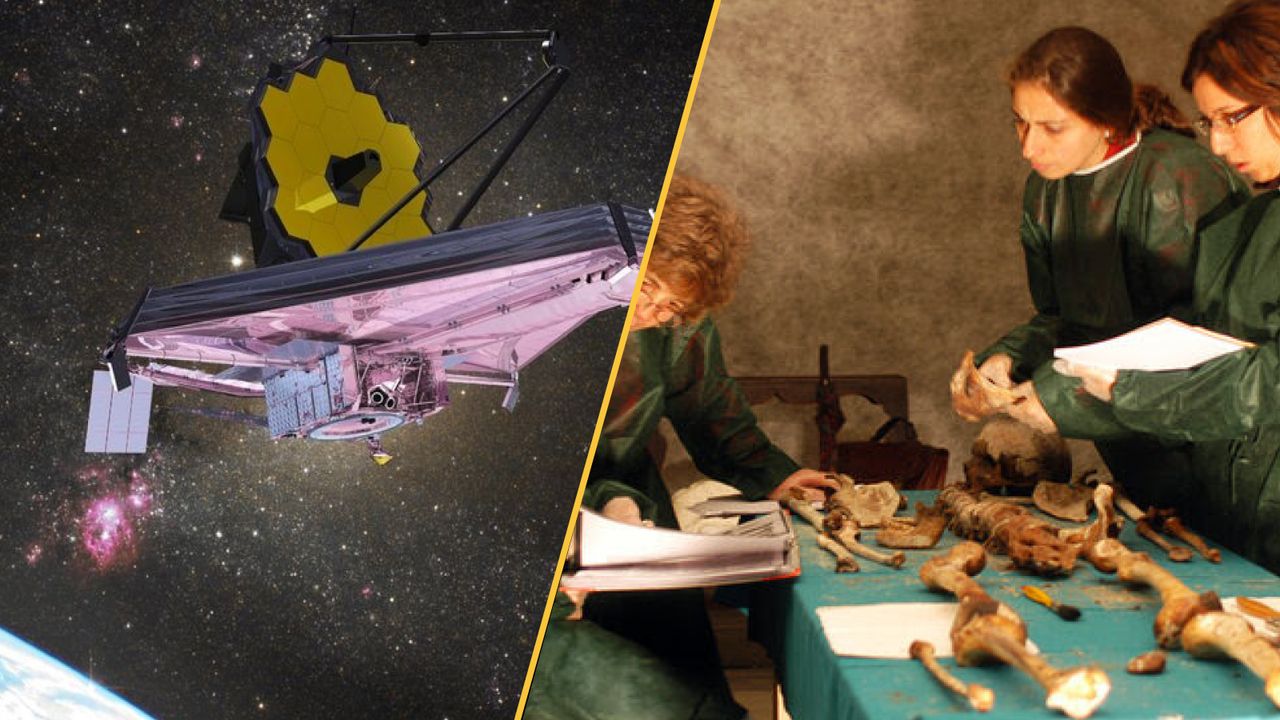
The space telescope detected a specific absorption line in the spectra of these worlds' atmospheres, revealing the characteristic trace of a unique and unknown molecule. It's unclear exactly what the molecule could be, and the mystery is made even more compelling by the fact that the environments of Pluto and Titan are very distinct.
China is no stranger to engineering projects designed to bring its environment to heel; we've recently covered the Asian powerhouse's attempts to tame nature through the creation of atmospheric rivers, the world's biggest dam and water transfers. But these are hardly China's only forays into sculpting its natural environment, with the country having planted more than 66 billion trees along its northern borders to halt the advance of the Gobi and Taklamakan deserts.
Now, new research has revealed a startling detail about the trees in this "Great Green Wall": they're growing significantly faster than natural forests. Exactly why remains a mystery, but, as Live Science contributor Brian Owens reveals, it could be due to a stronger response from the trees to rising atmospheric carbon dioxide.
Are you a robot? It used to be a question that only humans could answer — by clicking on traffic lights or strings of warped and grainy characters, or Completely Automated Public Turing tests to tell Computers and Humans Apart (CAPTCHAs). But what happens now that autonomous artificial intelligence (AI) agents can ace some of these trials without detection? Have they made CAPTCHAs obsolete?
The Medici family ruled Renaissance Tuscany with an iron fist, fulfilling their ruthless ambitions with methods so underhand that the name of their most famous advisor, Niccolò Machiavelli, became a synonym for skulduggery.
So, when two brothers from the infamous family died under mysterious circumstances, it was believed for 500 years that they were murdered, possibly by arsenic poisoning. Now, science has revealed the true culprit behind the medieval cold case, and it's not what we expected.
Antibiotic resistance is a growing threat in the U.S., with more than 2.8 million Americans developing antimicrobial-resistant infections each year. The solutions to this worrying trend can be very complex— such as moving agricultural systems away from their overreliance on antibiotics, or preventing the rapid spread of superbugs through international travel.
But stopping doctors from overprescribing antibiotics is one of the easiest strategies in the battle against this "silent pandemic." And it turns out that Japan has already fought it with some success, driving down antibiotic overuse with an innovative new policy. To investigate further and ask what notes the U.S. should be taking, Live Science's health editor Nicoletta Lanese visited Japan and reported back on their investigation.
Something for the weekend
If you're looking for things to keep you busy over the weekend, here are a smattering of our best expert opinion pieces, alongside a crossword, an interview and a quiz, that we published this week.
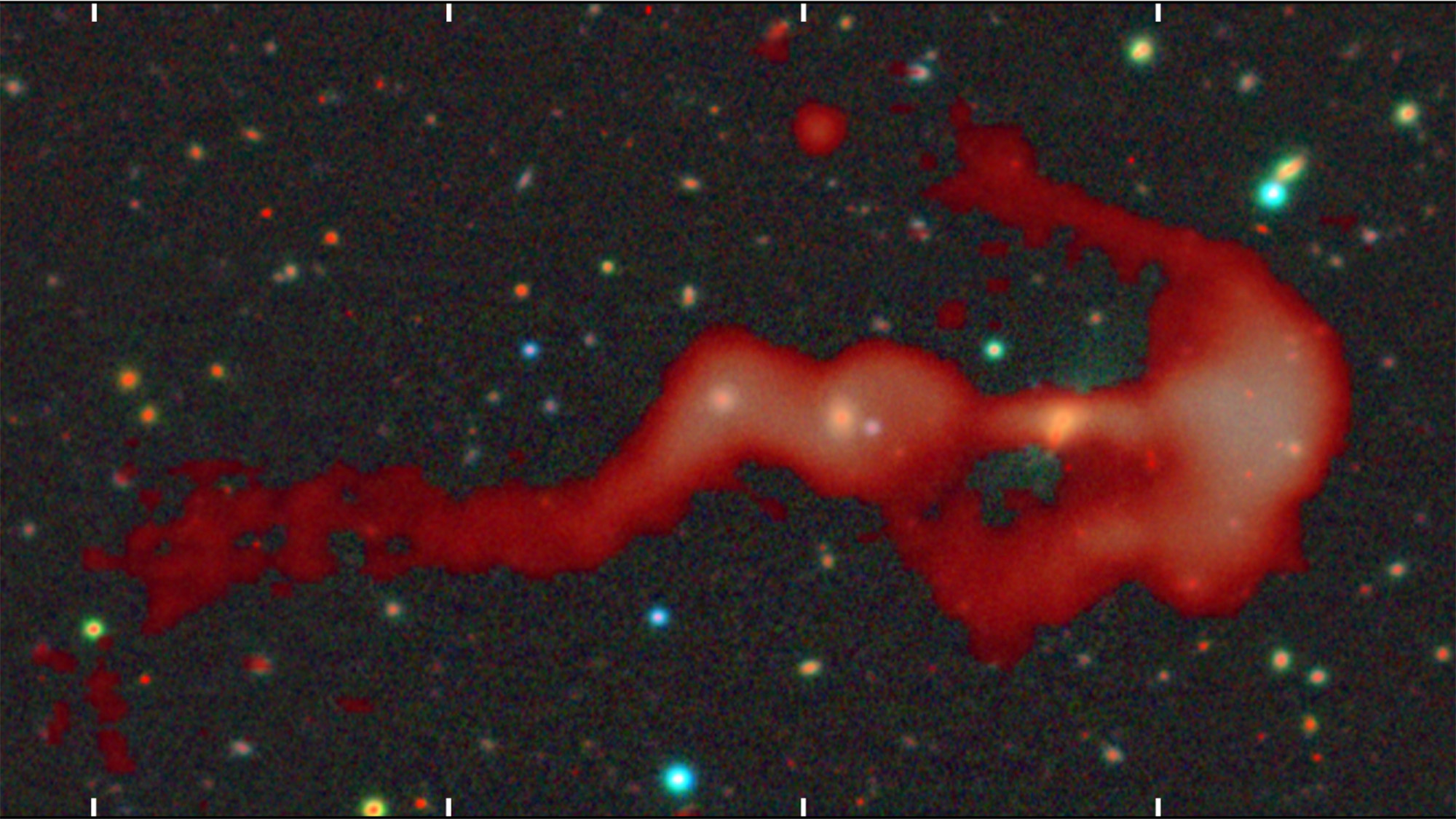
If you ask me, it looks more like a rusty anchor, or a blurry deep-sea fish. But whichever way you see it, the newly discovered "bow and arrow" galaxy — or, more formally, the RAD-Bow-And-Arrow Radio Galaxy (RAD-BAARG) — is an oddball unlike any other recorded.
The galaxy's unique structure is likely the result of gravity, which is warping RAD-BAARG into a funhouse mirror version of its former self as it falls into a nearby galaxy cluster. A shock front from this plunge surrounds the galaxy as it moves through hot gas.
Fourth of July celebrations across the United States this weekend could be accompanied by light shows in the night skies, as a string of powerful solar eruptions appear set to strike Earth.
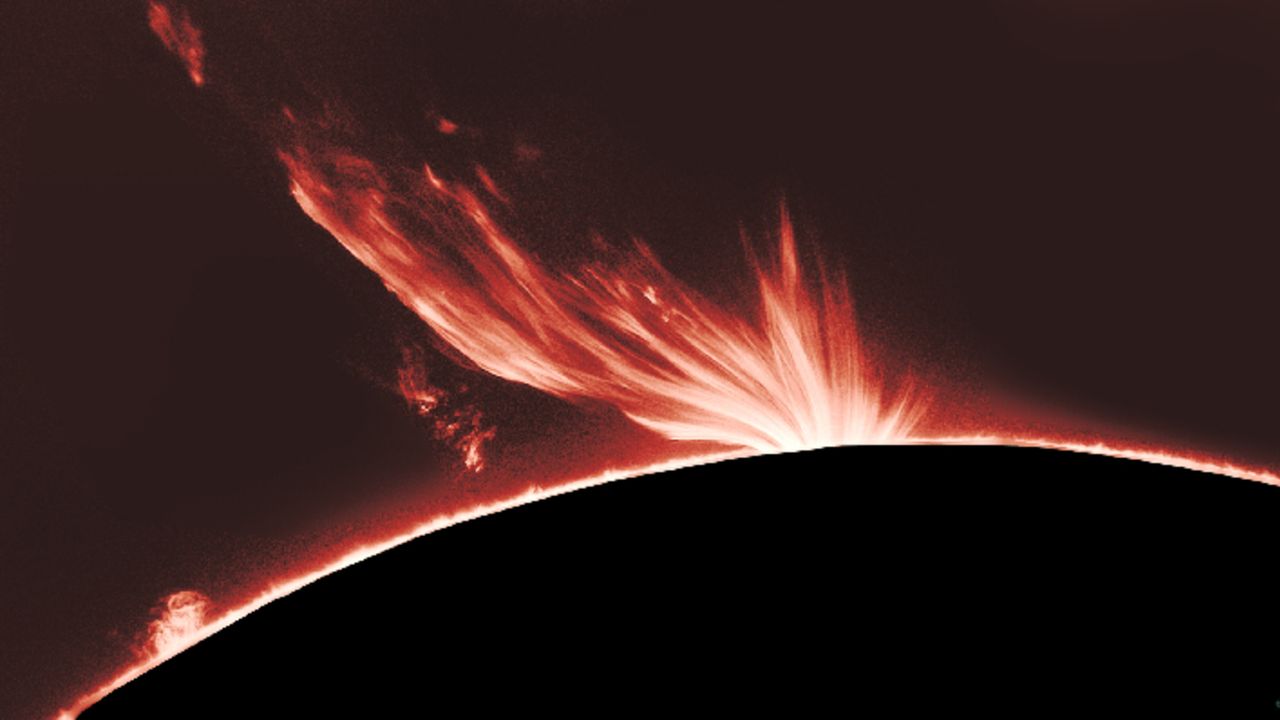
The sun has been especially hyperactive over the past few days — firing off 10 M-class solar flares over 24 hours that have been accompanied by multiple coronal mass ejections (CMEs), which are set to slam into Earth on July 3 and July 5.
CMEs are large, fast-moving clouds of magnetized plasma and solar radiation that occasionally get flung into space with solar flares when kinks in the sun's magnetic field snap. If CMEs smash into Earth, they cause disturbances in Earth's magnetic field, called geomagnetic storms, that can trigger partial radio blackouts and produce vibrant aurora displays farther away from Earth's magnetic poles than usual.
"Machine-Gun Sun! More than 5 storms on their way to Earth and 3 of them offer good chances for aurora views," Tamitha Skov, a space weather physicist at Millersville University of Pennsylvania, wrote in a July 2 post on the social platform X. "NOAA and NASA model predictions do not show all the storms yet (it's hard to keep up with the rapid-fire storm launches!) but the first should hit before noon July 3 UTC."
Auroras resulting from G3-class geomagnetic storms are often visible in northern parts of Washington, Idaho, Montana, Wyoming, North Dakota, South Dakota, Minnesota, Wisconsin, Michigan, New York and Maine, according to NOAA. Skywatchers farther south in Oregon, Nebraska, Iowa, Illinois, Indiana, Ohio, Pennsylvania, Massachusetts, Connecticut, Rhode Island, Vermont and New Hampshire will also have a chance of catching the light show. In any case, skywatchers interested in seeing or photographing the auroras will need to get as far from artificial light sources as possible.
The weekend storms might not be the last activity we see from the sun in the coming days, as two gigantic sunspots currently pimpling its face are displaying "beta-gamma-delta" magnetic fields — the most tangled and unstable type. This means these sunspots harbor the potential to launch powerful X-class flares, according to spaceweather.com.
The last few years have seen a record number of powerful X-class flares explode from the sun's surface, hitting Earth with several major solar storms, including 2024's Mother's Day storm. This record comes partly from improvements to scientists' solar monitoring technologies, but also due to the sun reaching its 11-year peak in sunspot production, or solar maximum, in 2024.
Following this peak, the sun has now entered a period known as the "battle zone," a relatively understudied solar phase where instabilities across our star's newly flipped magnetic field ramp up the production of solar holes, gigantic, highly-tangled sunspots and subsequent geomagnetic storms.
The worst-case scenario for a solar storm is a superstorm like the 1859 Carrington Event, which released roughly the same energy as 10 billion 1-megaton atomic bombs. After slamming into Earth, the powerful stream of solar particles set telegraph systems around the world on fire and caused auroras brighter than the light of the full moon to appear as far south as the Caribbean.
The Carrington Event unleashed a roughly X45 magnitude solar flare that remains a record, yet it's likely far from the worst the sun can muster — with ancient tree rings harboring evidence of even more powerful blasts that occurred long before humans existed.
La Commissione Europea si prepara a rivedere le leggi sulla tutela del diritto d'autore e le associazioni dei detentori di contenuti chiedono una stretta ancora più severa contro la pirateria. Si parla di bloccare interi provider ritenuti "amici" dei pirati... Leggi tutto
The hantavirus outbreak that struck a cruise ship in April, killing three people and sparking fears of further spread, is over, the World Health Organization (WHO) has announced.
"Today, the final contact of a person exposed to hantavirus on the cruise ship MV Hondius completed their quarantine period, tested negative and returned home. No further cases have been reported since the 25th of May," Tedros Adhanom Ghebreyesus, the WHO's director-general, said in his opening remarks at a news conference Thursday (July 2). "We are therefore very pleased to say that WHO considers the outbreak of hantavirus over."
The total number of cases linked to the outbreak was 13. All those affected were either passengers or crew on the ship.
The outbreak began aboard the Dutch-flagged cruise ship MV Hondius after it departed southern Argentina on April 1. It involved the Andes virus, the only known hantavirus that can spread between people.
Hantaviruses are rodent-borne viruses that are found in the Americas, Europe and Asia and spread to humans relatively rarely, usually via contact with the urine, droppings or saliva of infected rodents. The Andes virus, however, has sparked short chains of human-to-human transmission in the past.
Before public health authorities were informed of the cases on MV Hondius, several dozen people disembarked the vessel on the island of St. Helena. To find them, authorities launched an international contact-tracing operation, tracking down more than 650 contacts in total who were then followed by health authorities in 33 countries and territories, according to the WHO.
Additionally, health authorities coordinated the monitoring, care and transport of the remaining passengers and crew aboard MV Hondius.
Of these contacts, those considered at the highest risk of infection were then quarantined and monitored for up to 42 days, because sometimes, hantavirus symptoms don't show up until weeks after exposure to the virus. Depending on their jurisdiction and degree of exposure, some contacts quarantined at home while others stayed in specialized facilities.
The initial unchecked travel of some contacts, alongside the virus's long incubation period, prompted concern from the public that the cluster of cases could explode into an enormous outbreak, or even a global pandemic. Many infectious-disease experts emphasized that the Andes virus does not spread easily between people and that the containment effort was going well, so the risk of a large outbreak was low. Still, some experts raised concerns that the international travel of contacts could trigger pockets of the deadly disease, and some argued that the Andes virus does have "pandemic potential."
Now, with the final contact having completed their quarantine period and no further cases reported, the WHO has declared the outbreak over. All of the contacts who were repatriated to the U.S. completed their quarantine period by June 21.
"WHO will continue working with governments and partners to advance our understanding of this outbreak and of hantavirus more generally," Tedros said. "We are also coordinating a study involving 21 countries to understand how the disease develops, which will support the development of diagnostics, therapeutics and vaccines for future outbreaks."
Besides rigorous contact tracing, the WHO credited the coordinated actions of national public health bodies as being vital to preventing the further spread of the disease. These measures included the response of the Spanish government, which created a safe zone on the island of Tenerife for the ship's remaining passengers to disembark before they were repatriated under quarantine.
As the hantavirus outbreak concludes, there's an ongoing Ebola outbreak in the Democratic Republic of the Congo and an outbreak of the Marburg virus in Uganda. These and future outbreaks will require similarly robust international cooperation, the WHO emphasized.
"The outbreaks of hantavirus, Ebola and Marburg all show why there is no alternative to international cooperation in the face of international threats," Tedros said. "No country alone can fight."
This article is for informational purposes only and is not meant to offer medical advice.
This month’s episode highlights the bright star Spica, now prominent high in the southwest after evening twilight. It’s leading the parade of constellations, along with the brilliant planet Venus, that will grace the Northern Hemisphere’s summer skies. You'll also get to know other brights stars in Spica’s vicinity, along with excellent tips on how to be a better stargazer. So grab curiosity and come along on this month’s Sky Tour.
Everyone's getting back into vinyl these days, whether it's for that hit of nostalgia or because you don't want Spotify feeding you AI slop (vinyl, at the time of writing, does not facilitate AI slop… let us all hope it stays that way). And a new discount from Fluance makes picking up its entry-level turntable even easier.
This is the Fluance RT81, which we called "Easily the best starter turntable you can buy" when we tested it back in 2024. And it's a relatively affordable model even without a discount, designed to offer you the record-playing basics without expensive audiophile features.
A warning: turn back now if you're not reading this between 8:25am and 8:25pm ET on Wednesday, June 4 (that's 5:25am - 5:25pm PT, though it's not clear if Fluance will budge the window for Westerners). This discount is available as a Lightning Deal on Amazon, as part of Prime Day deals, so it's only live for a slender 12-hour window.
Fluance RT81:was $299.99now $239.99 at Amazon Turntable discounts aren't hugely common, so any kind of reduction is something that'll turn heads. It's great that the sale is on an entry-level model, lowering the price of entry for prospective vinyl fans a little. And the discount? It's the lowest our trackers have seen… View Deal
Hold the needle a sec: the Fluance RT81 does miss one feature common in entry-level turntables, which you should probably know about before you buy.
The turntable doesn't feature Bluetooth connectivity (which plenty of new spinners do in 2026), so you can't pair it with your JBL speaker to enjoy your tunes, say. Instead, you'll need to connect wired speakers via RCA (those white and red dual cables).
While audiophiles prefer to avoid Bluetooth for record listening, due to the compression inherent in Bluetooth losing some of the detail within the vinyl, it's much more common in entry-level record players. The feature makes it much easier to integrate a player into your home hi-fi set-up if you only own wireless tech.
So it's only worth buying the Fluance RT81 deal if you can fit a wired turntable into your home, or you already have a set of stereo speakers that you want to put to good use.
If that's no issue, you'll find the RT81 a nice, good-looking and convenient starter turntable. It's easy to set-up and use, and it sounds pretty great.
The deal will save you $60 which, admittedly, is about the cost of one record these days, but you've probably inherited a collection of those. Instead, I'd put the money towards one of the best stereo speakers so you can use the Fluance properly.
Durerà sicuramente pochissimo l'offerta del Prime Day Amazon che ti permette di portare a casa JBL Wave Buds, ottimi auricolari Bluetooth con design in-ear, a 19,99€. Uno sconto del 67% sul prezzo di listino e comunque del 49% rispetto al prezzo offerto sulla piattaforma nell'ultimo mese. Completa rapidamente l'ordine per approfittarne finché c'è disponibilità. Spedizioni veloci e gratuite per abbonati Prime.
Un paio di auricolari entry-level, ma di ottimaqualità e soprattutto firmati da un marchio che non ha bisogno di presentazioni. Buona l'autonomiaenergetica, ci sono diverse modalità di ascolto che ti permetteranno di non perdere il contatto con l'ambiente circostante mentre ti godi la musica che ami di più. Tramite l'applicazione per smartphone puoi personalizzare la tipologia del suono potenziando anche i bassi se lo desideri.
Decisamente, se il budget è contenuto non c'è da aspettare oltre e approfittare dell'ottima offertaAmazon del momento per portare a casa gli auricolariJBL Wave Buds a meno di 20€ in offerta con spedizioni veloci e senza costi supplementari per gli abbonati Prime. Completa ora il tuo ordine per assicurarteli perché l'offerta è limitata.
Ci risiamo, ennesimo caso di scheda grafica NVIDIA top di gamma danneggiata dal famigerato cavo di alimentazione. Questa volta sembra che sia successo con la variante aggiornata, quindi il cosiddetto 12V-2x6 al posto del precedente 12VHPWR, pensato proprio per risolvere i suoi problemi. L'ultimo episodio coinvolge una fonte particolarmente nota nella comunità hardware. Il sito specializzato Club386 ha documentato il danneggiamento di una RTX 5090 Founders Edition durante una sessione di test.
Le immagini pubblicate mostrano pin anneriti, plastica deformata e danni evidenti sia sul connettore della scheda video sia sul cavo di alimentazione. Secondo quanto riportato, il sistema era alimentato da un Be Quiet Dark Power 13 da 1000 watt collegato tramite un singolo cavo 12V-2×6 nativo, correttamente installato e conforme alle specifiche previste.
Il 12V-2×6 era stato progettato per migliorare la sicurezza del precedente 12VHPWR grazie a pin di rilevamento modificati e a una forma migliorata dei pin di potenza. Tuttavia, questo risolve solo parte del problema. Le GeForce RTX 40 e RTX 50 non hanno circuiti di monitoraggio del carico, quindi se per qualsiasi ragione uno dei sei pin di potenza non fa bene contatto tutta l'energia viene trasferita attraverso i restanti cinque. Il problema è che i fili elettrici hanno una sezione molto al limite calcolando che una RTX 5090 può arrivare ad assorbire anche 600 W nei carichi AI o nel gaming.
Los AirPods 4 bajan hasta una franja de precio poco habitual para unos auriculares recientes de Apple. Mantienen el diseño abierto, estrenan chip H2 y ofrecen hasta 30 horas de autonomía con el estuche.
 Login



 Abbiamo provato una delle versioni più complete del robot tagliarba Navimow: niente antenna esterna, niente filo perimetrale, precisione al centimetro e non sbaglia mai. Plug & play come un robot lavapavimenti, ma questo taglia l'erba. E la taglia anche bene... Leggi tutto



 Due lavapavimenti, due filosofie diverse, un nome comune. Il Floor One S9 Scientist e il Floor One Station S9 Artist condividono la stessa piattaforma di lavaggio ma si rivolgono a due diverse tipologie di abitazione: quelle piccole e quelle con grandi spazi da pulire. Le abbiamo provate entrambe.... Leggi tutto




 La Commissione Europea si prepara a rivedere le leggi sulla tutela del diritto d'autore e le associazioni dei detentori di contenuti chiedono una stretta ancora più severa contro la pirateria. Si parla di bloccare interi provider ritenuti "amici" dei pirati... Leggi tutto







 Amazon
