Quote of the day by Microsoft co-founder and ex-CEO Bill Gates: 'We always overestimate the change that will occur in the next two years and underestimate the change that will occur in the ten' — insights on the nature of progress

Editor’s Note: This week we’re at the 248th AAS meeting in Pasadena, CA. Along with a team of authors from Astrobites, we will be writing updates on selected events at the meeting and posting each day. Follow along here or at astrobites.com for daily summaries, or follow @astrobites.bsky.social on Bluesky for more coverage. The usual posting schedule for AAS Nova will resume on 22 June
When the universe first formed, the only elements present were the three lightest — hydrogen, helium, and lithium. Today, there are 118 confirmed chemical elements that make up the periodic table. So where did the heavier elements come from, when were they first created, and what can they tell us about the first stars that formed in the universe? In the final plenary of AAS 248, Ian Roederer (North Carolina State University) walked us through how ultraviolet observations are the key to understanding the origin of the elements.
We know that hydrogen, helium, and lithium were cycled through the earliest stars in the universe, where fusion and other processes produced the first heavy elements that were spit back out into the cosmos when these stars ended their lives as supernovae. According to Roederer, within just the first two or three generations of stars, every element with stable or long-lived isotopes had already been created. For the heaviest of these elements, the dominant source is likely a process called r-process nucleosynthesis, in which a rapid burst of neutrons bombards atomic nuclei, resulting in the quick capture of the neutrons to form very massive nuclei that subsequently decay to stable isotopes.

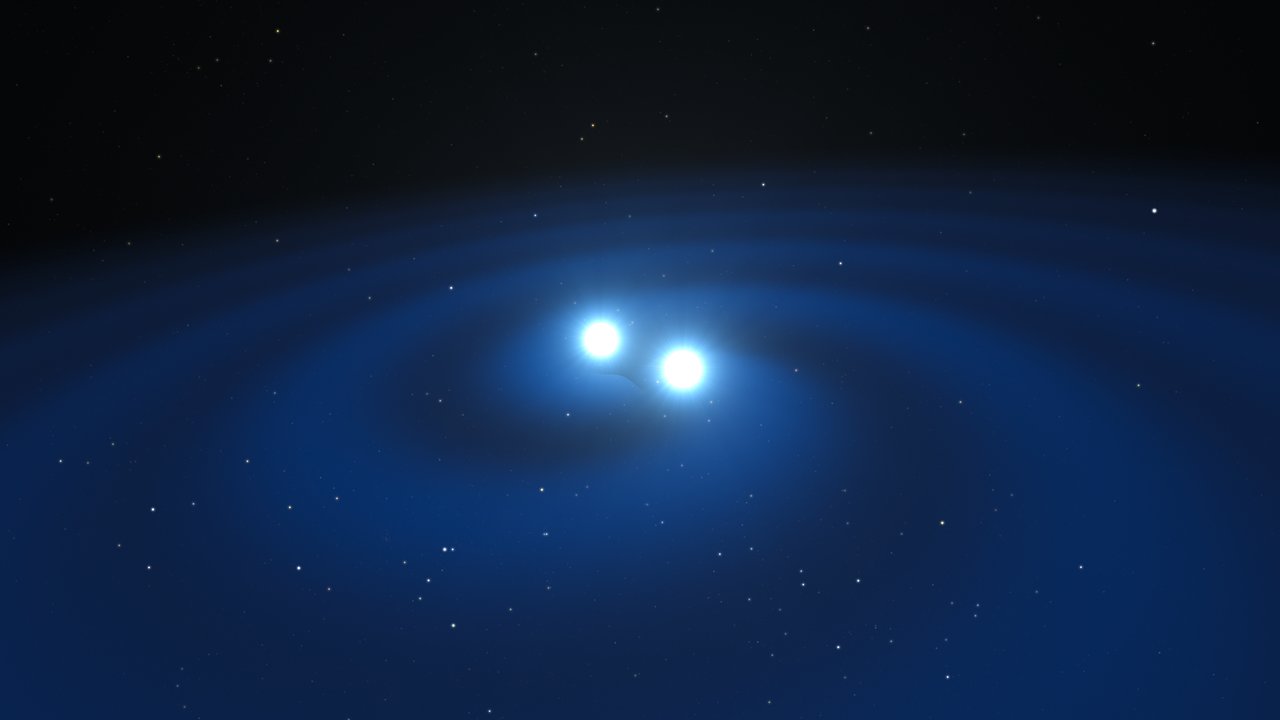
Illustration of two neutron stars approaching a merger, emitting gravitational waves as they draw closer together. [ESO/L. Calçada/M. Kornmesser; CC BY 4.0]
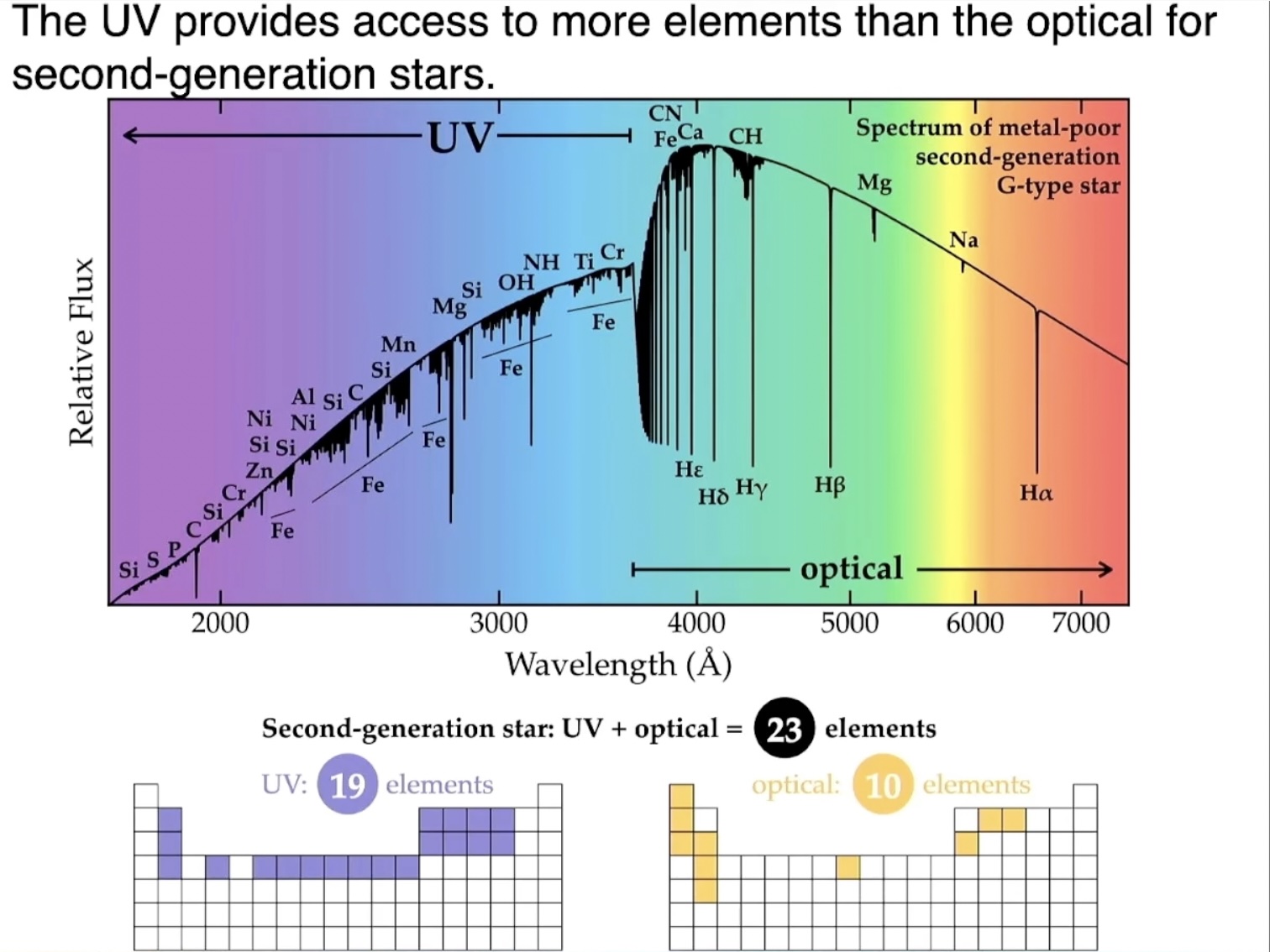
But remember all those news headlines about how binary neutron star mergers produce gold and platinum? Roederer points out that these were all inferred results — we didn’t actually observe direct evidence of gold and platinum in the aftermath of this explosion. That’s because it’s very difficult to detect the spectroscopic emission lines of heavy elements. To do so effectively, Roederer argues, requires high-resolution ultraviolet (UV) spectroscopy. He showed that in a cool star, high-resolution UV spectra provide a 50% increase in the number of elements you can detect. The heaviest of elements are only detectable with spectra in the UV range.

An example spectrum for a second-generation star shows how the UV is critical for identifying a broad range of elements. [Roederer 2026]
Roederer ended his talk with a look ahead at the future of UV spectroscopy and the path to the universe’s first stars. Right now, the only mission we have that produces high-resolution UV spectroscopy is Hubble. NASA’s next big flagship mission with a high-resolution spectrograph, the Habitable Worlds Observatory (HWO), will be transformational in the ability to detect — or verify the absence of — heavy elements in stellar atmospheres. An observatory like HWO will provide our best shot at identifying low-mass, metal-free stars that survive from the first generation of stars in our universe. As Roederer concluded, “The future of studying the origin of the elements is bright in the UV.”
You can read Astrobites’s interview with Ian Roederer here.
The post AAS 248: Day 4 appeared first on AAS Nova.


Nothing's next budget phone is the latest victim of RAMageddon. As 9to5Google reports, Nothing co-founder Akis Evangelidis announced in a post on X that a follow-up to the CMF Phone 2 Pro won't be coming this year:
We were working on a successor but with memory prices where they are right now, we can't build a phone that feels like a genuine step forward at a price that makes sense for CMF. As a result, we've decided not to launch a new CMF phone this year.
Last week, Nothing CEO and co-founder Carl Pei also said the RAM shortage has impacted the cost of the company's mid-range phone, stating, "For Phone 4A, memory costs doubled between …

The Great Tang is the largest, most luxurious SUV to launch under the BYD brand. After a hot start in China, racking up a record 150,000 orders ahead of launch, BYD is bringing the flagship electric SUV overseas, including Europe, by the end of 2026.

A Valve anunciou que novas reservas do Steam Controller serão entregues somente em 2027, conforme comunicado desta quinta-feira (18). A empresa está gerenciando as expectativas dos jogadores, visto que a demanda atual supera a oferta do periférico.
A partir de agora, a página do Steam Controller exibirá uma estimativa para o recebimento do periférico. Será exibida uma das três mensagens:
“Não temos planos de parar de fabricar o Steam Controller”, escreveu a Valve. “Ao analisarmos a demanda atual em comparação com a quantidade que sabemos que podemos produzir até o final do ano, gostaríamos de gerenciar ao máximo as expectativas relativas a quando cada comprador pode esperar receber o seu pedido.”
-
Entre no Canal do WhatsApp do Canaltech e fique por dentro das últimas notícias sobre tecnologia, lançamentos, dicas e tutoriais incríveis.
-
A pré-venda do Steam Controller começou no mês passado, mas não durou muito. Levou cerca de meia hora para o periférico se esgotar e ser revendido em marketplaces como o eBay pelo triplo do preço.
Para driblar cambistas e evitar que um único usuário compre várias unidades do controle, a Valve criou uma lista de espera. “Quando repusermos o estoque, os e-mails de pedido serão enviados na mesma ordem em que as reservas foram feitas”, comunicou a empresa.
O sistema de reservas possibilitou “reduzir as dores de cabeça dos usuários (ou assim esperamos)” e ajudou a empresa a planejar e tentar entregar o máximo de pedidos possível.
Além do Steam Controller, a Valve também espera lançar suas outras duas peças de hardware: o PC compacto Steam Machine e o dispositivo de realidade virtual, o Steam Frame. De acordo com um vazamento no Geekbench, é possível que vejamos o Steam Machine muito em breve.
Leia a matéria no Canaltech.


Most lunch breaks are not really breaks. A sandwich at the desk, the screen never quite off, an eye on the next message. The afternoon arrives already flat, and you spend it pushing a boulder that did not feel this heavy at ten in the morning. I suspect a lot of us know that particular afternoon flatness without ever connecting it to how we spent the forty minutes before it.
A small Finnish study made me think about that connection more carefully.
I am not a psychologist or any kind of clinician, so take this as one curious reader’s reading of one piece of research, not advice about what your body or your workday should do. What follows is a single intervention study with a modest number of people, and the findings are from a particular group, not settled laws about everyone.
Organizational psychologist Marjaana Sianoja and colleagues asked Finnish knowledge workers to do something simple during their lunch breaks. One group took a slow 15-minute park walk; a comparison group did 15 minutes of relaxation exercises. They kept it up for 10 consecutive working days, and reported on their afternoon concentration, strain, and fatigue along the way. The park walk group had 51 people, the relaxation group 46.
The headline finding is the kind you might expect. The authors reported that “park walks at lunchtime were related to better concentration and less fatigue in the afternoon through enjoyment.” Fifteen minutes among trees, and the afternoon went a little better.
The interesting word in that finding is the last one. Through enjoyment.
That reorders things in my head. We tend to treat the activity as the active ingredient, as if a walk is a pill you swallow whether or not you taste it. The study suggests the enjoyment is doing a lot of the quiet work, and the walk is mostly a reliable way to produce some.
A separate line of research points the same direction. In an experience-sampling study, John Trougakos and colleagues found that the restorative value of a lunch break depends heavily on how freely it was chosen.
This is where it stops being abstract. My weekday afternoons run from two different cafés, with a walk between blocks. When a sub-task is done, I pack up and move to the second café, and the walk in between is the seam. I did not start doing this for any measured productivity reason. I do it because moving lets the last task drain out of my head before the next one starts, and switching the room seems to switch something in me too.
What I notice is that I look forward to that walk. It is not a chore I have inserted to be virtuous. If someone scheduled it for me, made it mandatory, told me to log it, I think it would quietly stop working. The mechanism in the study and the reason my own version holds up seem to be the same one: the walk is the vehicle, the wanting-to-do-it is the engine.
It is worth keeping the size of all this in proportion. Research from the same program found that lunch break activities did increase restoration and reduce fatigue, but the authors were candid that the effects seem weak, short-lived, and dependent on the season. Fifteen minutes in a park is probably not going to fix a job that grinds you down, and it was never going to.
What I take from it is smaller and more usable than a fix. Protect the break, and make it one you genuinely want. For me the strongest version of this has nothing to do with work at all: when I am home in Ireland, I walk alone with no music or podcast, and it is the closest thing I have to a practice. I tried meditation and it never stuck. The quiet walk, and solo golf, are my equivalent, and I think the reason they last is the same reason the study points at. I am not enduring them. I like them.
A break taken and a break enjoyed are not the same break. You can do all fifteen minutes, hit every step, and come back no lighter than you left. The walk gets the credit, but perhaps the enjoyment is what is actually carrying the load.
If flat afternoons are part of something heavier than a dull lunch break, the kind of fatigue that does not lift, a good counsellor or therapist is worth more than any walk or any artic
The post Over ten workdays, researchers sent employees on 15-minute lunchtime walks through a park, and afternoons changed — sharper concentration, less fatigue, with much of the lift carried by how genuinely people enjoyed the walk. appeared first on Space Daily.

Read more of this story at Slashdot.

Os modelos Claude Fable 5 e Mythos 5, da Anthropic, devem ser liberados para uso nos próximos dias, segundo um executivo da empresa. O acesso às duas IAs foi suspenso após uma decisão do governo dos Estados Unidos, alegando proteger a segurança nacional de possível espionagem.
De acordo com o jornal sul-coreano Korea JoongAng Daily, a informação foi confirmada pelo Diretor Administrativo Internacional da Anthropic, Chris Ciauri, em entrevista coletiva na cidade de Seul, na Coreia do Sul.
“Estamos confiantes que os modelos serão disponibilizados novamente nos próximos dias”, afirmou Ciauri, sem mencionar uma data específica.
-
Entre no Canal do WhatsApp do Canaltech e fique por dentro das últimas notícias sobre tecnologia, lançamentos, dicas e tutoriais incríveis.
-
O governo dos Estados Unidos emitiu uma diretiva de controle de exportação sobre os modelos Fable 5 e Mythos 5 da Anthropic e citou a segurança nacional como um dos motivos por trás da decisão. Como consequência, a empresa precisou suspender o acesso a ambos os LLMs pelos seus respectivos clientes dentro e fora dos EUA.
De acordo com o site Wired, a medida teria sido impulsionada por suspeita de espionagem da China: uma das empresas com acesso aos modelos, a sul-coreana SK Telecom, teria vínculo com o governo chinês. A empresa negou as acusações.
Além disso, a diretiva entendeu que o modelo Fable 5 poderia ser usado para um jailbreak, ou seja, uma forma de desobedecer regras de segurança aplicadas para a IA.
A Anthropic seguiu a ordem do governo dos EUA, mas discordou da ideia de suspender um modelo por conta de um jailbreak em potencial. "Caso esse padrão fosse aplicado em toda a indústria, acreditamos que isso paralisaria todas as novas implementações de modelos para todos os fornecedores de modelos de vanguarda", destacou a companhia em nota.
Claude Fable 5 e Mythos 5 são dois modelos de IA avançados da Anthropic, capazes de desempenhar tarefas muito complexas e contínuas. Há uma evolução nas habilidades de engenharia e programação, por exemplo, o que permitiria atender a prompts desafiadores do começo ao fim.
Ambos são considerados o “estado da arte” entre os lançamentos da Anthropic, mas possuem diferenças entre si. O Fable 5 foi originalmente destinado ao público geral, enquanto o Mythos 5 tem menos travas de segurança e só pode ser usado por empresas inscritas no Projeto Glasswing.
Leia a matéria no Canaltech.
NASA has announced a new commercial partnership for the next satellite headed to the Red Planet.
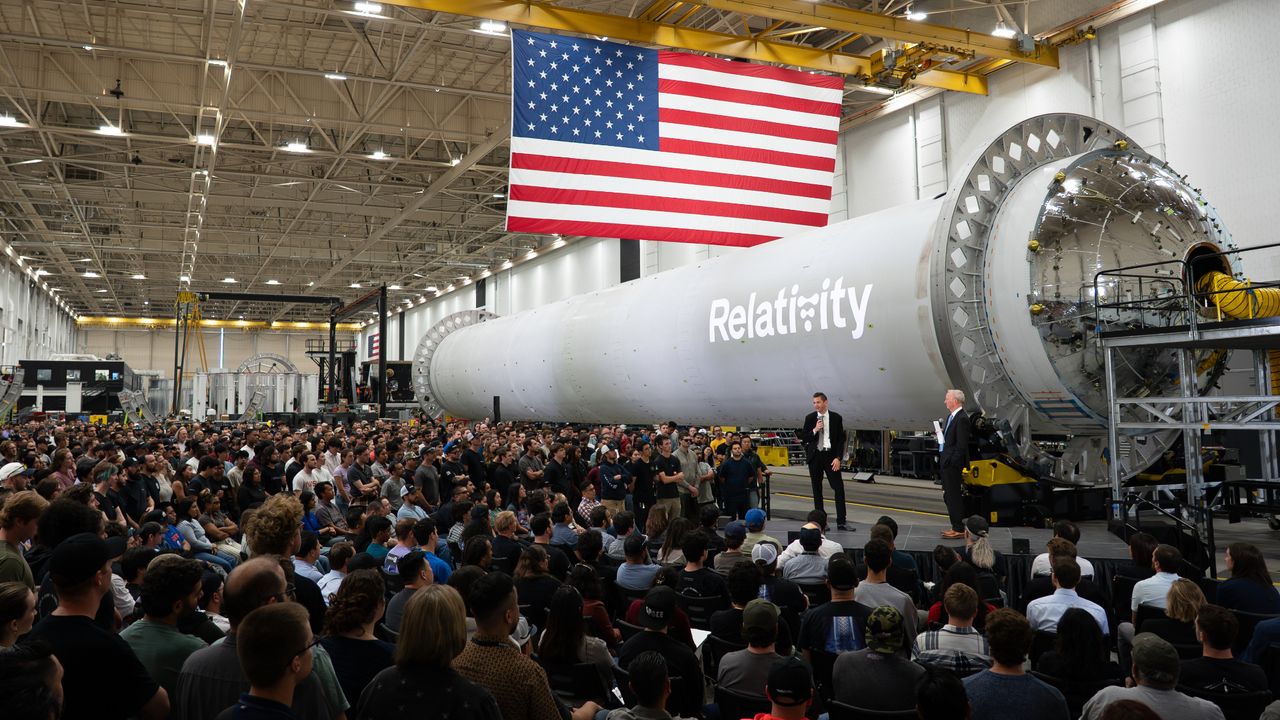
California-based Relativity Space will design, build and launch the spacecraft that carries NASA's Aeolus instrument suite to orbit around Mars, where the probe will be the first to provide daily measurements of the planet's global environment. Aeolus will collect data on Martian dust and cloud cover, winds and temperatures, according to a NASA release.
"Public-private partnerships like this are a force multiplier for science," NASA Administrator Jared Isaacman said in a statement on Wednesday (June 17).
The newly announced relationship, and others between NASA and private industry, is designed to allow the agency to concentrate its resources on important science discovery. "By pairing NASA’s world‑class instruments with commercial innovation and investment, we can deliver more science, more often, and reduce the time it takes to get essential data into the hands of researchers preparing for future human missions to Mars," Isaacman said.
Aeolus consists of four instruments, designed to work in tandem to create a complete picture of the Martian atmosphere and its behavior. In addition to refining scientific models for the Martian environment, NASA plans to use the data to reduce risks to future robotic and crewed missions landing on Mars' surface.
The science suite includes the Doppler Wind and Temperature Sounder (DWTS‑Ozone), in collaboration with GATS, designed to measure wind speeds and temperatures present up to 37 miles (60 kilometers) above the ground. The Thermal Limb Sounder (TLS), designed with Xiomas Technologies, will create vertical temperature profiles and provide data on atmospheric dust and cloud cover, while the Surface Radiometric Sensor Package (SuRSeP) collects compositional data on those clouds and dust, and tracks how the Martian surface absorbs, stores and releases energy, like heat. Finally, Aeolus' Wide‑Field Context Camera (WFCC) will take daily images to assess atmospheric activity across the whole of Mars.

NASA is targeting 2028 for the launch of the Aeolus mission, which will be designed and built at NASA's Ames Research Center in California, where it will also be integrated on Relativity's spacecraft for testing ahead of launch. NASA has committed to support Aeolus' scientific operations for at least one Martian year (approximately 687 Earth days). However, the agency has historically extended its missions to Mars, when able.
NASA was recently forced to end operations of its MAVEN (Mars Atmosphere and Volatile Evolution) probe around Mars, after an anomaly led to a loss of communications with the satellite, but the spacecraft ran for more than a decade beyond its original one-year mission. The agency's only two active satellites orbiting the Red Planet are the Mars Reconnaissance Orbiter (MRO) and Mars Odyssey, which are both operating nearly two decades or more, respectively, beyond their initial mission timelines.
For its part, Relativity will be in charge of designing the Mars-bound spacecraft and will also be responsible for launch and for satellite operations in space. The company's pathfinder launch vehicle, the Terran 1 rocket, lifted off for the first and only time in March 2023, but it failed to reach orbit. The company then pivoted to development of the bigger, partially reusable Terran R rocket, which is expected to debut sometime later this year. Eric Schmidt, who served as Google CEO from 2001 to 2011, was appointed to lead Relativity in March 2025.