❌

Reading view

Google unveils DiffusionGemma, an AI model that breaks free of left-to-right processing

Extremely powerful large language models (LLMs) still operate as though they’re typing on a keyboard, processing workloads in a simple left-to-right fashion. But in locally-run, single-user scenarios, this sequential processing can leave graphics processing units (GPUs) and tensor processing units (TPUs) underutilized.

Google is betting that DiffusionGemma can get around this bottleneck. The new experimental open model generates text “exceptionally fast,” creating entire blocks of text simultaneously through diffusion techniques rather than through token-by-token processing. The company says this technique results in 4x faster inference compared to auto-regressive models that rely on sequential processing.

It can also save users money. Technology analyst Carmi Levy noted that existing pay-per-token monetization models “penalize the use of less than optimally efficient AI solutions.”

But DiffusionGemma “could herald a new generation of task-defined, efficient solutions that can enable expanded compute capacity without draining the operations budget,” he said.

A contrast to left-to-right processing

Built on Google’s Gemma 4 family and its Gemini Diffusion research, DiffusionGemma is a 26B mixture-of-experts (MoE) model designed to maximize text output generation.

It essentially shifts how models use hardware, giving processors a larger hunk of work each cycle so it can draft full 256-token paragraphs in sequence. This allows the model to generate text up to 4x faster on GPUs, Google claims. It activates only 3.8B parameters during inference, and, when quantized, can fit within 18GB VRAM on high-end consumer GPUs like Nvidia RTX 5090.

“It upgrades your model inference from a single, sequential typewriter to a massive printing press that stamps the entire block of text simultaneously,” Google research scientists Brendan O’Donoghue and Sebastian Flennerhag wrote in a blog post.

AI image generators begin with pure, random ‘visual noise’ and iteratively refine that into a finalized picture (what’s known as ‘diffusion’); DiffusionGemma applies this same process to text. It does not generate tokens in order, but begins with a “canvas of random placeholder tokens” that it processes in multiple passes, identifying the context tokens it feels are most relevant and using those to refine the rest.

The model has the ability to self-correct, using confidence scoring to re-evaluate tokens in the next pass. “The model iteratively refines its own output, allowing it to evaluate the entire text block at once to fix mistakes in real-time,” O’Donoghue and Flennerhag explained.

DiffusionGemma also has bidirectional attention, they wrote. “Generating 256 tokens in parallel with each forward pass allows every token to attend to all others.” This can be particularly helpful in domains that are non-linear in nature, such as mathematical graphs, code infilling, and in-line editing, they said.

DiffusionGemma is optimized across Nvidia’s hardware stack, making it compatible with consumer setups as well as with high-performance enterprise systems like Hopper and Blackwell.

Because it is released under the Apache 2.0 license, developers can freely use, modify, distribute, and commercialize the software using their preferred tools. It can be run on GPUs or in the cloud through Google Cloud Model Garden or Nvidia NIM, and is available on Hugging Face, GitHub, and vLLM, with support for the open-source library llama.cpp coming soon.

Key use cases

The model is particularly useful in local workflows that are “speed critical,” such as generation of non-linear text structures, and unlocks what Google calls “new patterns of model behavior” like multimodal understanding and generating and rendering code in near real-time.

Levy explained, “DiffusionGemma is particularly well suited for interactive coding and editing where its efficiency allows rapid processing and iterations,” noting that its ability to fit within 18GB of VRAM and its deployability on commonly available local GPUs can potentially benefit customer service-related workloads that lean heavily on real-time interaction and local processing.

“DiffusionGemma also incorporates a thinking mode that is especially adept at problem solving,” he said. For instance, the model was fine-tuned to play Sudoku, a typically challenging task for autoregressive models because each token depends on future tokens. This “rather handily” illustrates the model’s capability to solve more complex problems, Levy noted.

Limitations

Google freely admits that DiffusionGemma is geared to specific workflows, and there are “key trade-offs.”

The model is engineered for small batch size inferencing and low-latency, high-speed generation low-to-medium batch sizes on a “single capable accelerator.”

In high-QPS cloud serving environments, (where infrastructure is designed to handle tens or hundreds of thousands of requests per second with ultra-low latency), DiffusionGemma’s parallel coding “offers diminishing returns,” and can even result in higher serving costs, Google conceded. In addition, its overall output quality is lower than that of standard Gemma 4, which is built for apps demanding maximum quality.

However, Levy noted that while DiffusionGemma “can be less precise than other models in certain workloads,” subsequent refinement cycles could overcome this limitation.

While Google isn’t sharing runtime costs, it’s clear that this is an efficiency play, he added. “When deployed across the kinds of workloads that would optimally benefit from its architecture, DiffusionGemma seems to have the potential to reduce processing overhead and related costs,” he said.

This article originally appeared on InfoWorld.

  •  

ShinyHunters Hacked 100+ Organizations By Exploiting an Oracle PeopleSoft 0-Day

ShinyHunters claims it exploited a critical Oracle PeopleSoft zero-day to compromise more than 100 organizations, including the University of Nottingham, where it says it stole 40GB of student and billing data. "ShinyHunters posted the UK university on its data leak site on Tuesday before publishing the stolen files later that same day, presumably because the school refused to pay the extortion demand," reports The Register. From the report: "University of Nottingham on our leak site is one of the first publicly confirmed incidents," a ShinyHunters spokesperson told us. "We have only just started outreach to affected orgs and are actively looking to reach an agreement with affected orgs." They didn't say when they planned to post the other 100 or so claimed victims. A Google threat intelligence report published Thursday afternoon corroborated ShinyHunters' claims to have compromised more than 100 organizations. Google said it spotted malicious activity, "consistent with the exploitation of CVE-2026-35273," between May 27 and June 9, and notified more than 100 global orgs "whose IP addresses correlated with potentially vulnerable endpoints." Most of these, we're told, are based in the US and 68 percent are in the higher-education sector. Oracle has released a "patch availability document," but it's unclear whether a patch is currently available.

Read more of this story at Slashdot.

  •  

NASA’s X-59 Reaches Speed, Altitude for Future Quiet Supersonic Flights

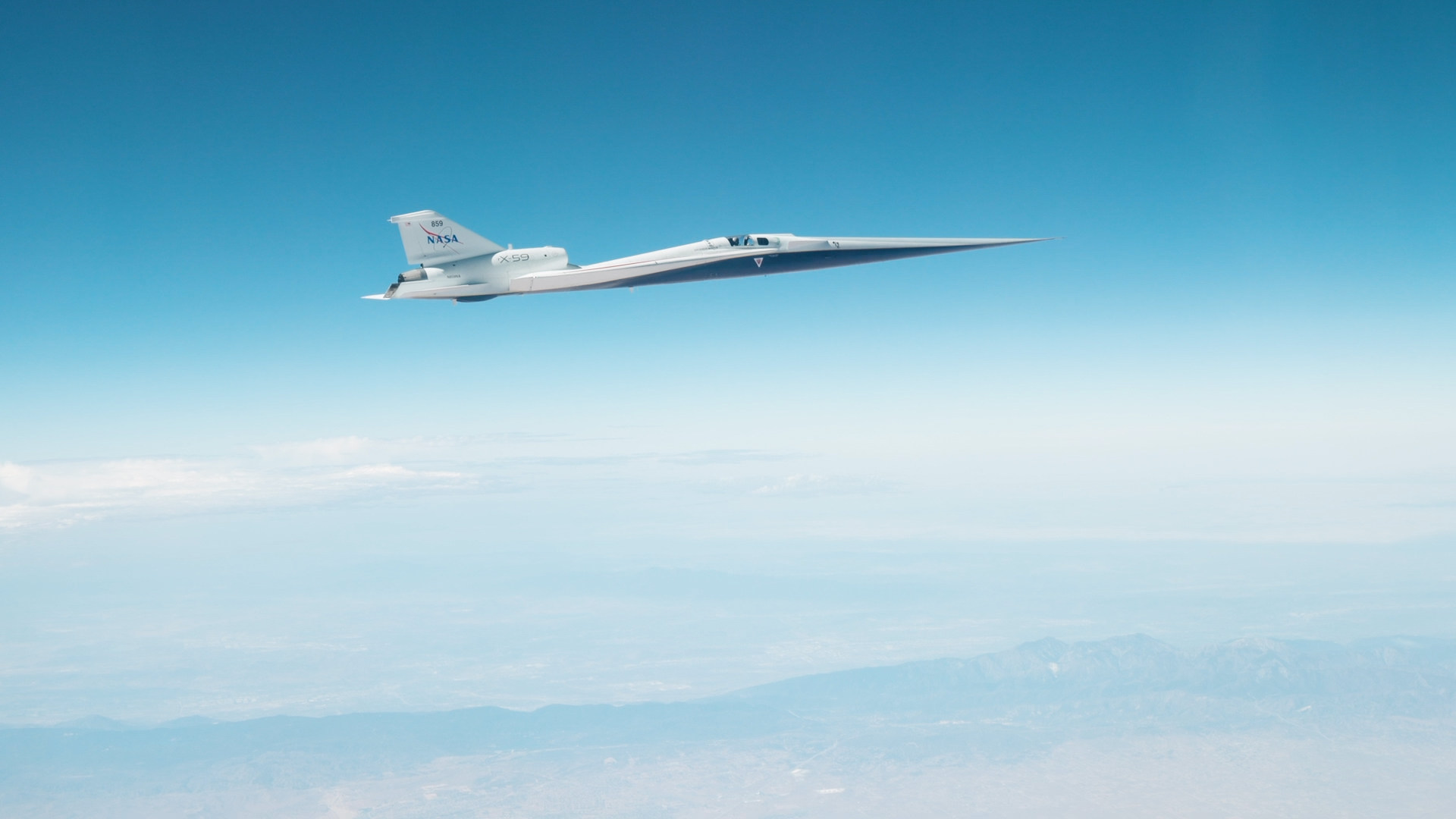
The X-59 in flight on June 12, 2026 against a blue sky.
NASA’s X-59 quiet supersonic research aircraft reached its target speed and altitude for future community overflights for the first time during a flight on Friday, June 12, 2026. The milestone marked the first time the aircraft flew at Mach 1.4 and 55,000 feet — conditions it will fly when gathering community response data to its quiet sonic thump.
NASA/Lori Losey

NASA’s X-59 experimental aircraft reached a major milestone Friday, June 12, flying Mach 1.4 (about 924 mph) and an altitude of 55,000 feet, the conditions required for the aircraft to make future flights critical to its mission.  

The X-59 still has months of performance testing ahead, but after those are complete, NASA’s Quesst mission will fly the aircraft over several U.S. communities to collect data on public perception of the quiet sonic thump it will make at supersonic speeds. Those community overflights will include flights at Mach 1.4 and 55,000 feet. 

The milestone comes just days after the X-59’s first supersonic flight. That flight showed the aircraft performed as expected at Mach 1.1, but Friday’s mission conditions flight was an even more critical step for NASA. 

The aircraft’s team has steadily expanded the aircraft’s flight envelope by evaluating its performance at a variety of speeds and altitudes, and having its pilots take on a battery of maneuvers.  

Photo of the XVS screen on the X-59 showing Mach 1.4 at 55,030 was achieved.
NASA’s X‑59 eXternal Vision System (XVS) shows Mach 1.4 at 55,030 feet on Friday, June 12, 2026 during the aircraft’s first mission conditions flight, the approximate conditions it will fly when gathering community response data to its quiet “sonic thump.” The milestone marks the first time the aircraft flew at its designed speed and altitude.
NASA/Lori Losey

The X-59 was designed to fly supersonic without causing a loud sonic boom. However, for these early supersonic flights it has been accompanied by a NASA F-15 research aircraft, a traditional supersonic jet that causes booms obscuring any noise the X-59 makes. During upcoming flights, a shock-sensing probe mounted to the F-15 will gather measurements of the X-59’s shock wave signature, an early measure of its supersonic performance. 

After the team conducts more tests at a variety of altitudes and conditions to complete envelope expansion, the X-59 will enter the acoustic validation phase of Quesst. During this phase, researchers will thoroughly measure the aircraft’s supersonic acoustic signature — the quiet thump it’s designed to make — to confirm it is performing as intended. 

Each flight brings NASA one step closer to flying the X-59 over communities and gathering feedback that could help shape the future of commercial supersonic flight over land. 

More X-59 to Explore

quesst-logo-horizontal-051826sm

Read more on the Quesst mission page.

The post NASA’s X-59 Reaches Speed, Altitude for Future Quiet Supersonic Flights appeared first on NASA Science.

  •  

PeopleSoft 0-day affecting hundreds of organizations steals gigabytes of data

One of the world’s most active ransomware groups exploited a critical vulnerability in Oracle’s PeopleSoft software suite and used it to target about 100 customers and extort at least one of them to pay up in exchange for not leaking stolen data, researchers said.

The group, tracked as ShinyHunters, had been exploiting the PeopleSoft vulnerability for more than two weeks before Oracle flagged it. CVE-2026-35273, as the vulnerability is tracked, carries a severity rating of 9.8 out of 10, making the former zero-day one of the year’s most critical vulnerabilities to be exploited.

Google’s Mandiant security team said it’s an SSRF (server-side request forgery), a vulnerability that allows attackers to send requests from a susceptible server to systems used by the targeted organization. Oracle said the SSRF is remotely exploitable, and the company has issued a stopgap mitigation but has yet to fully patch the flaw. Google has confirmed that victims are receiving extortion demands.

Read full article

Comments

© Mesut Dogan

  •  

Astronomers Unveil Record-Breaking Haul of 161 New Black Hole Collisions

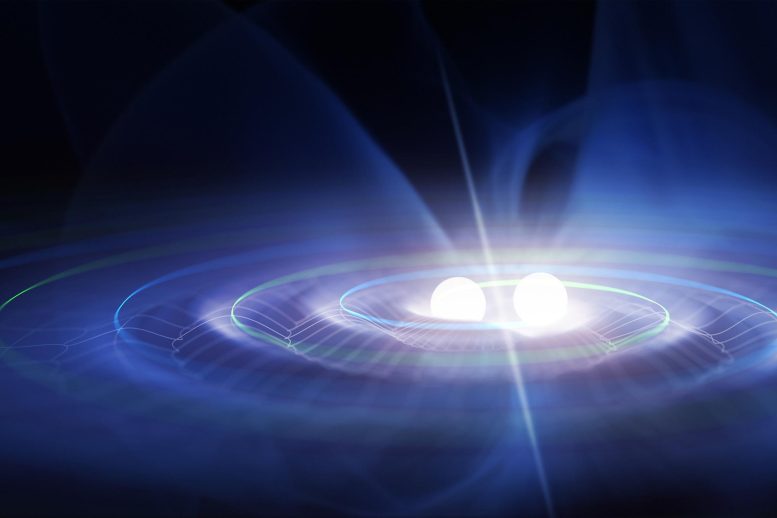
Gravitational Waves IllustrationA new gravitational-wave catalogue reports 161 additional black hole mergers, bringing the total to 390 detections. Scientists at the University of Glasgow’s Institute for Gravitational Research are celebrating the release of a major new collection of gravitational wave discoveries, a milestone that highlights the rapid growth of gravitational astronomy. The latest Gravitational Wave Transient Catalogue [...]
  •  

Siri is good now??

You'd be forgiven for thinking this day would never come. Siri has spent a decade and half somewhere between "sort of useful at a few things" and "utterly disastrous, why did I even try, can it honestly not even set a timer." But the wildest thing just happened: Apple put out a new version of Siri, and it actually seems to be pretty good.

On this episode of The Vergecast, David and Nilay talk about their early experiences with Siri AI, and what it means for users, and the rest of the AI industry, for the iPhone's built-in assistant to be good enough at most things. There's very little about Siri AI that feels bleeding edge or brand new, but …

Read the full story at The Verge.

  •  

iOS 27: Há 31 modelos de iPhone compatíveis com o novo sistema operativo da Apple. Veja se o seu está na lista

A Apple confirmou na WWDC 2026 todos os modelos compatíveis com o iOS 27, e a boa notícia é que nenhum iPhone ficou para trás face à versão anterior. Já a nova Siri com IA só chega aos modelos mais recentes, mas apresenta uma justificação para tal.

The post iOS 27: Há 31 modelos de iPhone compatíveis com o novo sistema operativo da Apple. Veja se o seu está na lista appeared first on Tek Notícias.

  •  

Le jour où la météo a permis à la France de gagner la guerre !

La météo joue un rôle fondamental dans n’importe quel conflit, mais certaines conditions ont marqué l'Histoire de France plus que d’autres. Et sans une météo favorable le jour du 6 juin 1944, la France aurait peut-être connu une destinée différente.

  •  

SpaceX, Anthropic, and OpenAI’s hot IPO summer

The IPO market is back, and it’s not the same companies leading the charge. FAANG had a good run, but a new acronym is taking over: MANGOS — Meta (or Microsoft, depending on who you ask), Anthropic, Nvidia, Google, OpenAI, and SpaceX. Half of that bunch is heading to public markets in the same window, and it’s a stress test for investors, for valuations, and for […]
  •  

iPad Pro M4 en promo : plus de 600 € de remise sur la tablette la plus avancée d’Apple

Donnez vie à vos projets, échangez, jouez ou profitez de vos contenus multimédias dans d’excellentes conditions grâce à la puissance de l’Apple iPad Pro M4. Lancée en 2024, cette tablette fine et facile à transporter bénéficie actuellement d’une baisse de prix importante chez Rakuten, avec plus...

  •  

Astronomers May Have Found Supernova Remnant near Milky Way’s Central Black Hole

This composite image contains X-rays from Chandra and XMM-Newton missions (shown in blue) as well as radio data from the MeerKAT telescope (shown in red) in South Africa. These have been combined with an optical image from the Pan-STARRS telescopes in Hawai’i (red, green, and blue). Image credit: NASA / CXC / UCLA / Zhu et al. / ESA / XMM-Newton / PanSTARRS / MeerKAT / CSA / STScI / SAO / L. Frattare & P. Edmonds.

Using NASA’s Chandra X-ray Observatory and ESA’s XMM-Newton satellite, astronomers identified a possible remnant of ancient stellar explosion just a few dozen light-years from Sagittarius A*, a supermassive black hole at the center of our Milky Way Galaxy.

The post Astronomers May Have Found Supernova Remnant near Milky Way’s Central Black Hole appeared first on Sci.News: Breaking Science News.

  •  

Il 19 gennaio 2024, il lander giapponese SLIM — soprannominato “Moon Sniper…

Il 19 gennaio 2024, il lander giapponese SLIM — soprannominato “Moon Sniper” per la precisione del suo sistema di atterraggio — toccava la superficie lunare diventando il quinto veicolo spaziale nella storia a completare un allunaggio morbido. Quasi subito, però, qualcosa andò storto: i pannelli solari si trovarono orientati nella direzione sbagliata rispetto al sole, […]
  •  

This James Webb Space Telescope Discovery Could Finally Solve the Mystery Behind “Little Red Dots”


James Webb Space Telescope (JWST) observations of what astronomers call “little red dots” have intrigued researchers since their discovery in 2022.

Now, new data on the spectra of one of these dots, made possible with imagery obtained by Webb, may hold the answers researchers have long sought.

In a recent paper published in The Astrophysical Journal, a team of astronomers led by the University of Texas at Austin’s Vasily Kokorev revealed their intriguing observations of the little red dot GLIMPSE-17775 using the JWST.

Data collected by the JWST support the BH* scenario, the hypothesis that little red dots are supermassive black holes surrounded by a cloud of partially ionized gas.

JWST and the Little Red Dot

The recent JWST observation of GLIMPSE-17775 is the deepest spectral view of a little red dot ever captured, spanning 40 spectral lines and offering a powerful opportunity to compare the data with various theories about the object’s origins. Born only about 1.8 billion years after the Big Bang, or about 12 billion years ago, the object hails from the universe’s early days.

As with many of science’s most interesting discoveries, this observation was a fortunate accident, captured as the JWST was observing the Abell S1063 galaxy cluster, located in front of GLIMPSE-17775 from our point of view.

Gravitational lensing magnifies GIMPSE-17775, allowing JWST a better look at the object despite its extreme distance, and making the 30-spectrum JWST captured equivalent to hours of observations. 

“When we saw the spectrum for the first time, it was like having all the pieces of a puzzle scattered on the floor,” said Kokorev. “We picked up each piece of the puzzle, measured the lines, and started combining the different pieces into a mosaic. Maybe a few pieces looked like nothing at first, but then a couple of them came together, and we realized that there was something there.”

Explaining Little Red Dots

First appearing at around 600 million years after the Big Bang, the mysterious little red dots have puzzled scientists since they first came to light. The black hole scenario is just one of several that researchers have proposed as a possible explanation, although it is currently gaining the most support as more data comes in.

“I think part of the scientific community is converging on a singular picture — that little red dots can be explained by black hole star models. But none of the previous little red dots have all of the pieces of evidence in the same place,” Kokorev said. “With GLIMPSE-17775, we can test these models because of how deep and amazing this source’s spectrum is.”

The researchers interpret the data as showing a rapidly accreting black hole covered by a dense gas cocoon that reprocesses the black hole’s light into the spectrum observed by JWST.

Comparing the spectra to various models revealed some intriguing evidence for the BH* scenario. The helium, oxygen, and hydrogen lines don’t fit a simple rotating gas cloud model, but do correspond to an electron scattering, a broadening effect associated with a dense, layered gas cocoon.

Other lines, such as the 16 iron lines, suggest a powerful energy source, which could indicate a rapidly accreting black hole. Additionally, helium absorption and fluorescence are seen in the spectrum, signs that a powerful energy source is enveloped in a dense medium.

What JWST Didn’t See

Beyond this incredibly deep spectrum, other little red dot observations have been faint in X-rays, a form of emission that the gas cocoon, in the BH* scenario, is likely to absorb.

One strange quirk of GLIMPSE-17775 is that the spectrum was missing the portion that would indicate the little red dots’ signature dip in light emission, known as a Balmer break. However, supplementary data collected by the Hubble Space Telescope resolved this issue, identifying that interference from a giant host galaxy is the root cause.

“Everything fits, nothing is broken, and I think that makes the puzzle that is our universe even better,” Kokorev concluded. “Looking ahead, I’m eager to dive deeper and learn about what is powering the central engines of little red dots. While we think it’s a black hole, there are some other interesting theories being proposed, which is exciting. Maybe in a year or two, we’ll have the final answer to what powers these sources.”

The paper, “The Deepest GLIMPSE of a Dense Gas Cocoon Enshrouding a Little Red Dot,” appeared in The Astrophysical Journal on June 10, 2026.

Ryan Whalen covers science and technology for The Debrief. He holds an MA in History and a Master of Library and Information Science with a certificate in Data Science. He can be contacted at ryan@thedebrief.org, and follow him on Twitter @mdntwvlf.

  •  

Derrière le sac en « cuir de T. rex » qui affole les enchères, voici ce que le luxe vend réellement

Entre prouesse biotechnologique et storytelling de luxe, un sac à main présenté comme fabriqué en « cuir de T. rex » vient de faire son apparition sur le marché des enchères parisiennes. Affiché à plusieurs centaines de milliers d’euros, l’objet invoque la paléontologie et des fragments de...

  •  

Siri AI is all Apple; it just needed Google to get there

Apple’s executives have been taking questions, hosting seminars, seemingly working around the clock to stress one very important thing: Apple is not using a white label version of Google Gemini to make Siri AI happen. They just pooled resources to get there. 

The new Siri AI is faster, more accurate, offers powerful contextual capabilities and shows how Apple has leap-frogged into a good peer position in an AI race critics felt it had already lost. Its market scale — even without the EU — is huge. For most consumers, Apple Intelligence and Siri will continue to be their primary/first engagement with artificial intelligence on a device.

Getting there took a lot of work, and Apple needed Google to get it done. Though there is still some confusion about what that means, Apple’s software chief tried to explain it this week. “We use none of the models that Google deploys to their customers, nor do we use the infrastructure and means by which they employ models to their customers,” Craig Federighi said in a presentation at WWDC.

Apple is not even using Google Search as the foundation of its system, he said. “This is the amount of Google Assistant we use,” Federighi said, pointing at an empty chart. “Nothing.”

Apple not Gemini, Siri AI is not Google’s

What makes this hard to understand is that we all know Apple partnered with Google to build Siri AI; back in January, we were told the next generation of Apple Foundation Models would be based on Gemini models and cloud technology. So, how can we have moved from partnership hero to usage zero?

The answer is, we didn’t. What happened is that Apple built its new Apple Frontier Models (AFMs) (the AI inside Siri AI) by training them using proprietary Apple data and reinforcement learning and then refined those models using “outputs from Google’s Gemini Frontier models.”

In other words, Apple used Google Gemini to help improve its own models, which means the models themselves, the AI in Siri AI, are Apple’s — but they were trained with help from Gemini. They are not white label iterations of those Google models. 

Apple also hit a second snag. Its very best model (AFM 3 Cloud Pro) requires more processor power to run than Apple could deliver using its own cloud-hosted Private Cloud Compute servers. Now, we know Apple doesn’t like using other people’s stuff. But it’s a realistic company that understands it sometimes must, and just as it uses AWS to support some of its services, it moved to adopt Google cloud services and Nvidia processors to drive the most demanding requests.

A question of trust

Apple also developed a technological solution that means it can claim the interaction remains just as private as if it were run on your device. Apple has made it possible for independent security experts to confirm this and says it is the only company that can deploy software on those servers, with strong security to ensure your device only interacts with those servers when you want it to. So far, no one has broken this protection. 

I came across an interesting report in which Tekonyx Founder and Chief Research Officer Sid Nag explained the significance of Apple finding a way to expand its Private cloud Compute infrastructure beyond its own data centers.

“Apple is effectively arguing that trust in AI systems should come from cryptographic and architectural guarantees rather than trust in the cloud provider itself,” he told Fierce. Where enterprises have faced a choice between access to powerful AI or privacy, Apple has introduced a new solution he called “portable trust.” This could conceivably become a new IaaS offering from the companies involved over time.

Working together for the benefit of all

So, while Apple’s models were built with Google’s help, and while its most advanced models run with support from Google and Nvidia, the models are Apple’s alone. 

It’s good for Google, of course. Apple is paying for this use, which helps the search giant claw back some of the value of its massive, muti-billion-dollar AI infrastructure investment. It’s not clear how much Apple is paying; earlier this year, the $1 billion figure was bandied around. But Apple’s decision to tie usage to iCloud subscriptions in some hitherto undisclosed way hints that the deal may also see some token-based usage charges on top of the basic Apple fee. I’ve not come across any details, but that’s what I surmise based on the size of Apple’s ecosystem and the growing realization of how quickly users can consume AI capacity.

What AI models is Apple running?

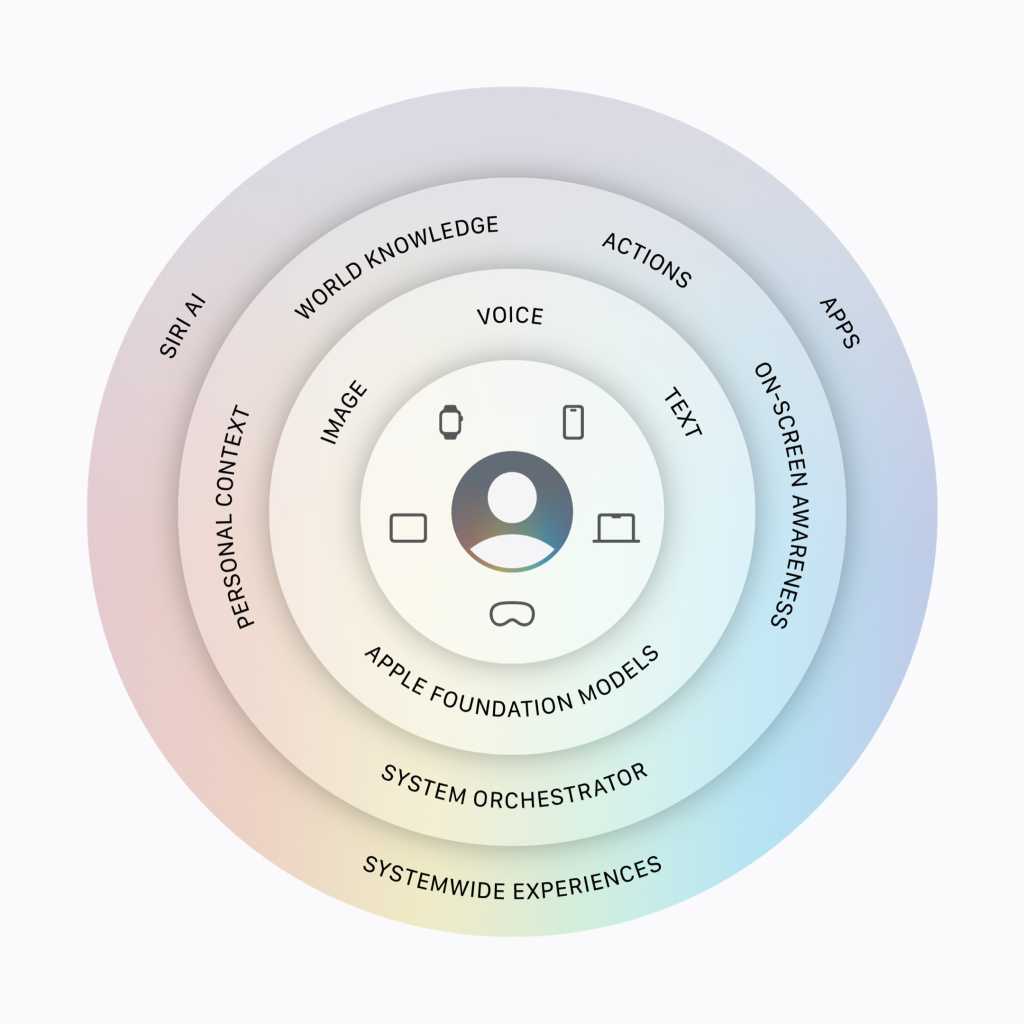
AFM 3 Cloud Pro is one of five Apple Frontier Models driving Siri AI.  Here’s how Apple describes those five models:

On-device models

  • AFM 3 Core, the next generation of Apple’s 3-billion-parameter dense model. You’ll use this for basic text generation, summaries, conversational replies, all the standard uses. It can also handle indexing, search, App Intents, basic dictation and contextual awareness.
  • AFM 3 Core Advanced, the most powerful on-device model. This is what makes Siri’s voice match mood or context, does all the high-accuracy dictation, and can process various data to handle tasks across different apps. It’s the AI driving your more involved Siri conversations. 

AFM Core Advanced is impressive in its own right, because Apple has managed to cram a 20-billion-parameter model onto a smartphone. It has done this by using a sparse architecture, which means it activates just 1 to 4 billion parameters at a time depending on the request. It is, however, only available to Apple’s most powerful systems — iPhone 17 Pro, iPhone 17 Pro Max, iPhone Air, M4 or later iPad, M3 or later Mac with 12GB+ memory.

Server-based models

  • AFM 3 Cloud, which Apple calls its server-side workhorse, optimized for speed, efficiency, and performance.
  • ADM 3 Cloud (Image), for image generation and editing, which unlocks advanced photo-editing tools, the all-new Image Playground, and more.
  • AFM 3 Cloud Pro, the most capable server-based model, which powers the most demanding use cases, like agentic tool use and complex reasoning.

All five were built using the same common foundation, which was then specialized to reflect the proposed use of that model. It’s interesting to look at the human evaluation tests Apple ran to test how well these models performed; they demonstrate impressive improvement on the company’s original models, effectively justifying the decision to work with Gemini.

You can follow me on social media! Join me on BlueSky,  LinkedIn, Mastodon and subscribe to The Core.

  •  

Le télescope James-Webb révèle comment une galaxie peut mourir en pleine jeunesse !

À peine un milliard d'années après le Big Bang, cette galaxie connaît une croissance fulgurante en formant des étoiles à un rythme exceptionnel. Pourtant, les astronomes ont découvert qu'elle expulse simultanément d'immenses quantités de gaz, le combustible indispensable à sa survie. Une...

  •  
❌