Typing a fewletters and numbers into my web browser, I find myself gaping at the identity documents of complete strangers. The passport of a young woman from Germany. The passport of a man from Spain with glasses resting on his head. The front and back of another man's driver's license, a stereotypically goofy expression on his face.
They were all sitting unprotected at public URLs, with no password or access control of any sort. If I sent you a link, you could have looked at someone's passport.
"We have to do something about it as fast as possible, because people will find this and resell it. It will do damage," Sammy Azdoufal told me i …
Un artista del suono ha calato un idrofono nelle radici di Pando, il pioppo tremulo clonale dello Utah che con i suoi 6.000 tonnellate e 47.000 tronchi identici è l'organismo vivente più grande del pianeta. Quello che ha registrato — un brontolio sotterraneo prodotto dal fremito di milioni di foglie che viaggia attraverso le radici — apre nuove possibilità per mappare e monitorare questo essere antico di 12.000 anni, oggi sempre più minacciato dalle attività umane.
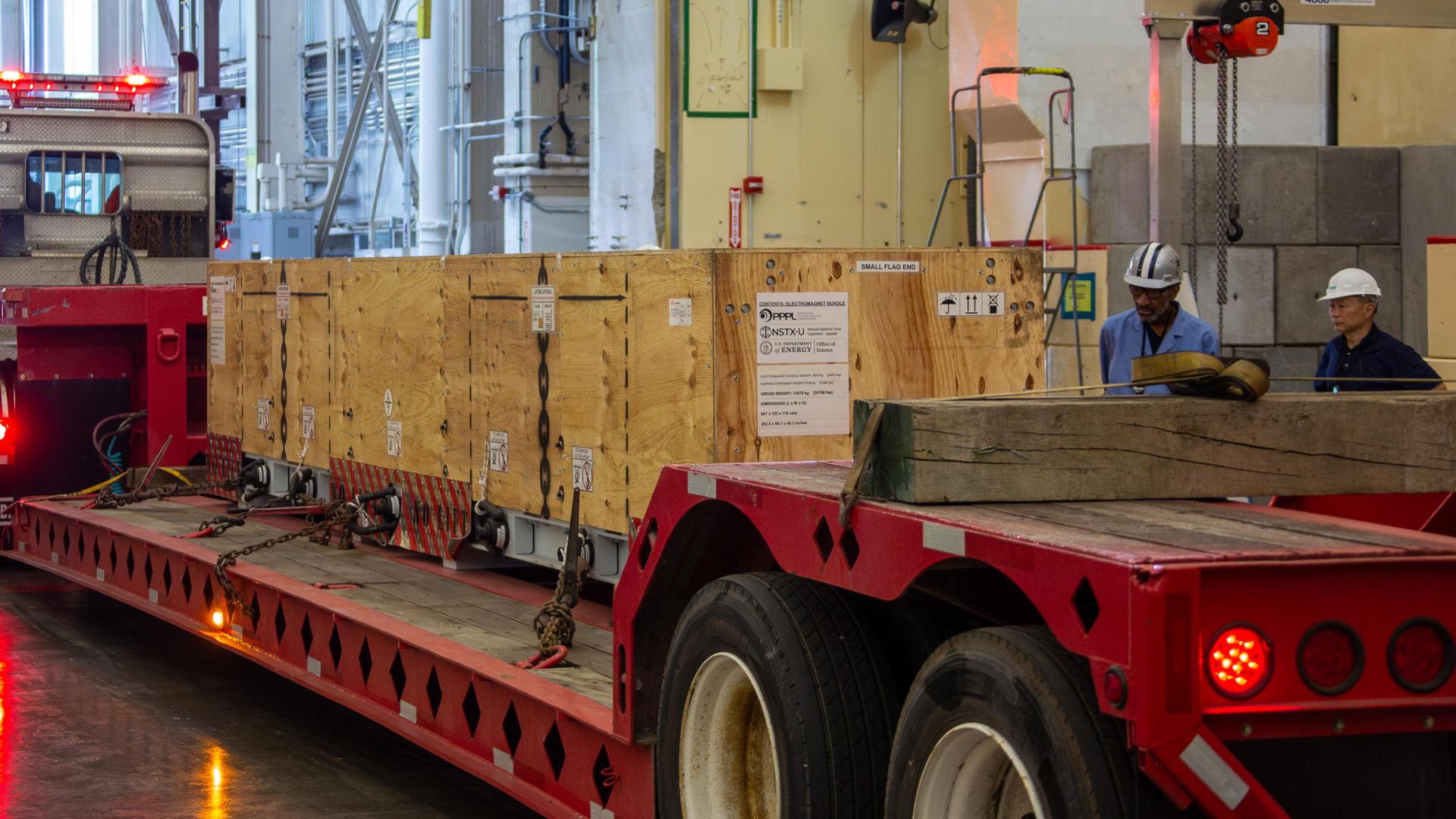
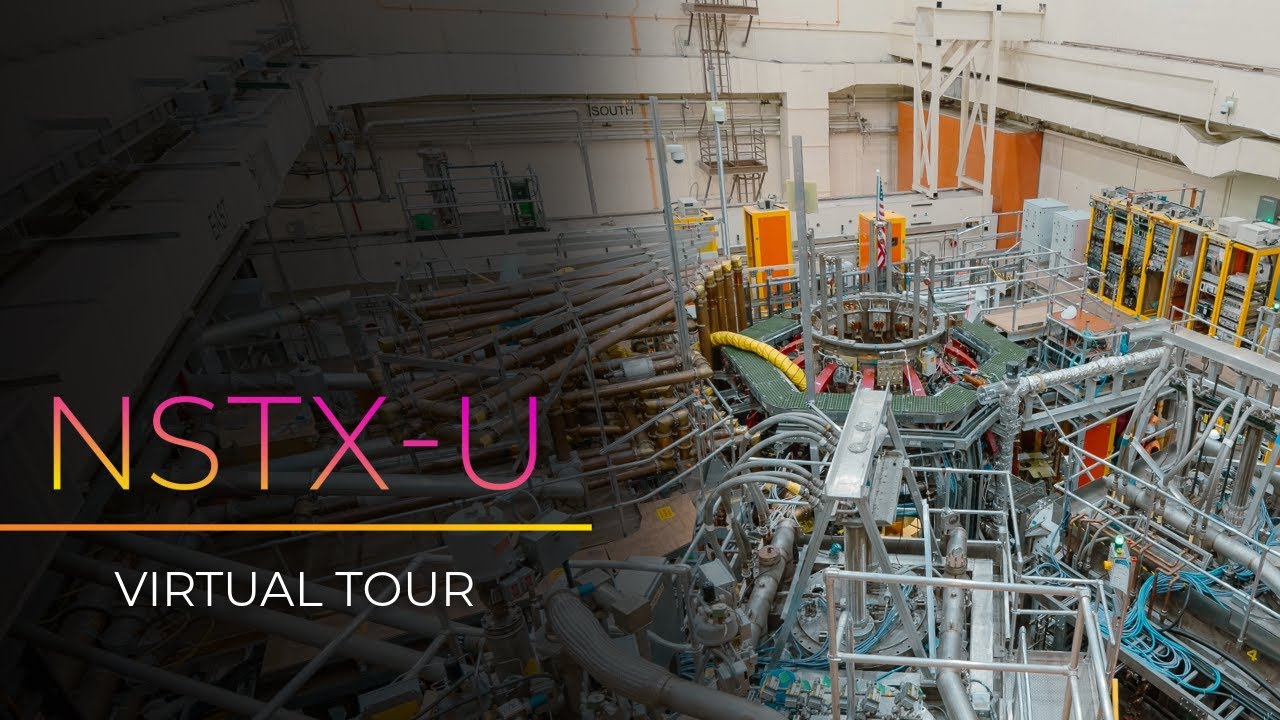
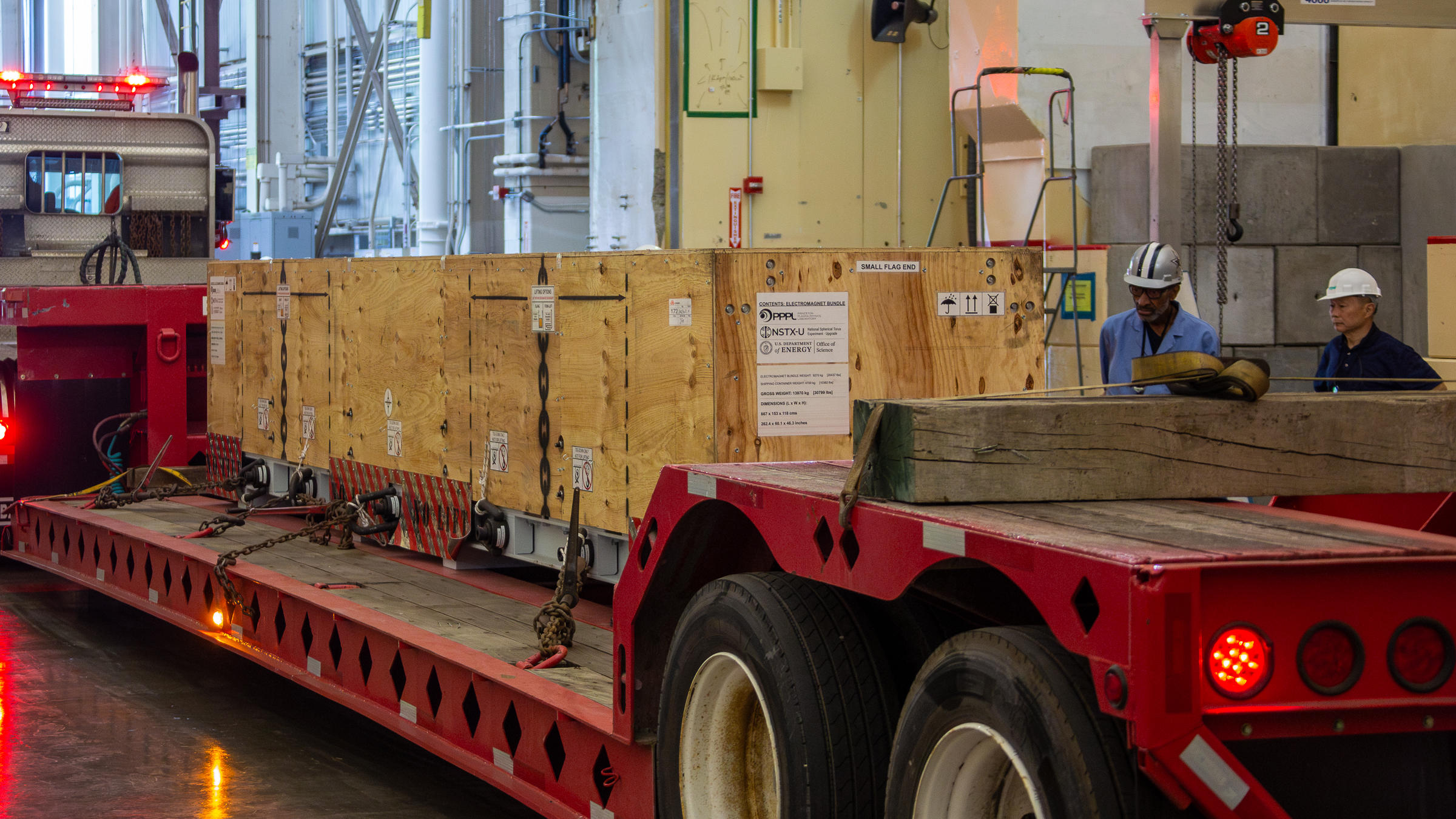
A massive magnet that crossed the Atlantic Ocean has brought one of America’s most ambitious fusion projects a step closer to reality. The U.S. Department of Energy’s Princeton Plasma Physics Laboratory recently received the central magnet bundle for its upgraded spherical tokamak, a compact fusion system designed to test technologies that could shape future power plants.
The delivery marks a critical milestone for the machine’s return to operation. Engineers now enter the final stages of assembly before experiments resume in 2027.
Manufactured by Spain-based Elytt Energy, the component traveled from Bilbao to New Jersey aboard a cargo aircraft before making its final trip by flatbed truck to Princeton. Weighing 23,000 pounds and stretching roughly 20 feet long, the bundle ranks among the most important pieces of the fusion device.
Dave Micheletti, associate laboratory director for engineering and project director, called the arrival “a truly momentous occasion.” He said the team will now focus on completing assembly and preparing the system for scientific use.
Magnetic core
The central bundle combines two critical magnet systems into a single structure. The toroidal field magnets generate the primary magnetic fields that confine the plasma. Meanwhile, the ohmic-heating system drives electrical current through the plasma to raise temperatures and support confinement.
A flatbed truck delivers the magnetic bundle. Credit – Michael Livingston / PPPL Communications Department
Building the assembly required a complex manufacturing process. Technicians joined 36 copper conductors, each measuring 19 feet long, using fiberglass tape, resin, and vacuum-pressure impregnation techniques.
Engineers then wrapped additional copper coils around the structure to create the ohmic-heating system. They sealed the completed assembly with insulating resin to withstand demanding operating conditions.
Once installed, the magnets will create two magnetic field configurations inside the apple-shaped vacuum vessel. Together, they stabilize and heat the plasma needed for fusion experiments.
Testing future reactors
Researchers believe spherical tokamaks could offer advantages over conventional designs. Their compact shape may improve efficiency while reducing construction and replication costs. The upgraded system will help scientists evaluate whether the approach can support future commercial fusion plants.
The machine also supports broader national goals. Researchers plan to gather operational data that could train artificial intelligence tools capable of improving fusion performance and control strategies.
Jonathan Menard, the laboratory’s deputy director for research, said the facility will provide new opportunities for scientists and engineers entering the field. He encouraged researchers worldwide to use the platform to advance fusion science.
Final assembly begins
Engineers have already positioned the magnet bundle near the fusion device using heavy-duty cranes. Over the coming months, teams will rotate the structure upright and prepare it for installation. Workers will lower protective shielding around the assembly before placing it inside the machine’s interior.
Technicians must still connect dozens of flexbus components, cooling lines, and internal systems. They will also complete bakeout procedures and commissioning tests to verify that all systems operate together safely.
Steven Cowley, the laboratory’s director, said the upgraded machine possesses capabilities unavailable elsewhere. He noted that the project could play an important role in determining the future direction of commercial fusion research.
If the remaining work proceeds as planned, the upgraded facility could begin experiments in 2027, giving American researchers a powerful new platform to explore the promise of fusion energy.
Attackers are actively exploiting CVE-2026-5027, a high-severity path traversal vulnerability in the AI development platform Langflow, to write arbitrary files on exposed servers. [...]
Faz pelo menos 5 milhões de anos que a mesma área das profundezas do oceano Índico tem funcionado como um imenso cemitério de baleias ?e, em vez de produzir cenas macabras, o processo levou ao surgimento de um ecossistema inteiro, com espécies únicas, em torno dos restos mortais dos mamíferos aquáticos.
Leia mais (06/10/2026 - 18h15)
The southern lights, also known as the aurora australis, were captured by the NASA astronaut Jessica Meir from the International Space Station on Saturday.
Researchers are at a loss for why people across cultures and ages, regardless of their dominant hand, have a natural bias toward wandering in a counterclockwise direction.
Ryan Primrose dell'Ontario Centre for Archaeological Education coordina le indagini sul ritrovamento di una lastra di roccia a Wawa, in Canada, che reca incisi 255 caratteri runici. Il runologo Henrik Williams ha decifrato l'iscrizione, scoprendo che riproduce il Padre Nostro in svedese moderno tramite un sistema grafico del Seicento ripubblicato nel diciannovesimo secolo. L'opera, che include anche il disegno di una barca con 16 passeggeri e 14 misteriose "X", è attribuibile a un lavoratore svedese della Compagnia della Baia di Hudson e non a esploratori norreni.
The Miasma credential-stealing attack framework, which has recently targeted open-source ecosystems through supply-chain attacks, was briefly open-sourced on GitHub. [...]
Una visione offuscata prima in un occhio e poi nell’altro ha allarmato Nelize Pretorius e i medici pensarono si trattasse di congiuntivite. “Riuscivo a malapena a vedere”, ha ricordato. “Stavo perdendo la vista e nessuno sapeva spiegarmi il perché”, ha dichiarato ad ABC . La causa del problema non risiedeva affatto nei suoi occhi. Si trattava di […]
The CFTC is considering its first regulation for prediction markets, as arrests over "insider trading" on everything from military operations to Google Search data continue to stack up. As CoinDesk reports, a notice of proposed rulemaking says "the proposal would establish a structured framework for evaluating whether such contracts involve an activity enumerated in Section 5c(c)(5)(C) of the Commodity Exchange Act -activity that involves terrorism, assassination, war, gaming, or conduct that is unlawful under federal or state law-and, if so, whether that contract is contrary to the public interest."
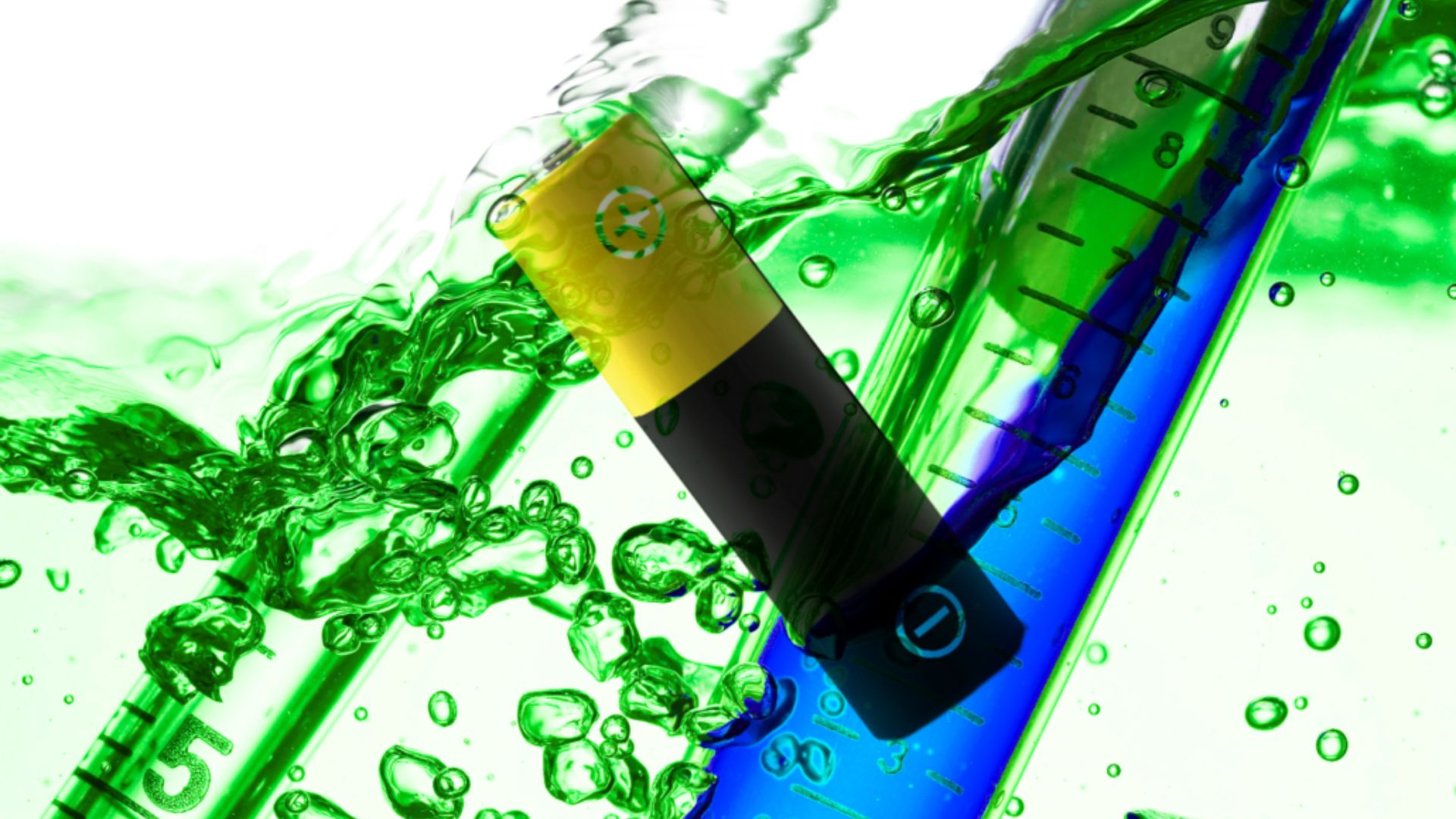
Researchers in South Korea have developed a new electrolyte additive that significantly improves the lifespan and capacity of aqueous batteries, a technology widely viewed as a safer and lower-cost alternative to lithium-ion batteries.
The team, led by Professor Hoseok Park from Sungkyunkwan University (SKKU), found that adding a small amount of a specially designed zwitterionic material to the electrolyte helped overcome key problems that have long limited the commercialization of aqueous battery systems.
Unlike lithium-ion batteries, aqueous batteries use water-based electrolytes, making them less flammable, more environmentally friendly, and potentially cheaper to manufacture. However, their performance has been hindered by unstable zinc deposition and unwanted reactions between zinc electrodes and water during charging and discharging.
These issues can lead to corrosion, uneven metal buildup, and rapid capacity loss, reducing battery life and limiting large-scale deployment.
Tiny additive, big impact
To tackle the problem, the researchers developed a zwitterionic additive known as C10. Zwitterions contain both positive and negative charges within the same molecule, allowing them to interact with surrounding ions in unique ways.
When added to the electrolyte, C10 molecules spontaneously assembled into nanostructures measuring about 3.77 nanometers in diameter. These structures served two functions simultaneously.
First, they guided zinc ions to deposit more evenly across the electrode surface, reducing the formation of irregular zinc structures that can damage batteries. Second, they formed a thin protective layer over the zinc metal, shielding it from direct contact with water and limiting corrosion-causing side reactions.
The combined effect produced substantial performance gains.
Aqueous batteries using the modified electrolyte maintained stable operation for more than 2,800 hours. The cells also achieved an areal capacity of 8.10 mAh cm⁻², which the researchers describe as world-leading performance among aqueous battery systems reported to date.
“We have demonstrated that the performance of aqueous batteries can be substantially enhanced through a simple approach of adding a small amount of material to the electrolyte, without the need for expensive materials or complex fabrication processes.”
Storage systems targeted
Improving both cycle life and storage capacity has been a longstanding challenge for aqueous battery developers. Many previous approaches improved one metric at the expense of the other.
The new electrolyte strategy appears to address both issues simultaneously while avoiding costly manufacturing changes.
The researchers believe the technology could be useful for large-scale energy storage applications, where safety, cost, and durability are critical factors.
“Beyond renewable energy storage, this technology holds potential for application in large-scale energy storage systems (ESS) for AI infrastructure and data centers, which are experiencing explosive growth.”
Demand for energy storage is expected to rise alongside the expansion of renewable power generation and the rapid growth of AI computing infrastructure, both of which require reliable methods to store and distribute electricity.
Because the new approach relies on a simple electrolyte modification rather than redesigning the battery architecture, it may offer a practical path toward improving the commercial viability of aqueous battery systems.
Friggere è una delle tecniche di cottura più diffuse nelle cucine di tutto il mondo, ma pochi sanno che il calore elevato può trasformare l’olio in una fonte di composti chimici potenzialmente dannosi per la salute. Quando un olio viene sottoposto a temperature troppo alte o viene riutilizzato più volte, infatti, inizia un processo di […]
Parece mágica, mas por trás desse doce existe uma história de química, pressão e uma invenção que tomou um rumo completamente diferente do esperado.
Neste vídeo, a gente descobre como funciona o famoso doce carbonatado, por que ele faz esse efeito tão característico e o que ele tem em comum com uma garrafa de refrigerante.
E o mais curioso é que tudo começou com uma tentativa de criar um produto totalmente diferente.
#doce #explosão #infância #pirulito #química
Seja membro deste canal e ganhe benefícios:
https://youtube.com/channel/UCKHhA5hN2UohhFDfNXB_cvQ/join
► Inscreva-se: https://youtube.com/user/iberethenorio?sub_confirmation=1
► Canal de cortes: https://youtube.com/channel/UCzBTlYfHYMwVEru4hmLM8hg

 Login