 Login

GM joins race to build batteries for AI data centers and the grid
GM is developing an entirely new sodium-ion battery chemistry for use in everything from data centers to its own factories.

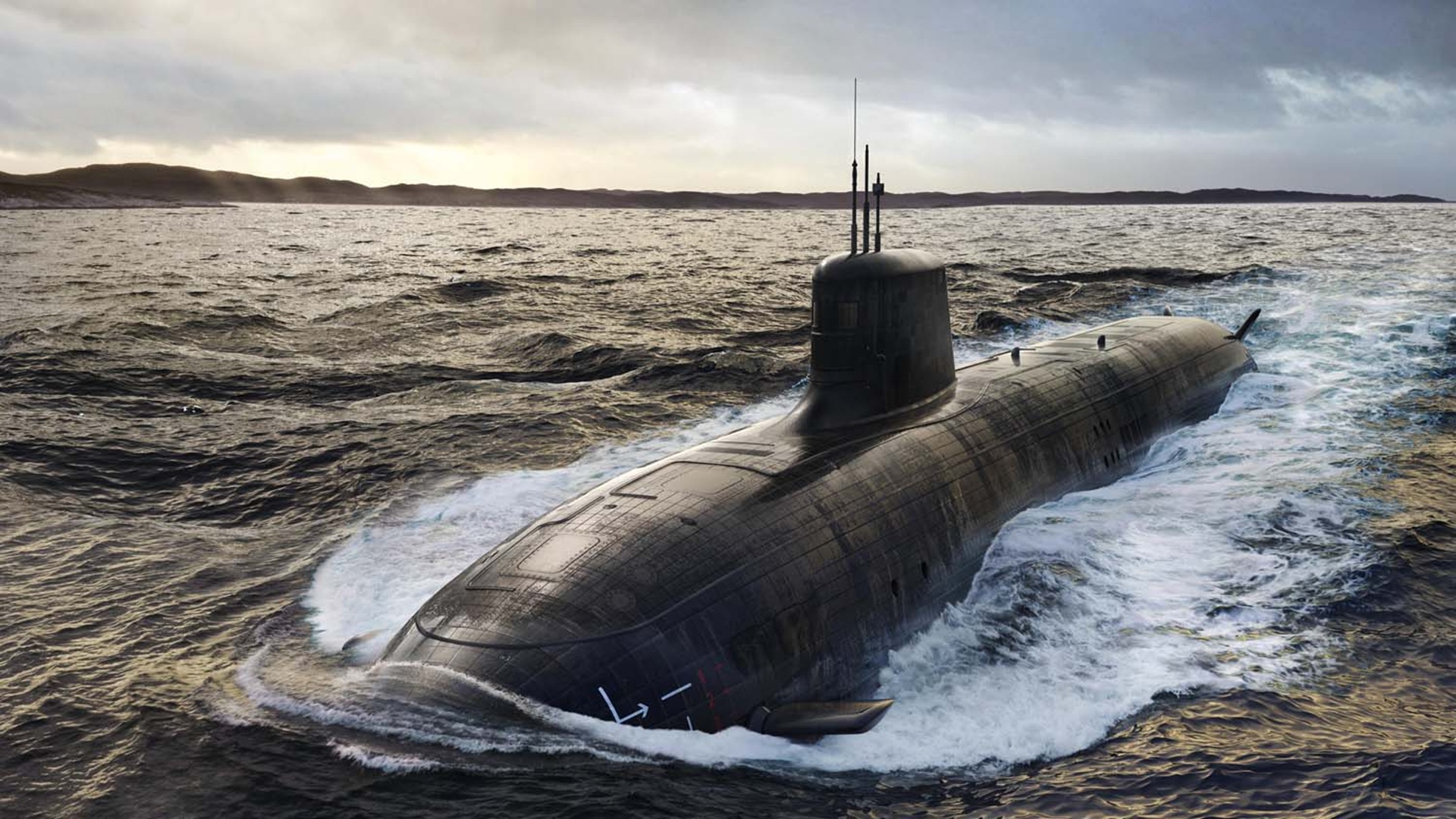
China has successfully tested a huge airborne electromagnetic detection system that could locate hidden nuclear submarines operating deep beneath the ocean surface.
The technology, called Airborne Transient Electromagnetic (Atem) detection, is reportedly made up of a helicopter towing a giant array of coils. The coils emit strong electromagnetic signals into the ground or water.
It is mainly intended to map underground and underwater structures for civilian applications, such as mineral exploration, groundwater mapping, and geological surveys. Previous studies, however, suggest the same approach could have great military potential.
Led by Fu Jingcheng, PhD, an associate professor at Beihang University and the Chinese Academy of Sciences’ Institute of Geology and Geophysics, the research team carried out a seven-minute helicopter test. During the trial, onboard sensors confirmed that the coil array could maintain the near-level stability required for precision detection.
The South China Morning Post (SCMP) pointed out that the detection system is a towering structure that consists of three giant dodecagonal (12-sided) coils. Each of them measures roughly 82 feet (25 meters) across. These coils serve as the transmitter, compensation unit, and receiver.
They are suspended under a helicopter using a network of cables. The technology sends a powerful pulse of electricity through the transmitter coil. This generates a brief electromagnetic field.
Once the pulse ends, conductive materials below the surface produce secondary electromagnetic signals that are captured by the receiver coil. By analyzing how these signals decay, scientists can identify buried or submerged objects and also estimate their depth and composition.
However, maintaining stability during flight is one of the greatest limitations of airborne electromagnetic systems. Large suspended coil arrays can tilt and swing due to wind, helicopter rotor wash, and aircraft maneuvers. These movements can affect the accuracy of the collected data. Even moderate helicopter acceleration caused the massive structure to pitch by more than 20 degrees.
To overcome these issues, Jingcheng and his team developed a computer model that calculated the ideal cable lengths and tensions throughout the system. They then identified a flight configuration that kept the coils level during surveys.
What’s more, the researchers also attached a flexible aerodynamic film to the rear portion of the main transmitter coil. This film works as a passive stabilizer. It can suppress violent oscillations by exerting a restoring force.
A seven-minute flight confirmed the design’s ability to maintain the near-level orientation required for precision measurements. The trial also showed that rapid acceleration and sharp turns can cause the suspended load to swing violently, placing heavy strain on the cable.
The researchers noted that the detection system performs best when flown slowly and smoothly. Pilots should reduce speed before a turn, make the turn gradually, and only speed up afterward.
A 2012 study by researchers from Chang’an University and Shandong University proposed combining Atem systems with synthetic aperture imaging techniques to detect submerged submarines. Simulation experiments reportedly succeeded in identifying a scaled submarine model submerged in salt water.
The study has been published in the journal Acta Aeronautica et Astronautica Sinica on April 25.




Paramount Skydance is accusing Netflix of maintaining a campaign against its proposed acquisition of Warner Bros. Discovery (WBD).
In a June 5 letter (PDF) addressed to Jared A. Hughes, acting section chief of the Media, Entertainment, and Communications Section of the US Department of Justice's (DOJ's) Antitrust Division, and A. Maya Kahn, a trial attorney for the Antitrust Division, and first reported on by Politico today, Paramount chief legal officer Makan Delrahim accused Netflix of trying to influence stakeholders about the merger. The letter reads:
Indeed, Netflix’s panic-level response and scorched-earth campaign to try and poison regulators and other stakeholders against the Transaction shows just how seriously Netflix takes Paramount as a scaled competitor.
The letter from Delrahim, a former assistant attorney general for the Antitrust Division, is a response to a letter that The International Brotherhood of Teamsters sent to the DOJ in March. The teamsters' letter argued that Paramount and WBD's merger would threaten film and TV workers. The union, which has 1.3 million members, asked the DOJ to block the merger "unless substantial and enforceable safeguards are put in place to increase domestic production and protect jobs," per an announcement from the group.


© Mike Cohen/Getty Images for The New York Times
Driving after dark used to be a haven. Late at night, there’s no rush-hour traffic, just the meditative hum of the passing miles. But these days, my eyes can’t take it anymore. Even on a lonely road in the middle of the night, I can’t seem to escape the glare of obnoxiously bright headlights. A pickup truck tailgating me blinds my rearview mirror with searing headlights. Even at a distance—and even when without the brights on—the beams of a vehicle in an oncoming lane make me instinctively squint. America’s roads are now full of tactical-grade headlights, and no one is happy about it. Just look at any of the viral screeds in the Reddit forum “r/fuckyourheadlights.”
Other people’s lights are a pet peeve nearly as old as the automobile: Everyone’s beams are too bright, too aggressive, and purposefully pointed into your eyes. But the problem really is worse than ever, and that’s because of the LED headlights that have taken over car design during the past decade or so. Not only can they crank out more lumens than the halogen lamps of old; their light is also sharper and bluer, which makes it feel like an assault on the eyeballs. Car companies have an incentive to install bright headlights that make drivers think Oh man, you can see everything, Jonathan Elfalan, the director of vehicle testing at Edmunds, told me. The wincing driver in the opposite lane isn’t their problem.
Across the world, high-powered headlights are far less menacing. That’s partly because of America’s obsession with crossovers, SUVs, and pickup trucks. New cars are taller and bigger than ever before, which means they are blasting light everywhere but down at the road ahead. “There’s a pretty good chance that the car behind you is shining its headlights right into your mirror,” Sean Tucker, a managing editor of Kelley Blue Book, told me. Still, other countries have long had something we don’t: high-tech headlights that can brilliantly illuminate the road in front of them without simultaneously burning another driver’s retinas. Although American cars are loaded with technology—plenty of new models now come with self-driving features and AI assistants—we’ve been missing out on a simple feature that would ease the problem of blinding headlights.
This technology is called “adaptive driving beam,” or ADB. Adaptive beams scan the road ahead of you and adjust accordingly: On a curvy stretch, the lights will track the road rather than shining straight ahead. They also can detect cars coming your way and dim just the light that’s pointed right at your fellow motorists. This is possible because an LED headlight is not a single light bulb that’s on or off but is made of a multitude of individual pixels. Adaptive beams have been popular in Europe for more than a decade and are in use in Asia and Canada. In the United States, just a handful of vehicles have them.
Blame the often strict and strange world of American car regulations. Decades ago, the National Highway Transportation Safety Administration mandated that cars need to have separate low and high beams. Adaptive beams—which are variable in nature—don’t fit into that binary. Congress finally amended the rules in 2021, a move meant to legalize the better method. That didn’t happen. NHTSA got to write the new regulations, and instead of adopting the international standard, it drew up a separate set of stricter rules. (An NHTSA spokesperson pointed me to the stance that the agency outlined a few years ago, which says that Europe’s test for adaptive bulbs lacks the “objective performance criteria” necessary for approving car tech in the U.S.)
The result of this confusion is that although new cars in America have the technology in place to shine less blinding beams—possibly activated via a simple, over-the-air software update, Tucker said—that’s illegal. This gets even more absurd when you consider how simple fixes have solved previous headlight woes. Even new entry-level cars come with an auto-dimming feature to deactivate the brights when another car approaches, minimizing breaches of headlight etiquette.
Instead of turning on technology that already exists, the pathway for car companies to fix American headlight glare involves reinventing their smart headlights. In 2024, Rivian put the tech into its pickups and SUVs and became the first automaker to activate compliant adaptive beams in the U.S. That happened only after Rivian redesigned the entire electronics-and-computing setup in its vehicles, a move that gave the company enough control over the LED headlights’ pixels to satisfy American regulators. “The standard is genuinely demanding,” Carlos Montes Relanzon, Rivian’s senior manager for lighting systems, told me.
The solution is powerful, if eerie. When I test-drove Rivian’s R1S SUV up the California coast last summer, I couldn’t stop staring at the intermittent hole in my headlight beam—a dark spot that would appear as if part of the lamp had burned out, then vanish. At first unaware that Rivian had rolled out the feature, I wondered whether the car might be defective. When I finally realized what the SUV was up to and began to track the tech’s performance, I was reassured by the fact that the Rivian could recognize other cars and turn down the lights while they were still several seconds away, rather than waiting until an oncoming driver was right next to me.
The rest of America’s car industry is slowly coming around. Last year, Tesla introduced adaptive beams in its updated Model Y crossover. And last month, Audi announced that it would put adaptive beams in the 2027 Q9 SUV, set to debut in the U.S. later this year. An Audi spokesperson told me that the company is holding out hope that the NHTSA will come around and agree to adopt the international standard. For now, other car companies will also have to suck it up and sink money into rebuilding adaptive headlights for their American cars. (I asked Ford, Chevrolet, Toyota, and Mercedes about when the automakers might introduce adaptive bulbs, but did not receive more information.)
Unless America suddenly lets carmakers turn on the tech that’s already sitting dormant in plenty of vehicles, today’s glaring lights are going to stick around. Cars now stay on the road longer than ever—13 years on average—so even if every new vehicle today began offering adaptive beams, the journey to replace old cars with new ones that have friendlier headlights would be long. Cool feature or not, adaptive beams are unlikely to persuade many drivers to trade in an older vehicle for a new one. After all, they improve the lives of other drivers more than they help car owners themselves.
This becomes clear when you’re the highway Good Samaritan. As I meandered through the blackness of Route 101 in the Rivian, passing roadside outposts such as King City and Soledad, my vehicle auto-dimmed its lights for one oncoming driver after the next. Mile after mile, their lights still kept me squinting.

© Illustration by Akshita Chandra / The Atlantic. Source: Getty.

 Quantum particles are sometimes truly stunning.

New radiocarbon dates from Sala Keimada, a hard-to-reach chamber of Cueva Palomera in the province of Burgos, northern Spain, suggest that generations of people returned to the sacred space from the end of the Ice Age through the Iron Age, leaving behind art, structures and offerings.
The post Spanish Cave Sanctuary Reveals More Than 11,500 Years of Activity appeared first on Sci.News: Breaking Science News.
Estamos próximos de um SaaSpocalypse? Para Mike Maddison, o foco não está em substituir a especialização pela automação, mas em combinar ferramentas inteligentes com supervisão humana de confiança.
The post IA, cibersegurança e a realidade por trás das manchetes appeared first on Tek Notícias.




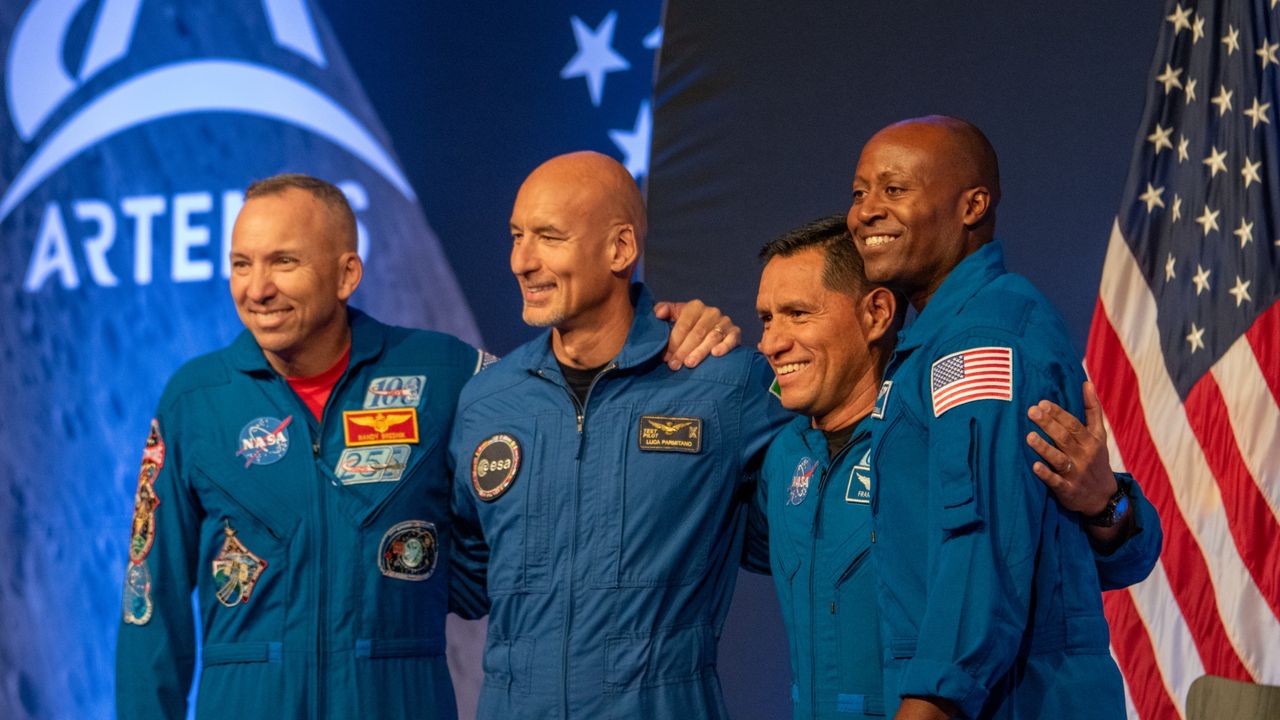
Nasa has named the crew of its next Artemis mission, which it promised would be an “extraordinary demonstration of what is possible”. Artemis is the ambitious American-led effort to return humans to the lunar surface by 2028.
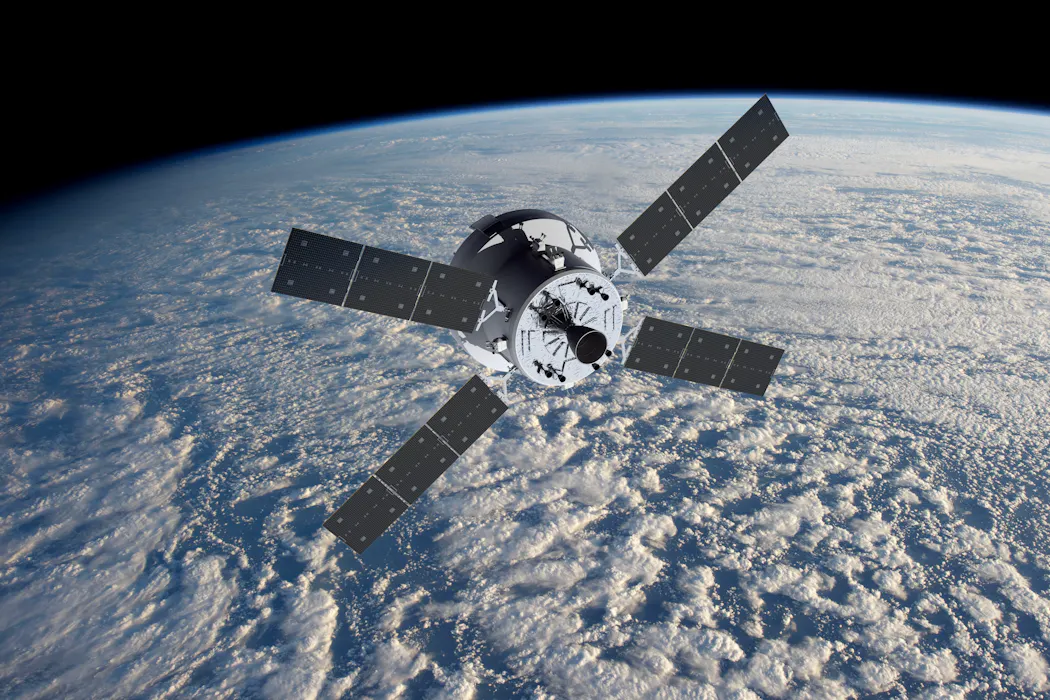
However, the Artemis III mission will not travel to the Moon. Instead, the Orion spacecraft will stay in low Earth orbit and aim to dock with lunar landing vehicles launched separately by one or two space companies.
Nasa astronauts Randy Bresnik, Frank Rubio and Andre Douglas and Italian European Space Agency astronaut Luca Parmitano will carry out the mission in late 2027.
There are two potential landers that could fly on their separate mission to then rendezvous with the Orion spacecraft; one made by Elon Musk’s SpaceX and the other by Jeff Bezos’ firm Blue Origin. They will carry astronauts down to the Moon’s surface on subsequent missions.
However, the timetable for Artemis III and the first mission to return astronauts to the lunar surface (Artemis IV) has been thrown into doubt by the recent explosion of a New Glenn rocket. This rocket is intended to launch Blue Origin’s lander, called Blue Moon.
The blast could add significant delay to the Artemis schedule and there is speculation that it could even put the US out of contention to reach the Moon before China, which is planning its own Moon landing mission for 2030.

On May 28, 2026, Blue Origin’s New Glenn rocket, which is able to carry heavy payloads, was undergoing a standard engine fire test. For reasons which are still unclear, a huge explosion destroyed the rocket and damaged Blue Origin’s only launchpad, located at Cape Canaveral Air Force Station in Florida.
To reduce costs, Nasa’s Artemis programme relies on companies like Blue Origin to deliver key elements for lunar missions, like the landers.
Rockets capable of lifting heavy payloads into orbit will be needed for launching the building blocks of Nasa’s Moon base, which will be assembled over the next few years.
Under previous plans, SpaceX’s Starship vehicle would have been used as the lander for the first two Artemis missions to touch down on the Moon. However, Starship ran into problems during flight tests, so Nasa hatched a plan B.
This backup plan brought Blue Origin’s Blue Moon lander into the mix for Artemis IV, the first mission back to the lunar surface. Now, with the explosion, even their Plan B seems to have moved out of reach.
How bad is the situation though? Blue Origin only has one launch pad that, at the moment, cannot be used. But recent updates by the company’s CEO, Dave Limp, indicated that the situation may not be as dire as it might have been. He indicated that New Glenn might even return to launch before the end of the year.
The propellant farm (which stores the rocket fuel and oxidiser that are pumped into the rocket just before launch), as well as the water tower were undamaged. So were the booster and upper stages of another New Glenn rocket held in the pad’s integration facility. The launch tower will only need to be repaired and not rebuilt.
To gain some insight into the potential impact on the timescale for a next launch, we might be able to look at a similar situation faced by SpaceX in September 2016 where a Falcon 9 rocket exploded on one of their launchpads.
They were able to continue only four months after, but from one of their alternative launch sites, none of which were fully operational at that time. But Blue Origin has no alternative site at all. SpaceX needed more than a year to start up operations again on their damaged launch site.
Kiko Dontcev, vice president of launch at SpaceX, commented on the task ahead for Blue Origin. He described the rebuild as a high precision dissection of the damaged site to help better understand the incident. “In the initial days and weeks after you’re using a scalpel not a bulldozer,” he commented on X.
This might cast doubt on hopes that New Glenn could launch again this year. Indeed, Nasa’s chief Jared Isaacman told CNBC that the launch pad might not be restored until 2028. Currently, we just do not have the full picture of the damage and work needed. So, we can only hope that New Glenn launches can resume as soon as possible.
Nasa is already trying to limit the impact of the New Glenn explosion by urging Blue Origin to look at other rockets for launching its Blue Moon lunar landers. This would allow Nasa to still meet its deadline of landing astronauts on the Moon in 2028.
But New Glenn is still needed to land hardware such as the lunar terrain vehicles for Artemis missions and a robot rover called Viper, which will scout for water ice at the Moon’s south pole.
However, with 2030 approaching fast, the knock-on effects of the explosion could lead to China beating the US to the Moon. But the Artemis programme had already been hit by delays as a result of Nasa’s dependence on government whims and variable funding. Overall, the Artemis programme has had a relatively tight budget to work with.
Space agencies like Nasa must try (as much as possible) to decouple their efforts in space from ongoing turmoil in domestic politics. It could also do well to rely less on ventures led by billionaires, who often have their own private objectives.
One could view the Chinese lunar programme as being more stable, because of their one-party state as well as their strong sense of national pride. However, there is also a lack of transparency in their space programme and a focus on propaganda.
As an outside observer, it appears that Nasa’s current timeline for landing on the Moon and establishing a permanent lunar base is slipping away. But this may not be the disaster some in the space industry think it is. Perhaps we should embrace a pride in exploring space as a community of nations working together.

Daniel Brown does not work for, consult, own shares in or receive funding from any company or organisation that would benefit from this article, and has disclosed no relevant affiliations beyond their academic appointment.
