❌

Reading view

I.R.A. Rebates for Appliance Swaps Could Be Phased Out

New guidance from the Energy Department would prevent people from receiving rebates after making such swaps.

© Bing Guan for The New York Times

The new guidance would also end rebates for the replacement of gas-powered dryers, heat pumps and water heaters.
  •  

Scientists Discover Two Strange Dead Stars That Defy Astronomical Expectations

White Dwarf Dead Star Superdense CoreResearchers say the isolated white dwarfs Gandalf and Moon-Sized define a new class of stellar remnant because they share five traits, including X-ray emission. Across the immense scale of the Universe, a single unusual object can prompt astronomers to look for others like it, sometimes leading to the recognition of an entirely new class of [...]
  •  

Breakthrough Technique Reveals Atomic Secrets of Record-Breaking Superconductors

Artistic Representation of the Interior of a Diamond Anvil CellScientists have achieved a first in studying lanthanum superhydrides, a class of materials that could help unlock superconductivity at much higher temperatures. The dream of transmitting electricity without energy loss has driven decades of superconductivity research. Some of the most promising candidates yet are superhydrides, hydrogen-rich materials that, under immense pressures, have exhibited superconducting behavior [...]
  •  

Ancient Goose Fossil Challenges Long-Held Theories About New Zealand Birds

Metechen lutiA newly described fossil goose shows that New Zealand’s bird history involved repeated arrivals, extinctions, and rapid island evolution. A rare fossil goose found in the remains of an ancient lake in Central Otago is changing how scientists understand the bird history of Aotearoa New Zealand, according to a researcher at the University of Otago [...]
  •  

This research paper claims Giza pyramids are 12,000 years old

António Ambrósio, an independent researcher who describes himself as trained in Egyptology through Barcelona’s Institut d’Estudis del Pròxim Orient Antic at the Universitat Autònoma de Barcelona, is promoting a claim that the pyramids of Giza were not built for the pharaohs traditionally linked to them. In a short, non–peer-reviewed essay posted online as The Pyramids […]

The post This research paper claims Giza pyramids are 12,000 years old appeared first on Curiosmos.

  •  

The Missing Blueprints of the Pyramids

The mystery is real. Egypt’s pyramids are more than 4,500 years old, the Great Pyramid still feels impossible to many modern viewers, and yet the archive has yielded nothing that looks like a master plan in the modern sense. No papyrus roll has emerged with a neat elevation, no construction dossier for Khufu, no surviving […]

The post The Missing Blueprints of the Pyramids appeared first on Curiosmos.

  •  

NASA's Psyche spacecraft returns unfamiliar views of a familiar world

Not quite halfway through a six-year sojourn through the Solar System, a NASA spacecraft used a close encounter with Mars last week as a dress rehearsal for its arrival at the Solar System's largest metal asteroid in 2029.

The Psyche mission launched more than two-and-a-half years ago, in October 2023, from Kennedy Space Center, Florida, to kick off a journey of some 2.2 billion miles (3.6 billion km) to reach its unexplored namesake, the asteroid Psyche. The robotic research mission got an initial lift from a powerful SpaceX Falcon Heavy rocket. It uses plasma engines to gradually build up the impulse needed to reach its destination in the asteroid belt, between the orbits of Mars and Jupiter.

A flyby of Mars last Friday gave the spacecraft its most significant boost since launch. Navigators at NASA's Jet Propulsion Laboratory in California set up the spacecraft for a course taking it 2,864 miles (4,609 km) from the Martian surface, well above the planet's tenuous atmosphere. Psyche used Martian gravity like a slingshot to gain enough speed to reshape its orbit around the Sun, putting the probe on a path to intercept its asteroid target.

Read full article

Comments

© NASA/JPL-Caltech/ASU

  •  

Greenpeace’s Long War With a Pipeline Titan Enters a Strange New Phase

This month, a North Dakota court barred Greenpeace from saying what it wanted in a European court, an unusual move. The environmental group says it is forging ahead.
  •  

Greenpeace’s Long War With a Pipeline Titan Enters a Strange New Phase

This month, a North Dakota court barred Greenpeace from saying what it wanted in a European court, an unusual move. The environmental group says it is forging ahead.

© Robin Utrecht/ANP, via Alamy

A court building in Amsterdam. The North Dakota Supreme Court this month barred Greenpeace International from making claims against Energy Transfer in a Dutch countersuit.
  •  

Websites have a new way to spy on visitors: Analyzing their SSD activity

Over the decades, there has been no shortage of sites using clever techniques to covertly track visitors’ browsing histories, device fingerprints, and keystrokes and mouse movements in real time. Even Meta and Yandex were recently caught joining in the privacy-invasive free-for-all.

Now sites have a new way to spy on their visitors: measuring subtle interactions with their solid-state drives. The technique, named FROST (fingerprinting remotely using OPFS-based SSD timing), allows sites to monitor other sites a visitor is viewing and what apps are open on their devices.

A side channel based on contention

The technique, laid out in a research paper, exploits a side channel, a form of leak resulting from physical manifestations such as electromagnetic emanations, data caches, or the time required to complete a task. By measuring the manifestations, attackers can decrypt encrypted traffic and infer other confidential data.

Read full article

Comments

© Getty Images

  •  

Roku OS’s home screen now features a large, permanent ad

Roku just unveiled the biggest overhaul to its smart TV operating system (OS) in 10 years. One of the most noticeable differences is that ad space now takes up a large chunk of the screen’s landing page.

Before the update, loading up a Roku OS-powered smart TV or streaming device would yield a menu on the left side with sections including “What to Watch,” “Live,” and “Search.” The right side had a row of tiles for “Recommended” content above several rows of tiles representing downloaded apps. Once a user started started navigating the home screen, the menu would collapse, and they'd see a large ad on the right side of the screen.

The old Roku OS landing page before the ad is visible.  Credit: Roku


Read full article

Comments

  •  

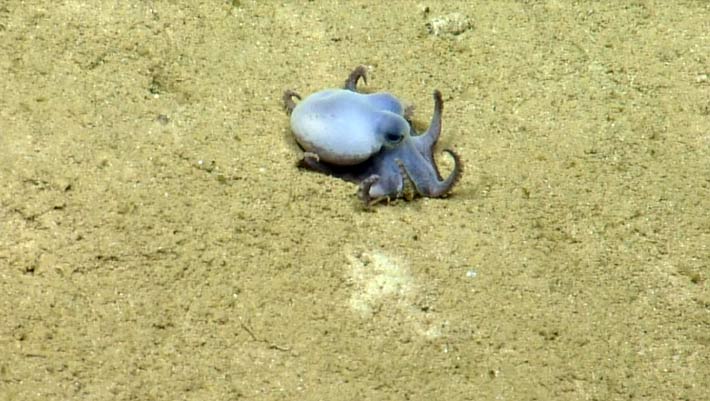
New Species of Octopus Discovered in Deep Waters near Galapagos Islands

Microeledone galapagensis. Image credit: Voight et al., doi: 10.11646/zootaxa.5814.4.5.

A single female specimen, collected 1,773 m below the surface near Darwin Island, has been described as a new species of deep-sea octopus, and it doesn’t fit neatly into the Megaleledonidae family it belongs to, forcing a revision of the textbook definition.

The post New Species of Octopus Discovered in Deep Waters near Galapagos Islands appeared first on Sci.News: Breaking Science News.

  •  

How did land plants change rivers?

The evolution of land plants about 450 million years ago altered many of Earth’s geologic processes, like weathering and erosion. Due to the lack of evidence for meandering rivers before then, past scientists hypothesized that plants could have caused straight rivers to meander. However, in recent decades, researchers have challenged this idea. They’ve suggested that plants could have changed rivers without causing them to meander.

To understand how vegetation changed rivers in the past, researchers recently studied 49 modern meandering rivers. They sorted these rivers into 3 categories – vegetated, unvegetated, and semi-vegetated – by analyzing color images taken of them from the air. They identified 18 vegetated rivers located in South America, 24 unvegetated rivers in the western United States, and 7 semi-vegetated rivers in China and the Eastern United States. 

To examine the impact of plants on these rivers, the researchers quantified how much each river channel curves, known as its sinuosity. They used opposite banks of each river bend to find its center point, then, using digital maps, drew a line along the river’s trajectory at an equal distance between the bend center points. They used this line to calculate the angle between the river’s curve and the center point. This angle, called the migration angle, shows how a river bend relates to the river’s downstream direction. By measuring it, researchers can tell whether a river is developing more vertically or horizontally, and how sharp its bends are, either of which could be influenced by plants. 

The researchers compared migration angles across each river system to determine how river bends varied between vegetated and unvegetated rivers. They found that vegetated rivers tend to deposit sediments in the river bend, leading to curvier bends that develop horizontally and widen over time. In contrast, unvegetated rivers deposit sediment downstream, which means the rivers bend less and have greater variability in bend width.

The question remained whether plants were the primary cause of these differences or whether other factors were at play. To resolve this, the researchers investigated 3 additional factors. The first was the natural fluctuations in water flow across a river system, called its flow variability. They found that during storms, flow variability caused river bends to move downstream in unvegetated rivers, but not in vegetated rivers. This result suggested that flow variability alone didn’t drive downstream migration, although it can directly impact vegetation. 

The second variable the researchers analyzed was the amount of sediment a river can carry, or its sediment flux. They found that rivers carrying more sediment can erode more banks, also shifting river bends. However, rivers with more sediment but the same level of plant coverage had statistically similar bend angles. Thus, the researchers concluded that sediment flux alone can’t drive bend development, and that the changes were instead dependent on vegetation cover. 

The third variable they analyzed was riverbank strength. The researchers observed rivers with strong banks, made of rock or compacted sediment, and weak banks, made of loose sediment. They observed no difference in river bends with the same vegetation cover but different bank strengths. The researchers concluded that bank strength is also not the primary driver of bend migration in vegetated or unvegetated rivers. 

Of the 4 variables the researchers examined – flow variability, sediment flux, bank strength, and vegetation cover – vegetation cover consistently had the greatest impact on the appearance of meandering rivers. They concluded that meandering rivers could have existed before plants, but would have looked different. Like modern unvegetated rivers, ancient meandering rivers likely had lower-angle bends. As plants evolved and grew on river banks, the bends would have developed differently, becoming curvier like modern vegetated rivers. They suggested that understanding this process provides insight into life on Earth before plants evolved 450 million years ago. 

The post How did land plants change rivers? appeared first on Sciworthy.

  •  

Marketer that claimed it could tap devices for ad targeting will pay $880K settlement

In November 2023, we reported on dubious claims made by marketing firm Cox Media Group (CMG) Local Solutions. The company advertised a service called Active Listening on a website that said, “It’s true. Your devices are listening to you” and claimed it could use “voice data” to help advertisers target ads to specific people.

Naturally, panic ensued. 404 Media, which initially spotted the website, for instance, wrote that the idea of smartphones listening to people to sell products “may finally be a reality."

CMG Local Solutions screenshot
A screenshot taken in 2023 from a webpage that CMG has since removed.

The idea of a marketing firm using AI to “detect relevant conversations via smartphones, smart TVs, and other devices” in real time—according to a since-deleted CMG blog post from November 2023 (still viewable via the Internet Archive’s Wayback Machine)—has raised alarms.

Read full article

Comments

© Getty

  •  

Exxon Is Nearing a Deal to Pump Oil in Venezuela, Marking a Victory for Trump

The U.S. oil giant is negotiating a deal to pump oil in Venezuela, ending a standoff with its socialist rulers and marking a victory for President Trump.

© Adriana Loureiro Fernandez for The New York Times

An oil tanker docked at the Cardón refinery in Punto Fijo, Venezuela, in January.
  •  
❌