 Login

The World Wastes 500,000 Tons of Ice Cream Every Year. A Surprisingly Simple Solution Could Change That
 From rejected batches to renewable fuels, researchers are exploring how ice cream makers could reuse ingredients they discard.
 From rejected batches to renewable fuels, researchers are exploring how ice cream makers could reuse ingredients they discard.
 The burial site also held three horse skeletons, a young bull, and a possible human sacrifice, hinting at some bizarre funerary rituals.
 Plastic can fool nature’s cleanup crew, but one bacterial enzyme knows exactly where to bite.

Japanese scientists may have found a surprisingly simple way to predict how some unusual materials behave by looking at the size of their crystal structure.
In their latest study, they claim that this structural measurement can predict magnetic ground states across a family of unusual materials more consistently than the electron-counting method scientists have traditionally relied on.
This could make the search for unusual magnetic materials less of a guessing game.
Until now, the challenge has been that quasicrystals and related materials have extremely complex atomic arrangements, making it difficult to find a single rule that works across different chemical compositions.
“Quasicrystals are among the most uniquely structured materials discovered to date and are expected to exhibit novel magnetic states and quantum phenomena not found in ordinary crystals. Until now, there has been no unified guideline for systematically exploring these novel phenomena in quasicrystals and their approximate crystals,” Farid Labib, first study author and assistant professor at Tokyo University of Science, said.
The new study suggests that a crystal’s size could provide that missing common measure when researchers search for unconventional magnetism.
The researchers focused on Tsai-type approximant crystals. These materials mimic important structural features of quasicrystals while having a repeating crystal structure that can be studied experimentally.
Their atoms form nested clusters, with rare-earth elements such as terbium, dysprosium and holmium occupying positions that carry magnetic moments.
Researchers have often used the valence-electron concentration, or the number of valence electrons per atom, to classify magnetic behavior.
However, the magnetic boundaries associated with this measure shift with the rare-earth element and alloy composition, making it less reliable as a universal guide.
The researchers therefore synthesized Au–Al and Au–Ga-based 1/1 approximant crystals containing terbium, dysprosium and holmium, then compared their structures and magnetic properties. They also combined their measurements with data from previously reported Tsai-type compounds to see whether the pattern held across different compositions.
They found a nearly monotonic inverse relationship between electron concentration and the lattice parameter—the dimensions of the crystal’s repeating unit. This allowed them to reorganize the materials according to lattice size rather than chemical composition.
The distinction turned out to be remarkably clear. Crystals with lattice parameters above about 14.72 Å (14.72 x 10⁻¹⁰ m) developed a whirling antiferromagnetic state, where magnetic moments form an ordered pattern with opposing contributions.
Between 14.62 and 14.72 Å, they showed a whirling ferromagnetic state with a net magnetization. Below about 14.62 Å, the materials enter a spin-glass state, where magnetic moments become frozen in a disordered arrangement.
The whirling magnetic states arise in these non-Heisenberg compounds partly because the local atomic environment creates a strong crystal electric field. This field favors particular orientations for the rare-earth magnetic moments, influencing how they ultimately arrange themselves.
The magnetic moments also interact indirectly through electrons moving through the material, linking the atomic structure to the way those moments arrange themselves.
The important point is not simply that lattice size correlates with magnetism. The study establishes specific structural thresholds that place different compounds on a common magnetic phase diagram.
This makes the lattice parameter an experimentally accessible starting point for deciding which materials may host a desired magnetic ground state.
“The unified magnetic phase diagram constructed in this study can serve as a practical roadmap for systematic exploration of new magnetic quasicrystals and approximant crystals exhibiting novel magnetic orders and quantum phenomena,” Kazuhiro Nawa, study co-author and a researcher at Tohoku University said.
“It can also provide a guideline for designing new magnetic materials with targeted magnetic ground states, opening new opportunities for discovering unconventional magnetism in quasiperiodic and complex intermetallic systems,” Nawa added.
The finding does not make electron concentration irrelevant. Rather, it suggests that lattice parameter may be a more consistent guide for Tsai-type compounds, while its usefulness in other magnetic materials remains untested.
What remains unclear is exactly why the lattice parameter works so well across these different compounds. The researchers also need to determine whether the same relationship holds in true quasicrystals.
Despite these limitations, the study indeed offers a more systematic route for exploring complex alloys and designing new quantum materials.
The study is published in the Journal of the American Chemical Society.

Superconductivity is supposed to be an all-or-nothing quantum state. Cool a material below a critical temperature, and electrons pair up and enter a state that lets electricity flow without resistance. Warm it back up, and that collective state disappears.
However, experiments on uranium ditelluride suggest that part of the superconducting behavior can survive after the main phase is gone.
Physicists at the University of Illinois Urbana-Champaign (UIUC) have found evidence that Cooper pairs—the paired electrons behind superconductivity—can arrange themselves into a repeating pattern called a pair density wave (PDW).
What’s even more interesting is that the pattern persists above the temperature where uranium ditelluride stops being superconducting. These findings provide the first direct evidence that a PDW can exist independently of the main superconducting phase.
“We were out on a limb when we first suggested it. It’s a very peculiar state, and, although there have been experimental hints, there has been no direct confirmation of the phase’s existence,” Eduardo Fradikin, one of the researchers and a physics professor at UIUC, said.
In conventional superconductors, electrons form Cooper pairs and those pairs condense into one collective quantum state. Unconventional superconductors can behave differently and host additional electronic phases, including charge density waves (CDWs), where electric charge varies periodically across the material.
PDWs are similar in that they form a spatial pattern, but the quantity being modulated is the density of Cooper pairs. This idea was proposed in 2007, including the striking possibility that these paired electrons could exist above the superconducting transition.
However, “PDWs are tricky to analyze in real materials, because they behave like conventional superconductors in some experiments, and like CDWs in other,” Julian May-Mann, one of the study authors and a former graduate student from UIUC, said.
Uranium ditelluride, or UTe₂, offered an unusual place to look. Once considered an ordinary metal, it was found in 2019 to become superconducting below about 2 kelvins. It is also widely considered a candidate for an unconventional triplet-pair superconductor, in which the paired electrons can carry magnetic moments.
The researchers had previously detected CDWs on the material’s surface using scanning tunneling microscopy, but something did not fit, as magnetic fields could destroy the waves. A normal CDW should not respond so strongly to a magnetic field, prompting the researchers to consider whether a PDW was hiding alongside it.
The researchers first needed cleaner UTe₂ crystals because PDWs are extremely delicate and impurities can obscure their signatures. So they produced higher-quality samples using a new molten-flux growth method.
“Thanks to new methods for growing higher-quality samples, we were able to observe spectral signatures that respond to temperature and magnetic fields exactly as pair density waves should,” Vidya Madhavan, one of the lead researchers and a physics professor at UIUC, said.
They examined the crystals with a vector magnetic-field scanning tunneling microscope. Unlike a conventional setup, the instrument could vary both the strength and direction of the magnetic field—important because UTe₂ is anisotropic, meaning its properties depend strongly on direction.
The measurements revealed electronic modes whose responses to temperature and magnetic fields matched theoretical expectations for a PDW, including modes that survived above the superconducting critical temperature.
“We even showed that the modes persist above the temperature at which superconductivity disappears, a telltale theoretical prediction that has not been convincingly observed before now,” Madhavan added.
The researchers also found that a CDW-only explanation conflicted with established principles governing how electronic phases should respond to temperature and magnetic fields. The PDW interpretation provided a more consistent explanation of the observations.
The result could reshape how physicists think about unconventional superconductors by suggesting that Cooper pairing can begin before the material develops its full superconducting state.
This could help researchers understand why some unconventional materials develop complex phases and potentially guide the search for new superconducting states.
“Pair density waves are the Cheshire Cat’s grin of superconductivity. They are the vestige that remains once the phase itself has disappeared. In conventional superconductors, Cooper pairs form when the full phase transition occurs, but, in this system, their observation in PDWs above the transition point shows that they are formed beforehand in a different state,” Fradikin explained.
However, there is an important limitation as well. Scanning tunneling microscopy probes the material’s surface, so the researchers cannot yet prove that the same PDW exists throughout the interior.
The next challenge is therefore to determine whether the hidden state extends into the bulk of UTe₂ and to establish its nature more firmly.
The study is published in the journal PNAS.
 The tiny godwit stayed in the air for 11 days, breaking all previously known records of nonstop flight.
 Only a few human hands can make this 256-strand pasta.
 There was a time when criminals with identical twins could commit serious crimes and still get away with them.
 The loss of one ancient Alerce tree could wipe out centuries of fungal diversity.
 Hidden for centuries, the hoard reveals a Viking world where silver crossed borders, and its weight could matter more than its shape.

One of the world’s most ambitious neutrino experiments, the Deep Underground Neutrino Experiment (DUNE), is being built to catch some of the universe’s most elusive particles, but finding those fleeting signals may soon involve artificial intelligence.
As the massive detector takes shape a mile underground in South Dakota, researchers are developing AI systems to sort through huge amounts of data, identify neutrino interactions, spot signs of a stellar explosion and even detect problems inside the detector.
This could fundamentally change how scientists run a particle-physics experiment at DUNE’s scale.
For instance, instead of waiting for conventional analysis to work through enormous amounts of data, AI could identify important events in near real time and direct researchers toward the signals most worth investigating.
“These approaches are going to really accelerate DUNE in terms of the commissioning process and the sensitivity of the experiment to reach our full discovery potential,” Sowjanya Gollapinni, a representative from DUNE, said.
Neutrinos are notoriously difficult to study. Trillions pass through our bodies every second, yet they interact so rarely that detecting them requires an enormous detector and an intense neutrino beam.
Fermilab will generate a powerful neutrino beam that will travel to a detector at the Sanford Underground Research Facility in South Dakota, where huge chambers filled with liquid argon will record the tiny traces left when neutrinos collide with argon atoms.
Keeping so much argon in the right state is itself a huge engineering challenge. Each of DUNE’s two planned far-detector cryostats will eventually house about 17,000 tons of liquid argon, kept at roughly −300°F. The massive cryogenic containers must keep the argon cold enough for the detector to work.
However, the problem does not end when a neutrino is detected. Every interaction can produce several particles, each leaving a trail through the argon.
Scientists must work backward through those tracks to determine where the collision occurred, what particles were created, and what the original neutrino’s energy and direction were.
Fermilab researchers have already spent years testing whether machine learning can make this process faster. The MicroBooNE experiment was among the first high-energy physics experiments to use deep neural networks to analyze images from a liquid-argon detector. DUNE is now taking that approach much further.
“We are going to have very high resolution, almost photographic-quality images of these interactions. Which is great, but also brings challenges such as making reconstruction more difficult because we see such fine detail.” ,” Leigh Whitehead, an AI expert at DUNE, said.
DUNE’s AI will also be searching for something far rarer—a supernova in our galaxy.
When a massive star collapses and explodes, neutrinos escape from its interior and can reach Earth before the burst of light becomes visible. This gives scientists an unusual opportunity to study the violent processes occurring inside a dying star.
DUNE’s giant liquid-argon detector is being built in part to capture neutrinos from astrophysical events such as nearby supernovae.
An AI trigger will continuously monitor DUNE’s detector for the telltale pattern of a supernova neutrino burst. If it finds a promising signal, the system is designed to preserve data from 10 seconds before to 100 seconds after the candidate event.
This could give astronomers an early warning, allowing telescopes to turn toward the exploding star while its light is still arriving.
The neutrinos themselves could reveal what the explosion leaves behind — potentially a neutron star or a black hole. This makes DUNE part particle detector, part cosmic early-warning system.
There is another problem hidden inside DUNE’s enormous scale, which is keeping the detector running. Thousands of components must operate together underground, and operators need to respond quickly when something goes wrong.
Researchers are therefore investigating whether a large language model could search through records of previously solved problems and point operators toward relevant fixes.
Machine learning could eventually go a step further by recognizing patterns that indicate a detector anomaly before an actual failure occurs.
This approach, therefore, reflects a broader push to use AI throughout particle-physics experiments, where increasingly complex facilities are producing more data than conventional methods can easily handle.
DUNE will eventually produce petabytes of data, making fast and reliable analysis essential. Researchers are developing AI tools alongside the detector while working with national laboratories and universities to build the computing infrastructure needed to handle that flood of information.
The collaboration now includes more than 1,500 scientists and engineers from over 35 countries and CERN, while also training the next generation of researchers.
The AI systems will need to be developed and tested alongside the experiment, but if they work as intended, DUNE could become a model for how AI helps scientists operate massive experiments and find rare signals hidden in overwhelming amounts of data.
 The fortress also hid everything from medieval monks to prehistoric communities.
 Sometimes the smartest way to make a medical device smaller isn't to shrink it—it's to fold it.
 Around 70% of the animals were female,

For years, ruthenium dioxide (RuO₂) has kept physicists confused. Depending on which experiment they looked at, the metallic oxide either appeared magnetic or not magnetic at all.
This uncertainty has made it difficult to determine whether RuO₂ belongs to an unusual new class of materials known as altermagnets, which could one day power faster and more energy-efficient electronics.
Now, in a new study, researchers have shown that the missing piece may not be the material itself—but how tightly it is stretched. By growing an ultrathin RuO₂ film just two nanometers thick and keeping its crystal lattice under strain, they detected clear signs of magnetic order that had remained hidden in thicker, relaxed samples.
The findings suggest that magnetism in RuO₂ is not a fixed property but something scientists may be able to switch on simply by engineering the material’s atomic structure. “RuO2 has attracted renewed interest due to expectations of prominent altermagnetic spin splitting,” the researchers said.
RuO₂ is already widely used as an industrial catalyst and is valued for its excellent electrical conductivity.
However, over the past few years, it has become the focus of an intense debate because some experiments suggested it might be an altermagnet—a recently proposed type of magnetic material that combines features of conventional magnets and nonmagnetic materials.
Unlike an ordinary bar magnet, an altermagnet has almost no overall magnetization even though its electrons remain magnetically ordered. Previous studies, however, produced conflicting results.
Some reported magnetic order, unusual Hall effects, and efficient spin-charge conversion, while others found no evidence of magnetism in bulk crystals or relaxed thin films. A recent study even concluded that RuO₂ showed no altermagnetic behavior down to films 5 nanometers thick.
However, no one had directly examined fully strained films thinner than about four nanometers using techniques capable of measuring both the motion and spin of electrons at the same time.
“The spin structure of RuO2 remains largely unexplored in the ultrathin limit,” the study authors note.
To explore that missing regime, the researchers grew atomically smooth RuO₂ films only two nanometers thick on titanium dioxide-based substrates. Since the substrate’s atomic spacing differs slightly from that of RuO₂, the ultrathin film is forced to stretch to match it—a condition known as epitaxial strain.
You can think of it like laying a small wire mesh over a frame with slightly different spacing. The mesh has to stretch to fit, subtly changing the positions of every junction. In a crystal, those tiny shifts alter how electrons move and interact.
The team then used spin-resolved angle-resolved photoemission spectroscopy (spin-ARPES), which shines light on the material to eject electrons. By measuring each electron’s energy, momentum, and spin, scientists can map the material’s electronic structure in remarkable detail.
To ensure the results were genuine, they repeated the measurements in two different experimental geometries to separate real magnetic signals from possible measurement artifacts. Additional X-ray and optical experiments confirmed that the films remained fully strained and revealed their crystal symmetry.
The measurements uncovered an unusual momentum-dependent spin texture, meaning the direction of an electron’s spin changed systematically depending on how it moved through the crystal.
After performing a detailed symmetry analysis, the researchers ruled out nonmagnetic explanations, including effects caused by the crystal’s polar structure or by the measurement process itself.
As the study authors note, “A comprehensive symmetry analysis rules out nonmagnetic origins of this spin texture. These findings suggest an emergent nonrelativistic spin structure enabled by epitaxial strain in the ultrathin limit, marking a distinct departure from the behavior of relaxed or bulk RuO₂.”
The observed behavior was consistent with either weak ferromagnetism or altermagnetism, indicating that strain fundamentally changes the electronic ground state of RuO₂.
The findings suggest that strain could become a practical way to switch magnetic properties on in materials that normally do not display them, opening new possibilities for low-power spintronic devices based on electron spin instead of electric charge.
However, the experiments were carried out at around 15 kelvin (about −258°C), so it is still unknown whether the same behavior persists at room temperature.
Future studies will need to determine exactly which magnetic state emerges and whether it can be reliably controlled in real-world devices.
The study is published in the journal Science Advances.
From perfumes and synthetic flavorings to plastics and resins, acetaldehyde is a chemical used to make countless everyday products.
However, producing it efficiently has remained a challenge because the catalysts that convert ethanol into acetaldehyde gradually lose activity, generate unwanted byproducts, or break down over time.
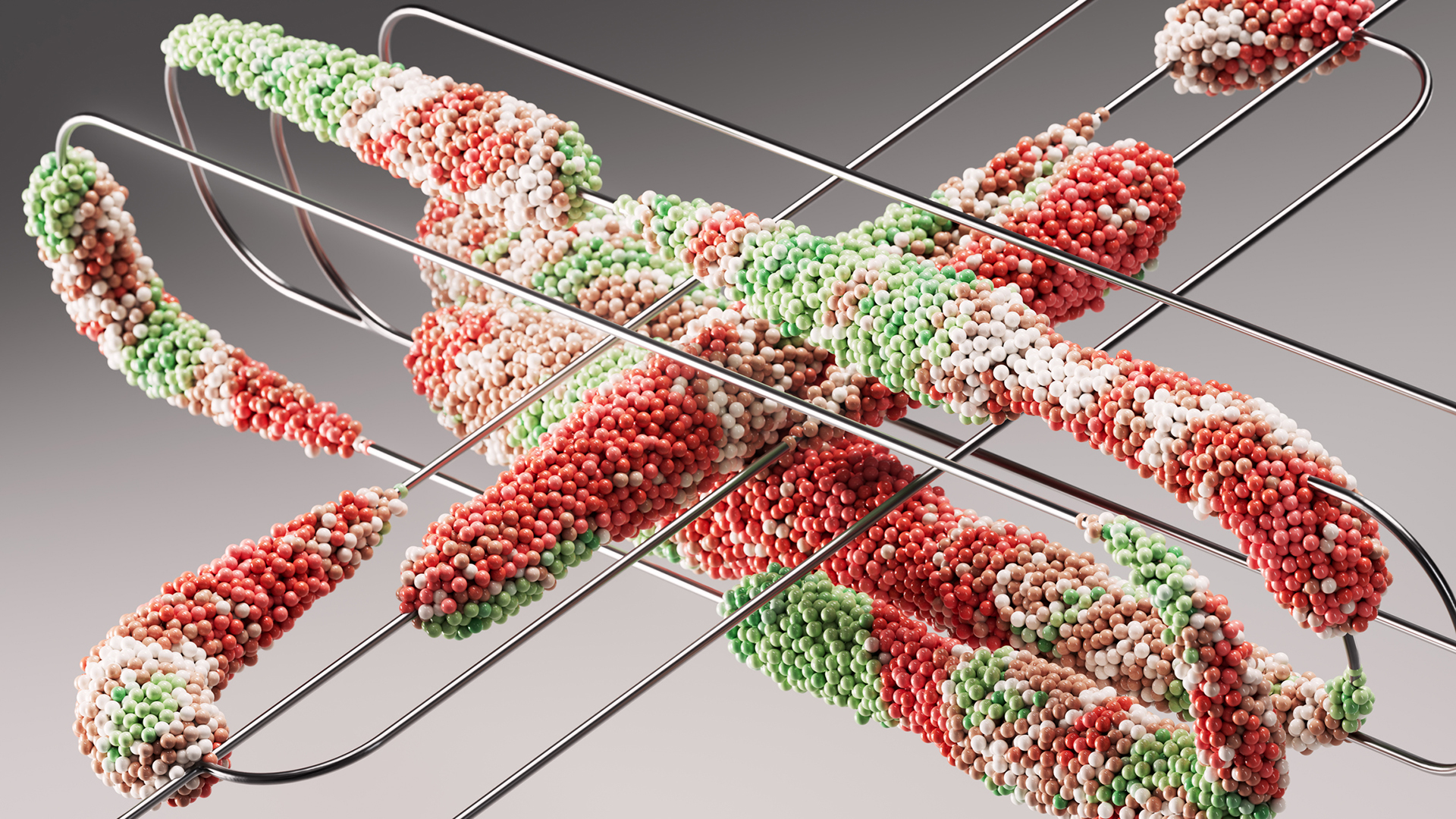
Now, researchers have developed a three-metal catalyst that tackles those long-standing problems in an unusual way. By pairing platinum and chromium atoms inside a silver matrix, they created tiny dumbbell structures known as heterometallic pair sites.
These atomic pairs selectively remove only the hydrogen atoms needed to convert ethanol into acetaldehyde while suppressing the deactivation pathways seen in comparable platinum-silver and chromium-silver catalysts.
“Our catalyst solves an important problem in chemistry because it completes a selective dehydrogenation: Instead of stripping away all of the hydrogen atoms, it removes just the ones necessary,” Anatoly Frenkel, one of the study authors and a chemist at Stony Brook University, said.
Moreover, since the process starts with ethanol that can be produced from biomass such as crop residues, forestry waste, and food waste, it could also provide a more sustainable alternative to conventional petrochemical production.
Catalysts speed up chemical reactions without being consumed, but making one that is both fast and selective is difficult. In ethanol dehydrogenation, conventional catalysts often keep reacting after removing the required hydrogen atoms, triggering unwanted reactions.
Over time, they can also become coated with carbon deposits, known as coking, or undergo structural changes that reduce their performance.
To overcome these problems, the researchers turned to quantum mechanical calculations, which predicted that platinum and chromium atoms would naturally pair up when dispersed inside silver.
“Prior quantum chemical calculations and surface science experiments by our collaborators showed that platinum-chromium pairs form preferentially in silver and exhibit electronic structures distinct from isolated platinum and chromium sites, enabling unique surface chemistry,” Jason Weaver, one of the study authors and a chemist at the University of Florida, said.
The team then fabricated thin films of the alloys to test whether these predicted atomic pairs actually formed.
The researchers combined several advanced techniques to examine the catalyst from the inside out. At Brookhaven National Laboratory’s National Synchrotron Light Source II, X-ray absorption fine structure (XAFS) measurements confirmed that platinum and chromium atoms had indeed paired together throughout the silver host.
The catalyst’s surface was then analyzed at Sweden’s MAX IV synchrotron using surface-sensitive XAFS and ambient-pressure X-ray photoelectron spectroscopy (AP-XPS), which allowed scientists to observe the catalyst while it was actively converting ethanol.
These measurements showed that only catalysts containing platinum-chromium pairs efficiently produced acetaldehyde.
Additional scanning transmission electron microscopy (STEM) mapped the distribution of platinum and chromium atoms inside the silver matrix, providing further evidence that the unusual atomic arrangement was responsible for the catalyst’s behavior.
“Combining this with the local bonding information from surface-sensitive XAFS gives a really complete picture of the state of the catalyst and how this affects its performance,” Lindsay Merte, one of the study authors and an associate professor of physics at Malmö University, said.
Catalytic tests showed that the trimetallic platinum-chromium-silver catalyst became active at around 200°C and steadily increased its activity up to 350°C, where it selectively converted ethanol into acetaldehyde and hydrogen, with mass spectrometry identifying these as the dominant gaseous products.
In contrast, platinum-silver catalysts accumulated carbon deposits that blocked active sites, while chromium-silver catalysts became less effective because of oxidation.
The platinum-chromium pairs greatly suppressed both of these deactivation pathways, allowing the catalyst to remain active for longer.
The researchers also found that these heterometallic pair sites stayed stable even at relatively high active-metal loadings, addressing a common limitation of many atomically dispersed catalysts.
Previous studies had suggested that carefully designed pairs of different metals could outperform isolated single atoms, but this work provides experimental evidence that such heterometallic pair sites can operate under realistic reaction conditions.
The study offers a new blueprint for catalyst design. Instead of searching for entirely new materials, scientists may be able to create longer-lasting, more selective catalysts simply by arranging familiar metals in new atomic partnerships—a strategy that could benefit not only ethanol dehydrogenation but many other industrial chemical reactions as well.
However, the catalyst has so far been demonstrated only as a model thin-film system, so additional work will be needed before it can be adapted for industrial reactors.
The researchers’ next goal is to translate the same atomic design into high-surface-area nanoparticles, which are better suited for large-scale chemical manufacturing.
The study is published in the journal Angewandte Chemie.
 Curiosity stumbled onto something we've never seen before.
 China's relationship with sand is simply dazzling.

The race to build larger and more powerful quantum computers has mostly focused on engineering: adding more qubits, reducing noise, and keeping fragile quantum states alive. However, a new theoretical study suggests that another, largely overlooked problem may emerge as these machines grow.
Researchers at the Helmholtz-Zentrum Dresden-Rossendorf (HZDR) have found that a strange quantum phenomenon known as the quantum Zeno effect could cause certain quantum computers to slow dramatically—or in the worst case, nearly stop computing altogether.
“For quite generic conditions, we find that the quantum Zeno effect poses strong limitations on the performance” of quantum systems, the study authors note.
Rather than exposing a flaw in today’s devices, this research work identifies a fundamental scaling challenge that designers may have to confront as quantum computers become larger.
In their new study, the HZDR team says the effect could become especially important for adiabatic quantum computers, a class of machines widely studied for solving optimization problems, searching massive datasets, and simulating molecules.
The quantum Zeno effect is one of quantum mechanics’ most counterintuitive ideas. It predicts that repeatedly measuring a quantum system can prevent it from changing its state, effectively freezing its evolution.
The concept has been studied experimentally for decades. Earlier research works explored this phenomenon mainly in isolated laboratory systems or as a way to deliberately control quantum states. For example, a theoretical work showed that continuous measurements can trap quantum systems within specific states.
The HZDR researchers asked a different question—what if a quantum computer experiences this effect unintentionally?
Adiabatic quantum computers work differently from gate-based quantum computers. Their “algorithms are considered robust and can be executed by quantum computers largely independently of the hardware that is used,” Ralf Schützhold, one of the study authors and the director of the Institute of Theoretical Physics at HZDR, said.
Instead of performing a sequence of quantum logic operations, they gradually reshape an energy landscape while keeping qubits in their lowest-energy, or ground, state. If this transformation is slow enough, the ground state naturally evolves into the solution to the problem being solved.
To investigate, they built a theoretical model of an adiabatic quantum computer interacting with a realistic environment. In practice, no quantum processor is perfectly isolated. Even inside refrigerators cooled to temperatures just above absolute zero (−273.15°C), tiny amounts of heat, electromagnetic radiation, or other external influences still interact with qubits.
These interactions cause decoherence, gradually disrupting the delicate quantum properties such as superposition and entanglement—that give quantum computers their power. In effect, the surrounding environment behaves like an unintended detector that continually checks the qubits’ state, even though nobody is intentionally measuring them.
The team analyzed the adiabatic version of Grover’s search algorithm, a famous quantum algorithm that searches unsorted databases much faster than classical methods.
In adiabatic computing, the algorithm starts with an easy-to-prepare quantum state and then slowly transforms the system’s governing energy landscape, known as the Hamiltonian, until the ground state represents the desired solution. If the transformation is sufficiently slow, the qubits naturally remain in the ground state throughout the computation.
Their calculations revealed that scaling creates an unexpected vulnerability. As the problem size grows, the minimum energy gap separating the ground state from higher-energy states can become increasingly small.
As these energy differences shrink, the computation must proceed more slowly to remain adiabatic. Since the computation takes longer while environmental disturbances continue acting at roughly the same rate, the quantum Zeno effect becomes increasingly likely.
“Each disturbance acts like an unwanted measurement, slowing down the system’s evolution. In the worst case, a calculation could even freeze completely,” Gernot Schaller, one of the study authors and the head of Quantum Technologies at HZDR’s Institute of Theoretical Physics, said.
Much like a cake rises properly only if the oven remains closed, constantly opening the door to check on it interrupts the baking process, causing the cake to stop rising or even collapse. In the same way, repeated environmental disturbances keep interrupting the natural evolution of the quantum state before it can reach the desired endpoint.
More importantly, the study does not suggest that all quantum computers face the same limitation. The work focuses on adiabatic quantum algorithms and related approaches such as quantum annealing, where the computation relies on gradually crossing small energy gaps.
The study is theoretical rather than experimental, so the findings still need to be explored in real quantum hardware.
However, the researchers say the problem can be mitigated by improving shielding against heat and electromagnetic interference and by using techniques such as spin echo, which applies carefully timed pulses to reduce interactions between qubits and their environment.
The findings also suggest that scaling quantum computers will require more than simply adding qubits. Future systems may need better protection from environmental noise and smarter control techniques to reduce the risk of the quantum Zeno effect becoming a bottleneck.
The study is published in the New Journal of Physics.
 Not all poop piles look alike. One stubborn worm builds towers.
