❌

Reading view

Google’s DeepMind Quietly Hiring Nuclear Physicists

Top AI labs have been hiring subject matter experts across academic disciplines for years at this point — often turning them into glorified fact-checkers whose labor is used to train the AI models of tomorrow. Still, Google’s latest job listing is odd, even by those admittedly strange standards, and may reveal a lot about the future big tech has in mind for humanity.

As reported by the tech industry publication Data Center Dynamics, Google’s AI research lab, DeepMind is now hiring a team of “highly qualified physicists and nuclear engineers” for the role of “nuclear subject matter expert in the Chemical, Biological, Radiological, Nuclear, and high-yield Explosives team within the Responsible Development and Innovation team.”

According to the job listing, interested candidate should have a PhD in a field like plasma physics or nuclear engineering, or else “equivalent practical experience,” on top of experience collaborating with a US government lab and familiarity with policy related to “stockpile stewardship, nonproliferation, arms control, or threat reduction” — and that’s just at a minimum.

Ideally, Google says it would prefer its candidates to also have experience to have experience working with AI safety, as well as expertise in computational modeling, experience working at “major laser user facilities,” or the ability to design evaluations and mitigations that are “demonstrably unclassified and non-export controlled by developing dual use science proxies for weapons topics.”

The lucky candidates will be offered a salary in the ballpark of $174,000 to $252,000, with a 15 percent bonus on top.

The job won’t be easy, however. As the listing notes, the role involves evaluating safety risks of so-called “frontier AI models” in the “nuclear domain.” Specifically, this means “model assistance in fission, fusion, and thermonuclear weapons proliferation, radiation hydrodynamics, magnetohydrodynamics, etc. in a demonstrably unclassified and non-export controlled manner.”

Put together, it reads as if Google’s top AI research lab expects the company’s AI tools to start churning out actionable instructions for developing nuclear devices, and is now hiring nuclear physicists to help spearhead the defense efforts.

How serious the scenario is remains to be seen — but Google is clearly willing to put its money where its mouth is.

More on Google: The Tech Industry’s Aggressive Push to Integrate AI Into Schools Is Turning Into a Disaster

The post Google’s DeepMind Quietly Hiring Nuclear Physicists appeared first on Futurism.

  •  

Startup taps underwater volcano as energy source in "proof point" test

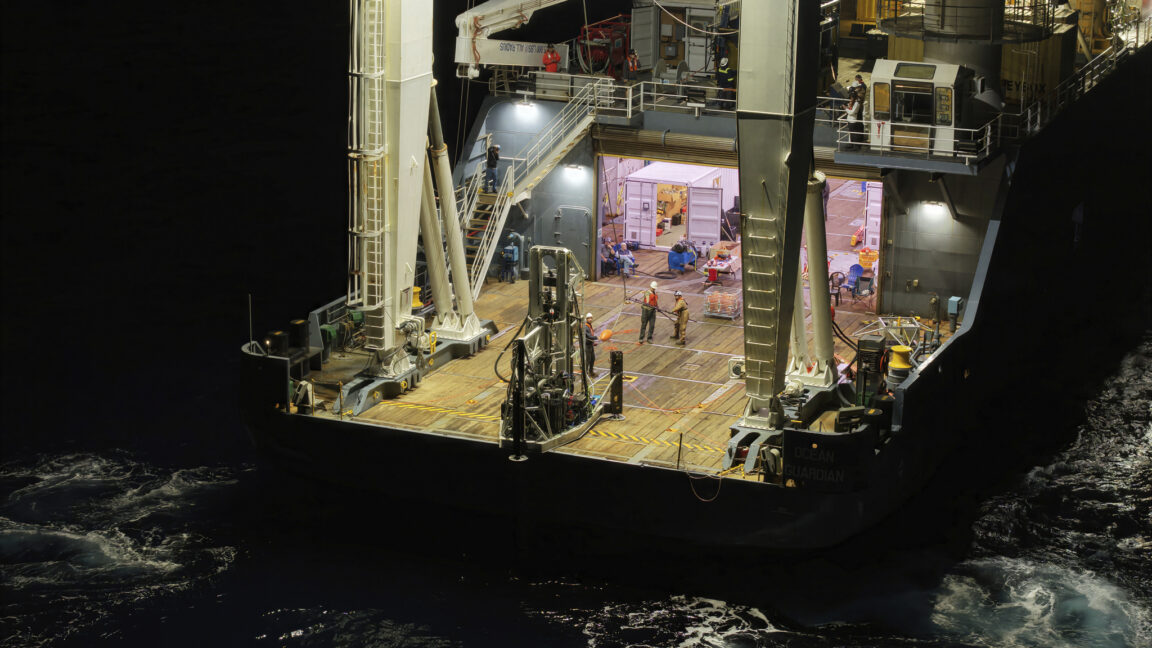
The world’s first demonstration of a subsea geothermal power plant has taken place near an active underwater volcano almost a mile below the ocean surface. It generated less than 10 seconds of net-positive electricity but showed the technical feasibility of tapping another form of renewable energy underwater.

The three-week test deployment of the 3-ton prototype power plant took place at the Axial Seamount in the northeast Pacific Ocean in September. Endurance Energy, the Seattle-based startup behind the effort, aims to eventually commercialize subsea geothermal power for Pacific island nations and other customers looking for alternatives to importing expensive fossil fuels.

“The deep ocean gives us unlimited cold seawater for cooling, and its weight keeps the system and the well pressurized, so our plants can be compact,” said Andrew Redd, founder and CEO of Endurance Energy, in an email to Ars.

Read full article

Comments

© Endurance Energy

  •  

You Know That Terrifying Global Warning Threshold They’ve Been Worried About for a Decade? Climate Change Is Speeding Up So Much That Now We’re Due to Cross It In Just Over a Year

In December 2015, 195 countries at the UN Climate Change Conference signed the Paris Agreement, a legally binding international treaty on climate change. The treaty’s overarching goal was to keep the “temperature increase to 1.5 degrees Celsius above pre-industrial levels.”

While unquestionably meant well, the agreement has quickly turned into little more than a footnote as global warming has stormed ahead. Scientists have long warned that we’re on a path to blaze past that foreboding threshold in a matter of years, possibly by 2030.

And now, according to the latest projections, that day is poised to come even sooner. In a new article in the journal Climate and Atmospheric Science, two researchers from the University of Kansas claim that a recent doubling in the rate of global warming means that we could blow past the Paris Agreement threshold as soon as 2028.

The researchers analyzed temperature records through last year and observed a “statistically significant doubling of the global warming rate” between 2011 and 2025, compared to the period between 1971 and 2025.

“Extrapolating this accelerated rate projects a crossing of the 1.5 degrees Celsius threshold by 2028, nearly a decade earlier than previous estimates,” they concluded. “These findings suggest a narrower window remains to limit warming to 1.5 degrees Celsius, underscoring the urgency for rapid and substantial reductions in greenhouse gas emissions.”

Realistically, it’s hard to imagine that we won’t fail to stop the warming in time.

“However, the inertia of existing political, economic, and technological systems3 limits the pace at which such actions can be implemented, narrowing the remaining window for achieving the 1.5 degrees Celsius target,” the researchers concluded in their paper.

The United States, long among the biggest carbon polluters on the planet, has not only officially withdrawn from the Paris Agreement twice during Donald Trump’s terms as president, but his administration has actively reversed environmental laws while giving the fossil fuel industry free rein through deregulation.

It’s a sad state of affairs that the UN Environment Program appears to be painfully aware of. In a new Emissions Gap Report, published today, the body found that “new climate pledges under the Paris Agreement have only slightly lowered global temperature rise over the course of this century.”

“Given the size of the cuts needed, the short time available to deliver them and a challenging political climate, a higher exceedance of 1.5°C will happen, very likely within the next decade,” the report reads.

Worse yet, we have the tools to make substantial cuts to greenhouse emissions — but we’re not using them due to a lack of incentives.

“The required low-carbon technologies to deliver big emission cuts are available,” the report concludes. “Wind and solar energy development is booming, lowering deployment costs.”

“This means the international community can accelerate climate action, should they choose to do so,” it continues. “However, delivering faster cuts requires would require navigating a challenging geopolitical environment, delivering a massive increase in support to developing countries, and redesigning the international financial architecture.”

More on climate change: Amid Terrifying Readings, Experts Fear El Niño Is About to Wreak Havoc

The post You Know That Terrifying Global Warning Threshold They’ve Been Worried About for a Decade? Climate Change Is Speeding Up So Much That Now We’re Due to Cross It In Just Over a Year appeared first on Futurism.
  •  

California Wildfires Damage Homes, Exmoor Dark Skies Festival Marks a Decade — Today’s Environmental Briefing for Sat, Oct 17 2026

Firefighters work in a smoky, burned forest beside a road.

Environmental change is being measured in forests cleared, crops stressed and species pushed from their habitats. But the response is also being shaped by decisions about money, land and technology, and by people trying to protect both livelihoods and the places they depend on.

Brazil’s latest figures offer one of the clearest signs of progress: forest clearing in the Amazon fell to 3,335 square kilometers in the year ending July 31, 2026, 42% below the previous year and the lowest level since records began in 1988. The Cerrado also saw a decline. The drop comes ahead of a presidential run-off in which the rainforest’s future is a key issue. Whether the reduction lasts remains uncertain.

Elsewhere, the costs of adapting to environmental pressures are immediate. Drought has left England’s pumpkins smaller than usual, with growers warning the crop could be the worst on record. In Southern California, wildfires have damaged or destroyed six homes, while a firefighter suffered heat exhaustion. And in the UK, proposals to cut hundreds of millions of pounds from the heat pump grant scheme could affect support for households switching from gas, oil or LPG boilers.

These stories sit alongside questions about what governments choose to prioritize. US voters in battleground states want candidates to discuss climate change, but candidates have largely stayed quiet. In Britain, Chancellor John Healey has made a growth case for Heathrow’s proposed third runway, while the prime minister has not backed the project. The government is studying consultation responses. The choices are practical as well as political: how to cut emissions, where to direct public funds and whose concerns shape decisions.

On the ground, communities are building their own responses. In Sergipe, women shellfish gatherers are resisting mangrove degradation and fighting for access to the areas where they work. In coastal Indonesia, Wisye Sahambangung leads a women’s group restoring mangroves and creating economic opportunities. Their work connects habitat protection with income and access to natural resources.

Other reports show how easily conservation efforts can create new pressures. Researchers found fewer wild pollinators in areas with higher concentrations of honeybees, which were observed bumping into or chasing other pollinators from flowers. The finding complicates the idea that more beekeeping automatically helps pollinators. In western states, efforts to reduce wolf numbers raise questions about the animals’ social lives and their role in nature. Meanwhile, countries are falling short of pledged funding and ocean-protection goals ahead of the UN biodiversity conference, COP17.

Technology and spectacle bring their own questions. Starlink’s reported restrictions in Ukraine have prompted US senators to seek an investigation into who imposed them, while the service remains important to Ukraine’s wartime operations. At a different scale, Belfast Harbour is to test zero-emission transport and energy systems with £15m in funding.

The Exmoor Dark Skies Festival, with about 80 events planned, offers another way people encounter the natural world: through walks, astronomy sessions and moonlit swims. The weeks ahead will show whether policy commitments match the scale of environmental pressures, and whether local efforts can endure with the resources and access they need.

The post California Wildfires Damage Homes, Exmoor Dark Skies Festival Marks a Decade — Today’s Environmental Briefing for Sat, Oct 17 2026 first appeared on EnviroLink Network.

  •  

Hurricane Polo Explodes in Pacific, UK Aphid Swarm Wipes Out 30 Million Lettuces, Glasgow Braces for Rubbish Pileup — Today’s Environmental Briefing for Thu, Sep 24 2026

Satellite view of Hurricane Polo swirling over the Pacific Ocean with visible eye structure

Across the stories today, a common thread emerges: the planet is speaking in signals — some subtle, some deafening — and the question is whether our institutions can listen fast enough to act.

Start with the signals themselves. El Niño has surged to record strength weeks ahead of schedule, and its fingerprints are already visible — from Hurricane Polo’s explosive intensification in the Pacific to the climate volatility rippling through global weather systems. In the UK, an aphid outbreak wiped out 30 million lettuce heads almost overnight, a small but telling example of how shifting conditions can upend food systems in ways no one budgets for. In Malawi, an unexplained weed overgrowth has choked Chia Lagoon, stranding farmers and fishers in flooded fields nearly seven months after the rains should have drained. These aren’t isolated oddities. They’re the planet’s early warning system, written in crop yields and clogged waterways.

Then there’s the human response — uneven, but not absent. Germany’s landmark pledge to phase out fossil fuels by 2045 marks a rare moment of policy catching up to urgency, moving beyond vague “carbon neutrality” language toward something more concrete. The UK’s decision to declassify a once-suppressed intelligence report — warning that climate breakdown is a direct threat to global security — suggests governments are quietly acknowledging what scientists have said for years, even if political will lags behind. And at UN climate talks in New York, amid what The Guardian describes as a genuinely grim mood, solar power’s continued growth offered rare, tangible hope. As Al Gore noted twenty years after An Inconvenient Truth, he’s surprised by the ferocity of fossil fuel pushback — but still believes, cautiously, that the fight can be won.

Behind the numbers are real communities adapting in real time. In the Andes, villagers near Villa de Arma are turning to ancient wetland systems as glaciers they once walked across vanish into bare rock. In Guam, resident Leevin Camacho learned his family’s water contained a pesticide banned since 1987 — a stark reminder that militarization and environmental cost are often intertwined, especially in the Pacific. And in Sarawak, Indigenous communities are still reckoning with displacement from the Bakun megadam three decades later, a cautionary tale as the world races toward a “clean” energy future that doesn’t always ask who pays for it.

It’s a reminder that progress and pressure often arrive together. Endangered birds on South Australia’s Eyre Peninsula won last-minute protection from a rocket launch site — a genuine conservation victory — even as a Norfolk Broads housing levy was quietly slashed, raising fears that environmental safeguards elsewhere are eroding. Meanwhile, olive ridley sea turtles nesting for the first time ever on California beaches offer something rarer: wonder. A signal, too, but one that invites curiosity rather than alarm — proof that the natural world is still capable of surprising us.

As the week unfolds, all eyes will be on whether momentum from Climate Week — bolstered even by a monster from Sesame Street reminding children it’s okay to feel both fear and courage — translates into follow-through. The data, the disasters, and the small human stories all point the same direction: the era of asking “if” is over. What remains is the harder work of “how fast,” and “for whom.”

The post Hurricane Polo Explodes in Pacific, UK Aphid Swarm Wipes Out 30 Million Lettuces, Glasgow Braces for Rubbish Pileup — Today’s Environmental Briefing for Thu, Sep 24 2026 first appeared on EnviroLink Network.

  •  

Amid Climate Gloom at UN Talks, Solar Power Offers a Rare Ray of Hope

Amid Climate Gloom at UN Talks, Solar Power Offers a Rare Ray of Hope

As climate experts gather in New York this week for another round of high-stakes negotiations, the mood is grim. This year is on track to set a new global temperature record, and next year could break it again as El Niño intensifies. The planet has lurched from one disaster to the next: deadly European heatwaves, catastrophic flooding in Nepal that has erased entire communities, and unsettling new research suggesting the Atlantic Ocean’s major current systems may be approaching a dangerous tipping point. Despite the mounting evidence and urgency, political will to act remains stubbornly weak.

Yet amid this bleak landscape, there is one source of genuine optimism: solar power. Unlike political negotiations, which move at a glacial pace, solar technology has advanced rapidly and become dramatically cheaper, making clean energy more accessible than ever before. Advocates are now pushing world leaders to commit to an ambitious but achievable goal — bringing solar power to every corner of the globe by 2030.

The road ahead won’t be easy. Confronting entrenched fossil fuel interests and inertia among the powerful takes courage. But there’s a unifying truth that cuts through the complexity of climate politics: every person on Earth lives under the same sun. That shared reality, advocates argue, can become a source of collective strength — a reminder that the tools to address the climate crisis already exist and are within reach, if only the political will can catch up with the technology.

The post Amid Climate Gloom at UN Talks, Solar Power Offers a Rare Ray of Hope first appeared on EnviroLink Network.

  •  

US Confirms Orbital Weapon, Essex Wildlife Habitat Threatened by Data Centre — Today’s Environmental Briefing for Wed, Sep 16 2026

Illustration of a military satellite weapon orbiting Earth above rare UK wildlife habitat threatened by development

Across the stories today, a common thread emerges: the boundaries we once drew around “the environment” — between land and sea, sky and orbit, economy and ecology — keep dissolving, revealing how deeply intertwined these systems have become.

Start with the sky, in more ways than one. The US government’s confirmation that it has deployed a weapon in Earth’s orbit marks a genuine turning point, not just for defense policy but for how we think about the commons above our heads. Space has long been treated as neutral ground; now it’s becoming contested territory, raising quiet but urgent questions about debris, escalation, and what “environment” even means when it extends past the atmosphere. Meanwhile, back on solid ground, the UK’s climate advisers delivered a pointed message to Heathrow: a third runway cannot proceed unless airlines help pay for the emissions it would unleash, potentially through carbon removal costs. It’s a small but telling signal that growth and climate accounting are becoming inseparable in policy conversations — expansion is no longer a given, even for infrastructure long considered inevitable.

That tension between growth and limits runs through much of today’s coverage. A Guardian analysis found that the world’s twenty largest private equity firms back energy portfolios emitting more greenhouse gases than all but three countries on Earth — a stark reminder that climate accountability often hides behind layers of finance most people never see. In Venezuela, a US-backed push for “legitimate” mining and a new oil megadeal are drawing warnings from environmental and human rights groups who see familiar risks dressed in new language. And in Guinea-Bissau, industrial fishmeal factories are quietly hollowing out a food fish that coastal communities have relied on for generations. Behind the numbers are real communities adapting in real time — from Vietnamese fishers losing thousands of dollars per vessel to tangled plastic waste, to Dhaka residents like Yeasmin Begum, who has spent her life breathing the smoke of a landfill she never chose to live beside.

Yet alongside these pressures, the day’s coverage also points to growing momentum around resilience and repair. Ukrainians are turning to rooftop solar to keep homes running amid bombardment — a portrait of adaptation born from necessity. A Congolese NGO now co-manages a national reserve for the first time, a homegrown model of stewardship. Moon bears rescued from bile farms are stretching their limbs in Suffolk enclosures, and three wild dog brothers wandered 2,500 miles across Zambia in search of a mate, offering an unlikely note of hope for their species. Even Griffith Park’s mountain lion — photographed beneath the Hollywood sign — helped inspire the world’s largest wildlife crossing, proof that a single image can shift infrastructure decisions.

It’s a reminder that progress and pressure often arrive together. Some communities are innovating their way through crisis; others, like the land defenders now forming self-defense units amid rising violence, are simply trying to survive it. As Brazil’s upcoming election looms over the Amazon’s future, and Chief Raoni Metuktire — one of its most storied protectors — enters palliative care, the coming months may reveal whether today’s momentum toward stewardship can outpace the forces pulling the other way.

The post US Confirms Orbital Weapon, Essex Wildlife Habitat Threatened by Data Centre — Today’s Environmental Briefing for Wed, Sep 16 2026 first appeared on EnviroLink Network.

  •  

Top 20 Private Equity Firms Emit More Greenhouse Gases Than Most Countries, Report Finds

Top 20 Private Equity Firms Emit More Greenhouse Gases Than Most Countries, Report Finds

The world’s 20 largest private equity firms are bankrolling energy portfolios that pump out 1.5 billion tons of greenhouse gases annually, a new report reveals — a carbon footprint larger than every country on Earth except China, the United States, India and Russia.

These firms collectively oversee a staggering $7.3 trillion in assets, giving them enormous influence over how quickly, or slowly, the world moves away from fossil fuels. With that kind of financial firepower, they could be leading the charge toward renewable energy. Instead, many continue pouring money into natural gas plants and coal-fired power stations, some of which are being built specifically to feed the electricity-hungry datacenters that power artificial intelligence and cloud computing.

The findings highlight a growing tension at the heart of the clean energy transition: as demand for computing power explodes, so does the pressure to generate more electricity fast, and fossil fuels remain the quickest option for many investors. Critics argue that private equity firms, largely operating outside the public spotlight and free from the shareholder pressure that public companies face, have less incentive to prioritize emissions reductions over short-term returns.

The report raises pointed questions about accountability in an industry that touches nearly every corner of the global economy but faces far less scrutiny than publicly traded corporations. As the climate crisis intensifies and energy demands continue to climb, watchdogs say the outsized emissions from these financial giants deserve far more public attention than they currently receive.

The post Top 20 Private Equity Firms Emit More Greenhouse Gases Than Most Countries, Report Finds first appeared on EnviroLink Network.

  •  

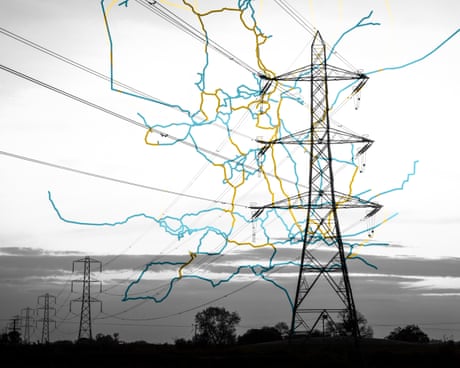
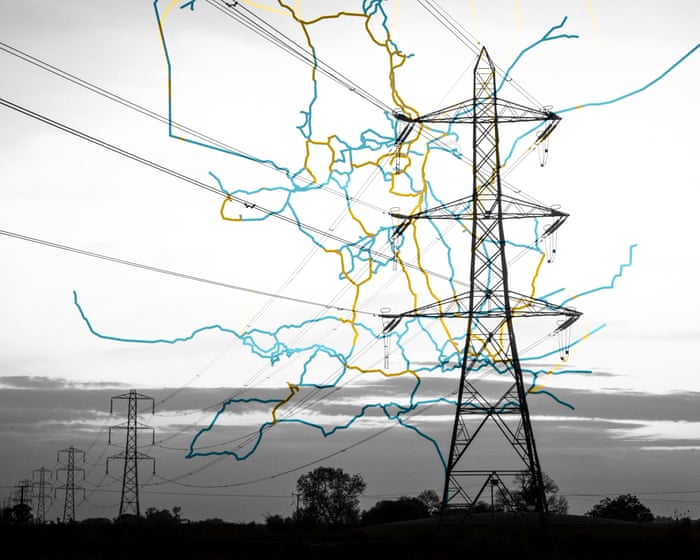
Mapped: the £150bn megaproject that aims to protect Britain from energy shocks

Thousands of miles of new power lines are needed to deliver climate targets and energy security, but bills will rise in the short term and opponents are mobilising

Britain is embarking on one of the largest overhauls of its electricity grid in generations – a megaproject in which five times more infrastructure will be built by 2030 than was constructed during the previous three decades.

Tens of billions of pounds are being spent on new pylons, subsea cables and converter stations to connect a growing fleet of wind and solar farms and carry clean power to where it is needed.

Continue reading...

© Composite: Prina Shah for the Guardian / Getty Images

© Composite: Prina Shah for the Guardian / Getty Images

© Composite: Prina Shah for the Guardian / Getty Images

  •  

Oracle tries to appease Stargate data center opponents with renewables push

Oracle’s proposed investment in 2 gigawatts of renewable energy projects for New Mexico comes as local opposition could delay development of the Project Jupiter data center that Oracle is building for OpenAI.

The two tech companies are developing the $165 billion Project Jupiter data center in Santa Teresa, New Mexico, as part of the broader Stargate AI infrastructure project announced by President Donald Trump in 2025. But Project Jupiter faces local protests and court battles over concerns about its environmental impacts—and the latest Oracle announcement on September 8 seeking proposals for renewable energy projects does not change the fact that the data center will be powered by fuel cells that consume natural gas.

“Like all matching programs, this would be synthetic in the sense that 2 GW of renewables wouldn't directly power the data center,” wrote Michael Thomas, CEO of the Cleanview data platform that tracks renewable energy and data center projects, in a LinkedIn post.

Read full article

Comments

© STACK Infrastructure

  •  

UK chancellor urged to remove ‘hidden taxes’ from energy bills

Businesses, charities and other groups sign letter calling for levies to be paid by the government

More than 120 organisations including big businesses and charities have called for the removal of “hidden taxes” added to energy bills to help reduce costs for consumers and prevent businesses closing.

In a letter to the chancellor the signatories – including Energy UK, business trade body the CBI, End Fuel Poverty and Age UK – called for levies amounting to 10% of energy bills that fund policies to be paid for by the government. John Healey is to present his first budget on 28 October.

Continue reading...

© Photograph: Christopher Thomond/The Guardian

© Photograph: Christopher Thomond/The Guardian

© Photograph: Christopher Thomond/The Guardian

  •  

Speed up electricity grid upgrade or else face higher bills, warns UK watchdog

National Audit Office says failure to implement £70bn modernisation would also hold back economic growth

Consumers will pay higher energy bills unless the UK government speeds up work on a vast programme of upgrades to the electricity grid to enable the switch to renewables, the public spending watchdog has warned.

The National Audit Office (NAO) said that without faster action the extra costs associated with managing the ageing power network, which are ultimately passed on to the public, could reach £7.8bn a year by 2030.

Continue reading...

© Photograph: Alan Majchrowicz/Getty Images

© Photograph: Alan Majchrowicz/Getty Images

© Photograph: Alan Majchrowicz/Getty Images

  •  

The Iran War Is Pushing Global Coal Use to Record Highs

Five years after virtually every world leader agreed to “phase down” the burning of coal for climate reasons, the fuel is more widely used than ever.

© Ahmad Mulia Panjaitan/Associated Press

Coal barges in East Kalimantan, Indonesia, last month.
  •  

UK’s New North Sea Drilling Push Sparks Questions Over Climate Costs and Tiny Job Gains

UK’s New North Sea Drilling Push Sparks Questions Over Climate Costs and Tiny Job Gains

A fresh round of North Sea oil and gas approvals is raising eyebrows, with critics questioning why officials would expend so much political capital for such minimal economic return. The pattern feels familiar: significant political risk taken on for gains that appear vanishingly small once the numbers are examined closely.

The justification offered so far has been vague at best—essentially, that untapped resources exist and shouldn’t be ignored while people face economic hardship. But if the reasoning hinges on supporting struggling oil and gas workers, the math simply doesn’t add up. The Jackdaw gasfield, expected to receive approval imminently, will create just 27 direct full-time jobs. The Rosebank oilfield, likely to follow, will support an estimated 450 UK-based positions over its entire operational lifetime.

Compare these figures to the broader picture: the UK’s net zero economy already employs 300,000 people directly, with plans for 400,000 additional jobs in the pipeline. The wider green economy sustains more than 600,000 jobs altogether. Given these numbers, a just transition strategy—one that moves fossil fuel workers into the growing renewable energy sector—would seem to offer far better outcomes for workers and communities alike than doubling down on new drilling projects that promise so little in return.

The decision arrives at a moment when climate impacts are increasingly difficult to ignore, making the calculus behind expanding fossil fuel extraction even harder to justify on economic grounds alone.

The post UK’s New North Sea Drilling Push Sparks Questions Over Climate Costs and Tiny Job Gains first appeared on EnviroLink Network.

  •  

Nature’s Own Climate Feedback Loops Could Amplify Global Warming by 30%, Study Warns

Nature’s Own Climate Feedback Loops Could Amplify Global Warming by 30%, Study Warns

Earth’s forests, wetlands and frozen tundra are undergoing a troubling transformation, and new research suggests the consequences could dramatically accelerate the pace of global warming. A study has found that as fossil fuel emissions continue to heat the planet, natural ecosystems that once helped absorb and store carbon are increasingly releasing it instead—potentially intensifying climate change by as much as 30%.

The mechanism driving this alarming trend is a set of self-reinforcing feedback loops. Rising temperatures are thawing permafrost across the Arctic and other high-latitude regions, unlocking ancient stores of methane and carbon dioxide that have been trapped in frozen ground for millennia. Meanwhile, hotter, drier conditions are fueling more intense wildfires that tear through forests and wetlands, releasing carbon that took decades or centuries to accumulate. Warming lakes are also contributing to the problem, changing the chemistry of these ecosystems in ways that boost emissions.

What makes these findings particularly concerning is the cyclical nature of the problem: warming triggers the release of greenhouse gases from natural sources, which in turn drives further warming, creating a loop that could make climate change harder to control than previously understood. Researchers say this dynamic underscores the urgency of cutting fossil fuel emissions now, before these natural feedback mechanisms lock in additional warming that becomes increasingly difficult to reverse. The study adds to a growing body of evidence suggesting that climate models may need to account more fully for these amplifying effects from the natural world.

The post Nature’s Own Climate Feedback Loops Could Amplify Global Warming by 30%, Study Warns first appeared on EnviroLink Network.

  •  
❌