❌

Reading view

Some people really are werewolves—at least, in their minds

Dr. Nick Medford’s patient had plenty of reasons to be terrified of a simple blood test.

His body had shrunk down to a fraction of its size, or so he believed, and the physicians looming over him were enormous. Then there was the needle about to pierce his vein: to the patient’s eye, it was larger than his entire arm.

It might sound like something out of Alice in Wonderland. But this patient’s story belonged to a different genre entirely. Horror, namely. As far as the patient was concerned, there was no point in taking his blood. It was no longer human. Neither was he. 

Medford’s patient was suffering from clinical lycanthropy, defined as the delusional belief that one is turning into a werewolf. And unlike the flesh-tearing beasts of folklore, who terrorize the unsuspecting by the light of the full moon, patients like Medford’s are often the ones haunted, trapped inside a body-horror nightmare. 

According to Medford, his patient knew something was wrong, but was as confused about his condition as anyone. “Not only did he think he was a werewolf, but he would also talk about things like wanting to realign the cosmos and wanting to kill God,” says Medford, a neuropsychiatrist with the South London and Maudsley NHS Foundation Trust. 

“And then you would say, ‘Do you believe in God? Are you religious?’ And he’d say, ‘No.’ His ideas didn’t really make sense even to him, which was a part of his distress.”

So, what causes this rare condition? And why does it take the form of one of Halloween’s classic monsters? 

Rarer than movie werewolves

If you’ve never heard of clinical lycanthropy before, there’s a good reason: Hollywood’s werewolves easily outnumber the real-life cases of this condition. Only about 25 instances have been reported in the medical literature.

Because there are so few cases, Medford says it is difficult to identify a common cause or predictable disease course. However, he says that typically it is seen in patients already experiencing mental illness.

“In around 40 percent of published cases, it occurs in the context of schizophrenia,” Medford says. “There are also reports of it occurring in the context of bipolar disorder or psychotic depression. So, in the context of severe mental illness, basically.”

Wild man with long hair and ripped pants and shirt eats a baby as people flee in the background.
Experts debate whether German artist Lucas Cranach the Elder depicts a werewolf or a cannibal in this woodcut print from the 16th century. Image: Public Domain

Medford’s own patient had been diagnosed with Huntington’s disease, an inherited, fatal brain disease that causes psychiatric symptoms and uncontrolled body movements. The case, which Medford documented in a 2023 report, was the only published instance of clinical lycanthropy associated with Huntington’s. Although Medford says it is uncertain what then led his patient to believe he was a werewolf, he says the physical changes associated with Huntington’s may have fed this idea. 

“There may be some change in the person’s body or in their perception or their experience of their body,” Medford says. “That might be, if you like, the seed from which this idea can develop.”

This seems possible in the case of Medford’s patient, who exhibited involuntary writhing movements and other strange physical sensations.

“He did not seem to be aware that he was having these abnormal movements, but he was aware of some weird sensations,” he says. “He described freezing sensations and electric-shock-like sensations. He had some sense that something strange was happening in his body.”

Why wolves?

But physical changes alone don’t explain why the patient imagined he was turning into a werewolf. Which raises the question: Why do these delusions so often focus on lupine metamorphoses?

They don’t always, Medford notes. There’s a broader term—therianthropy—for the delusion that one has turned into any animal. But most of these cases involve canines, he acknowledges.

“Most of them are wolves or dogs or something of that type,” he says. “And then there’s a whole range of other strange things. There’s a report of someone who thought they’d turned into a bee.” That would make for an underwhelming horror movie, to be sure. 

So, is it a coincidence that many of these patients report delusions ripped straight from a creature feature? 

Probably not. In their case report, Medford and his co-author, neuroscientist Natasha Sigala, note that “delusions are influenced by culture,” and few cultural images of human/animal shapeshifting are as deeply embedded as the werewolf.

“The werewolf folklore and werewolf mythology goes right back to antiquity,” Medford says. “And it’s kind of interesting that the werewolf or something like it seems to pop up in a lot of different cultures and different times and places.”

Headshot of actor in werewolf makeup with large pointed teeth and scarf.
American actor Henry Hull poses for a publicity portrait for his 1935 film Werewolf of London. Image: Getty Images / Stringer / Archive Photos

Why is the werewolf legend so potent and enduring? Medford suspects it may tap into something primal. 

“The werewolf symbolizes something about the human condition,” he says. “We live in civilized societies, and we adhere to social norms, but there’s a sort of animal part of us that perhaps chafes against that.”

That internal conflict may explain some of the patient’s other fixations. He described urges to strangle his wife and to defecate in a church. Medford notes that Huntington’s may also have impaired his sense of disgust, which can happen as the disease progresses.

Yet the patient also fought against his own impulses. At times, he lunged at staff, only to pull back and apologize.

“You could see the conflict in that moment,” Medford says. In that sense, the patient wasn’t so far from the werewolves of fiction. Like a movie werewolf beholding his mirror image in horror, he looked at his reflection and saw himself changing in ways he couldn’t control. 

The werewolf fades 

For Medford’s patient, that dreaded blood test ultimately was part of a turning point in his treatment. The bloodwork allowed Medford to keep the patient on clozapine, a potent antipsychotic. As Medford increased the dose, the patient’s delusional beliefs dwindled, and although the underlying Huntington’s disease remained, the werewolf soon was gone.

Medford hopes patients like his will be treated with compassion rather than sensationalism. “These cases, they’re rare, but when they do happen, they tend to arise in the context of serious psychiatric or neurological disturbance,” Medford says. “They are people meriting sympathy and treatment, rather than romancing about it.”

In Ask Us Anything, Popular Science answers your most outlandish, mind-burning questions, from the everyday things you’ve always wondered to the bizarre things you never thought to ask. Have something you’ve always wanted to know? Ask us.

Related 'Ask Us Anything' Stories

The post Some people really are werewolves—at least, in their minds appeared first on Popular Science.

  •  

Ailanthone suppresses HSV-1 and eases keratitis in mice

A plant-derived compound called ailanthone reduced HSV-1 replication in several cell models and eased corneal disease in a mouse model of herpes simplex keratitis, according to the study. The researchers found that ailanthone acted mainly after the virus entered cells and linked much of this effect to reduced expression of integrin beta 2, or ITGB2, a host protein that supports viral replication. The results identify ailanthone as a potential drug candidate, but the experiments do not establish that it is safe or effective in people.

The team began by screening natural compounds and testing ailanthone in African green monkey kidney Vero cells infected with HSV-1. Concentrations of 100 to 3,000 nanomolar reduced transcription of the viral immediate-early genes ICP0 and ICP4 and the late gene gD in a dose-dependent manner. The compound also reduced plaque formation and the concentration of progeny virus released into culture. Ailanthone had a half-maximal cytotoxic concentration above 10,000 nanomolar in these cells, while its half-maximal effective concentration against viral replication was 197.4 nanomolar, giving a selectivity index greater than 50. It also suppressed HSV-1-induced increases in the inflammatory cytokine genes IL-1B and TNF-α.

Antiviral activity was subsequently observed in human corneal epithelial cells, a model more directly relevant to the tissue affected by keratitis. Ailanthone concentrations of 100 to 500 nanomolar markedly reduced the cytopathic effects of HSV-1F, lowered expression of ICP0, ICP4 and gD, and reduced the viral induction of IL-1B and TNF-α. Its effective concentration in these cells was 50.16 nanomolar, with a cytotoxicity concentration above 10,000 nanomolar and a selectivity index greater than 100. The researchers also tested the compound in human retinal pigment epithelial ARPE-19 cells, where it reduced viral gene expression, plaque formation and progeny-virus titers while showing low cytotoxicity.

Activity was not restricted to the laboratory HSV-1F strain. In ARPE-19 cells, ailanthone concentration-dependently inhibited the late gD gene in the clinical acyclovir-resistant strain HSV-1/153, whereas 1,000 nanomolar acyclovir had little effect. The compound’s effective concentration was 35.05 nanomolar against HSV-1F and 227.4 nanomolar against HSV-1/153, with selectivity indices above 100 for both strains. A time-of-addition experiment indicated that ailanthone did not prevent attachment of HSV-1 to cells. It reduced entry under one experimental schedule and had its strongest effect on post-entry replication, where it lowered gD expression.

To investigate how the compound might work, the researchers combined computational target prediction with protein-interaction network analysis. They identified 36 targets shared by ailanthone and herpes simplex keratitis, then selected ITGB2 as a highly connected hub in the resulting network and as a top candidate in molecular docking. The predicted docking score for ailanthone and ITGB2 was −8.6 kcal per mole. Computational predictions alone cannot establish direct binding, so the team also performed a drug affinity responsive target stability assay in THP-1 cell lysates. Ailanthone protected ITGB2 from digestion by the protease pronase E in a dose-dependent manner, while acyclovir did not, providing biochemical evidence consistent with a direct interaction.

Functional experiments then tested whether ITGB2 was necessary for the antiviral effect. Three independent small interfering RNAs reduced ITGB2 messenger RNA and protein in THP-1 cells. Following HSV-1 infection, this knockdown lowered gD messenger RNA and protein and reduced the number of plaques produced when culture supernatants were transferred to fresh Vero cells. The converse pattern appeared when ITGB2 was overexpressed: elevated ITGB2 increased gD expression in infected cells, and it partially counteracted the reduction in gD protein caused by ailanthone in 293T and ARPE-19 cells. Together, these loss- and gain-of-function results support the conclusion that ailanthone’s antiviral activity is mediated at least partly by lowering ITGB2.

The researchers next tested ailanthone in an acute mouse model of HSV-1 keratitis. Six-week-old male BALB/c mice received a corneal scratch followed by application of HSV-1F, then received intraperitoneal ailanthone at 1 or 5 milligrams per kilogram or acyclovir at 5 milligrams per kilogram on days 1, 3 and 5 after infection. The methods section states that six animals were assigned to each group, although the discussion says five mice per group were used in the animal experiment. The 5-milligram-per-kilogram ailanthone treatment significantly reduced clinical disease scores, improved the appearance of the cornea under normal and cobalt-blue illumination, and lowered fluorescein staining scores on days 3 and 5. Hematoxylin and eosin staining at day 6 also indicated reduced corneal inflammation, and viral titers in ocular swabs were significantly lower than in infected mice given vehicle.

Analysis of mouse corneal tissue was consistent with the proposed mechanism. ITGB2 was upregulated in the corneas of infected animals, and ailanthone reduced its fluorescence intensity in a dose-dependent manner. Acyclovir did not significantly alter corneal ITGB2 levels. The investigators interpreted this as evidence that ailanthone differs from a direct viral DNA-replication inhibitor: the data are consistent with modulation of a host dependency factor rather than action solely through a viral enzyme. However, the study did not determine precisely how binding to ITGB2 leads to lower protein abundance. The authors note that transcriptional regulation, changes in messenger-RNA stability, or enhanced protein degradation could all be involved, and dedicated experiments would be required to distinguish among them.

Several limitations constrain how far the findings can be generalized. The cell experiments used established lines, including corneal epithelial and retinal pigment epithelial cells, rather than primary human corneal cells or an intact human immune system. The animal experiment examined acute primary infection in young male mice, whereas recurrent reactivation and the inflammation associated with repeated episodes are important features of human herpes simplex keratitis. Ailanthone was administered by intraperitoneal injection, but no topical ophthalmic formulation, corneal penetration, intraocular distribution, or optimized dosing regimen was evaluated. Long-term ocular toxicity and safety under repeated exposure also remain unknown. The natural compound may additionally affect multiple targets, and compensation among integrins could limit or alter its effects. The evidence therefore supports further preclinical investigation of ailanthone and ITGB2 as a host-directed antiviral strategy, not a clinical recommendation or a claim of human therapeutic benefit.

Subject of Research: Preclinical evaluation of ailanthone as a host-directed inhibitor of HSV-1 replication and herpes simplex keratitis.

Article Title: Natural compound ailanthone alleviates herpes simplex keratitis in mice by inhibiting HSV-1 replication

Article References: Chen, L., Yang, E., Zhang, X., Zhang, L., Wu, L., Chen, S., Jin, W., Qin, Q., Chen, R., Wu, J., & Chen, D. (2026). Natural compound ailanthone alleviates herpes simplex keratitis in mice by inhibiting HSV-1 replication. Frontiers in Pharmacology, 17, Article 1937590. https://doi.org/10.3389/fphar.2026.1937590

Image Credits: AI Generated

DOI: 10.3389/fphar.2026.1937590

Keywords: HSV-1, herpes simplex keratitis, ailanthone, ITGB2, host-directed antivirals, viral replication, corneal infection, mouse model, integrin beta 2, drug resistance, Natural, compound

  •  

Nurse-led urology clinic records 14,013 registrations in descriptive study

A nurse-led chronic disease management clinic in the urology department of a tertiary hospital recorded 14,013 outpatient registrations between July 2024 and September 2026, according to a single-center retrospective descriptive study using routinely collected service records. The clinic primarily supported long-term management of patients with prostate and bladder cancer while also providing specialty nursing services for other urological conditions. Its follow-up system marked 3,547 of 3,553 assigned tasks as successful, a task-level success rate of 99.83%. These figures describe service activity and record completion; the study did not measure whether the clinic improved clinical outcomes or economic performance.

The clinic was established in July 2024 within the hospital’s existing specialty nursing outpatient service framework. Its operating model included staffing and qualification requirements, professional training, clearly defined nursing responsibilities, physician–nurse collaboration, standardized procedures, information-system support and quality management. Nurses worked within their authorized scope of practice, while urologists participated in medical assessment and treatment decisions when required. The service had four reported components: patient assessment and follow-up planning; treatment follow-up and adverse-event monitoring; rehabilitation guidance and health promotion; and assistance with healthcare policies and basic nursing care.

Monthly registrations increased from 147 in July 2024 to a peak of 710 in August 2026, with fluctuations during the reporting period. Total registration fees were CNY 152,758. The clinic delivered 14,246 prostate cancer-related injections, 3,523 urinary catheterizations, 2,777 intravesical instillation procedures and 2,142 urinary catheter removals. It also assisted patients with prostate or bladder cancer in applying for outpatient chronic and special disease insurance benefits. The study reports these counts as routine service activities, but it did not compare the procedures with those delivered elsewhere or evaluate their individual clinical effects.

Follow-up management was integrated into the clinic’s information system, which contained records for 1,111 patients. Of these, 953 patients had been followed up and 951 had successful follow-up records. Nurses also executed 3,553 follow-up tasks, of which 3,547 were successful, corresponding to the reported 99.83% task-level rate. The descriptive data do not specify the duration or effectiveness of patient follow-up, assess whether missed contacts influenced treatment adherence or health outcomes, or establish how the results would compare with another care model.

Because the research covered one tertiary hospital and relied on routinely collected records, it cannot establish how the clinic would operate in smaller facilities, under different staffing arrangements or in other health systems. The findings offer a documented example of a nurse-led outpatient service with defined responsibilities, standardized workflows, follow-up documentation and collaboration with urologists. The authors stated that further research is needed to evaluate the model’s clinical outcomes and economic implications. Accordingly, the registration growth, procedural workload and high proportion of completed follow-up tasks should be interpreted as descriptions of implementation and recorded service delivery, not as evidence of improved survival, fewer complications, lower costs or other patient benefits.

Subject of Research: Operation and service activity of a nurse-led chronic disease management clinic in hospital urology

Article Title: Development and implementation of a nurse-led chronic disease management clinic in the urology department of a tertiary hospital: a descriptive study

Article References: Liu, C., Xia, Y., Jia, X., Wang, R., Li, T., Ma, Y., & Long, H. (2026). Development and implementation of a nurse-led chronic disease management clinic in the urology department of a tertiary hospital: a descriptive study. BMC Nursing. https://doi.org/10.1186/s12912-026-05566-z

Image Credits: AI Generated

DOI: 10.1186/s12912-026-05566-z

Keywords: nurse-led care, urology, outpatient nursing, chronic disease management, prostate cancer, bladder cancer, patient follow-up, service implementation, descriptive study, Development, implementation, nurse-led

  •  

Puncture-site closure linked to early wound events after vertebroplasty

A retrospective study of 1,307 patients undergoing elective percutaneous vertebroplasty for osteoporotic vertebral compression fractures found that 136, or 10.4%, had a puncture-site wound event within two weeks of surgery. The composite outcome included erythema or swelling, bleeding or exudate, subcutaneous hematoma, and infection. After adjustment for patient and procedural factors, suture closure was associated with more than twice the risk of the composite outcome, while diabetes, mildly elevated international normalized ratio, and multilevel treatment were also associated with higher risk.

The findings come from consecutive patients treated at Ningde Municipal Hospital in China between January 2022 and June 2026. Patients were excluded if they underwent surgery for a new fracture, had uncontrolled coagulation disorders, received concomitant open spinal surgery, required an intraoperative incision at the puncture site, had malignant tumors or abnormal immune status, or lacked key clinical or follow-up information. The analysis therefore describes elective vertebroplasty performed within one hospital system, rather than all fracture patients or all puncture wounds treated after other forms of spine surgery.

Researchers extracted information from electronic medical records, operative and anesthesia records, laboratory reports, dressing-change notes, wound-clinic assessments, and documented telephone follow-up. All puncture sites were covered with waterproof dressings and assessed within two weeks through inpatient observation, clinical review, or telephone follow-up. A wound event was counted only when explicitly documented in the records. Erythema, swelling, bleeding, exudate, hematoma, and infection were combined into one patient-level outcome, counted once even if a patient experienced several types of event, while individual components were also summarized separately.

Closure was not assigned through a randomized comparison. The operating physician selected nonsuture or suture closure according to intraoperative bleeding, exudation, skin condition, wound tension, and routine practice. Sutured wounds were typically closed with one 3-0 Vicryl Rapide stitch. Among the 1,307 patients, 774 received nonsuture closure and 533 received sutures. An early event was recorded in 53 nonsuture cases, or 6.8%, and in 83 sutured cases, or 15.6%. The crude risk ratio for any event was 2.27, with a 95% confidence interval of 1.64 to 3.15 and a P value below 0.001.

After the researchers adjusted for closure method, diabetes, INR above 1.2, age, sex, body mass index, and multilevel treatment, the association with suturing remained. The adjusted risk ratio was 2.24, with a 95% confidence interval of 1.59 to 3.16 and P below 0.001. Diabetes was associated with an adjusted risk ratio of 1.57, with a 95% confidence interval of 1.11 to 2.21 and P equal to 0.010. An INR above 1.2, defined using the hospital laboratory’s upper reference limit, was associated with an adjusted risk ratio of 1.66, with a 95% confidence interval of 1.08 to 2.57 and P equal to 0.022. Multilevel treatment had an adjusted risk ratio of 1.73, with a 95% confidence interval of 1.03 to 2.89 and P equal to 0.038.

The component findings were concentrated in relatively common superficial manifestations rather than infection. Erythema or swelling occurred in 4.1% of patients with nonsuture closure and 10.9% of those with sutures, producing a crude risk ratio of 2.63, with a 95% confidence interval of 1.73 to 3.99. Bleeding or exudate occurred in 2.7% and 5.8% of the respective groups, with a crude risk ratio of 2.14 and a 95% confidence interval of 1.25 to 3.69. Subcutaneous hematoma was uncommon, affecting two nonsuture cases and three sutured cases, and its wide confidence interval included no difference. Infection was documented in one nonsuture case and no sutured cases, too few events to model infection separately.

Age, sex, and body mass index were not independently associated with the composite outcome in the primary adjusted model. Each additional decade of age had an adjusted risk ratio of 1.15, with a 95% confidence interval of 0.94 to 1.41 and P equal to 0.186. Female sex had an adjusted risk ratio of 0.96, with a 95% confidence interval of 0.66 to 1.39 and P equal to 0.829, while each 1 kg/m² increase in body mass index had an adjusted risk ratio of 1.07, with a 95% confidence interval of 0.99 to 1.17 and P equal to 0.091. These estimates mean that the study did not find clear independent associations for those demographic and anthropometric measures, not that they have no relationship to wound events in every clinical setting.

The suture result is particularly notable because the design cannot establish that suturing caused the additional events. The authors excluded several conditions that could make closure decisions unusual, including uncontrolled coagulation disorders, concomitant open surgery, and wounds requiring an intraoperative incision. Even so, surgeons may have selected sutures for locally difficult wounds, bleeding, exudation, poor skin condition, or excessive tension. Those unrecorded features could confound the comparison, while the fact that sutured patients may have had more wound checks or suture-removal visits could also increase the likelihood that mild redness or exudate was noticed and recorded. The finding should therefore be interpreted as an adjusted observational association rather than proof that sutures themselves produce wound inflammation or other complications.

Several other constraints limit what the study can establish. Follow-up was retrospective and varied among inpatient observation, wound-clinic examination, and telephone reporting, so assessment intensity and recording thresholds were not standardized. Very mild redness or transient bleeding may have been missed, and the records did not consistently capture event duration, patient discomfort, additional care, revisits, or hospitalization. The composite endpoint improved capture of local findings but combined conditions with different causes and severities. Only one infection occurred within two weeks, preventing meaningful analysis of surgical-site infection or later infections. The single-center design and the selected elective population also limit generalizability to open spine surgery, malignant disease, immunosuppression, or puncture sites requiring remedial closure.

Overall, the study identifies four factors associated with the short-term local wound status after elective vertebroplasty: suture closure, diabetes, elevated INR, and multilevel treatment. Its practical signal is that early observation may be especially relevant for patients with these characteristics, although the findings do not establish a clinical rule or a preferred closure technique. Because closure was clinician-selected, follow-up was not standardized, and the endpoint combined mild events with rare infection, the results point to priorities for further prospective research rather than definitive guidance. Within those limits, the observed 15.6% event rate after suturing compared with 6.8% after nonsuture closure provides the clearest signal in the cohort, while the observational design makes the mechanism unresolved.

Subject of Research: Factors associated with early puncture-site wound events after percutaneous vertebroplasty for osteoporotic vertebral compression fractures

Article Title: Factors associated with early puncture-site wound events after percutaneous vertebroplasty for osteoporotic vertebral compression fractures: a retrospective cohort study

Article References: He, X., Huang, C., Zheng, B., Wu, X., Huang, C., Lu, S., Huang, Y., Chen, J., Huang, J., & Li, B. (2026). Factors associated with early puncture-site wound events after percutaneous vertebroplasty for osteoporotic vertebral compression fractures: a retrospective cohort study. Frontiers in Medicine, 13, Article 1988843. https://doi.org/10.3389/fmed.2026.1988843

Image Credits: AI Generated

DOI: 10.3389/fmed.2026.1988843

Keywords: Percutaneous vertebroplasty, Osteoporotic fractures, Puncture-site wounds, Suture closure, Diabetes, Coagulation, Multilevel treatment, Retrospective cohort, Postoperative care, Factors, associated, early

  •  

Lower CMR-measured venous flow linked to Fontan outcomes at moderate altitude

Cardiovascular magnetic resonance measurements identified a hemodynamic pattern associated with death or heart-transplant referral or listing in people with Fontan circulation, according to a retrospective study of 182 patients followed at a moderate-altitude center. Patients who later experienced the composite outcome had a lower superior vena cava flow index than those who did not. In time-to-event analysis, each 0.1-liter-per-minute-per-square-meter increase in the indexed flow was associated with a 30% lower hazard of the outcome.

The association remained in an exploratory model that also included ventricular ejection fraction, but the researchers said the estimate requires prospective, multicenter validation before clinical application. The cohort comprised people who had undergone Fontan palliation between 1999 and 2021 at a tertiary institution approximately 5,118 feet above sea level. Fontan circulation passively directs systemic venous blood into the pulmonary arteries without the support of a sub-pulmonary ventricle.

Eligible participants had a clinically indicated CMR examination at least five years after Fontan completion, a threshold selected to match the center’s routine surveillance practice. For patients with multiple examinations, investigators used the last CMR obtained before an outcome or censoring. Most participants, 173 of 182, or 95%, had an extracardiac conduit Fontan circulation, and 76, or 42%, underwent a Damus–Kaye–Stansel anastomosis.

At CMR, the median body surface area was 1.43 square meters, with an interquartile range of 1.16 to 1.69 square meters. The median age at Fontan completion was 3.2 years, and the median interval between surgery and imaging was 10.9 years. Median follow-up after CMR was 4.7 years, while participants’ median home elevation was 5,221 feet above sea level.

Hypoplastic left heart syndrome was the most common underlying diagnosis, accounting for 35% of the cohort, followed by tricuspid atresia at 30%. The systemic ventricle was left-dominant in 53% and right-dominant in 47%. Magnetic resonance examinations were performed on 1.5- or 3.0-tesla scanners, with cine imaging used to assess ventricular function and phase-contrast sequences used to measure blood flow.

The primary endpoint combined death with referral or listing for heart transplantation. Fourteen patients, or 7.7% of the cohort, met that endpoint during follow-up: two died and 12 were referred or listed for transplantation. Among patients who experienced the outcome, the median time from CMR to the first qualifying event was 1.2 years, with an interquartile range of 0.5 to 2.5 years.

The median superior vena cava flow index was 0.54 liters per minute per square meter among patients with the primary outcome, compared with 0.82 liters per minute per square meter among those without it; the difference was statistically significant, with a p-value of 0.011. The superior vena cava-to-ascending-aorta flow ratio was also lower in the event group, with medians of 0.22 and 0.30, respectively. Several other CMR flow measures did not differ significantly between patients with and without the primary outcome.

These included flow indices in the ascending aorta, right pulmonary artery, left pulmonary artery and inferior vena cava, as well as calculated systemic-to-pulmonary collateral flow. Receiver operating characteristic analysis indicated that superior vena cava flow index discriminated between patients who met the endpoint and those who did not with an area under the curve of 0.74 and a 95% confidence interval of 0.56 to 0.92. A data-derived threshold of 0.66 liters per minute per square meter, selected using the Youden index, yielded 70% sensitivity and 75% specificity.

Kaplan–Meier curves showed significantly poorer event-free survival among patients below that threshold. Because the threshold and discrimination measures came from the same cohort, they are exploratory rather than externally validated clinical cutoffs. Univariable Cox proportional hazards regression found a hazard ratio of 0.70 for each 0.1-liter-per-minute-per-square-meter increase in superior vena cava flow index, with a 95% confidence interval of 0.50 to 0.92 and a p-value of 0.008.

Right-dominant ventricular morphology was also associated with a higher hazard than left-ventricular dominance, with a hazard ratio of 3.21, a 95% confidence interval of 1.00 to 10.29 and a p-value of 0.049. The investigators constructed a two-variable Cox model containing superior vena cava flow index and ejection fraction. Each one-percentage-point increase in ejection fraction was associated with an adjusted hazard ratio of 0.92, with a 95% confidence interval of 0.86 to 0.97.

Because only 14 primary events occurred, the multivariable analysis was deliberately restricted and was intended to test whether the flow association persisted beyond ventricular function rather than develop a full prediction model. Internal bootstrap analysis using 2,500 resamples produced a median hazard ratio of 0.71 for superior vena cava flow index and 0.92 for ejection fraction, close to the original adjusted estimates. Collinearity between the two variables was negligible, with a Spearman absolute correlation below 0.1, an R-squared value of 0.008 and a variance inflation factor of 1.01.

Tests did not indicate violation of the proportional-hazards assumption. Ventricular measures also differed according to morphology: in the right-dominant subgroup, patients with events had larger indexed ventricular volumes and lower ejection fraction than those without events, whereas comparable differences were not statistically significant in the smaller left-dominant event subgroup. The study does not establish why lower superior vena cava flow was associated with poorer outcomes.

One proposed explanation is that chronic hypobaric exposure at moderate altitude promotes pulmonary vasoconstriction and raises pulmonary vascular resistance, potentially restricting passive flow through the Fontan pathway. However, pulmonary vascular resistance was not directly measured, and the cohort included no sea-level comparator, so the study cannot determine whether altitude caused the observed hemodynamic pattern. Other possible contributors include anatomical differences in the superior vena cava, systemic venovenous collateral vessels that divert blood around the pulmonary vascular bed, and differences in preload or single-ventricle filling.

The findings therefore associate reduced indexed flow with an unfavorable hemodynamic state rather than demonstrate a specific underlying mechanism. Important limitations constrain the results. The retrospective, single-center design creates the possibility of selection bias, and clinically performed CMR examinations were not acquired at standardized surveillance intervals.

Selecting the last scan before an outcome or censoring may introduce reverse-causation bias because patients approaching clinical deterioration could have been imaged nearer the event. Clinically relevant potential confounders—including functional class, cardiopulmonary exercise capacity, resting oxygen saturation, natriuretic peptide levels, catheterization-derived Fontan pressure and pulmonary vascular resistance, pulmonary vasodilator therapy, arrhythmia burden and the severity of liver disease—were unavailable or not incorporated. The small number of events also leaves the multivariable estimates vulnerable to overfitting despite the deliberately parsimonious model and bootstrap resampling.

Furthermore, the predominance of fenestrated extracardiac conduit Fontan circulation limits generalizability to other surgical configurations. The results position superior vena cava flow index as a candidate prognostic marker that may complement ventricular size and ejection fraction in longitudinal assessment of Fontan circulation, but they do not establish a clinical measurement rule or treatment strategy. Prospective, multicenter studies comparing cohorts across elevations would be needed to test the temporal relationship, determine whether altitude modifies the association, and establish external validity.

The authors also identified four-dimensional flow CMR as a possible tool for characterizing three-dimensional flow patterns and energy loss within the Fontan pathway. Further work could compare imaging signatures with exercise physiology, biomarkers of end-organ dysfunction and pulmonary vascular imaging. Until those studies are completed, the association between reduced superior vena cava flow and adverse outcomes should be regarded as an exploratory finding that requires independent validation.

Subject of Research: Association between CMR-derived blood flow and adverse outcomes in people with Fontan circulation

Article Title: Cardiovascular magnetic resonance–derived hemodynamics predict adverse outcomes after Fontan palliation

Article References: Platnick, C., Frank, B., Romanowicz, J., Gonzalez De Alba, C., Chase, M., Umer, A., Chaudhuri, N. R., Awori, J., Chauhan, D., Mascio, C. E., Udassi, J. P., & Hedjazi Moghari, M. (2026). Cardiovascular magnetic resonance–derived hemodynamics predict adverse outcomes after Fontan palliation. Frontiers in Cardiovascular Medicine, 13, Article 1937933. https://doi.org/10.3389/fcvm.2026.1937933

Image Credits: AI Generated

DOI: 10.3389/fcvm.2026.1937933

Keywords: Fontan circulation, cardiovascular magnetic resonance, superior vena cava flow, heart transplantation, congenital heart disease, risk stratification, ventricular function, moderate altitude, flow quantification, retrospective cohort, Cardiovascular, magnetic

  •  

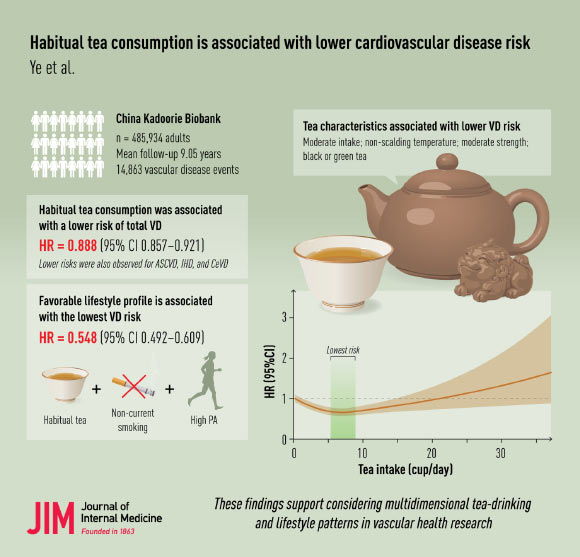
Tea Drinkers May Have Fewer Heart and Blood Vessel Problems, Large Study Finds

Ye et al. found an 11% lower risk of vascular disease among regular tea drinkers. Image credit: Ye et al., doi: 10.1111/joim.70172.

People who drink tea regularly appear less likely to develop heart and vascular disease than people who don’t, according to a new study published today in the Journal of Internal Medicine.

The post Tea Drinkers May Have Fewer Heart and Blood Vessel Problems, Large Study Finds appeared first on Sci.News: Breaking Science News.

  •  

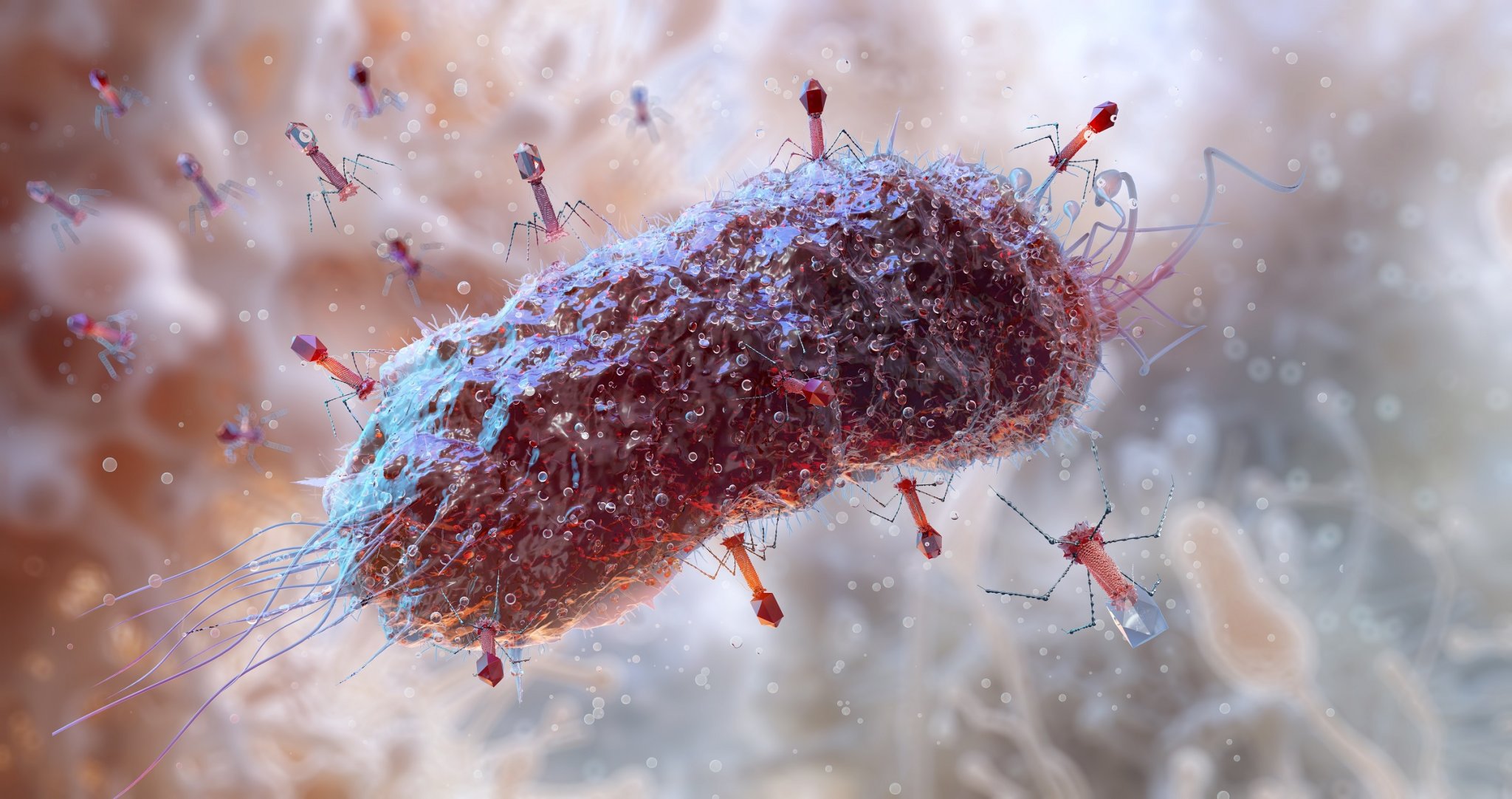
Startup Deploys AI-Engineered Virus on Human Patient

When it comes to putting strange substances into your body in 2026, the sky’s the limit.

First there were black-market Russian peptides — and now there are AI-generated viruses, which one startup claims has been used to successfully treat a bacterial infection.

On Tuesday, the company called Radical Numerics published a technical paper on its website, explaining the process by which they trialed an AI-engineered viral treatment on a human subject.

Targeting bacteria with special viruses isn’t new — it’s called “phage therapy,” and it involves deploying viruses that specifically target harmful microscopic organisms. But the hunt for viruses capable of locking onto a particular infection is arduous, and Radical Numerics says it’s found a way to use AI to revolutionize the process.

Yet as the New York Times notes in its reporting, Radical Numerics’ research is really more like a blog post — not only was the study self-published, rather than being vetted by a scientific journal, but it hasn’t even been peer reviewed. Making matters even murkier, the company declined to share clinical information about the patient or the doctors involved with the NYT, citing the proprietary nature of a treatment it hopes to monetize.

“We take our responsibility to protect patient confidentiality and maintain the trust of our clinical partners extremely seriously,” CEO of Radical Numerics Eric Nguyen told the paper. “We intend to publish our scientific findings through peer-reviewed research, with any future disclosure of clinical details subject to appropriate consent.”

As Harvard microbiologist Michael Baym told the NYT, “if it works, that’s incredible,” but his “impulse is to be skeptical.”

As the saying goes, extraordinary claims require extraordinary evidence — and that goes double when you’re running a venture-backed commercial lab exposing sick people to AI-generated viruses.

More on startups: “Customer Surveillance” Startup Says “Every Company Will Soon Assign an AI Agent to Every Customer to Watch Their Every Move”

The post Startup Deploys AI-Engineered Virus on Human Patient appeared first on Futurism.

  •  

Elon Musk’s Growing Death Toll: “What He Put Into the Woodchipper Were Children”

As Elon Musk tries to save face by claiming he’ll give every American child a chunk of SpaceX stock, here’s a chilling reminder of what he did that affected millions of children the second he had a whiff of federal power.

In a new interview, the documentary filmmaker Alex Gibney, who directed a just-released four-hour look at the billionaire’s life titled “Musk,” discussed the staggering death toll of Musk’s cuts to USAID, calling it a “crime against humanity.”

“There was an estimate that what [Musk] did by so suddenly cutting USAID would cost through disease and starvation as many as 14 million lives,” he told journalist Katie Couric. “Even if you discount that by an enormous amount, we know that within about a year of those summary cuts — where they were literally burning food that had already been paid for that was going to starving children — 500,000 children died.”

Musk, to Gibney’s astonishment, even joked about the cuts by saying he’d “put USAID into the woodchipper.” 

“What he put into the woodchipper,” Gibney said, “were children.”

Gibney, whose documentary Musk called a “hit piece,” is drawing from a 2025 study published in The Lancet, one of the most prestigious medical journals. It estimated the impact of Musk effectively neutering USAID by implementing a freeze on its foreign aid funding — which went to programs to combat HIV/AIDS, malaria, and to address food insecurities — and slashing nearly 10,000 employees. 

In sum, the researchers found that the “steep funding cuts could result in more than 14 million additional all-age deaths, including 4.5 million in children younger than age five, by 2030.”

Even conservative estimates concurred that the number of deaths would be staggering. A tracker created by Brooke Nichols, a professor and infectious disease mathematical modeler at Boston University, projects the 1-year death toll caused by the USAID cuts at 518,000 children.

It’s a touchy subject for Musk, who continues to bristle at accusations that his actions could’ve caused harm. This summer, he challenged his critics to “cite a single name of someone who died” as a result of him gutting USAID. Nicholas Kristof, a Pulitzer Prize-winning journalist, took him up on it and gave him a list of the specific children who had died directly from his policies, many of whom were in South Sudan and Liberia — places he had visited in person to talk to locals and healthcare workers.

Musk, rather than countering his arguments, called Kristof “evil.”

More on Elon Musk: Elon Musk Says It Was the Pentagon That Shut Down Starlink for the Ukrainian Military

The post Elon Musk’s Growing Death Toll: “What He Put Into the Woodchipper Were Children” appeared first on Futurism.

  •  

Why Drug Companies Are Rushing to Market Ketamine Medicines

Spurred on by the Trump administration’s embrace of psychedelic medicine, researchers are experimenting with new — and not so new — forms of the anesthetic.
  •  

Scientists find a new cause of Parkinson’s disease

Scientists have identified a problem in the way brain cells remove damaged parts, offering another possible explanation for how Parkinson’s disease develops and why some patients later experience dementia. The research from the University of Copenhagen points to a failure in the system that clears damaged mitochondria. These tiny structures supply much of the energy […]

The post Scientists find a new cause of Parkinson’s disease appeared first on Knowridge Science Report.

  •  

AI can estimate health risks from a face photo

A photograph of a person’s face may contain clues about their health that go beyond their apparent age. Researchers have developed artificial intelligence tools that estimate biological aging and help predict survival among people with cancer. The findings do not mean a selfie can diagnose disease or predict an individual’s future with certainty. Instead, they […]

The post AI can estimate health risks from a face photo appeared first on Knowridge Science Report.

  •  

Ukraine’s drone rescue of wounded soldier puts much touted idea into practice

Ukraine’s unprecedented drone rescue of a wounded soldier from the battlefield has shown once again how battlefield necessity can spur innovation. The operation was revealed just days after separate Ukrainian drones designed for casualty evacuation were deployed for frontline testing—taking a step beyond the US military’s decades of experimentation with similar concepts.

The drone evacuation of the injured soldier took place at an undisclosed time and place on the frontline where the presence of Russian drones and landmines made it impractical to send in a wheeled ground robot, according to The Kyiv Independent. On October 19, Ukraine’s Army shared a video of the drone evacuation, showing the wounded soldier securing himself in a harness suspended beneath a heavy hexacopter drone with six rotors before being flown to safety.

“This is a historic event, the next stage of evacuating the wounded, which we will all come to,” said Napalm, a programmer of the 92nd separate assault brigade's unmanned ground systems company, who went by his callsign per Ukrainian military practice, in a statement. “Now the serious systematic work begins, so that such missions are carried out constantly.”

Read full article

Comments

© 92nd Separate Assault Brigade of the Ukrainian Ground Forces

  •  

GLP-1 Apps Are Using Sobbing AI-Generated Women To Market Their Products

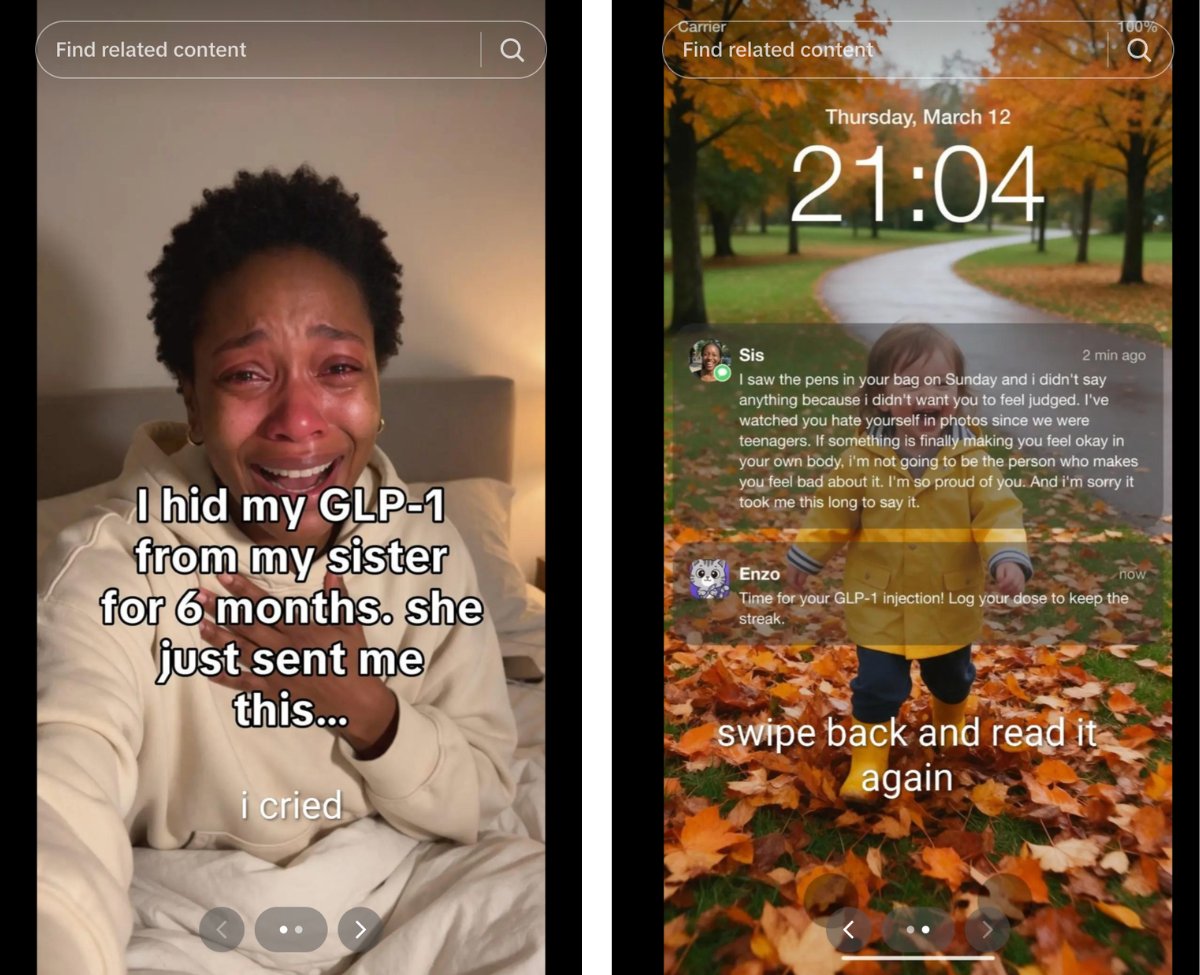
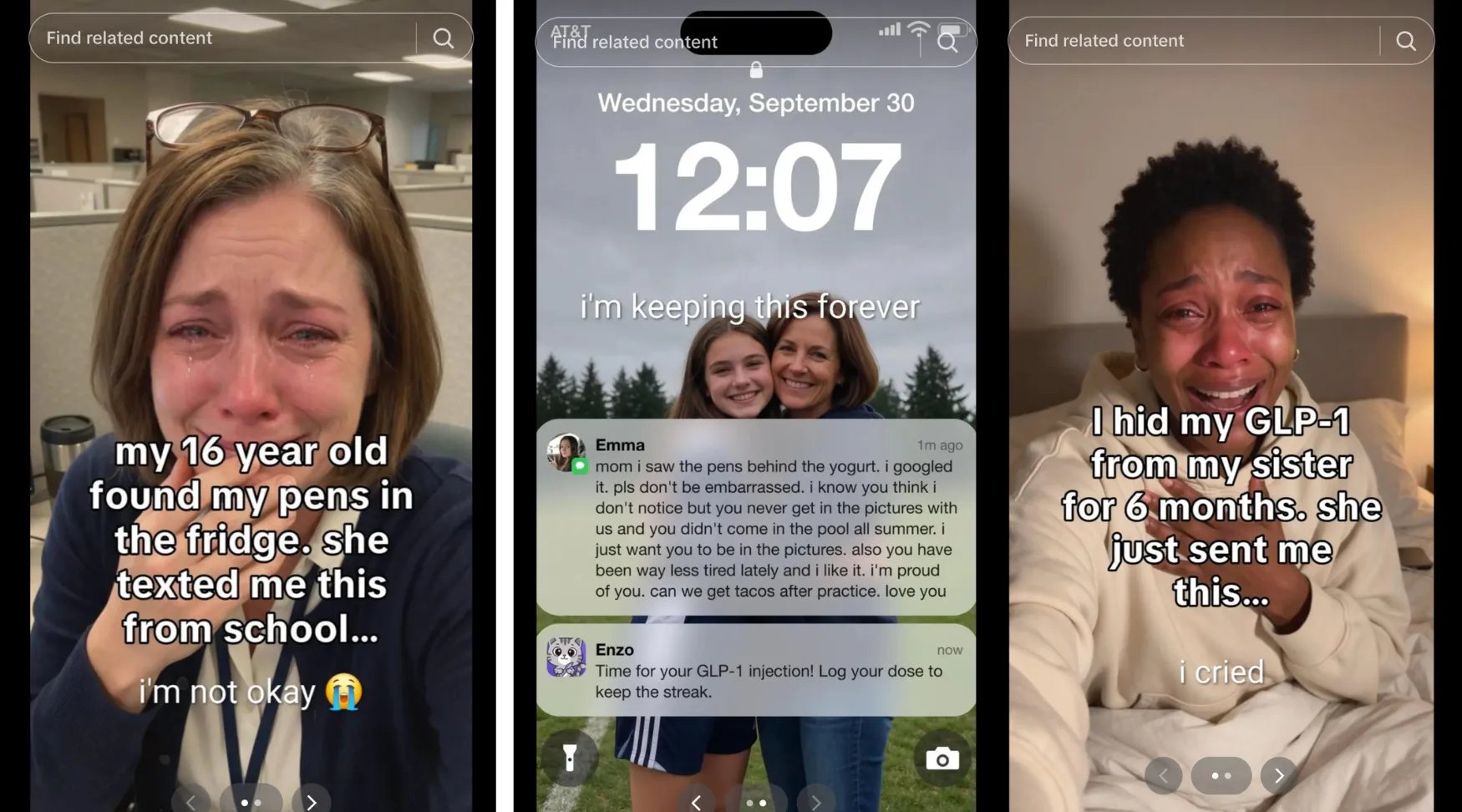
An image published by a TikTok account called “WellWithHer” shows a selfie of an obviously AI-generated woman sitting in her bed, weeping. According to the image’s caption, which is written in the first-person, the woman spent six months “hiding” her GLP-1 “pens in her bag,” only for her secret use of the meds to be discovered by her sister.

“I hid my GLP-1 from my sister for 6 months… she just sent me this,” reads text overlaying the image. “I cried.”

The next image in the carousel is a screenshot of a locked iPhone screen, which shows a lengthy text from a sender saved as “Sis.”

“I saw the pens in your bag on Sunday and i didn’t say anything because i didn’t want you to feel judged. I’ve watched you hate yourself in photos since we were teenagers. If something is finally making you feel okay in your own body, i’m not going to be the person who makes you feel bad about it,” reads the text. “I’m so proud of you. And i’m sorry it took me this long to say it.”

Beneath the purported text message is another notification: a reminder from a mobile app called Enzo instructing the poster to take their GLP-1 shot.

“Time for your GLP-1 injection!” reads the notification, which features a cutesy cartoon cat as its mascot. “Log your dose to keep the streak.”

A screenshot from TikTok shows a woman in her bed weeping, with a text message from her sister about taking GLP-1s.

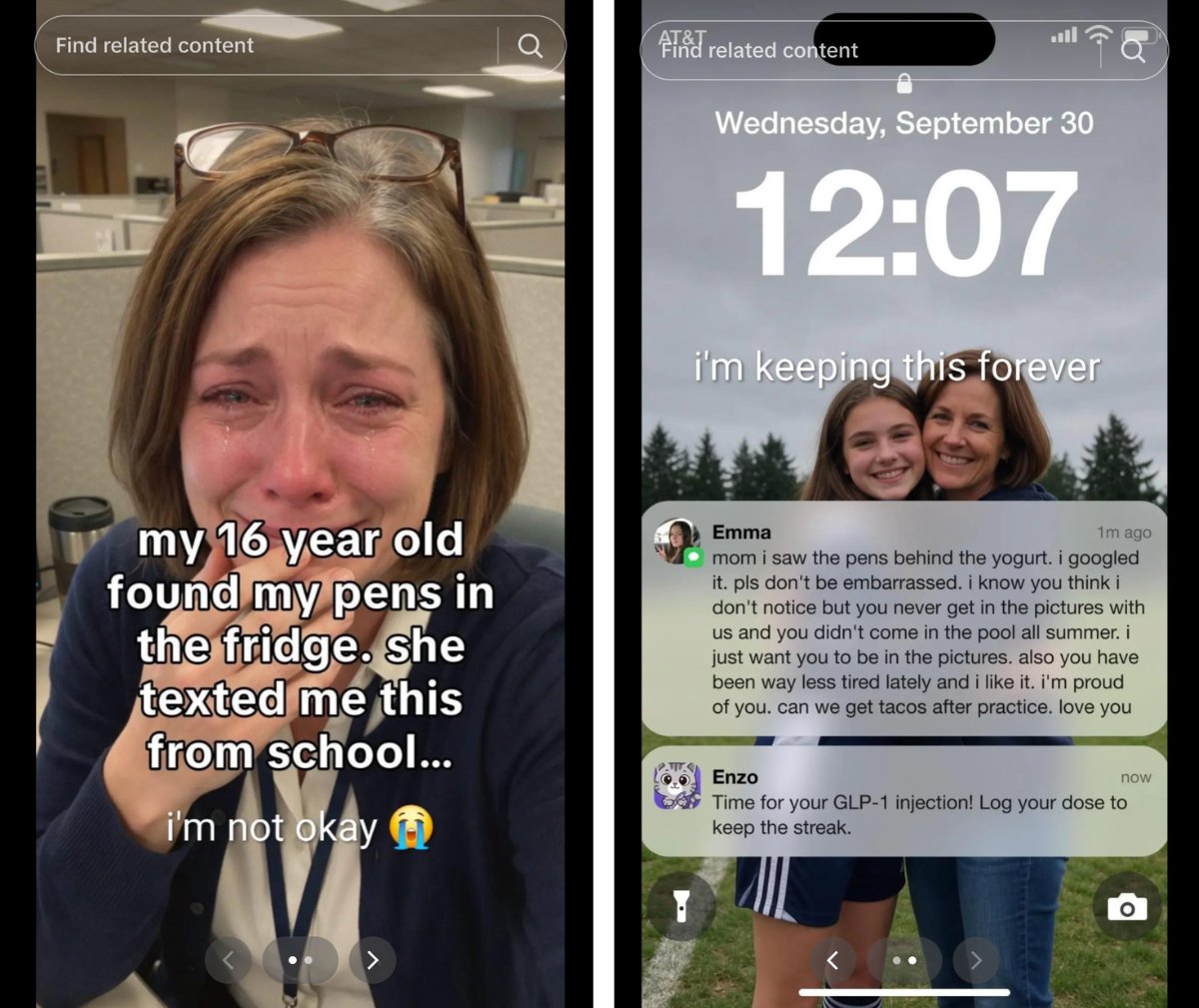
The same WellWithHer TikTok account is loaded with similar images crying AI-generated women sharing personal family stories about secretly taking GLP-1 weight loss injections like semaglutide and tirzepatide. Another post, for instance, shows an AI lady crying in her cubicle after purportedly receiving a text from daughter, “Emma,” who claims to have found her mom’s GLP-1 medicine “in the fridge” and is urging her to “pls don’t be embarrassed.”

“i know you think i don’t notice but you never get in the pictures with us and you didn’t come in the pool all summer,” the text continues. “i just want you to be in the pictures. also you have been way less tired lately and i like it. i’m proud of you. can we get tacos after practice. love you”

Below the text is another notification for Enzo, reminding the sobbing AI woman to take her GLP-1 shot.

“Time for your GLP-1 injection!” the notification chirps. “Log your dose to keep the streak.”

A screenshot from TikTok shows a woman sobbing about GLP-1s, with a text from her daughter about finding her injections in the fridge.

The psychology of the undisclosed ads is obvious and manipulative. The texts in the posts all offer variations of an emotional validation fantasy, in which loved ones of a GLP-1 taker, who may be feeling shameful or embarrassed, surprise them with love and support when they discover they’ve been taking the drugs. The messages, and the alleged GLP-1 users claiming to have received them, are clearly fake, and are designed to promote GLP-1-focused apps — yet aren’t being disclosed as advertisements, nor as AI-generated synthetic content.

Unfortunately, Enzo isn’t the only GLP-1 app being marketed through this style of manipulative synthetic content.

Over on another TikTok account, for example, a poster going by the name “Lara” uses a mix of stolen images of real influencers and AI-generated images — always of young women, some of whom are pictured crying — to market a completely different GLP-1 tracker called “DreamMe.”

In some posts, like “WellWithHer,” the account promotes a GLP-1 app called “DreamMe” by coupling weepy selfies with fake phony texts from family members offering words of support and understanding.

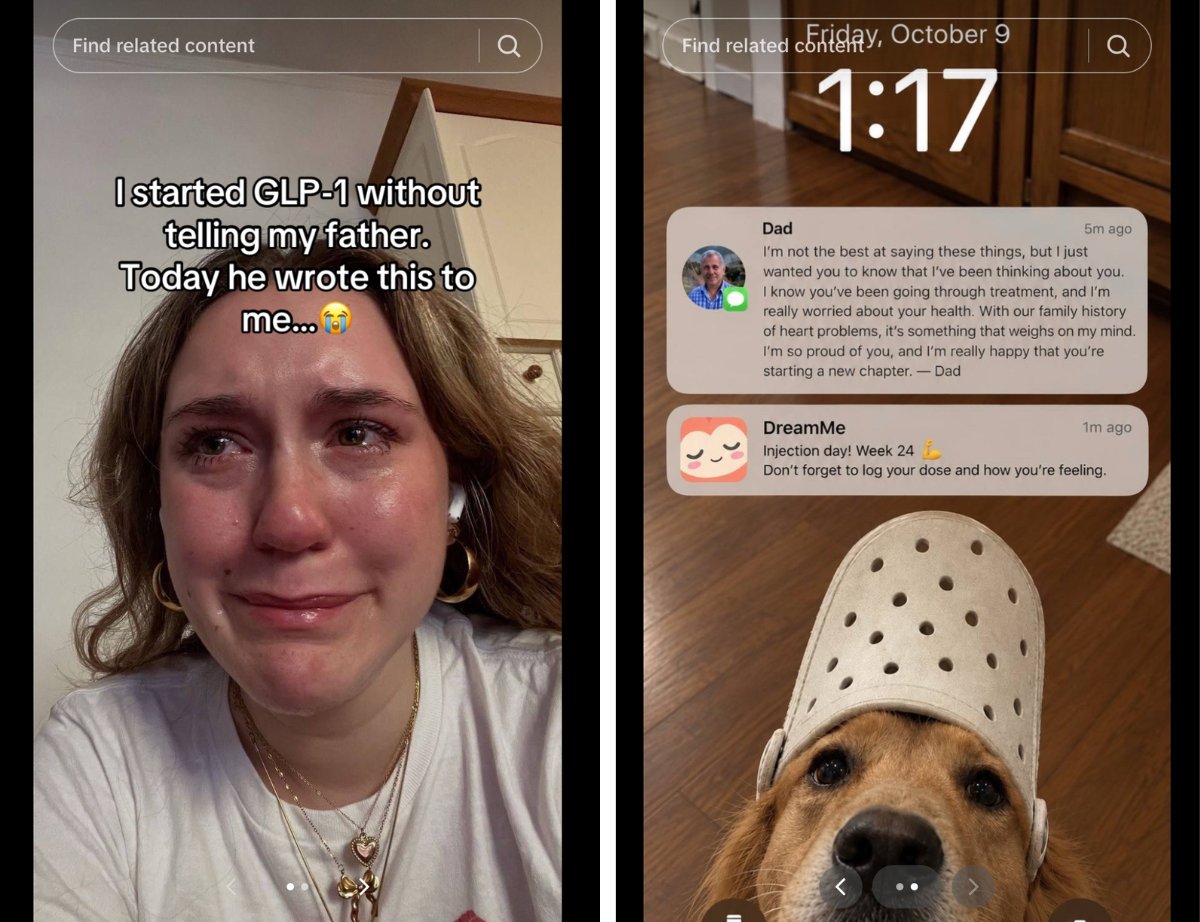
“I started GLP-1s without telling my father. Today he wrote this to me…” reads text overlaid on a selfie of a crying young woman.

On the next slide, sitting above a notification from DreamMe, is a text from “Dad.” His profile picture also appears to be AI-generated.

“I know you’ve been going through treatment, and I’m really worried about your health,” says the text. “With our family history of heart problems, it’s something that weighs on my mind. I’m so proud of you, and I’m really happy that you’re starting a new chapter.”

A screenshot from TikTok shows a woman sobbing about GLP-1s with a text from her dad saying he's happy for her.

According to its website, “DreamMe” claims to provide users with their “new GLP-1 best friend” in the form of “Sushi,” a cartoon fish that helps keep track of GLP-1 meds. Its landing page features a handful of AI-generated women that the site bills as real customers who have shed weight with Sushi’s support.

Enzo’s unreality, in other words, doesn’t end with the TikTok content.

“Real journeys. Real members,” the page reads. “The numbers are theirs. The words are theirs. We just built the fish.”

The strange, heartstring-tugging posts used to promote Enzo and DreamMe are part of a larger trend on TikTok using fake AI-generated women to promote a range of dubious wellness apps. (In fact, some posts across accounts are so alike that different fake women have different-but-strikingly-similar images of dogs with Crocs on their heads as their phone wallpapers.)

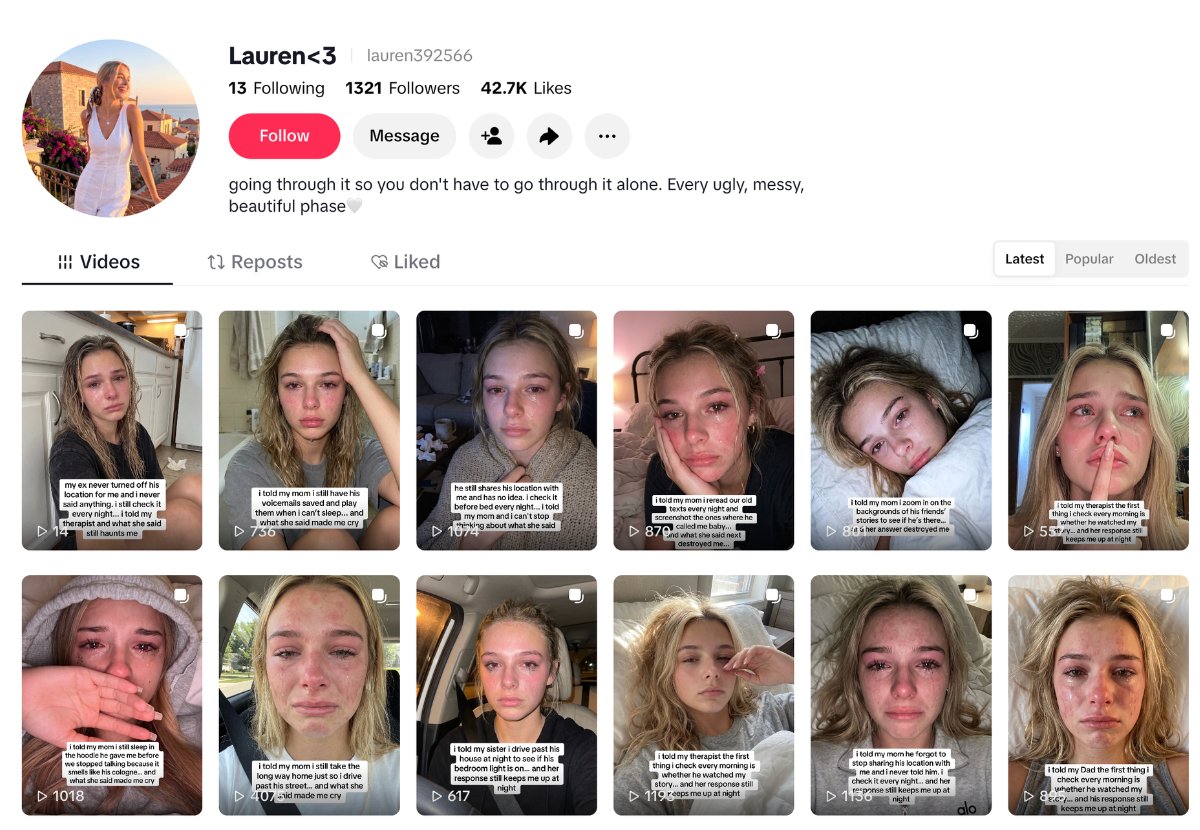
Take “Lauren<3,” a TikTok poster portrayed as a young woman publicly posting through her sudden breakup. Blonde and clearly AI-generated, the account published slideshow after slideshow of “Lauren” — in a bathtub, in a bed, in a car – with mascara running down her tear-covered cheeks as she recounted the process of going no-contact with her ex after a horrible breakup.

A screenshot of a TikTok account shows many posts of AI-generated women sobbing about mental health.

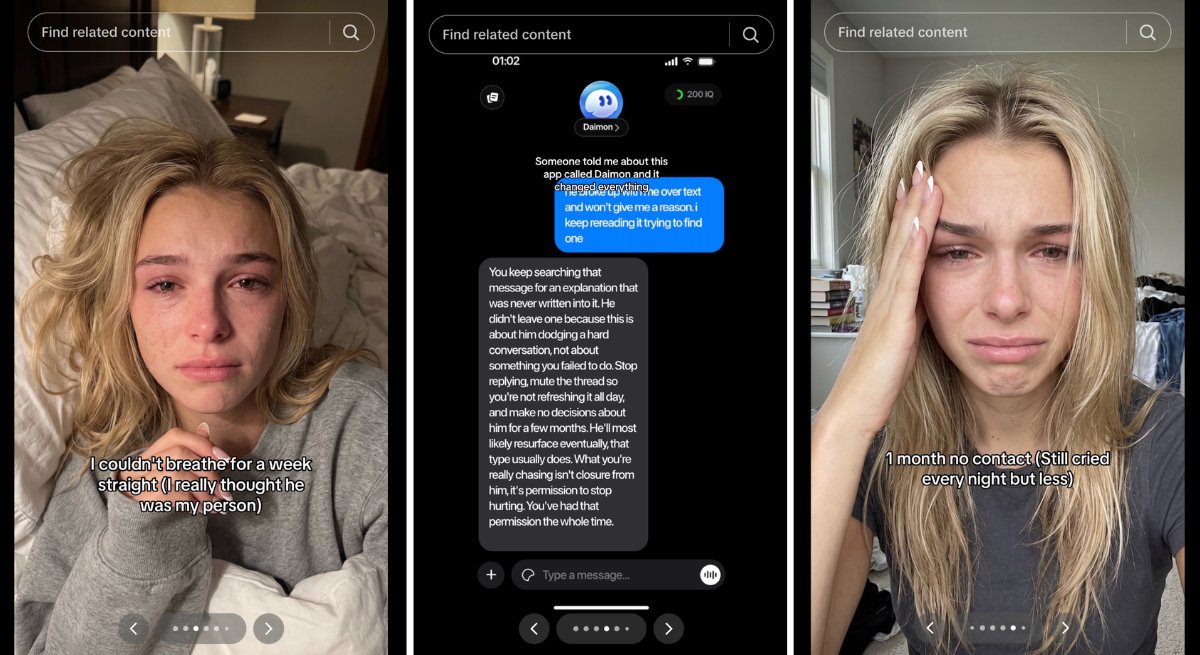
Photo carousels published to the account were interspersed with sobbing selfies and alleged screenshots of texts from her toxic ex — as well as screenshots of conversations with an AI companion app called “Daimon,” which Lauren claimed was helping her go no-contact with her former boyfriend.

A screenshot from TikTok shows a woman crying in bed and using a mental health app.

“Someone told me about this app called Daimon and it changed everything,” the poster declared in one post’s caption. In another post, “Lauren” described Daimon as the “one app that wouldn’t judge me and give me the best advice.”

“(Daimon in the app store),” she added, for good measure.

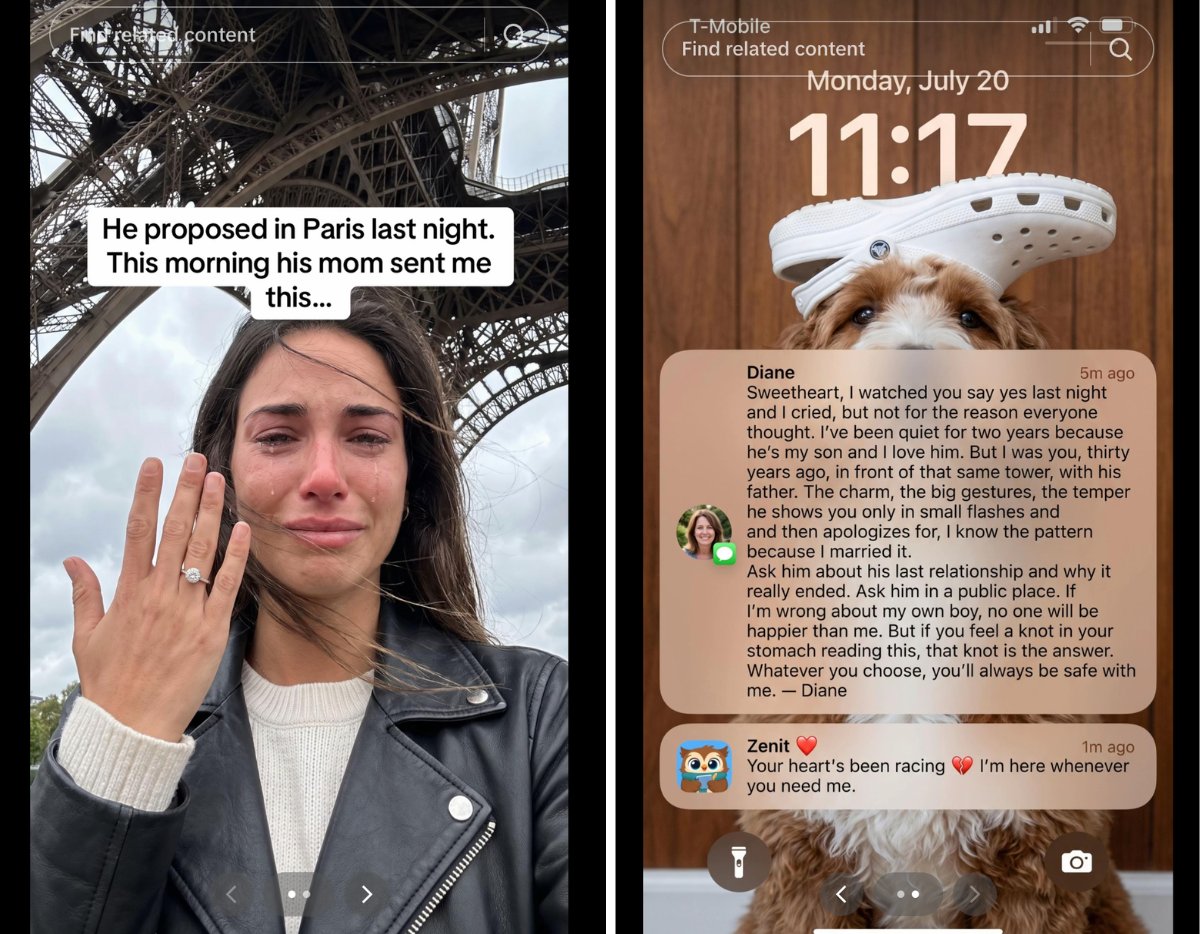
Elsewhere a TikTok account identified as “Ashley Miller” posted AI selfie after AI selfie of a fake woman who was pictured crying as she shared sob stories about her divorce, tales of getting cheated on or abandoned by her partner, or confessions about regretting her recent engagement. Images posted on the Ashley account are accompanied by purported screenshots showing text messages from her parents or, in the account’s most viral posts, texts from her partner’s parents urging her to leave her new fiancé due to his abusive behavior or confessing to their son’s infidelities.

These posts were created to market a completely different app: a “wellness” service called Zenit, which is described on the App Store as a tool to help users “take care” of their “mental well-being with guided support, daily check-ins, and emotional growth tracking — all in one calm and safe space.” Its mascot is a kiddish-looking owl in a scarf.

“He proposed in Paris last night,” the “Ashley Miller” account claimed in a viral post that garnered more than 240,000 likes and over 1,000 comments. The post featured an AI-generated selfie of “Ashley” in front of a shimmering Eiffel Tower, holding an engagement ring up to her phone camera as she wept. “This morning his mom sent me this…”

The next image in the slideshow showed a text message, in which the sender — a woman named “Diane” whose face also appears to be AI-generated — told the fake AI selfie-taker that “I watched you say yes last night and I cried, but not for the reason everyone thought.”

“I’ve been quiet for two years because he’s my son and I love him. But I was you, thirty years ago, in front of that same tower, with his father,” the text continues. “The charm, the big gestures, the temper he shows you only in small flashes and and then apologizes for, I know the pattern because I married it. Ask him about his last relationship and why it really ended. Ask him in a public place. If I’m wrong about my own boy, no one will be happier than me. But if you feel a knot in your stomach reading this, that knot is the answer.”

Beneath the text is a notification for Zenit.

“Your heart’s been racing,” read the notification beneath the dramatic text. “I’m here whenever you need me.”

A screenshot from TikTok shows a sobbing woman with a promotion for a mental health app.

Indeed, all of the account’s posts showed Zenit notifications, making it clear that the fake woman and her sob stories were a fabricated marketing gimmick. Many of the account’s commenters, however, were duped.

“If the mama says this to you. Run,” remarked one commenter who was taken in by the false narrative. “She’s trying to protect you girl. I’m sorry.”

***

We reached out to the TikTok accounts we found publishing the manipulative AI-generated marketing content, as well as to the companies being promoted in the posts.

Very quickly after we reached out, the TikTok account associated with Zenit, the wellness app, was deactivated. The developer of Zenit, who identified himself as an independent developer named Pedro Pérez, told Futurism that he personally ran the account and that “no third party of marketing agency” was involved.

“I built Zenit to help people who struggle with overthinking, everyday stress or anxiety, or loneliness. The videos were based on realistic situations many people go through, with the goal of helping viewers feel understood and showing them a tool that could help them deal with those moments,” Pérez said. “The visuals were AI-generated and the posts promoted my app, so they should have been labeled as such.”

“After receiving your email, I tried to add TikTok’s AI-generated and commercial content labels, but the platform doesn’t allow adding them to videos that are already published, so I’ve deleted the account,” he added. “I think transparency matters, especially for a wellness app, which is why I’ve made this change.”

The account associated with Daimon, the AI companion, was abruptly scrubbed of all content after we reached out. The account owner also changed the handle from “Lauren<3” to simply “yooo.” When we reached out to Prospinity, the company behind the companion chatbot, it told us that the account was “absolutely not operated by our internal marketing team, and the content was neither created nor approved by us.”

“We’ve worked with external affiliate programs, and unfortunately, some affiliates were publishing content independently through accounts we didn’t directly manage. As soon as we became aware of this, we immediately looked into it, identified those responsible, and took action to shut down these activities,” the company said. “This kind of content is completely against our guidelines and is absolutely not how we want Daimon to be represented. We’re a small team that genuinely cares about what we’re building, and we take how Daimon is represented very seriously. While this content wasn’t created or authorized by us, we recognize the importance of making sure anyone promoting Daimon follows our standards.”

DreamMe didn’t responded to questions sent to email addresses listed on its website, and our email to Enzo bounced back. We also didn’t hear back from the TikTok accounts associated with their products.

They’re also continuing to post. The most recent post from the account promoting Enzo is now advertising a different app designed to track peptide consumption; the DreamMe account, meanwhile, has been promoting a phone-locking app.

More on fake people online: How Three Brothers Built an AI Slop Empire by Buying Legitimate News Sites and Turning Them Into Zombie Content Farms That They Say Get 50 Million Page Views per Month

The post GLP-1 Apps Are Using Sobbing AI-Generated Women To Market Their Products appeared first on Futurism.

  •  

This New Research About Microplastics Is Pretty Damn Scary

A new piece of research is pushing back on the long-held belief that plastic is a harmless and chemically inert material.

The new study, published in the journal Nature, took a look at the way micro and nanoplastics interact with water-rich environments such as the human body. It found that typical consumer-grade microplastics exhibit “intrinsic physicochemical activity” there, indicating that the tiny chunks of plastic do indeed react chemically inside our bodies.

“As plastic fragments into smaller and smaller particles, its surface area increases enormously,” Columbia professor of chemistry and biomedical engineering and study co-author Wei Min said in a press release. “Then microplastics change the water that surrounds them, generating high-energy, reactive radicals… that very likely contribute to biological damage that we see in animals and potentially in humans as a result of microplastic exposure.”

Min was previously part of another alarming study, which found that the average liter of bottled water contains upward of 240,000 tiny microplastics, a much higher count than previously known. Combined with the new research, it looks like those untold thousands of plastic bits are capable of causing much more chemical harm than scientists had given them credit for.

As co-author Beizhan Yan put it, “this work has significant implications for environmental and human health,” particularly when it comes to food supply chains.

In the US, plastics make up an integral part of the food chain. They’re heavily integrated into industrial agriculture, present in high quantities throughout food processing, and are extensively used in food distribution, whether to preserve fruits and vegetables or as packaging for groceries.

The scale of plastic packaging alone is staggering: it’s estimated that food packaging accounts for 40 percent of the world’s total plastic production. With billions of dollars riding on the plastics industry, your average working-class person has little hope of skirting microplastics through a simple change in consumption habits — even if you have enough money to buy the haute premium foods packaged in glass or tin, individual consumers have no control over how much plastic their food is exposed throughout the production process.

Given the growing body of work pointing to the horrifying consequences of microplastics on the human body, it seems our collective health depends on finding a way out of this plasticky status-quo — and fast.

More on plastics: Scientists Turn Plastic Waste Into Edible Cookies Because That’s the Future We Deserve

The post This New Research About Microplastics Is Pretty Damn Scary appeared first on Futurism.

  •  

Black Market Retatrutide Linked to Multiple Deaths

Nearly a year ago, news began to spread of an experimental weight loss drug called retatrutide, under development by Eli Lilly. Though the drug hadn’t made it through clinical trials, nevermind been released by a federally licensed manufacturer, a rapidly-growing black market ensured interested customers didn’t have to wait for the real deal.

Now, the bill on those black market knockoffs seems to be coming due. As CBS reports, the consequences of the unapproved retatrutide trade have now become deadly.

According to the broadcaster, the Food and Drug Administration has received at least two reports of deaths related to the use of bootleg retatrutide in recent months — the first public accounts from health officials acknowledging that the knockoffs contributed to users’ deaths.

Though CBS viewed documents related to the two deaths, it noted that the details haven’t been independently verified, and it remains to be seen whether the black market retatrutide was the principle cause of death in either case, or merely a complicating factor.

Documents related to the death of a 41-year-old woman in July, for example, names retatrutide as a “suspect product” which the deceased obtained “from an unreliable source.” The woman in question was labeled obese, and died after going into cardiac arrest.

Though more information is needed to determine whether the knockoffs were truly responsible for the deaths, the FDA’s interest is telling. In April, Medpage Today reported a case of retatrutide overdose which led to extreme side effects for the user which included kidney injury, extreme dehydration, and diarrhea lasting at least a week.

And though the FDA is at least aware of the dubious retatrutide trade, the federal government’s lax attitude toward bootleg peptides throughout the second Trump administration is arguably a principle factor contributing to the rise of sketchy knockoffs.

“It is concerning because of the breakdown of our drug-approval process in the United States of America,” associate professor at Harvard Medical School Pieter Cohen told CBS.

More on peptides: Pete Davidson Has Been Crushing Black Market Peptides to Get Disgustingly Swole

The post Black Market Retatrutide Linked to Multiple Deaths appeared first on Futurism.

  •  

Vaping Strongly Linked to Lung Cancer

If you’re one of the over 100 million people around the world who regularly hits the vape, you might want to think about ways to start cutting back.

According to some recent research by scientists from Seoul National University and published in Nature Medicine, the use of non-tobacco devices like vapes and e-cigarettes to help quit smoking carries a strong link with the development of lung cancer.

The researchers analyzed anonymous health data from over 4.5 million Korean adults. They were split into three main groups: current smokers, short-term quitters, and long-term quitters. They were then categorized by whether they vaped daily during a 2018 screening in the Korean National Health survey, with adjustments to control for factors like age, sex, and prior health conditions.

In all, scientists found that those who had turned to vaping after quitting traditional cigarettes developed lung cancer at a rate about 56 percent higher than those who quit entirely. Alarmingly, incidents of lung cancer death among vape users nearly doubled, with a lung cancer-specific death rate 91 percent higher than non-vape users.

Of course, there’s an important group that falls outside the bounds of the study: anyone who got hooked on vaping without trying cigarettes first. It’d be fascinating to learn more about their fates, but the implication of the study — that vaping is turbocharging the chances of cancer among former smokers — is almost certainly cause for alarm.

While it may be easy for non-smokers to roll their eyes at the findings, it’s important to note that empirical data on the relationship between vaping and lung cancer remains relatively scarce.

“Although epidemiological and biological studies support the association between e-cigarettes and various respiratory disorders, evidence regarding the relationship between e-cigarettes and lung cancer risk remains limited,” the researchers wrote.

It’s an observational study, meaning that it can’t establish true causality. Going forward, more research is needed to say for sure whether there’s a causal association between vaping and cancer — but the early data doesn’t look pretty.

More on smoking: Scientists Say Test Subjects Were Able to Quit Smoking After They Blasted Their Brains With a Huge Magnet

The post Vaping Strongly Linked to Lung Cancer appeared first on Futurism.

  •  

Seaweed Compounds Show Promise against Cell Damage

Fucoidans are structurally diverse, fucose-rich, sulfated polysaccharides derived mainly from brown seaweeds. Image credit: Ronile.

Fucoidans -- compounds found in the cell walls of brown seaweed -- could one day help treat diseases driven by oxidative stress, though the substances are far from the pharmacy shelf.

The post Seaweed Compounds Show Promise against Cell Damage appeared first on Sci.News: Breaking Science News.

  •  
❌