❌

Reading view

Explainer: What is an equation?

An equation is a mathematical statement that’s written linearly — in a straight line. It has two parts separated by an equal sign (=). And as that sign would suggest, what appears on either side of it has the exact same value.

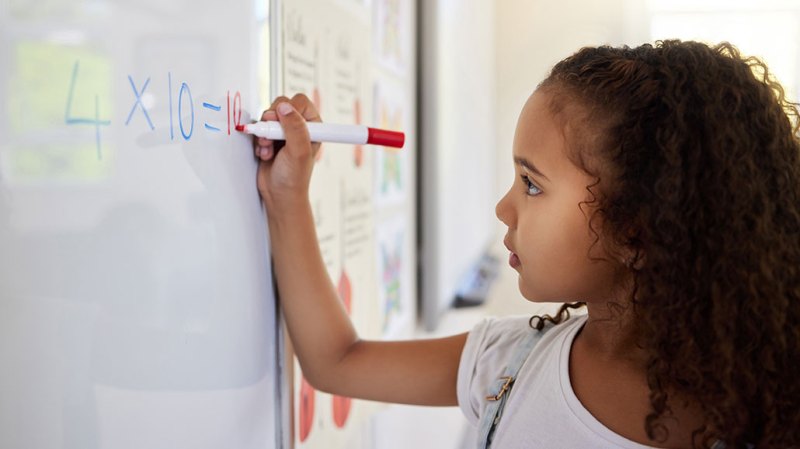
Text:  One example: 5 x 4 = 20

Math statements weren’t always written this way. Even today, grade-school kids learn to write these statements vertically — with numbers above and below a straight line. That line corresponds to the equal sign. For instance:

5 x 4 = 20, written vertically

One might be tempted to think that equations as we know them are as old as math. But no. Math goes back millennia. The symbols used in equations are relatively recent.

Centuries ago, “math used to be written out” in words, notes British mathematician Robin Wilson. “They call it rhetorical algebra.” A math historian, he authored the 2025 book, Sum Stories: Equations and Their Origins. People used to use regular words to express additions, subtractions and other relationships between numbers and the things they were counting.
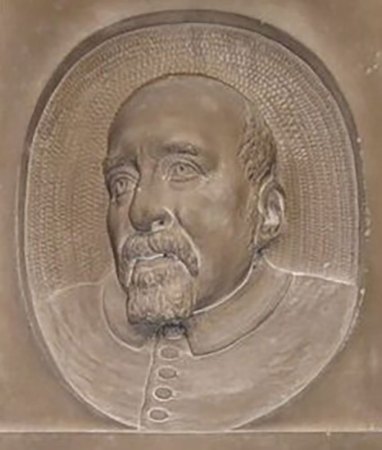
a photo of a carving memorializing Robert Recorde showing his face
Robert Recorde, a 16th-century Welsh mathematician, made equations possible by inventing the “equal to” symbol.Basher Eyre/Wikimedia Commons (CC BY-SA 2.0)

For instance, someone might have written: “Ship one brought two hundred fish to port. Fifty were flounder, seventy-five were bream, twenty-seven were sharks and forty-eight were anchovies.” Now it might be shortened to 50 flounder + 75 bream + 27 sharks + 48 anchovies = 200 fish.

But that shortened version couldn’t have been written before 1557. That’s when the equal sign made its world debut in The Whetstone of Witte. (This math book’s name literally means sharpening your wits). Its author was Welsh mathematician Robert Recorde.

Among many things in this tome, Recorde introduces that equal symbol so he can avoid having to tediously repeat the words “is equal to.” Why choose two horizontal lines of the same length? Because, he argued, no two things can be more equal. (Of course, he said it a bit differently, as he was writing it in a very early version of modern English.)

That equal sign was a relative latecomer among our familiar math symbols. People started using the plus (+) and minus (-) signs around the late 1300s and early 1400s.
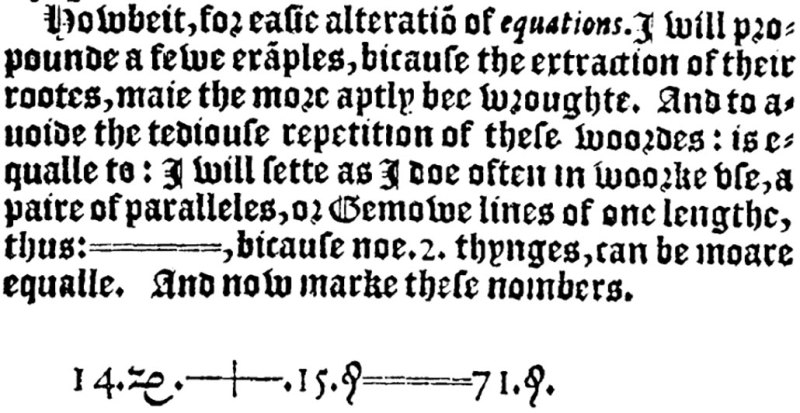
a photo of the The first known definition — and use of “equal to” symbol as it appeared in the 1557 book The Whetstone of Witte (written in Early Modern English).
The first known definition — and use of “equal to” symbol (14x + 15 = 71) — appears in the 1557 book, The Whetstone of Witte (written in Early Modern English). It includes the phrase: “[T]o avoid the tedious repetition of … ‘is equal to’ I will set … a pair of … [twin] lines of one length, thus: =====, because no 2 things can be more equal.”R. Recorde/Wikimedia Commons (Public Domain)

And the equation at the start of this piece would have made no sense before 1631. That’s when William Oughtred, a 17th-century English math expert, introduced the “x” mark for multiplication (in his book Clavis Mathematicae).

About that equal sign

“The equal sign is quite interesting and is slightly different from an operator like plus, minus, divide or multiply,” says Clemency Montelle. She’s a math historian at the University of Canterbury, New Zealand. The equal sign, she notes, “is not saying calculate anything. But it is indicating a relationship: that one thing on one side is identical [to the other side].”

And that’s true, she notes, “even if they don’t look the same.”

In 4+1 = 5, the two digits on the left-hand side don’t look identical to the digit on the right. Still, they have the exact same value. Montelle finds this quite a “powerful” idea.

“Equations are a way of expressing what you’re doing accurately, precisely and efficiently,” Wilson adds. The “=” signifies a balance — like on a scale — between the quantities on the left and right sides.

The power of balance

Knowing that there’s a balance between the mathematical expressions on either side of an equal sign allows us to solve for something in that expression that may be unknown. This is the basis of algebra, an especially useful branch of math.

Suppose we know that Daniel and Alice picked 9 apples from their backyard tree. We know that Daniel has 5 apples. Given this information, we can calculate how many Alice has. It can be written as this hybrid word problem:

Text: 5 + unknown quantity = 9

By subtracting 5 from each side, we can calculate that the unknown quantity — the number of apples Alice has — must be 4.

Here the unknown quantity was apples. But it could be anything. Mathematicians generally refer to such an unknown with a letter. Often it’s an “x”.

Earlier in history, some cultures used other approaches. The ancient Indians, for instance, used word abbreviations for various colors to represent some unknown values. Ancient Mesopotamians used different words that meant such things as length, width and area to denote some unknowns.

What is an equation? We learn how its equal sign signals that the two sides of this mathematical expression are like a scale in balance.House of Math/YouTube

Being able to calculate an unknown number makes equations widely useful.

Before equations existed, ancient astronomers painstakingly developed tables of numbers. Think of multiplication tables, with the numbers to be multiplied in the first row and column and the products of those multiplications filling in the rest of the table. This allows anyone to read out the answer for any product quickly.

Similarly, astronomers used tables to track a planet’s motion, observe phases of the moon and predict eclipses. If they wanted to follow a planet’s motion, they’d go down the table to the day and look across to read the number. Such a table could span weeks, months or even years. Creating them took painstaking amounts of mathematical effort.

Do you have a science question? We can help!

Submit your question here, and we might answer it an upcoming issue of Science News Explores

Equations offer a compact substitute for such tables. Each equation describes the relationship between features of interest, such as a planet’s motion over time. To use it, you input the known values into the equation. For instance, this might be the date and the planet’s position. Then by performing the operations in that equation, you can calculate some unknown value, such as the distance traveled by the planet.

“Equations might seem rather dry,” says Montelle. “But they reveal a hidden structure or numerical pattern that we would otherwise have to write out one by one by one.”

That’s why behind the scenes, equations now play important roles throughout society.

They help engineers design and construct safer buildings. They can let airline pilots calculate how much fuel they’ll need if they know the distance they’re traveling and average speed they’ll be flying. And suppose you have a cake recipe that calls for 2.75 cups of flour. You could use an equation to scale up or down the ingredients needed to make one that’s two and a half times as big or just a mini-cake one-quarter the normal size.
  •  

Let’s learn about origami-inspired science

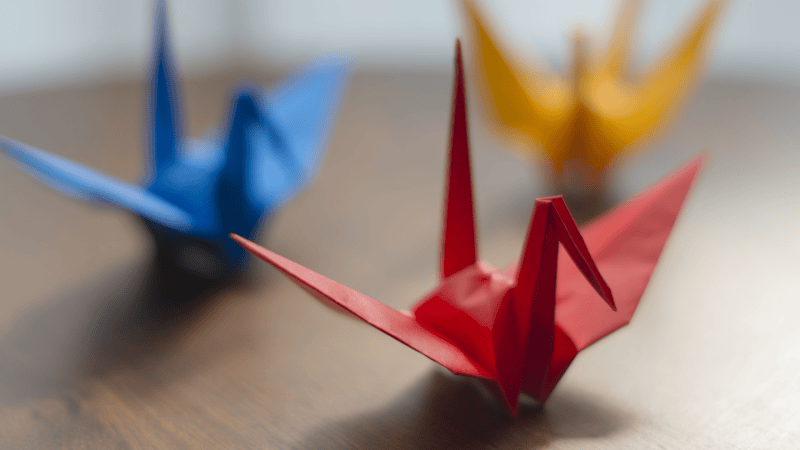
People have used origami for centuries to transform flat pieces of paper into 2-D and 3-D shapes. In minutes, a beginner can use this Japanese art of paper folding to craft simple birds, flowers and jumping frogs. More advanced patterns can give rise to highly detailed sculptures of all manner of objects.

Scientists have used geometry, algebra and other branches of math to invent new origami designs. Such designs can not only be used to create art. They can lead to new compact and shapeshifting tech.

Take the James Webb Space Telescope, the biggest telescope ever sent to space. It’s so big that it had to be folded up origami-style to fit in a rocket. Engineers have also used origami techniques to make robots that can squeeze through tight spaces. And bots that change shape to do different tasks or move in precise ways to handle fragile objects.

Kirigami, a related art form that combines paper folding and cutting, has also inspired engineers. Some have used this Japanese art to design shoe soles that change shape to increase grip. Others have built kirigami parachutes that automatically open when dropped.

Teen paper folders are pushing this field forward, too. One middle-school student in New York City recently discovered that a certain type of origami fold could support 9,000 times its own weight. That might make it useful for designing pop-up emergency shelters. And a high-schooler in Japan came up with a new way to model complex folds, like those found in origami and ladybug wings. His advance could help engineers build new nature-inspired tech.

Want to know more? We’ve got some stories to get you started:

Origami research takes top prize at 2026 Regeneron ISEF competition One teen won big for his new discovery of how to model the motions of origami folds. (5/18/2026) Readability: 8.5

Cool Jobs: The art of paper folding is inspiring science See how bringing art and math together led to the development of robo-roaches, self-folding papers and medical implants. (8/23/2018) Readability: 7.3

These parachutes unfurl thanks to Japanese paper-cutting techniques Origami isn’t the only Japanese art that has inspired new tech designs. Kirigami, or the art of paper cutting, recently inspired a new parachute design. (12/2/2025) Readability: 7.0

Many origami-like designs are found in nature. For instance, ladybugs neatly fold up their wings when they land using complex, origami-like folds. This video from Science News shows how they do it. 

Explore more

Scientists Say: Algebra

Scientists Say: Geometry

Origami folds let paper support 9,000 times its weight, teen finds

Like an armadillo, a new soft robot rolls up to protect itself

The long-awaited James Webb Space Telescope has a big to-do list

Shape-shifting cuts give shoes a better grip

These robots quickly swap ‘origami’ jackets — and tasks

An origami design helps this robot lift delicate and heavy cargo (from Science News)

Ladybugs fold their wings like origami masters (from Science News)

Activities

Word find

Want to try your hand at origami? Check out these step-by-step beginner designs. Ready to try something a bit more advanced? Create your own origami model of the James Webb Space Telescope with this folding pattern from NASA.

  •  

Math Professor Accuses OpenAI of Copying His Work, Says AI Compute Power Makes Racing to Publish 'Pointless'

The New York Post wrote that OpenAI "stunned the mathematics world" last week when it announced its AI model "cracked a legendary math problem left unsolved for nearly a century in just 88 hours." But a New York University professor "has come forward alleging OpenAI may have copied his work after asking him to collaborate — with one of the company's scientists allegedly warning he might 'ruin his career' if he refused." [P]rofessor Tristan Buckmaster, a British-Australian researcher who trained in Germany... had been working with Long Island-raised math prodigy Levent Alpöge, a researcher with OpenAI rival Anthropic, on a different elusive fluid dynamics equation, known as the Euler problem, when he found a solution using AI tools from both Anthropic and ChatGPT. He said scientists from OpenAI approached him and tried to convince him to jointly announce the solution, claiming they had independently solved Navier-Stokes. Buckmaster questioned the timing of their finding the solution in a blog post, noting OpenAI had only done so "in the past few days" — after the company became aware of his work. He asked OpenAI experts whether its AI systems used to solve the equation had been "trained on, or had access to" his research, but said they declined to answer, prompting him to wonder how they had advanced toward the solution so quickly. The puzzle is "not the direction one arrives at in a few days," Buckmaster wrote incredulously... In OpenAI's post on its website sharing the Navier-Stokes proof, which it credited to Astra, the company's latest AI bot, the firm insisted no user data was incorporated into its model to solve the problem. However, it noted that it "cannot rule out" that anonymized data was used to "improve our models." "We congratulate Levent Alpöge and Tristan Buckmaster on their remarkable mathematical work," OpenAI said in the announcement. Buckmaster shot back, "Is it ethical to use customer's data to try to scoop their customer?" Alpöge's affiliation with Anthropic "seems to have been a sore point for OpenAI," writes TechCrunch. Buckmaster's public statement says the OpenAI's Sebastien "twice asserted that he wanted Levent removed from authorship" and also said that "it was so annoying that Levent works at Anthropic" — but that Buckmaster still refused to remove the Anthropic mathematician's credit. I said that if OpenAI released its result in the way proposed I would go public with what happened. The reply was, "Why would you ruin your career?" [OpenAI's Bubeck said later on X that he'd meant unfounded accusations could damage Buckmaster's career.] I replied that I am an academic, and asked why he thought going public would ruin my career. The reply was, "If you don't want me to be nice, then I don't have to be nice." Buckmaster later told Australia's public broadcaster ABC that the companies building AI "have zero respect for the scientific community. I mean, it's appalling, honestly." But he went on to say AI has made the race to publish mathematical breakthroughs pointless. "I think it's pointless. Like, I think the game is up...." Professor Buckmaster said he and Dr Alpöge had more research they could publish but questioned the point of racing ahead with it when AI could perform work that had previously occupied researchers for years. He said there needed to be a discussion about how mathematics should operate in this new environment. Professor Buckmaster said some mathematicians had stopped publicly sharing what they were working on to avoid tipping off AI companies about their plans. He has called on academics and people from OpenAI, Anthropic and DeepMind to discuss ground rules for how they worked together. He said the companies' power carried responsibilities that went beyond competing to solve problems before their rivals... Building on the work of mathematicians Diego Córdoba and Luis Martínez-Zoroa, the pair found a solution to the Euler problem, a stepping stone to the Navier-Stokes problem. Professor Buckmaster said he spent weeks checking and improving the "slop" proofs generated by AI... For now, Professor Buckmaster said he wanted to finish existing work and support his PhD students and postdoctoral researchers, rather than chase another Millennium Prize. "I think it's more important to re-evaluate what math is," he said. "The New York University professor also warned Australia about the centralisation of resources into the hands of a small number of privately owned foreign companies..."

Read more of this story at Slashdot.

  •  

Random rewards enrich classic game-theory insights

Games may be life with all the hard bits removed, but they provide a way to study why people make the choices they make. Traditional games are usually played against a static background: the rewards per outcome are constant. That limits their relevance to behavior because, in real life, the rewards and consequences of strategic choices are ever-changing. Now, researchers have used a mathematical model to study a series of games that include evolving strategies and randomly varying returns.

A bit of history

Perhaps the most famous game-theory contest is the prisoner’s dilemma. In the prisoner’s dilemma, a pair of thieves have been captured and are being separately interrogated by the police. If both clam up, they will be punished for a lesser crime. If one prisoner makes a deal (defects) then that prisoner gets to go free and the other gets a heavier sentence. If both make a deal, they both get an in-between punishment.

The person running the game can start it with different rewards for cooperating and defecting to explore how the optimum strategy varies with reward and risk, which the players can figure out by varying the strategies across multiple rounds. Depending on the balance between the reward for staying silent (cooperating) and betrayal, the game stabilizes with everyone betraying everyone. In this simple situation, everyone loses.

Read full article

Comments

© NurPhoto

  •  

Neighborhood environment linked to frailty and PTSD in 9/11 responders

Twenty-five years after the September 11 terrorist attacks, researchers at the Icahn School of Medicine at Mount Sinai have uncovered evidence that the environments in which World Trade Center responders live today may be quietly shaping their risk of frailty, post-traumatic stress disorder, and depression. The study, published in Nature Communications, is the first to examine how neighborhood-level environmental exposures later in life may interact with the chemical and psychological injuries sustained during the disaster response, adding a new dimension to one of the most intensively studied disaster health cohorts in the world.

The research team analyzed data from 18,734 responders who both live in New York City and receive care through one of the World Trade Center Health Program Clinical Centers of Excellence. These responders represent a population that experienced an extraordinary confluence of toxic exposures—dust, combustion products, airborne particulates, and a cocktail of known and suspected carcinogens—alongside severe psychological trauma. While decades of prior research have documented elevated rates of respiratory disease, cancer, and mental illness in this group, far less attention had been paid to whether the everyday conditions of their neighborhoods might compound or buffer those effects as responders age.

To answer that question, the researchers linked each responder’s residential address to annual estimates of three environmental factors: air pollution, high ambient temperatures, and neighborhood greenness, the last typically quantified through satellite-derived vegetation indices. This exposure-assessment approach, common in the field of environmental epidemiology, allowed the team to characterize the conditions each participant encountered where they lived year after year, rather than relying on broad regional averages. The researchers then examined whether those exposures were associated with the probability of being classified as frail, and with diagnosed PTSD and depression.

The results were striking in their consistency. Responders living in hotter neighborhoods—areas that experience more extreme heat days, a burden that falls disproportionately on densely built urban districts with impervious surfaces and little tree canopy—showed an elevated risk of frailty, a geriatric syndrome marked by diminished physiological reserve and heightened vulnerability to stressors. Elevated concentrations of air pollution were likewise associated with increased risks of both frailty and adverse mental health outcomes. Frailty itself is increasingly understood as a whole-body phenomenon, involving chronic inflammation, immune dysregulation, and cumulative cellular wear, all of which are plausible biological pathways through which heat and pollution could accelerate aging.

The mental health findings carried equal weight. Higher pollution and heat exposure were associated with increased odds of PTSD and depression, while responders living in greener surroundings—those with more parks, trees, and vegetated land near their homes—showed lower risks of all three conditions. This inverse association with greenness aligns with a substantial body of literature suggesting that access to green space can reduce psychological stress, encourage physical activity, dampen inflammation, and moderate urban heat, though the observational design of the study means that causation cannot be definitively established.

Perhaps the most provocative finding concerned interaction effects. The researchers found that responders who had experienced higher levels of World Trade Center–related chemical and psychological exposure appeared more vulnerable to the effects of environmental stressors in their current neighborhoods. In other words, the disaster and the decades that followed may not be independent chapters in these individuals’ health histories. Instead, responders already carrying the biological imprint of trauma and toxic dust—including altered inflammatory profiles, epigenetic changes, and persistent hypothalamic-pituitary-adrenal axis dysregulation—may enter later life with less reserve to absorb additional environmental insults. Everyday exposures that might be merely uncomfortable for a healthy middle-aged adult could, for these individuals, translate into measurable acceleration of physical decline and psychological deterioration.

“Twenty-five years after 9/11, we are still learning about the factors that influence the health of those who responded to the attacks,” said Helena Furman Krasnov, PhD, postdoctoral researcher at the Icahn School of Medicine and the study’s first author. “Our findings suggest that everyday exposures, including heat, air pollution, and access to green space, may contribute to responders’ long-term physical and psychological well-being. Understanding these factors could help identify new opportunities to support healthy aging in this population.”

The study’s senior and corresponding author, Maayan Yitshak-Sade, MPH, PhD, Associate Professor of Environmental Medicine at Mount Sinai and a member of the Institute for Exposomic Research, framed the work within the broader exposome paradigm—the effort to capture the totality of environmental exposures an individual accumulates over a lifetime. “Our findings suggest that the health consequences of 9/11 may not end with the disaster itself,” she said. “For responders already carrying the biological effects of trauma and toxic exposures, everyday environmental conditions may represent an additional source of stress on the body and mind. These findings highlight the importance of considering where people live, not just what they experienced during the disaster.”

That framing underscores a conceptual shift in disaster medicine. Traditional models tend to treat a catastrophic event as a discrete exposure with a defined aftermath. The Mount Sinai findings instead suggest that disaster-related health effects may unfold across an entire life course, modified by conditions that have no obvious connection to the original event. A responder’s risk of frailty in 2026 may reflect not only the hours spent at Ground Zero, but also the temperature of the summers they have endured since, the particulate matter drifting through their streets, and whether a leafy park sits within walking distance of their apartment.

The study arrives at a moment when urban environmental health has become a pressing policy concern. Extreme heat now kills more Americans annually than any other weather phenomenon, and cities including New York have launched ambitious initiatives to expand tree canopy, create cool corridors, and retrofit public housing with resilient cooling infrastructure. Air pollution, even at levels within regulatory limits, continues to be linked to cardiovascular, respiratory, and neurocognitive harm. If the associations identified in this cohort hold up under further scrutiny, they could strengthen the case for targeted environmental interventions—not as amenities, but as clinical supports for a vulnerable population.

The implications also extend well beyond the World Trade Center community. The researchers point out that survivors and responders from other disasters—wildfires that blanket entire regions in smoke and ash, industrial accidents that release toxic plumes, building collapses that bury rescue workers in dust—may face the same dual burden of physical and psychological exposures that continues to shape health long after the initial event. Climate change is intensifying heat waves and wildfire seasons simultaneously, meaning that disaster-affected populations may increasingly find themselves living in precisely the kinds of hostile urban microclimates the study identifies as risky. The framework developed here could inform how health surveillance programs for disaster cohorts are designed, prompting them to collect residential and environmental data alongside clinical outcomes.

The authors are careful to note the study’s observational nature. Associations between neighborhood environment and health can be confounded by socioeconomic status, housing quality, access to care, and the self-selection of healthier individuals into greener, quieter neighborhoods. The investigators controlled for available covariates, and the sheer size of the cohort lends statistical power, but randomized evidence on green space exposure is practically impossible to generate, and residual confounding remains an inherent limitation of the design. Longitudinal follow-up, and ideally natural-experiment analyses—such as the addition of new parks or major infrastructure changes—will be needed to firm up causal inference.

That work is already on the horizon. The team plans to investigate whether beneficial environmental factors, including green space and access to healthy food, can actively reduce the long-term health effects associated with World Trade Center–related exposures—a question that shifts the framing from risk identification to potential intervention. If confirmatory studies support the protective role of greenness, the findings could justify clinical guidance for responders, and potentially for other disaster-exposed populations, that goes beyond medication and monitoring to encompass the places where patients live.

For a population that has already given so much and borne so much, the idea that healing might partly depend on the landscape outside the front door is both sobering and hopeful. It suggests that some of the damage inflicted on September 11, 2001 may not be fixed, but modifiable—and that the next chapter of care for responders could be written not only in clinics, but in city planning offices, park commissions, and the slow, patient work of greening the neighborhoods where aging heroes live out their lives.

Subject of Research: People

Article Title: Urban Exposures, Frailty, and Mental Illness in World Trade Center Health Program Responders

Article References: Krasnov, H., Hung, W., Knobel, P., Kloog, I., Ko, F., Thompson, H., Colicino, E., Teitelbaum, S. L., Just, A. C., & Yitshak-Sade, M. (2026). Urban exposures, frailty, and mental illness in World Trade Center Health Program responders. Nature Communications, 17(1), Article 9449. https://doi.org/10.1038/s41467-026-77401-7

Image Credits: AI Generated

DOI: 10.1038/s41467-026-77401-7

Keywords: World Trade Center responders, 9/11 health, frailty, PTSD, depression, air pollution, extreme heat, green space, exposome, environmental health, Nature Communications, Mount Sinai

  •  

OpenAI Says It Has Cracked One of Math's 'Millennium Problems'

An anonymous reader quotes a report from The New York Times: OpenAIsaid on Tuesday that its newest artificial intelligence technology had solved one of the "Millennium Problems," a collection of important unanswered math questions meant to push the world's leading mathematicians to new heights. The announcement is an another clear sign that A.I. is fundamentally changing the upper reaches of mathematics, which have long been viewed as a pinnacle of human achievement. The change has excited some mathematicians, while stirring concern among others. Over the past year, A.I. systems successfully solved a wide range of problems that have bedeviled mathematicians for decades. But these problems were not as complex, nor as closely watched, as the one that OpenAI's technology has solved over the past several days. The Millennium Problems are among the most heavily researched in the field. "This is a spectacular culmination of the arc we have seen over the past twelve months," OpenAI researcher Sebastien Bubeck said of the company's new solution. The company announced that one of its latest models, which has not yet been released to the public, needed just 88 hours to solve what mathematicians call "the Navier-Stokes existence and smoothness problem." This problem involves a series of equations that are often used to predict the weather. The equations describe the movement of water and other fluids. The Navier-Stokes problem, which has no clear practical value, asks whether these equations completely break down in certain situations. OpenAI's proof claims to have defined just such a situation. This would imply, at least theoretically, that the laws of physics themselves would break down under certain conditions: that, for example, water could be made to spontaneously explode. But mathematicians and physicists do not believe that this mathematical breakdown could really lead to such an outcome in the physical world. The Navier-Stokes problem was one of seven "Millennium Problems" selected by the Clay Mathematics Institute in the year 2000 as a way of tracking the progress of mathematics in the new millennium. The institute, founded by an American businessman named Landon T. Clay, offered a million dollars for the first correct solution to each problem. Before OpenAI's announcement, only one of the problems had been solved. OpenAI says it managed to solve the Navier-Stokes problem by coordinating as many as 10,000 AI agents, an extremely expensive process that may have cost millions of dollars in computing power. For those curious about the findings, the company has released a paper (PDF) and formal Lean proof.

Read more of this story at Slashdot.

  •  

Scientists Say: Symmetry

Symmetry (noun, “SIM-meh-tree”)

A shape with symmetry has parts that match each other in some way.

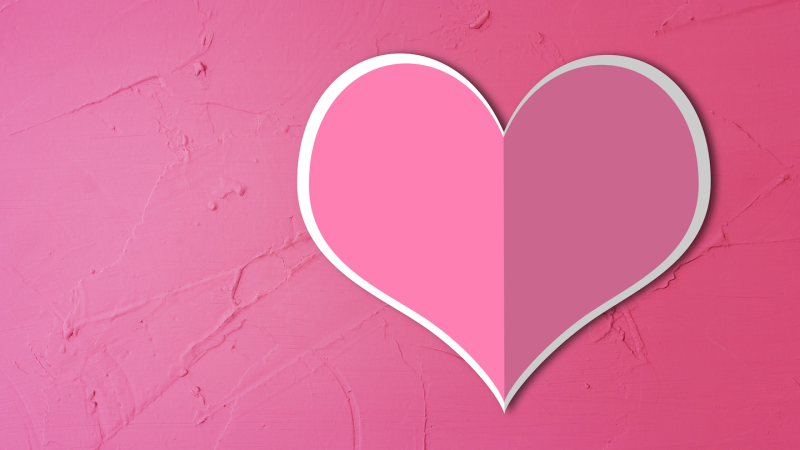
Imagine cutting a heart from a piece of paper. To ensure the two halves match perfectly, you might fold your paper in half. Then, you can cut both sides of the heart at once. When you unfold the paper, the two sides are identical. The heart is symmetrical.

The line down the center of the heart, left over from folding your paper, is called the line of symmetry. Folding a shape along a line of symmetry matches up the parts. This kind of symmetry, across one line down the middle, is called mirror symmetry. That’s because the two sides of the heart are shaped like mirror reflections of one another.

But symmetry can come in different forms. Rotational symmetry is another example. This describes a shape that you can spin into a new position that looks identical to the first one. A propeller often displays this kind of symmetry.

Symmetry appears in nature. The elegantly branching crystal shards of a snowflake often have rotational symmetry. Leaves of a tree may display mirror symmetry. The body shape of a cat or dog or person also shows this kind of symmetry. When referring to living things, biologists often use the word bilateral symmetry. It means the same thing as mirror symmetry.

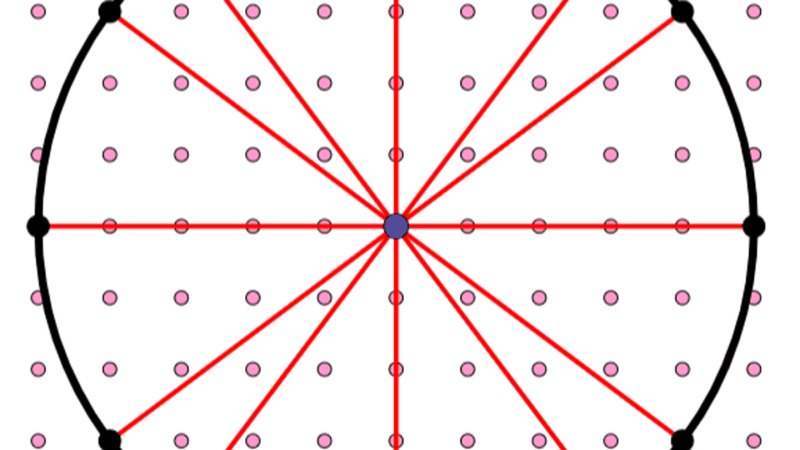
Radial symmetry is another example of symmetry in body shapes. This describes a body shape where you can draw several different lines of symmetry that cross the center. Jellyfish and starfish are examples of creatures with radial symmetry.

Not all living things are symmetrical. A marine sponge usually lacks matching parts. So, this type of body plan is described as asymmetrical.

In a sentence

Floral designs on ancient pottery suggest people understood symmetry 8,000 years ago.

Check out the full list of Scientists Say.

  •  

Scientists Say: Topology

Topology (noun, “top-AH-low-jee”)

Topology is a field of math that focuses on how molding or stretching a shape alters the space it takes up.

In a way, topology is similar to geometry. Both fields study shapes. However, geometry focuses on rigid measurements, such as the length of lines in a triangle. It answers questions like: If I change the length of this line, how will the other lines change? In geometry, the new triangle is considered a different triangle altogether.

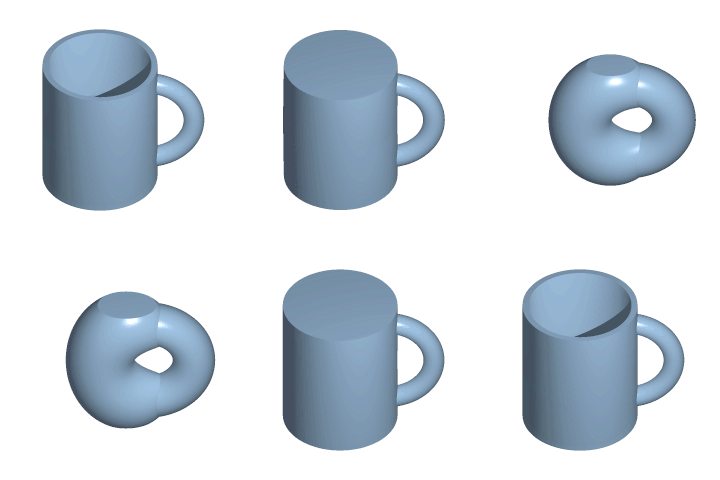
The shape of a mug can stretch and morph into the shape of a donut without cutting or adding any pieces. For that reason, a mug and a donut can be members of the same topological family. Lucas Vieira/Wikimedia Commons (Public Domain)

But topology does not focus on such rigid measurements. Instead, topology treats the study of shapes like a game. As in a game, a topologist sets out certain rules. Then, they explore what shapes are possible within those rules.

For instance, a rule might be that all the shapes in a certain family can morph into one another without tearing or gluing parts together. You could explore this yourself by squeezing a water balloon. As you watch the balloon warp, you see continuous changes to its shape. Squeezing the middle causes the outsides to bulge. But the balloon doesn’t break or form new connections. So, all the shapes the balloon takes still obey the rule.

A mathematician might say that all the shapes of this balloon belong to the same topological group.

Another rule might be that all the shapes in a group must have one hole. A donut is an obvious member of this group. But so is a mug. If you made both of these shapes out of clay, you could remold one into the other without tearing the clay or attaching any new pieces. Under the one-hole rule, they are in the same topological family.

A particularly mind-twisty rule might be that all shapes in a family have “non-orientable surfaces.” That means the shape doesn’t have a clear outside and inside. A loop with a twist in it, called a Möbius strip, is a famous example.

a light blue strip is twisted in the shape of a Mobius strip against a white background
A Möbius strip is a curious shape with no set inside or outside. A ball would be able to roll over the entire surface of the strip without having to jump from one side to the other. This is one example of a famous shape in topology.PeterHermesFurian/iStock/Getty Images Plus

Topology can be represented in many ways. Computer models can render and play with shapes. The math of algebra can describe concepts in topology, too.

Setting up rules for shapes and playing around with them is more useful than you might think. It helps scientists understand what is physically possible and impossible. Engineers can use these insights to imagine new technologies. Cosmologists use topology to describe the shape of our universe. And physicists who study string theory use it to probe the nature of matter.

In a sentence

A Möbius strip is one famous example of a curiously mind-bending shape from the field of topology.

Check out the full list of Scientists Say.

  •  

Art Fraudsters Beware: Science Has Found a Way to Tell a Fake Van Gogh from a Real One


Researchers from the Université Polytechnique Hauts-de-France have revealed a technique that successfully analyzed several Vincent van Gogh artworks at a microscopic level to correctly identify well-known, previously identified forgeries from recently authenticated ones

The research team behind the pioneering, non-invasive art authentication process said their approach could provide museums, collectors, and art auction houses with a previously unavailable tool with a proven, scientifically based track record for identifying fake or counterfeit art.

Using Microscopic-Level Surface Scans to Foil Art Forgery

According to a press release announcing the successful counterfeit identification tests, art forgery is an increasingly complex problem. However, the traditional approach of expert opinion combined with historical research and invasive pigment analysis has not always proven successful, with the study authors noting that such methods are “often inconclusive,” leaving museums and collectors to shoulder most of the risk for difficult-to-authenticate works.

More recently, collectors and auctioneers have turned to science for answers, including a report showing that AI may have identified as many as 40 counterfeit artworks sold on online marketplaces. Although no counterfeit versions of Van Gogh’s works were found, that same effort identified potentially fake versions of paintings by Monet and Renoir that were indistinguishable from authentic ones.

In 2023, researchers at the University of Sydney announced the development of a cutting-edge microscope capable of surpassing the diffraction limit. In that story, study co-author Professor Boris Kuhlmey noted that the method, which is ideal for identifying microchip irregularities, “could even be used to reveal hidden layers in artwork, perhaps proving useful in uncovering art forgery or hidden works.”

Last month, The Debrief reported the discovery of a mathematical pattern in many famous expressionist artworks, noting that many abstract artists may naturally arrange shapes and patterns in similar ways, even without knowing the mathematics behind them. If correct, this concept could use science and mathematics to separate fake Impressionist works.

Claude Monet painted Impression, Sunrise (Impression, soleil) in 1872, unknowingly giving a name to an art style and movement that science says contains an underlying mathematical pattern. Image credit: Musée Marmottan Monet, Paris.

Now, the Université Polytechnique Hauts-de-France team says their new approach takes modern technology a step further, resulting in an unprecedented level of accuracy.

“Fractal Analysis Gives Us a Measurable Fingerprint of an Artist’s Brushwork” 

Unlike the above techniques, the new approach analyzes the texture of a painting’s surface at the microscopic level by converting high-resolution images into three-dimensional surface ‘maps’ of the painting’s upper layers. According to the study authors, the extracted “texture” of a painting allows them to measure an image’s roughness and detail using fractal math. For example, the team said that the subtle patterns of an artist’s brush stroke are so consistent “that they act like a morphological signature unique to that artist.” 

“Fractal analysis gives us a measurable fingerprint of an artist’s brushwork without needing to sample or disturb the painting,” explained Francois Berkmans, the study’s lead researcher.

To test their approach, the researchers scanned several artworks attributed to Renaissance artist Vincent van Gogh. The researchers also used their technique to study the mathematical texture of an artwork called The Plowmen, which the team noted is a “well-documented fake.” Last, they used their method to analyze another Vincent van Gogh work, Sunset at Montmajur, which was authenticated in 2013.

Sunset at Montmajour is a landscape in oils painted by the Dutch artist Vincent van Gogh on 4 July 1888, but was not authenticated until 2013. By Vincent van Gogh – 1. twitter.com2. nrc.nl, image, Public Domain, https://commons.wikimedia.org/w/index.php?curid=28169507

After running their microscopic surface analysis, the team’s new system identified The Plowmen as a “strong outlier” compared to the artist’s other works. Conversely, the new method determined that the two newly authenticated paintings “aligned closely with Van Gogh’s known works.”

New Method “Strengthens” Traditional Analysis as a Complimentary Tool

When discussing the study’s results, Berkmans said their technique “can clearly point out genuine artists and reliably detect known forgeries.” Along with identifying fakes and authentic works, the team said that the new approach successfully separated Van Gogh’s stylistic signatures from those of 17th‑century painter David Klöcker Ehrenstrahl, an achievement they heralded as demonstrating the technology’s “wider potential.” 

Although the new approach had successes, the team said it is not designed to replace current approaches, including complementary analyses such as the chemical examination of materials. Instead, they said their surface-texture approach should be used as a complementary tool to strengthen authentication, resulting in a multifaceted approach that can reduce risk for collectors, museums, and auction houses alike.

“This approach won’t replace traditional expertise, but it significantly strengthens it.”

The study “Preserving Van Gogh’s Painterly Heritage: Topographical and Fractal Insights in Authentication” was published in Surface Topography Metrology and Properties.

Christopher Plain is a Science Fiction and Fantasy novelist and Head Science Writer at The Debrief. Follow and connect with him on X, learn about his books at plainfiction.com, or email him directly at christopher@thedebrief.org.

  •  
❌