Seis anos depois do seu lançamento, a Reincubate enfim anunciou uma versão do Camo Studio para iOS, permitindo que os usuários realizem transmissões ao vivo para diferentes plataformas diretamente do iPhone, com o uso tanto da câmera frontal quanto das traseiras do aparelho.
Segundo a desenvolvedora, o suporte nativo ao iPhone permite importar as mesmas cenas, camadas e efeitos utilizados na versão de iPad, agora adaptados para a tela dos celulares:
Camo Studio for iPhone is here (and it's free!) so you can stream from anywhere. Use up to 2 cameras for just chatting, podcast, IRL streams & more, or capture and stream your mobile gameplay – all with just your iPhone.
O Camo Studio para iPhone está aqui (e é grátis!) para que você possa transmitir de qualquer lugar. Use até duas câmeras para conversas, podcast, transmissões IRL e mais, ou capture e transmita seu gameplay mobile – tudo apenas com o seu iPhone.
De acordo com o CEO e fundador da Reincubate, Aidan Fitzpatrick, o aplicativo já chegou “cuidadosamente otimizado” para o iPhone Duo, somando-se a uma lista crescente de apps que levaram o dobrável da Apple em conta no seu desenvolvimento.
Camo Studio is now on iPhone, thoughtfully optimised for iPhone Duo. Stream, create, record — all free. We hope you love it. ❤️ https://t.co/uTD6AtnYwl
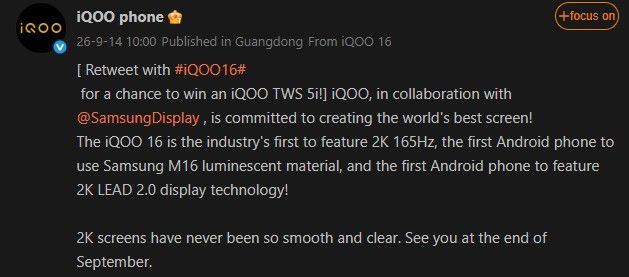
The iQOO 16 is set to debut as the first smartphone with a 2K resolution OLED display running at a 165Hz refresh rate.
Co-developed with Samsung Display on a dedicated production line, the panel marks the Android debut of Samsung's latest M16 luminescent material and LEAD 2.0 architecture.
The screen reaches 2,800 nits global peak brightness (10,000 nits local peak), features 508 PPI, and delivers sub-pixel-level calibration for color accuracy.
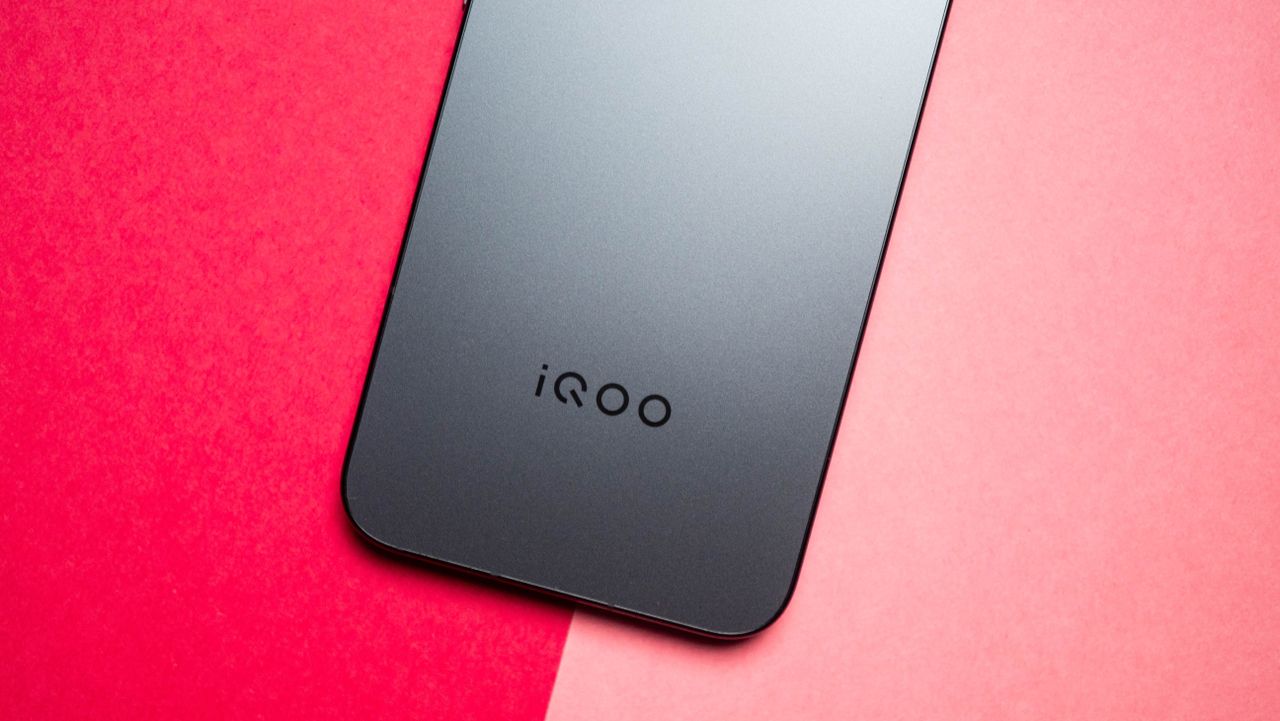
Rumor has it that the iQOO 16 will be released soon, and iQOO has now confirmed one of the upgrades that could make this gaming-focused flagship stand out from the crowd. The next phone from the company is said to be the first to sport a 2K OLED panel with a 165Hz refresh rate from Samsung, which iQOO is calling a smartphone first.
The announcement also confirms earlier reports that the iQOO 16 would sport Samsung’s newer M16 OLED technology. The company says the phone will be the first Android smartphone to use the material, along with its new 2K LEAD 2.0 technology.
For context, we saw the original LEAD OLED panel debut with the iQOO 15. LEAD 2.0 has been developed in partnership with Samsung, built on a dedicated production line just for iQOO’s flagship.
The two companies also designed a custom high-refresh-rate display IC and a dedicated production line for the phone.
(Image credit: iQOO / Weibo)
The panel is rated at 2,800 nits for global brightness and 10,000 nits for local brightness. It also offers 508 ppi, wide P3 color coverage, DC dimming, and better brightness and color uniformity than the iQOO 15. iQOO also claims sub-pixel-level calibration leads to extremely tight color accuracy.
There is also a less obvious upgrade here: Samsung recently said the new display uses roughly 31 percent less power at 150 nits than a similarly sized 1.5K panel. That’s particularly useful, as improving both resolution and refresh rate often comes with a battery cost.
The target is clearly gaming. The display features 500Hz multi-touch sampling and 5,000Hz instantaneous sampling rate, while iQOO’s Q-Flex technology focuses on reducing input lag. There’s also 3,300Hz PWM dimming and many eye-comfort features.
The iQOO 16 is expected to launch in China sometime near the end of September. If the rest of the hardware is up to the mark as this display, the top gaming flagships out there will have a serious new competitor on their hands.
A Uber anunciou hoje no Brasil o lançamento de um recurso que dará a pais e responsáveis a possibilidade de monitorar por vídeo as corridas solicitadas por adolescentes, segundo informações do Tecnoblog.
Disponível nos Estados Unidos desde o mês passado, a novidade será disponibilizada gradualmente na modalidade Uber conta Teens, que é feita para usuários entre 12 e 17 anos de idade.
Assim que a corrida for solicitada, pais e responsáveis serão notificados sobre a possibilidade de acompanhar uma transmissão ao vivo, que é encerrada automaticamente ao final do trajeto. As imagens capturadas também ficarão disponíveis na forma de uma gravação criptografada.
Divulgação/Uber
Há, no entanto, uma limitação importante: a disponibilidade da transmissão dependerá das condições técnicas do celular do motorista, o que dá a entender que o recurso não poderá ser ativado em certas situações mesmo que o usuário já o tenha configurado (outro requisito da novidade).
A Uber também aproveitou o anúncio para reforçar que as viagens solicitadas por adolescentes são oferecidas apenas para motoristas experientes, além de contar com todos os recursos disponíveis nas corridas para adultos (U-Áudio, U-Ajuda e U-Acompanha). Adolescentes do sexo feminino, inclusive, podem solicitar viagens apenas com motoristas mulheres (U-Mulheres) — algo já disponível para usuárias adultas.
As corridas para adolescentes passam a ficar disponíveis depois que o usuário configura um perfil familiar no app da Uber — algo que pode ser feito em Conta » Família.
3D render claiming to depict Apple’s first foldable iPhone (image: Jon Prosser)
Even before its unveiling, Apple’s first foldable iPhone has already become the design benchmark the rest of the industry is racing to copy. Google, Oppo and Vivo are now preparing to adopt the same dual ultra-thin glass (UTG) structure Apple pioneered, TheElec reports citing industry sources.
The dual-UTG approach places one sheet of ultra-thin glass above the OLED panel as the cover window and a second sheet beneath it for structural support. The upper layer, thinned to tens of micrometers, protects the display from impacts and scratches while still folding repeatedly. The lower layer spreads stress around the hinge and stiffens the panel from below. Together, the two glass layers give manufacturers tighter control over rigidity and folding stress, which helps reduce the crease that has long defined cheaper foldables.
Apple chose this construction as a late entrant precisely because it wanted to minimize crease visibility and raise overall quality rather than simply match existing products. That decision is now being treated as the new premium standard. Samsung Display is already building dual-UTG OLED prototypes to the specifications of Google, Oppo, and Vivo, working with partner Dowoo Insys on both the upper and lower glass layers. Mass production is targeted for the companies’ 2027 launches.
Samsung’s own Galaxy Z Fold8 series takes a different route: a single UTG layer on top plus a titanium alloy film and reinforced titanium plate underneath. That architecture is simpler and cheaper to manufacture at scale. Apple’s rivals, however, have decided the extra glass is worth the cost. Oppo and Vivo in particular have made crease reduction and durability central selling points for their Find N and X Fold lines. Google is expected to follow the same path with its next Pixel Fold.
The three companies all sell book-style foldables — the Pixel Fold series, Find N series, and X Fold series. Their current flagships are the Pixel 11 Pro Fold, Find N6 and X Fold6. New models using dual UTG are slated for early 2027 at Oppo, the first half of the year at Vivo, and the second half at Google.
For the UTG supply chain the shift is unambiguously good news. Even if overall foldable shipments stay flat, each device will now consume two sheets of glass instead of one. Apple’s decision to lead with dual UTG did not just improve its own product; it doubled the material content the rest of the market is now lining up to use.
MacDailyNews Take: Apple leads. All others follow. As usual.
As with fingerprint and facial recognition, when Apple debuts a foldable iPhone, then foldable smartphones will have been done right. – MacDailyNews, January 17, 2019
Please help support MacDailyNews — and enjoy subscriber-only articles, comments, chat, and more — by subscribing to our Substack: macdailynews.substack.com. Thank you!
Fomos procurar quais os smartphones com as melhores câmaras à venda em Portugal, dividindo-os em duas categorias, sem limite de preço e até 500 euros. Explicamos também quais os critérios que deve ter em contra na hora de escolher.
La notizia delle scorse ore, invece, è più “pesante”. Vivo infatti ha svelato ufficialmente le caratteristiche principali di X Fold 6, facendo un po’ il punto su quello che è emerso a sprazzi nelle settimane passate da fonti ufficiali e non. Quello che leggerete a seguire, pertanto, è materiale ufficiale. Il “cuore” di X Fold 6 sarà l’ultimo chip top di gamma MediaTek, il Dimensity 9500 Super Edition che Vivo valorizzerà con l’ottimizzazione Blue Crystal, dai dettagli ancora sconosciuti.
La gestione sarà affidata al sistema OriginOS 6 Fold, con il suffisso Fold che indica in maniera abbastanza inequivocabile come il firmware contenga delle ottimizzazioni specifiche per i maggiori spazi che uno schermo pieghevole mette a disposizione. In tal senso c’è anche una versione migliorata di Atomic Workbench, pensata per supportare la gestione di tante attività, magari da eseguire simultaneamente sull’ampio schermo interno. Non mancherà, per espandere il tutto, una modalità desktop, e nemmeno l’attenzione ai task AI.
Manca poco alla presentazione ufficiale di Vivo X Fold 6, annunciata in settimana per il 26 giugno. Ma l'azienda ha scelto di ingannare l'attesa condividendo alcune informazioni sul suo nuovo pieghevole in anticipo sul lancio. Le ultime anticipazioni si concentrano su autonomia, resistenza e connettività.
I rumor parlavano di una batteria importante, e ci hanno visto giusto: Han Boxiao, Product Manager di Vivo, ha confermato che avrà una capacità da ben 7.000 mAh, notevole in assoluto e soprattutto se si considera che stiamo parlando di un foldable.
Per raggiungere questo risultato, Vivo ha adottato tecnologie particolarmente avanzate. L'azienda parla infatti di una batteria basata su una nuova soluzione con anodo al silicio di quinta generazione, affiancata da una tecnologia a stato semi-solido di terza generazione. Questa soluzione ha consentito di aumentare la densità energetica (rispetto ai già rispettabilissimi 6.000 mAh di Vivo X Fold5) senza compromettere spessore e peso del dispositivo.
Além de uma câmara principal de 200 MP e de uma telefoto periscópica ZEISS APO, o dobrável Vivo X Fold 6 será compatível com um teleconversor, que permite alcançar uma distância focal equivalente até 200 mm.

 Login