❌

Reading view

Insta360 revela microfone intermediário com tela eink e expansão via microSD

A Insta360 lançou hoje o Insta360 Mic, adição intermediária à sua linha de microfones (que já inclui o Mic Air e o Mic Pro), contando com uma tela eink personalizável e armazenamento expansível via microSD.

Pensado para criadores de conteúdo que buscam recursos mais sofisticados de áudio sem investir em um modelo topo de linha, ele é ideal para vlogs do cotidiano, gravações de esportes nos fins de semana, viagens, transmissões ao vivo e conversas em grupo.

O painel eink customizável permite a inserção de logos, emojis, animais de estimação, paisagens ou elementos da identidade visual do criador.

Tela E-Ink do Insta360 Mic
Divulgação/Insta360

Para quem adquirir apenas o receptor, é possível utilizar o Insta360 Mic com as câmeras da fabricante (Insta360 X6, X5, Luna Ultra, Luna Pro, GO Ultra e Ace Pro 2), bem como com smartphones, tudo via Bluetooth. Outra alternativa para as gravações é o cartão microSD, que permite armazenar os áudios capturados pelo produto.

Com o cartão microSD inserido, o Mic é capaz de gravar áudios em ponto flutuante de 32 bits diretamente no transmissor e conta com um chip dedicado à supressão de ruído, baseada na NPU 1Neural processing unit, ou unidade de processamento neural. do microfone, que reduz sons ambiente com maior intensidade.

MicroSD no Insta360 Mic
Divulgação/Insta360

O dispositivo tem dois modos de ganho automático: o Dynamic equilibra as variações de volume para manter a coesão sonora, enquanto o Auto ajuda a evitar a saturação de som. Ele conta ainda com três predefinições de timbre (Regular, Rich e Bright) para ajudar a preservar as características naturais da sonoridade captada.

Assim como o do Mic Pro, um único receptor do Mic se conecta a até quatro transmissores ao mesmo tempo, o que inclui produções com múltiplas câmeras (que podem receber o áudio de até dois receptores simultaneamente).

Câmeras com o Insta360 Mic
Divulgação/Insta360

De acordo com a fabricante, cada transmissor possui até 13 horas de bateria com uma única carga, enquanto a case de carregamento amplia essa autonomia para até 34 horas.

Preço e disponibilidade

O Insta360 Mic está disponível na loja oficial da Insta360, com a seguinte relação de valores (em dólares) para o Brasil:

  • Insta360 Mic (dois transmissores + um receptor): US$250;
  • Insta360 Mic (um transmissor + um receptor): US$140;
  • Um transmissor Insta360 Mic: US$80.

NOTA DE TRANSPARÊNCIA: O MacMagazine recebe uma pequena comissão sobre vendas concluídas por meio de links deste post, mas você, como consumidor, não paga nada a mais pelos produtos/serviços ao usar os nossos links de afiliado.

Notas de rodapé

  • 1
    Neural processing unit, ou unidade de processamento neural.

  •  

Vídeo: review do Apple Watch Series 12 (vindo de um Ultra 2)

O vídeo com o meu review do Apple Watch Series 12 já está no ar. Eu vinha do Ultra 2 e fiz o caminho inverso, voltando para a linha normal, o que vai contra a escolha da maioria das pessoas.

Mesmo adorando o Ultra, eu não usava tudo o que ele oferece. A bateria do Series 12 me atende (não durmo com o relógio), a tela de 2.000 nits não me incomodou, e ganhei um relógio mais fino, mais leve e confortável, com a Digital Crown mais “solta”.

Sinto falta do botão de Ação, que eu usava para a lanterna, e do mostrador Modular Ultra, mas nada disso é deal breaker. Entre os destaques estão o chip (S11) ligeiramente mais rápido, os sensores que medem a frequência cardíaca a cada cinco segundos, o Shazam e o Reconhecimento de Sons funcionando muito bem e o Ceramic Shield 2, que sobreviveu intacto a uma queda de tela para baixo no chão do banheiro.

Como pontos negativos, Sinais Vitais e Prontidão exigem dormir com o relógio, então ficaram inúteis para mim, e o Live Rewind e o Siri Recap ainda não chegaram.

Assista ao vídeo completo e conte nos comentários: você também faria esse “downgrade”?


APOIO: Insider

Logo da Insider

A Black Friday chegou mais cedo na #InsiderStore! Aproveite até 40% OFF em todo o site, mais um desconto extra usando o cupom MACMAGAZINE. E tem também brindes progressivos e cumulativos: ganhe meias em compras a partir de R$399, cueca Comfort ou calcinhas Brief e Safe a partir de R$599, e boné ou sutiã a partir de R$799. Acesse o link para conferir as ofertas e aproveitar a #BFAdiantadaInsider da Insider!

  •  

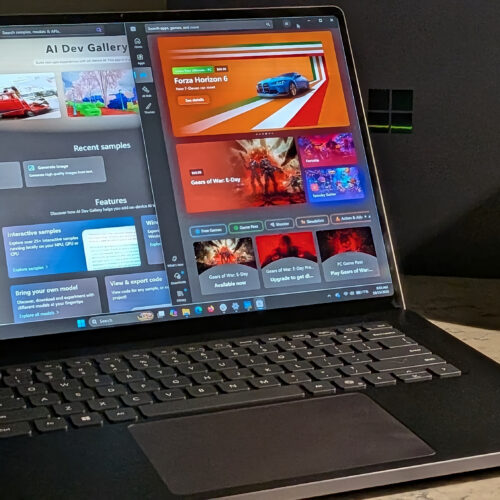
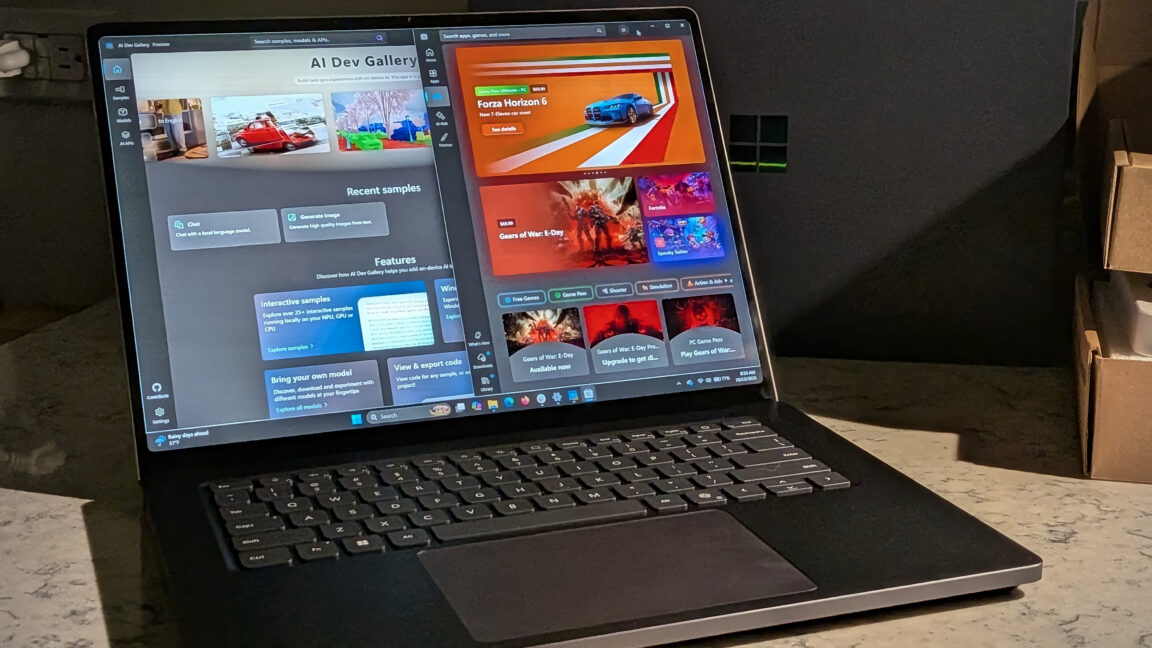
The Surface Laptop Ultra delivers on most of Microsoft's promises

Over the past week, the laptop Microsoft sent me has been summarizing books and movies, generating images from my imagination, and running a 70-billion-parameter AI model that would be a stretch to fit on most laptops. It also played AAA games at a speed and fidelity I would have thought impossible on an ARM system just a year ago. Microsoft wants to sell you one computer for all of your needs, and for once that doesn't feel like total marketing fluff. Mostly.

Microsoft is throwing both arms around the new Nvidia RTX Spark platform with the Surface Laptop Ultra—and setting its sights on the would-be MacBook Pro buyer, or as the company called it, "a high performance audience." The bet is that rather than a gaming desktop for fun and a development laptop for work, buyers will pay more for one machine that does both.

The Surface Laptop Ultra arrives at a strange time in personal computing. Recent industry numbers showed a 20 percent drop in total PC shipments year over year in the third quarter of 2026. That's not just consumer purchasing either—that's across the board. Between the RAMpocalypse that has exploded consumer prices and an industry fixated on enterprise money, there hasn't been much new hardware to excite PC enthusiasts.

Read full article

Comments

  •  

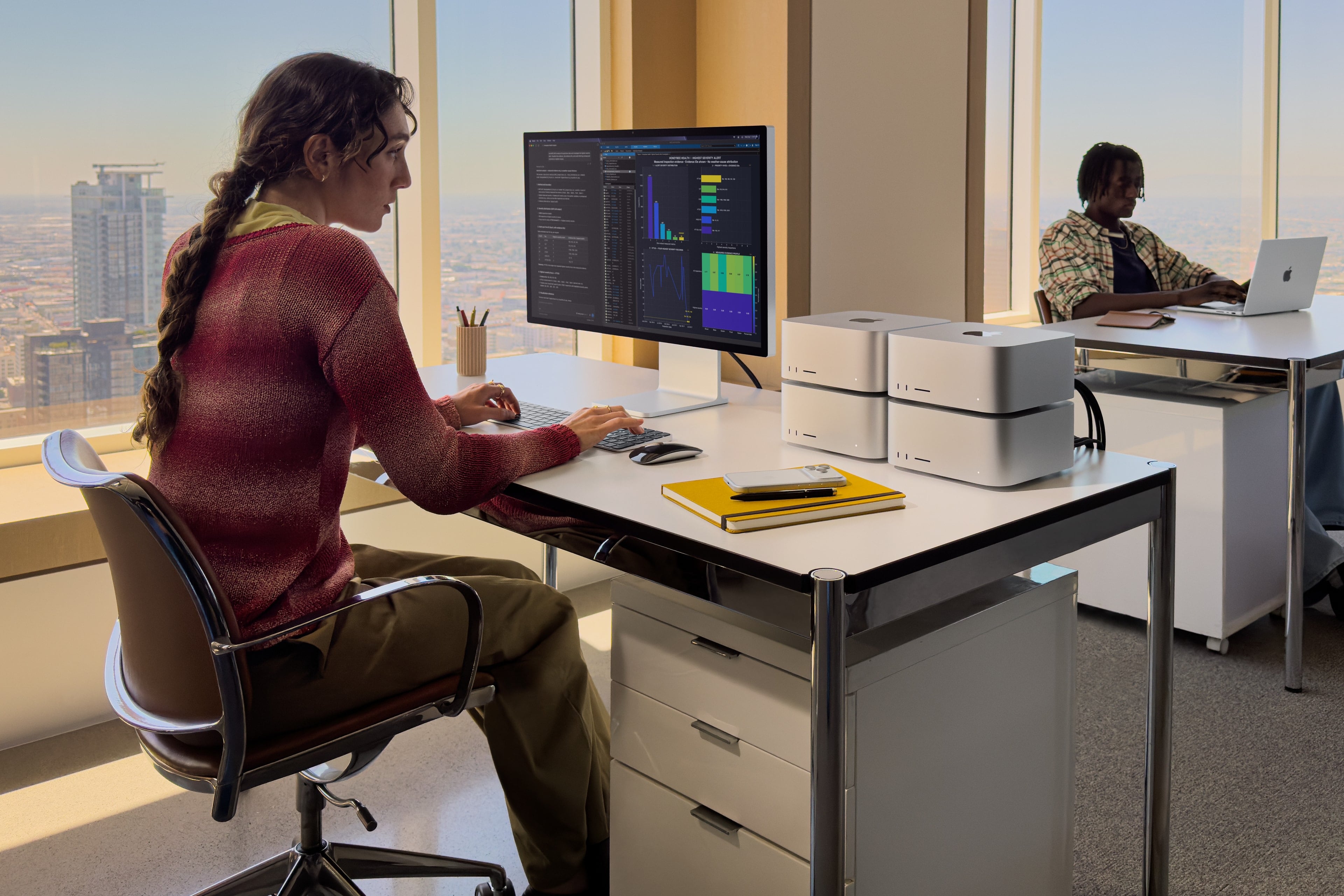
Meta Releases Muse Spark Open, an Over 800 Billion Parameter Model That Can Run Locally on Multiple M5 Ultra Mac Studios

Meta just released the weights for Muse Spark Open, a multimodal large language model with a mixture-of-experts architecture. It has over 800 billion parameters in total, with 40 billion active per token, and it can run on the latest Mac Studios.

Meta worked closely with Apple to make that happen specifically on the M5 Ultra Mac Studio with the support of MLX, the Apple-led, open-source machine-learning framework. The result is a frontier-class model that can be run locally on desktop hardware.

Apple’s Machine Learning Research blog put the M5 Ultra through its paces standalone and connected with other M5 Ultra Studios, and the results are impressive. If you’re at all interested in running LLMs locally, it’s worth checking out all the details, but a few things jumped out at me:

  • The M5 Ultra’s time to first token exceeds the M3 Ultra by 4.6x thanks to the M5 Ultra’s Neural Accelerators.
  • Tokens generated by the M5 Ultra beat the M3 Ultra by 1.6x.

However, thanks to MLX’s support of RDMA over Thunderbolt 5, big models like Muse Spark Open can be split across multiple M5 Ultra Mac Studios accelerating tasks further. For very large contexts that means a time to first token that’s up to 1.8x faster, but it’s also what lets the model fit onto desktop hardware because even the 4-bit version of Muse Spark Open requires 493GB of memory.

Some of Apple’s testing was done with the 512GB model of the M5 Ultra Mac Studio, which is slated for release at the end of the year. Apple hasn’t said how much the new model will cost, but for context, the 256GB model with 2TB of storage will set you back over $11,000. So the 512GB model isn’t your typical consumer purchase, even more so since running Muse Spark Open requires at least two of them.

However, that doesn’t make this any less of an accomplishment. Muse Spark Open is at the bleeding edge of models that can be run locally on computers that can sit on your desk and don’t need more power than can be delivered from a wall outlet. That’s made possible by the unique combination of Apple silicon and updates to MLX. Plus, with the pace of advancements in AI and Apple silicon hardware, what may only meet enterprise budgets today could become accessible to more consumers faster than most of us might expect.

  •  

Projeto adapta o iOS 16 para rodar em… smartphones Android

A ideia de rodar o iOS em um smartphone Android parece absurda, mas se tornou realidade com o projeto Hackios.

A proposta é do usuário do GitHub ios-sweet, que substituiu o kernel Linux dos smartphones Android pelo XNU, desenvolvido pela Apple para iOS, iPadOS, macOS, watchOS, tvOS e visionOS.

Quando o dispositivo Android é inicializado, o sistema reconhece o celular como um iPhone X — dispositivo que foi escolhido por não ter o código de autenticação de ponteiros (Pointer Authentication Code, ou PAC), assim como o Redmi Note 10 Pro, da Xiaomi, usado na adaptação inicial.

Já circulam vídeos do sistema adaptado ao Redmi Note 12 Pro, ainda com dificuldades notáveis de desempenho:

Embora o código do iOS permaneça fechado, o XNU do macOS foi liberado pela Apple. Pelos indícios nos documentos incluídos nos arquivos do projeto, o iOS foi adaptado com o auxílio de inteligência artificial (IA).

Depois de ligado, o celular carrega uma imagem intermediária no bootloader, que inicia o XNU em uma partição formatada para simular o armazenamento do iPhone X, com uma cópia do iOS 16.7 — a versão mais recente do sistema disponibilizada ao aparelho.

Alguns apps nativos são carregados junto com a Tela de Início, e os toques e gestos para alternar entre eles (além dos botões de volume e de liga/desliga) são reconhecidos, mas o celular não consegue ativar as câmeras, o som e a GPU 1Graphics processing unit, ou unidade de processamento gráfico., nem usar dados móveis, Bluetooth e Wi-Fi.

Além do Redmi Note 10 Pro, a adaptação já tem versões para o Redmi Note 12 Pro e o LG V60, enquanto outros aparelhos (como OnePlus 7T, Redmi 5 Plus e Galaxy S23 Ultra) foram listados, mas ainda não têm versões disponíveis para download.

Para quem tem um aparelho compatível e quiser se aventurar, vale conferir o site do projeto, que disponibiliza o download na página do desenvolvedor no GitHub.

via Android Authority

Notas de rodapé

  • 1
    Graphics processing unit, ou unidade de processamento gráfico.

  •  

Apple Watch Alerts Veteran to Hidden Sleep Apnea Danger

Air Force veteran David Aladejobi did not think much of the notification when his Apple Watch buzzed with a health warning. The 38-year-old was used to checking the time or paying for groceries with the device. But this small alert eventually led him to a doctor, where he discovered a serious, undiagnosed health condition hiding […]

The post Apple Watch Alerts Veteran to Hidden Sleep Apnea Danger appeared first on The Mac Observer.

  •  

Apple realizará mais um evento para lançar novos produtos, agora em 28/10!

O que era esperado foi confirmado hoje! A Apple acaba de convidar a imprensa para o seu segundo evento especial do mês, que acontecerá na quarta-feira da semana que vem (28 de outubro), às 10h pelo horário de Cupertino (14h em Brasília; 17h em Lisboa).

A expectativa gira em torno do lançamento de novos Macs, especialmente um novo MacBook (até agora chamado de “MacBook Ultra”), que possivelmente contará com uma tela OLED 1Organic light-emitting diode, ou diodo emissor de luz orgânico. sensível ao toque e será bem mais leve que os Pros atuais. Além dele, porém, são aguardados um novo MacBook Pro de 14 polegadas e um iMac, ambos equipados com o chip M6, bem como um novo iPad mini (também com tela OLED).

Can’t wait to pro and tell next week. pic.twitter.com/3wUkxwq35i

— Greg Joswiak (@gregjoz) October 19, 2026

Como falamos, trata-se do segundo evento do mês da Apple, após o lançamento do HomeView, da nova Apple TV 4K e do HomePod mini 2 na semana passada.

O esquema deverá ser bem similar ao da semana passada, que ocorreu em Nova York, sem keynote transmitida ao vivo; o próximo, por sua vez, será em Los Angeles:

Apple event invite just hit for October 28th. I think this one's pretty clear. Macbook Pro update incoming pic.twitter.com/UfSpr2s7py

— Marques Brownlee (@MKBHD) October 19, 2026

Sobre os lançamentos do próximo evento, como noticiamos hoje mais cedo, é bem provável que eles cheguem ao mercado no dia 6 de novembro.

Fim de ano cheio de novidades da Maçã, hein! 😅

Notas de rodapé

  • 1
    Organic light-emitting diode, ou diodo emissor de luz orgânico.

  •  

Apple Stores estariam se preparando para lançamento em 6 de novembro

Depois de detalhar uma possível nova versão do HomeView planejada para ser lançada em 2027, o jornalista da Bloomberg, Mark Gurman, comentou na última edição da sua newsletter “Power On” que as Apple Stores estariam se organizando para mais um lançamento em 6 de novembro (uma sexta-feira), que poderá ser destinado a um produto revelado no suposto “evento” que a empresa realizará no dia 27 de outubro.

Considerando que — ainda de acordo com ele — esse evento poderá revelar o “MacBook Ultra” (modelo com tela OLED 1Organic light-emitting diode, ou diodo emissor de luz orgânico. sensível ao toque), um novo iMac com o chip M6, a nova geração do iPad mini (com tela OLED) e uma nova versão do MacBook Pro de 14 polegadas com o chip M6, qualquer um desses produtos passa a ser candidato a esse lançamento — ou todos juntos, é claro.

Apple plans a retail store reset for Nov. 6, indicating potential new Mac release timing. More in Power On: https://t.co/imlJIzWeaS

— Mark Gurman (@markgurman) October 18, 2026

Caso o rumor se concretize, a Apple terá um lançamento para cada sexta-feira pelas próximas quatro semanas, começando com o iPhone Duo e concluindo o cronograma com a chegada da nova Apple TV 4K e do HomeView, revelados junto com o HomePod mini 2 na última terça-feira (13/10).

A relação de lançamentos ficaria mais ou menos assim:

  • 23 de outubro: iPhone Duo
  • 30 de outubro: HomePod mini 2
  • 6 de novembro: novos Macs e/ou novo iPad mini
  • 13 de novembro: HomeView e Apple TV 4K

Falando em iPhone Duo…

Escassez do Duo pode aumentar as vendas do 18 Pro?

O jornalista também aproveitou o espaço para comentar a pré-venda do dobrável da Apple, classificada por ele como “desastrosa”, já que os prazos de entrega estão em janeiro (no caso dos Estados Unidos) ou em fevereiro (no caso do Brasil)!

Apple’s iPhone Duo preorders were an absolute disaster. That may help the iPhone 18 Pro. More in Power On: https://t.co/qX4Wp8R6sc

— Mark Gurman (@markgurman) October 18, 2026
A pré-venda do iPhone Duo da Apple foi um desastre absoluto. Isso talvez ajude o iPhone 18 Pro. Mais em “Power On”.

Segundo ele, a Apple cometeu um “erro grave” ao manter o lançamento do Duo no início do primeiro trimestre fiscal sem ter um grande estoque do aparelho em escala global, em vez de lançar o produto inicialmente apenas nos Estados Unidos e na China. A empresa também poderia ter a intenção de oferecer os iPhones 18 Pro/18 Pro Max como alternativas ao Duo.

iPhone Duo

iPhone Duo

Cores: branco-estrela ou céu noturno
Armazenamento: 256GB, 512GB, 1TB ou 2TB
R$ 21.999,00
iPhone 18 Pro Max

iPhone 18 Pro Max

Cores: bordô, glacial, prateado e preto
Armazenamento: 256GB, 512GB, 1TB ou 2TB
R$ 12.999,00
iPhone 18 Pro

iPhone 18 Pro

Cores: bordô, glacial, prateado e preto
Armazenamento: 256GB, 512GB, 1TB ou 2TB
R$ 11.126,19
R$ 11.999,00

NOTA DE TRANSPARÊNCIA: O MacMagazine recebe uma pequena comissão sobre vendas concluídas por meio de links deste post, mas você, como consumidor, não paga nada a mais pelos produtos/serviços ao usar os nossos links de afiliado.

Notas de rodapé

  • 1
    Organic light-emitting diode, ou diodo emissor de luz orgânico.

  •  

HomeView poderá ganhar versão com tela maior e braço articulável em 2027

Na edição mais recente da sua newsletter “Power On”, o jornalista (da Bloomberg) Mark Gurman comentou uma possível nova versão do HomeView, com uma tela maior e um braço robótico articulado.

De acordo com ele, o novo modelo chegaria às lojas em 2027 e contaria com uma tela de 9 polegadas, 2″ a mais do que o produto revelado recentemente pela Apple. O braço articulado permitiria ainda que o visor fosse girado em até 360 graus, e o nome do produto poderia ter sufixos como “Ultra”, “360” ou “Max”.

Power On: Apple’s new HomeView shows the undeniable potential of a higher-end version with a robotic arm. https://t.co/NVMPS3cJOo

— Mark Gurman (@markgurman) October 18, 2026
“Power On”: o novo HomeView da Apple demonstra o potencial inegável de uma versão mais sofisticada com um braço robótico.

Na avaliação do jornalista, essa nova versão não seria um sucessor ou uma nova geração do HomeView, mas uma “opção mais sofisticada” do produto revelado na semana passada, posicionada “em uma categoria superior”.

A variante com um braço robótico poderia permitir, por exemplo, que a tela do aparelho acompanhasse a movimentação do usuário enquanto ele circulasse pela cozinha durante uma chamada pelo FaceTime, ou se voltasse para quem estivesse falando, caso haja uma família reunida (já que, mesmo em sua versão original, o HomeView é projetado para reconhecer até seis pessoas diferentes).

Veremos o que vem por aí…

  •  

PSA: watchOS 27 Removes This Useful Feature From Your Apple Watch

Apple released watchOS 27 on September 14, bringing a new Audio Intelligence feature set to its latest Apple Watch models, but as a result, owners of previous models are set to lose out doubly in the process.


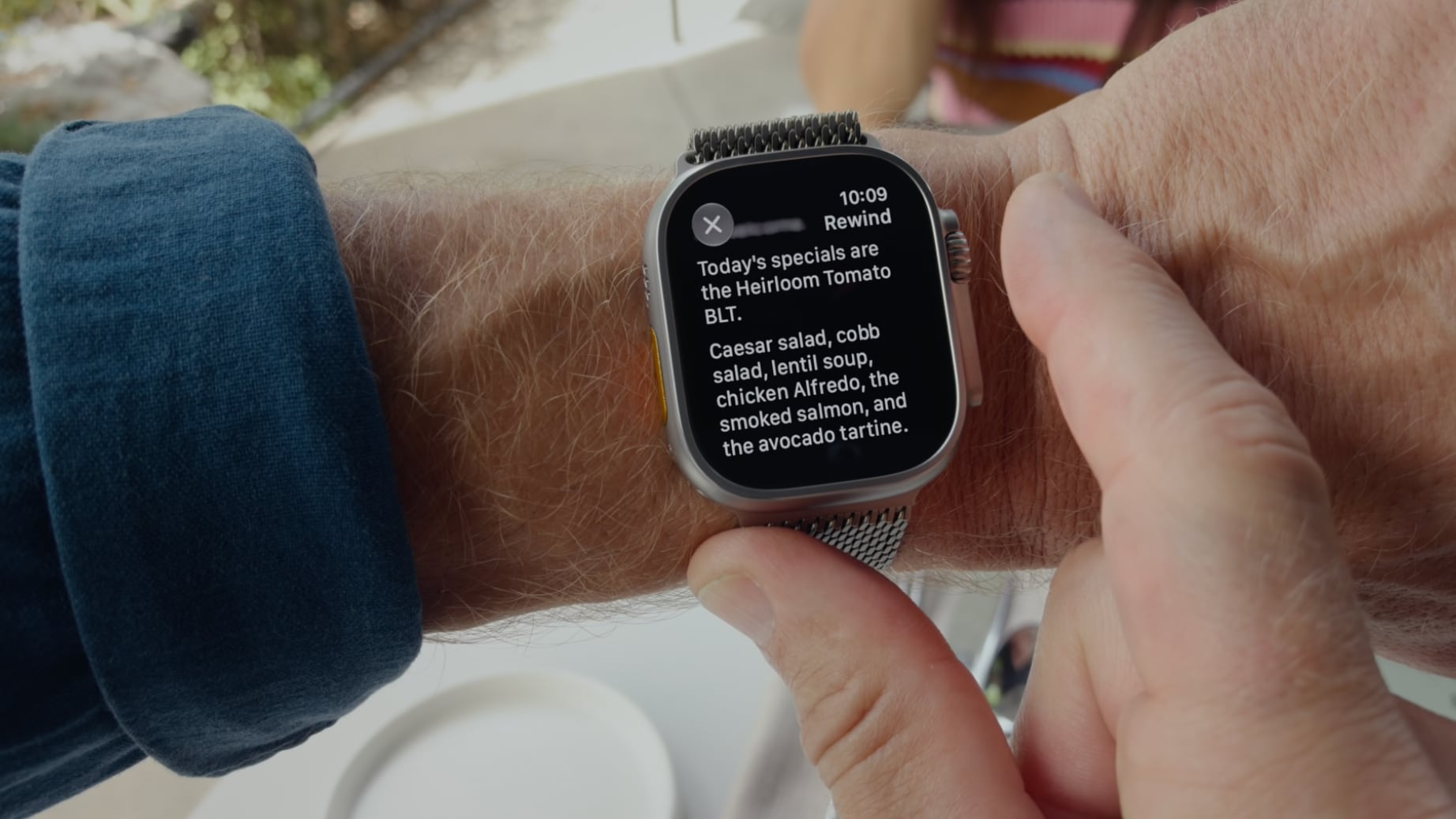
Apple Watch Series 12 and Ultra 4 models later this year will get Live Rewind, a feature that provides a transcript of any spoken audio that was picked up by the device in the last 15 seconds. To activate the feature, users need to double-click the Digital Crown.

Unforunately, this double-click action is the same one that in watchOS 26 switches between the current app and the previously used app – or indeed the watch face and the last used app.

It's a neat way of multitasking on your Apple Watch without tapping the display.

Needless to say, this feature will no longer work for anyone upgrading to Apple Watch Series 12 and Ultra 4 models when the devices are released on September 18. Apple has reserved the double-click action for when its new Live Rewind feature is activated later this year.

However, what's arguably more frustrating is that owners of older Apple Watch models who update to watchOS 27 will also lose the ability to jump between apps using the Digital Crown double-click.

After updating to watchOS 27, the Digital Crown double-click no longer works to switch between apps. All it does is bring up the new dynamic app grid, which is the same behavior that a single click offers. This is despite the fact that the new Live Rewind feature is hardware-bound to the Apple Watch Series 12 and Ultra 4. Owners of previous models are simply out of luck in both senses, losing a useful function while also missing out on the new feature that usurps it.

It also throws up another problem for new Series 12 and Ultra 4 owners: What if people don't want to go near the Live Rewind feature and its privacy implications? Apple could have made the double-click action work to switch between apps as it does in watchOS 26, while also providing an option to assign the action to Live Rewind if that's preferred.

Apple currently doesn't provide options to resolve the situation for either group of users, so all we can do is provide feedback to Apple and hope the company hears enough demand for it to change course in watchOS 27.1 or a later update.

Pre-orders for the Apple Watch Series 12 and Ultra 4 are available now ahead of a Friday, September 18 launch.
Related Forum: Apple Watch

This article, "PSA: watchOS 27 Removes This Useful Feature From Your Apple Watch" first appeared on MacRumors.com

Discuss this article in our forums

  •  

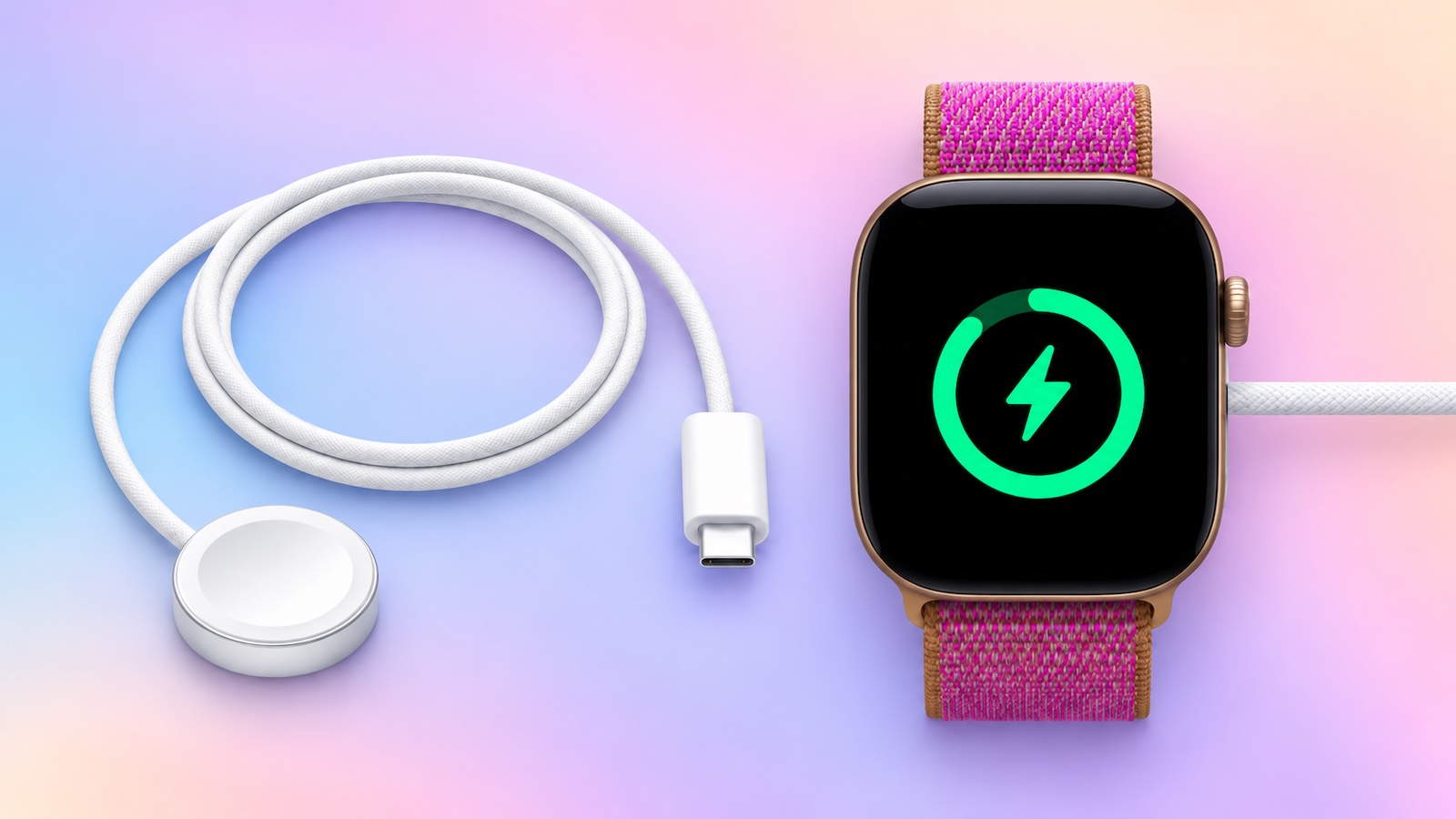
Here's Why a New Apple Watch Charging Puck Was Just Released

The new Apple Watch Series 12 and Apple Watch Ultra 4 have hardware changes that allow for faster charging, but you will need to use the new version of the Apple Watch Magnetic Fast Charger included in the box in order to achieve this boost. If you need extra ones for your own charging stands or travel or so forth, Apple released the new version of the charger on its online store last week, with U.S. pricing set at $29.


We have confirmed that the new version of the Apple Watch charging puck — model A3277 — can deliver up to 10W of power to enable the faster charging speeds. The previous version of the charger is limited to 5W. Accordingly, you will also need to use a USB-C Power Delivery charger that is rated 10W or higher for the fastest charging.

With just 15 minutes of charging, Apple said the new charger can add 12 hours of battery life to the Series 12 and 18 hours of battery life to the Ultra 4.

The previous Apple Watch Series 11 and Apple Watch Ultra 3 can get 8 hours and 12 hours of battery life respectively with a 15-minute charge, according to Apple. Using the new charging puck will not speed up these times, as the Series 12 and Ultra 4 have hardware changes, so you need both a new watch and the new charger for the fastest charging.


Model New Charger Previous Charger
Apple Watch Series 12 12 hours of battery life in 15 minutes 8 hours of battery life in 15 minutes
Apple Watch Ultra 4 18 hours of battery life in 15 minutes 12 hours of battery life in 15 minutes
Apple Watch Series 11 8 hours of battery life in 15 minutes 8 hours of battery life in 15 minutes
Apple Watch Ultra 3 12 hours of battery life in 15 minutes 12 hours of battery life in 15 minutes


As mentioned, the new 1-meter Apple Watch Magnetic Fast Charger to USB-C Cable is available to order for $29 U.S. on Apple's online store.
Related Forum: Apple Watch

This article, "Here's Why a New Apple Watch Charging Puck Was Just Released" first appeared on MacRumors.com

Discuss this article in our forums

  •  

Apple Watch Ultra 3 vs. Ultra 4 Buyer's Guide

The Apple Watch Ultra 4 is now available for pre-order, bringing a new health sensing system, more memory, and longer battery life over its predecessor. Here's everything that's new.
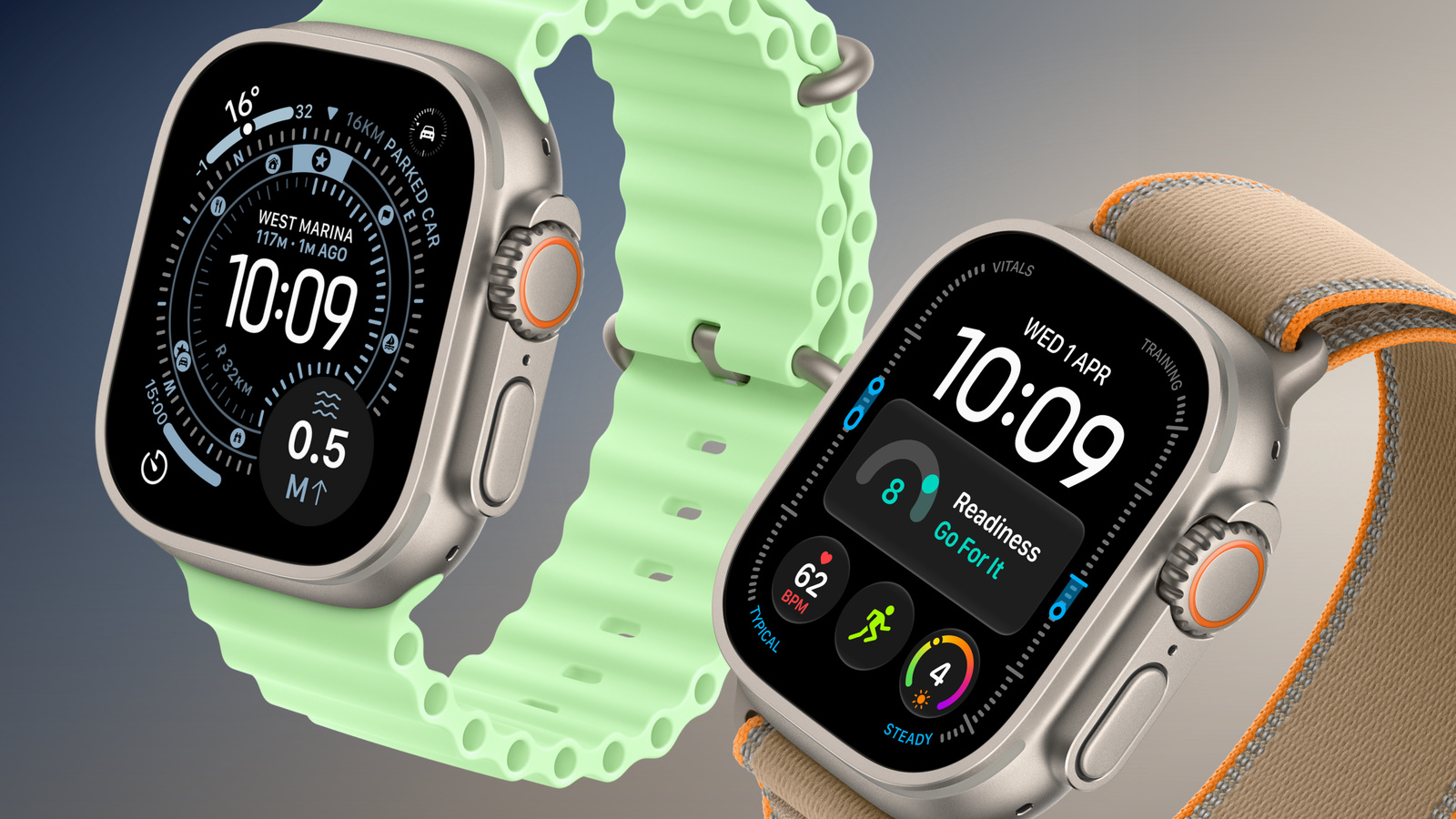

Last year, the Apple Watch Ultra 3 introduced a larger, more efficient display, satellite connectivity, 5G, and improved battery life. The Ultra 4 retains the same basic design and display, but focuses on more detailed health and fitness insights, new Audio Intelligence features, and further battery life improvements.

It launches on Friday, September 18, at the same $799 starting price as the Ultra 3. The comparison below outlines the differences between the two generations:


Apple Watch Ultra 3 Apple Watch Ultra 4
S10 chip (2024) S11 chip (2026)
2GB RAM 4GB RAM
Electrical heart sensor "Health Sensing System" with second-generation electrical heart sensor
Third-generation optical heart sensor Always-on optical heart sensor
Background heart rate tracking High-frequency background heart rate tracking every five seconds, 60x more frequently
HRV Recovery HRV and overall HRV, measured up to 24x more often
Vitals app with heart rate, respiratory rate, wrist temperature, and sleep duration Vitals app heart rate, respiratory rate, wrist temperature, sleep duration, HRV, and a daytime vitals view
Readiness app
Real-time heart rate complication
Step tracking More accurate step tracking and indoor workout distance measurements
Steps complication
Audio Intelligence (Live Rewind, Siri Recap, Sound Recognition, and automatic music identification with Shazam)
Up to 42 hours of normal use Up to 50 hours of normal use
Up to 72 hours in Low Power Mode Up to 84 hours in Low Power Mode
Up to 14 hours of outdoor workout tracking with full GPS and heart rate readings Up to 18 hours of standard outdoor workout tracking
Up to 20 hours of outdoor workout tracking in Low Power Mode with full GPS and heart rate readings Up to 25 hours in Extended Workout mode with full GPS and heart rate readings
Up to 35 hours of outdoor workout tracking in Low Power Mode with Fewer GPS and Heart Rate Readings enabled Up to 45 hours in Max Extended Workout mode, retaining GPS readings every second
15 minutes of charging for up to 12 hours of normal use 15 minutes of charging for up to 18 hours of normal use
5 minutes of charging for up to 8 hours of sleep tracking 5 minutes of charging for up to 10 hours of sleep tracking
Natural titanium: 61.6 grams
Black titanium: 61.8 grams
Natural titanium: 63.0 grams
Black titanium: 63.1 grams
GPS, GLONASS, Galileo, QZSS, and BeiDou GPS, Galileo, QZSS, and BeiDou
40% recycled content 45% recycled content
Now discontinued From $799


Is It Worth Upgrading From Ultra 3 to Ultra 4?


For the vast majority of Apple Watch Ultra 3 owners, the Ultra 4 is not worth upgrading to. The Ultra 3 already offers all of the headline display, durability, satellite connectivity, and established health features. If it comfortably lasts between your usual charging sessions and records your longest workouts, the new model is unlikely to meaningfully change how you use your watch.

The strongest reason to upgrade is if you want recovery tracking to play a larger role in your training. The Ultra 4's more frequent measurements feed into Readiness and Recovery HRV, making it easier to assess when to push harder or take a lighter day. These features are more compelling if you will regularly use them to adjust your training, rather than simply check another set of health metrics.

Battery life is a more practical reason for endurance athletes. If you currently change settings to finish long events or recharge during an extended outing, the Ultra 4 gives you a little more flexibility. For shorter daily workouts, however, the improvement mainly means less frequent charging, which is difficult to justify replacing a year-old $799 watch for.

Audio Intelligence may also justify upgrading for specific users, particularly deaf or hard of hearing users who would benefit from Sound Recognition on their wrist. Live Rewind and ‌Siri‌ Recap are less convincing reasons to upgrade immediately, since they arrive in beta later this year and require a compatible newer iPhone.

Should You Buy Ultra 3 or Ultra 4?


For new buyers, the Ultra 4 should be the default choice when the price difference is modest. If you plan to wear it for several years, paying a little more for the new chip, more memory, better battery life, and health tracking enhancements is easier to justify than replacing an Ultra 3 you already own.

The Ultra 3 becomes the better value when it is heavily discounted. If you mainly want a "rugged"-style Apple Watch with a large screen, satellite connectivity, and enough battery life for everyday use and regular workouts, it delivers much of the same experience. Buyers interested in Readiness and recovery insights, or who regularly record very long activities, have a stronger reason to pay more for the ‌Apple Watch Ultra 4‌.

For used or refurbished Ultra 3 models, factor battery condition and warranty coverage into the saving. A cheaper watch with a degraded battery is less appealing if endurance is your main reason for buying an Ultra.
Related Roundup: Apple Watch Ultra 4
Related Forum: Apple Watch

This article, "Apple Watch Ultra 3 vs. Ultra 4 Buyer's Guide" first appeared on MacRumors.com

Discuss this article in our forums

  •  

M5 Ultra Scores 52,516 in Its First Geekbench Result

The first unverified Geekbench 7 result for Apple’s M5 Ultra suggests a substantial CPU gain over M3 Ultra, but the single database entry is not a substitute for independent testing. The listed result is for the highest-end M5 Ultra with a 36-core CPU. It should not be assumed to represent every Mac Studio configuration or […]

The post M5 Ultra Scores 52,516 in Its First Geekbench Result appeared first on The Mac Observer.

  •  

How to set the Apple Watch Ultra Action button and sound or stop the siren

To change what the Action button does on Apple Watch Ultra, open the Settings app, tap Action Button, tap Action, then pick a function such as Workout, Backtrack or Dive. The same button sounds the siren: press and hold it, wait for the countdown to finish, and the watch starts an alarm meant to attract […]

The post How to set the Apple Watch Ultra Action button and sound or stop the siren appeared first on The Mac Observer.

  •  

iQOO Pad Ultra to be released on September 29th: Equipped with PC-level cooling fans

Igeekphone September 16th update: Today, iQOO announced that the iQOO Pad Ultra will be officially launched on September 29th. The official description of this product is that it is an “electronic sports new species”.

The product manager of the iQOO flagship series, Wang Kan, described the new tablet as a performance-focused device built around mobile gaming performance.

iQOO Pad Ultra features an 8.8-inch OLED display, giving the compact tablet a screen size that sits between conventional tablets and larger gaming-focused models.

This chip uses a 2nm manufacturing process, with the transistor density compared to the previous 3nm process increasing by approximately 30%. The performance and energy efficiency are further improved.

To sustain performance during demanding workloads, the iQOO Pad Ultra uses an active cooling system with a 30 × 30 × 3.5mm ultra-thin fan with a maximum rotational speed of 14,500 rpm and a wind volume of 0.94 CFM. The cooling structure area reaches 1,661 mm².

At the same time, the new device adopts a honeycomb structure for the large intake port and sets a large-sized cooling port on the side of the body, further improving the overall cooling efficiency and ensuring continuous performance output under high-load scenarios.

In terms of battery capacity, the iQOO Pad Ultra will be equipped with a 9000mAh large battery, balancing performance and battery capacity in the 8.8-inch small-sized body.

The post iQOO Pad Ultra to be released on September 29th: Equipped with PC-level cooling fans appeared first on IGeeKphone China Phone, Tablet PC, VR, RC Drone News, Reviews.

  •  

How to set up satellite messaging on Apple Watch Ultra before going off-grid

Set up satellite features on Apple Watch Ultra while you still have cellular or Wi-Fi coverage, because Apple’s watchOS 27 guide says the setup has to happen before you leave it. That means adding two shortcuts, running the Emergency SOS demo, and texting the people you’ll want to reach. Satellite features work on Apple Watch […]

The post How to set up satellite messaging on Apple Watch Ultra before going off-grid appeared first on The Mac Observer.

  •  

★ Vídeo: explorando os recursos de IA do smartwatch HAYLOU Solar Ultra

Há um ano e meio, publicamos aqui no MacMagazine um vídeo completo sobre o HAYLOU Solar Ultra, comparando-o inclusive com o Apple Watch Ultra.

De lá para cá, a fabricante seguiu evoluindo o produto e nos procurou para mostrar a nova versão: o HAYLOU Solar Ultra com IA.

Gravamos um novo vídeo detalhando o que mudou e, principalmente, testando os novos recursos baseados em inteligência artificial que a marca incorporou ao relógio, entre eles:

  • Mostradores gerados por IA, permitindo criar watchfaces personalizadas diretamente a partir de comandos;
  • Assistente de IA integrado, para tirar dúvidas e receber respostas sem precisar do smartphone por perto;
  • Tradução por IA, com suporte a conversas em outros idiomas direto do pulso;
  • e outras funções inteligentes que prometem deixar a experiência de uso mais completa.

No vídeo, mostramos como cada um desses recursos funciona na prática, se realmente agrega valor ao dia a dia e como o Solar Ultra se compara à versão original que já havíamos testado.

Vale a pena conferir para quem já tinha curiosidade sobre o modelo anterior ou está em dúvida entre um smartwatch bem mais em conta e um Apple Watch.

NOTA DE TRANSPARÊNCIA: Este é um artigo fruto de um acordo comercial com um anunciante, que não influenciou a nossa opinião. O MacMagazine recebe uma pequena comissão sobre vendas concluídas por meio de links deste post, mas você, como consumidor, não paga nada mais pelos produtos comprando pelos nossos links de afiliado.

  •  

Benchmarks preliminares dos chips M6 e M5 Ultra revelam avanços de até 35% em CPU

Previstos para serem lançados na semana que vem (pelo menos nos Estados Unidos e em Portugal), os novos Mac mini e Mac Studio são alimentados com os chips M6 e M5 Ultra, respectivamente — lembrando que o mini pode ser configurado também com o M5 Pro, enquanto que o Studio de entrada vem com o chip M5 Max.

Pois os primeiros resultados de benchmarks dos dois novos processadores apresentados recentemente pela Apple surgiram hoje no banco de dados do Geekbench 7, oferecendo uma visão dos ganhos de desempenho de cada um deles.

Em ambos os casos, os resultados vistos até agora tratam apenas dos testes de CPU 1Central processing unit, ou unidade central de processamento. — os de GPU 2Graphics processing unit, ou unidade de processamento gráfico. ainda não foram divulgados.

Confira abaixo a pontuação do chip M6 e as pontuações médias do chip M5 para efeito de comparação:

Benchmark de CPUM6M5
Single-core4.071 pontos3.641 pontos
Multi-core22.783 pontos17.948 pontos

Se o resultado acima for preciso, o chip M6 apresenta um desempenho single-core cerca de 12% mais rápido e uma performance multi-core cerca de 27% mais rápida em comparação com o chip M5. Vale notar que o chip M6 está no novo Mac mini, enquanto as pontuações do chip M5 baseiam-se no MacBook Pro de 14 polegadas — mas o desempenho deve ser semelhante.

Na tabela abaixo está a pontuação do chip M5 Ultra de ponta, com CPU de 36 núcleos, bem como as pontuações médias do chip M3 Ultra de ponta, com CPU de 32 núcleos (já que a Apple nunca lançou um chip “M4 Ultra”).

Benchmark de CPUM5 UltraM3 Ultra
Single-core3.774 pontos2.920 pontos
Multi-core52.516 pontos39.059 pontos

Se os resultados acima procederem, o chip M5 Ultra oferece um desempenho de CPU single-core cerca de 30% mais rápido e um desempenho multi-core cerca de 35% mais rápido em comparação com o M3 Ultra.

Nada mau, hein!

Mac Studio

Chip: M4 Max ou M3 Ultra
Memória: 36GB, 48GB, 64GB, 96GB, 128GB, 256GB ou 512GB
Armazenamento: 512GB, 1TB, 2TB, 4TB, 8TB ou 16TB
R$ 25.999,00

Mac mini

Chip: M4 ou M4 Pro
Memória: 16GB, 24GB, 32GB, 48GB ou 64GB
Armazenamento: 256GB, 512GB, 1TB, 2TB, 4TB ou 8TB
Conectividade: Ethernet ou Gigabit Ethernet 10
R$ 12.299,00
R$ 16.999,00

NOTA DE TRANSPARÊNCIA: O MacMagazine recebe uma pequena comissão sobre vendas concluídas por meio de links deste post, mas você, como consumidor, não paga nada mais pelos produtos/serviços usando os nossos links de afiliado.

via MacRumors [1, 2]

Notas de rodapé

  • 1
    Central processing unit, ou unidade central de processamento.
  • 2
    Graphics processing unit, ou unidade de processamento gráfico.

  •  

MacVoices #26254: Live! – More on Apple’s ‘Surprise and Shine’ Event (2)

Our discussion of Apple’s “Surprise and Shine” event sparks discussion of the Apple Watch audio intelligence, privacy, health monitoring, battery life, and the Ultra’s outdoor appeal. The MacVoices Live! panel also examines AirPods upgrades, the iPhone Duo’s unusual form factor, Apple’s evolving AI strategy C2 modem differences, and the significance of John Ternus taking a lead role in Apple’s keynote presentation. (Part 2)

💾

  •  

Why Apple’s New iPhone Duo Costs More Than A Base MacBook Air

Apple recently launched its first foldable phone, and the high price is raising eyebrows. At $1,999, the new iPhone Duo carries a price tag that easily beats out a brand-new MacBook Air. Buyers are naturally asking how a phone that fits in a pocket can cost twice as much as a laptop. The answer comes […]

The post Why Apple’s New iPhone Duo Costs More Than A Base MacBook Air appeared first on The Mac Observer.

  •  
❌