❌

Reading view

  •  

Tesla Powerwalls supply most of record 745 MW California grid dispatch

Tesla Powerwalls did most of the heavy lifting as California’s home batteries set a new grid record last week. On October 6, more than 85,000 Powerwall owners sent over 600 MW to the grid, the bulk of a combined 745 MW dispatch that Sunrun announced today.

That’s 28% more than the 580 MW record the two companies set less than a month ago. And it’s bigger than most gas peaker plants in the state.

more…
  •  

Drawing Back the Curtain on Solar Spicules

solar spicules

The Sun’s surface is peppered with spikes of plasma called spicules that appear to shift and twist over time. Recent simulations suggest a new explanation for the motion of solar spicules.
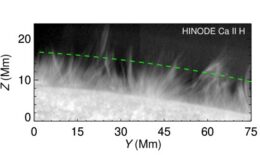
solar spicules

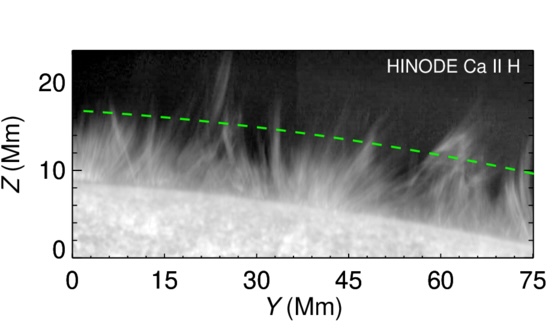
Solar spicules as seen by the Hinode mission. [Adapted from Dey et al. 2026]

Jets in Motion

Solar spicules are tiny jets of solar plasma that last just a few minutes. When viewed along the solar limb, spicules resemble blades of grass blowing in the wind. Observations show these structures moving in a variety of ways: twisting, shifting side to side, splitting, and joining together. Though spicules were first identified more than a century ago, where these motions come from is still up for debate.

In a recent research article, Sahel Dey (University of Newcastle; Indian Institute of Astrophysics; Indian Institute of Science) and collaborators performed 3D magnetohydrodynamics simulations to investigate the source of solar spicules’ motion. The team’s simulations encompassed a volume of 6,000 × 9,000 × 37,000 kilometers that stretched from beneath the visible surface of the Sun up to the lower region of the Sun’s outer atmosphere, or corona. In this region, they applied a uniform vertical magnetic field, mimicking the conditions within a coronal hole, where the Sun’s magnetic field streams outward into the solar system
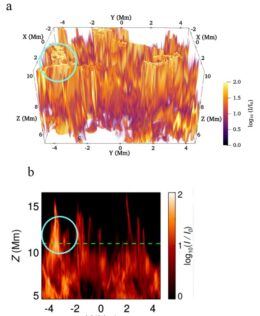
simulated solar spicules

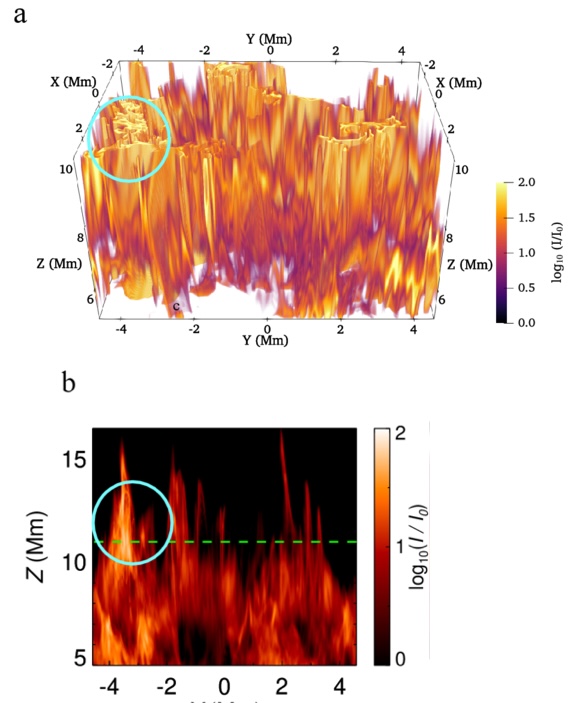
A) A three-dimensional view of simulated solar spicules, showing curtain-like structures. B) Intensity of synthetic emission from the spicules in panel A, integrated along the line of sight. The cyan circle indicates the same region in both panels. [Adapted from Dey et al. 2026]

Convection low in the simulation region generates slow magnetohydrodynamic waves, which create pockets of hot, upward-moving plasma and launch the spicules. When looking at the 3D structure of the spicules, Dey and collaborators found that they are not individual jets as they appear to be in photographs of the Sun. Instead, the sea of spicules creates an interconnected structure similar to a folded curtain.

Simulating Spicules

The jet-like appearance arises when this arrangement is viewed from the side; the team created synthetic images of their simulated spicules that show individual jet-like features. These “jets” have properties similar to those of real spicules, lasting just 5–10 minutes, journeying upward at 20–70 kilometers per second, and reaching heights of 6,000–16,000 kilometers.

These simulations clearly demonstrate that what appear to be individual jets can arise from curtain-like plasma structures. Dey and collaborators showed that this network of spicules evolves over time, buoyed upward from below by a series of shocks, pulled down gradually by gravity, and buffeted by adjacent plasma.
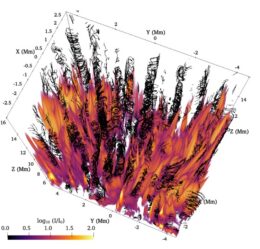
spicules and coronal swirling conduits

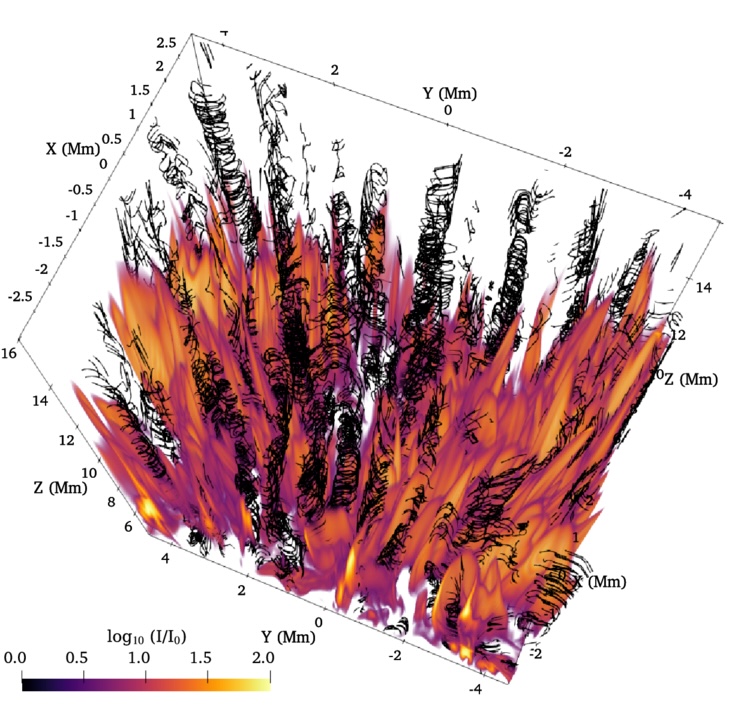
Three-dimensional view of spicules (purple–yellow regions) and coronal swirling conduits (represented by spiraling black lines). [Adapted from Dey et al. 2026]

The team showed that when spicules seem to rotate, merge, or split, these are largely apparent motions. For example, when two spicules appear to merge, this could be caused by different sections of a plasma curtain aligning along the line of sight. Some of the spicule rotation is due to what the authors term coronal swirling conduits: columns of rotating plasma interspersed within the network of spicules. These swirling plasma columns can transfer some of their motion to the spicules, especially when the spicules are falling back toward the solar surface.

This work demonstrates that a curtain-like configuration provides a viable explanation for the observed variety of spicule motions. Going forward, it will be critical to test this possibility further, as correctly interpreting the underlying structures of solar spicules is key to understanding how mass and energy are transferred to the solar corona.

Citation

“Solar Spicule Rotation Driven by Plasma Curtain–Vortex Interactions,” Sahel Dey et al 2026 ApJ 1008 132. doi:10.3847/1538-4357/ae8999

The post Drawing Back the Curtain on Solar Spicules appeared first on AAS Nova.

  •  

A New Look at a Centuries-Old Solar Eclipse

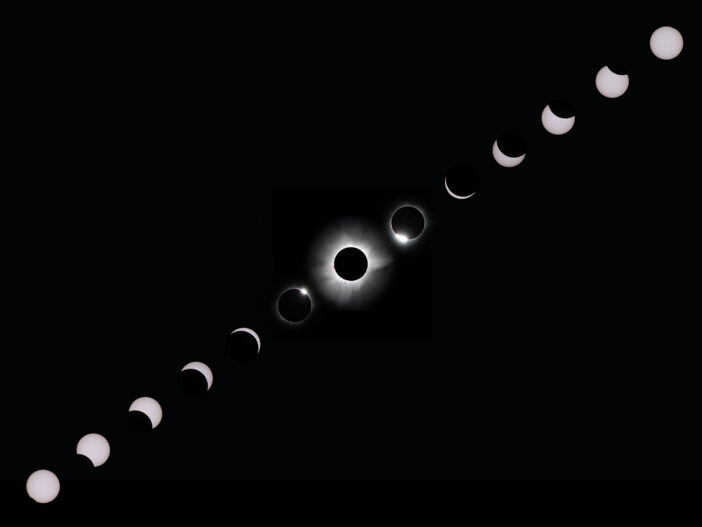
phases of a total solar eclipse

Humans have recorded solar eclipses for thousands of years. Recently, researchers translated and analyzed solar eclipse observations from 18th-century Sweden to determine the Sun’s radius at that time and study the first confirmed record of solar prominences.

Looking Back Nearly 300 Years

map showing the path of a solar eclipse

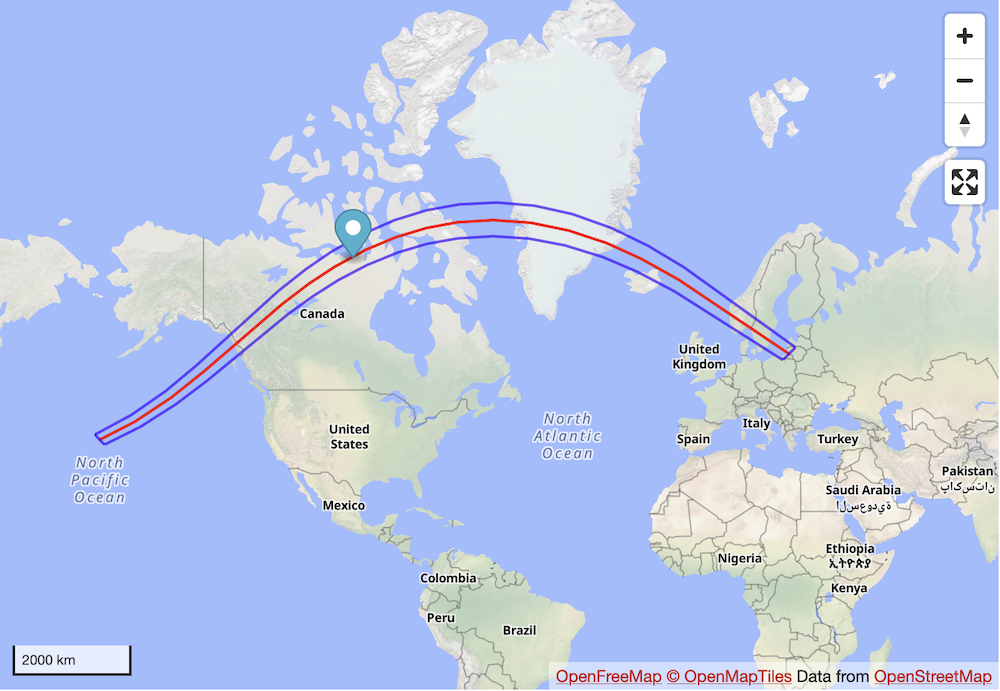
The path of the 13 May 1733 total solar eclipse. Click to enlarge. [Eclipse Predictions by Fred Espenak (NASA’s GSFC)]

On 13 May 1733, a solar eclipse darkened skies across a swath of modern-day Canada, Greenland, Iceland, and Scandinavia. Among the eclipse’s careful observers was Swedish astronomer and mathematician Birger Wassenius, who dutifully sketched the eclipse and the massive loops of plasma and magnetic fields — solar prominences — that bulged out from behind the Moon’s obscuring disk.

Wassenius penned a short account of his observations in Latin for Philosophical Transactions of the Royal Society (the longest-running scientific journal in the world!). His drawings of the event, which include the first robust record of solar prominences, were never officially published, but were housed in the Royal Academy Archives of Sweden. Now, researchers have translated Wassenius’s full report from Swedish to English and analyzed his sketches, helping to fill an important gap in the historical record of solar activity.

Drawing from Observations

Hisashi Hayakawa (Nagoya University; Rutherford Appleton Laboratory) and collaborators translated Wassenius’s notes, which describe how he viewed the eclipsed Sun through a 21-foot-long telescope during just over two minutes of totality. From Wassenius’s measurements, Hayakawa and coauthors calculated the solar radius to be 696,250 ± 170 km; this is larger than the modern accepted radius, but it’s in line with what has been calculated from solar eclipse measurements two decades earlier, in 1715.

sketch of a solar eclipse

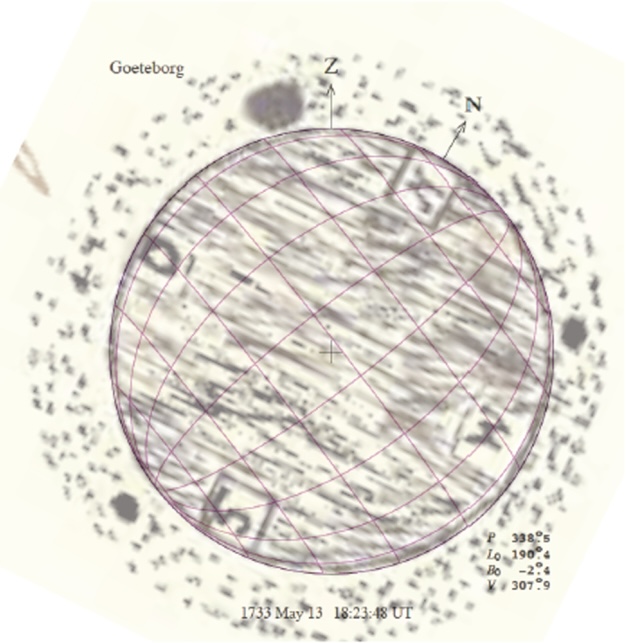
Wassenius’s sketch of the solar eclipse, showing three prominences as filled circles emerging from behind the disk of the Moon. [Adapted from Hayakawa et al. 2026]

Wassenius also made several sketches of prominences hovering above the edge of the Sun. While assessing these drawings, Hayakawa and coauthors had to contend with the imperfections of these hand-recorded features. With a narrow field of view that prevented him from seeing the entire disk at once, and with his time limited by the brief eclipse, Wassenius scribbled in two of the three prominences after the fact, from memory. After assigning reasonable uncertainties to the positions of these prominences, the team determined that at least one of these features was located at a high latitude.

Prominent Features

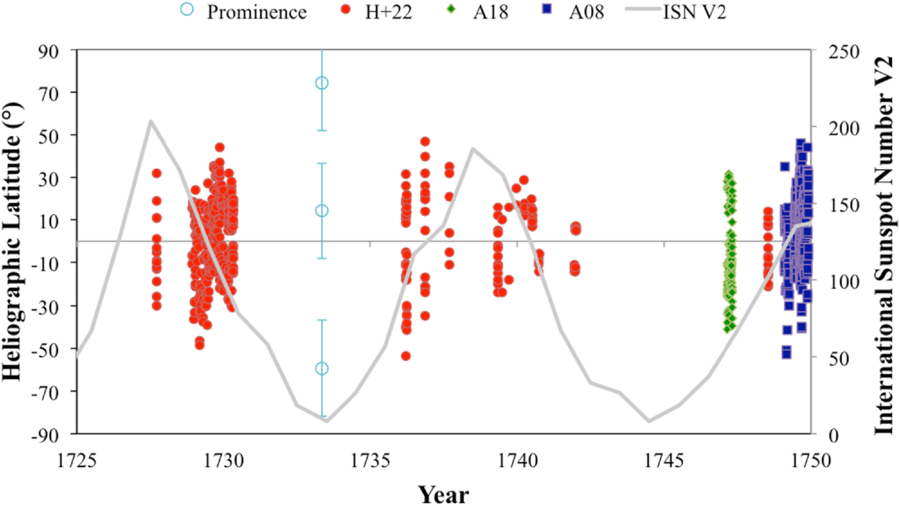
High-latitude prominences like the one (or more) seen by Wassenius are most common during what’s known as the “polar rush,” which occurs as solar activity rises toward a maximum. If these prominences are related to the polar rush, that would mean that in 1733, the Sun was not in an activity minimum as previously thought. However, it’s also possible for prominences to pop up at high latitudes during other times in the solar cycle; the authors estimated the likelihood of this happening at 20%.

plot of positions and numbers of sunspots and solar prominences

Heliographic latitude of solar prominences estimated from Wassenius’s drawings (light blue circles), compared to the positions (filled symbols) and number (gray line) of sunspots. Note that sunspot data around this time were scarce, and some researchers have suggested that revisions to the sunspot number are needed. Click to enlarge. [Hayakawa et al. 2026]

This work shows the value of historical observations in determining the Sun’s past activity cycles. The 1733 eclipse observation by Wassenius adds a fascinating data point to the long history of solar eclipse observations, helping to illuminate a time when sunspot data were scarce.

Citation

“Analyses on Wassenius’s Report for Total Solar Eclipse in 1733: Quantifications of the Solar Radius and the Earliest Reported Prominences,” Hisashi Hayakawa et al 2026 ApJ 1007 189. doi:10.3847/1538-4357/ae6451

The post A New Look at a Centuries-Old Solar Eclipse appeared first on AAS Nova.

  •  

Tesla and Sunrun’s virtual power plant dispatch record 580 MW to California grid

Sunrun and Tesla pulled a record 580 megawatts of power from home batteries onto California’s grid during a heat wave on September 9, the largest residential distributed power plant event ever recorded.

The dispatch pooled more than 140,000 home batteries across the state and ran for a three-hour window in the evening, when the grid was straining under air-conditioning load.

more…
  •  

Case closed on long-standing space weather mystery

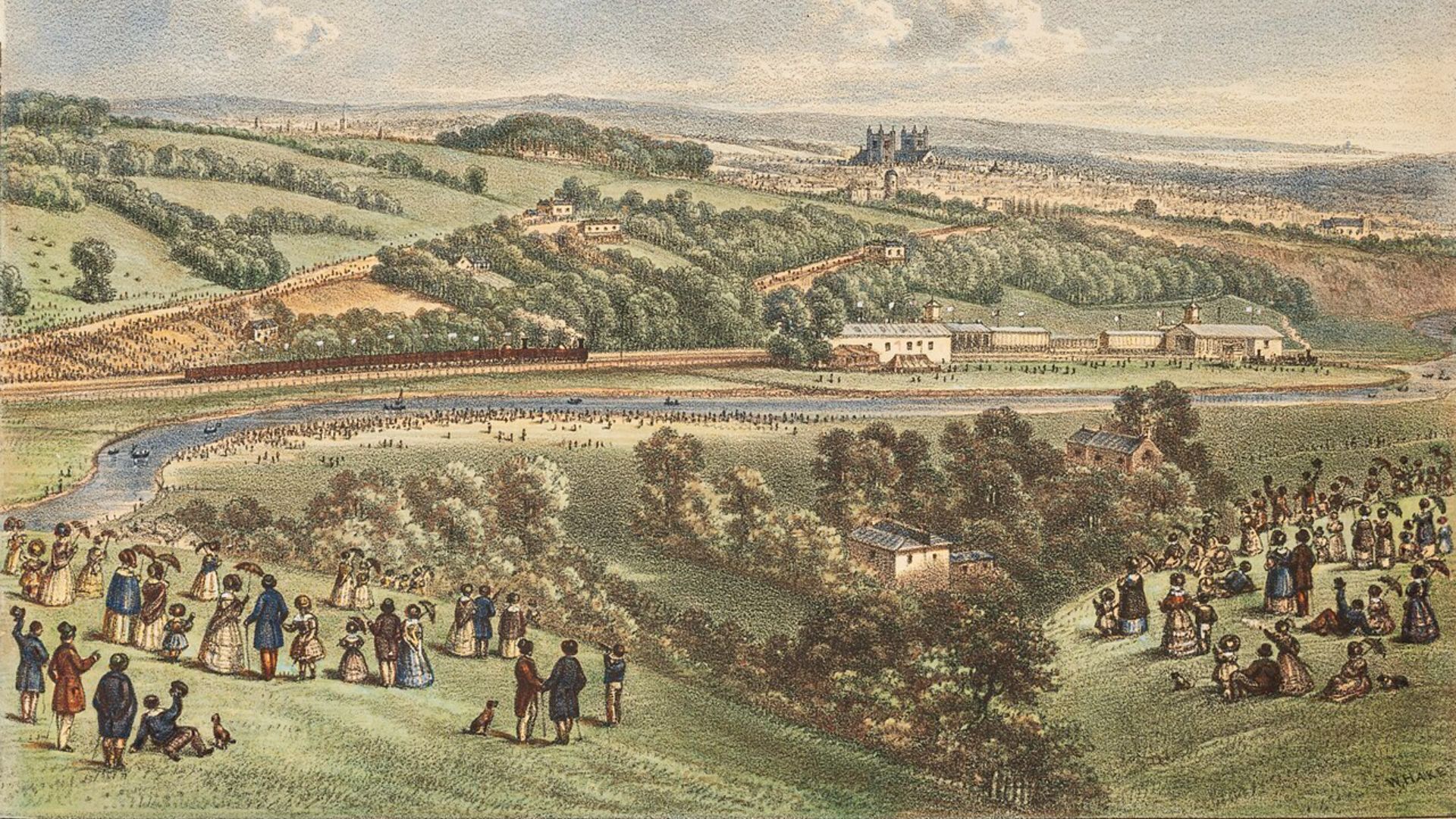
If a train leaves the station in Exeter, England, headed south toward Newton Abbot five years before the railway line opens, how long until anyone figures out that it didn’t happen? Well, evidently about 155 years. A report on magnetic storms, published in Nature in 1871, described an incident thought to be the earliest recordedContinue reading "Case closed on long-standing space weather mystery"

The post Case closed on long-standing space weather mystery appeared first on Astronomy Magazine.

  •  

Space weather caused a 16-minute train delay in 1848: 'Our research has a hint of a detective story'

Detective work by a team of space-weather experts has discovered the truth about a historical event that had been thought to be the first-ever case of technological disruption by geomagnetic activity from the sun, but has now been shown to have taken place seven years later.

From it being too hot or too wet to leaves on the track or cows on the line, there's a fine tradition of what the British public consider to be flimsy excuses for delays on the trains. Yet an 1871 edition of the journal Nature describes a very different event that caused a train departing Exeter, in Devon on the south-west coast of the U.K., to be delayed by 16 minutes: a solar storm that flooded the railway signals' electrical telegraph network with current.

"The Exeter train delay is a fascinating story because it sits right at the point where emerging technologies first began to encounter the realities of the space environment," said Jim Wild, who is a professor of space physics at Lancaster University and also the President of the Royal Astronomical Society, in a statement.

The event has frequently been cited as the first example of a solar storm disrupting technology on Earth, but when a team led by Wild went back through historical records to investigate further, they found that things didn't add up.

The original report in Nature stated that the electrical disturbance occurred at 10:05pm local time on Oct. 18, 1841. However, Wild's team found that particular train line didn't open until 1846.

So, they delved deeper into the history books to figure out the truth.

"Our research has a hint of a detective story — piecing together a wide range of archived records to better understand a historically severe space-weather event," said team-member Mike Hapgood, a space weather expert at RAL Space, which is the UK's National Space Laboratory, in Oxfordshire.

Combining data from railway timetables, old newspapers, plus historic reports of solar observations and the northern lights and digitized geomagnetic data, Wild and Hapgood's team were able to conclude that the most likely date for the train delay was Oct. 18, 1848, which coincided with a strong solar storm that hit Earth.

This revised date knocks it off top spot in the chronological list of such events. The first recorded disruption to electrical technologies is now a disturbance on the Midland railway network, which had lines covering much of the U.K., in March 1847.

"Although this means it is not the earliest recorded space weather impact, it remains one of the first clear examples of solar activity disrupting critical infrastructure," Wild said. "It also demonstrates the value of combining scientific records with contemporary newspaper reports and archival documents when reconstructing historic space weather events."

A view of a yellow sphere with some flares coming off of it.

Solar storms have been playing havoc with electrical technology on Earth since the 1840s. (Image credit: NASA/SDO)

The case reminds us that space weather has been a hazard to technology and modern systems for a long time, and isn't just a recent problem.

"Society has been experiencing the effects of space weather on technology for almost as long as electrical technologies have existed," said Wild.

The most dramatic example is the aforementioned Carrington event of 1859, representing the most significant solar storm on record as it caused telegraph poles to spark and battery power supplies to be disrupted. By this point, telegraph operators had grown used to electrical disturbances associated with auroral activity, but even the Carrington storm shocked them — quite literally in some cases, as extra current ran down the telegraph lines — with its ferocity. Should a similar event occur today, it would cause huge black outs, knock out power grids, disrupt communications and fry satellites.

"While today's space weather [monitoring] capabilities are far more advanced than anything available in the 1800s, the modern technologies we depend on are also much more vulnerable to solar storms," said Hapgood.

The current solar cycle 25 peaked in Oct. 2024 and we are just beginning to come out of an extended period of maximum activity. However, it remains to be seen how the rest of this cycle will play out before reaching solar minimum in about 2030. We've already seen severe geomagnetic storms caused by space weather in May 2024 — will we experience another powerful storm before the decade is out?

  •  

Study: Famous ‘Space Weather’ Train Delay Actually Happened Seven Years Later

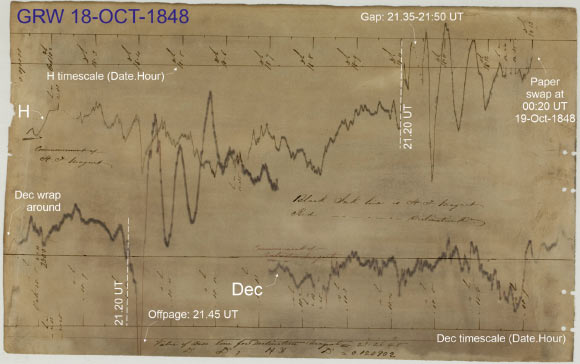
The magnetogram recorded at Greenwich Magnetic Observatory (London) from 11:20 UT on 18 October 1848 to 00:20 UT on 19 October 1848. Powerful geomagnetic disturbances are apparent on the evening of 18 October 1848 from 21:20 UT. Image credit: Wild et al., doi: 10.1029/2026SW005239.

Although the famous Carrington Event of 1859 is often described as the first major space weather event to affect technology, earlier incidents did occur. Historical records show that telegraph systems were disrupted by geomagnetic storms as early as the late 1840s.

The post Study: Famous ‘Space Weather’ Train Delay Actually Happened Seven Years Later appeared first on Sci.News: Breaking Science News.

  •  

The Sun’s Ancient Journey Through the Galaxy May Have Changed Earth’s Climate

Two NASA-funded studies trace how the Sun’s changing galactic surroundings may have altered Earth’s climate and helped warm the young planet.

The post The Sun’s Ancient Journey Through the Galaxy May Have Changed Earth’s Climate appeared first on Curiosmos.

  •  
  •  

The sun may once have swallowed a super-Earth planet and could still be hiding the evidence

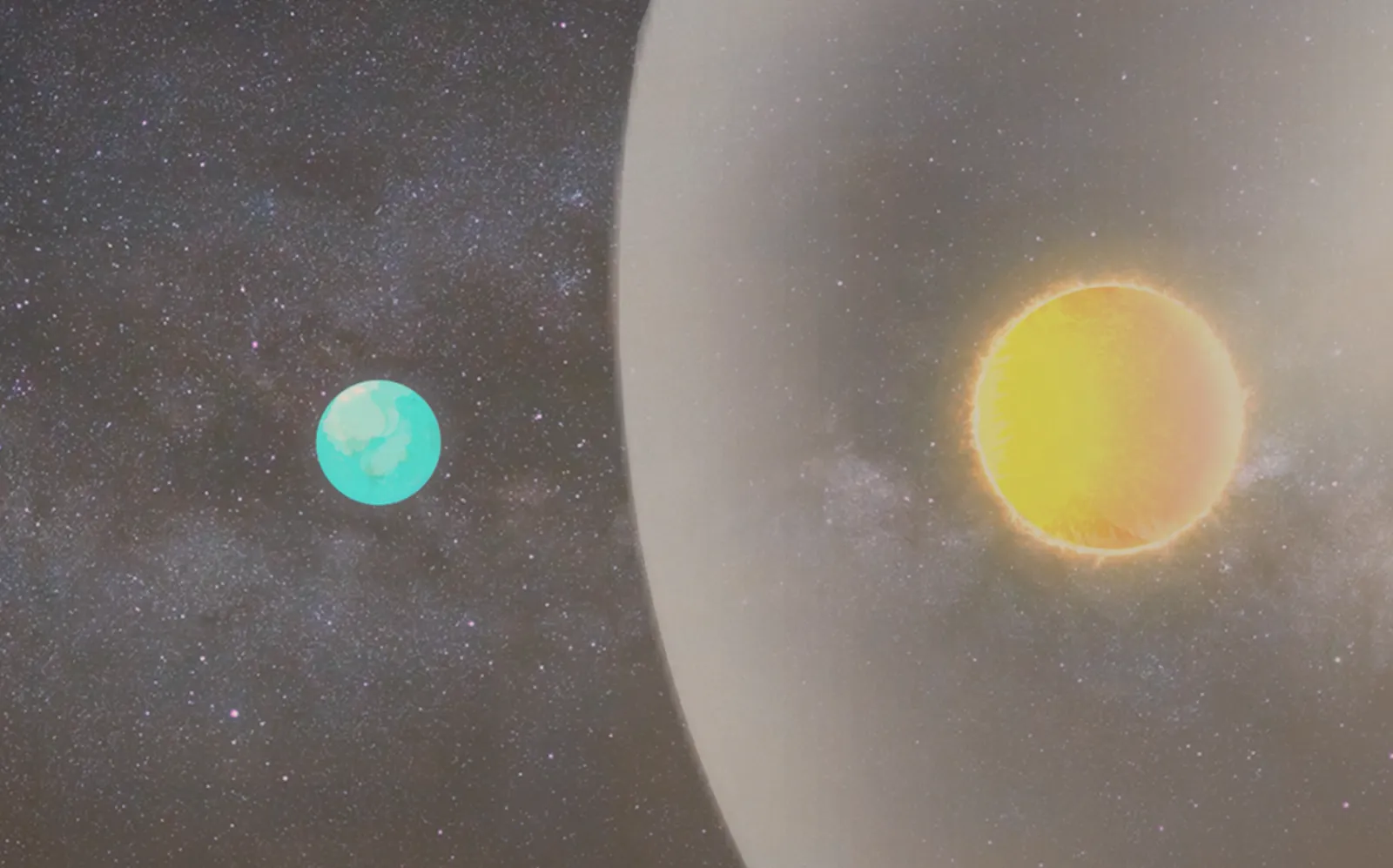
Our star and primary energy source that makes life on this planet possible may also be a cosmic cannibal. That's according to new research that suggests the sun may have swallowed a super-Earth planet billions of years ago in its early history. And our star may still be hiding the evidence.

The scientists behind this research think that the fingerprints of this violent consumption of a planet may still exist within the solar interior. Super-Earths are common occupants of other planetary systems, and these findings can explain why the solar system lacks such a world.

"Our new study suggests that a planet several times more massive than Earth may have fallen into the young sun and left a lasting chemical imprint deep inside it," Mutlu Yildiz, of Ege University, Turkey, said in a statement.

Yildiz and colleagues theorize that the sun's act of planetary infanticide may help to explain differences between observations of the sun and what is predicted by models of stellar evolution. This includes the depth of the sun's convection zone and the so-called sound-speed structure just below the convection zone.

It could also explain why the surface of the sun is depleted of the element lithium.

"By modelling the sun's evolution and comparing the results with precise observations of its interior, we find that the ingestion of a super-Earth could help explain long-standing differences between standard solar models and observations, including subtle changes in the sun's internal structure and its depleted lithium abundance," Yildiz said. "We were interested in whether these problems might have a common origin in the early chemical history of the sun."

The researcher explained that young stars like the sun during its infancy are surrounded by vast flattened clouds of gas and dust called protoplanetary discs, where substantial amounts of material can move between the disc and the star.

"Since planets are made of material that is chemically different from the gas in the disc, we wondered whether the early engulfment of a planet could have left a chemical signature inside the young sun," Yildiz said.

What happened to the sun's planetary meal?

Using advanced stellar evolution software, Yildiz and colleagues tested their idea by investigating different ways the sun could have swallowed a planet.

Their results found the best fit for the sun's current characteristics was the cannibalism of a planet between five and ten times the mass of the Earth, a type of planet called a super-Earth. This could explain the strange, unpredicted characteristics of the sun.

We thought planetary engulfment might affect the solar structure but did not expect the calculations to converge on such a specific super-Earth mass range," said Professor Yildiz. "That was one of the most interesting outcomes of the study."

An irregular orange sphere surrounded by a swirling blue line

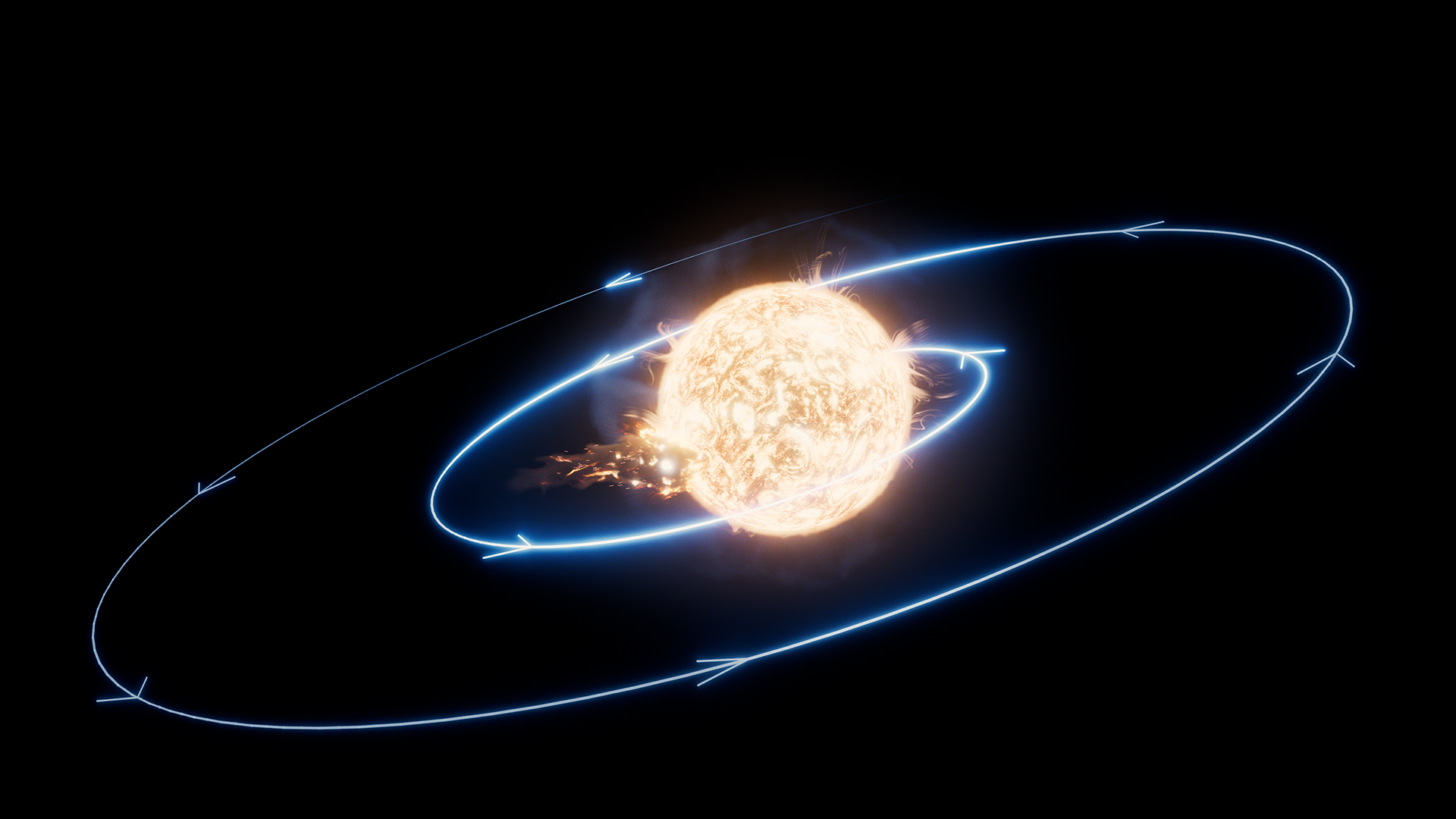
An artist’s impression of a star engulfing a planet. The blue line traces the path of the planet as it spirals toward the star and ultimately collides with it. (Image credit: NASA, ESA, CSA, Ralf Crawford (STScI))

The team's research is supported by previous studies that suggests one or more super-Earth planets could have formed with the orbit of Mercury, the closest planet to the sun.

These worlds would have then migrated through the protoplanetary disk surrounding the infant sun before crashing into the star.

But this new study leaves open the possibility that something else, other than this violent collision with the sun, may explain the discrepancies in measurements of the sun's interior and its lithium content. The team's model doesn't need a planet to have been totally engulfed by the sun.

A cracked grey sphere next to a growing orange sphere

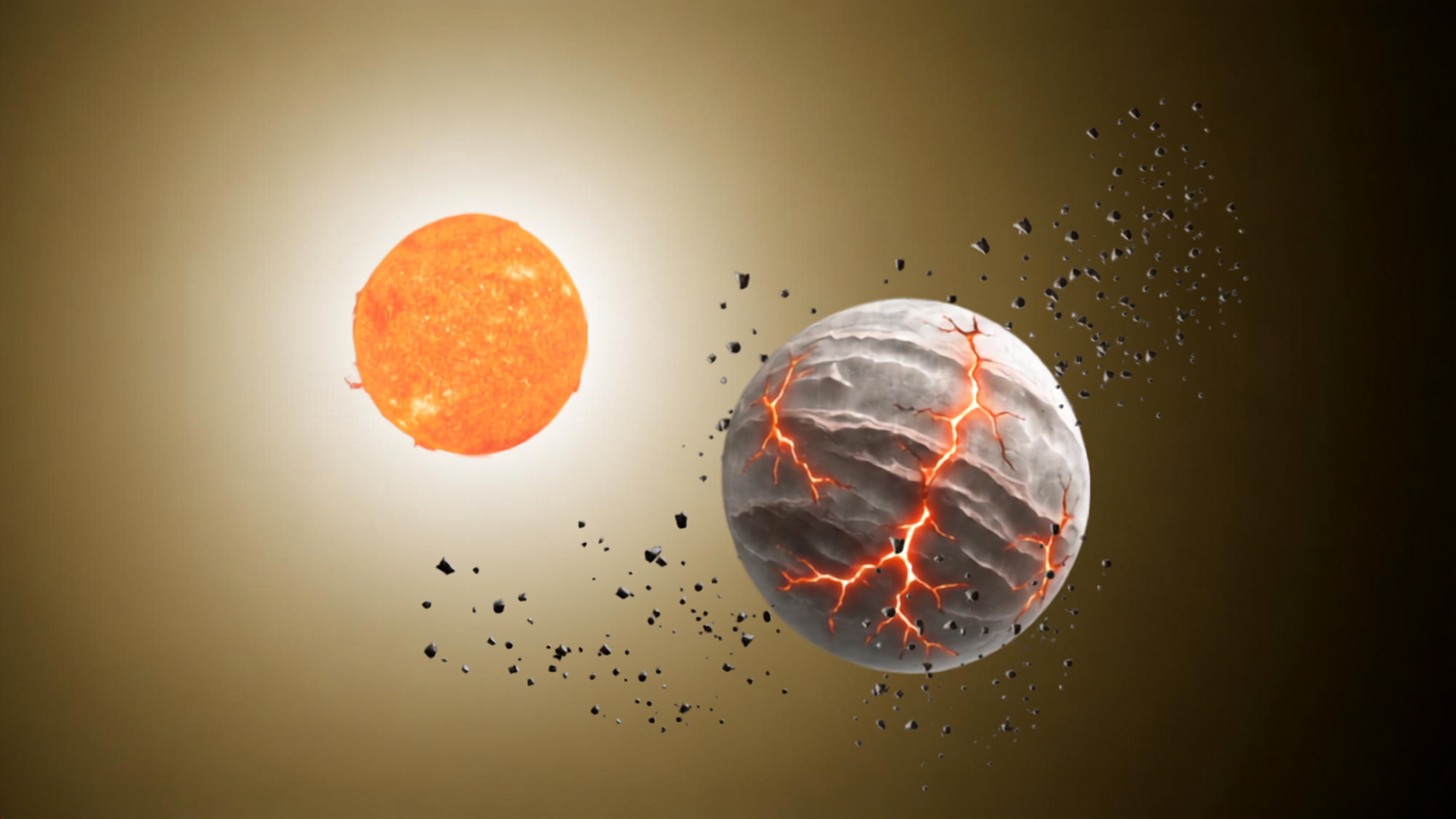
An illustration of a former super-Earth survivor escaping after an encounter with the sun (Image credit: Robert Lea (created with Canva))

Currently, this idea is based on computer modelling and unexplained solar features, but the researchers think that the predicted structural and chemical signature of a planetary engulfment could still exist within our star and could be detected.

"The earlier work proposed that a super-Earth could have formed and migrated into the young sun. Our paper asks whether the sun itself could still carry observable evidence that such an engulfment actually happened, and we believe it could," Yildiz concluded. "The next step is to see if these fingerprints can be independently detected."

The research was published on Thurs (Sept. 10) in the journal Monthly Notices of the Royal Astronomical Society.

  •  
  •  

What Is the Solar System? How Our Cosmic Neighborhood Took Shape

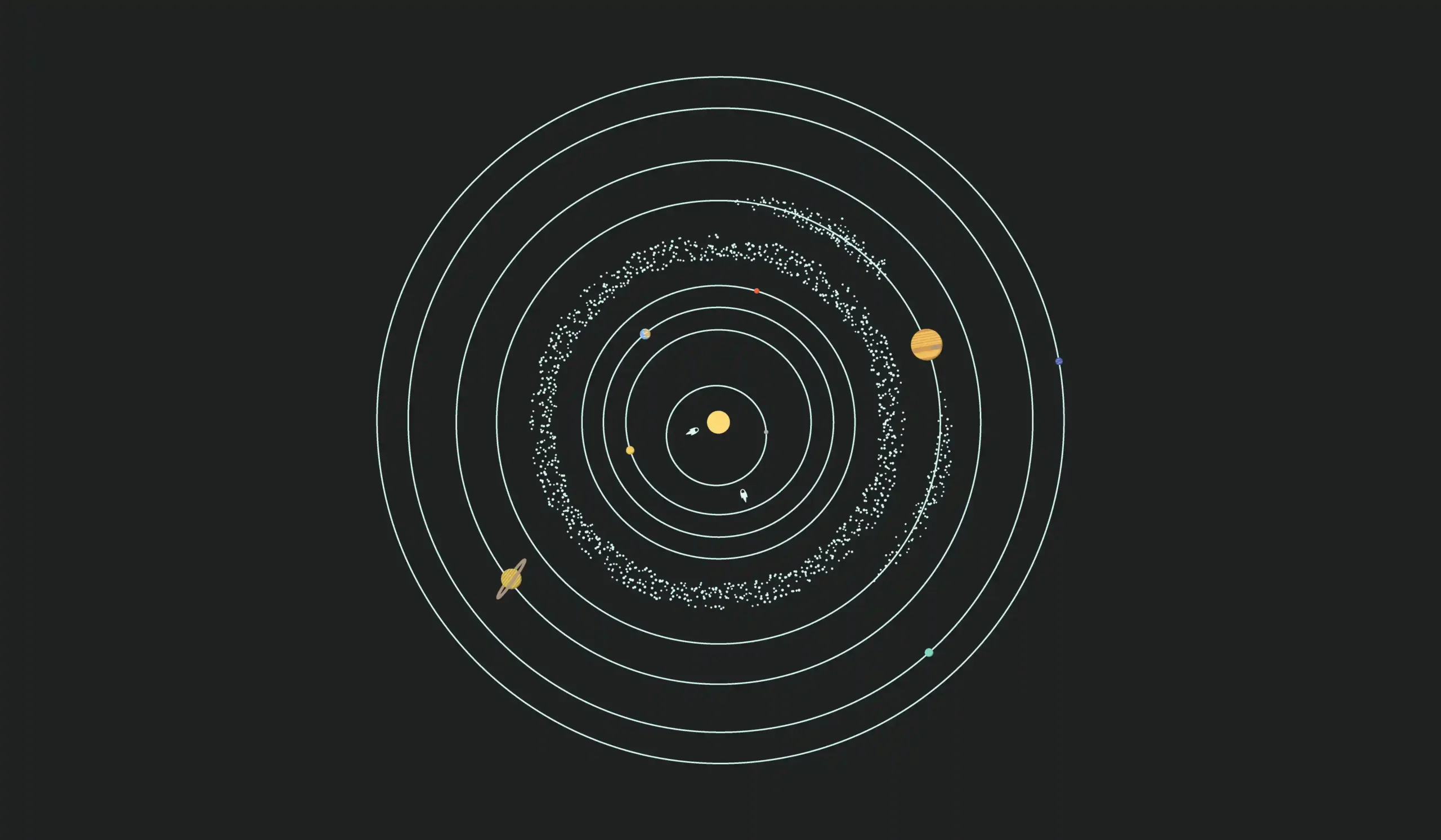
Look up at the night sky and it is easy to imagine a few bright worlds hanging in an empty blackness. But what are we really looking at when we say “the Solar System”? It is a family shaped by one star’s gravity, built from the same ancient disk of gas and dust, and still […]

The post What Is the Solar System? How Our Cosmic Neighborhood Took Shape appeared first on Curiosmos.

  •  
❌