O Code Drawer é um utilitário para códigos QR desenvolvido pela Megabits — e nosso destaque do dia.
Organize, armazene e exiba códigos QR e links em um único lugar, otimizando o acesso rápido a informações usadas com frequência. A proposta é simples e eficiente: centralizar os códigos de redes sociais, pagamentos, redes Wi-Fi e outros conteúdos, que normalmente exigem várias etapas para serem localizados, em um só lugar.
Crie códigos QR a partir de textos, links e conteúdos copiados para a área de transferência. Escaneie códigos com a câmera do dispositivo ou a partir de imagens já salvas. Outro destaque é a integração com o ecossistema da Apple: uma única compra pode ser utilizada no iPhone, iPad, Apple Watch e Mac, com sincronização automática via iCloud.
Suporte a widgets, Atividades ao Vivo (Live Activities) e atalhos fecha o pacote de recursos. Aproveite a oferta e baixe agora!
Abaixo outros jogos/apps que, juntos, somam mais de R$220 em descontos:
Jogos
Jogo de estratégia.
Puzzles.
Jogo de aventura.
Jogo de ação.
Aplicativos
Conversor de áudio.
Desenhos no ambiente digital.
Aproveite as ofertas e até amanhã! Lembrando que elas são sempre por tempo limitado, então é bom correr. 🤩
A Insta360lançou hoje o Insta360 Mic, adição intermediária à sua linha de microfones (que já inclui o Mic Air e o Mic Pro), contando com uma tela eink personalizável e armazenamento expansível via microSD.
Pensado para criadores de conteúdo que buscam recursos mais sofisticados de áudio sem investir em um modelo topo de linha, ele é ideal para vlogs do cotidiano, gravações de esportes nos fins de semana, viagens, transmissões ao vivo e conversas em grupo.
O painel eink customizável permite a inserção de logos, emojis, animais de estimação, paisagens ou elementos da identidade visual do criador.
Divulgação/Insta360
Para quem adquirir apenas o receptor, é possível utilizar o Insta360 Mic com as câmeras da fabricante (Insta360 X6, X5, Luna Ultra, Luna Pro, GO Ultra e Ace Pro 2), bem como com smartphones, tudo via Bluetooth. Outra alternativa para as gravações é o cartão microSD, que permite armazenar os áudios capturados pelo produto.
Com o cartão microSD inserido, o Mic é capaz de gravar áudios em ponto flutuante de 32 bits diretamente no transmissor e conta com um chip dedicado à supressão de ruído, baseada na NPU 1Neural processing unit, ou unidade de processamento neural. do microfone, que reduz sons ambiente com maior intensidade.
Divulgação/Insta360
O dispositivo tem dois modos de ganho automático: o Dynamic equilibra as variações de volume para manter a coesão sonora, enquanto o Auto ajuda a evitar a saturação de som. Ele conta ainda com três predefinições de timbre (Regular, Rich e Bright) para ajudar a preservar as características naturais da sonoridade captada.
Assim como o do Mic Pro, um único receptor do Mic se conecta a até quatro transmissores ao mesmo tempo, o que inclui produções com múltiplas câmeras (que podem receber o áudio de até dois receptores simultaneamente).
Divulgação/Insta360
De acordo com a fabricante, cada transmissor possui até 13 horas de bateria com uma única carga, enquanto a case de carregamento amplia essa autonomia para até 34 horas.
Preço e disponibilidade
O Insta360 Mic está disponível na loja oficial da Insta360, com a seguinte relação de valores (em dólares) para o Brasil:
Insta360 Mic (dois transmissores + um receptor): US$250;
Insta360 Mic (um transmissor + um receptor): US$140;
Um transmissor Insta360 Mic: US$80.
NOTA DE TRANSPARÊNCIA: O MacMagazine recebe uma pequena comissão sobre vendas concluídas por meio de links deste post, mas você, como consumidor, não paga nada a mais pelos produtos/serviços ao usar os nossos links de afiliado.
Notas de rodapé
1
Neural processing unit, ou unidade de processamento neural.
Desde el compacto EV2 hasta el SUV de siete plazas EV9 y el versátil PV5, Kia ofrece 10 modelos eléctricos para usos muy distintos. Estas son sus autonomías, tiempos de carga y precios de septiembre de 2026.
Rêvez-vous de voler comme dans Spider-Man ? Un inventeur chinois a conçu son propre hoverboard volant et apprend à le piloter avec l’aide d’une intelligence artificielle. Mais derrière cette création, qui semble tout droit sortie d’un film de science-fiction, se cachent quelques limites.
Britain is funding the next generation of tech companies without making sure taxpayers get a slice of the action, MPs have warned. In a new report shared with The Register ahead of publication, the Public Accounts Committee (PAC) has accused UK Research and Innovation (UKRI) of being overly cautious about protecting taxpayers' interests. Rather than simply handing out grants, MPs want UKRI to consider taking equity stakes in more of the businesses it backs, giving the public a chance to cash in when those companies succeed. According to the Department for Science, Innovation and Technology (DSIT), UK universities produce more spinouts and patents per pound of research funding than their US counterparts. But Britain is less adept at cashing in on its inventions. British startups still struggle to attract the investment needed to grow without moving overseas, while universities have a patchy record when it comes to exploiting their intellectual property. UKRI, meanwhile, has been reluctant to impose tougher conditions on the research it funds, arguing that doing so could discourage companies from growing. “This approach is far too cautious and we urge the Department to do much more to recover taxpayer's money when a successful company exploits research which the taxpayer, via UKRI, has paid for," the PAC said. It wants UKRI to review its standard funding terms, including whether it should take equity stakes in more companies benefiting from public money. Sir Geoffrey Clifton-Brown, chair of the PAC, acknowledged that calling for the government to behave more like a venture capitalist might seem an odd position for a committee normally concerned with keeping public spending in check. "It may strike followers of this Committee's work that our call for government to take a less cautious approach to taking a direct stake in British innovation is an unusual one," he said. "But we are a body dedicated to value for taxpayers' money, not hoarding it. The nations currently leading the global tech race did not achieve their positions by avoiding more entrepreneurial policies. This is a simple case for the government of nothing ventured, nothing gained." The government has made some effort to help British tech firms. UKRI gives AI startups free access to taxpayer-funded supercomputers, while DSIT has changed its procurement rules to give UK companies a better shot at supplying £400 million worth of specialist AI chips. The British Business Bank is also investing alongside pension funds, giving taxpayers a stake in some of the businesses receiving support. But efforts to attract more pension fund investment have been slower than ministers hoped, and MPs want DSIT to start measuring whether its various support schemes are actually helping British companies grow, rather than simply counting how much money it hands out. There's also the question of where all that research funding ends up. London, the South East, and the East of England continue to receive half of UKRI's funding, despite years of government promises to spread investment more evenly across the country. The North's share has improved from 12 to 20 percent over the past five years, but UKRI has yet to set specific regional funding targets. Clifton-Brown described the divide as "continuing and unacceptable," warning that progress could easily be reversed without a more deliberate effort to spread the cash around. And while MPs want UKRI to be more adventurous with its investments, they're considerably less impressed with how it manages some of the projects already on its books. The committee pointed to an airborne laboratory upgrade that UKRI abandoned after spending £46 million of its £49 million budget. Funding was finally canceled five years after the decision to upgrade the aircraft, prompting MPs to question why the plug hadn't been pulled sooner. Elsewhere, around 45 percent of the Science and Technology Facilities Council's estate is in unacceptable condition, and restoring university-owned research infrastructure to full working order would cost an estimated £5.6 billion. The PAC also criticized UKRI for failing to ensure a replacement for the ARCHER2 national supercomputer would be ready before the existing machine shuts down, leaving an expected 13-month gap. It seems Whitehall has mastered the art of spending money on innovation, but getting any back is another matter. ®
Incorporar flúor-18 a moléculas de interés biomédico sigue siendo uno de los principales retos para desarrollar nuevos radiofármacos. Por primera vez se ha demostrado que los compuestos orgánicos nitrosoarenos pueden utilizarse como nuevos precursores para introducir este isótopo. Este avance amplía las herramientas disponibles para preparar radiofármacos y abre nuevas posibilidades para el desarrollo de compuestos destinados a mejorar el diagnóstico mediante tomografía por emisión de positrones.
iPhone Preview brings everyday PDF tasks into one built-in app, from rearranging pages to preparing a smaller attachment. Introduced with iOS 26, it remains available in iOS 27, whose user guide provides the instructions used here.
Apple’s Preview app can open PDFs directly, reorganize their pages, rotate or crop individual sheets, delete unwanted pages, insert new ones, complete forms, add signatures, protect documents with passwords and export smaller copies for sharing.
It can also scan paper documents directly into a PDF and combine multiple pages into one file.
That makes Preview surprisingly capable for common workflows such as signing a contract, cleaning up a scanned document, reducing an attachment before emailing it or rearranging pages in a report.
Start with the task your document requires. Rearranging pages, adding a signature and preparing an attachment are different from rewriting an existing paragraph or meeting a publisher’s production requirements. Preview’s documented tools cover many routine changes, while more specialized work may require a separate editor.
Image Credit: AppleMagazine
iPhone Preview Lets You Reorder, Delete and Crop PDF Pages
Page management is particularly useful for scanned documents. A report may contain a sideways sheet, an attachment in the wrong position or an empty page that needs removing before the file is shared.
Open a document in Preview and tap the page count to reveal its thumbnail view.
From there, a page can be moved simply by touching and holding its thumbnail and dragging it above or below another page.
That makes fixing a scanned contract or report straightforward when pages were captured in the wrong order.
To reorganize a document:
Preview > open PDF > tap page count > touch and hold a page thumbnail > drag it into position
The same thumbnail menu can delete a page entirely.
Touch and hold the unwanted thumbnail, then choose Delete Page.
Preview can also insert material into an existing document. The thumbnail menu offers options to add a blank page, import a PDF or image from Files, or scan additional paper pages with the iPhone camera.
That means a form missing one attachment can be repaired without recreating the complete PDF.
Rotation is equally direct.
Open the relevant page, tap the More button and choose Rotate Left or Rotate Right.
Cropping works on a page-by-page basis:
Preview > open PDF > select page > Crop > adjust the blue handles > Crop
This is particularly useful for scanned pages with oversized borders, desk surfaces or other material around the document.
Apple also provides Undo through the More menu, making these edits less intimidating when working on an original file. For documents that cannot easily be replaced, creating a duplicate first remains the safer approach.
Image Credit: AppleMagazine
Fill Forms, Add Signatures and Lock the Finished PDF
Preview also consolidates several document tasks that iPhone users may already recognize from Markup.
Fillable PDF forms can be completed directly inside the app. Text fields, checkboxes and other supported form elements can be selected and edited without converting the file into another format.
Signatures use Apple’s familiar Markup system.
Open the document’s signature controls and choose Add Signature. When using Markup, tap the Add (+) button first, then select Add Signature. Choose a saved signature or draw a new one with your finger; rotating the iPhone gives you more room.
A saved signature can then be positioned and resized on the document.
For recurring paperwork, that makes Preview useful for forms that arrive through Mail or Files and need to be returned quickly.
Preview > open PDF > Actions menu beside filename > Lock
Enter the same password in the Password and Verify fields, then confirm the change.
Apple automatically enables the password requirement when the file is locked.
This protection prevents someone without the password from opening the PDF normally and helps protect completed work from unauthorized access.
There is an important practical step before doing this: duplicate the document if you want to preserve an unprotected copy.
Preview > Actions menu > Duplicate
A password-protected PDF is only useful if the password itself can be recovered later. Losing it can make the document inaccessible, so the credential should be stored somewhere secure.
Preview Can Compress a PDF Before You Send It
Large PDFs are another problem Preview addresses without requiring a separate compression website.
Open the document, tap the Actions menu beside its filename and choose Export.
When PDF is selected as the output format, iOS 27 offers several options that can reduce file size.
Optimize Images for Screen lowers image resolution for documents intended primarily for display rather than high-quality printing.
Save Images as JPEG can reduce the size of embedded images further by using JPEG compression.
Two other export options serve different purposes. Create Linearized PDF optimizes a document for faster web loading, while Embed Text applies optical character recognition, or OCR, to make image-based content searchable.
Choose those options for loading behavior or searchability, rather than assuming they will produce the smallest attachment. For file-size reduction, the image optimization settings are the relevant controls.
The practical workflow for a smaller email attachment is:
Preview > open PDF > Actions menu > Export > PDF > Optimize Images for Screen > Save
Adding Save Images as JPEG can shrink image-heavy files further when maximum image fidelity is unnecessary.
These image-reduction options can sacrifice detail. Lowering resolution or using JPEG compression may affect small text, fine lines and photographs, so compare the exported copy with the original before sending it.
A document containing mostly text may shrink only modestly. A scan filled with high-resolution photographs can show a much larger reduction.
Preview also exports files into formats including HEIC, JPEG, PNG and TIFF when a PDF needs to become an image instead.
When exporting a PDF to an image format, resolution can be selected manually, giving users additional control over the balance between detail and file size.
Image Credit: AppleMagazine
Where Preview Still Falls Short of Adobe Acrobat
Reopen the exported file before sending it. Check the page order, orientation, completed fields and signature placement. Zoom in on small text and diagrams, especially if you reduced image resolution. The useful result is a document that remains readable and complete, not simply the smallest file you can create.
Keep the original under a different filename so you can produce another version if needed. A copy prepared for email may not be the best version for printing or archiving. Names such as “Application — Original” and “Application — Email Copy” help distinguish the files when they appear together in Recents.
If the task involves changing existing document text or satisfying a specific submission requirement, confirm that your chosen tool supports it before proceeding. For routine page organization, form completion and sharing, a checked Preview export may be all you need.
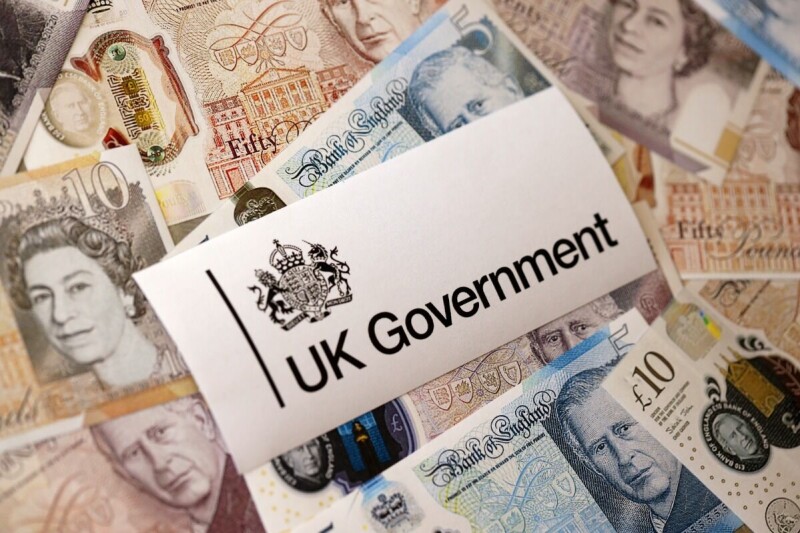
Britain's national digital ID scheme may be dead, but Whitehall appears to have forgotten to tell the infrastructure. Despite the government scrapping its controversial plans, officials told MPs on Monday that work continues on GOV.UK One Login, digital wallets, and a growing collection of digital credentials designed to help people prove who they are. The abandoned scheme was one of Keir Starmer's flagship policies, originally pitched as a compulsory digital ID card to crack down on illegal working. Privacy campaigners weren't impressed, warning of surveillance and government overreach, and ministers eventually made it voluntary before Andy Burnham, decided to bin the whole thing. But scrapping the scheme hasn't dented Whitehall's digital identity ambitions. Officials told MPs this week that more than 80 types of documents are earmarked for the government's digital wallet, including proof of benefits, driving test certificates, and Disclosure and Barring Service (DBS) certificates. That's quite a lot of paperwork for something that's supposedly dead. The revelations came during a Public Accounts Committee hearing on Monday, where MPs wanted to know what exactly had been scrapped. "But is it not the case, based on the answers you've given us this afternoon, that the infrastructure of digital ID in the public sector is still being pursued?" asked Sarah Green, Liberal Democrat MP for Chesham and Amersham. Susannah Storey, DCMS permanent secretary, was keen to draw a line between the national scheme ministers had scrapped and the digital identity projects Whitehall had no intention of abandoning. One Login already allows people to prove who they are online, she said, but "that is not the same as a national digital identity strategy." Rod Latham, DCMS director for cybersecurity and digital identity, had a convenient explanation for why so much of digital ID was still standing: the government had only scrapped plans for a new identity product. "We already had One Login and the Gov Wallet," he told MPs, adding that work on the digital identity trust framework was also underway before the national scheme was announced. Whitehall isn't wasting time putting that technology to use, with officials confirming that testing is already underway to enable digital credentials to work with private businesses. Natalie Jones, the senior responsible owner for GOV.UK One Login, revealed that the government had opened a testing environment for private sector providers to integrate with its digital wallet technology. This would let people use digital driving licenses to prove their age in pubs, collect parcels, or verify their identity online. "We've got a bit of a chicken and egg situation. A digital driving license is only useful if there are people ready and shops and businesses ready to receive it,” Jones said, noting that further testing is planned for December, with a national rollout of digital driving licenses targeted for 2027. MPs also pressed officials on privacy, particularly whether citizens would have to consent before their information was shared between government departments. "In the confines of digital ID used in digital services, then consent is the model," said Christine Bellamy, interim director general for digital products at the Government Digital Service. There's a catch, of course. Government departments can already share data without asking permission, and officials couldn't quite explain how that squares with their promises about consent. "The strategy needs to be fully finished," Bellamy admitted, which might not be the reassurance MPs were hoping for. Jones insisted that One Login was "not a big data lake," saying it stores identity information separately and cannot see what users do inside government services. "One Login does not issue a single identifier to people," she added. Rupert Lowe MP remained unconvinced, warning that Britain could end up getting digital ID "by the back door rather than the front door." Officials maintained that the canceled national scheme was fundamentally different from the services still being developed, and that people would retain alternatives to digital identification. National digital ID may be officially dead, but between One Login, digital wallets, and dozens of planned credentials, Whitehall still has plenty of identity-related work to keep it busy. ®
Services restored for most users, but power fault stalled hearings and left Revolut, Lloyds and HSBC customers unable to pay or move money
An outage at Google’s cloud services in the UK has caused widespread disruption, hitting courts and leaving millions of customers unable to access or send cash at banks including Lloyds, HSBC and Revolut.
Google blamed a “power event” for the failure at its London-based Cloud computing operations on Tuesday, which affected its “europe-west2-b zone”.
Saviez-vous que la Provence est l’un des territoires les plus riches au monde en vestiges de dinosaures ? Du 10 octobre 2026 au 20 juin 2027, le Muséum d’histoire naturelle de Marseille consacre une exposition à ces géants disparus, à leurs traces, mais aussi aux scientifiques qui les étudient....
The $48bn giveaway comes amid concerns about the tech and as the company prepares for a stock market listing
Anthropic has said it will commit 5% of its shares to a fund for the “public good”, as the AI developer behind the Claude chatbot seeks to bolster its appeal before its stock market listing.
The company announced it would commit the shares, worth around $48bn (£36bn) at its latest valuation in May, subject to shareholder approval. It will add a further 2% of its stock to the fund for every 50% increase in its value above an undisclosed baseline.
Un estudio ha analizado los resultados de pasar de una educación tradicional a la combinación de diversas metodologías de aprendizaje activo. La investigación ha medido los resultados académicos desde 2018 a 2023 en una asignatura universitaria sobre redes de computadores. Los resultados muestran que los mayores cambios tuvieron lugar al pasar de clase magistral a clase invertida, así como tras la introducción de un escape room educativo y, en menor medida, tras combinar diversas metodologías activas.
This session starts out by reviewing the third-party smart home devices for HomeView, their pricing, capabilities, and how they compare with more established options. TextExpander’s new free tier sparks a discussion of its limitations, business strategy, and competition from TextBlaze, Typinator, and Apple’s built-in text replacement. snippet restrictions, practical applications, and whether the free offering is worthwhile are examined by the panel. They also explore Apple’s HomeView ecosystem, Matter and Thread compatibility, third-party smart home devices, and the importance of privacy.
Sustituir materias primas fósiles por biomasa es una oportunidad única en términos de sostenibilidad. Sin embargo, es conveniente plantear qué tipo de biomasa es más adecuada para obtener qué producto, para utilizar con qué tecnología y en qué lugar. Una investigación reciente desarrolla un marco de decisión temprana para responder a estas preguntas antes de escalar biorrefinerías. Mediante modelos matemáticos, simulación de procesos y análisis de ciclo de vida, el estudio compara alternativas, anticipa costes e impactos y orienta el uso sostenible de nuestros recursos biomásicos domésticos.
Tyrannosaurs sit at the top of the food chain in the popular imagination, but a newly described fossil from Alberta, Canada, suggests that a much smaller predator may have fed on the carcass of Albertosaurus sarcophagus, a tyrannosaur relative.
Una nueva metodología basada en machine learning (una familia de algoritmos de inteligencia artificial) permite simular los ensayos de intervención, las pruebas habituales utilizadas para estudiar los efectos de los alimentos en la salud. Mediante el uso de machine learning se han evaluado los efectos de una bebida rica en compuestos bioactivos sobre ciertos metabolitos, obteniendo resultados fiables en poco tiempo sin necesidad realizar pruebas directamente con personas.
Las competiciones Capture The Flag (atrapa la bandera) surgieron en el ámbito de la ciberseguridad con el objetivo de simular brechas de seguridad reales en ambientes controlados. Sin embargo, este formato se ha extendido a otros contextos educativos mediante el diseño de actividades inspiradas en ellas. La combinación de escape rooms educativos y competiciones Capture the Flag da lugar a una modalidad de actividad en la que resolver los desafíos facilita la evaluación del alumnado en estudios de ciencia, tecnología, ingeniería y matemáticas.
Nuevos hallazgos aportan una base anatómica para comprender cómo dos sistemas neuroquímicos de señalización, el de la dopamina y el del óxido nítrico, podrían interactuar en la regulación de la función sexual masculina y otras funciones neuroendocrinas. Investigadores de la Universidad de La Laguna han estudiado la relación entre ambos sistemas de señalización en el núcleo paraventricular del hipotálamo de la rata. Los resultados muestran que cerca del 45 % de las neuronas productoras de óxido nítrico también expresan receptores dopaminérgicos D1 o D2, lo que demuestra la interacción entre ambos sistemas a escala neuronal.
En educación debemos preparar al alumnado para trabajar con otros, mejorar sus ideas y construir conocimiento orientado al bien común en contextos de incertidumbre. Una tecnología bien diseñada y bien usada puede contribuir a ello cuando ofrece información clara, ajustada al momento de la actividad y conectada con las necesidades del alumnado. Con ella, el alumnado puede comprender cómo interviene en el grupo, qué valor tienen sus aportaciones, cómo puede mejorar las ideas compartidas y cómo participar de forma más informada en una evaluación transparente y abierta al diálogo.

 Login