❌

Reading view

O primeiro iPod completa 25 anos de idade hoje!

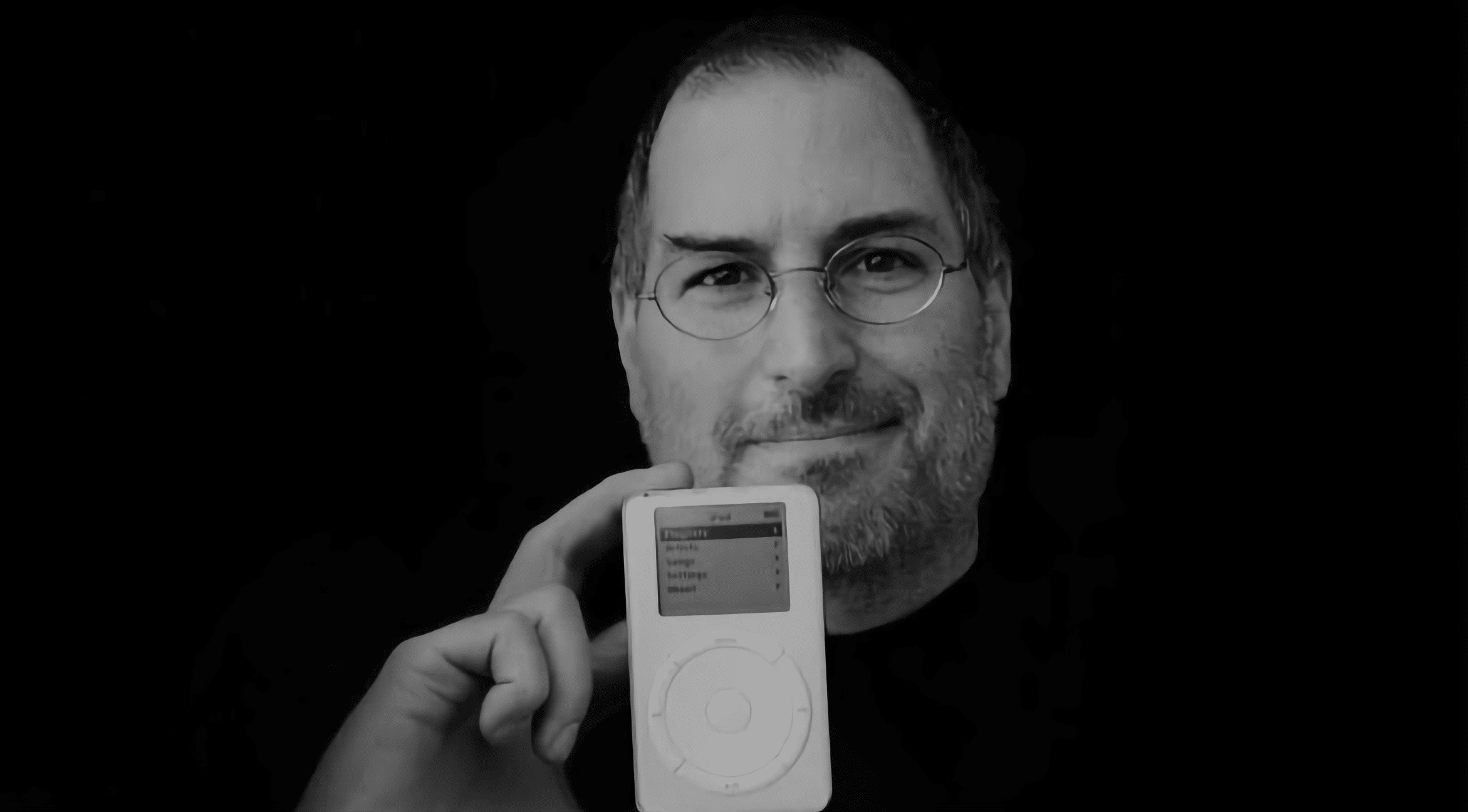
Há exatos 25 anos (ou 1/4 de século, para efeito dramático), o primeiríssimo iPod era revelado ao mundo por Steve Jobs, o então CEO 1Chief executive officer, ou diretor executivo. da Apple.

Equipado com uma tela LCD 2Liquid crystal display, ou display de cristal líquido. monocromática, um espaçoso (para a época) disco rígido de 5GB e um design para lá de icônico, ele mexeu com as estruturas da indústria fonográfica, além de ter servido como o primeiro “protótipo” de produtos como o iPhone e o iPad.

Com uma porta FireWire, o iPod original era capaz de transferir discografias inteiras em uma fração do tempo levado por reprodutores USB tradicionais, além de poder ser usado como uma espécie de HDD 3Hard disk drive, ou disco rígido. externo — possibilidade de uso que foi ativamente explorada pela Apple para justificar os US$400 cobrados pelo aparelho em 2001 (cerca de US$760 em valores atuais).

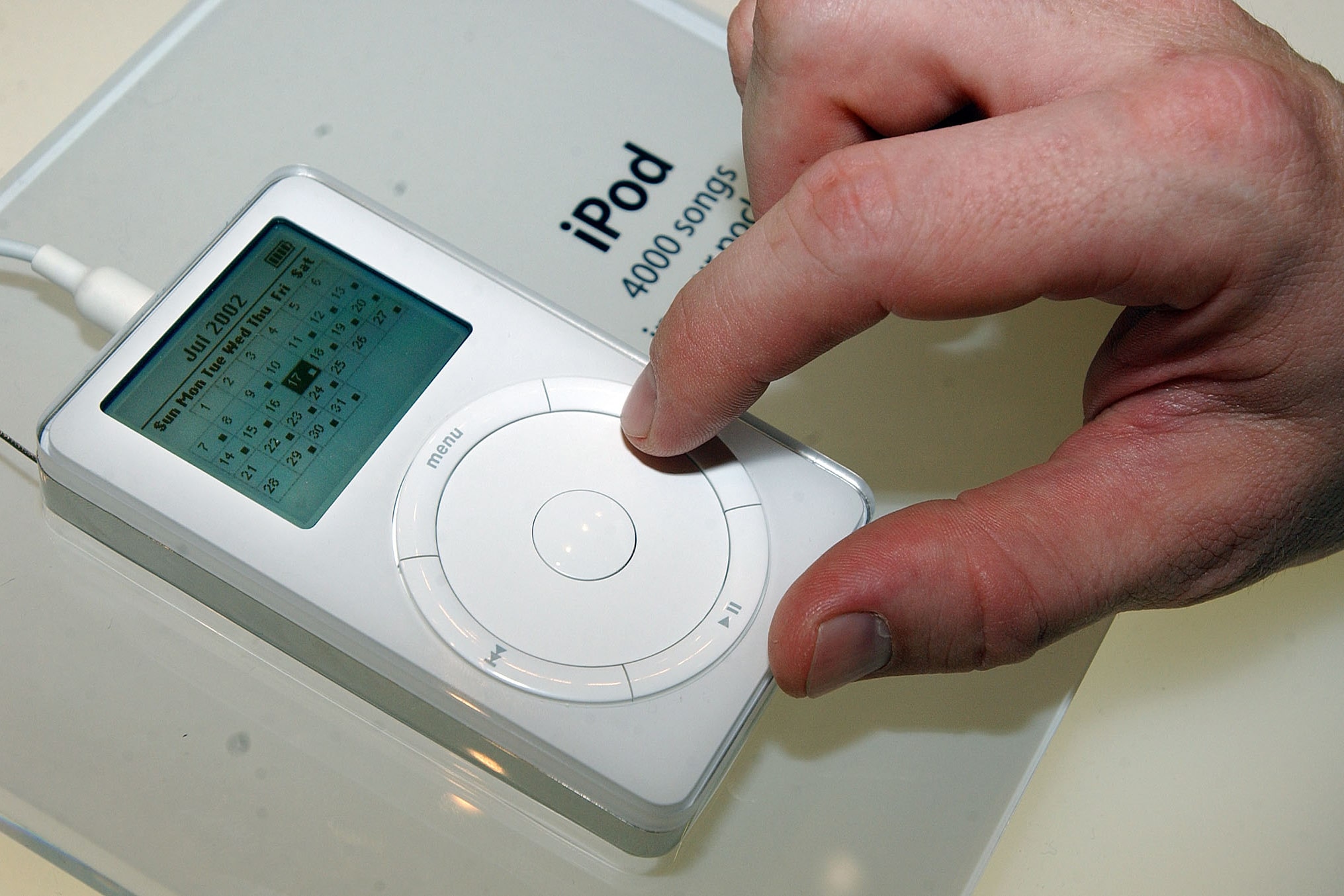
Mão segurando um iPod original
Foto de Cartoons Plural na Unsplash

Embora tenha motivado algumas críticas, o preço relativamente alto não chegou nem perto de ameaçar o sucesso do primeiro iPod, que podia armazenar até 1.000 músicas em seu HDD da Toshiba — capacidade que era constantemente lembrada pelo material de divulgação da Maçã.

Ele vinha com um CD de instalação do iTunes 2 — software que, junto com o iPod, mudou a forma como as pessoas consomem músicas — e era compatível apenas com Macs, o que também fez muita gente torcer o nariz na época.
iPod em exposição
Foto: Fortune

Medindo cerca de 6cm de largura, 10cm de altura e pouco menos de 2cm de espessura, o iPod original está longe de ser o produto mais compacto do mundo para os padrões de 2026, mas na época ele com certeza chamava atenção, sendo comparável a um baralho de cartas — nas palavras do próprio Jobs.

A famosa scroll wheel também marcou época, oferecendo uma forma prática e intuitiva de interagir com o software, embora não tenha durado muito tempo (pelo menos não daquela forma) por questões de confiabilidade — como salientado por Tony Fadell (considerado o “pai do iPod”) há alguns anos em uma entrevista.

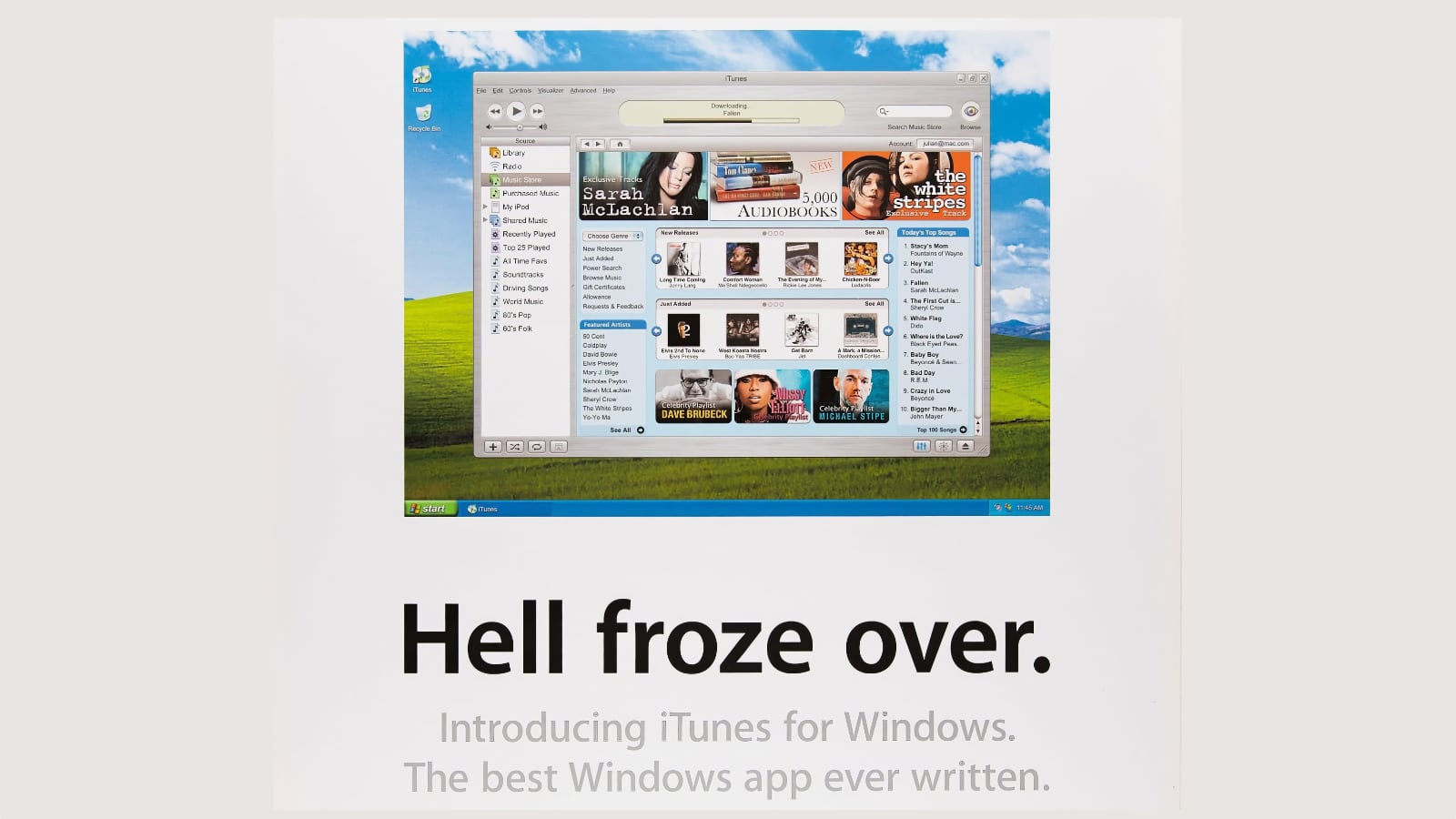
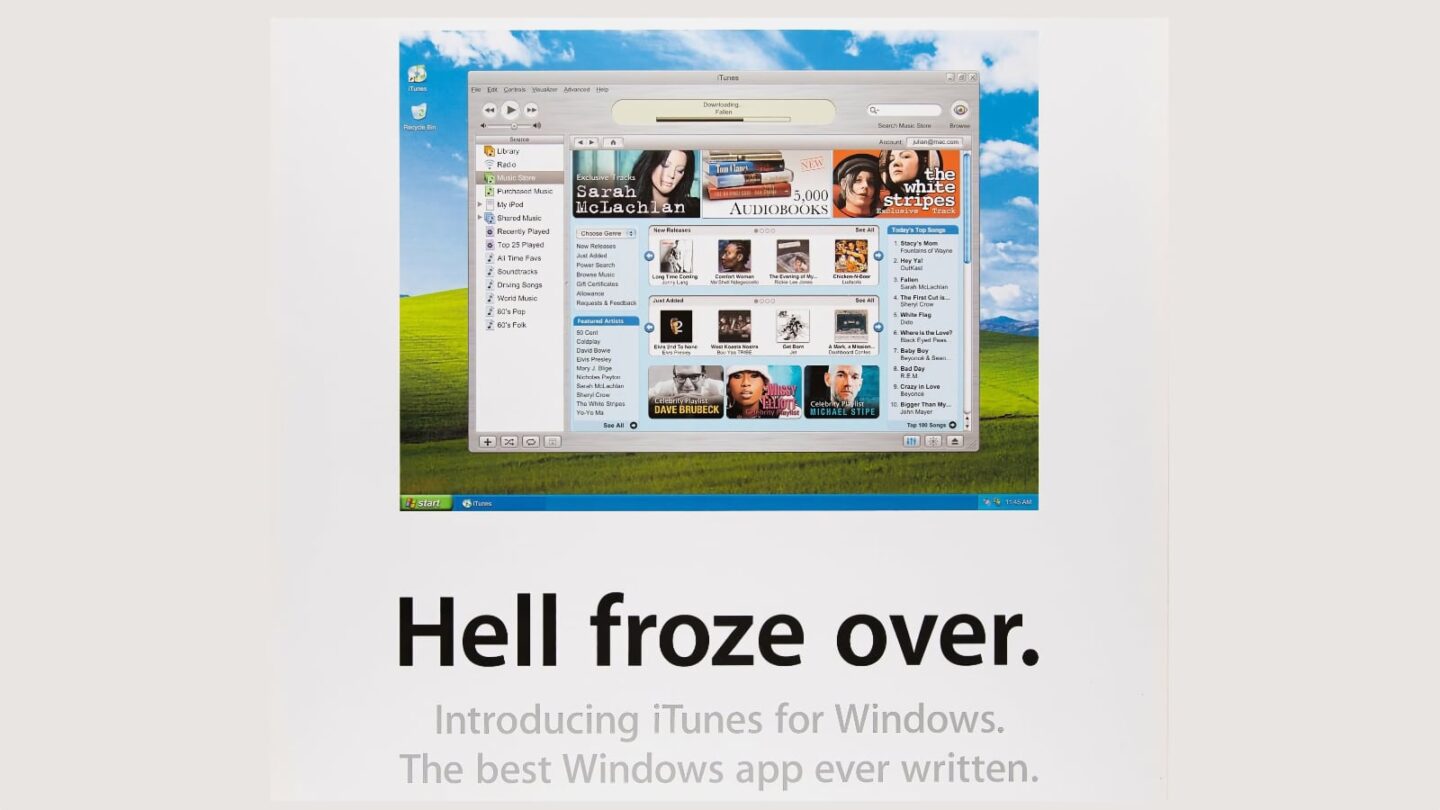
Depois do choque inicial, o iPod recebeu, é claro, novas versões, cada uma com as suas próprias peculiaridades. O modelo de segunda geração, por exemplo, passou a ser compatível com PCs com Windows, enquanto os modelos de terceira e quarta gerações adotaram o clássico conector de 30 pinos, que acabou dando as caras também nos primeiros iPhones e iPads anos depois.

iPod de segunda geração, compatível com Windows (2002)
Foto: RR Auction

O primeiro iPod com uma tela colorida veio na forma do iPod photo, que logo passou a fazer parte da quarta geração do reprodutor — tempo depois, ele foi renomeado para iPod with color display. Também com uma tela colorida, a quinta geração adicionou suporte ao codec H.264 e a capacidade de reproduzir vídeos (até então, rechaçada pela Apple devido à tela pequena do dispositivo).

Em 2007, tivemos o lançamento da sexta geração do iPod, que foi a primeira a receber o sufixo “classic”, atribuído também aos modelos anteriores retroativamente. Esse modelo chegou a receber uma revisão em 2009 que acabou se tornando a última “geração” do modelo clássico do iPod, equipada com 120GB de armazenamento e um corpo mais fino.
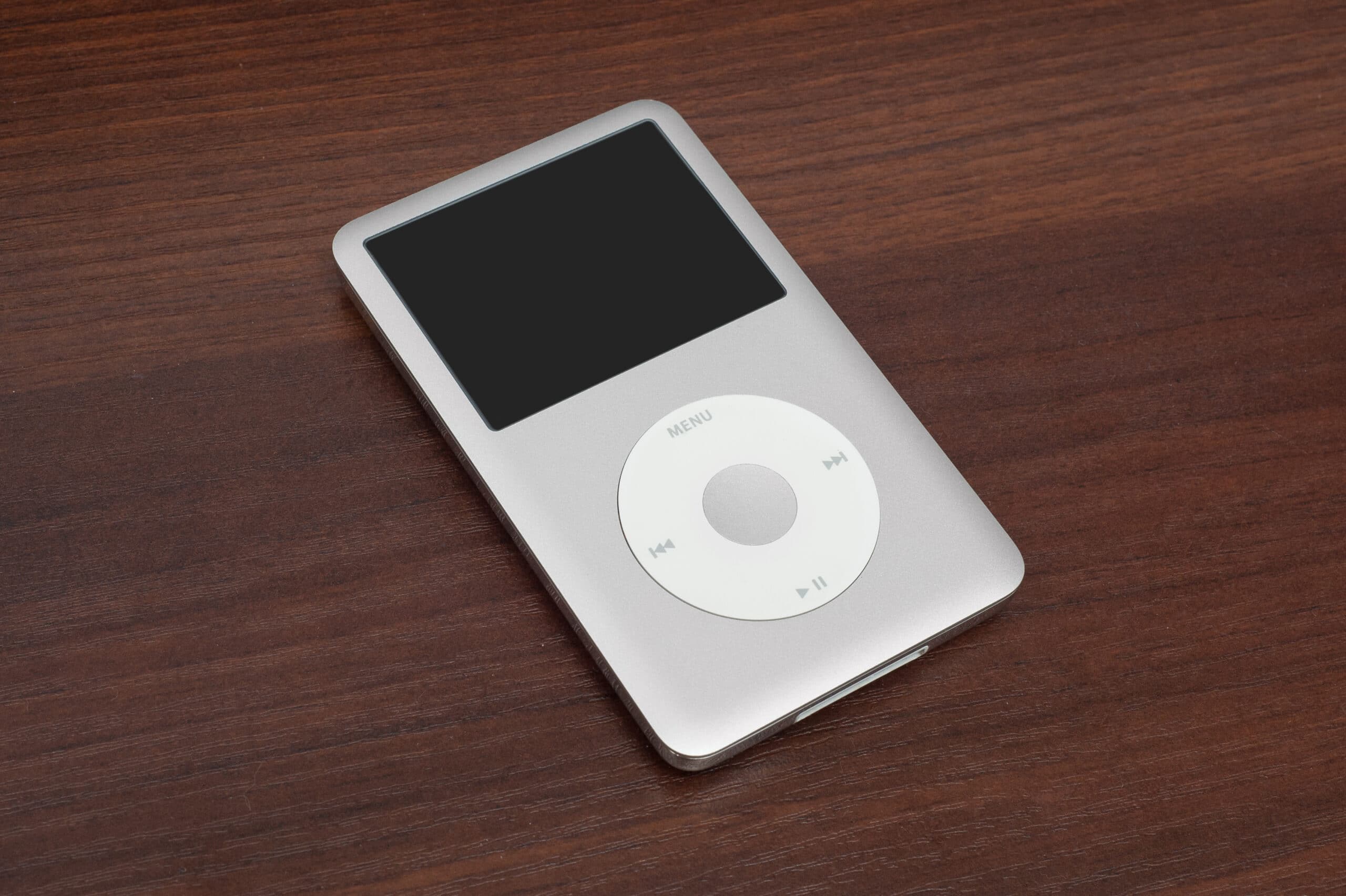
iPod classic prata sobre uma mesa
Foto: Vdovichenko Denis / Shutterstock.com

Como sabemos, o iPod classic foi descontinuado pela Apple em setembro de 2014, mas o fim da linha como um todo ainda estava a alguns anos de distância, com a descontinuação do iPod touch em 2022. Antes disso, no entanto, várias outras versões do reprodutor de mídia da Apple ficaram pelo caminho: o iPod mini (introduzido em 2004), o iPod shuffle (2005) e o iPod nano (2005).
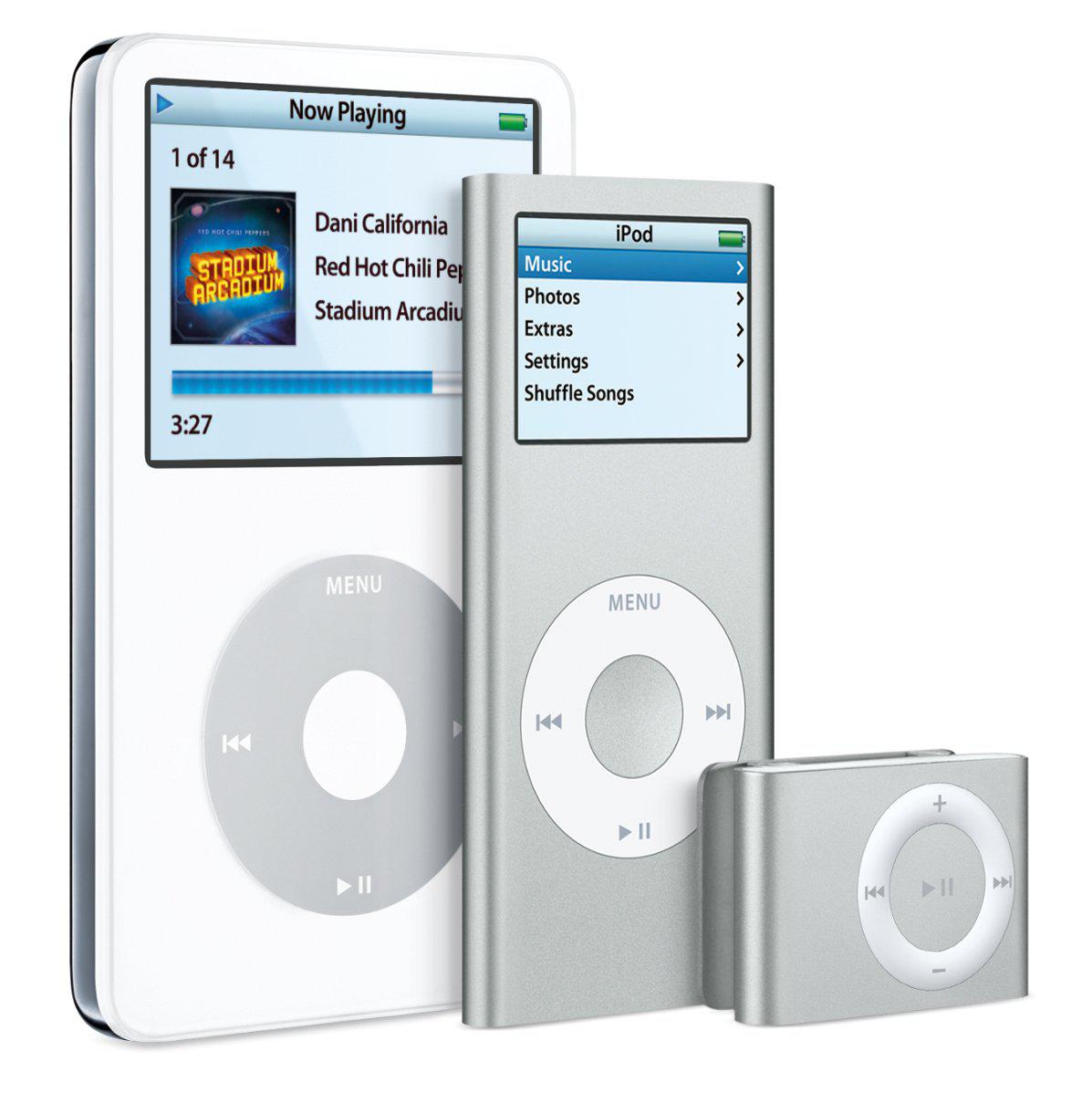
iPods
Da esquerda para a direita: iPod classic, iPod nano e iPod shuffle

Antes um dos gadgets mais populares do mercado, o iPod classic se tornou hoje um item de colecionador cultuado por uma legião de usuários nostálgicos, que apontam as vantagens do aparelho em um mundo ultraconectado e fazem de tudo para manter suas unidades funcionando a todo vapor.
E você, tem ou teve um iPod original? Ou quem sabe um modelo mais recente? Comente abaixo!

Notas de rodapé

  • 1
    Chief executive officer, ou diretor executivo.
  • 2
    Liquid crystal display, ou display de cristal líquido.
  • 3
    Hard disk drive, ou disco rígido.
  •  
  •  
  •  
  •  
  •  

Antennagate Q&A

Hartley Charlton:

A 47-minute video of the Q&A session from Apple’s 2010 iPhone 4 “antennagate” press conference has surfaced on YouTube, showing Steve Jobs, Tim Cook, and Bob Mansfield answering reporters’ questions.

[…]

Jobs used his prepared presentation to announce free cases for eligible customers and a 30-day return option. Apple later posted video of that presentation, but left out the Q&A, which was documented at the time through written reports and photographs.

John Gruber:

The Q&A was on the record (which is the entire point of a Q&A), and was reported widely, but I don’t think there’s ever been video of it. Here’s a report by Jeff Carlson at TidBITS, published the day the event was held, which states, “The video omits a long and interesting Q&A at the end.”

Then, yesterday, video of the Q&A hit YouTube. I don’t know what truck it fell off the back of, why it took 16 years, or how it came into the hands of “Sir Mix-A-Lot Rare Music”, but I’m sure glad it did. There are parts of this Q&A that I remembered, and parts I didn’t. Carlson was exactly right: it was long and it was interesting.

My main takeaway is still that there were two stories here, but most of the media missed one of them, and Apple was happy to focus on the other.

The first story was that holding iPhone 4 in the wrong way would reduce the signal strength. Apple pointed out that other phones had the same problem, to varying degrees, and offered cases as a solution.

The second was that, even with a case, iPhone 4 had worse reception than previous iPhones. I saw this directly myself: testing my iPhone 3GS and my father’s iPhone 4 in some areas that had poor signal, and finding that one worked reliably and the other was completely unusable. Apple examined my father’s iPhone 4 and assured us it wasn’t a lemon, so there was no choice but to return it. AnandTech did some more precise testing and published some graphs that were consistent with what we saw. I think it was the only bad iPhone Apple made.

In the Q&A, the first question was about Jobs’s health. The second was about whether Apple was going to make any changes to the antenna. Jobs responded that the iPhone 4 antenna was better in almost every way than previous designs. But Apple did end up redesigning the antenna with the iPhone 4s, and it worked just fine in my same test areas. It’s possible that the cell towers had changed in the interim, but the 4s worked well for me everywhere that it could be expected to and ended up being one of my favorites.

Nick Heer:

Sam Henri Gold decided to pick apart the changes between iOS 4.0 and iOS 4.0.1, which changed the number of bars shown in moderate-to-low reception areas[…]

Previously:

  •  

Shop Different

HarperCollins (Amazon):

When Steve Jobs hired Ron Johnson to create the Apple Store in 2000, conventional wisdom said that the internet would put stores out of business. By the time he left Apple in 2011, Johnson and his team had created the most respected and profitable retail stores in the world. And even then, skeptics were still predicting the death of physical retail.

In Shop Different, Johnson reveals how it happened: how he earned Jobs’s trust, how they developed a vision for a store that would win not by selling but by serving, and how he convinced Jobs that the store’s service philosophy should be rooted in something as intangible as love. Johnson then gives readers a new look at Apple’s ascent to the most valuable company in the world; offers an inspiring vision for a future in which retailers win on connection, service, and experience; and shares an honest look at what leads to success—and what can follow.

I enjoyed this interview that Jeff Benjamin and Fernando Silva did with Ron Johnson.

Previously:

Update (2026-09-25): Ron Johnson:

I told Steve, we’re going to get these people who are really good at technology, but they love people and are [good at conversation]. […] And he said, they don’t exist. Everyone who knows technology is kind of geeky. Maybe you call it the geek bar. […] But then I’d seen Apple’s genius campaign, and I felt like if we called a Genius Bar, People would come out of the woodwork wanting that job. Because who wouldn’t want to be the smartest Apple person in every city?

[…]

I said, you know, if the Mac’s a success, it’ll be the center of your digital life. And he came into the executive team meeting the next Monday, and I’m not saying it was solely that conversation, he probably had a lot of conversations about similar things, but he got all excited and stood at the whiteboard and drew a picture.

[…]

After I heard that, that night I was thinking about it, I woke up and I thought, well, if Steve’s going to market the Mac as the digital hub, our store’s [need to do that]. Our store was like any retail store, it was is built around products. We had portables and desktops.

I told Steve, well, maybe we ought to organize a store on movies and music and photos and the things you do.

  •  
  •  
  •  

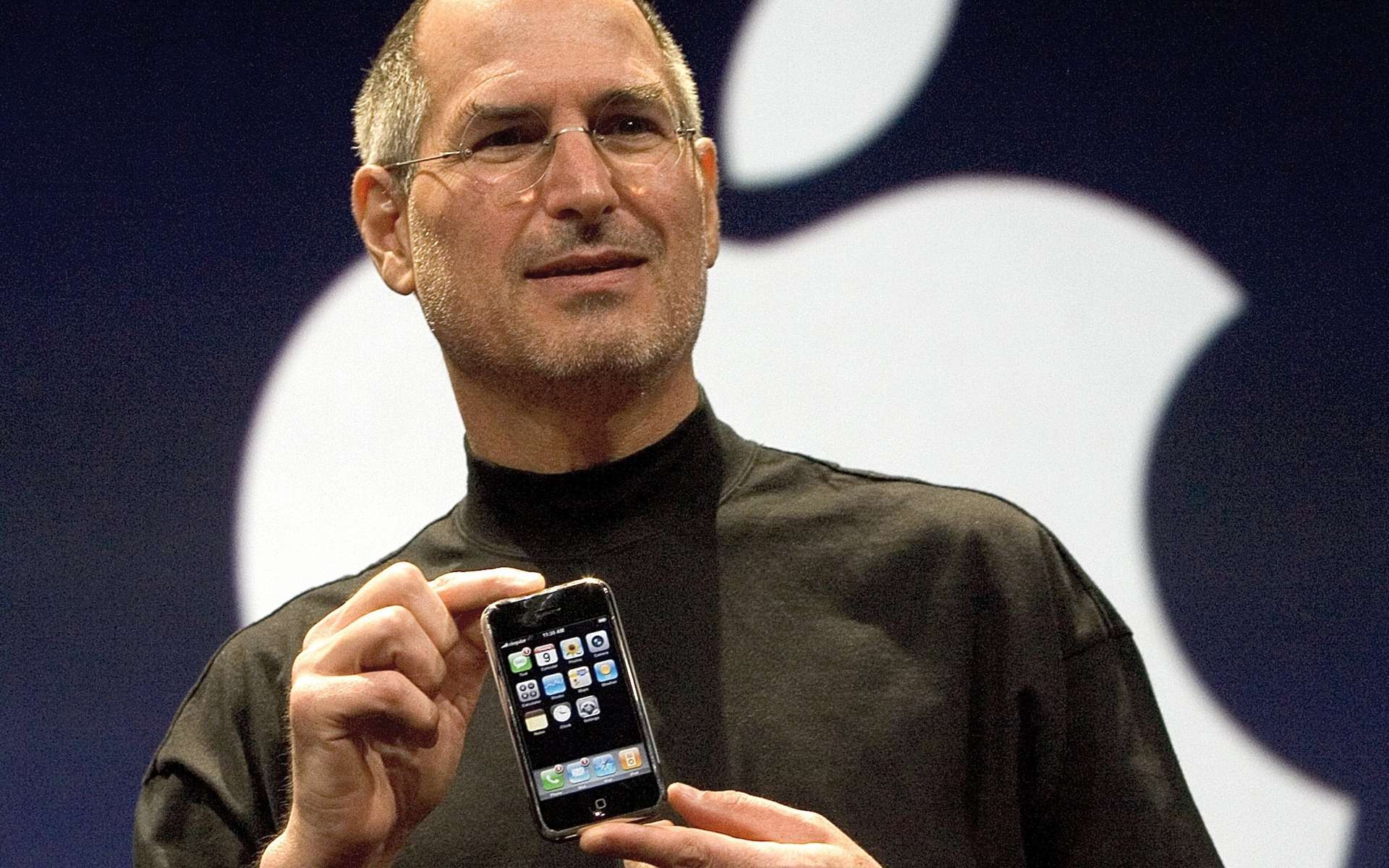
25 ans, une bascule : Steve Jobs a lancé en 2007 une révolution qui a débordé bien au-delà du téléphone

Pour fêter les 25 ans de Futura, chaque journaliste partage les images et évènements qui les ont le plus marqués au cours de ces décennies. Difficile de ne pas évoquer la sortie de l’iPhone, un véritable tournant dans l’évolution des smartphones.

  •  
  •  
  •  
  •  

Relax, everyone: Elon Musk has a mantra to make the climate crisis go away | Emma Brockes

It’s simple, says the SpaceX boss – according to something called the ‘Kardashev scale’, we just have to move energy production ‘off-planet’

Next time the weather gives the UK 61 days without rain and we wonder idly if this is the end, there is a term we may whistle up to soothe us. Like murmuring the rosary, or putting our fingers in our ears and humming, this phrase is to be mumbled on repeat – “the Kardashev scale, the Kardashev scale” – a buzzy concept in tech, much favoured by Elon Musk, and precisely the thing we’ve been waiting for. The Kardashev scale is the answer both to our impending doom and our anxiety around it – and if we decide to believe in it, we won’t have to give the climate crisis a single thought until the last drip falls from the tap.

This is the idea and it’s a familiar one to anyone who has watched tech billionaires take intractable, commonplace crises and decide that, among the measures and proposals in play, the vital missing ingredient so far has been them. Do you remember when Jeff Bezos, rather than doing something quotidian and loserish like funding public education by ensuring Amazon pays the same tax rate as regular Americans, decided instead to reinvent preschools?

Emma Brockes is a Guardian columnist

Continue reading...

© Photograph: Reuters

© Photograph: Reuters

© Photograph: Reuters

  •  

Apple Proposes 15% External Purchase Fee

Juli Clover (AppleInsider):

Apple has again failed to earn a stay for fee calculations in its ongoing legal fight with Epic Games. Apple's case will be heard by the Supreme Court in the term that begins in October, and Apple asked the U.S. District Court for the Northern District of California to pause proceedings until then, but the court said no [PDF].

Juli Clover:

U.S. Supreme Court Justice Elena Kagan today granted Apple a one-day stay in its legal fight with Epic Games, giving Apple more time to outline the fees it wants to charge developers for linking out to purchase options on the web.

M.G. Siegler:

Apple tried to freeze the entire thing while they appealed to the Supreme Court – and the Supreme Court denied the freeze. But they didn’t deny hearing the case – yet. That’s why they’re pausing the proceedings for now (after Judge Gonzalez Rogers denied the same request), while they weigh Apple’s appeal. But before they do that, they’re basically likely to decide today – again, it was just a 24-hour delay – whether they should grant a longer stay. Presumably if the court thinks they’re unlikely to hear Apple’s appeal, they may not grant that longer stay. Or if they think Apple filing their number won’t harm their business, they’ll let it proceed. But Apple will argue that if the longer stay isn’t granted, it will cause major harm to their business because again, it will effectively end the App Store cut as we know it.

Juli Clover (Engadget, The Verge):

Apple today submitted a court-ordered proposal outlining the commission it believes is reasonable to collect from U.S. apps that link to purchase options outside of the App Store.

Apple is asking for half of its commission on standard apps, so apps that would pay 30 percent for an in-app purchase would pay 15 percent when linking to a web purchase option. Small Business Program participants that would normally pay 15 percent would pay 5 percent.

[…]

The appeals court suggested the commission could be limited to the direct costs of facilitating link-outs, and under that approach, the fee would be zero. Apple says a zero commission would not reflect the value that it provides developers, and its suggested commission gives it fair compensation for the App Store platform.

[…]

The district court will now evaluate Apple’s fee proposal and hear a response from Epic Games , and Apple will need to implement the fee the court sets.

Apple:

Unlike cost-only based commissions, Apple’s revenue-based commissions incentivize continued investment. Apple charges developers a $99 annual fee for the Apple Developer Program. May 17, 2021 Trial Tr. at 2762:21–2763:13. This modest fee—designed to prevent fraud and expressly not intended to compensate Apple for the use of its IP-protected tools, technologies, and services (id.)—allows developers to build apps using Apple’s offerings and deliver experiences to iOS and iPadOS users worldwide.

The annual developer fee is nominal. Apple relies on percentage-based commissions to recoup and profit from its investments. See id. ¶¶ 87–93. Apple is incentivized to invest in IP- protected tools, technologies, and services that generate revenue for developers (and benefit users).

[…]

Dr. Carlton explains that “reduc[ing] Apple’s incentive to invest and provide the technology and services that benefit users and developers” would harm users and developers, as well as Apple.

I like the part where Apple’s expert argues that its normal commission rates are so high that it would still be profitable for developers to pay the proposed linking commissions on top of what they would pay to Stripe or Paddle. In other words, paying Apple for “IP” almost twice what it admits the other companies charge for “full-service, turnkey payment processing.”

Jeff Johnson:

If the point [of the $99] is just to prevent fraud, why do we need to keep paying $99 yearly FOREVER? Is 10 years not enough to prove I’m not a fraud?!?

If the fee doesn’t help pay for Apple IP, then it’s even more blatantly unfair that a minority of apps have to pay for ALL apps to access Apple IP. Free apps, no matter how big or how much $ they make via ads, get access to Apple IP from OUR REVENUE CUT, and not even their $99 counts.

Matt Garber:

That’s what that enormous hardware margin from customers is already supposed to be paying for — Apple IP! In the early 00’s, I gladly paid the “Apple tax” (PowerBook G4) to get access to the Mac OS X software/ecosystem, including all the Unix and dev tools. I’m not sure why anyone thinks that double-dipping is fine on all the non-Mac platforms, App Store or not.

Jeff Johnson (2):

Schiller’s [previous] testimony about the previous program is extremely misleading, because the new program began in 2008 at the same time as the App Store, so there was no previous iOS developer program, and Mac Developer ID did not begin until 2012, so Apple Developer Program membership was not actually required to distribute Mac apps!

Jeff Johnson:

Fourth, it appears that Steve Jobs was wrong: the $99 fee didn’t prevent developers from flooding the App Store with a lot of junk.

I want to quote another remarkable passage from Schiller’s testimony, again with questions from Apple’s own lawyer.

Q. And Mr. Jobs says, “And also just to make it a little clearer, we don’t intend to make money off the App Store. I mean, we don’t make a lot of money off iTunes, and the split with the music companies is about the same, so in the case of the iTunes Music Store, we give all the money to the content owners, and we are basically giving all the money to the developers here. And if that 30 percent of it pays for running the store, well, that will be great, but we just want to create a very efficient channel for these developers to reach every single iPhone user.” Is that a statement that Mr. Jobs made back in March 2008?

A. He did.

[…]

I won’t quote the following passage in which Schiller testifies about his internal email suggesting that Apple limit itself to $1 billion per year in profit from the App Store, hand-waving away the suggestion as merely “spurring conversation.” Of course the email also seems to contradict Schiller’s (absurd) testimony that Apple does not specifically calculate profit from the App Store, only company-wide profit. Apple’s public financial statements also appear to contradict Schiller’s claims.

Previously:

Update (2026-08-20): Marcus Mendes:

On the same day, Apple submitted another motion, asking Judge Gonzalez Rogers to order the parties to attend a settlement conference.

[…]

Epic has now responded to Apple’s motion, stating that although the company “has been, and remains today, willing to entertain any direct approach from Apple with a serious settlement proposal that would introduce competition and benefit all developers,” it “does not believe the prospects of such settlement would be meaningfully advanced through referral to a settlement conference at this juncture.”

Update (2026-09-03): Marcus Mendes:

In addition to the proposal itself, Apple submitted supporting expert reports, alongside a request to seal portions of those filings containing financial data, link-out adoption estimates, developer survey results, and other information Apple considers commercially sensitive.

Epic has now filed an opposition to Apple’s request, arguing “Apple again seeks to conceal information from the public and unnecessarily hamper proceedings.”

  •  
❌