Login

Lab testing giant Quest Diagnostics confirms patients’ personal and health data was compromised during breach
Quest is the latest in a series of healthcare technology companies that have been hacked in recent months.



The scams are getting a bit meta. The Federal Trade Commission (FTC) has issued a warning about a new scam currently making the rounds. But this time, the con artists aren’t impersonating a politician or celebrity to trick consumers.They’re claiming that they are the ones sounding the alarm at the FTC.
Real FTC officials explained the general scheme in an alert released on October 22. Scammers call a target to tell them that bad actors in another country have registered a separate phone using their name and number for nefarious purposes. The imposter may even “transfer” you to a fake police officer to file a report. Fake badge numbers and IDs are also offered to make it all sound legitimate, and skeptics may even be directed to verify everything by searching for the police department’s phone number online (also fake). Failure to comply allegedly results in the loss of your personal phone number.
Those who follow through with the instructions provide scammers with their state-issued ID and other personal info for the bogus police report, but it’s not over yet. Some time later, targets will receive another call informing them that they will soon be arrested for those nonexistent crimes committed using their phone number. The solution? Transfer money for a security deposit.
“None of this is true—it’s all a scam,” assured the FTC.
To prevent unnecessary headaches, the FTC listed a few ironclad rules. Actual FTC employees will never contact you about sending money, or transfer you to someone else requesting funds. The FTC will never threaten to disconnect your phone number, or ask you to keep your conversations secret from others. Finally, they will never text a photo of the supposed employee ID as a way to verify their identity to you.
Unfortunately, combatting scammers is a bit like playing a neverending game of Whack-a-Mole. While the FTC has a list of common ways to spot government imposters, they encourage everyone to report the latest con jobs to ReportFraud.ftc.gov.
The post Scam alert: The government is not deleting your phone number appeared first on Popular Science.

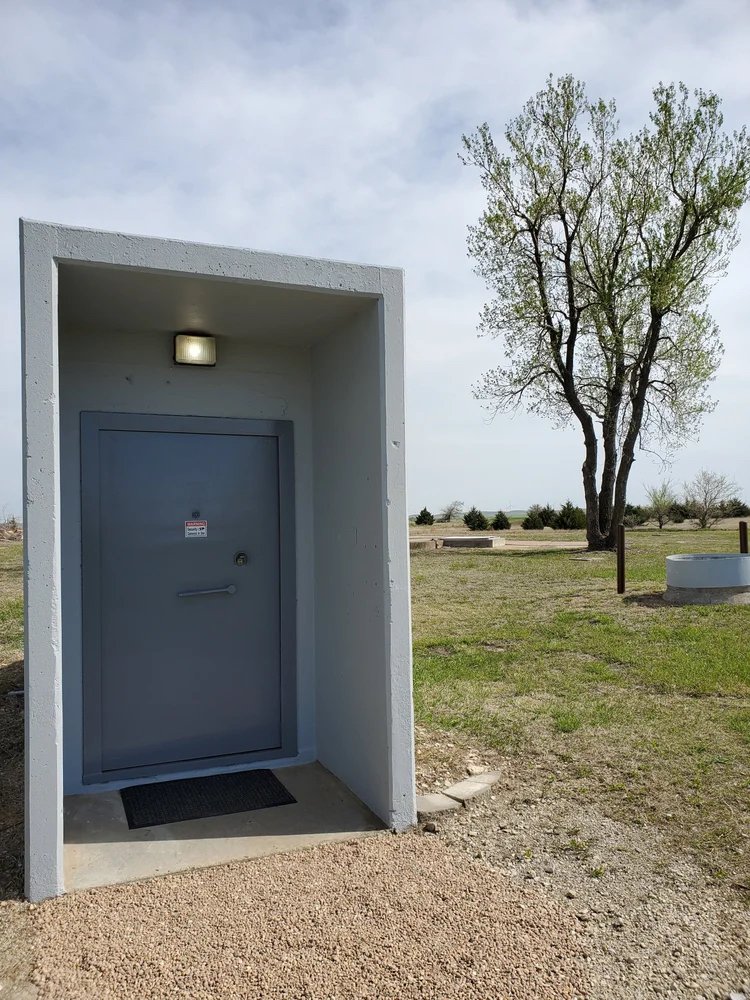
When it comes to buying a home, many people pay a premium for privacy. But one new listing Carlton, Kansas, takes the cake. For a measly $1.6 million, someone can call a converted Cold War Atlas intercontinental ballistic missile (ICBM) silo home. Though the site sits on 18.2 acres of rural grassland, nearly the entire complex is hidden underground, save a single ominous steel door. The silo trenches down 182 feet, eventually leading to a two floor launch control center retrofitted to fit the modern world.
Surrounding the entire complex are 600 tons of steel rebar and six-foot-thick epoxy concrete walls meant to withstand nuclear blasts and 500 mph winds. The listing’s website calls it quite possibly “one of the most hardened structures ever built by man.” Once the staging ground for nuclear Armageddon, the indoor launch control center has been converted into a 2,200-square-foot, two bedroom, two bath, home outfitted with generic modern appliances. To top it all off, it is caked in a fresh coat of muted millennial gray and white paint.
This particular missile silo was part of the United States Air Force’s Atlas F Intercontinental Ballistic Missile Program. The Atlas program began toward the end of World War II, and produced the country’s first operational ICBM. At its peak, from late 1962 to mid-1964, 132 of these Atlas sites were built around the country.
According to the National Park Service, north-central Kansas’ Atlas F was “by far the best” of the Atlas variants ever deployed. The missile stood 82 feet tall and carried a 4.5 megaton warhead, roughly 300 times as powerful as the 15-kiloton bomb dropped on Hiroshima. Aside from the Kansas location, there were 72 Atlas missile sites stationed on bases in Nebraska, Oklahoma, Texas, New Mexico, and New York.
Though advanced for its time, the Atlas was soon eclipsed by the even stronger Titan and then Minuteman systems.The majority of the Atlas systems were decommissioned in 1979, when President Richard Nixon signed the SALT (The Strategic Arms Limitation Talks) treaties. That meant dozens of the massive structures were left dormant. Many of those relics have taken on new lives as luxury apocalypse bunkers or gimmicky rentals.

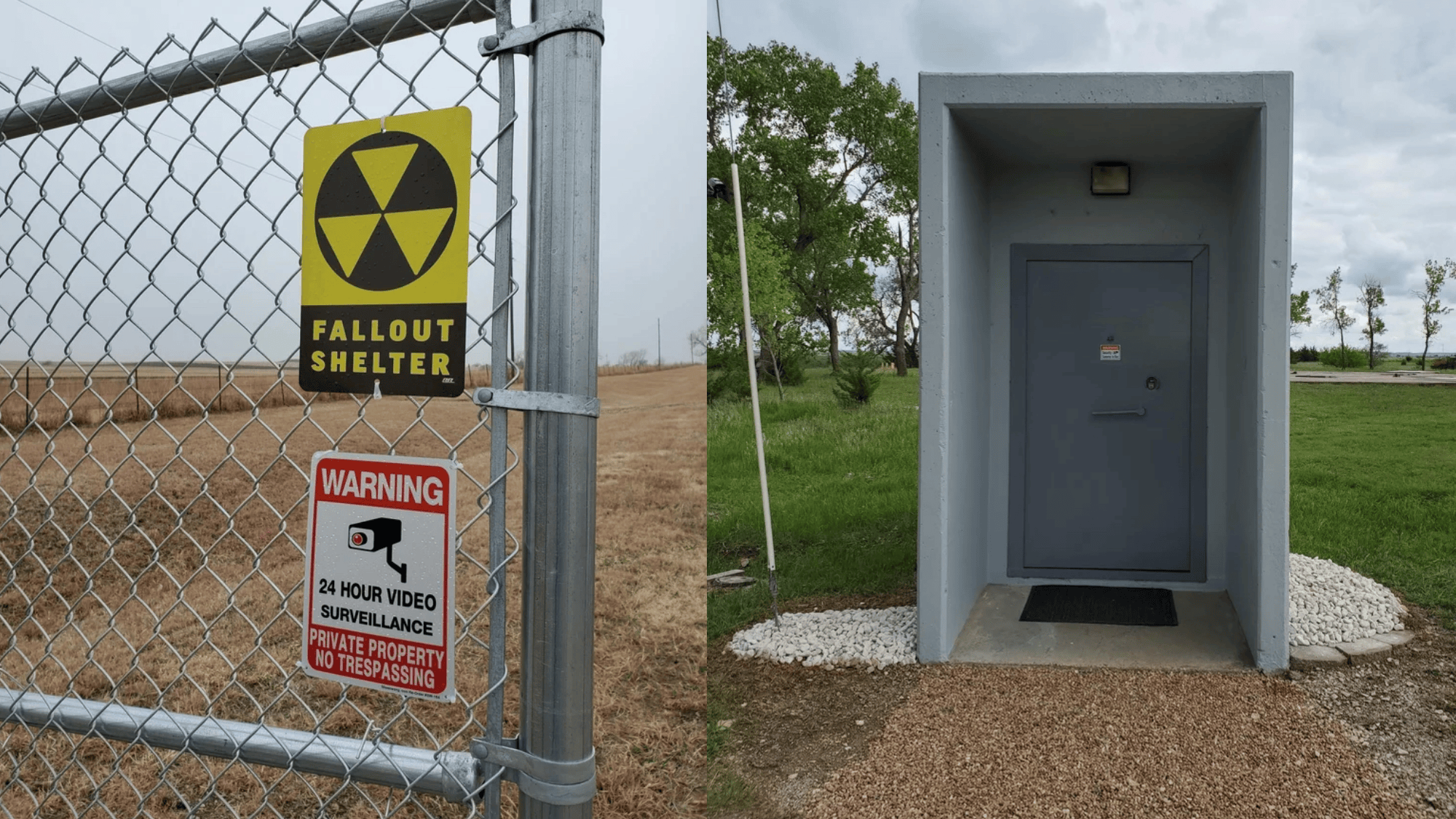
A buyer interested in viewing the North Star Missile Silo in Kansas would really have to know what they’re looking for. Getting there requires driving through a seemingly nondescript stretch of grassland before eventually coming up on a large gated fence with the iconic yellow “Fallout Shelter” signage on its side. Once inside, a surreal-looking steel door jutting out of the quiet countryside offers a clue to the shelter. It looks like a portal to some eerie, distant world, which, in some sense, it really is.
Once through the door, visitors descend a metal staircase that leads to a 40-foot tunnel. Photos show a narrow, claustrophobic walkway encased in a ring of white metal beams. At the end of the walkway stands a pair of imposing 7,000-pound blast doors. Home sweet home!
But the weirdest part about the retrofitted missile silo house is how remarkably normal much of it looks on the inside. The living quarters feature a floor plan with two bedrooms, two kitchens, and two bathrooms spread across two floors. Stainless steel appliances and a washer and dryer sit alongside standard wooden cabinets, none of which would look out of place in any hastily built rental unit across the country. The central area is laid out loft-style, showing off the control center’s massive support column. Visually, everything seems out of context. It evokes a slightly off not quite right AI-generated version of a house, or a modern millennial apartment that a visiting alien might describe to fellow interstellar travelers.

It’s an undeniably weird place to live full time, but not a half-bad survival bunker. The listing notes that it features two separate sewage systems (one above ground and one underground) humidity control, a cellphone phone signal repeater and a solar power powered seven foot chain link gate. It also has ample room for solar or wind energy installation, though the buyer would have to install those. It’s also not necessarily limited just to survival or end time doomers. Realtor.com notes that the silo was previously used as a rental, though he also said there was interest in using it as an off-the grid conference site or even a wedding venue.
Many Cold War relics have taken on new lives as quirky rental and luxury condominiums. Airbnb shows a number of silos available for short term stays in New Mexico, Kansas, and southern Texas. Some of these explicitly court “prepper” audiences with fat wallets. Possibly the best known of those is Survival Condo, located about 200 miles outside of Kansas City, That sprawling Atlas Missile Silo was converted into a 15 floor luxury condominium outfitted with a pet park, climbing walls, swimming pool (with a slide) library and a movie theater. The starting asking price for one of the units? Around $1 million in 2020 dollars.
And while Cold War bunkers are relics of the past, new interpretations of the structures are still being built. In the U.S. and abroad (New Zealand attracts a particular amount of attention) a subset of the world’s wealthiest elites are reportedly constructing their own apocalyptic lairs. Some of the best known examples of those billionaire bunker builders are in the tech industry with some racing to build advanced AI models that are increasingly putting them at odds with public opinion. Aside from escaping the pitchforks, the Kansas listing also notes one more potentially enticing incentive.
“Underground structures not taxable by [the] County.”
The post You could live in a converted Cold War missile silo for just $1.6 million appeared first on Popular Science.
Security researchers using an OpenAI model have uncovered two stunning security flaws in PHP, the software that underpins nearly 70 percent of all websites on the internet.
The flaws are so catastrophic that all websites using PHP — all untold millions of them — are advised to immediately take their servers down and apply the latest patch, which was released Wednesday. Vast swathes of the internet, following the news, have gone dark. Some that went offline for a time include Wikipedia, Steam, and even government websites.
Many organizations, however, may not have the time, resources, and personpower to swiftly implement the patch, making them potential sitting ducks until they do. According to the New York Times, the information released on the vulnerability can be used to reverse engineer the attack and take control of victim’s servers and steal information. The best course of action if you can’t patch your website, the National Security Agency advised, is dramatic: keep your site offline and don’t turn it back on.
Just as extraordinary as the breadth of the threat was how it was identified. The flaws were discovered by researchers at the cybersecurity firm Calif by using OpenAI’s GPT-5.6 Sol model, as part of a collaboration with the AI company. It then reported the flaw to the PHP Foundation back on August 11.
The Google-owned security firm Wiz independently found the flaws, too, and made a report on August 24. Wiz called it one of the “most severe vulnerabilities discovered in PHP, and arguably in software history.”
Adding to the alarm presented by the exploits, there have been concerns raised over OpenAI’s role in how they were identified.
The flaws have been present in versions of PHP dating backing to 2004. But through OpenAI’s “Patch the Planet” program, and by using its flagship GPT-5.6 Sol model, Calif found it in only a matter of days. In a sense, these exploits only exist because of current powerful AI models. And moreover, OpenAI encouraged their discovery through its programs.
The messy disclosure of the vulnerability doesn’t help matters. OpenAI followed standard responsible practices, but some of the details around the hack leaked a day before it was officially scheduled to be announced.
Even if no leaks occurred, though, the damage caused by the mere knowledge that the vulnerabilities exist — which again, is largely thanks to AI — would still be catastrophic. It was the inevitable next chapter in all the bluster around AI companies revealing their agentic models’ hacking prowess. A headline in The Atlantic proclaimed that the “AI-Hacking Apocalypse Began Last Night.” OpenAI will tout the discovery as undeniable proof of its AI’s capabilities, while the rest of the world picks up the pieces of a shattered internet.
More on AI: AI Experts Already Doomsday Prepping for When AI Takes Out the Entire Financial System
The post Frontier OpenAI Model Exposes Stunning Exploit That Leaves Millions of Web Servers Open to Attack appeared first on Futurism.




Two bugs found with AI are behind major issues today for 4chan, DeviantArt, Wikipedia, and the blog where the bar around the corner posts pictures of people's dogs. The "critical vulnerabilities" were discovered in the PHP programming language, which underpins much of the internet, including any site built on WordPress. But it's far bigger than that. Some Dutch and Finnish government agencies took their sites down as a precaution. The NSA Cybersecurity account on X recommended that organizations take their systems offline if "an immediate update is not feasible," as did the UK's National Cyber Security Center. Even Pokémon Home and Pokémon C …
Taking a site offline to patch PHP? Serve a 503 from outside PHP and keep robots.txt reachable. Days of server errors may get URLs dropped.
The post Google Reminds Sites To Serve A 503 During PHP Patch Downtime appeared first on Search Engine Journal.
If you’ve encountered websites in maintenance mode today, it may be a security precaution. Reports of attacks targeting two critical PHP vulnerabilities have prompted warnings to install emergency updates and consider temporarily taking affected services offline until they can be patched.
[…]
Successful exploitation could let an attacker run malicious code on an affected server without logging in. That code would run with the permissions available to the PHP process, potentially allowing attackers to steal application data, alter website content, or establish a backdoor.
[…]
The PHP team scheduled its emergency security updates for October 21 at 10:00 am ET (14:00 UTC). It has now released fixes in PHP 8.5.12, 8.4.27, 8.3.36, and 8.2.35, and urges users to update immediately. Administrators should check with their hosting provider or operating system vendor for the appropriate updated packages.
Expect to see numerous websites go down or serve “Page not found” errors as they update PHP, the programming language that underpins 70% of websites. If you run a WordPress, Drupal, or Joomla site, this affects you directly.
Word on the street is that these exploits have leaked, and that remote code can likely be executed all the way back to PHP 5. If you have access to your website’s
php.inifile, it might be worth turning off multipart uploads for now.
Two changes reduce the risk until the fixed versions are out. They were checked against PHP’s source code and the PHP manual, but they are not an official PHP mitigation. When someone suggested that turning off session upload progress might be enough, PHP core developer Gina Peter Banyard replied, “The only thing I can say is that the only mitigation is patching / upgrading PHP. I sadly know too much.” Use the stopgaps to lower the risk for a few hours, and update PHP as soon as the fixed builds exist.
Add to php.ini:
session.upload_progress.enabled = Off
Add to .htaccess:
<If "req('Content-Type') =~ /multipart/i">
    Require all denied
</If>

I've used Bitdefender Total Security to protect my own devices for years, and I highly recommend it. I've found a great deal on the security software at Newegg that brings a year's coverage for up to 10 devices down to under $30.
Bitdefender Total Security 2026 is reduced to $28 (was $100) at Newegg with promo code EPF56892. It doesn't get much cheaper than this, so well-worth checking out.
• Best for: Households with multiple devices, anyone wanting protection across different operating systems, and people looking for antivirus software with additional privacy and ransomware defenses.
• Why I like it: I use Bitdefender Total Security to protect all of my devices at home, and it's much more than a traditional antivirus tool. As well as keeping you safe from viruses, spyware, Trojans, ransomware, and other malicious software, it also uses behavioral detection to identify suspicious activity and defend against unknown threats.

Total Security 2026: was $99.99 now $27.99
Bitdefender Total Security provides one year of protection for 10 Windows, macOS, Android, and iOS devices, with malware detection, ransomware defense, privacy tools, parental controls, and limited daily VPN access included.View Deal
The software can block online tracking, monitor attempts to access your webcam or microphone, and identify potentially dangerous websites. The subscription covers up to 10 devices running Windows, macOS, Android, and iOS.
The package also includes access to Bitdefender VPN, although it's limited to 200MB per day per device, which is only really enough for occasional use. Parental control features will be of interest to anyone with children, although availability and functionality depend on the OS.
In covering the software, we said: "Bitdefender tops our list and ticks every box. It performed well across our testing, boasts all the tools you need to protect your devices from malware (and more), and is nice and easy to use – regardless of platform. While some expert users might wish for a little more granular customization, we think that Bitdefender strikes the right balance in terms of configuration and ease of use."
Newegg sells the one-year, 10-device subscription for $99.99, but is currently offering it at $52.99. Enter EPF56892 at checkout to save a further $25, bringing the final price to $27.99.
That represents a $72 saving against the original price, approximately 72% off. If you activate the program on all 10 devices, the first-year cost works out to approximately $2.80 per device.
It's important to remember that this is a one-year license, rather than a permanent software purchase. You're not locked in though. What I usually do is search for a new deal around the renewal time.
For more options, take a look at our roundup of the best antivirus software.
✅ Buy the Bitdefender Total Security if...
You want one antivirus subscription covering Windows, Mac, Android, and iOS devices. It's also great for ransomware protection, malicious website detection, and privacy tools. At $27.99, this is a fantastic deal.
❌ Skip Bitdefender Total Security if...
You only need to protect one computer and are satisfied with your device's built-in antivirus software. Windows includes Microsoft Defender, and macOS and mobile operating systems have their own security protections.