❌

Reading view

Planning permission for new Scottish AI datacentres suspended for up to a year

MSPs vote for strict environmental impact assessments and will delay decisions until national strategy is developed

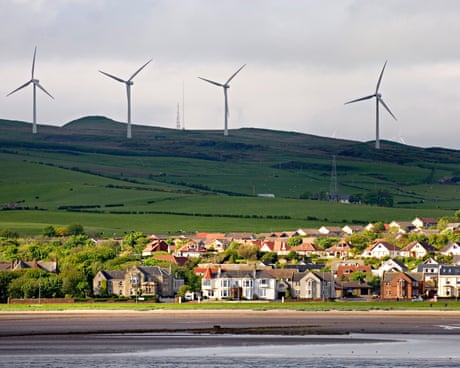
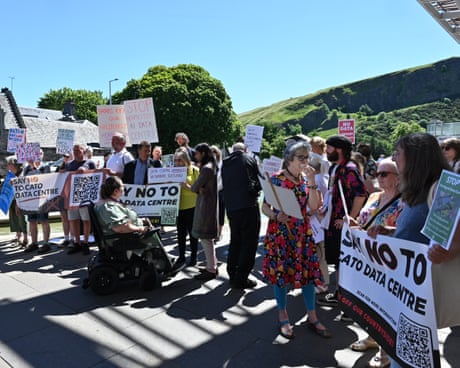
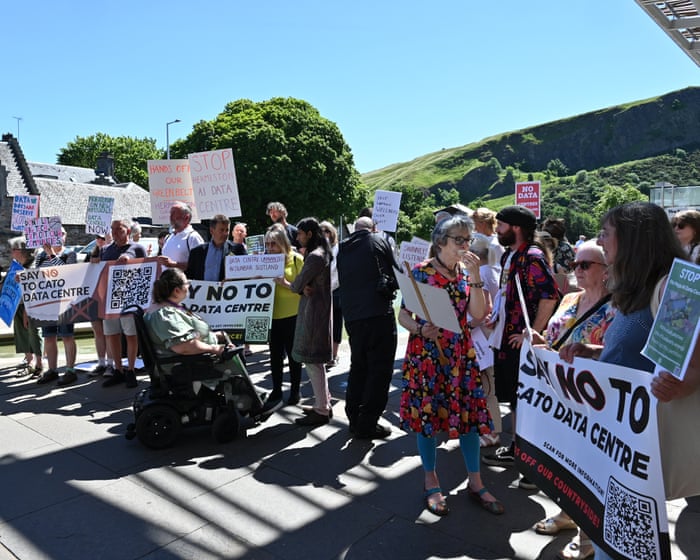
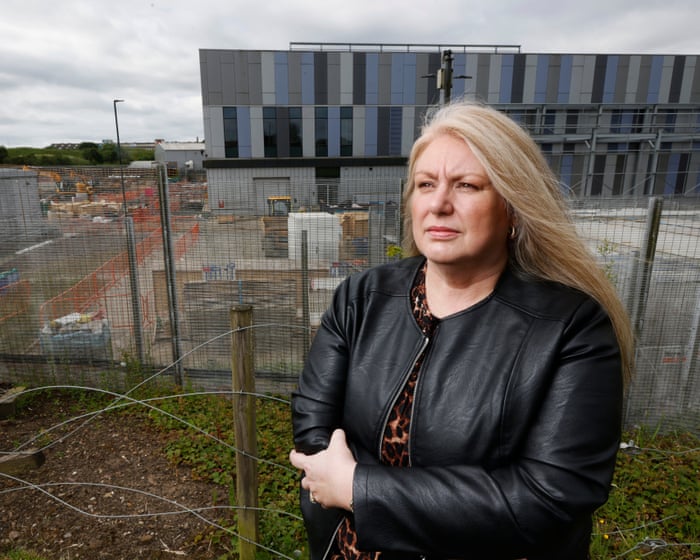
Holyrood has voted to pause planning applications for all new AI datacentres for up to a year until the Scottish government has developed a national strategy.

On Wednesday, MSPs backed a Scottish Labour motion to halt new schemes for up to 12 months while rules on hyperscale datacentres are developed in what could be a blow to the British government’s AI strategy.

Continue reading...

© Photograph: Murdo MacLeod/The Guardian

© Photograph: Murdo MacLeod/The Guardian

© Photograph: Murdo MacLeod/The Guardian

  •  

Speed up electricity grid upgrade or else face higher bills, warns UK watchdog

National Audit Office says failure to implement £70bn modernisation would also hold back economic growth

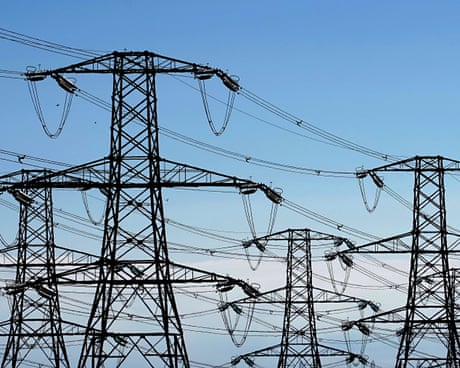
Consumers will pay higher energy bills unless the UK government speeds up work on a vast programme of upgrades to the electricity grid to enable the switch to renewables, the public spending watchdog has warned.

The National Audit Office (NAO) said that without faster action the extra costs associated with managing the ageing power network, which are ultimately passed on to the public, could reach £7.8bn a year by 2030.

Continue reading...

© Photograph: Alan Majchrowicz/Getty Images

© Photograph: Alan Majchrowicz/Getty Images

© Photograph: Alan Majchrowicz/Getty Images

  •  

Is Burnham trying to appease Trump? Or Reform? What other reason is there for these North Sea oil plans? | George Monbiot

Climate catastrophe is on our doorstep – yet Labour’s impending approval of further drilling will bring more pain for negligible gains

Pinch yourself, it’s happening again. Here is a Labour government spending a vast amount of political capital to earn tiny material gains while risking huge political losses. It occurred repeatedly under Keir Starmer, and now – with the impending decision to approve further gas and oil drilling in the North Sea – it is happening under Andy Burnham. You rack your brains to explain it, but no rational explanation comes.

Burnham is studiously cryptic about his reasons. His clearest statement to date goes as follows: “There is a resource there. When people are struggling, we can’t ignore that.” Does he mean that oil and gas workers are struggling? If so, this decision will be of little use to them. The Jackdaw gasfield, likely to be approved this week, will generate a grand total of 27 direct full-time jobs. The Rosebank oilfield, whose approval is likely to follow soon, will support 450 UK-based jobs during its lifetime. Yet the UK’s net zero economy directly employs 300,000 people, and a further 400,000 jobs are planned. The rest of the green economy employs more than 600,000. A just transition for fossil fuel workers, securing jobs in the green economy, is better for everyone.

George Monbiot is a Guardian columnist

Continue reading...

© Photograph: Jack Taylor/Reuters

© Photograph: Jack Taylor/Reuters

© Photograph: Jack Taylor/Reuters

  •  

What More Evidence Does the Blob Need That Michael Gove Was Right?

The just-published 2025 PISA data about the UK’s schools, showing England racing ahead of Scotland and Wales, completely vindicates Michael Gove’s education reforms. So why is Labour so determined to dismantle them?

The post What More Evidence Does the Blob Need That Michael Gove Was Right? appeared first on The Daily Sceptic.

  •  

“No One Has Seen Anything Like It Before”: Mystery Surrounds Ancient Stone Structure Unearthed in Scotland

Archaeologists have made a baffling Iron Age discovery near Dornoch in northern Scotland.

An unusual stone-lined structure containing human remains was unearthed during work by Highland Archaeological Services, a commercial archaeology company, in preparation for expansion at a local quarry in the area.

The structure has left experts with a 2,000-year-old mystery on their hands, as they work to understand the purpose behind the unusual feature, which they say is unlike anything previously uncovered in the country.

A Ring of Stones Emerges

The discovery was made as topsoil was removed by the team, initially revealing a circle of stones below the surface.

Further excavation revealed the feature to be something more elaborate, as an oval depression roughly 10 feet long and 6.5 feet wide began to appear as additional soil was removed. The feature, which includes carefully built stone walls and a floor made of rock slabs, also includes a descending stairway with narrow steps.

At the lowest portion of the structure, the remains of a human, along with animal bones, burned wood and charcoal, and a bowl hewn from soapstone were found, along with an artifact which appears to be a bangle crafted from shale.

Additional excavation nearby revealed evidence of postholes that may represent where ancient houses may have stood. Altogether, the site’s features are believed to be linked to Scotland’s Iron Age.

Purpose Remains Unknown

Right now, the archaeologists say they aren’t sure what the exact purpose of the site was, although they say it is certainly unique among suspected Iron Age burial sites known in Scotland.

Lachlan McKeggie, co-director of Highland Archaeology Services, says the group has reached out to experts in the region to get their opinions about the curious site, but none so far have an idea as to what it was.

“It is a bit of a mystery,” McKeggie recently told Northern Times, adding that “No one has seen anything like it before.”

While the site’s purpose remains unexplained, there are several possibilities that the team says are being considered. According to McKeggie, the structure does bear some resemblance to a souterrain, a type of underground chamber associated with Iron Age settlements that may have been used for storage and, potentially, as a refuge in ancient times.

Experts have also suggested that the unusual stone structure could have been incorporated into a larger aboveground building, perhaps a roundhouse similar to those suspected of having once stood nearby.

A Ritual Site?

Another idea involves the possibility that the structure might have served a ritual purpose—a theory that is often advanced in the absence of other possible explanations for archaeological features and artifacts.

There is some evidence that could support the structure’s ritual use, however, which includes the careful fitting of the stones and inclusion of a viscous clay-like substance used to bond portions of the lower structure, which could mean that it was designed to hold water or another liquid.

While this might all point to the site’s use for the simple storage of water, the steep staircase, narrow entrance, and small capacity all seem to suggest otherwise.

However, McKeggie advanced one other possibility about the site.

“I like to imagine that it’s an Iron Age hot tub, but that is speculative,” McKeggie joked.

“It will have been built with a purpose, but we just don’t know what that was yet.”

Ultimately, further analysis will be required before any final determination can be made. Another clue may be offered by the individual whose remains were found within the structure, which McKeggie and colleagues believe to have been a female adult, whose remains may have been placed within the structure as it was being deliberately filled in.

Ongoing Investigations and Possible Clues

Despite the structure’s uniqueness, similar practices have been documented in other parts of ancient Scotland. One example exists at High Pasture Cave on the Isle of Skye, where human and animal remains were found near a filled stairwell, which archaeologists believe to have been part of the site’s closure sometime between 25 and 90 CE.

Whatever the site’s purpose may prove to have been, Iron Age burials are relatively uncommon in northern Scotland, mainly due to acidic conditions in the soil that prevent the preservation of human remains over such long periods.

As investigations continue, the site has been documented and excavated, and researchers plan to conduct further analysis of the woman’s remains found within the structure, which may help to provide additional details about their life and possibly even clues about the purpose of the structure that became her final resting place.

Micah Hanks is the Editor-in-Chief and Co-Founder of The Debrief. A longtime reporter on science, defense, and technology with a focus on space and astronomy, he can be reached at micah@thedebrief.org. Follow him on X @MicahHanks, and at micahhanks.com.

  •  

SNP Spent £227,000 of Taxpayers’ Money on ‘Conversion Therapy’ Helpline That Received Just Four Calls

The SNP gave £227,386 to a charity so it could set up a 'conversion therapy' helpline that LGBT people at risk of being converted could call. It got just four calls, meaning each call cost the Scottish taxpayer £56,846.50.

The post SNP Spent £227,000 of Taxpayers’ Money on ‘Conversion Therapy’ Helpline That Received Just Four Calls appeared first on The Daily Sceptic.

  •  

New North Sea oil drilling faces delay after gear accidentally dropped in sea

Exclusive: Blunder at Rosebank, UK’s biggest undeveloped oilfield, comes as government considers granting licence

Production at Britain’s biggest undeveloped oil and gasfield could be delayed for months after equipment from a rig was accidentally dropped in the North Sea, the Guardian can reveal.

Andy Burnham’s new government is under pressure from the fossil fuel industry to allow oil to be retrieved from the Rosebank site despite opposition from climate campaigners and some Labour MPs.

Continue reading...

© Photograph: Martin Langer/Alamy

© Photograph: Martin Langer/Alamy

© Photograph: Martin Langer/Alamy

  •  

Burnham risks Labour backlash if he reverses ban on new oil and gas drilling

Party manifesto pledged to honour existing North Sea exploration licences but not issue new ones

Andy Burnham risks his first confrontation with Labour MPs if he announces new oil and gas drilling licences when he becomes prime minister, insiders have warned.

Speculation is rife that Burnham will unveil fresh plans for drilling in the North Sea after he is installed in Downing Street.

Continue reading...

© Photograph: Jack Taylor/Reuters

© Photograph: Jack Taylor/Reuters

© Photograph: Jack Taylor/Reuters

  •  

Lawyers to investigate claims of GB power grid cover-up over blackout risk

Operator brings in independent legal firm to look into whistleblower allegations relating to June heatwave

Great Britain’s grid operator has brought in independent investigators to look into accusations that its staff were involved in a cover-up over the power system being at a greater risk of blackouts during the heatwave.

The government-owned energy system operator will face the scrutiny of an external legal firm after a whistleblower claimed that control room staff were warned against leaving a paper trail relating to efforts to stabilise the power system during record high temperatures in late June.

Continue reading...

© Photograph: Gareth Fuller/PA

© Photograph: Gareth Fuller/PA

© Photograph: Gareth Fuller/PA

  •  

Scotland could freeze datacentre projects in challenge to UK’s AI strategy

Scottish government to consider SNP national council motion for moratorium on all new datacentres

The Scottish government is about to consider a sweeping moratorium on building new datacentres, putting a key plank of the UK’s AI strategy at risk.

Last Sunday the Scottish National party (SNP)’s national council passed a motion to freeze all new datacentres in Scotland. That motion has been sent to the Scottish government to consider.

Continue reading...

© Photograph: Ken Jack/Getty Images

© Photograph: Ken Jack/Getty Images

© Photograph: Ken Jack/Getty Images

  •  

‘It’s smoke and mirrors’: hope turns to fear in Scottish village chosen for AI datacentre

Suspicions grow in Lanarkshire that local people have been misled on supposed benefits of the huge development

The promise was that a Scottish community would be transformed by massive investment and empowered to chase “the jobs of the future”. Instead, local people in Lanarkshire fear they may have to sell their properties and lose green belt land because of the errors of a badly planned AI datacentre complex, even as those jobs and investments never arrive.

Late last year, representatives of Oakes Energy Services began to knock on doors in Newarthill, a village east of Glasgow. In letters reviewed by the Guardian, they invited residents to individual meetings. They told them about plans for a solar farm, say local people, and made offers: free solar panels, tree planting, or even cash for their properties.

Continue reading...

© Photograph: Murdo MacLeod/The Guardian

© Photograph: Murdo MacLeod/The Guardian

© Photograph: Murdo MacLeod/The Guardian

  •  

Revealed: landmark Scottish AI project has no prospect of meeting renewables promise

Exclusive: Government and developers privately acknowledged Lanarkshire datacentre site had power provision ‘issue’

A landmark AI development billed as delivering jobs and prosperity has misrepresented its plans to channel a nuclear reactor’s worth of power to a site in rural Scotland, a Guardian investigation has found.

When it was announced in January, the government promised that an £8.2bn AI datacentre complex in Lanarkshire – built by the US firm CoreWeave and the Scottish company DataVita – would be powered entirely from on-site renewables and built by 2030.

Continue reading...

© Composite: Guardian Design/Reuters

© Composite: Guardian Design/Reuters

© Composite: Guardian Design/Reuters

  •  

What are Britain’s AI growth zones and are the plans feasible or ‘complete bunk’?

Lanarkshire datacentre run by renewables and creating thousands of jobs not achievable by 2030, Guardian investigation finds

The Guardian has examined government plans to build Britain’s AI infrastructure for the future, finding some of these to be, in the words of one source, at best unclear and at worst “complete bunk”.

The plans in question are for AI growth zones, which are supposed to be regions where the government supports companies to build massive AI datacentre complexes, of 500MW or greater. These could be bigger than any now operating in the UK.

Continue reading...

© Photograph: Sergio Azenha/Alamy

© Photograph: Sergio Azenha/Alamy

© Photograph: Sergio Azenha/Alamy

  •  

Loch Ness hydropower project will damage shoreline and ancient woodland | Letter

Neil Mackenzie on the environmental impact of the Loch Kemp project

Your article (First major hydropower projects in Great Britain in 40 years given go-ahead, 26 June) describes the proposal to build three pumped storage schemes in the Scottish Highlands. But it does not mention the huge environmental cost.

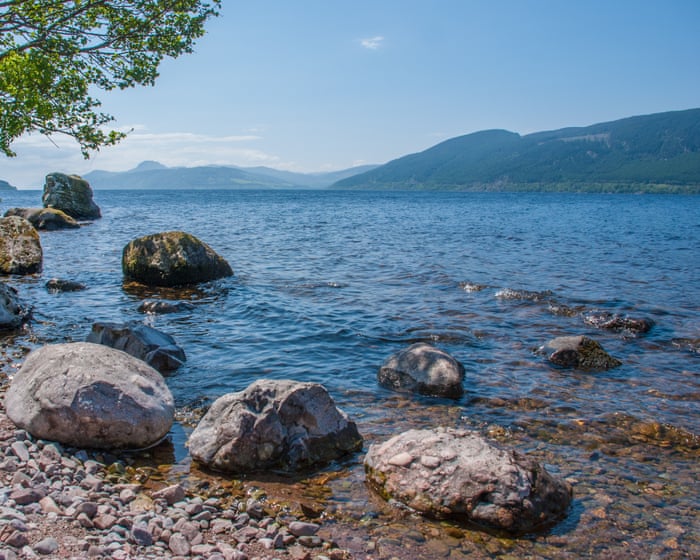
One scheme, the Loch Kemp project, will draw water from Loch Ness and pump it into the upper reservoir created by enlarging Loch Kemp. A giant power station is to be built in protected ancient woodland on the shores of Loch Ness. This woodland is a special area of conservation, an internationally recognised site, and will be partly destroyed by the power station and access road.

Continue reading...

© Photograph: By Eve Livesey/Getty Images

© Photograph: By Eve Livesey/Getty Images

© Photograph: By Eve Livesey/Getty Images

  •  

Fans for fans: power demand surges as England viewers cope with heatwave

Handful of gas plants paid £4m to generate electricity at half- and full-time in World Cup game

A handful of Great Britain’s gas power plants were paid almost £4m to generate electricity for just a few hours on Tuesday evening as millions of sweltering viewers turned to air conditioning, electric fans and icy drinks during England’s second World Cup game.

The heatwave has caused electricity prices across Europe to surge this week amid higher demand for cooling and a string of power plant outages due to the record high temperatures.

Continue reading...

© Photograph: DeFodi Images/Shutterstock

© Photograph: DeFodi Images/Shutterstock

© Photograph: DeFodi Images/Shutterstock

  •  

Could There Be a Tory Upset in Aberdeen?

Makerfield isn't the only by-election happening today. There are two more, one of which is in Aberdeen South – and Mark Littlewood has put a small bet on a Tory upset against the SNP in the oil hub constituency.

The post Could There Be a Tory Upset in Aberdeen? appeared first on The Daily Sceptic.

  •  

I Discovered a Cannabis Farm in My Property – and the Police Did Nothing

Hurty words on social media will bring the police to your door. But when a landlord discovered a cannabis farm in her property, officers didn't want to know. Welcome to two-tier Britain.

The post I Discovered a Cannabis Farm in My Property – and the Police Did Nothing appeared first on The Daily Sceptic.

  •  

The Dundee Girls and Elite Contempt for the Working Class

Two Scottish schoolgirls were assaulted, then smeared as racists. Now their attackers have been convicted. The real story is what the media’s rush to condemn them reveals about elite contempt for the working class in Britain.

The post The Dundee Girls and Elite Contempt for the Working Class appeared first on The Daily Sceptic.

  •  

“Her Brain Had Been Intentionally Removed”: An Unsettling Iron Age Burial Practice Has Been Uncovered in Scotland 


Archaeologists say bones unearthed from an Iron Age burial in Scotland are revealing new insights into how human remains were interred in ancient Europe, in a region with scant evidence for mortuary practices in the archeological record.

Among the new findings, cuts within the skull of a woman’s 2,000-year-old Iron Age remains suggest the removal of her brain prior to burial, along with other evidence of mortuary processing. 

“Manipulation of one skeleton, including the possible removal of the brain, fashioning of long bones into ‘tools’ and reassembly for burial, suggests complex mortuary processing,” write the authors of a new study published in the journal Antiquity. 

Iron Age Remains

The study’s authors report that the woman’s remains, and those believed to have belonged to a teenage boy buried nearby, both had distant origins, adding to the intrigue. Archaeologists discovered the pair buried in a cairn in Sutherland’s Loch Borralie in northwest Scotland, a rare find in such well-preserved condition. 

Due to Britain’s acidic peat soil, few Iron Age human remains have been recovered, leaving many questions about the inhabitants’ funerary practices. This particular corner of Scotland is an exception, with an environment better suited to preserving bone, offering a rare window into this mysterious period.

“To find bodies of this age so well preserved is rare, but to discover evidence of a funeral ritual we previously knew nothing about was such a surprise and very exciting,” said lead author Dr. Laura Castells Navarro.

Unusual Mortuary Practices

“The adult female displayed incisions on the inside of her cranium, suggesting her brain had been intentionally removed after death,” Castells Navarro continued. “We have no other comparison of this type of practice, but we know that the dead were curated and treated carefully in Iron Age Britain, so our understanding is that this bone modification is within that same tradition of care.”

The sharpened bones, which the archeologists suspected were used as tools, included humeri, ulna, and femur. Why Iron Age Britons would have engaged in such elaborate and unusual manipulation of skeletal remains eludes archaeologists, although they note that the care evident in reassembling her skeleton for burial suggests she commanded the respect and reverence of those who laid her to rest.

Analysis techniques used on the bones include isotope testing and DNA mapping, revealing a close kinship suspected to be that of maternal second cousins.

Iron Age Connections

More intriguing than their relationship is the evidence of the distance they had traveled, as isotopic analysis revealed that the pair had grown up 50 miles to the southeast. Genetics pushed this even further, revealing family connections beyond the mainland, spreading out in opposite directions. To the northeast, they had relatives 108 miles away on the Orkney Islands, while to the southwest, they had kin 140 miles away at Applecross.

Archaeologists interpret this to mean that Iron Age Britons were extremely mobile, traversing water in family groups.

“Our research shows that prehistoric maritime communities periodically moved around the north coast and Northern Isles of Scotland, possibly in small groups,” Dr. Castells Navarro said. “This movement allowed for the spread and maintenance of cultural practices and traditions.”

With individuals of shared kinship spread so far, researchers suggest these complex mortuary practices were likely shared across Iron Age Britain, adding an intriguing new wrinkle to our assessment of these ancient people.

“I think we can assume that the Iron Age dead were not forgotten,” Dr. Castells Navarro concluded, “and still had meaning to the living, with a continued interaction between the living and the dead across time and distance.”

The paper, “Reconnecting the Dead in Iron Age Britain: Funerary Processing and Long-Distance Connectivity at Loch Borralie, Scotland,” appeared in Antiquity on June 10, 2026.

Ryan Whalen covers science and technology for The Debrief. He holds an MA in History and a Master of Library and Information Science with a certificate in Data Science. He can be contacted at ryan@thedebrief.org, and follow him on Twitter @mdntwvlf.

  •  
❌