 Login

How Did Life Arise? Three Turning Points in Early Evolution
Where did it start? How did it grow complex? Why did it get big? Three moments in Earth’s early history when evolution suddenly, inexplicably turned up the dial.

 New research suggests that low oxygen levels may help alleviate disease caused by defects in mitochondrial quality control. Oxygen is essential for people—and most other organisms—but more is not always better. When oxygen accumulates beyond what cells can safely use, it can become toxic and contribute to serious health problems. In the brain, excess oxygen [...]
 Vitamin B12 is needed in only trace amounts, yet its absence can have far-reaching effects. Two micrograms is an almost unimaginably small amount. It weighs less than a tiny fragment of a grain of table salt. Yet adults need only around this amount of vitamin B12 each day, depending on the guideline used, to support [...]
 Compound 10 slowed dementia-like decline in mice.

In new research, scientists sequenced and analyzed chromosome-level genomes of the Linnaeus’s two-toed sloth (Choloepus didactylus) and the southern anteater (Tamandua tetradactyla).
The post Secret to Sloths’ Slow Life May Lie in Ancient ‘Jumping Genes’ appeared first on Sci.News: Breaking Science News.
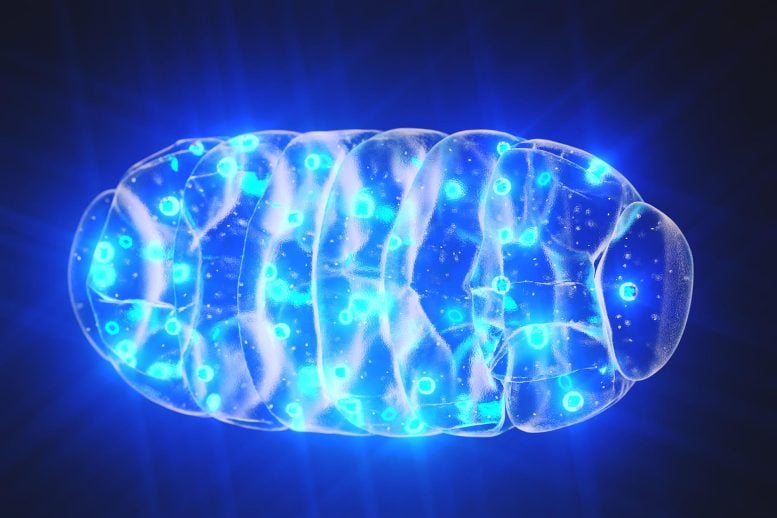 Scientists identified phosphatidylcholine loss as a key driver of mitochondrial aging and showed that restoring it can rejuvenate cellular energy networks. Why do cells age, and why do people gradually lose energy and vitality over time? Scientists have long focused on mitochondria, the tiny structures inside cells responsible for producing energy. Researchers now understand that [...]
