❌

Reading view

Today in Apple history: Original Mac Pro packs serious Intel power

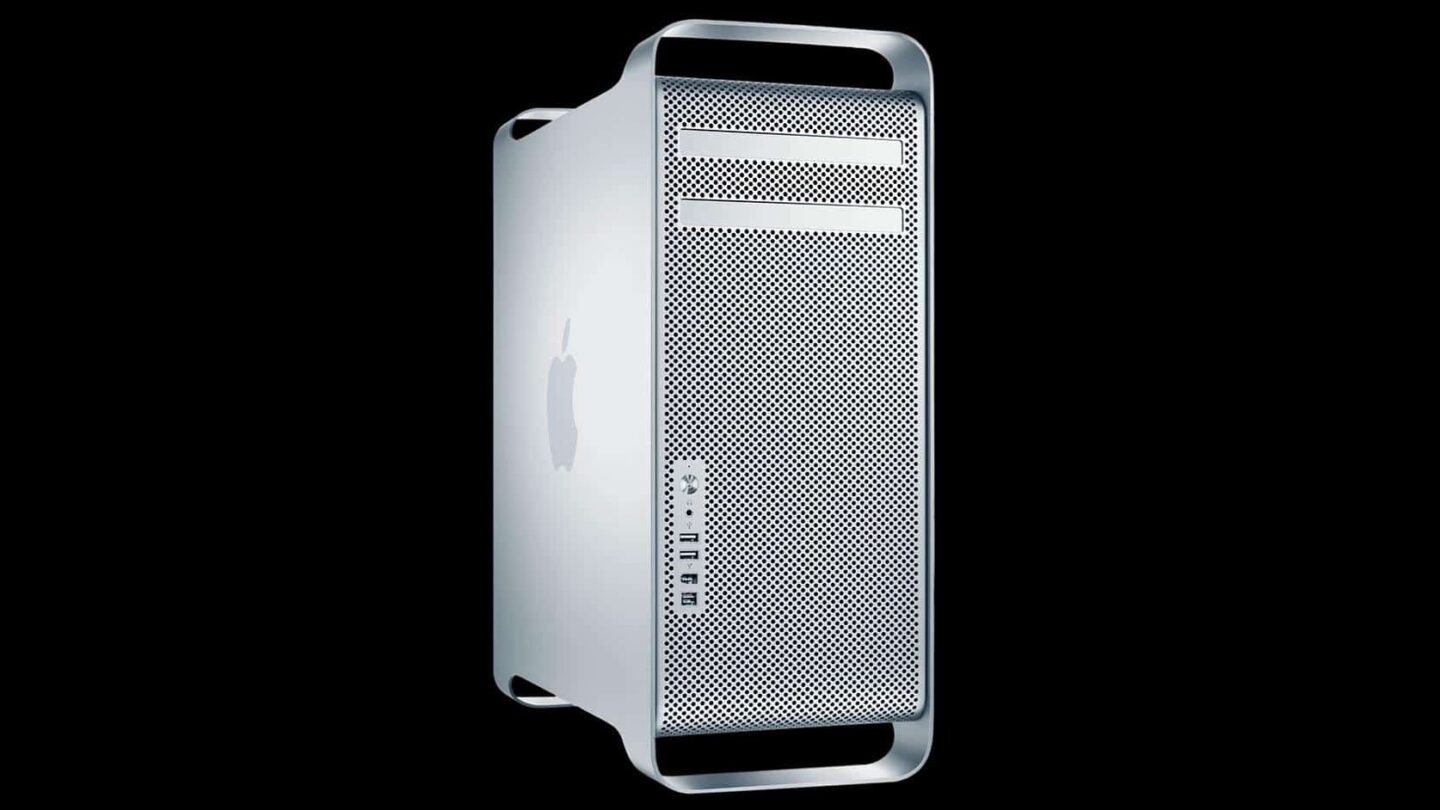
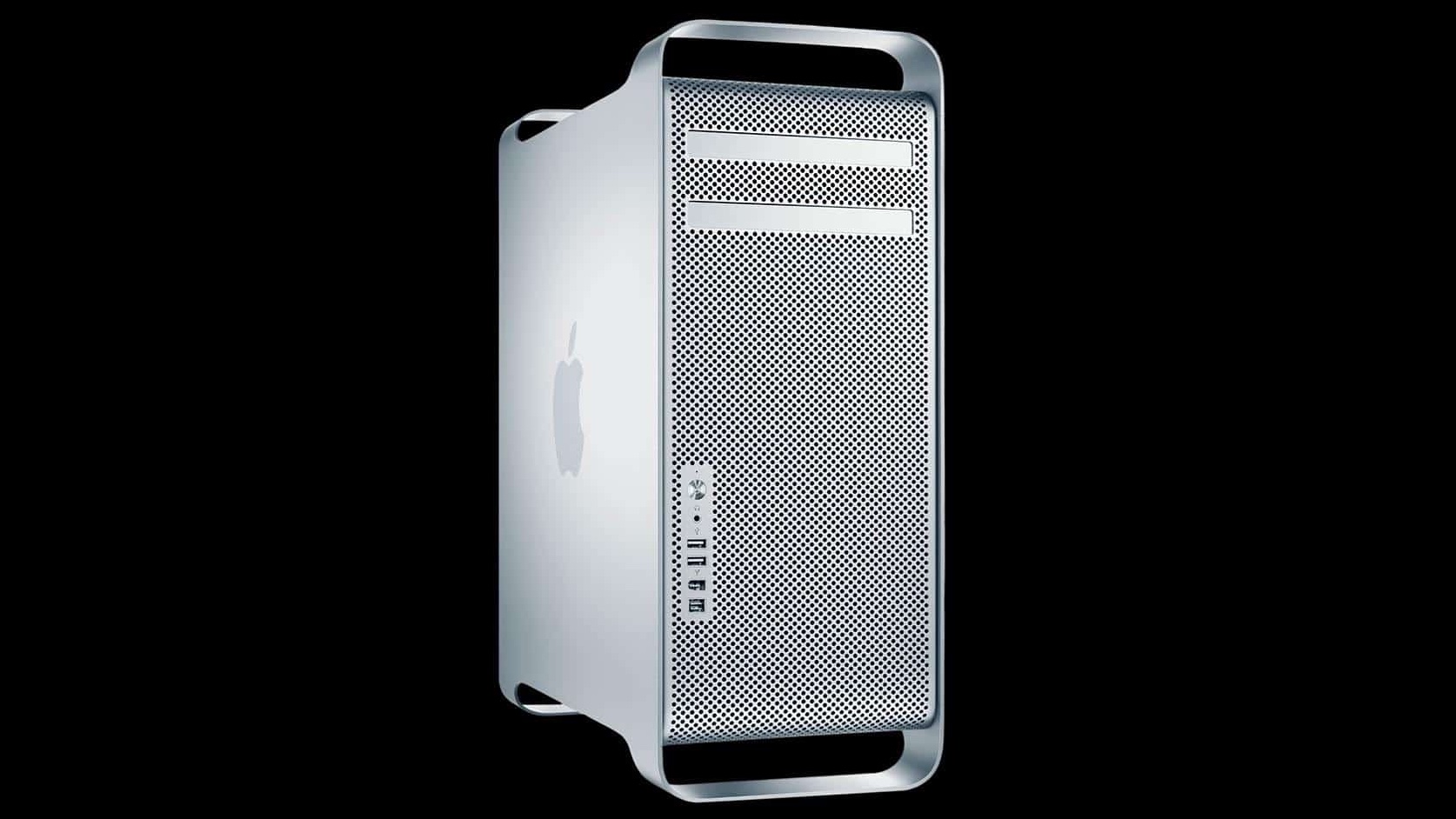
A photo of the first Mac Pro, an impressively expandable workstation that launched in 2006

On August 7, 2006, Apple launched the first Mac Pro, a high-end desktop that completed the transition to Intel processors from PowerPC chips.

(via Cult of Mac - Your source for the latest Apple news, rumors, analysis, reviews, how-tos and deals.)

  •  

Mac Pro Turns 20 Today, Five Months After Apple Killed It

Apple announced the original Mac Pro 20 years ago today, with the anniversary landing five months after the company discontinued the machine for good.
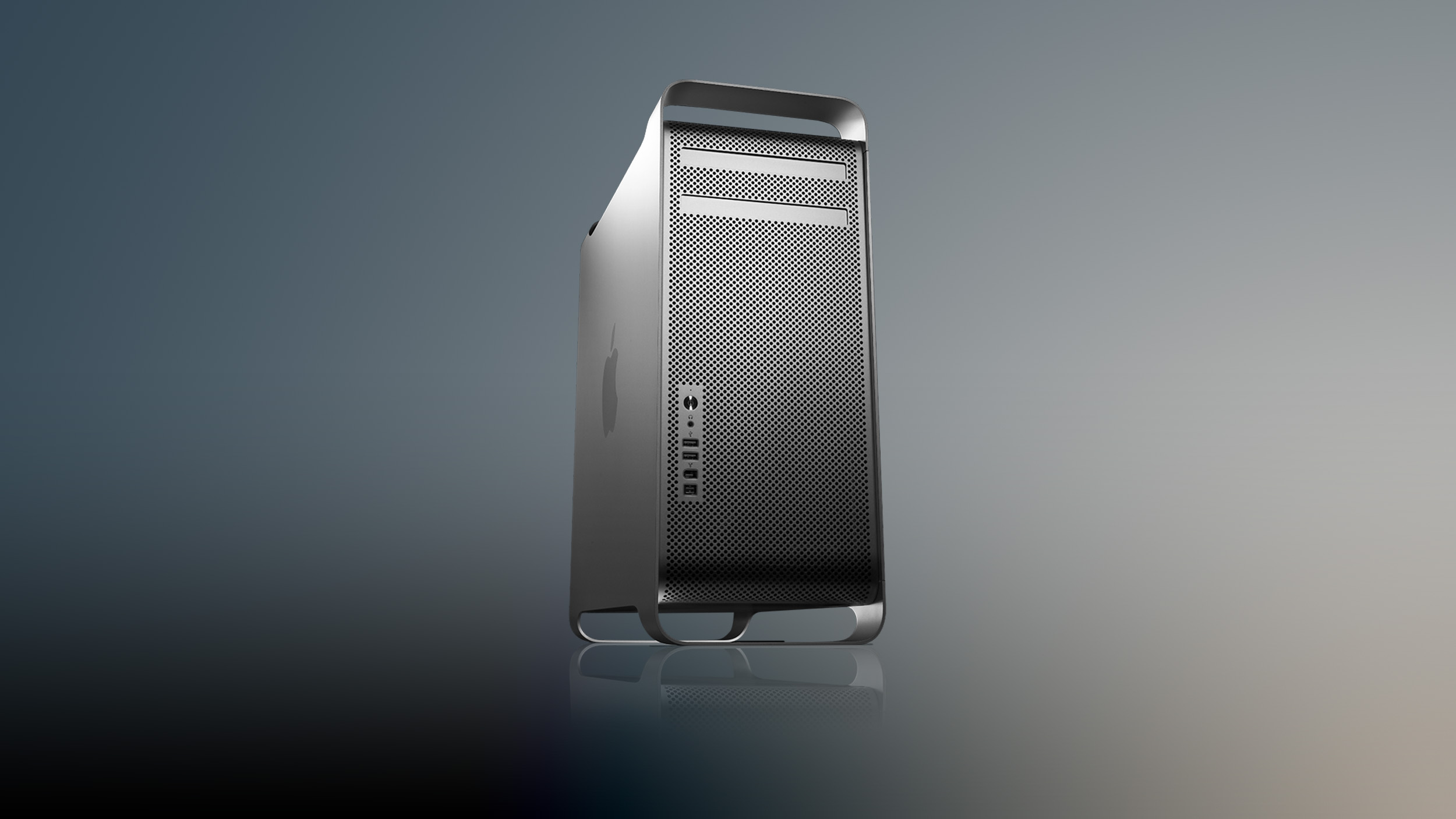

On August 7, 2006, Apple unveiled the first Mac Pro, powered by two dual-core 64-bit Xeon processors that Apple said made it up to twice as fast as the Power Mac G5 it replaced. It was the last Mac to complete Apple's transition from PowerPC to Intel chips, and it launched with PCI Express expansion slots and a $2,499 starting price.

The Mac Pro quickly became the machine of choice for video editors, audio engineers, and other creative professionals, particularly those running Final Cut Studio, the editing suite Apple positioned squarely at the same audience. Its four internal drive bays, tool-free case, and PCIe expansion slots made it easy to configure for demanding workloads, and Apple kept the pace of updates brisk in its early years, adding an eight-core configuration in April 2007 and following with a refreshed base model in January 2008. That steady cadence of upgrades continued through 2012, a sharp contrast to the long droughts that would define the machine's later years.

The Mac Pro remained as Apple's professional flagship for almost the next two decades since its launch. That positioning kept the machine niche, and Apple's attention to it was inconsistent.

The clearest example came in 2013, when Apple replaced the classic tower with a radically redesigned cylindrical model nicknamed the "trash can" Mac Pro, built around a single central "unified thermal core." The trash can went unrefreshed for six years, a lifetime in computing terms, before Apple apologized to its pro user base and essentially admitted the design was a mistake.

In a 2017 interview, Craig Federighi said Apple had "designed ourselves into a bit of a thermal corner," having built the machine around GPU workloads that never materialized as broadly as the company expected. A more conventional tower, with eight PCIe slots, arrived in 2019.

Even after that redesign, the Mac Pro's position kept eroding. The Mac Studio delivered nearly identical performance in a smaller, far cheaper package. Once the Mac Pro moved to Apple silicon with the M2 Ultra chip in June 2023, add-in cards like the Afterburner lost support, leaving PCIe expansion as close to its only remaining edge over the Studio, a slim advantage for a machine that started at $6,999.

Apple discontinued the Mac Pro on March 26, 2026, pulling it from its website. The company said it has no plans to design a new version, and no future model is coming.

The announcement landed three months before Apple raised prices on 14 products, including Macs and iPads, to offset the rising cost of memory chips. The ‌Mac Studio‌'s M3 Ultra configuration jumped $1,300, from $3,999 to $5,299, while the entry-level MacBook Pro rose $300, from $1,699 to $1,999.

Apple CEO Tim Cook said that "price increases are unavoidable," adding that Apple had tried to shield customers from rising memory costs but "the situation has become unsustainable." Cook likened the shortage to "a hundred-year flood," saying he had "never seen anything like it in any area in over 40 years."

Applying that same roughly 33% jump seen on the M3 Ultra ‌Mac Studio‌ to the Mac Pro's $6,999 starting price would have pushed a base configuration above $9,300, with no extra RAM, storage, or GPU cores factored in, a price unlikely to move many units of a machine that was already selling in small numbers.

With the Mac Pro gone, the Mac Studio is now Apple's most powerful desktop, though it lacks the tower's internal PCIe expansion slots. Apple's next ‌Mac Studio‌ refresh is expected to bring the M5 Max and M5 Ultra chips to the machine.
Buyer's Guide: Mac Pro (Don't Buy)
Related Forum: Mac Pro

This article, "Mac Pro Turns 20 Today, Five Months After Apple Killed It" first appeared on MacRumors.com

Discuss this article in our forums

  •  

Apple pilots AI-powered ‘Live Notes’ at Genius Bar and reveals bigger ambitions for the discontinued Mac Pro

Apple announces Apple Retail Store expansion in Saudi Arabia

In his latest Power On newsletter, Bloomberg News’ Mark Gurman highlights two notable Apple developments: a new AI tool being tested in retail stores and previously undisclosed plans for the now-defunct Mac Pro.

AI Recording and Transcription for Genius Bar Appointments

Apple is piloting an AI-powered system called Live Notes at select retail stores. The tool allows Genius Bar employees to record conversations with customers using an iPad. AI then transcribes and summarizes the discussion, automatically adding it to the employee’s notes and the official repair session record.

Key details of the pilot include:

• Opt-in only — Both the employee and customer must agree before recording begins.

• Goal — Reduce manual note-taking so staff can focus more on customer service and problem-solving rather than typing during appointments.

• Integration — Transcripts feed directly into Apple’s internal Genius Bar system for better documentation and follow-up.

This initiative reflects Apple’s broader push to integrate AI across its ecosystem, including retail operations, to improve efficiency while maintaining a personal touch in customer interactions. Privacy safeguards via the opt-in requirement appear designed to address potential concerns.

Apple Once had Bigger Plans for the Mac Pro

Apple discontinued the Mac Pro earlier in 2026, but new reporting reveals the company once had far more ambitious plans for the high-end desktop. Gurman notes that Apple developed — but ultimately shelved — “M2 Extreme” and “M3 Extreme” chip variants specifically intended for the Mac Pro.

These ultra-powerful chips were part of an effort to deliver even greater performance for professional users who rely on the modular, expandable workstation. The decision not to release them contributed to the product’s eventual discontinuation, as Apple shifted focus amid changing market demands and the rise of more portable high-performance options like Mac Studio and MacBook Pro configurations.

The revelations underscore the evolving nature of Apple’s Mac lineup, where even flagship products like the Mac Pro face tough strategic trade-offs in an AI-driven computing era.

MacDailyNews Take: Not everything makes it to market. Conditions change. As always, retail and pro desktop innovations continue to shape the company’s customer and professional user experiences.

In the end, Mac Pro was a waste of aluminum. – MacDailyNews, March 30, 2026

For the vast majority of professional users (video editors, photographers, 3D artists, developers, and those running AI/ML workloads) the Mac Studio is the superior choice overall. It delivers an excellent balance of performance, price, compact size, and modern features. The Mac Studio covers 90% (or more) of what the Mac Pro once offered, but at a fraction of the cost and with newer silicon, and the promise of regular updates. The discontinued Mac Pro was only preferable, or truly necessary, in the rare cases that demand heavy internal PCIe expansion that cannot be adequately handled externally via Thunderbolt; a very niche market. – MacDailyNews, March 27, 2026

Apple’s Mac Pro is a dead end. Mac Studio is the high-end Mac future now. Bring on the M5 Ultra Mac Studio and rename it “Mac Pro.” – MacDailyNews, November 17, 2025


‎
Please help support MacDailyNews — and enjoy subscriber-only articles, comments, chat, and more — by subscribing to our Substack: macdailynews.substack.com. Thank you!

Support MacDailyNews at no extra cost to you by using this link to shop at Amazon.

The post Apple pilots AI-powered ‘Live Notes’ at Genius Bar and reveals bigger ambitions for the discontinued Mac Pro appeared first on MacDailyNews.

  •  

Apple plante einen letzten Intel-Mac – nach fünf Jahren Apple Silicon

Für Apples Mac Pro gibt es keinen Weg zurück: Am 27. März 2026 bestätigte das Unternehmen offiziell, dass der High-End-Rechner aus dem Sortiment genommen wurde. Auch seine Landing-Page verschwand aus dem Apple Store. Bereits Ende 2025 gab es Anzeichen, dass Apple vorerst keine neueren Chips für seinen Tower plant. Letztendlich wurde der Mac Studio aktualisiert, mit dem M4 Max und M3 Ultra.

Doch zwischen der Einstellung im März 2026 und der Aktualisierung im März 2023 hegte Apple noch andere Pläne für seinen Profi-Mac, berichtet Bloomberg-Redakteur Mark Gurman.

Zum einen experimentierten Ingenieure in Cupertino mit einer weiteren Abwandlung der M3- und M4-Prozessoren. Die Idee war, die doppelte Anzahl an CPU- und der GPU-Kerne als bei M2 Ultra auf einen Chip zu bringen, dieser sollte M2 Extreme heißen. Schon damals wurden Konfigurationen mit gemeinsamem Arbeitsspeicher von 192 GB getestet. Maximal sollten in einem solchen Mac Pro 256 GB an RAM eingebaut werden, bislang ist eine solche Konfiguration nur mit einem Mac Studio mit M3 Ultra möglich.

Der eine zu teuer, der andere zu unattraktiv

Die Experimente mit solchen extrem aufgerüsteten Prozessoren sind im Laufe der vergangenen drei Jahre versandet, da die höchste Stufe des Apple Silicon recht teuer gekommen wäre. Ebenfalls war nicht klar, welche Zielgruppe sich für solche Macs interessieren würde.

Gleichzeitig mit den Experimenten an den M3 und M3 Extreme arbeitete Apple an einer neuen Version des Mac Pro mit Intel-Prozessor. Mark Gurman, der über solche Modelle erfahren haben soll, spezifiziert jedoch nicht, welche Generation der Intel-Chips Apple für seinen Tower angedacht hatte. Der Rechner war für eine bestimmte, wohl recht kleine Zielgruppe gedacht, die von der alten Plattform nicht umsteigen konnte oder wollte.

Warum sich Apple gegen einen Intel-Mac entschieden hat, geht aus Gurmans Artikel nicht hervor. Doch bereits im September 2026 kommt ein Betriebssystem, das ausschließlich mit Apple-Silicon-Macs kompatibel ist. Das Betriebssystem ist zudem kompakter geworden, da es auf Altlasten verzichten kann.

  •  
❌