❌

Reading view

Meta Releases Muse Spark Open, an Over 800 Billion Parameter Model That Can Run Locally on Multiple M5 Ultra Mac Studios

Meta just released the weights for Muse Spark Open, a multimodal large language model with a mixture-of-experts architecture. It has over 800 billion parameters in total, with 40 billion active per token, and it can run on the latest Mac Studios.

Meta worked closely with Apple to make that happen specifically on the M5 Ultra Mac Studio with the support of MLX, the Apple-led, open-source machine-learning framework. The result is a frontier-class model that can be run locally on desktop hardware.

Apple’s Machine Learning Research blog put the M5 Ultra through its paces standalone and connected with other M5 Ultra Studios, and the results are impressive. If you’re at all interested in running LLMs locally, it’s worth checking out all the details, but a few things jumped out at me:

  • The M5 Ultra’s time to first token exceeds the M3 Ultra by 4.6x thanks to the M5 Ultra’s Neural Accelerators.
  • Tokens generated by the M5 Ultra beat the M3 Ultra by 1.6x.

However, thanks to MLX’s support of RDMA over Thunderbolt 5, big models like Muse Spark Open can be split across multiple M5 Ultra Mac Studios accelerating tasks further. For very large contexts that means a time to first token that’s up to 1.8x faster, but it’s also what lets the model fit onto desktop hardware because even the 4-bit version of Muse Spark Open requires 493GB of memory.

Some of Apple’s testing was done with the 512GB model of the M5 Ultra Mac Studio, which is slated for release at the end of the year. Apple hasn’t said how much the new model will cost, but for context, the 256GB model with 2TB of storage will set you back over $11,000. So the 512GB model isn’t your typical consumer purchase, even more so since running Muse Spark Open requires at least two of them.

However, that doesn’t make this any less of an accomplishment. Muse Spark Open is at the bleeding edge of models that can be run locally on computers that can sit on your desk and don’t need more power than can be delivered from a wall outlet. That’s made possible by the unique combination of Apple silicon and updates to MLX. Plus, with the pace of advancements in AI and Apple silicon hardware, what may only meet enterprise budgets today could become accessible to more consumers faster than most of us might expect.

  •  

M5 Ultra Scores 52,516 in Its First Geekbench Result

The first unverified Geekbench 7 result for Apple’s M5 Ultra suggests a substantial CPU gain over M3 Ultra, but the single database entry is not a substitute for independent testing. The listed result is for the highest-end M5 Ultra with a 36-core CPU. It should not be assumed to represent every Mac Studio configuration or […]

The post M5 Ultra Scores 52,516 in Its First Geekbench Result appeared first on The Mac Observer.

  •  

Benchmarks preliminares dos chips M6 e M5 Ultra revelam avanços de até 35% em CPU

Previstos para serem lançados na semana que vem (pelo menos nos Estados Unidos e em Portugal), os novos Mac mini e Mac Studio são alimentados com os chips M6 e M5 Ultra, respectivamente — lembrando que o mini pode ser configurado também com o M5 Pro, enquanto que o Studio de entrada vem com o chip M5 Max.

Pois os primeiros resultados de benchmarks dos dois novos processadores apresentados recentemente pela Apple surgiram hoje no banco de dados do Geekbench 7, oferecendo uma visão dos ganhos de desempenho de cada um deles.

Em ambos os casos, os resultados vistos até agora tratam apenas dos testes de CPU 1Central processing unit, ou unidade central de processamento. — os de GPU 2Graphics processing unit, ou unidade de processamento gráfico. ainda não foram divulgados.

Confira abaixo a pontuação do chip M6 e as pontuações médias do chip M5 para efeito de comparação:

Benchmark de CPUM6M5
Single-core4.071 pontos3.641 pontos
Multi-core22.783 pontos17.948 pontos

Se o resultado acima for preciso, o chip M6 apresenta um desempenho single-core cerca de 12% mais rápido e uma performance multi-core cerca de 27% mais rápida em comparação com o chip M5. Vale notar que o chip M6 está no novo Mac mini, enquanto as pontuações do chip M5 baseiam-se no MacBook Pro de 14 polegadas — mas o desempenho deve ser semelhante.

Na tabela abaixo está a pontuação do chip M5 Ultra de ponta, com CPU de 36 núcleos, bem como as pontuações médias do chip M3 Ultra de ponta, com CPU de 32 núcleos (já que a Apple nunca lançou um chip “M4 Ultra”).

Benchmark de CPUM5 UltraM3 Ultra
Single-core3.774 pontos2.920 pontos
Multi-core52.516 pontos39.059 pontos

Se os resultados acima procederem, o chip M5 Ultra oferece um desempenho de CPU single-core cerca de 30% mais rápido e um desempenho multi-core cerca de 35% mais rápido em comparação com o M3 Ultra.

Nada mau, hein!

Mac Studio

Chip: M4 Max ou M3 Ultra
Memória: 36GB, 48GB, 64GB, 96GB, 128GB, 256GB ou 512GB
Armazenamento: 512GB, 1TB, 2TB, 4TB, 8TB ou 16TB
R$ 25.999,00

Mac mini

Chip: M4 ou M4 Pro
Memória: 16GB, 24GB, 32GB, 48GB ou 64GB
Armazenamento: 256GB, 512GB, 1TB, 2TB, 4TB ou 8TB
Conectividade: Ethernet ou Gigabit Ethernet 10
R$ 12.299,00
R$ 16.999,00

NOTA DE TRANSPARÊNCIA: O MacMagazine recebe uma pequena comissão sobre vendas concluídas por meio de links deste post, mas você, como consumidor, não paga nada mais pelos produtos/serviços usando os nossos links de afiliado.

via MacRumors [1, 2]

Notas de rodapé

  • 1
    Central processing unit, ou unidade central de processamento.
  • 2
    Graphics processing unit, ou unidade de processamento gráfico.

  •  

Mac Studio 2026

Apple (Hacker News, MacRumors):

Mac Studio with M5 Max features an 18-core CPU, an up-to-40-core GPU with Neural Accelerators built into each core, and up to 128GB of unified memory, accelerating complex pro and AI workloads. With the powerful M5 Ultra, Mac Studio scales up to a 36-core CPU, up to an 80-core GPU, and a staggering 512GB of unified memory, enabling users to run enormous LLMs entirely on device. Wi-Fi 7 and Bluetooth 6 come to Mac Studio for the first time, while Thunderbolt 5 rounds out its extensive connectivity, so users can take advantage of blazing-fast external storage, PCIe expansion chassis, and powerful hub solutions for the most intense workloads. Thunderbolt 5 also enables multiple Mac Studio systems to be clustered, bringing up to 3x faster performance for distributed AI inference when compared to a single system.

[…]

Mac Studio with M5 Max starts at $2,499 (U.S.) and $2,299 (U.S.) for education.

[…]

Mac Studio with M5 Ultra starts at $5,499 (U.S.) and $5,099 (U.S.) for education.

It’s not shipping until September 22, with the 512 GB configuration in late October.

John Gruber:

Here’s my attempt to put all of the RAM/SSD configurations into condensed tables, so you can see which storage and memory options are available for each chip, and how much they cost.

[…]

It kind of stinks that there are no RAM options for the Studio between the 96 GB base and the $4,000 256 GB upgrade.

Jason Snell:

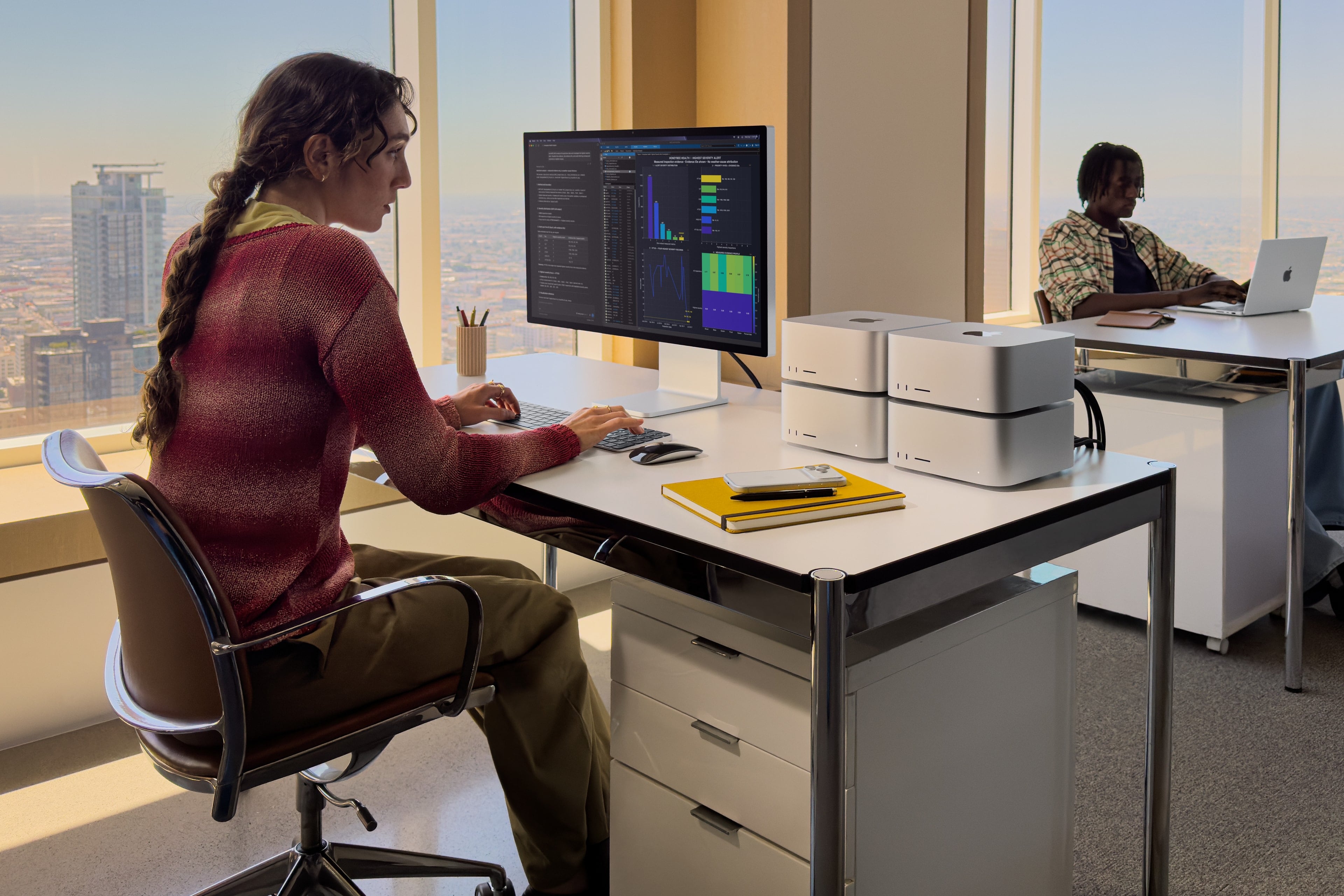
The Mac Studio is effectively the replacement for the Mac Pro, and it’s alone in offering the Ultra-class chip. Apple has positioned the Mac Studio as ideal for local AI workflows, and the new models will still be able to cluster via Thunderbolt 5 to create even larger collections of memory and performance. Apple representatives pointed out that a four-Mac Studio AI cluster, like the one I saw on display at WWDC earlier this summer, is so efficient that it can be powered from a single standard wall outlet. (They even showed us a picture of four Mac Studios plugged into a power strip that was plugged into the wall.) In an era of data center excesses, Apple is clearly leaning into the possibility of small, efficient Macs being used to do local AI work rather than relying on huge, power-hungry cloud models.

Federico Viticci:

If these numbers hold up and scale linearly, a local Mixture-of-Experts model such as Qwen 3.5-35B-A3B, which would run at ~17 tokens/sec on average on a base M4 Mac mini with 16 GB of RAM, could realistically generate output at over 60 tokens/second with the base model M6 Mac mini.

Based on what we’ve seen so far, the one downside of the M6 Mac mini is that it does not have Thunderbolt 5 ports; those are exclusive to the M5 Pro model, also announced today.

[…]

Speaking from personal experience, I know that my M3 Ultra Mac Studio using oMLX can run DeepSeek-V4-Flash locally with generation averaging 35 tokens/second. Assuming a linear 4x increase, that would put the same model at over 120 tokens/second on an M5 Ultra Mac Studio. To put things in perspective, that kind of performance would be faster than any AI chatbot website, it’d be faster than many providers who offer a “fast” mode for their models, and it’d only be second to either dedicated NVIDIA PC clusters at home or specialized inference providers such as Cerebras or Groq…which are running in full-blown data centers. Sure, you would need a computer that is likely going to cost more than $20,000 to make it happen, but it’d still be possible on a single machine that is small, quiet, and that – in theory – any consumer can buy off the shelf.

Previously:

Update (2026-08-26): John Gruber:

That upgrade is labeled “+ $300”, which makes it look as though the starting price for the 18/40-core model is $2,800. That’s the price I put in the original version of my chart.

But if you select that option, you’ll notice that the actual starting price jumps from $2,500 to $3,100 — a $600 difference, not $300. The reason is that the $2500 18/32-core version only comes with one option for RAM: 32 GB. The 18/40-core chip has three tiers for RAM: 48, 64, and 128 GB.

Update (2026-09-02): Joe Rossignol:

Apple’s press release for the new Mac Studio with M5 Max and M5 Ultra chips last week initially stated that the computer had “next-generation SSD architecture built on PCIe Gen 6.” However, as spotted by the French blog MacGeneration, Apple removed the PCIe 6.0 mention from the announcement shortly after it was published.

  •  

Apple M6 and M5 Ultra

Apple (MacRumors M5 Ultra and M6, Hacker News):

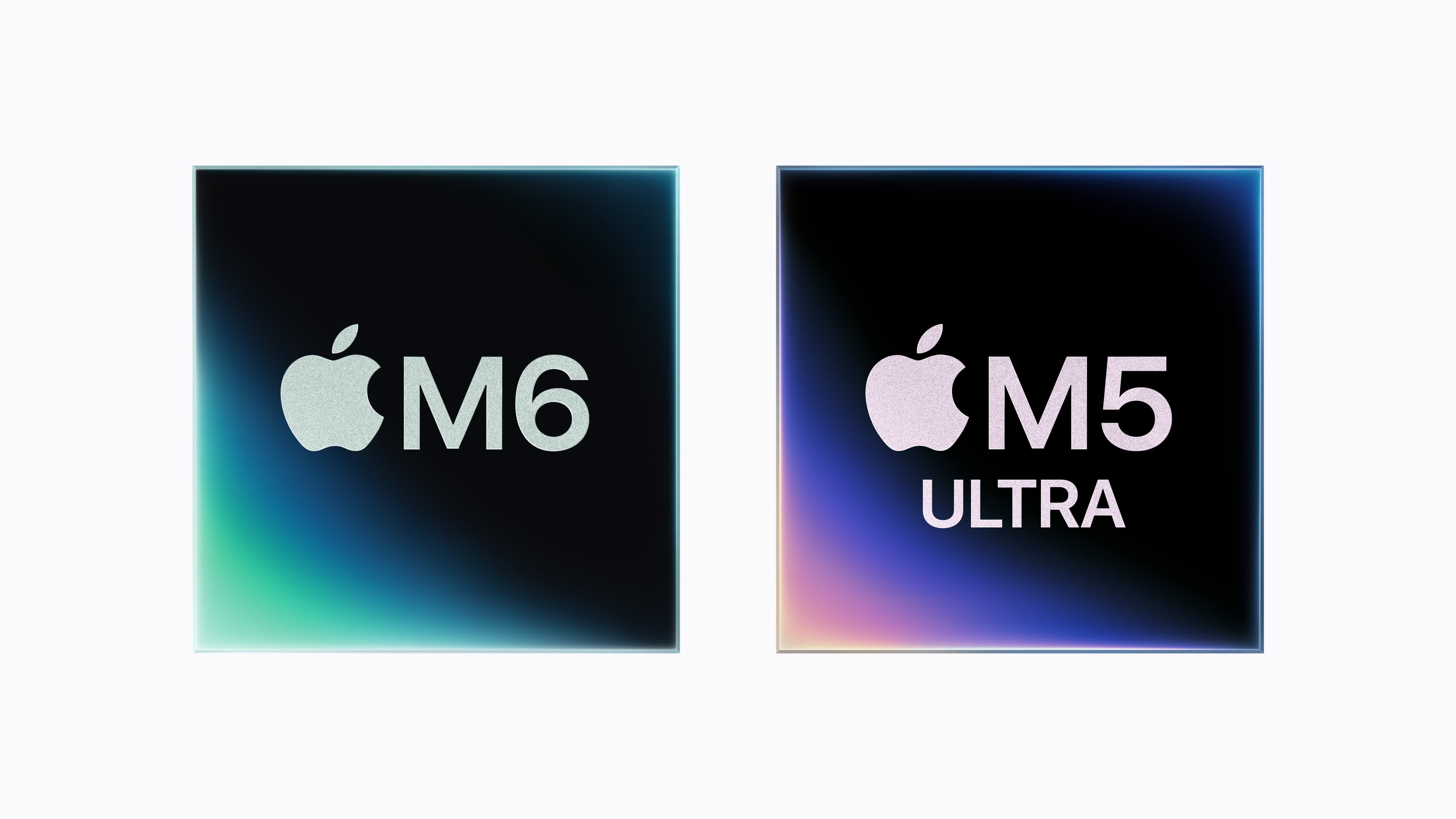
M6 is built using cutting-edge 2 nm process technology, packing greater transistor density into a smaller die for a major leap in performance and power efficiency. M6 also introduces a Dual 16-core Neural Engine, providing up to 2x the peak compute over previous generations to make on-device AI workflows run even faster. System frameworks can automatically utilize both engines simultaneously, enabling applications to see faster model execution.

M6 has a brand-new 12-core CPU complex — two more cores than M5 — that consists of 2 super cores, 4 performance cores, and 6 efficiency cores. It delivers the world’s fastest single-threaded performance and up to 1.2x faster multithreaded performance as compared to M5, and up to 2.4x faster than M1.

[…]

M5 Ultra uses UltraFusion to connect two dual-die M5 Max chips to form the quad-die architecture — a first for Apple silicon. UltraFusion increases the inter-die bandwidth to over 4.4TB/s and the connection density by over 6x. Together, these ultra-low-latency, high-bandwidth interconnects allow the four dies to behave as a single unified processor. M5 Ultra also features a large up-to-36-core CPU consisting of 12 super cores and 24 performance cores, delivering up to 1.25x higher single-threaded performance and up to 1.3x higher multithreaded performance than M3 Ultra.

M5 Ultra features a next-generation GPU with up to 80 cores, incorporating a Neural Accelerator in each core to offer up to 4.5x the peak GPU compute for AI compared to M3 Ultra and over 6x more than M1 Ultra.

ghostly_s:

It was not long ago all the illustrations in an M chip press release were graphs showing it flouncing the competition. Now it’s just random screenshots of desktops. Skimming this I didn’t see a single claim of performance advantages over competitors. The massive thing Apple still needs to solve is making sure customers don’t miss being able to plug the latest greatest GPU into their tower, they should not be resting on their laurels.

Greg Pierce:

I’m so old I remember when Apple PR benchmarks were all like “Photoshop Gaussian Blur in only 48 seconds!”

Previously:

Update (2026-08-26): Hartley Charlton:

The most significant architectural change is in the CPU. The M5 splits its ten cores into performance and efficiency groups, which is an arrangement Apple silicon has used since the M1. The M6 adds a third tier called “super cores,” which handle single-threaded workloads and which Apple says give the chip the world’s fastest single-threaded performance.

[…]

Apple did not publish real-world benchmarks comparing the M6 to the M5 directly, instead framing its Mac mini figures against the M4 and M1 models[…]

[…]

Bloomberg’s Mark Gurman reported in July that Apple has no plans to release “M6 Pro,” “M6 Max,” or “M6 Ultra” chips, having decided to accelerate development of the AI-optimized M7 generation.

Adam Engst:

As with previous Ultra generations, the M5 Ultra combines two M5 Max chips, but since they’re dual-die chips, the result is Apple silicon’s first quad-die architecture. (The M3 Ultra connected two single-die M3 Max chips.) There’s no practical benefit to users in a quad-die architecture, but it’s a huge win for Apple. The larger the die, the more difficult and expensive it is to manufacture because a defect can ruin the entire die. Dividing the design into smaller dies can substantially improve manufacturing yield and reduce costs.

[…]

The M5 Ultra dispenses with efficiency cores entirely, devoting all CPU resources to super and performance cores.

Update (2026-09-16): Joe Rossignol:

If this single Geekbench 7 result is accurate, the M6 chip has up to around 12% faster single-core CPU performance and up to around 27% faster multi-core CPU performance compared to the M5 chip.

Joe Rossignol:

Unsurprisingly, the M5 Ultra is Apple’s fastest chip ever. If this Geekbench result is accurate, it has up to around 30% faster single-core CPU performance and up to around 35% faster multi-core performance compared to the M3 Ultra.

  •  

Apple Announces New M6 and M5 Pro Mac minis, Along with M5 Max and M5 Ultra Mac Studios

Source: Apple.

Source: Apple.

Today, Apple announced a new M6 chip that will debut in the Mac mini and an M5 Ultra that is coming to the Mac Studio. The company also announced an M5 Pro Mac mini and an M5 Max Mac Studio. Let’s take a look at the headline specs.

The headline feature of the M6 chip is that it’s Apple’s first 2-nanometer chip. The chip also includes “a larger 12-core CPU complex with the world’s fastest CPU core, a larger 12-core GPU with Neural Accelerators, a Dual 16-core Neural Engine, and up to 170GB/s of unified memory bandwidth.”

Looking more closely at the M6, Apple says it consists of two super cores, four performance cores, and six efficiency cores and is 1.2x faster in multithreaded performance than an M5 and up to 2.4x faster than an M1. Apple says the GPU delivers nearly 30% more peak GPU compute for AI than the M5. The M6’s 10% faster memory bandwidth will help with AI tasks, too, but its 32GB memory ceiling will limit which models can run locally.
Source: Apple.

Source: Apple.

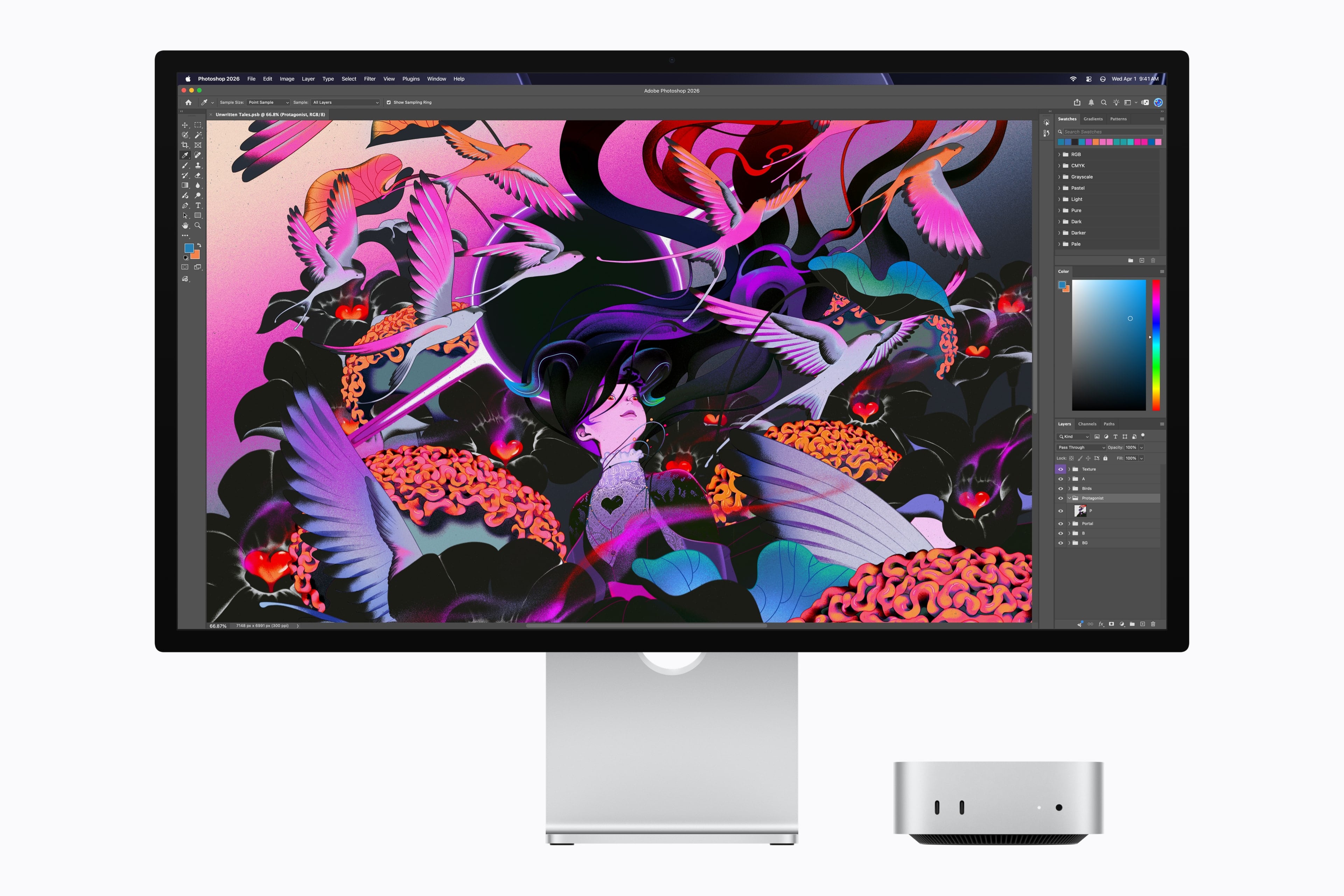
The M6 mini’s GPU sounds impressive, too, with two more cores, Neural Accelerators for each core, which is a first for the mini. According to Apple, that leads to an up to four-fold increase in AI performance and a 2x graphics bump compared to the M4 mini. The Neural Engine has also been improved.

Apple also introduced an M5 Pro mini. It’s understandable if you find it confusing that the base model Mac mini has a more recent generation chipset than the more expensive model. What matters more than the chip generation is the “Pro” in M5 Pro, which makes it more capable than the M6, which has been designed for entry-level models. The same sort of asymmetry occurred with the 2025 Mac Studio, which included an M4 Max model alongside the M3 Ultra. A big part of that difference is the M5 Pro mini’s support for 64GB of memory (double the M6 version’s top memory spec) and its 307GB/s of memory bandwidth compared to the M6 model’s 170GB/s memory bandwidth.
Source: Apple.

Source: Apple.

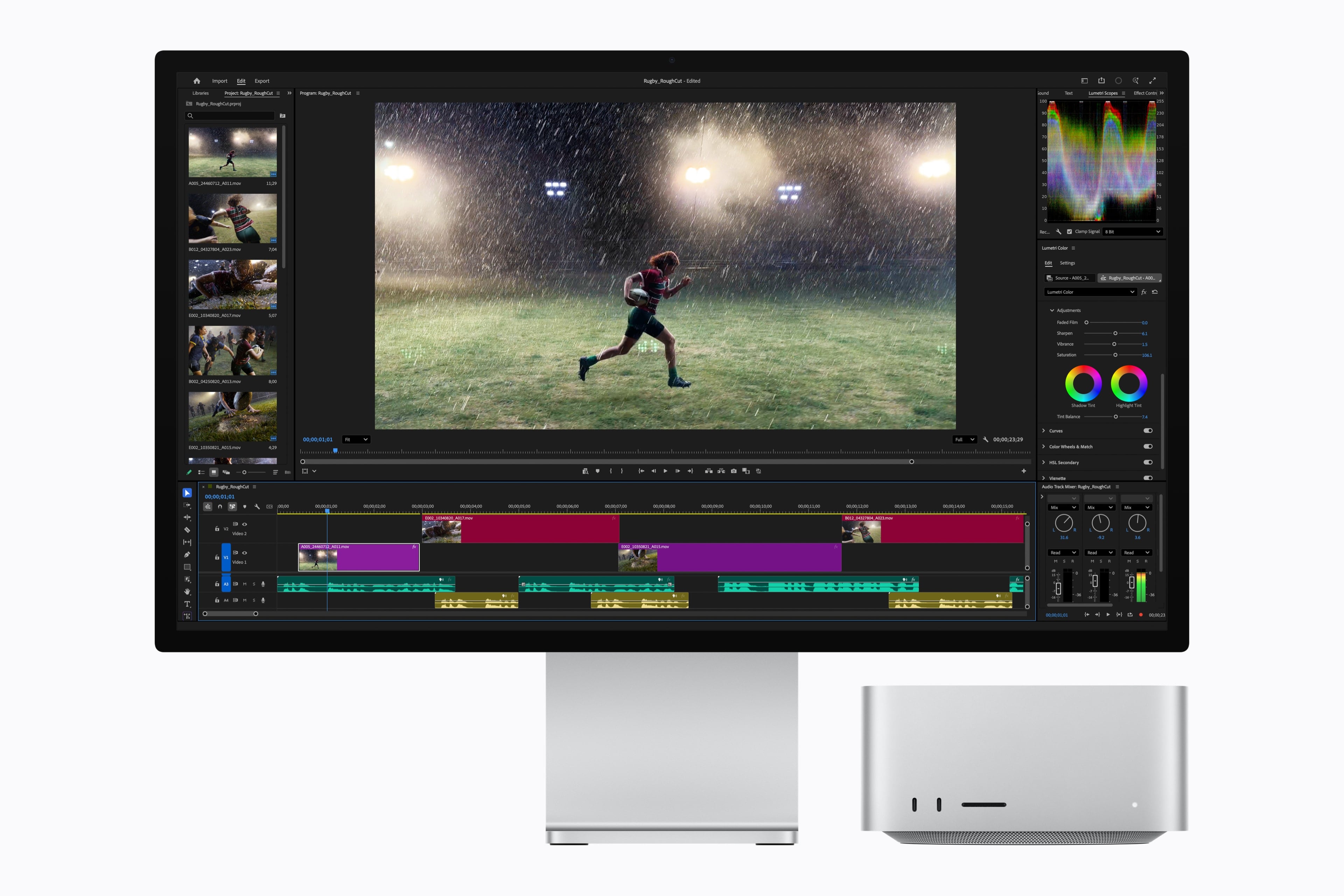
As for the M5 Ultra, which debuts in the Mac Studio, it sounds like a beast. According to Apple, the chip uses a next-generation version of its UltraFusion technology, resulting in a quad-die architecture for the first time in an Apple silicon chip. In addition, the M5 Ultra features an “up-to-36-core CPU and up-to-80-core GPU with a massive 1.2TB/s of unified memory bandwidth, 50 percent more than M3 Ultra.”

Here’s what Sri Santhanam, Apple’s vice president of Silicon Engineering Group, had to say about the new chips:

Today, we’re debuting the next giant leap in performance and AI compute for Apple silicon with the incredibly advanced M6 and the most powerful M-series chip yet, M5 Ultra. Built using the cutting-edge 2 nm process, M6 combines a new CPU complex, two additional CPU and GPU cores, a Dual 16-core Neural Engine, and more unified memory bandwidth to power through workloads with amazing energy efficiency. And for the ultimate desktop performance and the ability to run massive AI models, M5 Ultra features a massive GPU, now with Neural Accelerators, and more unified memory bandwidth, pushing the boundaries of what a desktop can do.

Apple is fusing two dual-die M5 Max chips to create a single quad-die architecture. Apple says the M5 Ultra is “up to 1.25x higher single-threaded performance and up to 1.3x higher multithreaded performance than M3 Ultra”, the fastest Mac previously for sale. The M5 Ultra also supports up to an 80-core GPU with up to 4.5x the peak GPU compute for AI tasks compared to the M3 Ultra and features an upgraded Media Engine, according to Apple.
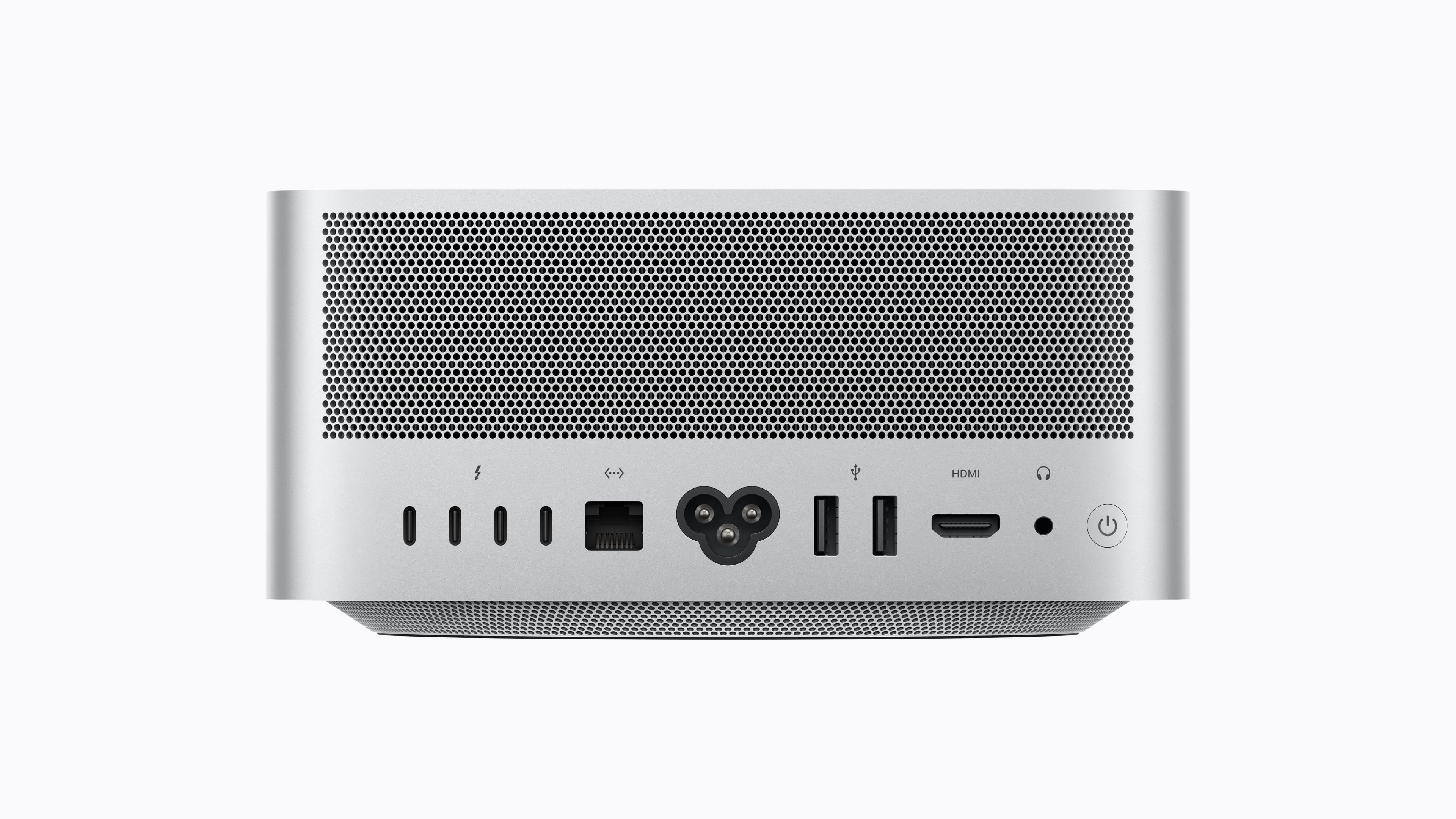
Source: Apple.

Source: Apple.

For those who don’t need the bleeding-edge performance of the M5 Ultra, Apple also introduced what sounds like a very capable M5 Max Mac Studio. The M5 Max version of the computer “features an 18-core CPU, an up-to-40-core GPU with Neural Accelerators built into each core, and up to 128GB of unified memory, accelerating complex pro and AI workloads.”

Macs featuring the new chips won’t be available immediately. You can preorder both online today for delivery on September 22 with the caveat that the M5 Ultra Mac Studio with 512GB of memory won’t be available until later in October.

Prices have risen too. The Mac mini models are both $100 more than the models they replace, while the M5 Ultra Mac Studio’s base configuration has risen $200. However, the M5 Max Mac Studio’s starting price hasn’t changed.


The Mac mini has been a lot of things to a lot of people over the years. From a compact, minimalist desktop system to a headless server, the mini is Apple’s jack-of-all-trades. More recently, demand for the tiny computer has surged as people put them to work for a variety of AI tasks, including running LLMs locally and serving as standalone Hermes and OpenClaw machines.

With memory and storage constraints, it’s no surprise that the base prices of the mini have risen. Despite those challenges, I hope Apple is able to produce enough to meet demand. I’ve loved having an M4 Pro model working away day and night in the background. It’s fast, relatively cool, energy efficient, and easy to run remotely. If the claims of Apple’s press release hold up under real-world use, I expect the new models will be the same, but faster and more capable, which is especially important for tasks like running models locally.

I’m also looking forward to seeing how the new Mac Studios perform in real world tests. I’ve used an M1 Max Mac Studio for a few years now and it’s been every bit the workhorse computer I need for my day-to-day work. However, it’s beginning to show its age when it comes to AI tasks, coding, and other tasks. It may finally be time for me to upgrade.

  •  
❌