❌

Reading view

Lake sediments trace 16,000 years of Western Balkan summers

Sediments from a small mountain lake in Bosnia and Herzegovina preserve an approximately 16,000-year record of summer temperature change in the Western Balkans, revealing abrupt climatic shifts whose effects varied across Europe. Researchers at Eötvös Loránd University reconstructed past mean July temperatures from chironomid remains and other lake-sediment indicators, then used pollen, sediment particles, organic matter and geochemical elements to track associated changes in vegetation, erosion and lake conditions. Two peer-reviewed studies published in 2026 examine different periods in the same sequence, together covering the Late Glacial, the Holocene and more recent centuries.

The reconstructed record shows that a large cooling event associated with the Younger Dryas lowered estimated mean July temperatures at Lake Prokoško by approximately 2.3°C, a change intermediate between estimates from Alpine lakes and those farther east. The lake, which covers 4.8 hectares at an elevation of 1,670 metres in the Vranica Mountains of the Dinaric Alps, also records a later Middle Holocene interval in which estimated summer temperatures may have exceeded present-day levels. These findings emerge from a paleoclimate reconstruction based on biological, chemical and physical evidence preserved in lake sediments, rather than from direct instrumental measurements.

Lake Prokoško occupies a climatically significant position between Western, Central and Eastern Europe. Over thousands of years, remains from the surrounding landscape and the lake’s own ecosystem accumulated in bottom sediments, providing material for reconstructing regional environmental and climatic history. One study, published in Palaeogeography, Palaeoclimatology, Palaeoecology, focused on rapid changes between approximately 16,000 and 10,000 years ago during the Late Glacial and beginning of the Holocene. A separate study in Quaternary Science Reviews traced conditions through the Holocene to the present, extending the interpretation of the sediment sequence across the full period represented by the two investigations.

Chironomids, a group of aquatic insects also known as non-biting midges, supplied the principal temperature indicator. Their larvae occupy lake sediments and differ in their preferences for water temperature, oxygen levels and nutrient conditions. After moulting, larvae leave chitinous head capsules that sink to the lake bed, where they can be preserved for tens of thousands of years. The researchers identified the species represented in different sediment layers and compared the fossil assemblages with faunal and climate data from hundreds of modern European lakes. This comparison supported estimates of mean July temperature, while the accompanying pollen, sediment, organic-matter and chemical records provided evidence about forests, soil erosion, lake productivity and other environmental changes.

The oldest layers examined reflect cold conditions near the end of the last glacial period. At around 14,600 years ago, reconstructed mean July temperatures around Lake Prokoško were below 8°C. They subsequently rose by approximately 2.6°C within a comparatively short interval, reaching around 10.2°C. The reconstruction associates this warming with increased biological activity in the lake, spreading vegetation and more stable conditions in the catchment. The youngest sediments in the study cover the most recent millennium, where the chironomid community reflected not only temperature changes but also centuries of alpine grazing, greater nutrient input and the later expansion of nutrient-rich conditions.

The early warming ended abruptly when the Younger Dryas began around 12,900 years ago, the last major cooling episode at the close of the last glacial period. Estimated mean July temperatures at Lake Prokoško fell by approximately 2.3°C to about 7.9°C. Cold-water chironomid species became more abundant, while increased erosion transported more clastic material into the lake. Comparisons with reconstructions elsewhere in Europe revealed a marked spatial contrast: summer cooling of 3–4°C has been reconstructed at many Alpine lakes, whereas decreases in the Eastern and Southern Carpathians were generally less than 1°C. The Lake Prokoško estimate falls between those geographic extremes.

The researchers connect this west-to-east gradient, which becomes weaker toward the east, to oceanic and atmospheric changes in the North Atlantic region. For the Carpathian Basin, the contrast illustrates that the same large-scale climatic event can produce different responses in Western, Central and Eastern Europe. Lake Prokoško consequently provides a regional reference point for examining how the magnitude of a shared climate signal varied geographically. The researchers also emphasize that alpine lakes respond sensitively to relatively small temperature changes: variations in ice-cover duration, water stratification, oxygen content and biological activity can accompany those changes, making small mountain lakes useful environmental archives.

Warming resumed at the end of the Younger Dryas. Between approximately 11,800 and 11,400 years ago, reconstructed mean July temperatures increased by around 2.9°C. By about 10,500 years ago, they may have reached approximately 12.6°C. The lake became more productive, its ice-free season lengthened, and closed-canopy forests developed in the catchment, reducing erosion. Temperatures did not remain constant throughout the Holocene. Around 6,800 years ago, reconstructed mean July temperatures may have reached approximately 14°C, meaning that some summers around Lake Prokoško were warmer than those experienced today. The researchers distinguish this Middle Holocene warmth from present-day warming: the earlier conditions were mainly seasonal and driven by gradual changes in Earth’s orbital parameters that increased Northern Hemisphere summer insolation, whereas current warming is global, year-round, more rapid and primarily associated with human-caused greenhouse gas emissions.

A cooling trend began around 6,000 to 5,500 years ago during the Neoglacial transition toward a cooler Late Holocene. Reconstructed mean July temperatures fell from approximately 14°C to around 12.8°C, then to 11.8°C by about 5,670 years ago. Pollen evidence indicates that people were altering the landscape around the lake by the end of the Neolithic, approximately 6,000 years ago. Plants associated with grazing and open habitats became more common, followed later by more intensive forest use and the expansion of open areas. The same sediment archive therefore records both reconstructed climatic variability and the growing influence of human land use, although it does not by itself establish that human activity caused the temperature changes documented in the sequence.

Later Holocene temperatures continued to vary. Around 3,000 years ago, another significant cooling began, with mean summer temperatures falling from approximately 14.7°C to 12°C. Around 2,000 years ago, reconstructed temperatures rose during the Roman Warm Period, reaching approximately 13.3°C. Over the past millennium, centuries of alpine grazing opened the surrounding landscape and increased the nutrient load entering Lake Prokoško. The chironomid community changed significantly around 700 years ago, and species preferring more nutrient-rich waters became increasingly common over the following 500 years. Together, the two studies show that the lake’s fossil and sediment record captures environmental responses shaped by both regional climate change and local human transformation, while also demonstrating that estimates for individual periods remain reconstructions derived from sediment proxies and modern comparative data.

Subject of Research: Paleoclimate reconstruction of summer temperature variability in the Western Balkans

Article Title: Where three climate zones meet

Article References: Where three climate zones meet. Original publication (Bibliographic details unavailable.)

Image Credits: AI Generated

DOI: Not provided

Keywords: Lake Prokoško, Western Balkans, summer temperatures, paleoclimate, chironomid fossils, Younger Dryas, Holocene, climate reconstruction, land use, alpine lake, three, climate

  •  

How Did Life Arise? Three Turning Points in Early Evolution

Where did it start? How did it grow complex? Why did it get big? Three moments in Earth’s early history when evolution suddenly, inexplicably turned up the dial.
  •  

Let’s learn about trace fossils

When you hear the word “fossil,” you might at first think of a dinosaur skeleton at your local museum. Or perhaps the imprints of leaves or shells in a rock from a nearby creek. Both are examples of body fossils. But there is a second type of fossil: trace fossils.

Body and trace fossils are created through similar processes. In both cases, some trace of an ancient life form is left in sediment. That remnant gets preserved when the sediment transforms into hard rock. But while body fossils preserve the remains of ancient life forms themselves, trace fossils keep a record of those life forms’ activities. Examples include burrows, nests, footprints, poop and vomit.

Ichnologists use trace fossils to obtain snapshots of ancient life forms’ daily lives that these scientists can’t get from remains alone. Take, for instance, fossilized poop, called a coprolite. Coprolites can offer clues about an ancient creature’s diet.

Fossil dung has revealed that, more than 150 million years ago, flying reptiles called pterosaurs ate mollusks and crustaceans. These fossils have also shown that tens of thousands of years ago, squirrels may have snacked on the remains of woolly mammoths and wolves.

Dietary info can also come from fossil vomit, known as regurgitalite, and fossilized stomach contents, called cololites.

The marks that ancient animals carved into their environments can also make useful trace fossils. Rocks from coastal Taiwan, for example, contain burrows likely dug by giant worms some 20 million years ago. Those lairs suggest that the worms lurked beneath the seafloor like Star Wars monsters and shot out to attack their prey.

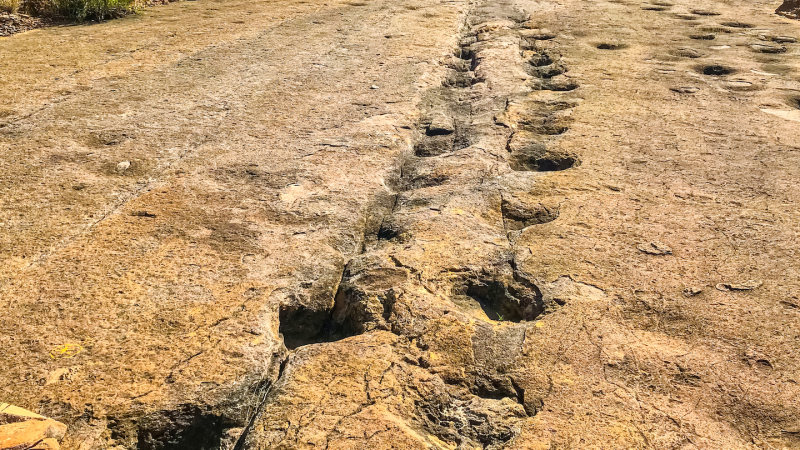
Scientists have also studied dinosaurs’ footprints to tease out details like how fast they ran.

Want to know more? We’ve got some stories to get you started:

New clues about dino speed come from birds strutting through mud Scientists use dinosaurs’ tracks in wet ground to estimate how fast they ran millions of years ago. (8/22/2025) Readability: 6.4

Frozen poop reveals Ice Age squirrels’ ecosystem DNA stored in ancient scat shows the Yukon rodents ate their way through the food chain. (8/25/2026) Readability: 6.8

Giant worms may have hidden beneath the ancient seafloor to ambush prey Trace fossils may be evidence of predatory behavior similar to modern bobbit worms. (2/16/2021) Readability: 8.1

There are two main categories of fossils: body fossils and trace fossils.

Explore more

Scientists Say: Ichnology

Scientists Say: Coprolite

Explainer: How a fossil forms

Fossil vomit shows what one 290-million-year-old predator dined on

New fossils bring the wide world of pterosaurs to life

Fossil stomach reveals a dinosaur’s last meal

New beetle species found in fossil poop of this dino relative

A love of small mammals drives this scientist

The secret to T. rex‘s incredible biting force is at last revealed

Activities

Word find

Want to see how easy it is for ancient life forms to leave traces behind? Make your own trace fossil with instructions from the Natural History Museum of Los Angeles County.

  •  

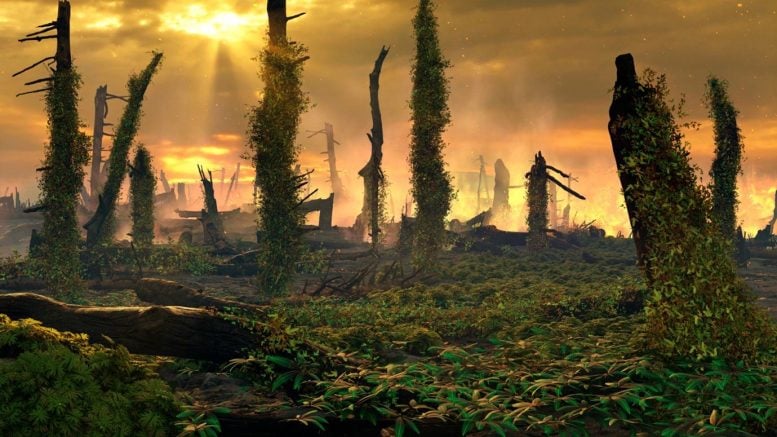
Ancient Europe Burned for Thousands of Years As Ferns Fed the Flames

Triassic InfernoAncient ferns may have helped keep Triassic Europe burning by rapidly regrowing after fires and supplying fresh fuel for the next blaze. Around 201 million years ago, Earth was rocked by the end-Triassic mass extinction. The crisis has been linked to enormous volcanic activity associated with the breakup of Pangea. Those eruptions released huge quantities [...]
  •  

A T. Rex Walked Here: Teacher Finds Rare Footprints in North Dakota

Kent Hups, a high school science teacher in Colorado, discovered a 23-foot trackway of fossilized dinosaur footprints, which offer a glimpse of how the apex predator moved 66 million years ago.
  •  

A 560-Million-Year-Old Animal Survived in 3D, Hinting at an Entire Lost Ancient Ecosystem

A University of Cambridge-led research team has announced the discovery of a 560-million-year-old animal fossil preserved in three dimensions (3D) in a sheep field in the Norwegian Arctic.

The exceptionally rare Ediacaran Period fossil is the first of its kind in Europe in decades and gives scientists a unique window into a period of Earth’s history when the first complex life forms began to appear.

The discovery suggests the site could hide an entire lost ancient ecosystem that has remained hidden for hundreds of millions of years.

3D Fossil of 560-Million-Year-Old Lifeform ‘Unlike Animal Life Today’

When announcing the historic discovery, the Cambridge-led team noted that the fossil, called a Charnia, resembles a fern more than any animal life we would likely recognize today.

For example, Charnia has none of the organs we typically associate with animals. The archaic life form also lacks a mouth or visible means of locomotion. The closest modern comparison would be a sedentary jellyfish.

While previous efforts have identified ancient animal-life fossils from this period, the team noted that most are found as “flat impressions.” As a result, Professor Neil Davies from Cambridge’s Department of Earth Sciences said that many fossils from this period “occur as impressions where they’ve been squashed down under layers of rock,” like a flower pressed into a book.

“As a fossil record, the Ediacaran has several things working against it, primarily that most organisms were soft-bodied and skeletons hadn’t evolved yet, so that they are harder to preserve,” the team member and co-author of the study detailing the research explained.

Dr Veema agreed, while noting the difficulty in finding such rare specimens.

“Fossils need to be embedded within sedimentary rocks to be found, so if the rocks themselves are less common, then that makes the fossils harder to find,” the researcher explained. “Most Ediacaran fossils come from just a handful of locations, which makes it exciting to find them somewhere new.”

Fortunately, the newly identified 560-million-year-old life form was preserved in all three dimensions. The team said that discovering an ancient life form preserved in 3D is incredibly rare, particularly for soft-bodied organisms like Charnia. Finding one from this extremely ancient time, when animal life first began to appear, is even more unlikely, making the discovery unusually rare.

Well-Preserved Charnia Reveals Previously Unknown Details

560 million years ago, when this Charnia was still alive, evidence suggests that it was buried during an ancient underwater avalanche. This sudden submergence also filled the animal’s body with sediment. The researchers said these events caused the fossil to become preserved in 3D

For example, the research team identified small ridges along the animal’s branches. Called keels, these extremely subtle features had never been detected in other, flatter Charnia fossils.

lost ecosystem
A 560-million-year-old Charnia fossil revealed subtle ridges not seen in previous specimens. The discovery could hint at a lost ancient ecosystem. Image Credit: Dr. Yorick Veenma.

Dr Yorick Veenma, from Cambridge’s Department of Earth Sciences and the lead author of the study detailing the team’s discovery, said finding a 3D fossil from this archaic time has provided them with an entirely new perspective.

“When you see the same species preserved in a different way, you start noticing properties you hadn’t seen before,” Dr. Veenma explained.

“There May Be a Whole Undiscovered Community of These Very Early Organisms”

Although scientists have found a few fossils from this period, they are often from the same handful of sites. However, this is the first time one has been found in Norway. Dr. Veema said this shows that discoveries can be made “in less familiar places.”

The researchers also successfully identified other components of the ancient ecosystem that this Charnia fossil called home. Future efforts may reveal that it was one small part of a larger, ‘lost’ ancient ecosystem supporting a variety of complex life forms.

“There may be a whole undiscovered community of these very early organisms preserved up there,” Davies explained. “Weird little umbrella-shaped blobs, things that don’t fit with what people know from elsewhere.”

“There are a whole host of different things that were not known before,” the researcher added.

The study “Charnia and other late Ediacaran macrofossils preserved in turbiditic deposits of the Indreelva Member (Finnmark, Norway)” was published in Paleontology.

Christopher Plain has spent the last six years as Associate News Editor and Head Science Reporter at The Debrief. Follow and connect with him on X, learn about his novels at plainfiction.com, or email him at christopher@thedebrief.org.

  •  

Why Did Only Some Birds Survive the Asteroid That Killed the Dinosaurs? The Answer May Be Hiding in a Feather Found in T. Rex’s Poop

In 2016, paleontologist David DeMar Jr. was crawling across a rocky outcrop in northeastern Montana, hunting for fish fossils, when he spotted a dark, reddish-brown nodule about half the size of a golf ball. He picked it up and looked at it through his hand lens. On its surface was something he didn’t expect: a […]

  •  

The surprising place where giant dinosaurs incubated their eggs

Finding a fossilized dinosaur egg is exceptionally rare, but finding a stash of more than 250 shell fragments in the chilly southern reaches of the planet is even more surprising. The discoveries come from southernmost Patagonia in Argentina, where giant, long-necked titanosaurs roamed toward the end of the dinosaur era. Previous egg discoveries suggested that these massive beasts usually nested much farther north.

  •  

Denisovans in southwestern China reveal their ancient subsistence strategies

The Denisovans, the enigmatic archaic human relatives first identified from a finger bone and a handful of teeth in a Siberian cave, have long been known almost exclusively through their DNA. Now, a landmark study published in Nature has pulled back the curtain on how these ancient hominins actually lived — what they ate, how they hunted, what tools they made, and the environments they braved — through an extraordinary assemblage of fossils and artefacts from Bianfu Cave in Yunnan Province, southwestern China. The findings paint the most detailed portrait to date of Denisovan biology, behaviour and ecology in eastern Asia, and suggest that these vanished people left a deep genetic and cultural imprint on later populations across Southeast Asia and Oceania.

The research team, led by Qingfeng Ruan, Hua Li and Song Xing and their colleagues, conducted a comprehensive analysis of hominin fossils and the associated archaeological remains recovered from Bianfu Cave. The hominin fossils themselves date to roughly 167,000 to 134,000 years ago, placing them firmly in the Middle Pleistocene. But the cultural sequence preserved in the cave’s sediments is far longer, stretching from approximately 190,000 years ago to about 70,000 years ago. That span — some 120,000 years of continuous or near-continuous occupation — makes Bianfu Cave one of the longest cultural records that can most parsimoniously be attributed to Denisovans anywhere in the world.

The Denisovan identity of the fossils was established through two independent and technically demanding lines of evidence. The first involved analysis of the enamel–dentine junction, the internal boundary between the enamel cap and the underlying dentine of the teeth. This three-dimensional morphological interface acts something like a fingerprint of evolutionary relationships, revealing diagnostic traits of the tooth’s internal architecture that are invisible from the outside but characteristic of particular hominin lineages. The second line of evidence came from palaeoproteomics, the recovery and identification of ancient proteins preserved within fossilized tissues. Because proteins are far more abundant and durable than DNA, they can survive in warm, humid environments like those of southern China, where genetic material degrades rapidly. Sequencing these ancient proteins allowed the researchers to place the Bianfu hominins on the Denisovan branch of the human family tree with confidence.

The fossil collection itself is remarkable. It includes four teeth that substantially expand the known range of dental variation within the Denisovan lineage — a critical contribution, since Denisovans were previously represented by a very small number of dental specimens, making it difficult to gauge how variable their teeth could be. The new fossils also include two cranial fragments and a radius, a forearm bone, providing rare glimpses of Denisovan skull and postcranial anatomy that were previously almost entirely unknown. Together, these remains transform Denisovans from a genome and a scatter of isolated teeth into a population with recognizable skeletal biology.

Beyond the fossils, the archaeological record from Bianfu Cave offers something equally precious: a window into Denisovan daily life. The researchers reconstructed the ancient environment using faunal remains and pollen preserved in the cave deposits. These records indicate that across Marine Isotope Stages 6 through 4 — a period encompassing major glacial–interglacial climatic swings between roughly 190,000 and 57,000 years ago — the landscape around the cave was dominated by coniferous forest or a mosaic of forest and steppe. This was a cool, variable environment that Denisovans exploited successfully across tens of thousands of years, demonstrating a resilience to climatic change that adds to growing evidence of their adaptability, from the high altitudes of the Tibetan Plateau to the subtropical latitudes of mainland Southeast Asia.

The subsistence evidence is particularly striking. Analysis of the animal bones from the cave shows that its inhabitants practised specialized hunting focused on medium- to large-bodied prey. This was not opportunistic scavenging but a sustained, targeted hunting strategy — one that would have required knowledge of animal behaviour, coordinated effort and effective weaponry. Specialized big-game hunting of this kind has often been associated with modern humans and late Neanderthals in western Eurasia, so finding it in a Denisovan context more than 150,000 years ago dramatically narrows the perceived behavioural gap between these archaic lineages and our own species.

Yet the technological strategy documented at Bianfu Cave is, at first glance, surprisingly simple. The stone tool assemblage is characterized by expedient core reduction and tool production — that is, the inhabitants struck flakes from cores as needed, used them, and discarded them, rather than investing in carefully shaped, curated tools that were carried, maintained and resharpened over time. Alongside this, the Denisovans of Bianfu Cave made pervasive use of unmodified bones, employing skeletal elements of their prey directly as tools without altering them beforehand.

Taken together, the researchers interpret this pattern as an adaptive system that prioritized the exploitation of what they call object affordance — the inherent functional possibilities already present in a raw material or object — over intensive tool manufacture. A suitably shaped bone fragment could serve as a hammer, a digging implement or a scraping tool with little or no modification; a sharp flake struck from a convenient core could cut and butcher without further refinement. In the rich, resource-diverse environments of subtropical southwestern China, where raw materials and animal resources were plentiful, such a flexible, low-investment strategy may have been not a sign of simplicity but a highly efficient way of life. It suggests that Denisovans measured success not by the sophistication of their toolkit but by how skilfully they read and exploited the opportunities their landscape provided.

This behavioural portrait gains added significance when set against the wider geography of Denisovan presence. Over the past decade and a half, Denisovans have been documented across a staggering range: from the original genomic discoveries in the Altai Mountains of Siberia, first reported in 2010, to the mandible from the Tibetan Plateau described in 2019, Denisovan DNA recovered from sediments at Baishiya Karst Cave in 2020, a molar from the Annamite Chain of northern Laos announced in 2022, a male Denisovan mandible from Pleistocene Taiwan reported in 2025, and proteomic identification of the 146,000-year-old Harbin cranium, also in 2025. Bianfu Cave now anchors this story firmly in southwestern China, a region long suspected to have been a Denisovan heartland and a critical corridor for hominin movements between mainland Asia and Southeast Asia.

The study’s authors argue that the region’s Denisovans point to a substantial genetic and cultural legacy in later human populations. Modern populations in Southeast Asia and Oceania carry the highest known proportions of Denisovan ancestry anywhere in the world — a legacy of interbreeding that occurred as modern humans moved through and beyond island Southeast Asia. The new evidence from Bianfu Cave suggests that the ways of life practised by Denisovans in this region — their hunting strategies, their flexible technological approaches, their hard-won knowledge of tropical and subtropical environments — may have been part of the inheritance, alongside their genes, that helped later human populations thrive as they spread across the diverse and challenging landscapes of Asia and the Pacific.

For palaeoanthropologists, the significance of the Bianfu Cave discoveries is difficult to overstate. Denisovans have been the least anatomically documented of all known hominin groups — a lineage defined first by DNA and only slowly fleshed out with fragmentary fossils. The new teeth, cranial fragments and radius from Yunnan, combined with an unmatched 120,000-year archaeological sequence, mean that researchers can finally study Denisovans not just as a genome or a set of molecular signatures but as a living, adapting population: hunters of large game, makers and users of expedient tools, and inhabitants of conifer forests that swung between glacial cold and interglacial warmth. As analysis of the Bianfu material continues, it promises to reshape our understanding of how archaic humans lived in eastern Asia and how deeply their story is woven into our own.

Subject of Research: Denisovan fossils and archaeological remains from Bianfu Cave, Yunnan Province, southwestern China, revealing Denisovan biology, technology, subsistence strategies and palaeoecology

Article Title: Denisovans from southwestern China and their subsistence strategies

Article References: Ruan, Q., Li, H., Xing, S., Zhao, K., Liu, J., Zanolli, C., Doyon, L., Delpiano, D., Peresani, M., d’Errico, F., Demeter, F., Hublin, J.-J., Xiao, P., Wang, Y., Jia, Z., Yang, Q., Fu, Q., Sun, Q., Zhao, Y., … Chen, F. (2026). Denisovans from southwestern China and their subsistence strategies. Nature. https://doi.org/10.1038/s41586-026-10997-4

Image Credits: AI Generated

DOI: 10.1038/s41586-026-10997-4

Keywords: Denisovans, Bianfu Cave, Yunnan, palaeoproteomics, enamel–dentine junction, Middle Pleistocene, subsistence strategies, expedient tool use, object affordance, specialized hunting, Marine Isotope Stages, Southeast Asia ancestry

  •  
❌