❌

Reading view

10 best places to see the 2027 total solar eclipse in Spain

Spain is one of the easiest places in the world to experience the total solar eclipse on Aug. 2, 2027. The so-called "eclipse of the century" first makes landfall in AndalucΓ­a, where totality will last up to 4 minutes and 40 seconds during mid-morning, with the sun comfortably high at around 38-42 degrees above the horizon in the eastern sky. Excellent roads, plentiful accommodation and MΓ‘laga's international airport make this an obvious alternative to North Africa and the Middle East.

However, choosing where to watch requires some thought. Southern Spain's narrowing shape funnels the path toward the Strait of Gibraltar, potentially concentrating huge numbers of eclipse chasers around Tarifa, the Costa del Sol and the British Overseas Territory of Gibraltar during the peak summer holiday season.

From busy Mediterranean beaches to mountain villages, here's where to see the total solar eclipse on Aug. 2, 2027 in southern Spain. All times, totality durations and historical cloud cover data come from Time and Date.

1. Tarifa
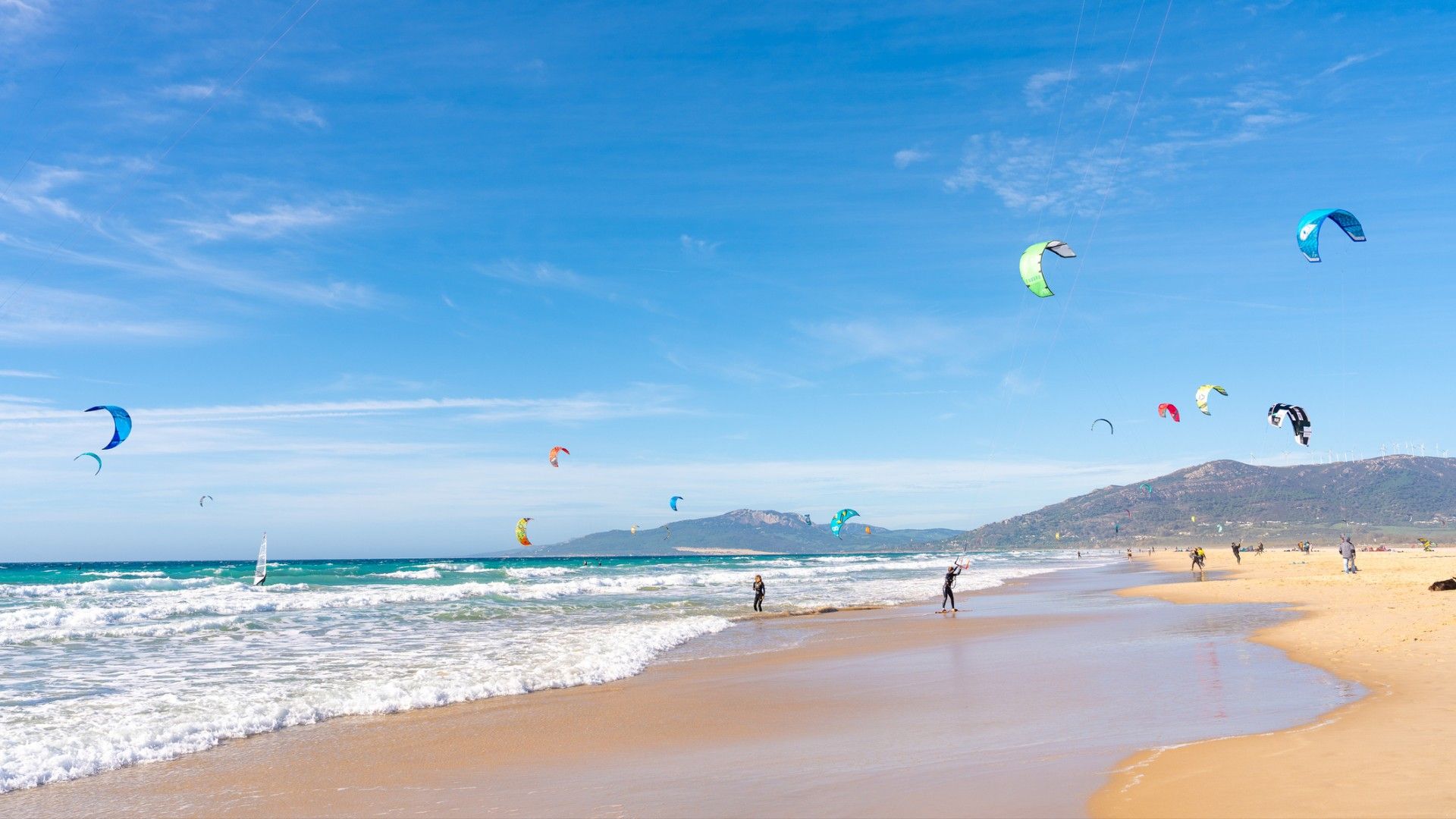
A sandy beach with lots of colorful kitesurfing kites under blue sunny sky.

At the southernmost tip of mainland Europe, Tarifa will experience almost four minutes and 40 seconds of totality on Aug. 2, 2027. (Image credit: MEDITERRANEAN via Getty Images)

Location: CΓ‘diz province

Start of totality and duration: 10:45 a.m. CEST; 4 minutes, 40 seconds

Historical August cloud cover: 13%

Altitude of the sun: 38 degrees above east

At the southernmost tip of mainland Europe, where the Atlantic Ocean meets the Mediterranean Sea, Tarifa is likely to be one of the country's busiest eclipse-watching locations because it will experience the longest totality in mainland Spain. Just 9 miles (14 km) across the Strait of Gibraltar from Morocco, the historic port town is known for its whitewashed old town, the medieval Castle of GuzmΓ‘n el Bueno and its long, sandy beaches. Los Lances and Valdevaqueros offer wide horizons and plenty of open space.

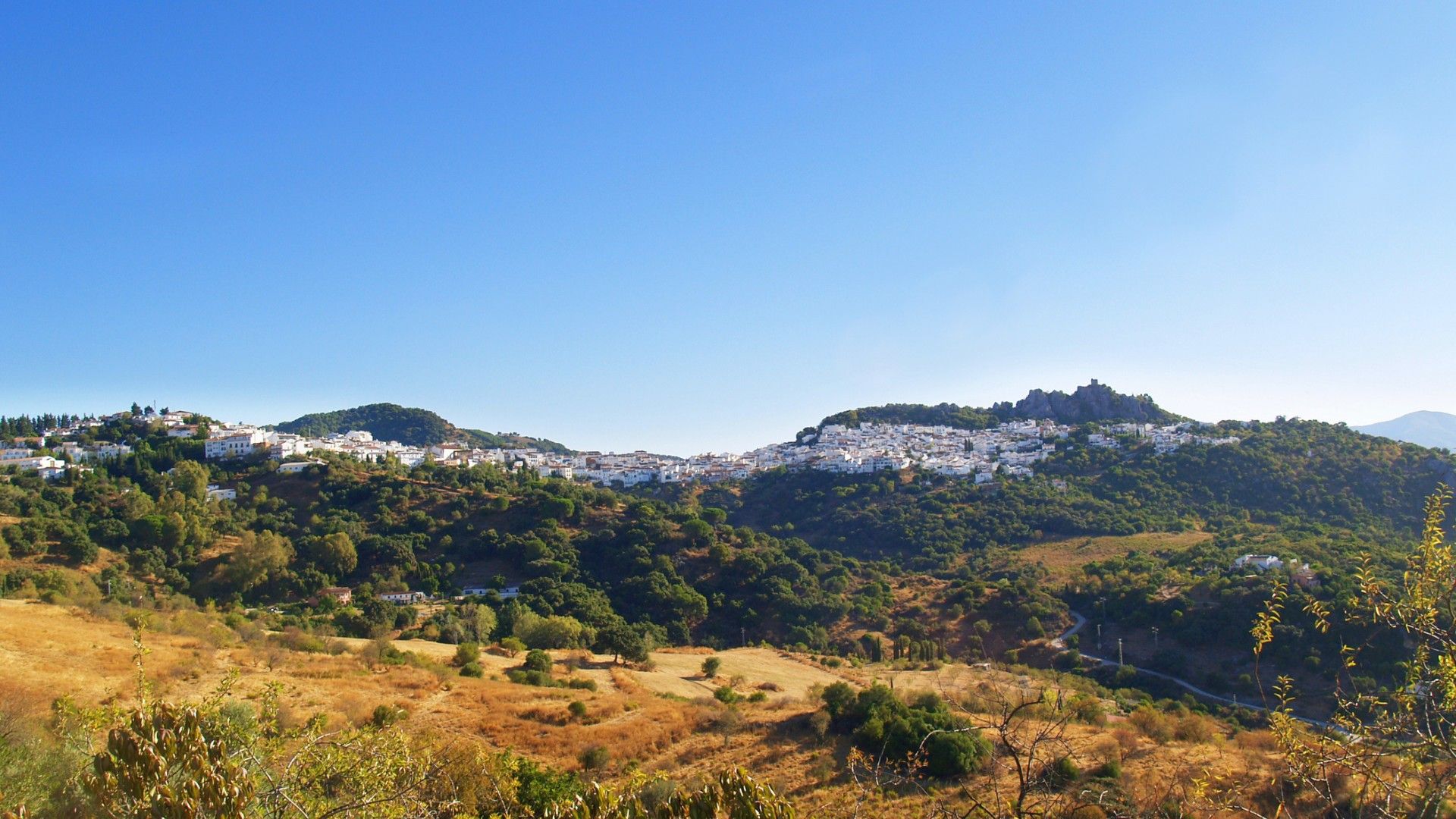
2. GaucΓ­n

A green, forested mountain range is dotted with white housing.

The whitewashed mountain village of GaucΓ­n will experience more than three minutes of totality on Aug. 2, 2027. (Image credit: japatino via Getty Images)

Location: MΓ‘laga province, AndalucΓ­a, Spain

Start of totality and duration: 10:46 a.m. CEST; 3 minutes, 13 seconds

Historical August cloud cover: 5%

Altitude of the sun: 38 degrees above east

For eclipse chasers who would rather head into the mountains than join the crowds on the Costa del Sol, Gaucín is an intriguing alternative. One of Andalucía's classic pueblos blancos, the whitewashed village occupies a spectacular position in the mountains above the coast, crowned by the ruins of Castillo del Águila. Its elevated setting offers sweeping views across the surrounding countryside towards Gibraltar and, on clear days, the mountains of North Africa. Crucially, heading inland doesn't sacrifice too much totality.

3. Gibraltar

Breathtaking aerial view of Gibraltar, showcasing the iconic Rock, the city nestled below, the vast expanse of the sea, and the distant African coast under a picturesque cloudy sky.

The Rock of Gibraltar will be plunged into darkness for almost four and a half minutes during the total solar eclipse on Aug. 2, 2027. (Image credit: Eloi_Omella via Getty Images)

Location: Gibraltar

Start of totality and duration: 10:45 a.m. CEST; 4 minutes, 29 seconds

Historical August cloud cover: 17%

Altitude of the sun: 38 degrees above east

Few places in Europe could provide a more dramatic setting for totality than Gibraltar, the tiny British Overseas Territory dominated by its famous 1,398-foot (426-meter) limestone Rock. However, eclipse chasers will need to view either from The Rock or its east coast, where elevated viewpoints and beaches face the Mediterranean and the eclipsed sun. However, Gibraltar has a potential complication β€” the easterly Levanter wind can create a distinctive cap of cloud over the Rock even when surrounding skies are clear. Another issue is accommodation, which is already at a premium. See Gibraltar Eclipse 2027.

4. La LΓ­nea de la ConcepciΓ³n

The giant Rock of Gibraltar towers over the night-time lit city.

La LΓ­nea de la ConcepciΓ³n offers the chance to watch more than four minutes of totality with the Rock of Gibraltar dominating the horizon. (Image credit: fhm via Getty Images)

Location: CΓ‘diz province

Start of totality and duration: 10:45 a.m. CEST; 4 minutes, 24 seconds

Historical August cloud cover: 17%

Altitude of the sun: 38 degrees above east

Immediately north of Gibraltar, La LΓ­nea de la ConcepciΓ³n occupies the sandy isthmus between the Bay of Gibraltar and the Mediterranean Sea. Its location creates one of Spain's most distinctive possibilities for eclipse photography. On the Mediterranean side, Playa de Santa BΓ‘rbara is a wide sandy beach north of the border, with the immense Rock of Gibraltar rising to the south β€” a potentially spectacular foreground. The city has around 9 miles (14 kilometers) of coastline, providing plenty of alternatives for eclipse viewing.

5. Estepona

On the left is a paved path lined with palm trees. On the right is a flat sandy beach. In the foreground there is a small boat on the sand, surrounded by 3 palm trees.

Estepona on the Costa del Sol will experience more than three and a half minutes of totality on Aug. 2, 2027. (Image credit: John Harper via Getty Images)

Location: Costa del Sol, MΓ‘laga province

Start of totality and duration: 10:46 a.m. CEST; 3 minutes, 41 seconds

Historical August cloud cover: 7%

Altitude of the sun: 38 degrees above east

About an hour's drive southwest of MΓ‘laga Airport, Estepona is one of the Costa del Sol's most attractive resort towns, with a pedestrianized old quarter of whitewashed streets, colorful flowerpots and squares centered on Plaza de las Flores. For eclipse day, the mile-long Playa de la Rada is the obvious gathering place, with its broad Mediterranean horizon and proximity to the town center. Other attractions include Estepona Marina and the Sierra Bermeja mountains rising behind the coast.

6. CΓ‘diz

Colorful sunset over a historic city center. There are white and yellow buildings, with several tall towers.

The ancient Atlantic port of CΓ‘diz will experience almost three minutes of totality on Aug. 2, 2027. (Image credit: Flottmynd via Getty Images)

Location: CΓ‘diz province

Start of totality and duration: 10:45 a.m. CEST; 2 minutes, 56 seconds

Historical August cloud cover: 13%

Altitude of the sun: 37 degrees above east

Historic CΓ‘diz occupies a narrow peninsula jutting into the Atlantic and is packed with reminders of its long maritime past, including the CΓ‘diz Cathedral, the Roman Theatre and Torre Tavira, one of more than 100 watchtowers once used to spot approaching ships. For eclipse day, the long, sandy Playa de la Victoria offers plenty of open space, while La Caleta provides a more historic setting between two coastal castles.

7. MΓ‘laga

Aerial view of the giant MΓ‘laga Cathedral and historic dense city center at sunset. In the distance you can see the palm tree-lined harbour.

MΓ‘laga, capital of the Costa del Sol, will experience almost two minutes of totality on Aug. 2, 2027. (Image credit: Guven Ozdemir via Getty Images)

Location: MΓ‘laga province

Start of totality and duration: 10:48 a.m. CEST; 2 minutes

Historical August cloud cover: 9%

Altitude of the sun: 39 degrees above east

MΓ‘laga may lose some duration compared with locations farther west, but it makes up for it with excellent transport links, plentiful accommodation and all the attractions of a major Mediterranean city. It combines the hilltop Gibralfaro Castle and Moorish Alcazaba with a Roman theatre, cathedral, museums and a lively historic center. For eclipse day, the obvious option is the coast. La Malagueta beach is within walking distance of the city center, while numerous beaches extend east and west along the Costa del Sol.

8. Torremolinos

Aerial view of the Mediterranean coast. There are large hills in the background, looming over the city below. Above is a blue sky, dotted with large clouds.

The beaches of Torremolinos on the Costa del Sol will experience almost three minutes of totality on Aug. 2, 2027. (Image credit: By LTCE via Getty Images)

Location: MΓ‘laga province

Start of totality and duration: 10:47 a.m. CEST; 2 minutes, 46 seconds

Historical August cloud cover: 11%

Altitude of the sun: 39 degrees above east

One of the best-known resorts on Spain's Costa del Sol, Torremolinos combines a long Mediterranean beachfront with easy access to MΓ‘laga and its international airport. Its 4-mile (6-kilometer) promenade links broad sandy beaches, including Playa del Bajondillo and Playa de la Carihuela, offering plenty of potential eclipse-watching spots with views toward the eastern sky. For a higher vantage point, nearby Mount Calamorro rises almost 2,600 feet (800 meters) above BenalmΓ‘dena, with panoramic views across the Costa del Sol and, on clear days, towards Gibraltar and North Africa.

9. Marbella

Aerial view of a large marina at sunrise.

Marbella's Mediterranean beaches will experience more than three minutes of totality on Aug. 2, 2027. (Image credit: Tu xa Ha Noi via Getty Images)

Location: Costa del Sol, MΓ‘laga province

Start of totality and duration: 10:46 a.m. CEST; 3 minutes, 21 seconds

Historical August cloud cover: 7%

Altitude of the sun: 38 degrees above east

Marbella has around 17 miles (27 kilometers) of Mediterranean coastline, so eclipse chasers will have dozens of beaches to choose from, from San Pedro de AlcΓ‘ntara in the west to Cabopino in the east. Options include the sandy beaches and dunes around Cabopino, Las Chapas, Puerto BanΓΊs and San Pedro de AlcΓ‘ntara, all with open views across the Mediterranean. Away from the beach, Marbella offers a whitewashed old town centered on Plaza de los Naranjos, while the Sierra Blanca mountains provide a dramatic backdrop to the resort.

10. Motril

Three lonely palm trees on a large white beach.

Motril on Spain's Costa Tropical lies close to the northern edge of the path of totality on Aug. 2, 2027. (Image credit: Getty Images)

Location: Costa Tropical, Granada province

Start of totality and duration: 10:49 a.m. CEST; 1 minute, 57 seconds

Historical August cloud cover: 10%

Altitude of the sun: 39 degrees above east

Close to the northern edge of the path of totality, Motril gets a shorter eclipse than destinations farther west, but could be among the quieter places on Spain's Mediterranean coast from which to experience it. The largest town on Granada's Costa Tropical sits between the Mediterranean and the foothills of the Sierra de LΓΊjar, with the Sierra Nevada rising beyond. Nearby Playa Granada and Playa Poniente offer broad coastal views.

  •  

A New Look at a Centuries-Old Solar Eclipse

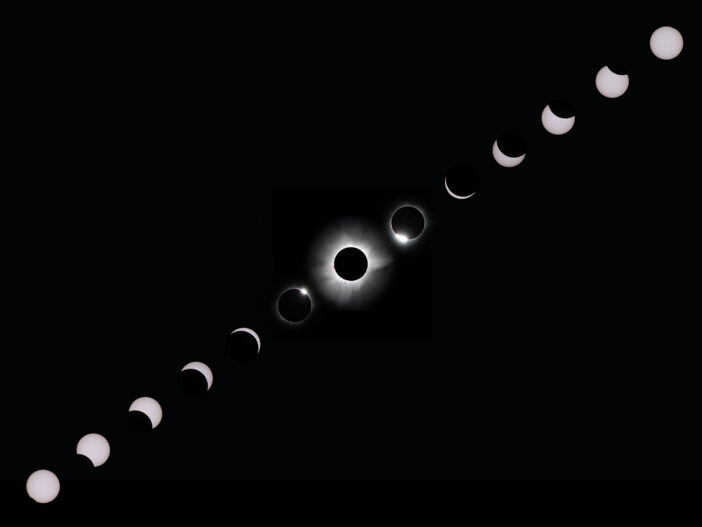
phases of a total solar eclipse

Humans have recorded solar eclipses for thousands of years. Recently, researchers translated and analyzed solar eclipse observations from 18th-century Sweden to determine the Sun’s radius at that time and study the first confirmed record of solar prominences.
Looking Back Nearly 300 Years

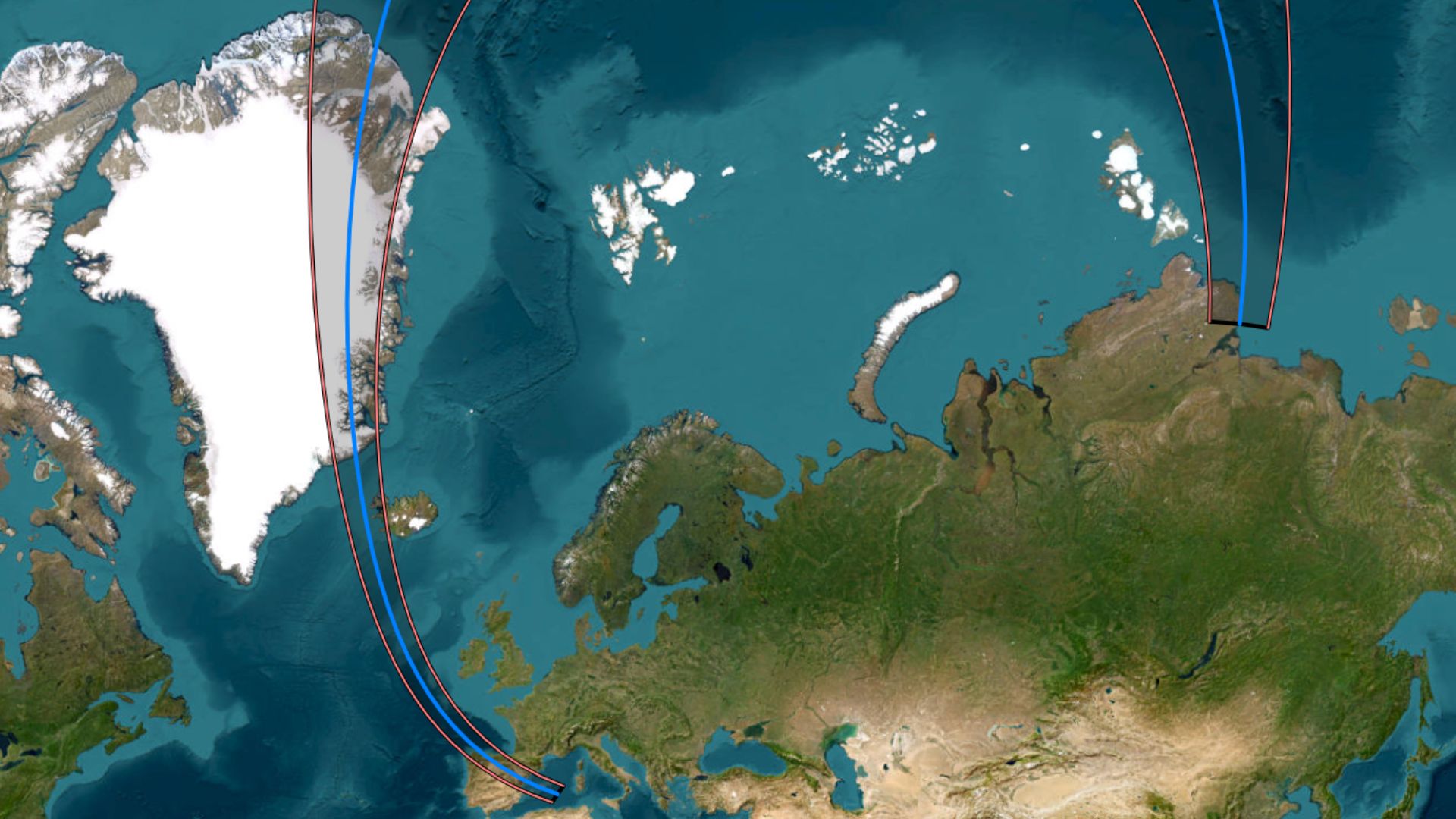
map showing the path of a solar eclipse

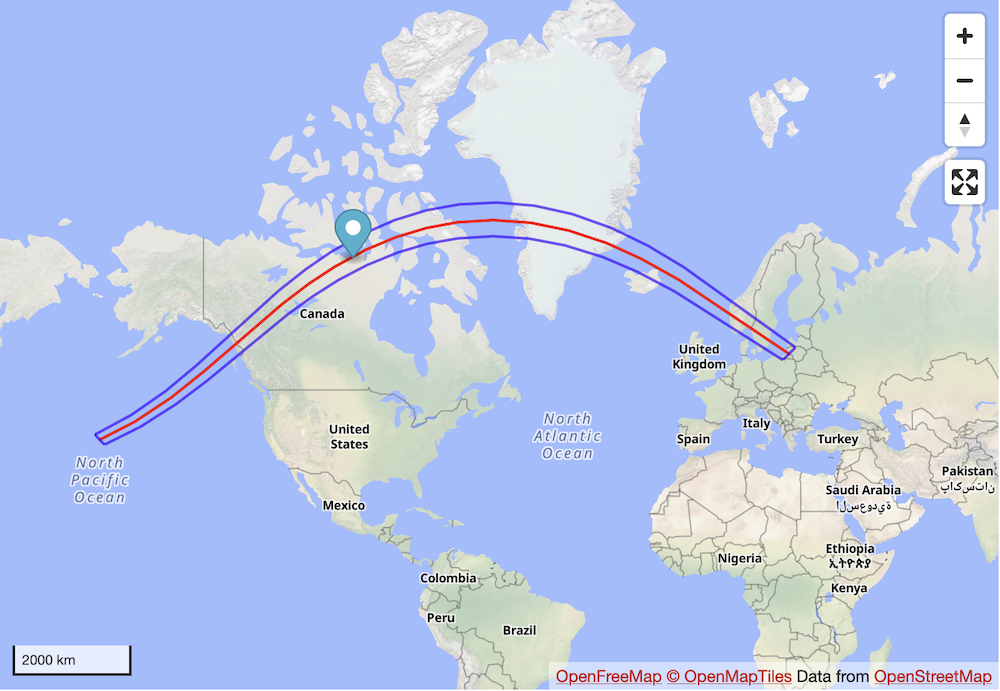
The path of the 13 May 1733 total solar eclipse. Click to enlarge. [Eclipse Predictions by Fred Espenak (NASA’s GSFC)]

On 13 May 1733, a solar eclipse darkened skies across a swath of modern-day Canada, Greenland, Iceland, and Scandinavia. Among the eclipse’s careful observers was Swedish astronomer and mathematician Birger Wassenius, who dutifully sketched the eclipse and the massive loops of plasma and magnetic fields β€” solar prominences β€” that bulged out from behind the Moon’s obscuring disk.

Wassenius penned a short account of his observations in Latin for Philosophical Transactions of the Royal Society (the longest-running scientific journal in the world!). His drawings of the event, which include the first robust record of solar prominences, were never officially published, but were housed in the Royal Academy Archives of Sweden. Now, researchers have translated Wassenius’s full report from Swedish to English and analyzed his sketches, helping to fill an important gap in the historical record of solar activity.

Drawing from Observations

Hisashi Hayakawa (Nagoya University; Rutherford Appleton Laboratory) and collaborators translated Wassenius’s notes, which describe how he viewed the eclipsed Sun through a 21-foot-long telescope during just over two minutes of totality. From Wassenius’s measurements, Hayakawa and coauthors calculated the solar radius to be 696,250 Β± 170 km; this is larger than the modern accepted radius, but it’s in line with what has been calculated from solar eclipse measurements two decades earlier, in 1715.

sketch of a solar eclipse

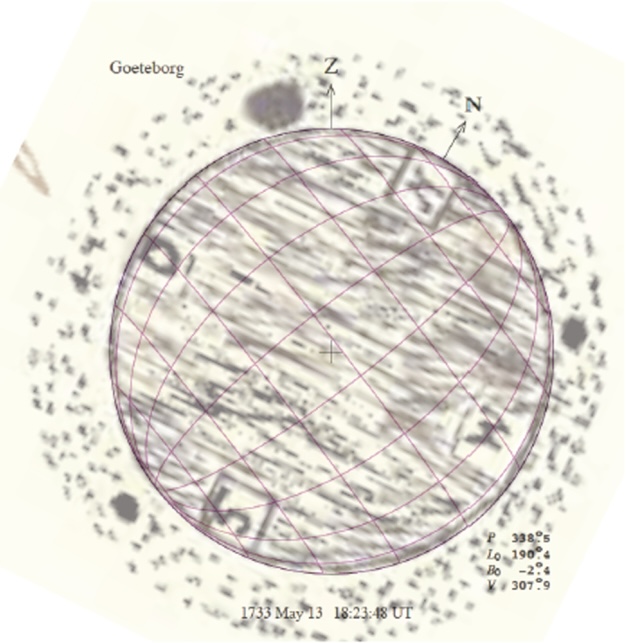
Wassenius’s sketch of the solar eclipse, showing three prominences as filled circles emerging from behind the disk of the Moon. [Adapted from Hayakawa et al. 2026]

Wassenius also made several sketches of prominences hovering above the edge of the Sun. While assessing these drawings, Hayakawa and coauthors had to contend with the imperfections of these hand-recorded features. With a narrow field of view that prevented him from seeing the entire disk at once, and with his time limited by the brief eclipse, Wassenius scribbled in two of the three prominences after the fact, from memory. After assigning reasonable uncertainties to the positions of these prominences, the team determined that at least one of these features was located at a high latitude.

Prominent Features

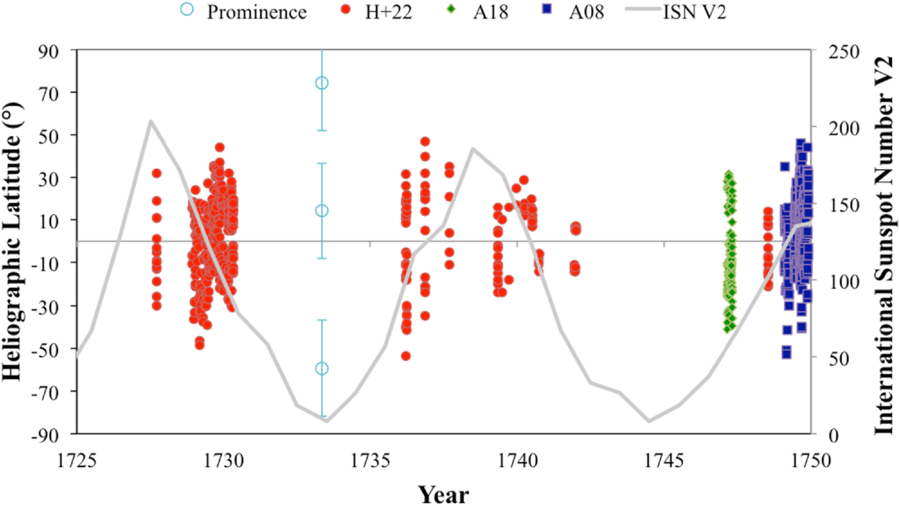
High-latitude prominences like the one (or more) seen by Wassenius are most common during what’s known as the β€œpolar rush,” which occurs as solar activity rises toward a maximum. If these prominences are related to the polar rush, that would mean that in 1733, the Sun was not in an activity minimum as previously thought. However, it’s also possible for prominences to pop up at high latitudes during other times in the solar cycle; the authors estimated the likelihood of this happening at 20%.

plot of positions and numbers of sunspots and solar prominences

Heliographic latitude of solar prominences estimated from Wassenius’s drawings (light blue circles), compared to the positions (filled symbols) and number (gray line) of sunspots. Note that sunspot data around this time were scarce, and some researchers have suggested that revisions to the sunspot number are needed. Click to enlarge. [Hayakawa et al. 2026]

This work shows the value of historical observations in determining the Sun’s past activity cycles. The 1733 eclipse observation by Wassenius adds a fascinating data point to the long history of solar eclipse observations, helping to illuminate a time when sunspot data were scarce.

Citation

β€œAnalyses on Wassenius’s Report for Total Solar Eclipse in 1733: Quantifications of the Solar Radius and the Earliest Reported Prominences,” Hisashi Hayakawa et al 2026 ApJ 1007 189. doi:10.3847/1538-4357/ae6451

The post A New Look at a Centuries-Old Solar Eclipse appeared first on AAS Nova.

  •  

Oct. 2, 480 B.C.E.: A eclipse causes a retreat

An ancient solar eclipse changed the course of a military conflict when it cast a shadow on a battle over Corinth between the Spartans, commanded by Cleombrotus, and the invading Persians, led by Xerxes I. Herodotus wrote that, β€œwhile [Cleombrotus] was offering sacrifice to know if he should march out against the Persians, the SunContinue reading "Oct. 2, 480 B.C.E.: A eclipse causes a retreat"

The post Oct. 2, 480 B.C.E.: A eclipse causes a retreat appeared first on Astronomy Magazine.

  •  

Aug. 18, 1868: Helium is discovered

During the total solar eclipse of Aug. 18, 1868, two astronomers, Pierre Jules CΓ©sar Janssen of France and J. Norman Lockyer of England, each independently discovered a new line in the Sun’s spectrum. Lockyer thought it showed an undiscovered element, which he named helium. (In Greek mythology, Helios was the Sun god.) Although scientists wouldContinue reading "Aug. 18, 1868: Helium is discovered"

The post Aug. 18, 1868: Helium is discovered appeared first on Astronomy Magazine.

  •  

Watch the total solar eclipse online Aug. 12 with these free livestreams

The Aug. 12 total solar eclipse is just one day away! Here's how you can watch the entire show live online from the comfort of your home

Millions of people across Spain, Iceland and Greenland will see the moon completely hide the sun during the climactic phase of totality on Aug. 12. Countless more skywatchers across Europe will witness a deep partial solar eclipse, as the moon's curved silhouette covers a swathe of the sun's surface, while failing to cover it entirely.

Thankfully, we live in modern times. So there's no need for you to miss out on the solar spectacle if you find yourself outside of the path of totality, or if clouds conspire to ruin your view. Here's where to watch every phase of the 2026 total solar eclipse live online.

NASA

NASA will be hosting its own livestream of the event starting at 1:15 p.m. EDT on Aug. 12, featuring live views of totality from cameras spread throughout the path of the eclipse. The visuals will be accompanied by information on the science of the incredible event and details on how the agency is working to learn more about our sun.

The NASA coverage will be hosted here on Space.com, but can also be streamed through YouTube, Twitch, NASA+, Facebook, Instagram and Amazon Prime.

Time and Date

Time and Date's YouTube livestream kicks off at 12 p.m. EDT (1700 GMT) on Aug. 12, bringing live views of the eclipse from Leon in northwestern Spain and the island of Mallorca, along with live commentary from journalist Anne Buckle and astrophysicist Graham Jones.

The European Space Agency

An official European Space Agency (ESA) livestream will begin at 1:30 p.m. EDT (1730 GMT) on Aug. 12. The stream will feature expert commentary on the science of the eclipse along with live views from telescopes at the Observatorio Astrofisco de Javalambre, which is located close to the Spanish city of Teruel directly in the path of totality.

Royal Observatory Greenwich

London's historic Royal Observatory Greenwich will host two simultaneous YouTube streams featuring live views of the partial solar eclipse starting at 1:15 p.m EDT (1815 GMT) on Aug. 12. The first livestream will be presented by Royal Observatory astronomer Greg Brown, who will discuss the science of the sun while providing expert commentary on the eclipse, while the second will offer a silent livestream, featuring visuals of the eclipse with no accompanying audio.

The Virtual Telescope Project

The Virtual Telescope Project livestream begins at 1:20 p.m. EDT (1720 GMT) on Aug. 12, bringing real-time views from the organization's robotic telescopes in Manciano, Italy, where a partial eclipse will be visible and from the path of totality in Spain. The Virtual Telescope Project will host a separate livestream a few hours later featuring views of the Perseid meteor shower peak, which occurs overnight on Aug. 12-13.

Be sure to check out our live blog for all of the latest news on the Aug. 12 total solar eclipse. We'll also have reports from Skywatching Writer Anthony Wood as he watches the eclipse unfold low in the horizon in central Spain, and also from Skywatching Editor Daisy Dobrijevic as she witnesses the spectacle during a voyage with HX Expeditions to Greenland!

Editor's Note: If you would like to share your eclipse photos with Space.com's readers, then please send your photo(s), comments, and your name and location to spacephotos@space.com.

  •  

What time is the total solar eclipse on Aug. 12, 2026?

If you're planning to watch the total solar eclipse on Aug. 12, knowing exactly when to look up is crucial.

While totality will be visible from parts of Greenland, Iceland and Spain, millions more people across Europe will experience a dramatic partial solar eclipse. Whether you're chasing the moon's shadow in Reykjavik or watching the moon take a 'bite' out of the sun from London, Paris, or Berlin, timing is everything.

You can keep up with the latest total solar eclipse news and coverage with our total solar eclipse live blog.

Total solar eclipse timings

Location

Totality begins (local time)

Duration

Scoresby Sund, Greenland

4:35 p.m.

1m 46s

Reykjavik, Iceland

5:48 p.m.

1m 1s

Snæfellsjâkull, Iceland

5:45 p.m.

2m 10s

GijΓ³n, Spain

8:26 p.m.

1m 46s

A CoruΓ±a, Spain

8:27 p.m.

1m 15s

Burgos, Spain

8:28 p.m.

1m 44s

Mallorca, Spain

8:31 p.m.

1m 36s

Partial solar eclipse timings for major cities

Location

Local time (maximum coverage)

% of sun's disk covered

New York City

1:54 p.m.

9%

St. John's, Newfoundland, Canada

3:35 p.m.

53%

Nuuk, Greenland

4:35 p.m.

79%

Oslo, Norway

7:57 p.m.

83%

Berlin, Germany

8:08 p.m.

84%

London, U.K.

7:13 p.m.

91%

Paris, France

8:17 p.m.

92%

Tangier, Morocco

7:40 p.m.

92%

Dublin, Ireland

7:10p.m.

94%

Lisbon, Portugal

7:36 p.m.

94%

Nice, France

8:24 p.m.

95%

Madrid, Spain

8:32 p.m.

99.96%

Barcelona, Spain

8:29 p.m.

99.82%

Looking for your own eclipse time? The interactive map and resources from Time and Date let you search by city and view detailed timing information for every stage of the eclipse.

What is a total solar eclipse?

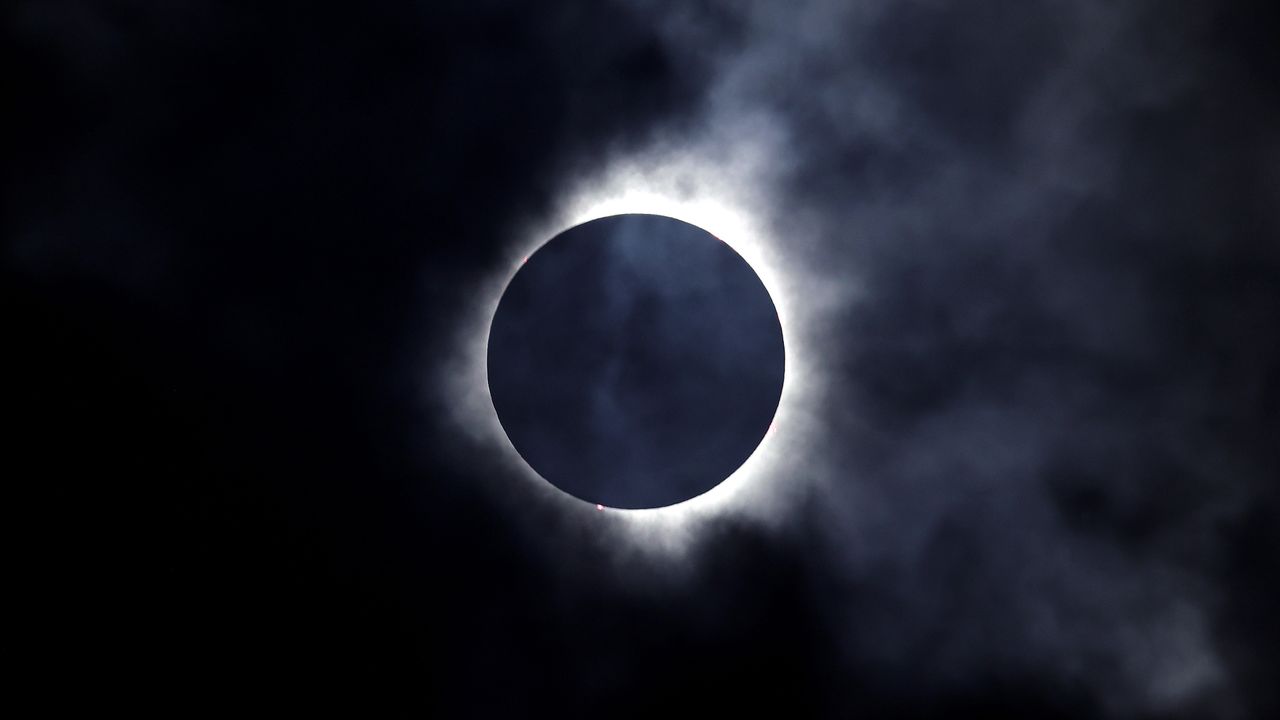
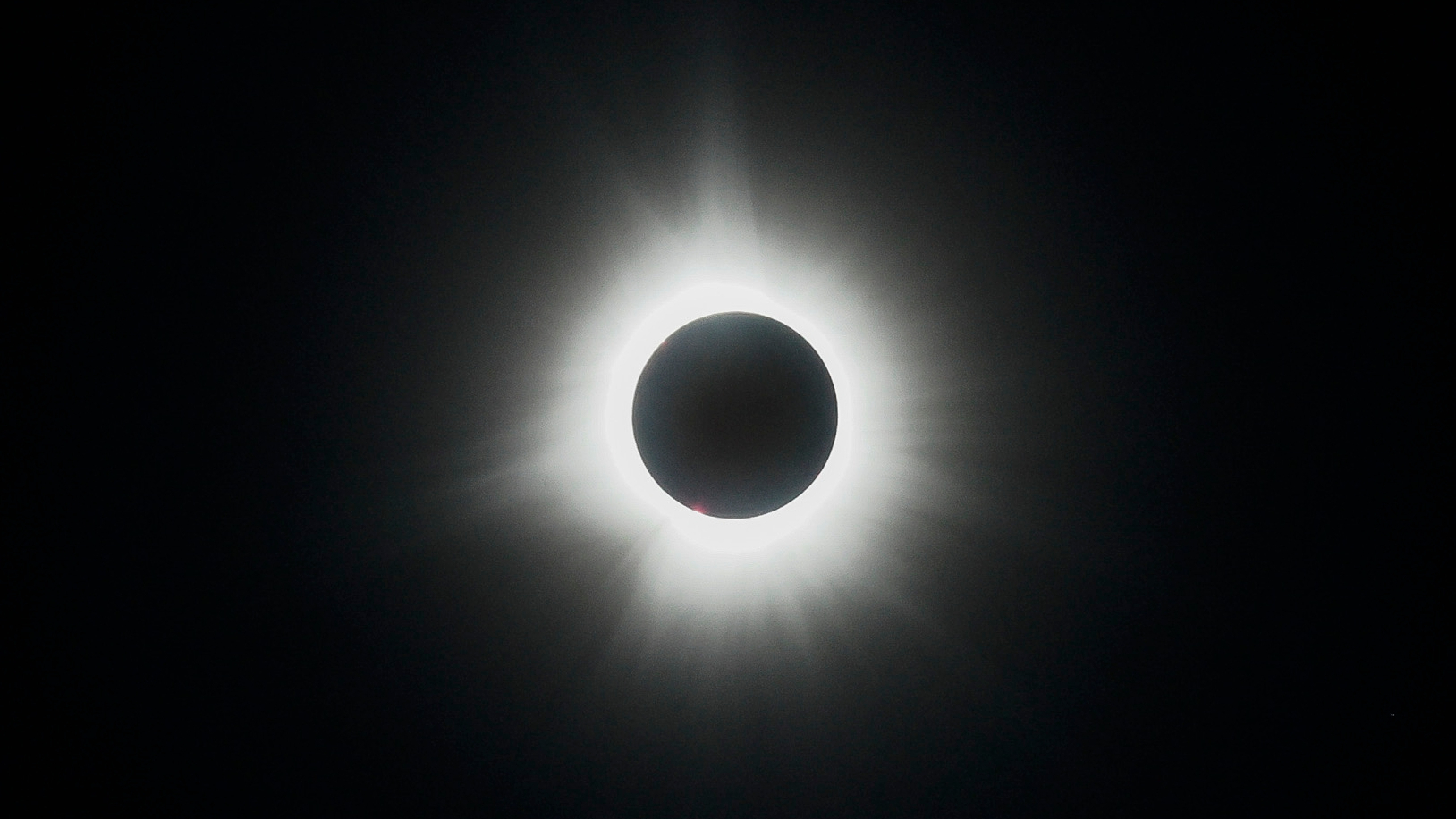
a total solar eclipse seen against a black sky

A total solar eclipse occurs when the moon moves in front of the sun and blocks it from view. (Image credit: Paul Souders/Getty Images)

A total solar eclipse occurs when the moon moves directly between Earth and the sun, completely blocking the sun's disk from view.

During totality, the sky darkens significantly, temperatures drop and bright stars and planets can even become visible. Observers can also catch a glimpse of the sun's outer atmosphere, known as the corona, glowing around the silhouetted moon.

Totality β€” when the sun is completely obscured β€” is only visible within the narrow path of the moon's shadow. Outside that path, observers may see a partial solar eclipse, whereby only a portion of the sun is covered.

REMEMBER to NEVER look directly at the sun. To view this solar eclipse safely, you must use solar filters. Only during the brief period of totality when the moon completely covers the sun, is it safe to look at the sun without protection. Observers will need to wear solar eclipse glasses, and cameras, telescopes and binoculars must have solar filters placed in front of their lenses at all other times.

Our how to observe the sun safely guide tells you everything you need to know about safe solar observations.

After this, when is the next solar eclipse?

After the total solar eclipse on Aug. 12, 2026, the next solar eclipse will be an annular solar eclipse on Feb. 6, 2027 visible across parts of Africa and South America. The next total solar eclipse will be a spectacular event on Aug. 2, 2027. Visible across North Africa, it will be the longest totality on land since 1991.

  •  

The total solar eclipse on Aug. 12 will reveal something nobody has ever seen before

Every total solar eclipse is different. While the silhouette of the moon passing across the sun barely changes, the moment our natural satellite covers the entire solar disk, something spectacular happens β€” the emergence of the corona. The Latin word for "crown", the solar corona is one of the wonders of nature. To gaze upon its delicate, spiky white tendrils during brief moments of totality is to glimpse the infinite, but it's only a glimpse because the corona is always changing. Shaped by the sun's constantly changing magnetic field, the corona evolves from year to year, month to month and even day to day. No two total eclipses ever reveal exactly the same structure.

It's one reason why eclipse chasers keep traveling. The corona visible during the total solar eclipse of Aug. 12, 2026 β€” if skies are clear β€” will be a unique snapshot of the sun at a specific moment in Solar Cycle 25. It will reflect years of changing magnetic activity, thousands of sunspots and countless eruptions of solar material.

Once totality ends, that exact configuration of the corona will never be seen again. Can we know in advance what it might look like?

The sun's hidden atmosphere

Under normal circumstances, the sun's corona β€” our star's outer atmosphere β€” is invisible. It extends millions of miles into the solar system, but it's overwhelmed by the brilliant light of the sun's photosphere, its visible surface. Totality changes that. When the moon completely covers the photosphere, the corona suddenly emerges. White streamers extend away from the black silhouette of the moon. Pink loops and prominences can appear around the edge of the moon.

For many first-time observers, the greatest surprise during totality is not only the detail but the scale. The corona often appears much larger than expected, extending several solar diameters away from the eclipsed sun. Photographs can capture some of that complexity, but they rarely reproduce the impression of depth and structure visible to the human eye, whose dynamic range is vastly superior to any camera.

view of sun during totality with distinct white streamers streaking out from the sun - this is the corona.

The corona on Aug. 12, 2026, may resemble the total solar eclipse on April 20, 2023. (Image credit: NASA/ESA (SOHO), P. Horálek/Institute of Physics in Opava; Josef Kujal (of the Astronomy Society of Hradec Kŕlové) and Milan Hlaváč.)

Why every corona looks different

The corona is not a fixed object. It is created by extremely hot plasma β€” highly energized, ionized gas β€” that's trapped and sculpted by the sun's magnetic field. Since the sun's magnetic field is constantly changing, the corona changes with it.

"The sun follows a natural 11-year cycle of increasing and decreasing activity," Ryan French, solar physicist, author and science communicator at the Laboratory for Atmospheric and Space Physics (LASP) in Boulder, Colorado, and author of Little Book of Eclipses: An Essential Companion to Solar and Lunar Events told Space.com in an email. "At the peak of this cycle, called solar maximum, there are loads of sunspots on the sun, which are giant magnets nestled in the base of the sun's atmosphere. These sunspots produce a lot of solar flares and coronal mass ejections, which are kind of bursts and eruptions of energy from the sun's atmosphere, and at solar minimum, the sun has none of these things."

That magnetic activity determines the overall shape of the corona. During solar minimum, when the sun has few or no sunspots, the corona tends to look more uniform and more symmetrical. Long streamers often stretch from either side of the sun, giving the corona a wing-like appearance. During solar maximum, it can look much more complex. Sunspot regions act like magnetic anchors, creating structures that can appear as spikes or streamers extending in different directions.

"If you were to see a total eclipse during solar maximum, the solar corona looks almost like a five-pointed cartoon star," said French. "That's because every one of these sunspot regions creates a spire or spike that you can see with the eye."

Not solar maximum β€” but not quiet

The 2026 eclipse will not occur at solar maximum. Solar Cycle 25 peaked in October 2024, according to NASA and NOAA, with the Aug. 12, 2026 eclipse occurring almost two years later, during the cycle's declining phase. However, solar activity does not collapse immediately after solar maximum. It declines gradually, and the sun is expected to remain more active than it was in the lead-up to solar maximum.

"We're no longer in solar maximum β€” we're a third of the way past the peak in terms of amplitude and years passed," said French. "The corona will still be far more active than during the 2017, 2019 and 2020 total solar eclipses, but much less so than 2024's."

That makes the 2026 eclipse especially interesting. It likely won't show the full, highly structured corona seen close to the peak of activity in 2024, when the April 8 total solar eclipse occurred with a monthly sunspot number of about 144. Current predictions for August 2026 are closer to 102; far fewer, but still considered active by recent-cycle standards.

That means eclipse-watchers should expect something between extremes: not the clean, flattened corona of solar minimum, but not quite the wildest solar-maximum display either.

close up view of the sun during totality shows a white halo streaming out from the sun and towards the edge are vibrant pink tendrils.

The sun's corona is only visible during the totality phase of a total solar eclipse. (Image credit: Getty Images)

A comparison with past eclipses

A useful comparison may be the total solar eclipses near the previous solar maximum. Solar Cycle 24, which peaked in April 2014, was relatively weak. The closest total solar eclipses to that peak were the rare hybrid eclipse of Nov. 3, 2013, when the monthly sunspot number was around 113. By contrast, Solar Cycle 23, which had a double peak β€” in March 2000 and November 2001 β€” was relatively strong. The closest total solar eclipse occurred on June 21, 2001, with a monthly sunspot number of around 203. Its corona was likely more complex than expected in 2026.

The 2026 eclipse therefore sits in a middle category. It's not a repeat of 2024, but it's not a quiet-sun eclipse either. An active declining-phase corona, it will likely feature strong streamers extending far into space, but with greater asymmetry, with one side of the corona more active. "It's sunspots specifically near the edge of the sun that dictate what the corona will look like," said French. The sun rotates every 27 days, so any large active region of sunspots rotating onto the sun's edge shortly before Aug. 12 could alter the corona's appearance dramatically. It's why any forecasts of what the corona looks like β€” which often come from Predictive Science a week before the eclipse β€” are generally refined on the day of the eclipse.

Red prominences may steal the show

One of the most memorable sights during totality is the appearance of vivid pink or crimson features around the moon's edge. These are usually prominences β€” immense structures of hydrogen plasma suspended above the sun's surface by magnetic fields. They're often mistaken for solar flares by beginners, such as after the 2024 total solar eclipse.

"Prominences are large magnetic structures that suspend plasma in the atmosphere of the sun, and they glow very bright in a very specific wavelength of light called hydrogen alpha," said French. Prominences are more likely when the sun is active, and because they can last for days or weeks, they are easier to anticipate than a flare. In hydrogen-alpha images taken before eclipse day, observers may be able to see which prominences are present around the solar edge.

The 2026 eclipse may have favorable geometry for sighting prominences. Because the moon will appear only slightly larger than the sun β€” which contributed to the relatively short duration of totality, at a maximum of just 2 minutes 18 seconds β€” smaller prominences on different sides of the sun could be visible at the same time. That is different from longer eclipses, where the larger apparent moon can cover prominences on one side before revealing others on the opposite side.

Could a CME be visible?

A coronal mass ejection (CME) is an eruption of plasma and magnetic field from the sun's atmosphere. Seeing one during totality is possible β€” it happened during the total solar eclipse on Dec. 14, 2020 β€” but requires luck. "CMEs travel very slowly, so they take several hours to traverse and escape from the sun's atmosphere, so you wouldn't see any motion during an eclipse," said French. "But what you could see, if you're lucky, is a snapshot of an eruption β€” though maybe a long exposure camera will be more likely to see this than your eye would." Such a view would be rare, but the chances are higher in an active solar environment than near solar minimum.

white halo surrounds the sun, it looks like it is streaming out into the depths of space.

The 2019 total solar eclipse on July 2, 2019, just before the last solar minimum in December 2019. (Image credit: ESA/CESAR/Observatorio Astrofisico di Torino)

Predicting the corona yourself

There will be a forecast from Predictive Science, which can be so accurate that some eclipse chasers avoid it, so as not to ruin the surprise of totality. One way to get a general idea is to look at real-time images from telescopes that use coronagraphs to block the sun, such as the COSMO K-Coronagraph, NASA SOHO's LASCO C3 and the GOES CCOR-1. For sunspots, check the latest H-Alpha image from the Global Oscillation Network Group (GONG).

No scientist can say exactly what the corona will look like on Aug. 12, 2026. That will depend on the sun's magnetic activity in the days immediately before totality, the location of sunspot groups, the presence of prominences and the possibility of eruptions. "What exactly we see during the August eclipse will depend on what the activity is that week," said French. "And even if you saw an eclipse a month before or a month after, it could be very different." For a few fleeting minutes over Greenland, Iceland, Spain and the Balearic Islands, the sun's hidden atmosphere will become momentarily visible before vanishing back into the glare, never being seen again in quite the same way.

  •  

Here's what to expect from 5 stages of the total solar eclipse 2026

We're just a few short days away from the Aug. 12 total solar eclipse, when millions will watch as the moon glides across the face of the sun, hiding its light in a wondrous display of orbital mechanics.

The eclipse will unfold during August's new moon phase, as the lunar disk slips silently between the sun and Earth in the daytime sky. Ordinarily, the subtle tilt in the moon's orbit causes its shadow to pass just below, or above our planet, missing it entirely.

However, on Aug. 12, the moon's orbit will carry it into a near-perfect alignment with the sun and Earth, casting its colossal shadow across a 182-mile-wide corridor known as the path of totality, where viewers will get to see the lunar disk fully hide the sun's disk.

The path of totality for the Aug. 12 eclipse cuts through Spain, Iceland and Greenland. Hundreds of millions more watching from outside of this narrow corridor will also bear witness to a spectacular partial solar eclipse, as the moon passes in front of our parent star, without fully obscuring its surface. Those unable to watch the eclipse in person by dint of geography can also follow along online, with details of the livestream to be released closer to the event.

Read on to discover what will happen during each stage of the Aug. 12 total solar eclipse.

Stage 1: The partial eclipse begins

The partial phase of the eclipse officially begins at the moment of "first contact", when the lunar disk takes its first nibble out of the sun β€” a subtle transformation that will first become visible in the skies over the U.S. state of Alaska at 11:34 a.m. EDT (1534 GMT) on Aug. 12.

The sun is photographed in a black sky with a part of its lower right disk hidden by the moon's curved silhouette during a solar eclipse.

The moon takes its first "bite" out of the sun during the partial phase of a solar eclipse. (Image credit: Photo by Noam Galai/Getty Images)

You can check out exactly when the partial eclipse will begin from your location and find out exactly how much of the sun will be hidden by the moon using Time and Date's interactive eclipse tracker.

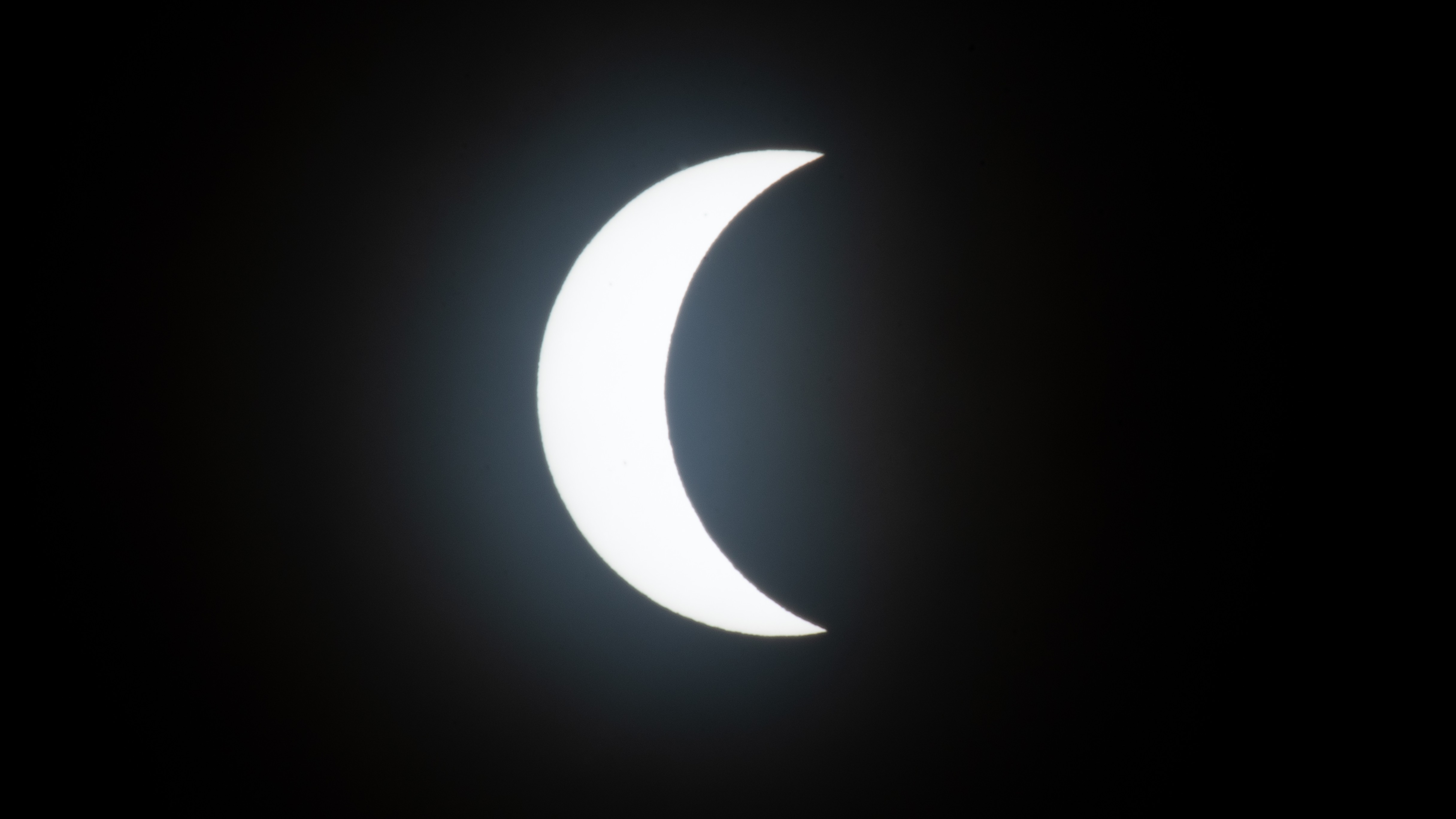
The hour and a half following first contact will see the moon sink ever farther into the sun's disk for those in the path of totality, transforming it from a burning orb into a magnificent shining crescent.

The sun's disk is photographed as a white crescent in a black sky during the partial phase of a total solar eclipse.

The and moon meet in the skies over Mexico during the 2024 total solar eclipse. (Image credit: Photo by: Edwin Remsberg/VWPics/Universal Images Group via Getty Images)

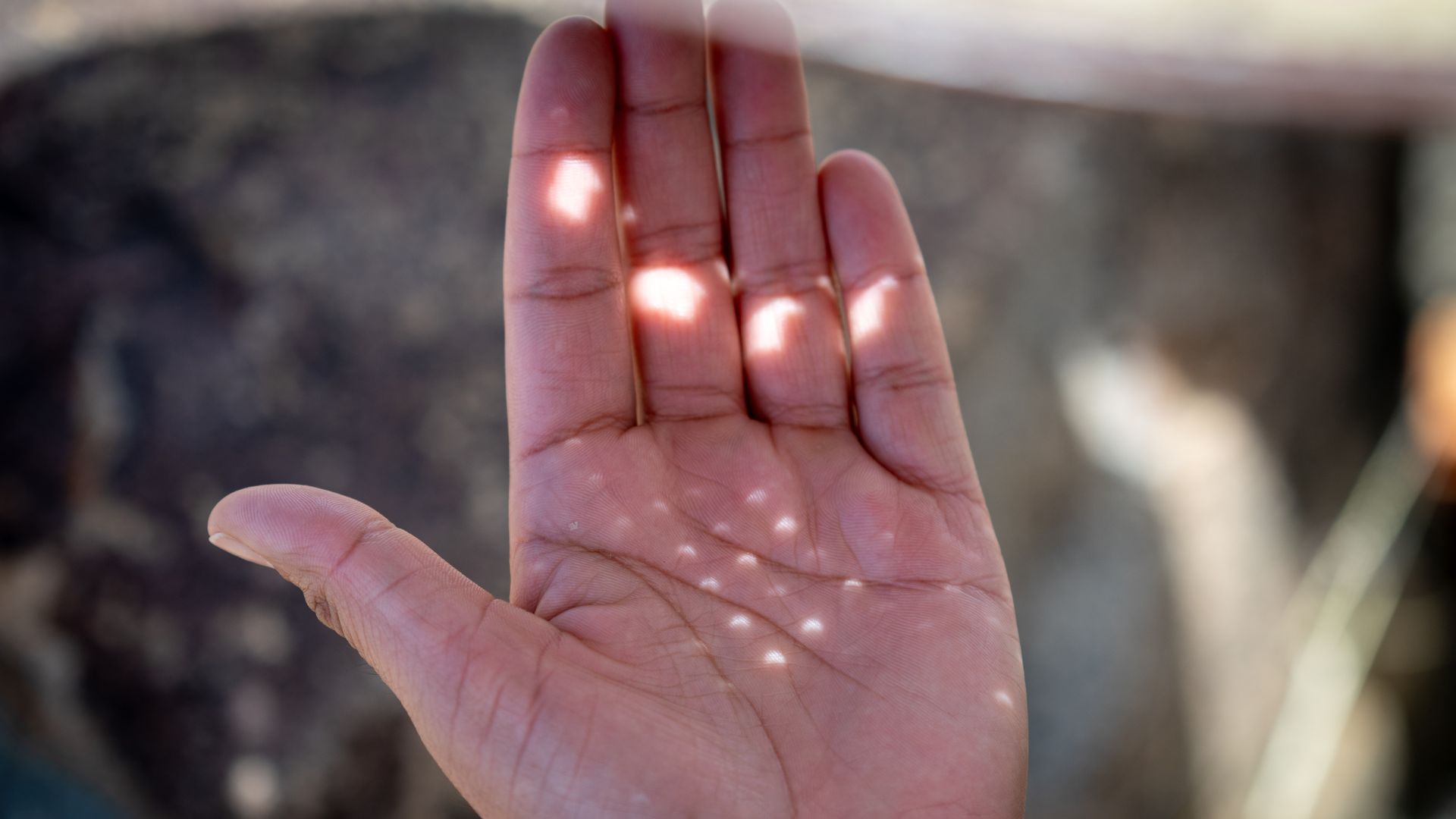
You may notice the temperature drop noticeably, accompanied by a subtle darkening of the sky in the half hour preceding the climactic phase of totality, as the moon reduces the sun to a thin sickle in the evening sky. Pinpricks of light β€” such as those that shine through a colander, or the gaps in a leaf β€” will also appear to mirror the scene above, creating a kaleidoscope of tiny bright crescents.

pinpoints of light fall on a hand show the eclipsed shape of the crescent solar disk during an eclipse.

Pinpricks of light create tiny crescents during a solar eclipse. (Image credit: Photo by: Edwin Remsberg/VWPics/Universal Images Group via Getty Images)

Remember, staring at the sun for even the briefest of moments can lead to permanent loss of vision, so be sure to read our guide on how to view the sun safely and to wear your eclipse glasses or sunoculars during the entirety of the partial phases of the eclipse. You can read our roundup of the best solar viewing equipment to find out more, along with our tips on how to check the quality and condition of your eclipse glasses.

Stage 2: Second contact

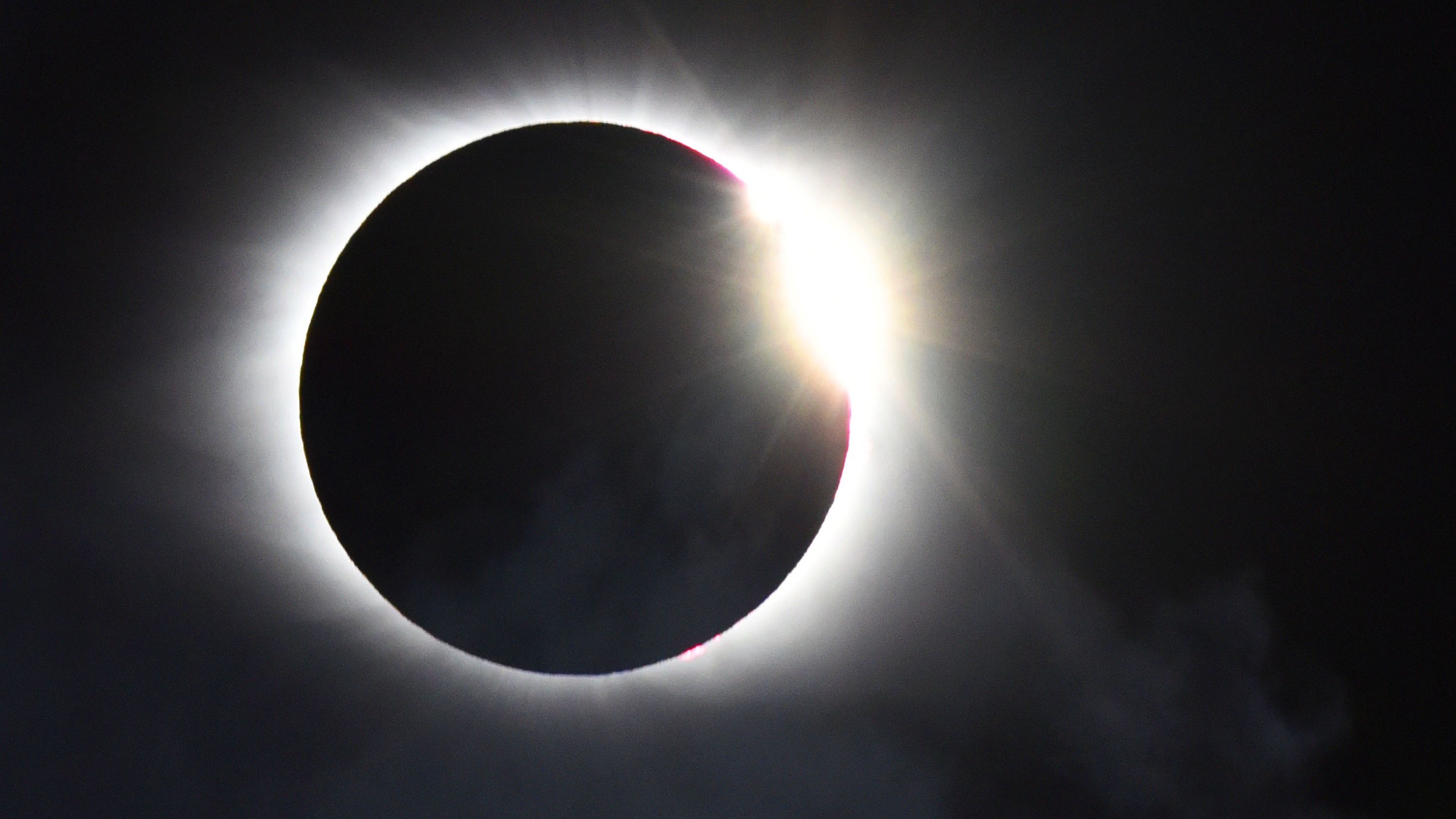
Some of the most spectacular moments of an eclipse occur just before and after totality. First, look out for the "diamond ring" effect, as the last sliver of the sun peeks out from behind the lunar disk to appear as a gorgeous celestial jewel, while the outermost layer of our star's atmosphere, the corona, creates a glowing halo around the moon.

A photo of the

The diamond ring effect shines from behind (Image credit: Photo by Chris McKay/WireImage)

Tear your eyes away from the sun for just a second and you may just catch sight of the moon's shadow advancing on you from the west, before it engulfs your surroundings in a false night.

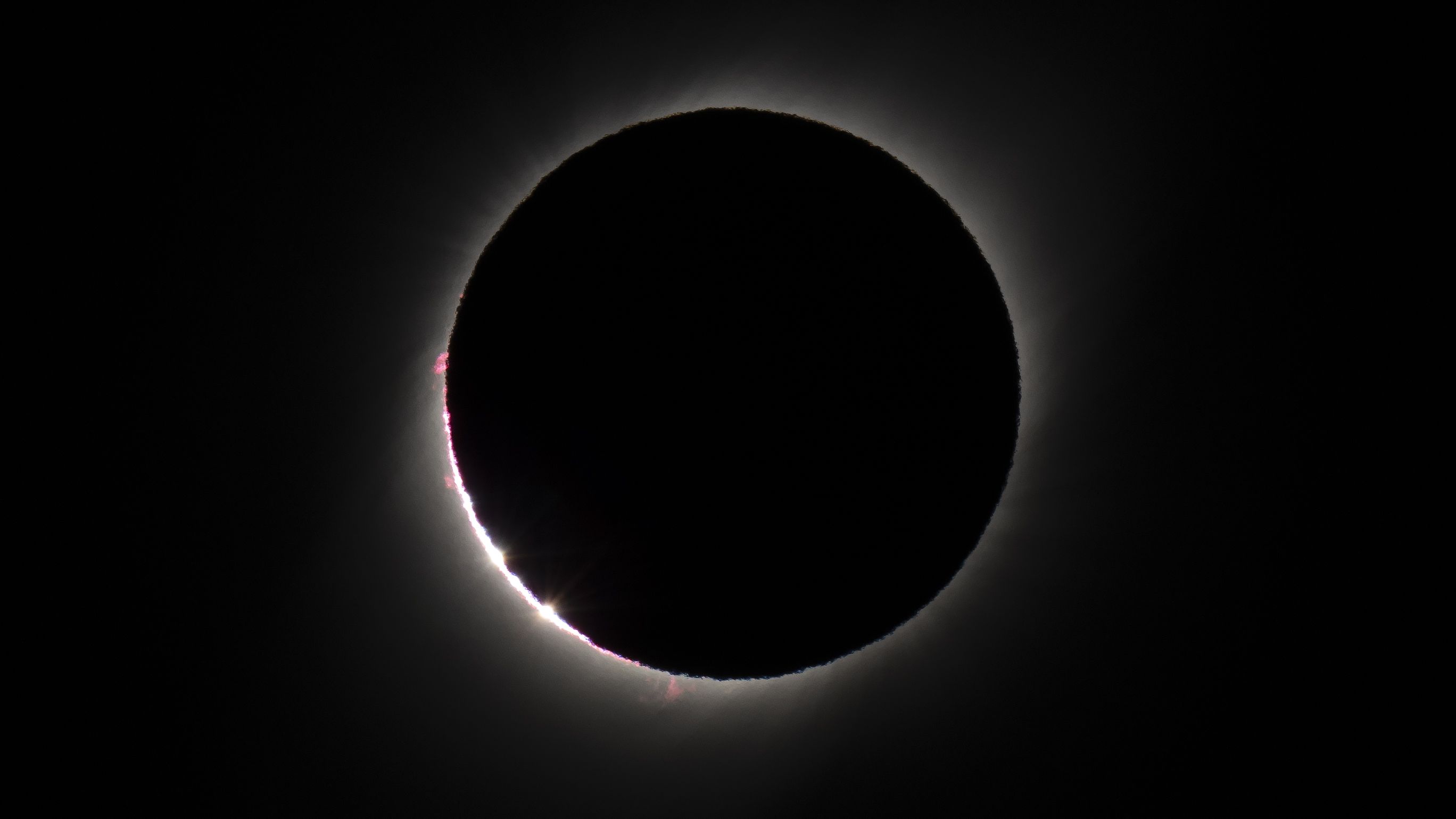
The sun's atmosphere shines from behind the moon in a black sky during a total solar eclipse.

Baily's beads appear in the moments before totality. (Image credit: STAN HONDA/AFP via Getty Images)

The final seconds before totality will see bright "Baily's Beads" form dazzling points of light on the moon's edge, where the last shreds of the sun's disk shine through the ravines and valleys that scar the ancient lunar surface.

Stage 3: Totality & maximum eclipse

As the last of the sun's surface slips behind the moon, totality begins. This is the climactic phase of the eclipse, when the moon acts like a natural coronagraph to block the brilliance of the sun's disk, ushering in a false night in which our star's outer atmosphere can be seen leaping out from the lunar silhouette.

Totality will last a maximum of 2 minutes, 18 seconds, during which time it's safe to remove your glasses and look at the sun. Just be sure to put them on again before its fiery disk reemerges from the other side of the lunar disk.

The moon hides the face of the sun in a black sky during a total solar eclipse, allowing its atmosphere to shine around Earth's natural satellite.

The sun's corona haloes the moon at the climax of a total solar eclipse. (Image credit: Photo by: Edwin Remsberg/VWPics/Universal Images Group via Getty Images)

That white halo surrounding Earth's natural satellite is the sun's corona β€” a jacket of superheated gas that surrounds our parent star. Look out for glowing solar prominences leaping outward through the sun's atmosphere, along with the red line of the chromosphere β€” the layer of the sun's atmosphere beneath the corona β€” which appears fleetingly at the beginning and end of totality, according to NASA.

The point of maximum eclipse occurs roughly halfway through totality, when the sun's disk is most hidden by the moon.

Eagle-eyed skywatchers may catch Jupiter and Mercury shining to the lower right of the eclipsed sun in the faux twilight experienced during totality, while Venus will appear as a bright star-like object to its upper left. If you're incredibly lucky, you could even spot one of the brightest shooting stars or fireballs of the Perseid meteor shower, which comes to a peak around the same time as the Aug. 12 total eclipse.

Stage 4:Totality ends

The fourth stage of the eclipse comes as the very edge of the sun's disk emerges from behind the moon, marking the end of totality as Bail's Beads and the diamond ring effect play out in reverse, before giving way to an ever-thickening solar crescent.

Stage 5: The partial eclipse ends.

The waning partial eclipse will come to a global end at 3:57 p.m. EDT (1957 GMT), as the moon's silhouette exits the sun's disk in the skies off the west coast of Africa β€” a moment known to astronomers as fourth contact.

A composite view of a solar eclipse showing the moon passing off of the solar disk in a black sky.

The moon exits the solar disk at the end of a total solar eclipse. (Image credit: Getty Images)

Space.com is on hand to provide expert coverage and on the ground reporting as the eclipse unfolds. Skywatching Editor Daisy Dobrijevic is undertaking an expedition with HX to observe the total solar eclipse from the waters around Greenland, while Skywatching Writer Anthony Wood heads to Spain in a cowboy hat, to catch the orbital showdown with citizen scientists from NASA's Dynamic Eclipse Broadcast Initiative.

Be sure to check out our total eclipse live blog to stay up to date with all the latest news, along with our handy explainer article detailing everything you need to know about the Aug. 12 total solar eclipse.

If photography is your thing then why not read our guide to imaging the total solar eclipse, along with our roundup of the best cameras and lenses for astrophotography? You'll also want to peruse our picks for the best eclipse glasses and viewing gear available in 2026.

Editor's Note: If you capture footage of the Aug. 12 total solar eclipse and want to share it with Space.com's readers, then please send your photo(s), comments, name and location to spacephotos@space.com.

  •  

Yes, North America gets a solar eclipse on Aug. 12. Here's where and when to see it

It's hardly a "Great American Eclipse," but on Aug. 12, 2026, some parts of the North American continent will see a partial solar eclipse.

Will it be as impressive as on April 8, 2024, when totality visited Mexico, 15 U.S. states and six provinces in Canada? No, yet in some parts of the U.S. and Canada, astronomers will be out in force to capture a significant chunk of the sun as it is obscured by the new moon.

The spotlight may be on the total solar eclipse in Greenland, Iceland, and Spain, but millions across North America can still see the moon take a bite out of the sun on Aug. 12. The farther northeast you are, the deeper the eclipse. Here's everything you need to know about the partial solar eclipse in North America.

During a partial solar eclipse, it is NEVER safe to look directly at the sun without solar eclipse glasses designed for solar viewing. Read our guide on how to observe the sun safely.

Where to see the partial solar eclipse in the U.S.

Between 7:34 a.m. AKDT and 2:52 p.m. EDT, 20 U.S. states will see something of the partial solar eclipse, though only northeastern states will get a good view. Here's a sample of locations and the time of maximum eclipse. Note that the partial eclipse begins (first contact) and ends (last contact) around 55 minutes before and after the time of maximum eclipse given here.

Location

Maximum eclipse

Time (local)

Fairbanks, Alaska

37%

8:27 a.m. AKDT

Presque Isle, Maine

28%

1:50 p.m. EDT

Bangor, Maine

23%

1:53 p.m. EDT

Portland, Maine

19%

1:53 p.m. EDT

Montpelier, Vermont

17%

1:49 p.m. EDT

Manchester, New Hampshire

16%

1:53 p.m. EDT

Boston, Massachusetts

16%

1:55 p.m. EDT

Providence, Rhode Island

15%

1:55 p.m. EDT

Springfield, Massachusetts

14%

1:53 p.m. EDT

New Haven, Connecticut

12%

1:54 p.m. EDT

Bridgeport, Connecticut

11%

1:54 p.m. EDT

New York City, New York

10%

1:54 p.m. EDT

Newark, New Jersey

9%

1:53 p.m. EDT

Rochester, New York

9%

1:43 p.m. EDT

Allentown, Pennsylvania

8%

1:52 p.m. EDT

Buffalo, New York

7%

1:42 p.m. EDT

Philadelphia, Pennsylvania

7%

1:53 p.m. EDT

partial solar eclipse shows the upper portion of the sun covered by the moon, surrounded by partly cloudy skies.

From most of the northeast U.S., only a small eclipse will be visible on Aug. 12, 2026. (Image credit: imageBROKER/Lucas Seebacher via Getty Images)

Where to see the partial solar eclipse in Canada

Between 8:38 a.m. MST and 4:38 p.m. NDT on Aug. 12, every province in Canada will be able to see some kind of partial solar eclipse, but those in the east of the country will see something much more significant. Here's a sample of locations and the time of maximum eclipse. Note that the partial eclipse begins (first contact) and ends (last contact) around 55 minutes before and after the time of maximum eclipse given here.

Location

Maximum eclipse

Time (local)

Iqaluit, Nunavut

61%

1:24 p.m. EDT

St. John's, Newfoundland and Labrador

53%

3:34 p.m. NDT

Moncton, New Brunswick

32%

2:55 p.m. ADT

Halifax, Nova Scotia

31%

3:00 p.m. ADT

Churchill, Manitoba

27%

12:02 p.m. CDT

Quebec City, Quebec

24%

1:46 p.m. EDT

Whitehorse, Yukon

23%

9:26 a.m. MST

Trois-Rivières, Quebec

21%

1:45 p.m. EDT

Sherbrooke, Quebec

20%

1:48 p.m. EDT

Montreal, Quebec

18%

1:45 p.m. EDT

Ottawa, Ontario

15%

1:42 p.m. EDT

Kingston, Ontario

12%

1:43 p.m. EDT

Toronto, Ontario

8%

1:40 p.m. EDT

St. Catharinesβ€”Niagara, Ontario

8%

1:41 p.m. EDT

Kitchener, Ontario

7%

1:38 p.m. EDT

Hamilton, Ontario

7%

1:40 p.m. EDT

London, Ontario

5%

1:38 p.m. EDT

Windsor, Ontario

3%

1:36 p.m. EDT

What to expect

This is a small partial solar eclipse in North America, which occurs at lunchtime. In the east of the continent, it will occur high in the sky β€” about two-thirds of the way between the horizon and the zenith β€” in the south-southwest. At maximum eclipse, the partially eclipsed sun with resemble a thick crescent or a smile. It won't get dark β€” that only happens within the path of totality β€” nor will daylight be affected.

Those using a telescope to observe or image the partial eclipse (using a solar filter) should also consider that Venus β€” which will be visible just after sunset β€” reaches dichotomy on Aug. 12. This is the point in its current apparition as the "Evening Star" that it starts becoming interesting in a telescope. Dichotomy sees it reduce to 50%-lit and gradually become an ever-shrinking crescent.

Perhaps more importantly, the early hours of Aug. 13 see the peak of the annual Perseid meteor shower.

When is the next solar eclipse visible from the US after August 2026?

The next solar eclipse on Aug. 2, 2027, will be seen in Newfoundland, Canada, where a 23% partial eclipse will occur at the province's southwestern tip.

On Jan. 26, 2028, during an annular solar eclipse across northern South America, eastern U.S. states and eastern Canada will see a very small partial solar eclipse shortly after sunrise. Florida will have the best view, with around 15% of the sun blocked.

On Jan. 14, 2029, a large partial solar eclipse will be seen in the morning sky across all of North America β€” up to 81% in northern Canada and 74% in northwestern U.S. states. On June 12, 2029, a smaller partial solar eclipse will peak at 34% just after sunrise from Nunavut, the Northwest Territories and the northern tips of Alberta and British Columbia.

  •  

How to see the August 12 total solar eclipse

On August 12, the New Moon’s shadow will fall over a portion of Earth’s surface. When that happens, the Sun will temporarily disappear from the sky in a total solar eclipse. These breathtaking events are spectacular and ethereal, as the sky falls dark during the day, leaving only the soft glow of our star’s outerContinue reading "How to see the August 12 total solar eclipse"

The post How to see the August 12 total solar eclipse appeared first on Astronomy Magazine.

  •  

The UK is about to witness its most spectacular solar eclipse in 11 years. Here's what you need to know

It will be a magnificent day for England's south coast. From Portsmouth's Historic Dockyard and Brighton's Royal Pavilion to Dorset's Jurassic Coast and Cornwall's Land's End, beaches and cliff tops will be plunged into darkness in the day during the U.K.'s first total solar eclipse for almost 91 years. There is, however, a problem β€” this scenario won't occur until Sept. 23, 2090.

A total solar eclipse visits a location on Earth on average once every 366 years, and the British are currently in no-man's land. Aug. 12, 2026, is particularly cruel, with a path of totality cruising past the British Isles as it surges across the Atlantic Ocean from Iceland to northern Spain. Eclipse chasers in the U.K. are used to traveling, and travel they will, but those left behind will nevertheless experience a very deep partial solar eclipse peaking at 98% in extreme locations. It will be the U.K.'s most significant partial solar eclipse since March 20, 2015, when another path of totality just missed the U.K. to the north.

Related: Total solar eclipse 2026 β€” Everything you need to know

During a partial solar eclipse, it is NEVER safe to look directly at the sun without solar eclipse glasses designed for solar viewing. Read our guide on how to observe the sun safely.

Where to see the partial solar eclipse in the U.K.

A deep partial eclipse is a compelling sight, and the widespread nature of this one means millions of Brits can experience it without leaving home.

London, Manchester and Glasgow all experience 91.4% coverage, staggered by only a few minutes. Belfast does slightly better at 93.1%, while Cardiff edges ahead among the U.K's capitals at 93.2%. In practice, these differences are subtle β€” this is a nationwide event that requires no travel. That said, expect crowds at U.K. national parks, such as Snowdonia, the Brecon Beacons and the Pembrokeshire Coast in Wales; the South Downs and the Lake District in England; and the Cairngorms and the Isle of Skye in Scotland.

However, it's in County Kerry, Ireland, that sees the biggest eclipse in the British Isles archipelago, with Great Skellig β€” Luke Skywalker's island sanctuary in "Star Wars Episode VII: The Force Awakens" and "Star Wars Episode VIII: The Last Jedi" β€” seeing a whopping 98% partial eclipse.

When to see the partial solar eclipse in the U.K.

This is a late, low eclipse, and timing matters. The action takes place between 5:59 p.m. and 8:10 p.m. BST, but the main event comes around 7:05-7:13 p.m. BST, when the eclipse reaches its maximum across the U.K. The deeply eclipsed sun will appear above the west-northwest horizon as a thin crescent, hanging like a curved blade, with its tips pointing toward the ground.

It won't get dark β€” that only happens within the path of totality. However, daylight will feel very subdued with a noticeable dimming.

Location will be crucial. Because the sun will be so low, you'll need a clear, unobstructed horizon β€” ideally from a coastal viewpoint, hilltop, or open landscape. Get into position early, use proper eclipse glasses and solar filters, and follow the sun as the moon slowly takes its bite.

If you're somewhere rural, it's worth spending the night, which also happens to be the peak of the annual Perseid meteor shower.

sequence of a partial solar eclipse shows the moon taking a bigger and bigger

Partial solar eclipse sequence captured on Oct. 14, 2023 from central California. (Image credit: Mimi Ditchie Photography via Getty Images)

Best weather for the partial solar eclipse in the U.K.

Whether the sky is clear on the day is another matter; August may be warm in the U.K., but it's not known for clear skies (as anyone who traveled into the last British path of totality, in Cornwall in 1999, will recall). This is why many British eclipse chasers are perfectly happy that there is no total solar eclipse in the U.K. until 2090, but statistics are not destiny. A single high-pressure system on the day could transform the outlook entirely.

Meanwhile, the path of totality crosses regions with more reliable weather patterns, particularly north-central Spain and the Balearic Islands.

Partial solar eclipse beyond the U.K.

While observers in the U.K. will see a deep partial eclipse, those inside the narrow path of totality β€” across eastern Greenland, western Iceland and northern Spain β€” will experience something fundamentally different, if only for a few minutes. In eastern Spain, totality arrives just before sunset, with the fully eclipsed sun hovering only a few degrees above the western horizon. The sun will disappear almost immediately after totality ends.

However, what's been largely overlooked is the scale of the partially eclipsed sunset across Europe and northwest Africa. Across Algeria, France, Germany, Italy, Austria, Poland and beyond, millions will see the sun set while deeply eclipsed. In some locations, maximum eclipse occurs just minutes before sunset; in others, the sun slips below the horizon still significantly covered by the moon. Expect slim crescent suns to be photographed slipping beneath the horizon from across Central Europe.

Consequently, U.K. observers will see the edge of a much larger event β€” the moon's expansive penumbral shadow stretching across continents. It will be one of the most widely visible and visually striking eclipse phenomena of the decade. According to Time and Date, 283 million people will see at least a 90% partial eclipse.

When is the next partial solar eclipse in the U.K.?

If Aug. 12, 2026, feels like a one-off, it isn't. The U.K. is in the midst of an unusually active spell for partial eclipses, with at least one visible almost every year through the end of the decade. After this deep event comes a more modest partial on the morning of Aug. 2, 2027 β€” linked to the century's longest total eclipse over North Africa β€” with a maximum obscuration of 48% in southern England.

On Jan. 26, 2028, attention shifts once again to a partially eclipsed sunset during which up to 56% of the sun will be obscured by the moon. That one will be best seen from western locations such as Cornwall and Wales, while the central path delivers an annular "ring of fire" across Portugal and Spain. The June 12, 2029, eclipse is much more marginal, visible only from northeast England and eastern Scotland as a shallow partial eclipse at sunrise. Finally, on June 1, 2030, another annular eclipse brings a partially eclipsed sunrise to the entire U.K., with up to about 49% of the sun blocked by the moon in the southeast.

Individually, these events are varied β€” morning, sunset and sunrise eclipses, deep and shallow β€” but taken together they form a rare sequence for armchair eclipse chasers in the U.K. who likely won't be around for totality 64 years from now.

Want to know how to make the most of your eclipse viewing experience? Our best solar viewing gear for 2026 is here to help. We also have a guide on how to photograph a solar eclipse for those looking to take an even closer look at our star.

Be sure to stay up to date with all the latest news with our total solar eclipse live blog, where skywatching editor Daisy Dobrijevic will be sharing her experience of totality from aboard a HX Expeditions cruise ship in the waters off eastern Greenland. Skywatching writer Anthony Wood will also be bringing reports of each eclipse phase from central Spain, as he watches the eclipse accompanied by citizen scientists from the Dynamic Eclipse Broadcast initiative.

  •  

Why you don't need a perfectly clear sky to enjoy the total solar eclipse on Aug. 12

Are you ready for the eclipse? Whether you're bound for the path of totality or set to see a partial eclipse from Europe, Canada or the northeast U.S. on Wednesday, Aug. 12, there's a dirty word eclipse chasers hate to utter during an eclipse season, and yet become completely obsessed with β€” clouds.

Related: Total solar eclipse 2026 β€” Everything you need to know

We all start behaving as though Earth's atmosphere owes us something. After spending years studying the climate and where it is most likely along a path of totality to have a clear sky, we're in position and can now do almost nothing about it save for drive or sail a few miles. We refresh cloud forecasts. We compare satellite imagery. We point at scraps of blue sky as if we can persuade them to remain so at a specific time. By the time the moon is almost on the sun, we've spent the best part of a week staring at our phones and fretting.

The received wisdom is that you must have a perfect view of a total solar eclipse, and that if you don't, you've failed because you didn't do your research or take evasive action. Never mind that many who end up under a blue sky then spend the entire time behind a camera. The desire for a clear sky and a clean horizon is obvious β€” particularly if you're in the path of totality β€” and yet it's entirely possible that clouds will be present, very possibly in the places expected to be clear. That's exactly what happened on April 8, 2024, when the favored state of Texas was cloudy while wintry Maine and New Brunswick had a bluebird day.

Having seen many total, annular and partial solar eclipses, I have come to believe something slightly heretical: you do not need a perfectly clear-sky view of a total or partial solar eclipse to matter. Sometimes one clear second is enough. Whisper it, but clouds add a lot of drama not just to an eclipse, but to photos of it, too.

Beginners often assume an eclipse is only "successful" if they see the sun's corona throughout totality. Some even rank eclipses in advance according to how long totality lasts. It's all an illusion. If a gap opens in the cloud for a short time and the corona appears, that is not a consolation prize. That is the thing itself. The same goes for a glimpse of a partially eclipsed sun if that's what's heading your way.

So don't fret the eclipse β€” check weather forecasts and do your best to find a clear sky, but when nature takes over, don't fight it or get upset by it. Cherish whatever you get. You only need a one-second window β€” and even that is not in your control.

What's happening

eclipse 2026
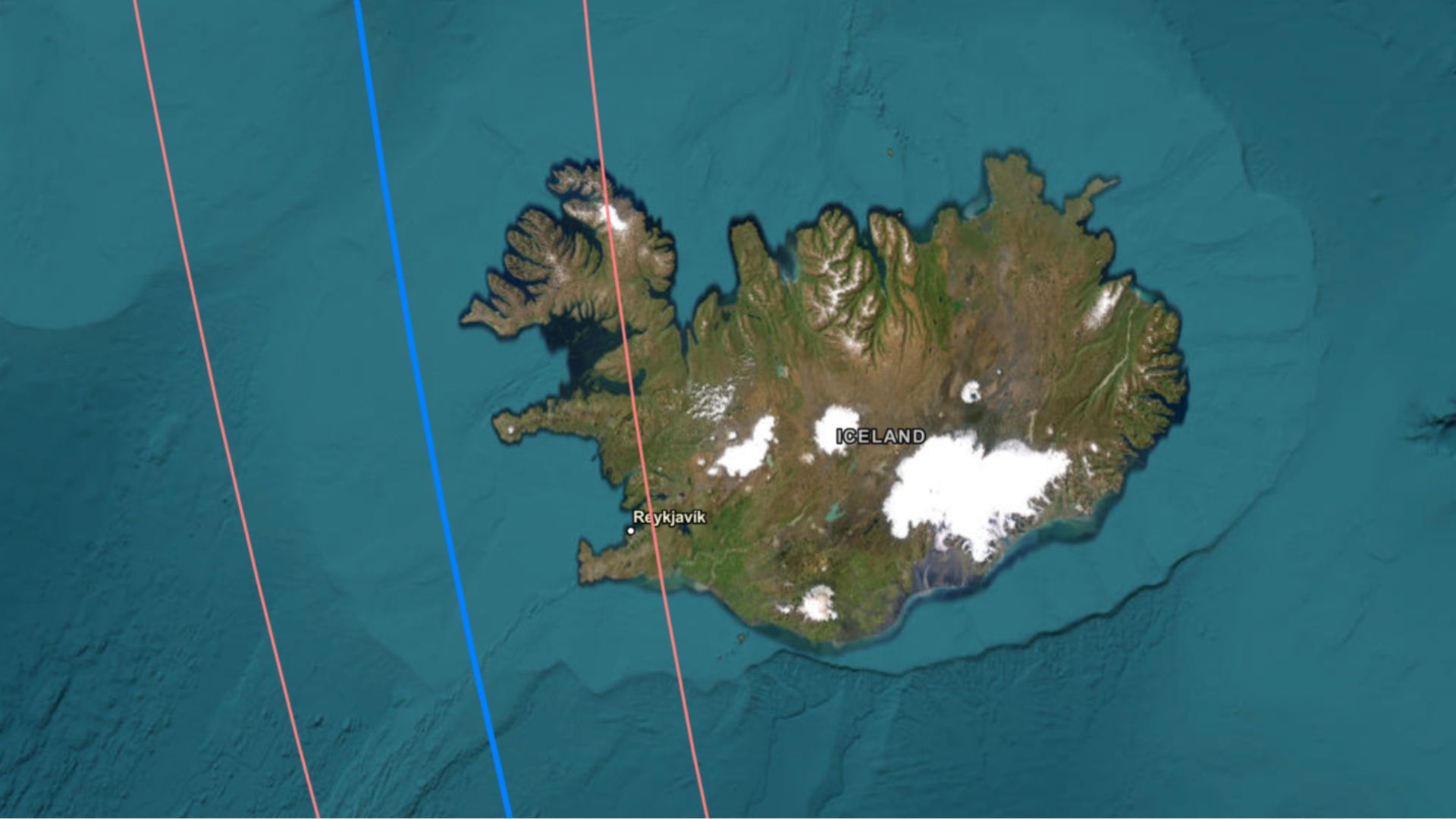
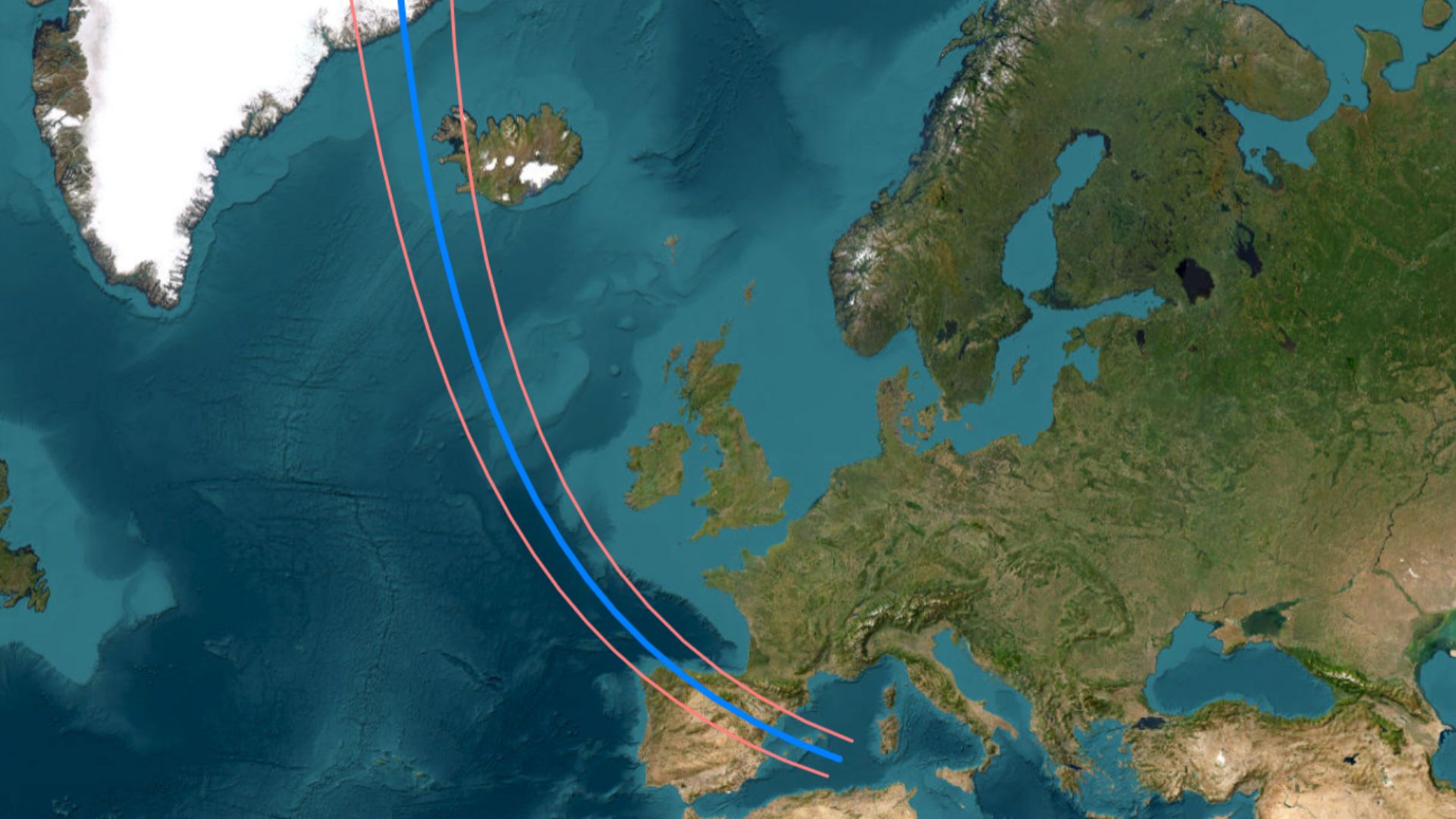
Path of the total solar eclipse over IcelandCreated using MapHub.net. Source: Esri, Maxar, GeoEye, Earthstar Geographics, CNES/Airbus DS, USDA, USGS, AeroGRID, IGN, and the GIS User Community
eclipse 2026
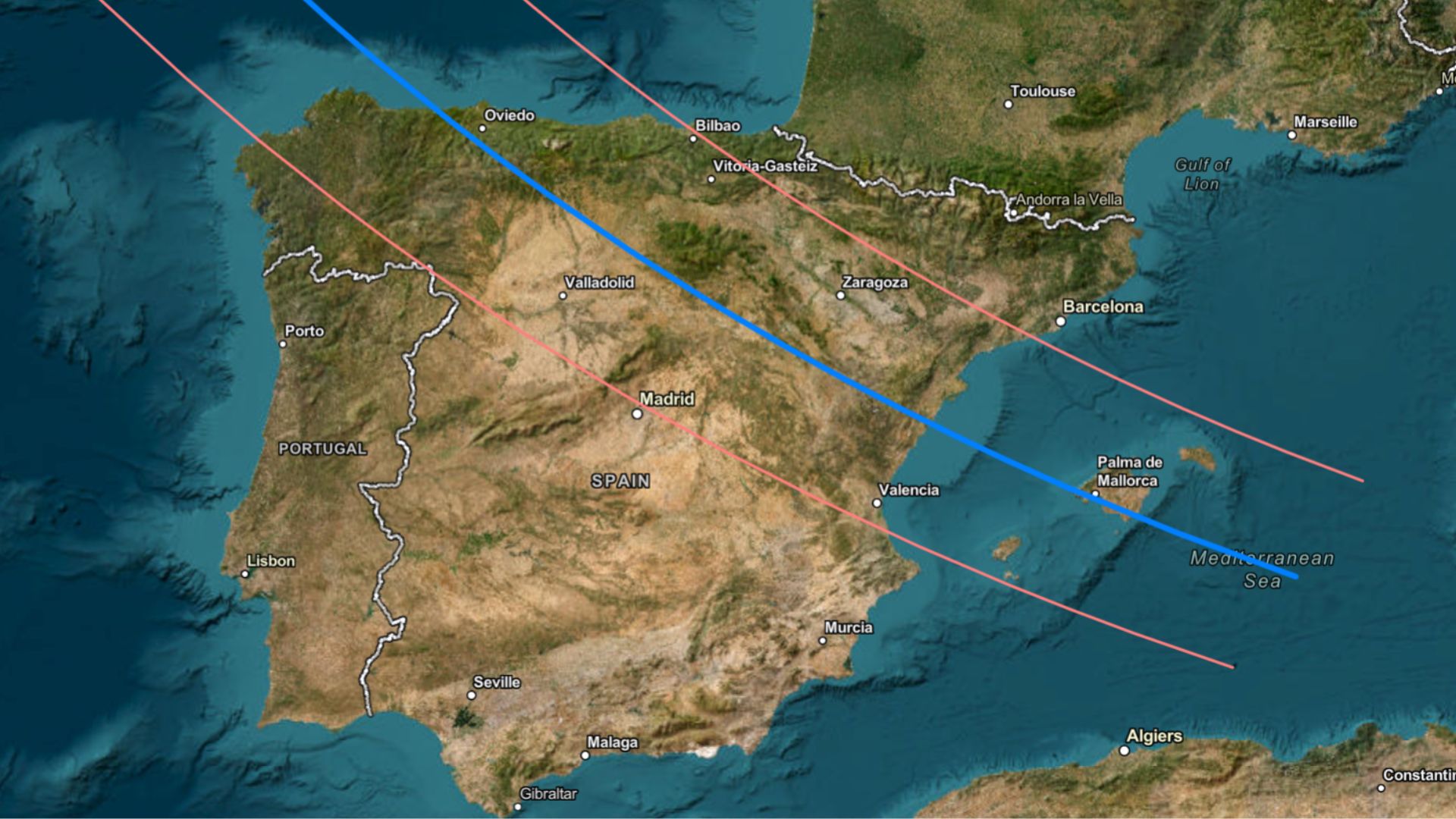
Path of total solar eclipse over SpainCreated using MapHub.net. Source: Esri, Maxar, GeoEye, Earthstar Geographics, CNES/Airbus DS, USDA, USGS, AeroGRID, IGN, and the GIS User Community
eclipse 2026
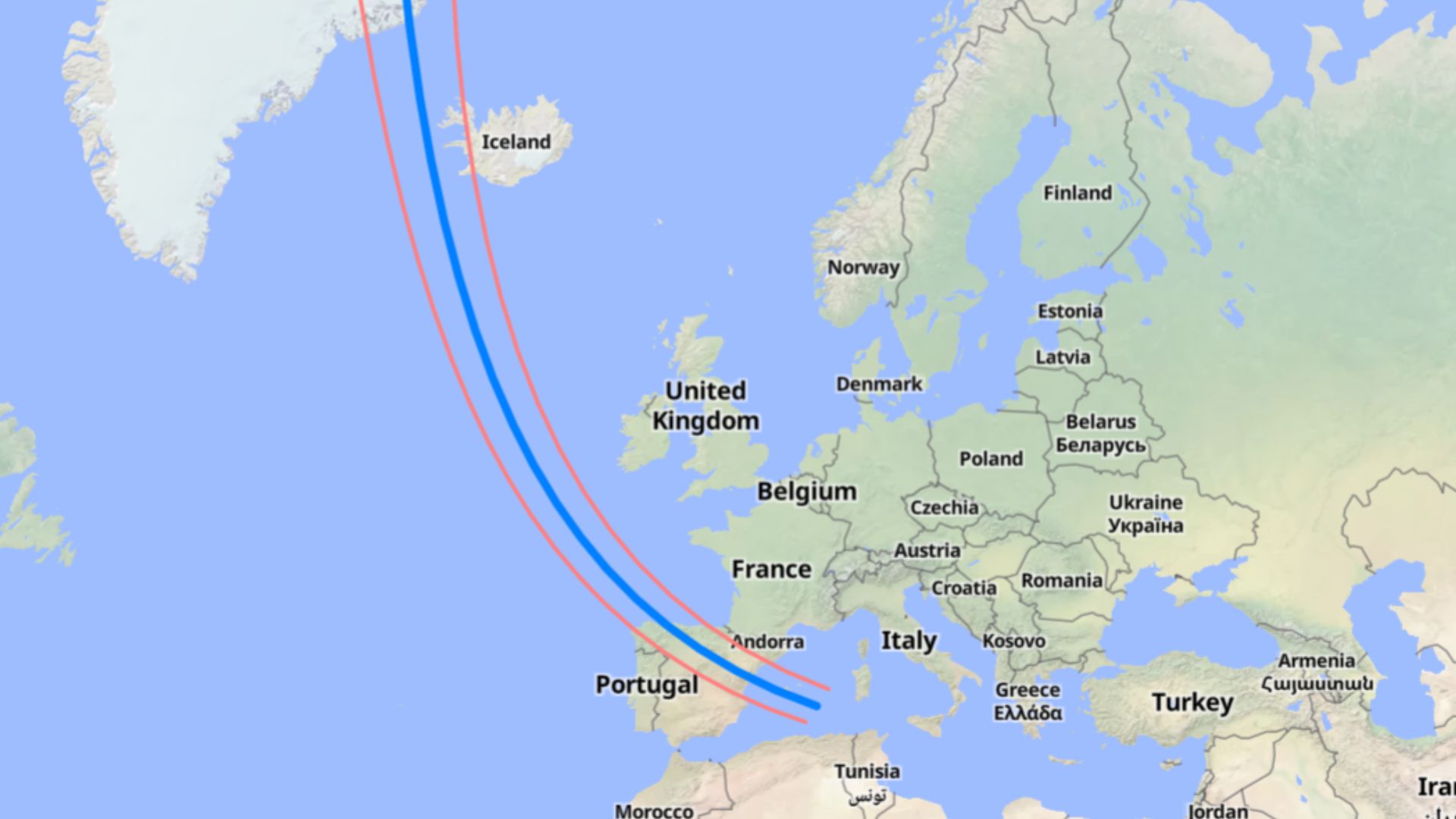
Entire path of the total solar eclipse on Aug. 12, 2026.Created using MapHub.net. Source: Esri, Maxar, GeoEye, Earthstar Geographics, CNES/Airbus DS, USDA, USGS, AeroGRID, IGN, and the GIS User Community
eclipse 2026
Entire path of the total solar eclipse on Aug. 12, 2026.Created using MapHub.net. Source: Esri, Maxar, GeoEye, Earthstar Geographics, CNES/Airbus DS, USDA, USGS, AeroGRID, IGN, and the GIS User Community

On Aug. 12, the moon's shadow crosses eastern Greenland, western Iceland and northern Spain, with a small part of Portugal also near the action. From inside the narrow path of totality, the sun will be completely covered for up to 2 minutes 18 seconds. If that's your destination, get excited β€” and be prepared. During totality, stay present. An eclipse is short enough that distraction becomes a genuine hazard to observing. A one-second look can be enough, but only if you are really paying attention.

Outside of the path of totality, a much wider partial solar eclipse will be visible across the U.K., Europe, parts of North America and northwest Africa.

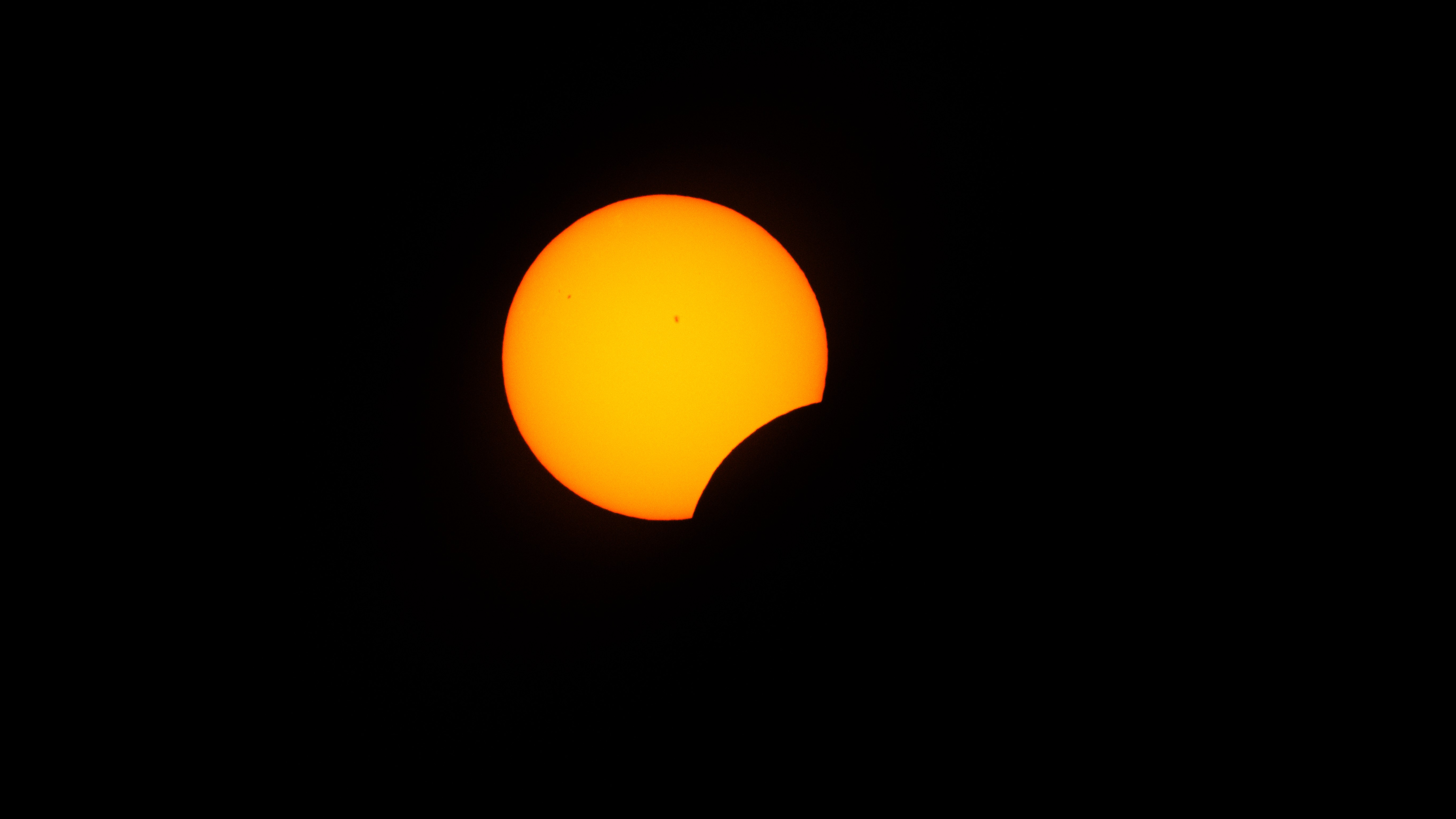
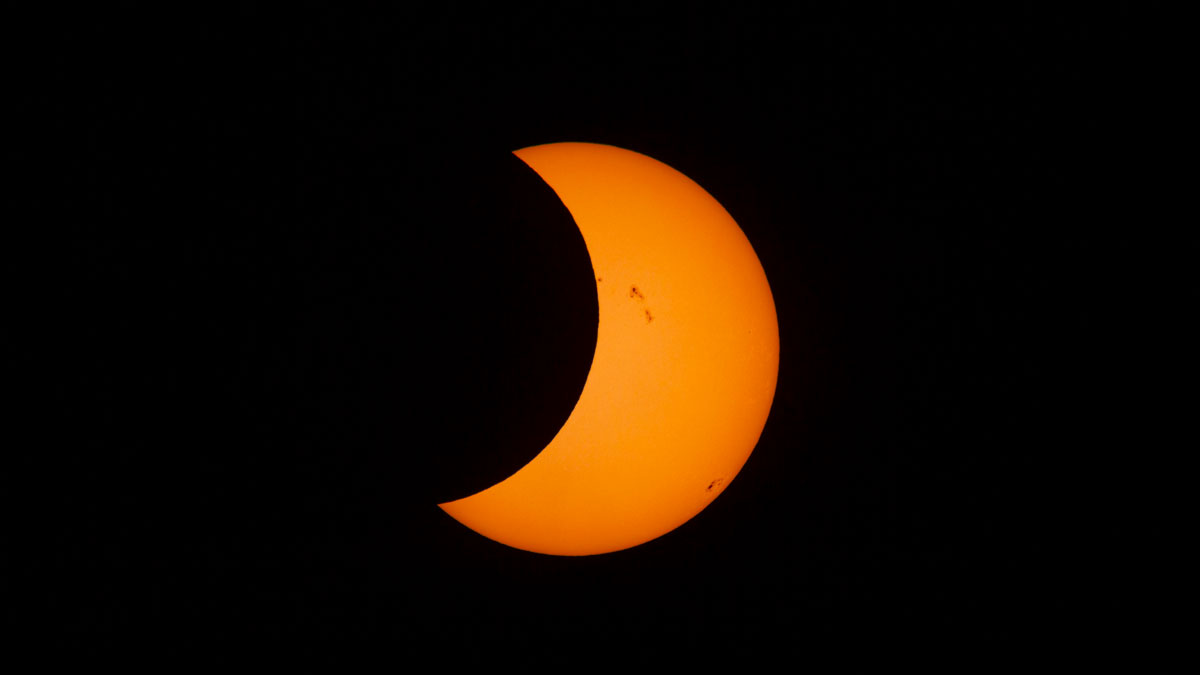
A partial solar eclipse with an orange sun with sun spots.

A partial solar eclipse can make for a striking photograph. Here you can also see some large sunspots on the surface of the sun. (Image credit: Josh Dury Photo Media)

The U.K. gets one of the more striking consolation prizes: a very deep partial eclipse late in the day. Across much of Britain, around nine-tenths of the sun will be covered, with the deepest views toward the west and southwest. London, Manchester and Glasgow are all in the roughly 91% range, while Cardiff and Belfast do slightly better. Maximum eclipse takes place around 7:05 to 7:13 p.m. BST, when the sun will be low in the west-northwest. That low sun is the detail many people will miss. This is not an eclipse to watch from behind a row of houses, trees or office blocks. A beach, cliff top, hill or open field may make the difference between seeing a thin solar crescent and seeing nothing at all. But having a clear western horizon means clear weather is needed not just where you are, but where you're looking β€” possibly a 100 miles away to the northwest. That will be even more of an issue in eastern Spain and the Balearic Islands, from where the total solar eclipse will occur when the sun and moon are just a couple of degrees above the horizon.

North America gets a smaller event, but not a meaningless one. The farther northeast you are, the better β€” though a partial eclipse probably isn't something to travel far to see more of. It's best to take what's coming your way. In the U.S., northern Maine sees the deepest partial eclipse, while Boston, New York, Philadelphia and parts of New England see a smaller bite taken from the sun after lunch. Canada does better, especially in the east and north. Newfoundland sees more than half the sun covered, while the rest of Atlantic Canada has a much better show than most of the U.S.

Wherever you are, remember that it is never safe to look directly at the sun without proper eclipse glasses or certified solar filters. Thin cloud does not make it safe to look at the sun. Nor do sunglasses. Even a quick glance requires eclipse glasses.

How and when I'm watching it

I'll be in Greenland for this one, but the way I recommended you watch it is low-tech. I would bring eclipse glasses, a printed or saved set of local timings (visit Time and Date for a location-specific schedule), and binoculars with a proper solar filter fitted securely over the front of the lenses. Personally, I wouldn't build the day around photography. The great trap of a total solar eclipse is believing it is mainly something to photograph. It is not. It is something that happens to the whole environment.

If you're in the path of a deep partial eclipse β€” say, over about 80% β€” you may begin to notice the light taking on an unusual quality, with a more noticeable dimming around 90% coverage. If you're in the path of totality, you'll feel a coolness as totality begins, birds and humans going quiet, and light levels suddenly crashing as the moon's shadow sweeps across you. Clouds can even sharpen the strangeness. In the path of totality, a low, milky sky may hide the corona, but that also makes the darkness feel heavier and more sudden. All of this is why people cherish their experience of an eclipse β€” not because of a photograph.

Stargazer's corner: August 7-13, 2026

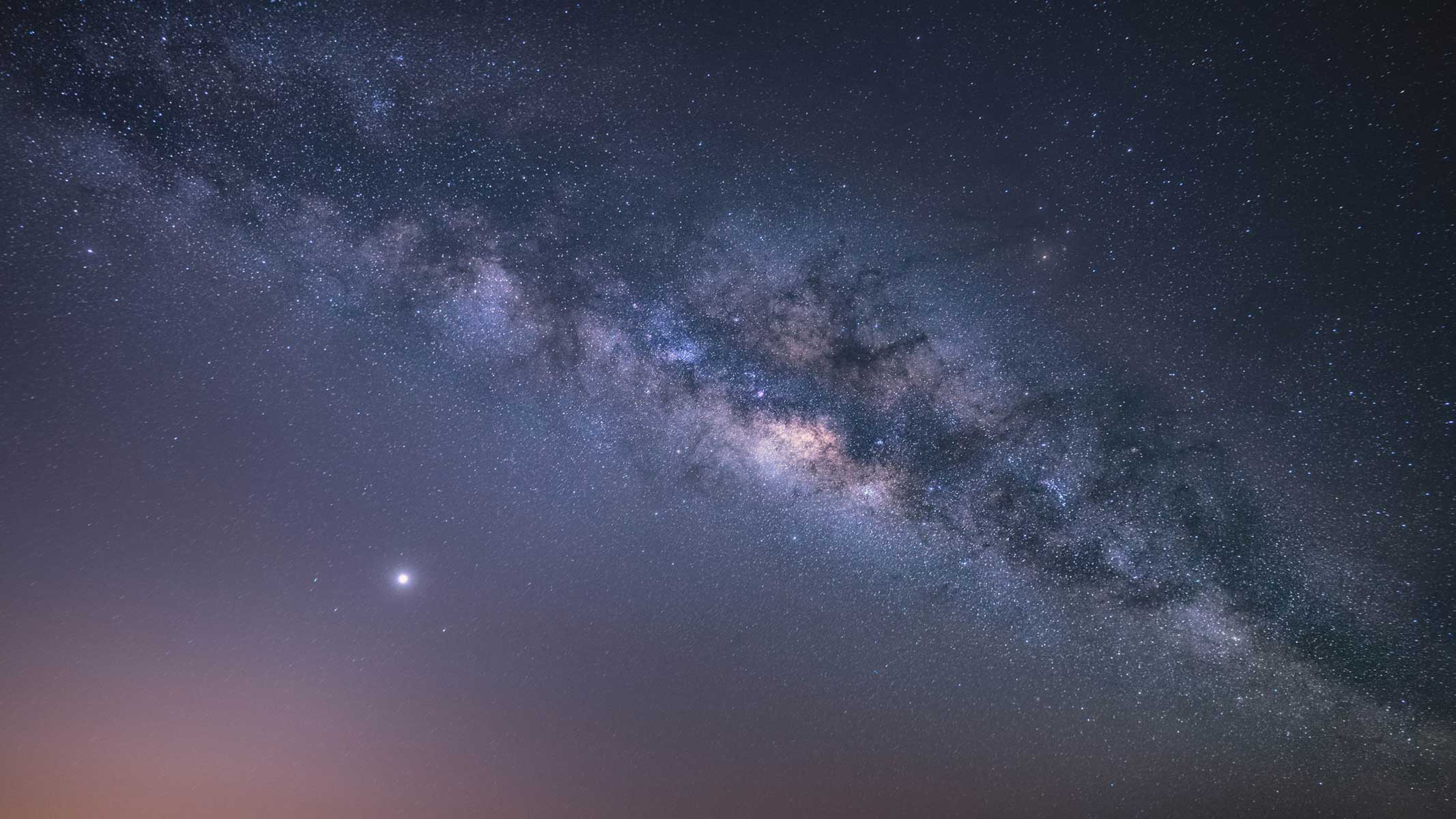
Milky way galaxy in the night sky stretching across the image in a thick band of stars.

The Milky Way. (Image credit: Getty)

Here comes an incredible week of stargazing, with the solar eclipse and the peak of the Perseid meteor shower β€” both occurring on the same day β€” hard to underplay. Those chasing the eclipse in Greenland and Iceland may have a chance to see the aurora after midnight, though the darkness is short. Farther south, it's peak Milky Way season. The galaxy arches high across the sky, with its brightest and most detailed regions now well placed after dusk. All this week, the moon will be a thin crescent, if present at all, creating excellent conditions for simply stepping outside and exploring the sky at night. If you can glimpse the Milky Way, an eclipsed sun and a "shooting star," you've bagged one of the greatest combinations in skywatching.

Related: The biggest skywatching day of 2026 is coming. Here's what you'll see in North America and Europe

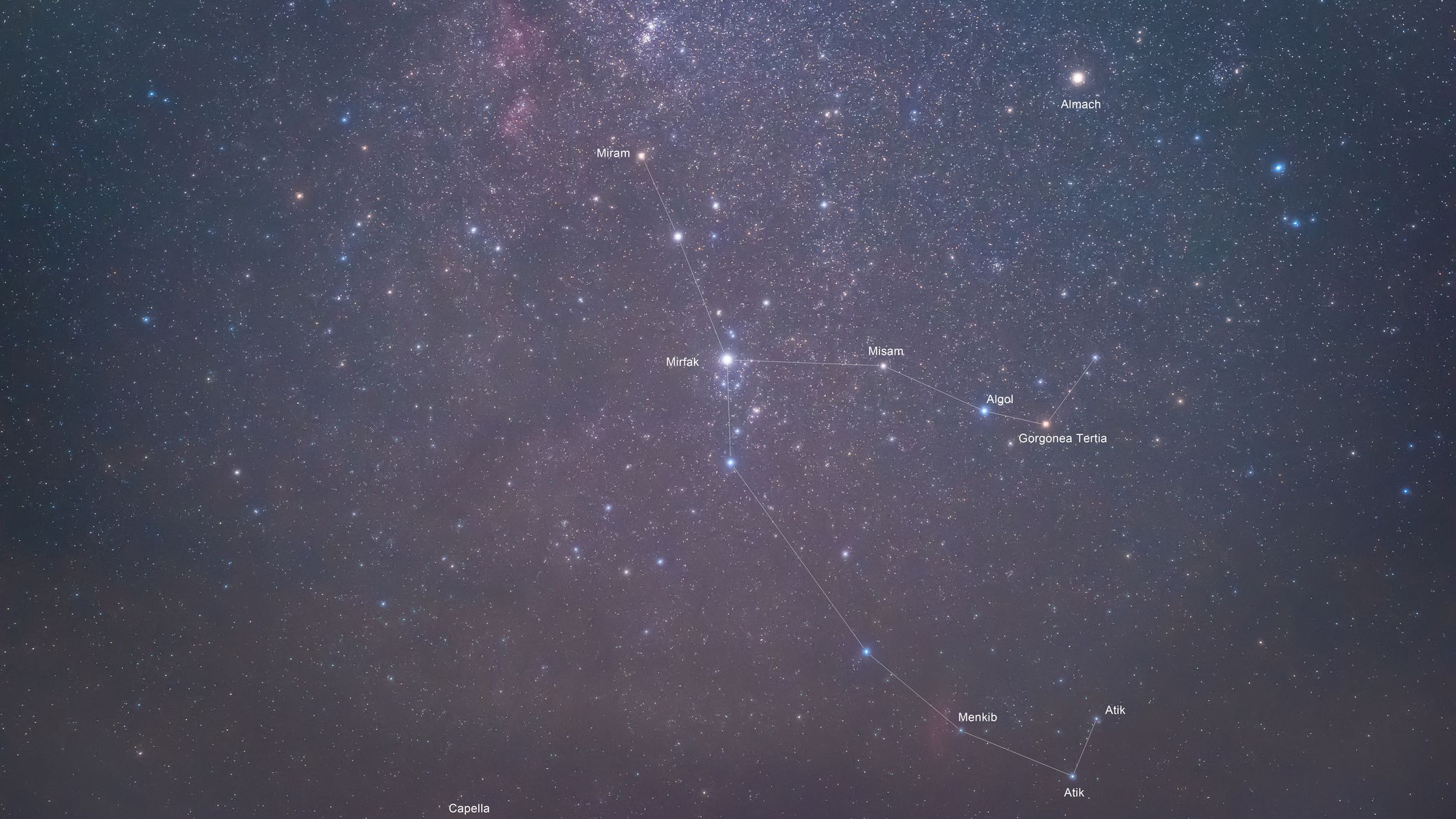
Constellation of the week: Perseus

the stars of the night sky with a roughly Y-shaped outline tracing the stars of the Perseus constellation

The constellation Perseus. (Image credit: iStock / Getty Images Plus)

Perseus is the name attached to the week's meteor shower, but the meteors do not actually come from the stars of Perseus. They only appear to radiate from that direction because Earth is moving through a stream of comet debris. To find Perseus, look northeast late in the evening and higher before dawn, below the W-shaped constellation Cassiopeia. The beginner's mistake is to stare at the radiant. Use Perseus only as an anchor point, then watch the widest patch of dark sky you can manage. This meteor shower β€” one of the best of the year, taking place under perfect moonless conditions β€” rewards patience more than precision.

  •  

Plan your perfect 2026 total solar eclipse experience with these smartphone apps

The Aug. 12 total solar eclipse is less than a week away! We know that eclipse planning can be daunting, so we've put together a list of great eclipse apps to help make things that little bit easier.

Over 15 million people across Spain, Greenland and Iceland will witness totality on Aug. 12, while almost a billion will bear witness to a partial eclipse, as the moon blocks a portion of the sun's light without hiding its surface entirely, according to Time and Date.com. However, each person's experience will be subtly different, whether it be the exact timing of totality, the terrain, cloud cover, or a myriad of other reasons.

From location-specific totality alerts to weather forecasts, there are plenty of ways that these apps can help enhance your eclipse viewing experience.

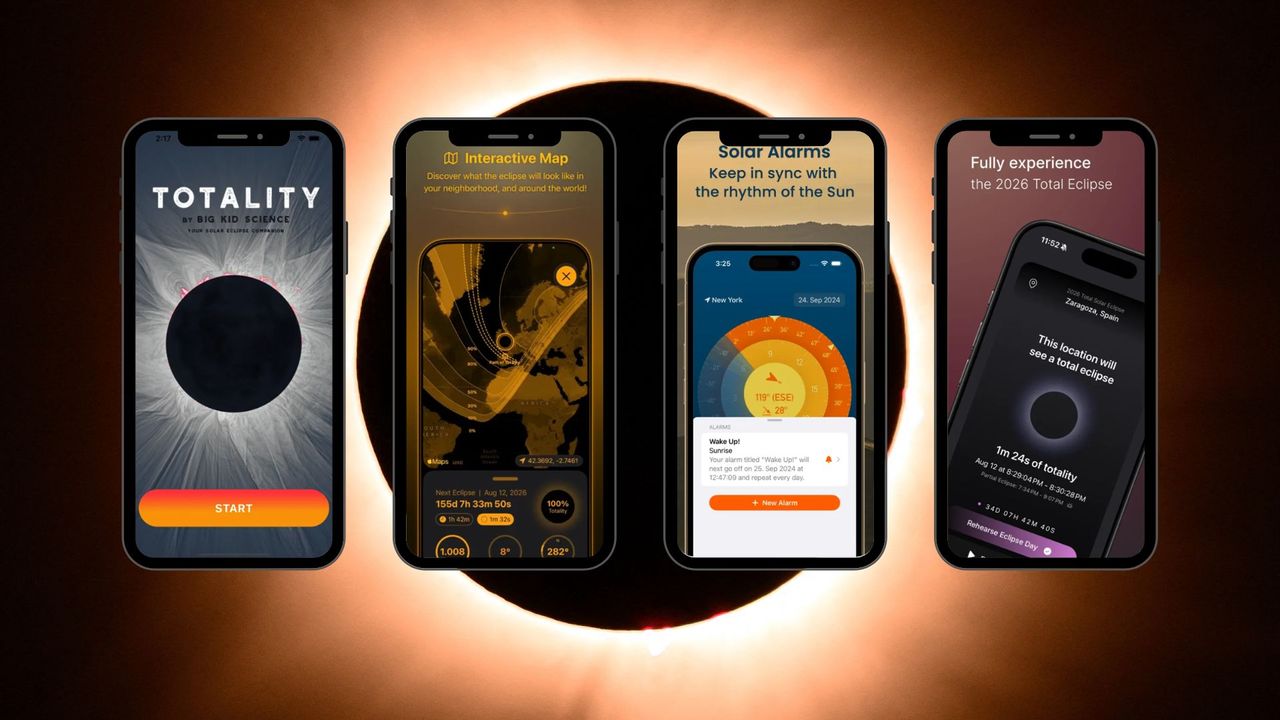
Eclipse smartphone apps 2026

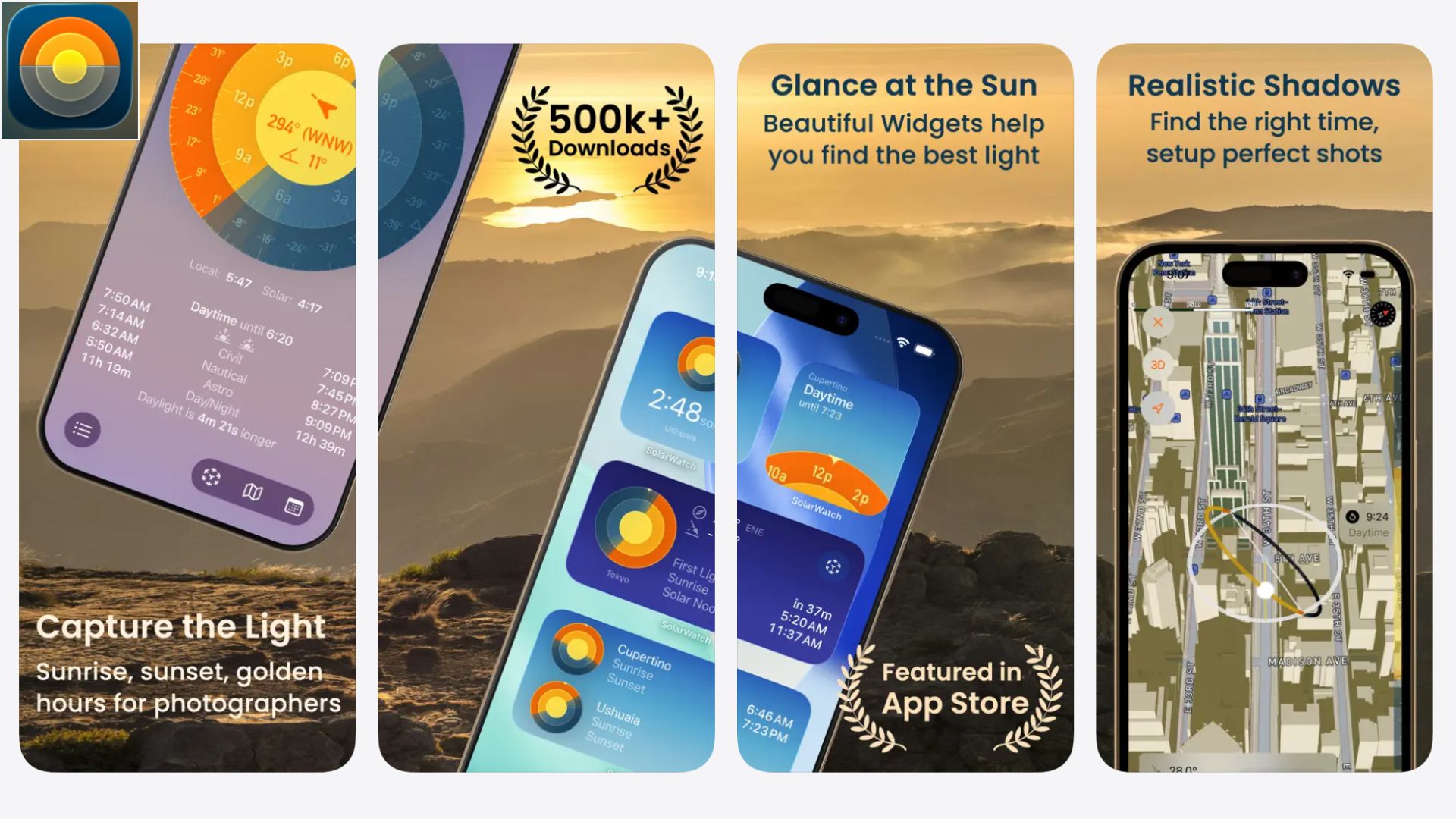
SolarWatch

Four smartphone screenshots for eclipse apps are shown side by side against a white background.

Screenshots of SolarWatch from the Apple Store. (Image credit: Β© Fifteen Jugglers Software UG 2017-2026 via the Apple Store)

The popular iOS stargazing app SolarWatch has had a major update to introduce a slew of helpful eclipse-planning features. According to solo developer Engin Kurutepe, the app offers interactive eclipse path maps that allow you to simulate precise timings for each phase of an upcoming eclipse, while also providing data on local cloud obscuration.

SolarWatch also gives real-time and time-lapse simulations of the moon's shadow racing across a 3D representation of Earth, along with educational content on eclipse phenomena such as Baily's Beads. It also tracks each eclipse phase with countdowns and even gives details on the speed of the moon's shadow at your specific location!

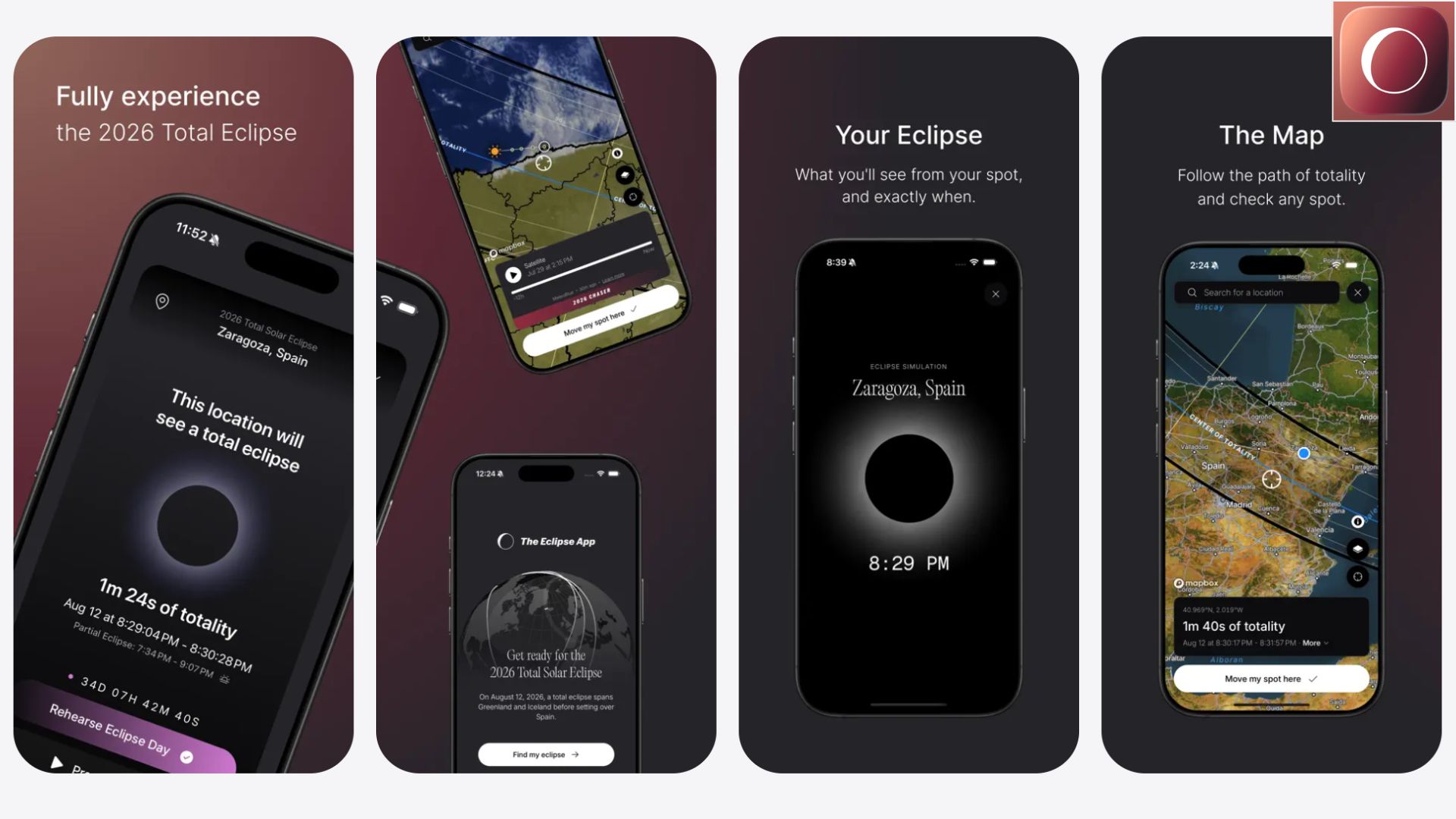
The Eclipse App

Four smartphone screenshots for eclipse apps are shown side by side against a white background.

Screenshots of The Eclipse App from the Apple Store. (Image credit: Β© The Eclipse Company of Earth via the Apple Store)

As its name suggests, The Eclipse App is available on iOS to cater to all your eclipse needs. The app has been rebuilt for the Aug. 12 eclipse, featuring exact timings for each stage of the event running from first contact through totality and beyond.

See simulations of the eclipse from your specific vantage point, receive alerts and discover exactly how much of the sun is covered during any given moment of the eclipse, the length of totality and more. Inbuilt features also allow you to record your experience in real time and return to relive it after the event.

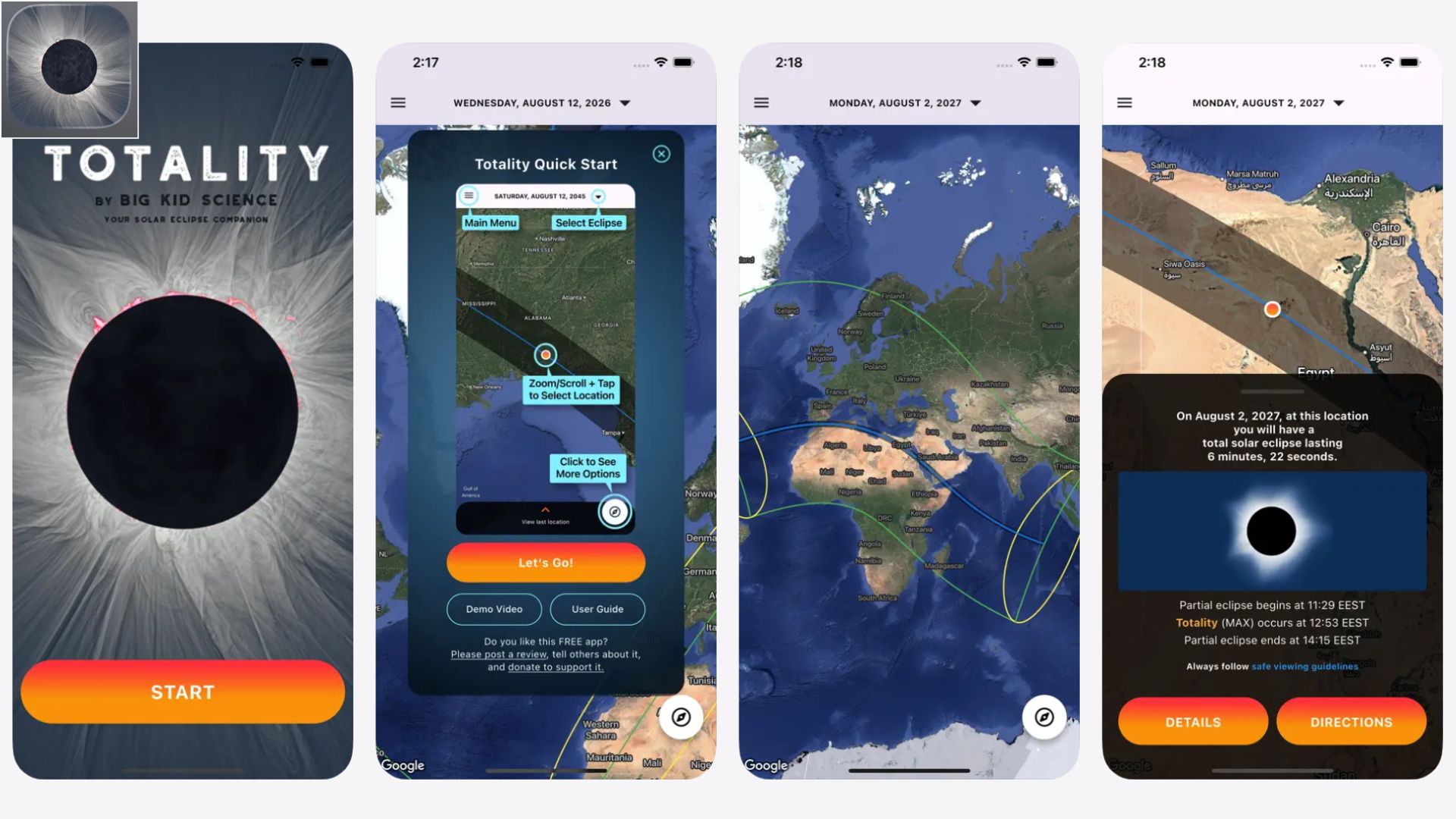
Totality by Big Kid Science

Four smartphone screenshots for eclipse apps are shown side by side against a white background.

Screenshots of Totality by Big Kid Science from the Apple Store. (Image credit: Β© 2026 Big Kid Science via the Apple Store)

Like other apps on this list, Totality by Big Kid Science on IOS and the Play Store offers users a wealth of eclipse information, including detailed timings based on your phone's GPS data, safety tips, eclipse science and more. It also provides handy navigation tools to help eclipse chasers find a way into the path of totality.

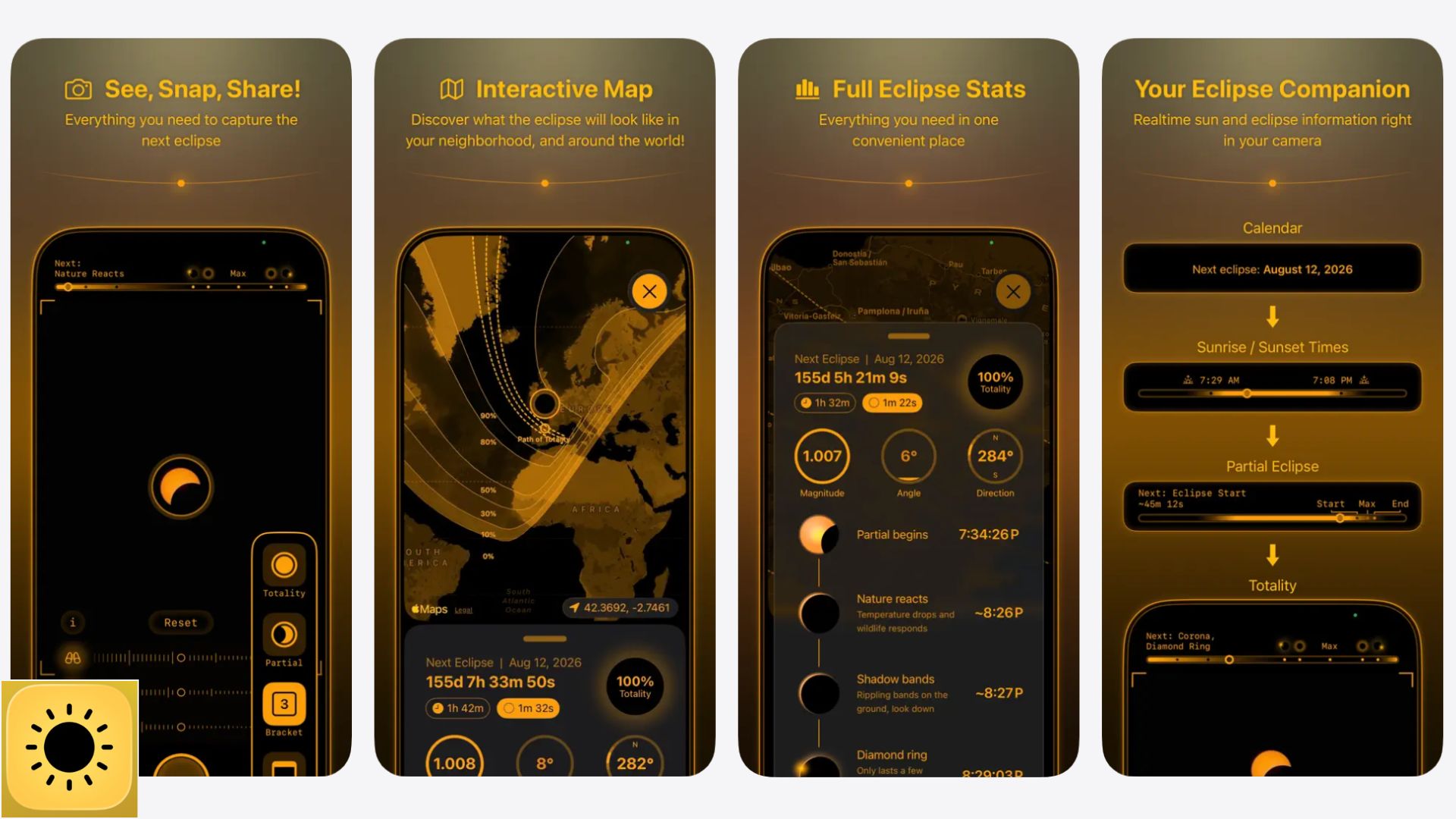
Solar Snap

Four smartphone screenshots for eclipse apps are shown side by side against a white background.

Screenshots of the Solar Snap app from the Apple Store (Image credit: Β© Rise Up Games via the Apple Store)

Want to capture the eclipse but don't have access to an expensive camera? Then Solar Snap on iOS or the Google Play Store might be for you.

The app provides a range of useful controls and features to help you capture the Aug. 12 eclipse with your smartphone, along with an interactive global eclipse map and information on the timings of phases, position of the sun and more.

It's designed to work in conjunction with a solar smartphone filter, which can be purchased as part of the Solar Snap filter kit. Alternatively, there are in-app tutorials that show how to make your own smartphone filter using a pair of eclipse glasses!

Be sure to check out our live blog for all of the latest news on the Aug. 12 total solar eclipse, along with on-the-ground reporting of the eclipse from skywatching editor Daisy Dobrijevic, who is currently aboard HX Expeditions' MS Spitsbergen off the coast of Greenland and skywatching writer Anthony Wood who will be heading to Spain. We'll also be publishing information on how to watch the eclipse live online for free closer to the time.

While you're at it why not download the Space.com app, available on IOS and Android, to stay up to date on all the latest launches, space science, skywatching news and eclipses?

Editor's Note: If you would like to share your eclipse astrophotography with Space.com's readers, then please send your photo(s), comments, and your name and location to spacephotos@space.com.

  •  

Where will the total solar eclipse 2026 be visible from?

The total solar eclipse on Aug. 12, 2026 will sweep across parts of the Northern Hemisphere, offering millions of people a chance to witness one of nature's most spectacular sights.

The path of totality β€” in which the moon completely covers the sun β€” begins over the Arctic Ocean, before crossing eastern Greenland, western Iceland and northern Spain. It then passes over the Balearic Islands before ending over the Mediterranean Sea.

Only skywatchers inside this relatively narrow path, just 182 miles (293 kilometers) wide, will experience totality, where day briefly turns to twilight. Here, you'll be able to safely see the sun's outer atmosphere, known as the corona, with the naked eye during the fleeting moment when the moon completely obscures the sun.

A much larger region surrounding the path of totality will instead see an impressive partial solar eclipse. Much of Europe, including the U.K., Ireland, France, Germany, Italy and Scandinavia, will witness the moon take a "bite" out of the sun.

Northern Spain is expected to be one of the most popular destinations for eclipse chasers thanks to its relatively accessible location and the low evening sun on the big day, which could create dramatic views as totality unfolds close to sunset. Greenland and Iceland offer very different experiences, with totality taking place higher in the sky against the nations' spectacular Arctic landscapes.

We'll have reporters on the ground to keep you updated each step of the way. Be sure to follow along on our total solar eclipse live blog to stay up to date with all the latest news and action as Skywatching Editor Daisy Dobrijevic embarks on an eclipse expedition to Greenland with HX Expeditions and Skywatching Writer Anthony Wood heads to Spain to experience the eclipse with NASA's DEB initiative and citizen scientists.

A map showing the path of totality for the total solar eclipse in 2026.

The global path of the total solar eclipse on Aug. 12, 2026. (Image credit: Created and annotated by Jamie Carter using MapHub.net. Sources: Esri, Maxar, GeoEye, Earthstar Geographics, CNES/Airbus DS, USDA, USGS, AeroGRID, IGN and the GIS user community. Eclipse path by Xavier Jubier)

How to watch

Wherever you plan to watch from, remember that it is never safe to look directly at the sun without proper eye protection. Certified solar eclipse glasses or a solar filter fitted to telescopes, binoculars and cameras must be used throughout the partial phases. Only during the brief period of totality, when the moon completely blocks the sun, can you safely remove your eclipse glasses and look directly at the eclipse.

We will also be livestreaming the eclipse here on Space.com; details will be released closer to the time.

Want to know exactly where the eclipse will be visible and how long totality will last at different locations? Check out our complete guide to where to see the Aug. 12, 2026 total solar eclipse, including detailed maps, timings and viewing advice.

  •  

Total solar eclipse Aug. 12, 2026 live updates β€” 3 days to totality

On Aug. 12, 2026, Europe will experience its first total solar eclipse since 1999, as the moon's shadow sweeps across Greenland, Iceland, northern Spain and the Balearic Islands.

Along the narrow path of totality, day will briefly turn to twilight as the moon completely covers the sun, revealing its elusive outer atmosphere β€” the corona. Meanwhile, millions more skywatchers across much of Europe, as well as parts of northeastern United States and eastern Canada, will witness a partial solar eclipse as the moon appears to take a bite out of the sun.

Live reporting from the path of totality

We'll be following the eclipse from two locations along the path of totality.

Our skywatching editor Daisy Dobrijevic is currently aboard HX Expeditions' MS Spitsbergen exploring Greenland's dramatic coast. She'll be aiming to witness totality from Scoresby Sund, the world's largest and longest fjord system. Dobrijevic is hoping for more eclipse luck than last time, when unfortunately, totality was a total bust, but not for the reason you may think.

Meanwhile, our skywatching writer Anthony Wood is joining the DEB initiative in Valoria la Buena, Spain, where the eclipsed sun will hang low above the western horizon shortly before sunset. It will be Wood's first-ever total solar eclipse.

Complete guide | Solar viewing tips | What is a solar eclipse?

One week until the total solar eclipse 2026: The countdown has begun... are you ready?

The moon's silhouette is visible in front of a fully eclipsed sun in a black sky, with the sun's white atmosphere creating a halo around the lunar disk.

The countdown has begun! The total solar eclipse 2026 will occur on Aug. 12. (Image credit: Photo by Erin Clark/The Boston Globe via Getty Images)

In just one week, millions of people across Greenland, Iceland and Spain will witness one of nature's greatest spectacles as the moon completely covers the sun.

Our team will be following the eclipse from two incredible locations, aboard an expedition ship in East Greenland with HX Expeditions and from northern Spain with the DEB initiative, bringing you live updates throughout the lead-up to the eclipse and on the day itself

Read more: 1 week to go until a dramatic total solar eclipse darkens the skies over Spain, Iceland and Greenland

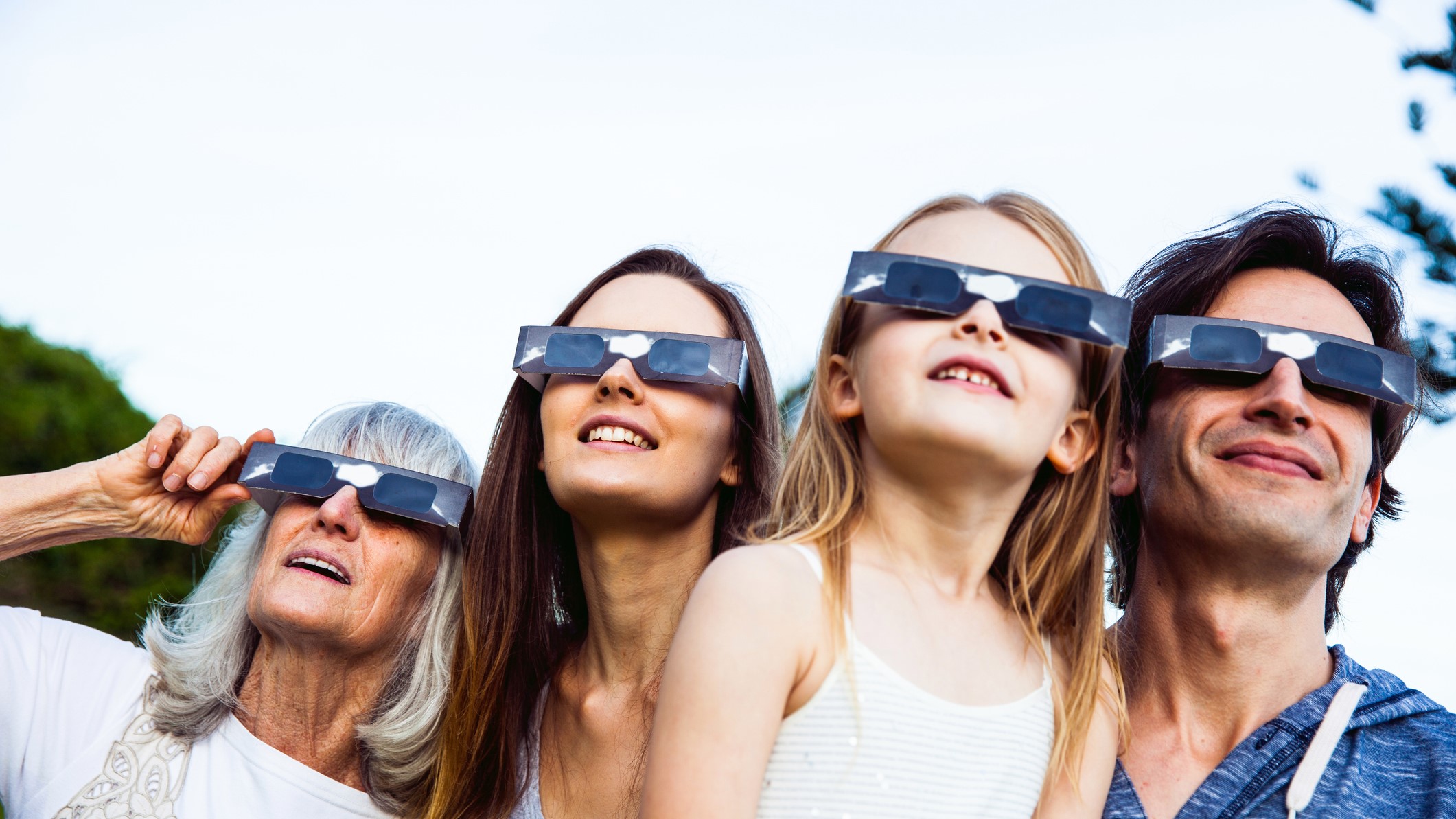
Last call for eclipse glasses!

Get your solar eclipse glasses early; they always sell out before an eclipse.

Eclipse glasses must be worn whenever the sun's disk is visible. (Image credit: LeoPatrizi / Getty Images)

If you're planning on viewing the Aug. 12 total solar eclipse then you'll need to get hold of a pair of quality eclipse glasses. Be sure to get a pair from a reputable dealer that conforms to the all important ISO 123-12 - 2 certification and never use an old pair if they appear scratched or damaged in any way!

Read More: Heading to Europe or the U.K. for the Aug. 12 solar eclipse? Best eclipse glasses to buy before you leave β€” or after you arrive.

Where will the eclipse be visible?

composite graphic image showing a location marker with a total solar eclipse image inside it, situated on top of a background showing earth viewed from space.

Find out where you can experience totality on Aug. 12, 2026. (Image credit: Created in Canva Pro)

Not everyone will experience totality on Aug. 12.

Some places will see the moon completely cover the sun, while others will experience a partial solar eclipse and for some… no eclipse at all. Womp womp.

Wondering what you'll see from your location? Find out where the eclipse will be visible

Also worth downloading before the big day: The best apps for following the eclipse

Do clouds ruin a total solar eclipse?

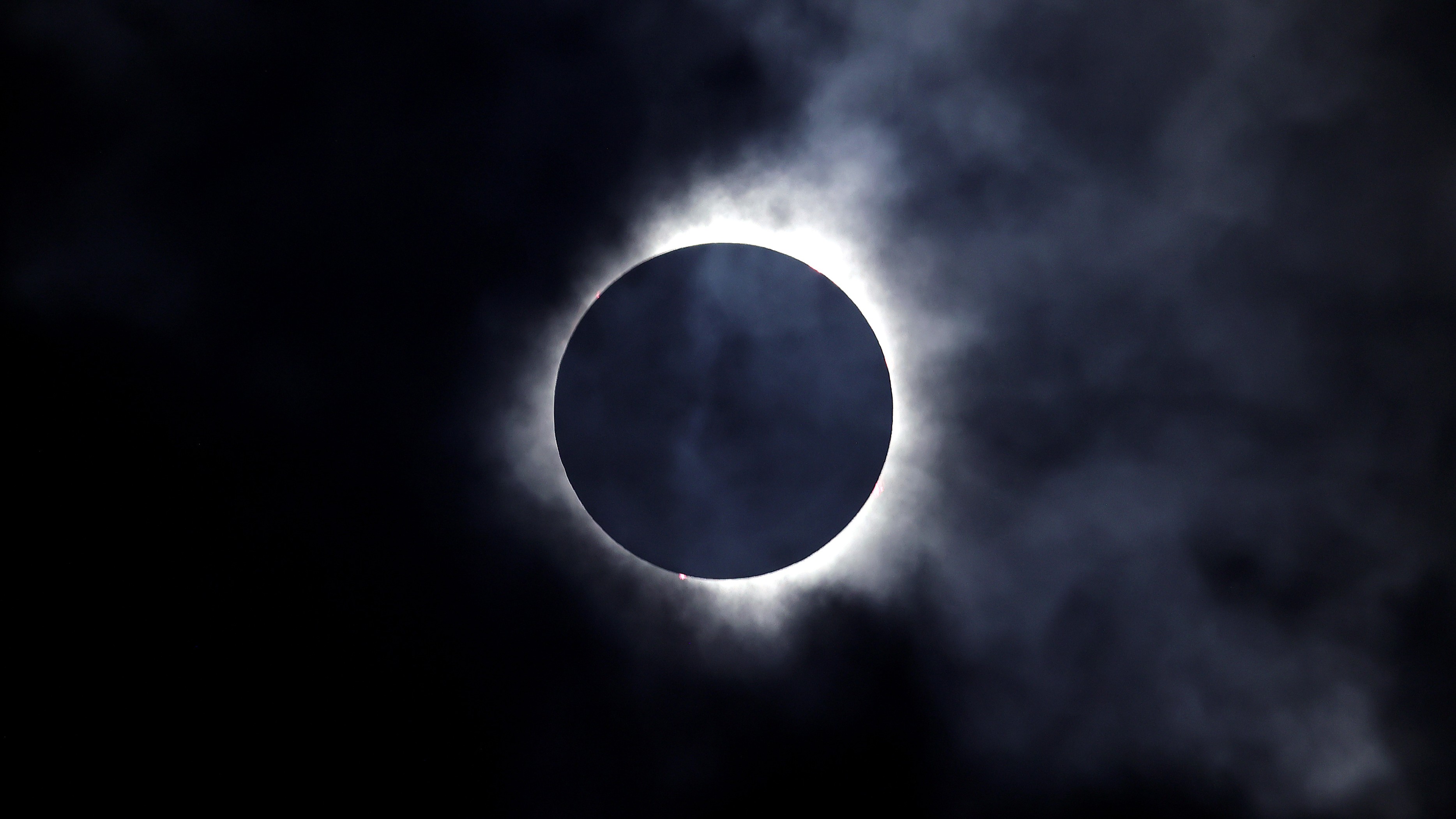
A solar eclipse is seen through the clouds on April 8, 2024 in Niagara Falls, Ontario, Canada.

Clouds won't necessarily sour your eclipse expedition. (Image credit: Vaughn Ridley/Getty Images)

One of the biggest worries before any eclipse is weather.

While a perfectly blue sky is ideal, you don't necessarily need one to enjoy the experience. Even under thin clouds, many of the most dramatic effects of totality can still be visible.

Read more: Here's why cloud cover doesn't always mean an eclipse is ruined.

Have you sorted your eclipse glasses yet?

A pair of eclipse glasses are held up close to the sun, which shines in a blue sky.

Sunglasses are vital to safely view the partial stages of a solar eclipse. (Image credit: Photo by Gabriel BOUYS / AFP via Getty Images)

If you'll be looking at any part of the partial eclipse, you'll need proper eye protection. Never look directly at the sun without certified eye protection.

Don't have eclipse glasses? You can still safely enjoy the eclipse using simple projection methods with everyday household objects.

Check out our how to view the sun safely and what to look for guide for more solar viewing inspiration.

What actually happens during a total solar eclipse?

A composite image of 5 sun/moon conjunctions showing the stages of a total solar eclipse arrayed in a diagonal line in a dark sky, with the point of maximum eclipse in the middle.

A composite image revealing the beauty of each stage surrounding totality. (Image credit: Photo by: Alan Dyer/VW Pics/UIG via Getty Images)

Totality lasts only a few minutes, but a lot is happening before, during and after.

From first contact and the dramatic diamond ring effect to the appearance of the sun's corona, each stage offers something unique.

Read more: What to expect at each stage of the total solar eclipse 2026.

The citizen scientists keeping an eye on the Aug. 12 total solar eclipse

A composite image showing totality as the lunar disk hides the face of the sun. Images are stacked diagonally either side showing the moon and sun just before and after totality.

Two teams of Dynamic Eclipse Broadcast volunteers with observe totality on Aug. 12. (Image credit: Photo by: Alan Dyer/VW Pics/UIG via Getty Images)

Countless eyes will be watching the moon's silhouette swallow the light of our parent star during the climactic phase of totality on Aug. 12.

Among them will be volunteers from the Dynamic Eclipse Broadcast Initiative β€” a passion-driven volunteer network of solar observers led by professional astronomers from the Southern Illinois University Carbondale and part funded by NASA.

Discover more on their efforts to capture valuable data on the sun's atmosphere while bringing the public closer to the Aug. 12 total solar eclipse below.

Read more: When a total solar eclipse darkens the sky on Aug. 12, these citizen scientists will be watching.

  •  
❌