❌

Reading view

Elon Musk’s Growing Death Toll: “What He Put Into the Woodchipper Were Children”

As Elon Musk tries to save face by claiming he’ll give every American child a chunk of SpaceX stock, here’s a chilling reminder of what he did that affected millions of children the second he had a whiff of federal power.

In a new interview, the documentary filmmaker Alex Gibney, who directed a just-released four-hour look at the billionaire’s life titled “Musk,” discussed the staggering death toll of Musk’s cuts to USAID, calling it a “crime against humanity.”

“There was an estimate that what [Musk] did by so suddenly cutting USAID would cost through disease and starvation as many as 14 million lives,” he told journalist Katie Couric. “Even if you discount that by an enormous amount, we know that within about a year of those summary cuts — where they were literally burning food that had already been paid for that was going to starving children — 500,000 children died.”

Musk, to Gibney’s astonishment, even joked about the cuts by saying he’d “put USAID into the woodchipper.” 

“What he put into the woodchipper,” Gibney said, “were children.”

Gibney, whose documentary Musk called a “hit piece,” is drawing from a 2025 study published in The Lancet, one of the most prestigious medical journals. It estimated the impact of Musk effectively neutering USAID by implementing a freeze on its foreign aid funding — which went to programs to combat HIV/AIDS, malaria, and to address food insecurities — and slashing nearly 10,000 employees. 

In sum, the researchers found that the “steep funding cuts could result in more than 14 million additional all-age deaths, including 4.5 million in children younger than age five, by 2030.”

Even conservative estimates concurred that the number of deaths would be staggering. A tracker created by Brooke Nichols, a professor and infectious disease mathematical modeler at Boston University, projects the 1-year death toll caused by the USAID cuts at 518,000 children.

It’s a touchy subject for Musk, who continues to bristle at accusations that his actions could’ve caused harm. This summer, he challenged his critics to “cite a single name of someone who died” as a result of him gutting USAID. Nicholas Kristof, a Pulitzer Prize-winning journalist, took him up on it and gave him a list of the specific children who had died directly from his policies, many of whom were in South Sudan and Liberia — places he had visited in person to talk to locals and healthcare workers.

Musk, rather than countering his arguments, called Kristof “evil.”

More on Elon Musk: Elon Musk Says It Was the Pentagon That Shut Down Starlink for the Ukrainian Military

The post Elon Musk’s Growing Death Toll: “What He Put Into the Woodchipper Were Children” appeared first on Futurism.

  •  

This New Research About Microplastics Is Pretty Damn Scary

A new piece of research is pushing back on the long-held belief that plastic is a harmless and chemically inert material.

The new study, published in the journal Nature, took a look at the way micro and nanoplastics interact with water-rich environments such as the human body. It found that typical consumer-grade microplastics exhibit “intrinsic physicochemical activity” there, indicating that the tiny chunks of plastic do indeed react chemically inside our bodies.

“As plastic fragments into smaller and smaller particles, its surface area increases enormously,” Columbia professor of chemistry and biomedical engineering and study co-author Wei Min said in a press release. “Then microplastics change the water that surrounds them, generating high-energy, reactive radicals… that very likely contribute to biological damage that we see in animals and potentially in humans as a result of microplastic exposure.”

Min was previously part of another alarming study, which found that the average liter of bottled water contains upward of 240,000 tiny microplastics, a much higher count than previously known. Combined with the new research, it looks like those untold thousands of plastic bits are capable of causing much more chemical harm than scientists had given them credit for.

As co-author Beizhan Yan put it, “this work has significant implications for environmental and human health,” particularly when it comes to food supply chains.

In the US, plastics make up an integral part of the food chain. They’re heavily integrated into industrial agriculture, present in high quantities throughout food processing, and are extensively used in food distribution, whether to preserve fruits and vegetables or as packaging for groceries.

The scale of plastic packaging alone is staggering: it’s estimated that food packaging accounts for 40 percent of the world’s total plastic production. With billions of dollars riding on the plastics industry, your average working-class person has little hope of skirting microplastics through a simple change in consumption habits — even if you have enough money to buy the haute premium foods packaged in glass or tin, individual consumers have no control over how much plastic their food is exposed throughout the production process.

Given the growing body of work pointing to the horrifying consequences of microplastics on the human body, it seems our collective health depends on finding a way out of this plasticky status-quo — and fast.

More on plastics: Scientists Turn Plastic Waste Into Edible Cookies Because That’s the Future We Deserve

The post This New Research About Microplastics Is Pretty Damn Scary appeared first on Futurism.

  •  

Vaping Strongly Linked to Lung Cancer

If you’re one of the over 100 million people around the world who regularly hits the vape, you might want to think about ways to start cutting back.

According to some recent research by scientists from Seoul National University and published in Nature Medicine, the use of non-tobacco devices like vapes and e-cigarettes to help quit smoking carries a strong link with the development of lung cancer.

The researchers analyzed anonymous health data from over 4.5 million Korean adults. They were split into three main groups: current smokers, short-term quitters, and long-term quitters. They were then categorized by whether they vaped daily during a 2018 screening in the Korean National Health survey, with adjustments to control for factors like age, sex, and prior health conditions.

In all, scientists found that those who had turned to vaping after quitting traditional cigarettes developed lung cancer at a rate about 56 percent higher than those who quit entirely. Alarmingly, incidents of lung cancer death among vape users nearly doubled, with a lung cancer-specific death rate 91 percent higher than non-vape users.

Of course, there’s an important group that falls outside the bounds of the study: anyone who got hooked on vaping without trying cigarettes first. It’d be fascinating to learn more about their fates, but the implication of the study — that vaping is turbocharging the chances of cancer among former smokers — is almost certainly cause for alarm.

While it may be easy for non-smokers to roll their eyes at the findings, it’s important to note that empirical data on the relationship between vaping and lung cancer remains relatively scarce.

“Although epidemiological and biological studies support the association between e-cigarettes and various respiratory disorders, evidence regarding the relationship between e-cigarettes and lung cancer risk remains limited,” the researchers wrote.

It’s an observational study, meaning that it can’t establish true causality. Going forward, more research is needed to say for sure whether there’s a causal association between vaping and cancer — but the early data doesn’t look pretty.

More on smoking: Scientists Say Test Subjects Were Able to Quit Smoking After They Blasted Their Brains With a Huge Magnet

The post Vaping Strongly Linked to Lung Cancer appeared first on Futurism.

  •  

Marijuana Linked to Rampant Violence

While the recreational use of marijuana is usually associated with a more peaceful mental state, scientists just a made a surprising discovery.

As detailed in a meta analysis of cannabis-related studies published last month in the journal Psychological Medicine, a team of scientists in the UK discovered a significant link between cannabis use and an “increased risk of violence.”

The headline finding was that they found cannabis users were statistically more likely to be the perpetrators of violent acts. They also found that the use of the drug — particularly among women and mixed-gender cohorts — was “significantly associated with an increased risk of becoming a victim of violence” as well.

While it’s a classic case of correlation, not causation — the researchers stop far short of suggesting the drug directly motivates users to be more violent as we’re far from reaching a scientific consensus on the matter — the findings “underscore the importance of addressing this issue at both a societal and clinical level,” according to the paper.

In other words, it’s a highly nuanced and complex relationship with plenty of other factors at play.

“As a clinician, I’ve seen how heavy cannabis use can be a factor in violence,” said coauthor and King’s College London professor Marta Di Forti in a statement. “We’ve been cautious for a long time about how far we could go in describing this link, but a review of this size lets us speak with more confidence about the risks, while being careful not to stigmatise people who use cannabis more broadly.”

“As cannabis becomes more commercialized and legalised around the world, the conversation about its risks has focused mostly on the person using it,” added coauthor and King’s College London professor of psychiatric research Sir Robin Murray. “This review shows that violence, both committing it and experiencing it, needs to be part of that conversation too.”

For their paper, the researchers examined 63 cannabis-related studies, involving just over 265,000 subjects.

The researchers found that cannabis users “may place themselves in risky situations,” which could help explain the “increased vulnerability” to violence. Users may also be exposed to “peers who engage in substance use or criminal activities.”

The risk of violence was also more pronounced among psychiatric patients. Previous resarch has found that people who already suffer from pre-existing mental conditions such as psychosis may experience “poorer clinical outcomes” through continued cannabis use.

“Given the higher rate of cannabis use among individuals with severe mental disorders compared to the general population, this group represents a particularly at-risk population in terms of violent behavior,” the paper reads.

The researchers offered some key takeaways from their findings. At the societal level, the researchers suggest that “violence should be considered alongside other established cannabis-related harms when developing prevention strategies, public education campaigns, and regulatory policies.”

At the clinical level, the research highlights the “necessity for mental health professionals to routinely assess cannabis use in individuals presenting with violent tendencies, particularly among those with severe mental illness.”

However, to get a better picture of how cannabis use relates to violence, future studies will need to “disentangle causal pathways” by diving into how, why, and when people use the drug in more detail. Other studies should also “examine whether reducing cannabis use through clinical or public health interventions leads to reductions in violent behavior,” the researchers conclude.

More on marijuana: Research Suggests the Older You Get, the More Weed You Should Smoke

The post Marijuana Linked to Rampant Violence appeared first on Futurism.

  •  

Zelda 40th Anniversary Nintendo Switch 2 Arrives October 29

A Zelda Console for the Franchise’s 40th Nintendo finally gave fans a proper look at its remake of

💾

Auf YouTube findest du die angesagtesten Videos und Tracks. Außerdem kannst du eigene Inhalte hochladen und mit Freunden oder gleich der ganzen Welt teilen.
  •  

Authorities Alarmed When Person With Measles Spends Entire Day Frolicking Around Universal Studios

Even notorious anti-vaxxer and US health secretary Robert F Kennedy Jr had to urge families to vaccinate their children against measles last week.

Despite being an entirely preventable disease thanks to a highly effective vaccine that has been widely available since the 1960s, cases of measles have skyrocketed in recent years, facilitated by a White House that’s declared war on scientific research, made a mess of childhood vaccine mandates, and furthered dangerous misinformation.

As of last week, the US had recorded 2,465 confirmed infections so far this year, already more than the 2,289 total cases in 2025. The last two years saw more total infections than the rest of the 21st century combined, as The Guardian reports, with 2026’s tally beating a 35-year record.

Now, in the midst of all that crisis crisis, a character has stumbled into the narrative who perfectly illustrates how it’s gotten so bad. As the LA Times reports, a measles-infected individual spent a whopping 11 hours at the Universal Studios Hollywood theme park last month, potentially exposing countless other visitors.

The Los Angeles County Public Health Department was forced to issue a stark warning: anybody who visited the amusement park on July 26 during teh hours between 10am and 9pm may have been exposed and should monitor for symptoms including fever, cough, or rash — and stay vigilant until August 16.

The virus is contagious up to four days before the characteristic rash appears on the skin, and up to four days after that.

Measles can easily spread through the air through just via talking or breathing, and can persist on surfaces for hours at a time.

The vaccine against it, available as part of the measles, mumps, and rubella combination (MMR) shot, is extremely worthwhile. Two doses are 97 percent effective in preventing a measles infection.

The department also urged “everyone to confirm their immunity and get the vaccine if needed, especially before traveling and attending crowded events.”

California has been hit particularly hard, recording at least three localized measles outbreaks this year so far. However, according to the state’s health department, all three outbreaks have ended.

According to the Centers for Disease Control and Prevention, there have been 38 new outbreaks in 2026 across the country so far this year, with several thousand cases spanning 47 states.

The danger to one’s health is substantial — especially to the unvaccinated. According to the CDC, roughly one in five unvaccinated people in the US who get measles are hospitalized. One out of 20 children with measles develop pneumonia. and one to three of every 1,000 children who become infected die from respiratory and neurologic complications.

More on infectious diseases: This Measles Outbreak at a Detention Center Perfectly Encapsulates America Right Now

The post Authorities Alarmed When Person With Measles Spends Entire Day Frolicking Around Universal Studios appeared first on Futurism.

  •  

Trump Cabinet Doctor Boasts of Ability to Soil Himself During Dinner Parties Without Detection

In case you need any more evidence that the Trump administration is run and advised by cranks, here’s the cabinet’s meat-mainlining doctor’s unvarnished thoughts on the incredible skill he displays while defecating, which he says is down to his diet.

The doctor, Sean O’Mara, is reportedly the reason why the likes of JD Vance, Robert F Kennedy Jr, and Sean Duffy have all adopted a diet based almost entirely on eating steak and fermented foods like kimchi.

When New York Times reporter Willy Staley tried out the diet and spoke to O’Mara, the 63-year-old physician — who describes himself as the only one “in the world specializing in Health and Performance Optimization” — suddenly steered the topic to his bowel movements. As one does during casual conversation, he pulled up the Bristol Stool Chart, which categorizes different kinds of poop, and said his was Type 4 (“smooth, soft, like a snake.”)

“When you start eating healthy, you don’t need toilet paper,” he claimed, per the NYT. “Animals in the wild have no residual stool on their anus.” 

A proper number two, he explained to Staley, would be odorless, wipe-free, take just a few seconds, and be “nearly orgasmic.”

That’s when Staley boasted about his stealthy rectal ability. 

“I could have a bowel movement behind a sheet at a dinner party in the corner of the room and nobody would know,” O’Mara declared.

Whether or not it endows its followers with fantastic defecation powers, doctors are generally pretty skeptical about O’Mara’s diet, which, as a reminder, asks you to only eat beef — preferably steak — and fermented foods like kimchi, sauerkraut, and cheese. 

Marion Nestle of New York University told Staley that the diet would be effective for temporary weight loss, because of how lean and satiating the meat is. But one of O’Mara key claims is that the bacteria of fermented foods help repopulate your gut bacteria and drive up your metabolism — something that the science is more iffy on. There’s also the clear cancer risk of consuming so much red meat.

Dodgy dietary advice reigns supreme in this administration, though. It’s obsessed with pushing people to drink raw milk, and has relaxed alcohol guidelines. The president himself apparently forages exclusively on McDonald’s and Diet Coke, and supposedly believes the soda kills cancer.

More on health: America Getting Lesson in Consequences of Trump’s War on Public Health as Rare Disease Outbreaks Ravage the Country

The post Trump Cabinet Doctor Boasts of Ability to Soil Himself During Dinner Parties Without Detection appeared first on Futurism.

  •  

Kalshi Defends Plan to Bet on Outcomes of Clinical Trials

Prediction markets like Kalshi and Polymarket have long garnered a reputation for allowing users to make all kinds of ethically dubious bets, from the outcomes of deadly conflicts to mass famine. 

As the New York Times reports, Kalshi will now even allow users to bet on whether clinical trials for potentially lifesaving drugs will succeed.

To critics, the move will effectively allow betting on the lives of patients trying a final intervention in the face of a lethal diagnosis. There’s even risk that those enrolled in these trials could choose to drop out if the market were to bet against a positive outcome.

“Turning loose a betting market in an ongoing randomized clinical trial really is a breach of scientific conduct,” Robert Califf, who served as FDA commissioner in the Biden administration, told the NYT.

Kalshi first announced its “biotech prediction markets pilot program” last month, the same day president Donald Trump’s teleprompter guy was busted for winning more than $100,000 on Kalshi by betting on what he would say.

The company argued in the announcement that a “publicly listed contract on a trial or regulatory outcome produces a continuously updated, public probability that reflects the weight of the evidence rather than the preferred messaging of the trial sponsor.”

In a statement to the NYT, spokesperson Jack Such argued that these bets wouldn’t undermine research integrity, but instead cut through the hype surrounding biotech companies and the drugs they’re working on. 

Kalshi says it will prohibit betting by patients enrolled in a trial, as well as by employees of the company conducting it or its competitors, per the NYT. It will also ban betting on trials that “exclusively enroll minors,” at least at first.

But those enrolled in drug trials were left appalled by the news.

“We’re literally trying to stay alive,” metastatic pancreatic cancer patient Walter Ingaharro Jr told the NYT. “It’s not a game. The introduction of gambling into the process really creates an ethical mess.”

In an opinion piece for The Guardian, Boston University humanities professor Joshua Pederson talked about how his 12-year-old son has a “very aggressive tumor growing inches below his heart.”

“If Kalshi has its way, you could soon be able to bet on health treatments that could be essential to his survival,” Pederson argued.

While choosing a trial for his son’s cancer was a “terrifying experiment for which we feel ill-prepared,” turning to a prediction market instead of “our extremely qualified team of oncologists” feels “preposterous,” Pederson argued.

In short, it’s yet another example of prediction markets crossing a moral boundary by gamifying things with real-world consequences.

“The possibility that somebody out there might be wagering against my son, hoping that the treatment fails so they can make money, is enraging,” Pederson wrote. “How is this not just another type of ‘death market’ — like markets for war or assassination — that even Kalshi says it won’t abide?”

The headline of this story was updated to specify that the program would bet on the outcomes of clinical trials, and the piece was updated to more specifically refer to controversies around prediction markets like Kalshi, writ large, and to add details about Kalshi’s response.

More on prediction markets: In Case You Still Think Insider Trading on Prediction Markets Isn’t Real, Trump’s Teleprompter Guy Just Got Busted for Getting Rich on Betting What He Would Say

The post Kalshi Defends Plan to Bet on Outcomes of Clinical Trials appeared first on Futurism.

  •  

The Diarrhea Lettuce Is Officially Killing People

Authorities are struggling to get the outbreak of an explosive diarrhea-causing parasite under control. According to the Centers for Disease Control and Prevention, there are more than 18,000 cases that have been confirmed or are being investigated across 45 states.

There had been 423 reported hospitalizations, but at least no deaths — until this week. On Monday, Michigan health officials confirmed that there are now two fatalities linked to the outbreak, an intestinal illness called cyclosporiasis which is caused by the microscopic parasite Cyclospora cayetanensis.

However, it’s important to note that both individuals had “significant underlying health conditions that may have been impacted by cyclosporiasis and dehydration,” according to an update by Michigan Health and Human Services. In other words, both people didn’t die purely because they were infected by the parasite.

Cyclosporiasis is a gastrointestinal illness that causes watery and frequent diarrhea. There are specific treatments available for the infection, including sulfonamides, which are synthetic antimicrobial agents.

The vast majority of people recover after a few days, weeks, or even a month in severe cases. But in combination with a slew of pre-existing conditions, the illness can prove fatal, as the latest news highlights.

Michigan has been hit particularly hard, representing the majority of cases being tracked, with 11,234 reports and almost 200 hospitalizations. Fortunately, the numbers are starting to wane — though it’s far too early to tell if the state is out of the woods just yet.

“We have growing confidence that the outbreak is declining,” Michigan health department spokeswoman Michigan’s health department told the New York Times.

The Food and Drug Administration has honed in on iceberg lettuce that was supplied by Taylor Farms, a company that has made significant donations to the Trump administration and is has been linked to the use of prison labor.

Despite plenty of evidence to the contrary, White House officials declared the outbreak “under control” on July 21. Cases of the illness have risen more than tenfold since then.

More on the outbreak: Almost the Entire Country Is Drowning in Cases of Explosive Diarrhea

The post The Diarrhea Lettuce Is Officially Killing People appeared first on Futurism.

  •  

Almost the Entire Country Is Drowning in Cases of Explosive Diarrhea

Just over a week ago, Health and Human Services secretary Robert F. Kennedy Jr declared that the ongoing outbreak of the explosive diarrhea-causing parasite was “under control.”

But the reality is that cases are climbing into the thousands across 45 states, as USA Today reports, meaning his reassurances appear to have been a gross overstatement. According to the Centers for Disease Control and Prevention, the number of cases increased by an additional 2,500 cases between July 21 and July 28 alone.

As of this week, the CDC has confirmed over 6,700 cases since May 1 and is “aware of more than 11,500 additional cases that are not laboratory confirmed or require further investigation and analysis.”

There is a bright side: while the symptoms are gross, there have been no known fatalities. There have been 423 hospitalizations so far, but no deaths have been recorded, according to the agency.

Health officials are still racing to nail down the source of the outbreak of the microscopic parasite Cyclospora cayetanensis, which is known to cause frequent — and often explosive — watery diarrhea. The top suspect so far has been Taylor Farms, one of Taco Bell’s lead suppliers, whose bagged shredded lettuce was initially found by the Food and Drug Administration to contain the parasite.

While the FDA has since gone back on that claim, saying the results were a “false positive,” Taylor Farms has nonetheless agreed to lead a “voluntary” recall of the allegedly tainted lettuce.

The true count of cyclosporiasis cases in the US remains extremely difficult to tally. As the CDC notes, “surveillance updates do not include probable cases.” Many people who fall ill “recover without medical care and are not tested for Cyclospora.”

According to a map issued by the agency, the two hotspots are Michigan and Ohio. Michigan alone passed the 10,000 cases mark today, according to the state’s Department of Health and Human Services.

The only states that have yet to report or confirm a single case, per the CDC’s map, are Montana, New Mexico, Maine, South Carolina, and Hawaii.

Fortunately, it’s easy to protect oneself from the parasite. Public health experts recommend thoroughly washing fruits and vegetables or simply cooking them, which kills the tiny critters.

More on the outbreak: Trump Is Having a Major Problem With Diarrhea

The post Almost the Entire Country Is Drowning in Cases of Explosive Diarrhea appeared first on Futurism.

  •  

The United States Is Rapidly Running Out of Blood

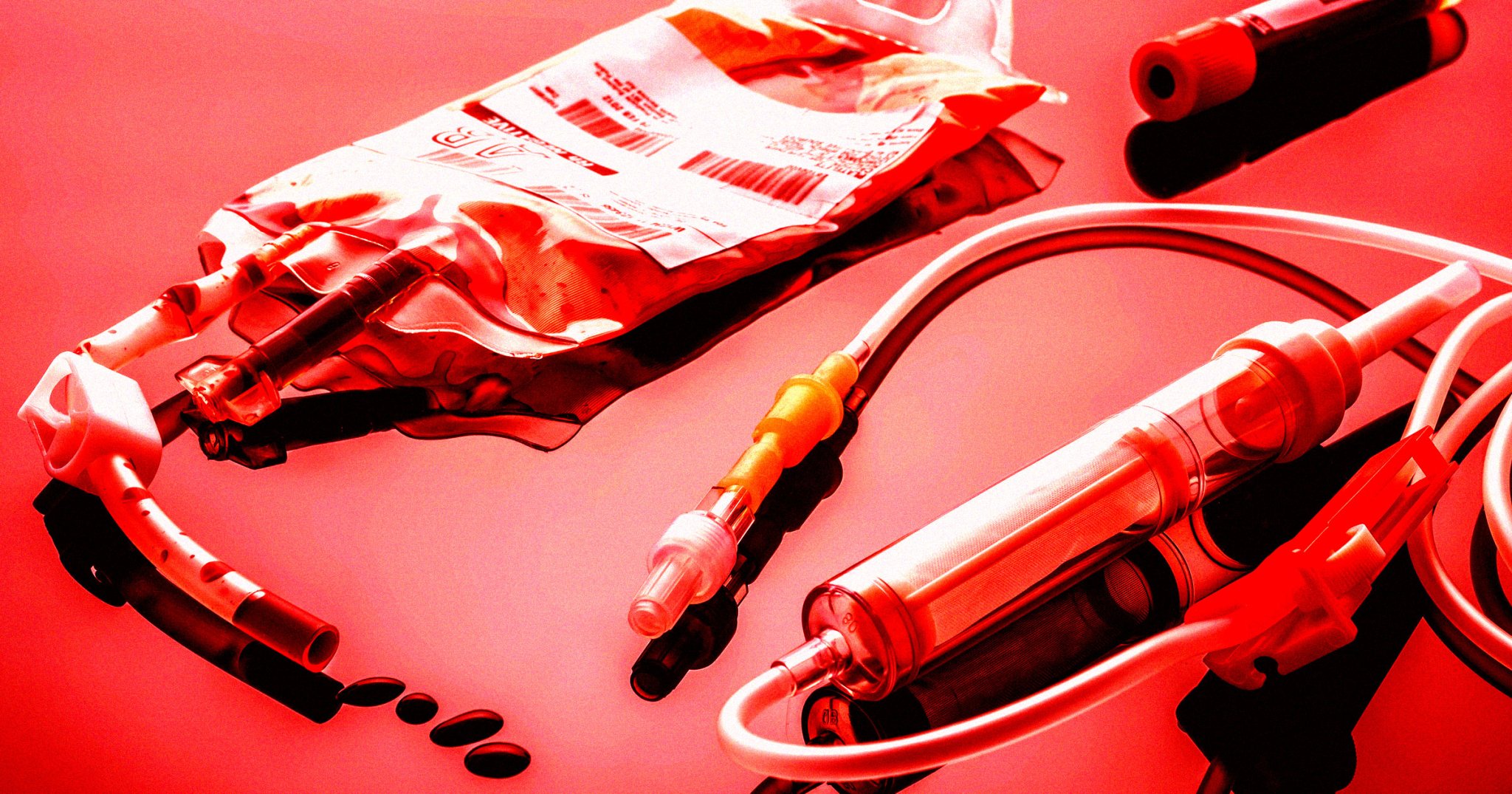
For only the second time in its history, the American Red Cross has declared a “national blood supply crisis,” after donations fell to a four-year summer low.

The hotter summer months conventionally trigger blood shortages because people are more likely to injure themselves while spending time outdoors.

And this summer has been particularly extreme. According to the Red Cross, extreme heat, poor air quality, and widespread foodborne illnesses have compounded into blood donations dropping precipitously, causing supply levels to plummet to a historic low.

The news comes amidst record-breaking temperatures this summer, devastating heatwaves that have killed at least 25 people in the US. Public health officials are also battling an outbreak of an explosive diarrhea-causing parasite that’s has spread to 45 states.

As a result of plummeting donations, the Red Cross, which is the largest single provider of blood products, has “less than a one-day national supply of type O positive blood.” Type O positive is the most commonly transfused blood type, and highly valued because can safely be used to treat over 80 percent of the population.

The Red Cross declared its first-ever national blood crisis in January 2022, triggered by a previous low in donor turnout due to ongoing COVID-19 surge disruptions.

“Every donation has the potential to help save lives, and we urgently need everyone who is eligible to make an appointment to give blood as soon as possible,” said Red Cross Biomedical Services president Chris Hrouda in a statement.

The risks of an extremely limited blood supply are considerable.

“There’s always the possibility, when the blood supply dips like it has, that patients won’t be able to get the blood products they need, when they need,” Red Cross spokesperson Matt Trotter told NPR affiliate KOSU.

By mid-July, the Red Cross was already ringing the alarm bells, warning that donations had fallen by about 25 percent in June.

To get back on track doesn’t require drastic action, either. The organization says that just “three more donors at each blood drive this summer can end this crisis and stabilize the blood supply.”

“One donation can help save multiple lives, so if you’ve got an hour you can spare, you can do a lot of good with it,” Trotter told KOSU. “Many people who think they are ineligible actually can donate blood.”

If you or a loved one wants to donate blood, this site run by the Red Cross can help find a blood drive nearby.

Updated to correctly identify blood types.

More on blood: Immortality-Obsessed Tech Guy Trying New Technique That Involves Removing “All Blood From Body”

The post The United States Is Rapidly Running Out of Blood appeared first on Futurism.

  •  
❌