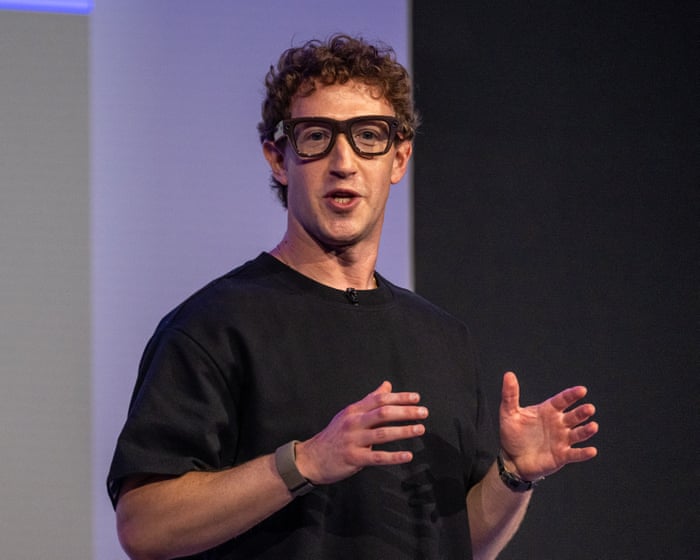
A New Mexico judge has ordered Meta to pay $25 billion after a jury found Facebook liable for deceiving users about privacy during the Cambridge Analytica scandal. State Attorney General Raul Torrez called it "one of the largest, if not the single largest state verdict against a company in American history." While Meta plans to appeal the ruling, the funds that are to be collected will go toward state education spending. The Associated Press reports: Jurors in September found Meta liable for over 43 million violations of New Mexico consumer protection laws when a political consulting firm, Cambridge Analytica, harvested Facebook user data to generate targeted political ads for the 2016 election. Forty-eight other states settled with Facebook in a nationwide case, but New Mexico chose to take the social media company to court on its own. [...] During the trial, jurors assessed whether Facebook misled users about privacy and content moderation 34 separate times. State prosecutors, though, argued Facebook's statements deceived the entire population of New Mexico and extended beyond social media users.
In the end, jurors agreed with this premise and found Facebook liable for 2.1 million violations on certain counts, bringing the total number of violations to over 43 million. Facebook's attorneys have argued in subsequent court filings that the state's consumer protection laws don't apply to people in New Mexico who weren't using the platform at the time. [...] In one of the few wins for the defense, jurors found the state didn't prove that Facebook made false claims about removing harmful content, including misinformation about the COVID-19 pandemic.
The state said the company favored certain accounts and allowed for violent or inaccurate content to proliferate. Attorney Randi McGinn said in her closing argument for the state that Facebook profited off harmful content, which CEO Mark Zuckerberg denied during his video deposition. Zuckerberg said the company has to carefully balance freedom of speech with content moderation. Attorneys for Facebook said the company has adapted its policies since the state's lawsuit was filed in 2021 and that it removes 99% of content that violates standards.
Apple has filed its opening merits brief with the U.S. Supreme Court, asking the justices to reverse or vacate a civil contempt ruling that stripped the company of commissions on purchases made through external payment links in U.S. App Store apps.
The brief, filed September 14, 2026, in Apple Inc. v. Epic Games, Inc. (No. 25-1311), marks the start of the argument phase in a case the Court agreed to hear on June 30. The justices limited review to a single question: whether a party can be held in civil contempt for violating the “spirit” of an injunction when the order is silent on the conduct later deemed a violation.
How the fight reached the high court
Epic Games sued Apple in 2020 after Fortnite was removed from the App Store for offering an in-app payment system that bypassed Apple’s commission. U.S. District Judge Yvonne Gonzalez Rogers largely sided with Apple on federal antitrust claims but found that Apple’s anti-steering rules violated California’s Unfair Competition Law. In 2021 she issued a short permanent injunction — Apple notes it was only about 75 words — requiring the company to let developers include links and other calls to action that send users to alternative purchase options.
Apple allowed those links but charged commissions of 12% to 27% on resulting sales. Few developers used the system. Epic returned to court, arguing the fees made the injunction meaningless. In April 2025, Gonzalez Rogers found Apple in civil contempt and barred it from collecting any commission on U.S. link-out purchases. The Ninth Circuit upheld the contempt finding in December 2025 but said a total ban on fees went too far and sent the case back for a more tailored rate. Apple then petitioned the Supreme Court.
Apple’s core argument
Apple’s brief rests on a long line of Supreme Court contempt cases, including Taggart v. Lorenzen (2019). The company says civil contempt requires “clear notice” that the specific conduct is forbidden. Silence is not enough. The 2021 injunction never mentioned commissions, Apple argues, and even Epic once acknowledged the order did not explicitly prohibit fees on off-store transactions.
“When it comes to contempt proceedings, an order’s terms govern,” the brief states. Courts may later modify an injunction to address new circumstances, Apple says, but they cannot use contempt to punish conduct the original order never clearly banned. Apple contends the Ninth Circuit is an outlier in allowing contempt based on an injunction’s “spirit.”
If the Supreme Court agrees, the contempt order would fall and Apple could seek to restore pre-2025 App Store rules, or at least negotiate fees without the stigma of being a contemnor. If the finding stands, the district court in Oakland must still set a “reasonable” commission for external purchases. Those fee proceedings have continued even as the Supreme Court case moves forward; earlier stay requests, including one denied by Justice Elena Kagan, failed to freeze them.
What comes next
Epic’s response brief is due November 13, 2026. Apple’s reply is due December 14. Oral argument is not expected before early 2027. Amicus briefs supporting Apple are due later this month.
Epic CEO Tim Sweeney dismissed Apple’s framing after the brief dropped, saying the company is fighting for developers’ right to offer cheaper payment options and that lower courts “have rightly found Apple’s fees to be illegal and anticompetitive.”
The case will not decide whether Apple monopolized the iPhone app market. It will decide how strictly courts must hew to the text of an injunction before they can hold a company in contempt — a question with implications well beyond the App Store. For now, U.S. developers can still point users to external checkout with no Apple commission attached, while both sides wait for the Court to say whether that zero-fee regime was ever lawfully imposed.
MacDailyNews Take: The U.S. Supreme Court should vacate this contempt finding against Apple.
It’s about time the highest court in the land takes a serious look at this judicial overreach.
Judge Yvonne Gonzalez Rogers and the Ninth Circuit have turned a narrow injunction into a never-ending micromanagement session of Apple’s App Store. Apple bent over backward to comply — allowing external payment links while protecting users and its ecosystem — only to get slapped with contempt for daring to charge a reasonable 27% commission on purchases that still leverage Apple’s platform, billing systems, and intellectual property. Epic’s Tim Sweeney, the perpetual sore loser who can’t compete fairly, continues his crusade to freeload off Apple’s hard work while crying “monopoly.”
This case has always been about one thing: Epic wants to undermine the very model that makes the iPhone secure, private, and reliable — all so they can rake in more profits without contributing fairly.
Here’s hoping the Supreme Court reins in this nonsense, limits the scope of overbroad injunctions, and affirms Apple’s right to run its own store on its own devices. The App Store isn’t a public utility, it’s Apple’s intellectual property. – MacDailyNews, June 30, 2026
Please help support MacDailyNews — and enjoy subscriber-only articles, comments, chat, and more — by subscribing to our Substack: macdailynews.substack.com. Thank you!
The MacVoices Live! panel starts with a discussion about Apple'’s new AI-powered creative tools, including possible benefits for Final Cut users and the subscription value question. Chuck Joiner, David Ginsburg, Brian Flanigan-Arthurs, Ben Roethig, Eric Bolden, Marty Jencius, Jeff Gamet, Norbert Frassa, Jim Rea, and Web Bixby also examine Apple’s Supreme Court appeal in the Epic case, then digs into urgent security patches, AI-assisted vulnerability discovery, automatic updates, enterprise risk, and how users should rethink update habits.
Prince Harry and six co-claimants, including Baroness Lawrence, must pay £9.5 million to Associated Newspapers in the next seven days after a judge ruled their hacking case was unreasonable to a high degree.
The CFTC has ordered Kalshi to keep operating in New York, claiming the state's lawsuit against the prediction market created a "market emergency." They said it acted "to ensure market stability" and "ordered the exchange to continue to operate in accordance with the Commodity Exchange Act's Core Principles." Ars Technica reports: The market emergency alleged by the CFTC is that New York Attorney General Letitia James sued Kalshi on July 31. James' lawsuit seeks a court order to permanently enjoin Kalshi "from operating an unlawful gambling business" in the state. The lawsuit also demands that Kalshi "make full restitution to customers who have engaged in betting" and pay financial penalties.
"New York intends to make event contract derivatives waste away under its iron curtain of state gaming laws before the courts get the chance to issue final rulings," CFTC Chairman Michael Selig said yesterday. "Congress did not intend for derivatives exchanges to be regulated under a patchwork of state gaming laws... New York has no business regulating these interstate financial markets. The commission is required by law to ensure order in these markets, and that is what we have done today." [...]
The CFTC says it alone has the power to regulate platforms such as Kalshi and Polymarket under the Commodity Exchange Act, a US law that gives the CFTC exclusive jurisdiction over designated contract markets (DCMs). "These are financial exchanges that offer financial instruments and operate across state lines," Selig said yesterday. "They match the bid from a resident of one state with the offer of a resident from another state and submit the trade to a clearinghouse that backstops the transactions of customers throughout the country."
Exclusive: Court service says anyone trying to enter buildings with glasses will have them confiscated and returned when they leave
Courts in England and Wales have joined a number of restaurants, theatres and pubs in banning Meta glasses, amid a mounting backlash against what has been described as “spyware”.
Last month courts in New York announced a ban on the controversial glasses, which can record video footage while being worn.
Apple lawsuit against OpenAI has reached its first major procedural challenge, with the ChatGPT developer asking a US federal judge to dismiss allegations that it acquired or used trade secrets taken by former Apple employees.
OpenAI submitted its 31-page dismissal motion on Wednesday in the US District Court for the Northern District of California. The filing argues that Apple has not adequately identified protectable trade secrets or alleged facts showing that OpenAI misappropriated confidential information.
Apple filed the case on July 10 against OpenAI, its io Products hardware operation, former Apple Vice President Tang Yew Tan, and former electrical engineer Chang Liu. The complaint accuses the defendants of obtaining information connected to Apple’s product development, manufacturing, components, testing, and supply chain operations.
The allegations have not been proven, and OpenAI denies possessing or seeking Apple’s trade secrets. US District Judge Edward Davila must now decide whether Apple’s complaint contains enough factual detail for the litigation to continue.
OpenAI Challenges the Apple Lawsuit
OpenAI’s motion focuses initially on how Apple described the information it claims was stolen. According to OpenAI, the complaint relies on generalized product-development categories without identifying the protected information with enough precision.
Trade secret plaintiffs face a difficult balance at the beginning of litigation. Apple must describe the protected material sufficiently to establish a plausible legal claim, but revealing the material publicly could expose the same information it is trying to protect.
Sensitive details can later be handled under seal or through a protective order. At the dismissal stage, however, Apple must still provide enough information for the court to distinguish genuine trade secrets from general engineering knowledge, employee experience, or skills acquired through years of work.
OpenAI argues that Apple has not crossed that threshold. Its motion says the complaint fails to establish ownership of a protectable trade secret and does not plausibly allege that OpenAI acquired, disclosed, or used such information.
The filing also disputes the commercial premise behind Apple’s accusations. OpenAI says it is developing products that are different from Apple’s hardware and has no need or desire to use the iPhone maker’s confidential material.
That position does not settle whether information was taken. A company can potentially misappropriate trade secrets even when its eventual product has a different design. The court’s immediate task is narrower: determining whether Apple has alleged facts that could support its claims if those facts are later proven.
Apple Park | Image Source: Google
Disputed Access to Apple Information
Apple’s complaint centers partly on Chang Liu, who spent eight years working as a senior system electrical engineer at the company before joining OpenAI in January 2026.
Apple alleges that Liu retained an Apple-issued computer and accessed confidential technical information after leaving. It claims he exploited residual authentication access on multiple occasions to obtain internal documents while already working for OpenAI.
OpenAI presents a different explanation. It says Apple employees contacted Liu after his departure and asked him to help locate files needed for ongoing Apple work. The company published redacted messages that it says support this account.
OpenAI argues that Apple’s systems and policies allowed personal and corporate information to become intermingled through iCloud accounts. Former employees, it says, could retain access to Apple files without requesting it or realizing that access remained active.
The motion maintains that Apple cannot treat the foreseeable effects of its own access-management practices as proof that former employees intentionally stole data. Apple, in contrast, alleges that its records document repeated access to restricted information rather than an accidental discovery of lingering permissions.
These competing accounts are likely to become central if the case enters discovery. Authentication logs, downloaded files, device records, internal communications, and employment timelines could establish whether access was deliberate, what information was obtained, and whether it reached anyone working on OpenAI products.
A dismissal motion normally tests whether the complaint states a legally sufficient claim. It is not a trial, and the judge is not expected to resolve every factual disagreement using competing evidence at this point.
Tang Tan and OpenAI’s Hardware Team
Apple separately accuses Tang Tan, OpenAI’s chief hardware officer, of seeking confidential information from Apple employees during recruiting conversations.
Tan spent more than 24 years at Apple and worked on products including the iPhone, Apple Watch, AirPods, and iPod. He later helped establish io Products with former Apple design chief Jony Ive and other collaborators. OpenAI acquired the hardware company as part of its effort to create a family of devices built around artificial intelligence.
Apple alleges that Tan used confidential project names, retained internal materials, and encouraged job candidates to discuss unreleased components or bring physical parts to interviews. OpenAI rejects the claim that these interactions formed a coordinated effort to collect Apple secrets.
OpenAI says Tan repeatedly instructed employees that confidential information from previous employers could not be brought into its organization. It also offers an alternative explanation for an Apple offboarding document found in his possession, arguing that Tan retained it to help incoming employees comply with Apple’s departure procedures.
Apple’s position is that the document and recruiting communications must be examined alongside the other alleged conduct. It describes the events as part of a connected campaign rather than isolated employment or administrative issues.
The dispute comes during intense competition for engineers capable of developing consumer AI hardware. Apple alleges that more than 400 former employees have moved to OpenAI, although hiring people from a competitor does not by itself establish trade secret misappropriation.
A company must generally connect recruitment to the acquisition, disclosure, or use of protected information. OpenAI is relying heavily on that distinction, presenting Apple’s lawsuit as an attempt to respond to employee departures and its difficulties competing for AI talent.
Image Credit: Getty Images
Apple Seeks Immediate Restrictions
OpenAI’s dismissal request arrives shortly after Apple asked the court for a preliminary injunction. Apple wants restrictions imposed while the lawsuit proceeds, arguing that it could suffer harm if its confidential information is used during OpenAI’s hardware development.
The requested relief would prevent OpenAI and the individual defendants from acquiring, accessing, using, or disclosing the alleged trade secrets. Apple has also requested expedited discovery and forensic examination of relevant devices and accounts.
OpenAI says those restrictions are unnecessary because it does not possess or want Apple’s protected information. It has described Apple’s request as based on false information and has offered to cooperate in addressing specific concerns.
The two companies also disagree over their communications before the lawsuit. Apple initially said its concerns had been raised with OpenAI months earlier. OpenAI responded that Apple’s outside lawyers contacted the wrong person after confusing names and incorrectly described a conversation with OpenAI’s general counsel.
OpenAI says Apple did not present the specific accusations before filing the case and that the companies had previously discussed resolving any access issues. Apple has since provided additional information in support of its injunction request, including allegations involving other former employees.
These disputes have moved beyond ordinary court filings. OpenAI published messages and emails on its website to support its version of events, calling Apple’s lawsuit aggressive and poorly investigated. Apple has primarily presented its account through formal legal submissions.
Judge Davila could dismiss some or all of Apple’s claims, deny the motion, or allow Apple to amend its complaint with more specific allegations. Even a dismissal would not necessarily end the case if permission to revise the complaint is granted.
The next scheduled public test is an October 1 hearing covering Apple’s preliminary injunction and request for early discovery. That proceeding may determine whether OpenAI faces immediate limits on its hardware work before the underlying trade secret claims receive a full evidentiary review.
Campaigners have failed to overturn police guidance allowing trans suspects to request a strip-search by an officer of their 'lived-in gender' after the High Court ruled the practice was lawful.
Paramount Skydance has agreed to postpone its $111 billion Warner Bros. Discovery merger until five days after an antitrust trial or June 1, 2027, whichever comes first. The agreement with a 12-state coalition led by California effectively shelves the deal for months while states argue it would reduce competition in cable and theatrical markets. Variety reports: Paramount had been keen to close the deal before Sept. 30, when it will begin to incur a $7-million-a-day "ticking fee" to be paid to Warner Bros. investors. The agreement is a tacit acknowledgement that that will not happen, barring a settlement with the states. Paramount previously sought a three-day hearing on the injunction motion in late August, hoping to win the judge's blessing to close the deal sometime in early September. But the states resisted that idea, saying they would need more time to take discovery and prepare for a full trial on the merits. The states were due to file their injunction motion on Thursday night, but held off as the two sides held discussions on a path forward. In a statement, the company said the agreement is a "significant win."
"Today's agreement is a significant win because the result is exactly what we have sought from the outset: a direct path to a trial based on the evidence," a Paramount spokesperson said. "This is the fastest and clearest way to prove that this transaction is good for competition, good for consumers, and good for creators, a conclusion dozens of competition authorities around the world have already reached. Plaintiffs' market definitions bear no relationship to the realities of today's marketplace and cannot withstand scrutiny. We look forward to proving our case at trial."
A hearing was scheduled for Aug. 3 in federal court in Oakland, at which point the two sides were expected to argue over the injunction motion. The two sides agreed to cancel that hearing. U.S. District Judge Araceli Martinez-Olguin approved the joint stipulation on Friday afternoon, about an hour after it was entered. The Writers Guild of America filed its own motion for an injunction earlier this week, which was also set to be heard on Aug. 3. That motion has been withdrawn, as Paramount has effectively conceded that it will not close the deal until a determination of the merits of the antitrust claims. The parties also agreed to submit a joint stipulation by July 31 on their respective positions on trial scheduling. The states previously proposed to hold the trial in April 2027.
A family of 18 from Gaza has won the right to come to Britain with "access to public funds" after winning a human rights challenge in the British courts.
Major publishers Hachette, Cengage, Elsevier, and author Scott Turow have sued Google, accusing it of using millions of copyrighted books to train Gemini without permission or payment, in "one of the most prolific infringements of copyrighted materials in history." The Guardian reports: The publishers argue that Google repurposed books that had been supplied for limited services such as Google Books, Google Play Books and Google Scholar. Those services allowed Google to use the works in specific ways -- for example, to display searchable snippets or sell ebooks -- but not, the lawsuit claims, to copy them for training commercial AI products. "Desperate to maintain its online dominance, Google abandoned its early motto of 'Don't be evil' and engaged in one of the most prolific infringements of copyrighted materials in history," the suit states (PDF).
According to the complaint, the tech company made copies of copyrighted books to train Gemini without permission or payment, despite internal discussions acknowledging the legal risks. The filing claims Google flagged internally that it could face "$10Bs-$100Bs in potential fines" for using texts provided by publishers for Google Play Books. The publishers say Google's actions are harming authors and the wider publishing industry, arguing that AI-generated content could negatively impact book sales.
It notes that, for example, Gemini could generate "a 100-page murder mystery set in a quiet seaside town filled with secrets, that substitutes for an original copyrighted murder mystery on which Gemini trained" in 20 minutes for 39 cents. "No publisher or author can compete with that." The lawsuit names a number of specific books that the publishers allege were among the copyrighted works used without permission, including NK Jemisin's The Fifth Season, and Lemony Snicket's Who Could That Be at This Hour?
The gaming news site Aftermath reports:
Four gamers are suing Sony Interactive Entertainment for allegedly breaking a California law that requires digital storefronts selling games to make it clear people are buying licenses, not actually owning the games.
Sony Interactive Entertainment's PlayStation store uses language like "Buy Now" and "Confirm Purchase," lawyers wrote in a complaint filed on Thursday... "In reality, consumers who 'purchase' digital games through PlayStation do not obtain ownership of those products," lawyers wrote. "Instead, PlayStation grants only a limited, revocable license to access the software, subject to multiple restrictions contained in a separate Software Product License Agreement"....
[T]he PlayStation store does have a disclosure. Above the "Confirm Purchase" button, there's a note: "By selecting [Confirm Purchase], you agree to complete the purchase in accordance with the PlayStation Terms of Service before using this content. You further acknowledge that your purchase of this digital product amounts to a license subject to the Software Product License Agreement." These four gamers aren't satisfied with that; they said in the complaint that it's too small, and that "a reasonable customer completing a purchase would not necessarily notice this disclosure."
"It's a proposed class action complaint, meaning the group of four gamers is asking a judge to grant them class action status."
An anonymous reader quotes a report from TechCrunch: Google is suing to dismantle the infrastructure behind an alleged massive AI-powered cybercrime operation. On Friday, the tech giant announced a lawsuit against an alleged Chinese cybercrime network called Outsider Enterprise, which Google says uses AI in its campaigns to send scam text messages impersonating Google and other brands to steal passwords and credit card numbers.
Outsider Enterprise has financially scammed "hundreds of thousands of victims" with losses "estimated in the millions." The group deployed 9,000 fake websites, 1 million fraudulent web domains, and 2.5 million texts sent to Android users in a two-week period, according to Google. "55,000 spam texts were flagged by Android users in just two weeks this past May -- that's more than two text spam complaints a minute," Google said.
Google said it uses "AI-powered tools to fight AI-powered scams", which enable the company to detect scams and alert users of suspicious calls and text messages, leading to the interception of more than 10 billion scam messages a month. The company said it has been collaborating with AT&T, T-Mobile, and Verizon to block the scam text messages and said it is coordinating with the FBI, which is taking unspecified law enforcement actions.
Sam Bankman-Fried lost his appeal to overturn his FTX fraud conviction and 25-year sentence. Reuters reports: In a unanimous decision, a three-judge panel of the Manhattan-based 2nd U.S. Circuit Court of Appeals said prosecutors' evidence against Bankman-Fried "was, conservatively stated, robust." "While he was publicly reassuring customers, investors and regulators that FTX customer funds were safe, he was simultaneously using FTX as his own personal piggy bank, spending customer funds on real estate, political contributions, and investments," Circuit Judge Barrington Parker wrote on behalf of the panel.
Bankman-Fried's lawyers did not immediately respond to a request for comment. They may next ask all the active judges on the 2nd Circuit to hear the case, or ask the U.S. Supreme Court to take up the case. Bankman-Fried is also seeking a pardon from President Donald Trump, according to the Justice Department's Office of the Pardon Attorney. Bankman-Fried was sentenced to 25 years in prison in 2024 for "masterminding one of the largest financial frauds in American history," wrote US District Judge Lewis Kaplan. He was convicted on all charges, including wire fraud, conspiracy to commit securities fraud, commodities fraud, and money laundering.

 Login