❌

Reading view

Why can’t we simply replace lithium with sodium in batteries?

Author: Iñigo Careaga, strategy & communication manager, CIC energiGUNE
sodium
Photo: Timo Volz / Unsplash

Lithium and sodium are neighbours in the periodic table. Both are alkali metals, both have a single electron in their outer shell, and both can be used to shuttle ions between two electrodes to store and release electrical energy. At first sight, replacing lithium with sodium in a rechargeable battery might therefore seem straightforward.

There are good reasons to try. Sodium is widely available and sodium-ion batteries can rely on electrode materials containing abundant elements such as iron and manganese. But chemical similarity does not mean electrochemical equivalence. A sodium ion is larger and heavier than a lithium ion, and its interaction with the materials surrounding it is different. As a consequence, replacing Li+ with Na+ changes much more than the identity of the charge carrier.

The electrodes have to accommodate a different ion. Their structures may respond differently as sodium is inserted and removed. The electrolyte has to transport and solvate it. New interfaces form between the electrolyte and the electrodes. Even graphite, the standard anode material of most commercial lithium-ion batteries, does not store sodium under conventional conditions nearly as effectively as it stores lithium 1.

A sodium-ion battery is therefore not simply a lithium-ion battery containing a different element. Understanding why requires looking at what happens to sodium once it enters the battery.

Graphite does not play by the same rules

Charging a conventional lithium-ion battery involves moving lithium ions from the positive electrode through the electrolyte and storing them in the negative electrode. Graphite is particularly good at this job. Its carbon atoms are arranged in sheets, and lithium can reversibly occupy the spaces between them, a process known as intercalation. It would be convenient if sodium behaved in the same way. It largely does not.

The poor ability of conventional graphite to accommodate sodium has long been one of the reasons why lithium-ion concepts cannot simply be transferred to sodium-ion batteries. Instead, one of the most widely studied negative-electrode materials is hard carbon 2.

Hard carbon is still carbon, but structurally it is very different from graphite. Rather than a regular stack of extended carbon sheets, it contains disordered graphitic domains, defects and pores. This disordered architecture provides environments in which sodium can be stored, but it also makes the underlying mechanism considerably harder to describe.

Where exactly does the sodium go? Researchers have proposed contributions from adsorption at defects and surfaces, insertion between graphitic layers and storage associated with nanopores. The relative importance of these mechanisms depends on the structure and microstructure of the carbon. This is more than a microscopic detail: where and how sodium is stored determines the voltage profile, reversible capacity, first-cycle losses and, ultimately, the energy that a complete cell can deliver.

Researchers at CIC energiGUNE and collaborators have studied this connection between charge-storage mechanisms, carbon structure and electrochemical performance 3. Their analysis highlights an important point: maximizing the amount of sodium that an anode can store is not enough. The potential at which that storage occurs and the irreversible losses during the first cycle are equally important when the material is incorporated into a full battery.

The problem is therefore not simply to find a carbon that accommodates more sodium. It is to understand how its structure stores sodium and then engineer that structure so that capacity, voltage and efficiency improve together. This has led researchers to explore different ways of controlling hard-carbon structure, including the use of lignocellulosic biomass as a precursor. Work has shown that even apparently simple processing decisions, such as acid treatment of the biomass precursor, can affect the resulting carbon and its behaviour as a sodium-ion anode 4.

And the negative electrode is only half of the problem. At the positive electrode, sodium ions have to repeatedly leave and re-enter a solid structure. Layered transition-metal oxides are attractive candidates because sodium can be reversibly extracted from and inserted into spaces between layers of metal and oxygen atoms. Compositions based on relatively abundant elements such as iron and manganese are particularly interesting 5.

Again, however, accommodating sodium is not enough. The host structure has to survive the process. A useful example is the layered oxide P2-Na₂/₃[Fe₁/₂Mn₁/₂]O₂, investigated by researchers from CIC energiGUNE and collaborators 6. The material can provide high capacity, but its long-term stability strongly depends on the voltage range over which it is operated.

This produces a familiar battery dilemma. Increasing the operating voltage can increase the amount of energy extracted from a material. But pushing the electrode further can also trigger structural transformations that make subsequent cycles less reversible.

The researchers compared cells operating in different voltage windows and combined electrochemical measurements with structural characterization and theoretical calculations. Above approximately 4.0 V versus Na+/Na, the cathode undergoes a high-voltage phase transition. Avoiding this transition improves capacity retention, revealing a direct connection between the structural state of the electrode and its long-term electrochemical behaviour.

Changing the chemical composition can also alter this structural response. In another study, researchers investigated the effect of introducing titanium into sodium manganese-rich layered oxides 7. A certain degree of Ti substitution helped the crystal structure accommodate electrochemically induced strain. Too little was insufficient to stabilize it, while further substitution introduced other destabilizing effects.

Other studies have approached the same problem from a different angle, examining how the precise stoichiometry of P2 layered oxides affects their performance 8, or following their structural evolution under different current rates and dopants using operando techniques 9. The lesson is that there is no single property called “a good sodium cathode”. Composition, atomic arrangement, voltage and cycling conditions are interconnected. Even an element that does not directly provide the stored charge can determine how well the electrode survives sodium repeatedly moving through its structure.

A different chemistry

Layered oxides are not the only possible positive electrodes. Sodium chemistry allows other structural families to be explored.

One particularly instructive example is NaFePO₄, the sodium analogue of the well-known lithium iron phosphate chemistry. Researchers involving CIC energiGUNE have used in situ X-ray diffraction to follow how NaFePO₄ changes during sodium insertion and extraction 10. They have also shown that the reaction mechanism itself depends on how rapidly the electrode is charged or discharged 11.

This is a subtle but important point. We often describe an electrode material as if it had a fixed reaction mechanism. In practice, what happens inside it can depend on how the battery is operated. Computational work has gone further by investigating sodium diffusion in NaₓFePO₄ 12. Combining experiments and modelling in this way makes it possible to connect what is observed at the battery level with the motion of ions through an atomic structure.

But even understanding both electrodes is not enough. Between them lies the electrolyte, and the sodium ion spends much of its journey there. It becomes surrounded by solvent molecules, travels across the cell and eventually reaches an electrode surface. At that interface the electrolyte can decompose, producing a solid-electrolyte interphase, or SEI.

This apparently thin layer can have a disproportionate influence on battery behaviour. Researchers at CIC energiGUNE have investigated both the composition and evolution of the SEI in sodium-ion electrodes 13 and, more broadly, the relationship between electrode-electrolyte interphases, transport properties and electrochemical performance in non-aqueous sodium-ion batteries 14.

The interface illustrates particularly well why changing lithium for sodium is not a simple substitution. The chemistry of the ion influences its solvation, its transport and the decomposition reactions that occur when it reaches an electrode. A material that can reversibly store sodium may still perform poorly if the interface around it continuously consumes electrolyte or sodium during cycling.

This is why sodium-ion research has to consider the cell as a system. Graphite may have to give way to hard carbon. Positive electrodes require structures able to tolerate repeated sodium insertion and extraction. Electrolytes and additives have to create suitable transport conditions and stable interfaces.

And every attempt to solve one of these problems can affect the others.

Sodium is not the new lithium

Lithium has a fundamental advantage that materials engineering cannot simply remove: it is the lightest metal and has a very low electrochemical potential. Sodium is heavier and its electrochemical potential is less favourable, placing intrinsic constraints on the gravimetric energy density that sodium-ion batteries can reach.

That does not necessarily make sodium a worse battery chemistry. Energy density is only one parameter of an electrochemical storage system. Cost, raw-material availability, lifetime, power, safety and operating temperature can become equally important depending on the application. A battery designed for a mobile phone, an electric vehicle or stationary storage does not necessarily have to optimize the same variables. And sodium chemistry itself offers several possible ways of balancing them.

CIC energiGUNE researchers have explored, for example, low-cost phosphate-based cathodes for aqueous sodium-ion batteries 15, Prussian Blue compounds as positive electrodes in aqueous systems 16, alternative sodium layered oxides [5,8,9], hard-carbon anodes [2,3,4] and even materials such as NaTiOPO₄ designed to modify or potentially avoid some of the interfacial problems normally associated with sodium-ion anodes 17.

These are not different routes towards exactly the same battery. They represent different ways of deciding which compromises are acceptable.

This changes the original question. The relevant challenge may not be how to make sodium behave as much like lithium as possible. Research on hard carbons shows that sodium may require a different type of host structure. Work on layered oxides shows that extracting more energy from an electrode can alter its structure and compromise its stability. Studies of NaFePO₄ show that the reaction pathway itself can depend on cycling conditions. And research on interfaces shows that storing sodium reversibly is only part of the problem: the chemistry taking place around the active material matters as well.

Sodium-ion batteries are therefore not lithium-ion batteries in which one element has simply been exchanged for another. Changing the ion changes the materials that host it, the structures they adopt, the reactions they undergo and the interfaces they form.

Sodium may not need to beat lithium at its own game. The more interesting question is whether understanding its different chemistry will allow us to play a different one.


The BRTA is a consortium that remains a step ahead of future socio-economic challenges worldwide and in the Basque Autonomous Community; it addresses them through research and technological development, thus projecting itself internationally. The BRTA centres collaborate to generate knowledge and transfer it to Basque society and industry so as to make them more innovative and competitive. The BRTA is an alliance of 17 R&D centres and cooperative research centres with the support of the Basque Government, the SPRI and the Chartered Provincial Councils of Araba, Bizkaia and Gipuzkoa.

 

References

  1. Muñoz-Márquez, M. A., Saurel, D., Gómez-Cámer, J. L., Casas-Cabanas, M., Castillo-Martínez, E. & Rojo, T. Na-Ion Batteries for Large Scale Applications: A Review on Anode Materials and Solid Electrolyte Interphase Formation. Advanced Energy Materials 7, 1700463 (2017). DOI: 10.1002/aenm.201700463. ↩
  2. Xiao, B., Rojo, T. & Li, X. Hard Carbon as Sodium-Ion Battery Anodes: Progress and Challenges. ChemSusChem 12, 133–144 (2019). DOI: 10.1002/cssc.201801879. ↩
  3. Saurel, D., Orayech, B., Xiao, B., Carriazo, D., Li, X. & Rojo, T. From Charge Storage Mechanism to Performance: A Roadmap toward High Specific Energy Sodium-Ion Batteries through Carbon Anode Optimization. Advanced Energy Materials 8, 1703268 (2018). DOI: 10.1002/aenm.201703268. ↩
  4. Dou, X., Hasa, I., Saurel, D., Jauregui, M., Buchholz, D., Rojo, T. & Passerini, S. Impact of the Acid Treatment on Lignocellulosic Biomass Hard Carbon for Sodium-Ion Battery Anodes. ChemSusChem 11, 3276–3285 (2018). DOI: 10.1002/cssc.201801148. ↩
  5. Gonzalo, E., Zarrabeitia, M., Drewett, N. E., López del Amo, J. M. & Rojo, T. Sodium manganese-rich layered oxides: Potential candidates as positive electrode for Sodium-ion batteries. Energy Storage Materials 34, 682–707 (2021). DOI: 10.1016/j.ensm.2020.10.010. ↩
  6. Zarrabeitia, M., Nobili, F., Lakuntza, O., Carrasco, J., Rojo, T., Casas-Cabanas, M. & Muñoz-Márquez, M. A. Role of the voltage window on the capacity retention of P2-Na₂/₃[Fe₁/₂Mn₁/₂]O₂ cathode material for rechargeable sodium-ion batteries. Communications Chemistry 5, 11 (2022). DOI: 10.1038/s42004-022-00628-0. ↩
  7. Zarrabeitia, M. et al. Unraveling the role of Ti in the stability of positive layered oxide electrodes for rechargeable Na-ion batteries. Journal of Materials Chemistry A 7, 14169–14179 (2019). DOI: 10.1039/C9TA02710F. ↩
  8. Ortiz-Vitoriano, N. et al. High performance P2 sodium layered oxides: an in-depth study into the effect of rationally selected stoichiometry. Journal of Materials Chemistry A 7, 21812–21826 (2019). DOI: 10.1039/C9TA07346A. ↩
  9. Stansby, J. H. et al. Dopant and Current Rate Dependence on the Structural Evolution of P2-Na₂/₃Mn₀.₈Zn₀.₁M₀.₁O₂ (M = Cu, Ti): An Operando Study. Chemistry–Methods 1, 295–304 (2021). DOI: 10.1002/cmtd.202000075. ↩
  10. Galceran, M., Saurel, D., Acebedo, B., Roddatis, V. V., Martin, E., Rojo, T. & Casas-Cabanas, M. The mechanism of NaFePO₄ (de)sodiation determined by in situ X-ray diffraction. Physical Chemistry Chemical Physics 16, 8837–8842 (2014). DOI: 10.1039/C4CP01089B. ↩
  11. Saurel, D., Galceran, M., Reynaud, M., Anne, H. & Casas-Cabanas, M. Rate dependence of the reaction mechanism in olivine NaFePO₄ Na-ion cathode material. International Journal of Energy Research 42, 3258–3265 (2018). DOI: 10.1002/er.4078. ↩
  12. Bonilla, M. R., Lozano, A., Escribano, B., Carrasco, J. & Akhmatskaya, E. Revealing the Mechanism of Sodium Diffusion in NaₓFePO₄ Using an Improved Force Field. The Journal of Physical Chemistry C 122, 8065–8075 (2018). DOI: 10.1021/acs.jpcc.8b00230. ↩
  13. Muñoz-Márquez, M. A., Zarrabeitia, M., Castillo-Martínez, E., Eguía-Barrio, A., Rojo, T. & Casas-Cabanas, M. Composition and Evolution of the Solid-Electrolyte Interphase in Na₂Ti₃O₇ Electrodes for Na-Ion Batteries: XPS and Auger Parameter Analysis. ACS Applied Materials & Interfaces 7, 7801–7808 (2015). DOI: 10.1021/acsami.5b01375. ↩
  14. Muñoz-Márquez, M. A., Zarrabeitia, M., Passerini, S. & Rojo, T. Structure, Composition, Transport Properties, and Electrochemical Performance of the Electrode-Electrolyte Interphase in Non-Aqueous Na-Ion Batteries. Advanced Materials Interfaces 9, 2101773 (2022). DOI: 10.1002/admi.202101773. ↩
  15. Fernández-Ropero, A. J., Zarrabeitia, M., Reynaud, M., Rojo, T. & Casas-Cabanas, M. Toward Safe and Sustainable Batteries: Na₄Fe₃(PO₄)₂P₂O₇ as a Low-Cost Cathode for Rechargeable Aqueous Na-Ion Batteries. The Journal of Physical Chemistry C 122, 133–142 (2018). DOI: 10.1021/acs.jpcc.7b09803. ↩
  16. Fernández-Ropero, A. J., Piernas-Muñoz, M. J., Castillo-Martínez, E., Rojo, T. & Casas-Cabanas, M. Electrochemical characterization of NaFe₂(CN)₆ Prussian Blue as positive electrode for aqueous sodium-ion batteries. Electrochimica Acta 210, 352–357 (2016). DOI: 10.1016/j.electacta.2016.05.176. ↩
  17. Galceran, M., Rikarte, J., Zarrabeitia, M., Pujol, M. C., Aguiló, M. & Casas-Cabanas, M. Investigation of NaTiOPO₄ as Anode for Sodium-Ion Batteries: A Solid Electrolyte Interphase Free Material? ACS Applied Energy Materials 2, 1923–1931 (2019). DOI: 10.1021/acsaem.8b02040. ↩

The post Why can’t we simply replace lithium with sodium in batteries? appeared first on Mapping Ignorance.
  •  

Turning cheese whey into value: a sustainable substrate for probiotic biomass production


Authors: Eider Fernandez & Igor Baroja-Careaga, Esneki Zentroa (Leartiker S.COOP)


Probiotics are part of a rapidly expanding field of research. They are live microorganisms that, when administered in adequate amounts, may confer health benefits[1]. Among the most extensively studied probiotics, some species of Lactobacillus and Bifidobacterium have been associated with the maintenance of gut microbiota balance and with several physiological functions[2]. Producing these microorganisms usually requires nutrient-rich culture media. But what if such bacteria could be obtained from a food by-product nowadays regarded as waste? This question formed the starting point of a study carried out by Esneki Dairy Centre – Leartiker to assess the potential of cheese whey as a substrate for producing microbial biomass enriched in microorganisms with probiotic potential.

The challenge of cheese whey

Cheesemaking inevitably generates substantial amounts of whey: a yellowish liquid released from the curd that still carries lactose, soluble proteins, minerals and other valuable compounds. In fact, whey can represent around 85% of the original milk volume used in cheese production[3].

Despite this nutritional richness, whey remains a difficult stream to manage for many artisanal dairies. This is particularly true in the Basque Country, where many cheesemaking farms are small, family-run businesses located in rural areas[4]. Its highly perishable nature means that whey must be preserved or processed soon after production, making storage, collection and transport especially challenging when volumes are small and geographically dispersed.

Moreover, uncontrolled whey discharge results in a high organic load that can affect aquatic ecosystems. Paradoxically, the same nutrients that make cheese whey a potential pollutant are also what give it considerable biotechnological value.

A natural culture medium

From a microbiological standpoint, cheese whey is not merely a residual stream, but a naturally nutrient-rich matrix[5]. Its lactose content, together with soluble proteins, minerals and other available compounds, provides a favourable environment for the growth of lactic acid bacteria, widely used microorganisms in fermented foods and increasingly explored for their probiotic potential.

The working hypothesis was simple: by steering whey fermentation under controlled conditions, it could be possible to recover a biomass enriched in microorganisms of interest, while at the same time increasing the stability and value of the by-product itself.

To explore this possibility, several fermentation strategies were tested using whey generated during the production of blue cheese from pasteurised cow’s milk. The study compared three different approaches:

  • Fermentation of previously pasteurised whey (Protocol 1).
  • Fermentation of whey after a deproteinisation step (Protocol 2).
  • Direct fermentation of raw whey, without any prior treatment (Protocol 3).

Two different blends of commercial microorganisms, inspired by the naturally diverse microbial communities found in kefir, were also evaluated. These included; Choozit Kefir DV LYO 1000L (Danisco) (starter culture A) and Ferlac Kefir Type C (Abiasa) (starter culture B). Additionally, unfermented whey (that is, whey to which no starter cultures were added and which was not subjected to fermentation) from each protocol was analysed as a control sample. Controlled fermentation processes were carried out under monitored conditions. Throughout the fermentation, key parameters were monitored, including temperature (25 ± 1 °C), incubation time (16 ± 1 h for starter culture A and 21 ± 1 h for starter culture B) and pH evolution, with fermentation being considered complete once the pH fell below 4,6. These measurements allowed the identification of the conditions that most effectively supported the growth and enrichment of the target microbial populations.


Exploring the microbiome through metagenomics

However, assessing the success of a fermentation process requires more than simply determining how many microorganisms grow. It is also essential to identify which species are present and how the microbial community changes over time.

Traditional culture-based microbiological methods remain fundamental tools for quantifying and isolating viable microorganisms. Yet they have important limitations when complex microbial communities need to be characterised, as they only detect microorganisms able to grow under the selected culture conditions. As a result, part of the microbial diversity present in the sample may remain undetected. To obtain a more comprehensive view of the microbial community, the study incorporated high-throughput amplicon sequencing, an approach that enables the direct analysis of DNA present in a sample and the identification of microorganisms regardless of their ability to grow under laboratory conditions.

Bacterial communities were characterised by amplifying the V4 region of the 16S rRNA gene, one of the most widely used markers in bacterial diversity studies. Fungal and yeast communities were analysed through the ITS region — the Internal Transcribed Spacer — which is considered the standard marker for fungal diversity studies.

Sequencing was performed using Illumina technology, generating approximately 100,000 reads per sample for bacteria and around 40,000 reads for fungi and yeasts. These sequences were then compared against specialised databases to determine the identity of the microorganisms present and estimate their relative abundance.

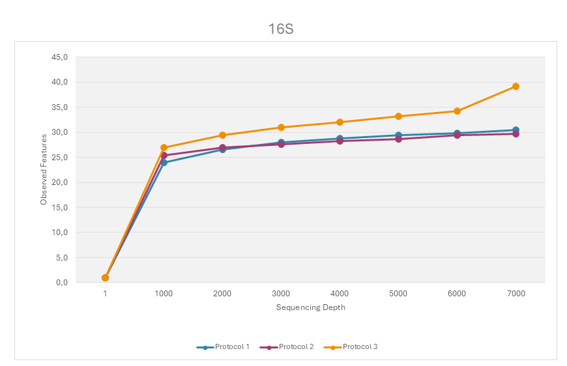
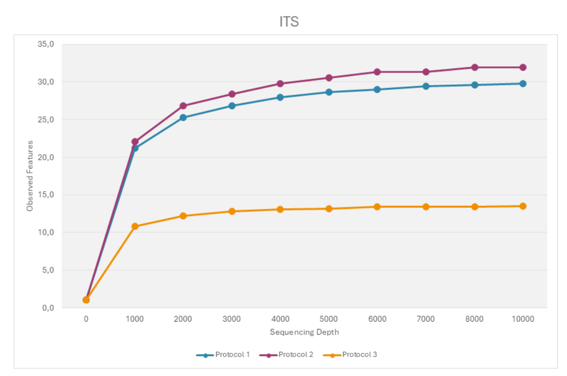
Before interpreting the results, sequencing depth was assessed using rarefaction curves. These curves showed a clear trend towards saturation, indicating that most of the microbial diversity present in the samples had been adequately captured.

Which protocol worked best?

High-throughput amplicon sequencing revealed clear differences among the fermentation strategies tested.

Fermentations carried out using raw whey (Protocol 3) maintained a more diverse bacterial community than those in which the whey had first been subjected to thermal treatment (Protocol 1 and Protocol 2), as can be seen in Figure 1, as can be seen in Figure 1, the number of observed microbial taxa increases with sequencing depth. This suggests that the partial preservation of the native microbiota originating from the cheesemaking process may play an important role in shaping the fermentation outcome.


whey
Figure 1. Rarefaction curve illustrating the observed bacterial species richness as the number of sequences increases.


In contrast, the diversity of moulds and yeasts decreased. This trend may be related to the origin of the whey, which was obtained from blue cheese production, where specific mould (Penicillium roquefoti) species are deliberately enriched during manufacture. The competitive advantage of these dominant fungi appears to favour the development of a more specialised microbial community, reducing the abundance and diversity of other microbial populations present in the whey (Figure 2).


whey
Figure 2: Rarefaction curve showing the number of observed mould and yeast species as a function of sequencing depth


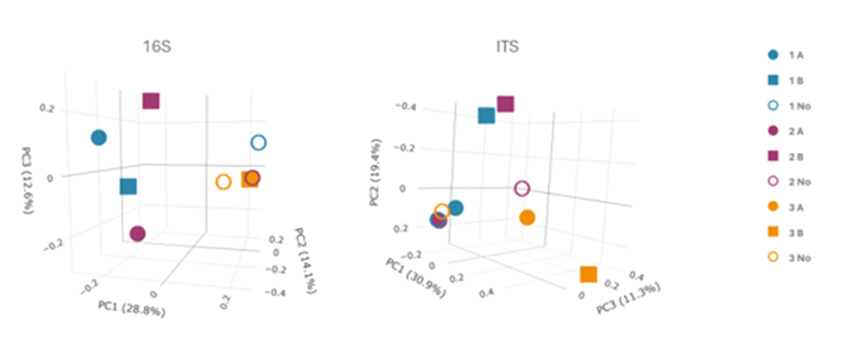
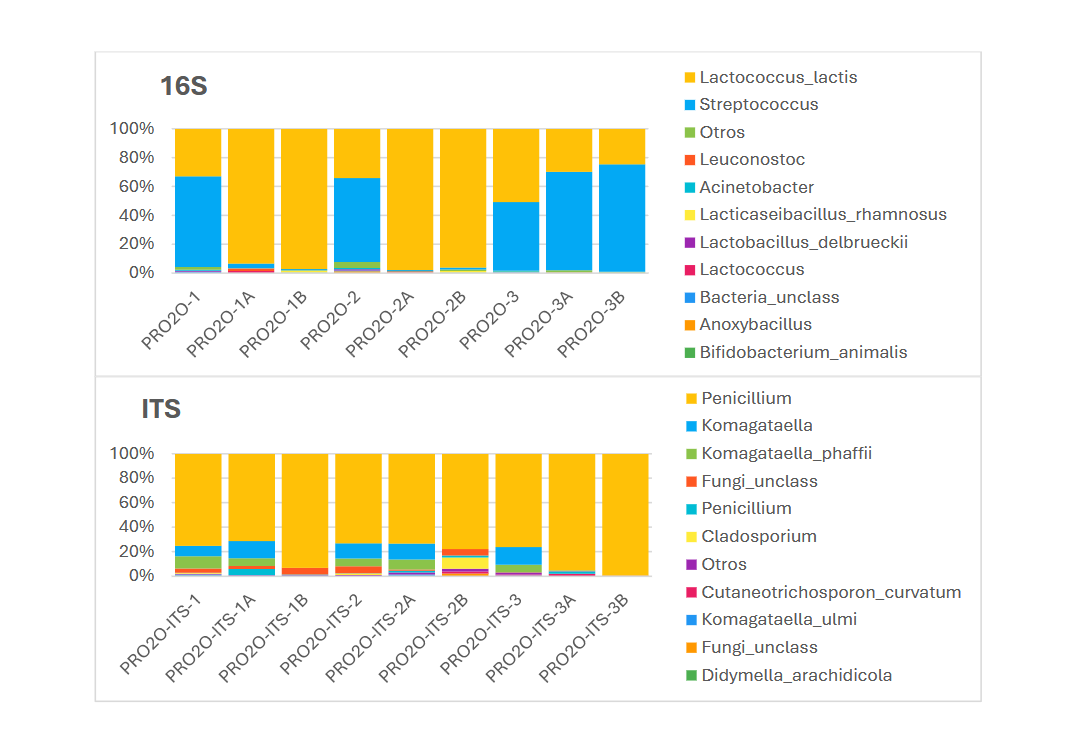
Principal coordinates analysis (PCoA) based on Jaccard distances (Figure 3) showed a clear separation among the different fermentation protocols, indicating that each strategy gave rise to distinct microbial communities. In parallel, the relative abundance of profiles (Figure 4) made it possible to visualise how particular species increased or decreased depending on the conditions applied.

Figure 3. PCoA based on Jaccard distances, used to assess similarities among samples. Bacterial profiles based on 16S data are shown on the left, and fungal/yeast profiles based on ITS data on the right.


Figure 4. Relative microbial diversity observed across the different fermentation protocols.


Amplicon sequencing also enabled the identification of the dominant microorganisms during the process. In most samples, Lactococcus lactis was particularly abundant. This result was expected, as this bacterium was included in the commercial starts cultures used and is widely employed in dairy fermentations. However, some fermentation conditions, particularly those involving starter culture B, also favoured the development of species such as Lacticaseibacillus rhamnosus and Bifidobacterium animalis, wich were also present in the commercial starter culture. These microorganisms are frequently associated with probiotic applications[6],[7],[8].

To identify the most suitable protocol for producing a fermented whey enriched in microorganisms with probiotic potential, both microbial abundance (including aerobic mesophilic bacteria, yeasts and moulds) and the diversity of the resulting microbial communities were evaluated. The highest microbial counts were obtained in whey samples produced using Protocol 3, which was based on raw whey, and fermented with starter culture B. (Average counts of 8.2 log CFU/mL were obtained with starter culture A, and average counts of 8.5 log CFU/mL with starter culture B).

Furthermore, as mentioned previously, the highest levels of microbial diversity were observed in the samples produced using Protocol 3, where fermentation was carried out directly on raw whey without prior heat treatment.


Overall, the results pointed to the most effective strategy also being the simplest from a technological perspective: the direct fermentation of raw whey, without prior thermal treatment using starter culture B. This approach maintained high microbial diversity while reducing energy requirements and simplifying the overall process.

An opportunity for the circular economy

Beyond the microbiological results, the broader relevance of this work lies in showing that the role of whey within the cheesemaking chain can be reconsidered.

Rather than being treated as a waste stream associated with management costs, whey can be viewed as a raw material capable of supporting valuable biotechnological processes. Controlled fermentation not only helps stabilise whey but also makes it possible to harness the nutrients it still contains to generate added-value microbial biomass.

Such strategies are closely aligned with the principles of the circular bioeconomy, in which by-products are no longer seen as the end of a production chain, but as the starting point for another. In a context where sustainability and efficient resource use are increasingly important, initiatives of this kind show how microbiology and omics technologies can help turn an environmental challenge into an opportunity for innovation.


The PRO2O project (grant agreement No. 00003-BIO2022-48) was funded through the 2022 Bioeconomy Innovation Projects funding programme of the Basque Government’s Department of Economic Development, Sustainability and Environment.

References

[1] Guarner F, Requena T, Marcos A. Consensus statements from the Workshop “Probiotics and Health: Scientific evidence”. Nutr Hosp. 2010 Sep-Oct;25(5):700-4. PMID: 21336423.

[2] Martin, A. J. M., Serebrinsky-Duek, K., Riquelme, E., Saa, P., & Garrido, D. (2023). Microbial interactions and the homeostasis of the gut microbiome: the role of Bifidobacterium. Microbiome Research Reports, 2. https://doi.org/10.20517/mrr.2023.10

[3] González Siso, M. I. (1996). The biotechnological utilization of cheese whey: A review. Bioresource Technology, 57(1), 1–11. https://doi.org/10.1016/0960-8524(96)00036-3

[4] Esneki Zentroa – Leartiker (2022). “El sector quesero en Euskadi 2021”. Available at: El-sector-quesero-en-Euskadi.pdf

[5] Figueroa Pires, A., garcía Marnotes, N., Díaz Rubio, O., Cobos García, A., Dias Pereira, C. (2021). Dairy by-products: A review on the valorization of whey and second cheese whey. Foods, 10: 1067

[6]Neethu, M., Bunt, C., Hussain, M., 2015. Comparison of Microbiological and Probiotic Characteristics of Lactobacilli Isolates from Daity FOod Products and Animal Rumen Contens Microorganims 3, 198-212.

[7] Rama, G.R., Kuhn, D., Beux, S., aciel, M.J., Volken de Souz, C.F., 2019. Potential apllications of dairy why for the production of lactic acid bacteira cultures. Int Dairy J.

[8] Rodriguez-Palacios, 1., Staemplfli, H.R., Duffield, T., Weese, J.S., 009. Isolation of bovine intestinal Lactobacillus plantarum and Pediococcus acidilactici with inhibitory activity against Escherichia coli O157 and F5. J. Appl. Mcrobiol. 106, 393-401


The BRTA is a consortium that remains a step ahead of future socio-economic challenges worldwide and in the Basque Autonomous Community; it addresses them through research and technological development, thus projecting itself internationally. The BRTA centres collaborate to generate knowledge and transfer it to Basque society and industry so as to make them more innovative and competitive. The BRTA is an alliance of 17 R&D centres and cooperative research centres with the support of the Basque Government, the SPRI and the Chartered Provincial Councils of Araba, Bizkaia and Gipuzkoa.

The post Turning cheese whey into value: a sustainable substrate for probiotic biomass production appeared first on Mapping Ignorance.
  •  

Overcoming bottlenecks in bio-interface simulations: The MartiniSurf Approach

Enzymes and other biomolecules are often anchored onto solid materials so they can be reused, purified more easily, and made more stable, a strategy biotechnology has relied on since industrial-scale immobilized enzymes first appeared in chemical manufacturing in the mid-twentieth century. Immobilized enzymes today drive processes from food and pharmaceutical production to biosensors and medical diagnostics. Fixing a biomolecule in place, however, is not as simple as gluing it down. The exact spot where it attaches, the direction it faces, and how much freedom it retains to move can all change how well it works. Testing every possible arrangement in the laboratory is slow and costly, which is why computer simulation has become such a valuable complement to experiments.

The Martini force field

One of the main tools for this kind of study is molecular dynamics simulation, which calculates how atoms move over time by applying the basic laws of physics. Simulating every single atom of a protein, its surrounding water, and a supporting material gives rich detail, but is extremely demanding on computing power, especially when many attachment geometries need comparing. A widely used shortcut is coarse-grained modeling, in which small clusters of atoms are grouped into single, simplified particles. This keeps the essential physical behavior of the system while making the calculations far cheaper. The most established coarse-grained approach for biological molecules is the Martini force field, first developed in 2004 to describe fatty, membrane-forming molecules and later extended to proteins and, more recently, to a more accurate third generation of the model. Martini has since become a standard tool for simulating large biological assemblies that would otherwise be out of reach.

Introducing MartiniSurf

A team of researchers now introduces MartiniSurf 1, an open-source software package that automates the preparation of these coarse-grained simulations for biomolecules attached to surfaces. Building such a system by hand normally involves several separate programs and many manual steps, which makes it hard to reproduce results or compare different setups fairly. MartiniSurf instead combines the whole process into a single, streamlined workflow. Starting from the structure of a protein or a DNA strand, it converts the molecule into its coarse-grained form, builds a model of the supporting surface, positions the molecule in a chosen orientation, adds water and dissolved ions, and produces all the files needed to run the simulation with GROMACS, a molecular dynamics program that has been developed and refined for decades. Because every step is controlled by explicit settings rather than manual adjustments, two researchers using the same settings should obtain the same starting system, making comparisons across studies far more reliable.

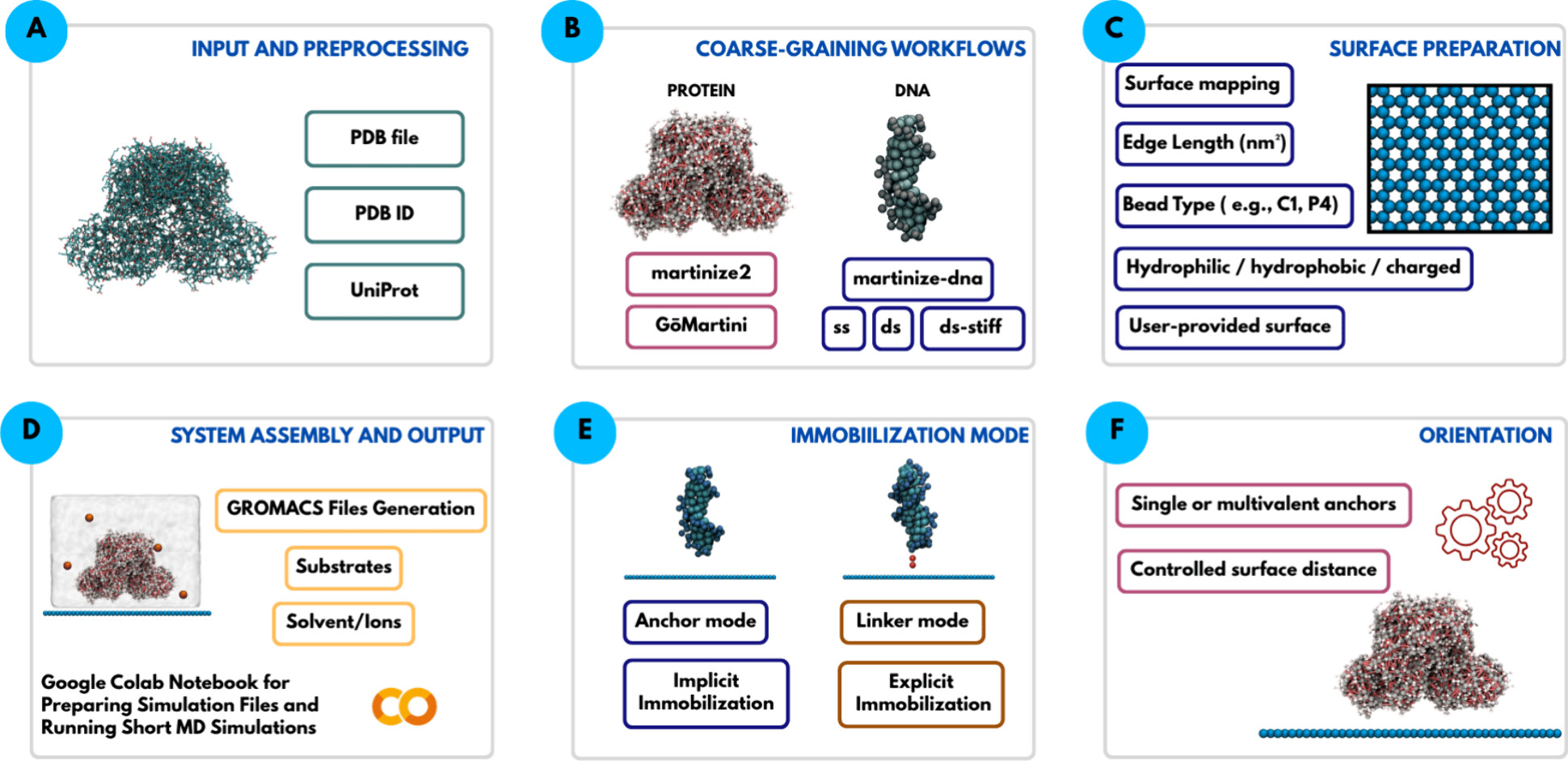
MartiniSurf
Overview of the MartiniSurf workflow for constructing surface-immobilized biomolecular systems for coarse-grained molecular dynamics.

Restraining forces or linkers

A central feature of the software is its flexibility in representing how a biomolecule is attached. In one mode, selected regions of the molecule are held near the surface through simple restraining forces, without modeling the physical connector itself. In another mode, an explicit molecular linker is placed between the biomolecule and the surface, so that the linker’s own length and flexibility can influence the simulation. Because the properties of such linkers are known to affect how active and stable an attached enzyme remains, this second option offers a more realistic picture whenever the necessary coarse-grained description of the linker is available.

Variety of supporting surfaces

The supporting surfaces themselves can also be varied widely. The software can generate simple flat reference surfaces or draw on previously developed coarse-grained models of real materials such as graphene, graphite, carbon nanotubes, and agarose-like gels, the type of porous material commonly used to immobilize enzymes in the laboratory. Properties such as surface chemistry, electric charge, particle spacing, and added chemical groups can all be adjusted. Recent studies have shown that surfaces built without care can cause water molecules near the interface to line up in unrealistic, almost frozen patterns, an artifact rather than genuine physical behavior. The software includes options that let users introduce controlled irregularity into the surface to reduce this problem, while staying consistent with the wider Martini modeling framework.

In practice

To demonstrate how the approach works in practice, the study presents examples involving both proteins and DNA. For an enzyme attached to an agarose-like surface, the software reproduces several different attachment arrangements, including a complete system containing the enzyme together with its natural helper molecule and reaction substrate. These examples show how changing the attachment point or adding chemical groups to the surface can be explored systematically, without needing to reconstruct every model from scratch by hand.

The approach is also extended to DNA tethered to a graphene-like surface, comparing an electrically neutral surface with a positively charged one. The coarse-grained simulations reproduce the same general behavior previously reported in much more computationally demanding all-atom studies: the DNA strand remains mostly upright above the neutral surface but bends progressively toward the surface when it carries a positive charge, drawn in by electrostatic attraction. This comparison is not meant to reproduce exact experimental values, but rather to confirm that the automated setup captures the right physical trends, providing a check on the reliability of the workflow.

Reproducibility

Every simulation generated by the software automatically records the settings, software versions, and modeling choices used to build it, so that another researcher can repeat or directly compare a given calculation later. Importantly, the software does not introduce new physical models or new force-field parameters of its own. Instead, it draws on already validated Martini tools and organizes them into a consistent, automated pipeline.

Overall, MartiniSurf addresses a practical bottleneck in computational chemistry rather than proposing a new simulation method. By automating the construction of surface-bound protein and DNA systems, it makes coarse-grained molecular dynamics studies faster to set up, easier to reproduce, and simpler to scale across many attachment geometries. This kind of tool should make it easier to systematically study how surface properties, attachment geometry, and molecular flexibility shape the behavior of immobilized biomolecules, supporting the design of better catalysts, biosensors, and other biotechnology applications.

Author: César Tomé López is a science writer and the editor of Mapping Ignorance

Disclaimer: Parts of this article may have been copied verbatim or almost verbatim from the referenced research paper/s.

References

  1. J. C. Jimenez-Garcia, F. Lopez-Gallego, X. Lopez, and D. De Sancho (2026) MartiniSurf: Automated simulations of surface-immobilized biomolecular systems with Martini J. Chem Inf. Model. doi:10.1021/acs.jcim.6c00953 ↩

The post Overcoming bottlenecks in bio-interface simulations: The MartiniSurf Approach appeared first on Mapping Ignorance.
  •  

Why storing heat may be as important as storing electricity

Author: Tamara Cruz Tena, strategy consultant, CIC  energiGUNE


When energy storage is discussed in the context of the energy transition, the conversation almost invariably turns to electricity. Solar and wind power have made the temporal mismatch between energy production and energy demand one of the defining challenges of low-carbon energy systems, and technologies capable of storing electrical energy have consequently become central to discussions about decarbonization.

Yet this emphasis on electricity raises an interesting question. If a substantial fraction of the energy ultimately consumed by modern societies is required not as electricity but as thermal energy, should future energy systems necessarily store energy in electrical form?

thermal energy
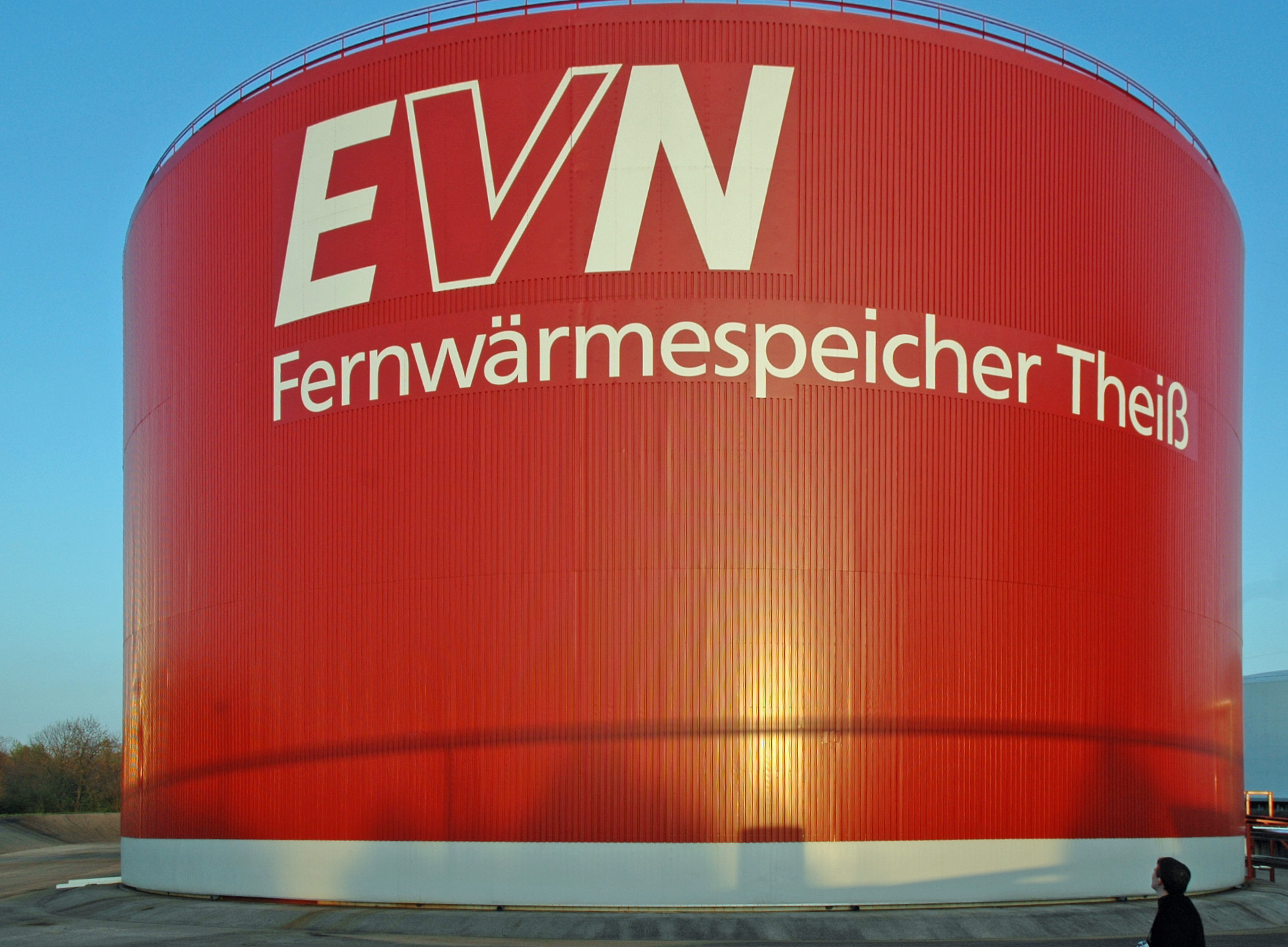
District heating accumulation tower from Theiss near Krems an der Donau in Lower Austria with a thermal capacity of 2 GWh. Source: Ulrichulrich CC BY-SA 3.0 / Wikimedia Commons

The question may appear deceptively simple. Electricity plays a visible role in modern economies, powering everything from communications and transportation to industrial equipment and domestic appliances. Thermal energy, by contrast, often remains hidden within industrial processes, heating systems and manufacturing operations. Nevertheless, many of the activities that sustain modern societies depend primarily on heat rather than electricity.

Steelmaking, cement production, chemical manufacturing, food processing, paper production and numerous other industrial activities require thermal energy delivered under specific conditions of temperature, power and duration. In many cases, fossil fuels have historically fulfilled this role not because alternative energy sources were unavailable, but because combustion offers a relatively direct means of producing high-temperature thermal energy where and when it is required.

As renewable electricity becomes increasingly available, this situation may encourage a different way of thinking about energy storage. Rather than focusing exclusively on how electricity can be stored and later returned to the grid, it may also be worth considering whether part of that energy could instead be stored in forms intended for later thermal use.

Such an approach would not eliminate the need for batteries, nor would it necessarily be appropriate for every application. It does, however, suggest that thermal energy storage may represent a distinct scientific and engineering problem whose requirements differ from those associated with conventional electrical storage technologies.

Storing energy for later thermal use

At the heart of the discussion lies a relatively straightforward physical observation. Electrical energy can be converted into thermal energy with high efficiency through a variety of heating technologies. Once this conversion has taken place, the resulting energy may be stored within a material or chemical system and later recovered when thermal energy is required.

Importantly, what is stored is not temperature itself. Temperature is an intensive thermodynamic property and therefore cannot be accumulated in the same way as energy. Instead, thermal energy storage systems retain energy through changes in the state of a material, whether by increasing its temperature, inducing a phase transition or driving a reversible chemical reaction.

The simplest of these approaches is generally known as sensible heat storage. In such systems, energy is stored through an increase in the temperature of a material. Water provides the most familiar example, although industrial applications may employ molten salts, rocks, ceramics, graphite or other materials capable of operating under more demanding thermal conditions. The amount of energy stored depends on the mass of the storage medium, its heat capacity and the temperature interval over which it operates.

A second possibility involves latent heat storage, where energy is absorbed or released during a phase transition. Because phase transitions may involve substantial enthalpy changes while temperature remains relatively constant, these systems can store significant amounts of energy within comparatively narrow temperature ranges. This characteristic has made phase change materials attractive for applications in which thermal energy must be supplied near a particular operating temperature.

Even more ambitious concepts involve thermochemical storage. In these systems, thermal energy drives reversible chemical reactions, allowing energy to be stored in chemical form and later recovered when the reverse reaction occurs. Under certain conditions, such approaches could potentially enable storage over much longer timescales than conventional thermal systems, although their practical implementation remains associated with significant scientific and engineering challenges.

At first sight, these approaches may appear to offer relatively straightforward solutions. However, as is often the case in energy research, the situation becomes considerably more complicated once practical constraints are taken into account.

Materials operating at elevated temperatures may experience degradation through corrosion, thermal fatigue, creep, phase instability or other mechanisms whose importance depends on the operating conditions and storage medium. Repeated thermal cycling can gradually alter material properties, while large-scale systems introduce additional challenges related to heat transfer, containment and long-term reliability. In thermochemical systems, reaction kinetics, cycling stability and reactor design may become equally important considerations.

As a result, the central question is not whether thermal energy can be stored. It clearly can. The more difficult question is whether such storage can remain technically reliable, economically viable and operationally robust under the conditions required by industrial applications.

A maturity paradox

Interestingly, many of the technologies that could contribute to this objective are no longer at an early stage of development. Electric heat pumps, electric boilers, electric resistance heaters and several forms of sensible and latent thermal energy storage have reached relatively high levels of technological maturity. From a purely technological perspective, the challenge is therefore not always one of invention. In many cases, the relevant technologies already exist.

Yet this observation introduces a different question. If a number of these technologies are already mature, why does their future role remain difficult to assess?

Part of the answer may lie in the complexity of modern energy systems themselves. The behaviour of a heat pump, an electric boiler or a thermal storage unit can often be described in considerable detail. However, energy systems contain thousands of interacting components operating across multiple spatial and temporal scales. Incorporating detailed representations of thermal technologies into large-scale energy models may therefore become computationally challenging, particularly when such models are intended to optimize entire electricity, heating and industrial sectors simultaneously.

This creates an interesting tension. The physical behaviour of thermal technologies is often governed by complex thermodynamic processes, yet large-scale energy planning frequently requires simplified mathematical representations that remain computationally tractable. Determining how much detail can be removed without losing essential information remains an active area of research and may influence how the future role of thermal energy storage is assessed.

This distinction may help explain why thermal energy storage has attracted increasing scientific interest in recent years. A significant fraction of industrial energy demand is thermal rather than electrical, and many industrial processes require heat directly. Under such circumstances, converting electrical energy into thermal energy, storing it, and subsequently using it as heat may sometimes prove more practical than repeatedly converting energy between different forms.

Beyond storage

The implications extend beyond individual storage technologies. Some researchers have suggested that thermal energy storage could also contribute to system flexibility by partially decoupling heat demand from the instantaneous availability of renewable electricity. During periods of abundant renewable generation, electrical energy could be converted into thermal energy and stored for later use. If such approaches prove technically and economically viable at scale, they could potentially help reduce some of the temporal mismatches that arise in renewable-dominated energy systems.

Whether this possibility ultimately becomes significant remains uncertain. Industrial sectors differ substantially in their temperature requirements, operating schedules and process constraints. Storage technologies that appear promising in one context may prove less suitable in another. Likewise, systems that perform well under laboratory conditions may encounter unexpected limitations when deployed at industrial scales.

For this reason, thermal energy storage may be best understood not as a single technology but as a broad collection of approaches aimed at addressing a common problem. The details differ from one system to another, but the underlying question remains remarkably simple: if much of the energy consumed by modern societies is ultimately required in thermal form, what is the most effective way of ensuring that such energy remains available when it is needed?

Viewed from this perspective, the challenge is not simply one of storage. The objective of an energy system is not merely to retain energy for later use, but to ensure that energy remains available in a form compatible with the process that ultimately consumes it. In some cases that form may be electrical. In others, it may be thermal. Determining when each option is preferable remains an active area of research.

Whether any particular thermal energy storage technology ultimately becomes a major component of future energy systems remains unclear. What already appears increasingly difficult to ignore, however, is the observation from which the entire discussion emerges. A substantial fraction of the energy consumed by modern societies is required in thermal form. This fact alone may justify a closer examination of how such energy can be stored, transported and recovered efficiently. As researchers continue to investigate the materials, mechanisms and constraints involved, thermal energy storage may offer a useful reminder that decarbonization involves more than replacing one source of electricity with another. It may also require a deeper understanding of how energy itself is used.

The BRTA is a consortium that remains a step ahead of future socio-economic challenges worldwide and in the Basque Autonomous Community; it addresses them through research and technological development, thus projecting itself internationally. The BRTA centres collaborate to generate knowledge and transfer it to Basque society and industry so as to make them more innovative and competitive. The BRTA is an alliance of 17 R&D centres and cooperative research centres with the support of the Basque Government, the SPRI and the Chartered Provincial Councils of Araba, Bizkaia and Gipuzkoa.


References

  1. Maruf, M. N. I., Morales-Espana, G., Sijm, J., Helistö, N., and Kiviluoma, J. (2021) Classification, potential role, and modeling of power-to-heat and thermal energy storage in energy systems: A review. arXiv. Available at: https://arxiv.org/abs/2107.03960
  2. CIC energiGUNE (2022) Thermal energy storage: a key factor in energy transition. Available at: https://cicenergigune.com/en/blog/thermal-energy-storage-key-energy-transition
  3. International Energy Agency (2024) Energy Efficiency 2024. International Energy Agency. Available at: https://www.iea.org/reports/energy-efficiency-2024


The post Why storing heat may be as important as storing electricity appeared first on Mapping Ignorance.
  •  

Scientists Crack Major Ammonia Problem With a Platinum Catalyst Breakthrough

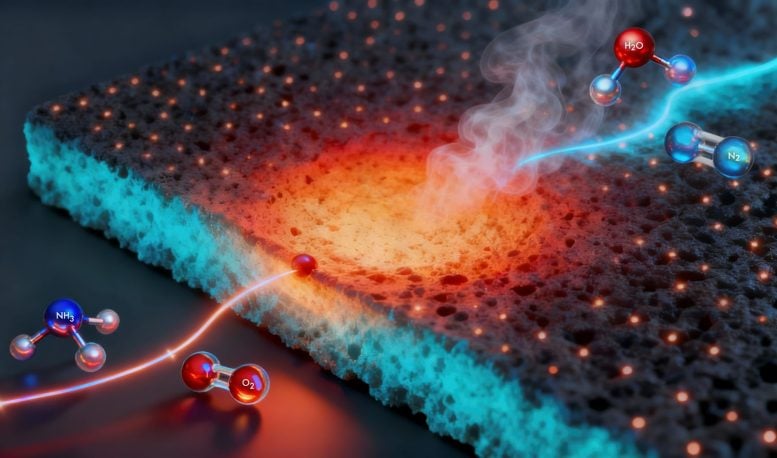
Platinum Catalyst Lights AmmoniaA newly engineered catalyst overcomes key obstacles that have long limited ammonia as a clean fuel for heavy industry. A newly developed single-atom platinum catalyst can ignite ammonia at about 200°C (392°F) and sustain stable combustion at 1,100°C (2,012°F) while producing very little NOx. The breakthrough could provide carbon-free, high-grade heat for industries such as [...]
  •  
❌