❌

Reading view

California Wildfires Damage Homes, Exmoor Dark Skies Festival Marks a Decade — Today’s Environmental Briefing for Sat, Oct 17 2026

Firefighters work in a smoky, burned forest beside a road.

Environmental change is being measured in forests cleared, crops stressed and species pushed from their habitats. But the response is also being shaped by decisions about money, land and technology, and by people trying to protect both livelihoods and the places they depend on.

Brazil’s latest figures offer one of the clearest signs of progress: forest clearing in the Amazon fell to 3,335 square kilometers in the year ending July 31, 2026, 42% below the previous year and the lowest level since records began in 1988. The Cerrado also saw a decline. The drop comes ahead of a presidential run-off in which the rainforest’s future is a key issue. Whether the reduction lasts remains uncertain.

Elsewhere, the costs of adapting to environmental pressures are immediate. Drought has left England’s pumpkins smaller than usual, with growers warning the crop could be the worst on record. In Southern California, wildfires have damaged or destroyed six homes, while a firefighter suffered heat exhaustion. And in the UK, proposals to cut hundreds of millions of pounds from the heat pump grant scheme could affect support for households switching from gas, oil or LPG boilers.

These stories sit alongside questions about what governments choose to prioritize. US voters in battleground states want candidates to discuss climate change, but candidates have largely stayed quiet. In Britain, Chancellor John Healey has made a growth case for Heathrow’s proposed third runway, while the prime minister has not backed the project. The government is studying consultation responses. The choices are practical as well as political: how to cut emissions, where to direct public funds and whose concerns shape decisions.

On the ground, communities are building their own responses. In Sergipe, women shellfish gatherers are resisting mangrove degradation and fighting for access to the areas where they work. In coastal Indonesia, Wisye Sahambangung leads a women’s group restoring mangroves and creating economic opportunities. Their work connects habitat protection with income and access to natural resources.

Other reports show how easily conservation efforts can create new pressures. Researchers found fewer wild pollinators in areas with higher concentrations of honeybees, which were observed bumping into or chasing other pollinators from flowers. The finding complicates the idea that more beekeeping automatically helps pollinators. In western states, efforts to reduce wolf numbers raise questions about the animals’ social lives and their role in nature. Meanwhile, countries are falling short of pledged funding and ocean-protection goals ahead of the UN biodiversity conference, COP17.

Technology and spectacle bring their own questions. Starlink’s reported restrictions in Ukraine have prompted US senators to seek an investigation into who imposed them, while the service remains important to Ukraine’s wartime operations. At a different scale, Belfast Harbour is to test zero-emission transport and energy systems with £15m in funding.

The Exmoor Dark Skies Festival, with about 80 events planned, offers another way people encounter the natural world: through walks, astronomy sessions and moonlit swims. The weeks ahead will show whether policy commitments match the scale of environmental pressures, and whether local efforts can endure with the resources and access they need.

The post California Wildfires Damage Homes, Exmoor Dark Skies Festival Marks a Decade — Today’s Environmental Briefing for Sat, Oct 17 2026 first appeared on EnviroLink Network.

  •  

US Confirms Orbital Weapon, Essex Wildlife Habitat Threatened by Data Centre — Today’s Environmental Briefing for Wed, Sep 16 2026

Illustration of a military satellite weapon orbiting Earth above rare UK wildlife habitat threatened by development

Across the stories today, a common thread emerges: the boundaries we once drew around “the environment” — between land and sea, sky and orbit, economy and ecology — keep dissolving, revealing how deeply intertwined these systems have become.

Start with the sky, in more ways than one. The US government’s confirmation that it has deployed a weapon in Earth’s orbit marks a genuine turning point, not just for defense policy but for how we think about the commons above our heads. Space has long been treated as neutral ground; now it’s becoming contested territory, raising quiet but urgent questions about debris, escalation, and what “environment” even means when it extends past the atmosphere. Meanwhile, back on solid ground, the UK’s climate advisers delivered a pointed message to Heathrow: a third runway cannot proceed unless airlines help pay for the emissions it would unleash, potentially through carbon removal costs. It’s a small but telling signal that growth and climate accounting are becoming inseparable in policy conversations — expansion is no longer a given, even for infrastructure long considered inevitable.

That tension between growth and limits runs through much of today’s coverage. A Guardian analysis found that the world’s twenty largest private equity firms back energy portfolios emitting more greenhouse gases than all but three countries on Earth — a stark reminder that climate accountability often hides behind layers of finance most people never see. In Venezuela, a US-backed push for “legitimate” mining and a new oil megadeal are drawing warnings from environmental and human rights groups who see familiar risks dressed in new language. And in Guinea-Bissau, industrial fishmeal factories are quietly hollowing out a food fish that coastal communities have relied on for generations. Behind the numbers are real communities adapting in real time — from Vietnamese fishers losing thousands of dollars per vessel to tangled plastic waste, to Dhaka residents like Yeasmin Begum, who has spent her life breathing the smoke of a landfill she never chose to live beside.

Yet alongside these pressures, the day’s coverage also points to growing momentum around resilience and repair. Ukrainians are turning to rooftop solar to keep homes running amid bombardment — a portrait of adaptation born from necessity. A Congolese NGO now co-manages a national reserve for the first time, a homegrown model of stewardship. Moon bears rescued from bile farms are stretching their limbs in Suffolk enclosures, and three wild dog brothers wandered 2,500 miles across Zambia in search of a mate, offering an unlikely note of hope for their species. Even Griffith Park’s mountain lion — photographed beneath the Hollywood sign — helped inspire the world’s largest wildlife crossing, proof that a single image can shift infrastructure decisions.

It’s a reminder that progress and pressure often arrive together. Some communities are innovating their way through crisis; others, like the land defenders now forming self-defense units amid rising violence, are simply trying to survive it. As Brazil’s upcoming election looms over the Amazon’s future, and Chief Raoni Metuktire — one of its most storied protectors — enters palliative care, the coming months may reveal whether today’s momentum toward stewardship can outpace the forces pulling the other way.

The post US Confirms Orbital Weapon, Essex Wildlife Habitat Threatened by Data Centre — Today’s Environmental Briefing for Wed, Sep 16 2026 first appeared on EnviroLink Network.
  •  

US ends limits on coal and gas plant emissions, removing key tool to fight climate crisis

Trump’s EPA strips itself of regulating ability, gutting Clean Air Act in what experts say is a gift to planet polluters

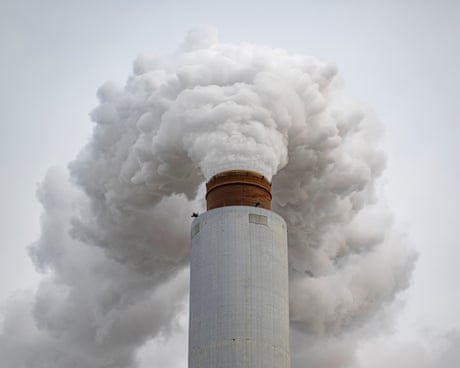
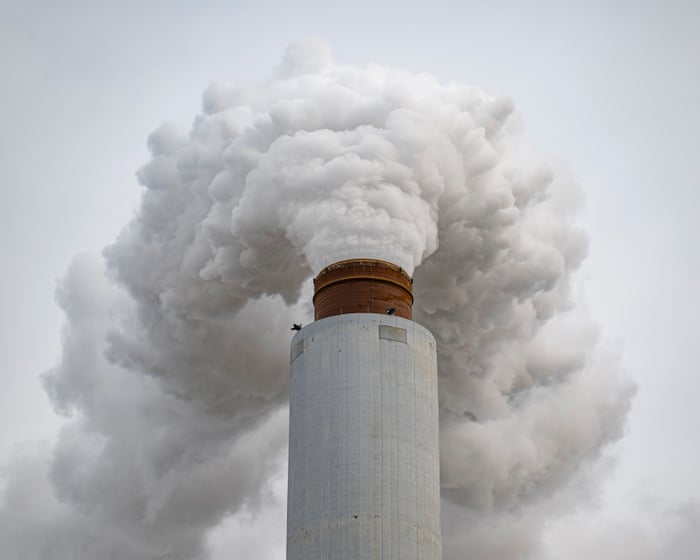
On the heels of the hottest summer ever recorded in the US, the Trump administration has said it will erase any limits on emissions from coal and gas plants that are dangerously heating up our planet.

The US Environmental Protection Agency said it will strip itself of its ability to regulate greenhouse gas emissions coming from power plants under the Clean Air Act, removing a key tool to address the climate crisis.

Continue reading...

© Photograph: Jon Cherry/Getty Images

© Photograph: Jon Cherry/Getty Images

© Photograph: Jon Cherry/Getty Images

  •  

We know how to prevent black lung, so why are workers still dying?

Silicosis sufferers are getting younger as Trump and the coal mining industry push back on protections

Silicosis is one of the oldest workplace hazards and public health experts have known for decades how to prevent it. Yet a new wave of workers, from Appalachian coalminers to Latino countertop fabrication workers, are developing and dying from the disease as industry fights new protections and regulators fail to defend the rules that could protect them.

John Robinson’s grandfather developed black lung back when coalminers could spend decades in the mines before being diagnosed with the disease, often dying in their 60s, 70s and 80s. But Robinson, who mined for coal in south-west Virginia, was diagnosed when he was 47. He’s part of a trend that has grown over the past two decades in central Appalachia, where more coalminers are developing black lung disease at younger ages.

Continue reading...

© Photograph: The Washington Post/Getty Images

© Photograph: The Washington Post/Getty Images

© Photograph: The Washington Post/Getty Images

  •  

In Nepal and Tibet, Pollution on Glaciers Could Fuel More Flood Disasters

Darkened by soot from vehicles and factories, the region’s glaciers are absorbing more heat and melting at dangerous rates.

© Jason Gulley for The New York Times

A meltwater lake on the Ngozumpa Glacier in Nepal in 2025.
  •  

Amazon backs power plant that may become top source of US climate pollution

Amazon’s artificial intelligence ambitions will soon be partly fueled by a natural gas-burning power plant in Texas that “could become the largest single source of climate pollution in the United States,” The New York Times reported.

These gas-burning plants are increasingly lumped into data center projects. They produce harmful pollutants, which can accelerate climate change impacts and harm public health—contributing to conditions like asthma, heart disease, lung cancer, and strokes. Some communities are demanding more stringent environmental reviews, but the Trump administration favors fast-tracking that can include skipping the permitting process entirely.

Since Elon Musk’s xAI controversially began relying on gas turbines last spring to power its biggest AI data center, Colossus, there has been public backlash to off-the-grid data centers like the one Amazon is building.

Read full article

Comments

© eric1513 | iStock / Getty Images Plus

  •  

Birds Are Dying. Clues Point to El Niño.

A die-off of seabirds has some experts thinking an El Niño weather pattern is to blame, a look at data centers and pollution, and more climate news.

© American Bird Conservancy

Seabird carcasses in Ecuador.
  •  

Advanced Recycling Hits a Rough Patch

In the past weeks, two sites in the United States have halted operations.

© Maddie McGarvey for The New York Times

Unlike traditional mechanical recycling, advanced recycling can theoretically process mixed or contaminated plastics that otherwise would end up in landfills.
  •  

E.P.A. Moves to Loosen Limits on Pollution From Trucks

The Trump administration wants to roll back some Biden-era restrictions on smog-causing emissions from heavy-duty vehicles.

© Justin Sullivan/Getty Images

Trucks at the Port of Oakland. The new proposal would rescind a 2022 rule designed to significantly reduce emissions of nitrogen oxides, which cause smog.
  •  

Justice Department Makes It Easier to Bypass Pollution Controls on Pickups

It has stopped criminal prosecutions of people who install “defeat devices,” which make diesel trucks faster and more efficient but also dirtier.

© Acacia Johnson for The New York Times

  •  
  •  

Trump’s DOJ intervenes to keep Musk’s xAI gas turbines polluting Memphis

The US Department of Justice has asked a federal court to throw out a Clean Air Act lawsuit against Elon Musk’s xAI, arguing that the company’s unpermitted gas turbines near Memphis are a matter of “national, economic, and energy security.”

The move puts the Trump administration in court alongside Musk to defend dozens of methane-burning turbines that have been running without air permits in one of the most polluted regions of the country.

  •  
❌