❌

Reading view

A 180-Foot-Long Stone Tomb With “Antennae” Found in Western Sahara Is Over 4,000 Years Old

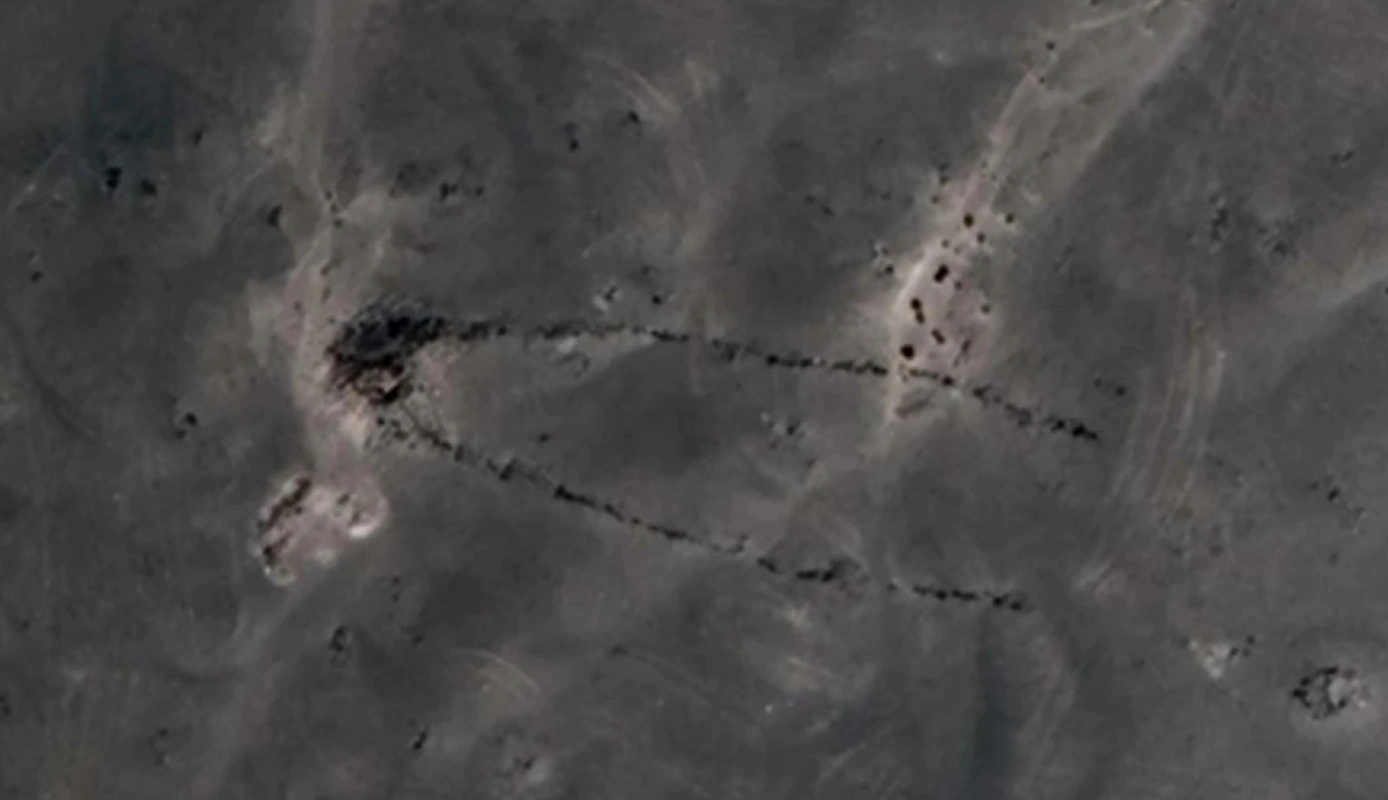
On a gravel plain in northern Western Sahara, with no shade for miles, there is a heap of stones 54.5 meters (179 feet) long. Two rows of stone slabs run out from it like the arms of a V that never quite closes. Archaeologists call these rows “antennae”, and the monuments antennae tumuli (a tumulus […]

  •  

Una tumba de 55 metros de longitud descubierta en el Sáhara Occidental tiene más de 4.000 años

En una llanura de grava del norte del Sáhara Occidental, sin una sombra donde resguardarse, hay un montón de piedras de casi 55 metros de largo del que salen dos hileras de losas. Los arqueólogos las llaman «antenas», y de ahí el nombre de estos monumentos, túmulos con antenas. Son frecuentes en el país y […]

  •  

Finance and Indigenous rights top Africans’ agenda as biodiversity summit opens in Yerevan

As the U.N. Convention on Biological Diversity’s 17th summit opens in Yerevan, Armenia, on Oct. 19, what’s at stake for Africa? In 2022, parties signed the Kunming-Montreal Biodiversity Framework, agreeing to maintain, restore, and substantially increase the area of natural ecosystems and end human-induced extinction of threatened species; to sustainable use of biodiversity; to fair and equitable sharing of both monetary and non-monetary benefits derived from genetic resources; and to establish adequate means to implement the framework — including finance, scientific cooperation and building capacity of all parties. The summit, which runs through Oct. 30, marks the halfway point to the deadlines for a first set of 23 action-oriented global targets. The progress report is not encouraging: Fewer than half of countries say they are on track to meet their self-designed biodiversity targets. “The report shows that many of the critical elements of progress, including finance, capacity, cooperation and data — are still missing in action,” U.N. Secretary-General António Guterres said in a press release accompanying the organization’s State of Biodiversity Action report. Three of the world’s “megadiverse” countries are in Africa: The Democratic Republic of the Congo, Madagascar and South Africa make the list of 17 countries that are each home to at least 5,000 of the world’s plant species that are endemic. None of the three met the initial 2024 deadline for a national biodiversity strategy as set out under Kunming — South Africa still hasn’t submitted an action plan. The headline goal — to see 30% of…This article was originally published on Mongabay

  •  

Fossil Evidence Suggests Early Homo Had Abandoned Tree-Climbing by 1.8 Million Years Ago

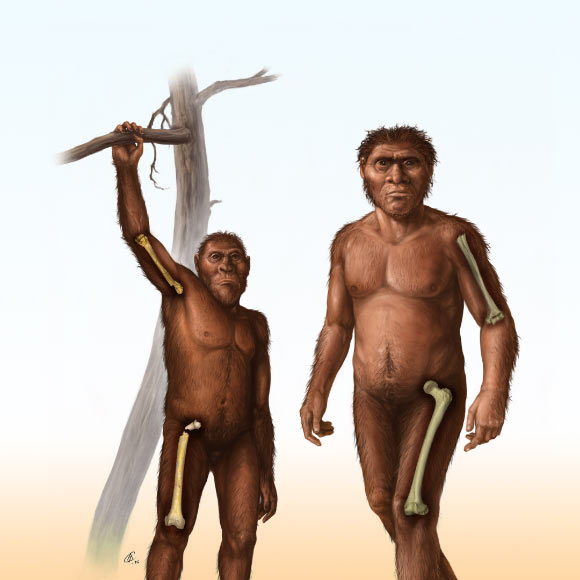
A depiction of an early Homo (right) characterized by relatively greater bone strength of the femur in the thigh compared to the humerus in the arm, and a depiction of an older human ancestor, Australopithecus (left), characterized by more equivalent strength in the bones of the arm and thigh. Image credit: Cullen Townsend.

New research led by University of the Witwatersrand and University of Southern California paleoanthropologists sheds more light on one of the most debated transitions in human evolution: when our ancestors stopped regularly climbing trees and committed fully to walking on two legs.

The post Fossil Evidence Suggests Early Homo Had Abandoned Tree-Climbing by 1.8 Million Years Ago appeared first on Sci.News: Breaking Science News.

  •  

Paleontologists Uncover New Mosasaur Species in Egypt’s Western Desert

Halisaurus arambourgi, a species of mosasaur from Late Cretaceous of Marocco. Image credit: DiBgd / CC BY-SA 4.0.

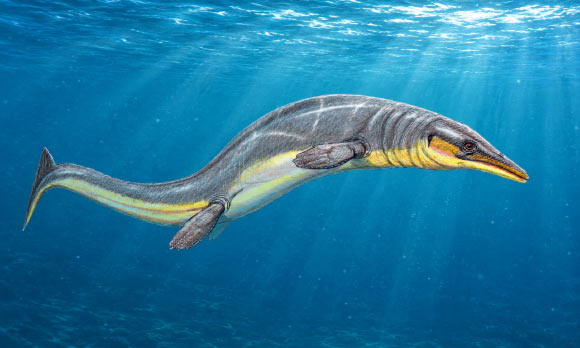
Paleontologists have described a previously unknown species of mosasaur -- a group of extinct marine reptiles that patrolled Cretaceous seas alongside dinosaurs on land -- based on fossils unearthed in Egypt’s Dakhla Oasis.

The post Paleontologists Uncover New Mosasaur Species in Egypt’s Western Desert appeared first on Sci.News: Breaking Science News.

  •  

‘A good way to die’: triumph and tragedy among dispersing African wild dogs

In mid-2025, a trio of male African wild dogs headed east through the open woodlands of Kafue National Park in west-central Zambia, away from the pack they’d grown up in. Roughly two weeks earlier, four of their sisters had also left the pack. One dog in each of the groups was wearing a GPS collar fitted and monitored by a team of researchers from the Zambian Carnivore Programme, Zambia’s Department of National Parks and Wildlife, and other partners. The tracking data showed that the females headed northward, into a game management area (GMA), a partially protected buffer zone adjacent to the park. But their brothers, known to the researchers as the Mayukuyuku males, entered an unprotected area east of Kafue, then turned north toward the cities of Kitwe and Ndola. The two dispersing groups were doing what wild dogs (Lycaon pictus) tend to do when they reach the age of around 3 years old. They break from their birth packs and head out in search of territory and mates to form packs of their own. But it’s also extremely risky behavior. “A good way to die, if you’re an African wild dog, is to leave your pack,” said Scott Creel, an ecologist at Montana State University in the U.S. and lead author of a new study recording these and other epic wild dogs movements across Zambia. But, he added, the alternative is also grim: “A good way to never reproduce is to stay in your pack.” African wild dogs in…This article was originally published on Mongabay

  •  

Why Africa is Against Mercator, Why America is For Him

The UN resolution to junk the Mercator projection of the globe – which makes Africa look small and Canada big – is nakedly political, says Professor James Alexander. No wonder the US opposed it.

The post Why Africa is Against Mercator, Why America is For Him appeared first on The Daily Sceptic.

  •  

North Africa’s Oldest Fort Outside Egypt Rose in Step with Bronze Age Spain

Before Rome existed, before Phoenician ships ever reached the western Mediterranean, and around the same time the first fortified villages of the Argaric culture were rising in southeastern Iberia, a farming community on a rocky ridge in inland Morocco was already digging a ditch and piling up earth. What they were defending against is still […]

  •  

M42 picks Oracle healthcare tech

Health company M42 positioned a deal with Oracle as its latest step to establish the UAE at the centre of the global market, with the pair deploying a product offering unified access to patient data.

Oracle stated M42 intends to use its Health Data Intelligence product on clinical, genomic and real-world data to boost management of chronic diseases and enable a host of other services.

These include mapping the health of populations and providing precise care.

Oracle stated M42 is on a mission to establish the UAE as “a global hub for healthcare innovation” and a leader in employing AI to overhaul the sector.

Dr. Ali Anees, CCO for UAE and Bahrain at M42, said the company is a long-term user of Oracle’s health products and has high expectations about what can be achieved through the combination of information detailed above.

The executive expects the work to speed detection, and deliver “more predictive insights” and tailored patient healthcare.

M42 hopes the Oracle products will advance ambitions to deliver comprehensive patient records which it expects to aid healthcare providers’ work by offering a big-picture overview.

It expects the unified approach and ability of AI to digest reams of data to help identify disease patterns and contributing factors.

AI is also being banked on to deliver swifter diagnoses and detection of emerging health trends.

The post M42 picks Oracle healthcare tech appeared first on Mobile World Live.

  •  

Syrian reactor could have been used for nuclear weapons if completed, UN says

Chief of nuclear watchdog says secret Assad-era facility would have been able to produce fissile material

A nearly complete nuclear reactor built secretly during the rule of the toppled Syrian leader Bashar al-Assad would have been able to produce fissile material for possible use in nuclear weapons, the chief of the UN nuclear watchdog has revealed.

Inspectors from the International Atomic Energy Agency (IAEA) last month visited two sites, one in Deir ez-Zor and a second in an undisclosed location identified to them by Syrian authorities.

Continue reading...

© Photograph: Mahmoud Hassano/Reuters

© Photograph: Mahmoud Hassano/Reuters

© Photograph: Mahmoud Hassano/Reuters

  •  

World Heritage status for South Sudan parks will be a boon for the birds

The onset of the rains in South Sudan around April each year is accompanied by a remarkable avian spectacle. “There are so many storks that they kind of look like flies in the sky,” said Megan Claase, a conservation manager with African Parks, the organization that manages the Boma and Badingilo national parks in partnership with the South Sudanese government. The vast flocks congregating in the skies above Boma and Badingilo include African openbills (Anastomus lamelligerus), Abdim’s storks (Ciconia abdimii), and other birds moving across Africa in sync with the changing seasons. “I think it’s a very productive system after the first rains,” Claase told Mongabay, citing as an example the large blooms of winged alates that emerge from termite holes and are eaten by a wide variety of birds, including the storks. “It’s just such a haven for migratory species.” Wetlands at Boma-Badingilo Migratory Landscape, South Sudan. Image © Marcus Westberg. As the rains persist and much of the landscape becomes waterlogged, an abundance of invertebrate food is produced, Claase said. That includes snails and other mollusks eaten by the openbills, named for the curious gap in their bills that help them to grip their slippery prey. The Boma and Badingilo parks and surrounding areas are all part of a massive interconnected ecosystem of wetlands, swamps, woodlands, and grassy plains, which Claase said lies at the heart of Africa’s largest intact savanna system. This landscape, around the size of North Korea, is home to an estimated 6 million antelopes,…This article was originally published on Mongabay

  •  

‘LION’ – new TV series chronicles four-year journey of lion cub Kio

It’s very much a real-life doco version of ‘The Lion King’, with Jon Favreau executive producing, and music from Hans Zimmer echoing themes from the Disney classic. It took Disney+ and BBC Studios’...

The post ‘LION’ – new TV series chronicles four-year journey of lion cub Kio first appeared on Science Illustrated.

  •  

On These Motorcycles, the Thrill Is Electric

With gas prices high, people in developing countries are racing to buy battery-powered bikes. The Iran war has made Trump “salesman of the year,” one executive in Pakistan said.

© Asim Hafeez for The New York Times

  •  

On These Motorcycles, the Thrill Is Truly Electric

With gas prices high, people in developing countries are lining up to buy battery-powered bikes. The Iran war has made Trump “salesman of the year,” one executive in Pakistan said.
  •  
❌