
❌

Reading view

Americans Are Spending More Money to Drive Worse Cars

For the first time since the dawn of the automobile, the majority of new cars are not powered exclusively by gasoline: So far in 2026, electric vehicles and hybrids are outselling traditional gas-powered cars. As oil prices have gone up and up since the start of the war in Iran, drivers from Hanoi to Hamburg are picking up EVs like never before. According to the energy think tank Ember, 49 countries have broken EV-sales records this year. The prime minister of Thailand recently ditched his Rolls-Royce and commuted to work in an all-electric BYD Sealion.

And then there’s the United States. For all the angst over high gas prices, EVs accounted for just 6.4 percent of new-car sales in the U.S. from July to September. That’s a slight rise from January, before the beginning of the war with Iran—but just barely. The U.S. has long been something of an EV laggard, full of drivers (and a president) who are skeptical of battery-powered cars. But even as gas prices have jumped from $3 to $4.50 over the past year, drivers won’t budge.

America’s car fleet was never going to flip overnight. No one forks over $50,000 for a Tesla the moment gas hits $5 a gallon. “If gas prices are higher for a little while,” Elaine Buckberg, a senior fellow at Harvard University’s Salata Institute for Climate and Sustainability and a former executive at General Motors, told me, “people say, ‘Oh, this is going to pass. I’m not going to go and change what vehicle I own.’” But when high gas prices linger for half a year or longer, Buckberg added, the direction of the car industry can shift. The shortages and lines of the 1970s helped kill the mid-century land yacht. In the 2000s, record-high gas prices tempered the craze for gas-guzzling SUVs and pushed millions of Americans to buy hybrids like the Toyota Prius. Now drivers have a real alternative to the whims of the world oil market. They’re just not taking it.

Americans are not all gasoline loyalists who’ve forsworn battery power. In fact, most drivers now say that they are strongly considering an EV as their next vehicle, and the trend is even stronger among people under 35. Pre-owned EVs are surging, but they represent a sliver of the used-car market, because so few of them are out there. The biggest winner from the gasoline spike has been the plain old hybrid, the green-car solution of the George W. Bush years. Sales in the U.S. have jumped 27 percent over the past year.

To some degree, Americans aren’t making the leap for several long-standing reasons: EVs are too expensive, and the options are lacking. Because the U.S. effectively bans electric cars made in China, we are cut off from buying something such as the BYD Dolphin Surf, an electric sedan that sells for about $22,000 in Europe. Many of the models that drivers are familiar with still cannot be had as an EV. Toyotas such as the RAV4 and Camry now come only as hybrids; last year, Ford killed the electric version of the F-150 pickup truck, this country’s most popular vehicle, citing low sales. Ford is now hyping up a roughly $30,000 electric pickup truck, but that won’t arrive until 2027. Meanwhile, America’s only electric minivan is the struggling Volkswagen ID. Buzz, a modern take on the flower-power bus. And although Tesla’s cars have a lot going for them, plenty of Americans say they won’t touch the brand because of Elon Musk. In short, the EV market is full of holes.

[Read: The great Tesla sell-off]

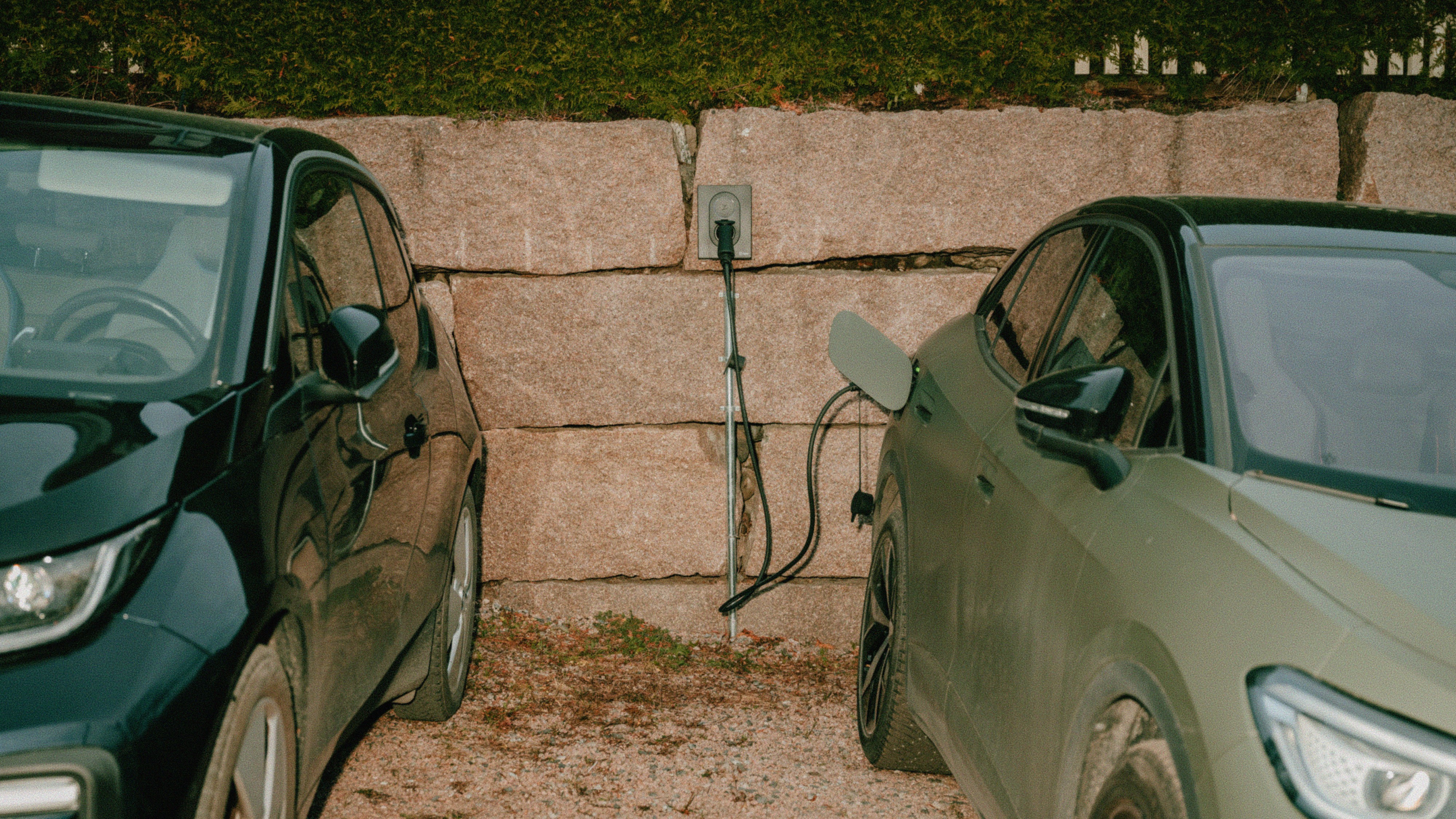
That said, it’s hard not to look at tepid EV sales and wonder whether Americans have lost the plot on electric cars. The price gap between gas and electric cars is closing; more EVs are now available for under $40,000. Charging networks are expanding, and battery ranges are climbing. Compared with even just a year or two ago, buying an electric car comes with fewer trade-offs. And in plenty of ways, EVs are just better. They’re zippy and fun to drive. They don’t require much of the routine maintenance, such as oil changes, that make car ownership annoying. They can do all sorts of things that fossil-fuel burners cannot: refuel at home, keep a house’s lights on during a blackout, store luggage in a “frunk.”

But if gas that’s creeping up on $5 a gallon isn’t enough to persuade people to go electric, what will? When I posed the question to Buckberg, she told me about research she’d worked on while at GM: Drivers were “happy to buy an EV—as long as they don’t have to give up anything they like about their current vehicle,” she said. In other words, it’s not enough for EVs to be good at what they’re good at—especially when relatively few Americans know someone who has one. They need to match the things that gas cars are good at too. Fast chargers are spreading, but not fast enough to free us from the mental load of worrying about where to refuel—something that’s been a given in a nation with a gas station at every corner. And what EVs can’t do yet (unless you’re in China) is recharge in as little time as it takes to pump gas. That’s something American drivers see as a prerequisite, even though most of us don’t regularly take very long road trips and drive an average of 30-some miles a day—a total easily handled by charging at home.

There’s every reason to think that EVs will continue a gradual climb, Corey Cantor, the research director at the Zero Emission Transportation Association, told me. A new wave of hyper-capable electric cars is arriving in America, with ranges above 400 miles per charge. But if EVs really have to do everything gas-powered cars do—and more—before drivers give them a chance, it’ll be a long time before America embraces them en masse. We’re nowhere near the charging speeds that China has achieved nor the density of plugs that would rival the ubiquity of gas stations. Until then, Americans will keep pumping gas into worse cars while the rest of the world has long moved on.
© Jan Khür / Connected Archive
  •  

An Unfortunate Surprise for BMW Owners

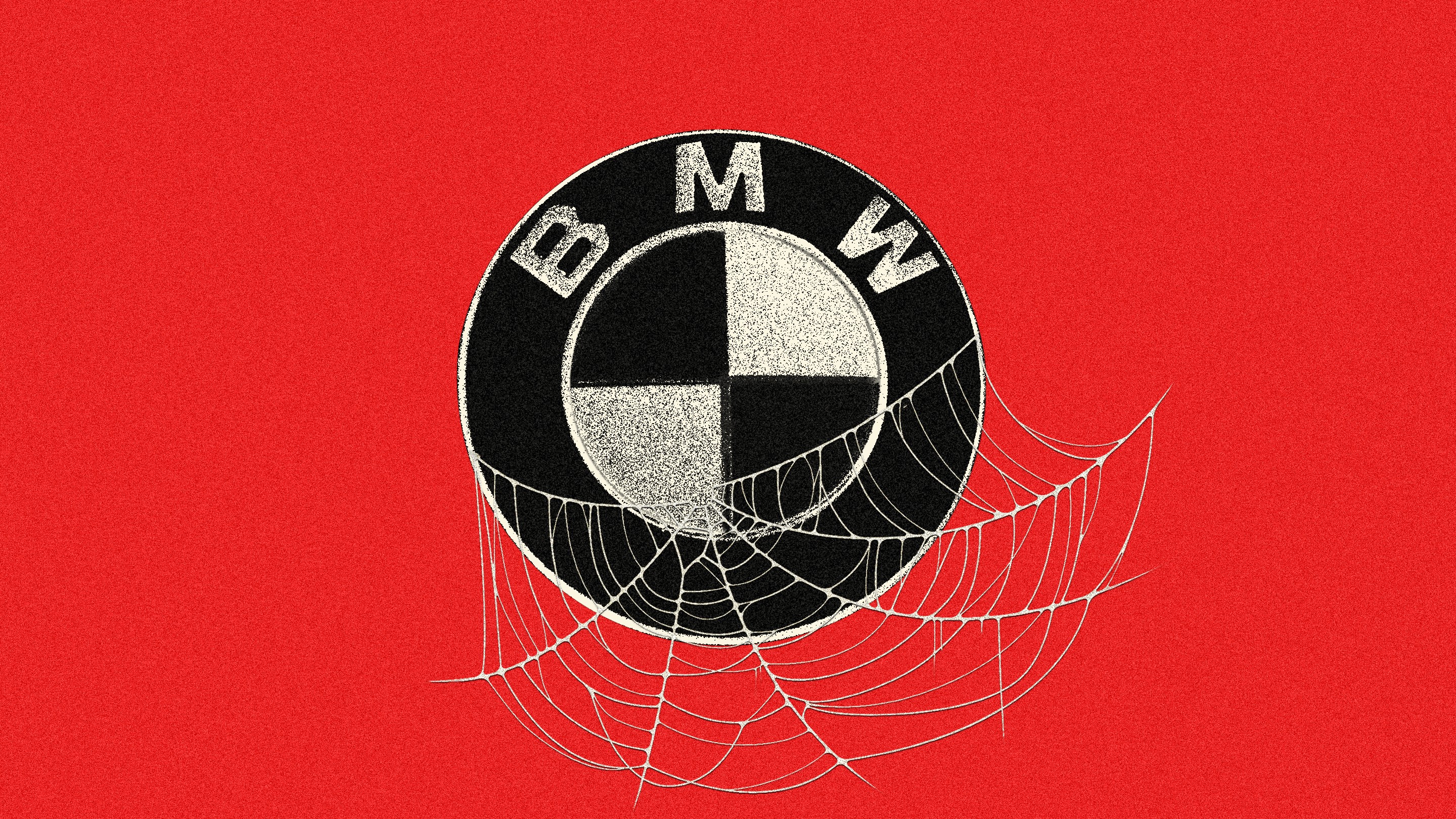
What does a roughly $100,000 BMW 7 Series get you? With a few taps on the sedan’s massive touch screen, you can play Pac-Man or let the car park itself. Last week, BMW added a new feature to its infotainment system: When drivers start up their car, they are greeted by the following message: “Surprise! Spider-Man just dropped on your BMW!”

Click on the prompt, which appears in most BMWs made after 2020, and the touch screen is taken over by a commercial for Spider-Man: Brand New Day, the latest movie in the Marvel franchise. The video is accompanied by blinking lights inside the vehicle. Though drivers can choose to skip the ad, it persists as an app on their car’s display.

Many BMW drivers have not been thrilled by this uninvited pitch for Peter Parker. “Stupid and annoying and totally unnecessary,” one user posted on a BMW Reddit forum. “Wtf am I getting an ad? How is that appropriate in a vehicle?” wrote another. In an email, Phil DiIanni, a BMW spokesperson,  told me that the ad is part of a broader partnership between BMW and Marvel, which has included placing a tricked-out Spider-Man-themed SUV on the red carpet during the movie premiere, last week. “The animation is available for a limited time and only visible to drivers who proactively initiate it on their vehicle’s touch screen,” he said.

A few other carmakers, such as Stellantis, have attempted in-car advertising before in the United States, but not a luxury brand like BMW. Regardless of what you drive, your car might be next. That’s because—to use the automotive world’s favorite cliché—cars are becoming “smartphones on wheels.” No longer is your vehicle a static piece of machinery governed by physical switches and buttons. This comes with many benefits. The modern, digital car can get better over time by virtue of its software: Over-the-air updates deliver new features that weren’t available when you bought the vehicle.

But with great connectivity comes great responsibility. When carmakers can beam code (and content) into our cars, they have more control over our time and money. The tech industry’s most grating strategies are invading the car.

[Read: My car is becoming a brick]

You might already be feeling one downside of smartphones on wheels: subscription fees. Though drivers have already spent decades paying for in-car communications systems, such as OnStar, monthly subscriptions have proliferated. My Tesla wants me to pay $10 a month for “premium connectivity” to access Spotify or Netflix through the touch screen, adding a monthly payment on top of the monthly payment I already pay to access those services outside the car. Self-driving features in Tesla vehicles require an ongoing monthly plan. Subscription fees aren’t always limited to software. In 2022, BMW itself announced that, in countries including the U.K. and South Korea, drivers would have to pay $18 a month to activate the heated seats already built into cars. (The company canceled the plan when customers revolted.)

In-car advertisements are the obvious next step. Cars are the perfect vehicle for this phenomenon because their passengers are quite literally stuck. You can put down your phone if the ads get too annoying, but you can’t just forgo driving the kids to school because your SUV is hounding you to watch a movie trailer. (BMW does allow drivers to permanently disable the pop-ups.) If the automotive industry continues to follow in the footsteps of Big Tech, it’s not hard to see where this goes from here: Soon, you might face targeted ads based on where you drive or Netflix-like tiers that ask you to pay to go ad-free. Serenity inside one’s car, something that was once a given, may become a luxury good.

Carmakers have plenty of reasons to do all of this. New-car prices have reached an average of nearly $50,000, and Americans may be reaching a breaking point. Auto companies facing tariffs, Chinese competition, and even a computer-memory shortage may nickel-and-dime you with subscriptions and ads to keep car prices under control, squeezing money from drivers long after the car is off the lot.

In this way, the auto industry has generated one more thing that’s already widespread with digital technology: nostalgia. Like users fleeing the constant distractions of their devices for a flip phone that does less, plenty of drivers already resent the way cars have ditched physical buttons and routed features such as climate control through a touch screen. But a low-tech new car is hard to find.

Sooner or later, Americans must come to terms with the fact that our machines are not always ours. In that sense, BMW’s Spider-Man ad is eerily reminiscent of another awkward tech collab: In 2014, Apple announced that U2’s new album would be automatically downloaded to hundreds of millions of iPhones without owners’ permission. At the time, the incident starkly illustrated the company’s power. Today that affair seems almost quaint. BMW’s in-car commercial may look tame compared with what comes next.

© Illustration by The Atlantic. Sources: Josefkubes / Getty; Seavector / Getty.

  •  

Driving in America Is Headlight Hell

Driving after dark used to be a haven. Late at night, there’s no rush-hour traffic, just the meditative hum of the passing miles. But these days, my eyes can’t take it anymore. Even on a lonely road in the middle of the night, I can’t seem to escape the glare of obnoxiously bright headlights. A pickup truck tailgating me blinds my rearview mirror with searing headlights. Even at a distance—and even when without the brights on—the beams of a vehicle in an oncoming lane make me instinctively squint. America’s roads are now full of tactical-grade headlights, and no one is happy about it. Just look at any of the viral screeds in the Reddit forum “r/fuckyourheadlights.”

Other people’s lights are a pet peeve nearly as old as the automobile: Everyone’s beams are too bright, too aggressive, and purposefully pointed into your eyes. But the problem really is worse than ever, and that’s because of the LED headlights that have taken over car design during the past decade or so. Not only can they crank out more lumens than the halogen lamps of old; their light is also sharper and bluer, which makes it feel like an assault on the eyeballs. Car companies have an incentive to install bright headlights that make drivers think Oh man, you can see everything, Jonathan Elfalan, the director of vehicle testing at Edmunds, told me. The wincing driver in the opposite lane isn’t their problem.

Across the world, high-powered headlights are far less menacing. That’s partly because of America’s obsession with crossovers, SUVs, and pickup trucks. New cars are taller and bigger than ever before, which means they are blasting light everywhere but down at the road ahead. “There’s a pretty good chance that the car behind you is shining its headlights right into your mirror,” Sean Tucker, a managing editor of Kelley Blue Book, told me. Still, other countries have long had something we don’t: high-tech headlights that can brilliantly illuminate the road in front of them without simultaneously burning another driver’s retinas. Although American cars are loaded with technology—plenty of new models now come with self-driving features and AI assistants—we’ve been missing out on a simple feature that would ease the problem of blinding headlights.

This technology is called “adaptive driving beam,” or ADB. Adaptive beams scan the road ahead of you and adjust accordingly: On a curvy stretch, the lights will track the road rather than shining straight ahead. They also can detect cars coming your way and dim just the light that’s pointed right at your fellow motorists. This is possible because an LED headlight is not a single light bulb that’s on or off but is made of a multitude of individual pixels. Adaptive beams have been popular in Europe for more than a decade and are in use in Asia and Canada. In the United States, just a handful of vehicles have them.

Blame the often strict and strange world of American car regulations. Decades ago, the National Highway Transportation Safety Administration mandated that cars need to have separate low and high beams. Adaptive beams—which are variable in nature—don’t fit into that binary. Congress finally amended the rules in 2021, a move meant to legalize the better method. That didn’t happen. NHTSA got to write the new regulations, and instead of adopting the international standard, it drew up a separate set of stricter rules. (An NHTSA spokesperson pointed me to the stance that the agency outlined a few years ago, which says that Europe’s test for adaptive bulbs lacks the “objective performance criteria” necessary for approving car tech in the U.S.)

The result of this confusion is that although new cars in America have the technology in place to shine less blinding beams—possibly activated via a simple, over-the-air software update, Tucker said—that’s illegal. This gets even more absurd when you consider how simple fixes have solved previous headlight woes. Even new entry-level cars come with an auto-dimming feature to deactivate the brights when another car approaches, minimizing breaches of headlight etiquette.

Instead of turning on technology that already exists, the pathway for car companies to fix American headlight glare involves reinventing their smart headlights. In 2024, Rivian put the tech into its pickups and SUVs and became the first automaker to activate compliant adaptive beams in the U.S. That happened only after Rivian redesigned the entire electronics-and-computing setup in its vehicles, a move that gave the company enough control over the LED headlights’ pixels to satisfy American regulators. “The standard is genuinely demanding,” Carlos Montes Relanzon, Rivian’s senior manager for lighting systems, told me.

The solution is powerful, if eerie. When I test-drove Rivian’s R1S SUV up the California coast last summer, I couldn’t stop staring at the intermittent hole in my headlight beam—a dark spot that would appear as if part of the lamp had burned out, then vanish. At first unaware that Rivian had rolled out the feature, I wondered whether the car might be defective. When I finally realized what the SUV was up to and began to track the tech’s performance, I was reassured by the fact that the Rivian could recognize other cars and turn down the lights while they were still several seconds away, rather than waiting until an oncoming driver was right next to me.

The rest of America’s car industry is slowly coming around. Last year, Tesla introduced adaptive beams in its updated Model Y crossover. And last month, Audi announced that it would put adaptive beams in the 2027 Q9 SUV, set to debut in the U.S. later this year. An Audi spokesperson told me that the company is holding out hope that the NHTSA will come around and agree to adopt the international standard. For now, other car companies will also have to suck it up and sink money into rebuilding adaptive headlights for their American cars. (I asked Ford, Chevrolet, Toyota, and Mercedes about when the automakers might introduce adaptive bulbs, but did not receive more information.)

Unless America suddenly lets carmakers turn on the tech that’s already sitting dormant in plenty of vehicles, today’s glaring lights are going to stick around. Cars now stay on the road longer than ever—13 years on average—so even if every new vehicle today began offering adaptive beams, the journey to replace old cars with new ones that have friendlier headlights would be long. Cool feature or not, adaptive beams are unlikely to persuade many drivers to trade in an older vehicle for a new one. After all, they improve the lives of other drivers more than they help car owners themselves.

This becomes clear when you’re the highway Good Samaritan. As I meandered through the blackness of Route 101 in the Rivian, passing roadside outposts such as King City and Soledad, my vehicle auto-dimmed its lights for one oncoming driver after the next. Mile after mile, their lights still kept me squinting.

© Illustration by Akshita Chandra / The Atlantic. Source: Getty.

  •  
❌