
❌

Reading view

Fuel from landfill waste can bring down carbon emissions in the cement industry
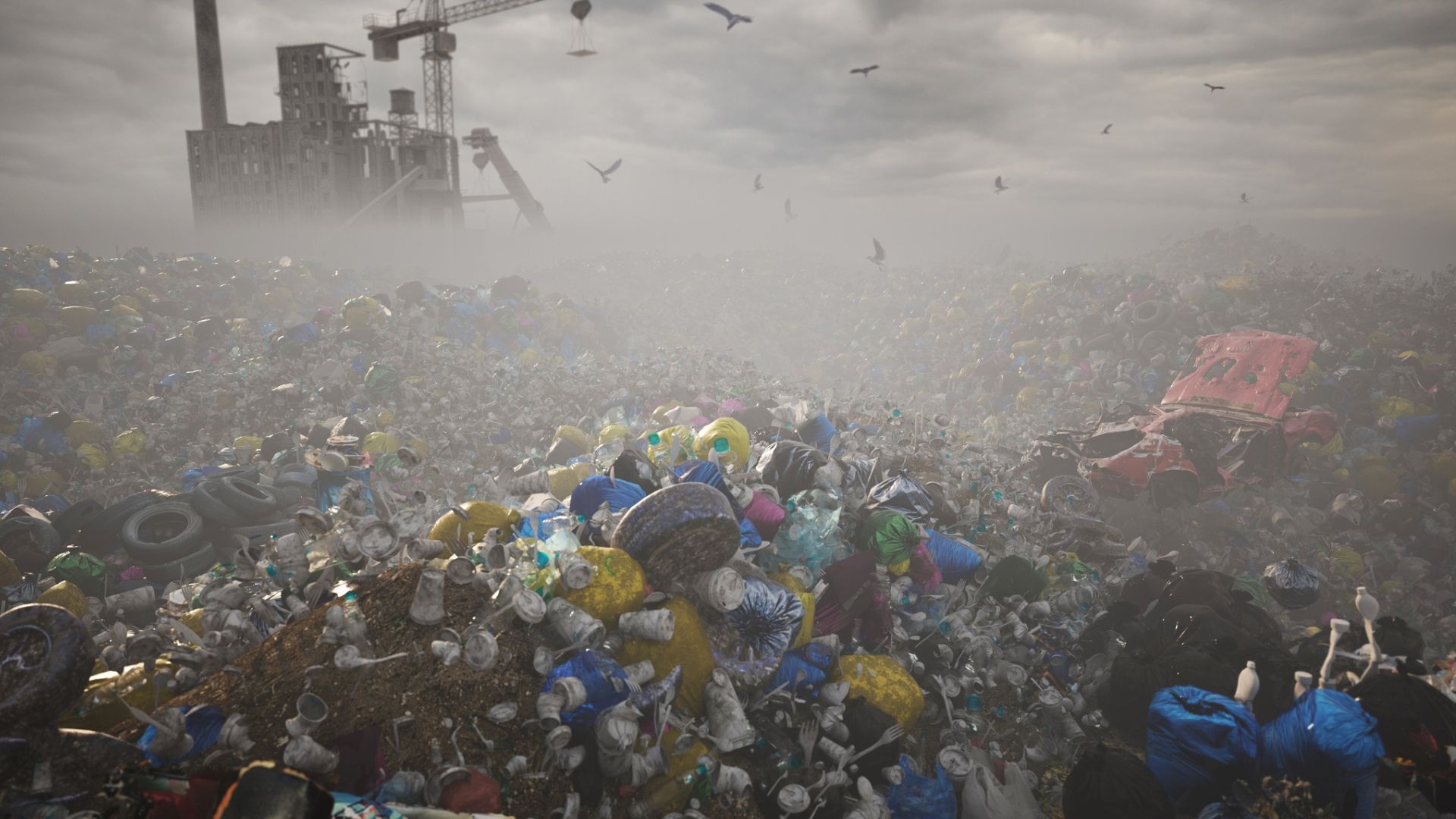
Australian researchers said non-recyclable landfill waste could help produce low-carbon cement.

Using refuse-derived fuel (RDF) to produce cement could help reduce the carbon footprint of the industry, which relies heavily on fossil fuels.

The researchers said clearer standards would be essential to support wider and more responsible use of waste-derived fuels.

Australian researchers said non-recyclable landfill waste could help produce low-carbon cement.

​Using refuse-derived fuel (RDF) to produce cement could help reduce the carbon footprint of the industry, which relies heavily on fossil fuels.

​Cement manufacturing accounts for an estimated 8% of global carbon dioxide emissions, largely because key ingredients must be fired in massive kilns at extreme temperatures.

​Researchers are turning to waste as fuel to decarbonize cement manufacturing.

​RDF is made from processed non-recyclable waste. Cement kilns can use these fuels alongside traditional fuels in a process called co-processing.

Waste to fuel

​Researchers at the University of Adelaide studied whether fuel made from non-recyclable waste could make cement production cleaner and reduce waste sent to landfills.

​They conducted a literature review of more than 200 research articles published between 1991 and July 2025.

​The findings showed growing interest in RDF as a way to reduce landfill waste and cut fossil fuel use in cement production.

​Based on her analysis, Geethmi Thisakya, a PhD candidate in the School of Civil Engineering and Construction at the university, said that waste management could be linked with industrial decarbonization.

​”Previous research has highlighted the potential of refuse-derived fuel to turn suitable waste materials into a useful resource rather than sending them to landfill,” she said.

Need for clear, consistent standards

​However, she cautioned that a simple fuel replacement would not suffice.

​For RDF to help cut carbon emissions, it will need consistent quality, clear regulations, and stronger evidence of its environmental and economic impacts, the study said.

​The study also examined challenges that could affect the use of waste-derived fuels in cement production.

It found widespread confusion between refuse-derived fuel (RDF) and solid recovered fuel (SRF), a more standardized form of waste-derived fuel.

Although both can be used in cement manufacturing, inconsistent terminology and differing quality standards make it difficult to compare studies, interpret regulations, and ensure consistent fuel quality.

The researchers said clearer standards would be essential to support wider and more responsible use of waste-derived fuels.

“Cement manufacturers need confidence that alternative fuels will perform consistently, meet environmental requirements and support safe, reliable production,” Thisakya said.

​However, she cautioned that more work is needed before the cement industry can confirm RDF as a reliable alternative to fossil fuels.

​”Developing stronger quality assurance systems and clearer regulatory frameworks will help industry make informed decisions about using waste-derived fuels.”

​The findings were published in the International Journal of Building Pathology and Adaptation.

​Meanwhile, scientists at ETH Zurich are turning to some of the smallest living organisms on Earth to build sustainable cities, using biocement as an alternative to reduce the industry’s carbon footprint.

​Researchers developed a 3D bio-printing process for biocement elements using a custom bio-ink made of water, natural gums, sand, and live bacteria.

In a second approach, they use a robotic arm to spray alternating layers of sand, bacteria, and mineralizing agents onto surfaces to produce biocement.
​

  •  

US teams up with Canada to deploy 8 nuclear plants with 6 GW planned capacity

The United States is eyeing eight nuclear power plants with a combined capacity of 6 gigawatts (GW) that would be refueled on power, eliminating plant shutdowns and enabling continuous operation.

​According to a press statement, the eight sites would adopt Canadian reactor designs based on CANDU (Canada Deuterium Uranium) technology.

Unlike conventional reactors that are fueled by enriched uranium, the CANDU reactors are fueled by natural uranium. They use heavy water (deuterium oxide) as moderator and coolant and are designed for large-scale electricity generation.

Replacing gas plants

To evaluate deployment scenarios for the project, the State of Indiana, Hoosier Energy Rural Electric Cooperative, and AtkinsRéalis Group, a Canadian company that holds the manufacturing and licensing rights for CANDU technology, signed a memorandum of understanding Monday.

The agreement follows the nuclear company’s letter of intent, submitted in June this year to the US Nuclear Regulatory Commission, to begin licensing its technology in the USA.

​”This collaboration demonstrates the value of working with our American partners to address shared energy challenges and explore solutions that strengthen energy security, support skilled jobs and deliver lasting benefits to communities in the state,” said Joe St Julian, President, Nuclear, at AtkinsRéalis.

According to the MoU, the evaluation would consider a potential gas-to-nuclear construction model to accelerate the deployment of new nuclear power capacity. This means existing gas power sites, including those that have been retired or are expected to close soon, would also be considered for conversion rather than starting from scratch.

​No project timeline

However, the US government has not yet announced any potential project timeline.

Multiple factors, including site selection, financing, utility or offtake arrangements, applicable regulatory and licensing activities, environmental review, transmission and interconnection planning, community and stakeholder engagement, and other diligence and approvals, are likely to influence the project timeline, the MoU stated.

​If built, the project would strengthen grid resilience and energy security, while providing reliable, affordable, and environmentally sustainable electricity to American homes and industries.

​The first CANDU reactor came online at Rolphinton, Ontario, in 1962 with a gross capacity of only 25 MWe. Since then, the technology has come a long way.

The company has built nearly 34 units worldwide, nearly half of which are in Canada. Other reactors operated by the nuclear company are located in Romania, Argentina, South Korea, and China.

​Earlier this week, Amazon backed plans for a 960-megawatt nuclear power facility in Indiana that could house 12 small modular reactors (SMRs) at the site of a former coal-fired power plant.

​The design for the project uses TRISO fuel, which contains uranium particles surrounded by several protective layers, including high-temperature ceramic materials. These layers are designed to retain radioactive materials even under extreme operating conditions.

  •  

US engineering student builds portable foundry to teach metal casting anywhere

A portable metal-casting kit developed at the University of Wisconsin-Milwaukee (UWM) is taking one of manufacturing’s oldest industrial processes past traditional foundries and into classrooms, public events, and even local bars.

The compact demo, Known as ‘Foundry in a Box,’ lets participants safely cast molten tin into small souvenirs like keychains, delivering a hands-on introduction to the fundamentals of metal casting.

Designed as an outreach tool, the portable setup condenses a process normally associated with large industrial facilities into a compact, transportable unit. Wearing protective gloves and safety goggles, participants pour molten tin into molds and leave with a finished metal keepsake while learning how casting underpins products used across the automotive, aerospace, construction, and manufacturing industries.

Unlike machining, which removes material from a larger piece, casting involves pouring liquid metal into a mold and allowing it to solidify into a desired shape. The method can produce components with complex geometries and remains a key part of manufacturing, from small hardware to large industrial machinery.

“Metal casting is everywhere,” said Swaroop Behera, a doctoral engineering student at UWM who has expanded the initiative. “So long as anyone is making something out of any metal, metal casting is going to be there.”

Making manufacturing more accessible

The project aims to expose students and the general public to manufacturing technologies that often receive little attention in traditional science and engineering education.

While ‘Foundry in a Box’ had existed previously, Behera helped broaden its reach after becoming president of UWM’s student chapter of the American Foundry Society. The team has since brought the portable foundry to schools, university events, and community venues, growing participation from a handful of students to hundreds each year.

The initiative has also attracted interest from educators. A presentation on the portable casting system at a Wisconsin Technology Education Association conference reportedly drew a standing-room-only audience.

According to Behera, letting participants build an object with their own hands makes manufacturing concepts easier to understand and encourages greater interest in engineering disciplines.

Supporting next-gen manufacturing engineers

The outreach effort has also received recognition from industry. The Foundry Educational Foundation, which strengthens ties between universities and the metal-casting industry, established a graduate fellowship at UWM after seeing the program’s success. Behera became its first recipient.

Alongside the outreach initiative, Behera’s doctoral research focuses on developing aluminum alloys that could replace titanium in certain high-temperature applications—a development that could eventually benefit industries looking for lighter, high-performance materials, including aerospace and advanced manufacturing.

Titanium is valued for its strength and high-temperature performance, but it can be expensive to process. Developing aluminum alloys that perform under demanding conditions could offer manufacturers another material option, although any replacement would depend on the specific application and its performance requirements.

Although his plans remain open, Behera says he hopes to keep connecting engineering research with practical applications while encouraging more students to explore manufacturing careers.

“Science has gone really far ahead, and technology is playing catch-up—that’s where materials science comes in,” he said. “You’re always trying to figure out and solve a specific problem for a given industry.”

  •  
❌