Most home Wi-Fi complaints trace back to the same two culprits: an old router doing its best from inside a closet, and a dead zone in the room where everyone wants to stream. TP-Link has marked down a big chunk of its Amazon store, including Wi-Fi 7 routers, Deco mesh kits, travel routers, range extenders, and the small adapters that pull an aging desktop PC into the present. Several of them are at the lowest prices camelcamelcamel has on record. If family is coming for the holidays, fix the network before they show up with phones, tablets, and a game console apiece. We checked 48 TP-Link deals on Amazon Tuesday morning, October 20, and every one is sold by Amazon.
If your router is older than your last two phones, the TP-Link Archer BE260 is an inexpensive way to catch up. It costs $98.99, the lowest price camelcamelcamel has recorded since it started tracking the router in August 2025. TP-Link rates it for up to 2,400 square feet and 80 devices. It has a 2.5-gig WAN port and a 2.5-gig LAN port, so it can keep up with an internet plan faster than a gigabit. It skips the 6 GHz band, which makes it a straight upgrade from an aging Wi-Fi 5 or Wi-Fi 6 router rather than a showpiece.
Plaster walls, long ranch houses, and finished basements are where a single router gives up, and the TP-Link Deco X55 3-pack spreads the signal around instead. It costs $149.96 for three units. TP-Link rates the set for up to 6,500 square feet and 150 devices. Each unit has three gigabit Ethernet ports, so the one by the TV can also hard-wire a console or streaming box. It dipped to $132.98 last November, according to camelcamelcamel, and this price sits about $12 under its average there. Our guide to the best mesh Wi-Fi systems covers what to look for if you want to step up to Wi-Fi 6E or Wi-Fi 7.
Hotel Wi-Fi that caps you at two devices, or makes every gadget click through its own login page, is a good reason to pack the TP-Link Roam 7. It costs $89.98, the lowest price camelcamelcamel has recorded since it started tracking the travel router in August 2025. You sign the Roam 7 into the hotel or rental network once, and your laptop, phone, and streaming stick connect to the Roam 7 instead. It supports OpenVPN and WireGuard, and its 2.5-gig WAN port works with rooms that still have a live Ethernet jack. Toss it in your carry-on before Thanksgiving travel.
A new router won’t help much if your desktop PC is still talking to it through an old Wi-Fi card. The TP-Link Archer TBE552E costs $49.99, which ties the lowest price camelcamelcamel has on record for it. It slots into a PCIe port and supports 320MHz channels on the 6 GHz band, as long as your router is a tri-band Wi-Fi 7 model. The Archer BE550 Pro further down qualifies. The card also adds Bluetooth 5.4, so wireless controllers and headphones can connect straight to the tower.
Best TP-Link Wi-Fi 7 router deals
The Archer BE260 is covered above. The Archer BE770 costs $299.99, about $20 less than the lowest price camelcamelcamel had on record for it, and the Archer BE700 is within a dime of its camelcamelcamel low. Our guide to the best Wi-Fi routers explains which of these features are worth paying for.
The Deco X55 3-pack is covered above. If you want mesh with Wi-Fi 7, the Deco 7 BE25 3-pack costs $208.73. The Deco X50-Outdoor adds a weatherproof node to an existing Deco network, which helps when the signal dies somewhere between the house and the garage.
Best TP-Link Wi-Fi 6 router, travel router, and access point deals under $100
The Roam 7 is covered above. The Roam 6 AX1500 costs $44.99 and the Roam 6 AX3000 costs $69.99, and both match the lowest prices camelcamelcamel has recorded for them. The Omada EAP650 ceiling-mount access point is at its camelcamelcamel low too.
Best TP-Link Wi-Fi extender and powerline deals from $13
An extender is the inexpensive fix when one bedroom or the back porch keeps dropping off, and the RE220 costs $13.49. The RE223BE Wi-Fi 7 extender costs $84.99, the lowest price camelcamelcamel has logged for it. Our guide to the best Wi-Fi extenders explains when an extender makes more sense than mesh.
Best TP-Link PC Wi-Fi adapter, network card, and USB deals under $70
The Archer TBE552E is covered above. For a laptop, or a desktop you’d rather not open up, the Archer TX50U USB Wi-Fi 6 adapter costs $39.99. The Archer TX55E PCIe card costs $22.43, which matches the lowest price camelcamelcamel has on record for it.
First conducted in 2014, the recurring questionnaire tracks yearly anxiety trends that often range from everyday concerns to existential terrors. This year, 61.1 percent of over 1,200 respondents once again cited “corrupt government officials” as their biggest fear—the same subject was last year’s number one entrant as well as its 11th year on the list. After that, it’s the fear of another world war (51.9 percent). However, “AI harming the political process” wasn’t too far behind for third place at 51.9 percent. The technocentric worry is now essentially tied with the fear of loved ones becoming gravely ill (51.8 percent).
Government corruption is once again at the top of the list. Credit: Chapman University
That said, the survey’s own plus or minus 3.79 percentage point margin of error complicates the results a bit. Taking the margin of error into consideration, it’s a tossup when trying to definitively rank the list’s third through tenth fears. Regardless, about 49.7 percent survey takers are also anxious about AI negatively impacting the economy—a double dose of AI-centric woes for the first time in the survey’s history. It’s also the first year researchers at Chapman University in California included questions about AI, but they made it clear it likely won’t be the last.
“As artificial intelligence becomes more integrated into everyday life, understanding these fears will be increasingly important,” said Chapman University sociologist and survey creator Christopher Bader. “We expect concerns about AI to remain a significant part of the national conversation in the years ahead.”
It’s understandable why AI currently vexes so many people. The blanket term now encompasses everything from photorealistic fake images, to dubious search engine chatbots, to nebulous doomsday warnings. Despite these worries, the AI industry’s biggest threats arguably remain the rampant spread of misinformation, coupled with a lack of meaningful regulations or oversight.
But no matter your top technological fear, survey organizers still believe the annual report highlights a very relatable human emotion.
“What I’m seeing more and more over time is that our fear about our loved ones is going to always be there, no matter what’s going on in the world,” said sociologist Ashley Kranjac, director of Chapman University’s Earl Babbie Research Center.
In a world where tech leaders are racing to build autonomous machines that can do almost anything, one hobbyist is going the complete opposite route: an over-engineered robot that does exactly one thing and one thing only.
T-Kuhn’s Hexa-Bouncer only bounces a ping-pong ball, but looks like it’s capable of far more. The six-armed, metal machine was first designed in a simulated environment and then brought to life with a CNC milling machine. Custom-built joints let it rise, fall, and tilt, and even bob up and down while tracing a circle. A pair of cameras, set 120 degrees apart, track the ball’s position and send that data to a computer over USB. The computer then builds a 3D picture of the scene, then calculates when the paddle should strike the ball and at what angle. All of this happens in a fraction of a second.
Hexa-Bouncer keeps balls in the air remarkably well. In a video, Kuhn holds a ping-pong ball above his creation, and the machine moves up and down in sync with his hand. When he drops the ball, the robot immediately reacts, striking it back into the air and keeping it aloft bounce after bounce, all the while making small adjustments. After a few more bounces, the device eases off its swing and the ball starts bouncing lower and lower. It’s unclear exactly how long Hexa-Bouncer can keep the ball in the air, it never misses—at least in the video posted online..
Kuhn describes his ball juggler as the latest in a series of, “useless but mildly interesting ball bouncing machines.” Prior to this, he released his Octo-Bouncer, a similar design that keeps a ping-pong ball bouncing in the air using a four-sided flat plate. Some might say all this over-engineered ball bouncing is unnecessary, but Kuhn would disagree. For him, solving the design puzzle is a journey in itself.
“Building a thing like this is like bashing your way through a jungle,” he said. “It’s an adventure. You’re not completely sure if you can make it through or not, and that’s exactly why you do it.”
Launched in 2023, the European Space Agency’s (ESA) Euclid space telescope observes some of the most distant regions of the visible universe for signs of dark matter and dark energy. But even while focused on the “big picture,” Euclid’s onboard equipment is surprising astronomers by capturing tiny photobombers like errant comets.
Its recent portraits of one specific dusty space rock are especially impressive, however. Euclid spotted a never-before-seen comet sailing through space more than 807.7 million miles from Earth. The telescope isn’t designed to automatically flag an image interloper. Instead, the bright blemish seen in multiple images was spotted by a moving object detection program designed by Mikko Pöntinen, an astronomer at the University of Helsinki in Finland.
“I was excited to see my software flag a ‘streak’ smeared across several images—the result of a fast-moving object,” said Pöntinen. “Further inspection revealed that it had a fuzzy cloud around it, indicative of an active object like a comet that is shedding dust and gas.”
Pöntinen quickly relayed his findings to the International Astronomical Union’s Minor Planet Center (MPC), which then passed the news along to researchers around the world. On October 8, the MPC confirmed the newly discovered comet, which is now classified C/2026 S1 (Euclid).
C/2026 S1 was seen from five different fields of view over multiple days in the Euclid Deep Field North region of the telescope’s scans. Astronomers now know the comet’s trajectory isn’t located on the same horizontal plane as the planets. Instead, its path is technically taking it over the solar system along a multi-thousand-year orbit.
Euclid’s discovery is particularly striking because the telescope’s six-year mission is specifically mapped to avoid areas of the sky that are laden with comets and asteroids.
“Very few comets are expected to be discovered by Euclid, so it was a happy coincidence,” added Euclid archive scientist Bruno Altieri.
With Alaska’s fat bears done packing on their winter weight and spooky season in full swing, it’s time to turn our collective animal-loving attention to a smaller mammal—bats. The Bureau of Land Management’s (BLM) annual Bat Beauty Contest returns on October 24 and promises “plenty of batty puns.”
Beginning Saturday, October 24, BLM will post photos of the competitors to their Facebook and Instagram accounts and ask you to vote for the best-looking one. All of the competing bats are part of wild populations that live on land managed by the public agency and are photographed by wildlife technicians. The winner will be announced (appropriately) on Saturday, October 31.
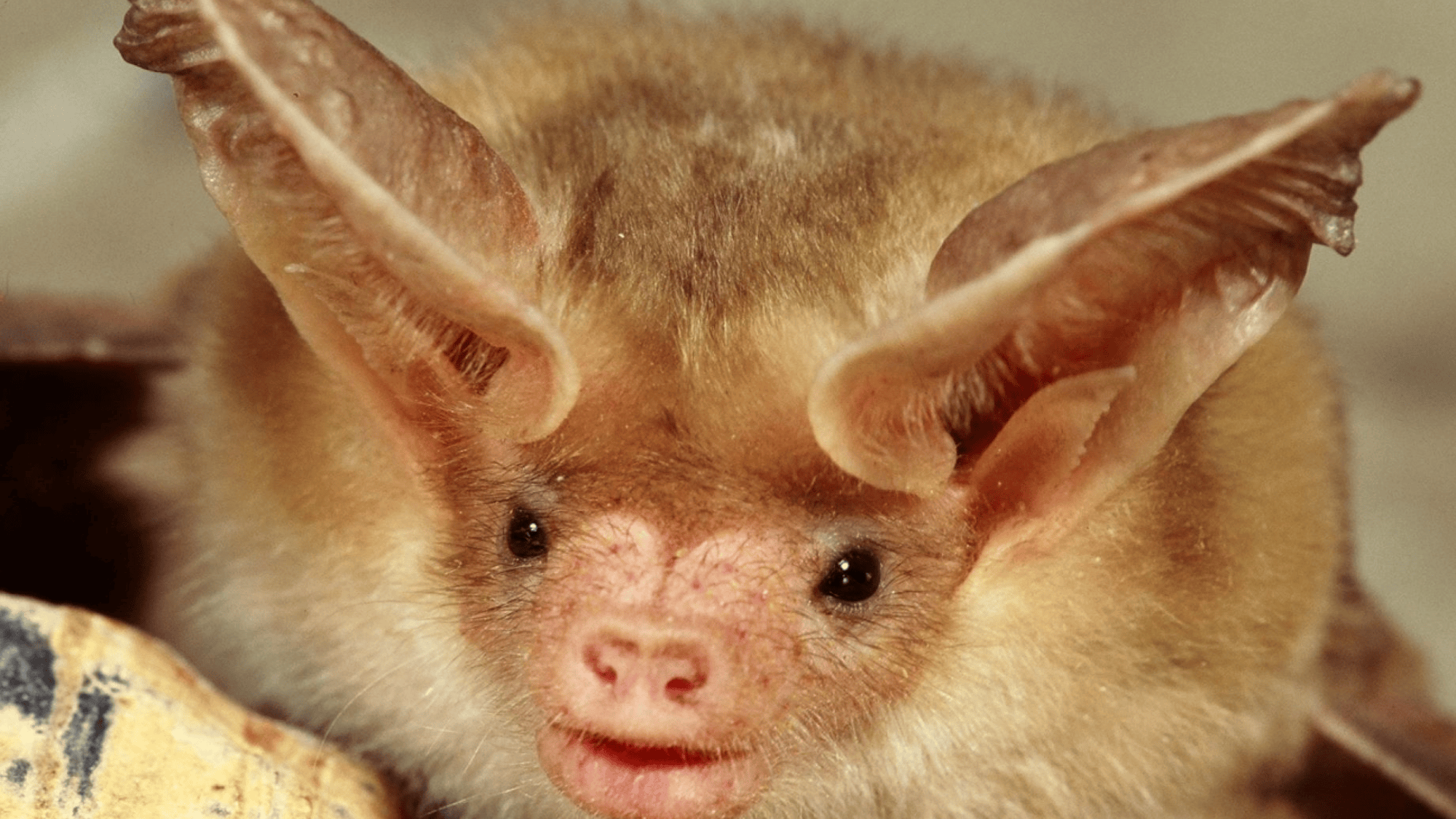
The bats in this competition are known for their squishy faces and clever names. In 2024, a hoary bat (Lasiurus cinereus) from Oregon named Hoary Potter took the crown. Other contestants included a long-eared myotis (Myotis evotis) named Honey Bunches of MyOtis, a myotis bat (Myotis myotis) named Robert Battinson, and western small-footed bats (Myotis ciliolabrum) named Batt Damon and Batlor Swift. The contest was not held in 2025 due to the 43-day-long federal government shutdown.
A hoary bat at Isle Royale National Park in Michigan. Image: NPS Photo/Bat Conservation International.
The contest is not all bat puns and a way to keep the spirit of Fat Bear Week alive. It falls during Bat Week (October 24-31). Bat Week raises awareness about the Earth’s only flying mammal. More than just a Halloween symbol, bats play a critical ecological role as plant pollinators and through eating insects that can threaten crops and forests around the world. According to Bat Week, one bat can eat up to its body weight in insects every night. Only three species of bats eat animal blood, with two specializing in bird blood. Female lesser long-nosed bats even make tequila possible. Every spring, they migrate from south-central Mexico up to the southwestern United States, following “nectar corridors” of columnar cacti and agave plants. They pollinate agave plants, which are then used to make tequila and mezcal. When they feed on cactus fruits and nectar, they may also help disperse cacti seeds. Other bats eat pollen, nectar, or fruit.
Bats are increasingly threatened due to habitat loss, light pollution, and diseases like white-nose syndrome. This fungal disease infects the skin of the muzzle, ears, and wings of hibernating bats. In about 20 years, it has killed millions of bats across North America and affects about half of the species on the continent. Bats also are often misunderstood as carriers of diseases such as rabies.
The planet is home to over 1,400 species of bats, and they make up almost 20 percent of all mammal species. Bats also can be found almost everywhere on Earth, even in desert and polar regions. To look up which bat species live near you, you can use Bat Week’s state bat database.
In the summer of 1518, people in Strasbourg couldn’t seem to stop dancing—some even danced themselves to death.
It all started with one woman, who stepped into the street and began moving uncontrollably. Soon, dozens of other residents followed suit, overcome with the inexplicable urge to hop, jerk, and sway. Within weeks, the outbreak had spread throughout the city, leaving officials, physicians, and religious leaders scrambling to figure out what was happening—and, more importantly, how to make it stop.
Five centuries later, the dancing plague of 1518 remains one of history’s strangest medical mysteries. Historical records confirm that a bizarre episode turned a medieval city into a very unwilling dance floor that summer, but exactly why it happened remains a matter of debate.
A bizarre outbreak takes hold
The dancing plague began on July 14, 1518, when a woman named Frau Troffea started dancing in Strasbourg, then part of the Holy Roman Empire and now a city in northeastern France. Though her husband begged her to stop, Troffea kept moving as day faded to night, while a crowd of onlookers gathered around to watch. Eventually, she collapsed and fell asleep, but when she awoke the next morning, she resumed her solitary jig.
Troffea’s uncontrollable dancing, known as choreomania, seemed to be contagious. Dozens of other people were soon gyrating in the streets of Strasbourg and, by late August, as many as 400 individuals had succumbed.
At the time, the leading theory was that St. Vitus, a fourth-century Sicilian martyr believed to punish sinners by making them dance, had cursed the afflicted. Then, once St. Vitus decided his victims had suffered enough, he would relieve them of the curse.
St. Vitus was martyred in 303 during the persecution of Christians by the co-Emperors Diocletian and Maximian. Image: Contributor / Getty Images / Print Collector
City leaders determined that the best course of action was to keep the dancers dancing, so they cleared the outdoor grain market, built a stage, and hired musicians. They didn’t explain their rationale in any known, surviving documents, so historians don’t know exactly why they did this. But John Waller, associate professor of the history of medicine at Michigan State University and the author of The Dancing Plague: The Strange, True Story of an Extraordinary Illness, suspects they had two reasons: They believed dancing could help people purge physical impurities from their bodies, and they viewed it as a form of penance.
“If people were believed to have been cursed by God or a saint for some kind of immorality, well, dancing was associated with hedonism and that was fundamentally immoral,” he tells Popular Science. “A way of basically punishing oneself would be to dance to the point of exhaustion and pain and potentially even death. It would make sense with that penitential framework.” In other words, from the leaders’ perspective, if dancing was their punishment, let them be punished.
Dancing themselves to death
Regardless of their motives, the authorities’ decision had “very, very clear consequences,” he says. It was a hot summer, and the dancers were likely under the full glare of the sun. They weren’t eating or drinking much, and they weren’t resting.
“This is certainly going to be extremely dangerous for a large number of people, particularly anybody with any kind of susceptibility to heart attack or stroke,” says Waller.
The historical records are murky on exactly how many people died—one writer claimed as many as 15 per day, at least for a time—but it was enough to make city leaders completely change course.
“They essentially banned dancing, except for some people in the privacy of their own homes, and then instituted a program of penance and prayer,” says Waller. “They clearly realized that what they’d been doing before was causing harm and I suspect they got the impression that it was making things worse.”
Eventually, the authorities transported the remaining dancers to a shrine dedicated to St. Vitus about 30 miles away, where religious leaders went to work praying and leaving offerings. As days and weeks passed, the dancers overcame their choreomania and returned to their normal lives—traumatized and tired, but otherwise fine.
Strasbourg’s dancing plague in 1518 wasn’t the only such incident of its kind. Image: Getty Images / Contributor / Bettmann
The dancing plague of 1518 wasn’t the only such incident of its kind. Numerous other outbreaks of uncontrollable dancing occurred in western Europe between the late 1300s and mid-1500s—and Waller thinks it’s no coincidence that many were clustered along the Rhine River and its tributaries.
“Rivers are very good for, obviously, transporting trade goods, but they’re also very good for spreading ideas,” he says. “From the headwaters in Switzerland all the way down to where the Rhine flows into the North Sea, you’ve got this belief in a saint who curses with a dance.”
Theories behind the dancing
Now that we have the benefit of hindsight, what might explain the dancing plague of 1518 and others like it? One theory is that the dancers were sickened by ergot, a fungus that can contaminate grain. Another holds venomous spiders bit the afflicted. Demonic possession, epilepsy, typhus, and encephalitis—brain inflammation caused by an infection or autoimmune response—have also been put forward as possible explanations.
But after considering all the evidence, Waller thinks there’s only one plausible theory that truly makes sense. He suspects the dancers of Strasbourg were all victims of mass hysteria, also known as mass psychogenic illness, brought on by intense psychological distress.
The years leading up to 1518 were rough, particularly for the lower classes, with failed crops, bad weather, economic issues, social unrest, religious tensions, and illnesses like smallpox, leprosy, and syphilis taking a toll on peoples’ psyches. They were hungry, anxious, sad, scared, and worried that God had abandoned them.
Waller suspects the people living in Strasbourg simply reached their breaking point, then entered into a trance-like state that rendered them largely insensitive to their extreme fatigue and sore feet. They danced, Waller argues, rather than weeping, fighting, praying, or engaging in some other behavior because of their belief in St. Vitus and his dancing curse.
Given the period-specific cultural and religious underpinnings, could something like the dancing plague of 1518 happen today?
Waller shares several modern examples of mass psychogenic illness that, although they don’t involve dancing, he finds to be similar in nature. More than 300 students in Blackburn, England, suffered from a mysterious fainting fit in 1956, for example, and hundreds of people succumbed to alternating fits of laughing and sobbing in East Africa in 1962. In 2007, students at a Catholic boarding school near Mexico City came down with a mysterious sickness that made walking difficult. A year later, 20 female students in Tanzania suffered a mass fainting episode during their final-year national examinations.
And although the dancing plague of 1518 took place more than 500 years ago, Waller says we can still learn plenty from it. For him, the most important takeaway is “the way in which our expression of severe distress can be culturally conditioned and channeled.”
When Waller initially started researching the dancing plague of 1518, it was such a “wild phenomenon” that his inclination was to think “as strange as the past can be, this was simply too strange to have actually happened,” he says. But as he dug deeper—and, more importantly, began to understand the context within which it arose—it started to make more and more sense.
In other words, he says, it reminds us that psychological distress is not expressed in a vacuum. The culture, beliefs, and circumstances around us can shape how our inner turmoil manifests—and, in some cases, how it spreads from one person to another.
In That Time When, Popular Science tells the weirdest, most surprising, and little-known stories that shaped science, engineering, and innovation.
Tattoos are pretty permanent decisions, and laser removal is often described as more painful than actually getting them in the first place. But what about a design that can only be seen when you want to see it? Engineers at the University of Colorado Boulder are working on a new type of tattoo ink to answer that question. Their dye is specifically concocted to physically alter depending on exposure to visible or ultraviolet (UV) light.
The team described their invention in a study published earlier this month in the journal Matter & Light, and they didn’t only demonstrate the capabilities in the lab on silicone and pig skin. One of its creators, Carson Bruns, has already tattooed himself with the ink.
“[It’s] almost a tradition,” the study co-author recently told Nature.
Bruns, a nanoscientist at UC Boulder, previously developed a now-commercialized tattoo product called “Magic Ink” that turns magenta depending on its exposure to UV light. To highlight its efficacy, Bruns gave himself “solar freckles” as a method to track his exposure to sunlight. In similar fashion, he recently completed a similar session on his leg using the disappearing ink.
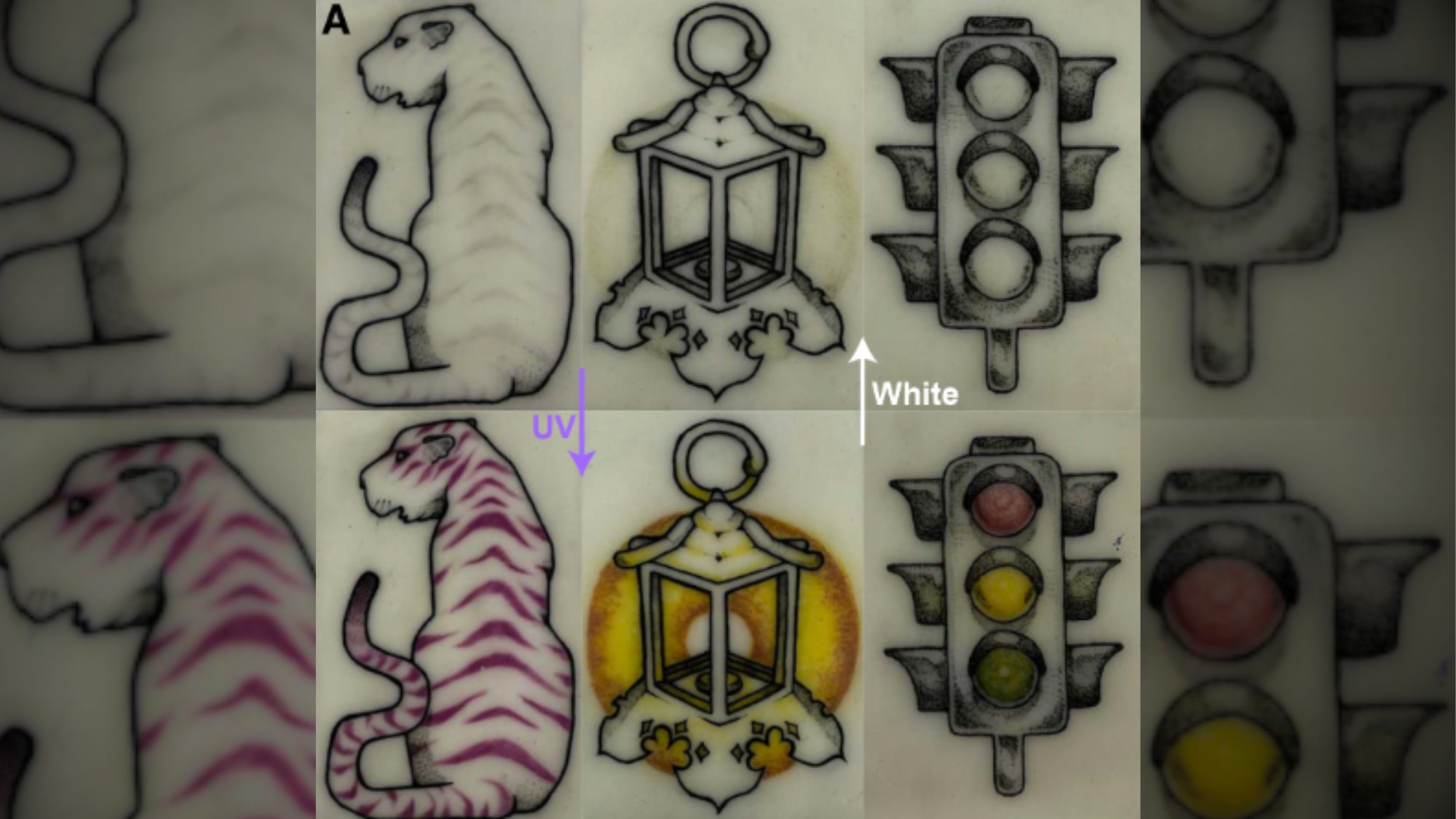
The formula currently comes in three colors—yellow, blue, and magenta—and essentially relies on the same principles behind transition lenses and some textiles. Each dye is composed of tiny spheres of acrylic glass. These beads contain photochromes, which are chemical compounds engineered to absorb specific light wavelength photons. In this case, the photochomic dye’s spheres begin in their original color, but then flatten into transparency after absorbing corresponding light photons exposed to UV rays. The dye remains this way until it absorbs visible light photons, which destroys the chemical bond and allows the spheres to return to their original shape.
Aside from the lab tests, Bruns tattooed his own leg over about 12 months using various dye combinations, all of which responded as intended to UV and visible light exposure. The ink also remained effective for over two years—but the team’s intention is go beyond a nifty parlor trick. Future ink iterations may be particularly useful in medical procedures, such as temporary markings to help maintain accuracy during direct radiotherapy sessions. For now, however, the photochromic tattoo dyes remain for laboratory (and Bruns’) use only until further safety assessments are completed.
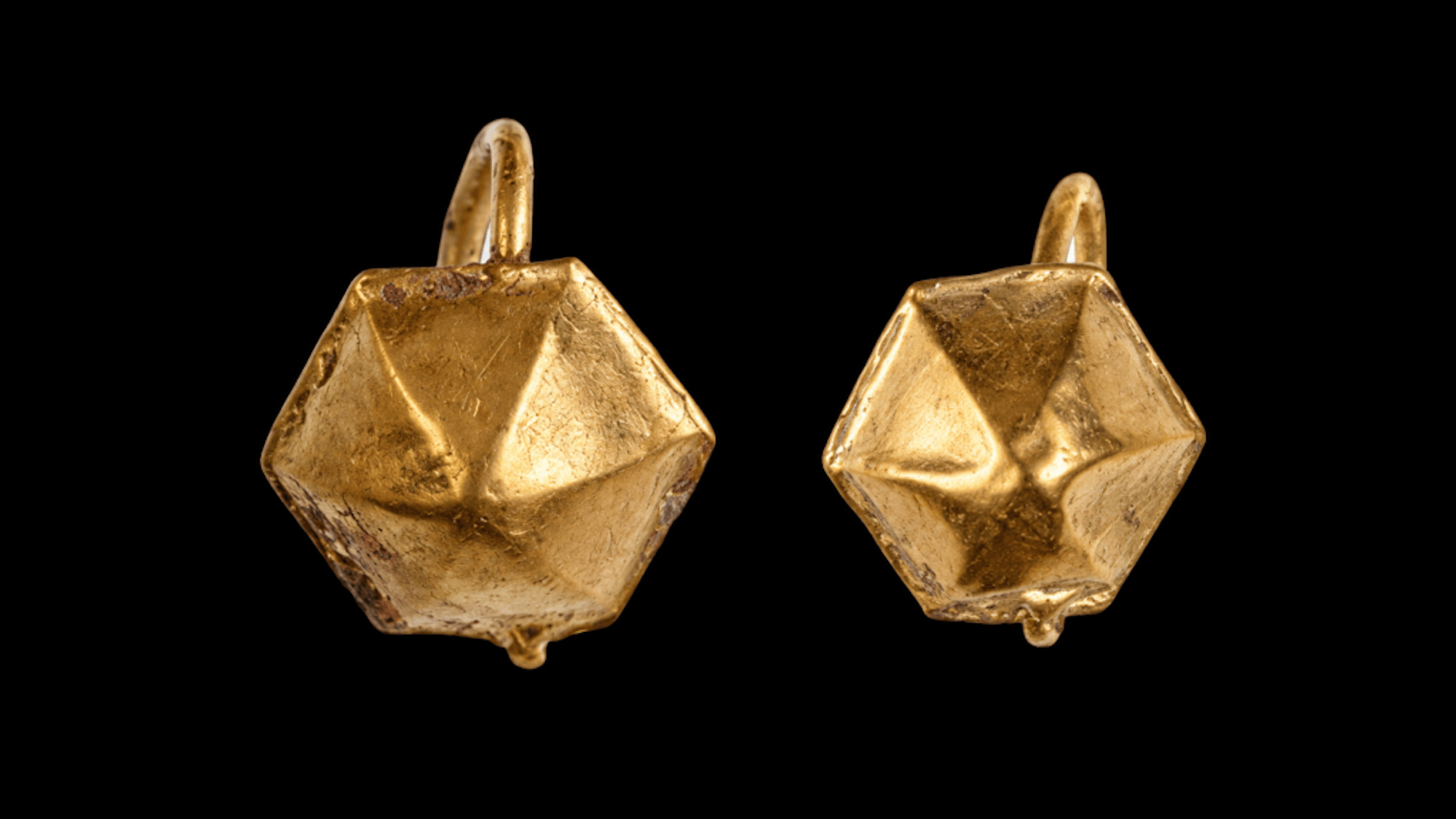
Not far from the Black Sea, a child’s grave uncovered in present-day Bulgaria has provided archaeologists a somber look at Roman funerary practices. Flagged in the city of Stara Zagora during a site survey for a new apartment complex and parking garage project, the burial contained stunningly preserved gold earrings as well as a single, small coin known as an antoninianus. But while the currency’s age is traceable to within a year of its minting, the bronze piece may also represent a grieving family’s hopes for their child’s safe passage into the afterlife.
The Roman empire at its height included over 1.9 million square miles of territory, including much of central Europe and central Asia. Rome annexed the region of Thrace in 46 CE, and eventually renamed the city of Stara Zagora as Ulpia AugustaTraiana in honor of Emperor Trajan (98 to 117 CE). Augusta Traiana quickly grew into one of Thrace’s most prominent urban hubs, becoming so prosperous that Rome ultimately granted permission to build its own coin mint during the second and third centuries CE.
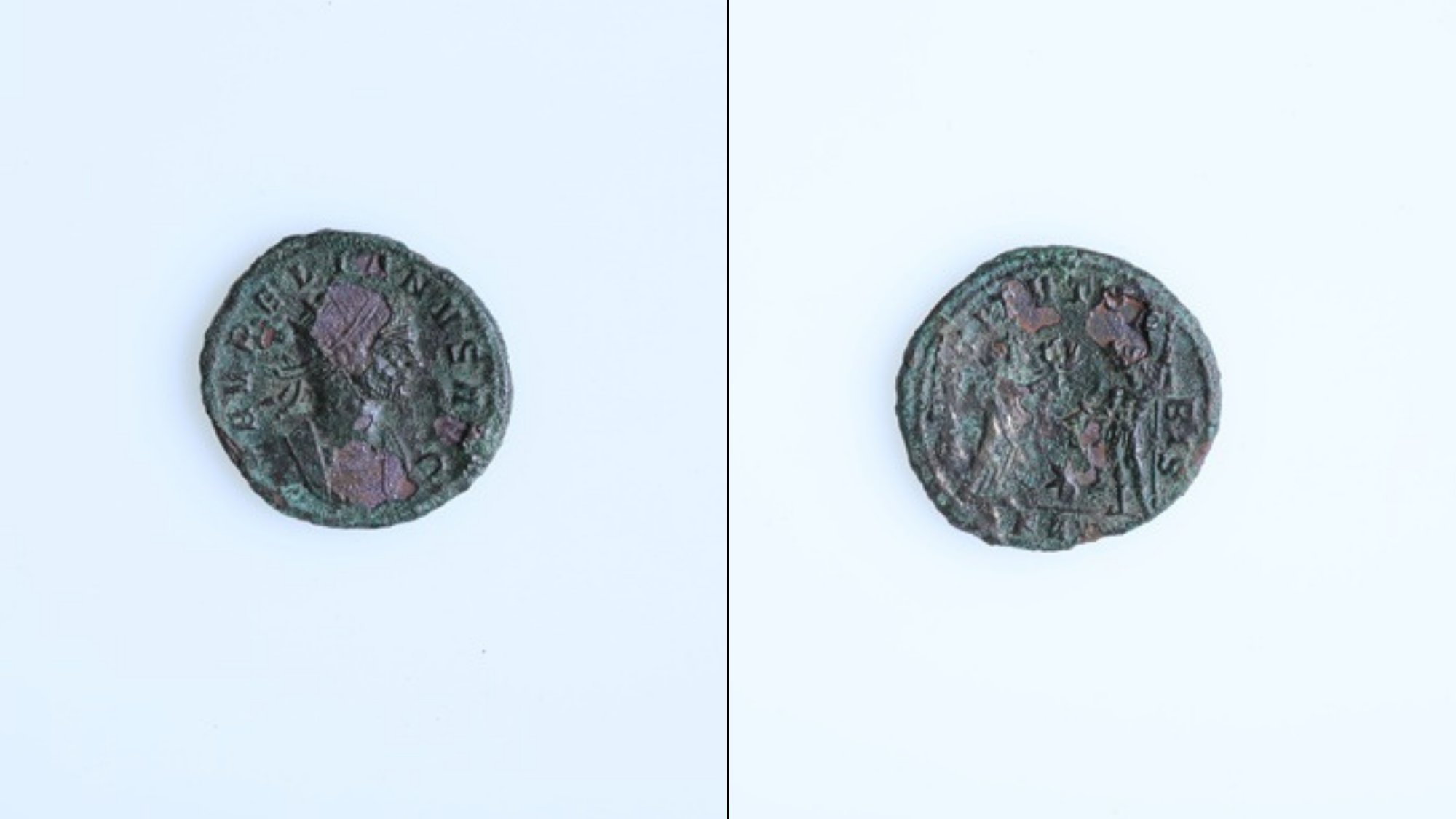
Over 1,750 years later, Augusta Traiana’s remnants exist underneath a city once again known as Stara Zagora. Ruins of the Roman empire are regularly unearthed through the town, including the recent discovery of a large cemetery used for nearly three centuries outside Augusta Traiana’s original walls. Among the 135 graves, researchers identified a child buried with a pair of gold earrings and one of Thrace’s bronze coins. Although details about the young individual’s death and identity remain unclear, the coin clearly dates to either 274 or 275 CE. Archaeologists assume the child likely died either around that time period, or soon after.
While researchers may never learn the precise circumstances of the burial, ancient Greek and Roman funerary beliefs suggest the coin served a specific purpose. It’s possible the child’s family intentionally placed the currency with the deceased as payment to Charon, the ferryman who brought souls to the afterlife. Knowing this, it may be that grieving relatives hoped to impart one final gift to their loved one.
Japan launches a ground-breaking mission to the Mars moon Phobos today, and you can watch live.
The JAXA (Japan Aerospace Exploration Agency) MMX (Martian Moons eXploration) mission aims to collect samples from Phobos, the larger of Mars’ two moons, and deliver it back to Earth for analysis. If successful, the samples could help solve long-standing mysteries about Mars’ moons, including their origin.
In 1877, US astronomer Asaph Hall discovered Phobos and its smaller sibling, Deimos. The moons have arguably the most bad-ass names in our solar system: Phobos comes from the ancient Greek word φόβος (phobos), meaning “fear,” and Deimos originates with the ancient Greek word Δεῖμος, which translates to “dread.”
Despite increased attention on Mars in recent decades, astronomers don’t know exactly how the celestial bodies formed. Theories include asteroids or debris leftovers from way back when the solar system formed about 4.5 billion years ago.
“The samples from MMX will bring forth paradigm-shifting science on the Mars system for generations to come, especially as NASA prepares to send the first humans to Mars,” said Nicky Fox, associate administrator and Science Mission Directorate at NASA, said in a statement. While a JAXA mission, NASA worked with the agency to provide instruments and technologies to assist.
The MMX spacecraft launches on top of an H3 rocket at Japan’s Tanegashima Space Center today at 3:41 p.m. EDT (4:41 a.m. Japan Standard Time on October 20). You can watch it live on JAXA’s YouTube page. The mission will get to Phobos in August 2027 and spend at least 16 months surveying the surface before collecting samples. The samples will not return to Earth until at least 2031.
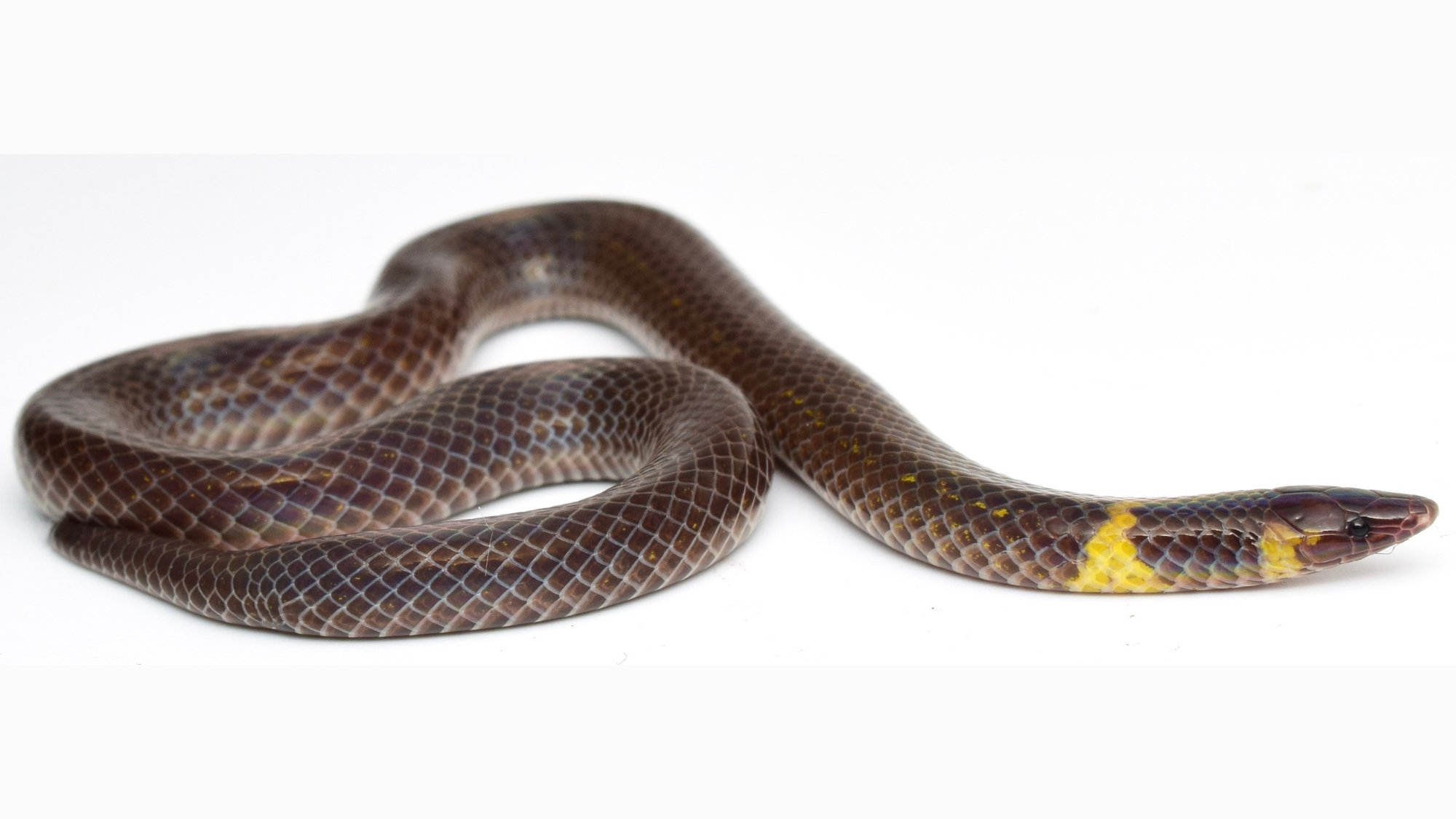
Snakes will bite, rattle their tails, and even spit venom to escape danger. But of all the world’s species, southeast Asia’s dwarf reed snake (Pseudorabdion longiceps) relies on an especially fascinating escape method. When threatened, the diminutive serpent rolls away like a speeding wheel.
An adult dwarf reed snake typically measures less than 12 inches long, but its unique locomotive maneuvers allow it to retreat as fast one foot per second—about four times faster than it travels by simply slithering on the ground. It’s not a flailing getaway, either. The snake also easily rolls along a straight path while somehow keeping its head both stable and facing forward.
Now, researchers finally have a better understanding of how the dwarf reed snake achieves such dizzying acrobatics. In a study published today in the journal Current Biology, a team at Japan’s Toho University detailed the specific physiology that enables its locomotion after filming the snakes with high-speed cameras. Essentially, the snake doesn’t rotate its entire body in a singular, forward motion—it whips one side of its body forward towards the ground while an arched portion swings down by its head in what the study’s authors call a “stroke.” The snake then alternates between its left and right side coming into contact with the ground for each successive stroke. Essentially, it’s like twirling a rope in a lateral circle while holding one end in your hand—except that end is the snake’s head.
The cumulative efforts bypass the traditional idea of a wheel requiring something like a central axle. Instead, this ingenious, highly controlled movement allows the animal to keep its head and sensory organs upright and facing ahead while traveling at such high speed. This is compounded by the dwarf reed snake directing regions of its body to engage in large, alternating rotations while stabilizing its head.
By gaining better insight into these biological mechanisms, researchers also highlight the difficulty in trying to predict an animal’s capabilities based solely on its physiology. A snake may have primarily evolved to slither—but that doesn’t mean it can’t get creative when necessary.
October is officially Bat Appreciation Month. In the spirit of the season and conservation, a team of biologists in California recently spent time finding bats at Muir Woods National Monument and Samuel P. Taylor State Park. And while Halloween is fast approaching, the activity had nothing to do with spooky festivities and everything to do with tracking hoary (Lasiurus cinereus) and western red bats (Lasiurus blossevillii).
The goal of their survey was to put GPS trackers on bats from the two migratory species. Hoary bats have grey-white fur and are the most widespread bat species in North, Central, and South America. Western red bats, also known as southern red bats, sport a reddish fur and are found in parts of South America. In redwood forests, bats like nesting within holes inside large trees.
“When they migrate, those little guys can cover a LOT of ground!” the Golden Gate National Recreation Area writes, referencing both species. “By learning about these migratory patterns, we can better understand entire ecosystems like Muir Woods.”
The bats were released back into the wild after getting their trackers. Image: NPS / Emily Pellegrini.
Bats are important members of such ecosystems. They are pollinators, they spread seeds, and they help manage insect populations. To catch these helpful agents, scientists set up a sheer, delicate net called a “mist net” over a creek at dusk. All bats are nocturnal, and when they went searching for their next meal—bugs—they flew into the net.
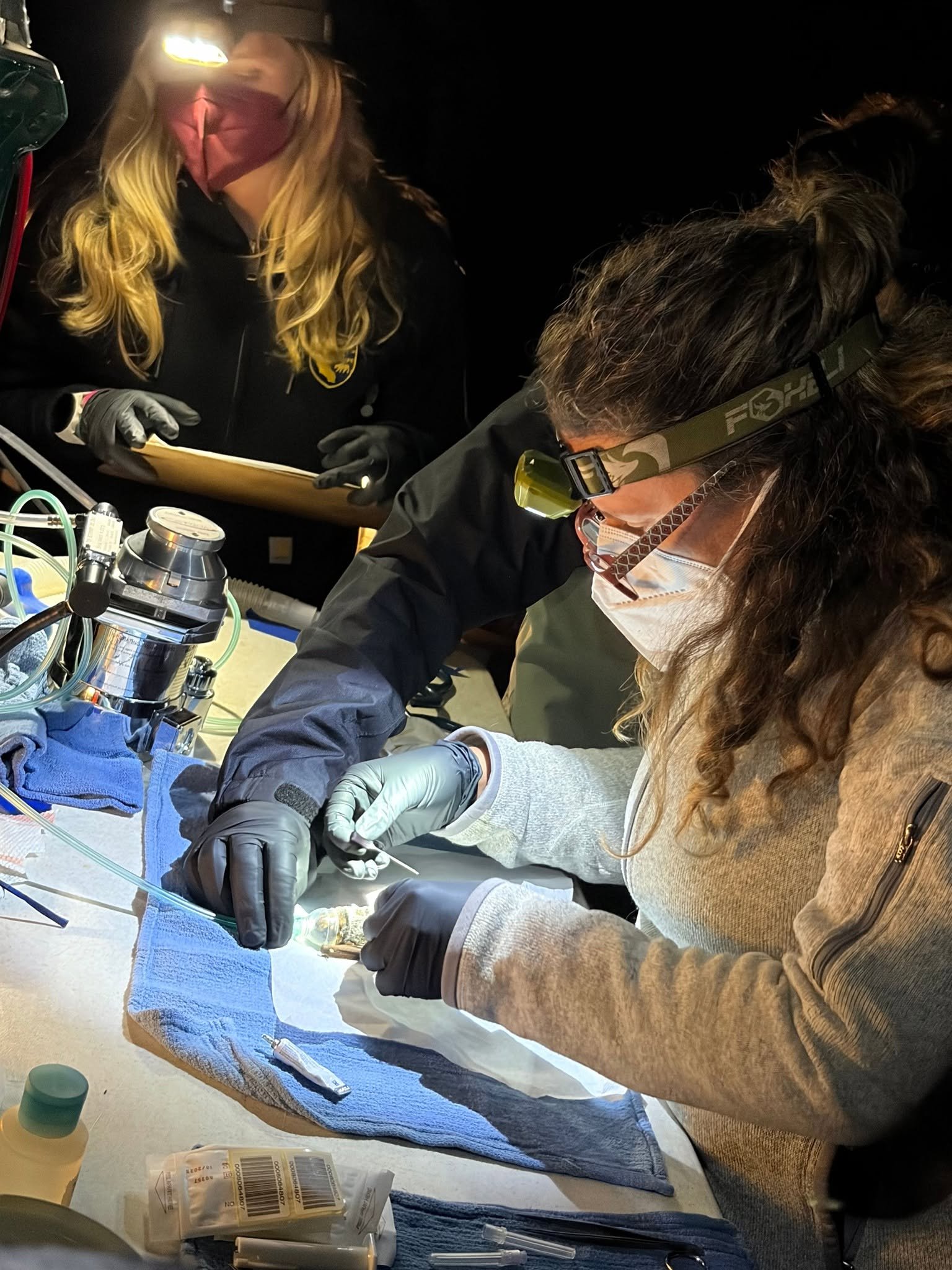
It was a bit of a trick for the winged mammals, but a treat for the human team. “Expert bat wranglers” carefully took them out of the nets, noted their weight and size, presumably attached the GPS tracker, and then returned them to the wild.
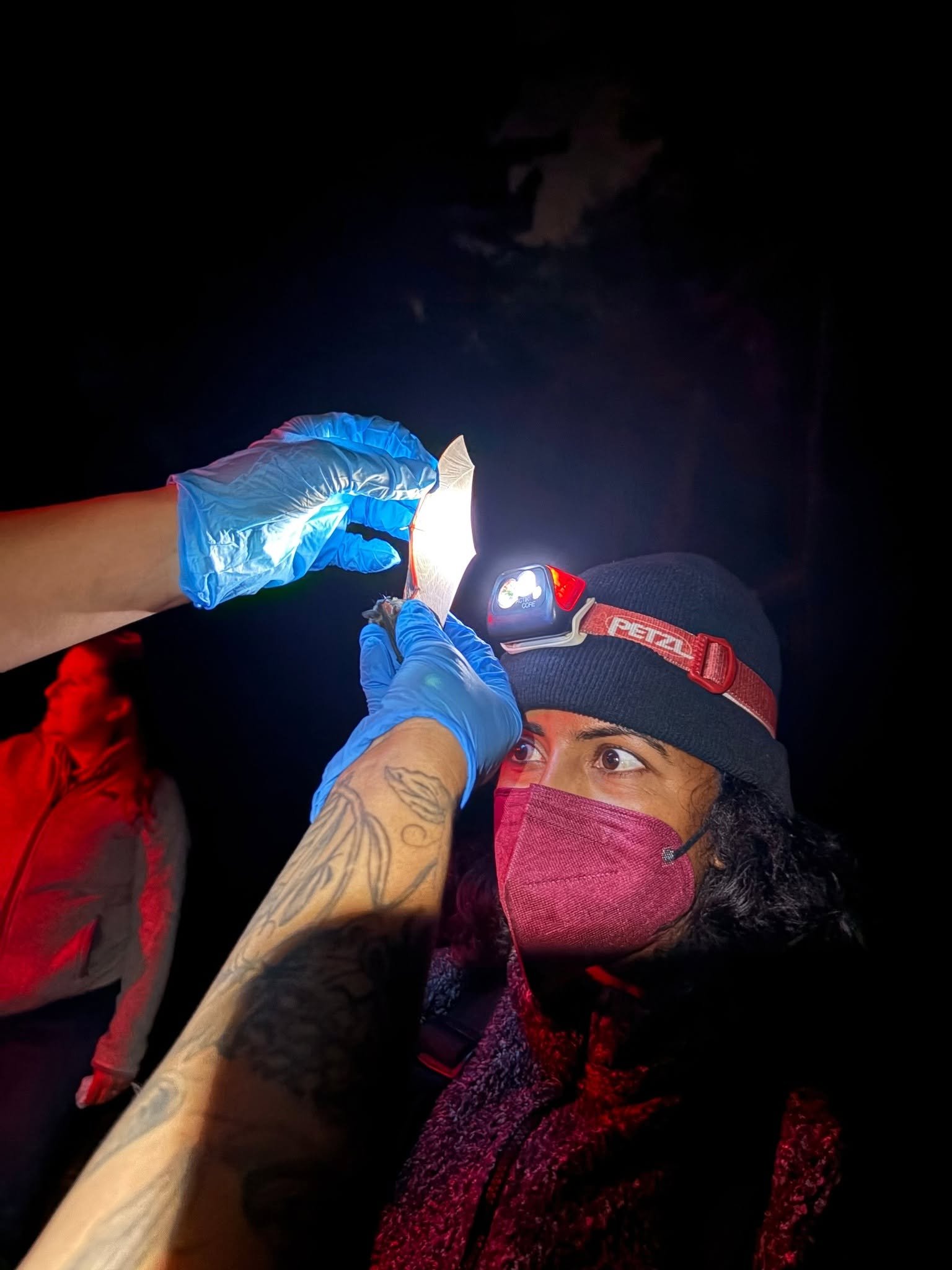
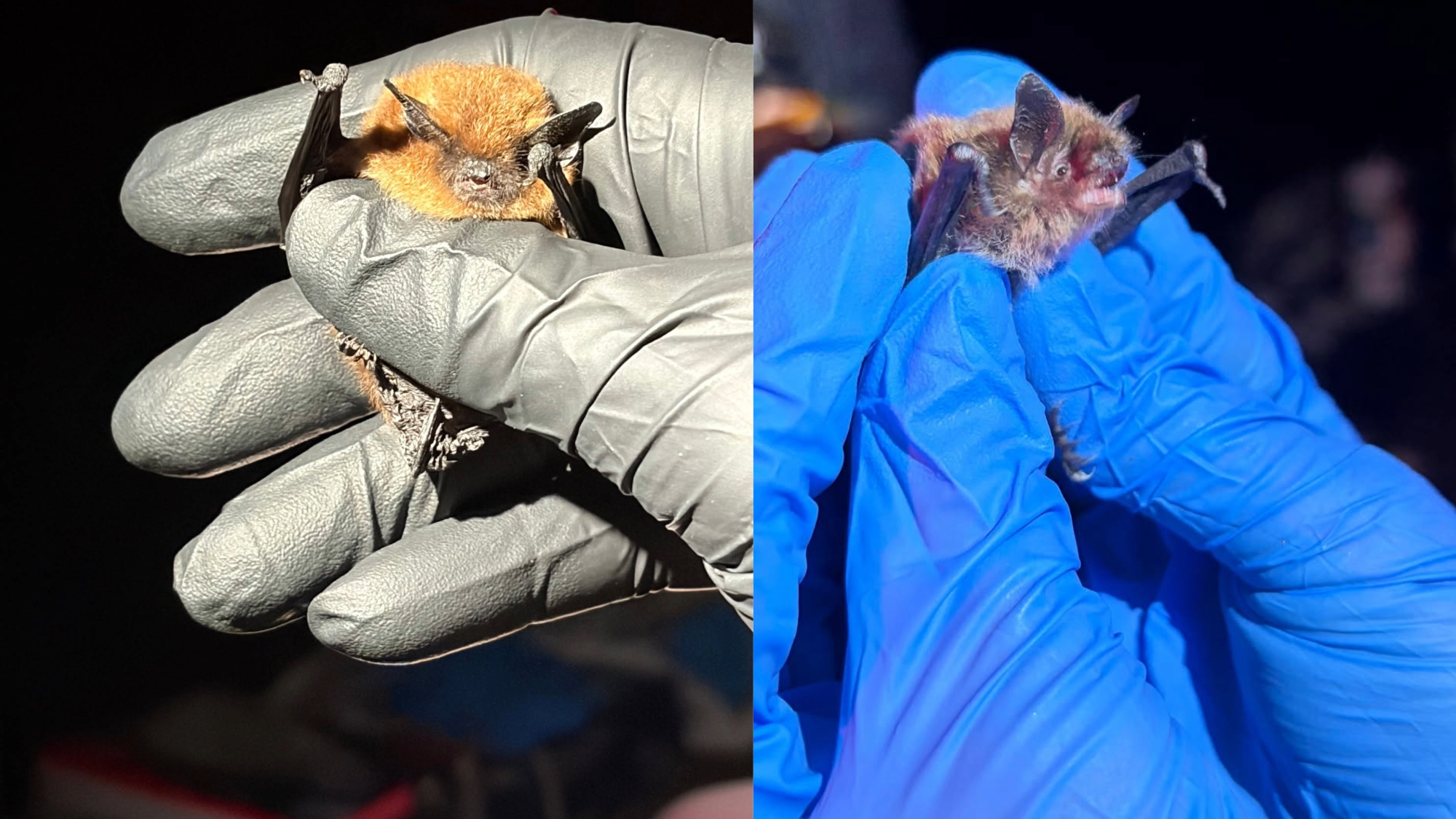
The Golden Gate National Recreation Area’s shared pictures of tiny, disgruntled looking bats carefully pinched between gloved fingers. In one image, an expert holds a bat wing up to the light of a colleague’s headlamp. In fact, illuminated wing membrane patterns literally shed light on the bat’s age and developmental stage.
A bat’s membrane can tell biologists how old the animal is and what developmental stage it is in. Image: NPS / Emily Pellegrini.
While this survey focused on two bat species, researchers at the Muir Woods National Monument have previously spotted 10 different species.
On the evening of March 18, as it was growing dark, I went to the window, not knowing what was drawing me. Next to the house stood a shadow, ghost-like, shrunken, at one with the dusk, almost translucent, and I recognized The Girl with the Broken Foot.
I walked out into the falling wet snow, slowly approaching her, and she allowed me to come close. Nine months old, she was the size of a fawn half that age. Starkly emaciated, her body seemed to be collapsing inward, her head held low. Literal hunger and a deeper starvation were palpable. She bore the haunted look of terminal solitude seen in souls driven to the margins of society, among the liv-ing, yet apart. She seemed so frail that I couldn’t imagine she would live more than another day or two.
Going inside and returning with a bowl of apples, I cut them into pieces and placed a few on the ground between us. She was raven-ously hungry and I gave her a few more apples, and still more, until she had eaten a total of eight. After she had finished eating, she stayed with me. We stood about a foot apart. She showed no fear of me, a fact which I would later come to recognize as meaningful. The moment had the compelling quality which has been present at the onset of many enduring connections in my life, of being un-bound by linear time.
“I am watching over you,” I said softly. “If you come here, I will take care of you. You are not alone.”
It was fully dark when we parted, having been together for an hour. I expected that she would recede into the woods, yet the next morning she was sleeping against the house, directly beneath the window closest to where I sit all day to work. Save for the wall separating us, she could not have gotten any closer to me.
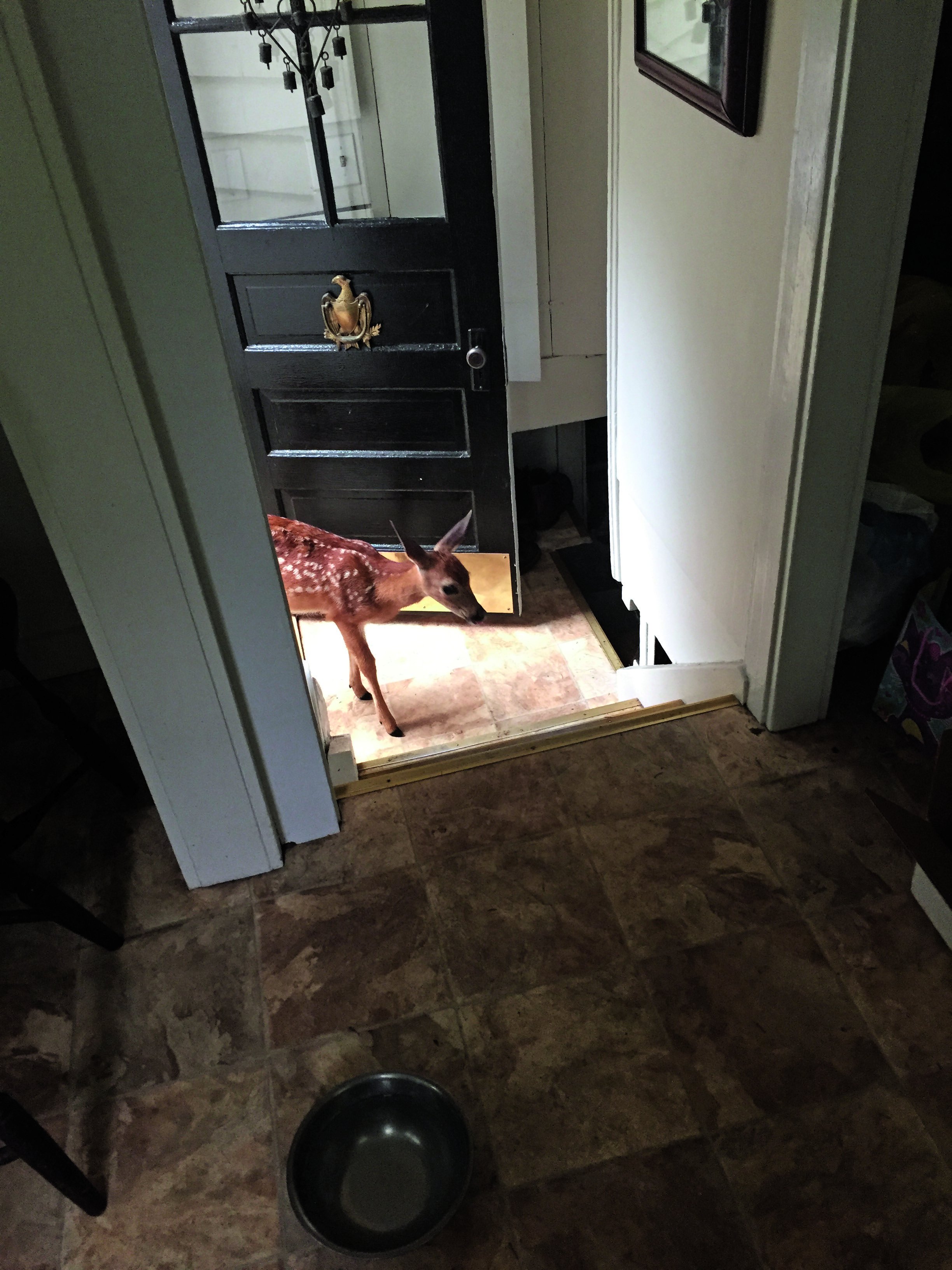
Paul feeding Penelope. Image: Paul Bochner.
When I went around to the front of the house, she struggled to her feet and approached. In the morning light, I was better able to assess the state of her health. Months of solitary survival had taken a severe toll. Her body seemed hollowed, her ribs and pelvis sharply visible beneath her skin, and it felt a miracle that she was alive. On her right flank was a hemispherical mass the size of a cantaloupe, which I took to be a tumor, yet it had an open, running wound at its center, which she periodically craned her neck to lick. Her eyes were running and had congealed masses at their inner corners.
I bent to get a look at her injured foot. From not being walked on, the backward-facing cloven hoof had grown to an abnormal length and was curling upward. The wrist, which unnaturally bore her weight, had a flattened forward surface, an oval about two inches across, worn raw, without hair or skin, only pale pink–grey flesh, which, at its center, appeared to have been further abraded to the bone. Her right front foot, forced to compensate, was splayed and rockered, her right scapula protruded, and her front quarters were substantially lower than her hips.
I again placed apple pieces on the ground between us. I spoke very gently to her, saying, “You are the best one of all the deer. You are the most beautiful. You are good.” I continued to talk to her while she ate her apples, and when she had taken all she could, she returned to her resting spot under the window. I went inside to work, keeping periodic watch, pleased that she seemed to have claimed a place. But in a few minutes, from around the corner of the house came the twins, followed by their mother who immediately and ag-gressively charged at her. The Girl with the Broken Foot lurched upright and hobbled down the embankment, across the road and into the woods.
She was once again alone, but a step had been taken. Since the previous evening, things had changed. Even before her second feed-ing she had recognized me on sight. She had approached and had again allowed me near.
Although I had seen her fewer than half a dozen times in the preceding months, from the night of our first connection, she began to come to the house every day. She slowly gained strength and I would watch for her and thrill to the sight of her slow approach. It was our private time. We stood together, and I placed her food on the ground between us. After she ate, she would stare into my eyes for long periods, seemingly entranced. I told her stories. I sang softly to her. I told her she was my beauty.
So began our journey, and one of the greatest loves I have ever known.
Penelope walking into the house. Image: Paul Bochner.
About the Author
Paul Bochner began his professional life early, as a working musician through his mid-teens in Los Angeles, then moving to Montreal at the invitation of the National Film Board of Canada. He has won several international awards for his films and is the recipient of a Guggenheim Fellowship in painting. He has written for The New Yorker and The Atlantic.
You would think, post-COVID, that we would all understand the importance of frequent and thorough handwashing. And yet, spend any time in a public restroom and you’ll see an alarming number of people who still see it as optional.
We know it can help curb the spread of illness when you’re sick, but on an average day, just how gross is it to not wash your hands?
“Your hands have a microbial flora that is always present. These are mostly good bacteria that help protect your skin,” Allison Pappas, PhD, Director of Business Development at Gillson Sciences, tells Popular Science. “On unwashed hands, your normal flora is going to be the most abundant group of inhabitants and they’re nothing to worry about. If you’re not washing your hands, they won’t become overgrown by deadly bacteria. However, your hands will accumulate an increasing number of pathogenic bacteria and viruses from your environment.”
Pappas explains that eating a sandwich or wiping your nose after exposure to these pathogenic bacteria are quick ways to then introduce those germs into your body. She describes it as a “tug-of-war,” with germs pulling one way and handwashing your only way to tug in the opposite direction. There are also physical characteristics that come into play as well. People with longer fingernails or rough, coarse skin give bacteria more places to hide. And it’s not always visible. As Pappas puts it: “Your hands can look clean but be utterly disgusting from a microbial perspective.”
“It’s extremely gross, but assume you’ve got poop on your hands,” says Pappas. “That sounds crazy, but studies have found fecal bacteria on children’s hands and toys and on the hands of 28 percent of commuters in the UK. Even if you don’t have a child and don’t commute via subways, you’re still touching all the same door handles and common utensils as the people who do. That poop is transferring to your hands, you just can’t see it.”
So how gross is not washing your hands? It’s “you have poop on your hands” gross.
Recent studies suggest that most people wash their hands too briefly to actually kill germs. So, if you want to avoid getting sick and spreading illness, it’s time to forget everything you thought you knew, and follow these instructions for proper hygiene:
Wet your hands with water at a comfortable temperature. You can’t actually get the water hot enough to kill microbes without burning your skin, so just do what feels nice. The CDC actually recommends shutting the tap off while you lather your soap to conserve water.
Lather your hands with soap. Don’t worry about buying something with anti-microbial ingredients; research shows that outside of a hospital setting, these additives don’t provide a significant benefit, and their use contributes to the rise of antibiotic resistance.
Make sure you lather the backs of your hands, between your fingers, and under your nails, as dangerous microbes can lurk on any part of your skin.
Continue scrubbing for 20-30 seconds before you start rinsing. It’s longer than you think. One study showed that most adults lather for just six seconds. Try singing “Happy Birthday” twice in your head (or out loud, if you’re feeling fun) to help keep time.
Turn the tap back on and rinse. The CDC notes there’s little evidence that using a paper towel to turn the tap on and off after washing will improve your health.
Dry your hands with a clean towel if possible, or with an air dryer. The CDC says that wet hands more easily transfer microbes. Plus, you don’t want to walk around with clammy hands all day.
One cold December day in 2021, Colorado carnivorous plant grower Jeremiah Harris shared some pictures of wild Amazonian giant water lilies (Victoria amazonica) plants in the Inírida River in Guainía, Colombia to Instagram. There’s just one problem. No known Victoria water lily species grow there.
When water lily expert Carlos Magdalena saw the post on Instagram, he suspected a new plant species could be involved. To investigate the matter, he used satellite imagery to remotely search the Inírida River and its surrounding lakes and confirmed the presence of Victorias.
And yes, you can see these enormous plants from space. Victorias grow the world’s second largest single plant leaf.
Victoria colombiana is the fourth Victoria water lily to be described. Image: Carlos Magdalena.
Magdalena is a botanical and scientific research horticulturist at the Royal Botanic Gardens, Kew in the U.K. Along with his colleagues, the team went on a five-day expedition to Inírida. The team included members of the Indigenous reserves del río Atabapo, one of whom had seen the lilies during his childhood.
However, the trip didn’t exactly go according to plan. By their last night, they had found only two water lily plants, neither of which had flowers. This was a problem, because botanists need a flower to differentiate species. As if that wasn’t bad enough, the water lilies they found seemed to be struggling with a late rainy season.
But when Magdalena described their situation to the expedition’s boat captain, Gustavo Melo, he said he knew where they could find more of this water lily. They didn’t have much time to do so, with the team’s flight back to Bogotá was at 9:00 a.m. the next morning. Thus at 1:00 a.m., Melo, a member of the Indigenous Tucano community, led them to a small lake. There, they found five more Victorias, one of which was blooming.
Horiculturalist Carlos Magdalena holds up a giant lilypad. Image: Mauricio Bernal.
“This is one of those extraordinary stories where indigenous and horticultural knowledge with the help of social media and technology came together to uncover a truly extraordinary botanical achievement,” Magdalena said in a statement.
The researchers were able to collect what they needed to start the official scientific description of the new species: Victoria colombiana. They even managed to make that early flight. In their recent study published in the journal Phytotaxa, he and his colleagues also announced the discovery of another new Victoria species, Victoria mattogrossensis.
A Victoria colombiana bud. Image: Nilo Rodriguez.
The team estimates that there are only between 30 and 50 wild V. colombiana plants, and is extremely vulnerable to extinction. They are currently working to get the plant officially categorized as Critically Endangered by the IUCN Red List.
“Now that we know this water lily exists, our responsibility is to understand it better and protect it. With so many plants in the wild threatened with extinction, we simply cannot wait any longer to take action,” Magdalena added. Experts are considering starting a naturalized population in a more accessible lake in Indigenous territory and researchers also are hoping to cultivate the species in Bogotà.
When zoology professor Daniel Baldassarre traveled to the remote Galápagos Islands of Wolf and Darwin with two other researchers, getting there proved quite a challenge. With no beaches to land a boat on, they had to approach the islands’ cliffs in a small dinghy and wait for a lull in the waves before jumping onto sharp, black lava rocks.
But their efforts paid off. On that trip, they saw a bird that very few people have ever set eyes on in the wild: the vampire ground finch. These finches are only found on Wolf and Darwin, and feed on the blood of much larger birds called Nazca boobies that also live on the islands.
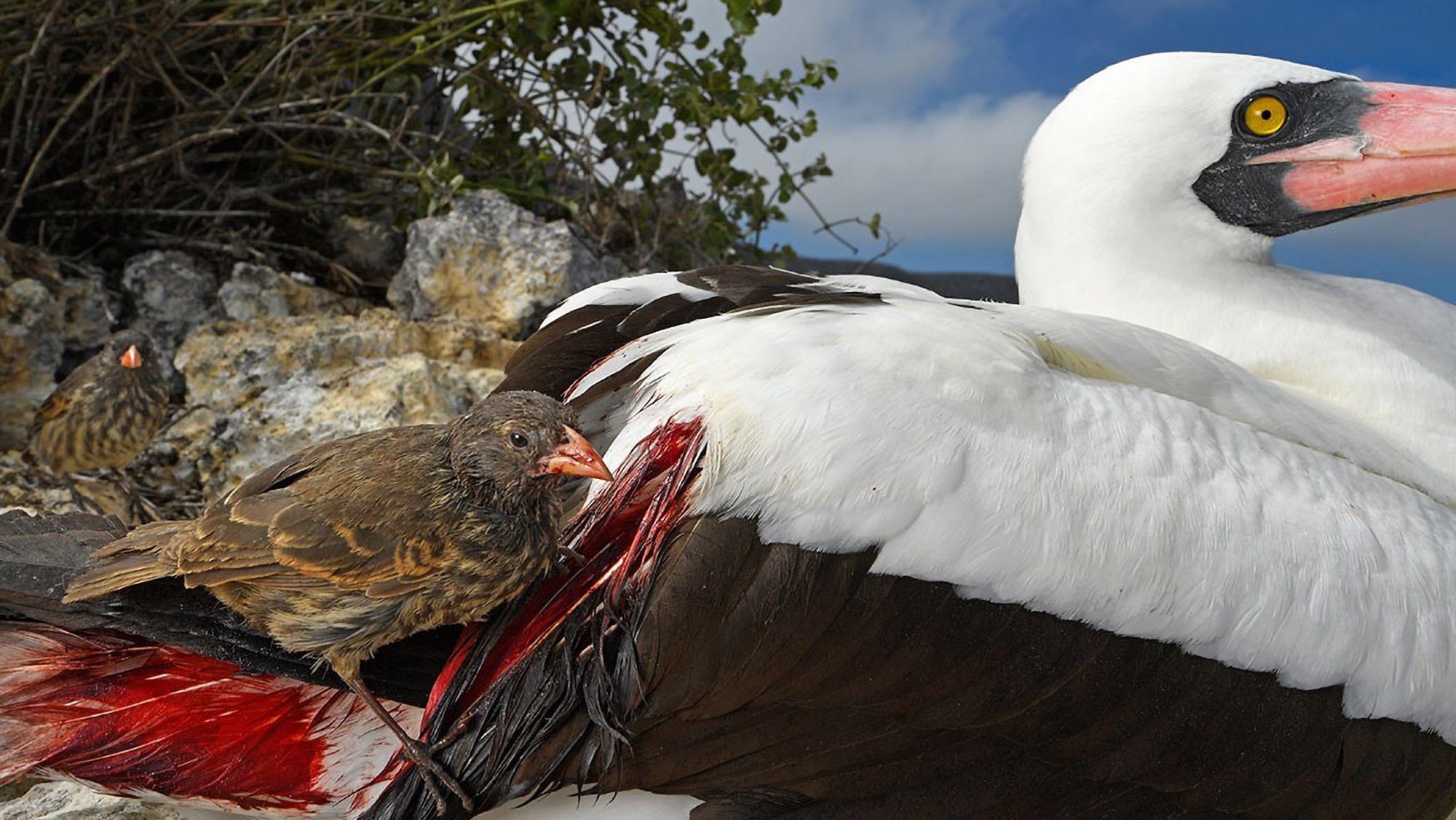
Up close, Baldassarre and his colleagues noted the vampire finches’ blood-stained bills and their throats visibly engorged with blood. They also saw them in action.
“We observed scores of vampire finches clamouring all over the backs, tails, and wings of boobies, opening up substantial wounds with their sharp beaks, and drinking their fill of blood,” they wrote in an article for The Conversation.
Why only some birds drink blood
“Blood is a notoriously difficult food source to process and extract nutrients from, which probably partly explains why so few animals have evolved to feed on it,” Baldassarre tells Popular Science. He suspects that on these islands where freshwater is extremely rare, blood might serve as a water source for the finches.
Two Nazca boobies perform their species’ mating call. Vampire ground finches feed on Nazca boobies on the remote Galápagos Islands of Wolf and Darwin. Image: Getty Images / inthedark72
It’s not the only component of the vampire finches’ diet, however. Based on unpublished data collected by Baldassarre and his colleagues, blood makes up about one-tenth of the vampire finches’ diet.
“These finches are quite opportunistic, so they will eat just about anything they can find,” Baldassarre says. “We observed them feeding on everything from seeds to insects to broken seabird eggs.”
One theory is that vampire finches rely more on blood feeding in periods of extreme drought, when other resources are scarce. But more research is needed to see if this idea holds up in practice.
How this strange behavior evolved
Vampire finches weren’t always vampires, scientists think. The relationship between vampire finches and boobies probably started off with the finches eating parasites found on the skin and feathers of the boobies. This would have been mutually beneficial because it provided a cleaning service for the boobies and food for the finches.
But at some point in evolutionary history, in the process of picking off parasites, the finches started to create lesions on the boobies’ skin, and eventually began feeding on their blood.
Over time, their bills became more scalpel-like, perfect for making skin incisions. Their digestive system also changed. When Baldassarre and his colleagues studied the microbes found in vampire finches’ guts, they found that their gut microbiome was very different from that of other, non-blood-consuming finches on the Galápagos Islands, something they attribute to their unique diet.
Until recently, vampire finches were considered a subspecies of the sharp-beaked ground finch (Geospiza difficilis).
“But they have now been designated as their own species [Geospiza septentrionalis] because of the differences they have evolved because of blood feeding,” Baldassarre notes.
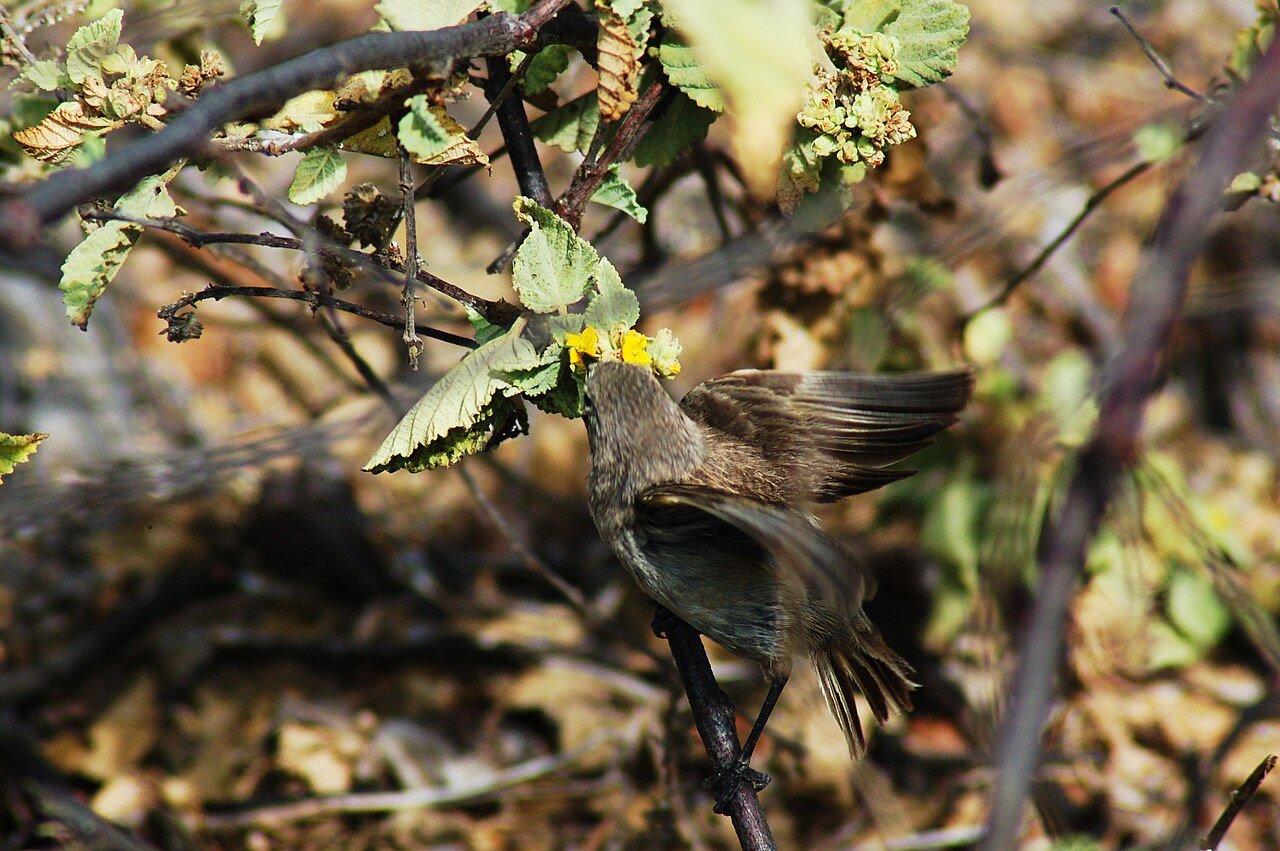
Vampire ground finches on Wolf island have been seen drinking nectar from Galápagos prickly pear flowers and other flowers. Image: Peter Wilton / CC BY 2.0
How the boobies cope
Baldassarre and his colleagues have seen vampire finches gang up on and kill nestling boobies,“but that was quite rare,” he points out.
“In most cases, the finches seem to inflict just enough damage to break the skin and extract some blood, but not too much to harm the boobies significantly.” This is similar to many parasite-host relationships, such as fleas, ticks, and mosquitoes on mammals. “You can kind of think of the vampire finches as giant mosquitoes,” Baldassarre says.
“For one, as in large animals being bitten by mosquitoes, often the damage is minimal and not noticeable, so it doesn’t elicit a strong reaction. Also, the boobies sometimes have a vested interest in staying put and guarding their spot in the colony, or perhaps nest or nestlings, so may not want to fly away. Finally, the finches seem to target hard-to-reach areas on the boobies like the base of tail feathers, so it’s likely difficult for the boobies to deter them.”
I, for one, was feeling very sorry for the boobies being constantly hounded by these small vampire birds. Until I learnt that Nazca boobies practice something called “obligate siblicide,” which essentially means that the first-hatched chick routinely attacks and kills its younger sibling. It’s a harsh, bird-eat-bird world in the Galápagos Islands.
In Ask Us Anything, Popular Science answers your most outlandish, mind-burning questions, from the everyday things you’ve always wondered to the bizarre things you never thought to ask. Have something you’ve always wanted to know? Ask us.
When it comes to the mobile app heavyweights, few can beat WhatsApp. It’s estimated that around 3 billion people now use the cross-platform messaging tool at least once a month. And it’s important to remember there are only 8 billion or so people on the planet, so there are no signs of its popularity waning anytime soon.
Beyond being a hugely successful app, it’s also packed with features. You can use it to chat, make voice and video calls, share files, broadcast your location, and more. Even if you’ve used WhatsApp for years, you might not have discovered everything it’s capable of—which is where these tips come in.
1. Set a timer for messages to disappear
You don’t necessarily want everything you say on WhatsApp to be remembered forever, and the app includes a timer feature that will automatically expunge messages in a chat 24 hours, 7 days, or 90 days after they’re read, unless you specifically keep them. This is set on a chat-by-chat basis, and affects everyone in a conversation.
To change the setting for one of your chats, tap the contact or group name at the top of the screen, then pick Disappearing messages to select your time limit. This is applied until you turn it off or select a different period, but doesn’t affect the conversation history.
2. Lock away your most sensitive chats
Put certain chats behind a lock. David Nield
Another way of protecting sensitive information in chats is to add an extra lock to specific conversations. Even if someone should gain access to your phone and your apps, they won’t be able to see your locked chats.
From inside a conversation, tap the contact or group name at the top, then pick Chat lock (Android) or Lock chat (iOS). You can then use a specific PIN code to block access to the conversation, or use the same biometric scan technology (such as Face ID) that already protects your phone at the lock screen.
3. Edit a message after sending it
Have you noticed you can edit messages after sending them? It’s handy for those typos you only spot after dispatching a message—long-press on whatever you just sent, then tap the three dots and Edit (Android), or just Edit on the pop-up menu (iOS). Modified messages have an ‘Edited’ label visible to everyone in the chat, but they won’t be able to see what the original message said.
4. Stop specific contacts from seeing when you’re active
Take control of who sees your activity on WhatsApp. David Niel
WhatsApp can tell your contacts whether you’re currently using the app and when you were “last seen,” but this might not be information you want to share with everyone. As well as disabling the feature entirely, you can also turn it off for specific contacts.
Open the You tab, then tap Privacy > Last seen and online, then select My contacts except … under the Who can see my last seen heading. You can then pick the contacts you don’t want to give this information to, and set the Who can see when I’m online option to match the same list.
5. Pin important messages you need to refer to or remember
Important details can quickly get lost in WhatsApp conversations, especially in busy group chats. But there is a way to pin specific messages to the top of the chat so they’re easy to get back to—someone’s address or the start time of an event, for example.
To pin a message on Android, long-press on it, then tap the three dots (top right) and Pin. On iOS, long-press a message and choose More > Pin. You can have up to three pinned messages per conversation, and select from three options for how long they’re pinned for: 24 hours, 7 days, or 30 days.
6. Give contacts their own notification sound
Your contacts can have their own alert sounds. David Nield
WhatsApp lets you assign specific notification sounds to specific contacts, which means you know who’s calling or messaging without picking up your phone. It gives you a better idea of whether something needs attention right away or can be safely ignored for a while.
Tap the group or contact name at the top of a chat, then pick Notifications and Notification tone or Ringtone to make changes. You can also select Vibrate to customize vibrations for each chat, though there are only four options here.
The option to mute the conversation is on the same screen—you can set mute separately for calls and messages.
7. Message yourself with notes and reminders
Not all messaging apps let you have a conversation with yourself, but WhatsApp does. This might seem like a rather pointless (and lonely) way of using the messaging app, but it can be really useful for jotting down things you need to remember on the go, leaving yourself voice notes of ideas and thoughts, and so on.
From the main conversation list, go to start a new chat, then search for “you” as the contact (or just enter your own username or phone number).
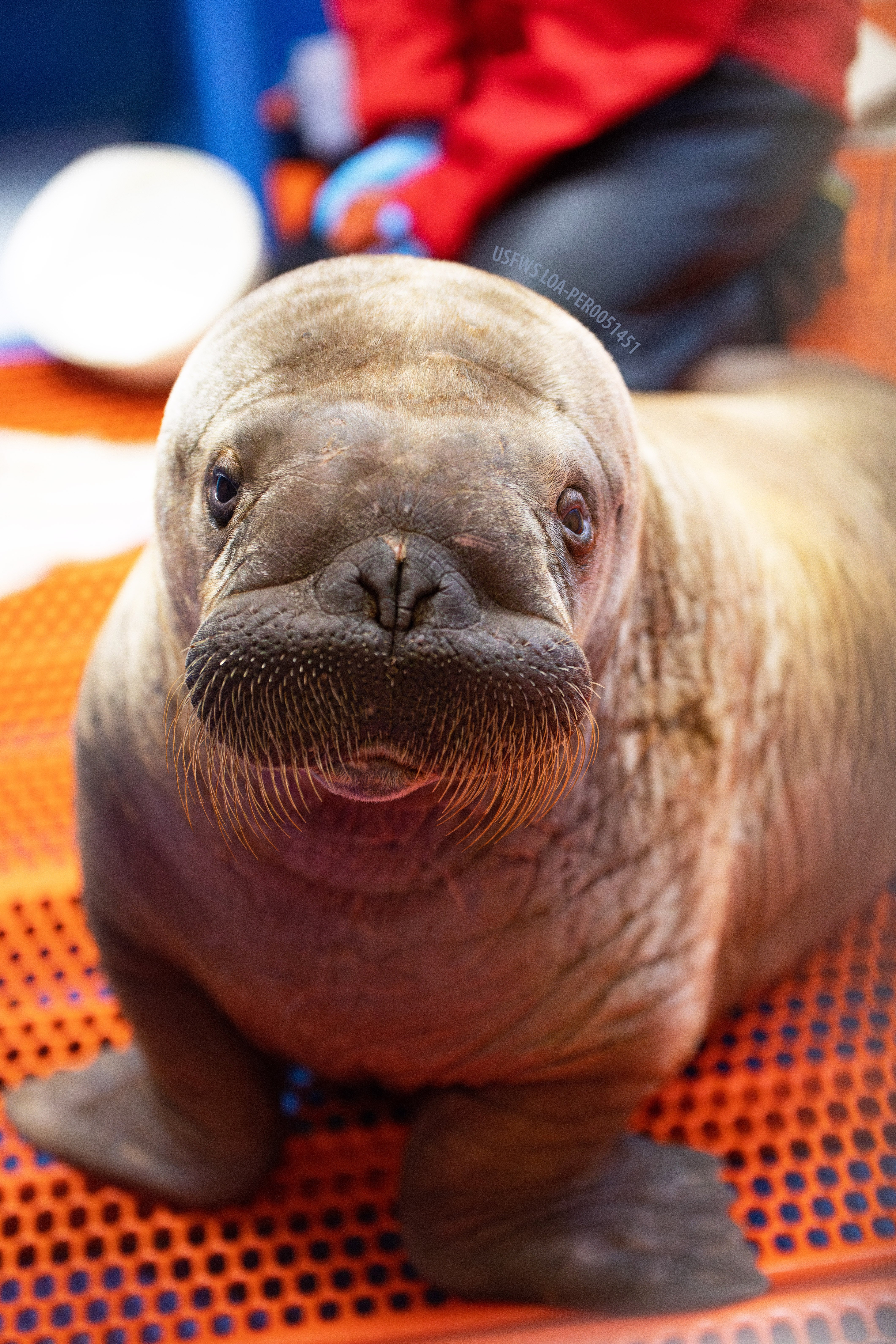
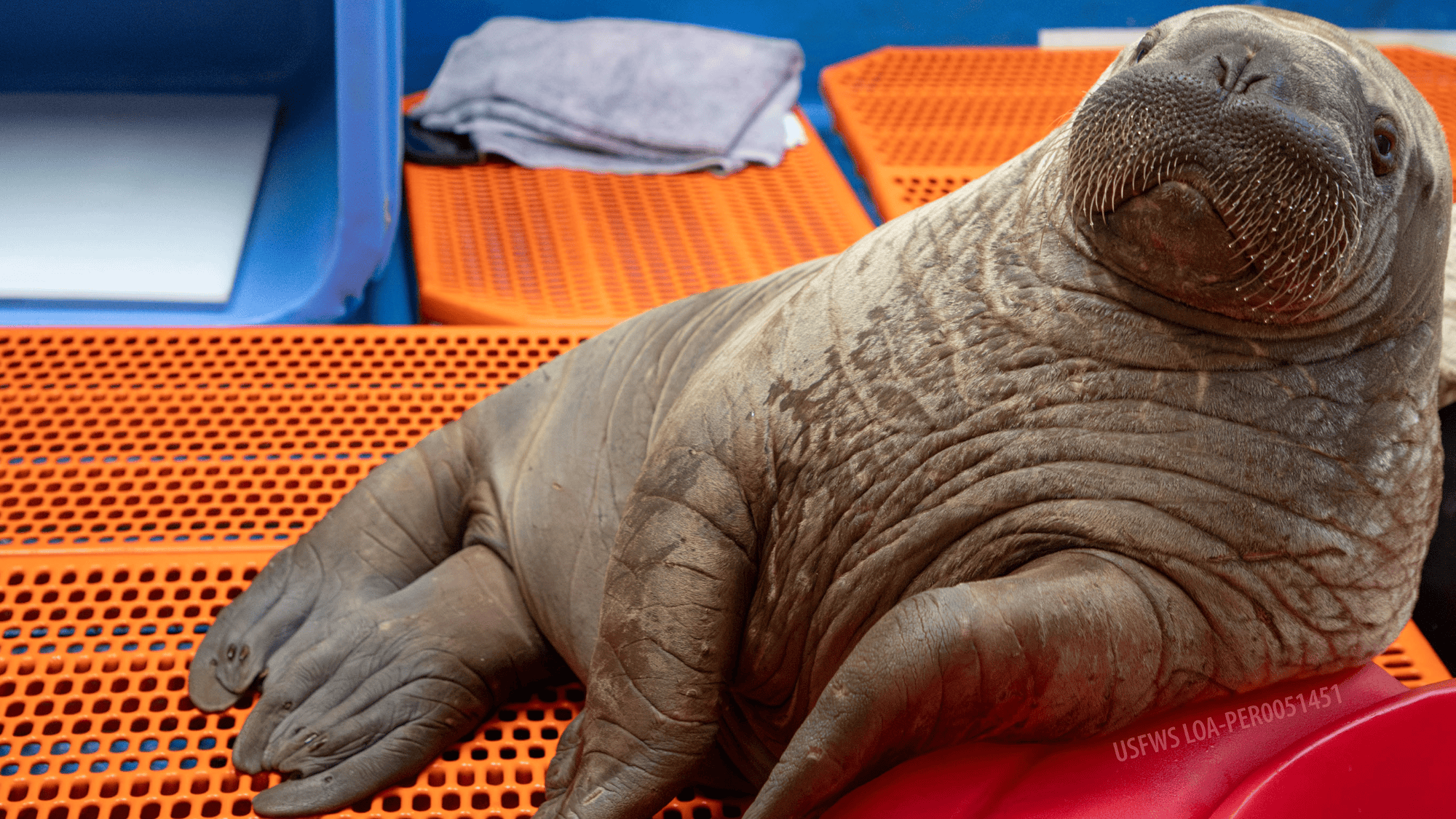
Some animal rescues are more complicated than others—especially when the creature in peril is about to become a snack for a seagull on a remote Alaskan beach with polar bears lurking nearby.
That was the sticky situation an orphaned Pacific walrus (a subspecies of Odobenus rosmarus) calf was in when two researchers found it on an island in the region of Point Lay, Alaska. U.S. Geological Survey (USGS) research walrus biologist Tony Fischbach and Ilisaġvik College student and Point Lay local Violet Anniskett stumbled upon the young male while investigating walrus carcasses on a remote beach. They found the orphan between the remains of two adult walruses, which was a first in Fischbach’s long experience working with walrus herds there.
The researchers requested permission to rehabilitate the walrus from the local Inupiaq community and the U.S. Fish and Wildlife Service. Once the approval arrived, the next hurdle was getting the mammal to the Alaska SeaLife Center. The center is the only marine mammal rehabilitation facility in Alaska, and was over 800 miles away. As if things could get any more difficult, stormy weather left Anniskett, Fischbach, and the walrus stuck on the island for days. In the meantime, the researchers guided the calf to an abandoned building to shelter from predators.
“When we found him, a determined flock of gulls was intent on scavenging him. He was in immediate peril of suffering this fate had we not gotten approval to intervene. Two polar bears were also active on the island,” Fischbach said in a statement.
“He bonded with us fast and wouldn’t sleep unless one of us were in the room. It was just us two for three days, stuck in a storm with the young walrus,” Anniskett added.
The calf was finally transported to the local airport, and made it to Alaska SeaLife Center on September 14 after a flight and van ride. The 200 pound baby arrived dehydrated, but in good physical condition. They treated some superficial wounds, gave him fluids, and applied other stabilizing treatments.
But the calf’s journey wasn’t over. In fact, orphaned Pacific walrus calves are one of the most specialized patients in marine mammal rehabilitation.That’s because in the wild, calves are very attached to their mothers, with whom they usually stay for one to two years. Close physical contact both with their mothers and others of their king is a crucial element in a calf’s early life. In the case of an orphaned calf, humans (who are authorized specialists) can act as surrogates, but it’s a tough babysitting job. Someone has to be around all the time to provide physical contact, social interaction, feeding support, and any veterinary care.
Caring for a Pacific walrus calf is not for the faint of heart, but can be pretty cute. Image: Kaiti Grant/Alaska SeaLife Center.
“Caring for an orphaned walrus calf is truly a team effort and requires around the clock commitment,” said Jane Belovarac, an Alaska SeaLife Center wildlife response curator. “At least two staff members have been working shifts around the clock to stay with him and provide the care he needs. This means long days and some unusual sleeping schedules for our team.”
It also means that the calf becomes comfortable with humans and thus cannot return to the wild. Now in a new long term home (whose location hasn’t been announced yet), he will be an ambassador for his species by teaching people about Pacific walruses.
Sometime between 32,000 and 11,000 years ago, dogs domesticated. Since then, these four-legged friends have provided companionship, assistance, and protection for people. Whether you favor a squished-face potato dog or a determined and smart working dog, you likely understand how dogs got the designation of “man’s best friend.”
The Dog Photography Awards celebrate dogs of all shapes and sizes. The annual competition awards prizes across six categories (Studio, Action, Portrait, Dogs & People, Documentary, and Open) in addition to naming an overall winner.
“City Lights” 2026 Portrait Outdoor, Honorable Mention Credit: Maddie Newton / Dog Photography Awards
This year, Katie Brockman took the prestigious title of Dog Photographer of the Year. The St. Louis-based photographer’s winning entry, titled “Loved and Hated” (seen below), captures the duality of feelings around pitbulls and similar breeds.
“I started photography after my dog Caldwell ended up at the emergency vet on Christmas Eve 2020 for an obstruction surgery” Brockman said. “I suddenly realized that I didn’t have enough photos of him, and I wanted a way to document our adventures together. So I saved up for a camera, and in 2021, I officially started my dog photography journey.”
“Loved and Hated” Dog Photographer of the Year 2026 Credit: Katie Brockman / Dog Photography Awards
This year’s competition drew 1,900 entries from photographers in 50 countries. A judging panel of photographers, dog experts, and industry professionals decided on the winners. And when it comes to photographing dogs, aren’t we all winners?
“Elegance Awaits” 2026 Portrait Outdoor, Honorable Mention Credit: Grace Fiselman / Dog Photography Awards“Mirror, Mirror” 2026 Portrait Outdoor, Honorable Mention Credit: Perdita Pretzl / Dog Photography Awards Henrik Spranz“Mission Balance” 2026 Action Category, 2nd Place Credit: Gavriella Leon / Dog Photography Awards“Beyond the Track” 2026 Portrait Outdoor Category Winner Credit: Elena Marchi / Dog Photography Awards Zeiss57“Chasing Beyond Limits” 2026 Documentary, Honorable Mention Credit: Jodie Grieve / Dog Photography Awards“Therapy Dogs in a Nursing Home” 2026 Documentary, Honorable Mention Credit: Jessica Mozzetti / Dog Photography Awards Jessica Mozzetti“Peggy” 2026 Studio Category, Honorable Mention Credit: Jane Thompson / Dog Photography Awards JANE THOMSON“Working as a Team” 2026 Documentary, Honorable Mention Credit: Rebecca Williams / Dog Photography Awards“Waiting” 2026 Documentary Category Winner Credit: Tianhang Zhang / Dog Photography Awards“The Weight of Connection” 2026 Dogs & People Category, 3rd Place Credit: Santos Ramón / Dog Photography Awards SANTOS ROMAN“Puppy’s Curiosity” 2026 Studio Category, Honorable Mention Credit: Sylvain Langler / Dog Photography Awards“Underwater Fetch” 2026 Action Category, Honorable Mention Credit: Tianhang Zhang / Dog Photography Awards
In my eyes, the best gift is a practical one. It’s useful and won’t rot in the back of someone’s closet for years; they’ll think of you whenever they use it; and you get major brownie points for introducing a magical, miracle product into their life. And what’s better than being known as someone who reliably gifts reliable products? I may still get made fun of by family for my history of wanting practical gifts (including lead refills for my mechanical pencil), but the gifts I treasure most often get the most use in my home. These are some of the best practical gear you can give to friends and family members who value utilitarianism over flash and fluff.
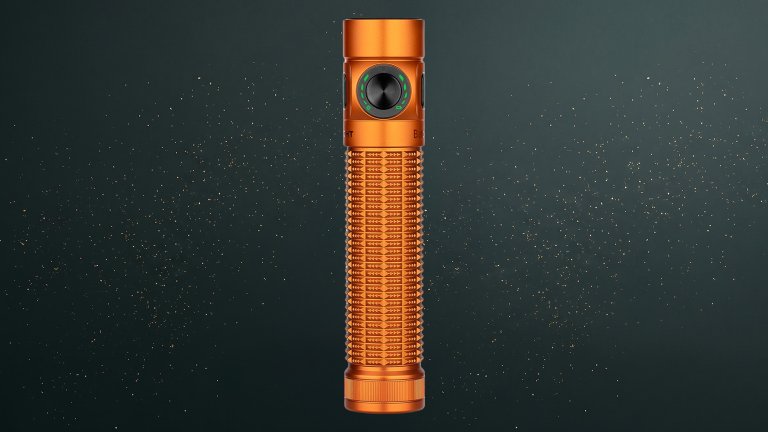
The OLIGHT Baton4 Pro rechargeable flashlight is a $63 flashlight that’s well worth the cost. They’ll never need another flashlight, and they’ll struggle to find one as bright and powerful as this. This torch clocks in at 1600 lumens, and its beam reaches 200 meters long, with a cool white color that cuts through the darkest sky. Dual switches—a side switch and tail switch—allow for one-handed mode selection (choose from high, turbo, and momentary on). Use it hands-free with an included L stand that sticks to metal surfaces, and know it will stay cool and comfortable in hand, even in Turbo mode. Charge it with the included magnetic charger, or unscrew the tailcap to reveal a USB-C port for universal charging anywhere. Your next power outage, camping trip, and attic exploration mission will thank you for this gift.
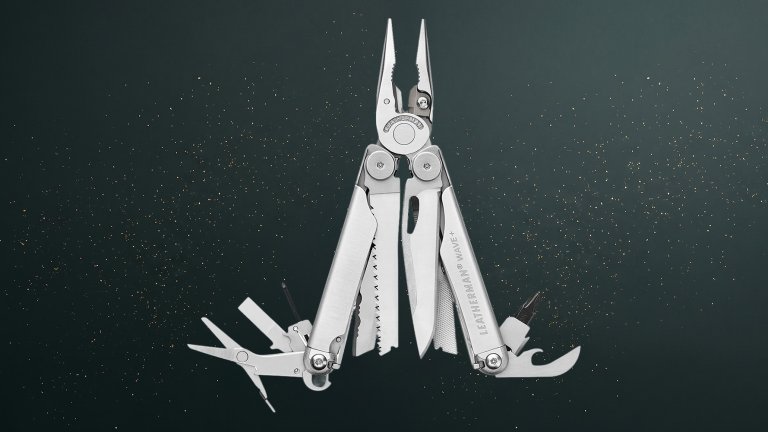
Best multitool: LEATHERMAN Wave Plus 18-in-1 Multi-Tool
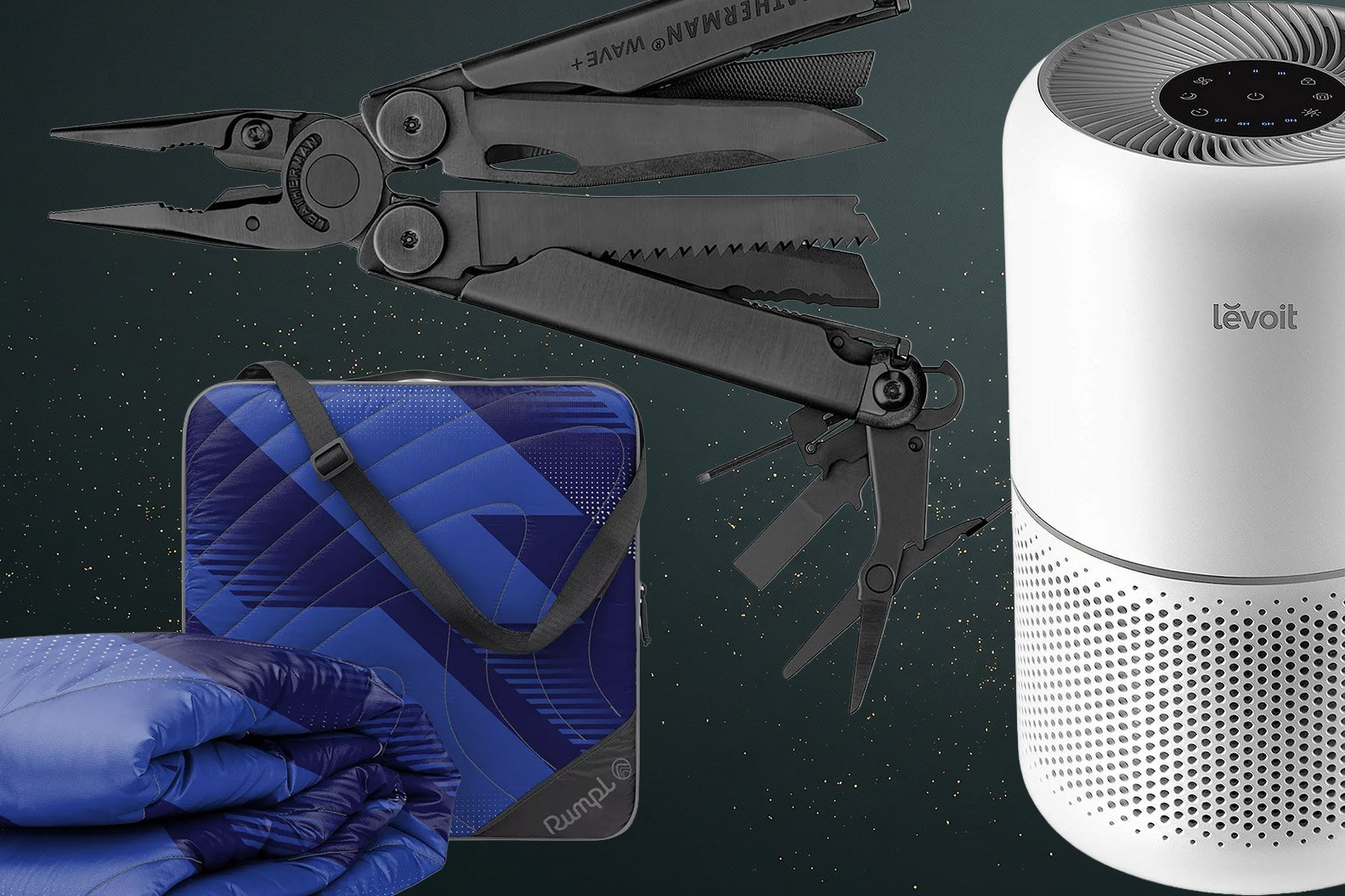
Carry an entire box’s worth of tools in your hand with this $130 LEATHERMAN Wave Plus 18-in-1 Multi-Tool. Standouts and crowd-pleasers include regular pliers, needle-nose pliers, replaceable wire cutters, knives, a saw, a can opener, a bottle opener, spring-action scissors, and three driver sizes. This multitool is made to be portable, reliable, durable, and multifunctional, all ingredients for one practical gift.
Best oil for phenol-menal flavor: Primis Imports Early Harvest EVOO – Koroneiki, Messenia Greece
Primis Imports Early Harvest Extra Virgin Olive Oil – Koroneiki, Messenia Greece $35
Made from 100 percent Greek Koroneiki olives, this single-varietal, cold-extracted, early harvest extra virgin olive oil adds zest to whatever you love best. From a bowl of simple greens to artisan bread, grilled fish to wood-fired vegetables, you’ll love the grassy, sassy brightness it brings. And that’s how you also know it’s packed with plenty of polyphenols, so you can fight free radicals—reducing inflammation while elevating taste. Combine it with basil and black olives for the kind of flavor the foodies in your life will want to put on a pedestal (not included).
Best aromatherapy with attitude: Hand-crafted candles by FRET12
Hand-crafted candles by FRET12 $12 – $48, plus graphic tees $36
Being backstage at a show is a vibe. Sometimes weird, sometimes wild, but always an interesting mix of calm and chaos. Chicago’s FRET12 brand aims to capture the smell of decompression and anticipation and bring it home with its hand-poured “Green Room” candle, which blends birch, bark, fig, and bergamot into something restful and ripe you can gift the joint audiophile-aromaphile in your orbit. For something more after-hours and intimate, try “Deep Cuts,” or spark up “Campfire Acoustic” and bask in wafts of sweet, warm smoke and vanilla. Available in 3-, 8-, and 10-ounce sizes. And while you’re at it, pick up a custom-designed and -printed T-shirt and other garb for that special member of your personal road crew who wants to celebrate their love of all things analog while they shop for some M&M’s (no brown ones) and white tube socks. And there’s artwork and actual guitar stuff, too, for gigging musicians!
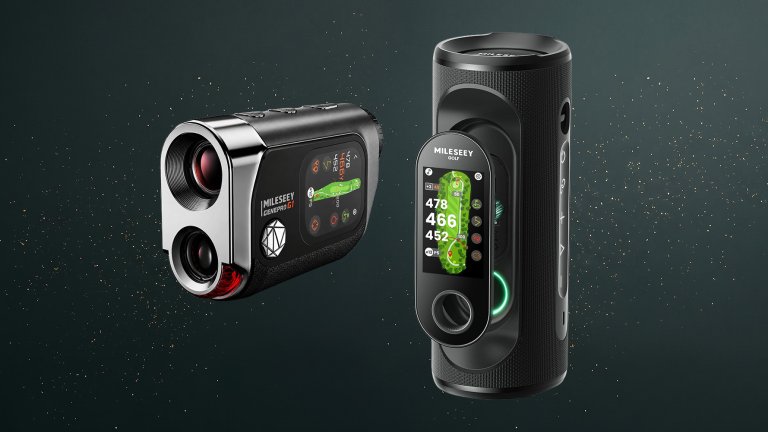
Best golf accessories: Mileseey GenePro G1 Touchscreen Rangefinder & GeneSonic Pro Golf Speaker + GPS Handheld
The Mileseey GeneSonic Pro and GenePro G1 give you what you want for a casual round with friends, and what you need if you still want to know that carry number or feel confident before you even swing a club in more serious competition. The IP65 GenePro G1 delivers accuracy on par with top-of-the-line rangefinders on the market today, while also giving you a full view of the hole. It offers front/center/back yardages, Ball-to-Pin distance, 600-yard flag-lock, SmartSlope compensation, and more. And the IP67 magnetically mounted GeneSonic Pro speaker delivers quality sound and a built-in detachable GPS with 43,000+ preloaded advanced course views for those pesky cart path-only days. Plus, it’s a 30W power bank, so you can get out and continue to jam out, no matter what the weather brings or how you swing. Whichever one suits your game, you can’t go wrong, and they make a great gift for the golfer in your life.
I’ve sung the praises of this $98 Levoit Core300-P air purifier for years. It’s one of our best budget air purifiers, and there are currently two of them in my home: one in the primary bedroom and another in the living room. The replaceable filters aren’t prohibitively expensive, and they’re whisper-quiet at their lowest speeds. I’ve tested many air purifiers, and this one easily beats its more expensive competitors. My asthmatic cat loves this air purifier, my fiancé, who hasn’t gotten sick in years, loves it, and I love it. I’d buy it for all my friends if I could.
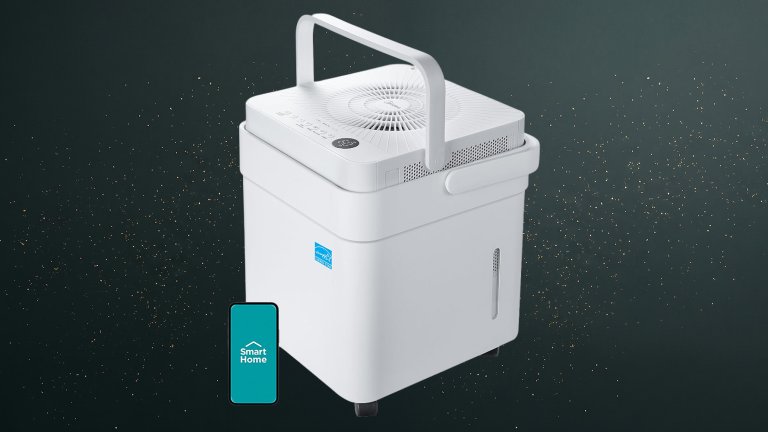
Best dehumidifier: Midea Cube 20 Pint Dehumidifier
Good things come in small packages, including this $180 Midea dehumidifier, which is two feet high and a little over a foot wide. This small dehumidifier holds 3.2 gallons of water and can cover 1,500 square feet, making it perfect for apartments, bathrooms, and even damp walk-in closets. Control it via app or voice, or use the built-in buttons. A side window shows when it’s time to empty the water tank, and a handle makes it easy to carry. The dehumidifier is also on wheels, so you don’t even have to carry it in some cases.
Best humidifier: Carepod One Stainless Steel Humidifier for Large Room
Carepod One Stainless Steel Humidifier for Large Room $279
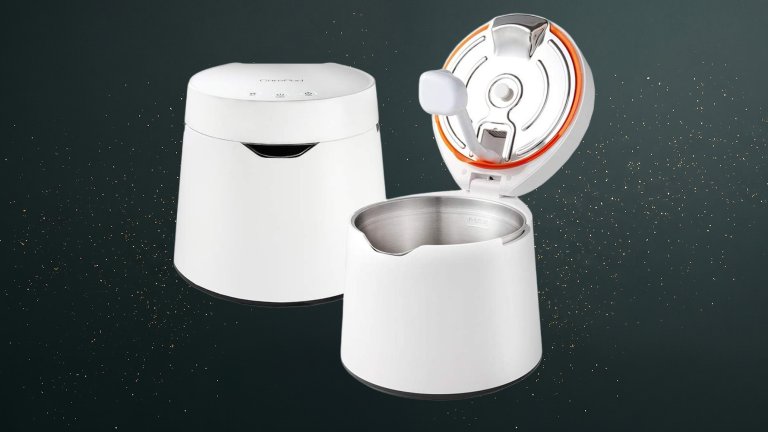
Other humidifiers quickly get gross and grody. The Carepod One is a splurge at $279, but this high-end humidifier stays mold-free thanks to a sterilizable, dishwasher-safe stainless steel basin. It has only three parts to clean: the white wand, stainless steel water tank, and stainless steel inner lid. The humidifier runs for up to 30 hours and includes a built-in timer for hassle-free use. It’s Restriction of Hazardous Substances-certified, meaning it’s free of hazardous substances like lead and mercury.
Best handheld vacuum: Shark Cyclone PET Handheld Vacuum
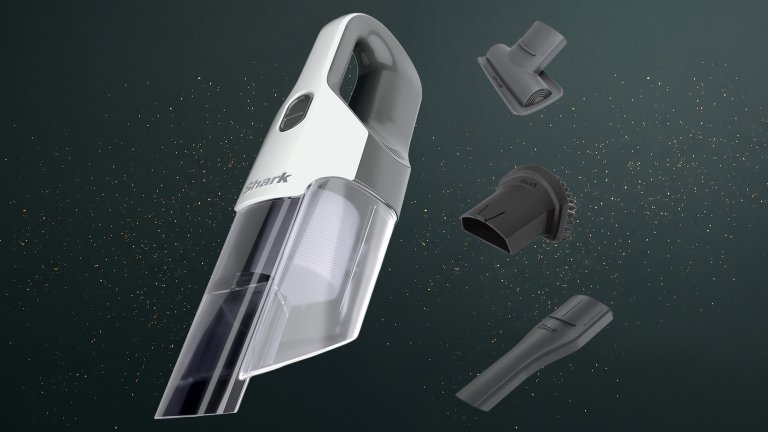
Sometimes, a mess isn’t messy enough to warrant breaking out the big, heavy vacuum, and there is no other pleasure like having a tool for a very specific task. This $80 handheld vacuum from Shark is excellent for cleaning pet hair off couches or collecting the crust from your car. An extra-large dust cup means you can clean all these small messes in one go or have extra room for pet hair when the couch gets particularly fuzzy.
Regardless of water bottle allegiance, the $20 Kuppy Silicone Water Bottle Drying Rack helps reusable bottles of all sizes, wine glasses, and even silicone snack bags dry thoroughly to prevent odor from trapped water. They’re stackable for storage in the water bottle section of a kitchen (Everyone has a Water Bottle Kingdom somewhere in their home). Best of all, they take up less space than traditional dish racks.
Best shower filter for clean freaks: Aquabliss SF100 Daily Revitalize Shower Filter
This $37 Aquabliss SF100 Daily Revitalize Shower Filter is for the person in your life who has a codependent relationship with their Brita pitcher. This budget shower filter fits standard fittings and works with fixed, rain, handheld, and combination shower heads. It also adds three to four inches to an existing shower arm and maintains water pressure for cleaner water without weaker streams. The filter cartridge takes two minutes to replace and lasts three to six months depending on water quality.
Best electric toothbrush: Philips Sonicare Prestige 9900
The Philips Sonicare Prestige 9900 is a $380 rechargeable toothbrush that provides dentist-level cleaning every day. Sonic technology and multi-angle bristles remove plaque regardless of brush technique. SenseIQ Technology automatically adjusts intensity and flashes when it detects too much pressure. This toothbrush comes with five modes, plus three intensity levels. The Oral-B iO Series 3 Rechargeable Electric Toothbrush is a cheaper option that’s still just as giftable.
Best water flosser: Waterpik Aquarius Countertop Water Flosser
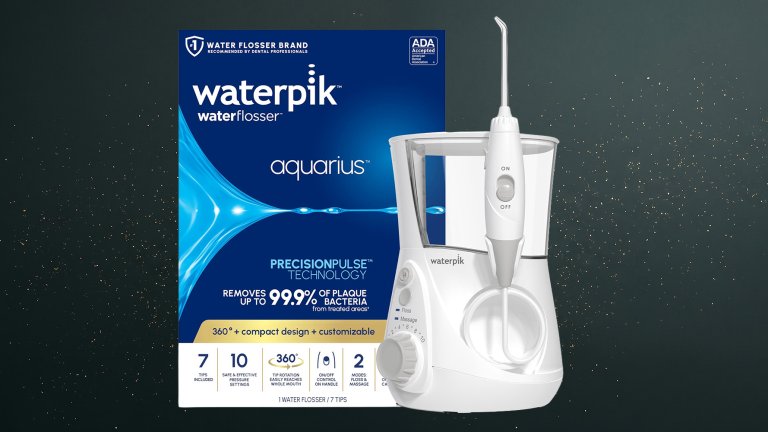
A water flosser is the bedrock of a well-rounded oral care routine. The Waterpik Aquarius Countertop Water Flosser is a $100 countertop water flosser that’s more like a power washer for mouths. Choose from 10 settings for extra pearly whites, including a massage mode that helps stimulate gums. Although it’s not a replacement for floss, it’s excellent for getting the job done after a late night. I personally use mine after flossing and add a bit of mouthwash to the reservoir to get fluoride where my teeth need it most.
The Nori Press Travel Steam Iron is a $120 handheld iron that resembles a giant hair straightener. If your gift recipient is like me and has ironed out my polo collars with a hair straightener, this iron should feel familiar. Two heated plates iron the front and back of a garment at once, removing wrinkles without an ironing board. The compact iron also includes a built-in steamer to remove wrinkles from more delicate fabrics. At 14 inches long and weighing a little under 1.5 pounds, it’s packable for clothing emergencies.
Best hair dryer: Dyson Supersonic Nural Hair Dryer
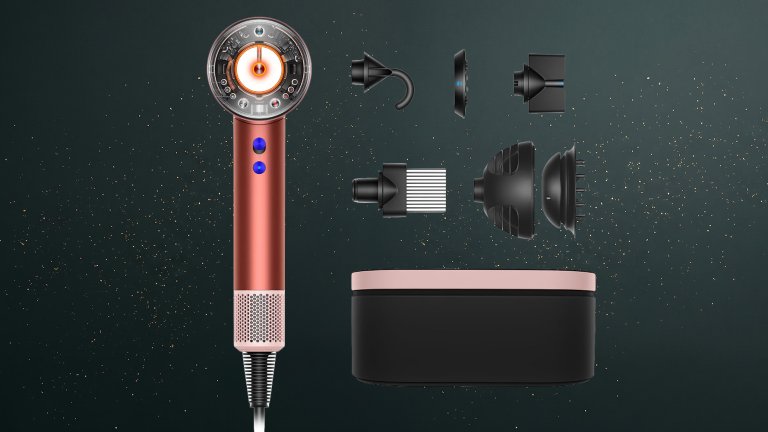
The Dyson Supersonic Nural Hair Dryer is a $450 hair dryer designed to maintain healthy hair and a healthy scalp. It’s also engineered to reduce flakes and shedding and balance hair oils. This smart hair dryer reduces airflow and deactivates the heater when set down; a Hall sensor recognizes each attachment as it’s used and automatically adjusts settings based on the attachment; and intelligent heat control monitors airflow to prevent hair damage. It also dries hair fast, a plus for practical friends who hate going to bed with wet hair.
Best head shaver: Wahl Baldscaper Head & Body Shaver
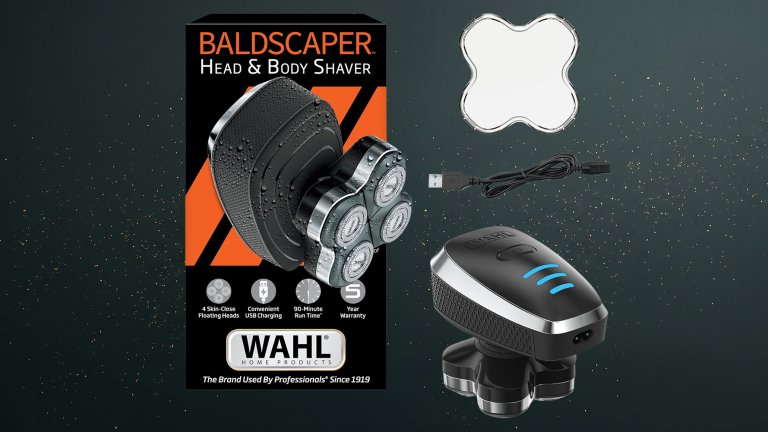
Your most practical friend is most likely a Virgo or Capricorn. Popular Science’s resident Virgo and Managing Editor, Gear & Commerce, enjoys using this Baldscaper to keep his head smooth without causing physical/emotional damage to himself and his loved ones. Four floating shaver heads contour to the head, face, and body for a smooth shave, cutting it close sans nicks and razor burn. It’s fully waterproof, rinses clean with just water, and can be used wet or dry. A powerful motor and 90-minute battery life cut through coarse hair without dying halfway through a head shave.
The TUSHY Classic 3.0 Bidet is a $124 starter bidet that helps your gift recipient feel cleaner than using toilet paper alone. It includes all materials needed for installation, which takes less than 10 minutes. A Schmutz Shield (actual name for this feature) blocks grime from escaping past the toilet lid, and a self-cleaning nozzle means this bidet won’t cause more cleaning-related headaches your practical friend may experience daily.
Best cordless vacuum: Shark PowerPro Flex Reveal Plus Cordless Vacuum
Shark PowerPro Flex Reveal Plus Cordless Vacuum $380
Shark makes some of the best cordless vacuums, and this $380 option includes some of our favorite features in a vacuum cleaner, including a MultiFLEX wand that makes it infinitely easier to reach under furniture, a light that reveals missed spots, and Floor Detect technology that adjusts brushroll speed depending on the surface. It also doubles as a handvac and comes with tools for crevices and upholstery. With 50 minutes of runtime, HEPA filtration, and an anti-allergen seal, dust busting won’t involve a sneezing fit.
Give the gift of a fully connected home with the $130 Aeotec Smart Home Hub2, which can be used as a SmartThings Hub and supports Zigbee and Matter Gateway protocols. It’s also compatible with Alexa, Google Assistant, and Wi-Fi. Although it’s not Z-Wave compliant, it offers wider device compatibility and stronger security than some competitors.
Best electric blanket: Westinghouse Electric Blanket Heated Throw
The best electric blankets provide warmth without turning up the thermostat. This $50 electric throw blanket from Westinghouse is reliable and heats evenly. Plus, it protects itself from overheating and includes an auto-off function for peace of mind when a nap strikes. A weighty smart digital controller cycles through six heat settings and a timer up to 10 hours. Throw it in the washing machine and hang it to dry between seasons.
Best outdoor blanket for sports fans: Rumpl Gametime Puffy Blanket
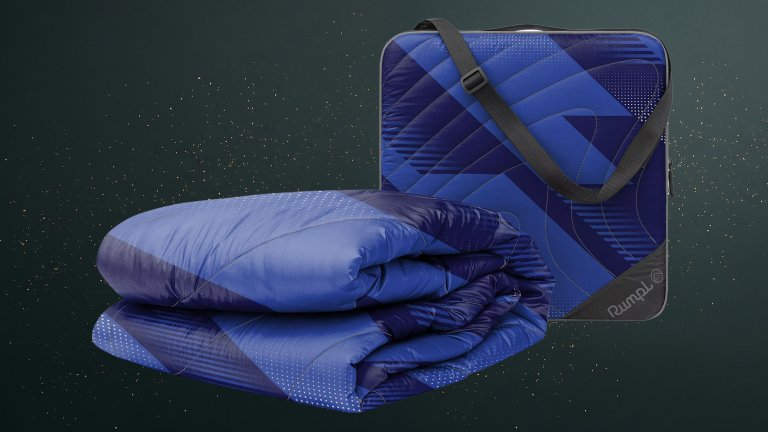
The Rumpl Gametime Puffy is a $100 2-in-1 stadium accessory made for overtime, any time. It packs a full-size 50×70″ insulated blanket into a TPU-laminated storage case featuring an adjustable, removable shoulder strap and an integrated 1-inch insulated foam pad to sit on when you pull the blanket out (and it’s an extra-padded 4” cushion with the blanket in). The shell and case have a PFAS-free water-repellent finish, and the blanket keeps you warm down to 45 degrees, making it great for football games, soccer matches, and club tournaments.
Best drill: Greenworks Pro PowerAll 24V 530 in-lb Drill Driver & 2,200 in-lb Impact Driver Combo Kit
I’ve assembled my fair share of furniture from a multinational home furnishings store, and let’s be real: Sometimes those Allen wrenches don’t cut it. Enter the Greenworks Pro PowerAll 24V Drill Driver and Impact Driver Combo Kit, a $169 bundle that gives you two handy tools for the price of one. The drill driver and impact driver use brushless motors and 24-volt batteries, and run 20% longer than 18- and 20-volt counterparts. It’s compact, lightweight, and easy to use in tight spaces, making it an excellent gift for DIY-minded friends and family.
Best glass containers: Anyday 4-Piece Medium Glass Food Storage with Lids
Anyday 4-Piece Medium Glass Food Storage with Lids $65
The $65 Anyday 4-Piece Medium Glass Food Storage system is made for microwaving or cooking directly in the oven, thanks to sturdy borosilicate glass that’s stronger and better resists extreme temperature changes than soft glass. The glass dishware is even freezer-safe. A glass lid prevents splatters in the microwave; lay-flat knobs vent food while cooking or create an airtight seal when it’s time to store any leftovers.
This $160 waterproof, compact carry-all from RUX works like an everyday tote, then converts to a roll-top dry bag to protect against rain and random liquids. It fits a laptop, lunch, and any layers, while internal and external pockets keep keys, a phone, and wallet within reach. Grab it by the handles, or wear it crossbody with the included shoulder strap on a two-hands kind of day. Exterior lash points connect pockets and panels (sold separately) for added storage and organization if your gift recipient desires a gift that keeps on giving.
Best pens: uniball JETSTREAM RT, 0.7 mm Ballpoint Pen
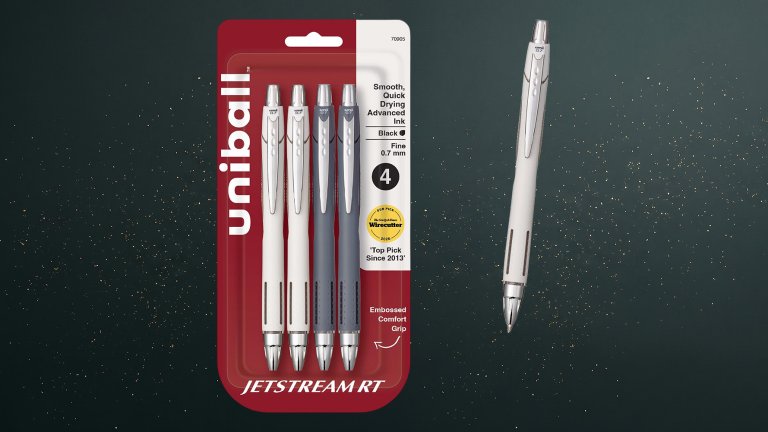
Practical people definitely have plenty of pen opinions—I know I do. And this $6.50 pack of uniball Jetstream pens is a favorite thanks to its smooth, opaque, quick-drying ink that’s water- and fade-resistant. Choose the .7 millimeter option for a finer line, or the 1 millimeter thickness for those who prefer a more robust script.
Best notebook: LEUCHTTURM1917 A5 (Medium) Notebook
My $26 LEUCHTTURM1917 A5 notebook holds my journal ramblings, my to-do lists, and random neurotic notes I need to get out of my head and onto a page. Numbered pages, two page markers, and a blank table of contents help organize all my jumbled thoughts. I personally go for a hardcover notebook with ruled paper, but LEUCHTTURM1917 also sells softcover journals in every color of the rainbow, with square grid ruling, dotted ruling, or blank pages.
The Ember Mug 3 is the latest generation of the popular smart mug that can keep hot drinks at a precise temperature all day long. Each 14 oz mug includes a sliding lid that extends battery life up to three hours on a single charge (it’s 80 minutes without the lid). And a charging coaster recharges your mug after your daily dose of bean juice (or maintains the temperature indefinitely if you keep the mug on it). Customize your preferred temperature in the app, or set it manually with a button on the mug. It’s also top-rack dishwasher safe.
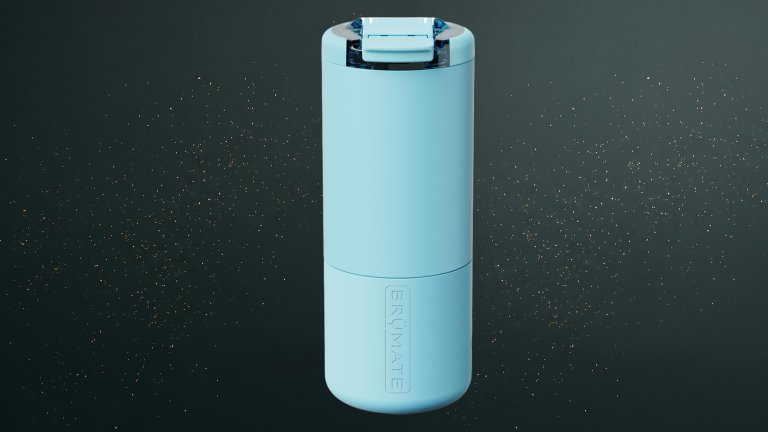
This $35 leakproof travel mug from BrüMate is for those who don’t mix their coffee with their electronics. A ceramic lining preserves flavor while preventing staining and leftover odors, and triple insulation keeps drinks hot or cold for hours. It’s cup-holder friendly for caffeinating on the go, and a magnetic, OctaLock lid prevents spills while running errands.
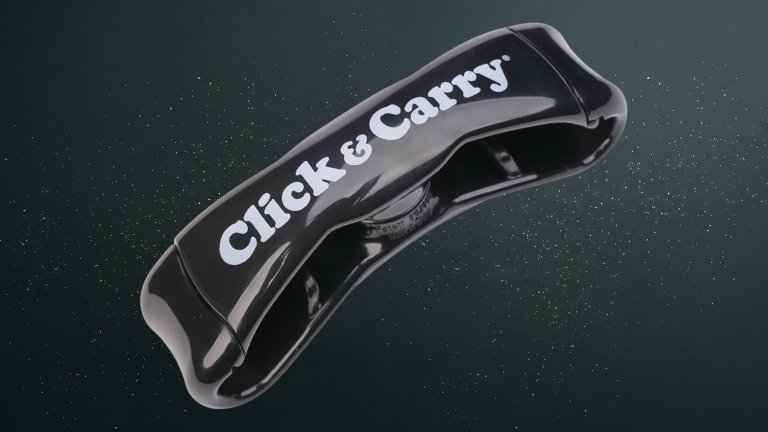
Best bag carrier: Click & Carry Ergonomic Grocery Bag Carrier Handle & Bag Holder
Click & Carry Ergonomic Grocery Bag Carrier Handle & Bag Holder $14
The Click & Carry Ergonomic Grocery Bag Carrier Handle & Bag Holder is a $14 gizmo that saves trips and reduces hassle when unloading groceries. It’s gentle on joints, reduces hand strain, and its ergonomic design lowers injury risk. The bag carrier has a 100-pound weight capacity but weighs just under three ounces. The friend who always tests the boundaries of bringing everything inside in one trip will thank you.
Socks are a well-liked practical gift, and this $25 two-pack of merino wool, COOLMAX EcoMade polyester, REPREVE recycled polyester + nylon socks from Gordini uses fine-gauge and ultra-lightweight yarns to keep feet dry and supported with Linear Wicking Channels that move away moisture and Quilted AirForms that distribute shock and cushion impact. These OrbitFit anatomically mapped 3D zones create a purpose-knit performance fit that keeps you comfortable at home, on a walk, or while running or hiking. If cotton socks are on the gift list, we’re fans of the HUE Women’s Mini Crew Sock and the Men’s Casual Ribbed Crew Socks, which are breathable and comfortable.
The Garmin Venu 4 is a $550 multisport watch that blends style and function. A bright 1.4-inch AMOLED display clearly shows health and fitness stats like sleep tracking and time needed for workout recovery, along with on-screen workouts. A smart wake alarm helps with waking up at an optimal time, and a built-in LED flashlight illuminates dark morning walks. This watch supports running and triathlon, strength training, jet lag recovery, and more. Data-obsessed friends and family members will be pleased with all the numbers and stats they can pull from this watch.
This $50 OtterBox Symmetry Series Case has protected my iPhone 13 for years: the only blemish is a dent in the aluminum bumper from when I took it out of its case and immediately dropped it on my concrete porch. I’ve learned my lesson and never forgo a phone case. The OtterBox Symmetry Series Case is sleek without being too flimsy and protects without bulk. It’s on my repurchase list and should be on yours, too, especially if you’re looking at one of the new iPhone 18s.
Best noise-canceling headphones: Bose QuietComfort Headphones (2nd Gen)
These newly refreshed noise-canceling headphones from Bose are essential for quiet commutes and tuning out the airport chaos while traveling. Bose makes some of our favorite noise-canceling headphones and earbuds thanks to thoughtful design and helpful tech in each pair. We’re particularly fond of the comfortable pill-shaped earcups, 24-hour battery life, Immersive Audio, QuietControl noise cancellation, and updated ActiveSense Tech to smooth sound spikes in Aware Mode.
This practical gift is also personal. Every pair of these $249 orthotics from Stride is custom-made from a 3D scan of someone’s foot and a gait video with just their smartphone required, no doctor’s visit necessary. Take a short quiz about pain areas, activity levels, goals, and shoe preferences; provide the digital data; and podiatrists in Germany customize the orthotics and print them on durable TPU (personalized for the recipient) before they arrive at your doorstep in just 10 to 15 days. And they go well beyond arch support. It’s hard to convey the initially odd and then quickly invigorating sensation of an insole that considers each unique contour of the ball of your foot, but we guarantee your achiest friend or family member will appreciate a custom gift that addresses a big pain point, literally.
Best gloves for cyclists and beyond: Hestra CZone Bike Mistral – 5 finger
I hate when gloves hinder my range of movement. These $85 bike gloves from Hestra have a flexible but durable outer fabric and stretchy polyester on the palm. Primaloft Gold synthetic insulation, a fleece lining, and a membrane that stops rain and slush without making hands clammy keep your fingers warm. And the Lycra-clad slit makes the glove easy to put on and take off. Even if we don’t ride, these gloves could be our ride or die.
Best work boots: Danner Bull Run Chelsea and Classic Moc Boots
Danner Bull Run Chelsea and Classic Moc Boots $239 – $259
Style and practicality can go hand-in-hand. The Danner Chelsea boot is just that: Proudly assembled in the company’s Portland, Oregon factory with signature stitchdown construction, it slips on and is made of full-grain leather. The nonconductive (Electrical Hazard Certified) outsole is oil- and slip-resistant and is comfortable and durable even after climbing on ladders or standing on unforgiving surfaces like wood, tile, or concrete. Even better, the boots are Danner Recraftable, meaning they are eligible for part replacements, leather care, and restitching (paid services), so you are investing in someone’s ongoing comfort. If your gift recipient is good with laces, the Bull Run Moc Toe is another top choice for both looks and stability.
Best post-workout recovery shoes for athletes: Nike x Hyperice Nike Air Zoom Hyperslide
These $249 Nike slides are a collab with recovery company Hyperice, known for its wellness and recovery technology (we’re currently testing the Normatec dynamic air compression massage legs to positive effect). The comfortable slides combine heat, vibration, and responsive cushioning to make every step feel lighter. They’re like giving a pair of heated slippers a friar-like tonsure.
Best microphone for aspiring podcasters and musicians: RØDE NT1 Signature Series
The Rode NT1 Signature Series is a $159 workhorse. This cardioid condenser microphone has warm bass, a detailed midrange, and glistening highs for exceptional performance when recording bedroom melodies and harmonies, instruments, voiceovers, and a podcast episode that may never see the sun. Choose from eight vibrant colors, including red, green, blue, cobalt, and orange, or stick with black. Keep us updated on the views and streams! And if you’re looking for an extremely versatile mic and willing to pay a little more, the AKG C114 Large Diaphragm Multi-Pattern Condenser Microphone is a 2026 release we’ve seen used to record an entire band to a greatly immersive effect.
Best tuner for guitarists: Snark ST-2HPT High Precision Rechargeable Tuner
Snark ST-2HPT High Precision Rechargeable Tuner $25.99
Gifting gear or a gadget related to someone’s hobby will always be a hit. If someone in your life recently got an acoustic guitar, a clip-on tuner is a present that keeps giving. This high-precision tuner blocks room noise for faster, easier tuning. Strummed chords ring out in tune, and songs sound infinitely better for it. If an electric guitar and a pedalboard are part of the gear setup, consider adding a tuner pedal like the TC Electronic POLYTUNE 3.
Best durable down jacket: Stio Hometown Down Jacket
After many frigid Pittsburgh winters, I’ve learned that investing in a down jacket always pays off. I’m a fan of Stio’s $449 Colter Down Jacket, but the Hometown style is an even more budget-friendly down jacket. A recycled nylon ripstop outer with a PFAS-free DWR shields from the elements. It’s insulated with HyperDRY water-repellent goose down that offers 800-fill warmth even in wet snow. Other helpful features include pockets for hand warmers and valuable tech, and low-profile cord locks for a customized fit. We also think this limited-edition anniversary denim print shown above is just darling.
On October 16, the National Park Service (NPS)announced the latest additions to a growing list of designated World War II Heritage Cities. The park service began the program in 2020, as a way to honor local ties to history. Officials have since celebrated locations across 46 states and two territories, but there are many more places worthy of distinction.
The10 new cities and counties announced today span Alaska all the way to the U.S. Virgin Islands.
“These designations highlight the enduring legacy of service, sacrifice, innovation, and industrial achievement…and continue to shape our national story,” NPS Jessica Bowron said in a statement.
According to Bowron, this year’s selections include hubs for military manufacturing, training facilities, and logistical centers integral to Allied campaigns. In Aurora, Colorado, Fitzsimons General Hospital cared for wounded returning service members, while the city of Pendleton, Oregon, featured an airfield that trained B-25 crews that later participated in the Doolittle Raid. Meanwhile, South Charleston, West Virginia’s Naval Ordinance Plant supplied invaluable inventories and was largely staffed by local women and Black workers.
A full list of the latest entrants can be found below:

 Login