Login

12 striking images from European Wildlife Photographer of the Year 2026
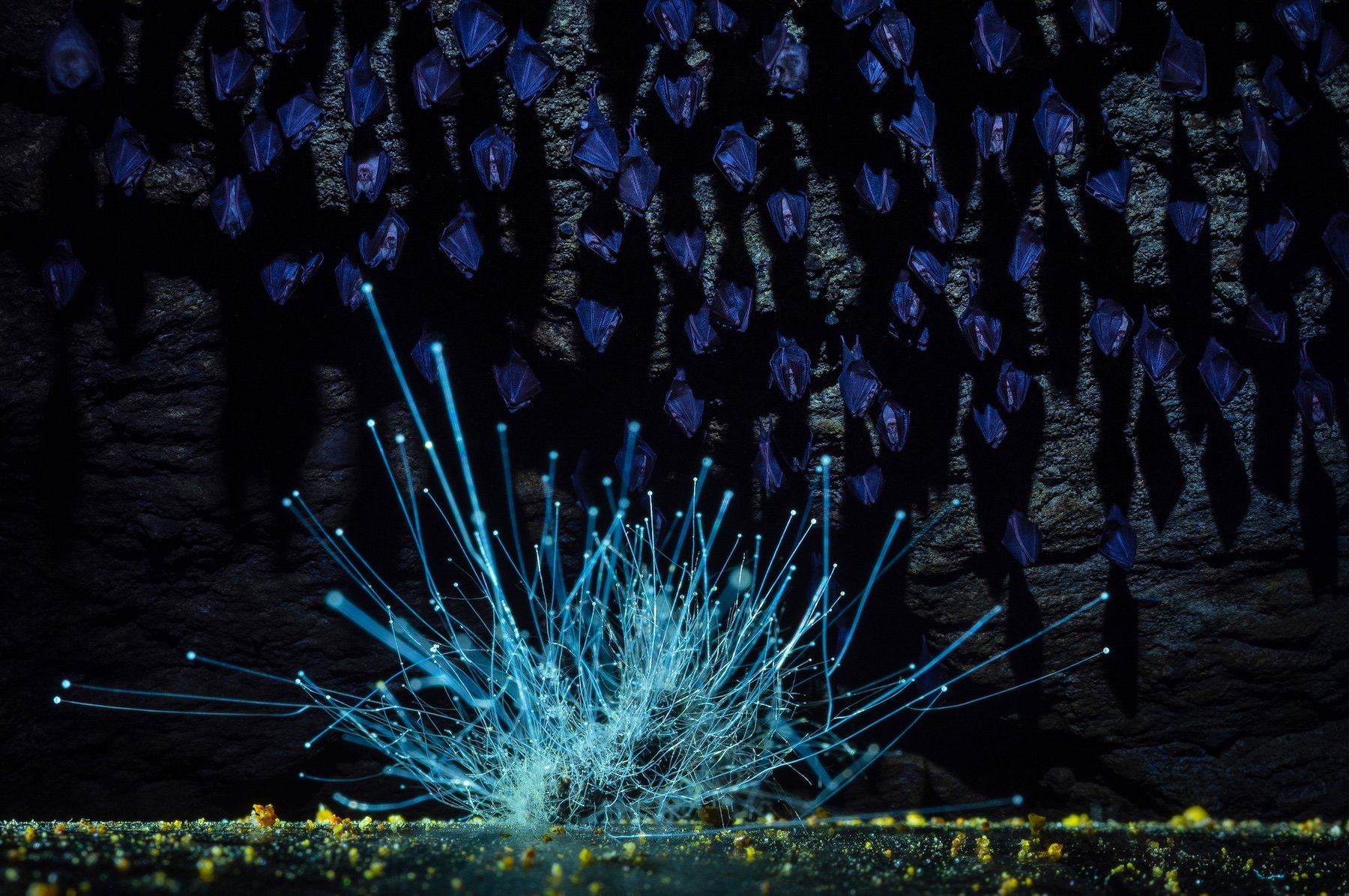
For 13 years, photographer Imre Potyó has ventured into restricted-access mine tunnels in the Börzsöny Mountains of Hungary to capture images of hibernating lesser horseshoe bat (Rhinolophus hipposideros). Despite their deep slumber, the bats occasionally wake to hunt insects that enter the dark caves.
“In doing so, the bat leaves behind droppings that gradually accumulate into a continuous dark layer,” Potyó explains. “And this is where the real wonder begins: in the beam of a torch, a whitish coating can be seen on the guano—a small pin mould thriving in this unusual habitat. Using a macro lens, I captured the mould in the foreground with the hibernating bats visible in the background. The photograph—a long exposure incorporating a focus shift—was taken during a controlled bat count and without disturbing the animals.”
That effort paid off. Potyó’s image, titled “Hidden Worlds,” (seen below) took home top honors at the European Wildlife Photographer of the Year 2026 awards.
Overall winner
I have been photographing hibernating bats for 13 years in restricted-access mine tunnels in the Börzsöny Mountains of Hungary, and yet this particular composition was novel for me. A key characteristic of the lesser horseshoe bat (Rhinolophus hipposideros) is that, during hibernating it occasionally wakes and leaves its roost to hunt flying insects. In doing so, the bat leaves behind droppings that gradually accumulate into a continuous dark layer. And this is where the real wonder begins: in the beam of a torch, a whitish coating can be seen on the guano—a small pin mould thriving in this unusual habitat. Using a macro lens, I captured the mould in the foreground with the hibernating bats visible in the background. The photograph—a long exposure incorporating a focus shift—was taken during a controlled bat count and without disturbing the animals.
Credit: Imre Potyó – Hungary / European Wildlife Photographer of the Year 2026
The European Wildlife Photographer of the Year (EWPY) competition is now in its 26th year. Amateur and professional photographers in 46 countries submitted more than 26,000 images, from which 107 were selected as winners across nine categories and two special categories.
“All the photographers taking part in this competition share a common outlook: they move through the world with open eyes and are committed to a harmonious coexistence of people and nature,” Sabine Riewenherm, President of the German Federal Agency for Nature Conservation (BfN), said in a statement. Through their work, they draw attention to the beauty of our planet, but also to its vulnerability. I am deeply grateful to these photographers for their outstanding contribution, as they play a vital role in raising awareness for nature and its protection.”
Winner, Humans and Nature
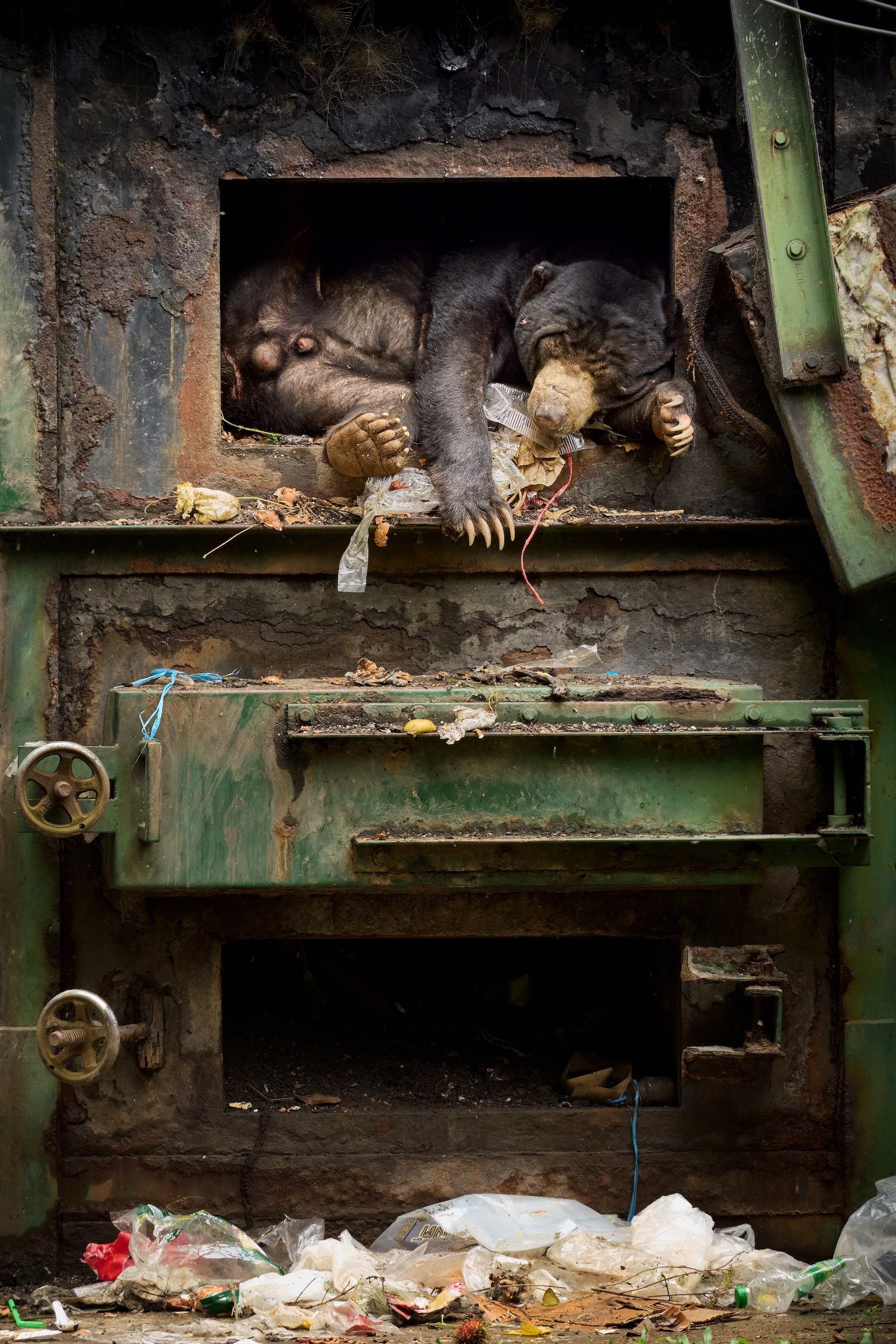
Travelling to Thailand, my hope was to see a Malayan sun bear (Helarctos malayanus) in the wild. I got my wish – though not quite the way I had imagined. A bear had taken to dropping by the visitor centre at Kaeng Krachan National Park, wandering fearlessly behind the rangers’ kitchen in search of food scraps. On this day, it climbed into the waste incinerator and fell asleep inside. And this despite having some 3,000 square kilometres of habitat at its disposal within the park – its behaviour, in other words, had nothing to do with habitat loss or a degraded environment. What struck me was the contrast between this magnificent animal and one of humanity’s uglier inventions. The irony was complete when I noticed the manufacturer’s label: “Evolution”.
Credit: Petr Bambousek – Czech Republic / European Wildlife Photographer of the Year 2026
Highly commended, Mammals
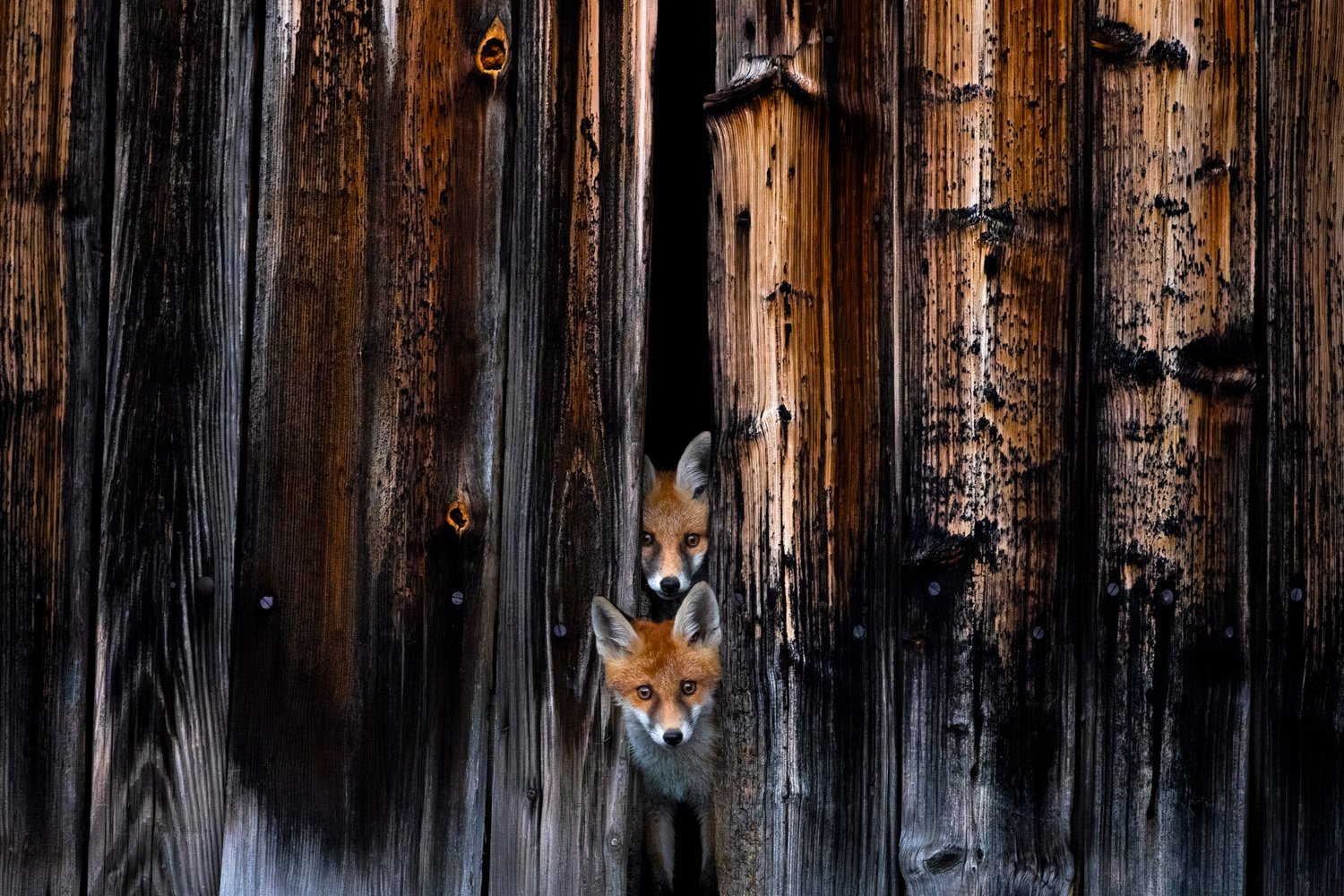
I was on my way home from school when, just a few minutes from my house, I suddenly came face to face with a young red fox (Vulpes vulpes). We were both caught off guard and stood motionless for a moment. I then hurried home to fetch my camera. Four fox cubs and their mother had moved into an abandoned barn right in the middle of my village. Two of the cubs poked their heads out of the barn door and watched me curiously. A few days later, I learnt that the barn’s owner felt disturbed by their presence. He threw stones at them and eventually chased them away. The foxes moved on, in search of a safer place. Moments like these remind me how important it is to look out for the wild animals that share our world with us. These animals are not intruders – they are our neighbours, seeking safety just as we do.
Credit: Marc Siegle – Switzerland / European Wildlife Photographer of the Year 2026
Highly commended, Mammals
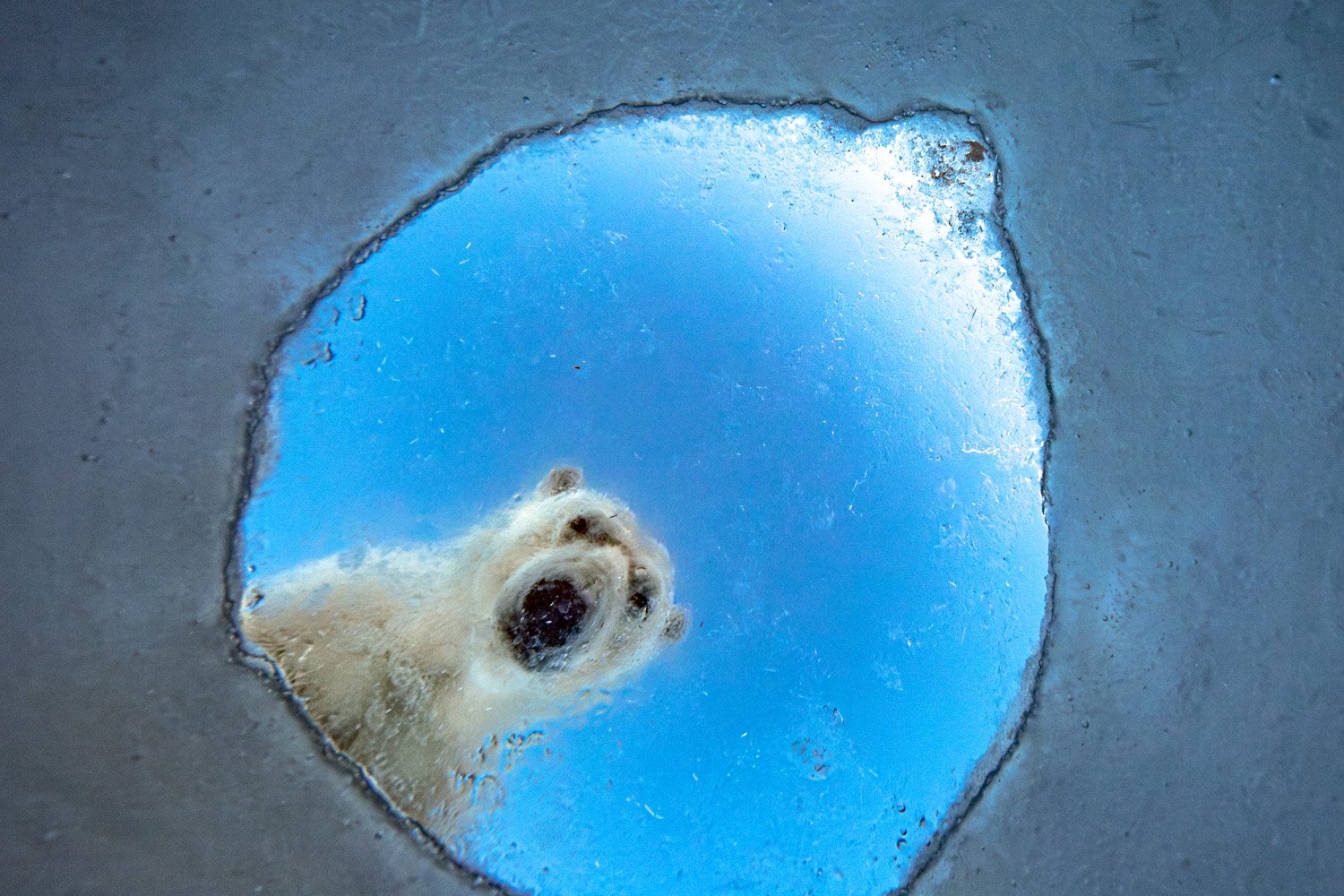
For many years, I had been planning to photograph the most common hunting technique of polar bears (Ursus maritimus) from a seal’s perspective. In the dense pack ice at 83° N, I drilled a hole next to a seal’s breathing hole, installed my camera beneath it, and positioned a motion sensor on the ice above. Eight hours later, I spotted a polar bear in the distance heading straight for the breathing hole. By then, a thin layer of ice had formed on the water. The bear pushed its head through the ice to see what was going on below and looked straight into the camera. The bear then lay down and slept for nine hours, leaving me unable to retrieve my camera. When the animal finally moved on, I rushed over and was over thrilled to discover that I had captured my dream photo of a polar bear.
Credit: Audun Rikardsen – Norway / European Wildlife Photographer of the Year 2026 Audun Rikardsen
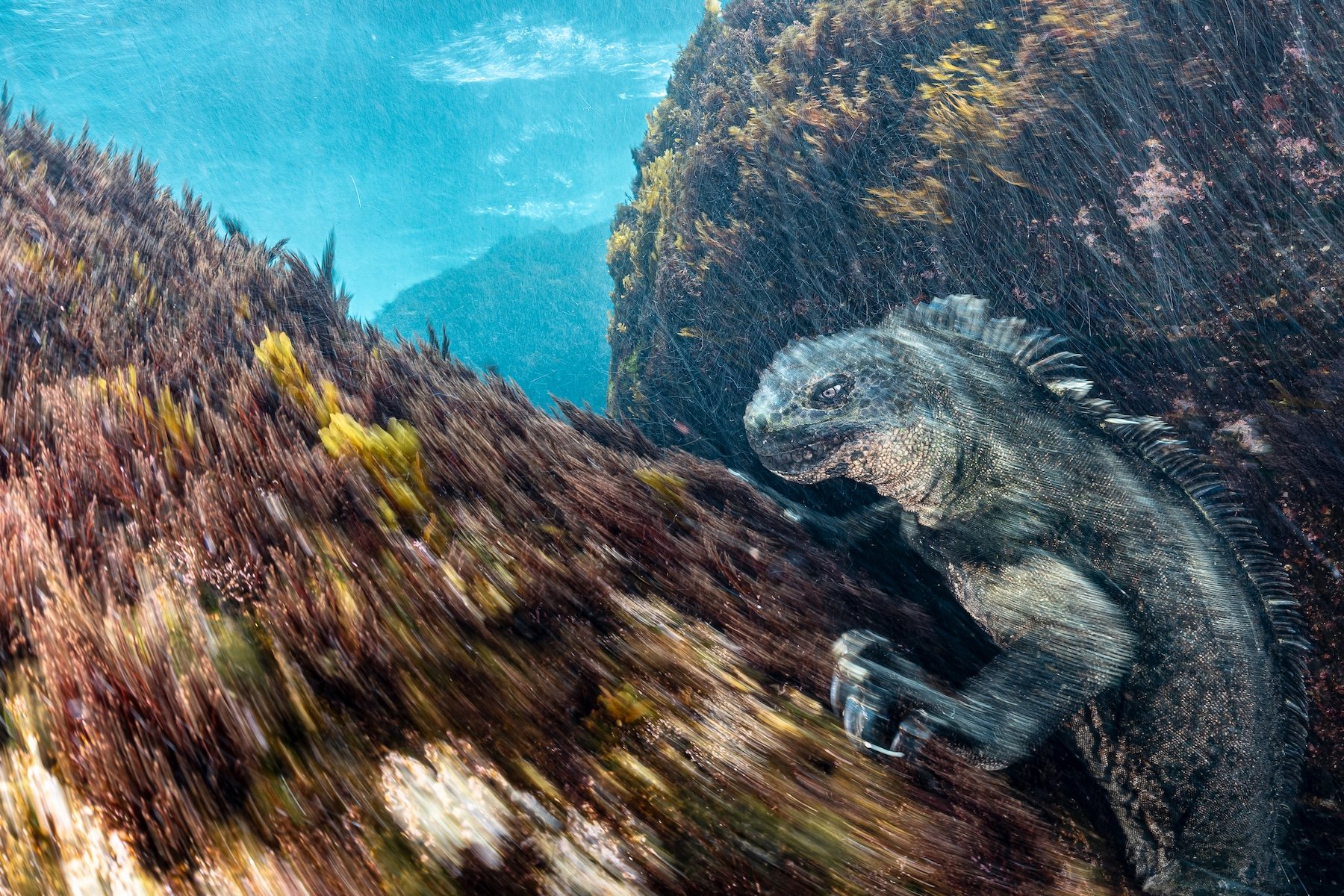
Runner-up, Underwater World
Marine iguanas (Amblyrhynchus cristatus) are endemic to the Galápagos Archipelago, Ecuador. They are most often seen basking in the sun, their dark bodies perfectly camouflaged against the black lava rocks. As ectothermic reptiles, they rely on external heat to regulate their body temperature. This is particularly important as they dive into the cold waters surrounding the archipelago to forage, primarily on marine algae. I followed this individual into the water and watched with fascination as it propelled itself swiftly and purposefully through the powerful surf with the aid of its muscular tail. While I was tossed about by the waves, the marine iguana clung firmly to a rock with its sharp claws and began methodically grazing on algae. Despite its dragon-like appearance, the marine iguana is remarkably placid: a herbivore that shows no aggression, even when approached closely on land or underwater.
Credit: Henley Spiers – United Kingdom / European Wildlife Photographer of the Year 2026 HENLEY SPIERS
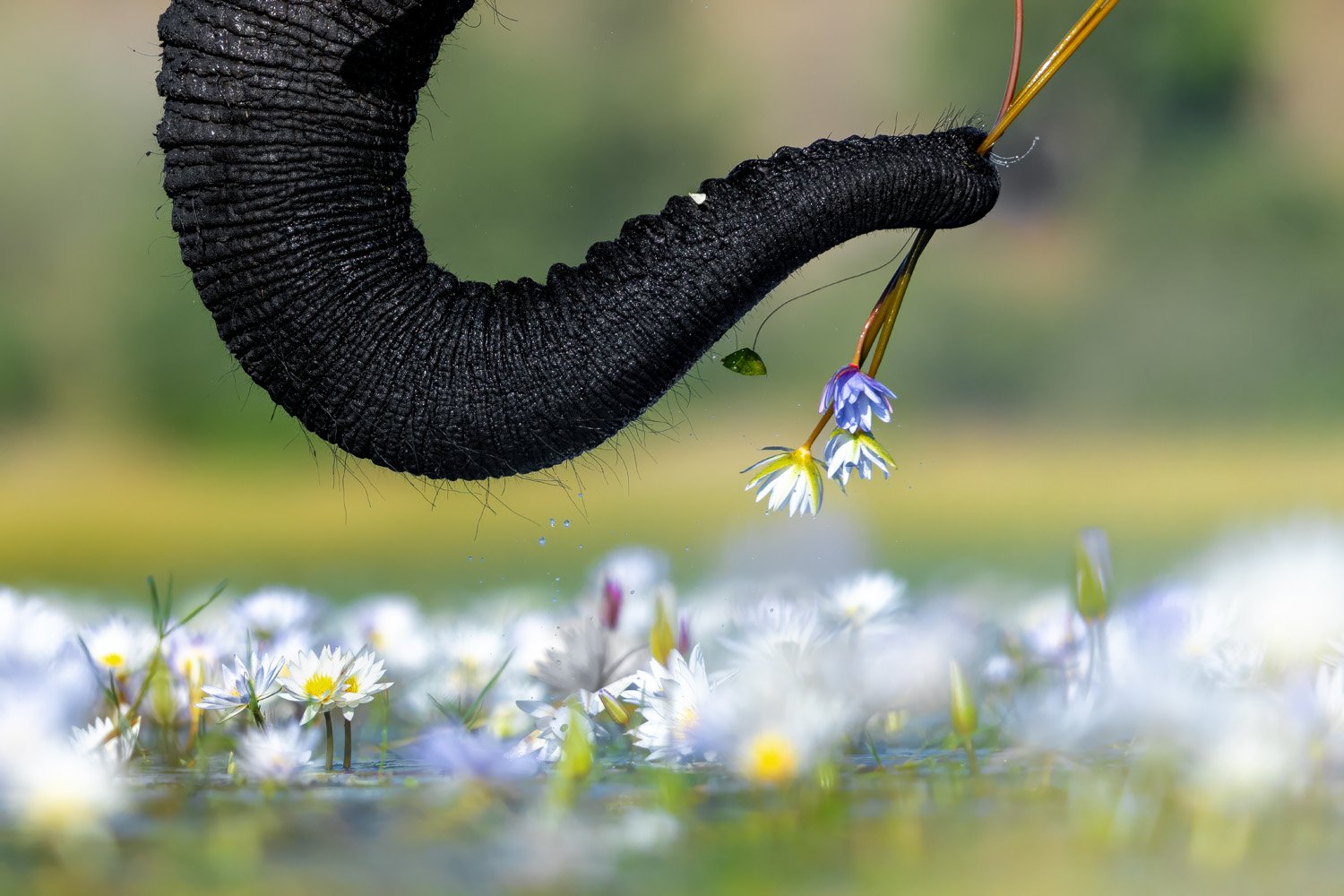
Highly commended, Mammals
Every year between April and May, vast amounts of water from Angola inundate the floodplains of the Chobe River in Botswana, creating ideal conditions for numerous water lilies to flourish. In spring 2023, a combination of early flooding and unusually high water levels resulted in a truly spectacular display of white and purple flowers. I spent each day out on a boat, hoping to photograph wildlife feeding on the nutrient-rich floating vegetation. One afternoon, in perfect light, everything came together: an African elephant (Loxodonta africana) strolled leisurely through the shallow water, plucking flower after flower. Lying flat in the boat, I managed to capture this unique scene.
Credit: William Steel – United Kingdom / European Wildlife Photographer of the Year 2026 William Steel Photography
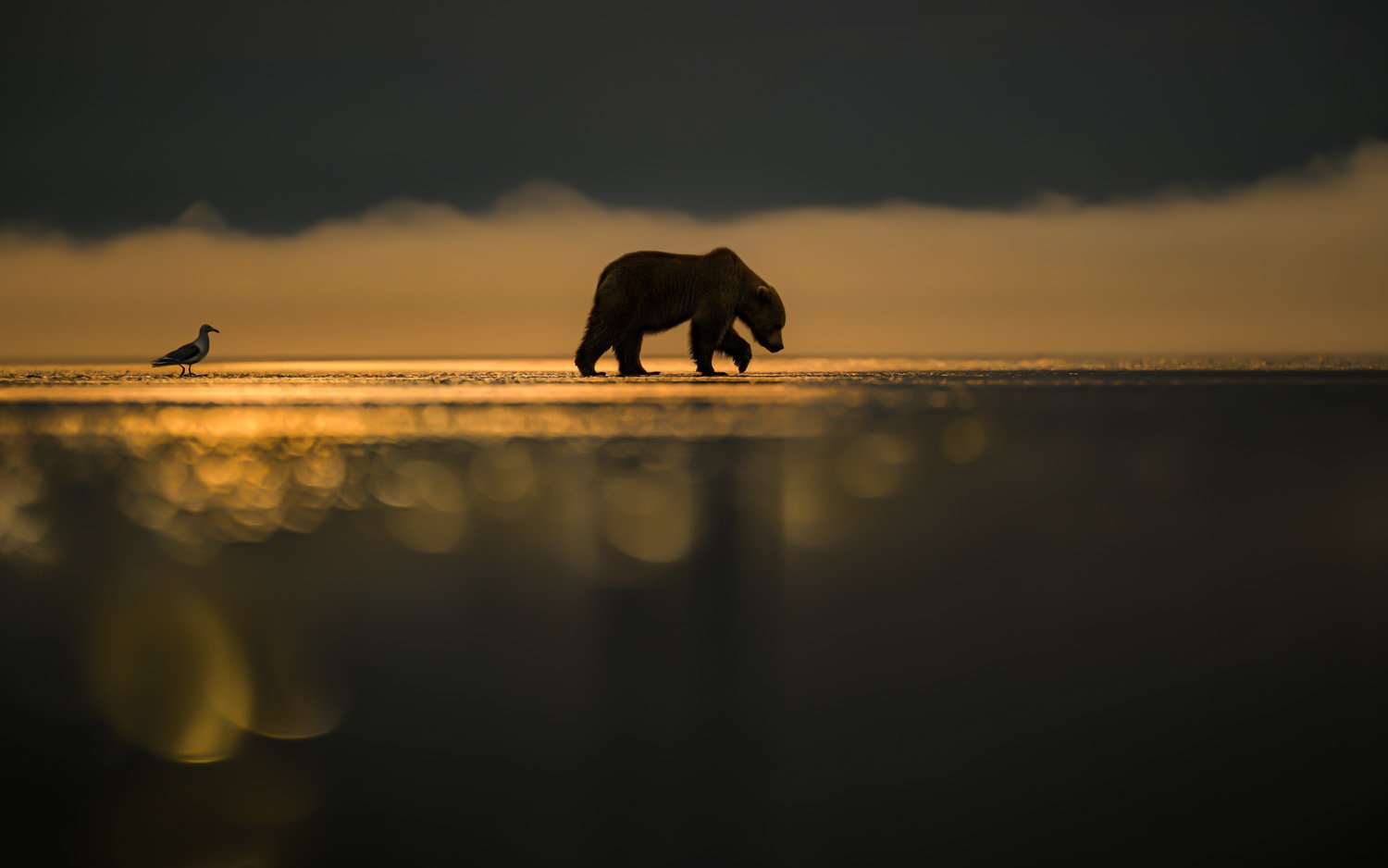
Highly commended, Mammals
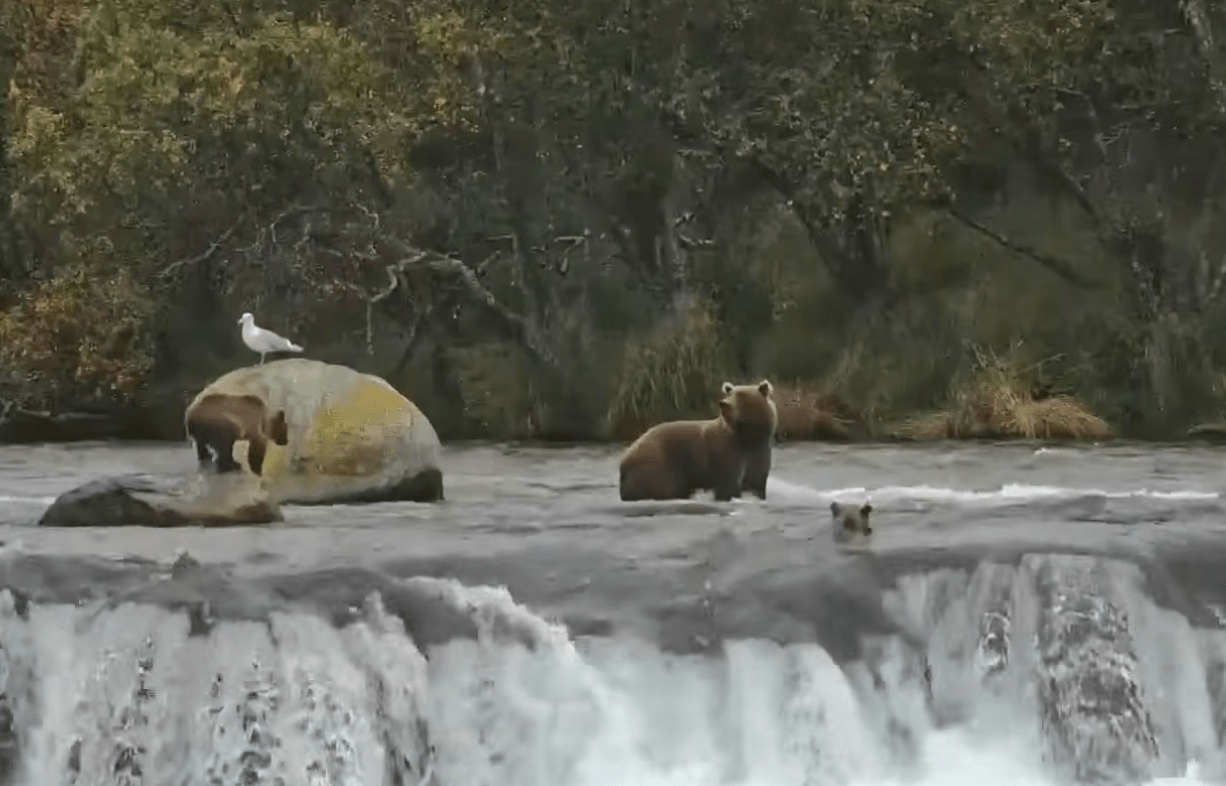
End of a performance in Lake Clark National Park, Alaska: the scene is over, and the grizzly bear (Ursus arctos horribilis) has had its moment in the spotlight. The animal leaves the stage without a bow, without a backward glance. Fog hangs like a flowing curtain, and the bokeh glows like fading stage lights. A gull remains behind, watching the main actor’s exit and perhaps wondering what it should do next. The image was deliberately composed with the protagonists positioned in the upper part of the frame to create the impression of a grand stage.
Credit: Preeti John, GDT – United Arab Emirates / European Wildlife Photographer of the Year 2026 Composing the Wild
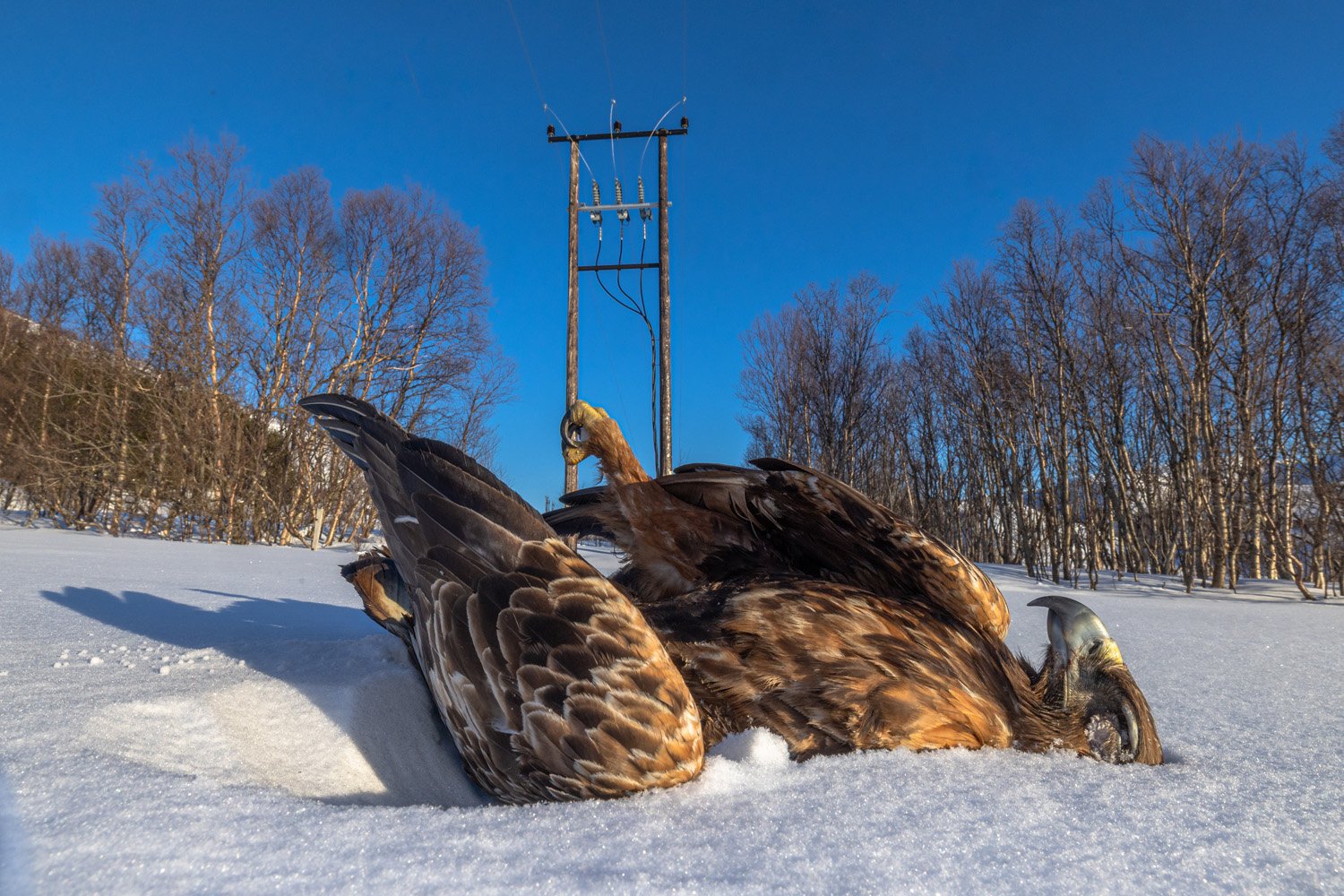
Highly commended, Humans & Nature
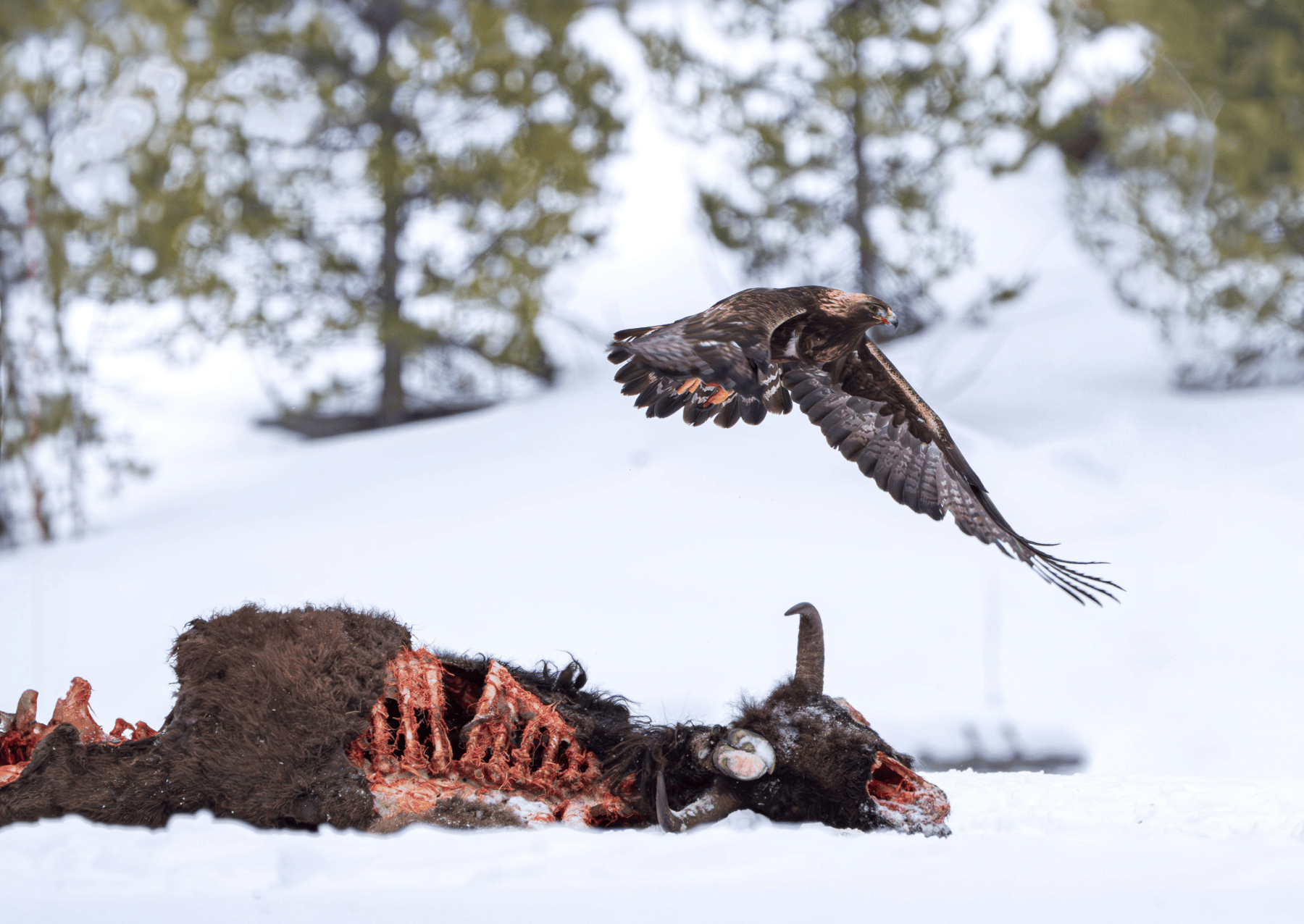
For years I photographed a pair of golden eagles (Aquila chrysaetos) living on a mountain above the small coastal village in northern Norway I call home. One morning, working from home, I lost power for about five minutes. While walking the dogs a few hours later, I discovered why. One of the eagles I had watched and photographed from my hide for years had struck the power lines behind my house – the current had burned clean through its body. Large raptors, with their enormous wingspan, can bridge two power lines at once and be killed instantly. Sadly, this hazard does not just exist here in Norway — it affects large birds across the world.
Credit: Audun Rikardsen – Norway / European Wildlife Photographer of the Year 2026 Audun Rikardsen
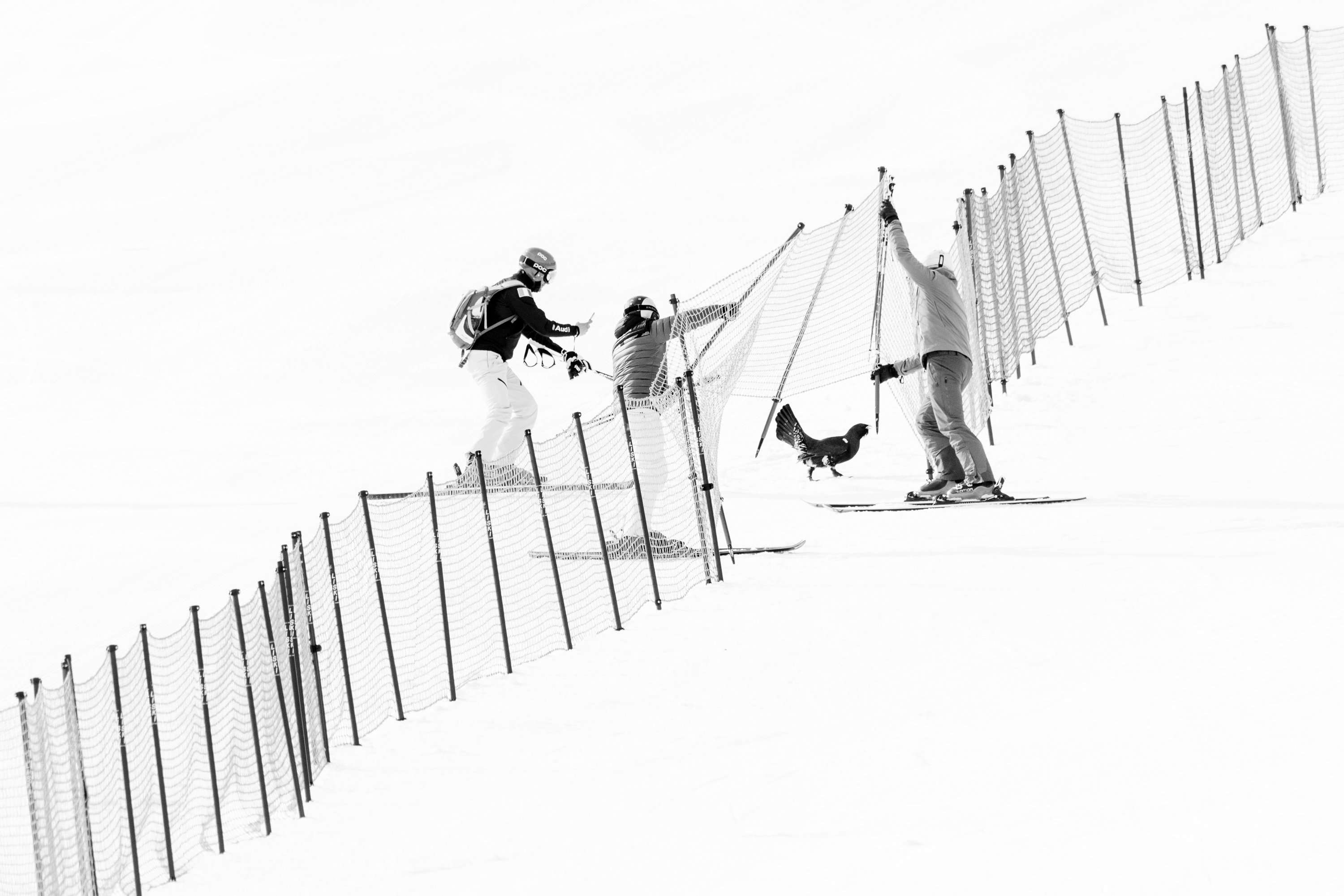
Runner-up, Humans and Nature
During the mating season, capercaillie (Tetrao urogallus) sometimes lose their wariness of people, seeing them instead as rivals. That is exactly what happened at a ski resort near my home, where a capercaillie took up position on the ski slope every day throughout the lekking season to defend his patch. The bird soon became something of a local celebrity, even making the news, and crowds came daily to watch and film him. Then, one day, a ski race was held – and the bird chose the middle of the course to display. Not the safest spot. Several people stepped in, gently steering him behind the safety fence and out of harm’s way. A year later, the same bird was accidentally killed by a skier who failed to notice it. Some people care. Others simply don’t.
Credit: Lukas Schaefer – Italy / European Wildlife Photographer of the Year 2026 luki schaefer
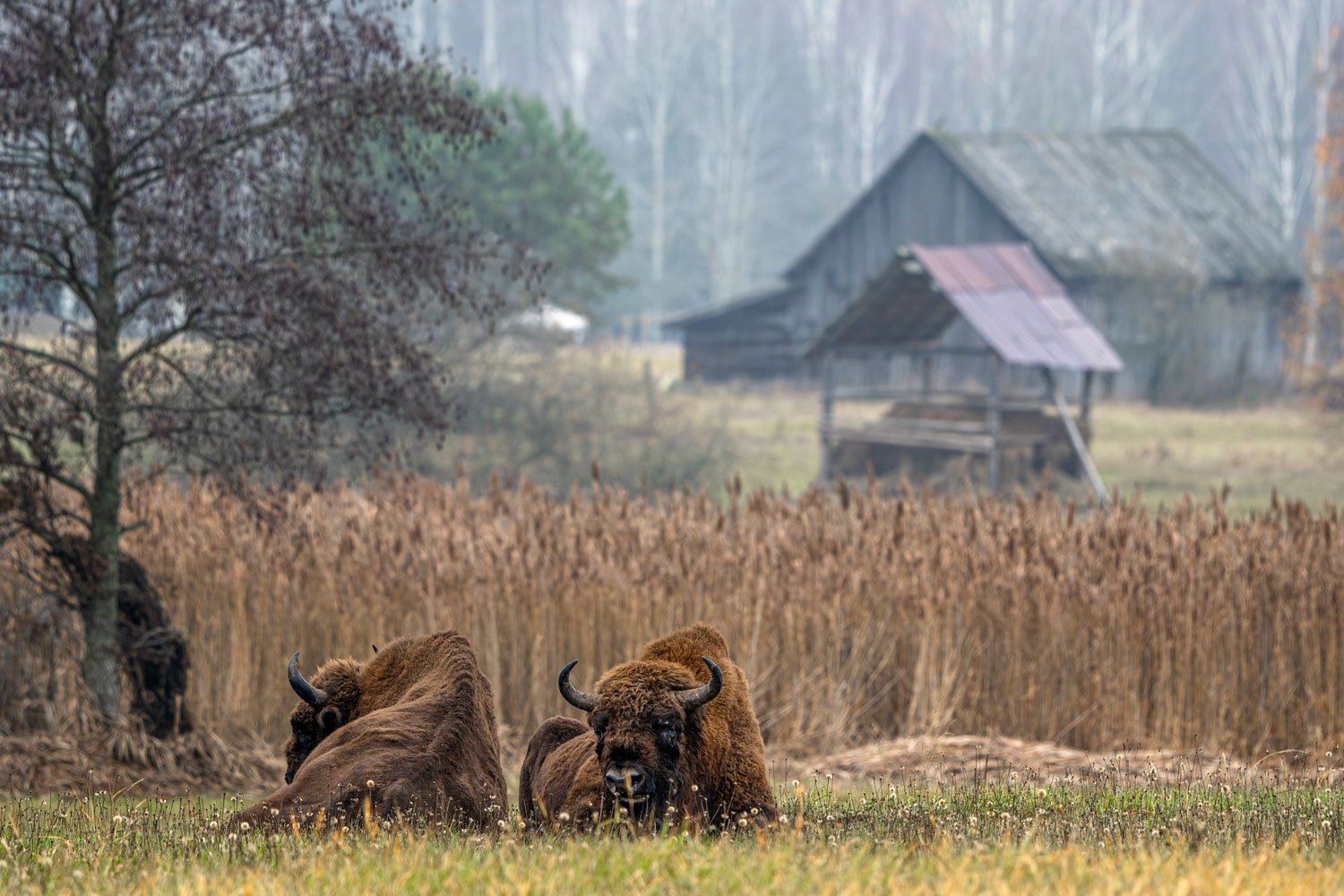
Highly commended, Rewilding Europe
By the early twentieth century, the European bison (Bison bonasus) had been declared extinct in the wild across Europe. Reintroduction has since rebuilt the population of the continent’s largest land mammal to more than 7,200 animals. Travelling with friends last autumn to Białowieża National Park, in eastern Poland on the Belarusian border, we encountered both wolves and European bison — in the latter case, two bulls grazing in a meadow on the edge of a village. As powerful as they are, the animals accepted our presence without concern, settling down to rest undisturbed. That kind of coexistence is possible here because the bison are given room to roam, through forests and meadows alike. Approach these primeval-looking creatures with respect, and you can feel the calm they carry with them.
Credit: Fabian Thorand, GDT – Germany / European Wildlife Photographer of the Year 2026
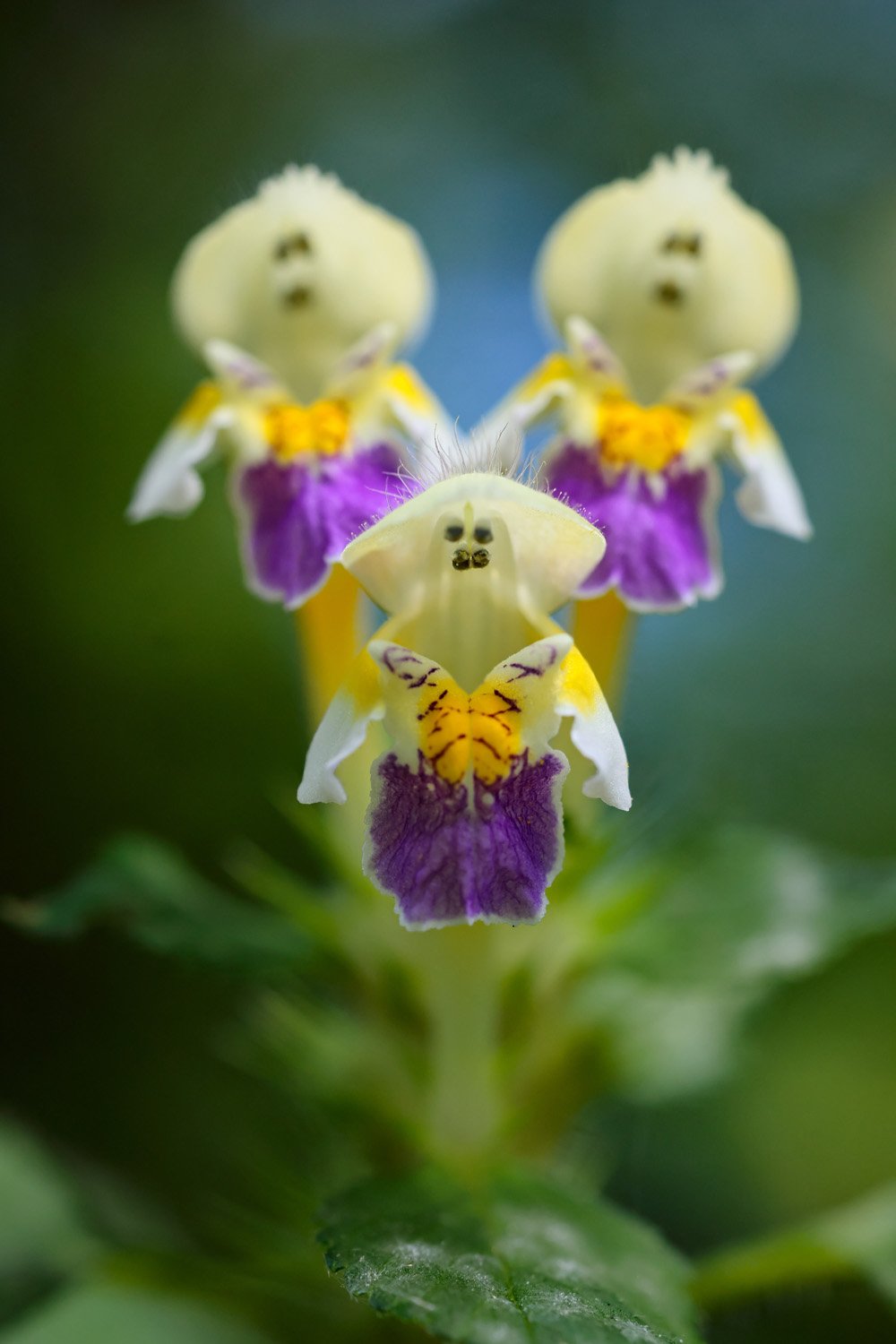
Highly commended, Plants and Fungi
In northern Poland, in the area around Gdańsk where I live, extraordinary species of animals and plants are rare. Most subjects in the region have been photographed countless times. Thus, it requires a good deal of imagination to take an unusual photograph. Over the years, I have made many attempts to capture the large-flowered hemp-nettle (Galeopsis speciosa) in an interesting way. Most of the time, the results have been disappointing, but every now and then, the effort pays off …
Credit: Marek Mierzejewski – Poland / European Wildlife Photographer of the Year 2026
The post 12 striking images from European Wildlife Photographer of the Year 2026 appeared first on Popular Science.