Doom is much more than a classic, bloodsoaked first-person shooter known for its chaotic action, over-the-top weapons, and challenging boss fights. For some odd (but very enjoyable) reason, it’s served as a benchmark for testing basic computing capabilities for well over 30 years. Name a device——calculators, ATMs, digitally enabled tractors, and even biochips built with E. coli bacteria—and someone has likely coded it to run Doom.
The latest entry in the ever-growing list of Doom compatible contraptions is a double-dose of DIY ingenuity, however. The Linux software engineer known as Miss Molerat recently began tinkering with a pocket-sized medical gadget made specifically to keep track of her menstrual cycle. But unlike many similar commercial products, “Clotty” keeps all personal data strictly on the device itself. It never connects to an external cloud or offloads sensitive information to a company’s servers, thereby preventing any unwanted data harvesting. And it does all this on a custom, uterus-shaped minicomputer running on a Raspberry Pi microcontroller.
Clotty includes a Tamagotchi-like sprite players must maintain and keep happy. Credit: Miss Molerat
“I have one thing that has been bothering me for as long as I’ve been menstruating: despite my cycle being very regular, I somehow manage to get surprised by PMS each and every month anew,” Clotty’s inventor wrote on her website’s blog.
Clotty “does the boring stuff” for her by tracking her period via a Tamagotchi-like digital pet that requires attention and maintenance throughout each month. The pixelated creature’s mood shifts depending on the cycle phase, but it also can go on little quests and offer various minigames in the meantime.
“[It’s] basically some sort of adorably shaped mirror version of my own moods that serves as a reminder that I, too, am just some sort of creature that tries to stay alive and happy,” explained Clotty’s creator.
But why stop there? Clotty is powerful enough to run Doom on its itty-bitty LCD screen, which is thematically perfect given the project’s overarching, bloody motif. This means that, when not keeping up with personal health, a user can also blast through wave after wave of space demons using small onboard sensors.
The inventor admitted that Clotty is still in its “fetal stage,” but she plans to add more features like a menstrual cycle history archive, more games, and even some reproductive health trivia. It’s also a completely open-source project, so anyone can follow her online tutorials and download files for Clotty (and Doom).
The concept of a corporate psychopath is eerily recognizable, depending on your work history. It’s also notoriously misunderstood. The archetype of the manipulative, self-serving manager has regularly resurfaced in popular culture for decades, but concrete evidence supporting the wider concept is debatable. For example, a research study went viral in 2016 after estimating upwards of 1-in-5 business employees fit the “psychopath” bill, only to be retracted two years later. Additionally, psychiatrists widely agree that only about 1 percent of the general population truly can be considered clinically psychopathic.
That said, many of the people determined to claw their way to the top of the company ladder display at least some of the trademark psychopathic behaviors. Many theorists have convincingly argued this has a lot to do with corporate capitalism’s foundational principles, which leave it easily exploited by the most ruthless and manipulative among us.
Clive Boddy, one of the world’s foremost investigators of corporate psychopathy, recently took this idea to its logical historical conclusion. In a study recently published in the Asian Journal of Business Ethics, Boddy reviewed one of toxic corporate leadership’s earliest documented examples—and he makes today’s nightmare coworkers sound tame in comparison.
Who was Jeronimus Cornelisz?
Meet Jeronimus Cornelisz, an all-time contender for World’s Worst Boss. According to archival accounts, the 17th century Dutchman Cornelisz embodied every core corporate psychopath characteristic over 400 years ago while working for the conglomerate that started it all: the Dutch East India Company.
Established in Amsterdam in 1602, the Dutch East India Company is arguably the world’s first multinational, shareholder-owned company. It quickly amassed enough funds and power to rival most sovereign countries through the import and export of spices, tea, luxury items, coffee, wine, and enslaved populations. The Dutch East India Company eventually exerted enough influence to wage its own wars, mint its own currency, form colonies, as well as arrest and execute convicts.
All of this was made possible through a vast fleet of ships,but even the best outfitted vessels sometimes fell afoul of nature. In June 1629, a Dutch East India Company’s flagship called Batavia collided with a reef off the Western Australian coast. Nearly 300 survivors made it to the nearby island shores, but their remote location ensured they wouldn’t survive without help. The ship’s senior officers soon set off in an open longboat on a 1,900-mile journey to present-day Jakarta, then the Dutch East Indies’ capital. Before leaving, they appointed under-merchant Jeronimus Cornelisz to the top corporate position in their absence.
An illustration from 1647 depicting survivors being transferred from the wrecked Batavia to nearby islands in the ship’s boats. Credit: Wikimedia Commons
Mutiny, murder, and malignant narcissism
Unbeknownst to Batavia’s departing senior crew, Cornelisz had already spent weeks scheming on ways to incite a mutiny. The plan was to take control of the vessel then steer its copious stores of gold and silver to a new life. Cornelisz apparently viewed getting marooned as an inconvenient detour, and quickly got to work on his hostile takeover.
According to firsthand accounts, Cornelisz immediately consolidated power by swapping fellow council members with loyalists and requiring them to pledge an oath of allegiance to him. Next, he tricked suspected opponents under the direction of a soldier named Wiebbe Hayes to search a nearby island for supplies, then left them to die.
Although his revised plan required any impending rescue ship, Cornelisz’s ultimate goal remained the same—get as far away as possible, then start his own kingdom using riches plundered from Batavia. Over the ensuing months, Cornelisz directed his gang to kill more than 100 of the shipwrecked men, women, and children. Cornelisz often justified the murders under the pretense of conserving food and water, when in actuality he was continuing to eliminate perceived threats. Meanwhile, some of the surviving women were subjected to sexual abuse.
However, Cornelisz underestimated his abandoned compatriots. As the operatically psychopathic Cornelisz terrorized his group of survivors and scrounged for supplies, Hayes’ team reportedly discovered freshwater wells and hunted local wallabies, seals, and fish. The two sides subsequently squared off on multiple occasions after learning of each others’ continued existence until a rescue ship finally arrived in October 1629. After nearly three months, only about a third of Batavia’s original passengers and crew were left.
Management ultimately decided Cornelisz wasn’t internal promotion material, even by Dutch East India Company standards. Nearly everyone involved in his reign of terror was executed. As for Cornelisz and his closest loyalists, authorities eventually hanged them, but not before cutting off their hands.
The tragedy of the Batavia is an admittedly extreme case study, but Boddy argued that it illustrates how corporate structures have facilitated and encouraged psychopathic behaviors since the invention of the corporation itself.
“The same playbook we see in toxic workplaces today appears in this case from 1629,” he said. “He removed opponents, rewarded loyalists, created fear, manipulated followers and pursued power at any cost.”
A corporate (psychopath) case study
In recent years, some historians have expressed doubts about details in the Batavia saga after reviewing available evidence and recontextualizing cultural dynamics. Instead of focusing on the machinations of a single ruthless corporate psychopath, they contend Batavia is more accurately a case study in group desperation. But even when viewed under this lens, the chilling event is still a cautionary tale about corporate capitalism’s darker underpinnings.
“Perhaps the most striking finding is that another leader facing the same circumstances achieved completely different outcomes,” Boddy said. “This was effectively a natural experiment in leadership. One group prospered while the other descended into murder and abuse.”
A single bat colony contains hundreds or even thousands of the winged mammals. But with less-than-ideal eyesight and so many neighbors, how do mothers identify their pups amid the extremely crowded conditions? Writing in a new study published today in the journal Frontiers in Ethology, researchers say it often comes down to the subtle, unique vocalizations emitted by their individual offspring. To assess their responses, the team relied on an even more delicate biological signal—the mother bat’s own heartbeat.
The investigation began when biologists at Japan’s Doshisha University noticed a surprising—but consistent—behavior among the Japanese house bats (Alionoctula abramus) in their laboratory colony. Whenever a pup wandered too far from its roosting area, only its mother raced to the rescue.
“We knew that pups emit isolation calls—acoustic distress signals—when separated. But seeing this strict behavioral selectivity made us wonder: what is happening inside the mother when she hears these calls?” recalled study co-author and Doshisha University biologist Kazuki Yoshino-Hashizawa.
To learn more, Yoshino-Hashizawa and his colleagues monitored four mother bats who each recently birthed a litter of three pups. Some of the litters only contained females, so they decided to exclude the young males from the study to avoid sex-based variations. At two days old, the team recorded clips of the female pups’ tiny isolation calls. These function like the cries from a human baby, and each vocalization has its own unique tones.
However, Japanese house bats grow quickly. The new generation started making echolocation calls at about eight days old, and they ceased isolation calls after around 12 days. After roughly one month, they began flying like adults and set off on their own within the colony. The researchers then recorded their adult echolocation calls, as well.
Around 40 days after the pups’ birth, the team isolated each mother and played them the various audio clips while monitoring their heart rates using an ECG machine. As a control, they also played the recording of a random adult male bat. The study’s authors quickly saw that a mother bat’s heart rate sped up when they heard cries of their own pups, but not the pups that belong to other bat moms. Surprisingly, the mother bats’ heart rates boosted the most from recordings of the older, independent pups. Researchers theorize this might relate to the bats’ memory of more recent calls, but that idea requires more study to confirm.
Still, don’t get overly sentimental. The team also recorded strong heart rate reactions when the mothers heard calls from the random adult male. It’s possible the bats interpreted the sounds as a threat, but the team stopped short of categorizing the reactions as good or bad.
“‘[Heart rate measurement] cannot distinguish between positive emotions, such as maternal motivation, and negative ones, such as stress or alarm,” Yoshino-Hashizawa added.
Instead, the study authors suggest heart rates may be a solid starting point when trying to analyze bat behaviors and responses to their everyday environment. At the same time, a mother bat’s heart certainly seems to patter a bit more for her pups.
“[This] suggests that these vocalizations instantly physiologically prime the mother to engage in maternal behavior,” explained Yoshino-Hashizawa.
The scams are getting a bit meta. The Federal Trade Commission (FTC) has issued a warning about a new scam currently making the rounds. But this time, the con artists aren’t impersonating a politician or celebrity to trick consumers.They’re claiming that they are the ones sounding the alarm at the FTC.
Real FTC officials explained the general scheme in an alert released on October 22. Scammers call a target to tell them that bad actors in another country have registered a separate phone using their name and number for nefarious purposes. The imposter may even “transfer” you to a fake police officer to file a report. Fake badge numbers and IDs are also offered to make it all sound legitimate, and skeptics may even be directed to verify everything by searching for the police department’s phone number online (also fake). Failure to comply allegedly results in the loss of your personal phone number.
Those who follow through with the instructions provide scammers with their state-issued ID and other personal info for the bogus police report, but it’s not over yet. Some time later, targets will receive another call informing them that they will soon be arrested for those nonexistent crimes committed using their phone number. The solution? Transfer money for a security deposit.
“None of this is true—it’s all a scam,” assured the FTC.
To prevent unnecessary headaches, the FTC listed a few ironclad rules. Actual FTC employees will never contact you about sending money, or transfer you to someone else requesting funds. The FTC will never threaten to disconnect your phone number, or ask you to keep your conversations secret from others. Finally, they will never text a photo of the supposed employee ID as a way to verify their identity to you.
Unfortunately, combatting scammers is a bit like playing a neverending game of Whack-a-Mole. While the FTC has a list of common ways to spot government imposters, they encourage everyone to report the latest con jobs to ReportFraud.ftc.gov.
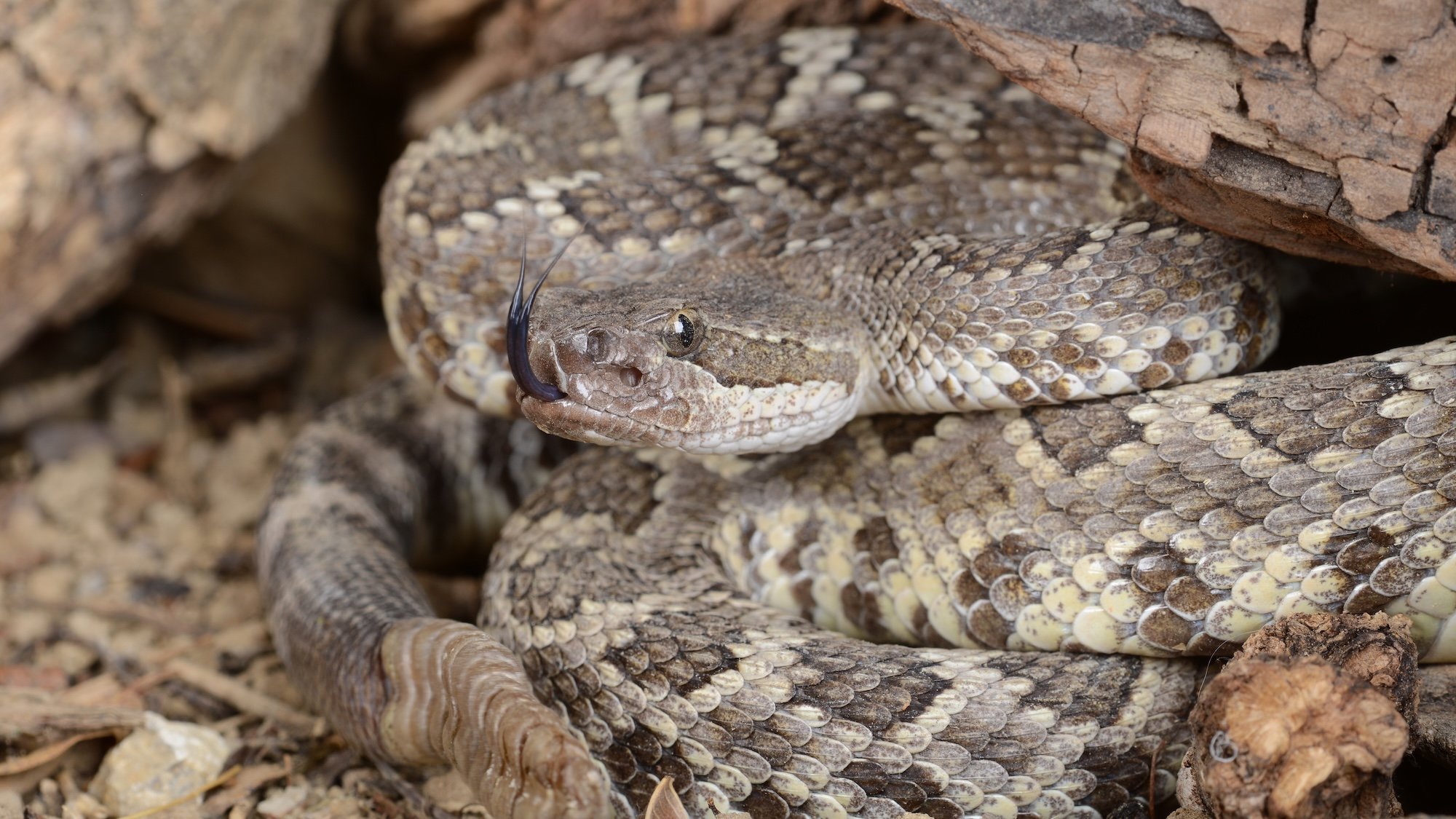
Rattlesnake venom is a complex blend of necrotic toxins designed to quickly disrupt blood coagulation and destroy tissue cells. This effective biological weapon comes at a major premium, however. Snakes must regularly replenish their venom reserves, which means they need to dole out just the right amount with each bite. Injecting too little venom into prey may allow their next meal to escape, while delivering too much can leave a rattlesnake defenseless against its own predators.
But that doesn’t mean rattlesnakes adhere to a one-bite-fits-all policy. According to researchers at California’s Loma Linda University, the amount of venom routinely varies by individual reptile. Their recent findings published in Frontiers in Ethology indicate these dosage ranges aren’t randomly distributed, and that snakes and their venom are much more complicated than many people realize.
“This study gives us a better understanding that reptiles, such as rattlesnakes, are behaviorally complex and have personalities like humans do,” explained Loma Linda University biologist and study co-author Chelsea Martin.
Martin and her colleague, William Hayes, focused on the preferences of the Pacific rattlesnake (Crotalus oreganus helleri). On three occasions over a four-week window, the team offered 48 snakes the chance to sink their fangs into a membrane-covered beaker. Previous experiments mainly focused on the frequency of bites, but Martin and Hayes also measured the amount of injected venom in each instance. They then compared the data across snakes.
“The results were striking in their consistency,” the study’s authors wrote in an accompanying Phys.org rundown.
The team also reported measured behaviors like aggressiveness, bite willingness, and the amount of venom amount were statistically significant and repeatable across many of the snakes. Additionally, their study further debunks the lingering myth that larger snakes actually produce less venom.
“Larger snakes expended more venom than smaller snakes, as expected given their greater capacity for venom storage,” explained the biologists, while noting that actual delivered levels still occasionally varied regardless of size.
The study’s authors emphasize that their findings shouldn’t be held against the rattlesnakes themselves. While often feared, the snakes generally do everything they can to avoid confrontations with larger animals like humans. Bites are almost always the result of an unintentional encounter in the wild rather than an overly aggressive serpent. If anything, it’s people who aren’t paying attention to their surroundings, and not the other way around.
“One practical lesson remains unchanged: No rattlesnake should be approached or handled on the assumption that it will behave predictably,” the authors said. “Consistent individual differences do not make any particular snake safe.”
Fall is here, and with it comes very determineddeer. Mating season for the hoofed ruminants typically begins once temperatures dive and the days grow shorter, but the annual event also poses problems for humans. The deer have one thing on their mind, which means they pay even less attention to vehicles and roadways. In New Jersey, roughly 41 percent of all annual animal collisions occur between October and December, while the AAA Foundation for Traffic Safety routinely tallies over 275 fatalities from similar accidents nationwide every year.
Driving gets even riskier in rural areas, which frequently host higher deer populations and much darker roads. However, a recent pilot program in Virginia offers a promising tool that may keep commuters safe while also allowing the animals to do their thing. At the Virginia Tech Transportation Institute (VTTI), researchers designed an automated digital roadside sensor system that warns drivers of large jaywalkers like deer and elk.
According to VTTI engineer Shreyas Bhat, the year-long trial demonstrated a “measurable change” in how local drivers responded when alerted to oncoming wildlife. Bhat and his colleagues tested the system with help from the state’s Department of Transportation along a 14-mile section of Route 460 in southwest Virginia. The array was composed of eight portable, solar-powered trailers and customizable digital message signs. Each station included thermal cameras analyzed by onboard machine learning software, which triggered the sign alerts whenever it flagged nearby medium– to large–sized animals.
Over the course of the trial, researchers amassed driving data on over 10,000 vehicles, while the detection system maintained an estimated accuracy of around 97 percent. This is particularly impressive given the region’s environmental and infrastructural challenges.
“This system is unique because of the requirements of the area—it needed to be solar powered, portable, and be able to withstand all weather conditions,” explained VTTI engineer Jean Paul Talledo Vilela.
The team reported an average reduced speed of about three miles per hour thanks to the roadside warning signs. That may not seem like much, but even a slight slowdown can save lives. It also proved people took note of the system.
“Speed is an important data point to understand if drivers were actually paying attention to the message board,” said Talledo Vilela. “Even if they are not braking aggressively, some reduction in speed indicates that they may be paying more attention to their surroundings because they got that alert.”
While Talledo Vilela, Bhat, and their collaborators are still parsing through data from the program,(it ended in September) the initial findings remain promising. From here, the team hopes to refine the overall system while organizing future trials in other regions of the country. If successful, the relatively simple installations could also be adapted for other year-round road safety situations like construction or real-time weather hazards.
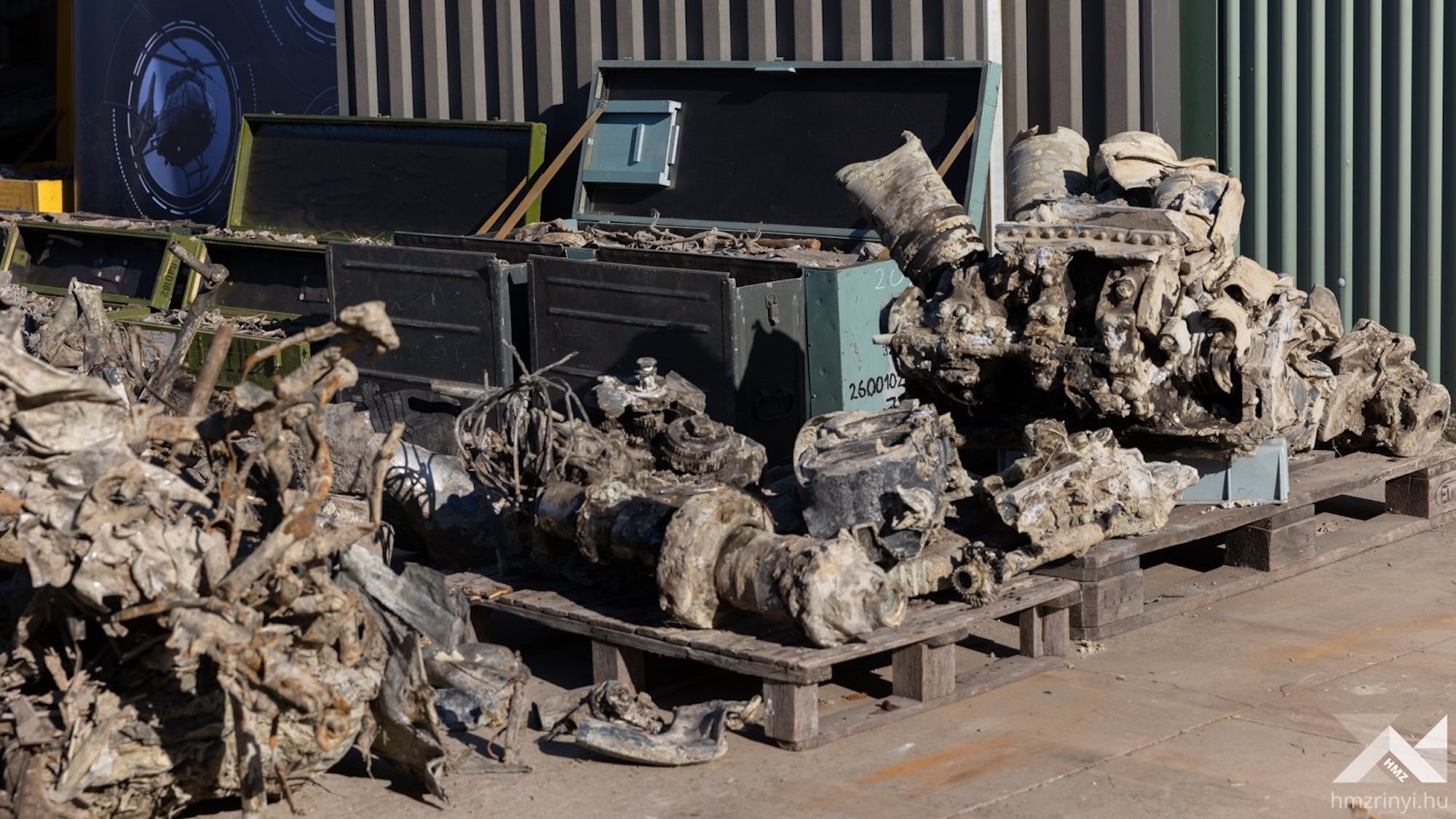
After nearly 82 years, historians in Hungary have finally located a missing Soviet aircraft downed by a German ace pilot during World War II. After a monthslong investigation that involved painstaking archival dives and eyewitness interviews, a team led by Hungarian Aircraft Wreck Research Association co-founder István Kocsis pinpointed the Yakovlev Yak-1 fighter plane. The aircraft was buried over 17 feet underground roughly 50 miles southeast of Budapest. Despite the poor condition of many of the plane’s components, the recoverable remnants still included portions of the aircraft’s fabric covering and even some of the pilot’s personal items.
“Discoveries of this aircraft type on such a significant scale are extremely rare,” a member of the Hungarian Defense Forces said during a recent press conference announcing the find.
The crash dates back to November 1944, after Soviet Guards Lieutenant Alexander Semyonovich Andrianov encountered German Lieutenant Peter Düttmann above the town of Törtel. Unfortunately for Andrianov, Düttmann was already infamous for his dogfighting abilities, and the Nazi pilot eventually shot down his Soviet foe. Although Andrianov successfully ejected with his parachute, he was later taken prisoner of war. Although Andrianov’s fate is unclear, historians estimate roughly half of all Soviet servicemen taken as POWs died while in German hands.
The Yak-1 fared even worse. Constructed from composite materials like steel tubing, wood, and even fabric, the crash destroyed the aircraft and immediately scattered the wreckage. With no one to claim it, the plane slowly sank into the region’s particularly loose soil over the next eight decades.
Archaeologists managed to recover a portions of a book signed by Andrianov. Credit: Zsuzsa Szűcs-Horváth
Much of the plane remained intact underground, but military archaeologists chose to rely on a recovery strategy called block lifting. Instead of excavating at the site, heavy machinery portioned out hefty chunks of earth that the researchers then carefully cleared one layer at a time. This layer-by-layer method allowed them to identify and preserve numerous smaller pieces of wreckage, including the engine serial number and construction identification that matched Andrianov’s Yak-1. The team also exhumed some of Andrianov’s personal belongings, including a book signed by the pilot.
While much of the wreck was heavily deformed from the crash’s impact, restoration experts are confident they can reconstruct many of the Yak-1’s parts. Once preserved and documented, these sections of the plane will go on public display at Budapest’s Military History Museum while the rest remain safely archived.
A cosmic Quarter-Pounder is providing us with a near-perfect view of a distant gas giant’s earliest moments. Known as Gomez’s Hamburger (or GoHam for short), the massive protoplanetary disk surrounds a young star located in the Scorpius-Centaurus stellar region of our home galaxy about 453 light-years away from Earth. As researchers explained in a study recently published in The Astrophysical Journal, GoHam’s vantage from Earth is virtually unparalleled for anyone hoping to glimpse the subtle layers of dust and particles that will one day coalesce into a humongous gas giant.
Early observers first spotted GoHam in 1985, but initially pegged it for a planetary nebula as far as 6,500 light-years from Earth. Astronomers have since revised their assessments with data gathered by the Atacama Large Millimeter/submillimeter Array (ALMA) in northern Chile. As its full name implies, ALMA measures millimeter-and-smaller wavelengths, allowing scientists to map the miniscule dust grains and gaseous molecules that compose distant objects. GoHam is a particularly unique subject for ALMA, because its position makes it a new benchmark example for testing models of how planets evolve.
“GoHam gives us a rare and clear view of the vertical and radial structure of a very large, nearly edge‑on disk,” explained study co-author and University of Minnesota astronomer Charles Law.
Gomez’s Hamburger was first discovered in 1985, but originally misidentified as a planetary nebula. Credit: Law, et al. (2026)
According to Law, its mixture of cosmic winds, large formational asymmetries, massive disk size, as well as the potential for planetary formation makes GoHam a “perfect laboratory.” With ALMA, Law and his colleagues analyzed GoHam’s layers of carbon monoxide, and sulfur-bearing molecules. As predicted, the lightest gas is in the highest layer above the formation’s midplane, while the heavier sulfur components lay beneath it. Meanwhile, a thin but concentrated section of millimeter dust is visible in the midplane itself.
Comparisons to GoHam’s fast food namesake only go so far, however. Its dust clouds lean north–south, with one side containing brighter and wider emissions. This likely stems from a disturbance such as a cosmic vortex, which may capture additional material for planetary formation. Dim, thin carbon monoxide emissions along the disk’s northern section also suggest GoHam’s central star is blowing gases into deep space as what’s known as photoevaporative wind.
Astronomers also noted that GoHam is one of the largest protoplanetary disks ever observed. At nearly 93 billion miles wide and with an exponentially larger dust mass than the typical protoplanet disk, GoHam may ultimately host not just one gas giant, but an entire planetary system.
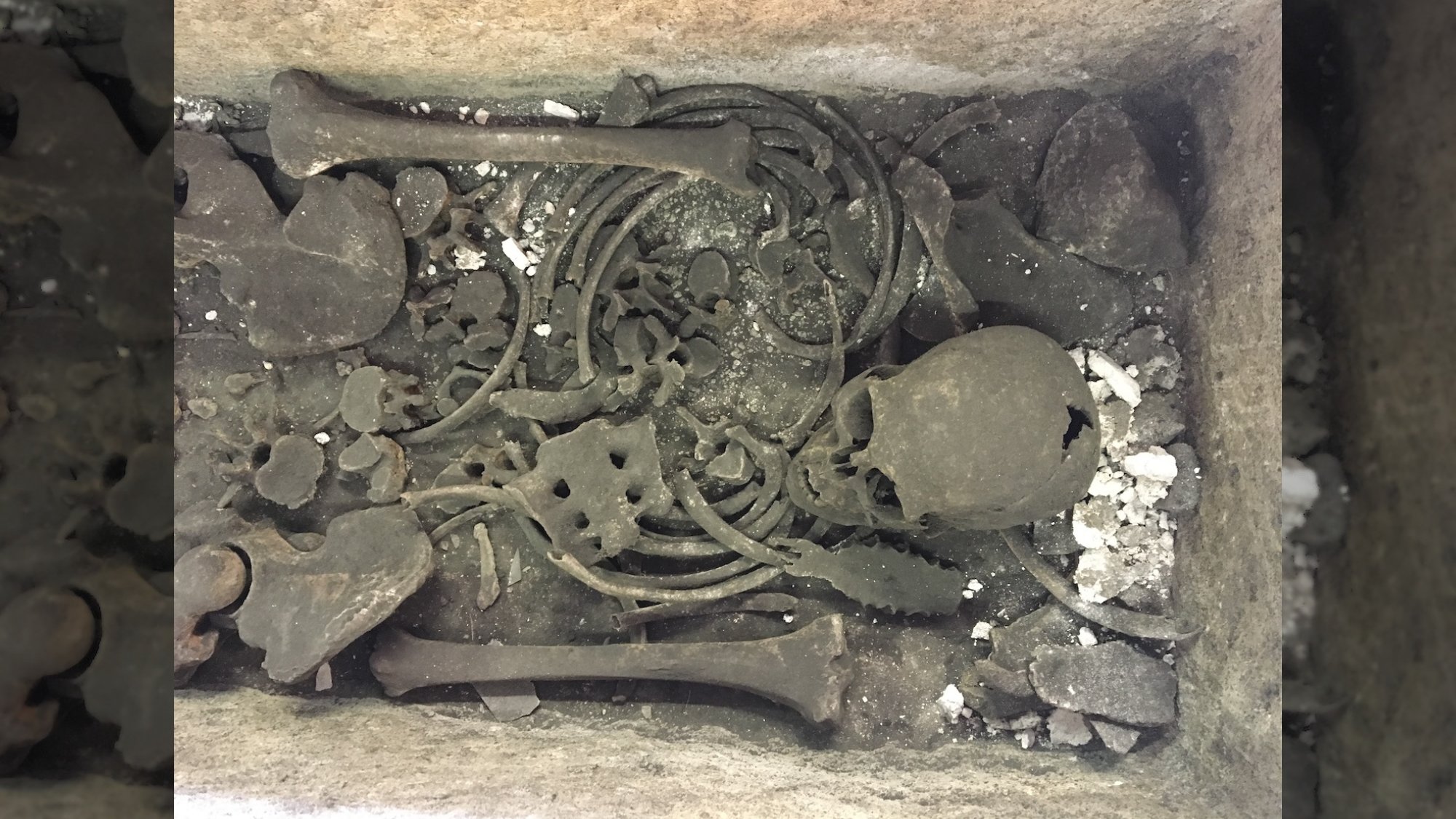
A formerly inexplicable Roman sarcophagus discovered at England’s Westminster Abbey over 150 years ago is likely a rare example of medieval funerary recycling. Although archaeologists stopped short of definitively identifying who was buried inside, the team confidently narrowed down their candidates to a pair of high-ranking Benedictine monks.
The mysterious limestone tomb was originally crafted during the 4th century CE, when the Roman empire’s jurisdiction still extended as far away as Britain. By the mid-13th century, King Henry III constructed a Benedictine sacristy above the sarcophagus, and it remained undisturbed for nearly 600 years. In 1820, workers accidentally cracked its lid into six pieces after unintentionally exposing the tomb. It would take until 1869 for archaeologists to finally repair the damage, as well as discover its confounding origins.
The coffin features an inscription to Valerius Amandinus, who died during the 4th century CE. Credit: Dean & Chapter of Westminster
The Roman sarcophagus has baffled researchers ever since. The limestone enclosure featured an inscription to Valerius Amandinus, a rich local who lived nearby sometime between 300 and 400 CE. But the sarcophagus lid clearly displayed a much more recent, medieval Latin cross. The cross implied the sarcophagus possibly housed someone other than Amandinus, but who?
Extensive stonework analysis and skeletal carbon dating finally point towards two probable suspects. The first possibility is the Westminster Abbot Aelfwig, who died around 1020. The second is his successor, Wulnoth, who died in 1049. Further skeletal examinations indicate the man was 35 to 49 years old and around 5-foot 9-inches tall when he died. Interestingly, this contradicts the initial 19th century theory of a slightly shorter, “robust young man” less than 30 years old.
The full sarcophagus on display at Westminster Abbey. Credit: Dean & Chapter of Westminster
“We do not know the date of birth of either. But either would fit equally well if we assume the Abbot was in his early twenties when the appointment was made and close to fifty when he died,” explained Rodwell.
If Rodwell had to pick between the two, he may lean towards Aelfwig, since he was already a Westminster monk during that era.
The monk’s associates likely first placed him in a timber coffin that they lowered into the sarcophagus. Next, they sealed it with a re-carved cover displaying the Latin cross. But regardless of who resided in the tomb, its reuse wasn’t considered a slight. Instead, its original craftsmanship was intended to honor the deceased monk. It’s unlikely the mourning monks gave much thought to anyone else’s opinion on burial recycling, especially those living nearly 1,000 years after their respected Abbot’s passing.
First conducted in 2014, the recurring questionnaire tracks yearly anxiety trends that often range from everyday concerns to existential terrors. This year, 61.1 percent of over 1,200 respondents once again cited “corrupt government officials” as their biggest fear—the same subject was last year’s number one entrant as well as its 11th year on the list. After that, it’s the fear of another world war (51.9 percent). However, “AI harming the political process” wasn’t too far behind for third place at 51.9 percent. The technocentric worry is now essentially tied with the fear of loved ones becoming gravely ill (51.8 percent).
Government corruption is once again at the top of the list. Credit: Chapman University
That said, the survey’s own plus or minus 3.79 percentage point margin of error complicates the results a bit. Taking the margin of error into consideration, it’s a tossup when trying to definitively rank the list’s third through tenth fears. Regardless, about 49.7 percent survey takers are also anxious about AI negatively impacting the economy—a double dose of AI-centric woes for the first time in the survey’s history. It’s also the first year researchers at Chapman University in California included questions about AI, but they made it clear it likely won’t be the last.
“As artificial intelligence becomes more integrated into everyday life, understanding these fears will be increasingly important,” said Chapman University sociologist and survey creator Christopher Bader. “We expect concerns about AI to remain a significant part of the national conversation in the years ahead.”
It’s understandable why AI currently vexes so many people. The blanket term now encompasses everything from photorealistic fake images, to dubious search engine chatbots, to nebulous doomsday warnings. Despite these worries, the AI industry’s biggest threats arguably remain the rampant spread of misinformation, coupled with a lack of meaningful regulations or oversight.
But no matter your top technological fear, survey organizers still believe the annual report highlights a very relatable human emotion.
“What I’m seeing more and more over time is that our fear about our loved ones is going to always be there, no matter what’s going on in the world,” said sociologist Ashley Kranjac, director of Chapman University’s Earl Babbie Research Center.
Launched in 2023, the European Space Agency’s (ESA) Euclid space telescope observes some of the most distant regions of the visible universe for signs of dark matter and dark energy. But even while focused on the “big picture,” Euclid’s onboard equipment is surprising astronomers by capturing tiny photobombers like errant comets.
Its recent portraits of one specific dusty space rock are especially impressive, however. Euclid spotted a never-before-seen comet sailing through space more than 807.7 million miles from Earth. The telescope isn’t designed to automatically flag an image interloper. Instead, the bright blemish seen in multiple images was spotted by a moving object detection program designed by Mikko Pöntinen, an astronomer at the University of Helsinki in Finland.
“I was excited to see my software flag a ‘streak’ smeared across several images—the result of a fast-moving object,” said Pöntinen. “Further inspection revealed that it had a fuzzy cloud around it, indicative of an active object like a comet that is shedding dust and gas.”
Pöntinen quickly relayed his findings to the International Astronomical Union’s Minor Planet Center (MPC), which then passed the news along to researchers around the world. On October 8, the MPC confirmed the newly discovered comet, which is now classified C/2026 S1 (Euclid).
C/2026 S1 was seen from five different fields of view over multiple days in the Euclid Deep Field North region of the telescope’s scans. Astronomers now know the comet’s trajectory isn’t located on the same horizontal plane as the planets. Instead, its path is technically taking it over the solar system along a multi-thousand-year orbit.
Euclid’s discovery is particularly striking because the telescope’s six-year mission is specifically mapped to avoid areas of the sky that are laden with comets and asteroids.
“Very few comets are expected to be discovered by Euclid, so it was a happy coincidence,” added Euclid archive scientist Bruno Altieri.
Tattoos are pretty permanent decisions, and laser removal is often described as more painful than actually getting them in the first place. But what about a design that can only be seen when you want to see it? Engineers at the University of Colorado Boulder are working on a new type of tattoo ink to answer that question. Their dye is specifically concocted to physically alter depending on exposure to visible or ultraviolet (UV) light.
The team described their invention in a study published earlier this month in the journal Matter & Light, and they didn’t only demonstrate the capabilities in the lab on silicone and pig skin. One of its creators, Carson Bruns, has already tattooed himself with the ink.
“[It’s] almost a tradition,” the study co-author recently told Nature.
Bruns, a nanoscientist at UC Boulder, previously developed a now-commercialized tattoo product called “Magic Ink” that turns magenta depending on its exposure to UV light. To highlight its efficacy, Bruns gave himself “solar freckles” as a method to track his exposure to sunlight. In similar fashion, he recently completed a similar session on his leg using the disappearing ink.
The formula currently comes in three colors—yellow, blue, and magenta—and essentially relies on the same principles behind transition lenses and some textiles. Each dye is composed of tiny spheres of acrylic glass. These beads contain photochromes, which are chemical compounds engineered to absorb specific light wavelength photons. In this case, the photochomic dye’s spheres begin in their original color, but then flatten into transparency after absorbing corresponding light photons exposed to UV rays. The dye remains this way until it absorbs visible light photons, which destroys the chemical bond and allows the spheres to return to their original shape.
Aside from the lab tests, Bruns tattooed his own leg over about 12 months using various dye combinations, all of which responded as intended to UV and visible light exposure. The ink also remained effective for over two years—but the team’s intention is go beyond a nifty parlor trick. Future ink iterations may be particularly useful in medical procedures, such as temporary markings to help maintain accuracy during direct radiotherapy sessions. For now, however, the photochromic tattoo dyes remain for laboratory (and Bruns’) use only until further safety assessments are completed.
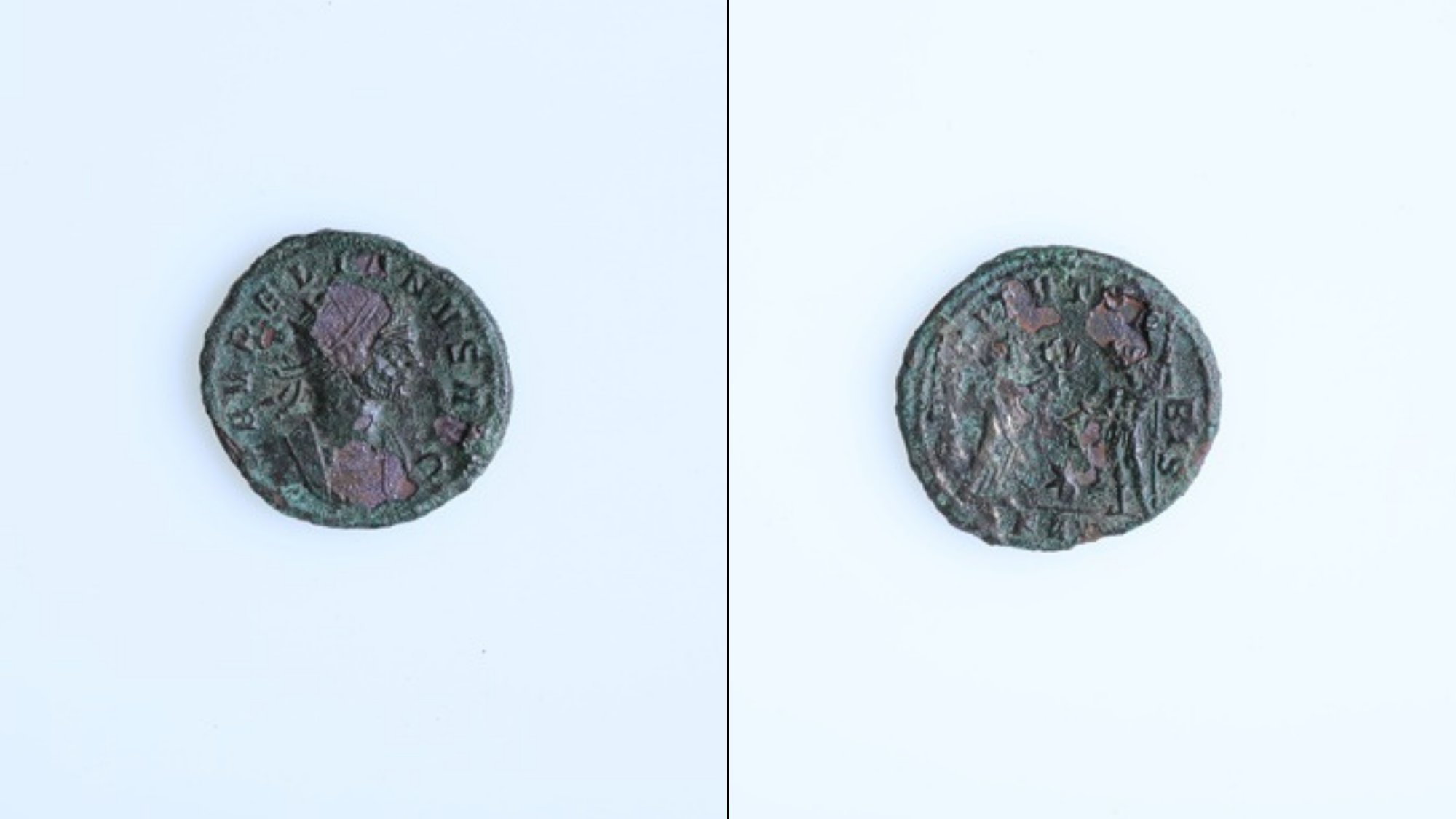
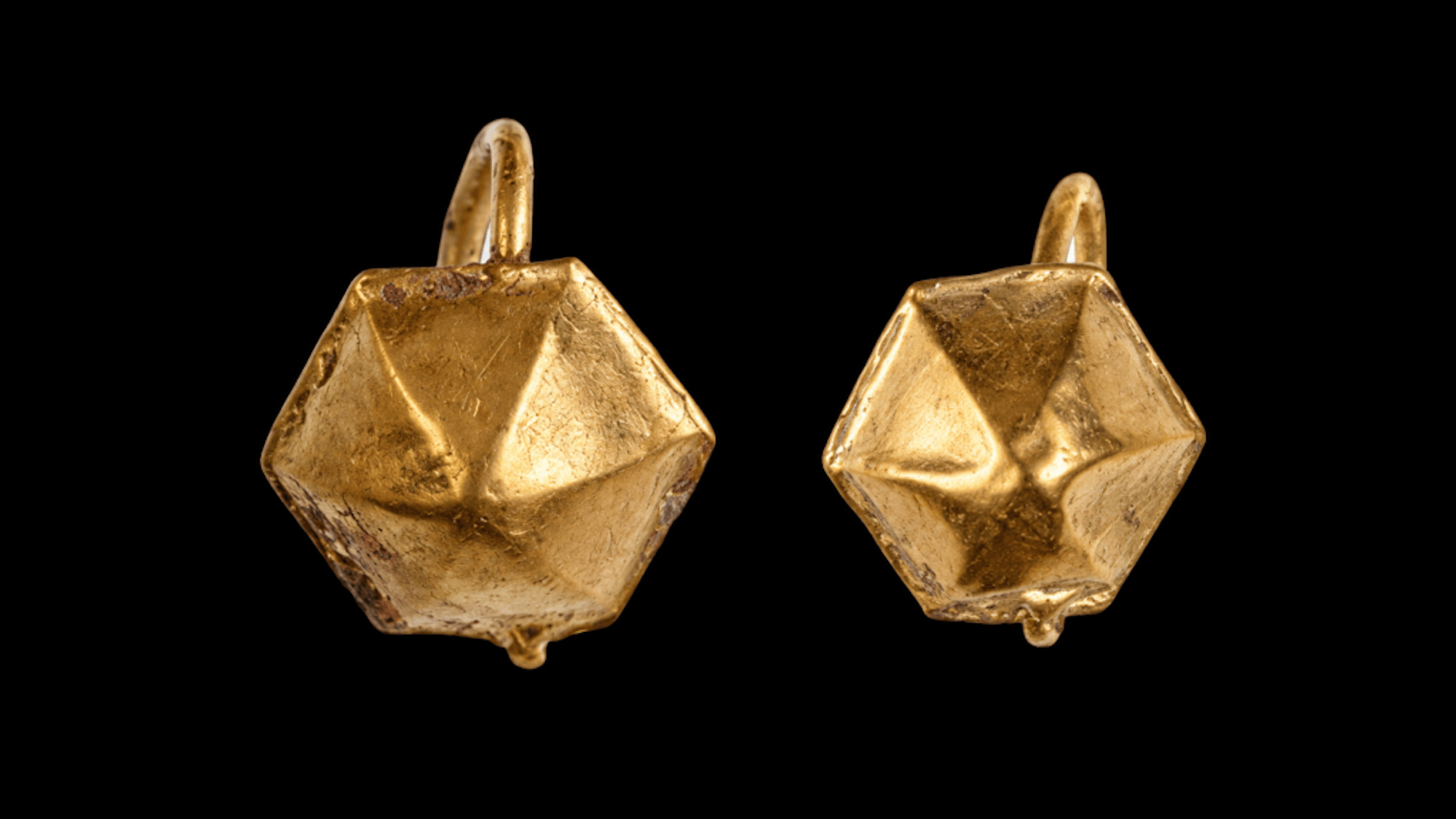
Not far from the Black Sea, a child’s grave uncovered in present-day Bulgaria has provided archaeologists a somber look at Roman funerary practices. Flagged in the city of Stara Zagora during a site survey for a new apartment complex and parking garage project, the burial contained stunningly preserved gold earrings as well as a single, small coin known as an antoninianus. But while the currency’s age is traceable to within a year of its minting, the bronze piece may also represent a grieving family’s hopes for their child’s safe passage into the afterlife.
The Roman empire at its height included over 1.9 million square miles of territory, including much of central Europe and central Asia. Rome annexed the region of Thrace in 46 CE, and eventually renamed the city of Stara Zagora as Ulpia AugustaTraiana in honor of Emperor Trajan (98 to 117 CE). Augusta Traiana quickly grew into one of Thrace’s most prominent urban hubs, becoming so prosperous that Rome ultimately granted permission to build its own coin mint during the second and third centuries CE.
Over 1,750 years later, Augusta Traiana’s remnants exist underneath a city once again known as Stara Zagora. Ruins of the Roman empire are regularly unearthed through the town, including the recent discovery of a large cemetery used for nearly three centuries outside Augusta Traiana’s original walls. Among the 135 graves, researchers identified a child buried with a pair of gold earrings and one of Thrace’s bronze coins. Although details about the young individual’s death and identity remain unclear, the coin clearly dates to either 274 or 275 CE. Archaeologists assume the child likely died either around that time period, or soon after.
While researchers may never learn the precise circumstances of the burial, ancient Greek and Roman funerary beliefs suggest the coin served a specific purpose. It’s possible the child’s family intentionally placed the currency with the deceased as payment to Charon, the ferryman who brought souls to the afterlife. Knowing this, it may be that grieving relatives hoped to impart one final gift to their loved one.
Snakes will bite, rattle their tails, and even spit venom to escape danger. But of all the world’s species, southeast Asia’s dwarf reed snake (Pseudorabdion longiceps) relies on an especially fascinating escape method. When threatened, the diminutive serpent rolls away like a speeding wheel.
An adult dwarf reed snake typically measures less than 12 inches long, but its unique locomotive maneuvers allow it to retreat as fast one foot per second—about four times faster than it travels by simply slithering on the ground. It’s not a flailing getaway, either. The snake also easily rolls along a straight path while somehow keeping its head both stable and facing forward.
Now, researchers finally have a better understanding of how the dwarf reed snake achieves such dizzying acrobatics. In a study published today in the journal Current Biology, a team at Japan’s Toho University detailed the specific physiology that enables its locomotion after filming the snakes with high-speed cameras. Essentially, the snake doesn’t rotate its entire body in a singular, forward motion—it whips one side of its body forward towards the ground while an arched portion swings down by its head in what the study’s authors call a “stroke.” The snake then alternates between its left and right side coming into contact with the ground for each successive stroke. Essentially, it’s like twirling a rope in a lateral circle while holding one end in your hand—except that end is the snake’s head.
The cumulative efforts bypass the traditional idea of a wheel requiring something like a central axle. Instead, this ingenious, highly controlled movement allows the animal to keep its head and sensory organs upright and facing ahead while traveling at such high speed. This is compounded by the dwarf reed snake directing regions of its body to engage in large, alternating rotations while stabilizing its head.
By gaining better insight into these biological mechanisms, researchers also highlight the difficulty in trying to predict an animal’s capabilities based solely on its physiology. A snake may have primarily evolved to slither—but that doesn’t mean it can’t get creative when necessary.
On October 16, the National Park Service (NPS)announced the latest additions to a growing list of designated World War II Heritage Cities. The park service began the program in 2020, as a way to honor local ties to history. Officials have since celebrated locations across 46 states and two territories, but there are many more places worthy of distinction.
The10 new cities and counties announced today span Alaska all the way to the U.S. Virgin Islands.
“These designations highlight the enduring legacy of service, sacrifice, innovation, and industrial achievement…and continue to shape our national story,” NPS Jessica Bowron said in a statement.
According to Bowron, this year’s selections include hubs for military manufacturing, training facilities, and logistical centers integral to Allied campaigns. In Aurora, Colorado, Fitzsimons General Hospital cared for wounded returning service members, while the city of Pendleton, Oregon, featured an airfield that trained B-25 crews that later participated in the Doolittle Raid. Meanwhile, South Charleston, West Virginia’s Naval Ordinance Plant supplied invaluable inventories and was largely staffed by local women and Black workers.
A full list of the latest entrants can be found below:
An extensive new analysis further confirms the oldest known human footprints in North America date back to the last ice age (about 23,500–21,700 years). To pinpoint their origins, researchers at the University of Arizona relied on cutting-edge methods at the United States Geological Survey (USGS) Radiocarbon Laboratory to examine hundreds of thousands of prehistoric pollen grains extracted from the tracks. According to researchers writing this week in the journal Science Advances, the team can even describe some of the dramatic environmental fluctuations experienced by these prehistoric humans within a single generation.
New Mexico’s White Sands National Park contains more than stunning vistas and desert dunes. It’s also home to one of the most controversial (and consequential) prehistoric discoveries of the last century. In 2006, archaeologists located footprints inside a dry lakebed that they later determined to be the earliest evidence of humans in North America. But there was a problem. Until then, researchers largely agreed that the first humans migrated into the continent about 16,000–12,000 years ago via Beringia, the subcontinent once connecting Alaska to Russia.
However, the White Sands footprints were estimated to be around 23,000 years old. That implied a sustained human presence on the continent at least seven millennia earlier than expected. Various archeological camps continued debating the true age of the White Sands footprints for years, while others cited similar—and sometimes older— sites in both North and South America. Meanwhile, the dry lakebed’s rarely seen geological conditions allowed researchers like University of Arizona geoscientist Jessica Tierney to learn more than each footprint’s age.
“The White Sands sediments are unique in that they allow us to reconstruct environmental conditions during the last ice age at a very high temporal resolution, so that we can see fluctuations that were relevant for the humans present at that time,” Tierney said.
Combining geochemical sediment signatures with the fossilized pollen, researchers accurately determined ancient regional details such as plant distribution, precipitation, temperature, and aridity. They soon learned that the humans who made the White Sands footprints would have experienced incredibly dramatic environmental shifts within their own lifetimes. Within only a few decades, the surrounding conifer forests transformed into plains covered with oak and sage. Lake Oterio, a giant body of water that once covered New Mexico’s national park, fluctuated in size for about 1,500 years until it receded completely. Although these shifts were large, they actually closely followed similar global climate changes at the time.
“And throughout that whole sequence, people were walking there, leaving their tracks alongside those of mammoths, giant sloths and dire wolves,” added Tierney.
Your eyes really can betray your thoughts, but don’t get too self-conscious about it. Researchers in Japan believe that the subtle signs our eyeballs make are more useful to neuroscientists than the interrogation room. Based on their findings recently published in the journal iScience, examining the difference physiological responses from “inner” versus “overt” speech may help us better understand everything from linguistic development in children to the efficacy of silent pep talks.
To learn more, a team at the University of Tsukuba in Honshu enlisted dozens of volunteers for a series of simple counting exercises. After observing the participants at rest while thinking about nothing in particular for a control, researchers then asked them to count sequentially (1, 2, 3…), in number-subject combinations (one dog, two dogs…), and in specific intervals (1, 3, 5…). They also completed each task both silently and aloud. In each phase, the team carefully monitored their pupil dilation.
The results were subtle, but striking. Participants’ pupils dilated during each overt speech task, but this same muscle movement depended across each inner speech directive. Pupils constricted while volunteers silently counted sequentially, dilated for interval counting, and didn’t change at all for number-subject counting. But regardless of the inner speech task, pupil size changes were always smaller than they were during overt speech.
“The results of the present study do not support the initial assumption that inner and overt speech produce equivalent pupillary responses,” the team summarized. “Across the three experiments, overt speech consistently elicited pupil dilation, whereas inner speech did not.”
This collective data indicates that our inner speech isn’t simply the nonverbal counterpart to talking aloud. Instead, it’s a form of communication that appears to correspond to lower levels of brain arousal. If true, measuring pupil dilation may become a valuable tool when attempting to assess internal language and thinking. This could be particularly useful for studying language development in young children and infants who can’t properly describe their experiences to adults yet.
Almost one year ago, paleontologists finally settled a longstanding debate about Tyrannosaurus rex, arguably Earth’s most famous dinosaur. After reviewing decades of mounting evidence, researchers documented around 150 morphological differences across multiple supposed juvenile T. rex skeletons. Instead of young dinosaurs, these were actually adult examples of an entirely separate species now known as Nanotyrannus lancensis.
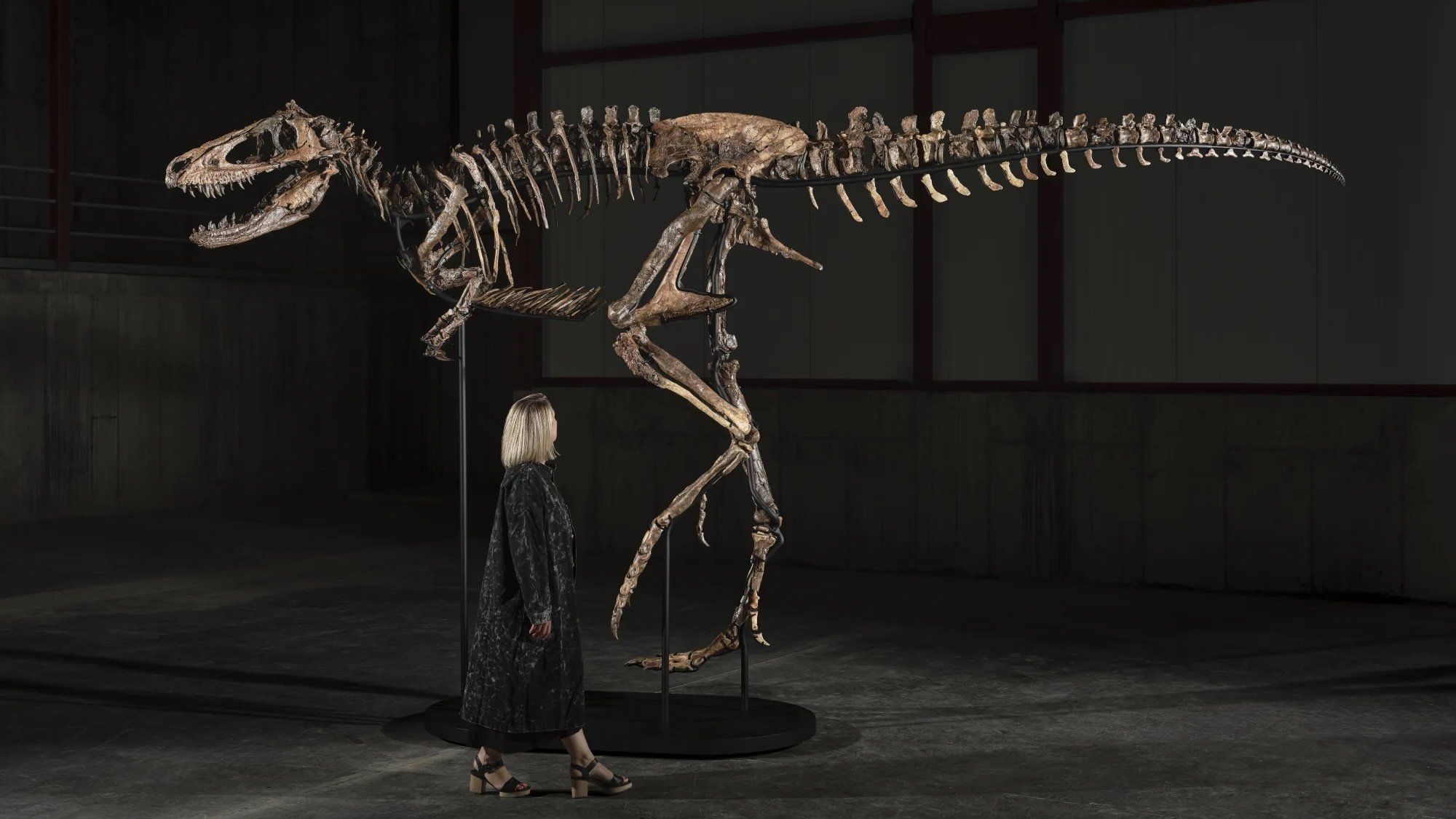
While Nanotyrannus was dwarfed by its massive relative, itstill reached an impressive 18 feet long and weighed as much as 1,500 pounds. But while it may have lost some of its cultural cache during the rebrand, a well-preserved specimen nicknamed Jodi may still sell for upwards of $9 million at an upcoming auction.
“It completely changes what we understand about the Cretaceous,” Cassandra Hatton, Sotheby’s head of science and natural history, said during a recent interview.
Paleontologists first suspected the existence of a separate species after discovering a uniquely proportioned skull at Montana’s Hell Creek Formation in 1946. Back-and-forth arguments about the dinosaur’s true identity continued for the next 80 years, but the ramifications weren’t simply a matter of semantics. If confirmed, it meant T. rex wasn’t the only tyrannosauroid roaming North America during the late Cretaceous period.
Jodi is a relatively new find. Named after the Montana rancher who found it, Jodi Pierson, the skeleton was excavated at the Hell Creek Formation in 2019, and is estimated to be about 55 percent complete. It features all four of its claws as well as 35 teeth in a nearly complete skull. According to the Sotheby’s auction listing, Jodi stands about 6.5 feet tall and measures 19.6 feet from nose to tail. The mounted dinosaur includes all of its surviving fossilized bones along with 3D-printed and sculpted additions to fill in the paleontological gaps.
Jodi will officially go up for auction on October 27 in New York City, where she is expected to sell for $6–8 million. The final price may still surprise bidders, however. In July, auctioneers estimated that a nearly complete T. rex named Gus would sell for $30 million. Gus blew that out of the water, ultimately fetching over $50 million.
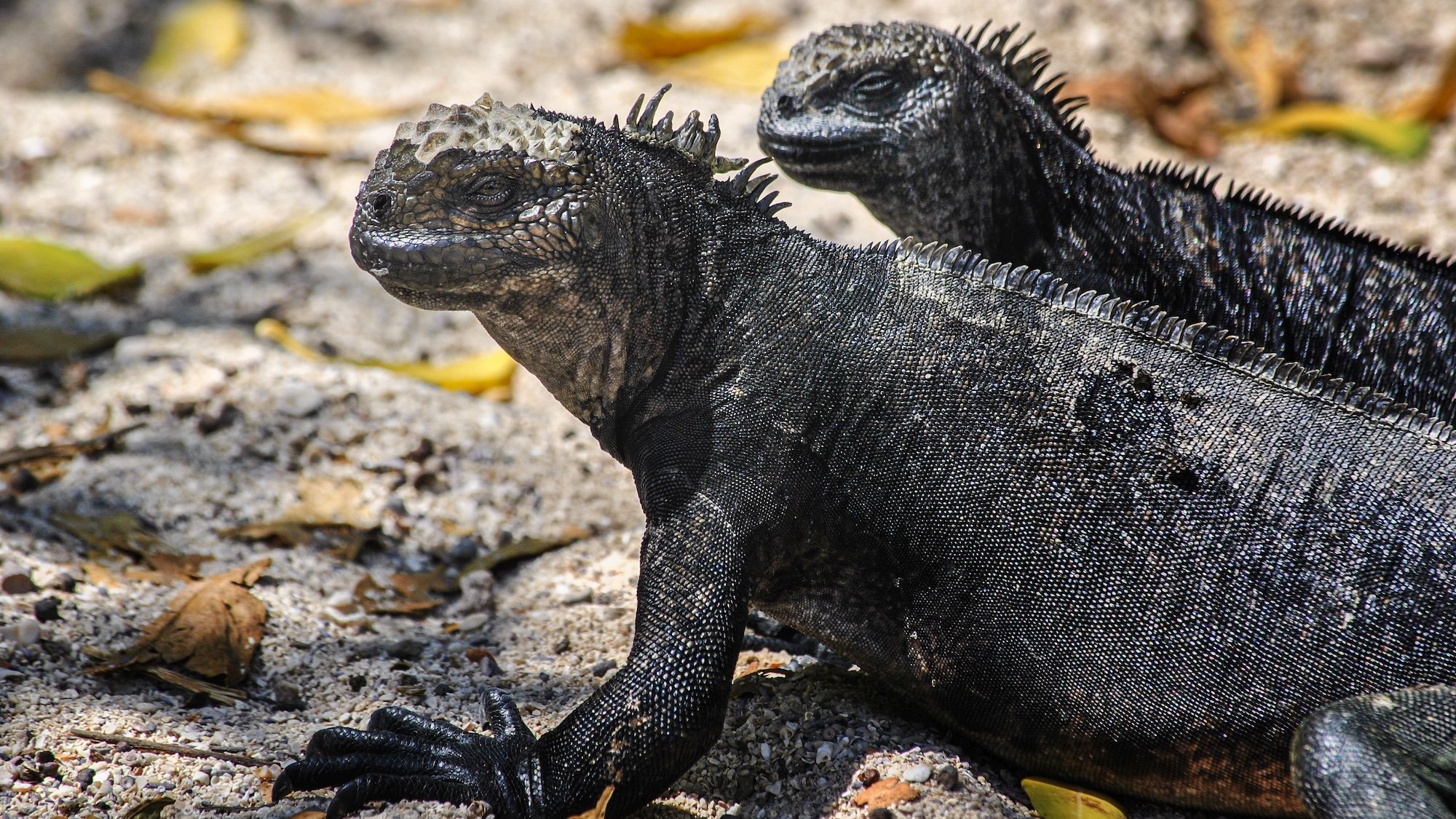
Marine biologists are sounding the alarm on behalf of the Galápagos Islands’ marine iguana (Amblyrhynchus cristatus). Without tightened regulations on the often abused exotic pet trade, researchers warn that a recent “strange uptick” in illegal animal trafficking combined with this season’s Super El Niño is further endangering the already vulnerable reptiles living on the Eastern Pacific archipelago.
“They are already shrinking in size and facing mass mortality, either by starvation or by trying to swim longer distances in search of food,” Juan José Alava, a marine ecotoxicologist at Canada’s Simon Fraser University, explained in a recent letter published in Science.
The marine iguana family encompasses at least 11 known subspecies, each specially evolved to live on the Galápagos Islands. They are the only reptiles in the world capable of foraging underwater for macroalgae, which makes up the majority of their diet. Although iguana colonies remain relatively stable, the International Union for Conservation of Nature (IUCN) still lists them as Vulnerable due to predators, mounting pollution issues, and cyclical El Niño events. Ten of the 11 recognized subspecies are also locally classified as either Critically Endangered or Endangered. Sale of iguanas is banned under the Convention on International Trade in Endangered Species of Wild Fauna and Flora (CITES), but a recent uptick in illegal trafficking along with increasingly dramatic climate shifts is adding more stress to the situation.
Ecuadorian authorities have caught people attempting to smuggle iguanas multiple times this year. In May, officials discovered at least a dozen animals inside handbags at an airport that were bound for illegal markets. Law enforcement found another 32 tied up inside a suitcase intended for similar buyers in August. Many trafficked iguanas won’t survive the stress and rough handling, but even rescued reptiles face challenges. Because subspecies are evolved to live on specific islands, ecologists must test each rescued iguana’s DNA to determine where to return them.
Smuggling hasn’t been seen within the Galápagos Marine Reserve itself, but Alava and his colleagues theorize that smugglers are capturing iguanas near Ecuador’s coastal shorelines. Traffickers then obtain CITES permits that falsely declare the reptiles are captive bred in other nations, even though no such authorized facilities actually exist. Often, smugglers are only engaged in the industry out of financial necessity or coercion.
“Artisinal fishing communities from Galapagos and coastal Ecuador, who are facing severe socioeconomic hardship and expanding organized crime activities, may feel pressured to participate in this international black market,” the letter’s authors wrote.
Conservationists are now urging a multifaceted approach to protect the animals. CITES representatives need to close existing permit loopholes, while the Ecuadorian government should focus on simultaneously breaking up organized crime and providing economic aid to struggling communities.
“Maintaining global ocean observing systems is essential, and extreme marine event forecasting and response capabilities are improving,” the authors wrote. “But responsibility and action remain fragmented across environmental [organizations], fisheries, and emergency management, and public health agencies.”
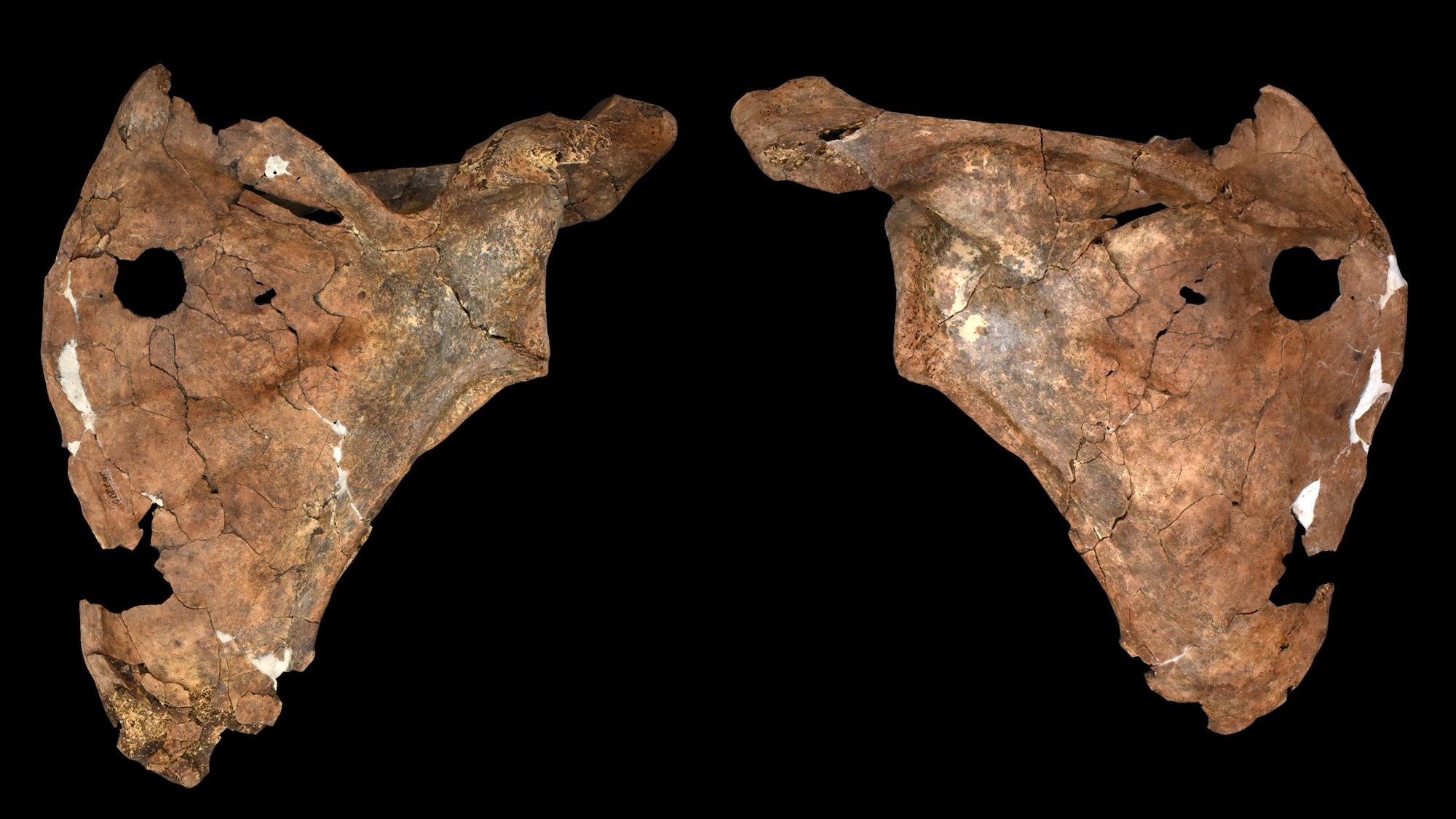
A small puncture wound through a 75,000-year-old Neanderthal shoulder blade may be the earliest evidence of death by spear on humanity’s family tree. Given forensic details such as the entry angle and overall damage, researchers believe the injury was made as an intentionally fatal “heart shot” that killed the ancient hominin within moments. The discovery is detailed in a study published today in the journal Scientific Reports.
In addition to the grisly injury, the nearly translucent bone itself makes this evidence even more striking.
“It’s extraordinary to have a perfectly preserved scapula from 75,000 years ago. These bones are so thin that you often don’t get complete scapulae from modern burials,” explained University of Cambridge archaeologist and study co-author Emma Pomeroy. “We were able to lift it out in one piece from under almost eight meters [roughly 26 feet] of rock and sediment.”
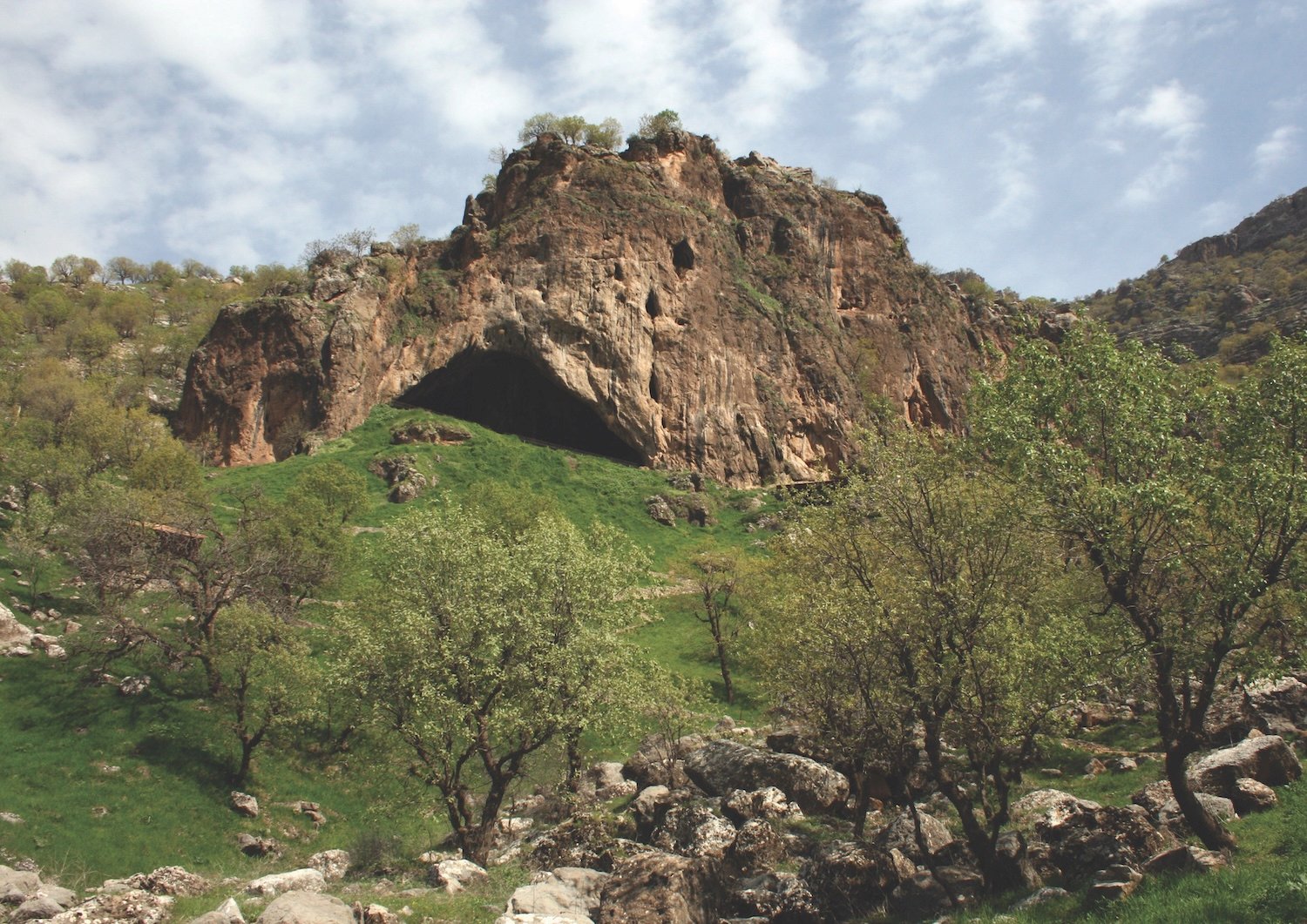
Pomeroy and her colleagues excavated the remains from inside Shanidar Cave, an archaeological site in Iraqi Kurdistan famous for containing evidence of ritualistic Neanderthal burials. The roughly 0.6 inch, nearly circular perforation on the bone was likely made with a wooden spear, since a stone or flint tip would create a flatter injury and leave behind microscopic mineral shards. The individual who inflicted the fatal injury drove the spear downward through the victim’s left chest cavity from the front, piercing major arteries and the lungs before creating the hole in the left scapula.
Located in Iraqi Kurdistan, Shanidar is a famous cave containing what appears to be early examples of Neanderthal funeral rituals. Credit: Graeme Barker
Remnants of a wooden spear weren’t found near the Neanderthal’s remains, which is understandable since the material often decomposes so quickly. That said, prior archaeological digs have revealed similar prehistoric wooden weapons dating as far back as 400,000 years. Pomeroy’s team believes a rounded spear carved from wood almost certainly caused the killing blow.
“Holes left by recreations of spears from this time are an excellent fit for the one we found in the Neanderthal scapula. That early technology absolutely works for this wound,” said Pomeroy.
Although it’s possible that a mishap like a hunting accident was the cause of death, Pomeroy argues the cumulative details suggest something far more purposeful.
“The position of the wound and the force required to push it right through the Neanderthal’s body bear the hallmarks of an intended kill shot directed towards the heart,” she added.
Another major injury the victim sustained before the possible stabbing supports this hypothesis—and complicates the story. In addition to the scapula, archaeologists documented a pair of left ribs, a right rib fragment, a nearly complete right hand, and seven teeth. Collectively, the remains indicate the Neanderthal was about 45 years old at the time of death. However, dental damage reveals the individual suffered a severe blunt-force blow to the front of the face at least a year before death. This injury split a lower front incisor lengthwise and even rotated some teeth inward.
“There’s no doubt that [they] would have had difficulty communicating and been in absolute agony for a long period of time,” said Pomeroy.
Despite this blow to the mouth, the Neanderthal survived for months or even years. This was only possible because others must have cared for the individual, including duties as simple as preparing softer foods to eat. In this sense, there is a distinct possibility the spear wound was a final, merciful act by someone close to them. According to Pomeroy, the prehistoric scene showcases both the highs and lows of what it means to be a human.
“On the one hand, we have evidence of a terribly violent end,” she said. “On the other, this was clearly an individual who was cared for during their lifetime.”

 Login