 Login

CISA: Hackers now exploit SolarWinds Serv-U flaw to crash servers
CISA warned today that hackers are now actively exploiting a recently patched high-severity SolarWinds Serv-U flaw to crash servers. [...]

Technology companies announced 38,242 job cuts in the US in May 2026, the highest monthly total for the sector since August 2024, according to research by employment placement company Challenger, Gray & Christmas. So far this year the company has observed 123,653 US technology job cuts, a rise of 66 percent from the same period in 2025.
These figures represent the third successive month that there has been an increase in job layoffs across all sectors, the company said.
“The labor market is being reshaped by technology in real time. AI is now the leading reason companies give for cutting jobs and the primary industry citing it is technology,” said Andy Challenger, chief revenue office at Challenger, Gray and Christmas.”
AI was blamed for 38,579 of the 97,006 job cuts announced across all industries tracked by the company. It accounted for 40% of the cuts observed in May, up from 7% in January.
This year has already seen some major layoffs in technology. In March, HPE slashed 2,500 jobs from its wage bill, while Oracle announced plans to shed an unspecified number of developers. And the cuts keep on coming, just last month, Meta shed 8,000 employees.

Analysts tipped Apple to use its annual Worldwide Developers Conference (WWDC), set to take place on Monday (8 June), to reset its AI strategy and unveil a major Siri overhaul as CEO Tim Cook prepares to hand over the reins.
Ahead of the event, Ben Wood, chief analyst at CCS Insight, described WWDC as “a pivotal moment for Apple Intelligence”, adding its voice assistant Siri had been “a thorn in Apple’s side for several years”, making its reboot central to Apple’s attempt to reset its AI narrative.
According to Bloomberg, Apple is expected to unveil a revamped AI-powered Siri designed to act as conversational companion with screen awareness, richer app control, the ability to tackle multiple commands in one prompt and a dedicated Siri app.
Wood expects Apple to frame the overhaul around “a slew of agentic AI capabilities”, while avoiding any overt positioning of Siri as being powered by Google’s Gemini technology.
Apple has indeed lagged rivals including Google and Samsung in bringing AI features to smartphones and other devices. Its push has been hampered by challenges building in-house AI capabilities, prompting the company to lean on partnerships with players including Google and OpenAI.
Paolo Pescatore, chief analyst at research house PP Foresight, said the iPhone-maker does not need to win the AI race through “noise, novelty or endless model comparisons”, but by making AI “useful, trusted, private and deeply embedded” across its devices.
Bloomberg reported Apple is also expected to unveil iOS 27 alongside updates for iPadOS, macOS, watchOS, tvOS and visionOS. Unlike last year’s focus on Liquid Glass design, the next software cycle is expected to focus on reliability, battery life, performance and deeper integration of Apple Intelligence features.
Symbolic
Notably, the event also marks Tim Cook’s final WWDC as Apple CEO before his planned transition to executive chairman on 1 September, when SVP of hardware engineering John Ternus will take the helm.
Pescatore explained the upcoming WWDC “carries far more significance than a normal developer conference”, describing it as “as much a symbolic handover moment as a software showcase”.
In his view, Cook’s legacy has been built on “scale, discipline, services, privacy, Apple Silicon and deep ecosystem integration”, but argued the key question is how Apple uses that foundation in the AI era.
He argued the tech giant will need to reassure developers, investors and customers the transition is “about continuity, not disruption”, while showing its blend of hardware, silicon, software and services can deliver “a more intelligent, more personal ecosystem”.
Similarly, Wood warned any missteps in Apple’s hotly anticipated agentic and on-device AI strategy “could have significant implications”.
The post Apple set for AI reboot at Cook’s WWDC farewell appeared first on Mobile World Live.
Smartwatches can track your health stats, but they also do a lot of other things you might not always want or need. The $100 Fitbit Air tracker ditches the screens that have become common on people's wrists, leaving behind a tiny puck of health sensors you can often forget you're wearing. You will not, however, forget that Google's new health platform is built around AI.
The Air has no speaker, and there's only one LED on the side to indicate battery level. You can double-tap the tracker to check the level, and that's about the end of on-device features. The vibration motor is only for alarms—it can't sync with notifications on your phone. That makes sense, given there is no screen to tell you what that buzz was all about.
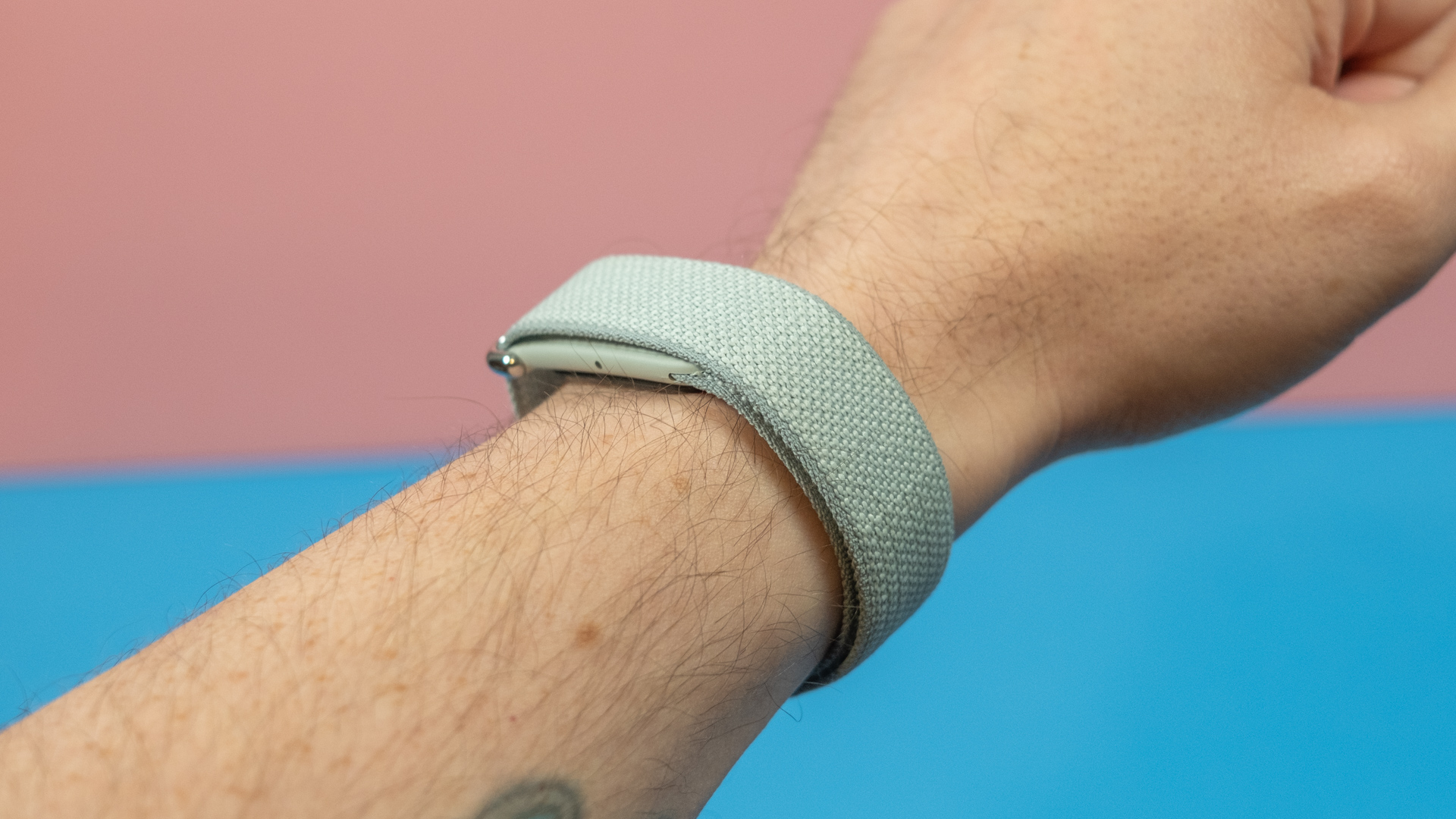 The Fitbit Air doesn't have a display or buttons—just a small LED on the side for battery status.
Credit:
Ryan Whitwam
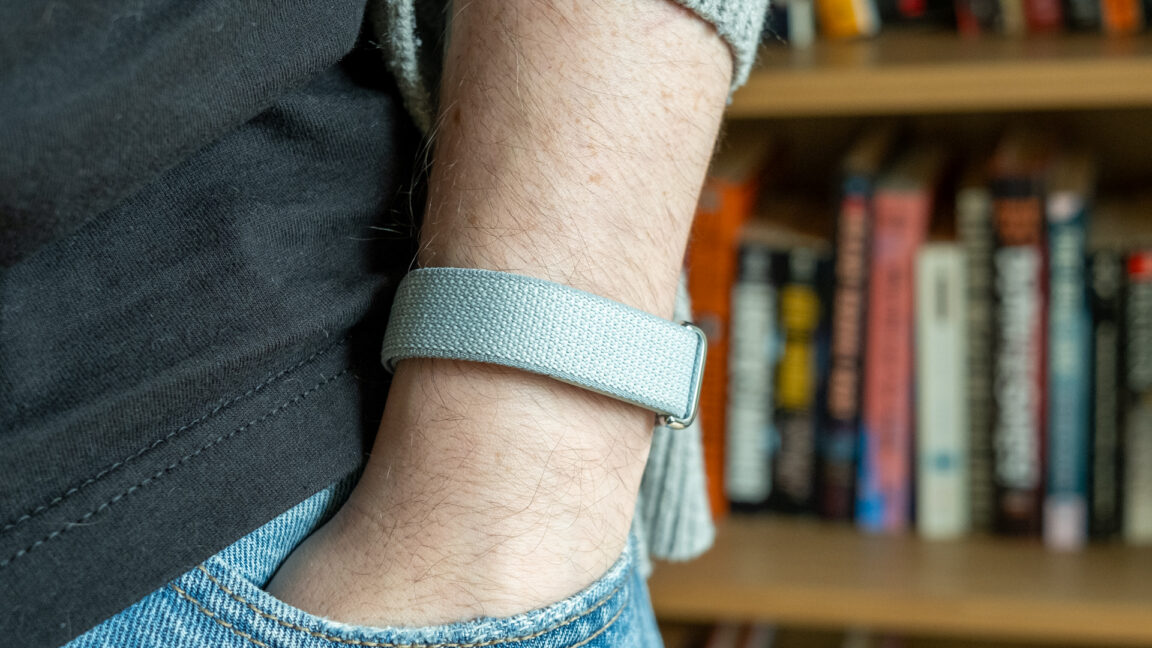
The stock Performance Band is simple, consisting of a smooth polyester yarn with small velcro pads and a metal loop. It's durable but does seem to absorb a bit of moisture. For swimming or heavy workouts, you'll probably want the silicone active band. This one hides the Air puck a bit more effectively, and it looks good in a sporty way.

© Ryan Whitwam
 Roscosmos ha avviato una riparazione per l’aggravarsi della perdita d’aria del modulo russo Zvezda della Stazione Spaziale Internazionale. Per cautela, la NASA ha ordinato all’equipaggio della missione Crew-12 e all’astronauta americano Chris Williams di rifugiarsi all’interno della navicella Crew Dragon... Leggi tutto
 OpenAI ha così deciso di aderire al programma volontario della Casa Bianca, che prevede verifiche fino a 30 giorni prima della pubblicazione dei sistemi IA più avanzati... Leggi tutto
Singtel Group positioned a partnership with government-linked body Digital Industry Singapore as helping it accelerate a sweeping AI transformation of its business and strengthen digital infrastructure in the country.
The operator noted the pact, which comes with a grant for the company, will contribute to a multi-year plan to up adoption of AI across its business including within infrastructure, customer platforms and for workforce development.
In the first phase Singtel plans to develop and hire AI talent, establish governance and tech frameworks and build “enterprise advisory and implementation expertise to support AI deployment at scale”.
Among its aims is to become a “world-leading AI-native telco” with advanced AI and machine learning capabilities in all business units.
The operator highlighted its push aligned with a wider national strategy in Singapore which aims to strengthen sovereign digital infrastructure, increase skills of the local workforce and develop “globally competitive leaders” in the AI sector.
Singtel CEO Yuen Kuan Moon added it was “championing enterprise transformation with AI” in its home market.
“As an adopter, provider and enabler of AI, Singtel is embedding intelligent technologies across our operations, delivering trusted enterprise-grade solutions that help customers move from pilot to scale, and providing secure, sovereign platforms and digital infrastructure to support adoption across industries.”
He continued: “Ultimately, our goal is to create real impact not just for our business, but for Singapore, future-proofing our industries to be more competitive and resilient in the AI era.”
The post Singtel advances drive for widespread internal AI use appeared first on Mobile World Live.
Telenor is reportedly exploring a sale of its digital bank in Pakistan, marking a full exit from the country following the sale of its mobile unit which was completed in December 2025.
Bloomberg reported Telenor is working on offloading its 55% equity stake in Easypaisa Bank, which was formerly known as Telenor Microfinance Bank. According to sources, a sale could be worth “several hundred million dollars”.
Over the next month, Telenor will apparently invite initial offers from prospective bidders, although no final decision has been made on the fate of the stake.
The rest of Easypaisa is owned by Ant Group, and the mobile money service is popular for cash transfers in the nation.
In line with a strategy to dispose of businesses in Asia, Telenor sold its telecoms unit in the country for around $490 million to Pakistan Telecommunications Company.
Selling its stake in the banking business would therefore end the Norwegian operator’s two decade long presence in the country.
In a comment cited by Bloomberg, analyst at DNB Carnegie Christoffer Wang Bjornsen said the move would be “well received by the financial community to see Telenor simplifying its Asian portfolio”.
The post Telenor mulls Pakistan exit with bank stake sale appeared first on Mobile World Live.
 Scopri la dash cam A410, ora in offerta speciale. Approfitta di questa occasione per migliorare la sicurezza della tua auto con una dash cam di alta qualità... Leggi tutto
 LG annuncia i prezzi della sua gamma di TV Micro RGB evo e Mini RGB evo e QNED evo. Si arriva fino ai 115 pollici... Leggi tutto
 Il malware usa un modello IA eseguito in locale, cambia metodo quando un tentativo fallisce, si propaga usando anche i dispositivi più semplici, e può affidare il ragionamento ai nodi della rete dotati di GPU più potenti... Leggi tutto
 Oggi iniziano i mondiali 2026, la terza edizione senza l’Italia. RAI trasmetterà solo alcune partite, DAZN ha preparato un pass che si paga una tantum pensato anche per chi vuole vedere tutto ma non vuole abbonarsi.... Leggi tutto
As we lean into WWDC, three strategically brilliant Apple moves have been exposed in the last couple of weeks, two of which will have immense consequences in the coming year, while one sets the scene for essential future growth.
In each case, Apple’s leadership has found counter-intuitive gambits that actually secure the company’s future. Let’s start with Vision Pro.
News this week is that incoming CEO John Ternus has made some tough decisions around Apple’s approach to spatial computing, terminating development of Vision Pro (even as leaked images of a black model emerge) while focusing R&D on two smart glasses projects to compete with Meta.
The intention is to introduce XR and AR glasses priced at around $300 to $500 each. While not as richly-featured as the Vision Pro, they will be within the reach of more people and draw deeply on the huge R&D effort that went into the original Apple AR visors. Apple hopes a focus on trust and privacy will be enough to push Meta aside, helping Cupertino dominate this part of the category. If that plan succeeds, don’t be at all surprised to see plans for Vision Pro 2 return to the table, though that’s not the focus now.
Apple frequently described the Vision Pro as a product “pulled from the future,” a device for enterprise users and early adopters. For many such users, the existing product will be useful in their work for time to come.
What’s strategically solid about this is that Apple has now defined a good future for spatial computing and is bringing components of that future to the mass market on the basis of a provable technology you can already try for yourself in any Apple Store. This is a long game, and while it will take time to play out, it’s a game the company has proved it can join.
Apple has apparently chosen to use Nvidia and Google technologies to support at least some of the Apple Intelligence/Siri improvements to be announced at WWDC next week. This seems to fly against the company’s general approach to privacy on its platforms, with the silicon, operating system and — thanks to Private Cloud Compute — the cloud all in its control.
How, you might ask, can Apple ensure privacy when using third-party infrastructure to manage some AI transactions? How can it do so without damaging its trusted brand?
One direction that makes sense is to consider that Apple and its partners have reached consensus on what privacy should be and how it should be delivered. That’s a very important consensus, as it suggests Apple is building an approach that makes privacy an attestable standard.
The company has been pushing governments for years to agree to such standards, but all it seems to have had in return are continued government attempts to erode personal privacy. That’s particularly evident in the UK government’s egregious move to undermine encryption to the detriment of all. (The UK isn’t really alone in preferring surveillance above liberty.)
Android developer Google has had the same experience, and while its approach to privacy differs from Apple, both companies understand the need for encryption. As such, any form of consensus on some form of privacy standards is welcome — and while I’d very much prefer an enforceable, verifiable approach, some industry agreement has to be better than nothing at all.
While I don’t believe Apple’s approach to privacy in the new breed Siri/Apple Intelligence will be introduced in this way at WWDC, it will be interesting to see what does emerge from the new tech triptych (Apple, Google, Nvidia) in the coming months. Certainly, all three have a great interest in guarding encryption against Quantum attacks for which hidden backdoors would be easy pickings.
Apple has won the PC war.
That last point needs explanation: Apple’s entry-level MacBook Neo also has just 8GB RAM, but it also has custom-designed Apple processors and an operating system optimized to run on the hardware. That means those Macs use memory far more efficiently than their competitors.
So, you can pick up some mass market Windows laptops for $800 that hold just 8GB memory, or spend $699 for a MacBook Neo with double amount and that can also run Windows in VM extremely well.
Component prices are not going to shrink back for a while, any more than further magical thinking is going to end the war in Iran. At this point in the cycle, Apple has the PC market advantage. Millions are purchasing its entry-level Mac and the vast majority of those new users will love the platform, as new users usually do. That’s going to lead to a spike in Apple services sign-ups, and prompt solid future upgrade and accessory sales cycles.
Apple accomplished this by selling a low-cost Mac at a time when competitors face existential problems maintaining their grip on the mid-range market. The longer Apple holds prices on the device, the greater the advantage it builds, while applying huge pressure on PC competitors.
With the Mac hitting its iPod moment as it achieves mass market sales, Apple finally seeing something like progress in its attempt to secure privacy in a digital age, and a strong position from which to grow in the wearables market, the company has played a fine hand.
That’s even before it introduces us to its improved Apple Intelligence, and an era of AI access in which many everyday tasks take place token free directly on the device. Indeed, when it comes to AI, if it gets things right at WWDC, Apple appears to be making money, while AI competitors are bleeding financial oxygen as their inflated bubble heads to its inevitable demise. What about the enterprise? Take a look at this chart.
You can follow me on social media! Join me on BlueSky, LinkedIn, Mastodon, and follow The Core.

