Uma das ausências mais comentadas em análises sobre o iPhone Duo é a do Face ID, sistema de autenticação facial presente em todos os demais iPhones comercializados atualmente pela Apple. Em vez disso, ele conta com o Touch ID no botão lateral, como alguns iPads.
No entanto, isso poderá mudar já na próxima geração do aparelho. Segundo apontou o jornalista Mark Gurman na mais recente edição do seu podcast “Power On”, protótipos do “iPhone Duo 2”, atualmente em desenvolvimento pela Apple, já contam com a tecnologia biométrica facial.
Mais do que isso: os sensores do Face ID deverão ficar sob o display, eliminando a necessidade de qualquer recorte na tela — todos os iPhones já lançados com Face ID tiveram o famoso notch ou o atual recorte em formato de pílula.
Esse detalhe é importante devido ao fato de o iPhone Duo já contar com a tecnologia de câmera frontal sob a tela, o que indica que a Apple pode estar usando o aparelho como “cobaia” para testar tecnologias há muito esperadas e especuladas para as linhas principais.
Além da segunda geração do dobrável, Gurman comentou em seu podcast sobre o “iPhone Duo 3”, cotado para ser lançado em 2028.
Segundo o jornalista, a tela interna do “iPhone Duo 3” será em torno de meia polegada maior, jogando o total para acima das 8 polegadas (contra as 7,6″ do modelo atual). Isso também deverá fazer com que a tela externa cresça ligeiramente.
Gurman falou ainda sobre a possibilidade de vermos uma câmera telefoto ser adicionada ao dobrável — algo que estaria nos planos da Apple, embora ele ainda não saiba quando isso se materializará. “Acho que isso é puramente uma questão de física, por causa da profundidade necessária. Vai ser interessante ver como eles vão resolver isso”, comentou.
iPhone Duo
Cores: branco-estrela ou céu noturno Armazenamento: 256GB, 512GB, 1TB ou 2TB
NOTA DE TRANSPARÊNCIA: O MacMagazine recebe uma pequena comissão sobre vendas concluídas por meio de links deste post, mas você, como consumidor, não paga nada a mais pelos produtos/serviços ao usar os nossos links de afiliado.
People who drink tea regularly appear less likely to develop heart and vascular disease than people who don’t, according to a new study published today in the Journal of Internal Medicine.
With You Can See Everything, Holmes joins other such high-profile subjects as Lance Armstrong, Imelda Marcos and Anthony Weiner to allow film-makers to document their lives. But do they ever come out well?
In You Can See Everything, convicted fraudster Elizabeth Holmes invites film-makers Nathan Fielder and Lance Oppenheim into her home in a supposed act of “radical transparency”. Holmes is filmed, along with her partner, Billy Evans, and their two young children, in the weeks before starting a prison sentence for defrauding Theranos investors. “The best way for people to see who she is,” Evans says, “is to give as much access as possible into our daily lives”. It may also be the best way to market “Theranos 2.0”, which the couple are working on during filming. But the documentary questions whether Holmes is presenting her authentic self or a manufactured persona. Fielder speaks for the audience when he asks Holmes in a tense exchange whether she’s “being real” with him. “I’m always being real,” she says.
That question of authenticity is at the heart of documentary film-making. You Can See Everything is as much about the ambiguous relationship between film-maker and subject as it is about Holmes herself. There is often a power struggle over narrative control in documentaries, with both sides of the dynamic wanting different outcomes from the final film. Watching You Can See Everything inevitably prompts the question: why would Holmes, days before she heads to jail, invite the scrutiny of a film crew?
The midterms will be a referendum on the GOP’s alignment with tech overlords over the public they’re meant to serve
Welcome back to How We Win, a Guardian opinion series with leading thinkers, offering bold ideas for America’s political future. Last week, Robert Reich highlighted the link between corruption and affordability. Today’s edition was written by Guardian US columnist Rebecca Solnit. Sign up for future editions here.
“The world should accept some bad things happening,” Sam Altman, the head of OpenAI, said recently, “for the benefits of this technology and people having the agency.” Like so many things tech oligarchs say, it’s incoherent, since Altman would like to deny the world and the people in it the agency to decide whether or not we should accept his bad things. Surveys show that most Americans would like to pause AI; opposition to AI datacenters is a factor in many races in the midterm elections. People are outraged and anxious about what tech hath wrought, mad enough to fight back in what is coming to seem like a human v machine battle.
The titanium in iPhone Duo and the camera system in iPhone 18 Pro connect familiar product features to specialized American suppliers. Behind those parts are different kinds of manufacturing: processing metal, producing advanced films, forming protective glass and fabricating miniature lasers.
Apple’s October 20 supplier announcement identifies several of these connections. Read alongside the manufacturers’ own documentation, it provides a partial map of the work behind the devices, rather than a complete account of their global production.
Apple’s broader U.S. manufacturing program brings together businesses with very different specialties. Following individual components reveals how a metal producer, a materials company, a glassmaker and a semiconductor manufacturer contribute to devices sold under the same brand.
Image Credit: Apple Inc.
Perryman Processes Titanium for iPhone Duo
Apple identifies Perryman as a titanium supplier for iPhone Duo. The relationship concerns material production; it does not establish that Perryman builds the finished enclosure, hinge or assembled phone.
The geography requires care. Apple’s release groups melting, forging and rolling at Houston, Pennsylvania. Perryman’s facility directory describes a distributed network: melting and ingot breakdown at Coal Center, hot rolling and much finishing at Houston, and intermediate processing at Frackville.
Perryman’s operations therefore span several Pennsylvania locations. Apple has not published a facility-by-facility production route for its titanium orders, so the company’s broader manufacturing network provides context rather than a confirmed itinerary for each iPhone component.
Perryman lists electron-beam and vacuum-arc melting equipment, followed by processes that turn ingots into semifinished and finished material. It also documents laboratory and nondestructive testing capabilities.
In practical terms, the work converts raw inputs into controlled material forms that other manufacturing operations can use. Consistency in composition, dimensions and internal quality matters before a supplier further down the chain shapes a consumer product.
The Ultra 3’s titanium imprint process creates a clean, sculpted finish around its iconic contours.
Qnity Supplies Films for the Variable Aperture
Qnity Electronics has a different role: Apple says it will produce advanced films essential to the iPhone 18 Pro’s variable-aperture camera system.
An aperture controls the opening through which light enters the camera. Changing that opening helps manage exposure and depth of field, meaning how much of a scene appears acceptably sharp.
The announcement links Qnity to materials supporting that system, rather than identifying it as the manufacturer of the entire camera. Apple does not disclose the films’ composition, their exact position within the assembly or the production process.
It also does not name the relevant factory. Delaware is Qnity’s headquarters location, not sufficient evidence of where these particular films are made.
Qnity’s role highlights a less visible side of camera development: the materials that support a mechanism can be as specialized as its optical and electronic components. Apple identifies the films’ connection to variable aperture, but leaves their precise engineering role undisclosed.
Corning Makes Protective Glass in Kentucky
Corning’s Harrodsburg, Kentucky, operation supplies specialty glass for Apple, including Ceramic Shield. Apple’s October announcement sets an end-of-2026 target for all iPhone and Apple Watch cover glass, including iPhone Duo, to come from that facility.
Harrodsburg is already operating; the broader production transition remains a dated target. Corning’s account of the plant describes both current manufacturing and development work for future products.
Opened in 1952, Harrodsburg is Corning’s longest-running American plant. Its history includes the development of fusion-draw glassmaking, a process used to create large, thin sheets of glass. Corning describes the site as both a manufacturing operation and a place where teams develop materials for future products.
Protective cover glass is distinct from the panel that generates an image. Manufacturing a transparent protective surface involves different requirements from producing OLED pixels, electronics or the other layers in a display assembly.
The iPhone Duo connection therefore should not be expanded into a claim that Corning supplies its complete folding display. Apple’s statement identifies cover glass, with a specific production goal.
Image Credit: Apple Inc.
Coherent Produces Lasers in Sherman, Texas
In an August 2025 supply announcement, Coherent identified its Sherman, Texas, facility as the production site for vertical-cavity surface-emitting lasers, or VCSELs, supplied to Apple under a multiyear agreement.
These semiconductor devices emit light from their surface. Coherent connects them to features including Face ID on iPhone and iPad; Apple’s latest announcement specifically associates its technology with iPhone 18 Pro.
Sherman has compound-semiconductor capabilities covering epitaxy, fabrication and device manufacturing. Epitaxy means growing controlled semiconductor layers; fabrication then creates the structures needed for individual devices. This is specialized chipmaking for optical functions, rather than assembly of a complete camera.
The connection described here concerns Face ID and supported Apple devices, with the October announcement specifically naming iPhone 18 Pro. It illustrates why the supplier map differs by model: a component associated with one phone should not automatically be assigned to another.
Different Processes Contribute to One Device
These suppliers illustrate distinct stages of production. Metal processing prepares structural material; films support a camera mechanism; cover glass protects surfaces; semiconductor lasers contribute to optical sensing. Each requires its own equipment, expertise and quality checks.
Their contributions establish specific American manufacturing connections, not U.S. final assembly or an entirely domestic iPhone. Following the component and its documented production stage provides a more accurate picture than treating every supplier announcement as evidence that the whole device is made in one country.
Ann Altman, the Open AI CEO’s sister, accused her brother of repeatedly sexually abusing her over two decades ago
A judge dismissed a lawsuit filed by Sam Altman’s sister against him on Tuesday. Ann Altman accused the OpenAI CEO of repeatedly sexually abusing her more than two decades ago, which he has denied.
In dismissing Ann Altman’s lawsuit, the US district judge Zachary Bluestone wrote that she had refused to appear for an independent medical examination despite warnings that failure to do so would result in the case’s dismissal.
Saudi officials paid for his wife and son to fly out of the U.S. and offered to cover his bail, according to court filings. A judge ordered the engineer to remain in custody.
The ‘love hormone’ oxytocin may rise and fall in tandem in cats and the people who live with them, according to a new study published in the journal iScience.
Vanillin, the compound that gives vanilla its familiar taste, may have a future in treating wounds that refuse to heal, according to a review paper published in August 2026 in the International Journal of Pharmaceutics.
De acordo com o MacRumors, a Apple teria orientado funcionários das suas lojas a alertarem os clientes, no dia do lançamento do iPhone Duo — marcado para esta sexta-feira, 23 de outubro — de que é necessário já ter feito a reserva para retirada, o que desencorajaria quem costuma comprar os produtos presencialmente.
Segundo o site, funcionários das Apple Stores teriam sido informados de que muito provavelmente não haverá unidades do iPhone Duo disponíveis para quem tentar realizar a compra presencial do novo aparelho no dia do seu lançamento — daí a orientação para que os consumidores não compareçam às lojas sem reserva do Duo.
O jornalista da Bloomberg, Mark Gurman, porém, rebateu diretamente as especulações, afirmando que nenhuma comunicação nessa linha foi realizada:
There's been zero communication to Apple retail stores saying this. Perhaps a manager at select stores told employees this, but nothing like this has been communicated to date. I'm not saying it won't happen, but it hasn't. https://t.co/yp7kPJr88j
Não houve nenhuma comunicação para as lojas de varejo da Apple dizendo isso. Talvez um gerente de algumas lojas tenha contado isso aos funcionários, mas nada assim foi comunicado até o momento. Não estou dizendo que isso não vá acontecer, mas ainda não aconteceu.
Como já relatamos aqui, os prazos de entrega do iPhone Duo na loja online oficial da Apple chegam a janeiro nos Estados Unidos e a fevereiro no Brasil.
Embora a empresa tenha declarado que está “trabalhando intensamente” para disponibilizar o Duo para compra “o mais rápido possível”, tentar adquirir o iPhone Duo por meios oficiais segue sendo um desafio e tanto, por enquanto.
Atualização, por Bruno Cardoso19/10/2026 às 16:09
A Apple publicou mensagens em seus sites japonês e sul-coreano dizendo que, por um período limitado, apenas compradores que fizeram a reserva do iPhone Duo ou do iPhone 18 Pro Max poderão buscá-los nas lojas da empresa nesses países.
Em outras palavras, consumidores japoneses/sul-coreanos que forem até uma Apple Store no dia de seu lançamento sem ter feito a pré-compra do aparelho provavelmente voltarão frustrados.
Ainda não está claro se essa política se espalhará para outras localidades.
NOTA DE TRANSPARÊNCIA: O MacMagazine recebe uma pequena comissão sobre vendas concluídas por meio de links deste post, mas você, como consumidor, não paga nada a mais pelos produtos/serviços ao usar os nossos links de afiliado.
Considerando que — ainda de acordo com ele — esse evento poderá revelar o “MacBook Ultra” (modelo com tela OLED 1Organic light-emitting diode, ou diodo emissor de luz orgânico. sensível ao toque), um novo iMac com o chip M6, a nova geração do iPad mini (com tela OLED) e uma nova versão do MacBook Pro de 14 polegadas com o chip M6, qualquer um desses produtos passa a ser candidato a esse lançamento — ou todos juntos, é claro.
Apple plans a retail store reset for Nov. 6, indicating potential new Mac release timing. More in Power On: https://t.co/imlJIzWeaS
Caso o rumor se concretize, a Apple terá um lançamento para cada sexta-feira pelas próximas quatro semanas, começando com o iPhone Duo e concluindo o cronograma com a chegada da nova Apple TV 4K e do HomeView, revelados junto com o HomePod mini 2 na última terça-feira (13/10).
A relação de lançamentos ficaria mais ou menos assim:
23 de outubro: iPhone Duo
30 de outubro: HomePod mini 2
6 de novembro: novos Macs e/ou novo iPad mini
13 de novembro: HomeView e Apple TV 4K
Falando em iPhone Duo…
Escassez do Duo pode aumentar as vendas do 18 Pro?
O jornalista também aproveitou o espaço para comentar a pré-venda do dobrável da Apple, classificada por ele como “desastrosa”, já que os prazos de entrega estão em janeiro (no caso dos Estados Unidos) ou em fevereiro (no caso do Brasil)!
Apple’s iPhone Duo preorders were an absolute disaster. That may help the iPhone 18 Pro. More in Power On: https://t.co/qX4Wp8R6sc
A pré-venda do iPhone Duo da Apple foi um desastre absoluto. Isso talvez ajude o iPhone 18 Pro. Mais em “Power On”.
Segundo ele, a Apple cometeu um “erro grave” ao manter o lançamento do Duo no início do primeiro trimestre fiscal sem ter um grande estoque do aparelho em escala global, em vez de lançar o produto inicialmente apenas nos Estados Unidos e na China. A empresa também poderia ter a intenção de oferecer os iPhones 18 Pro/18 Pro Max como alternativas ao Duo.
iPhone Duo
Cores: branco-estrela ou céu noturno Armazenamento: 256GB, 512GB, 1TB ou 2TB
NOTA DE TRANSPARÊNCIA: O MacMagazine recebe uma pequena comissão sobre vendas concluídas por meio de links deste post, mas você, como consumidor, não paga nada a mais pelos produtos/serviços ao usar os nossos links de afiliado.
Notas de rodapé
1
Organic light-emitting diode, ou diodo emissor de luz orgânico.
De acordo com ele, o novo modelo chegaria às lojas em 2027 e contaria com uma tela de 9 polegadas, 2″ a mais do que o produto revelado recentemente pela Apple. O braço articulado permitiria ainda que o visor fosse girado em até 360 graus, e o nome do produto poderia ter sufixos como “Ultra”, “360” ou “Max”.
Power On: Apple’s new HomeView shows the undeniable potential of a higher-end version with a robotic arm. https://t.co/NVMPS3cJOo
“Power On”: o novo HomeView da Apple demonstra o potencial inegável de uma versão mais sofisticada com um braço robótico.
Na avaliação do jornalista, essa nova versão não seria um sucessor ou uma nova geração do HomeView, mas uma “opção mais sofisticada” do produto revelado na semana passada, posicionada “em uma categoria superior”.
A variante com um braço robótico poderia permitir, por exemplo, que a tela do aparelho acompanhasse a movimentação do usuário enquanto ele circulasse pela cozinha durante uma chamada pelo FaceTime, ou se voltasse para quem estivesse falando, caso haja uma família reunida (já que, mesmo em sua versão original, o HomeView é projetado para reconhecer até seis pessoas diferentes).
Ultrahuman announced that it's rolling out "Heart Scan" in its app for Ring PRO users.
Heart Scan is a 60 second scan that takes a quick snapshot of how your heart is feeling in that moment.
Users will also find a downloadable report in the Ultrahuman Dashboard if they are a member.
Ultrahuman gets us through the midweek with an update that's all about your heart, its changes, and how you can stay informed.
A press release announced the arrival of Heart Scan in the app for Ultrahuman Ring PRO users. The company describes it as an "on-demand heart check-in." Ring PRO members can launch a 60-second Heart Scan in the app through the Ultrahuman app. The post states that the FibriCheck software helps make sense of the Heart Scan before the results appear in the Dashboard.
Ultrahuman states, "After each scan, members get a downloadable report with the pulse recording from the session, a tachogram, and a Lorenz plot of beat-to-beat timing. Members can keep the report for their own records."
The purpose of Heart Scan is to keep users informed about their health (the heart says a lot). It states that your heart can change depending on what's going on. Whether you've been working out, relaxing, or winding down from a stressful situation, Heart Scan will illuminate how your heart is feeling in that moment. Ultrahuman reminds us that the Ring PRO tracks your heart's trends: HRV (heart rate variability), resting heart rate, overnight recovery, and more.
Heart Scan is also said to work well with the Cardio Adaptability PowerPlug. This PowerPlug excels at showing how your heart's trends change over time. Heart Scan focuses on the individual moments you call it into. Each has its strengths, but the ultimate goal is to help users build better habits and understand their recovery.
Heart Scan is rolling out today (Oct. 7) in the U.S. for the Ultrahuman Ring PRO. The post states that eligible Ring PRO members can enable free scans from the Ultrahuman Dashboard.
Scan your heart
(Image credit: Ultrahuman)
Before this, Ultrahuman announced a PowerPlug with HealthEx. Available for $4.99/mo or $45.99/yr, the HealthEx PowerPlug brings your official medical records into the app. The service will leverage your medical records from every facility you've received care from in the U.S. After that, your information will be combined with Ultrahuman Ring data.
Think of your biomarkers as well for this. Whenever you schedule another doctor's visit, Ultrahuman says the PowerPlug can generate a "Visit Pack." This package is full of your medical record information and Ring data to make that visit more helpful. The direction Ultrahuman wants to go with its health technology was made evident in September. The company wants to achieve a future where human computing benefits our health.
Ultrahuman has raised $70 million toward this future from investors like Qualcomm Ventures, Labcorp, Alpha Wave, and more. The company wants to create platforms that understand the human body and deliver intel people can take action on.
New research led by University of the Witwatersrand and University of Southern California paleoanthropologists sheds more light on one of the most debated transitions in human evolution: when our ancestors stopped regularly climbing trees and committed fully to walking on two legs.
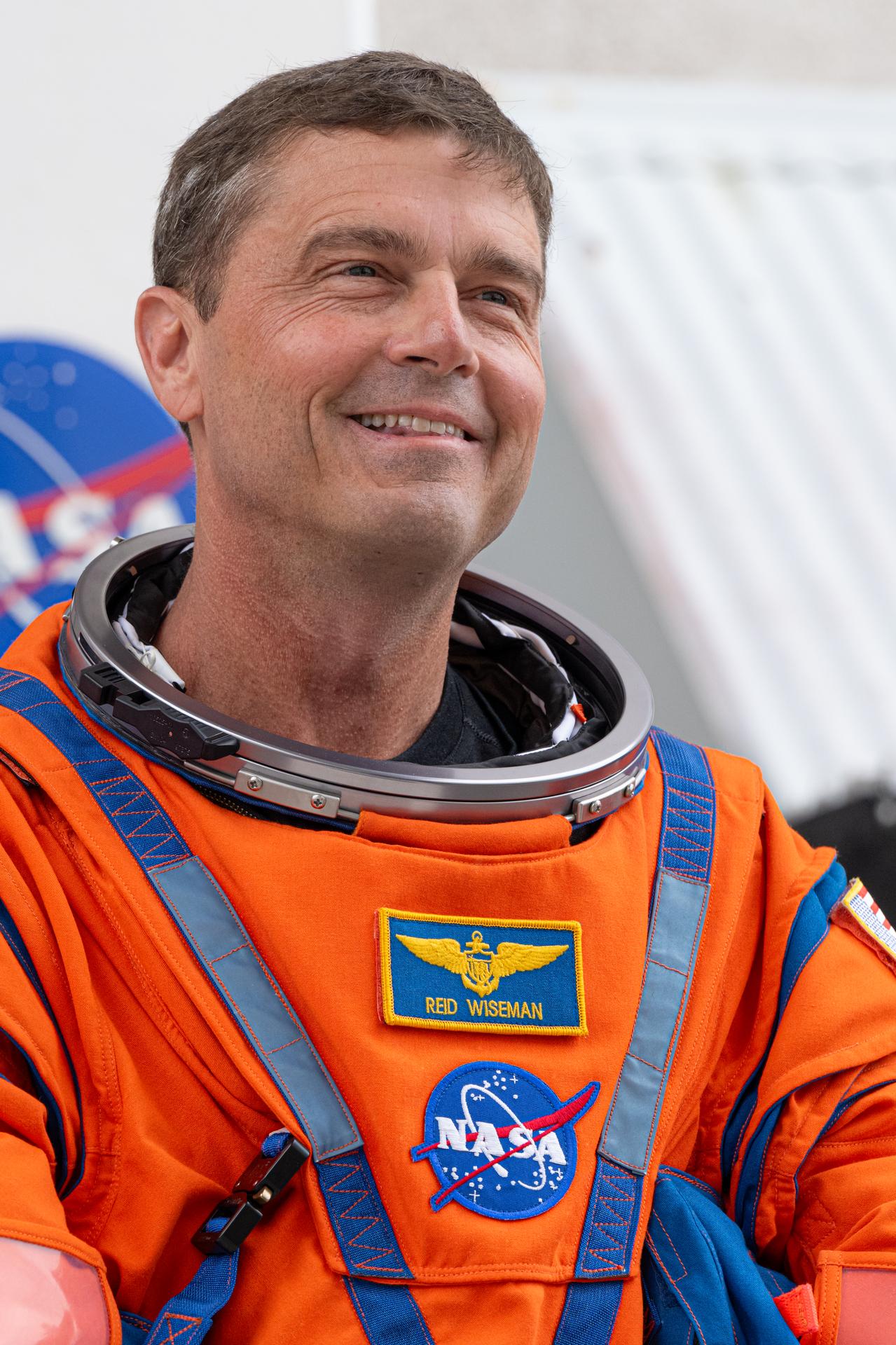
NASA astronaut Reid Wiseman prepares to depart the Neil A. Armstrong Operations and Checkout Building for Launch Complex 39B at the agency’s Kennedy Space Center in Florida to board NASA’s Artemis II SLS (Space Launch System) rocket and Orion spacecraft for the agency’s Artemis II launch on April 1, 2026.
Credit: NASA/John Kraus
As part of NASA’s new Inspiration Tour, Reid Wiseman, NASA astronaut and commander of the agency’s Artemis II mission, will highlight America’s strengths in space exploration and aeronautics innovation at the Baltimore Ravens vs. New Orleans Saints game in Baltimore on Sunday, Sept. 20.
A Baltimore native, Wiseman is a 27-year Navy veteran and NASA astronaut who spent 175 days in space over two missions. On April 1, Wiseman launched from NASA’s Kennedy Space Center in Florida on a SLS (Space Launch System) rocket as part of the Artemis II mission. Wiseman and his fellow Artemis II crew members completed a historic lunar flyby, marking humanity’s return to the vicinity of the Moon for the first time in more than 50 years.
Wiseman also will be available for media interviews inside the stadium at 12:20 p.m. To RSVP for the media availability, please contact Shaneequa Vereen at: shaneequa.y.vereen@nasa.gov.
NASA team members will engage with fans at the agency’s Experience Zone, located outside the stadium from 10 a.m. to 1 p.m. before the game. Fans can learn more about NASA’s return to the Moon through the agency’s Artemis program, enjoy interactive games, and capture photos at a selfie station and with a large, inflatable NASA logo.
With stops across the nation, NASA’s Inspiration Tour convenes academic, industry, and public sector stakeholders to connect the agency with the people, technologies, and organizations that drive American leadership in space.
The tour will culminate in MAX POWER, a public exposition of American air and space innovation, Saturday, Nov. 7, and Sunday, Nov. 8, on and near the agency’s Kennedy Space Center in Florida. Held in honor of America’s historic 250th anniversary, the multi-day, family-friendly event will showcase the next-generation aircraft, spacecraft, autonomous vehicles, and technologies that will help define the future of transportation in air and space.
For more information about MAX POWER and the agency’s missions, visit:
Tech CEOs banding together is an old ruse recycled from corporate America to get a pass from antitrust laws
Anthropic’s Dario Amodei is not the first corporate CEO to suggest that excessive competition is driving the world to some socially undesirable outcome.
The safety breach disclosed by OpenAI after a swarm of its agents coordinated to breach their supposedly secure sandbox, get on the Internet and hack AI platform Hugging Face, warrants urgent action. It demonstrated the ease with which the technology can evade human control and gave concrete form to the existential fears about what it could do to humanity if not securely leashed.
Karen Baker runs the Yolo Food Bank in Northern California’s Yolo County, which she describes as the most food-insecure county in the state. When CBS News California Investigates told her, on camera, that California had been sitting on money that belonged to her organisation, she asked one question: was it really hers? It was.
Tens of millions of Americans are in the same position, without a journalist on hand to tell them.
Where the money comes from
Every US state runs an unclaimed property program, which is essentially a lost and found for cash. The National Association of Unclaimed Property Administrators, the body that coordinates those programs across all fifty states, estimates that about one in seven Americans has something waiting. Searching costs nothing.
Nothing glamorous, mostly. Dormant savings accounts, uncashed payroll cheques, utility deposits from a flat someone moved out of in 2009, insurance payouts nobody told the family about, share dividends posted to an address three moves ago, and the contents of safe deposit boxes whose renters died or forgot.
Companies do not get to keep this stuff. State law obliges banks, insurers and other holders to hand it over once an account has gone quiet for a set period, typically three years in California, as the State Controller’s unclaimed property division explains. The state then holds it. There is no deadline to claim, and no fee.
The scale of the pile
California alone is minding about $15 billion in unclaimed property, per the State Controller’s Office, spread across tens of millions of individual records. New York is worse, or better, depending on your perspective: the Office of the New York State Comptroller oversees $19 billion in unclaimed funds, some of it dating back to 1943, and returned $504 million of it in a single fiscal year.
Nationally, the numbers move. NAUPA’s own annual report put total returns at $4.49 billion to Americans in fiscal 2024. That sounds like a lot until you set it against what is still sitting there.
What the states do while they wait
So what happens to the money while it waits to be claimed? In many states, it flows straight into general operations, and the state keeps whatever it earns until someone comes looking.
Citing the California Legislative Analyst’s Office and state budget documents, CBS News reported that unclaimed property is one of California’s top General Fund revenue sources, generating around $1 billion a year, while the state has returned roughly 3.5 per cent of what it holds. The original sum comes back when the owner claims it. The interest does not.
That reporting comes from a single news investigation focused largely on one state, not a national audit.
Washington notices
Sam Liccardo and Mike Lawler agree on very little. Liccardo is a Democrat, Lawler a Republican, and together they have introduced the Safeguarding Americans’ Fairly Earned Retirement Act, which would sharply limit when states can take custody of securities, digital assets and investment accounts. Senator Elizabeth Warren has separately written to NAUPA requesting state-by-state data on how these systems work and how the rules are changing.
Whether any of that passes is anyone’s guess. The databases are already open.
Where the records sit
NAUPA’s search hub links out to every participating state’s official database, alongside MissingMoney.com, the multi-state tool covering 49 states, several Canadian provinces and Puerto Rico. Hawaii runs its own system separately.
Property is reported by the company holding it, which means records often sit in a state the owner left years ago.
Old savings bonds now follow the same route. The Treasury retired its Treasury Hunt tool on 30 September 2025, and unredeemed bonds are handled through state unclaimed property offices instead.
A market has grown up around all this. Private recovery firms, legal in most states, charge a percentage to locate money that sits in the same public databases the states publish for free.
A dollar surrendered to a state in 1994 comes back as a dollar. Not a dollar plus thirty years of compounding, not a dollar adjusted for what groceries cost now, just the dollar. Whoever holds it in the meantime is the only party earning anything.
This article is journalism, not financial or legal advice. Unclaimed property rules, dormancy periods and claims procedures vary by state and change over time. Anyone dealing with a substantial claim, an estate, or a disputed entitlement should consult a qualified professional.

 Login