Num novo vídeo, a Neuralink de Elon Musk mostra como a sua tecnologia de implantes cerebrais já permite que participantes com paralisia controlem cadeiras de rodas elétricas com a mente.
Plagas, sequías y rebeliones: la crisis que estuvo a punto de acabar con Asiria terminó dando origen al primer imperio de la historia. Una tablilla dañada del Museo Británico reescribe un episodio clave de la historia mesopotámica.
TL;DR: Get Keeprix All-in-One Streaming Video Downloader lifetime access for just $95.99 (reg. $159.99) and download videos from your streaming platforms in up to 4K for offline viewing.
Keeprix All-in-One Streaming Video Downloader lets you have that forever for a one-time $95.99 (reg. $159.99); For a one-time payment, you get lifetime access to software that lets you download videos from many of today’s most popular streaming platforms and social media sites for offline playback.
Keeprix supports downloads from services including Netflix, Amazon Prime Video, Disney+, Hulu, Max, Paramount+, YouTube, and TikTok, saving videos in MP4 or MKV formats for easy playback on your own devices. It also supports resolutions up to 4K for compatible content, so your downloads can look just as good offline as they do online.
Beyond downloading, Keeprix includes features that make building a personal media library easier. Queue up multiple videos with batch processing, manage downloads in one place, and enjoy ad-free offline playback whenever it’s convenient.
If you’d rather spend your next flight, commute, or hotel stay watching instead of waiting for a connection, this is how you do it.
Se você pretende desenvolver aplicativos para as plataformas mobile iOS e Android, conheça e veja como instalar o Ionic Framework no CentOS e comece a criar seus apps.
Today, Anthropic rolled out Opus 5, the newest update for the model that has recently become a popular choice for coding and other software development tasks, among other things.
While this is a noteworthy bump for Opus, it doesn't seem to be an Opus 4.5-level breakthrough in agentic coding performance.
Apple is developing an updated MacBook Neo featuring more memory, an upgraded A19 Pro chip, and additional color options as part of a wide-ranging refresh of its entire Mac lineup, according to a Bloomberg News report by Mark Gurman.
The original MacBook Neo, Apple’s budget-friendly entry-level laptop launched in March 2026, quickly became a huge hit. It debuted at $599 (as low as $499 with education pricing) before rising to a $699 starting price amid industry-wide memory cost pressures. Powered by the A18 Pro chip (the first Mac to use an A-series processor typically found in iPhones and iPads), it offered 8GB of unified memory, a 13-inch Liquid Retina display, and vibrant finishes including Silver, Blush, Citrus, and Indigo. Strong demand led to initial sell-outs, and it has been praised for bringing accessible Mac performance and Apple Intelligence features to a lower price point.
The next-generation Neo will address some of the original’s constraints by increasing unified memory — reports indicate a jump to 12GB — and switching to the A19 Pro chip (already used in recent iPhone models). Extra color options will expand on the fun, marketing-friendly palette that helped the first Neo stand out. These upgrades could help offset the recent price increase by delivering better performance and longevity, particularly for AI-related tasks.
This Neo update forms part of a much larger Mac pipeline. Gurman’s reporting indicates Apple plans new versions of nearly every Mac it sells over the next couple of years, driven by surging demand for AI-capable machines. Key elements include:
• An entry-level 14-inch MacBook Pro with the new M6 chip expected this fall (2026).
• Long-awaited iMac refreshes also targeted for fall 2026.
• High-end 14- and 16-inch MacBook Pros featuring OLED displays and touchscreens, powered by M5 Pro and Max chips, eyed for late 2026 or early 2027.
• A MacBook Air refresh that could include its first major redesign in over four years.
• Updated Mac mini models testing M5 Pro and M6 chips, plus Mac Studio variants with M5 Max and Ultra (or later M7 chips), though memory supply constraints tied to the broader AI boom may affect timing.
Industry observers note that ongoing global memory shortages exacerbated by AI server demand have already driven price increases across Apple’s lineup and could influence both availability and pricing of the new models. Apple has also been exploring ways to sustain sales momentum, including a new leasing program.
MacDailyNews Take: The MacBook Neo’s success showed Apple’s willingness to expand downward in the laptop market while defending premium margins higher up. An improved Neo with more memory and a newer chip would further strengthen that position, especially if it retains a competitive price relative to crappy Windows alternatives. Exact release timing for the updated Neo remains unspecified in the reports, but it fits into Apple’s broader push to modernize the Mac range for an AI-driven era.
Please help support MacDailyNews — and enjoy subscriber-only articles, comments, chat, and more — by subscribing to our Substack: macdailynews.substack.com. Thank you!
The Last Person on Earth will bring a different kind of dating experiment to Apple TV, pairing people who appear fundamentally incompatible before sending them to some of the world most romantic and isolated destinations.
Apple announced the eight-episode documentary series with Esther Perel, the bestselling author, psychotherapist and relationship expert known for examining desire, intimacy, infidelity and the tensions inside modern partnerships.
Perel will work with a team of matchmakers and therapists to create pairings that challenge the usual assumptions surrounding compatibility. Rather than finding contestants who share the same interests, routines and preferences, the series will deliberately bring together people who may initially see each other as the last person they would ever choose.
The central question is whether attraction can develop when familiar dating checklists are removed. Apple describes the series as an exploration of whether an unexpected partner can become the person someone ultimately cannot imagine living without.
No premiere date, contestant list or filming locations have been announced.
Image Credit: AppleMagazine
The Last Person on Earth Challenges Compatibility
The Last Person on Earth enters a crowded dating television market with a premise that rejects one of the most common promises made by matchmaking services: that compatibility can be predicted through similarity.
Dating apps routinely organize potential relationships through age, location, interests, lifestyle preferences, political beliefs and other personal filters. The process can help users avoid obvious conflicts, but it can also create increasingly narrow definitions of who deserves consideration.
Perel has frequently argued that desire does not always emerge from familiarity. Attraction can depend on difference, curiosity and the discovery of qualities that were not included on a checklist.
The Apple TV series turns that idea into a structured experiment. Participants will meet someone who appears to contradict their expectations before traveling together to a remote setting where ordinary distractions and familiar support systems may be limited.
That environment creates immediate dramatic possibilities. A beautiful destination can make a first connection feel unusually intense, but isolation can also expose differences that would remain hidden during short dates in familiar surroundings.
The presence of therapists and matchmakers suggests that the series will examine those reactions rather than presenting every disagreement as entertainment. Perel can help participants distinguish between genuine incompatibility, defensive habits and discomfort created by encountering someone outside their usual pattern.
The experiment does not promise that every opposite pairing will succeed. Difference can produce curiosity, but it can also reveal conflicts involving values, communication, life goals or emotional availability.
The more revealing outcome may be whether participants leave with a broader understanding of attraction, even when the relationship itself does not continue.
Esther Perel Brings a Different Voice to Dating TV
Perel gives the series a more analytical foundation than the competition-driven structure used by many dating programs.
Her books Mating in Captivity and The State of Affairs examine the contradictions surrounding commitment, desire and personal freedom. She also hosts the podcasts Where Should We Begin? and How Work, presenting conversations that explore relationships without reducing complicated behavior to simple villains and heroes.
That background may help The Last Person on Earth avoid familiar reality television shortcuts. Dating shows often depend on rapid attraction, artificial scarcity and public rejection. Contestants compete for one person, choose partners through brief impressions or make long-term commitments before they have experienced ordinary life together.
The new series begins with a different source of tension. Participants are not being told that a seemingly perfect match has been selected. They are being asked to question why someone who appears wrong may deserve a closer look.
Perel describes the project as an invitation to move beyond what feels familiar or safe. Her involvement also raises expectations that the series will explore how participants construct their preferences.
A person may insist on dating only someone with a certain career, personality or social style without understanding where that requirement originated. Some preferences protect legitimate needs. Others may repeat an old relationship pattern or prevent vulnerability by eliminating anyone capable of creating uncertainty.
The matchmakers and therapists can examine those distinctions before, during and after the trip. Their role could become particularly valuable when participants confuse immediate comfort with long-term suitability or mistake tension for romantic chemistry.
Apple has not explained how long each pairing will remain together, whether several couples will appear in each episode or how the experiment will determine its final outcomes.
Image Source: Google
Remote Destinations Change the Dating Environment
Sending couples to romantic and remote destinations adds more than scenery.
Modern dating frequently develops through phones, messaging, social media profiles and quick meetings fitted around work schedules. Participants may arrive with established habits for checking other options, retreating into digital distractions or ending contact before uncertainty has time to become meaningful.
A remote journey removes part of that structure. Two people must spend sustained time together, make decisions and respond to unfamiliar situations without immediately returning to separate routines.
Travel can accelerate intimacy because it creates shared memories and reveals behavior under pressure. Delays, unfamiliar environments, fatigue and practical disagreements may show more than a polished restaurant conversation.
The destinations may also create a misleading sense of closeness. A relationship formed in an exceptional setting still needs to survive ordinary responsibilities, geography, work and family expectations after the trip ends.
The documentary format gives Apple an opportunity to follow that transition rather than ending with a dramatic choice at the destination. Whether the series continues documenting the couples after they return home has not been disclosed.
The title adds another layer to the concept. The “last person” can mean the least expected match, but it also reflects the anxiety surrounding modern dating. A growing number of people describe exhaustion with apps, repeated disappointment and the feeling that suitable partners are disappearing.
Apple links the experiment to rising social isolation and polarization. People increasingly sort themselves into cultural, political and lifestyle groups, while digital systems learn to reinforce existing preferences.
A relationship series built around difference can test whether those divisions remain as rigid when two people encounter each other as individuals rather than profiles representing opposing categories.
Unscripted Relationships
The eight-episode order gives the production enough space to develop several pairings without extending the experiment indefinitely. Its success will depend on whether the participants receive room to behave naturally or are pushed toward the exaggerated conflict expected from conventional dating television.
Perel provides the series with a promising tension: lasting relationships require genuine compatibility, yet attraction can disappear when every element feels predictable. The challenge is not proving that opposites always belong together. It is discovering which differences create possibility and which ones should remain deal-breakers.
La arqueología encuentra en Madrid la huella ósea más antigua de la equitación en España. Científicos españoles combinan radiología, TC e isótopos dentales para demostrar que, hace 3.000 años, ya se domaban y montaban caballos en la Meseta.
This to me is proof that Apple leadership is suffering from cognitive dissonance over their slide into advertising. They’re conflating cause and effect. The Apple brand stands for high-quality superior user experiences because the devices and software Apple makes traditionally deliver high-quality superior user experiences. The work Apple ships is what makes the brand what it is. But now they’re stricken with the mindset that it’s the Apple brand that makes something a high-quality superior experience.
[…]
If you refuse to admit that the ads make these services worse, you also can’t admit that there’s a reason to offer an ad-free experience. So the thinking is something like “Apple always focuses on the user experience, and never deliberately makes the user experience worse. Therefore, if an Apple service shows ads, those ads are high quality and don’t detract from the quality of the product or the experience of using it. Therefore, there’s no reason to offer users a paid ad-free tier, because there’s no reason to want to avoid Apple’s ads.”
What a brand stands for can change over time. It’s eventually determined by the products, not the mantras.
“It just works.”
“A thousand no’s for every yes.”
“What happens on your iPhone, stays on your iPhone.”
I feel bad admitting it, because some of my friends are betting on iAd revenue to feed their family, but I’m just not on board with Apple running an advertising network. I don’t want to see ads in my apps, and I don’t want Apple to ever lose even a little of what it means to be a product-driven company.
The whole thing is funny because at a fundamental level we all just know in our bones that Apple never even considered putting “Intel Inside” stickers on Macs.
[…]
Apple still treats its hardware with that level of respect. With reverence. iPhones don’t even say “iPhone” on the hardware. No model or serial numbers. No small print. Just an Apple logo on the back.
[…]
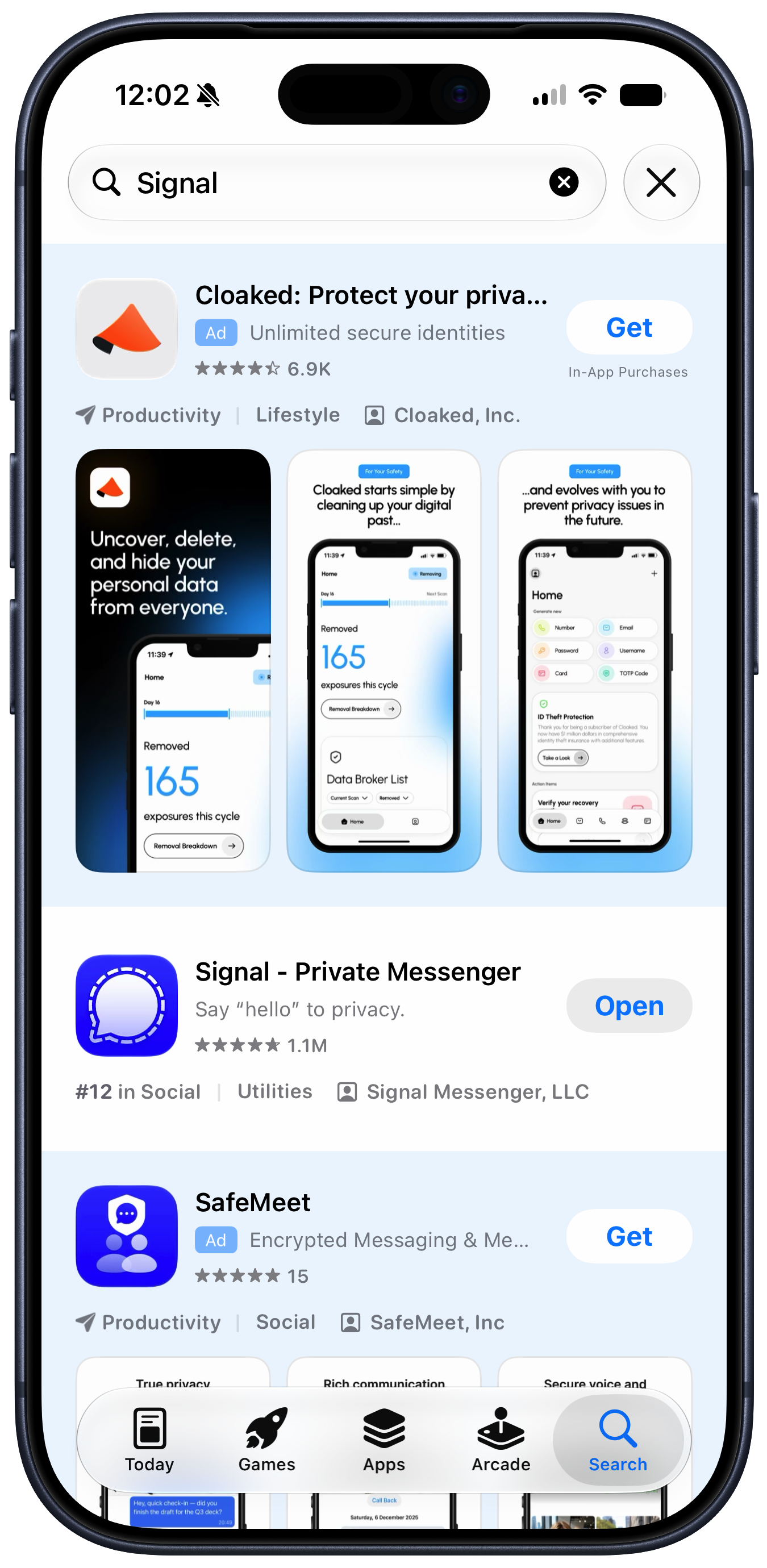
Putting themselves in customers’ shoes today, how many ads do Apple’s executives want stuck in the results when they search for an app in the App Store? We know the honest answer. But the answer evidenced by the actual App Store is “Two really big ones, including one in the first spot.”
While Apple can spin adding ads to Apple Maps as a revolutionary new way for businesses to be discovered, it’s telling that its initial announcement was hidden inside a press release about an entirely different product, and introduced as “Enhanced Discoverability in Apple Maps.” Those choices show that this isn’t something Apple is actually proud of—and that the people in charge of communicating and explaining Apple’s decisions to the world are at odds with those who are making the decisions about expanding revenue.
[…]
To this day, you’re confronted with an ad for Creator Studio every time you create a new document in those apps, and their default toolbars contain buttons that won’t work unless you subscribe to the bundle. As a result, Apple has essentially turned its free productivity suite—software that was designed to enhance the inherent value of Apple’s products—into a freemium package with upsell to a creative professional subscription bundle that’s irrelevant (and a terrible value!) for most of its existing users.
[…]
There are many more examples. Using notifications to promote subscriptions and badging the Settings app to push AppleCare plans are among the ways Apple has chosen to intervene in the user experience to drive revenue. I’m actually not opposed to the idea that Apple should communicate opportunities for its customers to get more out of their devices—but it should be careful not to cross the line into actively annoying those customers. If someone doesn’t want to see what you offer, you need to accept that and go away—not keep needling them. Apple often falls on the wrong side of that line.
[…]
It makes me wonder if the people making these decisions at Apple have lost track of the Apple brand and what it stands for.
What Snell’s column makes clear is that the incremental revenue Apple is gaining from putting shitty ads in its software comes at a price. They’re withdrawals from Apple’s brand equity. And I would argue that the value they’re detracting from the brand far out-values the dollar amount they’d padding to Apple’s bottom line.
[…]
If your competitors’ stores all smell like dogshit, don’t aim to have the store that smells the least like shit. Aim to have a store that smells pristine. “Our stores only carry a vague whiff of dogshit” is not insanely great.
The people haven’t changed, but Apple has. Strong leaders inevitably shape the personality — the spirit — of organizations over time. Apple in 2011 was peak Steve Jobs Apple. Apple in 2026 is peak Tim Cook Apple. But it was Cook who popularized the “you’re not the customer, you’re the product” argument against “free with ads” online services. But that was in 2014.
“Slippery slope” is a perfect term. But I wanted to add something here. In my experience, in the realm of UI, there is no middle notch. I’ve seen it time and time again… the moment you open the door to One, Infinity starts exerting its pull[…]
I HATE, HATE, HATE having ads pop up when I’m trying to do something else. It’s bad enough on Web sites where at least they have the excuse of having to make money some how but it rises to intolerable when they put them up on a device I’ve already paid for.
The annoyance is reason enough to dislike Apple’s ads but for me the worst thing is that they’re corrupting and inevitably lead to the user being replaced by the advertiser as the customer.
This instruction is a fever dream of three weird things in sequence:
What on earth is “QuickTime”?
I am recording with a player?
Why can’t I choose the option [“New Screen Recording”] that describes exactly what I want to do?
[…]
It’s noticing this kind of complexity, places where an easy way was chosen, design debt accumulated, and things got simply too weird. Apple allowed three weird things to accumulate here.
It makes sense in terms of the history and how the technology works, but from a clean slate one might expect this functionality to be in the Screenshot app, Screen Sharing, iPhone Mirroring, or perhaps even Finder.
De acordo com a Agência para a Reforma Tecnológica do Estado (ARTE), a Chave Móvel Digital “tem vindo a crescer de forma sustentada desde 2018”. 2025 foi o ano com mais adesões à CMD, e 2026 já soma quase 1,5
milhões.
A report by security developers Talal Haj Bakry and Tommy Mysk explains a new bug found in macOS that sounds scary. In a post titled “Silent Replacement of Trusted macOS App Executables,” the researchers describe a security vulnerability that allows an attacker to “secretly replace trusted apps you already have installed from the web with malicious versions.” However, it requires the attacker to jump through so many hoops it’s almost impossible to see any Mac ever being infected.
In simple terms, the bug allows an attacker to bypass macOS’s ability to protect apps from being tampered with. The attack itself involves deleting the app, then copying an altered version of the app to the Mac that has been archived as a tar file. When the app is unarchived, macOS does not detect that the app is a tampered version. Eventually, the user sees the app, thinking it’s a proper version, launches it, and activates the malware.
However, for an attacker to copy the tar file to the Mac, they need access to the machine to delete the authentic app that’s already installed. The attacker needs to physically access the Mac and be able to log in, or they’d have to perform some involved social engineering to persuade the user to perform the necessary tasks.
Bakry and Mysk said they “accidentally” discovered the bug and reported it to Apple. “Apple concluded that the reported behaviour does not constitute a security issue,” said Bakry and Mysk, who also created a video explaining their findings.
How to protect yourself from malware
The easiest way to protect yourself from malware is to avoid downloading software from unfamiliar download sites. Never open links in emails or texts you receive from unknown and unexpected sources. If you get a message that looks like it is from an entity that you do business with, check the sender’s email address and inspect the URL carefully. If you see a link or button, you can Control-click it, select Copy Link Address, and then paste it into a text editor to see the actual URL to check it there.
Apple has vetted software in the Mac App Store, and it is the safest way to get apps. If you prefer not to patronize the Mac App Store, then buy software directly from the developer and their website. If you insist on using cracked software, you will always risk malware exposure.

 Login