❌

Normal view

Whisper and SpeechAnalyzer

22 July 2026 at 21:34

Om Malik (2023):

One of the key advantages of MacWhisper, as it utilizes the Whisper technology, is its superior accuracy in transcriptions compared to other services I have used. I was an early adopter of Rev.com and eventually switched to Otter.ai, for which I paid approximately $100/year. However, I have since canceled my subscription.

[…]

After comparing the audio transcripts from MacWhisper and Otter, I found that while Otter’s formatting is superior, there is hardly any difference in the transcriptions. I started with the free model, which was sufficient for my needs, and eventually upgraded to the large models. Nowadays, I primarily use MacWhisper to transcribe my voice memos, which I then import into Lex.Page.

Bon Adamson:

Whisper, which is made by OpenAI, has the distinct advantage of allowing you to transcribe audio in almost any language you may ever need to. For the time being, Otter can only transcribe English. The benefits of better accuracy and accurate punctuation that the service already holds over Siri hold up across other languages as well. If you’re looking to transcribe non-English audio accurately, Whisper is definitely the best option available on Mac.

Dan Moren:

By taking advantage of OpenAI’s Whisper framework, Audio Hijack can now take any audio it’s recording and generate a text transcript. While this process was possible before—see Jason’s lengthy post about his workflow—it required a lot of fiddling and several different tools to accomplish; it’s certainly a lot easier to simply drop Audio Hijack’s block into your existing session. If you record multiple sources, it can even appropriately label each one—though if you record multiple people via one input, say the other end of a Zoom call, it can’t distinguish between the various participants.

Inscribe (2026, Hacker News):

Apple’s new SpeechAnalyzer is the most accurate on-device speech engine we tested. It beat every Whisper model we ship, including Whisper Small, on both the clean and the noisy half of LibriSpeech, while running roughly three times faster than Small. And the API it replaces, SFSpeechRecognizer, came last on clean speech: behind even Whisper Tiny, a 40MB model.

[…]

The new API cuts word error rate by 3.5 to 4x on the same audio: from 9.02% to 2.12% on clean speech, and from 16.25% to 4.56% on noisy speech. There is no accuracy trade-off to weigh; the new API wins everywhere we measured, and it produces punctuated, cased text where the legacy engine’s output is rougher.

[…]

All five engines ran comfortably faster than real time: between roughly 12x and 40x on the M2 Pro, meaning an hour of audio transcribes in about 1.5 to 5 minutes on-device. SpeechAnalyzer was about 3x faster than Whisper Small per second of audio while beating it on accuracy.

Yuki:

SpeechAnalyzer’s ReportingOption.fastResults reads like a knob you’d reach for when you want to trade power for latency. That framing is what cost me the afternoon.

[…]

If a recording matters — and in a notes app, a lost meeting is the worst thing that can happen to a user — then the container you write while recording has to be PCM in CAF. Not m4a, and not AAC-in-CAF either.

[…]

AVAudioEngine’s inputNode silently ignores your device selection

[…]

I wanted summarization to run on-device. Everything else in Nib’s transcription path does, the audio never leaves the machine, and it would have been a much cleaner story to tell.

But 4,096 tokens for the Foundation Models isn’t enough.

Previously:

Apple Park: Designed to Isolate

21 July 2026 at 21:29

Malcolm Crawford (Mastodon):

The open-plan floors make it hard to concentrate. The building is so large that getting from one meeting to the next eats real time out of the day. It’s common for people to run meetings with colleagues over Webex — colleagues on the same campus, sometimes no more than two hundred yards away.

Ironically, Apple Park replaced a campus that did far better on the same measure without ever trying to. Infinite Loop produced far more of the accidental, cross-team contact Apple Park was explicitly built to create. Working out why starts with what Infinite Loop got right by accident. It continues with what the research on office proximity says about why that kind of thing happens at all. And it ends with what Apple Park could become instead — including a version of the fix Apple already trusts enough to run for a hundred people a year.

[…]

There’s no obvious focal point for the whole site — most sections have their own sitting area and their own coffee bar, but nothing plays the role Caffè Macs and the IL1 coffee bar played together at Infinite Loop. Caffè Macs at Apple Park seats a thousand people and feels built for throughput, not conversation. Everything is organised per-segment rather than around a shared centre, which is convenient for the people in that segment and useless for the discovery-by-accident that made the old campus work.

[…]

By multiple accounts from people who were there during design and construction, the site was flagged as under-provisioned for meetings and conferences before it even opened.

Via Jason Anthony Guy:

Apple Park is a beautiful structure, but is not terribly conducive to focused or collaborative work. Even as an occasional visitor I found it overwhelming. Employees sit shoulder to shoulder, voices bounce off and bleed through glass walls, and privacy is a virtual impossibility. My friends and colleagues who worked there regularly found it difficult to be productive.

I worked in Infinite Loop (Building 3, 2nd floor) for thirteen years (right below Developer Publications, where Malcolm spent a good portion of his Apple career). I loved IL because its design made serendipitous encounters easy. Whether it was sitting outside Caffè Macs or in the IL 1 Atrium, I would inevitably bump into someone and have a conversation that furthered an in-flight project, sparked something new, or simply reinforced the social ties that bind colleagues.

It helped that at that time, Apple had perhaps 10,000 employees, most of whom were in or near IL. After iPhone came about and IL started getting locked down, much of the natural collaboration dissipated, disappearing behind badged doors and disclosures.

Ken McLeod:

IL provided a place to focus on your work[1], as well as seating spaces that are out of the flow of traffic where you can have an informal meeting[2]. At AP, every collaborative space is effectively in the middle of a hallway. That turns out to be enormously distracting, both to you and to those people trying to work in the glass bullpen right next to it.

[1] before all cubicles and offices became multi-person shared spaces

[2] before all those spaces were filled in with more offices

Helge Heß:

“The IL1 atrium really was the crossroads of the company in those days” I really don’t think that this is true literally by any means. Assuming “those days” overlap with the time I’ve been there (pre Park). The XFs in IL have been extremely scarce. IL was way too small and overloaded, I’d actually say it was very similar to Apple Park. No one really wanted to work there in those tiny offices with multiple people 🤷‍♀️

Steve Hayman:

I loved the IL1 atrium. I’d sit there and hope that someone like MMalc would wander by, and they often did. It was a real destination for field people who didn’t get to visit the mothership very often. I miss that. AP had nothing like it.

Eric Schwarz:

I think of my days in college—most dorms residence halls were not air conditioned, so at the end of August, you had to open your window (often to place a box fan) and door to create some airflow. People walking through the building would meet by chance. Newer buildings tended to be less lively and more like a hotel—all the doors closed and rarely much activity. Through renovations, most of the buildings have had air conditioning added, dropping those interactions over the years.

Previously:

Update (2026-07-22): Dr. Drang:

As you may know, the Lumon Industries building that Mark, Helly, Irving, and Dylan work in is a former Bell Labs facility in Holmdel, New Jersey. I first learned about the building several years ago, when I read Jon Gertner’s excellent history of The Labs, The Idea Factory. It’s a distinctive place designed by Eero Saarinen in the early 60s.

Bell Labs was known for the fruitful collaboration of its researchers, often started through chance meetings in the hallways of other Bell Labs facilities. The new Holmdel building was supposed to further that sort of teamwork, but things didn’t work out as planned.

macintog:

I worked in IL1 for over a decade. The day I saw the open-plan spaceship, I knew I would never set foot inside. There are more rewarding ways to work in a barn.

Apple Financial Statements: Products vs. Services

21 July 2026 at 21:27

John Gruber (Mastodon, 2):

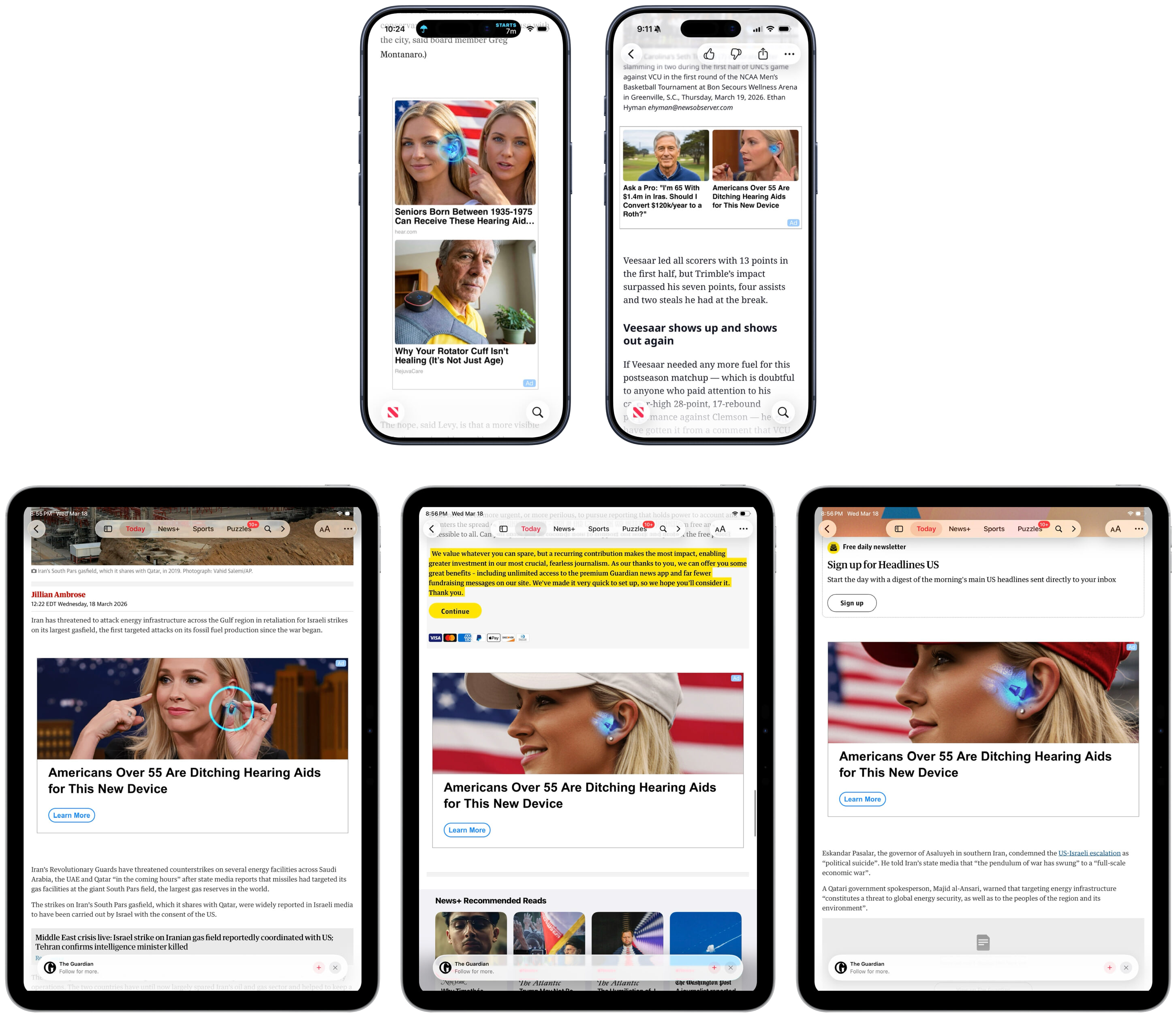
Some of [Cook’s letter] remains true, but has lost some truthiness — and truthiness matters. But some of it is no longer true, period. It’s no longer just “one small part” of Apple’s business that serves advertisers. Here in 2026, search results in the App Store not only show paid ads — frequently for casinos — but the search results are visually dominated by paid ads now that Apple has added a second ad to results. Apple News+ is a paid subscription that offers a genuinely great value for the number of paywalled publishers whose content it includes, but articles on the News app tend to include the weirdest AI-generated ads on the Internet. (How many young blond women am I supposed to believe need hearing aids?) And — at this writing, still “coming soon” — Apple is launching ads on Apple Maps. Apple Maps remains free of charge to use, so according to Tim Cook, we’re not the customer. We’re the product. Or, if you prefer, our frustration is the product.

[…]

The ratio of ads to organic results in App Store search — especially when measured in screen area — is clearly not aligned with Cook’s 2014 statement that “Our software and services are designed to make our devices better. Plain and simple.” Obviously not. App Store search today is designed primarily to generate more revenue for Apple. That’s not criminal, but it’s a change.

[…]

What gave Tim Cook’s privacy letter heft in 2014 wasn’t just the clarity of its plain language, but the fact that you didn’t have to take his word for it that the ads Apple showed you respected your privacy, because Apple didn’t show you ads in 2014. Apple today can’t say that.

[…]

John Ternus should return Apple’s privacy policy to its 2014 clarity. The trust Apple would earn from such a move would far out-value whatever revenue these ads pad to their already hefty and ever-increasing quarterly Services numbers.

I wish that were the case, but I fear this is kind of a Hotelling’s Law situation, where Apple can get most of the benefit by being just slightly better on this axis. Where else do its customers have to go?

Jeff Johnson (Mastodon):

In the second fiscal quarter of 2018, services generated $9 billion in revenue (net sales), whereas in Q2 2026, that amount had grown to $31 billion! In this blog post, I want to focus on understanding the relative financial importance of products and services for Apple.

[…]

In 2025, services were 42% of Apple gross margin. How does 26% of net sales become 42% of gross margin? The explanation is that services have a much lower cost of sales. The products gross margin was 37% of products net sales, while the services gross margin was an astonishing 75% of services net sales. In other words, Apple services are almost pure profit!

Does this 75% account for TV and movie production costs?

With persistent general inflation, consumers do not have unlimited money to spend on Apple products. At least in the near future, it’s reasonable to question how much further room is available for growth in profits from Apple products. To satisfy the demands of investors, Apple executives including CEO-elect John Ternus may be forced to rely even more than before on growth in services, which do not face as much pressure on cost of sales as hardware products.

Previously:

Golden Gate Squircle Jail

16 July 2026 at 20:43

Paul Kafasis:

With last year’s release of MacOS 26 (Tahoe), Apple made a mess of app icons. In the first betas of MacOS 27 (Golden Gate), however, there are signs of a turnaround. We’re urging Apple to continue making improvements, by restoring the ability for MacOS app icons to have distinct shapes.

[…]

After decades of beautiful, memorable Mac icons in varying shapes, Tahoe flattened personality to obtain bland uniformity. The platform is worse for it.

Past icons weren’t just more expressive. They were also more usable. Having distinct shapes provided a useful way to tell icons apart. Tahoe eliminates that cue by forcing everything into the same squircle, leaving color as the primary way to tell icons apart at a glance.

Jason Snell:

Kafasis makes the important point that uniform shapes make it more difficult for users, especially those with vision issues including color deficiency, to differentiate between icons.

John Siracusa:

Squircle Jail is the worst design-related thing Apple has ever done to Mac developers, and probably the worst icon-related thing it has ever done, period. Incredibly developer-hostile.

If squircled icons are actually better, then let that design win in the market. That’s how we transitioned from the classic Mac OS icon style to the more photorealistic Mac OS X icon style. Developers adopted it because they wanted to, and because users desired it.

John Gruber (Mastodon):

The squircles, I will point out, are not in and of themselves the problem. The problem would be the same with any mandated shape, like, e.g., VisionOS’s circles.

[…]

I can’t think of any other design crime Apple has ever foisted on Mac developers that I’d argue (with Siracusa) was worse.

[…]

It’s like Apple decided every single one of its own apps must wear a stupid-looking hat, and they put those stupid-looking hats on third-party apps too, whether the developers of those apps want them or not. Scratch that. Not hats but helmets.

[…]

Just the mere silhouette of the old Keynote icon is more recognizable, and thus more iconic, than any icon on any platform from Apple today.

Jeff Johnson:

The traffic sign analogy hits me personally, because the StopTheMadness icon used to be shaped like a stop sign, but I was practically forced into making it a generic road sign.

Gus Mueller:

I get why Apple did it, but I think it’s completely wrong for the Mac.

Marcin Wichary:

On his blog, Jim Nielsen writes how Apple filed away so much expression by forcing rigid icon bureaucracy in macOS. Nielsen focuses mostly on distinctiveness; previously, you could make the icon unique by its general shape or the shape of its contents, but one of these two levers has now been taken away[…]

[…]

However, one also can’t help but notice how ugly and amateurish the Creator Studio icons are, so it all feels absolutely like a net negative – the new system took something away and the proposed replacement feels low quality[…]

Rui Carmo:

I, too, find the squircles aesthetically offensive and utterly pointless.

[…]

The part that genuinely breaks my brain, though, is that I now find icons on Linux more distinctive than on macOS, which would be impossible for my ten-year-ago self to believe. The platform that built its reputation on craft and visual identity has spent a year sanding it off, while the one everyone used to mock for its inconsistency is where individuality survives.

Jeff Johnson:

The subliminal, Orwellian message of the squircle jail is that all software is subservient to Apple, merely accessories to Apple devices, interchangeable cogs in the machine.

Mario Guzmán:

Had to grab the rest of the icons from #MacOSX Leopard. Gosh, they’re so, so pretty. So finely crafted. Gorgeous. Love it.

Dr. Drang:

I agree, but Apple’s 50th anniversary has gotten me thinking a lot lately about the early days of the Mac, so it’s only natural that my mind shifted to the highly constrained icons Mac applications had back then.

[…]

Many of the complaints about squircle jail are about the loss of icon elements that “stick out” from the rest of the design. As you can see, this idea was there from the very start; the hands stick out from the tilted rectangles.

John Gruber:

I never loved the hand on these icons. It felt too uniform. It functioned like a “this is an application” badge, but such a badge never felt necessary to me.

[…]

I think it’s less that Apple gave up on them and more that it came into focus that the “hand holding a pen over a diamond-shaped document” convention was intended for document-based apps. It signified “This is a creative tool that you use to create documents”. Apps that weren’t about creating document files — like Disk First Aid and Font/DA Mover — got different icons. Font/DA Mover’s truck icon in System 2 signified that you use this tool to move things. Disk First Aid’s ambulance was an obvious metaphor for repairing something unwell.

[…]

But the main thing about the “hand holding pen over diamond” convention was that it was only ever a convention.

John Gruber (Mastodon):

(a) I don’t think this is a good mandate for iOS either;

(b) it was always so for iOS, though, so it’s not like Apple has ever taken away rich creative icon shapes on the platform;

(c) MacOS is a far richer and more precise environment than iOS.

[…]

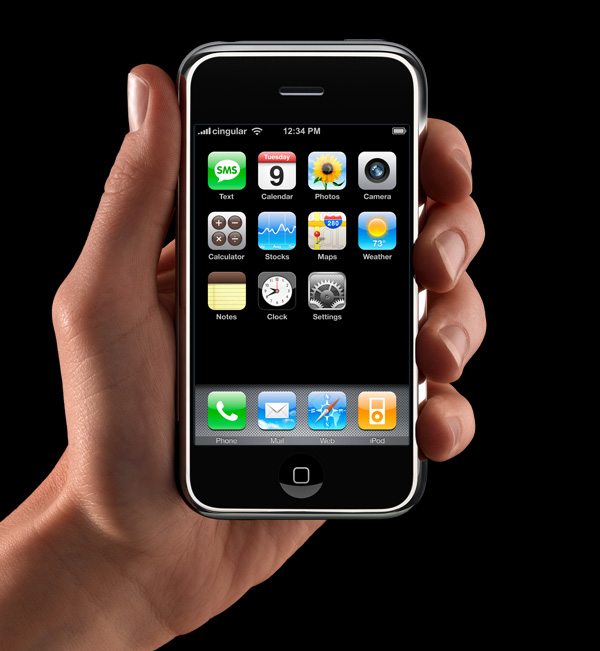
App icons on the iOS home screen are effectively simple buttons. I think it’s rather obvious that’s why they have had that squircle/roundsquare shape ever since the iPhone was announced in January 2007 (source). They’re one-tap launchers. App icons in MacOS are not mere buttons. You can drag them, move them, and drop things on them. You click them to select, and double-click to launch. They are richer objects that deserve a richer visual vocabulary. iOS is a world meant for fat-tipped Magic Markers and blunt safety scissors. MacOS is a world meant to support fine-tipped drafting pens and precision razor-sharp X-ACTO knives.

Louie Mantia (Mastodon):

While developers have submitted full-bleed square images for iOS app icons since 2008, for these new squircle icons in macOS 11, Apple provided a template to compose app icons in an image editing tool like Photoshop, with full control over the canvas beyond the suggested—but not required—squircle. This template made it easy-ish for designers to compose macOS app icons that were identical to or synonymous with an iOS app icon, while leaving the door open to continue using arbitrarily-shaped app icons on macOS.

[…]

The second type of Squircle Jail is more controversial, because these app icons were specifically drawn with the intention of fitting in. Overriding that intention feels like punishment for having done the right thing. App icons in a style that was recently encouraged by the system are now scaled down and put inside the squircle as if it were a container. Every icon that was utilizing the previous squircle shape suddenly looks much worse than before.

[…]

Instead of taking care to design and develop solutions specifically for Mac and iPhone, newer and bigger companies that don’t only make apps often ship apps with logo icons, rather than app icons. We’ve all seen it.

[…]

I would love if Apple provided a way for designers to poke outside that squircle boundary. Some of my favorite app icons did that. But also some of my least-favorite app icons ignored this shape entirely, when it was used for every system icon in the last five years. Whenever those apps showed up in my Dock, it was like a stain on my shirt I couldn’t get out.

John Gruber:

Ultimately this is what I object to with the squircle mandate. It favors the bottom of the heap by restricting the top. It makes bad icons mediocre but pushes great icons toward mediocrity too. That’s not The Macintosh Way.

Nick Heer:

Mantia touches on all the pragmatic reasons to unify the shape of icons in an operating system, all of which I have considered, and then drops the above paragraphs — and things started to make more sense to me. This is a different way to think about it. This is not a situation where a cleaner looks like a zesty beverage with toxic consequences. The shared general function of these icons does help communicate something and makes them less ambiguous in that sense.

But a broad category of functionality is only part of the story of an icon and — with respect to Mantia’s long and illustrious history of work in this area, and that of co-Parakeeter Luka Grafera — taking away a difference of shape also limits what an icon can communicate. It may not be a cleaning product that looks and is packaged like juice, but imagine if every consumable liquid was in identical bottles with only a different label.

Steve Troughton-Smith:

Louie’s squircle jail post just underscores that the squircle jail benefits 99% of apps, and is better for the platform overall. There is only ever a handful of apps that make great Mac app icons, and a withering number of ‘great Mac app icon designers’ — you can probably only name one or two left in the scene.

Jeff Johnson:

Mantia talks as if it were more important for apps to “belong to the Dock” than to allow Dock users to quickly select the right app in the list. That’s choosing form over functionality.

“The shape of apps is a squircle.” But Mac users already knew those were apps in the Dock!

See also: Accidental Tech Podcast.

Tyler Hall:

If you’re lucky enough to distribute an app outside the Mac App Store, you can break free of squircle jail using NSDockTilePlugIn. It’s not strictly the intended use-case of that API. And it’s not allowed in the Mac App Store, either. But it can solve the problem.

BasicAppleGuy:

If you recognize these icons, it’s probably time to schedule your routine back exam.

Previously:

Update (2026-07-17): Louie Mantia:

But my perspective right now is to be very pragmatic. The decision to mask all icons with squircles is a long-time coming. It was perhaps the most predictable thing to happen in Apple’s history. For 20 years, it’s been leading up to this.

I want to make nice things for macOS, whatever macOS is. And this is what it is.

Roger Wong:

Some of my favorite icons over the years have had interesting shapes, like the truck for Transmit, the vise for Compressor, or the cute bird for Twitteriffic.

[…]

But I also recall clicking some icons and not being able to select them. Why? Because I was inaccurate in my click and instead my cursor landed in the empty space just outside the shape.

[…]

If I recall correctly, developers could use a different mask for the click target to help users out. But I don’t think many did all the time, including Apple, which you can obviously see in the video above.

Louie Mantia:

I don’t want to step on toes regarding your new [StopTheMadness] icon which has great color— but I don’t understand why you elected to abandon the octagon as the outer shape. That’s a choice. You are not forced to abandon it. Why not do something like this?

I like this.

Nick Heer:

Losing some of the artistry in an icon makes it more difficult to distinguish between legitimate and well-crafted Mac apps, and everything else. It is not a perfect proxy, to be sure, and there are some very nice squircle icons. But it is nevertheless a unfortunate change that makes apps of varying levels of quality look more similar.

Apple Foundation Models in appleOS 27

16 June 2026 at 20:35

Apple:

At the heart of this architecture is our third generation of Apple Foundation Models (AFM), a family of five foundation models custom-built in collaboration with Google. These span from on-device models to server-based models running on Private Cloud Compute.

Apple Foundation Models are built to unlock a wide range of helpful experiences for our users, like an entirely new Siri and intelligent tools that make everyday apps smarter and more useful.

Hartley Charlton:

“The amount of the Google Assistant we use is none,” Federighi said, explaining that Apple uses none of the Gemini models deployed to Google’s customers, none of Google’s client-side code, and no Google Search infrastructure as the knowledge backbone.

Federico Viticci:

The cloud models hosted on Private Cloud Compute are interesting: they’re not “Gemini” models; they’re Apple Foundation Models trained using proprietary data via RL, which were then “refined” with data from Google’s “frontier” models.

[…]

I’ve been covering the AFM family of models for a while now, and AFM Core Advanced is one of the most interesting on-device models I’ve read about in a while, especially in the context of model size for mobile devices and built-in multimodality with support for text, images, and audio. I’m very keen to play around with this model and understand how it holds up in practice. I wonder if the new CLI (!) for AFM will let you test this one.

Awni Hannun:

It’s very cool that Apple shipped a 20B parameter on-device.

You can’t put 20B parameters in RAM at any reasonable precision. To make it work they are using pretty exotic architecture by today’s standards.

A small model predicts from the query (or prompt) which experts to load from Nand into RAM. The key distinction from a typical MoE is that you do this once per query and then generate all the tokens with the same experts (instead of switching the experts for every token).

Greg Pierce:

Looks like there’s still a 4K context size on local FoundationModels. Pretty limiting.

Kyle Howells:

Really disappointed SwiftUI’s result builder syntax has infected FoundationModels API too.

How did a million modifier methods become the default way to build APIs?

It’s horrible for discoverability, code completion, documentation.

Steve Troughton-Smith:

FoundationModels is one of the highlights of this WWDC; I think it’s now finally what we hoped we were getting two years ago, and thought we were getting last year (just the models themselves were barely up for it then). I finally feel like I can build features with it, though I really don’t like the Sword of Damocles Apple is holding above Private Cloud Compute and how it can permanently lock you out of using the models forever across all your apps if you hit a download threshold. Poison pill

John Gruber (Mastodon):

These strict limits don’t seem to be getting as much attention as they should. It’s nice that for small developers who meet the above criteria, access to PCC has no cost. But there’s no way (yet?) to buy your way out of these limits.

[…]

The “fewer than 2 million first-time app downloads from any of their apps” restriction is particularly notable. It’s not 2 million installations for apps that are using PCC, but 2 million downloads for any app the developer has ever released.

Chad Podoski:

Is there a real time count somewhere of total lifetime downloads for a developer account, so one can plan if they at risk of the switch tripping? Reminds me of the small business qualifications. I had to try to figure out if an employers developer account was going to exceed the revenue threshold for the year. I was left trying to determine it from sales reports, not to mention sales date versus pay out date confusion. I think I botched the calculation in the end.

Anthropic (Hacker News):

Claude for Foundation Models is a Swift package that makes Claude available as a server-side language model in Apple’s Foundation Models framework. The package conforms Claude to the framework’s LanguageModel protocol, so you drive it with the same LanguageModelSession API you use for Apple’s on-device model: respond(to:), streaming, guided generation, and tool calling all work the same way.

Requests go directly from your app to the Claude API; Apple is not in the request path and does not see prompts or responses. Usage is billed to your Anthropic account at standard API pricing.

Previously:

Update (2026-06-17): Simon B. Støvring:

Apple is literally stopping me from building a brand new app using Private Cloud Compute because I made a successful app a few years ago.

The new app might be a success, or it might be a complete flop. Nobody knows yet.

I would understand it if Apple were to limit developers once an app reaches a certain number of downloads or active users, but that’s not what’s happening here.

Instead, they’re blocking developers before they’ve even had a chance to build and ship the app.

No Siri AI in EU

10 June 2026 at 21:00

Apple (MacRumors):

Unfortunately, due to the Digital Markets Act (DMA), Apple will not be able to ship Siri AI in the European Union with the release of iOS 27 and iPadOS 27. Over the past several months, EU regulators did not accept any of Apple’s proposed solutions to bring Siri AI to the EU while safely supporting other virtual assistants.

[…]

EU users will be able to access Siri AI on macOS 27 and visionOS 27. Developers located in the EU will not be able to test or use the new Siri AI features for their apps on iOS 27, iPadOS 27, and watchOS 27.

[…]

According to EU regulators, the DMA requires Apple to give any AI system nearly unlimited access to a user’s device, as well as the ability to act on that access autonomously without a user’s ongoing visibility and control.

[…]

Apple designed a solution called Trusted System Agent — an intermediary that would allow virtual assistants to safely access the same features and capabilities as Siri AI for devices in the EU. Apple also shared a plan to launch Siri AI in the EU while gradually rolling out this new solution over an 18-month period. The European Commission said no. In fact, the European Commission did not agree to any of Apple’s proposals.

This phrasing is not very clear, perhaps intentionally so. Apple is trying to give the impression that it did all this extra work to meet the DMA’s requirements, and yet the EC rejected its proposals, so it’s their fault Siri AI isn’t shipping in the EU. But it looks like the crux is that the Trusted System Agent is currently vaporware. What the EC rejected is that Apple wanted to be able to ship Siri AI now on the promise of future openness. The TSA would actually be built during this 18-month window of exclusivity. It’s not surprising that the EU would reject that proposal. The App Store doesn’t approve apps that flout the guidelines but promise to comply later. It doesn’t even entertain proposals of the form, “If I built this would it be approved?”

European Commission (via Steve Troughton-Smith, Update: John Gruber, Mastodon):

So first, the decision not to roll out Siri AI in the EU is Apple’s and Apple’s only.

Because absolutely nothing in the DMA prohibits Apple from introducing new products in the EU.

What Apple is however not allowed to do, just like any other gatekeeper, is to close the market.

[…]

Apple simply made a request to the European Commission to be exempted from their interoperability obligations under the DA.

And this for at least 18 months on top of it. Guess what? That’s not an option.

Reuters (Hacker News):

Apple said it detailed its plans for Siri AI to EU regulators six months ago, along with a technical proposal to allow secure ​third-party access to that data.

“In essence, a commission that’s asking us to conduct a very risky experiment on many, ​many, many tens of millions of users,” Greg Joswiak, Apple’s marketing chief, told reporters, “and we only want to ship these capabilities when we can do so safely.”

The EU said not to ship it without the TSA, yet Joswiak spins this as the EU asking Apple to be reckless? And if Apple wanted to ship them safely, why did it stop working on them?

William Gallagher:

Apple spoke of having spent hundreds of thousands of engineering hours on changes to comply with the EU. In the new report, though, Apple now says that it no longer knows what to work on.

So currently none of its engineers are working on adapting Siri AI to meet the EU’s demands.

It seems like Apple isn’t taking this very seriously. They’re more interested in trying to score PR points by blaming the delay on the EC rather than on building something compliant. So I guess the EC was prescient not to grant an exemption based on the promise that they’d follow through with the TSA.

Kyle Howells:

However, do I think Apple should be made to open up that level of system access?

Honestly yes. They are worried about protecting my data. But it’s MINE. Me, the user.

Stick a big privacy prompt, maybe a system settings screen and reboot, but I want access to my data!

We can look to BrowserEngineKit to see how well it works out to introduce a trusted intermediate layer that Apple doesn’t itself rely on. And this seems like a much harder problem.

Kyle Howells:

Yeah, that privacy layer is a stupid [non] starter. “Find the place my friend said we should go swimming and give me directions”

The only way that query can work with an intermediary layer is if the AI asks that layer to do the searching for them and only gets the response back.

Except that basically kills the advantage of LLM agents & instead delegate all the ‘smart’ parts to some dumb on device model Apple makes.

Previously:

Update (2026-06-11): Amy Worrall:

I keep seeing people (usually Americans) confused by where the EU is coming from with Apple and the DMA, eg “how can they care about privacy but also demand AI companies can access your data?”

My read is, the EU’s starting point is that a gatekeeper cannot treat itself as inherently more trustworthy than any other company. So if anyone’s AI can access your data, including Apple’s, it’s not up to the gatekeeper to say “we trust ourselves but don’t trust other companies” and force that on users.

The users should get to choose who they trust. And I think Apple is trying to draw a different line than it says. It worries that AI could be hijacked to steal your passwords and photos. But you can already install apps that manage and access that data. You can also install apps that access your calendar and mail data, and these apps can incorporate AI. Such apps actually get more access than what the EC wants because they must communicate with your servers directly. I would rather let an AI search my downloaded e-mails than read/write to my IMAP server, but Apple is blocking that option. The actual line it’s drawing isn’t that AI can’t access your data but that (aside from iMessage) it can only access it via additional engineering work and additional hoops for users to enter credentials. It seems like what Apple really wants is to make it hard for anyone to compete with Siri.

Update (2026-06-12): Cory Birdsong:

I’m skeptical that Siri AI is even capable of being meaningfully private or secure. As far as I know there is no mitigation for prompt injection, as Matthew Green describes here.

If it has access to private information, is exposed to external input and can access the Internet then how can they meaningfully claim it’s private or secure?

John Gruber:

There’s a lot to unpack here, including more background information — and on-the-record statements — from a briefing Apple held Tuesday that I was invited to at Apple Park.

It’s frustrating that Apple has said so little on the record. They want to communicate that their “offers for compromise have been rejected,” but what exactly did they offer? Personally, I don’t think the TSA would be a very good solution because it would lock in both the limitations of Apple’s technology and their role as a gatekeeper. But Apple did not even say that the EC rejected the idea of the TSA, only that it rejected their proposal to violate the law for 18 months while building it.

But the bottom line is that Apple’s public statements regarding the DMA and the European Commission have never been this strident before.

[…]

Now, they’re a bit more on war footing. There’s a massive gulf between what Apple is willing to do with Siri AI in the EU and what the Commission is demanding from Apple for DMA compliance.

Steve Troughton-Smith:

The European Commission isn’t demanding anything, the law is demanding it. The laws have been in place for several years now, Apple is currently in default of the law on several fronts, and is fighting its existing fines.

When the Chinese government wanted access to user data, Apple complied, but when the EU parliament voted for their citizens to be able to choose how to share their own data, that put Apple on a “war footing.”

David Deller (Reddit):

There is some kind of irony in how Apple isn’t allowing Europe access to the new AI stuff; and meanwhile for the US, Apple is removing the setting for us to opt-out of it, effectively forcing it on us.

That’s how it is these days, huh? Either a government or a giant corporation makes our technology choices for us. We don’t get to choose for ourselves.

Previously:

Update (2026-06-17): John Gruber:

What exactly is the motivation for Apple and Google to engineer entirely separate systems for the EU to bring new features into compliance with the Commission’s broad interpretation of the DMA? Because if Apple doesn’t engineer a DMA-compliant version of Siri AI, iOS users in the EU will ... switch to Android, whose system-level AI was deemed noncompliant by the Commission a few months ago?

I briefly hoped that the DMA would lead to a sort of California effect for software, where products are designed for the stricter (more open, in this case) jurisdiction, and everyone else reaps the benefits, too, because that’s easier for companies than making separate versions of their products. But it turns out that Apple finds it well worth it to feature flag away the EU features it doesn’t want us to have, as well as the ones it doesn’t want to adapt for the DMA.

This doesn’t directly hurt Apple. It doesn’t force Apple to design, engineer, and ship a compliant EU-exclusive version of Siri AI that supports plug-and-play LLM back ends. It only hurts iPhone users who live in the EU, who are stuck with the old dumb version of Siri for the foreseeable future.

This demonstrates a market failure or legislative failure, depending on how you look at it. Both halves of the duopoly are in conflict with the law of the second largest economy in the word. Users will get a worse Siri, but this doesn’t bother Apple enough to do anything about it. Maybe the customers in the EU can be used as a bargaining chip. Neither Apple nor Google is worried that a competitor will come along with a compliant phone to challenge their dominance.

John Gruber:

Here we are two years later and I think the answer is more clear than ever which side of the continental divide is more fun.

Simon B. Støvring:

Gotta admit that as an EU citizen, I feel handicapped when it comes to brainstorming ideas to utilize Foundation Models.

Like, if I were to build a new app around them, it’s difficult to gauge if this is something Siri AI does out of the box when it isn’t available to me.

And unlike Apple, I intend to build software for the entire world.

Jack Wellborn:

Apple is acting out of greed and spite (see their hairbrained fee structures for alternative marketplaces as an example), but also yes, the DMA and enforcement thereof seems like a particularly difficult and capricious regulatory dynamic.

[…]

Those arguing that Apple is acting purely out of spite seem to suggest there is some obvious solution for iPhone Mirroring that would satisfy the interoperability mandate, but they never go into what that obvious solution is because they don’t know. They don’t know because I would guess no one does, not even Apple and certainly not the European Commission.

As far as I can tell, the European Commission doesn’t see it as their responsibility to help gatekeepers design features ahead of time in a way that should be compliant with the DMA. What they want instead is to decide whether or not a given feature runs afoul of the DMA after its released in the EU and presumably after they’ve gotten feedback from third parties.

Wojtek Pietrusiewicz:

If a developer emails Apple and asks if an app idea they have will be approved, they will get told to build it, submit it to the App Store, and see. The EU is the App Store here, and Siri AI is the app. I guess Apple don’t like their own policies.

I sympathize, even though Apple is in a better position than the developer, because it has more resources, because it would only potentially be blocked from shipping in one market, and because it can still sell its product in the EU, just with certain features disabled. Building something that might not be accepted is risky, but if you don’t submit anything that you think would be complaint with the rules, you don’t seem very serious. It’s still unclear to me exactly what Apple’s plan is. Its press release says it “will continue working” on bringing the features to the EU, but its SVP of marketing said in an interview that “none of its engineers are currently working on solutions.” Perhaps this implies that it’s banking on a legal or political solution rather than a technical one.

Update (2026-06-25): Jack Wellborn:

While the relationship between the European Commission and Google tells us nothing about playing ball, it tells us exactly how inconsequential support for alternative marketplaces is when it comes to regulatory scrutiny of integrated features. Apple hasn’t played ball with alternative marketplaces and now its new AI-based features are being withheld from the EU lest they get scrutinized for fines by the European Commission. Google hasn’t had to play ball with alternative marketplaces and now its new AI-based features are either being scrutinized for fines by the European Commission or being withheld lest they also get scrutinized. The European Commission is, rightly so in my opinion, regulating both operating systems equally and regardless of their support for alternative marketplaces.

Manton Reece:

It struck me today what a contrast this is with the rest of the AI world, increasingly connected via MCP. Imagine if Gmail was only accessible to AI on Android phones. If Teams was only accessible from a Windows Surface laptop. That is the kind of environment Apple’s policies create, with data locked into silos and monopolies free to leverage their existing strengths into dominance of new technologies too.

No thanks. Just as I should be able to sideload an app onto my own phone, I should be able to choose whether ChatGPT can access my iMessage history. The world is not going to come crashing down by giving users control of their own data.

Update (2026-07-02): Tim Hardwick:

Apple CEO Tim Cook held “constructive” talks with EU tech chief Henna Virkkunen on Tuesday about releasing Siri AI in the bloc while complying with the bloc’s digital rules, reports the Financial Times ($).

[…]

As for Apple’s proposed Trusted System Agent, a Commission official told the publication its contact with Apple on the idea was limited, and that it lacked a concrete proposal or details on how such an agent would work beyond the general concept. The official claimed Apple “focused on obtaining a green light to delay compliance.”

Update (2026-07-03): Nick Heer:

The DMA has been in effect for nearly four years and there is no reason why either party should be having so much difficulty with this proposal stage. Either the Commission is mischaracterizing Apple’s engagement, or Apple’s representatives need to be far better prepared.

It seems like Apple’s strategy is to encourage its customers to pressure the EU into changing the rules.

Previously:

Siri AI Announced

10 June 2026 at 21:00

Apple (Hacker News):

Siri AI is an entirely new version of Siri deeply integrated into iPhone, iPad, Mac, Apple Watch, and Apple Vision Pro. It can draw on personal context understanding to search across messages, emails, photos, and more, and get things done across apps with even more systemwide app actions. Additionally, Siri AI can answer questions related to the content on a user’s screen or go out to the web to get up-to-date information using broad world knowledge and generate a helpful answer. A dedicated Siri app allows users to revisit a past conversation or kick off a new one — all in one place — and uses iCloud to privately sync conversational history across a user’s products.

Apple (MacRumors, MacStories):

Powered by the next generation of Apple Intelligence, Siri AI is a completely reimagined version of Siri that is more helpful, more capable, and more intelligent. With detailed, engaging responses and natural back-and-forth conversation, Siri AI helps users get more done than ever.

[…]

Siri has been rebuilt from the ground up with powerful AI at its core. It takes full advantage of the bold new architecture for Apple Intelligence, including the next generation of Apple Foundation Models that run on device and on servers using Private Cloud Compute. When Private Cloud Compute is handling users’ requests, their personal data is not stored nor made accessible to Apple or anyone else. Outside experts can continue to verify this privacy promise at any time. Additionally, Siri AI uses the system orchestrator to tap into core capabilities like the Spotlight index and App Toolbox, which work entirely on device to keep users in control of their data.

[…]

For products that support Apple’s most advanced on-device model ever, Siri AI offers even more expressive voices, as well as a major boost in accuracy with systemwide dictation. Users have the ability to customize the expressiveness and pace of Siri’s voice so it’s just right for them. Dictation now captures what users say as polished text with greater precision, automatically handling capitalization, punctuation, and formatting as they speak. With improved speech understanding, users can speak naturally and trust that their words will appear clearly, accurately, and as intended.

I remain uninterested in these more advanced Siri features. They matter in that Apple needs to show that they’re not “behind” and that they can actually deliver on what they announce and advertise. But I don’t find the use cases compelling and wouldn’t trust the results.

If you really care about a particular concert, would you believe Siri about how the tickets work and that it will auto-create a reminder at the right time? Why should I believe that it can figure out whether a particular irregularly shaped object can fit inside an irregularly shaped container when said shapes are probably not even published on the Web? Can it really dig into my e-mail to find the right flight info? An answer without being able to see the sources is not useful. And I certainly don’t want it to pick for itself which vacation photos to send out.

I just want the basic features—from a decade or so ago, like music controls, reminders, and access to my purchases—to work quickly, reliably, and offline to the extent possible. I did not hear anything to suggest that this was a focus. Instead, everyone is celebrating how slow the demos were because that proves they weren’t fake.

Ben Thompson:

It’s actually super important that the Siri demo was kind of slow, because it emphasized it was real. Would be even better if it were live, though.

Mark Gurman:

The other interesting thing to note from the keynote: watching the demos, there is ZERO doubt these are real, recorded demonstrations on live devices. There will be no confusion about what is real or fake like there was at WWDC 2024 and the initial attempt at the new Siri.

John Gruber:

In fact, I think most of them were single takes of multiple demos back-to-back. That’s the way it should be, even when they feel a little slow.

Jonathan Wight:

Who the fuck wears a $4000 VR headset to find out if their boots will fit in their fucking backpack?

THATS the best example they could come up for that feature?

Rob Terrell:

also I wouldn’t trust the answer anyway

Kyle Howells:

These Siri demo’s feel like OpenAI demo’s from a view years ago. However, this is built in to the operating system.

Much like Dropbox vs iCloud, I feel like long term, once it’s good enough Apple will succeed in making AI a “feature” rather than a product.

Simon B. Støvring:

Apple needed to show that they could make a version of Siri that wasn’t three years behind. They didn’t succeed.

Ben Thompson (Hacker News):

And, if your standards are the state of the art in AI circa June 2024, when Apple took their first crack at answering the question, they did quite well.

[…]

What’s fascinating about this specific demo is that it also showed just how far behind Apple is.

[…]

Still, the bubble was strong enough to convince OpenAI to make the exact same mistake Dropbox did: the company somehow convinced itself that it could make enough money selling subscriptions to consumers; Anthropic, meanwhile, realized that it was enterprises who were willing to pay for AI’s massive productivity benefits, even as OpenAI failed to capitalize on their consumer market penetration by refusing to build an advertising product.

This is a long-winded way of saying that I don’t think that Apple’s agentic shortcomings are a big deal, at least for now. Agents help you do work and be more productive, and consumers don’t want to work or care about being productive. What they do want to do is watch short-form video, and an iPhone is simply much better at that than any other device ever will be; in that context, Siri being good enough is enough, and it appears that Apple crossed that bar.

John Gruber:

They need to execute, they need to prove this can scale, and most of all, they need to get third-party apps on board with App Intents and App Schemas. But it seems like they’re doing all of that. This is not a done deal but it is very realistic.

Steve Troughton-Smith:

Siri doesn’t have access to the filesystem or tool-calling, so it’s completely unable to do the kinds of tasks you might easily do with Codex or Claude. It’s a good start, but the state of the art has already dramatically shifted over the past year. The question is will Siri move in this direction, or stick to providing answers from the web?

Will Apple introduce its own distinct Codex-style agentic programming model that can do all this, and work with Xcode? You would hope so…

Aaron Pearce:

Have new Siri now. Siri still can’t do “turn lamp off and turn plug on” in one command.

Joe Rossignol:

The revamped version of Siri that is officially named “Siri AI” will be available to test in the iOS 27, iPadOS 27, macOS 27, and visionOS 27 developer betas starting today, and it is coming to the Apple Watch in a future watchOS 27 beta. “Siri AI” will also be included in the public betas of each platform that are launching in July.

“Siri AI” requires a device that is compatible with Apple Intelligence.

Hartley Charlton:

Apple senior vice president of software engineering Craig Federighi has explained why the company launched a standalone Siri app in iOS 27, after previously characterizing a dedicated chatbot as contrary to its Apple Intelligence strategy.

[…]

“We see Siri not as a separate chatbot, just an unintegrated place you go and chit-chat, but rather as an integral, conversational tool that you use in the moment, deeply integrated into your experience.”

Clear as mud.

ldt:

How to bypass the new Siri waitlist (Mac only)

See also: New Siri Waitlist.

Previously:

Update (2026-06-11): famebot:

…And playlists, contacts, settings and preferences. Peel off the agentic slop bandwagon and focus on core performance, smarter caching, and resilience under adverse network conditions.

Joe Fabisevich:

Love the new Siri, sick.

Update (2026-06-12): Juli Clover has a hands-on video.

Nick Heer:

Though this is a test conducted on the very first version of Siri A.I. from a fixed point in Calgary, it seems to work quite well. So far, it is better than any version of Siri Apple has released yet and, as you can see above, it is almost as good as the original 2010 demo, before Apple acquired the company.

Update (2026-06-16): Riccardo Mori:

On the one hand, if Siri has indeed become this reliable at understanding queries like those demoed so far, it’s indeed impressive. On the other hand, I can’t help but ask myself, once again, whether people at Apple even know how regular people actually use their phones and devices.

Jeff Johnson:

Apple executives downplay and obfuscate the role of Google in Siri AI. The Siri AI announcement didn’t even mention Google or Gemini once! Does anyone actually believe Apple’s BS? The argument seems to be that since Google made a bespoke implementation for Apple, Google is not really involved, and it’s all Apple. Ridiculous.

Jeff Johnson:

It’s really odd to me that Apple is getting so much credit for Google’s work. Siri now “works” to the extent it does because Siri is to a very large extent Gemini, and Apple has wrapped that in a bow.

Apple didn’t “nail” anything. Apple failed at its own internal efforts and was forced to outsource.

This is the advantage of being a platform: you can fail and still win.

Chance Miller (via John Gruber):

Apple’s Siri team, led by Craig Federighi, held a post-WWDC keynote tech talk with members of the press this afternoon to talk through iOS 27 and the new Siri AI.

During the talk, Federighi shared more details about Apple’s collaboration with Google.

Matthew Green (Lobsters):

Apple looks like it will use some combination of Google Gemini models, combined with Google’s Confidential Inference and Apple’s own Private Cloud Compute for private hosting. These systems will process both your queries and evaluate private data from your devices.

[…]

Apple has since “expanded” PCC to encompass Google’s hardware as well. I will confess that I find the details of the new “expanded” PCC just a bit vague. It sounds a lot like Apple is primarily going to rely on Google’s existing confidential compute (running in Google datacenters) to process this data, but they’re bolting on a new layer of technical security to control which models are actually running. In any case: security experts can argue about whether this is good enough to keep Cozy Bear away from your data. What I will grant is that it’s probably good enough to keep Google and Apple from accessing your stuff, which is what most people are worried about in the first place.

So why am I so nervous?

[…]

So far we’ve discussed two adversaries: the misaligned designers of private agents (such as search operators), and the possibility of remote prompt injection attacks. But of course, in any discussion of technical privacy systems we need to talk about the last elephant in the room: your government.

Previously:

JNR Shisha Hookah 70K Puffs Vape Review: A High-Capacity E-Hookah Experience with Modern Features

22 July 2026 at 12:02

The demand for high-capacity disposable vapes continues to grow, with manufacturers introducing products that combine extended lifespan, premium performance, and interactive features. The JNR Shisha Hookah 70K Puffs Vape is one of the latest additions to JNR’s popular Shisha lineup, offering an impressive up to 70,000 puffs, rechargeable convenience, advanced mesh coil technology, and a design inspired by the social experience of traditional hookah.

Positioned between a disposable vape and an electronic hookah device, the JNR Shisha Hookah 70K aims to deliver long-lasting performance while maintaining rich flavor and dense vapor production.

Inspired by Traditional Hookah

Unlike standard disposable vapes, the JNR Shisha Hookah series takes inspiration from traditional hookah culture, offering a direct-to-lung (DTL) vaping experience designed to produce larger clouds and fuller flavor.

The ergonomic body and premium exterior give the device a more sophisticated appearance while remaining portable enough for everyday use.

Its design philosophy focuses on combining the atmosphere of hookah with the convenience of a rechargeable disposable vape.

Up to 70,000 Puffs

The standout specification is its up to 70,000-puff capacity, placing it among the newest generation of ultra-high-capacity vaping devices.

While actual puff count varies depending on individual inhalation style, airflow settings, and usage habits, the large capacity significantly reduces the need for frequent device replacement, making it suitable for adult users seeking extended usage.

Advanced Mesh Coil Technology

Flavor consistency is enhanced through an advanced mesh coil atomization system.

Compared with traditional wire coils, mesh technology offers several benefits:

  • Faster heating
  • More even vaporization
  • Richer flavor reproduction
  • Denser vapor production
  • Improved coil longevity

The result is a smoother vaping experience with consistent performance throughout the device’s lifespan.

Rechargeable Battery with USB Type-C

Supporting the high puff count is a rechargeable high-capacity battery that can be conveniently recharged using a USB Type-C connection.

Type-C charging offers:

  • Faster charging speeds
  • Stable power delivery
  • Greater convenience
  • Longer overall device usability

Rechargeability ensures users can continue using the device until the e-liquid is fully consumed.

Adjustable Airflow

The JNR Shisha Hookah 70K features adjustable airflow, allowing users to customize their draw according to personal preference.

Whether you prefer:

  • A tighter draw for stronger flavor concentration
  • A looser airflow for increased vapor production

the adjustable airflow system provides greater flexibility than fixed-airflow disposable devices.

Smart Display and Interactive Features

Following the trend toward intelligent vaping devices, the JNR Shisha Hookah 70K incorporates a smart display that provides important operating information at a glance.

Depending on the version and market, the display may show:

  • Battery level
  • E-liquid status
  • Charging progress
  • Operating mode

Some JNR Shisha devices also integrate decorative lighting effects and interactive visual elements, further enhancing the overall user experience. Similar features have appeared across JNR’s latest Shisha product family, emphasizing both functionality and aesthetics.

Rich Flavor Selection

JNR is known for offering a wide range of flavor options across its Shisha series.

Depending on regional availability, users may find flavors such as:

  • Double Apple
  • Blueberry Ice
  • Watermelon Ice
  • Grape Ice
  • Strawberry Kiwi
  • Mango Peach
  • Mixed Berry
  • Mint
  • Lemon Lime
  • Tropical Fruit

Flavor availability varies according to local regulations and distributor offerings.

Key Features

  • 60ml Rechargeable Shisha Vape

    ⦁ Up to 70K Puffs

    ⦁ Curved Hookah-Inspired Body

    ⦁ Gradient Finish with Liquid Sand Decoration

    ⦁ Battery & E-liquid Display

    ⦁ Adjustable Airflow Control

    ⦁ 0.38Ω Single Mesh Coil

    ⦁ 1000mAh Battery with Type-C Charging Port

    ⦁ 6mg/ml Nicotine Strength

    ⦁ 20+ Flavors

Pros

  • Extremely long-lasting puff capacity
  • Rich flavor and dense vapor production
  • Rechargeable design extends usability
  • Adjustable airflow allows personalized vaping
  • Smart display improves user convenience
  • Modern premium appearance
  • USB Type-C charging offers fast recharging

Who Should Consider the JNR Shisha Hookah 70K?

This device is well suited for:

  • Adult vapers looking for an ultra-high-capacity disposable vape
  • Users who enjoy direct-to-lung vaping
  • Fans of hookah-inspired flavor and vapor production
  • Those seeking fewer device replacements
  • Users who appreciate interactive features such as smart displays and adjustable airflow

Final Verdict

JNR Shisha Hookah 70K Puffs Vape continues JNR’s expansion of its premium Shisha lineup by combining ultra-high puff capacity, advanced mesh coil technology, USB Type-C rechargeable power, and customizable airflow in a stylish, hookah-inspired design.

As manufacturers increasingly compete on user experience rather than puff count alone, devices like the JNR Shisha Hookah 70K demonstrate how high-capacity disposable vapes are evolving into feature-rich platforms that deliver greater convenience, enhanced performance, and longer service life. For adult vapers seeking a modern e-hookah experience with extended longevity, the JNR Shisha Hookah 70K stands out as an attractive option in the growing ultra-capacity vape category.

The post JNR Shisha Hookah 70K Puffs Vape Review: A High-Capacity E-Hookah Experience with Modern Features appeared first on IGeeKphone China Phone, Tablet PC, VR, RC Drone News, Reviews.

What does Your Processor Look Like? A One-Click guide to Checking your Computer’s CPU Model.

22 July 2026 at 10:33

Your computer’s processor, or CPU, is the brain of your machine. Knowing your CPU model can help you understand your computer’s performance capabilities, troubleshoot issues, or decide whether it’s time for an upgrade. The good news? Finding out which CPU you have is quick and easy. Here’s a simple one-click guide to checking your computer’s processor.

Why Knowing Your CPU Matters

Your CPU affects everything from running applications to gaming performance. Different CPUs have different speeds, core counts, and architectures. By knowing your processor model, you can:

  • Check if your computer meets software requirements
  • Optimize system performance
  • Compare it with newer CPUs for potential upgrades
  • Understand your computer’s multitasking and gaming capabilities

Method 1: Using System Information (Windows)

  1. Press Windows + R to open the Run dialog.
  2. Type msinfo32 and press Enter.
  3. In the System Information window, look for Processor. You’ll see the exact CPU model and speed listed.

This method works on all versions of Windows and provides detailed system specs in addition to your CPU.

Method 2: Using Task Manager (Windows 10/11)

  1. Right-click on the Taskbar and select Task Manager.
  2. Go to the Performance tab.
  3. Click CPU on the left. You’ll see your CPU’s name, cores, threads, and current speed.

This method is quick, visual, and useful if you want to monitor CPU usage in real time.

Method 3: On Mac Computers

  1. Click the Apple menu in the top-left corner.
  2. Select About This Mac.
  3. In the Overview tab, you’ll see your Mac’s processor listed, along with memory and macOS version.

Method 4: Using Terminal (Advanced Users)

  • Windows: Open Command Prompt and type wmic cpu get name
  • Mac: Open Terminal and type sysctl -n machdep.cpu.brand_string
  • Linux: Open Terminal and type lscpu

These commands display your CPU model quickly and are useful for scripting or remote troubleshooting.

Conclusion

Checking your CPU model doesn’t have to be complicated. Whether you prefer a graphical interface or command-line approach, these one-click or one-command methods give you all the information you need. Knowing your processor is the first step to optimizing performance, installing compatible software, and planning future upgrades.

The post What does Your Processor Look Like? A One-Click guide to Checking your Computer’s CPU Model. appeared first on IGeeKphone China Phone, Tablet PC, VR, RC Drone News, Reviews.

Maskking Ucee Max 60K Refillable Disposable Vape Review: A High-Capacity Vape with Smart Features and Refillable Convenience

22 July 2026 at 10:19

The disposable vape market continues to evolve, with manufacturers introducing larger puff counts, smarter displays, and refillable designs that bridge the gap between traditional disposables and reusable pod systems. The Maskking Ucee Max 60K Refillable Disposable Vape is one of the latest examples of this trend, offering up to 60,000 puffs, a refillable e-liquid system, a rechargeable battery, and a dual mesh coil for consistent performance.

Designed for vapers who want extended usage without sacrificing convenience, the Ucee Max 60K combines premium features with a user-friendly design, making it a compelling choice in the ultra-high-capacity vape segment.

Modern Refillable Design

Unlike conventional disposable vapes that are discarded once the e-liquid is depleted, the Maskking Ucee Max 60K features a refillable e-liquid system that allows users to top up the device when needed.

This refillable design helps maximize the lifespan of the device while reducing unnecessary waste compared to fully disposable products. The transparent e-liquid reservoir also allows users to monitor the remaining e-liquid level, making refills more convenient and helping prevent dry hits.

The ergonomic construction ensures a comfortable grip, while the sleek body maintains the portability expected from a disposable-style vape.

Up to 60,000 Puffs

One of the headline features of the Ucee Max is its impressive 60,000-puff capacity.

While actual puff count varies depending on individual vaping habits, airflow settings, and usage style, the large-capacity design is intended to provide significantly longer use than traditional disposable devices, reducing the need for frequent replacements.

For heavy users, this extended lifespan offers greater convenience and value over time.

Dual Mesh Coil Technology

The Ucee Max 60K is equipped with a dual mesh coil, designed to improve vapor production and flavor consistency.

Compared with traditional single-coil systems, dual mesh technology offers several advantages:

  • Faster and more even heating
  • Enhanced flavor reproduction
  • Denser vapor production
  • Improved coil longevity
  • More consistent performance throughout the life of the device

This advanced atomization system helps maintain a satisfying vaping experience from the first refill to the last.

Rechargeable Battery for Extended Use

Powering the device is a high-capacity rechargeable battery, allowing users to recharge the vape multiple times instead of discarding it once the battery is depleted.

USB Type-C charging provides:

  • Faster charging speeds
  • Improved charging efficiency
  • Greater convenience for everyday use

The rechargeable battery complements the refillable design, ensuring users can continue using the device until the coil reaches the end of its service life.

Adjustable Airflow

The Maskking Ucee Max 60K includes an adjustable airflow control system, allowing users to customize their vaping experience.

Users can choose between:

  • A tighter mouth-to-lung (MTL) draw for a cigarette-like experience
  • A looser restricted direct-lung (RDL) draw with increased vapor production

This flexibility allows the device to accommodate a wider range of vaping preferences.

Smart Display for Real-Time Information

To improve usability, the Ucee Max features a smart display that provides real-time device information.

Depending on the version, the display can show:

  • Battery level
  • E-liquid status
  • Charging status
  • Device operating information

Having this information readily available helps users better manage charging and refilling, minimizing interruptions during daily use.

Wide Flavor Selection

Maskking offers the Ucee Max 60K in a variety of flavor options designed to appeal to different taste preferences.

Popular flavor categories include:

  • Fresh mint
  • Mixed berries
  • Tropical fruit blends
  • Watermelon varieties
  • Grape flavors
  • Citrus combinations
  • Beverage-inspired flavors
  • Dessert profiles

Flavor availability may vary depending on regional markets and local regulations.

Key Features

• Up to 60000 Puffs

• 10ml Capacity Refillable Pod

• 650mAh Rechargeable Battery

• 0.6ohm Dual Mesh Coil for Rich Flavor

• Dual Power Modes: NORMAL / BOOST

• Patented Rotating Seal Design for Leak Resistance

• Visible Pod Design

• At Least 3 Refills with Up to 30mL E-Liquid Usage

• Child Safety Lock for Enhanced Protection

• Ergonomic Design with Vivid Color Options

• USB Type-C Charging

Pros

  • Extremely high puff capacity
  • Refillable design extends product lifespan
  • Dual mesh coil delivers rich flavor and dense vapor
  • Rechargeable battery supports long-term use
  • Adjustable airflow accommodates different vaping styles
  • Smart display enhances user convenience
  • Transparent tank simplifies e-liquid monitoring
  • Portable and comfortable to use

Who Is It For?

The Maskking Ucee Max 60K is well suited for:

  • Experienced vapers seeking extended device longevity
  • Users who prefer refillable convenience over fully disposable products
  • Those looking for a high-capacity backup device
  • Vapers who enjoy adjustable airflow and customizable performance
  • Users who want to reduce the frequency of device replacement

Final Verdict

The Maskking Ucee Max 60K Refillable Disposable Vape represents the latest evolution of high-capacity vaping devices. By combining up to 60,000 puffs, a refillable e-liquid system, dual mesh coil technology, USB-C rechargeable battery, adjustable airflow, and a smart display, it offers a feature-rich experience that goes well beyond traditional disposable vapes.

As the vaping industry continues to shift toward longer-lasting and more sustainable device designs, products like the Ucee Max 60K demonstrate how refillable, rechargeable, and high-capacity technologies can coexist in a convenient all-in-one format. For adult vapers seeking durability, customization, and extended performance, the Maskking Ucee Max 60K is a strong contender in the growing ultra-capacity vape category.

The post Maskking Ucee Max 60K Refillable Disposable Vape Review: A High-Capacity Vape with Smart Features and Refillable Convenience appeared first on IGeeKphone China Phone, Tablet PC, VR, RC Drone News, Reviews.

Molten salt and human sweat: the weird batteries that could store renewable energy

19 July 2026 at 12:00

From Nevada to Manchester, developers are trialling innovative solutions to clean energy’s biggest challenge

In the deserts of the United Arab Emirates a sprawling clean energy project, stretching across an area roughly the size of 12,600 football fields, will play host to a breakthrough allowing solar energy to power the equivalent of half a million homes through the night.

The Gulf state has been steadily combining 5.2GW of solar power capacity with 19GWh of battery storage to create the largest battery scheme in the world.

Continue reading...

© Photograph: UCG/Universal Images Group/Getty Images

© Photograph: UCG/Universal Images Group/Getty Images

© Photograph: UCG/Universal Images Group/Getty Images

Swappie verkauft jetzt auch refurbished Macbooks: Gibt es dabei einen Haken?

19 July 2026 at 12:00

Bereits letztes Jahr habe ich ein himmelblaues Macbook Air M4 getestet. Nun wird es Zeit für einen neuen Test – allerdings eines gebrauchten Macbooks, das uns Swappie zur Verfügung gestellt hat. Und für das Swappie einige Besonderheiten bietet.

Verpacktes Macbook von Swappie

Die Geräte sind gut verpackt und kommen mit Zubehör.

Stephan Wiesend

Auf den ersten Blick ist ein Refurbished-Macbook nichts Ungewöhnliches, auf Ebay gibt es sogar eine eigene Rubrik für „Refurbished“-Geräte und Anbieter wie Backmarket und Refurbed sind hier bereits seit Jahren aktiv. Der finnische Gebrauchthändler Swappie, den wir schon ausführlich vorgestellt haben, macht nämlich einige Sachen anders als die Konkurrenz.

Swappie

Die finnische Firma Swappie hatte bisher nur gebrauchte iPhones, iPads und Airpods im Angebot, inzwischen wurden aber auch Macbooks ins Angebot aufgenommen. Bei gebrauchten iPhones ist Swappie nach eigenen Angaben Marktführer und bereits in 24 Ländern aktiv. Erst kürzlich haben wir einige der angebotenen iPhones näher überprüft – mit gutem Ergebnis.

Intel-Modelle hat Swappie gar nicht erst im Angebot, die ältesten Modelle sind das Macbook Air M1 ab 579 Euro und das Macbook Pro M1 ab 599 Euro.

Das verspricht Swappie

Auf den ersten Blick sind die Macbooks bei Swappie etwas teuer: Bei Ebay finden Sie ähnliche Modelle oft noch günstiger. Swappie will aber mit seinen Angeboten auch höheren Ansprüchen genügen. So sind im Preis selbstbewusste 36 Monate Garantie und 30 Tage kostenlose Rückgabe enthalten.

Jedes Gerät wird laut Swappie außerdem von firmeneigenen Technikern ausführlich überprüft, der Akku muss außerdem eine Kapazität von mindestens 86 Prozent aufweisen. Dazu aber später mehr. Auf diese interne Überprüfung und Reparatur legt Swappie viel Wert und hat uns vor einigen Jahren sogar nach Finnland eingeladen. Soll doch die eigene Werkstatt besonders hohe Qualität garantieren, was nach unserem eigenen Eindruck durchaus gewährleistet wird.

Man darf nicht vergessen, dass Konkurrenten wie Backmarket und Refurbed im Unterschied zu Swappie rechtlich Marktplätze sind, also Mittler zwischen Käufern und vielen kleinen selbständigen Betrieben. Allein Refurbed stützt sich dabei auf offenbar knapp 300 eigenständige Händler. Nach meinem persönlichen Eindruck hat Swappie Vorteile in der Qualitätskontrolle und einen direkten Ansprechpartner, die Marktplätze oft die günstigeren Preise. Welches Konzept aber wirklich besser ist, wage ich nicht zu bewerten. Auch Kundenbewertungen sind da nicht immer aussagekräftig.

Erster Eindruck: Die Optik

Schon beim Auspacken wird klar, dass der Zustand offensichtlich einwandfrei ist – das Gerät kommt in einem flachen, aber gut gepolsterten Karton von Swappie. Hat jemand das Gerät schon einmal genutzt, ist dies mit bloßem Auge nicht erkennbar.

Das hellblaue Aluminium ist völlig frei von Kratzern, kein Staubkorn ist zu sehen: Erst nach sehr sorgfältiger Suche finde ich ein paar kleine Haare am Lautsprecher. Das ist aber wohl kaum zu vermeiden. Optisch gibt es ansonsten keinen Unterschied zu einem fabrikneuen Gerät, auch Bildschirm, Tasten und Gehäuse sind makellos. Laut Etikett wurde dieses Modell übrigens in Tallinn überarbeitet.

Das Display ist bei der Lieferung mit einem Blatt Papier geschützt, das zusätzlich einige Informationen für ein mögliches Konfigurationsproblem liefert. Einige Modelle haben nämlich von Swappie eine deutsche Austausch-Tastatur erhalten. Bei der ersten Konfiguration nach dem Einschalten macht dies einen zusätzlichen Konfigurationsschritt erforderlich. Bei meinem Testgerät ist dies aber gar nicht notwendig.

Beiliegendes Info-Blatt

Ein beiliegendes Blatt informiert über eine Besonderheit bei der Tastaturauswahl.

Stephan Wiesend

Der Grund für diesen Austausch: Deutsche Kunden benötigen eine deutsche Tastatur, im europäischen Gebrauchtmarkt kursieren aber Geräte mit zahllosen Tastaturbelegungen. Das können Geräte für UK, die Schweiz oder auch die Türkei, Norwegen oder Litauen sein. Swappie baut für den deutschen Markt deshalb bei einigen dieser Geräte eine deutsche Tastatur ein. Das kann übrigens dazu führen, dass bei manchen Geräten die Enter-Taste etwas anders geformt ist, als bei einem original deutschen Gerät.

Positiv: Ein 65-Watt-Netzteil mit zwei USB-C-Schnittstellen liegt bei, ebenso ein 2-Meter-Ladekabel. Das ist nicht selbstverständlich, hat Apple doch bei seinen Macbooks das mitgelieferte Ladegerät gestrichen. Auch die gute Verpackung sollten Sie nicht unterschätzen, alles macht einen guten und professionellen Eindruck.

Technische Überprüfung: So gut wie neu

Leistung und Aussehen sind perfekt, für die Performance dieses Modells kann ich nur auf unseren Testbericht verweisen. Als Arbeitsgerät ist dieses Modell noch immer eine gute Wahl. Das Macbook Air M4 erschien schließlich erst im März 2025 und bietet noch immer hervorragende Leistung und ein elegantes Design ohne Schwachpunkte.

Macbook Air Swappie

Das Macbook macht optisch einen hervorragenden Eindruck.

Stephan Wiesend

Für eine genauere Prüfung des Zustandes sehe ich mir die Systemdaten des Macbooks etwas näher an. Vor allem der Zustand des Akkus ist interessant: Laut Systemprofiler handelt es sich um ein Modell mit 100 Prozent Kapazität und gerade einmal 20 Zyklen – der Akku sollte also noch viele Jahre halten. Laut der App Coconut Battery (der man leider nicht ganz trauen kann) stammt der Akku vom Apple-Zulieferer Sunwoda und ist etwa anderthalb Jahre alt. In jedem Fall ist er in erstklassigem Zustand und zeigte im Test keine Schwächen.

Auch das Alter der SSD kann überprüft werden. Ich lese dazu die SMART-Daten mit dem SMART-Utility aus und erhalte eine Betriebsdauer von gerade einmal 15 Stunden angezeigt. Auch die SSD ist folglich nahezu neu. Da die Zahl der Ladezyklen nicht so recht zur Zahl der Betriebsstunden passt, sollte entweder der Akku oder die SSD neu sein.

Zusätzlich boote ich noch in den speziellen Modus Apple Diagnose und führe einen kompletten Hardware-Test des Gerätes durch. Hierbei werden so gut wie alle Komponenten inklusive Tastatur und Touchpad getestet. Auch diesen umfangreichen Test besteht das Macbook mit Bravour.

Einziges Manko, das auffällt: Anders als bei einem bei Apple gekauften Gerät erhalten Sie keine Herstellergarantie von Apple. Diese ist für dieses Modell vermutlich bereits abgelaufen.

Erstes Fazit: Swappie hat nicht zu viel versprochen, das Gerät ist in hervorragendem Zustand und kaum von einem Neugerät zu unterscheiden.

Die Preise: “Premium” oder “Fair”?

Wie gut ist dieses Angebot aber im Vergleich mit anderen Anbietern? Vergleicht man die Preise von Swappie mit Angeboten von privaten Käufern auf Ebay, erscheinen die Preise recht hoch. So kostete das von mir getestete Modell in diesem Zustand 919 Euro – dafür gab es noch vor wenigen Wochen im Fachhandel sogar ein nagelneues Macbook M4.

Mit Apples Preiserhöhung hat sich dies aber schon wieder geändert und Swappies-Preise sind plötzlich deutlich attraktiver geworden – vor allem, da bald die letzten Restbestände aus dem Fachhandel verschwunden sind. So kostete das aktuelle Macbook Air im Apple Store vor der Preiserhöhung 1.199 Euro, jetzt jedoch 1.399 Euro. Zumindest für Swappie sind Apples Preiserhöhungen wohl hochwillkommen!

Es gibt aber nicht nur diese Premium-Geräte: Neben den teuren „Premium“-Geräten bietet Swappie aber noch drei weitere „ästhetische Zustandsstufen“ (so Swappie) an. Vor allem in der untersten Qualitätsstufe sollten Sie dem Gerät seine Vorbesitzer dann doch ansehen. Jedes Gerät ist aber geprüft, bietet Garantie und ist uneingeschränkt nutzbar.

Niedrigste Qualitätsstufe ist „Fair“, dann folgen „Sehr Gut“, „Exzellent“ und „Premium“.  Premium ist dabei die höchste Stufe, unser Testgerät hat diese Einstufung und ist so gut wie neuwertig.

Die unterste Qualitätsstufe nennt Swappie „Fair“. Hier müssen Sie „sichtbare Kratzer, kleine Dellen und etwas Abrieb auf den Tasten“ erwarten.

Deutliche Gebrauchsspuren gibt es auch noch in der zweiten Stufe „Sehr Gut“, dann müssen Sie „ein paar feine Stellen an Gehäuse oder Display, dazu etwas Glanz auf den Tasten“ akzeptieren. Vor der besten Stufe „Premium“ gibt es die Stufe „Exzellent“, hier sind „höchstens hauchfeine Mikrokratzer, und auch die nur bei direktem Licht“ zu sehen. So gut wie keine Gebrauchsspuren sehen Sie dann in der Stufe „Premium“.

Jedes der Geräte wurde aber komplett überprüft und bietet eine Akkukapazität von 86 Prozent.

Beste Angebote für das Macbook Air M5

Shop
Preis
Preisvergleich (über 24.000 Shops weltweit)
Produkt
Preis
Preisvergleich von Backmarket

Der Akku ist entscheidend für den Preis

Was bei den Preisen bei Swappie auffällt: Ein neuer Akku sorgt für einen kleinen Preissprung. Das ist auch kein Wunder: Ein echtes Problem bei gebrauchten Macbooks ist der gebrauchte Akku und ein gutes Ersatzteil ist kostspielig.

Auf Wunsch erhalten Sie bei Swappie ein Modell mit 100 Prozent Kapazität, müssen aber einen deutlichen Aufpreis zahlen. Je nach Modell sind dies knapp 80 Euro. So kostete ein Macbook Air M2 mit Standard-Akku bei Redaktionsschluss 749 Euro, mit neuem Akku gab es das Modell für 829 Euro.

Das hat übrigens den mich anfangs etwas verwirrenden Effekt, dass ein Macbook im Zustand „Fair“ mit neuem Akku teurer sein kann, als ein Gerät im Zustand „Sehr Gut“ mit Originalakku. Im Vergleich  zu einem Akkutausch bei Apple ist der Aufpreis aber noch sehr gemäßigt, bei Apple kostet der Akkutausch beim Macbook Air M2 immerhin 185 Euro.

Wie bei einem iPhone sollten Sie bei einem gebrauchten Macbook auf eine Kapazität von über 80 Prozent achten, ein niedriger Wert ist oft auch ein Zeichen für schwindende Zuverlässigkeit. Swappie garantiert eine Kapazität von mindestens 86 Prozent. Wie auf der Webseite nachzulesen ist, testet Swappie bei jedem Gebrauchtgerät außerdem das thermische Verhalten jedes Akkus und die Stabilität des Stromverbrauchs unter realen Betriebsbedingungen.

Apples Originalakkus sind obendrein längst nicht mehr so anfällig wie bei alten Modellen und sollten knapp 1.000 Ladezyklen überstehen. Gerade bei einem neueren Macbook mit M2 oder M3 sollte ein guter Originalakku deshalb völlig ausreichen.

Garantieversprechen

Kaufen Sie ein altes, günstiges Macbook von einem Privatverkäufer, gehen Sie immer ein gewisses Risiko ein – ein privater Käufer haftet in der Praxis meist nicht für Schäden. Vornehmlich erhalten Sie von Privatkunden ein gut erhaltenes und gepflegtes Gerät. Gelegentlich gibt es aber doch ein Problem – vielleicht ist der Akku ein günstiges China-Modell und hält nur eine Stunde durch oder eine der Tasten funktioniert manchmal nicht.

Swappie bietet dagegen drei Jahre Garantie (neben 30 Tagen Umtauschrecht) und deckt dabei technische und mechanische Defekte ab – zusätzlich zur gesetzlichen Gewährleistung. Ein echter Vorteil gegenüber einem Privatkauf, der auch einen höheren Preis rechtfertigt. Allerdings werden bei einem Akku nur Defekte und Ladeprobleme abgedeckt, kein „üblicher“ Verschleiß.

Interessant für Firmen: iPhones bietet Swappie mittlerweile auch mit ausgewiesener Mehrwertsteuer an, was den Vorsteuerabzug ermöglicht. Bei Macs ist dies bisher nicht möglich. Auch Swappie Care – eine Zusatzgarantie – gibt es bisher nur für iPhones.

Fazit

Der Einstieg in das Geschäft mit Macs kommt für Swappie zum richtigen Zeitpunkt. Nach Apples Preiserhöhung sind gute gebrauchte Macbook noch interessanter geworden.

Wählen Sie ein Gerät der Kategorie „Premium“, erhalten Sie ein neuwertiges Gerät, das ausführlich getestet und sorgfältig gereinigt wurde. Das ist allerdings nicht billig und vor allem der Austausch des Akkus sorgt für einen Aufpreis. Günstigere Modelle hat Swappie aber ebenfalls im Angebot und auch für diese gilt eine lange Garantie und 30 Tage Umtauschrecht. Preislich ist Swappie am oberen Ende, das ist aber für das Gebotene noch in Ordnung.

Beachten sollten Sie nach meiner Meinung aber, dass die Zustandsbeschreibungen von Swappie recht beschönigend sind. So ist der Zustand „Sehr gut“ vielleicht doch eher, was man landläufig als „Gut“ bezeichnen würde …

Apple shares hit new all-time closing and intraday highs

17 July 2026 at 21:26

Apple logo

In Nasdaq trading today, shares of Apple Inc. (AAPL) rose $0.48 to $333.74 to hit a new all-time closing high. Apple’s all-time intraday high was also set today at $334.98.

Apple’s 52-week low stands at $201.50.

Today’s trading volume for AAPL shares was 63,196,563 versus Apple’s average trading volume of 54,686,906 shares.

Apple’s PE Ratio currently stands at 40.40.

Apple currently has a market value of $4.902 trillion, making it the world’s second-most valuable company.

The top five U.S. publicly-traded companies, based on market value:

  1. NVIDIA (NVDA) – $4.912T
  2. Apple (AAPL) – $4.902T
  3. Alphabet (GOOGL) – $4.231T
  4. Microsoft (MSFT) – $2.925T
  5. Amazon (AMZN) – $2.659T

Selected companies’ current market values:

• Taiwan Semi (TSM): $2.252T
• Tesla (TSLA): $1.488T
• Meta Platforms (META): $1.695T
• Berkshire Hathaway (BRK-A): $1.087T
• Walmart (WMT): $906.425B
• Advanced Micro Devices (AMD): $909.696B
• Intel (INTC): $552.056B
• Cisco (CSCO): $473.938B
• Netflix (NFLX): $310.883B
• SoftBank (SFTBF): $220.206B
• IBM (IBM): $275.786B
• Dell (DELL): $254.787B
• Disney (DIS): $166.045B
• Sony (SONY): $122.428B
• Adobe (ADBE): $90.177B
• Spotify (SPOT): $98.65B
• Nokia (NOK): $69.447B
• Hewlett-Packard (HPQ): $20.961B
• SiriusXM (SIRI): $9.937B
• BlackBerry (BB): $6.06B
• Sonos (SONO): $1.727B
• Liquidmetal (LQMT): $0.181B
• RealNetworks (RNWK) was delisted from U.S. exchanges on December 21, 2022 and is no longer publicly traded.🍩

Apple all-time high (AAPL) via NASDAQ here.

MacDailyNews Take: To the moon, Alice. To the moon!


Please help support MacDailyNews — and enjoy subscriber-only articles, comments, chat, and more — by subscribing to our Substack: macdailynews.substack.com. Thank you!

Support MacDailyNews at no extra cost to you by using this link to shop at Amazon.

Like 🙂 or dislike 🙁 this post below!

The post Apple shares hit new all-time closing and intraday highs appeared first on MacDailyNews.

Apple shares hit new all-time closing and intraday highs

16 July 2026 at 21:18

Stock chart

In Nasdaq trading today, shares of Apple Inc. (AAPL) rose $5.76 to $333.26 to hit a new all-time closing high. Apple’s all-time intraday high was also set today at $334.68.

Apple’s 52-week low stands at $201.50.

Today’s trading volume for AAPL shares was 59,624,981 versus Apple’s average trading volume of 54,664,537 shares.

Apple’s PE Ratio currently stands at 40.40.

Apple currently has a market value of $4.895 trillion, making it the world’s second-most valuable company.

The top five U.S. publicly-traded companies, based on market value:

  1. NVIDIA (NVDA) – $5.023TT
  2. Apple (AAPL) – $4.895T
  3. Alphabet (GOOGL) – $4.325T
  4. Microsoft (MSFT) – $2.980T
  5. Amazon (AMZN) – $2.688T

Selected companies’ current market values:

• Taiwan Semi (TSM): $2.109T
• Meta Platforms (META): $1.683T
• Tesla (TSLA): $1.469T
• Berkshire Hathaway (BRK-A): $1.055T
• Walmart (WMT): $913.508B
• Advanced Micro Devices (AMD): $816.833B
• Dell (DELL): $253.543B
• Intel (INTC): $487.421B
• Cisco (CSCO): $431.883B
• Netflix (NFLX): $313.073B
• SoftBank (SFTBF): $223.341B
• IBM (IBM): $206.051B
• Disney (DIS): $173.009B
• Sony (SONY): $124.819B
• Spotify (SPOT): $98.404B
• Adobe (ADBE): $93.544B
• Nokia (NOK): $57.897B
• Hewlett-Packard (HPQ): $22.077B
• SiriusXM (SIRI): $10.54B
• BlackBerry (BB): $5.357B
• Sonos (SONO): $1.679B
• Liquidmetal (LQMT): $0.135B
• RealNetworks (RNWK) was delisted from U.S. exchanges on December 21, 2022 and is no longer publicly traded.🍩

Apple all-time high (AAPL) via NASDAQ here.

MacDailyNews Take: Onward amd upward, Cupertino soldiers!


Please help support MacDailyNews — and enjoy subscriber-only articles, comments, chat, and more — by subscribing to our Substack: macdailynews.substack.com. Thank you!

Support MacDailyNews at no extra cost to you by using this link to shop at Amazon.

Like 🙂 or dislike 🙁 this post below!

The post Apple shares hit new all-time closing and intraday highs appeared first on MacDailyNews.

Trump admin secures record $265 billion TSMC investment in U.S. semiconductor manufacturing, adding 4 new facilities for total of 12

16 July 2026 at 17:00

TSMC

In a major boost to American domestic manufacturing, the Trump Administration today announced that Taiwan Semiconductor Manufacturing Company (TSMC) is committing an additional $100 billion in investments for advanced semiconductor facilities in the United States. This brings TSMC’s total planned investment to $265 billion — one of the largest foreign direct investments in American history.

The announcement, made jointly by the White House and the Department of Commerce, highlights the success of strategic trade and investment partnerships, particularly the historic U.S.-Taiwan deal signed in January 2026. As a direct result, TSMC will build four additional advanced semiconductor manufacturing and packaging facilities, bringing its U.S. footprint to 12 leading-edge facilities, primarily in Arizona.

Building on Momentum

This latest expansion builds on previous commitments. TSMC’s original plans started at around $65 billion, which were later increased. The new infusion underscores sustained momentum under the current administration’s focus on reshoring critical supply chains.

In a statement, U.S. Commerce Secretary Howard Lutnick emphasized the job-creating impact, “President Trump’s leadership is driving companies to invest in American manufacturing. TSMC’s announcement of an additional $100 billion investment following our historic deal on trade and investment with Taiwan will create tens of thousands of American jobs and bring advanced semiconductor manufacturing back to America.”

TSMC Chairman and CEO Dr. C.C. Wei echoed the sentiment, crediting collaboration with the administration and strong U.S. customer demand, “We appreciate the strong collaboration and support of the Trump Administration, Secretary Lutnick and our leading U.S. customers… This is to support the strong multi-year demand from our leading U.S. customers, and we believe this investment will further foster the development of the U.S. semiconductor ecosystem, strengthen the supply chain, and support significant job creation in the United States.”

Economic and Strategic Impact

The investments are expected to generate significant construction and high-tech jobs, along with billions in indirect economic output. Beyond direct facilities, the broader U.S.-Taiwan trade and investment framework is catalyzing an additional $500 billion in Taiwanese investments — $250 billion in direct semiconductor and related enterprises, plus another $250 billion to strengthen the full supply chain in the U.S.

This move addresses long-standing concerns about reliance on overseas production for advanced chips, especially those critical for AI, defense, automotive, and consumer electronics. By expanding domestic capacity with a world-leading foundry like TSMC, the U.S. strengthens its position in the global semiconductor race while creating high-paying opportunities for American workers.

The Trump Administration’s approach, which combines diplomatic deals, incentives for onshoring, and a focus on national security, continues to yield concrete results in rebuilding America’s industrial base.
‎
MacDailyNews Take: With 12 state-of-the-art facilities on track, America is poised to capture a much larger share of advanced chip production. This not only bolsters economic competitiveness, but also enhances supply chain resilience against geopolitical risks.


‎
Please help support MacDailyNews — and enjoy subscriber-only articles, comments, chat, and more — by subscribing to our Substack: macdailynews.substack.com. Thank you!

Support MacDailyNews at no extra cost to you by using this link to shop at Amazon.

The post Trump admin secures record $265 billion TSMC investment in U.S. semiconductor manufacturing, adding 4 new facilities for total of 12 appeared first on MacDailyNews.

Apple shares hit new all-time closing and intraday highs

15 July 2026 at 21:17

Apple logo

In Nasdaq trading today, shares of Apple Inc. (AAPL) rose $12.64 to $327.50 to hit a new all-time closing high. Apple’s all-time intraday high was also set today at $328.72.

Apple’s 52-week low stands at $201.50.

Today’s trading volume for AAPL shares was 58,741,821 versus Apple’s average trading volume of 54,375,570 shares.

Apple’s PE Ratio currently stands at 39.70.

Apple currently has a market value of $4.810 trillion, making it the world’s second-most valuable company.

The top five U.S. publicly-traded companies, based on market value:

  1. NVIDIA (NVDA) – $5.147T
  2. Apple (AAPL) – $4.810T
  3. Alphabet (GOOGL) – $4.526T
  4. Microsoft (MSFT) – $2.939T
  5. Amazon (AMZN) – $2.743T

Selected companies’ current market values:

• Taiwan Semi (TSM): $2.195T
• Meta Platforms (META): $1.667T
• Tesla (TSLA): $1.483T
• Berkshire Hathaway (BRK-A): $1.073T
• Walmart (WMT): $913.03B
• Advanced Micro Devices (AMD): $871.377B
• Intel (INTC): $518.281B
• Cisco (CSCO): $469.977B
• IBM (IBM): $273.502B
• Dell (DELL): $275.78B
• Netflix (NFLX): $310.925B
• SoftBank (SFTBF): $218.098B
• Disney (DIS): $166.688B
• Sony (SONY): $122.34B
• Spotify (SPOT): $99.839B
• Adobe (ADBE): $91.669B
• Nokia (NOK): $65.958B
• Hewlett-Packard (HPQ): $22.653B
• SiriusXM (SIRI): $10.487B
• BlackBerry (BB): $6.286B
• Sonos (SONO): ~$1.98B
• Liquidmetal (LQMT): ~$0.135B
• RealNetworks (RNWK) was delisted from U.S. exchanges on December 21, 2022 and is no longer publicly traded.🍩

Apple all-time high (AAPL) via NASDAQ here.

MacDailyNews Take: Gaudy (yet still woefully undervalued)! To the moon, Alice. To the moon!


Please help support MacDailyNews — and enjoy subscriber-only articles, comments, chat, and more — by subscribing to our Substack: macdailynews.substack.com. Thank you!

Support MacDailyNews at no extra cost to you by using this link to shop at Amazon.

Like 🙂 or dislike 🙁 this post below!

The post Apple shares hit new all-time closing and intraday highs appeared first on MacDailyNews.

Apple shares hit new all-time closing and intraday highs

13 July 2026 at 21:32

Apple logo

In Nasdaq trading today, shares of Apple Inc. (AAPL) rose $1.99 to $317.31 to hit a new all-time closing high. Apple’s all-time intraday high was also set today at $323.45.

Apple’s 52-week low stands at $201.50.

Today’s trading volume for AAPL shares was 41,376,714 versus Apple’s average trading volume of 54,682,654 shares.

Apple’s PE Ratio currently stands at 38.42.

Apple currently has a market value of $4.660 trillion, making it the world’s second-most valuable company.

The top five U.S. publicly-traded companies, based on market value:

  1. NVIDIA (NVDA) – $4.930T
  2. Apple (AAPL) – $4.660T
  3. Alphabet (GOOGL) – $4.302T
  4. Microsoft (MSFT) – $2.904T
  5. Amazon (AMZN) – $2.660T

Selected companies’ current market values:

• Taiwan Semi (TSM): $2.195T
• SpaceX (SPCX): $1.833T
• Tesla (TSLA): $1.483T
• Meta Platforms (META): $1.667T
• Berkshire Hathaway (BRK-A): $1.073T
• Walmart (WMT): $913.03B
• Advanced Micro Devices (AMD): $871.377B
• Intel (INTC): $518.281B
• Cisco (CSCO): $469.977B
• Netflix (NFLX): $310.925B
• IBM (IBM): $273.502B
• Dell (DELL): $275.78B
• SoftBank (SFTBF): $218.098B
• Disney (DIS): $166.688B
• Sony (SONY): $122.34B
• Spotify (SPOT): $99.839B
• Adobe (ADBE): $91.669B
• Nokia (NOK): $65.958B
• Hewlett-Packard (HPQ): $22.653B
• SiriusXM (SIRI): $10.487B
• BlackBerry (BB): $6.286B
• Sonos (SONO): ~$1.98B
• Liquidmetal (LQMT): ~$0.135B
• RealNetworks (RNWK) was delisted from U.S. exchanges on December 21, 2022 and is no longer publicly traded.🍩

Apple all-time high (AAPL) via NASDAQ here.

MacDailyNews Take: To the moon, Alice. To the moon!


Please help support MacDailyNews — and enjoy subscriber-only articles, comments, chat, and more — by subscribing to our Substack: macdailynews.substack.com. Thank you!

Support MacDailyNews at no extra cost to you by using this link to shop at Amazon.

Like 🙂 or dislike 🙁 this post below!

The post Apple shares hit new all-time closing and intraday highs appeared first on MacDailyNews.

Apple emerges as the ultimate defensive play in an AI-driven market

10 July 2026 at 19:30
Apple Park in Cupertino, California

While many Big Tech peers chase high-risk AI growth, Apple stands out for its stability and resilience. The company is projected to grow free cash flow in 2026 — a rarity among its counterparts — positioning its stock as a defensive haven traditionally reserved for consumer staples, utilities, and healthcare names.

Nate Wolf for Barron’s:
‎

“No one admits they like or want to buy more AAPL,” Mizuho Securities analyst Jordan Klein wrote Friday. “But I get why more folks [are] looking at AAPL as a hedge or long idea.”

“Analysts estimate Meta Platforms, Oracle, and Amazon will have negative free cash flow in 2026 because of their AI investments. Meanwhile, Apple is expected to produce $143 billion in free cash flow, up from $109 billion last year, per FactSet. Its capital expenditures will likely decline in 2026.

“[Apple] has definitely been out of favor, but carries a lot less direct near-term execution risk,” Klein wrote.”

But Apple is one of the few high-profile tech names that isn’t a primary consumer or supplier of AI compute, and that differentiation has value… If Apple’s share price is any indication, plenty of investors want to keep at least some money away from the AI trade.

‎
MacDailyNews Take: As we wrote back on February 18 when Apple shares closed at $264.11 ($50 per share ago):

Just wait until Apple begins to release Apple Intelligence features underpinned with — but privacy-protected from — Google Gemini and things like Siri begin to actually work as well as, or even better than, people expect them to work in 2026. The sky’s the limit for Apple stock!


‎
Please help support MacDailyNews — and enjoy subscriber-only articles, comments, chat, and more — by subscribing to our Substack: macdailynews.substack.com. Thank you!

Support MacDailyNews at no extra cost to you by using this link to shop at Amazon.

The post Apple emerges as the ultimate defensive play in an AI-driven market appeared first on MacDailyNews.

How to Stop Meta Using Your Instagram Photos & Reels for AI

9 July 2026 at 23:52

Meta, who owns and operates FaceBook and Instagram, has enabled a setting automatically that allows anyone to use your public Instagram photos, profile picture, and/or reels for AI purposes. This includes everything from your posts, stories, stickers, reels, and even your profile photo. Some users may not like this, whether they’re opposed to AI in ... Read More

The post How to Stop Meta Using Your Instagram Photos & Reels for AI appeared first on OS X Daily.

Keynote 15.3, Numbers 15.3, and Pages 15.3

6 July 2026 at 18:07
Keynote 5 icon
Enables direct image editing in Pixelmator Pro for Apple Creator Studio subscribers. ($129.99 annual Apple Creator Studio subscription, various sizes, macOS 15.6+)

macOS Hidden Treasures: Typing Exotic Characters

❌