Login
Elon Musk Says SpaceX and Tesla Are Exploring a Merger
21 October 2026 at 21:57
A deal would consolidate Elon Musk’s holdings in rockets, cars and artificial intelligence into a company worth well over $3 trillion.


Tesla has unveiled a new "flying" version of its Roadster electric vehicle (EV) that uses SpaceX tech to pull off seemingly impressive airborne acrobatics.
During a filmed demonstration at the SpaceX rocket testing facility in Texas Thursday (Oct. 15), the second-generation Tesla Roadster was shown accelerating up a curved ramp before launching itself into the air, performing a 180-degree barrel roll and touching back down to Earth.
In another stunt, the vehicle leapt over a row of parked Teslas. For safety reasons, the vehicle was operated remotely in both instances.
"Turns out, the future does have flying cars," Tesla and SpaceX CEO Elon Musk wrote on X following the demonstration.
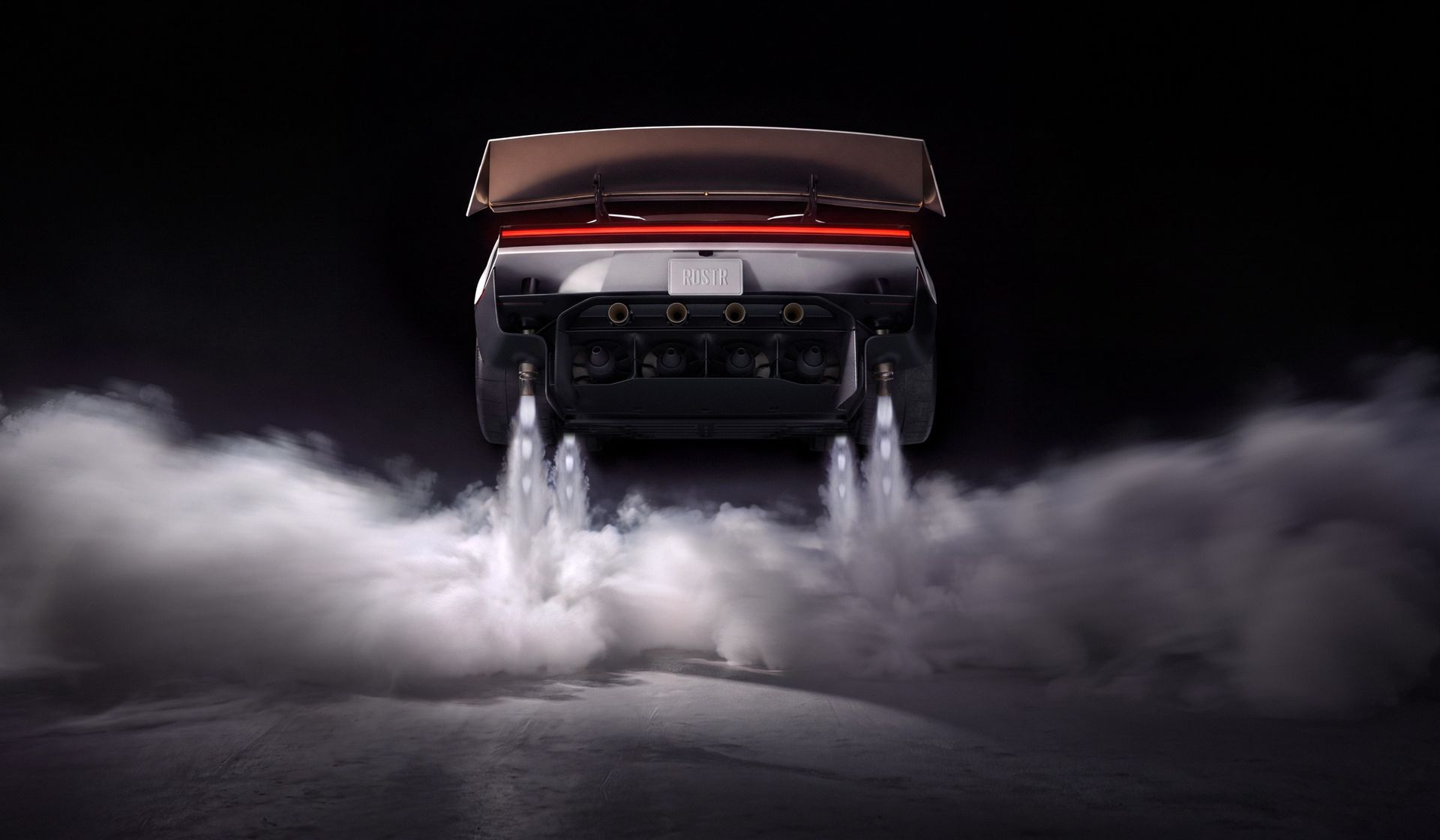
The Roadster's airborne capabilities are made possible by a system of cold-gas thrusters developed using technology from Musk's aerospace company, SpaceX. These thrusters release bursts of high-pressure gas to generate thrust, allowing the vehicle to accelerate rapidly and, according to Tesla, become airborne for short periods.
The new Roadster will come in three variants: Performance, Thrust and Rocket. Only the Rocket is capable of flight. The Performance model is a two-seater equipped with a suction system that's designed to improve traction and handling (or drive up inverted ramps, as in Tesla's demo), while the Thrust model adds rear-mounted thrusters that Tesla claims can propel the vehicle from 0 to 60 mph (97 km/h) in under a second.
The highest-end model, Rocket, features SpaceX cold-gas thrusters positioned around the vehicle to enable short bursts of flight and in-air control. This single-seat model will be available by invitation only, according to Tesla.
On the company's website, Tesla representatives explicitly stated that the Rocket isn't approved for use on public roads and that availability depends on regional regulations. During the reveal, Musk told the audience that the Rocket "is not necessarily a safety-optimized car."
Tesla hasn't disclosed how far or for how long its EV can remain airborne, nor is it the first company to develop a hybrid road-air vehicle. There is also skepticism from outside viewers on whether the demonstration could be replicated outside of controlled scenarios.
Artificial intelligence (AI) scientist Yann LeCun — a professor of data science, computer science, neural science and electrical engineering at New York University — described the demonstration on X as a "marketing stunt" and questioned whether the vehicle would work in practice.
"Even assuming that 50% of the mass of the car is the compressed air, that gives you less than 10s of useful thrust (with thrust-to-weight ratio larger than 1.0). Probably more like 5 seconds, actually," he posted on the social media platform. "So the car must be an empty, lightweight shell containing big compressed air tanks. Cute demo, but totally impractical. But of course, you knew that."
He likened it to SpaceShipOne, which debuted in 2004 as the first privately funded spacecraft and made three record-setting flights before being retired.
California-based Alef Aeronautics, which is developing its own flying EVs, marked Tesla's unveiling by releasing footage of its vehicle flying over an earlier Roadster model. Alef representatives said the demonstration marked its 1,000th logged flight.
"Welcome Tesla to the flying car race, we've been here alone for eleven years," Alef CEO Jim Dukhovny said in a statement emailed to Live Science. "Having competition is a good thing, especially from such a major company as Tesla."
Unlike Tesla's compressed-gas tech, Alef's vehicle uses electric propellers for vertical takeoff and landing, with a rotating cabin and body designed to support forward flight.
Production of the new Roadster is scheduled for 2028, but Tesla doesn't have the best track record of meeting its deadlines. The company has delayed production of its Optimus humanoid robot a few times since first unveiling the machine in 2021, for example, with an initial start in 2023, before being pushed back. Only in recent months has production begun to scale to a few hundred units per week.
Help us improve Live Science Pro: We're always trying to make our content better. Leave us feedback about Pro here.

A Tesla slammed into a police cruiser after the driver said he fell asleep behind the wheel while the vehicle’s Full Self-Driving mode was activated.
According to the California Highway Patrol, KRON4 reports, the crash happened on the night of October 13 while the officers were pulled over to the side of Interstate 80 eastbound highway to investigate a fatal accident.
Though the “lanes were closed with flares and cones, and several emergency vehicles were at the scene with emergency lights flashing,” police said, the Tesla veered into the clearly cordoned-off area and slammed into their patrol car. The impact sent their ride flying into another emergency vehicle, footage showed.
Both officers were hospitalized with serious injuries and have since been discharged from the hospital. The driver, a 22-year-old man, sustained minor injuries.
“The driver claimed he was asleep and that the vehicle was operating in Tesla’s Full Self-Driving mode at the time of the crash,” CHP said. “Despite its name, Full Self-Driving is not fully autonomous. It is an SAE Level 2 driver assistance system that requires continuous driver supervision.”
A self-driving Tesla crashed into a California highway patrol vehicle, seriously injuring two officers inside.
— ABC News (@ABC) October 16, 2026
According to the officers, the driver said he was asleep at the time and using the car’s driver-assistance technology. pic.twitter.com/l36px6sqT4
Drowsy driving is a common issue with Tesla’s FSD system, since it doesn’t require the motorist to be as engaged. To combat this, the vehicles have several safeguards to ensure drivers stay alert, including an in-cabin camera that monitors their eyes and face — but they don’t always work.
Tesla has previously been investigated by federal regulators after an older version of its self-driving software, Autopilot, repeatedly crashed into emergency vehicles. In a 2024 report, the National Highway Traffic Safety Administration linked Autopilot and FSD to hundreds of crashes, concluding that it misled drivers into a false sense of security and caused them to be “not sufficiently engaged in the driving task.”
More on Tesla: Tesla Bros Posting Videos Showing Them Hog Out on Decadent Meals While Careening Down the Road in Self-Driving Mode
The post Tesla Running FSD Slams Into Police Cruiser After Driver Falls Asleep Behind the Wheel, Hospitalizing Two Officers With Serious Injuries appeared first on Futurism.
Tesla CEO Elon Musk has been promising a next-generation Roadster for the better part of a decade. And while early promises that it will quite literally fly were met with incredulity back in early 2019, the EV maker has finally made good on its promise.
As demonstrated late Thursday evening, the new Roadster can indeed fly — briefly, at least — thanks to a “SpaceX package” made up of cold-gas thrusters. The company showed the company flipping around on stage, rotating on its own axis mid-air, leaping over the company’s entire EV lineup, and sticking to a vertical ramp thanks to a fan system that generates up to two Gs of downward force.
Good luck doing any of that on a public road, or even surviving on private property. And the flying car bears a striking resemblance to the company’s controversial Cybertruck, featuring extremely sharp body lines and flat panels. It’s a low-poly design approach that feels intimately familiar after a few years of the brutalist pickups.
And the similarities aren’t limited to the overall shape, either. The Cybertruck was and still is a major outlier in the automotive landscape — mostly for the worse. From rusting stainless steel body panels that were shoddily glued to the vehicle’s exterior and an excessive curb weight that greatly reduced range to a buggy steer-by-wire system, the Cybertruck was a major departure from design norms in the industry, much like Tesla’s latest Roadster.
While we don’t know if the Roadster will suffer from the same issues, its cold-gas thruster system is more than likely going to require some additional upkeep. Besides, considering the system can easily throw the car high into the air, anything going wrong could put any driver in severe danger. After all, Tesla has a long history of treating its customers as guinea pigs.
As Musk admitted during Thursday’s event, the bizarre rocket on wheels isn’t exactly going to be the next Honda Civic. It definitely won’t “move the needle in a major way financially,” the billionaire cautioned the audience, calling the Roadster a “small potato situation.”
As such, Tesla investors were left unimpressed, with shares bumping by less than two percent when the markets opened.
In other words, much like the Cybertruck, the latest Roadster is more tech demo than an actual consumer-facing product, a harsh lesson owners of the former are still learning as their vehicles continue to age like milk.
And whether we’ll ever see it gliding along mid-air at highway speeds on public roads is as unclear as ever. Tesla is looking to sell a thruster-less Performance variant, a “Race Ready” mid-tier version with rear-mounted cold-gas thrusters, as well an entirely not-road-legal and “invite only” model that can fly, as shown off on stage.
Even more so than the Cybertruck, the Roadster is the ultimate Tesla loyalty test. While the company has yet to release a price, the Roadster is undoubtedly going to cost a pretty penny — if you can even get your hands on one. Whether it will appreciate, like Musk has long promised about the company’s fleet, or turn into an expensive death trap after a short and likely terrifying stint of ownership, remains to be seen.
Perhaps it’s more of an attempt to warm up investors to the idea of merging Tesla and SpaceX, a high-stakes gamble that has investors unsettled.
More on Tesla: Tesla Robotaxi With No Driver Spotted Smashing Through Traffic Barriers
The post Tesla’s New Flying Death Trap Looks a Lot Like a Cybertruck appeared first on Futurism.