Depois de ganhar o Liquid Glass, a versão do WhatsApp para iPad começará a receber outra novidade de design para parte dos seus usuários: uma nova barra lateral.
A reformulação da interface aproximará a versão de iPad daquilo que é visto no macOS, com a nova versão da barra lateral abrangendo conversas, atualizações, comunidades, chamadas e Meta AI, além da seção “Mais” (que engloba conversas favoritadas, trancadas e arquivadas, bem como os status do mensageiro da Meta).
WhatsApp is rolling out a redesigned navigation interface for iPad!
WhatsApp is bringing the same sidebar from the Mac app to iPad, making it easier for users to navigate the interface on a larger screen. The update is also compatible with Liquid Glass.https://t.co/vVfpctrXulpic.twitter.com/uUYQ8cPak5
O WhatsApp está lançando uma interface de navegação redesenhada para iPad!
O WhatsApp está trazendo a mesma barra lateral do aplicativo para Mac para o iPad, facilitando a navegação dos usuários na interface em uma tela maior. A atualização também é compatível com Liquid Glass.
A quem desejar que a conversa ocupe mais espaço da tela, será possível ocultar a barra lateral por meio de um botão localizado no canto superior direito da interface. Para exibi-la novamente, bastará tocar no botão da barra lateral na barra de guias superior, exibido quando a barra lateral é ocultada.
Por ora, a novidade está sendo testada com os usuários da versão beta do WhatsApp via atualização mais recente do TestFlight, além de alguns usuários da versão mais recente do aplicativo da App Store. É provável que não demore muito para que a funcionalidade chegue a todos os usuários.
Pré-visualização de miniaturas em conversas
Para os usuários de iOS, a Meta também implementou um recurso que já vinha sendo testado na versão de Android: a pré-visualização de mídias e figurinhas em uma miniatura exibida na própria seção de conversas.
Imagem: WABetaInfo
Até o momento, a única forma possível de pré-visualizar mídias e figurinhas no WhatsApp era segurando a conversa, caso contrário o aplicativo só fazia uma menção textual ao material enviado.
Rocket launches this week On Thursday, Sept. 10 at 5:00 a.m. EST, a Long March 2D rocket is set to lift off from Jiuquan Satellite Launch Center in northern China’s Gobi Desert carrying an undisclosed payload, according to tracking from Next Spaceflight. The rocket is operated by the state-owned space contractor China Aerospace Science andContinue reading "SpaceX closes out SES’s O3b mPower constellation"
But when Apple implemented this change, they also changed the sort order of the list of apps you’re registered to test. Starting with this update, the list is sorted in alphabetical order. For as long as I can remember — perhaps dating back to when TestFlight was a third-party utility — the list was ordered by recency. The most recently updated app was at the top; the oldest at the bottom. Sorting by recency is really the only sort order that makes sense when you’re registered for dozens (or more) of apps. For me, trying to see if there is an update to a new app whose name starts with U now requires scrolling through over 100 items.
[…]
Also, if I consider the broader view, this really speaks to how much we’ve lost in terms of UI vocabulary. For decades, any list of items with names and dates could be sorted by name or date, ascending or descending, through the standard use of clickable headers at the top of every list. This was true for almost any such list in any app, on any platform — Mac, Windows, Unix, Amiga, whatever. This was just basic GUI stuff.
[…]
iOS in 2007 introduced a simplified UI vocabulary that omitted many of these baseline GUI features. That seemed like a reasonable trade-off for a device with a 3.5-inch display and fat fingers as the only input device. But then iOS became popular and Apple stopped bringing the richer UI vocabulary of the Mac to iOS[…]
And it starting bringing iOS limitations to the Mac.
It certainly shouldn’t have taken until July 2026 to be able to search in TestFlight, either. And being able to search, and see the results sorted alphabetically, shouldn’t mean you can no longer view the full list sorted by recency.
Whatever is going on with this sort order, it isn’t affecting everyone. John Siracusa, amongst many others, has the same problem I do — his list is now alphabetical, and it’s driving him nuts too. Ryan Booker, amongst many others, still has his list sorted by recency.
Returning to reverse chronological order may seem like a small thing, but it’s made a world of difference in keeping up with the apps I test.
Search was near the top of my list of TestFlight wishes for years, and its addition made a meaningful difference to the app’s usability. But I’ve had a lot of TestFlight wishes over the years that are scattered across multiple articles, so I thought I’d share what else I’d like Apple to tackle with TestFlight[…]
Stoke Space has amassed a substantial sum during its latest round of financing and is revealing exactly where it plans to invest its new stack of cash.
The Kent, Washington-based company just raised $1 billion via its"Series E" capital campaign, bringing Stoke’s total investor haul to $2.3 billion. The Sept. 8 announcement provided a development update for Stoke’s fully reusable Nova Pathfinder launch vehicle and included plans for its never-before-seen Nova Block 2 rocket, a more powerful system designed to be able to deliver up to 15 tons to low Earth orbit (LEO).
“We are humbled by the trust our investors and customers have placed in us in pursuit of this critical generational challenge,” said Andy Lapsa, Stoke CEO and co-founder. “This investment enables us to scale toward delivering the capability and cadence our customers require.”
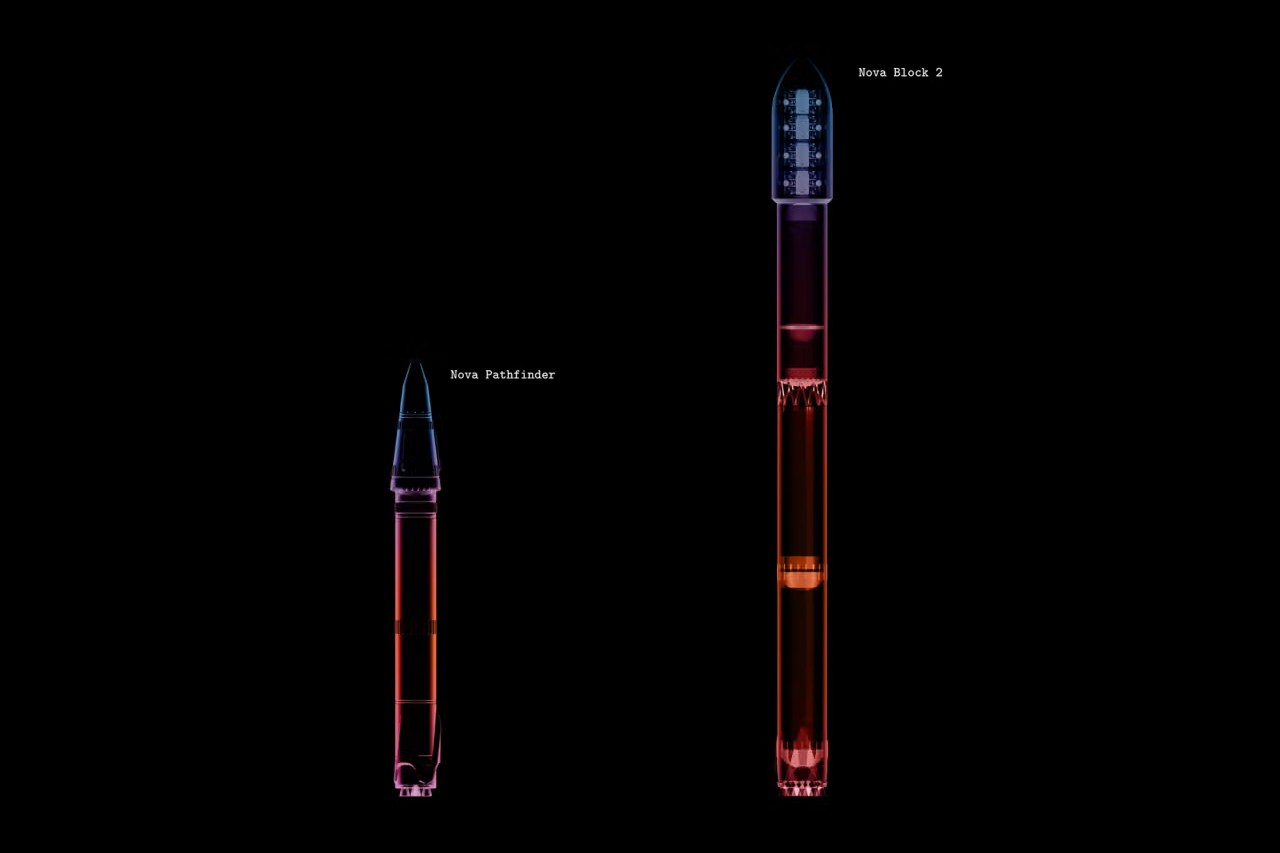
Nova Pathfinder is Stoke’s first orbital launch vehicle (the largest first rocket ever undertaken by a U.S. launch company, according to Stoke), and is based on the same technologies the company is building into its Block 2 design. Both two-stage vehicles are being manufactured with full and rapid reusability in mind, with Pathfinder serving as the proving ground for that architecture.
Pathfinder's first stage is powered by seven Stoke-designed full-flow, staged-combustion (FFSC) Zenith rocket engines, fueled by liquid oxygen and liquefied natural gas (LNG). The first stage on Nova Block 2 will be equipped with 14 Zeniths. Stoke calls FFSC “perhaps the most difficult rocket engine cycle to develop,” but highlights its advantages; the tech leaves fewer residuals like soot around the engines and reduces the amount of maintenance needed between flights, according to the company.
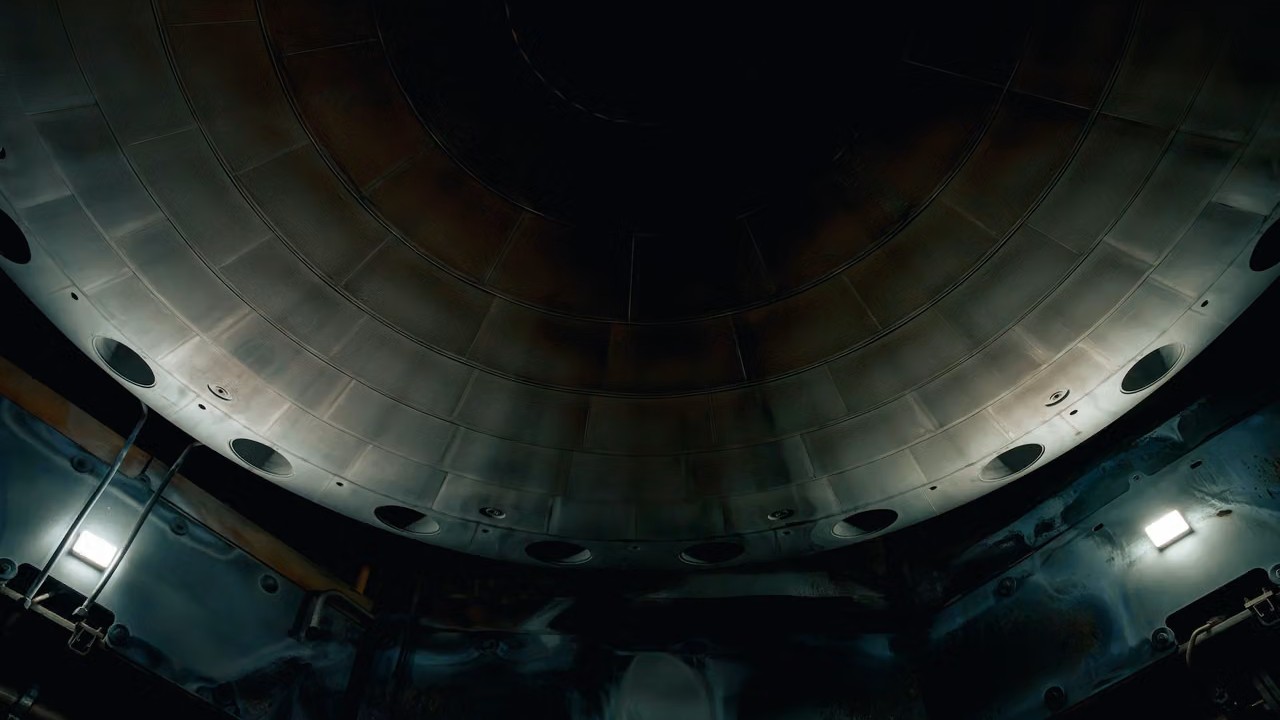
The upper stage of both rockets is the more atypical approach to spacecraft design, compared to other vehicles of the same launch class. The aft end of Nova’s second stage is designed with a heat shield to protect the vehicle during reentry through Earth’s atmosphere. Instead of the ceramic tiles historically used on the heat shields of previous spacecraft, the dome-like structure at the base of Nova’s upper stage is made of metal, which is actively cooled by the liquid hydrogen that fuels the stage’s Andromeda propulsion system.
Rather than a single large, vacuum-optimized engine bell at its center, Nova’s upper stage features 12 small dual-thrust chambers integrated into a circle around the outer edges of the vehicle’s heat shield. Stoke successfully completed a “hopper” test flight of Pathfinder’s upper stage engine system in 2023, flying the vehicle about 30 feet (10 meters) into the air before it safely touched down.
Andromeda upper stage engine and integral re-entry heat shield. (Image credit: Stoke Space)
Scaling up to Block 2, Stoke plans to equip the upper-stage system with independent systems for each of the 12 engines, potentially increasing thrust by over a factor of five, according to the company. Block 2’s upper stage also drops Pathfinder’s tapered design in favor of cylindrical tanks, increasing propellant and payload volume to accommodate a 5-meter-wide (16.4 feet) fairing.
Stoke says the larger Block 2 configuration has been in the works alongside Pathfinder for several years. The company is developing the more powerful rocket to support large commercial and national security satellite constellations, of which there soon may be a high demand.
Nova Block 2’s closest competitors are SpaceX’s Falcon 9 rocket and Rocket Lab’s upcoming Neutron launch vehicle, which is still under development. And Falcon 9 is already being sundowned by SpaceX as the company gets closer to operational flights with its next-generation Starship rocket. While certain Falcon 9 flights for NASA, like crew launches to the International Space Station, are expected to continue until at least 2030, SpaceX CEO Elon Musk has said that Starship’s ultimate success “means winding down Falcon.” The timing should line up with when Stoke hopes to step in with Nova Block 2. Block 2’s first launch is targeted for 2029, with production and flight cadence expected to increase from there.
Nova Pathfinder next to Nova Block 2. (Image credit: Stoke Space)
As Stoke ramps up development for its upgraded launch vehicle, the company’s fresh round of funding will also go toward construction of the physical infrastructure Stoke needs to build, test and eventually operate both vehicles. The company is planning a 475-acre (192 hectares) expansion to its 75-acre (30 hectares) Moses Lake Test Site in Washington to support propulsion and vehicle testing as Pathfinder nears its first launch and Block 2 hardware begins coming online.
Stoke is also expanding its operations at Cape Canaveral Space Force Station (CCSFS) in Florida. The company was selected by the U.S. Space Force in 2023 to manage CCSFS’s Space Launch Complex-14, where it’s now building a new payload processing facility sized to accommodate both vehicles. And to complete its full reusability system, the company is also developing an offshore recovery platform.
Pathfinder has a much shorter timeline to the launch pad. Stoke is targeting early 2027 for Pathfinder’s debut launch, which the company plans to send to orbit with a customer payload. If that’s successful, Stoke hopes to fly multiple Pathfinder missions throughout 2027 and 2028 while Block 2 development and testing continue in parallel.
Once Block 2 does reach the launch pad, Stoke plans to keep Pathfinder in service. “We see value in having more than one way to serve the market, since some missions are particularly well suited to the Pathfinder configuration,” the company said.
On Sept. 8, 2016, the Origins, Spectral Interpretation, Resource Identification, and Security – Regolith Explorer (OSIRIS-REx) mission launched from Cape Canaveral, setting off on its 4.4-billion-mile (2 billion kilometers) journey to asteroid Bennu. About the size of an SUV, the OSIRIS-REx spacecraft carries several cameras, an altimeter used to create maps of Bennu, and anContinue reading "Sept. 8, 2016: OSIRIS-REx launches"
James Van Allen, who was born in Iowa on Sept. 7, 1914, showed talent and interest in science and math from an early age. A major in physics from Wesleyan College in 1935 was followed by a Ph.D. in nuclear physics in 1939. Before and after World War II – during which he developed antiaircraftContinue reading "Sept. 7, 1914: The birth of James Van Allen"
The first Japanese citizen to launch into space, Toyohiro Akiyama was also the first commercially sponsored cosmonaut and the world's first journalist to file reports while on a spaceflight.
Akiyama, 84, died last Wednesday, August 26, of lower gastrointestinal bleeding, news agencies in Japan reported. A funeral was held with his close relatives in attendance.
As a correspondent for the Tokyo Broadcasting System (TBS), Akiyama was chosen out of his 162 fellow employees who applied to fly to space in celebration of the network's 40th anniversary. He trained at the Gagarin Cosmonaut Training Center in Star City, located outside of Moscow, and was assigned to the Soyuz TM-11 crew.
Rocket launches this week On Tuesday, Aug. 18, Chinese aerospace firm LandSpace is targeting 7:35 p.m. EDT for the second flight of its Zhuque-3 rocket from the Jiuquan Satellite Launch Center in China, according to tracking from Next Spaceflight. The launch was scrubbed last week after a Long March 7A rocket exploded hours before Zhuque-3’sContinue reading "More Starlink satellites and two big launches for China"
If a satellite’s velocity increases as it approaches a planet during a slingshot maneuver, why does it not decrease by the same amount when it leaves the planet? How can it experience a net gain in velocity? Robert WaltyStephens City, Virginia Slingshot maneuvers can seem counterintuitive. We know that a spacecraft speeds up as itContinue reading "How do slingshot maneuvers work to propel spacecraft?"
Rocket launches this week On Monday, Aug. 10, a Long March 7A rocket carrying an undisclosed payload broke apart roughly one minute and 27 seconds after lifting off from Wenchang Space Launch Site at 8:02 a.m. EST. Footage from online livestreams captured the failure in real time; Chinese state media had not released any informationContinue reading "A Long March 7A failure opens a week of Starlink launches"
On Aug. 10, 1990, the Magellan orbiter arrived at Venus and was inserted into orbit. Its goal was to map the surface of the planet, using radar to peer beneath the cloudy atmosphere. Launched aboard the Space Shuttle Atlantis in May 1989, Magellan was the first deep space probe launched from a shuttle. Budget constraintsContinue reading "Aug. 10, 1990: Magellan enters venusian orbit"
The Soviet Luna program, designed for lunar research and mission planning, ran from 1959 to 1976. On Aug. 9, 1976, Luna 24, the final mission of the program, launched from the Baikonur Cosmodrome in present-day Kazakhstan. The probe landed on the Moon’s surface nine days later, in the Mare Crisium (Sea of Crises), a previouslyContinue reading "Aug. 9, 1976: Luna 24 blasts off"
NASA launched its Mars rover Curiosity inside the Mars Science Laboratory (MSL) on Nov. 26, 2011. Complete with 10 science instruments and 17 cameras, the robot can analyze mineral types, search for signs of microbial life, and take color panoramas of the Red Planet’s surface. Curiosity’s landing on Mars was a new process, nicknamed theContinue reading "Aug. 6, 2012: Curiosity lands on Mars"
With the Space Race heating up, the Ranger program was developed as an answer to Sputnik: The U.S. would land spacecraft on the Moon. When President John F. Kennedy vowed in 1961 to put a man on the lunar surface, the project evolved. Instead of being purely scientific or exploratory, Ranger spacecraft would also beContinue reading "July 31, 1964: Ranger 7 returns the first close pictures of the Moon"
 Login