Uma análise científica publicada em 23 de julho mostra que o calor extremo agravou fortemente a seca na Europa em 2026. No oeste do continente, os solos secaram apesar de um início de ano relativamente úmido. A crescente demanda da…
Um implante cerebral associado a estimulações elétricas permitiu que um homem paralisado recuperasse parte de seus movimentos e a sensação do tato. O dispositivo contorna a lesão da medula espinhal conectando diretamente o cérebro, os músculos e as áreas sensoriais.…
Um macaco até agora confundido com outros colobos africanos acaba de ser oficialmente descrito como uma nova espécie. Batizado Colobus congoensis, ele vive nas florestas do centro-leste da República Democrática do Congo. Os habitantes da região o chamam de Likweli.…
O aquecimento global pode tornar a água da torneira muito mais cara em algumas cidades. Um estudo realizado em Santa Cruz, na Califórnia, estima que períodos mais quentes e mais secos podem quase duplicar a conta média até meados do…
Alguns saurópodes poderiam ter conseguido erguer-se nas patas traseiras apoiando-se na cauda. Uma modelagem biomecânica mostra, no entanto, que esta postura era mais acessível às espécies relativamente pequenas. Os maiores dinossauros de pescoço comprido teriam encontrado constrangimentos demasiado importantes nos…
Sob a superfície gelada da Antártida, a água de degelo pode atingir o leito rochoso e acelerar o deslocamento do gelo. Observações diretas realizadas na geleira Langhovde, na Antártida Oriental, confirmam este mecanismo pela primeira vez no continente. A equipe…
O calor escapa por todo o lado à nossa volta: nas fábricas, nos motores ou em alguns equipamentos eletrónicos. Esta energia é geralmente simplesmente dissipada, de certa forma 'atirada fora'. Investigadores propõem uma nova forma de a recuperar para a…
Na doença de Alzheimer, os danos não permanecem imóveis. Eles gradualmente conquistam novas regiões do cérebro, com consequências crescentes para a memória e a autonomia. Pesquisadores acreditam ter identificado um mecanismo que pode participar dessa progressão: uma proteína chamada Arc.…
Minúsculos fragmentos descobertos na China acabam de revolucionar a história do âmbar. Com cerca de 385 milhões de anos, eles constituem o exemplo mais antigo quimicamente confirmado. Esta descoberta ultrapassa em 65 milhões de anos o recorde anterior. As amostras…
Ao longo da missão, o Sentinel-1A registou milhões de imagens usadas para monitorizar cheias, incêndios, gelo marinho, culturas agrícolas, infraestruturas, tráfego marítimo e operações de resposta a catástrofes.
New research indicates that Pluto’s largest moon, Charon, may continue to lose rotational energy despite the pair’s long-standing tidal lock, offering scientists a rare glimpse into the hidden interiors of distant icy worlds.
Montagne asimmetriche nella regione equatoriale di Oz Terra, lunghe oltre 200 chilometri, e faglie orientate lungo precise direttrici polari. È la firma geologica che il rallentamento della rotazione impresso dalle forze mareali (un processo noto come despinning) ha inciso sulla crosta ghiacciata di Caronte, la luna più grande di Plutone. Il geologo planetario Hanzhang Chen, […]
Marcando o oitavo voo consecutivo realizado com sucesso, o foguetão Ariane 6 colocou em órbita 36 satélites da constelação Leo da Amazon, aproveitando para bater o recorde europeu do voo mais “poderoso” de sempre.
Tropical Storm Arthur’s white storm clouds cover the waters off the U.S. Gulf Coast. Some clouds extend inland over parts of Texas and Louisiana.
NASA Earth Observatory/Michala Garrison
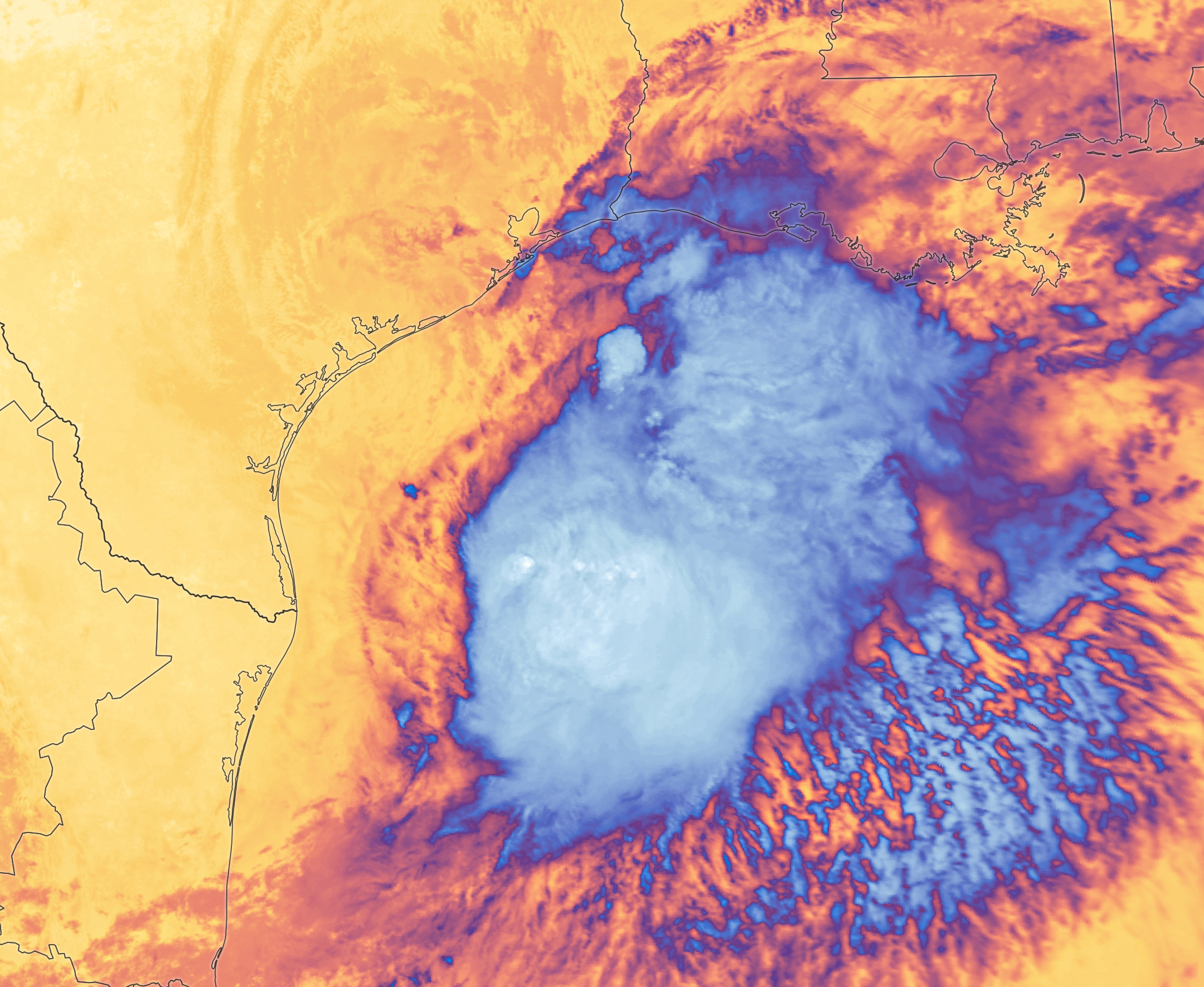
White and purple areas of cloud off the Gulf Coast indicate the cooler areas of cloud tops associated with Tropical Storm Arthur.
NASA Earth Observatory/Michala Garrison
Natural color
brightness temperature
Images from the MODIS (Moderate Resolution Imaging Spectroradiometer) on NASA’s Terra satellite show Tropical Storm Arthur on the morning of June 17, 2026. The left image is natural color; the right shows infrared signals known as brightness temperature. NASA Earth Observatory images by Michala Garrison.
Tropical Storm Arthur, the first named storm of the 2026 Atlantic hurricane season, brought high winds and heavy rain to the U.S. Gulf Coast in mid-June.
NASA’s Terra satellite captured this natural-color image (left) at 10:30 a.m. Central Time (15:30 Universal Time) on June 17. The second image (right) depicts infrared signals known as brightness temperature, which help distinguish cooler cloud tops (white and purple) from the warmer surface below (yellow and orange). Around the time these images were acquired, the system had just recently been designated a tropical storm, according to the National Hurricane Center (NHC).
Though Arthur stayed below hurricane strength, it still delivered strong winds to parts of the Gulf Coast as it tracked northeast. The storm had maximum sustained winds of 40 miles (65 kilometers) per hour around the time these images were captured. Tropical-storm-force winds extended 175 miles (280 kilometers) from the storm’s center, the NHC reported. Measurements at Galveston, Texas, for instance, showed a gust of 48 miles per hour.
The storm also produced heavy rainfall that the National Weather Service warned could lead to life-threatening flash flooding. Estimates from IMERG (the Integrated Multi-Satellite Retrievals for GPM), a product of the GPM (Global Precipitation Measurement) mission, showed high rainfall rates over Gulf waters and extending inland on June 17.
As Arthur weakened and became less organized, it continued to bring abundant moisture to central Gulf Coast states on June 18. The National Weather Service reported rainfall rates of 3 inches (7.6 centimeters) per hour in southeastern Louisiana. Forecasts indicated that storm-total rainfall amounts could exceed 12 inches (30 centimeters) in areas, with some locations seeing totals approaching 20 inches (51 centimeters).
NASA Earth Observatory images by Michala Garrison, using MODIS data from NASA EOSDIS LANCE and GIBS/Worldview. Story by Kathryn Hansen.
Pela primeira vez, cientistas compararam ambientes magnéticos de outros planetas, um passo fundamental para compreender aqueles que podem ser habitáveis, conservar água e, talvez, um dia, albergar vida tal como a conhecemos - e criar auroras ainda mais espetaculares.
Um meteoro explodiu na costa de Massachusetts, nos Estados Unidos, provocando um estrondo sentido em vários estados. De acordo com a NASA, a energia libertada foi equivalente a cerca de 300 toneladas de dinamite.
Entre galáxias espirais, auroras verdes e novas vistas infravermelhas da enigmática lua Titã, de Saturno, maio confirmou uma vez mais que a fotografia continua a ser uma das formas mais poderosas de explorar lugares onde, por agora, ainda não podemos chegar.

 Login