
❌

Normal view

Could Spider-Man really turn off his superpowers?

12 October 2026 at 11:30

Note: Slight spoilers ahead for Spider-Man: Brand New Day.

In Spider-Man: Brand New Day, Peter Parker has disturbing symptoms caused by DNA from the spider bite that gave him superpowers. He’d like to get rid of some of his new features while keeping others. So he visits Bruce Banner to discuss a device Banner invented to keep his own alter-ego, the Hulk, in check. It’s a superpower inhibitor. And it’s based on actual treatments for diseases.

In one scene, Parker asks Banner how the inhibitor turns off the genes in his DNA that cause Banner to Hulk out. “You’re using target-specific short interfering RNA, right?” Parker asks.

That’s not just movie technobabble. Short interfering RNAs, or siRNAs, are real molecules. They can effectively “turn off” some of a person’s genes. The U.S. Food and Drug Administration has approved at least eight siRNA treatments for genetic diseases. Others are in clinical trials. Parker builds a device that injects siRNAs to control his unwanted powers.

How not to Hulk out

In Spider-Man: Brand New Day, Peter Parker (played by Tom Holland) visits Bruce Banner (Mark Ruffalo). They discuss how Banner keeps his alter-ego, the Hulk, in check. That tech is the inspiration for the superpower inhibitor that Peter then builds.Sony Pictures

siRNAs to the rescue

siRNAs work by interrupting a cell’s chemical assembly line.

The instructions to build and maintain a living thing are housed in its DNA. And the pieces of DNA responsible for different traits are called genes.

To put a bit of DNA into action, a cell first makes copies of its chemical instructions. Those copies are known as messenger RNAs, or mRNAs. Other parts of the cell then read mRNA instructions to build proteins. Proteins are molecules that carry out various tasks inside a living thing.

Small interfering RNAs do their work in between the DNA-copying and protein-building steps. They can latch onto mRNAs carrying instructions from specific genes. That marks those mRNAs for destruction, and they get chopped up. The interference prevents proteins from being made from those mRNAs. It essentially silences the genes whose instructions the mRNAs had copied.

Some siRNAs occur naturally in cells. They help control protein production. But scientists have also designed siRNAs to silence genes that cause disease.

Silencing spidey genes

Shutting down foreign DNA — such as DNA from a spider — is the sort of thing siRNAs do well, says Anastasia Khvorova. She’s a chemical biologist at the University of Massachusetts Chan Medical School in Worcester.

If Spider-Man’s powers come from a single gene, then an siRNA targeting that gene could work, she says. But in the film, Parker wants to shut off several traits, such as making spiderweb silk and having painfully heightened senses. It’s rare for a single gene to control such different traits. So Parker would probably need to make a mix of different siRNAs to tackle all his new spider traits.

Plus, genes don’t work in isolation, says Khvorova. Shutting one down may affect others. In the movie, Banner warns that “it would be enormously dangerous and complex” to shut down some parts of Hulk but keep others.

Silencing a gene

A graphic showing how RNA interference works. A red and orange strand of RNA are shown twisted together and labeled small interfering RNA (siRNA) outside a blue curve representing a cell membrane. The siRNA gets into the cell. Then it is shown nestled in a blue irregular circle representing a cellular machine. The siRNA unzips. The red passenger strand is seen floating away. In the next panel, the orange siRNA twists around part of a teal mRNA strand. Then a pair of scissors is shown snipping the mRNA to bits.
Alnylam Pharmaceuticals

RNA interference, or RNAi, is one way cells control protein production. Molecules called small interfering RNAs enter the cell as a double-stranded pair (orange and red, left). Once in the cell, the siRNA enters a cellular machine called RISC. There, the two strands unzip. One strand (orange) pairs with a target messenger RNA, or mRNA, that carries instructions for making a specific protein. That pairing slates the mRNA for destruction and it is chopped up. No protein can be made from that mRNA and its corresponding gene.

siRNAs used to treat disease work like natural ones. But they have their own superpowers, Khvorova says. “They’re fully chemically modified.” The tweaks make them stable in the body and send them to the correct organ.

So far, all FDA-approved siRNAs work in the liver. Khvorova’s team is crafting others that can be sent to muscles, nerves or other organs.

With great power comes some limitations

Usually, siRNAs don’t completely shut off a gene. But they can meddle enough that very little of its protein gets built, says Judy Lieberman. She’s an immunologist at Boston Children’s Hospital and Harvard Medical School. She was an advisor to the company that first pioneered using siRNAs to treat diseases.

Slowing protein production to just a trickle might help Spider-Man control the level of his superpowers, Lieberman says. He would want enough protein made to make him super, but not enough to cause problems.

Unfortunately, no one has been able to tune siRNAs so precisely.

Spider-Man would also need the inhibitor to work everywhere in his body. That’s not something siRNAs are usually designed to do, says Gane Ka-Shu Wong. He’s a biomedical scientist at the University of Alberta in Edmonton, Canada.

Do you have a science question? We can help!

Submit your question here, and we might answer it an upcoming issue of Science News Explores

And there’s one more issue with siRNAs that could be a problem for the web-slinger. “They tend to last,” Wong says. Current siRNA therapies may last for six months or longer with a single dose.

Parker would likely want an inhibitor that breaks down, Wong says. “It’s got to last long enough to get to where it needs to go and shut off whatever it needs to shut off. But it also needs to degrade so that the moment you stop injecting this drug,” the powers return.

Even then, taking the inhibitor off wouldn’t instantly return a superhero’s powers. At a minimum, it could take a few hours to make mRNA copies and get new proteins. But it would probably take longer to return to full power.

“He could reverse it,” Lieberman says, “but it might take a few days.”
This microbe turns into a ‘Hulk’ that eats its own kind

12 August 2026 at 11:30

A newly discovered microbe is like a mini version of the Hulk.

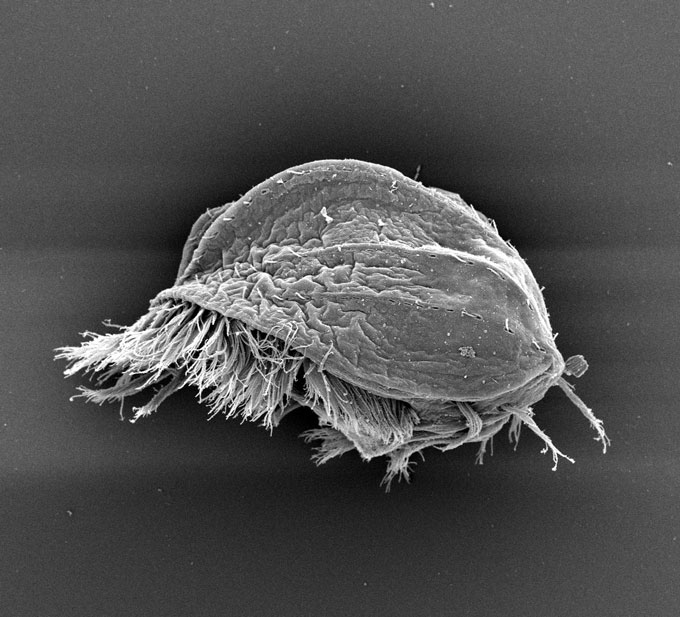
This single-celled protist looks a bit like an insect. It normally grazes on bacteria and other microbes. But sometimes, a small number of this predator — named E. gigatrox — balloon to more than twice their regular size.

The underside of the protist Euplotes gigatrox showing many hairlike cilia surrounding an oval depression that is the organism's mouth.
Ben T. Larson and Samuel J. Lord

Euplotes gigatrox may look like an insect, but it’s a type of single-celled protist called a ciliate. It has lots of hairlike cilia surrounding its mouth parts (large oval depression, top). This microscope image shows the underside of the cell’s supergiant form.

As they enlarge, these “supergiant” cells turn into cannibals, gobbling up their smaller siblings. What triggers the change isn’t all that clear. But it tends to happen when there is plenty of food.

Researchers shared their new findings May 14. The work appeared in the Proceedings of the National Academy of Sciences.

Morphing into a supergiant happens in steps, says Ben Larson. A cell biologist, he works at Rensselaer Polytechnic Institute in Troy, N.Y. He discovered the Hulked-out microbes in gunk scraped from a filter at an aquarium in Curaçao. That’s a Dutch territory in the Caribbean Sea.

Euplotes gigatrox has two different forms: regular size and supergiant. This is a side view of the supergiant. It eats its smaller siblings by running over them and jamming them into its mouth. That mouth lurks behind the fringe of hairlike cilia.

The underside of the protist Euplotes gigatrox showing many hairlike cilia surrounding an oval depression that is the organism's mouth.
Ben T. Larson and Samuel J. Lord

In the first stage, “a cell gets a big mouth,” Larson says. Then, “they start running around like crazy.” At that point, they still aren’t great cannibals. But watch out! Once a would-be Hulk catches one of its siblings or cousins in its enlarged mouth, its whole body plan changes. These cells “grow up to be these just enormous cannibalistic supergiants,” Larson says.

Like Bruce Banner and the Hulk, giants and regular-size cells act differently. Regular size cells walk and swim. The big ones can only walk in circles.

Giants can return to their former size by lopsided splitting. Normal-size E. gigatrox divide just once per day. Shrinking Hulks, in contrast, can produce nine normal-size offspring in the first day. Over five days, they can generate up to 16 offspring.

Each time a giant cell divides, it shrinks somewhat. Eventually it returns to normal size and behavior.

Up to 42 percent of the species’ genes are involved in shifting from regular size to giant and back again. Learning how these protists do this may offer clues about how simple life forms develop complex behaviors. It might even point to how many-celled life first evolved.

Do you have a science question? We can help!

Submit your question here, and we might answer it an upcoming issue of Science News Explores

Fuzzy microbes may fuel cows’ methane burps

13 July 2026 at 11:30

Cows belch a lot of methane, a potent greenhouse gas. But it’s not their fault. Scientists have identified a new trigger for the process. It resides in some microbes that live in the cows’ guts.

This tiny organelle appears to help control how much of this greenhouse gas the cows burp out.

@scientificamerican

Notoriously, cows burps are rather potent — a single cow can burp out as much as 220 pounds of methane a year. And scientists just identified the special structure inside microbes in their gut that is responsible for all that methane. It’s called a hydrogenobody. Read more at the 🔗 in our bio. 📝🎤: Jackie Flynn Mogensen 🎥: Kelso Harper 🎞: Marta Hill 📷: Getty Images, Chuanqi Jiang/Jinying He/Che Hu/Institute of Hydrobiology, Chinese Academy of Sciences Fei Xie et al.,Rumen ciliates modulate methane emissions in ruminants.Science392,eadv4244(2026).DOI:10.1126/science.adv4244 #cows #methane #science #climate #greenhousegases

♬ original sound – Scientific American – Scientific American
For an overview of the study described by this story, check out this brief video.

Some 30 percent of methane produced by farming comes from cud-chewing animals, or ruminants. These include cattle, sheep, goats and deer.

Like organs in the body, a cell’s organelles perform specific roles. The new organelle was found in fuzzy, single-celled ciliates (SIL-ee-ets). These microbes belong to a group known as protozoa.

Ciliates get their name from the hairlike structures — cilia — that help these cells move and sense their environment. These tiny furballs make up about one-fourth of all microbes living in the rumen. That’s the first stomach of cud-chewing animals. There, these microbes help break down grass and other plants.

The new organelle makes hydrogen gas. So its discoverers are calling it a hydrogenobody (Hy-droh-GEN-uh-BAH-dee). The hydrogen it spews causes still other microbes in the rumen to produce methane.

To date, ciliates haven’t been studied much, says Ivan Čepička. He works at Charles University in Prague in the Czech Republic. He did not take part in the new research, but does study microbes, including protozoa.

Researchers in China have now cataloged DNA from ciliates found in ruminants. They’ve turned up 65 species, 45 never before identified.

These new species fell into three major groups. One type, Vestibuliferida, look like microscopic Koosh balls. Entodiniomorphida’s cilia develop appear like a shock of hair coming out of just one part of their cell. The third type of these microbes remains an unclassified family.

Tiny microbes, big impact

Some organisms that make hydrogen can prompt other microbes — archaea (Ar-KEE-uh) — to make methane. But those hydrogen-makers usually have organelles called hydrogenosomes (Hy-droh-GEN-uh-soams). They’re related to another organelle that makes energy.

But hydrogenosomes had not shown up in ciliates. So how rumen ciliates made hydrogen had been a mystery, Čepička says. The new study seems to have solved it: That gas comes from the hydrogenobodies. They’re located at the base of the structures that make ciliates look so fuzzy.

Researchers at the Chinese Academy of Sciences in Wuhan and several Chinese universities reported the surprising finding April 30 in Science.

The group had studied 100 dairy cows. The more ciliates these cattle had, the more methane-producing archaea they had. And the more methane-making archaea present, the more methane the cows belched.

Among ciliates, the Vestibuliferida are especially furry and have more hydrogenobodies. They also spew more methane than Entodiniomorphida.

A 3D reconstruction of microscope images showing part of a ciliate protozoan cell. Leaflike green structures representing cilia rise out of a thin, wavy yellow strip of fabric representing the cell's membrane. Roughly oval shaped red structures of hydrogenobodies cluster around the base of the cilia just under the membrane. Hydrogenobodies make hydrogen, which spurs other microbes to make methane.
Hydrogenobodies appear red in this 3-D reconstruction of a slice of a protozoa cell in cud-chewing animals. Hydrogenobodies cluster at the base of hairlike cilia (green) just under the cell membrane (yellow). The more cilia protozoa have, the more hydrogen they make — and the more methane other gut microbes will spew. Chuanqi Jiang, Jinying He, and Che Hu/Institute of Hydrobiology/Chinese Academy of Sciences, adapted by B. Price

What’s next?

One way to cut the methane in cow burps might be to remove Vestibuliferida from their rumen, the team suggests. It might also be possible to just curb the microbes’ growth.

People have tried to wipe out ciliates from the rumen, notes Todd Callaway. When they did, he adds, they saw a drop in how much methane cows make. But there was a downside, he adds: Cows with fewer ciliates produced less milk and meat. Callaway is a microbiologist and ruminant nutritionist. He works at the University of Georgia in Athens.

Keeping protozoa out of the rumen is hard, Callaway says. Cattle must be isolated in sealed barns. Their feed must be microbe-free. And they need to be kept at least 200 meters (660 feet) from other cattle. At that distance, the ciliates would no longer spread between cattle through the air.

Learning more about ciliates might lead to techniques that cut a cow’s methane burps while keeping her milk and muscle (meat) levels high.

Any such treatments are still a long way off, Callaway says. “This is step one of probably 25. But it’s a good step.”

❌